Home Blog Page 404

Man remanded in Delta state for allegedly defiling one-year-old daughter and sodomising 3-year-old son

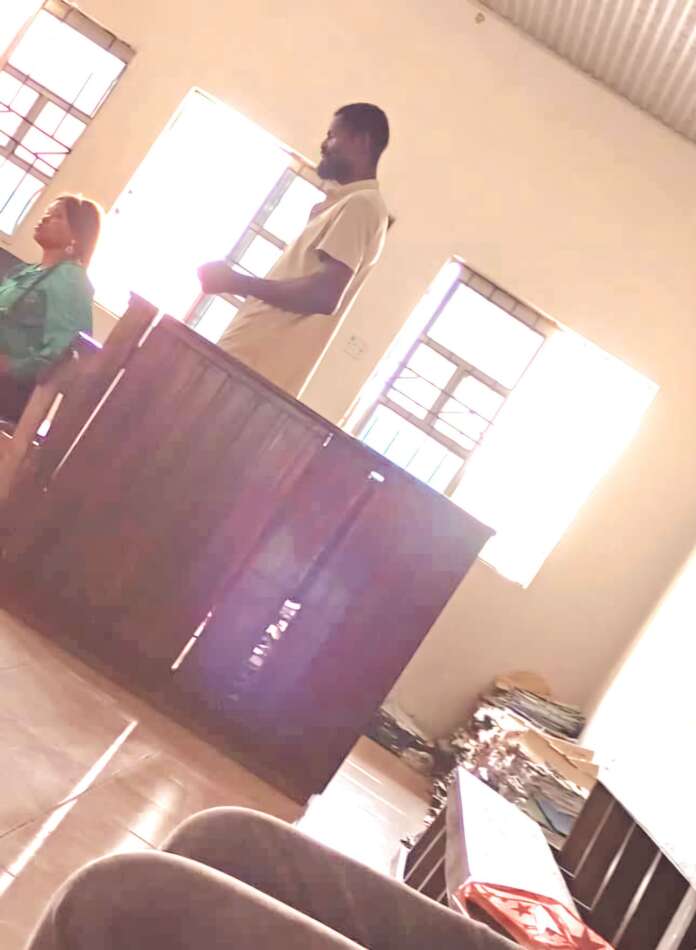
A Delta State High Court in Ughelli has ordered the remand of one Perez Kingsley in a correctional facility for allegedly defiling his one-year-old daughter and also sexually abusing his 1-year-old son

The suspect was arraigned on Tuesday, March 18, 2025, and remanded to Okere Correctional Centre in Warri, pending legal advice from the office of the Director of Public Prosecution. 

According to human rights activist, Comrade Israel Joe, the suspect repeatedly defiled his one-year-old daughter and s0domised his son,3. 

“Father who allegedly DęfíIęd his one-year-old daughter and s0domised his 3 years old son, bursting his ąnųș has been remanded to Prison custody. This guy we posted last week who allegedly dęfíIęd his one-year-old daughter repeatedly and sodomised his 3 years old son, bursting the anųs called Perez Kingsley has been charged to court,” the activist wrote. 

“He was charged to the Ughelli High Court today and was remanded to Okere Prisons pending DPP’s advice. 

“Your mom being a political party women leader would not interfere with an issue of injustice because we told you that we are coming and anything wen anybody be na for e pocket. You guys should continue spending the money no shaking.”

Court remands man for allegedly def!ling his one-year-old daughter and s0domising son, 3, in Delta

Emergency Rule: Fubara, inexperience and lessons for democracy

By Christian Okeke

The declaration of a state of emergency in Rivers State by President Bola Ahmed Tinubu is most unfortunate and it is a sad day for democracy.

Largely, it has not helped to enrich our democratisation experience as a country and is a total failure on the part of politicians.

It is a shame that political elites persistently work for democratic reversals, rather than expected maturity.

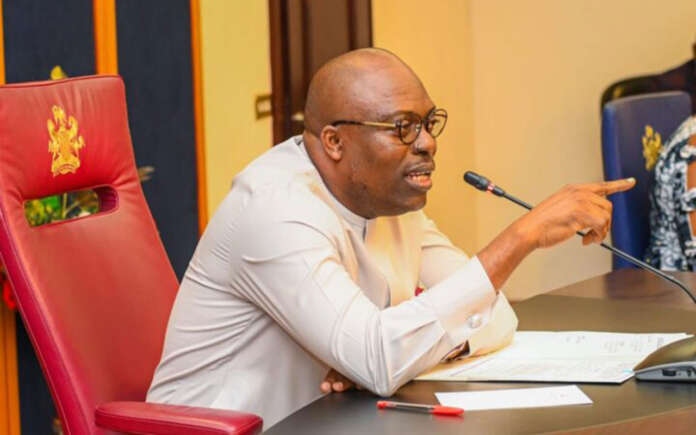
Siminilayi Fubara was unfortunate and appears not to have shown mastery of the art of politics all through his ordeals.

He was not the only Governor whose political godfather made governor against all odds but he was not just as lucky as the likes of Governors Charles Soludo, Francis Nwifuru and Babagana Zulum whose grandfathers left office after eight years and never bothered to exercise control over.

Perhaps Fubara forgot how his godfather and Minister of the Federal Capital Territory (FCT), Nyesom Wike, dragged him higher above his counterparts in public service to become Accountant-General and further pushed down card-carrying members of the People’s Democratic Party (PDP) to make him, a non-member of the party at a time, candidate for the 2023 governorship election in the state.

Most importantly, he failed to take into account the personality and temperament of his political godfather, as well as the character and gluttony of an average African political elite in taking the rather ill-fated decision to hurriedly delink from him.

Having found himself in such a pathetic situation and quagmire, Fubara should have explored more dynamic and conflict-free options to manage the mess, at least till he secures re-election, without allowing governance and the interest of the state to suffer loss. That was the wise thing to do.

His doom today may be likened to that of a man who surrounds himself with bad advisers, sycophants and political neophytes, except he himself is a person who rebuffs sound advice.
As it stands, he is the greatest loser since the struggle was not between him and the Rivers State House of Assembly per say.

Today, he is out of office and did not mostly make the best of times in office while his contender is still in power at the centre, with access to some public funds, part of which he may decide to use to service the interest of the lawmakers and any other person loyal to him. He may even quickly fix them into certain offices where they will remain politically relevant.

Fubara, on the other hand, does not have access to public funds anymore, did not leave as many marks in the sands of time as he may have wished, and has gone the way no Governor of the state had, at least in recent time.

Most likely, Fubara may be in a corner now shedding some tears over the fate that has befallen him while his adversaries are not much perturbed.

It may be a final bye to his Governorship and a big lesson on loyalty and godfatherism in general in Nigerian politics.

It is a shame that some political godfathers choose some inglorious paths.

Obviously, a big lesson has been learnt on the elements of Nigerian politics and we hope that big events will one day unfold for desperate godfathers to learn their own bitter lessons in the good interest of the country.

Dr. Okeke, a former Assistant Editor of Nigerian Tribune teaches Politics at the Nnamdi Azikiwe University (NAU), Awka and can be reached on
+234 704 041 4021

Is the Supreme Court of Nigeria Infallible? Lessons about the consequences of amoral judgments of the Supreme Court—Adegbenro Vs. AG, Federation

By Tonye Clinton Jaja

When we were children, both our school teachers and our parents taught us the common sense of delivering equitable judgments.

Whenever there was a case of two persons fighting, after adjudication, either the parents or teacher would flog both parties.

Although they may allocate more strokes of the cane for the person who started the fight. However, they would deliver lesser strokes of the cane to the innocent person. They would tell the said innocent person that next time, he ought to report to the teacher or parent instead of taking laws into his hands by fighting the provocateur.

In yesterday’s Supreme Court judgment, it appears that this commonsense of equitable allocation of blame was not applied equitably.

It appears that no blame was apportioned to the faction that instigated the conflagration in the first place.

It appears that the innocent party’s right to self-defence as protected by the doctrine of necessity was not considered at all.

At least the MORALITY and NECESSITY to the right to self-defence as a form of immediate first aid before approaching the court of law ought to be considered!!!

As usual, with the majority of its judgment, the Supreme Court of Nigeria strictly does not give consideration to moral principles or moral content, it is purely a consideration of the law and provisions of the Constitution of the Federal Republic of Nigeria, 1999.

However, this PURITANICAL and LEGALISTIC approach to the interpretation of legislation and the Nigerian Constitution is not without its unintended consequences.

In addition to this PURITANICAL and LEGALISTIC approach, is the doctrine of infallibility of the Supreme Court of Nigeria.

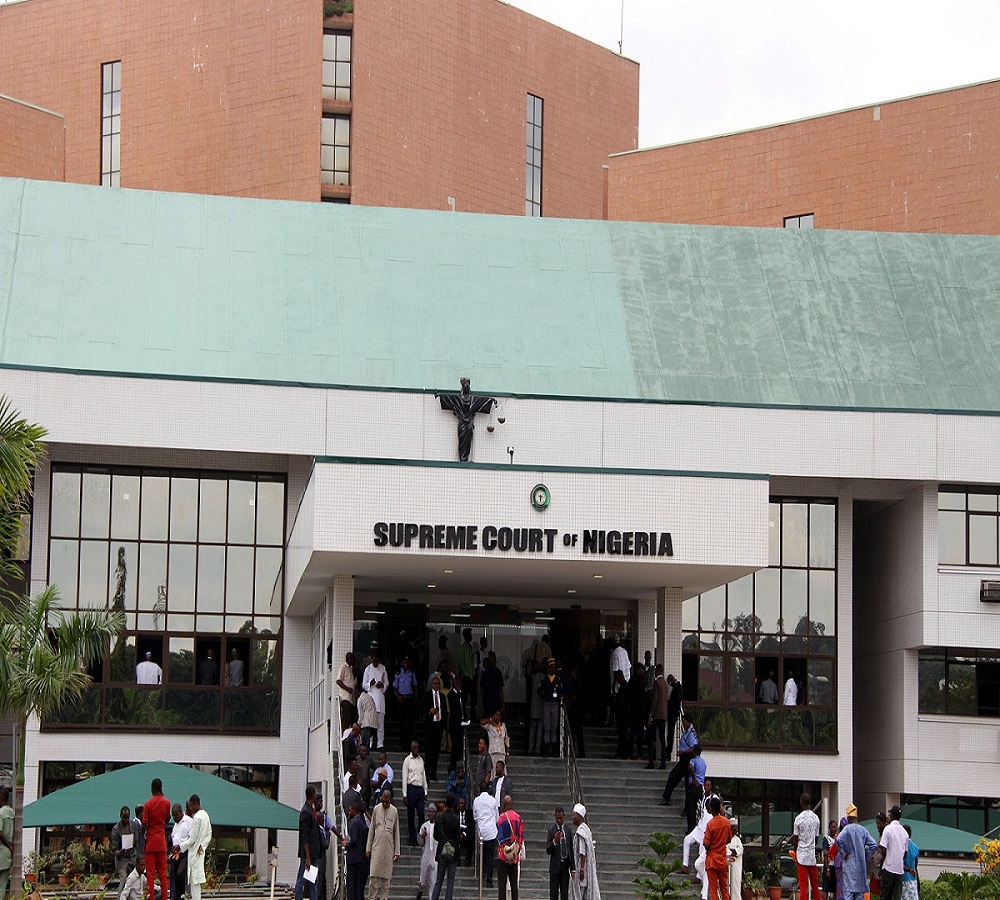
The Supreme Court of Nigeria (SCN) is the highest appellate court in the country. The decision of the court and its actions are not only final but are seen as infallible and sacrosanct.

This view is expressed in the maxim:

“The Supreme Court is final not because it is infallible, but it is infallible because it is final”.

Like a double-edged sword, this doctrine of infallibility (and absence of moral content) and finality of the judgments of the Supreme Court of Nigeria, although it serves and has some beneficial purpose, also has negative unintended consequences!!!

Take for example, the case of Adegbenro vs. Attorney-General of the Federation (1962) 1 Nigerian Law Reports, 338 and the related case of F.R.A. Williams V Dr. M.A. Majekodunmi (Case No.2) (1962) 1 NLR 328 are both regarded as flawed judgments of the Supreme Court of Nigeria because they both validated the actions taken towards the enactment of the Emergency Powers Act 1961.

The Supreme Court of Nigeria specifically stated that they were not interested in whether the said legislation was enacted out of malice or bad faith (mala fide), so long as the process for enactment of the said law complied with the provisions of the Nigerian Constitution.

However, as history shows, the said legislation was the trigger for the violence in the Western Region of Nigeria that eventually precipitated the Nigerian Civil War of 1967 to 1970!!!

This is a cautionary tale of what can happen when any judgment of the Supreme Court of Nigeria is 100% devoid of any moral content or consideration!!!

👆Is it deja vu?!!!

It was the decision of the Supreme Court of Nigeria in the year 1962 (Adegbenro V. Attorney-General of the Federation) that triggered the declaration of a state of emergency in the Western Region crisis that eventually precipitated the Nigerian Civil War, 1967-1970!!!

Now again, another judgment of the Supreme Court of 28th February 2025 has precipitated a declaration of a state of emergency!!!

Dr. Tonye Clinton Jaja
Executive Director,
Nigerian Law Society (NLS)
.

Rivers State of Emergency: Ex-Naval Chief Ibas becomes administrator, Atiku says it “reeks of political manipulation and outright bad faith”

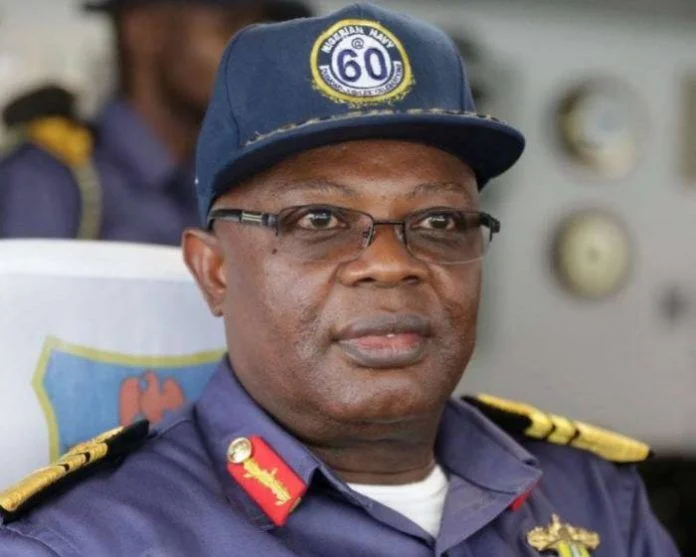
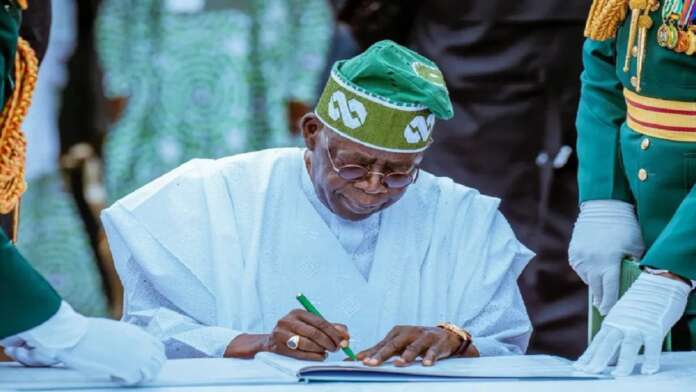
President Bola Tinubu has named a former Chief of Naval Staff, Admiral Ibokette Ibas, an administrator for Rivers State.

The appointment was made after the President declared a state of emergency in the state and suspended Governor Siminalayi Fubara, his deputy, Mrs Ngozi Odu, and the state lawmakers for six months.

Tinubu made the declaration on Tuesday during a national broadcast.

“By this declaration, the Governor of Rivers State, Mr Siminalayi Fubara, his deputy, Mrs Ngozi Odu and all elected members of the House of Assembly of Rivers State are hereby suspended for an initial period of six months.

“In the meantime, I hereby nominate Vice Admiral Ibokette Ibas (retd.) as Administrator to take charge of the affairs of the state in the interest of the good people of Rivers State.

“For the avoidance of doubt, this declaration does not affect the judicial arm of Rivers State, which shall continue to function in accordance with their constitutional mandate,” he said.

Tinubu said the decision was taken to restore stability in the state that has been witnessing political turmoil as a result of the disagreement between the state governor and the state lawmakers.

Read the profile of Admiral Ibokette Ibas HERE

Meanwhile, former Vice President Atiku Abubakar in a press release said the declaration “reeks of political manipulation and outright bad faith.”

The statement reads:

My response on the declaration of a state of emergency in Rivers

The declaration of a state of emergency in Rivers State reeks of political manipulation and outright bad faith.

Anyone paying attention to the unfolding crisis knows that Bola Tinubu has been a vested partisan actor in the political turmoil engulfing Rivers. His blatant refusal — or calculated negligence — in preventing this escalation is nothing short of disgraceful.

Beyond the political scheming in Rivers, the brazen security breaches that led to the condemnable destruction of national infrastructure in the state land squarely on the President’s desk.

Tinubu cannot evade responsibility for the chaos his administration has either enabled or failed to prevent.

It is an unforgivable failure that under Tinubu’s watch, the Niger Delta has been thrown back into an era of violent unrest and instability — undoing the hard-won peace secured by the late President Umaru Yar’Adua. Years of progress have been recklessly erased in pursuit of selfish political calculations.

If federal infrastructure in Rivers has been compromised, the President bears full responsibility. Punishing the people of Rivers State just to serve the political gamesmanship between the governor and Tinubu’s enablers in the federal government is nothing less than an assault on democracy and must be condemned in the strongest terms.
Atiku Abubakar
Vice President of Nigeria, 1999-2007
Abuja
18 March, 2025.

Tinubu declares state of emergency in Rivers, suspends Fubara, all elected officials

President Bola Tinubu has declared a state of emergency in Rivers State, citing the prolonged political crisis and governance paralysis.

In a nationwide emergency broadcast on Tuesday, Tinubu expressed deep concern over the situation.

He said: “I feel greatly disturbed by the political crisis in Rivers.

“The state has been at a standstill, and the people have been deprived of good governance. Fourteen months after Governor Fubara demolished the House of Assembly, it remains unbuilt. Many Nigerians have intervened, just as I did, but their efforts have been to no avail.”

“No responsible President will stand by without taking action. To restore good governance and peace in this circumstance, it has become imperative to declare a state of emergency. By this declaration, Governor Fubara is hereby suspended.”

The declaration comes just hours after another explosion was reported at an oil facility in Ogba/Egbema/Ndoni Local Government Area. On the same day, the Trans-Niger Pipeline, operated by Shell Petroleum Development Company (SPDC), went up in flames, further escalating tensions in the state.

Read the full text of the state of emergency broadcast HERE.

Examining NYSC bye-law and the legal implications of criticisms made by a corps member against the federal government

By M.O. Idam

Whether there exists a provision of NYSC Bye-Law that prohibits criticism against the federal government from a corps member and whether such a law is consistent with the Constitution of the Federal Republic of Nigeria.

A female Corps member is trending on X for describing President Tinubu as a ‘Terrible President’

In my opinion, she has not lied about that and hasn’t said any thing different from what many Nigerians who are dissatisfied with the government have said either in public or in private, as a result of frustration. Understandably, the reason she is trending for saying the obvious remains that she is currently an employee of the Federal Government of Nigeria ( a Youth Corper).

On its part, the NYSC has quickly reacted by reminding her that its By- Law does not permit criticism against the Federal Government by Corps members
. She has also been directed to report to her place of Primary Assignment (PPA). Perhaps for disciplinary actions. This reaction has fueled the already heated controversy surrounding her statement, on the social media.

I have gleaned through the said By-law and I failed to see any provision that prohibits a Corps member from expressing her ‘reality’ or speaking out against the government’. Nevertheless, I shall reproduce the nearest provision I came across relating to free speech. Same is contained in section 18, which provides as follows :
Any member who addresses the press on any policy issue without the written consent of the State Coordinator shall be tried by the Camp Court and, if found guilty, be liable to extension of service for thirty (30) days on half pay.

I’m not sure the above provision is applicable to a corps member who did not address the press on policy issues but merely used social media to express her frustration.

I know as a fact that , in similar condition as the Corps member, even the DG of NYSC, would make simular remarks or even more except he chooses dishonesty. Nevertheless, I will refrain from being emotional here, but shall proceed to address the issue in view.

Curiously, I seek answers to the following questions; would NYSC By-law survive an action against it, if its provisions especially one prohibiting criticism against the Federal Government ( if any) by a Corps member is challenged in court ?

In attempting to answer the question, I shall consider the provisions of the Constitution of the Federal Republic of Nigeria, 1999 which guarantees Freedom of Speech and the right to hold any opinion by any Nigerian. The said Constitution under Section 39 provides thus:
Every person shall be entitled to freedom of expression, including freedom to hold opinions and to receive and impact ideas and information without interference.

Nevertheless, Section 1(1) and Section 1(3) of the Constitution made its provisions superior to every other Laws in Nigeria including the NYSC By-law when it provides in Section 1 (1), that This Constitution is supreme and its provisions shall have binding force on the authorities and persons throughout the Federal Republic of Nigeria. Furhermore, section 1 ( 3) of the constitution also strengthens the supremacy of the Constitution when it provides that, If any other law is inconsistent with the provisions of this Constitution, this Constitution shall prevail, and that other law shall, to the extent of the inconsistency, be void.

In light of the above provisions, it is my view that NYSC By-law is nowhere in rank to the provision of the Constitution of the Federal Republic of Nigeria 1999 which has ultimately secure the fundamental human rights of every Nigerian which includes but not limited to the rights to freedom of speech.

Amplifying the above position in a similar matter where an Act of the National Assembly which ran contrary to the constitutional provision of freedom of Speech was interpreted by the Court of Appeal in the case of Inspector – General of Police V. ANPP (007) 18 NWLR (Pt. 1066) 457 at 498-499, per Adekeye, JCA (as he then was) , the Appeal Court declared as void and contrary to the fundamental rights to freedom of expression and association under Sections 39 and 40 of the Constitution, the provisions of the Public Order Act which provided to the effect that a permit must be obtained from the Governor before people could assemble in public and express their opinions… The learned justice of the Court of Appeal relied on the Supreme Court authorities of A.G., Federation v. Abubakar [2007] 10 NWLR (Pt. 1041) 1 at 92-93 and Osadebey V. A.G Bendel State (1991) SCNJ 102 at 218, to arive at the above decision.

The position has not changed, that the provisions of the Constitution remains superior to any law including but not limited to the NYSC by-law.

CONCLUSION

While I strongly insist that no part of the NYSC Bye- law has been violated by the Corps member, I daresay that assuming any portion or provision dealing against free speech was violated, such portion or provision would hardly stand the Supreme provisions of the Constitution of the Federal Republic of Nigeria 1999(as Amended)

M.O.Idam, Esq.

[email protected]

A journey through Ogoni, the Titusville of Nigeria

By Suyi Ayodele

“I am happy the mangroves are coming back. I feel happy because for a long time now, we haven’t had fish, no crabs; life has not been easy. But today, I can walk through that (pointing at the river in Gio) to fetch this jionudor (a palm tree-like stump) that serves as our firewood. Before now, the river was covered by oil. Everything in it died. Now, aquatic life is coming back gradually. I am happy and I know many of our people are happy.”

The above are the words of 65-year-old Godwin kirijio a retired civil servant, as he waded through the shallow end of the Ogoni River in Gio, Gokane Local Government of Rivers State. I engaged the retired civil servant by the bank of the river.

At a time when the Rivers of Crisis is threatening to overflow its bank, I was on a tour of the creeks of Ogoniland.

My beat is the South-South and the South-East as Regional Editor of the Nigerian Tribune. I had heard stories of poisoned soil and dead fishes and wanted a feel of the life that killed them. Then, I had an opportunity through an agency of the government called HYPREP (Hydrocarbon Pollution Remediation Project) which is charged with cleaning up the polluted soil and water of Ogoniland. The Dr Peterside Dakuku-led Media Voices for Accountability extended the opportunity to me which I grabbed without hesitation. I wish there was a political equivalent of that agency HYPREP. If there was, we would empower it to detoxify our politics, clean up the beds of Rivers and make the people live again.

The two-day voyage in Ogoniland opened my eyes to the effects of the damages caused in that locality by the activities of the International Oil Companies (IOCs), which have operated in Ogoniland for over six decades. I saw what many may never see.

Remember Titusville, Pennsylvania, United States of America? It is the ‘Oil Creek Valley’, where Edwin L. Drake first struck oil in commercial quantity on August 27, 1859. The story of the once booming creek-turned city presents for every good student of petroleum history, the evil associated with the wealth obtained from the black substance known as crude oil.

The unfortunate story of Titusville has nothing to do with the fact that the first oil explorer, Drake, died as a poor prisoner in 1880. The tragedy of Titusville lies in the environmental degradation caused by the oil exploration activities that have affected the environment and the people.

The most unfortunate account of the misfortune of oil exploration in Titusville is contained in what petroleum experts call ‘Orphaned Oil Wells’, a euphemism for abandoned oil wells that have passed their usefulness. Those once-prosperous oil wells, now abandoned, cause unmitigated environmental damages.

The American Environmental Protection Agency (EPA,) states that over three million ‘Orphaned Oil Wells’, which “have not been properly plugged and decommissioned”, are scattered all over the country with “over nine million Americans living within a mile of the abandoned oil wells!”

The implications, according to the EPA, are that: “When an oil well is abandoned, it may emit toxins and pollution that contaminate groundwater, affecting local communities and the environment. Abandoned and orphaned wells are also considered major contributors to greenhouse gas emissions… Improperly plugged or decommissioned oil and gas wells are essentially open holes in the ground. They may release toxins like methane, arsenic, benzene, and hydrogen sulphide into the environment, even when they are no longer productive. They can cause fires and explosions. Even a small leak from a single well could have a tremendous impact over years or decades, affecting the soil and groundwater and causing air pollution.”

As it was with Titusville in America, so it is with the oil-rich Niger Delta region of Nigeria. The elders of my place say that a whirlwind which troubles the ogi (raw akamu) seller must have rendered the yam-flour seller empty of her wares (Ategun to damu ologi ti so elelubo d’ofo). If America with its sophistication in technology could lament about environmental degradation because of oil exploration, one can imagine the fate of the environment and the people of the Niger Delta.

The history of Ogoniland is one that humanity will never forget. The oil-rich locality was largely unknown until the early ‘90s when the indigenes began agitating against the adverse effects of oil exploration in the area and demanded action to alleviate their suffering. The flagship of that agitation was the Ogoni Bill of Rights of November 1990, endorsed by leaders of Ogoni from Babbe, Gokana, Ken Khana, Nyo Khan and Tai.

The Bill, an intellectual arm of the struggle against environmental devastation in Ogoniland, also had its militant wing known as the Movement for the Survival of Ogoni People (MOSOP). MOSOP was led by the State-murdered environmentalists, writer and poet, Kenule Beeson Saro-Wiwa, otherwise known as Ken Saro-Wiwa, or simply, Saro-Wiwa.

The agitation for the emancipation of Ogoniland from the shackles of IOCs visiting untold environmental pollution in the area took a tragic-dramatic turn on May 21, 1994, when the foursome of Albert Badey, Edward Kobani, Theophilus Orage and Samuel Orage, who were holding a meeting in Giokoo Community in the Gokana Local Government Area of Rivers State, were attacked by an irate mob and murdered.

The Federal Military Government of the late Head of State, General Sani Abacha, wasted no time as it arrested Ken Saro-Wiwa and eight others, accusing them of being the masterminds of the killing of the four Ogoni leaders. Saro-Wiwa and his eight Ogoni leaders: Saturday Dobee, Nordu Eawo, Daniel Gbooko, Paul Levera, Felix Nuate, Baribor Bera, Barinem Kiobel, and John Kpuine, were paraded before Justice Ibrahim Auta’s special tribunal which found them all guilty and sentenced them to death by hanging.

The Abacha-led military junta affirmed the sentence on November 8, 1995, and had all the nine Ogoni leaders executed on November 10, 1995. Their bodies were never released to their families! In all, Ogoniland lost 13 of its illustrious sons to the agitation to have a clean environment for the people. Many of the IOCs left the area and have not returned. Many oil wells in the locality became ‘orphaned’ and the attendant effects of such ‘Orphaned Oil Wells’ combined with the already environmental degradation, made Ogoniland lie in waste!

The death of the initial Ogoni Four and the execution of the Ogoni Nine opened the eyes of the international communities to the happenings in Ogoniland. Taking a clue from the happenings, the United Nations Environment Programme (UNEP) commissioned a report on the environmental devastation in Ogoniland. The UNEPA report recommended, among others, the immediate remediation of the soil and groundwater in Ogoniland.

The report was presented to President Olusegun Obasanjo’s government, which did nothing. Thus, the Ogoni Clean-Up project became a political sloganeering in the hands of successive governments until, surprisingly, the lethargic administration of General Muhammadu Buhari took over the challenge and initiated the Ogoni Clean-Up Project with the establishment of HYPREP under the Federal Ministry of Environment, vide a memo dated April 28, 2022, with Ref No, PRES/81/SGF/82.

Before the Ogoni Clean-Up Tour, Ogoni had remained, to me, a mystery; a land of fairy tales, typical of the mystical city of Kathmandu in Nepal. So, the tour became experiential, especially as the team was taken through the landscapes to have first-hand information of what happened in the land of Ken Saro-Wiwa, and what HYPREP is doing in fulfilling the mandate given to it to remediate Ogoniland.

The idea of the tour, when it was first mooted by Dr Dakuku, ignited in me a deep sense of enthusiasm. I knew it was an opportunity I must take, first, out of curiosity. But more importantly, to have a first-hand idea of what the famous Ogoniland of the late Ken Saro-Wiwa and his eight other heroes of the 1995 agitation against the inhuman environmental degradation caused in the area, and the entire Niger Delta in general, looks like, by the operations of the IOCs extracting crude oil.

My first impression as we took a detour to Ogoniland was that life had returned to the once-devastated land. The pre-tour presentation by the Communication Department of HYPREP headed by Dr Enuolare Mba-Nwighoh on what the body had put on the ground, no doubt fired inspiration to explore the famed Ogoniland. Ditto the idea, as suggested by the Project Coordinator (PC) of HYPREP, Professor Nenibarin Zabbey, that HYPREP had gone beyond the original mandate of remediation to providing basic infrastructures to make life abundant for the Ogoni people.

So, as we hit Ogoniland, I looked out to see if indeed the narratives have changed and if life is back in Ogoniland. I admit here that indeed, Ogoniland is getting back its glory before the devastation. The peasants and their farmlands, the luxuriant vegetation, the new road networks and the presence of government in the locality all combined to show that Ogoniland will be great again.

Just as Professor Zabbey, HYPREP Project Coordinator assured that: “HPREP will implement the UNEP reports and recommendations but not sheepishly” but would “add value to the report. Beyond the core value of remediation as recommended by UNEP, we are adding electricity, healthcare delivery services and potable water facilities”, the agency can be said with empirical evidence that it has lived up to its billing as an interventionist agency.

The HYREP water projects in Korghor/Gio and Barako, the giant ongoing 100-bed specialist hospital in Dotem due for completion in September; the 40-bed cottage hospital at Buan Community slated for commissioning in July and the N40 billion Centre of Excellence, a research institute with its Integrated Soil Management Centre (ISMC), sitting on a 28-hectare of land, are mind-boggling!

With what HYPREP has been able to do, one can confidently say that life is back in Ogoniland! The remediation works ongoing in Ogoniland to address the pain of the people are pointers to the fact that life could become abundant in the area again.

Day two of the tour of the HYPREP remediation sites opened one’s eyes to the level of devastation visited on the agrarian community by the various oil companies that had operated in Ogoniland in the last 60 years! I saw for the first time what oil spillage looks like. I was shocked and sad to see, for instance, at LOT 15 of the Obajioken remediation site, a land measuring 30,750 square metres, polluted up to 6.2 metres deep! Even with my almost total anosmia state, I could perceive the smell of crude oil in the environment!

But it is heartwarming to note that gradually, life is returning to Ogoniland. Revegetation is taking place and aquatic habitats are being restored. The massive excavation sites geared towards removing the contamination in the soil and groundwater are encouraging. One can boast that the Ogoni Clean-up project has gone beyond political sloganeering and has now become a reality.

More engaging is the fact that HYPREP is also focusing on reforestation of the ancient Ogoni mangroves. Though I couldn’t follow the team on the voyage to the big sites for the mangrove replanting because of my phobia of water, the few sites by the banks of the Ogoni River at Goi in Gokana Local Government Area, are enough testimonials that aquatic elements and avian species would soon return to their natural habitats. The simple implication of this is that the locals would soon have their aquatic delicacies and means of livelihood back!

More delightful is the engagement of the locals in the projects. The sense of belonging, relevance and ownership given to the Ogoni rural dwellers cannot be quantified. This is the physical manifestation of light at the end of the tunnel!

This is why HYPREP cannot afford to drop the ball. Its ambitious projects in Ogoniland indicate that with the right mindset, sustainable willpower, and determination to make a difference, establishments can indeed change the narrative for a people once on the verge of extinction. One can only hope and pray that Nigeria will not happen to those giant strides in Ogoniland.

The Ogoni people, nay, the entire Nigerian people, owe it a duty to sustain the efforts of HYPREP in Ogoniland by building a solid wall of protection around the facilities deployed to redress the injustices of the past six decades. HYPREP must be self-challenged to keep upping the ante. The success of the Ogoni Clean-Up Project is the success of the Niger Delta people.

The PC of HYPREP, Professor Zabbey, re-echoed this when he intoned that “HYPREP sees the Ogoni clean-up project beyond Ogoniland. What we are doing is a sustainable project for the entire Niger Delta region and the whole country at large. We are determined to ensure that what we are doing in Ogoniland will serve as a template for other areas where we have that kind of experience as Ogoni.” Nothing can be more encouraging!

As the tour ended, the biggest message for me is that the late environmentalists, Ken Saro-Wiwa, and his fellow Ogoni patriots who were murdered by the State, and the four Ogoni chiefs who paid the supreme price for a better Ogoniland, in the wake of the Ogoni crisis, did not die in vain. Without any intention to engage in necromancy, I say this: Ken Saro-Wiwa, hear this: You and your ideas live on in HYPREP.


FG awards Lagos ports renovation contract to Chagoury Group

The federal government has reportedly awarded a contract for the renovation of two major Lagos ports — Tin Can and Apapa — to Chagoury Group,

Chagoury Group is a multinational conglomerate led by Gilbert Chagoury, a Lebanese-Nigerian billionaire.

According to TheCable, sources close to the conversation said the Federal Executive Council (FEC) approved the contract in February.

“Yes, the award was given to Chagoury Group after it followed due process,” a source said, responding to TheCable’s enquiry.

“FEC gave the approval sometime in February and the agency in charge, that is the Nigerian Ports Authority (NPA), will give the announcement soon.”

The NPA, in November 2023, announced plans to commence the rehabilitation of ports across the country, valuing the project at $1.1 billion.

On April 18, 2024, the Nigerian Ports Authority (NPA) said it secured a $700 million facility agreement for the rehabilitation of the Apapa and Tin-Can Island ports in Lagos.

Mohammed Bello-Koko, the ex-managing director of the NPA, had said the loan, negotiated with Citi Bank Nigeria, would be funded by the UK Export Finance (UKEF), an export credit agency, for the project.

Although no official announcement has been made yet, Ikechukwu Onyemekara, spokesperson of the NPA, confirmed that the project was awarded to Hitech Construction and ITB Nigeria, stressing that “Chagoury was not stated in the contract”.

TheCable’s checks found that Chagoury Group operates several subsidiaries — including two construction firms, Hitech and ITB Nigeria.

The conglomerate is reportedly responsible for the construction of major projects across Lagos state.

In September 2023, David Umahi, the minister of works, disclosed that Hitech will handle the Lagos-Calabar coastal highway project under a public-private partnership (PPP) model.

Hitech is also said to be the firm that oversaw the construction of the Lekki-Epe expressway and the Ajah flyover in Lagos.

Former Vice-President Atiku Abubakar, in May 2024, criticised the federal government for awarding the construction of the coastal highway to Hitech, saying there was a conflict of interest.

Abubakar had said Seyi, President Bola Tinubu’s son, is a director on the board of CDK Integrated Industries, another subsidiary of the Group.

In response to Atiku, the presidency said Tinubu’s son is entitled to pursue his business interests in Nigeria and around the world within the bounds of the law.

On March 16, Umahi said Tinubu did not recommend any company for the Lagos-Calabar road project.

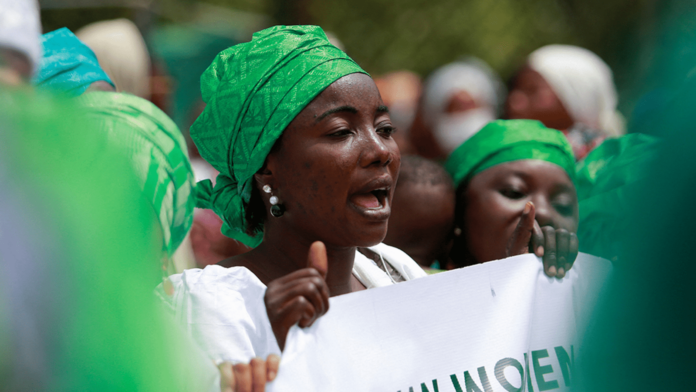
Okene Central constituents stage rally for Senator Natasha’s reinstatement

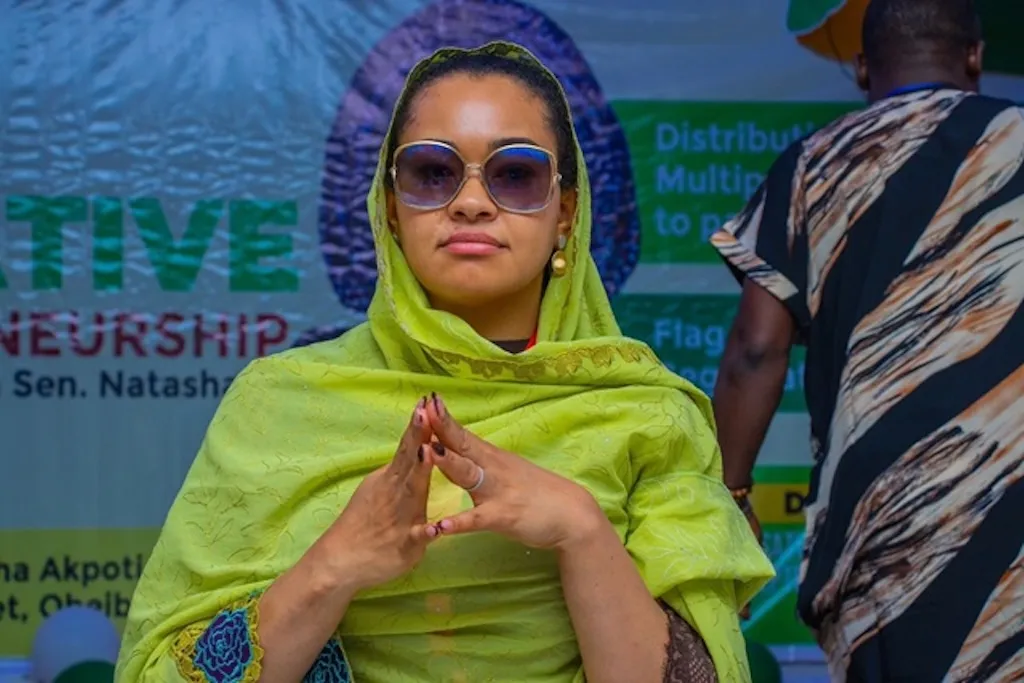
Constituents from Kogi Central Senatorial District on Tuesday, staged another solidarity march against the suspension of their Senator, Natasha Akpoti-Uduaghan, demanding her immediate reinstatement.

Speaking during the solidarity march held at Itakpe Junction in Okehi local government area of the state, the President General of Ebira Youth Congress (EYC), Comrade Ahmed Bachido noted that the Senate under Godswill Akpabio breached a valid court order to achieve an agenda.

He demanded the immediate recall of the Kogi Central senator, saying the people desire adequate representation in the red chamber.

“We the people of Kogi Central demand immediate recall of Senator Natasha Akpoti-Uduaghan. Her suspension is illegal and cannot stand. We need effective and adequate representation, which our senator have been giving to us. We cherish her.

“We want to assure our senator, Distinguished Senator Natasha Akpoti-Uduaghan that we are with her in this trying period. We are not going to leave her or let her down until victory is achieved,” Bachido said.

Speaking also, a human rights activist, Comrade Sheik Maman, described Senator Akpoti-Uduagha as a pride to the entire Kogi Central and Nigeria.

“Senator Natasha Akpoti-Uduaghan enjoys the popular support of the entire Kogi Central people during her election in 2023. We are not going to standby and allow our hard-earned victory to be rubbished by selfish politicians who do not mean well for the people,” Maman said.

He commended the Kogi Central women for turning out in their numbers for the solidarity march, assuring that their support for Senator Akpoti-Uduaghan in her trying period will not be in vain.

“You are all aware that Senator Natasha Akpoti-Uduaghan has been giving us effective representation. She has been empowering the youth and women, and will continue to do so despite this temporary setback by enemies of the people,” he added.

A middle-aged woman who identified herself as Seriya Usman, advised the people of Okene Central senatorial district to look beyond politics and rally around the senator, saying that the issue at hand goes beyond partisan politics.

Other speakers at the event noted that the senator was doing well as their representative, emphasising that her suspension was carried out without due process as such, requiring the support of all.

Leadership

Female casualties: Obsequies for women’s participation in legislature

By Emeka Umejei

In Greek mythology, the tragic end of Antigone, a Theban princess and the major character in Sophocles’ Antigone provides a prism for interrogating the fate of Nigerian female legislators. After the death of Oedipus in Colonus, Athens, his two sons, Eteocles and Polyneices killed each other in the battle for the throne of Thebes.

Thus, Creon, their uncle became a beneficiary and took over the throne of Thebes. However, Creon issued a royal decree that accorded Eteocles a state burial and forbade Polyneices from being buried. According to the decree, whoever buried the corpse of Polyneices would be sent to die in the living tomb. In defiance of the state, Antigone decided to bury her brother, whose corpse had been left to decay in an open field, at the expense of her own life. She was caught and sent to die in an underground tomb. This is where the troubles began for Creon. Though he succeeded in enforcing the law of the state, he lost his son and wife in the ensuing melee.

I draw a nexus between the fate of Antigone and the fate of female legislators in the Nigeria legislature stemming from two interrelated events that occurred at the Lagos State House of Assembly (LAHA) and the Senate Chambers of the national assembly, Abuja. Even though the two incidents happened in two different political contexts, women were the casualties in both instances.

On January 13, 36 lawmakers at LAHA unanimously sacked Mudashiru Obasa, the speaker of the Lagos State House Assembly and elected one of their colleagues, Mojisola Meranda as the new Speaker of the state legislature. The election of Mojisola as Speaker of the LAHA was historic as she became the first female speaker of the LAHA since the return to democratic governance in 1999.

However, Obasa, who was overseas at the time of his removal resisted the impeachment and sought judicial intervention because his colleagues did not follow the rules of the house: “If you are going to do that, you must follow the rules of the House. It is constitutional to impeach and remove. You have to follow the dictates of the Constitution.” After 49 days of holding forte as Speaker of the LAHA, Mojisola was forced to resign on 3 March 2025 and Obasa was reinstated as speaker of LAHA.

While the LAHA incident was simmering down, the Senate Chambers of the National Assembly captivated Nigerians with drama and politics. In this drama, Senator Natasha Akpoti-Uduaghan (SN) sparred with the Senate President (SP), Godswill Akpabio. At the outset, SN was asked to leave her seating position to another but she refused and lamented that the SP was picking up on her for selfish reasons.

While the veracity of her allegation is still within the realms of judicial adjudication, it is important to acknowledge that this was not the first altercation between the SN and the SP. During a plenary of the senate in July 2024, SN had commented on a motion without prior permission of the SP, thus contravening the Senate’s standing order. She apologised immediately when she realised her mistake but the SP responded with a condescending statement that: “We are not in a nightclub.” The Senate President later apologised stressing that “I will not intentionally denigrate any woman and always pray that God will uplift women. Distinguished Senator Natasha, I want to apologise to you”.

Eight months after, SN and the SP reenacted their topsy-turvy drama but the outcome was entirely different. In this second round, SN insisted that the SP picks on her because she refused his amorous advances. Subsequently, Natasha was referred to the Senate Ethics Committee, which recommended a six-month suspension for contempt of the Senate. The Senate ratified the recommendation of its ethics committee and suspended SN for six months.

The cannibalization of the two women by their male colleagues in the Nigerian legislature may not be a good omen for women’s participation in politics in Nigeria. According to the World Bank, the proportion of seats held by women in national parliaments in Nigeria is merely 4%. The Inter-Parliamentary Union data for women’s participation in the Nigerian Senate is a trifle 2.8%, which is far below the global and regional averages for women participation in national parliaments. According to the Inter-Parliamentary Union, the sub-Saharan Africa averages for lower chambers and unicameral legislature is 27.1%, it is 27.0% for the upper chamber, and 27.0 % for all chambers. Gender equality is a right that cannot be dismissed with a wave of the hand and fulfilling it is critical to achieving Sustainable Development Goals (SDG). This is why Gender Equality is one of the 17 SGD goals adopted for the 2030 Agenda for Sustainable Development. If the Nigerian legislature excludes women from participating in lawmaking because of its internecine patriarchy, it raises a cause of concern for lawmaking as women are known to bring compassion to bear on legislative assignments.

Creon succeeded in enforcing the law of the state but he paid dearly for it with the lives of his wife and son because he refused to acknowledge his error of judgment. While President Tinubu is the head of the executive branch of government, it is important to acknowledge that the two events that culminated in the fall of the two women in the Nigerian legislature have the imprimatur of his administration. The earlier he intervenes, the better for the future of women’s participation in legislative politics and our march towards achieving the 2030 Sustainable Development Goals.

Emeka Umejei, PhD is a Senior Research Associate in Communication and Media at the University of Johannesburg in South Africa.

TIPS