Home Blog Page 40

U.S.-based Nigerian doctor dies during medical outreach in Abia State after sudden health crisis

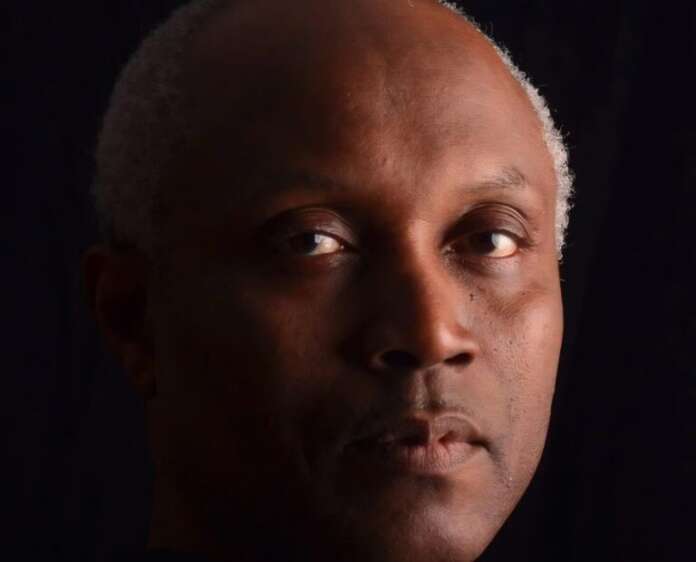
A United States-based Nigerian physician, Dr. Uzoma Nwaubani, has died following a sudden medical emergency while participating in a free healthcare outreach in Abia State.

The incident occurred during a five-day medical mission held between April 13 and April 17, 2026.

The outreach was organised by the Abia State Government in partnership with the Association of Nigerian Physicians the Association of Nigerian Physicians in the Americas, with the aim of delivering accessible healthcare services to underserved communities.

Dr. Nwaubani, who was part of the visiting medical team, had travelled to Nigeria alongside her family, including her husband and daughter, a final-year medical student in the United States.

According to Abia State Governor, Alex Otti, the physician experienced a sudden health crisis during the outreach and was immediately rushed to a medical facility for urgent care.

A team comprising ANPA professionals and local healthcare experts reportedly made extensive efforts to stabilise her condition.

Despite these interventions, she could not be revived.

Governor Otti expressed profound sadness over the loss, describing Dr. Nwaubani as a selfless and compassionate professional whose dedication to service left a lasting impact.

He extended his condolences to her family, colleagues, and the wider medical community, adding that the state government has initiated contact with her loved ones and will provide necessary support.

Free Download: Insurgency, State Fragility, and Human Security in Nigeria: A Comprehensive Analysis

By Mojúbàolú Olufúnké Okome

I tend to write long papers, and make long, complex explanations that may bore most. Here’s an attempt to be brief, distilled from a L-O-N-G paper. I first wrote about this matter in the early years of this century. However, many Nigerians at the time never saw any sense in paying attention. I wonder why we think that ignoring a matter would make it go away. We are now forced to contend with rampant insecurity, dreadful and growing poverty, causing escalating inequality. Maybe now we will get serious and realize that no one is coming to save us. The political class are also culpable because they are figuratively fiddling while our Rome burns.

Let me give you the full idea. I edited a book that was published by Palgrave in 2013. The paper, was written for a conference”: “‘(Un)civil Society’? State Failure and the Contradictions of Self-Organisation in Nigeria,” May 14–17, 2005, sponsored by the Heinrich Böll Foundation and organized by Axel Harneit-Sievers. The conference focused on the conceptual and practical meanings of “uncivil society,” and many of the papers presented considered the extent to which Nigeria was a failed state.

But this book presents the argument that while those conceptual explorations remain valid for scholars of Nigerian and African politics, it is also important to more deliberately interrogate and contextualize “uncivil society” and state failure, rather than accept them at face value. The “uncivil society” concept included key aspects like:
• Context of the Discussion: The concept is explored through the lens of state-society relations, particularly when the state fails to meet the needs of its people. It is used to analyze scenarios where civil society, or elements within it, act in ways that are destructive or against democratic principles.
• Key Publications/Work: I edited Contesting the Nigerian State: Civil Society and the Contradictions of Self-Organization. I also authored “A Cause for Alarm: The State, Human Security and National Security in Nigeria,” a paper first presented in January 2015 to the UI Masters students in Strategic Studies which discusses these themes.
• Focus on Nigeria: The work focuses on the contradictions in Nigeria, where, despite democratic transitions, the state often struggles to maintain security and uphold civil liberties, leading to “uncivil” actions by both state and non-state actors.
• Relevance: The work highlights discussions about state fragility, the role of militias, and political instability.
Here’s a powerpoint created with NotebookLM on the same subject.

Insurgency, State Fragility, and Human Security in Nigeria: A Comprehensive Analysis
Mojúbàolú Olufúnké Okome

Professor of Political Science, African & Women’s Studies
Brooklyn College, CUNY

Summary

This paper analyzes Nigeria’s interlocking crises of state fragility, insurgency (primarily Boko Haram and newer groups like Lakurawa), and human security failure. The author argues that Nigeria is not a “failed state” but a fragile one — a distinction that preserves the possibility of improvement. The paper traces the structural roots of insecurity, evaluates the weakness of state and civil society responses, and proposes both immediate and long-term policy interventions.


Key Takeaways

  1. Nigeria is a fragile state, not merely a failed one. Despite having Africa’s largest economy, it ranks very low on the Human Development Index and consistently fails to fulfill its constitutional obligation to protect citizens from want and fear.
  2. Boko Haram is a symptom, not the cause. The insurgency exploits structural problems rooted in British colonialism, extreme poverty, weak governance, and a North-South divide — not a sudden or isolated breakdown.
  3. The security crisis has worsened and diversified. Beyond Boko Haram, new threats like Lakurawa — a jihadist group affiliated with the Islamic State Sahel Province — have emerged, exploiting ungoverned border areas in Sokoto and Kebbi states. Banditry, kidnapping, and mass school closures have spread across multiple regions.
  4. The humanitarian toll is staggering. An estimated 300,000 killed since 2009, 3 million displaced, 18–20 million children out of school, and 133 million Nigerians living in multidimensional poverty — with the worst concentrated in the Northwest and Northeast.
  5. Military failure is rooted in corruption. Despite a £4 billion annual defense budget, the military was repeatedly outgunned by Boko Haram. Massive embezzlement of defense funds went unaddressed, and 54 soldiers were sentenced to death for mutinying rather than confront Boko Haram.
  6. Government response has been deeply inadequate. President Jonathan failed to visit Chibok after the girls’ abduction, spread misinformation calling activists unpatriotic, and prioritized electioneering over security. The paper is equally critical of President Tinubu leaving Nigeria days after U.S. airstrikes on Christmas Day 2025 without public explanation.
  7. Civil society response has been weak and fragmented. The #BringBackOurGirls movement kept the issue alive but was poorly resourced and politically marginalized. Religious institutions largely urged passivity (prayer over protest), and most Nigerians outside the Northeast treated the crisis as someone else’s problem.
  8. Economic inequality fuels extremism. Mass unemployment, grinding poverty (especially in the North), and the visible indifference of Nigeria’s wealthy elite create fertile ground for extremist recruitment.
  9. Foreign military intervention is not the answer. The paper argues against direct U.S. military involvement, calling instead for targeted economic sanctions, UN Special Rapporteur investigations, African Union engagement under Article 4(h), and international pressure to hold the Nigerian government accountable.
  10. The state must lead its own rescue. The central argument is that no foreign power can or should substitute for Nigerian state accountability. Civil society, scholars, and citizens must demand that the state fulfill its constitutional duty to protect ALL Nigerians — regardless of region, religion, or class.

Breaking News: D4vd hit with murder charge over death of 14-year-old girl in LA

David Burke, a 21‑year‑old musician ​known professionally as D4vd, has been ‌charged with the murder of 14‑year‑old Celeste Rivas, Los Angeles District Attorney ​Nathan Hochman said on Monday.

Hochman ​said the remains of Rivas were ⁠found last year in the front ​trunk of a car registered to ​D4vd. She had been missing for nearly a year-and-a-half when her decomposed remains were ​discovered in September 2025.

The vehicle ​had been parked for weeks in a ‌Hollywood ⁠Hills neighborhood before being towed to an impound lot, where workers reported a foul odor.

D4vd gained fame in ​2022 ​after songs ⁠he recorded on his phone for his Fortnite gaming ​videos went viral on ​TikTok, ⁠with the hit “Romantic Homicide” helping him sign a deal with Interscope Records. ⁠He ​was scheduled to be ​arraigned on Monday afternoon.

Reporting by Lisa Richwine, Editing ​by Franklin Paul and David Gaffen

Reuters

Trump picks public health veteran, Erica Schwartzto lead CDC as administration shifts tone on vaccines

President Donald Trump’s new pick to lead the US Centers for Disease Control and Prevention is a public health veteran who has led vaccination programs, a new sign of the administration’s shifting views on vaccines.

Dr. Erica Schwartz’s nomination to lead the embattled agency came just hours after US Health and Human Services Secretary Robert F. Kennedy Jr.’s appearance at a congressional hearing where he made some of his most supportive comments yet on vaccination.

The measles vaccine is safe and effective “for most people” and can be safer than getting measles, Kennedy said Thursday morning under Democrats’ grilling before the House Ways and Means Committee.

He then agreed when Rep. Linda Sanchez, a Democrat from California, pressed him on whether vaccination could have saved at least one child’s life during a large Texas measles outbreak last year.

Yet at other times throughout the day, he hedged and forcefully pushed back, as when Pennylvania Democratic Rep. Madeleine Dean suggested that his history of vaccine skepticism had driven a fall in vaccination rates.

“They had nothing to do with me,” Kennedy said during a hearing of the House Appropriations subcommittee on health. “Vaccination rates dropped after Covid because of mismanagement.”

The tense back-and-forths tee up the likely questions Schwartz will face during her Senate confirmation hearing over how strongly she’s willing to break with Kennedy on controversial issues such as vaccine policy.

Schwartz served as deputy surgeon general in Trump’s first administration, spent 24 years in the US Public Health Service Commissioned Corps and served as a rear admiral in the Coast Guard. She holds a medical degree from Brown University and a law degree from the University of Maryland.

Kennedy and his team had recommended Schwartz to the president along with a slate of other appointees to shore up CDC leadership whom Trump also named Thursday.

They include US Food and Drug Administration Principal Deputy Commissioner Dr. Sara Brenner, who will serve as a public health adviser to Kennedy; Dr. Jennifer Shuford, commissioner of the Texas health department, who will become CDC deputy director and chief medical officer; and Sean Slovenski, a former Walmart and Humana executive who will serve as a deputy director and chief operating officer.

The secretary nodded to the incoming group of CDC leaders during one congressional hearing Thursday.

“We’re bringing in an extraordinary team. … The team has been leaked, and it’s gotten applause from both Republicans and Democrats,” Kennedy said before the House Appropriations subcommittee on health. “I think this new team is really going to be able to revolutionize CDC and get it back on track and get it doing the job that it does better than any other health agency in the world.”

Schwartz certainly has a background in the CDC’s areas of expertise. During her time with the Coast Guard, she led disease surveillance and vaccination programs and wrote Coast Guard policy on pandemic influenza and other viral disease outbreaks.

Schwartz also played a role in the government’s response to natural disasters, including hurricanes and earthquakes.

“When I was Surgeon General, I personally selected Dr. Erica Schwartz as my Deputy,” Dr. Jerome Adams, who served as the nation’s top doctor during the first Trump administration, said in a social media post Thursday. “She has the expertise, credibility, and integrity to lead the CDC effectively. If allowed to follow the science without political interference, she’ll excel. Cautiously optimistic but encouraged by this pick.”

Michael Baker, director of health care policy at the nonprofit American Action Forum, told CNN that when Schwartz was deputy surgeon general, “I had the opportunity to collaborate with her and the team on public health projects and particularly the COVID-19 response. Her leadership was essential to the early response, and she became a go-to resource to communicate with state leaders on testing, surveillance, and other emergency measures. Her strong leadership qualities and wide-ranging view of and expertise in public health are crucial to stabilizing and ultimately strengthening CDC during this tumultuous time.”

The White House was under a deadline to nominate a permanent director for the CDC after Kennedy abruptly fired the last Senate-confirmed director, Dr. Susan Monarez, in August. The federal Vacancies Act says a Senate-confirmed position can be open for only 210 days, and past that deadline, the agency cannot have an acting director. That 210-day mark fell in late March.

Currently, Dr. Jay Bhattacharya is serving a dual role as director of the National Institutes of Health and as head of the CDC, after serving as its acting director.

If confirmed into the role, Schwartz will inherit an agency looking to strike a balance between its traditional public health mission and a slew of high-profile changes, exits and proposed budget cuts.

Monarez was in office for just under a month before she was fired by Kennedy over her refusal to rubber-stamp changes to vaccine policy. After her dismissal, several high-level officials in the agency resigned in protest, leaving a leadership vacuum.

Shortly after Monarez took office, a gunman who blamed vaccines for his health problems attacked the CDC’s Atlanta headquarters, firing more than 180 rounds that sprayed multiple buildings and killed DeKalb County Police Officer David Rose.

Prior to the shooting, CDC staffers had endured months of chaos. Thousands of reduction-in-force cuts hollowed out divisions and departments, though some of those were reinstated after legal action. Web pages on vaccine safety were edited without consultation with staff scientists to cast doubt on statements that vaccines do not cause autism. Political appointees filled top leadership posts that had once been occupied by career staff.

Kennedy dismissed a key panel of 17 experts that advise the CDC on its vaccine decisions, replacing them with his own picks, many of whom have emphasized the risks of vaccines while downplaying their health benefits. A federal judge has reversed some of Kennedy’s efforts, saying he probably violated federal procedures.

Meanwhile, measles cases in the US are at their highest level in three decades, and the nation risks losing its status as a country that has eliminated ongoing transmission of the highly infectious disease within its borders. Other infectious diseases, including whooping cough and mumps, have also surged as vaccination rates have dropped.

Schwartz will go before the Senate Health, Education, Labor and Pensions Committee for confirmation. The committee has not yet voted on another Trump administration nominee, Dr. Casey Means, to serve as surgeon general. Means testified in a February hearing that circled back repeatedly to her views on vaccines, with some Republicans, including committee Chairman Bill Cassidy of Louisiana, expressing concerns about the administration’s changes to vaccine recommendations.

Asked by lawmakers on Thursday about morale at the CDC, Kennedy said that it has improved since broad layoffs led by federal DOGE Services last year and that the new CDC leadership will help the agency progress.

“Morale is much better than it was a year ago. I think a year ago, it was really at a nadir. You know, during all the [reductions in force],” he said.

CNN’s Meg Tirrell contributed to this report.

Public health veteran is Trump’s pick to lead CDC as administration shifts tone on vaccines | CNN

Tales my patients told me: The grim reaper got his man

By Emmanuel O. Fashakin, M.D, Esq.

I had known Frank for over twenty years. He was a bright-eyed, very respectful young man who enrolled in our Medical Practice in our early years on Parsons Blvd, Flushing. Soon he got married and brought his wife to the practice. They were a happy family. 

Frank was in very good health. A very handsome crossbreed of what looked like Italian/Mediterranean ancestry and African stock. Frank got a decent job and settled down to enjoy his life. The only problem was that Frank smoked. Quite a bit. I talked to him over the years but he always promised to stop “sometime”. He never did. Even after he developed high blood pressure, Frank kept his smoking habits.

Eight years ago, Frank, now 38 had an accident. He was stopped at a red light when some crazy driver rammed into him from behind. He seemed ok but he came to see me the next day, because he had pains in the neck. I gave him some pain killers and muscle relaxant, and also ordered X-Rays of his cervical spine, just to be sure that there are no fractures or dislocations. The result was a bombshell. 

The neck was fine, but the X-Rays picked up a suspicious mass in top of Frank’s right lung suggestive of lung cancer. The radiologist suggested doing a CAT Scan of the lungs to further evaluate the findings on plain X-Ray. I promptly called Frank in to discuss the findings. 

Frank’s reaction completely took me aback. In essence, he said that I was lying. That there was no cancer nothing. That I was making it up because he had refused to stop smoking. And he didn’t say it in a nice way. He was belligerent and abusive. Luckily, the wife, who is also my patient and actually until then used to be the more difficult of the two to deal with, was also present. She talked very nice, and apologized on his behalf. I ordered for the CAT scans. 

The scans confirmed what we already suspected. Yes: early lung cancer developing in the upper lobe of the right lung, and very operable. I told Frank that the crazy driver probably saved his life. Frank was still in denial. He said he had no cancer. I didn’t argue with him but did my job by referring him to a thoracic surgeon. I was not sure what he was going to do, but my hope was that he would do the right thing after he has thought over the situation. 

I didn’t hear from Frank for a few weeks, but I was happy one Monday evening, my only day for late hours consult at the time, when Frank came in for blood tests preparatory for surgery. The surgery was successful and after further adjunct treatment, Frank became cancer free. After his surgery and when he felt strongly enough, he returned to the office and apologized profusely. All was well, or so it seemed. 

In the Fall of 2021, Frank’s wife came to see me. It was already three years since Frank’s surgery. I had not seen Frank for a few months, but that was not unusual. She looked sad and gloomy. She said that Frank had suddenly developed a heart attack and died suddenly. I suspected that Frank went back smoking again after his brush with death three years earlier. Frank was survived by the wife and two beautiful daughters. He was 41 years old. One way or the other, the Grim Reaper got his man. 

Emmanuel O. Fashakin, M.D

FMCS(Nig), FWACS, FRCS(Ed), FAAFP, Esq.
Attorney at Law & Medical Director,
Abbydek Family Medical Practice, P.C.
web address: http://www.abbydek.com
Cell phone: +1-347-217-6175

ADC’S daunting responsibility, by Monday Philips Ekpe

MONDAY PHILIPS EKPE writes that Nigeria’s current flagbearer of opposition politics should stay on course and safeguard multiparty democracy

Latin as a language of general communication is technically dead and discarded long ago. Even its place of origin, Italy, has since adapted to Italian. Yet, as a testimony to its enduring influence on the etymologies and morphologies of many living languages, Latin has continued to make its presence felt, especially in the legalese and ‘religionese’ registers.

Most notably, courtrooms around the world and the Catholic Church owe their mystiques in part to this language that has refused to be interred many centuries after it ceased to be any location’s functional lingua franca. When its words or phrases are spoken in various situations, unseen lines are often drawn between initiates and non-initiates. And sometimes, as in law, between the learned and educated.

One of such expressions, though not strange to Nigerians, has been thrust into the nation’s trending lexicon afresh. “Status quo ante bellum” resurfaced the other day and has taken on a life of its own. Its interpretation by the Independent National Electoral Commission (INEC) has inflicted wounds on the African Democratic Congress (ADC), especially the faction led by Senator David Mark, arguably Nigeria’s most promising rival party at the moment. Believed by many people to be a spoiler, Alhaji Nafiu Bala Gombe, former ADC Deputy National Chairman had gone to court to challenge the validity of Senator Mark’s leadership of the Congress.

But Mark’s prayer to the Court of Appeal to stop Gombe’s suit resulted in an order to return the case to the trial court, with a ruling that all the parties in the matter should maintain the Latinate verbalism, translated as, “before the start of hostilities”. Curiously, INEC didn’t act promptly on the appellate court’s command. It probably did not see any compelling rationale to do so. When its National Chairman, Joash Amupitan, finally did, however, it was to announce the Commission’s official de-recognition of Mark and ADC’s National Secretary, Ogbeni Rauf Aregbesola.

Party members and political watchers didn’t fail to link that action to the growing status of ADC as a potential opposing force against the ruling All Progressives Congress (APC). That heart-breaking declaration actually came barely hours after the former Presidential Candidate of the New Nigeria People’s Party (NNPP), Dr Rabiu Musa Kwankwaso, joined ADC. The aggrieved ADC functionaries didn’t expect INEC’s boss, a senior advocate of Nigeria (SAN) and professor of law, to simply work with his own private understanding and explanation of “status quo ante bellum”. The anger and frustrations which flow from the camp of ADC and elsewhere can boil yam.

One could hear badly damaged terms like “anti bello” from persons struggling on television to pour out their disappointment at the election umpire, an organisation that has descended even lower in the estimation of a large section of the citizens, and dismissed as a willing tool in the hands of the government in power. Equally troubled are people who have been anxious about the likelihood of the country’s democracy degenerating to a one-party show, a prospect made more feasible by the emptying of many bigwigs of opposition parties into APC.

In reacting to Amupitan two weeks ago at a world press conference in Abuja, Mark put his pain thus: “It is not the ADC that is under attack. This is a direct assault on Nigeria’s democracy and the right of Nigerians to choose, participate, and exercise their rights as free citizens. We have witnessed how the APC-led Federal Government has undermined, compromised, and coerced other opposition political parties. The ADC has risen as the last bastion between Nigeria’s democracy and full-blown dictatorship. And this is what worries them. What is now unfolding is a concerted effort to dismantle that last bulwark. If we allow this to happen, it could signal the end of our democracy as we know it. If we yield to it, we would have become complicit by our inaction. We therefore hold it a duty to our democracy and the Nigerian people to say ‘no’.

“Right now, I speak to Nigerians at home and in diaspora. I also speak directly to President Bola Ahmed Tinubu.… INEC should have waited for the Court of Appeal to decide this matter. Instead, INEC went ahead to do the bidding of the ruling party. The role of INEC over political parties is not administrative. It is not managerial. It is simply supervisory”. He also sought to drive those points home at the party’s national convention earlier in the week.

To be clear, most Nigerians don’t have valid reasons to think that their politicians are in any significant way different from one another. The integrity of the names of the political parties isn’t anything more elevated than the face caps upon which they’re embossed. Yes, the parallel has become this distressing. Nigeria is now saddled with a political class whose overriding goal is to grab power and convert it to personal use. Many people truly feel stuck with this system of government which parades juicy promises but fall abysmally flat on deliverables. The Nigerian people have been living with this disillusionment for decades, with each new administration doing little or nothing to assuage the concerns passed down by its predecessors.

There is quantum disenchantment, scepticism and cynicism on ground, unfortunately. ADC’s front-liners and spokespersons should, please, not present themselves as messiahs. The need to sell their Congress to the electorate shouldn’t drive them into fantasies and outright falsehood. Nigerians are still grappling with the actual meaning of “Renewed Hope” sold like ice cream by President Bola Tinubu in the runup to the last presidential poll.
I sympathise with Mark and his co-travellers in their battle to stay afloat. How they navigate the key legal hurdles before them as they march towards the primaries will, of course, determine their chances of survival.

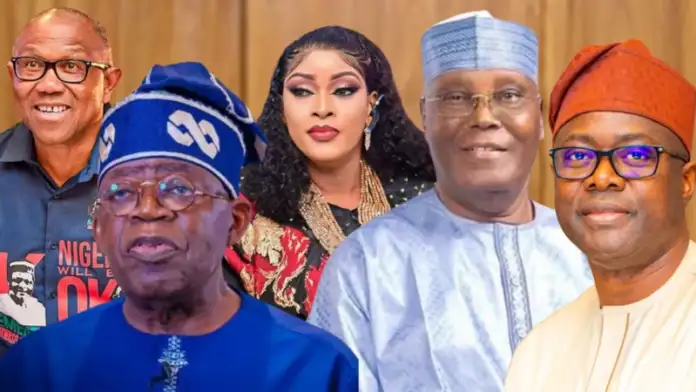
INEC has clearly put a questionable foot forward but seeking to remove its high echelon as they have done is herculean, as that can only be executed by the senate in conjunction with the president. For ADC, it’s not too late to forge some internal cohesion. That’ll require plenty of compromises and ego management. Having the three top contenders behind Tinubu in the 2023 general election namely, Wazirin Atiku Abubakar, Mr Peter Obi and Kwankwaso in ADC should be enough incentive for them to move on by all means. The possibilities are endless.

If for any reason President Tinubu emerges as the only strong option on the ballot next year, the country will unwittingly lay a foundation for its democracy’s Nunc Dimittis. Neither the genuine fighters for the representative governance we practise nor the constitution framers anticipated the sort of illiberal democracy (euphemism for civilian authoritarianism) ravaging some other countries now. Even with the rape and dilution of the present democratic dispensation by the political class, the populace mustn’t be denied the right to decide who among their oppressors should lead them. Undermining the opposition is as old as our political history in various degrees. So, against every odd placed on its path, ADC mustn’t drop the ball now. Posterity beckons.

Ekpe, PhD, is a member of THISDAY Editorial Board
X: @monday_ekpe2

The views expressed by contributors are strictly personal and not of Law & Society Magazine.

The president’s psychologically punishing jokes, By Festus Adedayo

I have severally confessed my love for the South African literature. I fell in love with it early in life while gobbling up narratives of heroic travails of liberation struggle fighters, represented in the works of Mazisi Kunene, Ezekiel Mphalele, Peter Abrahams, Alf Wannenburg, Alan Paton, Alex La Guma and many others. I must have read La Guma’s A Walk In The Night and virtually all his works innumerable times. Of the lot, one South African author whose works equally spellbound me is Can Themba, perhaps because of the self-inflicted tragedy of his early passage.

This morning, as I drew my laptop close, I asked AI how frequently “Festus Adedayo” had cited Themba’s works in his column. Its reply was:

“Festus Adedayo… has frequently referenced Can Themba’s famous short story to illustrate political and social issues in Nigeria. He uses the story’s themes of betrayal, cruel punishment, and psychological torment to analyze Nigerian leadership, corruption, and societal behavior.”

Indeed, in my piece of September 8, 2019 with the title, What Soured South Africa’s Umqombothi, I said “If the number of times citations are made of a dead artists work approximates the invocation of the spirits of the dead, my frequent intrusion into Themba’s graveyard, especially in citing his short story, The Dube Train, should have worn his spirit out by now.”

So, when I watched viral videos of the duo of the Nigerian president (twice last week), and the senate president, engage in broadsides against perceived enemies of their government and political party, Themba hopped up my mind like a malevolent viper. Real name Daniel Canodoce, he was popularly known as Can Themba. Can was a young Marabastad-born writer, a drunk of renown, literary prodigy and journalist. He was one of the Drum magazine collectives of the 1950s. Alongside another kindred spirit named Nat Nakasa, they were two South African writers who blended journalism with creative writing. Can and Nakasa were also part of the young black writers of the Apartheid era who lived by the weird dictum, “Live fast, die young and have a good-looking corpse.” Can died on September 8, 1967, aged 43, official cause of death being coronary thrombosis, but widely attributed to a combination of heavy alcohol abuse and profound despair.

Indeed, as self-predicted, Can and Nakasa both died young. Nakasa, born May 12, 1937 died July 14, 1965, aged 28. By 1965, he had completed his Nieman Fellowship in the US and was living in Harlem, New York. Brilliant writer and a friend to Nadine Gordimer, he was planning to write a biography of Miriam Makeba. Two days after the proposal, however, Nakasa confessed to a friend that, “I can’t laugh anymore, and when I can’t laugh I can’t write.” He sunk into a life of drinking, became depressed and confessed to his friend, Gordimer, that he was afraid he had inherited his mother’s mental illness. Nakasa was shortly found dead by suicide, having jumped from his friend›s seventh-storey apartment.

The more I read Can’s The Suit, the more I think the Nigerian president, Bola Tinubu, is a direct lift of its lead character, Philemon. I seem to think that, recently, he manifests the trauma from what I call the Philemon Wound. The plot of The Suit revolves round the life of Philemon, a middle-class South African lawyer. He has an adulterous wife called Matilda and both of them live in Sophiatown. Devoted as Philemon is to Matilda, the latter is fond of turning his home into a tryst immediately he leaves for office. On this particular day, Philemon is told of the escapade of his wife again. Rather than his wont of leaving for home late in the evening, Philemon sneaks home in the middle of the day. As lawyers say, he caught his wife in flagrante with the lover.

In the melee that ensued, the lover scampers out of the window but forgets his suit jacket.

To effectively deal with the adulterous Matilda, Philemon then concocts a strange and bizarre punishment for her. It became a routine meted out on Matilda. She has to behave to the suit which he permanently hangs on the shelf as a honoured guest. This involves treating it with utmost respect, feeding it, providing ample entertainment for the suit and taking a walk with it, while discussing with it as an animate object. In conceptualizing the punishment, Philemon reckons that this treatment would serve as a bitter and constant reminder to Matilda about her adultery. Remorseful, psychologically beaten and humiliated, Matilda eventually dies of shame.

My deep reflection on The Suit tells me that Nigerians are Matilda; Bola Tinubu, Godswill Akpabio and their APC are Philemon. The intense psychological torment this tripod has been inflicting on Nigeria must be a result of an unpardonable adultery we committed. While reviewing my previous pieces, using the Themba short story under discourse as mugshot, AI said I used the story as a metaphor, “to compare the cruel punishment Philemon inflicts on his wife to the way… Nigerian leaders treat their citizens” and that I “highlight how Nigerians are forcefully made to live with the ‘suit’ of bad governance.”

At the commissioning of the Nigeria Revenue Service (NRS) new corporate headquarters in Abuja on April 14, the Philemon spirit first pounced on the senate president, the loquacious Godswill Akpabio, and then the president. Nigeria, whose parliament Akpabio presides over, is unprecedentedly faced with, in the words of the International Crisis Group (ICG), “a severe, multifaceted security crisis in 2026”. This, ICG says, “is characterized by widespread banditry, mass kidnappings, and jihadist terrorism that have displaced over two million people.” Boko Haram and ISWAP stroll to the Northeast to gorge out blood at will, while rampant banditry in the Northwest/North-Central is as frequent as a diabetic strolls to the loo for a pee. Mass abduction of schoolchildren and worshipers have alarmingly spiked in 2025 and 2026 with hundreds of Nigerians currently in captivity. Says ICG, under this government, “rising violence (is) now spreading to previously stable areas”.

Since 2016, this government parades one of the hugest casualties of terrorism. Out of the hundreds of soldiers killed by terrorists, several high-ranking officers, which include at least four to five Brigadier Generals and several Colonels, the Tinubu government brandishes the highest fatalities. A few days ago, Brigadier General Oseni Omoh Braimah was killed in a coordinated attack by Boko Haram/ISWAP on a military base in Benisheikh, Borno State. Not long after, the Commanding Officer of the 242 Battalion, Monguno, Borno State, Col. I.A. Mohammed and six soldiers were also killed by an Improvised Explosive Device (IED) reportedly planted by insurgents.

In November last year, Brigadier General Musa Uba was killed by ISWAP fighters near Wajiroko in same Borno State.

Last month, in a Global Terrorism Index of 2026, a report by the Institute for Economics and Peace said Nigeria is now rated fourth among countries of the world that parade deadliest terrorist operations. Nigeria’s ISWAP coasted home with the trophy of the deadliest terror group in the world, having struck Nigerians last year with over 90 attacks, translating into 384 deaths harvested into its cadaver barn. Experts have put the deaths and Nigerian soldiers’ apparent inability in the face of insurgents to poor welfare, substandard equipment and massive corruption. This is the same insecurity that gulps trillions of Nigeria’s yearly budget. A huge chunk of the budgets is ostensibly funneled into the purses of big-epaulets soldiers and their civilian accomplices in government.

It was reported that, as at this month, terrorist violence in Nigeria has marked a significant rise in fatalities, with the lives of over 1,400 of our country people taken. Hundreds of abductions took place in the first 96 days of 2026, the North-Central region having the hugest casualties. Apparently tired of paying ransom, the Nigerian government has left those victims to stew in their own broths inside the forest with their abductors. Some other reports claim that over 750 deaths have been recorded from 171 attacks this year while a newspaper report yesterday said it was 1000. Again, the ordinariness of killings of Nigerians by terrorists under the watch of this government reminds me of another of Can Themba’s work I have equally serially cited. It is a short story called The Dube Train. It, too, is a poignant illustration of the banality and ordinariness of death in the Apartheid era, which is replicated in the chaotic nature of Nigerian life and ten-a-pence commodity that deaths from terrorists and bandits have become.

But to Bola Tinubu and his grovelling Senate president, the cadavers of fallen soldiers and terrorists’ captives inside the forest, watched over by the menacing rifles of bloodthirsty insurgents, are raw materials for theatre. They are rich manure to fertilize infantile broadsides and cheap politicking. All that could ooze out from Nigeria’s No 3 is that “Insecurity is increasing because elections are coming, because people don’t know what to do again.” And then the bizarre: “Immediately after the election, two weeks after the election, insecurity will stop. The insecurity is being sponsored by people”.

Nigerians have heard that explanation before.

During the Jonathan era, when insurgents abducted children of Chibok in a night raid, its explanation was that the abduction was a political reprisal aimed at worsting government in the eyes of the world. That government even pointedly accused the Borno governor of the time as the incubator of that abduction. It is the most simplistic explanation for a governmental drudgery and incapacity. It is a governmental surrender to the firepower of terrorists.

The purport of Akpabio’s apparent no-brainer explanation is that, between now and after the election, we should throw our hands up in resignation. Hundreds more will be killed, many more will be captured. Not to worry: Election is the bother. What the flippant legislator was saying is that this government is too tame to tame this shrew. Since government exists principally to ensure the security of lives and property of the people, it goes without saying, a la Apabio, that the current runners of government have no business superintending over daily deaths, issuing out regretful press releases and condolences.

The views expressed by contributors are strictly personal and not of Law & Society Magazine.

72-Hour Ultimatum: Boko Haram threatens to disappear 416 hostages, as Nigeria faces backlash over ‘rehabilitation’ of ex-fighters

A new video released by Boko Haram has escalated fears for hundreds of abducted civilians in northeastern Nigeria, as the militant group issued a stark 72-hour ultimatum to authorities, while daring the government to attempt a military rescue.

The footage, obtained early Monday, shows armed fighters in camouflage declaring they are “battle-ready” and warning that 416 captives, mostly women and children taken from Ngoshe in Borno State—will be dispersed to undisclosed locations if their demands are not met.

“Take a look at them now,” a masked spokesperson says in Hausa, translated into English subtitles. “Because you may never see them again.”

The group, identifying itself as Jama’atu Ahlis-Sunna Lidda’Awati Wal-Jihad, said it does not recognize the Nigerian government and described the ultimatum as its “first and final message.”

Though no demands were stated in the video, intermediaries say the militants are seeking a ₦5 billion ransom.

Hostages in Limbo

The threat comes amid ongoing mediation efforts led by the Borno South Youths Alliance (BOSYA), which confirmed receiving what it called a “final warning” from the insurgents.

BOSYA President, Samaila Kaigama, urged urgent intervention from federal and state authorities, as well as wealthy Nigerians, warning that time is running out for the captives.

The abduction traces back to a March 4 attack on a military base in Ngoshe, where insurgents overran security forces, torched vehicles, and kidnapped dozens of civilians.

A Nation Divided: Victims vs ‘Repentant’ Fighters

But beyond the immediate hostage crisis, the video has reignited a deeper national controversy: Nigeria’s controversial policy of rehabilitating former Boko Haram fighters.

In a sharply worded critique, Abuja-based lawyer Kachi Okezie argues that the country is “drifting into dangerous territory,” where perpetrators are reintegrated while victims remain neglected.

According to investigations cited by Okezie, Borno State has spent billions reintegrating ex-insurgents, even as tens of thousands of displaced survivors continue to live in dire conditions with little government support.

His criticism follows the recent graduation of 744 former fighters under the government’s deradicalization initiative, Operation Safe Corridor—a program that has quietly released ex-combatants back into society with financial aid and vocational training.

“What we are witnessing is not rehabilitation,” Okezie writes. “It is substitution—where the courts are bypassed, and justice is negotiated behind closed doors.”

Rule of Law or ‘Rule by Fiat’?

Okezie and other critics argue that the process undermines Nigeria’s constitutional framework by sidestepping judicial oversight.

In their view, repentance should not replace prosecution—especially in cases involving mass violence.

The concern is not only legal but moral: what message does it send when survivors remain in displacement camps while former fighters receive state-funded support?

“It risks suggesting that violence is ultimately negotiable,” Okezie warns.

A Crisis of Trust

As the 72-hour deadline ticks down, the government faces a dual challenge: securing the safe return of hundreds of captives while addressing growing public outrage over its handling of former insurgents.

For many Nigerians, the contrast is becoming harder to ignore.

On one side: abducted women and children facing an uncertain fate.

On the other: former militants walking free, rehabilitated, resettled, and, critics say, insufficiently held accountable.

The pressing question now extends beyond whether the hostages can be rescued, but whether Nigeria’s justice system can still command the confidence of its people.

‘I am Jagaban, they can’t scare me’, By Lasisi Olagunju

“Those who shouted against misbehaviour in the past are abusing those shouting against it today.”

“Even a corpse put in a coffin will defeat Tinubu in 2027.” ADC chieftain and northern politician, Buba Galadima, gave that promise at the ADC convention last Tuesday. He was wrong. The corpse, the coffin and the carpenter will be buried by Hurricane Tinubu in the election of next year, unless…

Unless what?

Unless they remember that he is Jagaban Borgu and are ready to pay the price in full. Unless those who want to stop the chief warrior understand that noise is not power; that unity and crowd are not synonyms; and that a patient hunter, with quiet menace and inevitability, always defeats a shouting pack.

Buba Galadima said a corpse would defeat Tinubu next year. He must have read too much of Brian McGrath’s ‘Dead Men Running’. Through the lens of McGrath, we see American politics offering rare curiosities of the dead winning elections. The man lists four notable cases: Clement Miller (1962), Hale Boggs and Nick Begich (1972), and Mel Carnahan (2000)—all victims of plane crashes. Because of legal technicalities, their names remained on ballots after their death. And buoyed by sympathy, they all defeated living opponents. But those were American accidents of circumstance. In our politics, the dead do not run—and they certainly do not win; it is the living, daredevil, organised, and strategic who take power.

Generous Tinubu has already shown his opponents the magic in his pouch. He does not fear the living—and has no patience for ghosts that wander into his path. That is why he is a ‘General.’

It is twenty years, two months ago that Bola Ahmed Tinubu’s friend, the late Emir of Borgu, Alhaji Haliru Dantoro, made him the Jagaba of Borgu. Conferred on February 26, 2006, the title translates to ‘Leader of Warriors’ or ‘Chief Warrior’.

It is easy for me to understand the full import of the title. It has a parallel in Yoruba war hierarchy; its counterpart is Balógun (ọba ológun), the king of warriors. The Balogun used to be above the law; even his son was never wrong. Where a child of Balogun was punished for established wrongs, anarchy reigned.

Those who know told me that the Borgu title symbolises strength, influence, and leadership. My friend, a Hausa linguist, informed me that Jagaba is derived from Hausa: ja (pull) and gaba (front).

Last week in Abuja, the president reached for his war title and flung it at his enemies. Raising his 2027 war banner, he bellowed: “Me? They want to scare me off? It’s a lie. I am Jagaban.”

In that Borgu where Tinubu is the chief warrior, before the white man came, warfare “was a serious business…To an average Borgawa, a military defeat meant death; a Borgawa would never allow himself to be enslaved and would do anything to win, even if the war was prolonged or the country was under a siege.” There is a very rich literature on the wars and warriors of Borgu. One of them is a 1995 seminal piece authored by Professor of African History, Olayemi Akinwumi. The above quote belongs to him.

If you complain that the president has centralised power and the privileges that come with it, know that where he is chief warrior today, a few centuries ago, the ancestors of those who made him Jagaba “controlled and monopolised all the resources coming into the various states” of Borgu. They did it and dared the cheated to talk. That is what history says, I did not concoct it.

So, if the king made you a hawk, chickens must not feel safe again. The Jagaba uses the magic of Borgu for political banditry in Abuja. It is his war standard.

If I can afford it, I will point out a sharp and inconvenient irony: Borgu’s chief warrior has not been able to save Borgu from the surge of bandit attacks. Media reports say banditry has resulted in at least 42 deaths in Borgu between late December 2025 and early January 2026. The land of the “chief warrior” bleeds while its title is deployed in political theatre at the centre.

History deepens my conviction that this warrior president has crowned himself as king of self-help; audacious: Nineteenth-century accounts were less flattering. In ‘Journal of a Second Expedition into the Interior of Africa’ (1829), Hugh Clapperton described Borgu in harsh terms as a land feared by its neighbours because of its uncontrolled banditry. Governor Ballay of Dahomey said he invaded Borgu because of the “incorrigible” bandits ruling its everywhere. Akinwumi got these from C. Hirshfield’s ‘The Diplomacy of Partition: Britain, France and the Creation.’

The warrior in the Villa reminding his enemies that he is Jagaban Borgu should serve enough caution and notice. Àwí fún ẹni kó tó dá ní, àgbà ìjàkadì ni. Bola Ahmed Tinubu spoke last week like a master wrestler—he has warned before the 2027 bout.

The Jagaba invocation calls up a history of war, a memory of dominance, and dread. It is a language of power, ancient, masculine, defiant. Both the title and the giver evoke memories of fear and victory.

Marching to 2027, Buba Galadima needs more than a corpse to scare and fall the Jagaba.

I also heard ADC’s national secretary, ex-Governor Rauf Aregbesola, saying at the party’s convention that in Nigeria, “there will be no coronation” next year. He was wrong too. The strongman has bought crowns for himself; he has also bought kingmakers who will crown him.

And I have my reason for saying this. Did the opposition listen to Tinubu that same Tuesday in the same Abuja? With a snide smile, the man said: “Senate President, I will send you to the other side to represent me, and then you can scatter them anyway you like. They’re confused.” Those words were uttered at a public event.

I thought the statement was a Freudian slip; a leak on what the strongman does to opposition parties. But a friend said, “No. I don’t think it is a Freudian slip. It is èmi ni; taa ni ó mú mi? (it is I; who will arrest me?).” True. Who?

On Thursday, the president doubled down. He looked in the mirror, saw the battle gear he had chosen, and approved of what he saw. Bold, even boastful, Bola Ahmed Tinubu told 36 state coordinators of his Renewed Hope Ambassadors at the Presidential Villa, Abuja: “Me? They want to scare me off? It’s a lie. I am Jagaban. I have been through this path before, and if I have to come back over and over again, I will do the same thing.”

Truly earthy, defiant, unmistakably ‘Jagaban.’ There was no hint of retreat in that declaration. No suggestion of fear. Only the certainty of a man who believes he understands both the terrain and the traps laid upon it.

And there are traps.

When he said “if I have to come back over and over again, I will do the same thing,” you would want to ask: do what again?

Hear Bola Ahmed Tinubu at the same event: “If they (the opposition) don’t want to see the hope in the roads we’ve built, in the children we’ve raised, in the economy we’re growing, we’ll lend them Bola’s glasses. One thing you need from me is a promise that I won’t run away from their fight.”

In the inverted world of our president, the hungry need “glasses” to see food in the waste bin; the hunted need “glasses” to feel safe in the grave.

It is a curious theatre: a beleaguered people asked to borrow corrective lenses of blind power to confirm the evidence of their own eyes.

That is what bats do: when the heat is on, they hang upside down—and call it balance.

Apart from Jagaban Borgu, Tinubu’s other ‘title’ is his acronym, BAT. Like his winged namesake, I should expect him to hear what others cannot hear. But power has powerful earplugs. Surrounded by sycophants, this president hears only applause, not distress.

Science tells us something useful here. Bats do not see their way through the dark; they hear it. They emit sharp sounds and navigate by the returning echoes. Take away that hearing, and the hunter becomes helpless. Early experiments from 18th century Italian priest and biologist, Lazzaro Spallanzani, to modern biosonar research, proved it: blind the bat, it still flies perfectly; plug its ears, it crashes into the night.

That is the danger of insulated power. When a leader loses the echo of the street, the hunger, the anger, the quiet despair, he begins to move with confidence but without direction. And our man has been showing so much of this, celebrating “distance without direction”, apology to Srilata Zaheer (2012) and his colleagues.

The president says no one can scare him from his 2027 goal and he “won’t run away from their fight.” Someone should tell him that it is not fear that unseats power; it is misdirection. A bat that cannot hear will still fly boldly—until it hits the wall.

But before hitting the wall, this BAT thinks he has conquered the forest. And he has proofs:

How many of the major parties, for instance, will be fit and proper to submit their electronic membership registers to INEC before the deadline imposed by the amended Electoral Act?

If a party has no recognised leadership, can it submit anything at all? And without a recognised register lodged with INEC, can it lawfully field candidates?

The law says it cannot.

A retired president of the Court of Appeal hinted at this recently; the old man flew the kite, as it were. He said someone should not have been allowed to be on the ballot in 2023 because the person was not a member of the party that fielded him. That may be a kite for what is coming. Many watched it glide overhead and did not grasp its meaning. We still are too dumb to get it.

All of us asking Bola Ahmed Tinubu to be nice and good are naive. We are not being nice to him. The man has spent too long in the streets to mistake goodness for a survival strategy. Leo Tolstoy, writer and philosopher, drew a hard line between ambition and goodness: “In order to get power and retain it, it is necessary to love power; but love of power is not connected with goodness but with qualities that are the opposite of goodness, such as pride, cunning and cruelty.” Our man knows as much as Tolstoy knew.

I am surprised that the opposition people and the whole of the Nigerian people do not know that this is the moment of coup de grâce. Chief Obafemi Awolowo called it a “judelex coup.” In our language, it is simpler: one very ambitious man holding the yam and the knife.

There is a story by Aesop about a small bird and justice. In the story, the bird builds her nest on a courthouse—a place where people go to seek justice. But before her babies can fly, a snake comes and eats them.

When the bird returns and finds her nest empty, she cries bitterly. Her tears are not just because she has lost her babies, but more importantly because the wrong happened to her in a place built to protect the innocent and deliver justice.

Anyone who has conquered all would vibrate the way the president vibrated throughout last week. I think about what Nigerians have as their INEC and what remains of their courts.

Presidency. INEC. The courts. Today, in the mind of the majority, they form a triangle, deadlier than the Bermuda Triangle. A combo of the three has a simple meaning: victory for the man in power; defeat for those outside it, no matter what figure they have.

Our tragedy is not that the dead failed to warn us. It is that we, the living, failed to listen. We ignored their truths, but time has a way of vindicating the ignored.

A part of the people in power today, and a part of the opposition claim their roots in Chief Awolowo’s politics. Have they ever asked how Awo would have described or reacted to what is going on today?

Fortunately, Awo did not leave us guessing. He spoke clearly, clinically, prophetically. On Sunday, 27 January 1980, at an event organised by the Tribune Group to mark the 25th anniversary of Free Universal Primary Education in the old Western Region, he delivered a speech that now reads like a commentary on our present politics.

The speech is published in ‘Path to Nigerian Greatness’ (1981). Listen to him:

“It will be agreed that when someone who is a party to a dispute before a court, unconstitutionally and illegitimately took part in appointing, or indeed, actually appointed, the presiding judge who is also responsible for picking the other members of the judicial panel, that person has successfully staged a judicial coup. When someone who is one of five candidates at an election has the electoral commission, responsible for the conduct of the election, completely on his side to the extent that the commission was prepared to do and indeed did all kinds of infamous manipulations to ensure his victory, then he has successfully staged an electoral coup. When, furthermore, one of five candidates has all the forces of, plus all the instruments of coercion possessed by, the executive behind him to guarantee his victory by hook or by crook, then that candidate has achieved a successful executive coup.”

That combination in the hands of one man forms a system where outcomes are predetermined and democracy is quietly strangled.

Indeed, Chief Awolowo brilliantly put the three together: judiciary, electoral commission, executive. He called what they did together a “judelex coup de grâce”—or simply, a judelex coup: a fusion of the judicial, electoral and executive arms of government in the service of power.

And now, ahead of 2027, a dangerous mood is spreading. People are surrendering before the contest even begins. They say nothing will change. That the game is fixed. That participation is a mere ritual, not a pathway to anything different from the pain of the present. Plato, reflecting on power and the masses, observed: “Those who are too smart to engage in politics are punished by being governed by those who are dumber.”

Those who are not surrendering are boasting without planning.

I wish I could tell all the sides that democracies do not die only by manipulation; they die by abandonment and by lack of plan by ‘the other side.’

Our husbands know that this moment, as hardship bites, they can sustain power by loyalty, by structure, and strategy. And they are working hard at it, with money, threats and promise of electoral heists that disarm the people.

In America, where we copied this painful democracy, voters often hold the president directly responsible for their economic well-being. In 1932, Herbert Hoover was swept out of office after failing to arrest the Great Depression. In 1980, Jimmy Carter paid the price for stagflation and soaring interest rates. In 1992, George H. W. Bush lost despite victory in the Gulf War. His presidency was undone by recession and a broken tax pledge.

Nigeria is not America. Here, suffering does not always translate into electoral punishment. Petrol prices soar. Living costs rise. Misery deepens. Yet the mandate holds often for those who defend the very policies that worsen the pain. We endure our tormentors; sometimes, we even reward them. Niccolò Machiavelli reminds us of the ruler’s advantage: “Men are so simple… that he who deceives will always find those who allow themselves to be deceived.”

Those who shouted against misbehaviour in the past are abusing those shouting against it today. They are a proof that George Orwell is right: “The nationalist not only does not disapprove of atrocities committed by his own side, but he has a remarkable capacity for not even hearing about them.” They question our patriotism; they wonder why we do not use their glasses to see.

The views expressed by contributors are strictly personal and not of Law & Society Magazine.
The Shadow of Justice: Why Nigeria’s de-radicalisation programme is a breach of the social contract and the quiet construction of a parallel judicial system

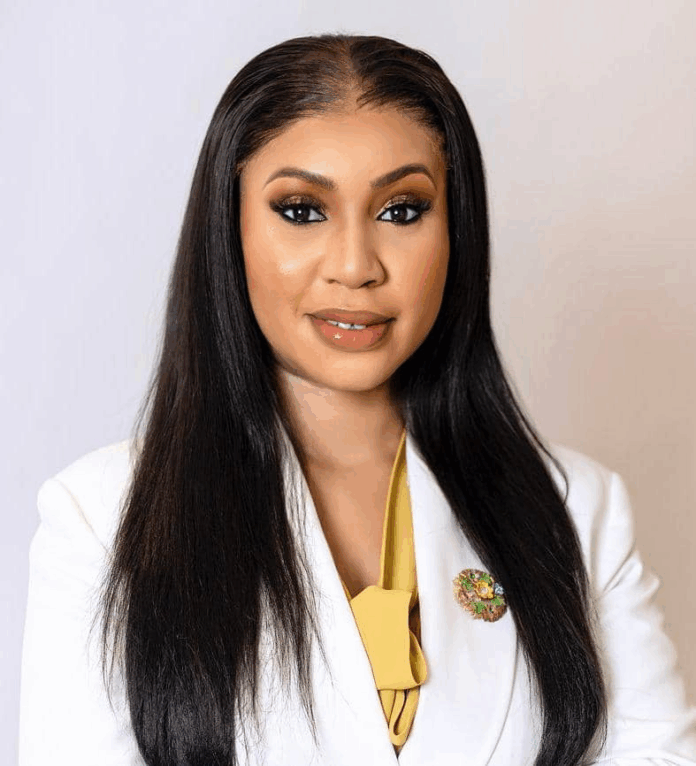
By Kachi Okezie, Esq

Nigeria is drifting into dangerous territory, where the line between mercy and amnesia is no longer just blurred, it is being deliberately erased. The so-called “repentant” terrorists being reabsorbed into society and “empowered” to the detriment of their victims! Borno State has “spent at least N10 billion ($7 million) on the rehabilitation and reintegration of “repentant” Boko Haram fighters in just two years, even as more than 120,000 Christian survivors of the insurgency languish in squalid displacement camps with no budgetary provision for their welfare,” a TruthNigeria investigation has found. The revelations mirror a similar pattern uncovered in Benue State last month, where government resources were also directed toward rehabilitating armed militants while their victims (mostly Christians) remained abandoned in Internally Displaced Persons’ camps.

This week, 744 “former” terrorists were declared “graduates” of a 24-week de-radicalisation, rehabilitation and reintegration programme in Gombe State. They are now being released back into society, not with weapons, but with state-funded grants and a clean slate fashioned in secrecy. All of this has unfolded quietly under the banner of Operation Safe Corridor, and almost entirely outside the formal criminal justice system.

That fact alone should unsettle anyone who understands and believes in the rule of law and separation of powers in a democracy. Because what is happening here is not rehabilitation as commonly understood; it is substitution. The courts, where evidence is tested, guilt is established and justice is not only done but seen to be done, have been sidestepped. In their place, we have an opaque administrative process that asks the public to accept, on faith, that individuals who once took up arms against the state are now “repentant”. By whose authority? On what evidential basis? And accountable to whom?

The Constitution is supposed to answer those questions. And it does. It vests judicial power in the courts, not in military camps or ad hoc committees. In any functioning constitutional democracy, repentance is not a shortcut around trial; it is, at best, a factor to be considered ONLY, after guilt has been proven. What Nigeria is witnessing instead is the quiet construction of a parallel judicial system, one in which the Executive investigates, judges and absolves, all behind closed doors. That is not pragmatism. It is the erosion of the separation of powers, and it edges uncomfortably close to something older and more dangerous: rule by fiat.

But the deeper damage is philosophical. The Social Contract, that unspoken agreement between citizen and state, rests on a simple exchange: individuals surrender the right to exact private vengeance, and the state, in return, guarantees protection and justice. When the state fails to punish those who have violently torn up that contract, it undermines its own legitimacy. When victims watch their attackers re-enter society with government support while they remain in displacement camps, the promise of justice begins to ring hollow. The message is stark and corrosive: the system does not protect you; it manages outcomes.

Defenders of the programme often gesture towards restorative justice, pointing to examples abroad. But even the most liberal systems understand that mercy has limits. In the United Kingdom, serious offences, especially those involving terrorism or mass violence, are never simply erased after a brief period of good behaviour. They remain on the record because the law recognises a hard truth: those who fundamentally reject the social order through violence cannot be lightly reabsorbed without risk. That is in a society with far stronger institutions, surveillance and social safety nets in place. Nigeria, by contrast, is confronting rising insecurity, yet appears willing to believe that six months in a camp can undo years of ideological indoctrination, grooming and preparation for evil.

That belief is not just optimistic; it is beyond reckless. Radicalisation is not a switch that can be flicked off through vocational training and classroom lectures. It is a deep psychological and ideological transformation, often reinforced over years. To claim it can be reversed in 24 weeks requires a leap of faith that would be questionable even in the most controlled conditions. Yet here, the process is shrouded in secrecy. There is no public accounting for crimes and addressing offending behaviour, no transparent criteria for release, no visible mechanism for long-term monitoring to prevent recidivism. Without those safeguards, “rehabilitation” begins to look less like a solution and more like a gamble; one with potentially devastating consequences.

Then there is the question of incentives. In a country where millions of law-abiding young people struggle for opportunities, the state is effectively offering financial support, training and reintegration packages to those who once took up arms against it. However unintended, the signal is perverse: crime pays, hard graft doesn’t! It risks suggesting that violence is not just survivable, but ultimately negotiable. That is not justice; it is a violent distortion of it. And it must stop.

And beneath all of this, by the way, lies something even harder to quantify: memory. Every quiet release and every untested claim of repentance chips away at the sacrifices of those who fought and died to keep the country safe and intact. Soldiers who fell in the forests of Sambisa, officers ambushed in the line of duty: these were not abstract casualties. They were individuals who believed, rightly or wrongly, that the state they served would uphold the very laws they died defending. To bypass those laws now, to allow alleged perpetrators to re-enter society without trial, actually cheapens their valour and risks turning those sacrifices into something transactional, almost incidental.

None of this is to argue against rehabilitation as a principle. Societies must, at times, find ways to reintegrate those who have gone astray. But rehabilitation without accountability is not reconciliation; it is evasion. And evasion, when institutionalised, corrodes trust and destroys a nation faster than any insurgency could.

Nigeria cannot build stability on quiet compromises that undermine its own legal foundations. It cannot ask its citizens to believe in justice while demonstrating that justice is not to be taken seriously but is negotiable behind closed doors. If these programmes are to continue, they must be subjected to the same scrutiny, transparency and constitutional discipline as any other exercise of state power. They must go through the judicial process and court system. Anything less risks setting a precedent far more dangerous than the problem it seeks to solve.

In the final analysis, the question is not whether these 744 men have changed. It is whether the state has.

Kachi Okezie, Esq is a legal practitioner and member of the Nigerian Bar Association, Abuja branch (Unity Bar)

TIPS