Home Blog Page 381

Ubani SAN says, Hartland must appear before Senate over Umuahia-Ikwuano-Ikot Ekpene road contract

By Chidinma Omar

Senior legal practitioner, Dr Monday Ubani, SAN has indicated his intention to drag Hartland Construction Company before the Senate Committee on Public Petitions to answer questions on its failure to fully execute the contract for the reconstruction of the Umuahia – Ikwuano – Ikot Ekpene Road despite an augmentation of N14.37billion by the Federal Executive Council on February 3, to ensure that the construction continues without delays.

The 49-kilometre federal road contract awarded in 2019 at N13 billion is being handled by Hartland Construction Company and Raycon Construction Company. Due to the dilapidated state of road the journey from Umuahia to Ikot Ekpene on the 49 kilometre road during the rainy season, takes over six hours even putting at risk heavy-duty vehicles conveying goods from Akwa Ibom and Cross River States

Proffering reasons why the construction company must appear before the Senate Committee, Ubani argues that despite recently approved additional funding for the road, why is the contractor not on site? He also raises other queries that the company must respond to: Why is the pace of work still alarmingly slow? What happened to the NNPC funds previously announced? How much has been expended so far, and can the work done justify the billions reportedly allocated?

Ubani further maintained that the Hartland must provide a clear timeline when will it will resume full work on the road.

Ubani added that what triggered his recent public intervention was a disturbing report that the reconstruction work will not terminate at the Abia-Akwa Ibom border as earlier envisaged

According to him, the company had told some community leaders that they had only a few more kilometres left before terminating the project and advised that local leaders should “speak out” if those communities hoped to benefit. He described the revelation as both heartbreaking and unacceptable

Earlier, Ubani had written a public letter to President Bola Tinubu lamenting that the people of Ikwuano LGA of Abia State and indeed all road users between Abia and Akwa Ibom, Cross River demand with due respect, immediate government intervention on the road

“This road, which is a major link between Abia and Akwa Ibom and Cross River States, has become a death trap. Accidents have become frequent and fatal. The road is nearly impassable, especially during the rainy season, and the impact on commerce, agriculture, education, and the general well-being of our people is devastating. For over twenty years, our people have endured unbearable suffering on this route.

“We implore Your Excellency to urgently direct the relevant authorities, especially the Minister of Works to investigate and resolve whatever is stalling progress and ensure the immediate resumption and completion of this vital project that of great economic importance to the region and Nigeria generally”, he stated in the letter which was copied the Minister of Works and the Senate President.

Ubani also replied Hon Sam Onuigbo, former member of the House of Representatives and board member of the North East Development Commission, NEDC

In a statement, Ubani states: “My attention has been drawn to the recent rebuttal and attack by Hon. Sam Onuigbo concerning my consistent and unwavering advocacy for the completion of the Ikwuano/Ikot Ekpene federal road project.

“Let me state unequivocally and solemnly: If my advocacy for the completion of this critical road infrastructure is motivated by a selfish political agenda or personal vendetta, may it never be well with me, my family, and my generations. But if my actions are genuinely driven by the desire to see my people enjoy the basic dividends of democracy and to ensure that Ikwuano is connected by a good road for the benefit of all, may the Almighty God whom we all serve bless me and my family beyond measure for generations to come.

“I have deliberately maintained a dignified silence on the state of this road project for a long time, trusting that those who facilitated the award of the contract and the contractor, Hartland Company, would do the needful. Unfortunately, what we have received instead are endless excuses and minimal progress since the project commenced in 2019.

“My people will recall that I vowed that this particular project would not suffer the fate of previous abandoned road contracts in our area. I pledged to pursue its completion vigorously, and that is precisely what I am doing. I shall not be deterred by name-calling, blackmail, or political distractions.

“What triggered my recent public intervention was a disturbing report I received from the President General of Awomukwu and the Mayor of Ikwuano, both of whom I encouraged to engage with Hartland Company for a firsthand update on the project status. According to them, and this can be independently verified, the company stated clearly that their construction works would not extend to Ekebedi, Awomukwu, and Ariam communities. They claimed they had only a few more kilometers left before terminating the project, and advised that local leaders should “speak out” if those communities hoped to benefit.

“This revelation was both heartbreaking and unacceptable.

“First, the pace and quality of the current work are grossly inadequate. Second, to now learn that entire communities may be excluded from the scope of the contract has left me no choice but to take decisive action. I have consequently prepared a formal petition to the Senate Committee on Public Petitions to summon the contractor and their alleged backers to explain to the people of Ikwuano the cause of this delay and the exclusion of critical areas from the project.

“We have also learned that the Federal Executive Council recently approved additional funding for this road. If so, where is the contractor? Why is the pace still alarmingly slow? What happened to the NNPC funds previously announced? How much has been expended so far, and can the work done justify the billions reportedly allocated?

“It is worrisome that Hartland has maintained a conspicuous silence, leaving Hon. Sam Onuigbo, who claims credit for attracting the contract, to speak for them. With due respect, my brother Hon. Onuigbo must understand that this project is not about him; it is about the people of Ikwuano. It is not a matter of political relevance, it is a matter of life, development, and access for our people.

“I am not in any contest with anyone. I, Dr. Monday Onyekachi Ubani, SAN, simply want a functional, durable road from Umuahia to Ikot Ekpene, one that benefits every village along the corridor, including mine.

“My happiness will be complete the day it takes me just 25 minutes to drive from Umuahia to Awomukwu. That is the future I envision, and that is what I am fighting for.

“Therefore, I respectfully urge Hon. Onuigbo, as the self-appointed spokesman of the contractor, to give the people of Ikwuano regular and transparent updates on the project. That would help end these unnecessary confrontations and reassure our people of the sincerity of the entire effort.

“May God judge everyone involved in this matter according to the purity, or otherwise, of their intentions.

“We demand a clear timeline: When will Hartland resume full work? When will the entire stretch from Umuahia to Ikot Ekpene be completed without omitting any Ikwuano community?”

Presidency urges Nigerians to ignore US court ruling on Tinubu’s FBI, DEA reports

On account of an earlier order by a US court that the American Federal Bureau of Investigation(FBI) and Drug Enforcement Administration (DEA) should release confidential information gathered from investigating President Bola Tinubu for a drug-related case in the 1990s, the presidency, on Sunday, urged Nigerians to dismiss the ruling.

In a statement on Sunday, the presidency said “There is nothing new to be revealed”, and the said report by “Agent Moss of the FBI and the DEA report have been in the public space for more than 30 years.”

The Special Adviser to the President on Information and Strategy, Bayo Onanuga, said the reports did not in any way “indict the Nigerian leader,” adding however, that the president’s “lawyers are examining the ruling.”

Judge Beryl Howell, in the ruling, said protecting the information from public disclosure is “neither logical nor plausible.”

An American, Aaron Greenspan, had filed a suit in June 2023 under the Freedom of Information Act (FOIA) against the Executive Office for US Attorneys, Department of State, Federal Bureau of Investigation(FBI), Internal Revenue Service (IRS), Drug Enforcement Administration (DEA), and the Central Intelligence Agency (CIA).

Mr Greenspan accused the law enforcement agencies of violating the FOIA by failing to release within the statutory time “documents relating to purported federal investigations into” President Tinubu and one Abiodun Agbele.

In his FOIA request, the American sought criminal investigative records about four named individuals “allegedly associated with the drug ring: Bola Ahmed Tinubu, Lee Andrew Edwards, Mueez Abegboyega Akande, and Abiodun Agbele.”

After the requests, the US agencies issued “Glomar responses”, refusing to confirm or deny whether the requested records exist.

Mr Greenspan contested those responses at the Department of Justice’s Office of Information Policy (“OIP”). The OIP affirmed the agencies’ refusal to confirm or deny the existence of the requested records.

The American then filed a lawsuit on 12 June 2023, naming the FBI, DEA, IRS, EOUSA, CIA and Department of State as defendants and challenging each agency’s response to the separate FOIA requests.

On Tuesday, the judge noted that since it was acknowledged that Mr Tinubu was a subject of an investigation involving both the FBI and DEA, “the claim that the Glomar responses were necessary to protect this information from public disclosure is at this point neither logical nor plausible.”

The judge said the ‘Glomar’ responses asserted by the FBI and DEA are “improper and must be lifted.”

He struck down the exemptions previously used to redact the files, and ordered the FBI and DEA to remove the redactions and release the files again.

The judge ordered the FBI and DEA to file jointly, by 2 May, a report on the status of any outstanding issues in this case, as described in the accompanying order.

How drug ring members were busted and linked to Tinubu’s funds

Part of the documents submitted by Greenspan to court to back his FOIA case were a verified complaint and accompanying affidavit, filed in the Northern District of Illinois by the DOJ on 26 July 1993.

The documents sought the civil forfeiture of Tinubu’s funds held by First Heritage Bank, allegedly connected to the drug trafficking investigation.

The affidavit by the Department of Treasury’s Internal Revenue Service (IRS) Special Agent Kevin Moss, who was involved in the investigation, detailed the drug trafficking activities of Agbele, which provided the ground for seeking the forfeiture of Tinubu’s funds. It also shared insights into how Mr Agbele was arrested while selling white heroin to the person not known to him to be an undercover agent.

It stated that upon arrival in the United States, “Agbele identified Akande (who has also been linked to Mr Tinubu) as his uncle and stated that Akande provided him (Agbele) an apartment in Hammond, Indiana,” citing “investigating agents of DEA” as the source of this information.

Subsequently, Agbele was arrested and agreed to cooperate” with the investigation.

The affidavit also stated that further investigation by DEA disclosed a lease application completed by Mr Agbele.

Mr Moss’s affidavit confirmed that both the FBI and DEA investigated Tinubu in the wider probe into the drug trafficking activities of Mr Agbele and other members of his ring.

It confirmed that “there is probable cause to believe that funds in certain bank accounts controlled by Bola Tinubu were involved in financial transactions” in violation of US laws “and represent proceeds of drug trafficking.”

It stated that seeking to target Mr Tinubu’s funds arose from “investigation of money laundering of the proceeds of a heroin distribution organisation in the Chicago area.” The clues relied on were said to include “information provided by Special Agents of the IRS, DEA, (and) FBI.”

Although Tinubu forfeited the suspected funds, he has consistently denied wrongdoing. He has also never been charged with any criminal offence in the case.

Premium Times

An anatomy of parliamentary sexploits

By Chidi Anselm Odinkalu

2025 has not been easy on Nigerians. The economy has looked far from bright; the weather has been suffocating; and cost of living has been stubbornly oppressive. With rising massacres in the Middle Belt, and Borno State in the north-east apparently losing ground to the nihilism of Boko Haram terror, violence remains unremitting. In the Niger Delta, a judicially manufactured crisis of political godfathering threatens serious repercussions for the national purse and endangers rent and royalties from the wells of oil-rich Rivers State. All this unfolds under the watch of a president who appears to have grown into a habit of sending episodic missives to Nigerians from his preferred base in Paris and occasionally paying a visit to Abuja from there.

Each of these developments is eminently newsworthy. Together, they should grip attentions about the goings-on in the sixth most populous country in the world. Instead, the biggest news out of Nigeria this year is the failure of Nigeria’s men of power to manage libidinal sexploits in the workplace, and the accompanying tendency to default to abuse of power to inter any resulting embarrassments.

Natasha Akpoti-Uduaghan is the Senator for Kogi Central and, by herself, 25% of the female contingent in the Nigeria’s Senate. Her detailed allegations of sexual harassment against Senate President Godswill Akpabio would probably have long ago run their course if the chamber and its leadership had approached the matter with due regard to any rule book. Instead, they chose to orchestrate the longest-running political soap opera in Africa’s most populous country.

As with these things, most people no longer remember the complaint because the cover-up procured by abuse of power has been more impressive. It has guaranteed that this story has “dominated conversations and highlighted longstanding women’s rights issues in the socially conservative country, where no woman has ever been elected governor, vice-president or president.”

For many, any suggestion that it is abnormal for a man not to get excited in the presence of a woman in the workplace is perplexing to the point of vexing. In a case in 2016, a lawyer representing a powerful international organisation in a case of sexual harassment before the National Industrial Court of Nigeria (NICN) told the judge that “it is expected among adults that a man would naturally chase a woman, make romantic overtures.” Few have paused to ask what exactly “sexual harassment” means, why it matters and why it is such a lingering issue in both work spaces and public institutions.

In 2011, the Lagos State Criminal Law made sexual harassment a felony. The law describes the crime to include “unwelcome sexual advances, request for sexual favours, and other visual, verbal or physical conduct of a sexual nature which when submitted to or rejected” could affect or unreasonably interfere with the employment or educational opportunities of a person; become a factor in their academic or employment decision, or create an intimidating, hostile or offensive learning or working environment. Other states like Ekiti and Kaduna states have followed the example of Lagos in making sexual harassment a crime.

Sexual harassment can also create civil liability. Stella Odey was a widow with four children when the development organization, CUSO, hired her for your years in January 2015 as project manager. At work, she found herself under a male boss who repeatedly told her that “her voice arrests him, slapping her buttocks and embracing her against her will and consent.” He was reluctant to hear her protestation that she desired to remarry.

In July 2015, 14 days after Ms. Odey gave her boss a card inviting him to her wedding, he summarily sacked her. In upholding her claim of unlawful termination, the National Industrial Court pointed out that “the main point in allegations of sexual harassment is that unwelcome sexual conduct has invaded the workplace.”

Four years earlier, the same court awarded quite substantial damages against Microsoft in Nigeria in favour of a female staff whose employment the country manager, a man, terminated after she refused his sexual advances.

While parliamentary sexploits in the Senate have brought much-needed attention to the subject generally, it remains the case that Nigeria’s educational and academic institutions are the places most persistently associated with sexual harassment. Nearly 45 years ago, in 1981, a mere two years after Senator Akpoti-Uduaghan was born, the report of the Presidential Commission on Salary and Conditions of University Staff chaired by Professor Samuel Cookey acknowledged an incipient problem of sexual harassment in the universities. Since then, the issue has grown in both scope and significance.

In 2024, a pioneering Baseline Survey conducted under the auspices of the Committee of Gender Directors in Nigerian Universities in partnership with the non-governmental organization, Alliances for Africa found that at least 63% of female students in universities in the country had experienced sexual harassment. The perpetrators included lecturers, staff, and students. The report acknowledged an absence of progress on this issue, citing “stigmatisation, absence of adequate institutional support, power imbalances between victims and perpetrators, lack of clear policies and procedures for reporting incidents.”

An ongoing scandal at the Federal University, Oye Ekiti (FUOYE), involving allegations of sexual harassment against the Vice-Chancellor, Abayomi Fasina, a professor, illustrates how bad the situation is. At the end of last year, it emerged that a female senior director at the university, Folasade Adebayo, had accused the Vice-Chancellor of workplace reprisals after she allegedly rejected his persistent sexual advances.

The Ekiti State Gender-Based Violence (Prohibition) Law creates a felony crime of sexual harassment, which occurs when there is “unwanted conduct of a sexual nature or other conduct based on sex or gender which is persistent or serious and demeans, humiliates, or creates a hostile or intimidating environment.” To prove her allegations, Mrs. Adebayo produced a sound clip of a telephone conversation with the Vice-Chancellor in 2023 in which he could be heard pleading that he would make her happy as long as she made him happy and confessing: “Let me tell you, I’m dying inside for you.” 

After what was supposed to be an internal investigation, the Governing Council issued a statement this past week claiming that it had cleared the Vice-Chancellor of the allegations. Instead, it ordered various disciplinary measures against Mrs. Adebayo and the leadership of the Staff Union of the University (which made her allegations public) “for bringing the name of the university into disrepute.”

Without challenging the provenance of the sound clip or the veracity of its contents, the Governing Council instead “condemned the recording of the Vice-Chancellor without his knowledge and consent.” Yet, it resolved to advise the Vice-Chancellor “in writing to be more careful and circumspect in dealing with subordinates.” Not done with this piece of tortured administrative theatre, the Governing Council then announced that it would constitute a “peace and reconciliation committee to look into all the issues in the university.”

The performance of the Senate in the institutional calisthenics of inspired cover-up easily pales into insignificance beside the mastery displayed by the Governing Council of FUOYE. Under cover of high statutory authority, the Governing Council procured the burial of serious allegations that could be criminal in Ekiti while implicitly validating their veracity. Why would the Vice-Chancellor need gratuitous advice of the kind the Council will be offering if the recording lacked credibility? Unsurprisingly, the university staff union promptly denounced the decision.

The bigger problem is that the Council by this decision, destroys any hope of remedies for students, staff or anyone with credible claims of sexual harassment in the university. Instead, they guarantee exactly the opposite of what the university seeks to avoid: resort to public advocacy by victims. Anticipating that, the Governing Council of FUOYE says it will expedite the production of policies on cyber-bullying and the use of social media. The intention is not to help victims or to bring perpetrators to account. Rather, it seeks to perpetuate a culture of cover-up. Anyone looking for where the men in the Senate learnt their art when they were boys should look no further than a Nigerian University.

A lawyer and a teacher, Odinkalu can be reached at [email protected] 

The views expressed by contributors are strictly personal and not of Law & Society Magazine.

Carney’s Checkmate: How Canada’s quiet bond play forced Trump to drop tariffs

Carney, Japan and the EU proved America’s idiot Emperor has no clothes

By Dean Blundell

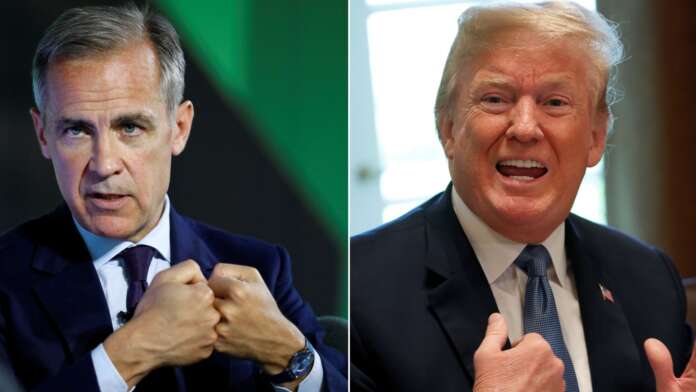
Let’s talk about the moment Donald Trump blinked. It wasn’t loud. It wasn’t a tweetstorm or a rally rant. When the tariff threats that had the world on edge—125% on China, 25% on Canada’s autos, a global trade war in the making—suddenly softened. A “pause,” he called it. A complete turnaround from the chest-thumping of the past week. And the reason? Mark Carney and a slow, deliberate financial maneuver that most people didn’t even notice: the coordinated Treasury bond slow bleed.

Trump CAVES: Orders 90 Day Pause on All Tariffs While Increasing China’s Tariff Rate to 125%

Trump’s Tariff Tantrum Ends in a Predictable Faceplant

This wasn’t about bravado. It was about leverage. Cold, calculated, and devastatingly effective.

Trump’s pause wasn’t because people were getting yippy…

Rewind a bit.

While Trump was gearing up his trade war machine, Carney, Canada’s Prime Minister, wasn’t just sitting in Ottawa twiddling his thumbs. He’d been quietly increasing Canada’s holdings of U.S. Treasury bonds—over $350 billion worth by early 2025, part of the $8.53 trillion foreign countries hold in U.S. debt. On the surface, it looked like a safe play, a hedge against economic chaos. But it wasn’t just defense. It was a loaded gun.

Carney didn’t stop there. He took his case to Europe. Not for photo ops, but for closed-door meetings with the EU’s heavy hitters—Germany, France, the Netherlands. Japan was in the room too, listening closely.

The pitch was simple: if Trump went too far with tariffs, Canada wouldn’t just retaliate with duties on American cars or steel. It would start offloading those Treasury bonds. Not a fire sale—nothing so crude. A slow, steady bleed. A signal to the markets that the U.S. dollar’s perch wasn’t so secure.

Here’s a brief explainer about Treasury Bonds and why Carney encouraged other countries to follow Canada’s lead, and why it worked:

How Treasury Bonds Work and Why a Global Sell-Off Could Tank the U.S.

What Are Treasury Bonds?

They’re IOUs the U.S. government issues to borrow money.

Countries, banks, and investors buy them, lending cash to the U.S.

The U.S. promises to pay back the loan with interest over time (e.g., 10 years).

Who Owns Them?

Foreign countries hold $8.5 trillion of U.S. debt (as of 2025).

Big players: Japan ($1 trillion+), Canada ($350 billion), EU nations ($1.5 trillion combined).

They buy bonds to park money safely and earn steady interest.

How Do They Affect the U.S.?

The U.S. uses this borrowed cash to fund everything—military, Social Security, tax cuts.

Cheap borrowing keeps the economy humming; the government spends more than it collects in taxes.

What Happens in a Coordinated Sell-Off?

If countries like Canada, Japan, and the EU start selling bonds together (even slowly):

Flood of Bonds: Too many bonds hit the market at once.

Prices Drop: More supply than demand pushes bond prices down.

Interest Rates Spike: When bond prices fall, yields (interest rates) rise to attract buyers.

Why Does This Hurt the U.S.?

Borrowing Gets Expensive: Higher interest rates mean the U.S. pays more to borrow.

Debt Snowballs: The U.S. owes $34 trillion already; pricier loans make it harder to manage.

Dollar Weakens: Selling bonds means dumping dollars, so the currency’s value drops.

How Does This Cause a Depression?

Spending Dries Up: Government cuts back as borrowing costs soar—fewer jobs, less aid.

Businesses Tank: Higher rates choke loans; companies can’t expand or hire.

Imports Cost More: A weaker dollar makes foreign goods (oil, tech) pricier, jacking up inflation.

Markets Crash: Panic hits stocks and banks as confidence in U.S. debt fades.

The Domino Effect:

Jobs vanish, prices spike, savings erode—classic depression triggers.

A slow, coordinated sell-off isn’t a bluff; it’s a quiet gut punch that would take the US YEARS to recover from.

And here’s the kicker: Canada wasn’t alone. Japan, holding over $1 trillion in U.S. debt, signed on and started to sell those US Treasury bonds which scared Trump shitless.

Key EU countries—collectively sitting on another $1.5 trillion—nodded in agreement. This wasn’t a bluff. It was a silent pact. A coordinated move to remind Trump that the free world doesn’t just roll over when he swings his tariff bat. Hurt us, Carney said, and we’ll hurt you—right where it counts.

The U.S. Treasury market is the backbone of the global economy. Foreign holders like Canada, Japan, and the EU keep it humming, financing everything from America’s military to its tax cuts.

Start selling those bonds in unison, even gradually, and the yields spike. The dollar wobbles. Borrowing costs climb. Suddenly, Trump’s “beautiful” bond market—he bragged about it just yesterday—looks like a house of cards in a stiff breeze.

That’s the message Carney delivered in his call with Trump last week. No leaks on the exact words, but the outcome speaks volumes. Trump didn’t just pause the tariffs; he backpedaled hard. China’s still in the crosshairs—125% duties are no joke—but Canada? The EU? Japan? They’re off the hit list. For now, at least. Why? Because Carney’s play wasn’t noise. It was power.

Let’s be real: Trump’s spent years calling Canada a freeloader—remember his 2019 NATO jabs?—while ignoring the inconvenient truth. Canada’s $350 billion in U.S. debt isn’t charity. It’s a lifeline. Japan’s trillion-plus? Same deal. The EU’s pile? Ditto. These countries aren’t just buying bonds to be nice; they’re bankrolling the U.S. government. And when they threaten to pull the plug, even slowly, Washington listens.

This was the determining factor in Trump’s surrender. Not the public spats, not the retaliatory tariffs Canada slapped on U.S. autos (though those stung). It was the quiet, coordinated threat of a Treasury bond unwind that bent Trump’s knee. Carney didn’t need to shout. He didn’t need to posture. He lined up the free world—Japan, the EU, Canada in lockstep—and showed Trump the cliff’s edge. Strategic brilliance doesn’t get louder than that.

Carney also issued Canadian Treasury bonds in USD which was another brilliant way to strengthen Canada’s position and financial reputation. Little triggers and strategies you get when the world’s most respected economist is your PM…

When Trump announced his tariff “pause,” it wasn’t a victory lap. It was a concession. Carney moved markets without firing a shot. He gave Canada a seat at the power table and proved that global respect isn’t won with bluster—it’s earned with moves that hit where it hurts. Trump talks tough. Carney plays chess. And right now, the board’s his.

Want the raw data? Check the U.S. Department of the Treasury’s “Major Foreign Holders of Treasury Securities” report. Look at Canada’s holdings. Japan’s. The EU’s. Then ask yourself: who’s really holding “the cards.”

OH, and will Canada’s tariffs and countermeasures remain in place until after the election on April 28th? Yup.

Carney made sure to tell the world that despite Trump kissing our northern ring, we’re not negotiating shit until after the election. He also said we’re still moving away from our relationship with the US for greener, saner pastures.

Thanks for reading! This post is public, so feel free to share it.

© 2025 Dean Blundell
Privacy ∙ Terms ∙ Collection notice

Breaking News!!! My Chairman has passed on… Segun Odegbami

I just received the news that between 9:00 and 10:00 this morning, ‘Chairman’ Christian Chukwu, MFR, my bosom friend and team mate, one of the greatest football players in Nigeria’s football history, former captain and coach of Nigeria’s national football team, has passed on.

Babuje, Emmanuel Okala, MON, gave me the sad news a few minutes ago!

May ‘Onyim’ find peace with Our Creator in Heaven, and console his family.

Dr. Olusegun Odegbami, MON, OLY, AFNIIA, FNIS

***********************************************

Christian Chukwu was not born; he was dug, chiselled, and yanked from a mother’s womb, and my guess is it happened at a time before ESG BS became a mantra and in the idyllic surroundings somewhere between Enugu and Oji River.

‘Naturally’, he emerged from the thick fog of a coal environment, his bum bum patched with more than a spot of mud and red and a No 5 birth mark that defined his uncompromising and stellar role in stark contrast with the white of his beloved Enugu Rangers that he usually started matches.

We squeezed through the turnstiles and forced our then skinny frames at the barriers at Ahmadu Bello Stadium, KD, Ogbe, Benin, Liberty IB, and of course Enugu Stadium in super hot conditions to catch a glimpse, lifted by henchmen of days yore, sometimes without tickets.

Chairman, before Heineken infringed on the TM! A defining captain and centre-back like no other. Germany had Brekenbuer, England had Moore, South Africa had Lucas Radebe as the chief. Italy had Gentili and Maldini and Baresi. Argentina had Zanneti and Co.
Capo was all of them rolled into one.


A leadership earned on and off, and a man for whom 90 minutes was only half of the stoic work put in. Thank you for a lifetime of joy… and the pain as supporters of rival teams.
Today, it is all about you and what you defined.

Ka o di. Laa na ndokwa.

Authour unknown

Things are Getting Better?: Gauging the benefits of Tinubu’s government (2023 to 2025) through the lens of life expectancy in Nigeria

By Dr. Tonye Clinton Jaja

There is a Nigerian folk song entitled: “Things Are Getting Better”. It has been popularised by Regina Lucas and Son Music in the years 2014 and 2024 respectively.

I have adapted it as the sub-title of this write-up. However, in this context, it is framed as a question.

The reader is invited to judge for themselves whether things are getting better in Nigeria under Tinubu by using the criterion of life expectancy!!!

According to Igwe Patrick in an article published in the Vanguard newspaper, Nigeria ranks second on the list of African countries with the lowest life expectancy.

“Life expectancy is the average lifespan of a population and can often be attributed to factors such as high infant and maternal mortality rates, prevalence of infectious diseases, limited access to quality healthcare, malnutrition, socio-economic challenges and unsafe living conditions.”

Below is a record of the decreasing life expectancy of Nigerians since President Bola Ahmed Tinubu (PBAT) assumed power in the year 2023.

In 2023, the life expectancy at birth in Nigeria was approximately 61.79 years, with males having a life expectancy of 60 years and females 64 years.

“In 2024, the life expectancy in Nigeria is 54.6 years, which is below the global average of 73.7 years. Nigeria’s life expectancy remains significantly lower than the global average. The 2024 State of the Nation Health Report indicated this.”

In the year 2025, life expectancy in Nigeria had decreased to
“53.63 years

Nigerian life expectancy stands second on the list of shortest life expectancy in Africa with several communicable diseases and health issues. The leading cause of death in Nigeria is malaria followed by ischemic heart disease and stroke.”

The views expressed by contributors are strictly personal and not of Law & Society Magazine.

‘Passport privilege’ is real, Nigerian traveller speaks on her thwarted world record attempt

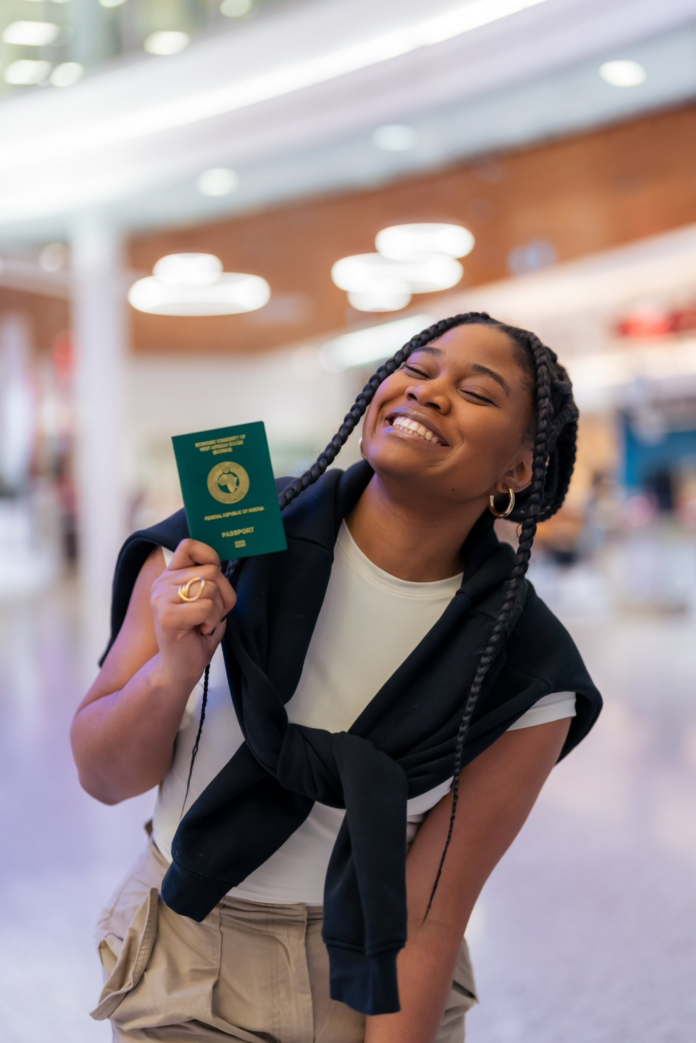
Alma Asinobi’s mission to break the world record for the fastest time to visit every continent came to an unsuccessful conclusion at the end of March. But she succeeded in calling attention to the issue she aimed to highlight through the trip: just how hard it is to travel with certain passports.

The 26-year-old Nigerian travel content creator was attempting to beat the current record of 64 hours, held by an American traveler who broke the record in February 2025. When she was initially planning her attempt, the time to beat was 73 hours. She completed the trip in 71 hours and 26 minutes, after flight delays and visa issues derailed her journey.

Asinobi says she wanted to spotlight the issue of “passport privilege.” The Nigerian passport is 92nd on a list of 102 on the Henley Passport Index, a ranking of all the world’s passports according to the number of destinations their holders can access without a prior visa.

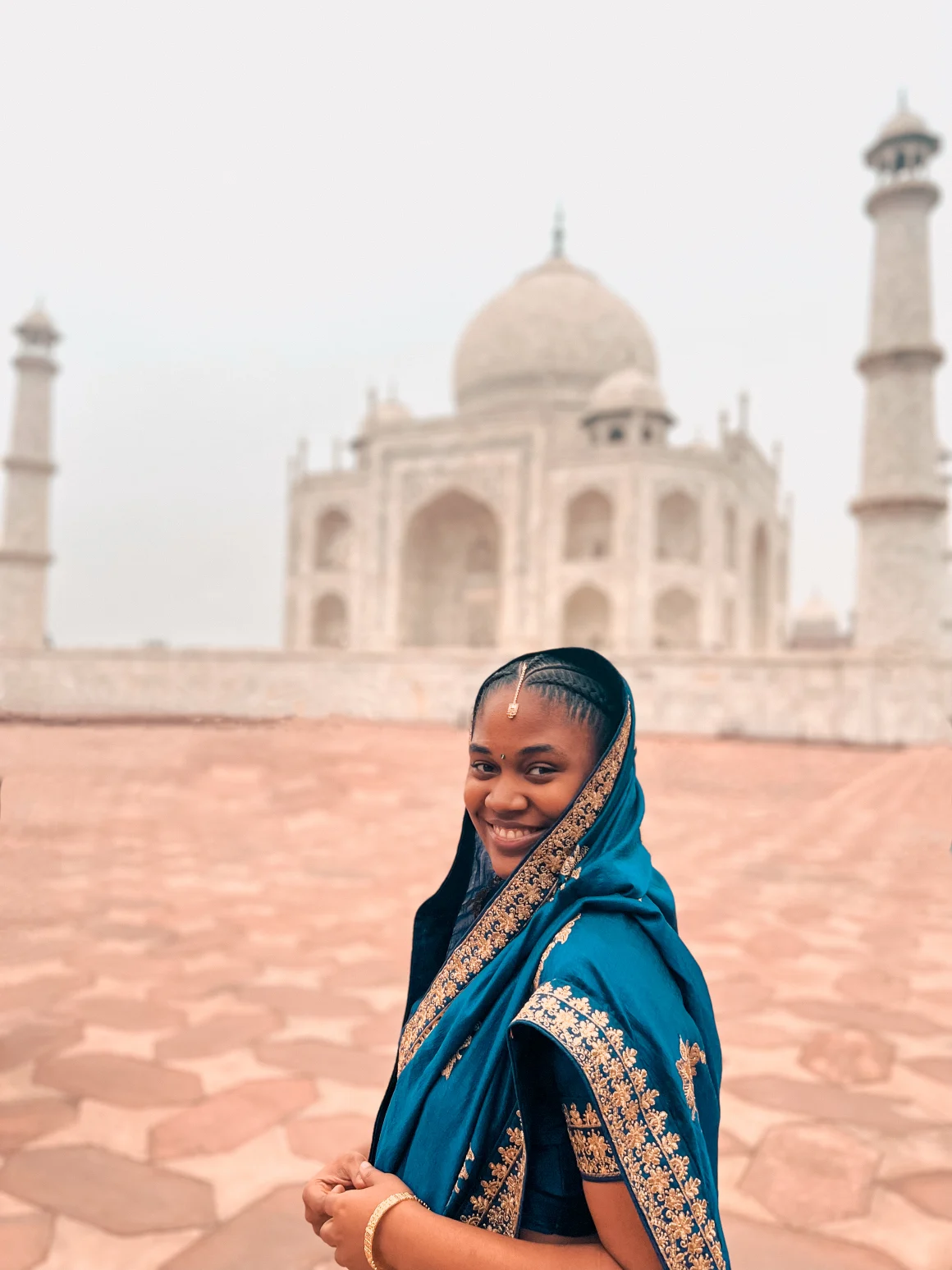
Asinobi at the Taj Mahal in Agra, India on a past visit.

During the journey, she says there were “access and options” denied her, and extra checks she was subjected to because of her “low-mobility” passport. And so despite traveling from Antarctica to South America, to North America then Europe, Africa and Asia within the space of a few days, bureaucracy was one headwind she could not overcome.

How the other half travel

The vlogger took her first international trip to Benin, West Africa, in early 2020, a trip she said made her curious “to see what else was out there.” Since then, she has visited about 35 countries, including her recent record attempt.

While documenting her travels, Asinobi says she noticed that influencers focused more on the destinations, and not their efforts to get there. She experienced lengthy, expensive and difficult visa processes and decided to create social media content catering to fellow low-mobility passport holders. In 2024, after applying for a visa to a European country three times before getting approved, she decided it was an issue worth taking to the global stage.

“This is something that … more than half of the world population actually experience,” she said. “They don’t have passport privilege. But we don’t talk about this enough. I just thought … what better way to talk about it than to show the world how tough it is to travel with a passport like mine?”

But, she added, it goes beyond traveling for pleasure. “There’s so much at stake,” she said. “People have missed opportunities to go abroad for meetings, for conferences … I know of someone who lost his mom because they couldn’t get her visa to a (different) country in time for her to get surgery done. That is a life-changing event.”

Before beginning the journey, Asinobi drew up contingency plans in case of delays or missed connections, but days before setting out, she says one country on her route didn’t give her a visa, which meant fewer options if anything went wrong along the way.

She began her record attempt from Antarctica on March 19, and then flew to Chile, and on to Punta Cana in the Dominican Republic, where her flight to Paris was cancelled due to the closure of the UK’s Heathrow Airport after a fire at a nearby substation. That led to a two-hour delay and reroute to Spain, where she missed her connecting flight and instead flew to Egypt. She the flew on to Dubai, where she says she wasn’t allowed to board for Perth, Australia, after being told at the gate that the authorities needed to re-confirm her visa.

“This is the issue that we’re trying to highlight” she told CNN at her homecoming event in Lagos, Nigeria. “I stood there and watched everyone board that flight … I was there until I saw them shut the flight and I saw the flight actually take off. It was very heartbreaking.”

Despite knowing she couldn’t break the record, after receiving confirmation that her visa was valid, Asinobi took the next available flight to Australia — choosing Sydney to complete the trip, saying the most important thing is that she chose to finish.

She says the process taught her the importance of “Surrendering to faith and … to the unpredictability of things and just embracing the uncertainties.”

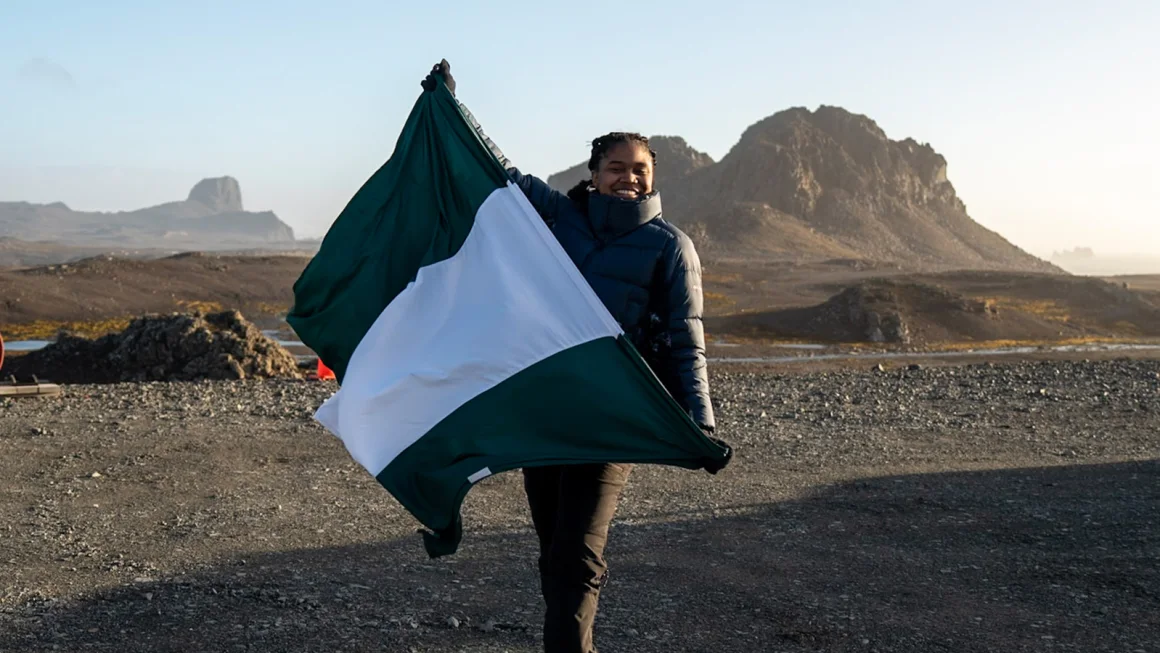
Raising awareness around passport privilege was her primary goal, but Asinobi was also attempting to gain another world record: most signatures on a single piece of travel memorabilia — the Nigerian flag she took with her on the journey. Asinobi says she got over 600 signatures on the flag, and once certified, she will be an official Guinness World Record holder.

She says she intends to continue having conversations about passport privilege and inequality “with the people who are the biggest stakeholders in this issue: the government,” citing a need for better diplomatic relations so people from developing countries don’t miss out on career and educational opportunities.

CNN

High Court in Ebonyi frees 12 IPOB members after 4 years in custody

Four years after living behind bars, 12 members of the Indigenous People of Biafra (IPOB) have been granted freedom by an Ebonyi State High Court.

The 12 men were part of 36 said to have been held since May 24, 2021, but finally set free in compliance with successive court orders discharging and acquitting them of all charges.

The Lead Counsel to IPOB, Sir Ifeanyi Ejiofor, said their freedom followed a formal application by the Ebonyi State Director of Public Prosecution (DPP).

He said, “12 Biafran Inmates Regain Freedom After Nearly Four Years In Detention: Freedom Long Denied, Finally Restored!!!

“History has been made on April 10, 2025, at the Ebonyi State High Court, as 12 Biafran inmates – part of a group of 36 held since May 24, 2021 – were finally set free in compliance with successive court orders discharging and acquitting them of all charges.

“This victory follows a formal application by the Ebonyi State Director of Public Prosecution (DPP), who, in acknowledgement of repeated judicial pronouncements, withdrew the latest charge filed against these 12 individuals.

“It marked a long-overdue respect for the rule of law and a reaffirmation of their innocence, which courts had upheld time and again. In line with the court’s directive, I personally ensured the handover of the released individuals, an order promptly complied with by the prison authorities.

“Our legal team remains relentless and fully committed to securing the freedom of the remaining detainees – men who have also been discharged and acquitted by no fewer than four different High Courts in Ebonyi State.

“Their release is no longer a matter of if but when, and that moment draws closer by the day. Justice may be delayed, but it shall not be denied.
Freedom must prevail.”

No State Governor in Nigeria has discretion in appointment of an Acting Chief Judge under the 1999 Constitution, By Chief J.S.Okutepa SAN

There is a sad constitutional aberration going on in Imo State. The governor is said to have appointed an Ag. Chief Judge, who is not the most senior judge of the Imo State Judiciary. Before showing who is the most senior judge on the bench of the Imo State judiciary, it is necessary to outline the processes for appointments of chief judges and judges of the High Court of the states in Nigeria. The processes are set out in the constitution.

Section 270 (1) of the constitution of the Federal Republic of Nigeria 1999 provides inter alias that: There shall be a High Court for each State of the Federation. Section 270 (2) provides that: The High Court of a State shall consist of –
(a) a Chief Judge of the State; and
(b) such number of judges of the High Court as may be prescribed by a Law of the House of Assembly of the State.

Section 271 (1) provides that: appointment of a person to the office of Chief Judge of a State shall be made by the Governor of the State on the recommendation of the National Judicial Council subject to confirmation of the appointment by the House of Assembly of the State. Section 271 (2) says: The appointment of a person to the office of a Judge of a High Court of a State shall be made by the Governor of the State acting on the recommendation of the National Judicial Council. Section 271 (3) provides that: A person shall not be qualified to hold office of a Judge of a High Court of a State unless he is qualified to practice as a legal practitioner in Nigeria and has been so qualified for a period of not less than ten years.

The section dealing with an acting appointment of the chief judge of any state in Nigeria, including Imo State of Nigeria, is set out under section 271 (4) of the 1999 constitution. It sets out how an acting Chief Judge of any state in Nigeria, including Imo State, shall emerge. It provides that : If the office of Chief Judge of a State is vacant or if the person holding the office is for any person unable to perform the functions of the office, then until a person has been appointed to and has assumed the functions of that office, or until the person holding the office has resumed those functions, the Governor of the State shall appoint the most senior Judge of the High Court to perform those functions.

Section 271 (5) then provides that: Except on the recommendation of the National Judicial Council, an appointment pursuant to subsection (4) of this section shall cease to have effect after the expiration of three months from the date of such appointment and the Governor shall not re-appoint a person whose appointment has lapsed. There is no doubt that under section 271 (4) of the constitution, as shown above, the governor of any state in Nigeria does not have a discretion in appointments of an Ag. Chief Judge. He must appoint the most senior judge of the High Court of the State as an Ag. Chief Judge.

The language of the Constitution is clear. In Imo State, the most senior judge on the Imo State judiciary, as of today, is Hon Mr Justice Ijeoma Agugua. He was appointed and sworn in as judge of Imo State High Court in 1993. The next most senior judge is Hon. Mr Justice C A Ononeze Madu. He was appointed and sworn in as judge of Imo State High Court in 2004. The next on the line is Hon. Mr Justice E O Agada. He was appointed and sworn in as judge of High of Imo State in 2008. The fourth most senior judge is Hon. Mr Justice ⁠TN Nzeukwu. He was appointed as judge of Imo State High Court in 2008.

From the news making round, the governor of Imo State purported to have now appointed his lordship Hon Mr Justice TN Nzeukwu as an acting CJ of Imo. How. Why. Did His Lordship TN Nzeukwu agree to be appointed in place of his most senior judge? How did this happen? To emphasise the points being made, let me refer again to the provisions of section 271(4) of the 1999 constitution. It provides that: If the office of Chief Judge of a State is vacant or if the person holding the office is for any person unable to perform the functions of the office, then until a person has been appointed to and has assumed the functions of that office, or until the person holding the office has resumed those functions, the Governor of the State shall appoint the most senior Judge of the High Court to perform those functions.

There is no judicial officer who does not know the value of seniority on the bench. The bar and the bench placed a serious premium on seniority and professional conduct in the conduct of their affairs of the profession. For the fourth most senior judge to accept to be appointed an acting Chief Judge in place of the most senior judge and in the face of the clear provisions of the constitution is the most sacrilegious constitutional misconduct that deserves urgent sanctions.

I think it is time that the bench respects itself. How can a judicial officer who is not the most senior judge of the high court accept to be made the Acting Chief Judge in place of his seniors and in the face of the clear provisions of section 271(4) of the 1999 and then takes judicial oaths to defend and uphold the very constitution he desecrated in accepting the position of Acting Chief Judge he knows his not qualified to be appointed to.

NJC must intervene in Imo State appointment of an acting chief judge. The governor has no discretion. He may not like the most senior judge, but he can not bypass him. The Nigerian Bar Association must make a statement, and lawyers should not recognise Justice TN Nzeukwu as an Acting CJ. While it is in the interest of some politicians to rubbish the judiciary, the judiciary itself must insist and refuse to be rubbish. The most senior judge in Imo State should be sworn in. It is his constitutional right to be so sworn in. I say no more.

They come knowing they will not be stopped

An eyewitness account written By an SS 3 boy, named Uren, GSS Manguna, Plateau State

They say the world only burns when the fire reaches your doorstep. Otherwise, it is just another spectacle, a far-off smoke, a sound you can sleep through. It is all right, they say, all right to watch violence swallow others, so long as it is not us. So long as the ash does not settle on our roofs and the blood is not the colour of our kin. Some even say it is acceptable if it is our own doing the burning. Then, the silence is justified. The gain is holy.

But what happens when the flame forgets its lane?
It will. It always does.

My name is Uren. I am from Hurti, a small village in Daffo, Bokkos LGA of Plateau State. I am in SS3 at GSS Manguna.

In Bokkos LGA, we farm potatoes, maize and whatever the land agrees to yield, because that is what we know best. That is how we survive. Occasionally, we trade. But it is the land that feeds us.

At the weekend, my people, the Ron and Kulere, held our yearly festival. People came from all over. Not because everything was all right, but because the festival gave us strength. It reminded us that we are still here. We are still alive. And even though we keep losing people, we cannot stop living. Besides, we know everyone will die someday.

On Wednesday morning, before the sun rose, my mother reminded me that we needed to head to the farm early, before the heat turned cruel and our energy, too drained to respond. There is always work to be done on the farm; come rain, come sun, dry or green. Life in our village follows that rhythm.

For some reason, that morning, I woke with the weight of Oswald’s Nightfall in Soweto pressing heavily on my chest. Mr. Mallo, our literature teacher, had painted it vividly when he taught the poem. “Feel it. Poetry is meant to be felt,” he had said.

I felt it, all right. The fear. The dusk falling like judgment. I felt it because it was no longer just poetry. It was no longer Soweto. It was Plateau. It was Bokkos. It was home. It was real.

My classmate, Ukambong, told me that in their village, Josho and even in Ganda and Manguna, they no longer slept at night. Their fathers and brothers had taken to spending the night on the trees, like hunted animals. They went up there not to fight. Who brings a bow and arrow to face fire-spitting metals? They went there to act as sirens. Human alarms.
When the raiders came, they were the voices screaming, Run!
And the raiders? They always came.

In our history class, Mrs. Mafwil told us that once upon a time, invaders galloped in on horses, with spears, bows and arrows slicing through the air with ancient rage. Today, they arrive on iron horses humming death and machines that spit fire and thunder.

They come knowing they will not be stopped.
They come knowing their mission has been carved into the silence of complicity.
They come. They slaughter. They leave. And they come again, at will. Their faces are not hidden. Their names are whispered. Their language betrays who they are. Yet, they remain unknown. Somehow, always unknown.

That Wednesday, they walked into our morning as we worked on the farm—my mother, father, five siblings and I, clearing the land so we could plant soon. We were engrossed in tearing up weeds with calloused hands, brushing the earth off our feet, when we heard the buzzing of motorbikes, many of them, and the cracking of gunfire all around.

It was loud and close. A rhythm now too familiar. First at night, now in broad daylight. A group of attackers was moving in on our village and the nearby ones too.

We froze, not knowing what to do. Smoke began rising, big, black clouds. Houses were burning. We saw people running, screaming. It was not near yet, but the land is flat; we could see everything. We were certain the attackers had seen us. One cannot hide easily out there. My mother’s face twisted. “Home,” she whispered and broke into a run. But my father ran after her and held her back. She began to shiver. “My children, my children,” she said, as tears welled up in her eyes.

My two younger sisters were at home, one sick, the other left to look after her. The ground where my mother stood turned wet. She had urinated on herself out of fear. The sky was no longer blue. It had become a sheet of thick black smoke. In the distance, homes coughed fire and people ran like ants from an overturned nest. Screams scattered in the wind. The attackers chased those who ran toward our farm. They were coming. We had been seen. The land offers no cover here. It is flat and wide. It betrays you.

My father’s mind raced faster than the bikes. He pointed to a narrow hole. It looked like one of those where something was mined from. The opening was wide enough for us to squeeze through and we did. We did not ask what was inside. We did not think where it led to. We just entered.

The smell around was of damp and death. We squeezed in, my siblings and I, while my parents and one of my brothers covered the hole with dry leaves and grass. They stayed outside. There was no room for all of us. From that tiny breath-hole, I watched.

The men on bikes came. Five of them. Guns slung carelessly like tools of a craft they had effortlessly mastered. But they chose to use knives instead. Long, rusted, personal. They circled my parents and brother like wolves around a tired prey. They chanted a God is great prayer to a God they no longer feared. And then, they cut wherever their razors could reach. Blood.

My father begged, his voice cracking like old wood. My mother shrieked as they cut, and then they cut and struck my brother down with the butt of a gun.

They spoke in Hausa with a Fulani accent: “Shegu jamu kakashe dukan ku!”
Then more chants of “God is great” and more bikes revving into the distance. Their glee carried by gunshots and war cries: Eeehhuuhuuuuu! rent the air as they made their way to join the others. And then, there was silence, except for my mother’s wail. It was sharp and soul-piercing. She crawled to my brother’s lifeless body and pulled it close as though she could tuck him back into her womb.

My father just sat there, blood pooling around him. His eyes were vacant. He was staring like he could see a world we could not. When I could not take it in anymore. I blacked out. My young mind gave up.

By the time I finally came around, I learnt that my father did not make it to the next day. My two sisters who were left at home were slaughtered. With knives. My mother is still in shock. My other brothers and I are just hanging in there.

We saw the assailants, what they looked like, the language they spoke how they prayed to the god they prayed to. We also know that their kind occupy many of the villages around that were razed before now.

It is said that when people are pushed to the wall, they will push back, not out of bravery, but out of necessity. I fear what will happen now that we are at the edge of that point. Survival is not cowardice. It is instinct. But how long do you stay law-abiding while the law does not see your blood as worth avenging?
How long do you bow to a system that rewards those who live outside it?

First it was Jos, now christened “Jos crisis”, then Riyom, Barkin Ladi, Bassa, Mangu, Wase, Kanam. Everywhere on the Plateau is getting a taste of the 21st-century jihad. I hear that there are people who gain from the fire. People who watch it from high windows and sip their tea. People who call for peace but fund the bullets. And then, there are people like me, Uren, who only ever wanted to farm, to live and to love my land.

Toh!
The invaders have awakened something dangerous, not just pain, but memory.
And memory, when soaked in blood, never forgets.

Copied from a WhatsApp post

The views expressed by contributors are strictly personal and not of Law & Society Magazine.

TIPS