Home Blog Page 382

They come knowing they will not be stopped

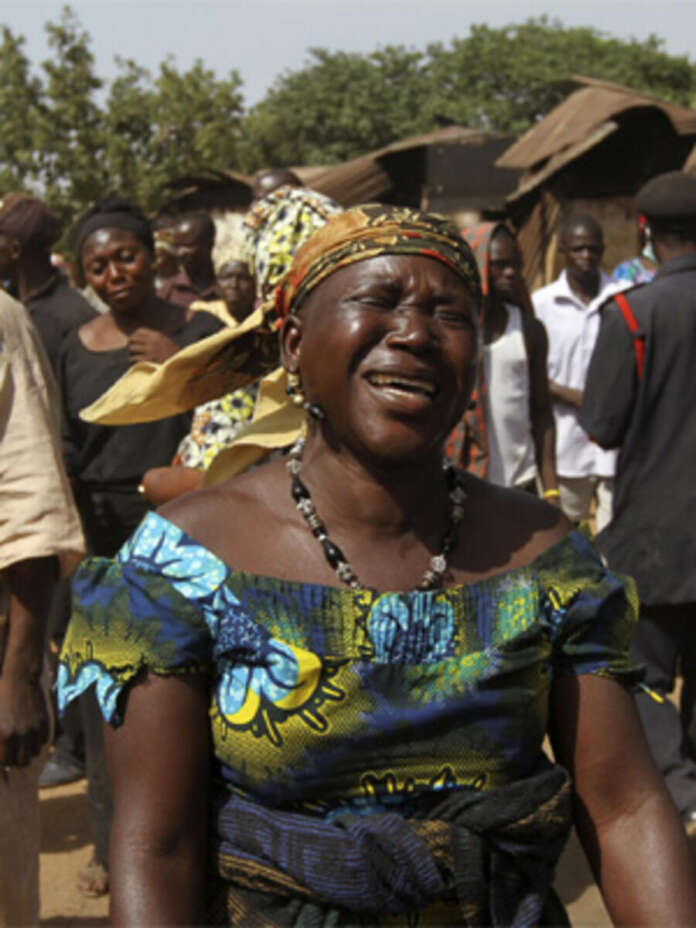
An eyewitness account written By an SS 3 boy, named Uren, GSS Manguna, Plateau State

They say the world only burns when the fire reaches your doorstep. Otherwise, it is just another spectacle, a far-off smoke, a sound you can sleep through. It is all right, they say, all right to watch violence swallow others, so long as it is not us. So long as the ash does not settle on our roofs and the blood is not the colour of our kin. Some even say it is acceptable if it is our own doing the burning. Then, the silence is justified. The gain is holy.

But what happens when the flame forgets its lane?
It will. It always does.

My name is Uren. I am from Hurti, a small village in Daffo, Bokkos LGA of Plateau State. I am in SS3 at GSS Manguna.

In Bokkos LGA, we farm potatoes, maize and whatever the land agrees to yield, because that is what we know best. That is how we survive. Occasionally, we trade. But it is the land that feeds us.

At the weekend, my people, the Ron and Kulere, held our yearly festival. People came from all over. Not because everything was all right, but because the festival gave us strength. It reminded us that we are still here. We are still alive. And even though we keep losing people, we cannot stop living. Besides, we know everyone will die someday.

On Wednesday morning, before the sun rose, my mother reminded me that we needed to head to the farm early, before the heat turned cruel and our energy, too drained to respond. There is always work to be done on the farm; come rain, come sun, dry or green. Life in our village follows that rhythm.

For some reason, that morning, I woke with the weight of Oswald’s Nightfall in Soweto pressing heavily on my chest. Mr. Mallo, our literature teacher, had painted it vividly when he taught the poem. “Feel it. Poetry is meant to be felt,” he had said.

I felt it, all right. The fear. The dusk falling like judgment. I felt it because it was no longer just poetry. It was no longer Soweto. It was Plateau. It was Bokkos. It was home. It was real.

My classmate, Ukambong, told me that in their village, Josho and even in Ganda and Manguna, they no longer slept at night. Their fathers and brothers had taken to spending the night on the trees, like hunted animals. They went up there not to fight. Who brings a bow and arrow to face fire-spitting metals? They went there to act as sirens. Human alarms.
When the raiders came, they were the voices screaming, Run!
And the raiders? They always came.

In our history class, Mrs. Mafwil told us that once upon a time, invaders galloped in on horses, with spears, bows and arrows slicing through the air with ancient rage. Today, they arrive on iron horses humming death and machines that spit fire and thunder.

They come knowing they will not be stopped.
They come knowing their mission has been carved into the silence of complicity.
They come. They slaughter. They leave. And they come again, at will. Their faces are not hidden. Their names are whispered. Their language betrays who they are. Yet, they remain unknown. Somehow, always unknown.

That Wednesday, they walked into our morning as we worked on the farm—my mother, father, five siblings and I, clearing the land so we could plant soon. We were engrossed in tearing up weeds with calloused hands, brushing the earth off our feet, when we heard the buzzing of motorbikes, many of them, and the cracking of gunfire all around.

It was loud and close. A rhythm now too familiar. First at night, now in broad daylight. A group of attackers was moving in on our village and the nearby ones too.

We froze, not knowing what to do. Smoke began rising, big, black clouds. Houses were burning. We saw people running, screaming. It was not near yet, but the land is flat; we could see everything. We were certain the attackers had seen us. One cannot hide easily out there. My mother’s face twisted. “Home,” she whispered and broke into a run. But my father ran after her and held her back. She began to shiver. “My children, my children,” she said, as tears welled up in her eyes.

My two younger sisters were at home, one sick, the other left to look after her. The ground where my mother stood turned wet. She had urinated on herself out of fear. The sky was no longer blue. It had become a sheet of thick black smoke. In the distance, homes coughed fire and people ran like ants from an overturned nest. Screams scattered in the wind. The attackers chased those who ran toward our farm. They were coming. We had been seen. The land offers no cover here. It is flat and wide. It betrays you.

My father’s mind raced faster than the bikes. He pointed to a narrow hole. It looked like one of those where something was mined from. The opening was wide enough for us to squeeze through and we did. We did not ask what was inside. We did not think where it led to. We just entered.

The smell around was of damp and death. We squeezed in, my siblings and I, while my parents and one of my brothers covered the hole with dry leaves and grass. They stayed outside. There was no room for all of us. From that tiny breath-hole, I watched.

The men on bikes came. Five of them. Guns slung carelessly like tools of a craft they had effortlessly mastered. But they chose to use knives instead. Long, rusted, personal. They circled my parents and brother like wolves around a tired prey. They chanted a God is great prayer to a God they no longer feared. And then, they cut wherever their razors could reach. Blood.

My father begged, his voice cracking like old wood. My mother shrieked as they cut, and then they cut and struck my brother down with the butt of a gun.

They spoke in Hausa with a Fulani accent: “Shegu jamu kakashe dukan ku!”
Then more chants of “God is great” and more bikes revving into the distance. Their glee carried by gunshots and war cries: Eeehhuuhuuuuu! rent the air as they made their way to join the others. And then, there was silence, except for my mother’s wail. It was sharp and soul-piercing. She crawled to my brother’s lifeless body and pulled it close as though she could tuck him back into her womb.

My father just sat there, blood pooling around him. His eyes were vacant. He was staring like he could see a world we could not. When I could not take it in anymore. I blacked out. My young mind gave up.

By the time I finally came around, I learnt that my father did not make it to the next day. My two sisters who were left at home were slaughtered. With knives. My mother is still in shock. My other brothers and I are just hanging in there.

We saw the assailants, what they looked like, the language they spoke how they prayed to the god they prayed to. We also know that their kind occupy many of the villages around that were razed before now.

It is said that when people are pushed to the wall, they will push back, not out of bravery, but out of necessity. I fear what will happen now that we are at the edge of that point. Survival is not cowardice. It is instinct. But how long do you stay law-abiding while the law does not see your blood as worth avenging?
How long do you bow to a system that rewards those who live outside it?

First it was Jos, now christened “Jos crisis”, then Riyom, Barkin Ladi, Bassa, Mangu, Wase, Kanam. Everywhere on the Plateau is getting a taste of the 21st-century jihad. I hear that there are people who gain from the fire. People who watch it from high windows and sip their tea. People who call for peace but fund the bullets. And then, there are people like me, Uren, who only ever wanted to farm, to live and to love my land.

Toh!
The invaders have awakened something dangerous, not just pain, but memory.
And memory, when soaked in blood, never forgets.

Copied from a WhatsApp post

The views expressed by contributors are strictly personal and not of Law & Society Magazine.

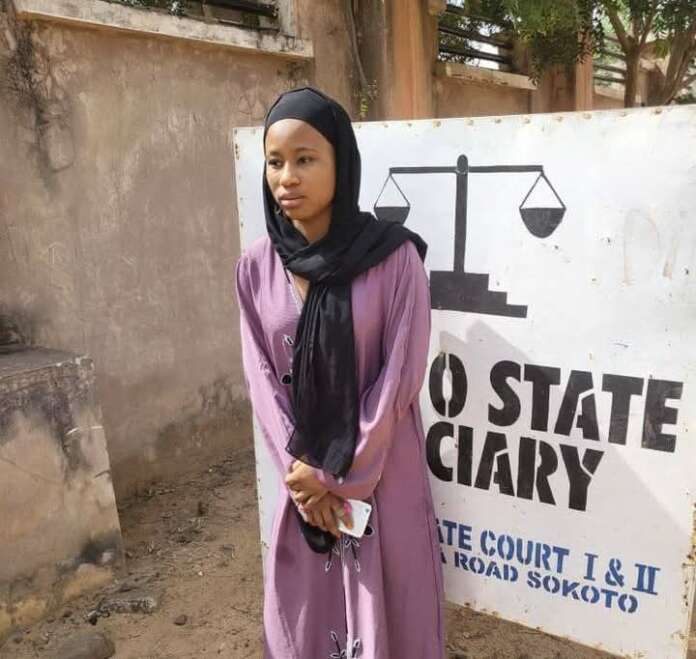
18 year old female social media activist sentenced for condemning killings and insecurity in Sokoto State

  • Watch video of Pastor Sarah Omaku recounting the horror tales of Fulani herdsmen’s victims

A Sokoto Chief Magistrates’ Court presided over by Chief Magistrate Faruk Umar, has sentenced an 18-year-old social media activist, Hamdiyya Sidi Shariff, to 12 strokes of the cane, or 2 years imprisonment, or a fine of Fifty Thousand Naira (50,000).

Shariff was arrested November 13, 2024, and put in prison for allegedly lamenting the rising killings and general insecurity in the state on social media.

She was first abducted by armed men and whisked into a tricycle while going to collect her mobile phone from a charging point. She was beaten and thrown out of a moving tricycle and left with severe injuries.

In a viral video, she revealed how bandits pillaged their villages without any restraints, and how displaced women seeking refuge in the state capital are now being sexually exploited due to abject poverty and squalor.

The Sokoto State government first charged her before a Sharia court for the “use of insulting or abusive language” and “inciting disturbance” after she criticised Governor Ahmed Aliyu in a TikTok video.

Her plight drew the attention of Amnesty International who urged security operatives to ensure her impartial trial.

The Director, Amnesty International Nigeria, Isa Sanusi, in a statement issued, noted that the threat to the lives of Hamdiyya and her lawyer was disturbing and the need for caution.

“The Nigerian authorities must impartially and transparently investigate disturbing threats to the lives of Hamdiyya Sidi Shariff and her lawyer Abba Hikima – as the trial continues.Right now, apart from facing persecution for exercising freedom of expression, Hamdiyya Sidi Shariff and her lawyer, Abba Hikima, are being subjected to threats, including phone calls and in-person confrontations by sponsored thugs and individuals claiming to be ‘intelligence agents”, said Sanusi.

He stated that at the last court hearing, Barrister Hikima was compelled to apply for armed police protection due to the hostile atmosphere in court. The request was granted by the court. While in Sokoto, for the trial, they were also stalked at their hotel, accosted and intimidated by some individuals.

“These actions represent an alarming abuse of power and a calculated attempt to intimidate and punish those who speak out for their society and lawyers defending them. The hostilities being faced by Hamdiyya Sidi Sharif and Barrister Abba Hikima are increasingly making their appearance in court in Sokoto dangerous.”

“Instead of attempting to suppress dissenting voices, Sokoto State government and the Nigerian security agencies should focus on addressing rampant insecurity facing particularly the people of eastern part of Sokoto State where gunmen have been killing people, razing villages, abducting women and girls – almost daily,” Sanusi said

On February 22, 2025, before her sentencing, the 18-year-old activist had her trial adjourned to March 13 and 14, 2025 by Chief Magistrate Umar, after the Police Prosecutor, Inspector Khalid Musa, presented evidence through the Investigating Police Officer (IPO), Tukur Abdulhadi.

The prosecution alleged that Shariff disseminated content capable of inciting public disturbance, particularly criticising the government’s handling of banditry in regions like Sabon Birnin Daji. During the session, the IPO submitted a flash drive and a translated version of Shariff’s statement as exhibits.

However, under cross-examination, it was revealed that her statement was taken without legal representation present. The court then maintained the bail conditions previously granted to her..

The case ignited a firestorm of discussions across social media platforms, with users expressing a spectrum of opinions:

Many viewed her as a courageous voice against governmental negligence. One user emphasised the threats she has faced since her critical post about the Sokoto State governor.

Below is a video of Pastor Sarah Omaku telling the blood curdling story of victims raped and dehumanised by terrorists masquerading as Fulani herdsmen.

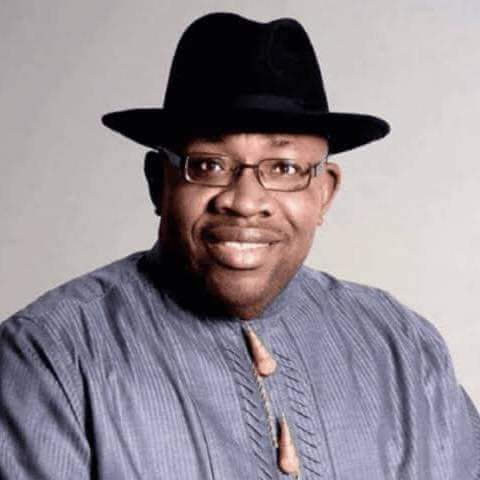
Rivers Power Struggle: Senator Dickson urges Wike, Fubara to find common ground

Senator Henry Seriake Dickson has called for calm in Rivers State as the contentions over the state of emergency in Rivers continue.

He spoke on Friday during a visit to Governor Siminalaye Fubara’s Port Harcourt residence.

Following a private meeting with Governor Fubara, Senator Dickson, who represents the Bayelsa West Senatorial Zone, made a passionate plea for calm and urged President Bola Ahmed Tinubu to personally intervene to de-escalate tensions in the state.

The visit follows weeks of intense political manoeuvring, with Governor Fubara’s political future stalled due to a bitter power struggle involving his predecessor, now Federal Capital Territory Minister Nyesom Wike.

The crisis escalated when the State Assembly attempted to impeach Governor Fubara, a move that prompted widespread condemnation and calls for restraint.

Senator Dickson recognised the gravity of the situation, describing the current political climate in Rivers State as “an extreme and rare political development.”

While he noted the apparent peace within the State, he cautioned that it “may very well be the peace of a graveyard,” warning that even a minor spark could ignite widespread unrest, affecting not only Rivers State but the entire Niger Delta region.

“I appreciated Governor Fubara’s calm and peaceful demeanour amid unprecedented turbulence,” Senator Dickson said, highlighting the Governor’s faith in the nation’s institutions and leadership to resolve the crisis.

Senator Dickson, on the other hand, emphasised the critical importance of taking decisive action to avoid further deterioration.

The Senator’s address included a direct appeal to Rivers State’s youth, particularly those from the Ijaw Nation, urging them to reject any form of provocation or incitement to violence.

He specifically warned against destroying strategic oil and gas infrastructure, emphasising the devastating consequences for the already fragile environment, the regional economy, and the nation’s fiscal stability.

“They should refrain from violence and destructive tendencies, particularly the destruction and vandalism of strategic oil and gas infrastructure in the region, which has the potential to cause further pollution damage to our already compromised environment,” Senator Dickson warned, emphasising the interconnectedness of peace, economic development, and environmental protection in the Niger Delta.

In a move that reflects the complexity of the situation, Senator Dickson also urged the Sole Administrator, Vice Admiral (rtd) Ibok Ete Ekwe Ibas, “refrain from actions that do not build confidence and aid the quick and amicable resolution of the crisis.”

The Senator’s most direct appeal was made to President Tinubu, urging him to “prevail on stakeholders, especially my brother the FCT Minister and the Governor Siminalaye Fubara, to find a common ground for tolerance and accommodation for a quick resolution.”

He drew on the two men’s existing relationship, appealing to the “divine prerogative of fathers to tolerate and forbear for the overall interest of all.”
Addressing concerns about the Ijaw Nation’s position on the current administration, Senator Dickson stated unequivocally, “The Ijaw Nation is not at war with the Federal Government or the President.”

He emphasised the community’s dedication to a “restructured and truly Federal Nigeria,” advocating for decentralisation, rapid development, environmental justice, and inclusivity. He expressed hope that President Tinubu would be a partner in achieving these objectives, “regardless of political differences.”

Senator Dickson’s intervention comes at a critical time, serving as a stark reminder of the dangers of political instability in the Niger Delta region.

His call for calm, plea for presidential intervention, and emphasis on the need for reconciliation highlight the importance of finding a peaceful and long-term solution to the Rivers State political crisis.

The nation is now waiting to see if President Tinubu will heed this call and take the necessary steps to restore normalcy and democratic rule in Rivers State.

Nigeria’s opposition are hook-up girls

By Funke Egbemode

I am sure you’ve heard the Yoruba saying this many times. I am sure it is applicable to our politicians. Their journeying turtle knows neither shame nor when to say, “enough I am going back home.” Like hookup girls, they hop from one party to another in body or spirit or both. Wherever the wind of money, opportunity and opportunism blows them, they go.   And most times when they hop onto alien loins, they get used for money and power rituals.

Every misfortune that befalls their party is caused by someone else. They always find a ‘Wiked’ person to blame.

Nigeria is about to become a one-party state.

Wike has destroyed the PDP.

 Tinubu is fast becoming a dictator.

 He is killing opposition.

Democracy is gradually dying in Nigeria.

How many times have you said or heard those lines in the last 30 days, even one week? Those lines assault our senses all day, everyday, these days. If a fast-talking political analyst and social commentator is not painting a dreary picture of our future, a human rights lawyer or activist is quoting laws that put all our leaders in jail. Maybe they are right. Maybe you believe everything they say and will say tomorrow morning on all our television morning shows.

One thing is constant, there is a thread and theme of greed, selfishness and short-sightedness holding our polity together. There is a trait all our leaders (except a minute few) share. And when things don’t work their way, they pull out a book of big grammar, terminologies and mix everything with their memorized supporting sections of the constitution to convince they are right and everyone else is wrong. They constantly remind me of Amunkun and Apapo Eleye analogies.

Amunkun is the knock-kneed man who was accused of not knowing how to balance the load on his head. Everybody he met on the way asked him why his load was wobbly, bent, not sitting straight on his head. Tired of their ‘short-sightedness’, he implored them to stop focusing on what was on his head because the root of the wobbly load was his wobbly knees that was making him wobble instead of walking like everybody else. The ‘Apapo Eleye’ theme taken from the 90s Yoruba drama series by Yekini Ajileye Production, Koto-Orun, where the dark mothers joined hands and forces to deal with those declared guilty by the coven.

Our political coven is in turmoil because the actors of the nights are in that season when they cannot agree on anything. Indeed, they all are testing their great beaks on one another and the floor is full of plucked feathers. The weak are rolling in pain, the strong are rolling in laughter and the rest of us are naively attempting to analyse the cacophony. I don’t know why we bother or why we take sides.

Let us start with PDP, the once-upon-a-time largest, most influential political party in Africa (right)? It held sway for 16 years, four election cycles. It was the king that must and could not be questioned. Its big fat feet had bad toes splayed everywhere. You stepped on them and stepped into pains and teeth-gnashing. Not that the PDP years didn’t bring Nigerians blessings.  It did, landmark ones like the GSM and smart banking but I won’t bore you with the details today. The problem now is how in less than four years after its presidential election loss, everything fell apart.

Let us fast forward to the ‘Wike is the problem of PDP’ episode. Every time I hear that, I chuckle. How? Then I shake my head, how is one single man, a former governor, bigger than a whole party that once hosted and housed the most powerful men in the country? Some of those powerful men who designed, devised and supervised the strategies that won elections in Nigeria are still in PDP today. Former governors, former speakers, and Senate presidents, formidable politicians who pulled votes and voters in most difficult terrains.

PDP has, still in its fold, former presidents, former vice presidents, vibrant aspirants, very rich members. PDP has what we call in the Nigerian Guild of Editors (NGE) living ancestors. Pray then, how is one man who once served PDP with fanatical devotion a problem for all these men of uncommon timber and caliber?

Sure, Wike is not your regular guy but there are many of him in PDP still. Oh, or are they the ones he (Wike) is using or cooperating with to hollow out PDP? Perhaps Wike has more loyalists in the PDP than the party itself. What kind of party or coven would that make PDP? If APC is destroying PDP or any party, can it do it alone? It’s just like the case of vote buying. There are vote sellers who defend their whoring ways with such big grammars as ‘poverty has been weaponised’. A whore is a whore. There are poor women who do not resort to selling their bodies for money. There are more political whores in our polity and that is the problem with Nigeria.

If Wike has money at his disposal to bribe and weaken PDP, who are the whores within accepting Zaddy Wike’s money? Who are the hook-up guys in PDP shaking their butts and singing ‘Owo l’owo o, eyin nle; Money for hand, back for ground’. That is the PDP problem, the whole problem. Hook-up politicians, buying and selling influences, trading political clout and whatever is left of their political integrity.

They are married to PDP with children, but sleeping steadily, clandestinely with APC. Mercenaries posing as businessmen. Gunmen posing as soldiers.

The other side of the story, however, is, don’t take my word for it but I think Wike’s problem is his head; his ‘chi’ does not agree with helping others. Think about it before you start protesting. From the candidates he has helped to the throne, to holding the Peoples Democratic Party together with both hands to the conspiracy that stopped him abruptly at the PDP Presidential primaries and the coven leaders who refused to make him a running mate, with what are you going to prove that Wike is destined to help aspirants become candidates and then governor or whatever? Call this a serious silent warning but Wike’s head does not agree with helping with other people’s achieving their ambitions. Maybe he should just mind his business and focus on his own ‘hustle’ in case he’s still planning how to help another set of ‘godsons’.

The hook-up guys in the ‘opposition’, did you see the way they ‘fell in’ when it was time to vote for or against state of emergency in Rivers State. Save for a few men like Rt. Hon. Aminu Tambuwal, Senator Enyinaya Abaribe and Senator Seriake Dickson who couldn’t imagine saying ‘Yes’ when they meant to say ‘No’. With the speed they accepted their ‘tear-rubber’ official cars, the so-called ‘opposition’ said their ‘aye’ and moved on. Is it also Wike’s fault that Jandor chose to ‘return home’ to APC in Lagos? What’s left of PDP now in Lagos?

Let us now visit the rave of the moment, Senator Natasha Akpoti-Uduaghan. It’s either I missed the PDP support groups defending the beautiful Senator or their defense simply didn’t happen. At inauguration, 43 of the 109 Senators were of the PDP. Plus or minus a few that defected, did you hear 40 voices speaking up for Natasha? Did you see even a dozen of them at a caucus meeting or press conference defending one of their own? When Natasha finally dared every odd and helicoptered her way into Kogi to a beautiful reception, how many PDP Senators, Chieftains were there? Tomorrow, if Natasha decides that it is too lonely and cold in PDP, the president will be blamed for weakening opposition or it will be because Tinubu gave Wike money to lure Natasha to APC.

It’s the way of hookup girls, they dress to entice, if what they wear can be called dress. They tack hankerchief-size fabrics to cover the bare essentials, make their ways to where the buyers are and spread their goodies on display. They bat their lashes and shake whatever is shakable and worm ( yes, in every sense of the word) their ways into the pockets of whoever can pay. Note that today’s payer’s pay is valid until midnight, unless he pays for TDB (Till daybreak).

How is the call-girl service different from what we see in our polity? The Labour Party came and job-seeking fellows posing as politicians jumped on the poor party. They called themselves all kind of nice names, wore saintly-sounding tags like good people. I told those around me that it was only Peter Obi I knew and that most of those boarding his vehicle were hook-up guys. I was called an unbeliever. Now ask yourself, how many of the Obidients are still obedient? Like call girls, they found the mega party to ride into election victory, and as soon as they got what they wanted, they became what they really are, showed us their true colours. Some have openly decamped. Many are closet APC members, trust me. You still think it is APC that is turning Nigeria into a one-party state?

It was not the ruling party’s fault that the opposition is giving it up for the highest bidder. It is what whores do. They hook up with the party that works and pays them.

The views expressed by contributors are strictly personal and not of Law & Society Magazine.
Selective outrage over mass murders in Nigeria

By Farooq Kperogi

When vigilantes incinerated traveling Hausa hunters in Uromi, Edo State, on the mistaken assumption that they were “Fulani herdsmen,” countless Hausaphone Muslim northerners sent the videos to me with commentaries that reeked of unappeasable wrath.

Because there is a 6- to 5-hour time difference between Atlanta and Nigeria, some of the people who shared the videos with me became noticeably impatient with the perceived delay in my response.

Frustrated by the lag in my intervention, they sent messages reminding me of my swift and impassioned condemnation of the May 2022 murder of Deborah Yakubu in Sokoto. They wondered aloud why, unlike my immediate reaction to that previous incident, I had not yet commented on these recent videos.

A few even recalled my January 1, 2011, column titled “Jos bombings: Can we for once be truthful?” where I denounced, in the strongest terms possible, the mass massacre of Jos Christians by a group that called itself Jama’atu Ahlus Sunnah Lid Da’awati Wal Jihad. (I’ve just been made aware of a similar mass murder in Plateau recently. I could republish my 2011 column, and most people won’t notice that it’s a 14-year-old piece except for some names).

Of course, they never reminded me of my swift, full-throated denunciation of the February 1, 2018, murder and burning of 7 innocent Fulani cattle herders in Benue “by people who have been programmed to associate criminality with all Fulani cattle herders,” as I pointed out in my February 10, 2018, column titled “News Media’s Cultivation of ‘Fulani Herdsmen’ Hysteria.”

The people who were impatient with me implied that I was deliberately courting the approval of Christians. In their view, this meant I was seeking validation or favor from the Christian community, possibly at the expense of my own religious identity. Essentially, they accused me of prioritizing external validation over internal solidarity, implying a certain negligence or disregard for the sentiments and expectations of my own religious community.

Nonetheless, since the publication of my March 29 column, titled “Barbaric Mass Burning of Innocents in Edo,” scores of Christians routinely tag me to mass murders committed by Muslims against Christians and challenge me to objurgate them with the same passion as I did the Edo mass incineration.

It seems to me that public commentators unfairly shoulder a burden of intervention that should properly belong to people in positions of authority. Too often, it falls upon commentators to address and amplify crises, even though their roles are fundamentally different from those who wield executive power and influence.

Writing about the horrendous human tragedies that have increasingly become the signature of our national life in Nigeria imposes tremendous mental strain on me. It is emotionally draining and psychologically taxing to continually engage with, dissect, and articulate these disturbing events.

Nonetheless, I deeply understand the reasons behind distraught citizens’ desire to have their anguish acknowledged and amplified by individuals they perceive as having sizable platforms. They turn to public commentators because of their frustration with those in authority, who are perceived as detached, indifferent, or ineffective in responding adequately to their suffering.

Most importantly, though, our outrage toward mass murders often seems conditioned by whether the perpetrators differ from us in identity or affiliation. During Muhammadu Buhari’s presidency, for instance, I faced vicious personal attacks from northern Muslims for drawing attention to Boko Haram’s relentless massacres of Muslims in the North, massacres that many preferred to overlook.

Similarly, bandits in the North have consistently burned, slaughtered, and dismembered their victims, yet these atrocities rarely provoke widespread indignation or inspire righteous anger. Because the victims do not fit the narrative of northern Muslims being victimized by (southern) Christian aggressors, their suffering is met with muted concern at best and outright indifference at worst rather than outrage or vigorous outcry for intervention.

This dynamic is not unique to the Muslim North. In the Christian North, numerous lives are frequently lost in inter-ethnic communal violence. In these cases, however, both the victims and perpetrators typically share a common Christian identity.

As a result, the collective sense of hurt and urgency felt by communities within these areas is markedly diminished. The outrage and intensity of grief that would typically accompany violence perpetrated by Muslims against Christian communities is notably absent, which reflects how religious identities powerfully shape public empathy and indignation.

In the southeast, so-called unknown gunmen perpetrate shocking acts of brutality, including gruesome murders, against fellow Igbo people. But there is rarely any pressure or expectation placed upon commentators like me to amplify these events publicly or to demand action from authorities.

This selective silence, this inconsistency in how acts of violence are perceived and responded to, this tendency for our outrage to be contingent upon the identity dynamics between victims and perpetrators, is an instinctive, age-old, even evolutionary human trait about which psychologists and philosophers have written.

For example, in their Social Identity Theory formulation, Henri Tajfel and John Turner assert that we derive our sense of self from our membership of collective identities, and that attack on the collective triggers an intense emotional response but that intra-group violence, though troubling, is psychologically processed as an internal issue and thus evokes less public rage.

From the standpoint of evolutionary biology, we are hardwired to depend on group cohesion and cooperation and to be suspicious of outsiders. Thus, violence perpetrated by out-groups is perceived as a threat to group resources or status, which invokes defensive anger and intolerance.

Emmanuel Levinas and Richard Rorty have also written about the moral burden of “othering,” which refers to the process through which out-group members are mentally constructed as fundamentally incompatible or as morally deficient, thus deserving harsher judgment or reduced moral consideration.

The moral distance created by “othering” leads people to interpret out-group violence as evidence of moral depravity or inherent hostility. The result is that out-group violence elicits intense moral condemnation. Conversely, violence within the in-group, involving individuals perceived as morally closer, is more readily explained away, forgiven, or rationalized.

In communication scholarship, we also talk of selective perception. It is an instinctive cognitive bias that predisposes us to perceive reality in ways that reinforce and soothe our predetermined prejudices.

Related concepts are selective exposure (the tendency to see only those things that affirm our pre-set biases and to block out those that cause us cognitive dissonance) and selective retention (the tendency to remember only those things that confer psychic comfort to our sentiments and to forget those that don’t fit that frame).

We are more tolerant of and readier to justify hurtful words that come from our “friends” than we are of even less hurtful words that come from our “enemies.”

Psychologists who study cognitive biases point out that our default positions as humans is to support our kind, to selectively expose ourselves to and perceive, even retain, only those points of views and perspectives that reinforce our prejudices.

It’s often an unconscious process. And so it takes nothing to be prejudiced. It’s effortless. What isn’t effortless is the capacity for conscious distancing, for dispassionate reflection, and for self-criticism.

It takes self-reflexivity and self-awareness to rise superior to the default impulses that so readily and so easily crowd and becloud our minds in moments of emotional tension. Very few are capable of this, and that’s why some people question the practical utility of the idea of deliberative democracy—the idea of government by rational conversation.

Because this is not unique to Nigeria, I hope humans can evolve to the point where we transcend these troubling predispositions.

The views expressed by contributors are strictly personal and not of Law & Society Magazine.
Fake outrage and the making of the Uromi 16

By Azu Ishiekwene

The fear of kidnappers is a constant worry for road users. I was nervous for nearly four hours of the taxi ride, especially as we turned off the busy Agbor Road and veered onto narrow, lonely roads meandering through many forested small towns and villages.

I was nervous. When the driver ran into a pothole, and a loud noise suggested we might have lost a wheel or something, I insisted he should keep moving, as long as the car could still move, until we later discovered it was the wheel cover. 

Entering Uromi

It was not until we passed Ubiaja, the hotspot between Biafran and Federal troops during Nigeria’s civil war and cultural capital of Esanland, and reached Igueben, the rusty town of one of Nigeria’s famous politicians, Tom Ikimi, about 20 minutes’ drive from Uromi, that I started breathing easy. It was my first visit to Uromi, a town I had known and heard about since my teenage years. 

Memories from the past

My earliest memory of this town was when my mother worked as a cook at St. Theresa’s Hospital, Kirikiri Ajegunle, Lagos, owned at the time by Dr. Okoli, an Igbo man, and his wife, a nurse and an Esan from Uromi. Occasionally, when there was some social event in Uromi, the Okolis took my mum along to cook, and she returned with plenty of palm oil, large tubers of yam, and fresh fruits. 

But there’s another memory of Uromi apart from my mother’s work and travels. It’s the historical significance of this town in the old Benin Empire. More contemporary references might be about the exploits of some of Uromi’s notable people, such as the three Anthonys – Enahoro, Olubunmi-Okogie and Anenih – whose footprints in politics and liberation theology cannot be easily forgotten.  

Innocence lost to rage

Yet, these notable persons were inspired by the town’s extraordinary heritage of struggle and resistance to oppression. Uromi resisted the expansionism of the Benin Empire during Oba Ozolua’s reign and fought the British colonial invaders. 

Though many of the town’s original settlers are believed to have come from central Nigeria, migrants from other places also settled there, highlighting its tolerance for visitors and diverse heritage as the town grew into one of Esanland’s most important agricultural trading posts.

That diversity, enterprise and welcoming spirit now seem like a story from a bygone era. After the tragic killing of the 16 travellers reportedly going to Kano to observe the Eid on March 28, the town has lost its innocence. For a long time, it will be remembered not as that place my mother frequented as a cook or the homestead of Enahoro, one of Nigeria’s greatest patriots and nationalists, but as a crime scene.

Agony of bereavement

The heartbreaking story of Hauwa Bala (whose husband, Isah, was among the Uromi 16) who went into premature labour upon hearing of her husband’s tragic death or Sadiya Sa’adu, who lost a brother and a nephew will haunt the community, as will the stories of each of the dead, and indeed the unfolding horror in Uromi now under siege and a brutal crackdown. The security services are poised to forget their complicity and instead crush the town in a mocking search for justice.

Journey to anomie

How did we get here? Kidnapping and banditry have grown from a fringe business to a N2.23 trillion naira industry, and hardly any part of the country is spared this misery. In the last 10 years, clashes among rival cult gangs have been rife in Edo State, as have been reports of severe violence as a result of farmer- herder clashes. One report said in 2020, Edo was the third most affected by violence in the Niger Delta after Delta and Rivers States. 

Violent clashes between farmers and herders have led to significant loss of lives. In February alone, 27 farmers in Edo were reportedly killed by herdsmen. This figure is only a tiny part of the bloody trail that often includes grotesque stories of rape, murder and wantonness wrecking many farming communities across the country as herders roam southwards for pasture.

Politicians’ fake outrage

While the affected communities writhe in anguish, official response, especially by politicians and the police, has ranged from chewing the microphone with empty promises of justice to sheer indifference and, in fact, alleged complicity in supplying weapons to the herders in some cases. We’ve seen this repeatedly across the country, from Uromi in Edo to towns in Benue and Plateau States. 

When the state, expected to guarantee security and maintain law and order, abdicates its responsibility, turns a blind eye or becomes complicit, people take the law into their own hands. What happened in Uromi on March 28 is one of the tragic outcomes. 

The appearance of shock and outrage amongst politicians and the security services is hypocrisy disguised as empathy. They can fool themselves all day long. Unless they begin to rebuild trust in communities and people – whether farmers or herders – can see that there are consequences for breaking the law, Uromi will not be the last tragic crime scene. 

Citizens’ dilemma

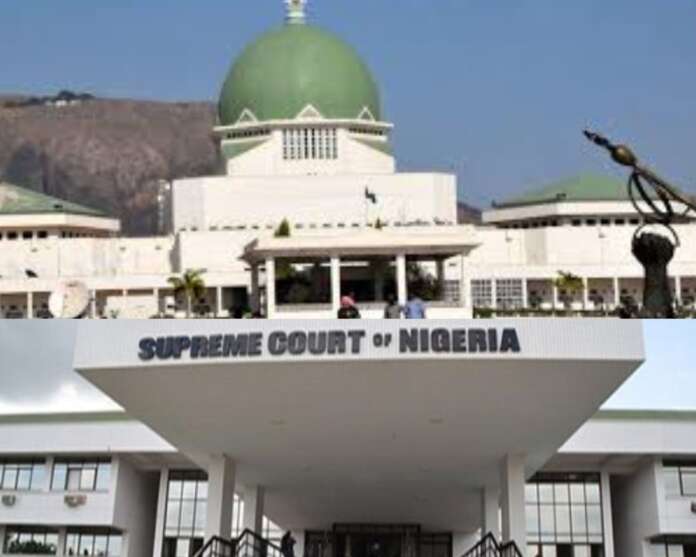
Yet, while many communities are under attack, residents are on their own. The Supreme Court recently gave a judgment upholding the death sentence on Citizen Sunday Jackson and criminalising self-defence even in the face of a clear threat to life. The judgment is an absurdity that compounds the dilemma of communities coping with security services often unwilling, unable or unavailable to protect citizens. 

If unarmed Jackson had known that self-defence against herdsman Boua Bururo, who stabbed him seven times on his farm, would not avail him, that if he didn’t die by his attacker’s knife, he would have still been killed by the law, he might have surrendered to his attacker. What a fate!

What kind of society gives the victims the short end of the stick? If communities cannot trust that the police can defend them and courts will not provide justice, self-help prevails. As things stand, respect for life and private property rights is endangered, and to pretend otherwise is to enable jungle justice further.

No excuses

What happened to the Uromi 16 stands condemned, but sadly, the fake outrage by politicians obscures the history behind the tragedy. It neither guarantees that a proper investigation will be done and the perpetrators brought to justice, nor does it assuage current tensions and paranoia in many communities across the country. 

Open, unrestrained must stop. The federal government must also fast-track community/state policing, which will hopefully use modern surveillance tools and techniques to prevent and fight crime. The current security system is unfit for purpose.

Burden of kindness

I’m sorry for the truck driver who, after driving past the stranded passengers early on, turned back nearly two kilometres to pick up the Uromi 16 and other stranded passengers from the roadside. Even though he escaped the mob attack in Uromi, he now lives with the guilt of a bloody reward for his act of kindness, the tragic consequence of a society where trust and compassion have declined. 

Neither the Uromi I read about in history nor the one my mother visited is the same as the present crime scene. Something is broken, and false outrage won’t fix it. 

Ishiekwene is the editor-in-chief of LEADERSHIP and author of the book Writing for Media and Monetising It. 

Views expressed by contributors are strictly personal and not of Law & Society Magazine.

Falana asks, “What kind of democracy removes an elected governor and replaces him with a retired military officer?”

While Nigerians are grappling with the question, “What kind of democracy removes an elected governor and replaces him with a retired military officer?”, the retired Naval Real Admiral who as now become the illegally appointed Sole Administrator of Rivers State announced the appointment of Administrators for the 23 Local Government Areas (LGAs) in the state.

This is although just hours before the announcement, a Federal High Court in Port Harcourt scheduled April 14, 2025, to hear a suit filed by human rights lawyer Courage Nsirimovu of Pilex Centre for Civic Education Initiative challenging the removal of a democratically elected governor.

Nsirimovu is seeking to halt the appointment of LG Administrators in the state.

Justice Adamu Mohammed, presiding over the matter did not issue an explicit restraining order, instead directed that the Administrator of Rivers State be put on notice to appear and show cause why the request to stop the appointments should not be granted.

“I am of the view that it will serve the interest of justice to order the application to put the respondent on notice to appear and show cause why the application (to stop the appointment administrators in the 23 LGAs) should not be granted,” the judge stated.

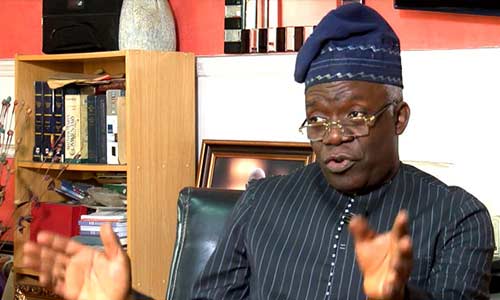
Questioning the rationale behind the sack of democratic governance in Rivers State, notable rights lawyer Femi Falana, SAN said: “If You see a Lawyer, Defending emergency rule, you ask: What Section of the Constitution allow removal of the Governor and suspending the Legislature?”

Watch the video below.

The decision to appoint the LG Sole Administrators was approved by the Administrator of Rivers State, Retired Vice Admiral Ibok-Ete Ibas, also includes the reconstitution of some Boards of Agencies, Commissions, and Parastatals that had earlier been suspended.

According to the statement by the Secretary to the State Government, Professor Ibibia Worika, the appointments are to take effect from Monday, April 7, 2025.

The administrators for the 23 Local Government Areas of Rivers State include:

1. Mr Okroiyobi Animiete – Abua/Odual LGA
2. Mr Goodluck M. Ihenacho – Ahoada East LGA
3. Mr Promise Jacob – Ahoada West LGA
4. Dr Tamunotonye Peters – Akuku Toru LGA
5. Surveyor Atajit Francis – Andoni LGA
6. Barrister Ibiapuve Charles – Asari Toru LGA
7. Mr Kingsley N. Banigo – Bonny LGA
8. Dr Sokari Ibifuro Francis – Degema LGA
9. Dr Gloria Obo Dibiah – Eleme LGA
10. Barr Franklin P. Ajinwon – Emohua LGA
11. Dr Onyemachi S. Nwankwor – Etche LGA
12. Prof. Gospel G. Kpee – Gokana LGA
13. Mr Isaiah Christian Nobuawu – Ikwerre LGA
14. Dr Barinedum Nwibere – Khana LGA
15. Dr Clifford Ndu Walter – Obio Akpor LGA
16. Dr Chukwuma Aje – Ogba/Egbema/Ndoni LGA
17. Eliel Owubokiri – Ogu/Bolo LGA
18. Mr Thompson Isodiki – Okrika LGA
19. Manager Ikechi Wala – Omuma LGA
20. Mr Fred Apiafi – Opobo /Nkoro LGA
21. Eletuuo Ihianacho – Oyigbo LGA
22. Dr Sam Kalagbor – Port Harcourt LGA
23. Mr Nuka O. S. Gbipah – Tai LGA

The following have also been appointed as Chairman and members of the Rivers State Electoral Commission:

1. Dr Micheal Ekpai Odey – Chairman
2. Mr Lezaasi Lenee Torbira – Member
3. Prof Author Nwafor – Member
4. Prof Godfrey Woke Mbgudiogha – Member
5. Prof Joyce Akaninwor – Member
6. Dr Olive A. Bruce – Member
7. .Prof Chidi Halliday – Member

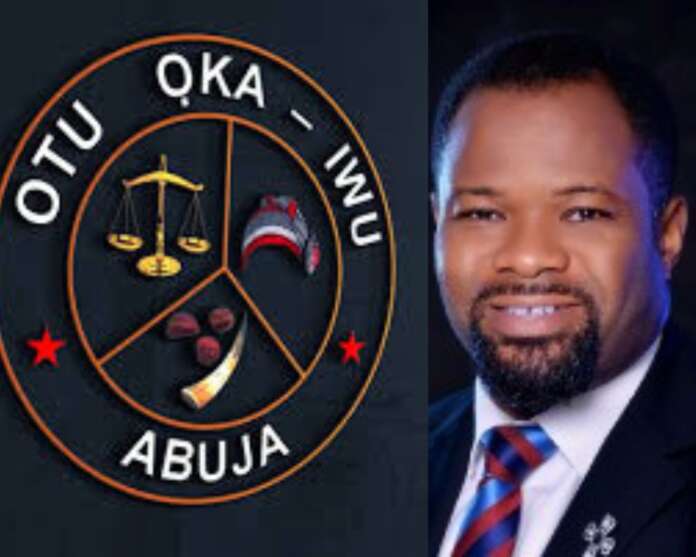
A Bold Stand for Democracy: Otu Oka-Iwu Abuja commends the Nigerian Bar Association (NBA) and Enugu State Governor

Press Statement

The Nigerian Bar Association (NBA), under the distinguished leadership of Mazi Afam Osigwe, SAN, has once again demonstrated an unwavering commitment to democratic principles and the rule of law.

The decision to relocate the 2025 Annual General Conference (AGC) from Port Harcourt, Rivers State, to Enugu State is a courageous and principled response to the unconstitutional removal of a legitimately elected government in Rivers State and the imposition of a sole administrator, an act that fundamentally contradicts the democratic provisions of the 1999 Constitution of the Federal Republic of Nigeria (as amended).

This relocation is not merely a logistical adjustment or a procedural change but a powerful statement against the erosion of democratic values. The NBA’s stance, supported by Otu Oka-Iwu, Abuja, reflects an unflinching dedication to justice and fairness, instilling hope among Nigerians that the fight for democracy remains alive and encouraging all Nigerians to believe that there is indeed hope for the common man.

Under the leadership of Mazi Afam Osigwe, SAN, the NBA has consistently taken decisive positions on critical national issues, reaffirming its role as a guardian of the law and defender of citizens’ rights.

Otu Oka-Iwu Abuja is particularly pleased that the conference will now hold in Enugu, the choice of Enugu State as the new venue for the AGC carries symbolic significance. Enugu, a city steeped in history and legal excellence, last hosted the NBA Annual Conference during the tenure of Olisa Agbakoba, SAN, as the NBA President. The return of this prestigious event to Enugu is a welcome development, affording the Enugu Bar, Otu Oka-Iwu, and Bar Associations a valuable opportunity to showcase their enduring commitment to democracy and the advancement of the legal profession.

His Excellency, Governor Peter Ndubuisi Mbah ESQ, deserves commendation for his exemplary democratic leadership in accepting to host the conference despite its initial scheduling in Port Harcourt. As a distinguished lawyer, the governor embodies the leadership qualities that lawyers are renowned for, and his administration’s strides in governance and development further underscore his dedication to progress.

Indeed, he epitomizes the virtues of integrity, strategic governance, and respect for the rule of law, qualities that lawyers across Nigeria uphold. His administration’s progressive reforms and commitment to infrastructural and economic development have significantly strengthened Enugu’s judicial systems.

Since he assumed office, His Excellency, Governor Peter Mbah ESQ has made significant strides in strengthening the legal and justice sector in Enugu State. His administration has facilitated and presented over 18 groundbreaking bills to the House of Assembly, out of which 15 have been passed into law. These legislative advancements have reinforced the state’s legal framework, ensuring that governance remains transparent, accountable, and responsive to contemporary challenges.

Hosting the NBA AGC in Enugu is not only a testament to the state’s readiness to uphold democratic values but also an opportunity to strengthen the bond between the legal profession and governance. The conference will undoubtedly benefit from the Governor’s visionary leadership, providing a platform for lawyers to engage in meaningful discourse and contribute to national development.

Beyond legislative reforms, His Excellency has also issued five executive orders that provide legal backing for various government policies and initiatives. These orders have enabled swift responses to emerging governance challenges, ensuring that Enugu State remains a model of legal efficiency and administrative effectiveness.

Notably, this shift offers an opportune moment for Enugu State to also host the Otu Oka-Iwu National Lawyers Conference, underscoring its role as a centre for legal excellence. The Governor’s leadership qualities, particularly his deep understanding of the legal profession’s significance in governance, make Enugu the ideal location for such a distinguished gathering.

There is no doubt that the NBA’s decision to relocate the AGC to Enugu State is a bold and commendable move that underscores NBA’s resolute commitment to democracy and a reminder that the legal profession remains a steadfast guardian of the rule of law

Chidiebere Nwabueze Udekwe ESQ
President
Otu oka-Iwu Abuja

𝗪hen not his pastor but he is to blame for his death ⚰

By Sylvester Udemezue

(A). Real Life Questions To Udems on 09 April 2025:

“Good morning, sir. It’s about a case where a person, instead of taking a person to the hospital, he took the person to the church and the person died in the Church after 46 days. The persons that took the deceased to the church are in Custody and the Pastor. The Pastor’s children are willing to pay for compensation while others are not ready to meet up to the demands of the family. My question is, sir, is it possible”_

(B) Reality Answer By Udems:

  1. The person (now deceased) who asked (that’s, if he asked) to be taken to a Pastor instead of to a Hospital or to a Medical Doctor, was a FOOLISH, SENSELESS MAN, died a FOOLISH death.
  2. The person who took the sick person (now deceased) to a Pastor instead of to a Hospital or to a Medical Doctor, is a FOOLISH, SENSELESS MAN.
  3. The Pastor is innocent if all he was doing for the 46 days was praying for the sick man, and nothing more; and provided the Pastor did not force the sick man to submit to the prayer nor did he hold the sick person against his will or against the will of his relatives or the person who brought sick person to the innocent Pastor.
  4. When one took ill and one voluntarily proceeded to a Pastor instead of to a Hospital, one couldn’t have expected the Pastor to do more than pray because the Church is a House of prayer but not a medical centre; one submitted oneself for prayers not for medical care, and if one dies in the process, i. e., while being prayed for according to one’s own wish, the Pastor has no blame. The principle of Volenti Non Fit Injuria applies here. Even the Holy Book of the Christians has warned of how a fool would always reap the fruit of his own foolish ways. Meanwhile, the statement “that “a man is legally accountable for the reasonable consequences of his own deliberate actions” is a fundamental principle of legal accountability, meaning individuals are legally responsible for all foreseeable outcomes stemming from their intentional actions.
  5. REALITY is that a person who upon taking ill, went to a Pastor for prayers, instead of to a Doctor for medical care, had indeed gone to pray for his own death and not to work or care to live. Let’s therefore be careful to not ignore REALITY because the one who successfully ignores REALITY can’t successfully escape the consequences of ignoring REALITY. ꓄hus as is said in Proverbs 5:23, the deceased was “led astray by [his] own great folly”. Proverbs 14:12, on its part, says “There is a way that seems right to a man, but its end is the way to death”. See finally Proverbs 19:3 which tells us of how “A man’s own folly subverts his way, yet his heart rages against the LORD”.
  6. FINAL ADVICE: Instead of holding the innocent Pastor captive, let him free while you go and bury and mourn the person who had, while alive, voluntarily chosen his own death instead of to live in that, in illhealth, he went to his pastor instead of to his Doctor or to a Hospital.
  7. LEARNING BY EXPERIENCE versus LEARNING BY OBSERVATION: Some deaths, although tragic, can serve as powerful lessons for the living, prompting reflection on life’s values and especially priorities. Hence the saying that “Death is for the living and not for the dead so much”. The maxim, “Ut Est Rerum Omnium Magister Usus” (translated, Self-experience Is The Best Teacher) is often attributed to Julius Caesar in De Bello Civili: the commentaries of the Civil War. The phrase has become a common saying regarding learning and leadership. Many believe that it means you will learn more from things that happen to you in real life (self-experience) than you will from hearing about, reading about or studying about, things that happen to other people (other people’s experience). I respectfully disagree with this! Experience is a good teacher only on very few occasions. Learning by observation is better than learning by harsh (sometimes harrowing) self-experience. Observation is thus a better teacher; we learn more and happily from the experiences of others. One does not have to throw oneself on a highway to be run over by a fast-moving car before one learns that vehicles could kill, because one may not even live to tell the story. Accordingly, man learns better and happier by observation, than by experience. Indeed, nothing has such power to broaden the mind as the ability to investigate systematically and truly all that comes under your observation in life. Thus, to acquire true knowledge, one must study; but to acquire wisdom, one must observe. Just sit back and observe smartly and you’d learn more in that way. The lesson here is simple: when you are ill, go to your doctor or hospital and let your Pastor come there to pray for you because Doctors/Hospitals care, but only God heals. Prayer is a powerful spiritual force and something that God wants His people to do. Time spent in prayer is never wasted; fervent prayers produce phenomenal results. Prayer delights God’s ear, melts His heart, and opens His hand. God doesn’t deny a praying soul because prayer is the nearest approach to God, the highest enjoyment of Him that we are capable of, and the link that connects us with God. Thus, although prayer positively influences God, yet prayer itself without WORK is dead ab initio because until we work, nothing works in REALITY.
  8. May the gentle soul of the deceased person rest in peace. Amen 🙏.
    Respectfully,
    §¢µð𝓮̂𝓶𝓮̂𝔃µ𝓮̂
    Sylvester Udemezue (udems).
    Legal Practitioner, Law Teacher, and the Proctor of The Reality Ministry of Truth, Law and Justice (TRM)
    08021365545
    [email protected].
    (09 April 2025)

Breaking! Supreme Court holds that FOI Act Applies to States

In a landmark judgment that reinforces transparency and democratic accountability at all levels of government, the Supreme Court of Nigeria has unanimously affirmed that the Freedom of Information Act (FOIA) 2011 applies to all tiers of government, including state institutions. This decision marks a decisive reversal of the 2018 majority ruling by the Court of Appeal, Benin Division, which had controversially held that the FOIA only applies to federal Ministries, Departments, and Agencies (MDAs).

The apex court allowed the appeal by affirming the decision of the trial court that the National Assembly has the legislative competence to enact laws on public records and archives.

The Court noted that the FOIA, enacted to promote transparency, citizen engagement, and accountability in public governance, is binding across the federation.

The case of Austin Osaku v. EDOSACA SC/614/2014 started in January 6, 2014, after a coalition of civil society organizations filed a Freedom of Information request to the Edo State Agency for the Control of AIDS (EDOSACA). The applicants sought detailed records relating to the HIV/AIDS Program Development Project (HPDP II), including financial expenditures, grants, donor partnerships, contract awards, and criteria for grant allocations between 2011 and 2014.

Speaking after the judgment, President Aigbokhan, Esq., lead counsel for the appellants, hailed the ruling as a model decision that addresses not inconsistency in law, but a legislative vacuum at the state level. This is not just a legal victory—it is a victory for democracy.

Aigbokhan added. “This decision is a major leap for the global campaign for probity, accountability, and transparency, with far-reaching impact on public citizens at the sub-national level. “Our laws must work for all, Once again, the Supreme Court has demonstrated its crucial role as a veritable arbiter of democratic ideals.”

He further dedicated the victory to the activists and NGOs in Edo State who stood together to pursue the matter to its logical conclusion.

This landmark lead judgment of Hon. Justice Lawal Garba JSC, dismantles the long-held excuse by some states for refusing to comply with FOIA provisions due to the absence of corresponding state laws. With the Supreme Court’s pronouncement, state governments can no longer deny access to public records on the grounds of legislative non-alignment.

As the decision reverberates across the country, it sets a powerful precedent for civil society, journalists, and ordinary citizens alike—ensuring that the quest for an open and accountable government does not stop at the gates of federal institutions.

Credits: FOICounsel

TIPS