Home Blog Page 379

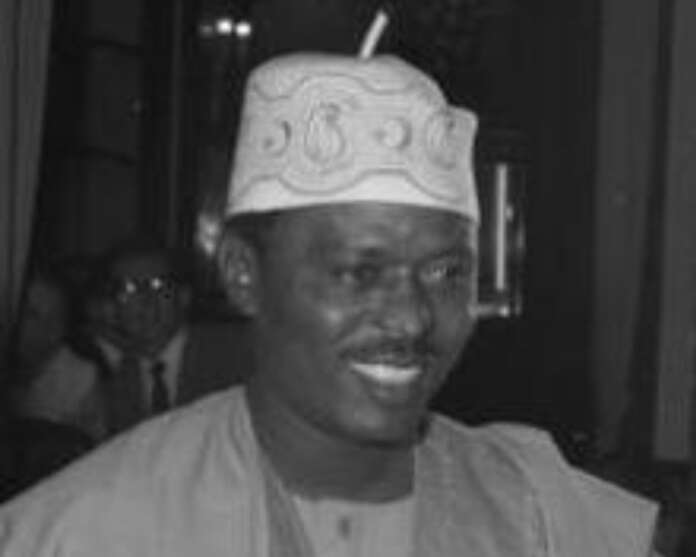
Hell hath no fury like a T.O.S. Benson scorned

By Banjo Odutola

October 7, 2003

Publication of a letter to an individual in our national newspapers, more often than not is a pejorative attempt to reason privately in a public space. Oftentimes, such letters offend and serve no purpose. They are useless ventures for neither game nor gain. Where they are to focus the mind of the person to whom they are addressed, the objective for publishing them is lost before attracting the right attention.

If grievances in public letters are for the advancement of a community, gentle diplomacy can no longer assist, and neither are favours easily gained. When these letters are addressed to individuals, they are confrontational and provide a dialogue between the deaf and the dumb. They are peevish attempts at antagonising rather than reconciling. They breach sacred confidences and display an arrogance that betrays the writers as monopolists of wisdom or maniacs pulling disgracefully. So, what is the essence of these public letters?

Let us consider a couple of them that may have started out with good intentions but ended up damaging the writers. The defence or arguments marshalled, unfortunately, betrayed what they are perceived to stand for. This is simply because their letters allowed us to form judgements about them, rather than the issues brought to our attention. These public letters are about the writers; people soon forget the issues.

The purpose of the published letters is lost in the unworthy damage with which the writers have visited themselves. In the two instances exemplified herein, and which characterise many of these letters, I asked myself what usefulness could making such letters public have done to bring peace between the writers and their antagonists.

The first of such letters is the exchange between Professors Muyiwa Awe and Wole Soyinka. I am willing to place a bet that the charge upon Mr. Awe to win “lost souls” and convert them to his faith may not be achieved if he were to attempt winning Mr. Soyinka for Christ. He conveniently wrote himself off as a failure to reach his “Eleke Ebu” friend. It is only for the purpose of the point that I strive to make that Mr Soyinka is considered a so-called “lost soul”. If he has no need for the religion his friend is so passionate about, he is within his rights, whether his speech was directed to Mr. Awe or Mr. Idi-Iroko.

Is Mr. Soyinka still wrong to hold on to his suspicion of the Christian message? You bet. After all, his friend could not adhere to its tenets. Even if Mr Awe were so vilified or berated, was it not required of him to turn the other cheek? Could he not have approached his friend privately and in love? Could he not have taken the same route as was done at Calvary? If Mr. Soyinka ever suggests that when Christians are not burdened by the obligations of their faith, their religion becomes less attractive; could he be blamed?

What about Mr. Soyinka’s letters? Would I dare make a comment? I make the point in Mr. Awe’s case because from all inquiries, it appears the last exercise is uncharacteristic. To comment on the insolence in Mr. Soyinka’s letters is to waste precious space, which I do not intend. That is not to say that I do not respect the man for what he stands for. In fact, I do. On this occasion, Mr. Awe is likely to give a mature and measured reaction. Whereas, if the antecedent of his friend is the benchmark of how he is likely to react, he is going to engage his mouth before his head. An example is his recent exchange with Mohammed Haruna. As honourable as most of his intentions are – he never stops to dismay.

Mr Awe, in his rebuke of his friend, made reference to the expectations of others when a man is in the twilight years of life. It is the “old age” and “public letter writing” that are the two intertwining strands in my subject matter. Consider the public letter to Chief (Mrs) Stella Olubukola Odesanya from Hon. Otunba T.O.S. Benson CFR, SAN – Baba Oba of Lagos, Asiwaju of Ikorodu, Aare of Ife, Sobaloju of Egba Land, Etc, First Republic Minister of Information, Broadcasting and Culture – these are the accolades that Mr. Benson wishes are not lost on the reader and perhaps appropriately too. Any reaction must take into account all these paraphernalia that we must know about. Thank you, sir! Well, I grant to him, that in the Nigerian space, the man is very important. But why has he invited a public debate to debase himself? Is this what old age is all about? Could old age not be kinder to this eminent man? Or, could this man not be kind to old age?

It may well be that minions like me are not meant to react to the way this Octogenarian has chosen to blight the achievements built on the sweat of many years. Maybe, it is expected of the reader to applaud his self-confessed bad behaviour. In my view, his letter is deceitful contextually, intentionally vile and beneath contempt. For those willing to read it, try “City People” publication. Nonetheless, I shall attempt references in parts, in the hope that the grand old man may see the truth underlying his awkwardness. He seeks sympathy from the reader. That is a commodity that he and Mr. Awe should have afforded their preys. To grant Mr. Benson any sympathies will be wrong.

My principal intention is premised on his emotional blackmail that he is “waiting in the boarding lounge for my flight to be called to the other planet.” If Mr. Benson could perpetrate such an embarrassing and heinous display of contemptuous nonchalance against someone with whom he is clearly still in love with: waiting in a boarding lounge to go to another planet may be an inappropriate description of his spiritual well-being. Mrs Solanke and the new sympathisers that the octogenarian has accorded her may believe the eminent lawyer already lives in another planet.

His public letter is a parody. I am tempted on this occasion to believe “whenever God prepares evil for a man, He first damages his mind, with which he deliberates (Scholastic annotation to Sophocles’s Antigone 1).” Mr. Benson must reconcile that maturity demands hopes of years gone by, must be allowed to decay and consigned to the bin of history.

The creator of the Rompole of the Old Bailey – a television series in England – John Mortimer, an eminent Octogenarian and a successful Barrister, before he retired, in his serialisation of Lies, Lust and Laziness. My legacy of advice for a happy Life opines ” Too many of us rabbit on incessantly about ourselves, repeating what we know already, and fail entirely to discover anything about the curious lives and the unopened histories of the people around us.” My description of Mr. Benson’s letter could not have been better described. Did he stop to consider the injury his letter would cause many people?

The irritation of his prosecution at the Old Bailey is understandable. The Old Bailey is an intimidating Criminal Court of Law, where several landmark cases have been heard. It is a place where criminality and history co-join to advance the essence of Law and Society. Often, it is from there that the advancement of the administration of justice evolves, sentences are quashed, and Judges interpret statutes in a way that Parliament could not have intended, All in the name of protecting society and justice.

The crux of Mr. Benson’s public letter is a display of his fury against the older sister of a woman he still desires for a wife, even at old age. I have no doubt that Chief Mrs Folake Solanke SAN and her sister are well equipped to lacerate this cyst that may be considered malignant. I do not hold briefs for either one or both sisters. Even though I have met one of them, once before: when her daughter was my University Housemate. I am motivated by nothing but a striking characterisation of the letter that concisely is a depiction of an elderly man behaving badly. If we learn to confront the truth in our society; if we strive to eyeball evil, and speak out notwithstanding the perils, our gains will be the legacy of a decent society for those behind us.

To those that may question my rights to comment on this matter – remember Mr. Benson introduced it into the Court of pubic opinion, and as a juror, I see no way to absolve him.

If half a century is inadequate to let go of his desire for a woman that has no interest in him, eternity also may not be enough. The issue of the dowry of fifty pounds is a red herring. His computation of the present-day equivalence of the dowry paid for Mrs Solanke is a sweet 419 that would not work. I doubt, if Mr. Benson’s money were refunded, he would go away quietly. Anyway, as a lawyer, he ought to realise that his contract was with Pa Odulate, who collected the dowry. Therefore, the octogenarian’s gripe should be against the executors or administrators of the estate. It is ingenious and dubious to claim that the dowry money is a legitimate debt. How could an eminent lawyer attempt to pull this 419 publicly? What he considers a legitimate debt that he “cannot afford to underwrite” is over forty years old!

Mr Benson ought to conduct a legal research to find out the life span of a debt. This so-called legitimate debt stopped being a debt long ago. He knows he cannot enforce it in any court of law.

He inferred that he does not love the wife he married. Consider this: demonstratively, no one is able to fill the void of his affection for Mrs Solanke. This is not complimentary to his wife or the mother of any of his children. If that aspect was never considered before he published the letter – that is revelatory.

In closing, I sympathise with the man. The pains of being with someone else, other than where his heart is, must be excruciating. On a man-to-man level, I volunteer the advice that he must take heart and appreciate the divine intervention of grace in his life. That intervention has been kind to him. He ought not repay the divine generosity with causing pains to others. This is not a good way to be remembered. Neither would Mrs Solanke throw in the towel and lay beside him, till death separates them. What may have been achieved by default is to confirm Mrs Odesanya’s fears that T.O.S is a brilliant man and perhaps a good one too. But he is unfit to be loved by her sister. This public letter does not depreciate that assertion. It serves to injure a great man and several other decent families – all to what end? Vanity.

The writer is a solicitor of the Supreme Court, England and Wales and a Lawyer at a Firm of Solicitors in London, England.

Read Also: The famous love tango between two Silks

Read Also: A PEEP INTO HISTORY OF THE BENSON vs SOLANKE CASE: When a man ‘lusts’ after a girl!

The views expressed by contributors are strictly personal and not of Law & Society Magazine.

The famous love tango between two Silks

By Toheeb Mustapha Babalola

I have been doing some research on a plethora of legal luminaries with the intention of getting some interesting details about them. During that process, I came across a particular story of what I will call a love tango between Folake Solanke SAN and T.O.S Benson SAN, which I came across via her book titled “Reaching The Stars” and an article by Femi Kehinde, a prolific journalist. The question is, what would have brought Solanke SAN, a famous Legal luminary and T.O.S Benson, one of the most loved Politicians in Nigerian history who happens to be a SAN too, together??

I know what you are thinking. It’s not the legal profession! The majority of our readers who were born in the late 90s or early 2000s might not know much about T.O.S Benson SAN.

T.O.S Benson was born into an aristocratic family in Ikorodu, Lagos. He attended the CMS Grammar School in Lagos. He studied law at Lincoln’s Inn and was called to the Bar in 1947. He returned back to Nigeria and went straight into law practice and politics. He joined the National Council of Nigeria and the Cameroons (NCNC). He had a brother called Bobby Benson, a musician who was a Taxi driver crooner! (The old folks can relate with the song better!!)

While T.O.S Benson was dominating Lagos Politics, his brother Bobby was dominating the music scene. Bobby’s innovation in music and style was a precursor of the popular juju music of the likes of IK Dairo, Ebenezer Obey, King Sunny Ade, Orlando Owoh, Fatai Rolling Dollars and others.

Without digressing too much, how did the Folake Solanke SAN and T.O.S Benson saga begin?

Majority of us knew Folake Solanke SAN as a prominent lawyer. Only few knew about the fact that she was Jacob Odulate’s daughter, the brain behind the Alabukun Medicine.

His Alabukun products, patented in 1918, had become a trailblazer in the Nigerian Pharmaceutical industry. The products, Alabukun Mentoline (a soothing balm), Alabukun APC, now “Alabukun” powder and the Elizir (an equivalent of the present day Viagra), still sells in the market today in Nigeria and some West African countries.

An event took place that led to the meeting between Solanke SAN and Benson. Kindly permit me to refer to Folake Solanke SAN as Folake and T.O.S Benson SAN as Benson for easy reference. While Jacob Odulate, Solanke’s father, was expecting the arrival of his son who had just finished studying medicine in the UK, he,(Pa Odulate) bought a new car to celebrate his son’s success after becoming a doctor.

The same car was used to transport Pa Odulate’s son from Lagos to Abeokuta. Unfortunately, they had an accident while coming back from Lagos, and this led to the death of Pa Odulate’s son, Folake Solanke’s mother and other casualties.

It was a really sad day for Pa Odulate, who was in the car alongside Folake, but fortunately, both of them came out of the accident alive! This was how Folake Solanke SAN became motherless at a very young age, even though she didn’t really feel the void considering that her stepmothers were good to her, as corroborated in her book titled “Reaching the stars” where she claimed her father’s other wives didn’t make her feel her mother’s absence but no one could be like her mother.

It was during this turbulent period that T.O.S Benson came to sympathize with Pa Odulate and met the beautiful Folake. Benson’s exploratory discussions started between the Bensons and Odulates and the possibility of hooking up Folake with T.O.S Benson via an arranged marriage. The most interesting part is that both families met and did engagement without Folake in attendance at the ceremony.

Folake relocated to the United Kingdom in 1951 for further studies, and this provided, perhaps, an escape valve for her. As soon as she arrived London, she wrote a letter to Benson and told him point blank that she should be counted out of the arranged marriage. She said-“I thought very deeply about my future and came to a firm decision that the talk between Papa and Benson about an arranged marriage could never be for me.”

A year after Folake’s arrival in the United Kingdom, she met the real love of her life, Toriola Fehisitan Solanke and on the 6th of October,1956, the marriage was solemnized. Toriola Solanke’s father was equally well known to Folake’s father. They all lived in the ancient city of Abeokuta. But despite her marriage, T.O.S Benson still remained unyielding and unbending. He was still determined to marry Folake at all cost!!
In 1957, Benson had become the Chief Whip of the Nigerian Parliament and was a member of the delegation to London to discuss the Independence of Nigeria.

Despite the seriousness of this delegation, to the United Kingdom (and its effect on Nigeria’s future independence), TOS Benson seized the opportunity of this visit to arrange with a cousin of Folake (now Mrs. Solanke), to lure her to her cousin’s house, where he could perhaps, talk her all over again and convince her to marry him.

Folake paid a visit to her cousin, but to her utmost shock, dismay and bewilderment, Benson, her old suitor, came in just after she had arrived and quickly went to business, to convince Folake that she should marry him. Folake’s persistent reply was an immediate rebuff and a No for an answer. She said-“I told him quite categorically, in the presence of Afolabi (cousin ), what I had been telling him, my father and others for six years, that I could never marry him. As he still refused to take no for an answer, I told him that I was already married. Benson said he did not care about my marital status and that he would do everything to destroy my husband and I in Nigeria.”

Benson did not stop at that, and according to Folake, “as soon as Afolabi left the room, I got up from my chair to leave the room, but suddenly, Benson grabbed my left hand and started trying to remove my engagement ring with force. I struggled as hard as I could, but he overpowered me and violently forced my engagement ring off my finger. In the course of the assault, my open-ended gold bracelet wrist watch, also came off my wrist.” She added, “my gold engagement ring, had two diamonds set on either side of the blue sapphire. I pleaded with him to return my ring and wrist watch to me, but he flatly refused. He then put the two items in one of the pockets in his flowing Agbada, locked the door and kept the key in one of his numerous pockets”. Folake, caught between the devil and the deep blue sea, did the unthinkable- “There was no way I was going to remain in the apartment, which for me had suddenly become a place of violence and unlawful detention, since all pleas had failed to recover my precious possession from him . With the door locked against me, I reached for the telephone. Instinctively, I made for the window to jump out. Luckily, the windows had no burglary proofs unlike Nigeria”.

As a result of this escape, audacity and boldness, Benson realized it was no longer a tea party affair. He called Folake’s cousin, Kayode, who promptly came into the room, and both tried to persuade her to come back. Despite her escape, Benson nevertheless held onto her ring and wrist watch. Folake reported this case to the Police.

On the 1st of June, 1957, the London Metropolitan Police arrested Benson and arraigned him before Acton Magistrate court, London, for stealing a ring and wrist watch valued at £41 from a woman, Folake Solanke. He was alleged to have forcibly robbed her of her ring and wrist watch on the 25th of May, 1957. He was granted bail with two sureties. The court ordered a remand for two weeks, which meant he could not leave London that period. On Saturday, June 15, 1957, the case went on at the Magistrates’ Court to determine whether Benson had a case to answer.

T.O.S Benson through his lawyer, Mr. Dingle Foot, called 12 witnesses that represented the crème de la creme of Nigerian politics. One of which was the Late Chief M.T Mbu. The greatest shock, however, was bringing the plaintiff’s father, Chief Jacob Odulate, to the court. The father testified against his daughter!!

The courtroom was packed full with Nigerians as the story also hit the headlines of major newspapers in London and Lagos. Folake further said, “There were also others who came simply to hurl abuse, curses and threats on me. The unprintable taunting and vituperation did not elicit one single response from me. I held my head high and the police gave me every protection” After the trial, the judge adjourned the case to July 1, 1957. TOS Benson was eventually discharged and acquitted by the court.

The court matter was certainly a clash between modernity and tradition, boldness and audacity, to stand firm, on a picked choice- Toriola Solanke. Chief TOS Benson could still not forgive Folake for not marrying him. He taunted her at every opportunity. When Toriola Solanke died, he(Benson)hired a band to taunt her, saying that he, an old man, had outlived her husband. Until his own death, Chief Theophilus Owolabi Sobowale Benson SAN never forgot and never forgave the bride he lost to Toriola Solanke.

Read Also: A PEEP INTO HISTORY OF THE BENSON vs SOLANKE CASE: When a man ‘lusts’ after a girl!

SOURCES.
1.Solanke, ‘F. (2007). Reaching for the stars: The autobiography of Folake ‘Solanke. Ibadan: Book Builders Editions Africa.
2. https://www.thecableng/between-tos-benson-and-folake-solaanke-a-beleaguered-love-story

ABOUT THE AUTHOR

Babalola can be reached via; email:[email protected] or contact/whatsapp:08106244073.

As the killings in Plateau continue, Northern CAN says it’s ‘Senseless and barbaric’

  • Sarkin Bakan Hausawan Africa urges FG, Edo govt to bring perpetrators of Uromi killings to justice

A faction of the Christian Association of Nigeria (CAN) in the 19 northern states has condemned the spate of attacks in Plateau.

Gunmen have killed over 100 people in Plateau communities in two weeks.

Meanwhile, Alh Abashe Garba, the Sarkin Bakan Hausawan Africa, has called on the Federal and Edo State Governments to ensure that all those implicated in the gruesome killing of the Sixteen hunters from Kano were appropriately dealt with in accordance with the laws of the country.

Security agencies were also urged to do their professional duties of fishing out the perpetrators of the heinous crimes and prosecuting them in the courts for justice to be served.

On April 14, at least 54 people were killed after gunmen invaded Kimakpa village in Miango district of Bassa LGA.

In a statement on Tuesday, Yakubu Pam, chairman of the CAN faction, demanded justice for victims and an end to the “senseless” killings.

“We are deeply saddened and outraged by the senseless and barbaric attacks that have claimed the lives of innocent and peace-loving citizens,” the statement reads.

“These repeated acts of violence are not only a violation of human dignity and the sanctity of life, but they are also a direct threat to the peace and unity of our state and the nation at large.”

Pam added that Northern CAN stands in solidarity with grieving families and the people of Bassa LGA.

He asked security agencies to act swiftly and decisively to apprehend the perpetrators and bring them to justice.

“We also urge the government at all levels to take proactive steps to protect vulnerable communities and prevent further loss of lives,” he added.

The chairman said the time has come for all stakeholders, including traditional rulers, religious leaders, security operatives, and community-based organisations, to unite against the cycle of violence that has plagued Plateau for decades.

“We pray for peace, healing, and justice. Plateau must not bleed again,” the statement added.

By Sunday night, not less than 49 persons were confirmed killed and many others injured following a brutal attack on the Zike Kimakpa community in Kwall district of Irigwe Chiefdom, Bassa local government area of Plateau State.

The incident, which occurred late Sunday night, left the affected community in grief and devastation and also left several persons injured.

It was also gathered that some homes were razed down by the gunmen.

LEADERSHIP reports that several persons were injured while over 30 houses burnt in the process.

Sources from the community told our correspondent that gunmen invaded them and started shooting sporadically on Sunday night.

Danjuma Dickson Auta, the secretary general of the Irigwe Development Association (IDA), who confirmed the attack in a telephone interview with newsmen, said over 49 bodies had so far been recovered and still counting.

According to him, the scale of the violence suggests a well-planned and coordinated assault on the community.

Meanwhile, the Plateau State government has condemned in strong terms another unprovoked attack by gunmen on the Zike Kimakpa community of Kwall district Miango, Bassa local government council of the state.

The commissioner for information and communication, Hon Joyce Ramnap, who spoke to our correspondent on the phone, said the attack is one too many and that this series of attacks poses an existential threat to the lives and livelihoods of the peace-loving people of the state.

“It is sad that in less than two weeks after our people were killed in Bokkos local government, this sad incident is reoccurring in another community in Bassa local government.”

She described the attack as another attempt to puncture the peace that has gradually returned to the state, maintaining that the attacks are provocative, but called on the peaceful people of the state, particularly in the attacked communities, to remain calm and vigilant.

The commissioner emphasised that the Mutfwang administration is determined to deal decisively with anybody or groups found culpable in attacking innocent persons in the state.

She advised against reprisals and urged security operatives to go after the perpetrators of these dastardly acts.

While speaking to Journalists in Bauchi on Tuesday, the Sarkin Bakan Hausawan Africa strongly condemned the killings, stressing that this is not the first time Northerners have faced attacks in the Southern region of the country and emphasised the urgent need for justice in order to promote peace and national unity.

He, therefore, extended his condolences to the families of the victims and to the Hausa leadership across Africa under Alhaji Abdulkadir Dahiru Koguna just as he offered prayers for the deceased, hoping that justice would soon prevail and serve as a deterrent to future violence.

He said that, “We want the government to take immediate action to ensure all those involved in the killings are apprehended and punished according to the law.”

Addressing concerns over local guns reportedly found with the victims, Abashe Garba explained that hunters have long been associated with the use of guns, and that their operations are lawful and well-structured.

According to him, “We operate as an organised group. Carrying guns is not illegal for our members, as these are tools used in hunting. All our members carry official identification cards and should be verified through proper channels when stopped.”

He stressed that “It’s impossible to hunt with bare hands. Since ancient times, hunters have used weapons from bows and arrows to firearms. Wild animals cannot be caught like domestic ones; they require shooting, and we use guns for that purpose.”

Abashe Garba also highlighted the critical role hunters play in promoting peace and security nationwide.

According to him, “For example, in Bauchi State alone. Just two years ago in Ningi, particularly in the Ganji area, we confronted kidnappers in several battles. I lost eight of my men, but we succeeded in overcoming the threat.”

“Similarly, in Magama Gumau, the area faced recurring kidnappings less than two years ago. I was called upon, and I deployed my team to tackle the problem. The community is now peaceful,” he added.

He urged the Federal and State Governments, as well as others, to continue assisting the hunters in order to enhance their morale and strengthen their contributions to national security.

Imperatives of Procedural Fairness in Legislative Oversight in Nigeria: Dangers in the manner of House of Reps’ order to the Nigerian Law School over ‘delayed’ Bar results

By Sylvester Udemezue

  1. Nigeria operates a bicameral legislature known as the National Assembly, established by the Constitution and made up of the Senate as the upper Chamber headed by the Senate President, and the House of Representatives as the lower Chamber headed by the Speaker of the House of Reps. Like the Senate, the House of Reps has powers to make laws for the peace, order and good government of the Nigerian Federation.
  2. Beyond making laws, Nigeria’s House of Reps plays a key role in representing citizens’ concerns and overseeing the executive arm of government to ensure accountability, transparency, and good governance. It exercises these oversight functions through various means, including: (1) Investigations into public interest issues or misconduct; (2) Public hearings involving citizens and experts; (3) Ministerial briefings for insight into government activities; (4) Passing resolutions and motions with recommendations; (6) Issuing reports to guide improvements; (7) Receiving and investigating public petitions and complaints; (8) Summoning officials to provide information; (9) Initiating impeachment proceedings in serious cases; and (10) Using oversight committees to monitor government actions. Overall, these powers ensure the government remains accountable to the people.
  3. The House of Reps initiate investigations through: (a) motions by members, (b) petitions from citizens or groups, (c) resolutions passed by the House, or (d) referrals from the Speaker. Once an investigation is warranted, it’s referred to the House committee with relevant expertise. The committee receives specific terms of reference and timeline to guide the investigation. They may hold public hearings, invite witnesses, collect documents, and conduct field visits. Afterward, the committee submits a report with findings and recommendations, which can lead to further debate or legislative actions.
  4. The Council of Legal Education, established in 1962, is the main regulatory body for legal education in Nigeria and oversees the Nigerian Law School (NLS). It holds broad powers to ensure effective legal training. The Nigerian Law School, also founded in 1962 by the Federal Government, provides practical vocational training for aspiring lawyers seeking admission to the Nigerian Bar.
  5. The House of Representatives has several committees, including the House Committee on Education and the House Committee on Justice. While the Committee on Education oversees general educational institutions like universities and colleges, the Nigerian Law School falls under the purview of the House Committee on Justice. This committee is responsible for overseeing the Council of Legal Education and the Nigerian Law School, ensuring they fulfil their roles in legal education and certification. Its specific duties include: (a) performing oversight functions to ensure the Council operates within its mandate, (b) reviewing the Nigerian Law School’s budget for adequacy and proper allocation, and (c) investigating issues related to funding, infrastructure, academic standards, and transparency, among other issues of public interest.
  6. The House of Representatives has a duty to handle any petition or complaint made against the Council of Legal Education or the Nigerian Law School fairly, justly, and in accordance with natural justice, particularly the principle of audi alteram partem (the right to be heard). Upon receiving such a complaint, the House should review the complaint for validity and, if necessary, refer it to the appropriate committee (e.g., Justice or Education) with specific terms and deadlines. The committee should investigate by consulting stakeholders, inviting the accused parties, gathering evidence, and possibly holding public hearings. After the investigation, the committee submits a report with recommendations for the House to consider. Critically, the accused must always be given a chance to respond before any decision is made, ensuring no one is condemned without being heard.
  7. History of Complaints Against The Nigerian Law School and Attitude of the House of Reps:

(a) Controversy over High Rate of Failure at The NLS: On August 15, 2015, ChannelsTV reported that the Nigerian House of Representatives discussed the high failure rate in the Nigerian Law School bar final exams. Representative Bode Ayorinde raised the motion, noting that 32% of candidates failed. He attributed this to poor learning conditions and inadequate facilities at the law schools. In response, the House directed its Committee on Justice to investigate the state of the law schools and identify the causes of the high failure rate.

(b). The Armasa Firdaus Controversy: In 2017, during a session led by Speaker Yakubu Dogara, the then Speaker, the Nigerian House of Representatives addressed a motion raised by Hon. Abubakar Danburam-Nuhu from Kano State concerning the Nigerian Law School’s refusal to call Amasa Firdaus to the Bar due to her wearing a hijab. Danburam-Nuhu argued this action violated Firdaus’ fundamental rights, noting that other countries like the UK and Kenya allow hijabs during such ceremonies. In response, the House directed its Committees on Justice and Judiciary to investigate the issue and ensure all parties were fairly heard before making a final decision.

(c). Brouhaha Over Increase In NLS Fees: On February 21, 2024, Obinna Ginger, on behalf of Kingsley Chinda, moved a motion in the Nigerian House of Representatives concerning a 60% increase in Nigerian Law School fees, from ₦296,000 to ₦476,000 for the 2023/2024 Bar Part II session. The motion highlighted Nigeria’s 27.33% inflation rate, which is projected to rise to 30% by December 2024, and warned that the fee hike could significantly reduce the number of students attending the Law School. In response, the House called on the Council of Legal Education to immediately reverse the fee increase and directed the Committee on Tertiary Education and Services to explore solutions and report within two weeks. The issue was widely covered by media outlets, including Daily Post, Sahara Reporters, Punch Newspapers, and BarristerNG.

(d) ‘ Delayed’ Bar Final Results: On 27 March 2025, the House of Representatives passed a resolution ordering/directing the immediate release of the November 2024 Bar Part 2 Exams, describing the delay in release of the results as a “humanitarian crisis”. The House directed also immediate resolution of the issue of backlog of students awaiting their Call to the Bar in Nigeria. The NigeriaLawyer blog news of 27 March 2025 under the headline, “Reps Declare “Humanitarian Crisis” Over Withheld 6,000 Bar Exam Results, Order Immediate Release” reported that the motion that led to the resolution was sponsored by Hon. Benjamin Okezie Kalu and Hon. Ibrahim Ayokunle Isiaka. The sponsors of the motion had argued that delay in releasing the results had taken severe emotional toll on the about 6000 who sat for the exams. According to them, at least three students who sat for that exam “had died” while waiting for the release of the results. In directing the Nigerian Law School and Council of Legal Education to immediately release the results, the Lawmakers condemned the situation as a “humanitarian crisis” and a threat to justice and fairness. The House also directed its Committees on the Judiciary and Justice to intervene in the matter to ensure immediate release of the results. Additionally, the House called for a streamlined, transparent Call to Bar process to prevent further hardship and to uphold the integrity of the legal profession.

  1. The Need for The House of Representatives to Observe a Fair Hearing Always: The Nigerian Law School, as an institution responsible for the training of future legal practitioners, plays a critical role in maintaining the quality of legal education and upholding the integrity of the Nigerian legal system. Given its importance, it is essential that any allegations made against the Nigerian Law School are handled fairly and transparently. It’s accordingly respectfully submitted that the House of Representatives acted unfairly, unjustly, and too hastily when, without giving the Nigerian Law School an opportunity of being heard, the House passed a resolution condemning the Nigerian Law School over the perceived delay in releasing the November 2024 Bar Part 2 exam results, concluded that the “delay” was a “humanitarian crisis” and a threat to justice and fairness, and ordering the Law School to immediately release the results. First, the House didn’t know why the delay occurred. Affording the Law School an opportunity of being heard would have given the House a better understanding of the true state of affairs, ensuring that the House made an informed, balanced decision on the matter.
  2. It’s therefore respectfully advised that any time the House of Representatives receives any allegations, complaints or petition against any person or institutions, the House should first bring the allegation, complaint or petition to the attention of the affected person or institution and also afford the affected person or institution an opportunity of being heard before taking any decision or passing a judgment on the matter. The Nigerian Law School plays a vital role in the Nigerian legal education and legal system and does not engage in actions inimical to its students or the Nigerian legal profession; its actions are and decisions are taken in the best interest of both its student and the generality of the legal profession and Nigeria. Thus, any allegations made against Nigerian Law School before/to the House of Representatives should be handled fairly and transparently; the House should always allow the Law School an opportunity to respond to allegations before making any decisions.
  3. There are several reasons why giving the Nigerian Law School (NLS) a fair hearing is crucial. First, such maintains respect for the rules of natural justice, due process, and fairness by allowing the NLS to respond to such accusations, thereby ensuring an impartial decision-making process. Second, affording the NLS a fair hearing helps in protecting the integrity, credibility and role of the Nigerian Law School in shaping the legal profession. Third, observance of fair hearing would prevent unfair treatment by allowing the NLS to present its case so as to prevent unjust decisions. Fourth, fair hearing promotes transparency by fostering trust in the legislative process and ensuring that decisions affecting the NLS are based on a complete and accurate understanding of the situation in each case. Fifth, fair hearing promotes the rule of law and due process and respect for legal institutions. Sixth, fair hearing promotes accountability by reinforcing checks on legislative power and ensuring that all allegations are substantiated before decisions are taken thereon. Seventh, respect for fair hearing encourages the culture of dialogue by facilitating greater cooperation and understanding between the legislature and the Nigerian Law School. Eighth, fair hearing safeguards the interest of stakeholders including the students and the entire legal profession.
  4. It all boils down to fairness. Fairness is the cornerstone of justice and equality, highlighting the importance of treating others with impartiality. Fairness is about giving everyone an equal chance and making decisions that reflect honesty and justice. Fairness means ensuring that all voices are heard, and that decisions are reached without favoritism or bias. Fairness doesn’t mean equal outcomes; it means equal opportunity, recognizing that everyone has a right to be heard. The principle of audi alteram partem is the second long arm of natural justice which protects a person from arbitrary judicial or administrative actions whenever his right is at stake. It is a fundamental element of the Nigerian legal system, demanding that no person should be judged without a fair hearing; any person accused of anything must be given a opportunity to respond to the evidence against him, before any decision is made against the person. It’s in the best interest of the public that a fair hearing is observed always so as to ensure that justice is not only done, but that it’s seen to be done.
    Long live the Nigerian Law School!
    Long live the House of Reps!
    Long live the Federal
    Republic of Nigeria under the Rule of Law!

Respectfully,
Sylvester Udemezue (udems).
Legal Practitioner, Law Teacher, and the Proctor of The Reality Ministry of Truth, Law and Justice [A Public Interest Law Advocacy Group]
08021365545, 08109024556.
[email protected]
(14 April 2025)

The views expressed by contributors are strictly personal and not of Law & Society Magazine.
Abdulkareem, the deaf and his son

By Suyi Ayodele

Hans Christian Andersen (April 2, 1805 – August 4, 1875), the Danish fiery-tales author once quipped: “Where words fail, music speaks.” This quote summarises the transformative power of music to address issues mere words could not convey. Music, as Literature, is deep.

The African society of old relied more on music, especially derisive songs, to address social misconducts and speak truths to power. The various festival songs in the African Indigenous Religion (AIR) are composed as conveyors of the society’s disapproval of inappropriate behaviours by those in authority.

One analysis of Andersen’s quote above says that music on its own has an inherent ability “to convey emotions, tell stories, and communicate a range of human experiences without relying on verbal communication. It serves as a universal language that can touch the depths of our souls and transcend the limitations of words alone. At its core, the quote emphasises the limitations of language while highlighting the boundless potential of music.”

I once heard a tale of a man who drew the sword and beheaded a drummer for using the instrumentality of the sounds of his talking drum to address an infraction the valiant once committed. Bards and raconteurs too, had in the past, incurred the fury of monarchs and those in authority and paid dearly for their boldness to show kings the pus oozing from the royalty’s eyes.

Whatever you want the deaf to hear, our elders advise that we should say it to the hearing of his child. Whether clinically or deliberately deaf, the favourite child has a way of getting the people’s messages across to his father. The deliberately unfeeling leaders have their weak points in their favourite children. That is why, when the people are pushed to the wall, they say the unprintable things about their leaders to the hearing of the leaders’ children.

There is always a favourite child in every family. That is the type of child who has the ears of his parents, especially the father. For one to get the head of such a family’s attention, it is advisable to go through the favourite child.

I once led a group of my colleagues in my last employment to the palace of a traditional ruler in Esanland, Edo State, to resolve a naughty community issue affecting our company’s operations in his domain. We waited for close to three hours without seeing the monarch. Everyone who had gone into the inner recesses of the palace to inform the king of our presence came back with the same assurance: “The Onojie will see you soon.”

We were almost losing hope of having an audience with the monarch when a young lady sauntered out of the inner chamber to the open court. An elderly man, who knew when we came into the palace, beckoned on me and whispered that we should approach the lady and ask for her assistance. The princess, he said, was the only one who could get the monarch to attend to us.

As the lady was about to enter the inner chamber again, I approached her. We exchanged pleasantries and I explained our mission and how long we had waited to see her father. I pleaded that she should help tell the monarch that we were still waiting. She was a charming, beautiful damsel. And very mannerly, too. She promised to help and went inside.

About 15 minutes later, the lady emerged again, walked up to where we were clustered and asked us to follow her. She led us to a different section of the palace where we met the Onojie on his throne. We paid the necessary homage, and the monarch waved us to our seats and apologised for keeping us waiting. He also asked the princess to wait to hear our petition.

In less than 30 minutes, we were through. The monarch approved all our proposals and asked the princess to take us to another man, a chief, who would implement the decisions. We left the palace happily because we encountered the king’s favourite child who took our case to her father. It is true that omo ina laa ran si ina (you send a fiery child to a fiery father)

The last two years have been terrible in all ramifications for Nigerians. The pains and agony occasioned by the misgovernance of President Bola Ahmed Tinubu are just unimaginable! The man, called Jagaban, has succeeded in substituting his promise of hope with the acute reality of hopelessness! We have cried; we have wailed. Tinubu and his government remained deaf to our plights; eternally pococurante! Very sad!

Then, one of us got wise and went back to the ancient wisdom of our forebears. This man realised that there is a brat of the President who could take our message of pain to his father. He decided to explore that line of ancient communication. The man went to the studio and waxed an album.

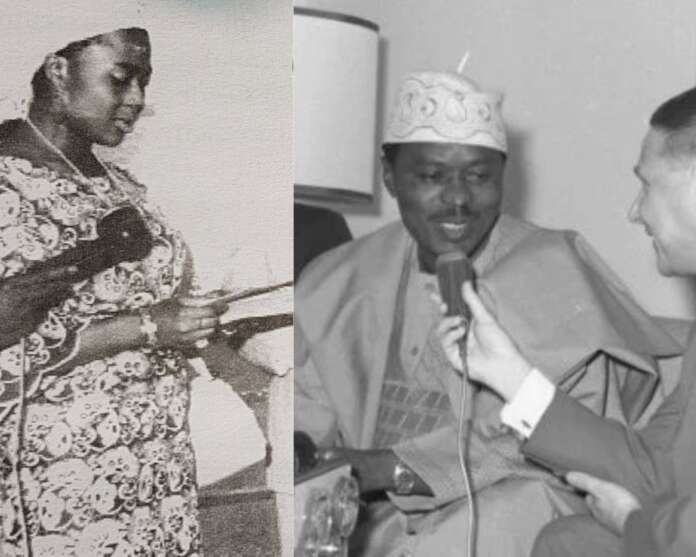
This is what the iconoclast, Eedris Abdulkareem, did with his latest hit album: “Tell Your Papa.” Abdulkareem is not new to songs of protest. He once drew the attention of the General Olusegun Obasanjo’s government to the shenanigans going on in the country under the watch of Ebora Owu, when the artiste sang: “Nigeria Jaga Jaga.”

In that 2004 album, Abdulkareem said that insecurity had taken over the entire nation and everything was like the ‘higgledy-piggledy and topsy-turvy’ world of the Nobel Laureate, Wole Soyinka’s “The Forest of a Thousand Daemons.” Obasanjo’s immediate response was a curse that it was Abdulkareem’s life that was ‘jaga jaga’ and not Nigeria. He went ahead to ban the song from our radio stations. The ban was inutile as the song, with its four other remixes continues to be a blast till date! That was Nigeria 19 years ago.

What Abdulkareem saw 19 years ago in “Nigeria Jaga Jaga” is nothing compared to what the present ruiners have turned the nation to. Nigerians today no longer hear gunshots but the sounds of bazookas in the hands of bandits, terrorists, kidnappers and killer herdsmen that have laid the country waste!

So, if today, Abdulkareem sings: “Seyi, tell your papa country hard/Tell your papa people dey die/Tell your papa this one don pass jagajaga/Seyi, how far?/ I swear your papa no try/Too much empty promises/On behalf of Nigerians, take our message to him/Kidnappers dey kill Nigerians/”, is that not the naked truth? If the artiste goes ahead to say: “Seyi, try travel by road without your security make you feel the pains of fellow Nigerians/You dey fly private jets, insecurity no be your problem…”, is that not a good challenge, and is he not just stating the obvious?

Even the blind could see that Seyi Tinubu is not just the favourite child of President Tinubu, he qualifies as the nation’s Assistant President, given the receptions he gets anywhere he travels to. Some visiting state governors are not accorded as much protocols and attention Seyi gets whenever he visits any state. Videos of his presidential convoys as the son of the president ‘tours’ the states of the Federation speak volumes of the influence of the son over his absentee President of a father!

At a time, Seyi was reported to be attending the weekly Federal Executive Council (FEC) meeting until wisdom prevailed and his father excused him. Nigerians have no doubt about the fact that Seyi is the nation’s ‘Son Excellence’. Unarguably, the boy is more powerful, more visible and wields superior powers than the loiters around Aso Rock and many aides of the President.

That being the case, what is wrong in asking the President’s son to take the message of our pain and agony to his father? What is the position of the Holy Book, the Bible, about the father being in the son and the son being in the father (John 14:11)? Whoever else could have done the job of a go-between in this circumstance between a deaf Presidency and a suffering populace more than the favourite son of the President?

What then is the colour of the problems of the Nigerian Broadcasting Commission (NBC), and its monitoring-spirit unit known as the Directorate of Broadcast Monitoring, in banning Abdulkareem’s latest song from our airwaves? Whose interest is NBC serving? And if we may ask again: what threat does “Tell Your Papa” constitute? Why is it that every dissenting voice is considered an insult to the imperial President Tinubu, who keeps behaving like the proverbial king’s executioner that dreads the presence of the sword near his own neck?

The art of protest song is as old as human agitation for a better society. Music and politics, many opined, appear inseparable. As early as 1931, Florence Reece (April 12, 1900 – August 3, 1986), the wife of a miner and unionist, Sam Reece, wrote the song, “Which Side Are You On?” The song was in solidarity with the miners of Kentucky, who were in battle with the exploitative mine owners. The bold lady wrote the song on an old calendar she found in her kitchen after State agents who were after her husband harassed her and her children throughout the night.

In 1964, Bob Dylan, the 83-year-old American singer, released “The Times They Are A-Changin”, Bob Marley gave us “Get Up Stand Up” in 1973. Gil Scott-Heron sang “The Revolution Will Not Be Televised” in 1971 and our legend, Fela Anikulapo Kuti used the instrumentality of music to torment bad leadership in Nigeria. The one fondly called Abami Eda (the weird one) troubled both military and civilian administrations in Nigeria to no end. He extended the whip to Africa and the entire world. His “Zombie” (1977), “Beast of No Nation” (1989), and his 1980 “I.T.T. (International Thief Thief)”, are many examples of revolutionary protest songs by the prolific musicologist, the best and most daring of his epoch. To date, Fela’s name rings as the dominant voice of the one crying in the wilderness for a better Nigeria.

Though the Nigerian authorities went after Fela on many occasions as he was jailed, whipped on the road and had his house burnt and his mother Funmilayo Ransome-Kuti killed, Fela was not deterred. Rather than kill his spirit, the State harassment propelled Fela to higher heights, and almost three decades after he died, Fela’s music remains evergreen.

Nigerian leaders need to learn. Those in government need to listen, read and be schooled! If those in NBC are lettered, they would have found wisdom in the assertion of scholars on the interwoven nature of music and politics.

For instance, on March 28, 2014, the Cambridge University Press reproduced in its online platform, the article titled: “Fight the Power: The Politics of Music and the Music of Politics.” That piece had earlier appeared in An International Journal of Comparative Politics, Volume 38, issue 1, 2003, pp 113-130. In the article, it is stated that “Popular music has a long and varied association with politics. It has provided the soundtrack to political protest and been the object of political censorship; politicians have courted pop stars and pop stars …” We must add, however, that that is what leaders in sane climes of the world where dissenting voices are accorded their due respects as agents of social change, do!

Has NBC gone to check how that indiscretion on its part has promoted Eedris Abdulkareem and his latest song? Has that regulatory body asked itself, the same question Florence Reece asked 94 years ago when she penned: “Which Side Are You On?” After banning “Tell Your Papa” from our airwaves, has NBC been able to ban it from the internet and our subconscious?

And as we await the return of President Tinubu from his France trip to Aso Rock Villa, may we all rise and tell the President say: Presido, country hard/ people dey die/This one don pass jagajaga/ / We swear, Presido, you no try/ Na lie I talk?

The views expressed by contributors are strictly personal and not of Law & Society Magazine.
AGF urged to provide guidelines regulating video recording of suspects’ statements by police, other law enforcement agencies 

The Lead Partner of Resolution Attorneys and Executive Director, Policy & Legislative Advocacy Network (PLAN), Obioma Ezenwobodo, has highlighted the urgent need for the Attirney General of the Federation (AGF) to exercise his powers under Sections 150 (1) and 174 of the Constitution of the Federal Republic of Nigeria, 1999 (As Altered) and Section 105 (1) of the Administration of Criminal Justice Act, 2015 (ACJA) to provide guidelines to regulate video recording of suspects’ statements by the police and other law enforcement agencies.

Ezenwobodo said some of the challenges the guidelines are seeking to address include but are not limited to Artificial Intelligence deepfake imagery and video, which are rapidly gaining ground.

He expressed concern that this poses a great challenge to video recording of suspects’ extrajudicial statements, while stressing that “there is a need for proper custody of the recorded statement to be kept and maintained so as to guard against it being tampered with.”

The full text of his 14th April 2025 letter addressed to the AGF reads:

Dear Sir,

URGENT NEED TO EXERCISE YOUR POWERS UNDER SECTIONS 150 (1) AND 174 OF THE CONSTITUTION OF THE FEDERAL REPUBLIC OF NIGERIA, 1999 (AS ALTERED) AND SECTION 105 (1) OF THE ADMINISTRATION OF CRIMINAL JUSTICE ACT, 2015 (ACJA) TO PROVIDE GUIDELINES TO REGULATE VIDEO RECORDING OF SUSPECTS’ STATEMENTS BY THE POLICE AND OTHER LAW ENFORCEMENT AGENCIES 

1.0     By section 15(4) of the Administration of Criminal Justice Act (ACJA) 2015 that provides for video recording of suspects’ extra judicial statements by the Police and other law enforcements agencies and coupled with the imposition of mandatory obligation of same by the Supreme Court in the cases of Charles v. State of Lagos (2023) LPELR-60632(SC) and FRN v. Akaeze (2024) LPELR-62190(SC), there is an urgent need to provide a guideline to regulate the ever increasing video recording of suspects’ extra judicial statements by law enforcement agencies. Such guidelines will address existential challenges seriously jeopardising the intended gains and effects of video recording extrajudicial statements during interrogations. Also, the guidelines will invariably protect the rights of suspects (including the right to remain silent), guard against torture/oppression, ensure reliability/authenticity and promote accuracy of extrajudicial statements.

2.0 Some of the challenges or omissions the guidelines are seeking to address include, but are not limited to:

  1. Challenges of Artificial Intelligence (AI): AI deepfake imagery and video are rapidly gaining ground, and this poses a great challenge to video recording of suspects’ extrajudicial statements. With artificial intelligence in the digital space, video recording of a suspect’s statement could be altered, rearranged, manufactured, distorted or tampered with in any way while the recording is going on, during storage, or it being played in court. The criminal justice administration must, as a matter of urgency, come up with a legal framework in the form of guidelines to protect suspects’ statements from this abuse and enhance the reliability of the statements. Video recording could adopt digital watermarks and other anti-deepfake security tools to indicate the authenticity of the statement.

b. Method of Recording Statements:- The guidelines should stipulate the method or means of video recording extrajudicial statements. The guidelines will address the issues of poor or low sound quality video recordings, as anything short of this will automatically undermine the essence of such a recording. The guidelines will also provide the classes of electronic gadgets suitable for video recording.

c. Venue of Recording Statements: the venue, the nature and the arrangement of the room should be stipulated by the guidelines as they are important. The guideline should stipulate whether venues outside the police station or law enforcement agencies’ offices could be used for the recording of statements. The room should be well-lit, but should not have glaring lights that could be deployed as a torture device against a suspect.

d. Positioning of Camera During Recording of Statements:- The position of the camera is vital towards the reliability of a video recording. Guidelines should provide that the camera should capture all the corners of an interrogation room to avoid a blind spot that can be used to commit an abuse or make threatening remarks/gestures against the suspect. The camera should also be positioned to capture the face of the suspects and other persons within the room, except where the privacy of the officers needs to be protected. 

e. Informing the Suspect of the Video Recording:- The guideline should provide for a suspect to be informed in the video that his statement is being recorded and may be used in court against him. The suspect should also be informed how the recording gadget works and any information that would aid in his statement. This is essential as it makes him aware of the recording and its essence. It will also guarantee the voluntariness of the statement.

f. Restriction of Movement During Recording of Statements:- The guidelines should provide restriction of unnecessary movement within the room that could impede the smooth recording of the statement and distort its understanding.

g. Commencement of Recording:- The guidelines should contain provisions for the investigating officers to introduce themselves before commencement of the recording. The suspect should equally identify himself and make a brief introduction of himself. The nature of the offence against him should also be explained to him, and be cautioned. He should also be informed of his Constitutional right to remain silent and right to have access to legal representation or any person of his choice to be present.

h. Identification of Suspect’s Facial Features, Date, Time and Others During Recording:- The guidelines should provide for identifying and capturing the facial features of the suspects to avoid any doubt on identity. The video recording should also indicate the date and time of the video recording.

  1. Manner of Discontinuing Recording of Statements:- The guideline should provide for the ways of discontinuing recording to avoid ‘cut and join’ clip. The reasons for discontinuance should be reasonable and realistic. The reason could be due to a mechanical fault, low memory of the recording device or the need to take a break.

j. Conclusion of interview:- There is a need for the guidelines to make provisions for the recording to be played back to the suspect to make clarifications or add additional points.  

k. Custody or Storage of the Record Statements:- There is a need for proper custody of the recorded statement to be kept and maintained so as to guard against it being tampered with. The guidelines should make provision for the sealing of the recorded statement and the same endorsed with the names and signatures of both the suspects and the investigating officers. Name and signature of the suspect’s Counsel should also be captured. It should also provide for the chain of custody of the video recording to guarantee authenticity.

l. Approval and Authentication by a Superior Officer: The guidelines should provide for the Police and other law enforcement agencies to ensure that a video recording being tendered is relevant, authentic, reliable and admissible.

3.0 Based on the above-mentioned challenges/reasons, I humbly propose for exercise of your power to enact guidelines to urgently address these issues. This will greatly enhance the criminal justice administration and improve justice delivery.

4.0 Kindly accept my regards of the highest esteem as I look forward to your favourable response and action. 

Yours sincerely,

Obioma Ezenwobodo LL.M

Lead Partner, Resolution Attorneys

Executive Director, Policy & Legislative Advocacy Network (PLAN)

Pioneer Chairman, Nigerian Bar Association, Garki Branch, Abuja (2022/24)

[email protected]

Re: Ibas accuses NBA of double-standard, asks for N300 million refund to Rivers; Imposition of state of emergency has frustrated the holding of the conference in Port-Harcourt

By J. Moses Harry

The conference organizer has expressed frustration due to the unlawful imposition of a state of emergency.

The word on the street is that the unlawful imposition of state of emergency has frustrated the holding of the conference in Port-Harcourt. See for example, Krell v Henry [1903] 2 KB 740, which established that a contract may be discharged if an unforeseen event (state of emergency due to insecurity) renders its performance impossible or fundamentally different from what was agreed.

Similarly, Taylor v Caldwell (1863) 3 B & S 826 supports frustration when an event (state of emergency) destroys the basis of the contract without the fault of either party.

In the present case, the imposition of state of emergency by the Feds has rendered holding of the conference impossible. This has discharged the NBA from making any refunds at all.

Read Also: NBA denies hosting agreement with Rivers State, says organisations, government agencies and states donate to AGC hosting

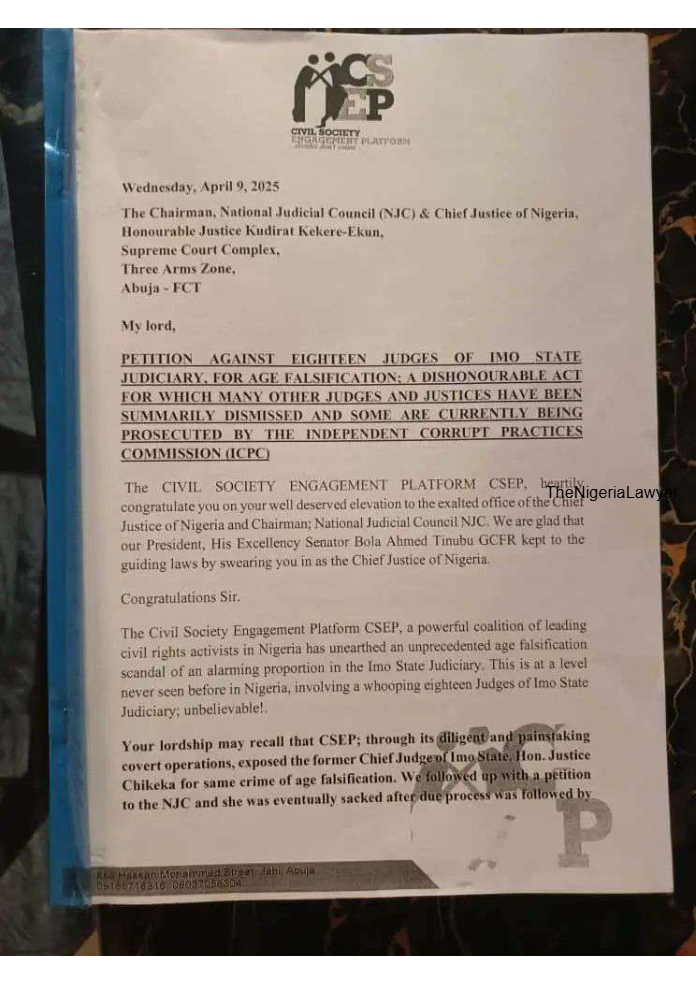
Age Falsification Scandal: Rights group finger 18 Judges in Imo State judiciary, petition NJC

A coalition of Nigerian civil rights activists, Civil Society Engagement Platform (CSEP), has unveiled a gargantuan age falsification scandal involving eighteen judges of the Imo State Judiciary.

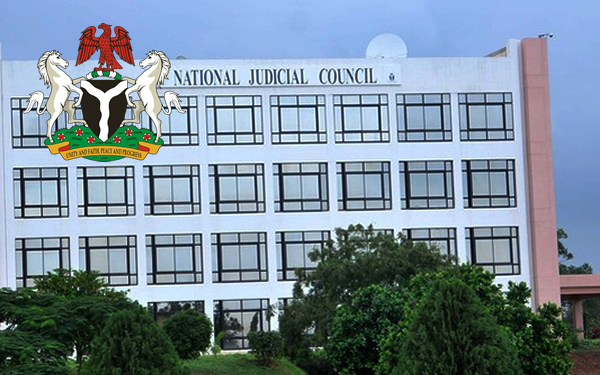
The discovery, detailed in a petition addressed to the Chairman of the National Judicial Council (NJC) and Chief Justice of Nigeria, Honourable Justice Kudirat Kekere-Ekun, points to a systemic breach of integrity that threatens public confidence in the judiciary.

The petition, signed by Comrade Ndubuisi Onyemaechi, CSEP’s Director of Investigation, accuses the judges of manipulating their dates of birth on official documents to either prolong their tenure or secure judicial appointments. The discrepancies appear across various records, including Nominal Rolls, Law School Forms, Statutory Declarations of Age, DSS Reports, and other official submissions. CSEP has backed its claims with hard evidence, annexed as Exhibits 001 to 018, which it says establish a prima facie case against the judges’ honesty and integrity.

The petitioners listed the following judges:

  • Hon. Justice I. O. Agugua, with conflicting birth dates of May 10, 1959, and May 10, 1960, and additional allegations of gross misconduct.
  • Hon. Justice C. A. Ononeze-Madu, with birth dates listed as July 7, 1963, and July 7, 1965.
  • Hon. Justice L. C. Azuama, showing birth dates of November 11, 1957, and November 11, 1960.
  • Hon. Justice B. C. Iheka, with records indicating December 24, 1958, and December 24, 1962.
  • Hon. Justice M. E. Nwagbaoso, with a significant discrepancy between August 20, 1952, and August 20, 1962.
  • Hon. Justice Kechinyere Leweanya, with multiple conflicting dates: April 26, 1968; 1970; 1972; and 1974.

Others include Hon. Justices P. U. Nnodum, Vincent I. Onyeka, Vivian O. B. Ekezie, Alma Ngozi Eluwa, Okereke Chinyere Ngozi, Innocent Chidi Theawuchi, Mathew Chinedu Ijezie, Ononogbo Chidi Linus, Tennyson Nze, Ofoha Uchenna, Everyman Eleanya, and Rosemond Ibe — each with documented inconsistencies in their birth records.

The rights group’s inquest equally unravelled evidence of code of conduct violations by Hon. Justice I. O. Agugua, further questioning her suitability as a judicial officer. The coalition emphasized that judicial officers are bound by a code requiring them to avoid impropriety, respect the law, and uphold public confidence in the judiciary’s integrity.

This is not CSEP’s first foray into exposing judicial misconduct. The group previously blew the whistle on age falsification by the former Chief Judge of Imo State, Hon. Justice Chikeka, leading to her dismissal after NJC investigations confirmed CSEP’s allegations. Through covert operations and citizen collaboration via toll-free lines, CSEP has consistently unearthed corruption, perjury, and human rights violations across various government levels.

The petition referenced past NJC actions to underscore the gravity of the offense:

  • In 2013, the NJC recommended the compulsory retirement of Abia State’s Acting Chief Judge, Mr. Nwanosike Shadrack, for age falsification.
  • In 2020, Hon. Justice Abdul-Kareem Babatunde Abdulrasaq of Osun State was retired for falsifying his birth date, with orders to refund salaries earned post-retirement.
  • In 2018, the NJC backdated the retirement of Delta State’s Hon.. Justice Joshua E. Ikede to 2016 after confirming age falsification, requiring him to repay salaries received thereafter.

CSEP noted that it had raised the issue with the Imo State Judicial Service Commission on February 20, 2025, but received no response. The coalition warned that failure to act could trigger massive protests to shut down the Commission’s office, labeling its inaction as complicity in the scandal.

Quoting the Director General of the United States Law Institute, who recently described Nigeria’s judicial system as suffering a “crisis of confidence,” CSEP argued that such scandals reinforce negative global perceptions. “As much as we try to debunk these views, the actions of some judges make it difficult,” said Comrade Onyemaechi. “We are fighting to restore faith in our judiciary, and we trust that the NJC, under Honourable Justice Kekere-Ekun’s leadership, will act decisively.”

CSEP congratulated Justice Kekere-Ekun on her appointment as Chief Justice, expressing confidence in her commitment to upholding the judiciary’s integrity. The coalition urged the NJC to investigate the allegations promptly and take appropriate action to prevent further ridicule of the judicial system.

Credit: The Nigeria Lawyer

Alleged Sexual Harassment: FUOYE VC allowed to commence accumulated leave instead of suspension

  • Professor Samuel Olubunmi Shittu becomes Acting Vice-Chancellor

Rather than a direct suspension in response to an allegation of sexual harassment brought against Professor Abayomi Sunday Fasina, the Vice-Chancellor of the Federal University Oye-Ekiti (FUOYE) in Ekiti State, by a senior female university official, Engr. Folasade Adebayo, the Professor, has been allowed to commence his accumulated leave.

The ‘suspension’ which takes effect immediately, followed the intervention of the Minister of Education, Dr. Tunji Alausa, who reportedly expressed strong dissatisfaction with the initial recommendation of the university’s Governing Council Committee exonerating Prof. Fasina.

Sources close to Sahara Reporters disclosed that the committee had advised the aggrieved Engr. Adebayo to apologise to the Vice-Chancellor and allegedly ignored her claims of sexual misconduct.

“The minister was very angry with the decision of the council,” a source familiar with the matter said. “He was unhappy that the council tried to sweep the sexual harassment complaint under the carpet and rather told the complainant to apologise. He called the Chairman of the Governing Council, Senator Victor Ndoma-Egba (SAN), to register his displeasure.”

Prompted by the minister’s concern, Senator Victor Ndoma-Egba convened an emergency virtual meeting of the university’s Governing Council at 2:00 PM on Monday, April 14. During the meeting, the Council resolved to remove Prof. Fasina from office, albeit under the guise of accumulated leave rather than outright suspension.

According to sources, Prof. Fasina pleaded with the Council to allow him to proceed on his accrued annual and research leave instead of facing direct suspension.

Read Also: Abuja lawyer denounces FUOYE for clearing VC…

“You know, as a Vice-Chancellor, if you wish to end your tenure early, especially within six months to the end of your term, you are permitted to proceed on your accumulated leave,” the source explained. “Although Fasina’s tenure is due to end in August, the Council has now asked him to proceed on that leave effective immediately.”

Confirming the development, the university’s Registrar and Secretary to the Council, Mufutau A. Ibrahim, issued a press statement on Monday stating, “The Governing Council of the Federal University Oye-Ekiti (FUOYE) at its 7th Emergency Meeting held online on Monday, 14th April, 2025, considered the request of the Vice-Chancellor, Prof. Abayomi Sunday Fasina, to proceed on his accumulated Annual and Research Leave and approved six (6) months, being 126 working days out of his total entitlements of 228 days with effect from today, Monday, 14th April, 2025.”

In the interim, the Council has appointed Professor Samuel Olubunmi Shittu, a Professor of Soil Science and the current Deputy Vice-Chancellor (Academics), as the Acting Vice-Chancellor of the university for the next six months.

“In addition, the Governing Council appointed Prof. Olubunmi S. Shittu, the incumbent Deputy Vice-Chancellor, Academics, who is also the most senior of the three (3) Deputy Vice-Chancellors, as the Acting Vice-Chancellor of the University for a period of six (6) months with effect from today, Monday, 14th April, 2025,” the statement read.

NBA denies hosting agreement with Rivers State, says organisations, government agencies and states donate to AGC hosting

  • If you enter an agreement and turn around to frustrate the agreement, then losses will lie where they’ve fallenAbuja lawyer

Chairman of the 2025 NBA AGC Planning Committee, Emeka Obegolu, SAN, has debunked the allegation that the Rivers state government paid hosting rights for the hosting of the NBA AGC 2025.

Clarifying the position, Obegolu, in a statement, explained that “the decision to host the 2025 AGC in Portharcourt was taken in August 2024 and was not subject of any bidding process or payment of any hosting rights.”

He also added that “the money from Rivers State”, like other support received from organisations, agencies of government and state governments towards the hosting AGCs over the years “, was a gift and was not tied to any purported hosting right for the NBA AGC.”

The full statement reads:

The attention of the Annual General Conference planning committee has been drawn to a statement credited to the Administrator of Rivers state to the effect that Rivers state government paid hosting rights for the hosting of the NBA AGC 2025.

We wish to clarify that the decision to host the 2025 AGC in Portharcourt was taken in August 2024 and was not subject of any bidding process or payment of any hosting rights. The host city has no hosting right and there is no representation by the NBA that the Conference must be held in a chosen city.

Traditionally, because of the enormous cost involved in hosting the AGC, NBA Conference Planning Committee approaches organizations, agencies of government and state governments for support and the support requested for is unconditional and not tied to hosting rights or any rights whatsoever.

Recent NBA conferences have been supported by different state governments, corporate organizations, ministries, departments and agencies whose budgets accommodate corporate social responsibilities and share the same vision with the NBA. Such financial support are in the form of gifts, partnerships or sponsorships. The money from Rivers State was a gift and was not tied to any purported hosting right for the NBA AGC.

We are committed to delivering a world-class conference to members of the Bar and will not be drawn into any unnecessary controversy over this issue.

Emeka Obegolu, SAN
Chair 2025 NBA AGC Planning Committee

Responding to Monday, Ibas, the illegal Sole Administrator’s demand for the NBA to demonstrate integrity and refund what he termed ‘N300 Million conference hosting fee’ to Rivers State, an Abuja lawyer, Chief Nkereuwem Akpan, had this to say:

I read with dismay the above piece credited to the illegality calling himself “Sole Administrator of Rivers State. So this retired Soldier actually expected lawyers to gather in Port Harcourt under his emergency rule and by so doing unwittingly sanction and give a veneer of legality to what is an ipso facto illegality? Who is deceiving him?

Really? I’m not surprised because once a soldier, always a soldier. That’s why soldiers are not fit to hold political office or any other office in a democratic setting.

If you enter an agreement and turn around to frustrate the agreement, then losses will lie where they’ve fallen. It’s a trite principle of law, which, by the way, retired Admiral Ibas may be forgiven for he has no clue.

The agreement to host NBA AGC in Port Harcourt is frustrated, and Ibas should go to Court to challenge it.

In any event, he lacks the locus standi as an unelected Sole Administrator to cry more than the bereaved. If the people of Rivers State decide to ask for their money through their elected representatives, then we will listen.

Bottomline Ibas should shut up and continue his shameful dismantling of democratic structures that he has been embarking upon

TIPS