Home Blog Page 378

[Video] Shame of a Nation as Nigerian police face backlash over viral Chinese cash gift video

  • We’re unaware of the incident — Force PRO

Amidst allegations of corruption, shamelessness, and lack of ethics against officers of the Nigeria Police, a viral video showing several of the police officers receiving N5,000 each from a Chinese man and his family has sparked widespread outrage and renewed concerns..

The footage, which surfaced online, shows uniformed officers lining up as a Chinese man hands them cash gifts.

The incident has drawn sharp condemnation from the public and human rights advocates, who described it as disgraceful and damaging to the image of the police.

When contacted by Vanguard, Force Public Relations Officer, ACP Olumuyiwa Adejobi, said he was unaware of the video or the incident.

Similarly, the Lagos State Police Command distanced itself from the footage. Its spokesperson, CSP Benjamin Hundeyin, clarified that the incident did not occur in Lagos, contrary to claims circulating online.

Public figures have also weighed in. Omoyele Sowore, former presidential candidate of the African Action Congress (AAC), described the video as “shameful” and called for the removal of the IGP.

“This is why I keep saying illegal IGP Kayode Egbetokun must leave the police force… It is the shame of the nation,” he wrote in a Facebook post.

Popular social commentator and human rights activist Martins Victor Otse, also known as VeryDarkBlackMan, called the act “disgraceful, disrespectful, and degrading,” urging the police leadership to address the matter transparently.

The incident has intensified calls for accountability, with many Nigerians demanding disciplinary action and systemic reforms to restore public confidence in the police force.

Watch the video below.

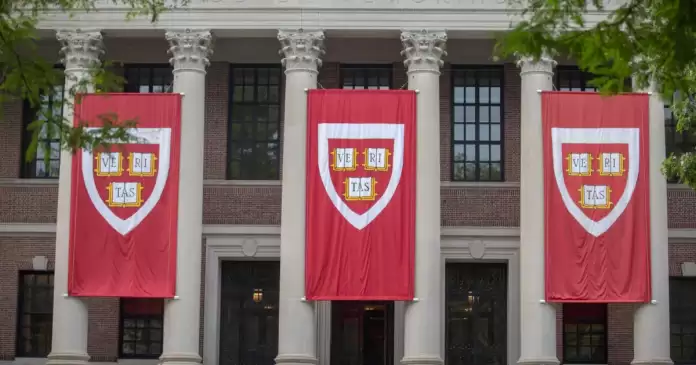
Trump Administration set to freeze $2 billion after Harvard refuses demands


Federal officials said they would freeze the money after Harvard said it would not submit to requests to overhaul hiring and report international students who break rules.

By Vimal Patel

The Trump administration acted quickly on Monday to punish Harvard University after it refused to comply with a list of demands from the federal government that the school said were too onerous.

On Monday afternoon, Harvard became the first university to refuse to comply with the administration’s requirements, setting up a showdown between the federal government and the nation’s wealthiest university. By the evening, federal officials said they would freeze $2.2 billion in multiyear grants to Harvard, along with a $60 million contract.

Other universities have pushed back against the administration’s interference in higher education. But Harvard’s response, which called the Trump administration’s demands illegal, marked a major shift in tone for the nation’s most influential school, which has been criticized in recent weeks for capitulating to Trump administration pressure.

A letter the Trump administration sent to Harvard on Friday demanded that the university reduce the power of students and faculty members over the university’s affairs; report foreign students who commit conduct violations immediately to federal authorities; and bring in an outside party to ensure that each academic department is “viewpoint diverse,” among other steps.

The administration did not define what it meant by viewpoint diversity, but it has generally referred to seeking a range of political views, including conservative perspectives. “No government — regardless of which party is in power — should dictate what private universities can teach, whom they can admit and hire, and which areas of study and inquiry they can pursue,” said Alan Garber, Harvard’s president, in a statement to the university on Monday.

Since taking office in January, the Trump administration has aggressively targeted universities, saying it is investigating dozens of schools as it moves to eradicate diversity efforts and what it says is rampant antisemitism on campus. Officials have suspended hundreds of millions of dollars in federal funds for research at universities across the country.

The administration has taken a particular interest in a short list of the nation’s most prominent schools. Officials have discussed toppling a high-profile university as part of their campaign to remake higher education. They took aim first at Columbia University, then at other members of the Ivy League, including Harvard. The announcement of the funding freeze was issued by members of a federal antisemitism task force that has been behind much of the effort to target schools.

“Harvard’s statement today reinforces the troubling entitlement mindset that is endemic in our nation’s most prestigious universities and colleges,” said a statement from the task force, posted by the General Services Administration.

Harvard, for its part, has been under intense pressure from its own students and faculty to be more forceful in resisting the Trump administration’s encroachment on the university and on higher education more broadly.

The Trump administration said in March that it was examining about $256 million in federal contracts for Harvard, and an additional $8.7 billion in what it described as “multiyear grant
commitments.”

The announcement went on to suggest that Harvard had not done enough to curb antisemitism on campus. At the time, it was vague about what the university could do to
satisfy Trump administration concerns. Last month, more than 800 faculty members at Harvard signed a letter urging the university to “mount a coordinated opposition to
these anti-democratic attacks.”

The university appeared to take a step in that direction on Monday. In his letter rejecting the administration’s demands, Dr. Garber suggested that Harvard had little alternative.
“The university will not surrender its independence or relinquish its constitutional rights,” he wrote. “Neither Harvard nor any other private university can allow itself to be taken over by the federal government.”

The government’s letter to Harvard on Friday demanded an extraordinary set of changes that would have reshaped the university and ceded an unprecedented degree of control over Harvard’s operations to the federal government. The changes would have violated principles that are held dear on colleges campuses, including academic freedom.

Some of the actions that the Trump administration demanded of Harvard were:

  • Conducting plagiarism checks on all current and prospective faculty members.
  • Sharing all its hiring data with the Trump administration, and subjecting itself to audits of its hiring while “reforms are being implemented,” at least through 2028.
  • Providing all admissions data to the federal government, including information on both rejected and admitted applicants, sorted by race, national origin, grade-point average and
    performance on standardized tests.
  • Immediately shutting down any programming related to diversity, equity and inclusion.
  • Overhauling academic programs that the Trump administration says have “egregious records on antisemitism,” including placing certain departments and programs under an external audit. The list includes the Divinity School, the Graduate School of Education, the School of Public Health and the Medical School, among many others.

The demands suggested that the federal government wanted to intrude on processes that universities prefer to have control over, like how they admit their incoming classes. It also touched on issues that conservative activists have used as cudgels against academics. Plagiarism accusations, for example, are part of the reasons that Harvard’s former president, Claudine Gay, was forced to resign.

“Harvard has in recent years failed to live up to both the intellectual and civil rights conditions that justify federal investment,” the Trump administration letter said.

Last month, after the Trump administration stripped $400 million in federal funds from Columbia University, Columbia agreed to major concessions demanded by the federal government. It agreed to place its Middle Eastern studies department under different oversight and to create a new security force of 36 “special officers” empowered to arrest and remove people from campus.

The demands on Harvard were different, and much more expansive, touching on many aspects of the university’s basic operations.

Representative Elise Stefanik, a Republican from New York who had questioned university leaders, including Dr. Gay, over allegations that they had tolerated antisemitism on campus, said that the Trump administration should “defund Harvard” for defying the federal government.

“It is time to totally cut off U.S. taxpayer funding to this institution,” she wrote in a social media post on Monday.

In Harvard’s response on Monday, it said it had already made major changes over the last 15 months to improve its campus climate and counter antisemitism, including disciplining students who violate university policies, devoting resources to programs that promote ideological diversity, and improving security.

Harvard said it was unfortunate that the administration had ignored the university’s efforts and moved instead to infringe on the school’s freedom in unlawful ways.

The forceful posture taken by Harvard on Monday was applauded across higher education, after universities had drawn widespread criticism for failing to resist Mr. Trump’s attacks more aggressively.

Harvard itself had been under fire for a series of moves in recent months that faculty members said were taken to placate Mr. Trump, including hiring a lobbying firm with close ties to the president and pushing out the faculty leaders of the Center for Middle Eastern Studies.

A Harvard faculty group filed a lawsuit last week, seeking to block the administration from carrying out its threat to withdraw federal funding from the university. Nikolas Bowie, a law professor and secretary-treasurer of Harvard’s chapter of the American Association of University Professors, the group that filed the suit, applauded Harvard’s rejection of the Trump administration’s demands.

“I’m grateful for President Garber’s courage and leadership,” said Dr. Bowie. “His response recognizes that there’s no negotiating with extortion.”

Ted Mitchell, president of the American Council on Education, which represents many colleges and universities in Washington, said Harvard’s approach could embolden other campus leaders, whom he said were “breathing a sigh of relief.”

“This gives more room for others to stand up, in part because if Harvard hadn’t, it would have said to everyone else, ‘You don’t stand a chance,’ ” said Dr. Mitchell, a former president of Occidental College. “This gives people a sense of the possible.”

He described Harvard’s response as “a road map for how institutions could oppose the administration on this incursion into institutional decision-making.” He added, “Whether it’s
antisemitism or doing merit-based hiring or merit-based admissions, the basic texture of the academic enterprise needs to be decided by the university, not by the government.”
Ethan Kelly, 22, a senior at Harvard from Maryland, said that Monday’s message from Dr. Garber was a relief. He said that he and many of his classmates have been concerned that their school would cave to the Trump administration’s demands.

“There’s been so much concern that Harvard would fold under political pressure, especially with how aggressive the Trump administration has been in trying to control higher education,” Mr. Kelly said. Seeing Dr. Garber draw a clear line, he added, was something “that matters.”

In a related development, nine major research universities and three university associations sued the Trump administration on Monday to restore $400 million in funding that the Energy Department said it was slashing last week.

In a statement, Michael I. Kotlikoff, the president of Cornell University, one of the schools that joined the lawsuit, said the research at stake was “vital to national security, American
manufacturing, economic competitiveness and progress toward energy independence.”

Other schools listed as plaintiffs were Brown University, Caltech, the University of Illinois, the Massachusetts Institute of Technology, the University of Michigan, Michigan State, Princeton and the University of Rochester. The Energy Department said it would dramatically reduce overhead or “indirect” costs associated with the grants.

Reporting was contributed by Stephanie Saul, Alan Blinder and Miles Herszenhorn.
Vimal Patel writes about higher education with a focus on speech and campus culture.

Culled from The New York Times

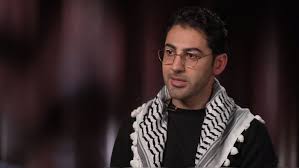
Columbia activist arrested by ICE at his appointment for citizenship

Mohsen Mahdawi, a legal permanent resident, has lived in the United States for 10 years and was arrested in Vermont. He has not been charged with a crime.

By Sharon Otterman and Ana Ley

Mohsen Mahdawi, an organizer of pro-Palestinian demonstrations last year at Columbia University, was detained by immigration officials on Monday after arriving for an appointment in Vermont that he thought was a step toward becoming a U.S. citizen, his lawyers said.

Hours later, Mr. Mahdawi’s mother, older sister and lawyers were scrambling to find him after his abrupt detention at an immigration center in Colchester, Vt. His lawyers requested a temporary restraining order to prevent federal officials from transferring him to a more conservative jurisdiction — a tactic used in the detention and attempted deportation of at least four other college demonstrators.

A Vermont federal judge, William K. Sessions III, swiftly granted that request, ordering that Mr. Mahdawi, an outspoken critic of Israel’s military campaign in Gaza, not be removed from the United States or transferred out of Vermont until he orders otherwise.

His lawyers said that as of Monday afternoon, they had confirmed that he was still in Vermont.

“This is their M.O.,” Mr. Mahdawi’s lawyer, Luna Droubi, said. “They just continue to hide the individual to the point where their attorneys can’t quite understand or identify where to file. And so, you know, we’re operating blind, and they have all the information, and yet we’re tasked with attempting to file in the right jurisdiction.”

A green card holder for the past 10 years, Mr. Mahdawi is the latest Palestinian student to be caught in the Trump administration’s dragnet that has been targeting foreign students involved in pro-Palestinian organizing on U.S. college campuses.

Mr. Mahdawi was born and raised in a refugee camp in the West Bank, where he lived until he moved to the United States in 2014, according to a petition filed by his lawyers on Monday demanding his immediate release. His arrest was first reported by The Intercept.

He is finishing his undergraduate studies in philosophy at Columbia’s School of General Studies and was planning to enroll as a master’s degree student at its international affairs school in the fall. Representatives for Columbia declined to comment, citing federal
student privacy regulations.

Mr. Mahdawi has not been accused of a crime. According to his lawyers, the Trump administration appears to be seeking his removal from the country under the same legal provision that it is using to detain another recent Columbia student and Palestinian,
Mahmoud Khalil, contending that his presence is a threat to the foreign policy and national security interests of the United States.

Immigration officials have argued that pro-Palestinian demonstrators have enabled the spread of antisemitism, but they have not offered evidence to substantiate the claim.

After the Hamas attack on Israel on Oct. 7, 2023, Mr. Mahdawi, who is in his mid-30s, co-founded Dar: the Palestinian Student Society at Columbia University with Mr. Khalil, to “celebrate Palestinian culture, history and identity,” according to his lawyers’ petition. He also helped found Columbia University Apartheid Divest, a broader coalition that went on to lead many pro- Palestinian demonstrations on campus, pushing the university to
divest from Israel.

But Mr. Mahdawi took a step back from student organizing in March 2024, before the establishment of encampments on campus and the takeover of a campus building, Hamilton Hall.

In interviews at the time, he said this was driven in part by his immigration status and his beliefs as a practicing Buddhist. For two years, he was the president of the Columbia University Buddhist Association. He spoke publicly about his experience as a child seeing his best friend killed by an Israeli soldier, mentioning it during a “60 Minutes” interview in December 2023.

But he also said he wanted a peaceful end to the Israeli-Palestinian conflict. “My motivation comes out of love now, not out of anger, not out of hate,” he said in an interview.

As with Mr. Khalil, several hard-line pro-Israel groups have been agitating online for Mr. Mahdawi’s detention and deportation since President Trump’s return to the White House.
Betar USA, one of those groups, posted on X on Jan. 30 that “visa holder Mohsen Mahdawi is on our deport list.” In March, they repeated that, posting “Mohsen Mahdawi is next and also on the deport list.”

He was also profiled by Canary Mission, another group naming students and calling for action to be taken against those they assert are pro-Hamas.

On Monday morning, Mr. Mahdawi turned up for an interview he had been told was related to his naturalization. Instead, immigration officers, some with their faces covered, placed Mr. Mahdawi in handcuffs and arrested him, according to a statement Monday from Vermont’s two senators, Bernie Sanders, an Independent, and Peter Welch, a Democrat, and Representative Becca Balint, a Democrat.

Mr. Mahdawi, whose permanent address is in White River Junction, Vt., had sought help from the lawmakers before his appointment, fearing the worst. They denounced his arrest and demanded his release.

“This is immoral, inhumane, and illegal,” the three lawmakers said in a statement. “Mr. Mahdawi, a legal resident of the United States, must be afforded due process under the law and immediately released from detention.”

Mr. Mahdawi’s friend Mikey Baratz described him as deeply empathetic and said that, at his core, Mr. Mahdawi believed that all humans deserved to be treated with dignity. Mr. Mahdawi reached out to Mr. Baratz about six months ago because he wanted to meet Israeli students at Columbia — Mr. Baratz is Jewish and was born and raised in Israel until he left at the age of 12.

They would spend hours talking about their lives and found surprising common ground. Mr. Baratz, who graduated from Columbia in December with a master’s degree in international
security policy, recently applied for a job at The New York Times. “This is a Palestinian. I’m an Israeli. Our people are at war,” Mr. Baratz, 31, said. “And his willingness to actually hear and actively learn and understand the Israeli experience — I mean, I’ve never met anyone who so quickly was willing to take feedback.”

Culled from The New York Times

Despite Electricity Act 2023 that empowers states to generate, transmit, distribute power, Lagos Deputy Governor laments high electricity tariff, says his bill rose by 974% in a month

Nigeria’s failure to harness its abundant sunlight for power generation is believed to stem from a combination of factors, including a lack of adequate infrastructure, insufficient funding for research and development, and a lack of political will to implement solar initiatives.

On Monday, Obafemi Hamzat, deputy governor of Lagos state, said his electricity bill inexplicably skyrocketed from N2.7 million in March to N29 million in April, adding that the electricity distribution company (DisCo) also frustrated his efforts to utilise the prepaid meter he procured.

On 17th February 2025, the Senate Committee on Power held a meeting with representatives of South Korea’s BK Energy to discuss Nigeria’s persistent national grid collapse and unstable power supply.

During the meeting, the lawmakers explored alternative energy solutions, including the use of coconut, to resolve the country’s electricity challenges. Chairperson of the committee, Enyinnaya Abaribe, told the Koreans that the major cause of the recurring power failure in the country was outdated and inadequate infrastructure.

Mr Abaribe, who represents Abia South Senatorial District, stressed the urgent need for a robust and modern power transmission network and an increase in the country’s electricity generation, which is about 4,000 megawatts.

While the outcome of this meeting is still being awaited, Punch reports that the Lagos State deputy governor, who expressed distress over his enormous electricity bill in a month, spoke on Monday during a roundtable discussion between the Rural Electrification Agency (REA) and the Lagos state government in Victoria Island.

Hamzat and the DisCos were billed to sign a memorandum of understanding (MoU) for the electrification of rural communities in Lagos. He represented Babajide Sanwo-Olu, governor of Lagos, at the event.

“People that are trying to survive, and the common denominator for them is power. They don’t have power. There are billing challenges. In fact I’m a very good example,” he said.

“Last month, in my house, or the state house that I live in, the bill was N2.7 million last month. This month, Eko DisCo sent us a bill of N29 million.

“I sent it to the commissioner for energy. It’s crazy. I actually procured a meter. I bought a meter to say, ‘Look, don’t give estimated billing.’ I bought the meter, but to convert it is wahala.”

He narrated how a consumer in the Coker Aguda area of Surulere was charged N2.8 million when his house rent is N2 million per annum.

“There’s a place called Coker Aguda in Surulere, and people came to me, and I was asking them to calm down. A man’s rent in a year is about N2 million; they gave him a bill of N2.8 million for electricity,” he said.

“How can the bill be more than the man’s rent for a year? Those are the challenges that we have.

“Our people are suffering because of estimated billing.”

Hamzat commended Biodun Ogunleye, commissioner for energy, for facilitating a solar power deal with the REA.

In his remarks, Ogunleye said Lagos has entered a partnership with REA to unlock new opportunities.

“Opportunities for those who never thought in their lifetime they would experience or live within an environment where there will be constant and stable supply of electricity,” he said.

“I am delighted that I know that REA has been to a number of other states, but when you are not in Lagos, you’re not yet there.”

Although the Electricity Act 2023 empowers states in Nigeria to generate, transmit, and distribute electricity within their borders, this has not happened despite the abundance of natural resources like coal and more.

The failure of governors to take advantage of the Electricity Act 2023 instead of lamentations has made states continue struggling with epileptic power supply.

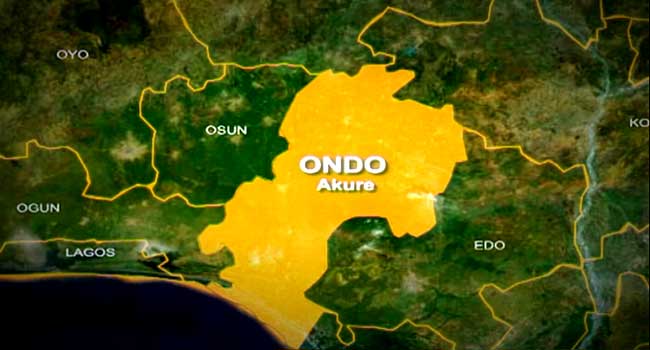
9-year-old mentally challenged girl locked up by guardian burnt to death in Ondo house fire

A 9-year-old girl identified as Testimony was burnt to death in a fire that engulfed an apartment in the Samakinwa area of Ondo town, the headquarters of the Ondo West Local Government area of Ondo State, was

The little girl, who was said to be mentally challenged, was said to have been locked inside one of the rooms in a four-bedroom flat by her guardian, who had gone to church when the unfortunate incident occurred. 

According to eyewitnesses, the fire started around 4:00 pm on Monday, April 14, 2025 and was allegedly caused by an electrical surge. 

The inferno engulfed the building, destroying several properties belonging to the occupants. 

Tragically, the young girl was trapped inside and burned beyond recognition. 

Despite frantic efforts by residents, especially the youths in the area, to rescue her, their attempts were unsuccessful as the door to the room was securely locked.

Sympathisers later broke into the room and recovered the charred remains of the girl.

The remains of the victim were placed in a corner of the compound as grieving occupants and neighbours wept and lamented the incident. 

9-year-old girl locked up by her guardian burnt to d3ath in Ondo house fire

The Divisional Police Officer (DPO) of Yaba Division, CSP Victor Olowolagba, led a team of officers to the scene to commence investigation. 

He confirmed that four persons had been invited for questioning as part of efforts to determine the exact cause of the fire and the circumstances surrounding the child’s d3ath Olowolagba assured the community that the police would thoroughly investigate the incident. 

The remains of the girl, who was said to have been ill for some time, were later evacuated to a yet-to-be-disclosed morgue.

Reacting to the tragedy, the youth leader of the area, Comrade Akinbinuade Akinyemi, expressed sorrow over the incident and decried the recurring cases of fire outbreaks in the community. 

An Exposition on the Legality or Otherwise of the Rivers State Sole Administrator’s “Refund” Demand: Constitutional prerogative, contractual imperatives, and the shadow of emergency powers

By E. Monjok Agom

The Crucible of Constitutional Crisis

In the tempestuous arena of Nigerian constitutional law, few issues stir as much fervour as the interplay between emergency powers and the sanctity of contractual obligations. The recent demand by the Administrator of Rivers State for the Nigerian Bar Association (NBA) to refund ₦300 million- following the relocation of its Annual Conference from Port Harcourt to Enugu- has ignited a jurisprudential conflagration. At its core lies a Gordian knot: does an unelected Administrator, appointed during a state of emergency, inherit the mantle of “successor in office” under sections 316 and 317 of the 1999 Constitution (CFRN), thereby wielding authority to enforce fiscal claims? This article dissects the legal labyrinth, fortified by precedent, statutory exegesis, and the sagacious voices of jurists.

I. Constitutional Architecture: Emergency Powers and Successorship

A. The Emergency Framework Under Section 305 CFRN
The President’s invocation of emergency powers under section 305(3)(c) CFRN permits federal intervention to “restore peace and public order.” However, as the Supreme Court emphasised in AG Lagos State v. AG Federation (2003), such powers are “temporary, exceptional, and circumscribed by the imperative of necessity.” The Administrator’s role, akin to a constitutional caretaker, is thus confined to stabilising governance, not supplanting it.

B. Successorship: A Constitutional Mirage?
Sections 316–317 CFRN delineate succession to the office of Governor, reserving it for elected officials- the Deputy Governor or Speaker. The Administrator, unelected and transient, inhabits a constitutional limbo. As Justice Niki Tobi cautioned in INEC v. Musa (2003), “The Constitution is no haven for usurpers; its doors open only to those anointed by the sovereign will of the people.”

Key Precedent: In AG Abia State v. AG Federation (2002), the court voided actions by an interim administrator, ruling that “emergency appointees lack the legitimacy to exercise gubernatorial powers reserved for elected successors.”

II. The Case for Legality: Custodianship and Contractual Sanctity

A. De Facto Successorship and Fiduciary Duty
Proponents argue that the Administrator, as the state’s custodian, assumes a fiduciary duty to safeguard assets. Drawing from section 317 CFRN- which defines the “office of Governor” to include its “powers and functions”- the Administrator may inherit contractual enforcement rights. Lord Denning’s axiom in MacFoy v. United Africa Co. Ltd (1961) resonates: ““If one party breaches a contract, the law shall not leave the other remedy-less.”

Statutory Anchor: – Section 148(1) CFRN obliges public officers to “protect and preserve public property.”

  • Section 14(2)(b) CFRN mandates governance for the “welfare and security” of citizens, arguably encompassing fiscal probity.

B. Contractual Breach and Restitution
If the NBA’s hosting agreement with Rivers State stipulated non-refundable fees or penalties for relocation, the Administrator’s demand aligns with the Evidence Act 2011, which presumes the enforceability of written terms. In UBA v. Jargaba (2007), the Supreme Court held that “a party who unilaterally alters contractual terms without lawful excuse must bear the pecuniary consequences.”

Jurist Quote:

“Contracts are the lifeblood of commerce; their sanctity must be upheld even in times of tumult.”

  • Justice Chukwudifu Oputa Shugaba v. Minister of Internal Affairs (1981).

III. The Countervailing Tide: Constitutional Constraints and Ultra Vires

A. The Phantom of Ultra Vires Action
Critics contend that the Administrator’s demand transgresses constitutional boundaries. Section 305 CFRN limits emergency powers to “security and public order,” excluding fiscal governance. In Adesanya v. President (1981), Justice Kayode Eso warned: “Emergency powers are a scalpel, not a sledgehammer; their misuse erodes democracy.”

Procedural Lapse:

  • Section 120 CFRN vests budgetary oversight in state legislatures. With the Rivers House of Assembly potentially dissolved, the Administrator’s unilateral demand flouts due process.

B. The Absence of Contractual Lacunae
If the NBA agreement lacked explicit penalties for relocation, the Administrator’s claim falters. As Lord Mansfield opined in Pillans v. Van Mierop (1765), “Courts cannot invent terms where parties have remained silent.” Nigerian jurisprudence echoes this: in Okomu Oil Palm Co. v. Iserhienrhien (2001), the court rebuffed attempts to imply unstated obligations.

Jurist Quote:

“The rule of law demands that emergency powers yield to constitutional specificity.”
— Justice Udo Udoma, Lakanmi v. AG Western State (1971).

IV. International Perspectives: Echoes from Afar
Comparative law illuminates the path. In the UK, the Civil Contingencies Act 2004 confines emergency regulators to “necessary and proportionate” measures. Similarly, in Youngstown Sheet & Tube Co. v. Sawyer (1952), the US Supreme Court curbed President Truman’s seizure of steel mills, with Justice Jackson admonishing: “Emergency powers must not metastasise into permanent authority.”

V. Critical Synthesis: The Scales of Justice
The Administrator’s demand pivots on two fulcrums:

  1. Constitutional Legitimacy: Does emergency custodianship equate to successorship under Sections 316–317?
  2. Contractual Clarity: Did the NBA agreement explicitly penalise venue changes?

Courts are likely to heed Justice Oputa’s counsel in AG Anambra State v. AG Federation (2005): “The Constitution is our Ark of the Covenant; its words must be read plainly, not creatively.” Absent explicit constitutional or contractual warrant, the refund demand risks being stillborn.

VI. Epilogue: A Pathway to Resolution
Recommendations:

  1. Judicial Clarification: The Administrator should seek declaratory relief under Section 6 CFRN to validate their mandate.
  2. Negotiated Settlement: Mediation under the Arbitration and Conciliation Act could reconcile the NBA’s reputational concerns with Rivers State’s fiscal interests.
  3. Legislative Intervention: The National Assembly might amend Section 305 CFRN to clarify emergency administrators’ fiscal powers.

Final Quote:

“In law, as in life, balance is the essence of wisdom. Emergency powers must tread lightly, lest they trample the very order they seek to preserve.”
Lord Bingham, The Rule of Law (2010).

E. Monjok Agom
15th April, 2025

The views expressed by contributors are strictly personal and not of Law & Society Magazine.

Hell hath no fury like a T.O.S. Benson scorned

By Banjo Odutola

October 7, 2003

Publication of a letter to an individual in our national newspapers, more often than not is a pejorative attempt to reason privately in a public space. Oftentimes, such letters offend and serve no purpose. They are useless ventures for neither game nor gain. Where they are to focus the mind of the person to whom they are addressed, the objective for publishing them is lost before attracting the right attention.

If grievances in public letters are for the advancement of a community, gentle diplomacy can no longer assist, and neither are favours easily gained. When these letters are addressed to individuals, they are confrontational and provide a dialogue between the deaf and the dumb. They are peevish attempts at antagonising rather than reconciling. They breach sacred confidences and display an arrogance that betrays the writers as monopolists of wisdom or maniacs pulling disgracefully. So, what is the essence of these public letters?

Let us consider a couple of them that may have started out with good intentions but ended up damaging the writers. The defence or arguments marshalled, unfortunately, betrayed what they are perceived to stand for. This is simply because their letters allowed us to form judgements about them, rather than the issues brought to our attention. These public letters are about the writers; people soon forget the issues.

The purpose of the published letters is lost in the unworthy damage with which the writers have visited themselves. In the two instances exemplified herein, and which characterise many of these letters, I asked myself what usefulness could making such letters public have done to bring peace between the writers and their antagonists.

The first of such letters is the exchange between Professors Muyiwa Awe and Wole Soyinka. I am willing to place a bet that the charge upon Mr. Awe to win “lost souls” and convert them to his faith may not be achieved if he were to attempt winning Mr. Soyinka for Christ. He conveniently wrote himself off as a failure to reach his “Eleke Ebu” friend. It is only for the purpose of the point that I strive to make that Mr Soyinka is considered a so-called “lost soul”. If he has no need for the religion his friend is so passionate about, he is within his rights, whether his speech was directed to Mr. Awe or Mr. Idi-Iroko.

Is Mr. Soyinka still wrong to hold on to his suspicion of the Christian message? You bet. After all, his friend could not adhere to its tenets. Even if Mr Awe were so vilified or berated, was it not required of him to turn the other cheek? Could he not have approached his friend privately and in love? Could he not have taken the same route as was done at Calvary? If Mr. Soyinka ever suggests that when Christians are not burdened by the obligations of their faith, their religion becomes less attractive; could he be blamed?

What about Mr. Soyinka’s letters? Would I dare make a comment? I make the point in Mr. Awe’s case because from all inquiries, it appears the last exercise is uncharacteristic. To comment on the insolence in Mr. Soyinka’s letters is to waste precious space, which I do not intend. That is not to say that I do not respect the man for what he stands for. In fact, I do. On this occasion, Mr. Awe is likely to give a mature and measured reaction. Whereas, if the antecedent of his friend is the benchmark of how he is likely to react, he is going to engage his mouth before his head. An example is his recent exchange with Mohammed Haruna. As honourable as most of his intentions are – he never stops to dismay.

Mr Awe, in his rebuke of his friend, made reference to the expectations of others when a man is in the twilight years of life. It is the “old age” and “public letter writing” that are the two intertwining strands in my subject matter. Consider the public letter to Chief (Mrs) Stella Olubukola Odesanya from Hon. Otunba T.O.S. Benson CFR, SAN – Baba Oba of Lagos, Asiwaju of Ikorodu, Aare of Ife, Sobaloju of Egba Land, Etc, First Republic Minister of Information, Broadcasting and Culture – these are the accolades that Mr. Benson wishes are not lost on the reader and perhaps appropriately too. Any reaction must take into account all these paraphernalia that we must know about. Thank you, sir! Well, I grant to him, that in the Nigerian space, the man is very important. But why has he invited a public debate to debase himself? Is this what old age is all about? Could old age not be kinder to this eminent man? Or, could this man not be kind to old age?

It may well be that minions like me are not meant to react to the way this Octogenarian has chosen to blight the achievements built on the sweat of many years. Maybe, it is expected of the reader to applaud his self-confessed bad behaviour. In my view, his letter is deceitful contextually, intentionally vile and beneath contempt. For those willing to read it, try “City People” publication. Nonetheless, I shall attempt references in parts, in the hope that the grand old man may see the truth underlying his awkwardness. He seeks sympathy from the reader. That is a commodity that he and Mr. Awe should have afforded their preys. To grant Mr. Benson any sympathies will be wrong.

My principal intention is premised on his emotional blackmail that he is “waiting in the boarding lounge for my flight to be called to the other planet.” If Mr. Benson could perpetrate such an embarrassing and heinous display of contemptuous nonchalance against someone with whom he is clearly still in love with: waiting in a boarding lounge to go to another planet may be an inappropriate description of his spiritual well-being. Mrs Solanke and the new sympathisers that the octogenarian has accorded her may believe the eminent lawyer already lives in another planet.

His public letter is a parody. I am tempted on this occasion to believe “whenever God prepares evil for a man, He first damages his mind, with which he deliberates (Scholastic annotation to Sophocles’s Antigone 1).” Mr. Benson must reconcile that maturity demands hopes of years gone by, must be allowed to decay and consigned to the bin of history.

The creator of the Rompole of the Old Bailey – a television series in England – John Mortimer, an eminent Octogenarian and a successful Barrister, before he retired, in his serialisation of Lies, Lust and Laziness. My legacy of advice for a happy Life opines ” Too many of us rabbit on incessantly about ourselves, repeating what we know already, and fail entirely to discover anything about the curious lives and the unopened histories of the people around us.” My description of Mr. Benson’s letter could not have been better described. Did he stop to consider the injury his letter would cause many people?

The irritation of his prosecution at the Old Bailey is understandable. The Old Bailey is an intimidating Criminal Court of Law, where several landmark cases have been heard. It is a place where criminality and history co-join to advance the essence of Law and Society. Often, it is from there that the advancement of the administration of justice evolves, sentences are quashed, and Judges interpret statutes in a way that Parliament could not have intended, All in the name of protecting society and justice.

The crux of Mr. Benson’s public letter is a display of his fury against the older sister of a woman he still desires for a wife, even at old age. I have no doubt that Chief Mrs Folake Solanke SAN and her sister are well equipped to lacerate this cyst that may be considered malignant. I do not hold briefs for either one or both sisters. Even though I have met one of them, once before: when her daughter was my University Housemate. I am motivated by nothing but a striking characterisation of the letter that concisely is a depiction of an elderly man behaving badly. If we learn to confront the truth in our society; if we strive to eyeball evil, and speak out notwithstanding the perils, our gains will be the legacy of a decent society for those behind us.

To those that may question my rights to comment on this matter – remember Mr. Benson introduced it into the Court of pubic opinion, and as a juror, I see no way to absolve him.

If half a century is inadequate to let go of his desire for a woman that has no interest in him, eternity also may not be enough. The issue of the dowry of fifty pounds is a red herring. His computation of the present-day equivalence of the dowry paid for Mrs Solanke is a sweet 419 that would not work. I doubt, if Mr. Benson’s money were refunded, he would go away quietly. Anyway, as a lawyer, he ought to realise that his contract was with Pa Odulate, who collected the dowry. Therefore, the octogenarian’s gripe should be against the executors or administrators of the estate. It is ingenious and dubious to claim that the dowry money is a legitimate debt. How could an eminent lawyer attempt to pull this 419 publicly? What he considers a legitimate debt that he “cannot afford to underwrite” is over forty years old!

Mr Benson ought to conduct a legal research to find out the life span of a debt. This so-called legitimate debt stopped being a debt long ago. He knows he cannot enforce it in any court of law.

He inferred that he does not love the wife he married. Consider this: demonstratively, no one is able to fill the void of his affection for Mrs Solanke. This is not complimentary to his wife or the mother of any of his children. If that aspect was never considered before he published the letter – that is revelatory.

In closing, I sympathise with the man. The pains of being with someone else, other than where his heart is, must be excruciating. On a man-to-man level, I volunteer the advice that he must take heart and appreciate the divine intervention of grace in his life. That intervention has been kind to him. He ought not repay the divine generosity with causing pains to others. This is not a good way to be remembered. Neither would Mrs Solanke throw in the towel and lay beside him, till death separates them. What may have been achieved by default is to confirm Mrs Odesanya’s fears that T.O.S is a brilliant man and perhaps a good one too. But he is unfit to be loved by her sister. This public letter does not depreciate that assertion. It serves to injure a great man and several other decent families – all to what end? Vanity.

The writer is a solicitor of the Supreme Court, England and Wales and a Lawyer at a Firm of Solicitors in London, England.

Read Also: The famous love tango between two Silks

Read Also: A PEEP INTO HISTORY OF THE BENSON vs SOLANKE CASE: When a man ‘lusts’ after a girl!

The views expressed by contributors are strictly personal and not of Law & Society Magazine.

The famous love tango between two Silks

By Toheeb Mustapha Babalola

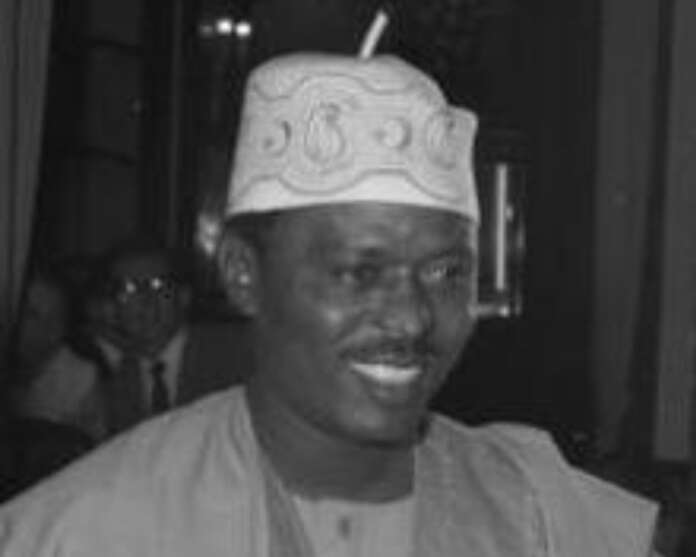
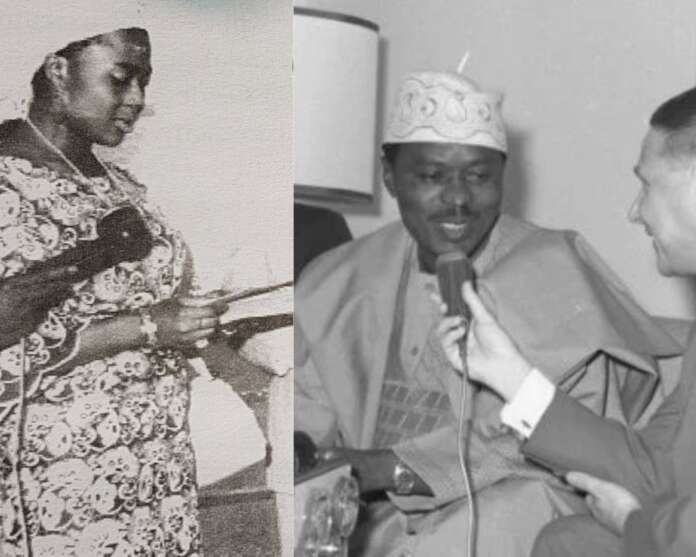
I have been doing some research on a plethora of legal luminaries with the intention of getting some interesting details about them. During that process, I came across a particular story of what I will call a love tango between Folake Solanke SAN and T.O.S Benson SAN, which I came across via her book titled “Reaching The Stars” and an article by Femi Kehinde, a prolific journalist. The question is, what would have brought Solanke SAN, a famous Legal luminary and T.O.S Benson, one of the most loved Politicians in Nigerian history who happens to be a SAN too, together??

I know what you are thinking. It’s not the legal profession! The majority of our readers who were born in the late 90s or early 2000s might not know much about T.O.S Benson SAN.

T.O.S Benson was born into an aristocratic family in Ikorodu, Lagos. He attended the CMS Grammar School in Lagos. He studied law at Lincoln’s Inn and was called to the Bar in 1947. He returned back to Nigeria and went straight into law practice and politics. He joined the National Council of Nigeria and the Cameroons (NCNC). He had a brother called Bobby Benson, a musician who was a Taxi driver crooner! (The old folks can relate with the song better!!)

While T.O.S Benson was dominating Lagos Politics, his brother Bobby was dominating the music scene. Bobby’s innovation in music and style was a precursor of the popular juju music of the likes of IK Dairo, Ebenezer Obey, King Sunny Ade, Orlando Owoh, Fatai Rolling Dollars and others.

Without digressing too much, how did the Folake Solanke SAN and T.O.S Benson saga begin?

Majority of us knew Folake Solanke SAN as a prominent lawyer. Only few knew about the fact that she was Jacob Odulate’s daughter, the brain behind the Alabukun Medicine.

His Alabukun products, patented in 1918, had become a trailblazer in the Nigerian Pharmaceutical industry. The products, Alabukun Mentoline (a soothing balm), Alabukun APC, now “Alabukun” powder and the Elizir (an equivalent of the present day Viagra), still sells in the market today in Nigeria and some West African countries.

An event took place that led to the meeting between Solanke SAN and Benson. Kindly permit me to refer to Folake Solanke SAN as Folake and T.O.S Benson SAN as Benson for easy reference. While Jacob Odulate, Solanke’s father, was expecting the arrival of his son who had just finished studying medicine in the UK, he,(Pa Odulate) bought a new car to celebrate his son’s success after becoming a doctor.

The same car was used to transport Pa Odulate’s son from Lagos to Abeokuta. Unfortunately, they had an accident while coming back from Lagos, and this led to the death of Pa Odulate’s son, Folake Solanke’s mother and other casualties.

It was a really sad day for Pa Odulate, who was in the car alongside Folake, but fortunately, both of them came out of the accident alive! This was how Folake Solanke SAN became motherless at a very young age, even though she didn’t really feel the void considering that her stepmothers were good to her, as corroborated in her book titled “Reaching the stars” where she claimed her father’s other wives didn’t make her feel her mother’s absence but no one could be like her mother.

It was during this turbulent period that T.O.S Benson came to sympathize with Pa Odulate and met the beautiful Folake. Benson’s exploratory discussions started between the Bensons and Odulates and the possibility of hooking up Folake with T.O.S Benson via an arranged marriage. The most interesting part is that both families met and did engagement without Folake in attendance at the ceremony.

Folake relocated to the United Kingdom in 1951 for further studies, and this provided, perhaps, an escape valve for her. As soon as she arrived London, she wrote a letter to Benson and told him point blank that she should be counted out of the arranged marriage. She said-“I thought very deeply about my future and came to a firm decision that the talk between Papa and Benson about an arranged marriage could never be for me.”

A year after Folake’s arrival in the United Kingdom, she met the real love of her life, Toriola Fehisitan Solanke and on the 6th of October,1956, the marriage was solemnized. Toriola Solanke’s father was equally well known to Folake’s father. They all lived in the ancient city of Abeokuta. But despite her marriage, T.O.S Benson still remained unyielding and unbending. He was still determined to marry Folake at all cost!!
In 1957, Benson had become the Chief Whip of the Nigerian Parliament and was a member of the delegation to London to discuss the Independence of Nigeria.

Despite the seriousness of this delegation, to the United Kingdom (and its effect on Nigeria’s future independence), TOS Benson seized the opportunity of this visit to arrange with a cousin of Folake (now Mrs. Solanke), to lure her to her cousin’s house, where he could perhaps, talk her all over again and convince her to marry him.

Folake paid a visit to her cousin, but to her utmost shock, dismay and bewilderment, Benson, her old suitor, came in just after she had arrived and quickly went to business, to convince Folake that she should marry him. Folake’s persistent reply was an immediate rebuff and a No for an answer. She said-“I told him quite categorically, in the presence of Afolabi (cousin ), what I had been telling him, my father and others for six years, that I could never marry him. As he still refused to take no for an answer, I told him that I was already married. Benson said he did not care about my marital status and that he would do everything to destroy my husband and I in Nigeria.”

Benson did not stop at that, and according to Folake, “as soon as Afolabi left the room, I got up from my chair to leave the room, but suddenly, Benson grabbed my left hand and started trying to remove my engagement ring with force. I struggled as hard as I could, but he overpowered me and violently forced my engagement ring off my finger. In the course of the assault, my open-ended gold bracelet wrist watch, also came off my wrist.” She added, “my gold engagement ring, had two diamonds set on either side of the blue sapphire. I pleaded with him to return my ring and wrist watch to me, but he flatly refused. He then put the two items in one of the pockets in his flowing Agbada, locked the door and kept the key in one of his numerous pockets”. Folake, caught between the devil and the deep blue sea, did the unthinkable- “There was no way I was going to remain in the apartment, which for me had suddenly become a place of violence and unlawful detention, since all pleas had failed to recover my precious possession from him . With the door locked against me, I reached for the telephone. Instinctively, I made for the window to jump out. Luckily, the windows had no burglary proofs unlike Nigeria”.

As a result of this escape, audacity and boldness, Benson realized it was no longer a tea party affair. He called Folake’s cousin, Kayode, who promptly came into the room, and both tried to persuade her to come back. Despite her escape, Benson nevertheless held onto her ring and wrist watch. Folake reported this case to the Police.

On the 1st of June, 1957, the London Metropolitan Police arrested Benson and arraigned him before Acton Magistrate court, London, for stealing a ring and wrist watch valued at £41 from a woman, Folake Solanke. He was alleged to have forcibly robbed her of her ring and wrist watch on the 25th of May, 1957. He was granted bail with two sureties. The court ordered a remand for two weeks, which meant he could not leave London that period. On Saturday, June 15, 1957, the case went on at the Magistrates’ Court to determine whether Benson had a case to answer.

T.O.S Benson through his lawyer, Mr. Dingle Foot, called 12 witnesses that represented the crème de la creme of Nigerian politics. One of which was the Late Chief M.T Mbu. The greatest shock, however, was bringing the plaintiff’s father, Chief Jacob Odulate, to the court. The father testified against his daughter!!

The courtroom was packed full with Nigerians as the story also hit the headlines of major newspapers in London and Lagos. Folake further said, “There were also others who came simply to hurl abuse, curses and threats on me. The unprintable taunting and vituperation did not elicit one single response from me. I held my head high and the police gave me every protection” After the trial, the judge adjourned the case to July 1, 1957. TOS Benson was eventually discharged and acquitted by the court.

The court matter was certainly a clash between modernity and tradition, boldness and audacity, to stand firm, on a picked choice- Toriola Solanke. Chief TOS Benson could still not forgive Folake for not marrying him. He taunted her at every opportunity. When Toriola Solanke died, he(Benson)hired a band to taunt her, saying that he, an old man, had outlived her husband. Until his own death, Chief Theophilus Owolabi Sobowale Benson SAN never forgot and never forgave the bride he lost to Toriola Solanke.

Read Also: A PEEP INTO HISTORY OF THE BENSON vs SOLANKE CASE: When a man ‘lusts’ after a girl!

SOURCES.
1.Solanke, ‘F. (2007). Reaching for the stars: The autobiography of Folake ‘Solanke. Ibadan: Book Builders Editions Africa.
2. https://www.thecableng/between-tos-benson-and-folake-solaanke-a-beleaguered-love-story

ABOUT THE AUTHOR

Babalola can be reached via; email:[email protected] or contact/whatsapp:08106244073.

As the killings in Plateau continue, Northern CAN says it’s ‘Senseless and barbaric’

  • Sarkin Bakan Hausawan Africa urges FG, Edo govt to bring perpetrators of Uromi killings to justice

A faction of the Christian Association of Nigeria (CAN) in the 19 northern states has condemned the spate of attacks in Plateau.

Gunmen have killed over 100 people in Plateau communities in two weeks.

Meanwhile, Alh Abashe Garba, the Sarkin Bakan Hausawan Africa, has called on the Federal and Edo State Governments to ensure that all those implicated in the gruesome killing of the Sixteen hunters from Kano were appropriately dealt with in accordance with the laws of the country.

Security agencies were also urged to do their professional duties of fishing out the perpetrators of the heinous crimes and prosecuting them in the courts for justice to be served.

On April 14, at least 54 people were killed after gunmen invaded Kimakpa village in Miango district of Bassa LGA.

In a statement on Tuesday, Yakubu Pam, chairman of the CAN faction, demanded justice for victims and an end to the “senseless” killings.

“We are deeply saddened and outraged by the senseless and barbaric attacks that have claimed the lives of innocent and peace-loving citizens,” the statement reads.

“These repeated acts of violence are not only a violation of human dignity and the sanctity of life, but they are also a direct threat to the peace and unity of our state and the nation at large.”

Pam added that Northern CAN stands in solidarity with grieving families and the people of Bassa LGA.

He asked security agencies to act swiftly and decisively to apprehend the perpetrators and bring them to justice.

“We also urge the government at all levels to take proactive steps to protect vulnerable communities and prevent further loss of lives,” he added.

The chairman said the time has come for all stakeholders, including traditional rulers, religious leaders, security operatives, and community-based organisations, to unite against the cycle of violence that has plagued Plateau for decades.

“We pray for peace, healing, and justice. Plateau must not bleed again,” the statement added.

By Sunday night, not less than 49 persons were confirmed killed and many others injured following a brutal attack on the Zike Kimakpa community in Kwall district of Irigwe Chiefdom, Bassa local government area of Plateau State.

The incident, which occurred late Sunday night, left the affected community in grief and devastation and also left several persons injured.

It was also gathered that some homes were razed down by the gunmen.

LEADERSHIP reports that several persons were injured while over 30 houses burnt in the process.

Sources from the community told our correspondent that gunmen invaded them and started shooting sporadically on Sunday night.

Danjuma Dickson Auta, the secretary general of the Irigwe Development Association (IDA), who confirmed the attack in a telephone interview with newsmen, said over 49 bodies had so far been recovered and still counting.

According to him, the scale of the violence suggests a well-planned and coordinated assault on the community.

Meanwhile, the Plateau State government has condemned in strong terms another unprovoked attack by gunmen on the Zike Kimakpa community of Kwall district Miango, Bassa local government council of the state.

The commissioner for information and communication, Hon Joyce Ramnap, who spoke to our correspondent on the phone, said the attack is one too many and that this series of attacks poses an existential threat to the lives and livelihoods of the peace-loving people of the state.

“It is sad that in less than two weeks after our people were killed in Bokkos local government, this sad incident is reoccurring in another community in Bassa local government.”

She described the attack as another attempt to puncture the peace that has gradually returned to the state, maintaining that the attacks are provocative, but called on the peaceful people of the state, particularly in the attacked communities, to remain calm and vigilant.

The commissioner emphasised that the Mutfwang administration is determined to deal decisively with anybody or groups found culpable in attacking innocent persons in the state.

She advised against reprisals and urged security operatives to go after the perpetrators of these dastardly acts.

While speaking to Journalists in Bauchi on Tuesday, the Sarkin Bakan Hausawan Africa strongly condemned the killings, stressing that this is not the first time Northerners have faced attacks in the Southern region of the country and emphasised the urgent need for justice in order to promote peace and national unity.

He, therefore, extended his condolences to the families of the victims and to the Hausa leadership across Africa under Alhaji Abdulkadir Dahiru Koguna just as he offered prayers for the deceased, hoping that justice would soon prevail and serve as a deterrent to future violence.

He said that, “We want the government to take immediate action to ensure all those involved in the killings are apprehended and punished according to the law.”

Addressing concerns over local guns reportedly found with the victims, Abashe Garba explained that hunters have long been associated with the use of guns, and that their operations are lawful and well-structured.

According to him, “We operate as an organised group. Carrying guns is not illegal for our members, as these are tools used in hunting. All our members carry official identification cards and should be verified through proper channels when stopped.”

He stressed that “It’s impossible to hunt with bare hands. Since ancient times, hunters have used weapons from bows and arrows to firearms. Wild animals cannot be caught like domestic ones; they require shooting, and we use guns for that purpose.”

Abashe Garba also highlighted the critical role hunters play in promoting peace and security nationwide.

According to him, “For example, in Bauchi State alone. Just two years ago in Ningi, particularly in the Ganji area, we confronted kidnappers in several battles. I lost eight of my men, but we succeeded in overcoming the threat.”

“Similarly, in Magama Gumau, the area faced recurring kidnappings less than two years ago. I was called upon, and I deployed my team to tackle the problem. The community is now peaceful,” he added.

He urged the Federal and State Governments, as well as others, to continue assisting the hunters in order to enhance their morale and strengthen their contributions to national security.

Imperatives of Procedural Fairness in Legislative Oversight in Nigeria: Dangers in the manner of House of Reps’ order to the Nigerian Law School over ‘delayed’ Bar results

By Sylvester Udemezue

  1. Nigeria operates a bicameral legislature known as the National Assembly, established by the Constitution and made up of the Senate as the upper Chamber headed by the Senate President, and the House of Representatives as the lower Chamber headed by the Speaker of the House of Reps. Like the Senate, the House of Reps has powers to make laws for the peace, order and good government of the Nigerian Federation.
  2. Beyond making laws, Nigeria’s House of Reps plays a key role in representing citizens’ concerns and overseeing the executive arm of government to ensure accountability, transparency, and good governance. It exercises these oversight functions through various means, including: (1) Investigations into public interest issues or misconduct; (2) Public hearings involving citizens and experts; (3) Ministerial briefings for insight into government activities; (4) Passing resolutions and motions with recommendations; (6) Issuing reports to guide improvements; (7) Receiving and investigating public petitions and complaints; (8) Summoning officials to provide information; (9) Initiating impeachment proceedings in serious cases; and (10) Using oversight committees to monitor government actions. Overall, these powers ensure the government remains accountable to the people.
  3. The House of Reps initiate investigations through: (a) motions by members, (b) petitions from citizens or groups, (c) resolutions passed by the House, or (d) referrals from the Speaker. Once an investigation is warranted, it’s referred to the House committee with relevant expertise. The committee receives specific terms of reference and timeline to guide the investigation. They may hold public hearings, invite witnesses, collect documents, and conduct field visits. Afterward, the committee submits a report with findings and recommendations, which can lead to further debate or legislative actions.
  4. The Council of Legal Education, established in 1962, is the main regulatory body for legal education in Nigeria and oversees the Nigerian Law School (NLS). It holds broad powers to ensure effective legal training. The Nigerian Law School, also founded in 1962 by the Federal Government, provides practical vocational training for aspiring lawyers seeking admission to the Nigerian Bar.
  5. The House of Representatives has several committees, including the House Committee on Education and the House Committee on Justice. While the Committee on Education oversees general educational institutions like universities and colleges, the Nigerian Law School falls under the purview of the House Committee on Justice. This committee is responsible for overseeing the Council of Legal Education and the Nigerian Law School, ensuring they fulfil their roles in legal education and certification. Its specific duties include: (a) performing oversight functions to ensure the Council operates within its mandate, (b) reviewing the Nigerian Law School’s budget for adequacy and proper allocation, and (c) investigating issues related to funding, infrastructure, academic standards, and transparency, among other issues of public interest.
  6. The House of Representatives has a duty to handle any petition or complaint made against the Council of Legal Education or the Nigerian Law School fairly, justly, and in accordance with natural justice, particularly the principle of audi alteram partem (the right to be heard). Upon receiving such a complaint, the House should review the complaint for validity and, if necessary, refer it to the appropriate committee (e.g., Justice or Education) with specific terms and deadlines. The committee should investigate by consulting stakeholders, inviting the accused parties, gathering evidence, and possibly holding public hearings. After the investigation, the committee submits a report with recommendations for the House to consider. Critically, the accused must always be given a chance to respond before any decision is made, ensuring no one is condemned without being heard.
  7. History of Complaints Against The Nigerian Law School and Attitude of the House of Reps:

(a) Controversy over High Rate of Failure at The NLS: On August 15, 2015, ChannelsTV reported that the Nigerian House of Representatives discussed the high failure rate in the Nigerian Law School bar final exams. Representative Bode Ayorinde raised the motion, noting that 32% of candidates failed. He attributed this to poor learning conditions and inadequate facilities at the law schools. In response, the House directed its Committee on Justice to investigate the state of the law schools and identify the causes of the high failure rate.

(b). The Armasa Firdaus Controversy: In 2017, during a session led by Speaker Yakubu Dogara, the then Speaker, the Nigerian House of Representatives addressed a motion raised by Hon. Abubakar Danburam-Nuhu from Kano State concerning the Nigerian Law School’s refusal to call Amasa Firdaus to the Bar due to her wearing a hijab. Danburam-Nuhu argued this action violated Firdaus’ fundamental rights, noting that other countries like the UK and Kenya allow hijabs during such ceremonies. In response, the House directed its Committees on Justice and Judiciary to investigate the issue and ensure all parties were fairly heard before making a final decision.

(c). Brouhaha Over Increase In NLS Fees: On February 21, 2024, Obinna Ginger, on behalf of Kingsley Chinda, moved a motion in the Nigerian House of Representatives concerning a 60% increase in Nigerian Law School fees, from ₦296,000 to ₦476,000 for the 2023/2024 Bar Part II session. The motion highlighted Nigeria’s 27.33% inflation rate, which is projected to rise to 30% by December 2024, and warned that the fee hike could significantly reduce the number of students attending the Law School. In response, the House called on the Council of Legal Education to immediately reverse the fee increase and directed the Committee on Tertiary Education and Services to explore solutions and report within two weeks. The issue was widely covered by media outlets, including Daily Post, Sahara Reporters, Punch Newspapers, and BarristerNG.

(d) ‘ Delayed’ Bar Final Results: On 27 March 2025, the House of Representatives passed a resolution ordering/directing the immediate release of the November 2024 Bar Part 2 Exams, describing the delay in release of the results as a “humanitarian crisis”. The House directed also immediate resolution of the issue of backlog of students awaiting their Call to the Bar in Nigeria. The NigeriaLawyer blog news of 27 March 2025 under the headline, “Reps Declare “Humanitarian Crisis” Over Withheld 6,000 Bar Exam Results, Order Immediate Release” reported that the motion that led to the resolution was sponsored by Hon. Benjamin Okezie Kalu and Hon. Ibrahim Ayokunle Isiaka. The sponsors of the motion had argued that delay in releasing the results had taken severe emotional toll on the about 6000 who sat for the exams. According to them, at least three students who sat for that exam “had died” while waiting for the release of the results. In directing the Nigerian Law School and Council of Legal Education to immediately release the results, the Lawmakers condemned the situation as a “humanitarian crisis” and a threat to justice and fairness. The House also directed its Committees on the Judiciary and Justice to intervene in the matter to ensure immediate release of the results. Additionally, the House called for a streamlined, transparent Call to Bar process to prevent further hardship and to uphold the integrity of the legal profession.

  1. The Need for The House of Representatives to Observe a Fair Hearing Always: The Nigerian Law School, as an institution responsible for the training of future legal practitioners, plays a critical role in maintaining the quality of legal education and upholding the integrity of the Nigerian legal system. Given its importance, it is essential that any allegations made against the Nigerian Law School are handled fairly and transparently. It’s accordingly respectfully submitted that the House of Representatives acted unfairly, unjustly, and too hastily when, without giving the Nigerian Law School an opportunity of being heard, the House passed a resolution condemning the Nigerian Law School over the perceived delay in releasing the November 2024 Bar Part 2 exam results, concluded that the “delay” was a “humanitarian crisis” and a threat to justice and fairness, and ordering the Law School to immediately release the results. First, the House didn’t know why the delay occurred. Affording the Law School an opportunity of being heard would have given the House a better understanding of the true state of affairs, ensuring that the House made an informed, balanced decision on the matter.
  2. It’s therefore respectfully advised that any time the House of Representatives receives any allegations, complaints or petition against any person or institutions, the House should first bring the allegation, complaint or petition to the attention of the affected person or institution and also afford the affected person or institution an opportunity of being heard before taking any decision or passing a judgment on the matter. The Nigerian Law School plays a vital role in the Nigerian legal education and legal system and does not engage in actions inimical to its students or the Nigerian legal profession; its actions are and decisions are taken in the best interest of both its student and the generality of the legal profession and Nigeria. Thus, any allegations made against Nigerian Law School before/to the House of Representatives should be handled fairly and transparently; the House should always allow the Law School an opportunity to respond to allegations before making any decisions.
  3. There are several reasons why giving the Nigerian Law School (NLS) a fair hearing is crucial. First, such maintains respect for the rules of natural justice, due process, and fairness by allowing the NLS to respond to such accusations, thereby ensuring an impartial decision-making process. Second, affording the NLS a fair hearing helps in protecting the integrity, credibility and role of the Nigerian Law School in shaping the legal profession. Third, observance of fair hearing would prevent unfair treatment by allowing the NLS to present its case so as to prevent unjust decisions. Fourth, fair hearing promotes transparency by fostering trust in the legislative process and ensuring that decisions affecting the NLS are based on a complete and accurate understanding of the situation in each case. Fifth, fair hearing promotes the rule of law and due process and respect for legal institutions. Sixth, fair hearing promotes accountability by reinforcing checks on legislative power and ensuring that all allegations are substantiated before decisions are taken thereon. Seventh, respect for fair hearing encourages the culture of dialogue by facilitating greater cooperation and understanding between the legislature and the Nigerian Law School. Eighth, fair hearing safeguards the interest of stakeholders including the students and the entire legal profession.
  4. It all boils down to fairness. Fairness is the cornerstone of justice and equality, highlighting the importance of treating others with impartiality. Fairness is about giving everyone an equal chance and making decisions that reflect honesty and justice. Fairness means ensuring that all voices are heard, and that decisions are reached without favoritism or bias. Fairness doesn’t mean equal outcomes; it means equal opportunity, recognizing that everyone has a right to be heard. The principle of audi alteram partem is the second long arm of natural justice which protects a person from arbitrary judicial or administrative actions whenever his right is at stake. It is a fundamental element of the Nigerian legal system, demanding that no person should be judged without a fair hearing; any person accused of anything must be given a opportunity to respond to the evidence against him, before any decision is made against the person. It’s in the best interest of the public that a fair hearing is observed always so as to ensure that justice is not only done, but that it’s seen to be done.
    Long live the Nigerian Law School!
    Long live the House of Reps!
    Long live the Federal
    Republic of Nigeria under the Rule of Law!

Respectfully,
Sylvester Udemezue (udems).
Legal Practitioner, Law Teacher, and the Proctor of The Reality Ministry of Truth, Law and Justice [A Public Interest Law Advocacy Group]
08021365545, 08109024556.
[email protected]
(14 April 2025)

The views expressed by contributors are strictly personal and not of Law & Society Magazine.

TIPS