Home Blog Page 372

The killings won’t stop, By Funke Egbemode

You can’t kill a cow.

You can’t caution the herders.

The farmers, tired of crying and bellyaching, are fighting back.

Herders are killing farmers.

Farmers are killing herders.

Governors are paying condolence visits, addressing press conferences. Those who are not making state-wide broadcasts are ‘raising the alarm’ or organising security summits.

Then ‘they’ are asking for Daddy. All the where-is-our -daddy noise would have been amusing if it wasn’t so predictable and annoying. Yes, it is good for Daddy to be home so we have someone to look up to. But this is a national issue and we are not kids.

Maybe President Bola Tinubu should not have gone to France – or England. Maybe then, the blood sucking demons of Plateau State would have settled for the blood of goats and chickens. Maybe if President Tinubu had returned immediately we started looking for him, the Inspector-General of Police would have caught the demons and caged them. Maybe the presence of Tinubu at the Villa would have encouraged and inspired the Chief of Army Staff to round up the demons of the blood suckers in Benue state.

Pray, apart from the regular we-commiserate-with-the- people of Plateau communities and the flat and familiar threats of the-culprits-will-be-brought-to-book,. what else follows the visit of a Governor or President to scenes of communal clashes in Nigeria?

Unfortunately, we are a people who ignore leprosy and scratch a goddamn itch. For everything that goes wrong, there’s always someone to blame. We just join forces and voices to castigate that one person while ignoring the real reasons for our pain or how we got to the pitch of the blame game. I think it’s some kind of national therapy for us. We find it easier to find one person to blame than to summon courage to find and fix our problem. What is even worse is that we act as if we talk constantly about any problem,  the cacophony will blow them away. Or isn’t that the reason Benue State was organising a security summit in one breath and in another admitting (or alerting) that it could not guarantee the safety of VIPs. Only in Nigeria would you find people talking about their pain instead of taking ‘panadol’.

A few days ago, I travelled the stretch between Epe Resort and Molajoye in Lagos State. On both sides of the well-paved road are thick, very green endless hectares of palm trees. They must have been there for generations. Guess what are we doing with all that natural wealth currently? No, we are not tapping palm wine or producing palm oil or even making brooms and baskets from all that ready goodness. No, that is too much hard work, I guess. We are parcelling them out to estate developers. Yes, we are felling thousands of palm trees to make room for three bedroom flats and luxury duplexes. These so-called ‘estate developers’ after  building fancy gates and fences have gone home. Most of the estates and their fancy names have remained just fancy gates and white fences in the last six years that I have monitored them.

My point? It is only in this country that you destroy natural wealth to build what you are not  sure of. It is only in Nigeria that you will find grown, very educated and supposed civilised men looking for a President instead of facing the real reason why our land is flowing with the blood of children and dismembered parts of the aged.

My second sad point: The killings in Plateau, Benue will continue for many years to come. Maybe for another 100 years. Shocked? Shocking. But I have a few thoughts how we got to this land of death.

There is a region where education, vocational or Western is played down. There is a land where nomadic cattle rearing is a culture and proof of humanity, superiority or even manhood. Does that region still exist in 2025, the year of our Lord? Has that region improved on its rating on out-of-school children board? No. Has that region agreed that there can be ranches for cattle where thousands of cows can graze and the ranchers can make real good money, including hard currency from exports? No. Does that region have enough land and grass to feed its cattle? No. The cattle keep moving, foraging, grazing. They keep walking, straying into farmlands of honest, hardworking farmers, destroying full harvest, full-year of sweat and back breaking work. The farmers cry each time they wake up to heart- wrenching devastation. Yet the cows who wreak them are sacred and their herders are sacred cows too.

For years now, each time a cow was killed, farmers were beheaded or disemboweled . Soon, farmers started fighting back, killing herders and their cows. Today, corpses are piling up and everywhere is dripping blood and gore.

Over the years, the government, federal and state, have failed to do what is needed. The educated governors have failed to educate the masses. They lack the political will to stare down the old uneducated clerics who profit from the almajiri system. The so-called political leaders pray five times a day but lack the fear of God to see the uneducated boys and young herders as anything more than voters, disposable tissues and tools to further their selfish interests. Their children speak with Canadian and British accents. They tell the handsome young herders that treking hundreds of miles in the forest is their lives, their heritage.

Neither the federal or state governments have built one single ranch since they started talking about it

For as long as we pretend that millions of uneducated herders and their living ancestors who tell them that walking in the forest is life, are not dangerous, blood will continue to flow. For as long as we have a people, millions of them, who believe in land boundaries, ancestral lands and fighting over parcels of land, for that long will we continue to have mass burials.

 Meaningless meetings and five-minute broadcasts have not and will never solve this problem. We must be intentional about tackling this from its root. The federal government must double down and industrialise agriculture. It must build ranches. It must consciously invest everything in lifting the north. Children of the North must go to school. Nigerian’s North must produce more engineers, doctors and nurses. All the governors and political elders and leaders from other regions must come together, work with the truly God-fearing leaders of the north to rescue the north from its captors, the ones who profit from the bloodshed.

This regular festival of human sacrifice cannot stop where about 5000 smooth-talking politicians discuss where power must be. Just a few people in the North enjoy a ‘northern presidency’. Only the children of those few school in Switzerland and live in New York. The voters and their children are socialised to mass produce children after mass weddings. They have been told that it is their destiny to serve and slave.

Just imagine the number of years a Northerner had led this country at different points and ask yourself why the North still has this high figures of polio victims and out-of-school children. Why are all the Okada riders at your bus stop from the North? Why are all the nice buildings, resorts and Nigeria’s remaining industries outside the North? Why is the north so poor while its leaders are rich?

A plot of land in Banana Island in Lagos is N1 billion. You do not see property owners there stabbing one another. Why? They are educated. Like some of my kinsmen in Osun whose land go for just 500k per plot, the herdsmen and farmers are killing one another over land that money is not running after.

Until and unless the leaders of the cattle business and the proponents of indigenes and settlers nonsense are educated on how they can make real money the modern way, the killings won’t stop.

When Obasanjo and Goodluck Jonathan travelled during crises, the opposition and those ‘instructed’ to do so stridently condemned their trips. We blamed a lot of our problems on Yar’Adua’s sick leave. Why would Buhari travelled so much, so often? As if our problems were or are afraid of the President’s presence. Laughable.

Do you see the Federal Government funding ranches? Do you see the northern leaders de-emphasizing age-old ways and hauling the almajiris to school or teaching them coding? Do you see young Northerners in the cattle business quitting nomadic life? Do you see the farmlands of Benue and Plateau safe from cow and devastation they leave behind? Do you see farmers going to bed with their two eyes closed and returning home safely after every farm day?

Do you?

I don’t.

Why then do you think the killings will stop?

Ghanaian President suspends Chief Justice Gertrude Torkornoo

The President of Ghana, John Dramani Mahama, has suspended the Chief Justice of Ghana, Justice Gertrude Araba Esaaba Sackey Torkornoo, from office.

Her removal, according to a statement signed by Felix Kwakye Ofosu, the Minister in Charge of Government Communication, is by Article 146(6) of the Constitution and in consultation with the Council of State, which determined that a prima facie case has been established in respect of three petitions against Her Ladyship.

The statement issued on Tuesday, April 22 said, “Pursuant to Article 146(10) of the constitution and in accordance with the advice of the Council of State, the President has by a warrant, suspended the Chief Justice with immediate effect pending the outcome of the committee’s proceedings.”

The statement added that, “The President has consequently established a committee in compliance with Article 146(6) of the Constitution and in consultation with the Council of State, with the following composition to inquire into the petitions which have been referred to them.

1. Justice Gabriel Scott Pwamang, Justice of the Supreme Court  – Chairman
2. Justice Samuel Kwame Adibu-Asiedu, Justice of the Supreme Court – Member
3. Daniel Yaw Domelevo (Former Auditor-General) –  Member
4. Major Flora Bazwaanura Dalugo (Ghana Armed Forces) – Member
5. Professor James Sefah Dzisah (Associate Professor, University of Ghana) – Member.”

Specific information regarding the allegations that the five-member inquiry committee will examine has not been disclosed.

Mahama, who assumed office in January, has vowed to combat corruption in the West African country.

Supreme Court Justice Gabriel Pwamang chairs the investigation committee, which also includes former auditor-general Daniel Domelevo.

At 61 years old, Torkornoo was appointed in June 2023, making her Ghana’s 15th Chief Justice and the third woman to hold this position.

While previous judicial leaders have departed due to retirement or political changes, her suspension marks the first instance of a sitting chief justice being subjected to a formal investigation through a constitutional process.

Fare thee well, our Holy Father Pope Francis! Joy Ezeilo, SAN

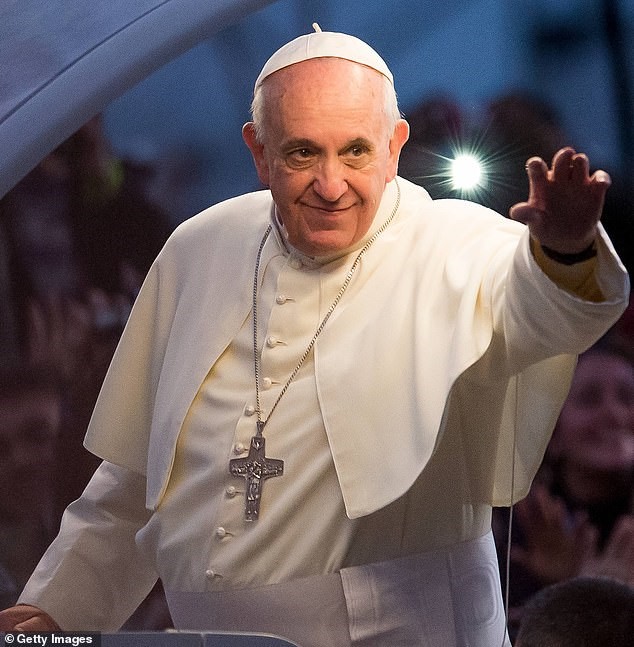
Fare thee well, our Holy Father Pope Francis! A beacon of divine grace, a tireless advocate for the voiceless, vulnerable, victimized, and impoverished. His life’s work, a testament to unwavering faith and devotion to God and humanity, will forever inspire Christendom and beyond.

I had the profound honour of meeting Pope Francis in 2013 at the Vatican during the Interdenominational Conference he organized on Human Trafficking. At that time, I served as the UN Special Rapporteur on Trafficking in Persons, Especially Women and Children.

One memory stands out vividly: an Argentine woman, rescued by Pope Francis himself when he was the Bishop in Argentina, shared how his intervention saved her life from the abyss of trafficking.

Nigerian Army recruitment disparities, social exclusion and rising insecurity in the southeast

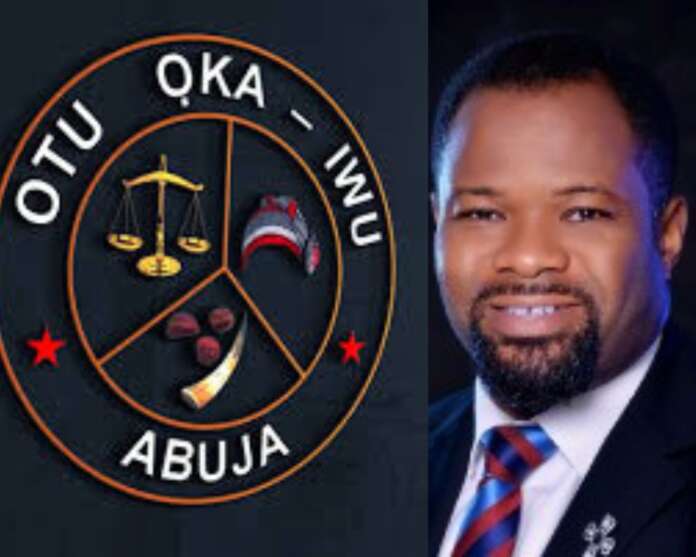
Press Release by OTU OKA-IWU ABUJA

The South-East faces unprecedented security challenges, including rising kidnappings, violent attacks on communities and armed invasions by unknown gunmen and armed Fulani herdsmen leading to killings, rapes, and destruction of farmland. Despite these threats, the recent revelation by the Nigerian Army of low recruitment interest from the Southeast, where only about 5% of citizens from the region applied for enlistment compared to other zones is both alarming and unsurprising.

Otu Oka-Iwu Abuja commends the Nigerian Army for acknowledging this deficit and initiating efforts to address the issue, but assert that these measures are insufficient to tackle the deeper, systemic issues of decades long social exclusion of Southeast in Nigeria’s military and paramilitary services. The reluctance of Southeast youths to enlist in the army is rooted in historical and systemic factors. Distrust towards the Nigerian Army, stemming from historical tensions dating back to the Nigerian Civil War, has made military service less appealing to Igbo youths. More significantly, widespread complaints of lopsided promotions, unfavourable transfers, placements, and other discriminatory practices within the military serve as major deterrents. Also, when political or hierarchical structures are weaponized to favour certain individuals over merit, the system becomes unappealing to those who value fairness and equity.

Furthermore, there is the disruptions caused by the militarization of the Southeast. The prevalence of military checkpoints and the frequent violation of citizens’ rights by military officers in the region do little to inspire confidence or interest in joining the Nigerian Army. The soldiers stationed in the Southeast are the first point of contact for the youths, and their actions such as mass raids, destruction of property, and extrajudicial killings in response to attacks, have severely tarnished the image of the Nigerian Army in the zone.

The Southeast has been underrepresented in military and paramilitary organizations, limiting its influence in national security policymaking and its ability to shape recruitment processes as other zones do and this low participation reduces its ability to advocate for regional security improvements, making it vulnerable. These challenges, though longstanding, has only recently gained public attention with the recent appointment of Sylvester N. Nwakuche, MFR, MNI, as Comptroller General of the Nigerian Correctional Service, surprising many observers, given the common practice of appointing Southeast candidates to acting capacities only to retire them prematurely in favour of preferred individuals. The military and other paramilitary organizations must emulate this gesture and take proactive measures that will address decades of institutionalized exclusionary practices against interested persons from the Southeast and other vulnerable ethics.

Efforts must be deliberate and targeted and complimented by the Southeast Governors who must take deliberate steps to support the efforts of the Nigerian Army and to reach out to other services for similar engagements. Unfortunately, security summits in the Southeast have been sporadic and failing to establish long term security plans. The last major summit was in Owerri, Imo State, in April 2021. Since then, no substantial policy shifts have emerged to counter worsening insecurity. The Southeast Governors must prioritize security summits, ensuring consistent policy discussions and implementations rather than one-time meetings with no follow-ups.

In the past, it has been common for the Southeast Governors to provide vehicles and other basic equipment to security agencies as a means of supporting law enforcement efforts. While this gesture may have been effective in addressing traditional security challenges, it is increasingly outdated and insufficient in the face of modern crime techniques and the evolving nature of security threats. The era of simply donating vehicles and equipment to security agencies must give way to a comprehensive, technology driven approach to security. The Southeast Governors must recognize that modern threats require modern solutions, and investments must reflect the realities of today’s security landscape and must therefore, take it upon themselves to host security summits consistently, ensuring proactive policy implementation as well as fund local security outfits like “Ebube Agu” which was established to tackle rising insecurity. However, its poor implementation and operational challenges have rendered it largely ineffective, unlike its Southwest counterpart, “Amotekun”, which has achieved significant success in crime prevention and regional security.

The cliche, “security is everybody’s business” has being demonstrated in the Northeast, where some Borno and Yobe communities have successfully repelled Boko Haram attacks, using local resistance forces and structured security networks in conjunction with security agencies. However, similar groups in the Southeast are often labelled and silenced, leaving their communities vulnerable, this must stop. Otu Oka-Iwu Abuja strongly advocates that adopting the Northeast approach will aligns with the recommendations that communities should not fully rely on the government for security and the approach could provide security agencies with opportunities to identify individuals for recruitment into the services.

Nigeria, particularly the Southeast, stands at a critical security juncture and with increasing attacks, the region must not remain passive. The need for a unified and consolidated front against insecurity cannot be overstated. With increasing attacks disrupting the zone’s socioeconomic activities, the Nigerian Army’s efforts must be complemented by broader elimination of social exclusion practices in military and paramilitary organizations against Southeast. Military enlistment must be encouraged by all stakeholders, local defence initiatives must be strengthened, and the Southeast Governors must take decisive action to secure communities.

Indeed, this is not just about military service; it is about survival. If proactive steps are not taken today, the South East could face deeper security challenges and greater threats in the years ahead.

Chidiebere Nwabueze Udekwe ESQ
PRESIDENT
OTU OKA-IWU ABUJA

Angry Nigerians blast presidency over N10bn State House solar power project

By John Ogunsemore

The presidency’s planned N10 billion expenditure on solar power installation at the State House, Abuja, has elicited scathing criticism from Nigerians on social media.

Daily Sun reports that N10 billion was allocated in the 2025 Appropriation Act for installing a solar mini-grid at the Presidential Villa, following increased energy bills and unreliable electricity supply from the national grid.

Listed as “Solarisation of the Villa with Solar Mini Grid”, the new capital item caused an increase in overall budgetary allocation to the State House Headquarters from N47.11bn in the initially proposed 2025 budget to N57.11bn in the approved version.

The project is expected to reduce dependence on the national grid and cut energy costs for the State House, especially considering that the Abuja Electricity Distribution Company (AEDC) listed the Presidential Villa among top government debtors, with an outstanding bill of N923.87 million in February 2024.

However, many Nigerians on the X social media platform have berated the presidency for spending billions on solar energy solutions while the citizenry grapple with increased energy costs and epileptic power supply from the national grid.

Spokesperson of the Labour Party (LP) in Lagos State, Ife Salako said, “FG don go buy solar. Na mumu dey wait for national grid.”

Medical doctor, Dr. Olawale Ogunlana said, “The leaders who promised us constant electricity and to restore our national grid are currently installing solar panels. Nigeria is such a wonderful place.”

@DuruchibuzorE wrote, “This N10 billion ‘solar mini-grid’ project at the Presidential Villa is not innovation; it’s a white elephant designed to drain public coffers with a solar smile.

“How do you justify spending ₦10 billion on powering one building when the national grid is in cardiac arrest?”

Writer, David Onyemaizu wrote, “This current administration knows exactly what they are doing. They took themselves off the failed National Grid & are set to install solar power that would gulp 10 billion naira. 

“Nothing concern them with band A or Z. Comfort for the government, misery for the masses.”

@CuteNaija wrote, “I never thought I would see a Nigerian president giving up on power totally, cut away from the national grid, and install solar panels worth billions in his government house.

“You always think you have seen the worst example of bad governance, but they always up the ante!”

The Sun

Selective Outrage and the Echoes of Ethnic Cleansing: A reflection on the Nigerian tragedy

  • Watch video of how El Salvador fought terrorism and other crimes

By Benedict Onwugbenu

On March 2025, 16 lives were violently taken in Uromi, Edo State. The nation responded in unison—airwaves flooded with grief, condemnation poured in from civil society, and politicians hastily released statements. Social media trended with outrage. And rightly so.

But while the country mourned Uromi, another tragedy unfolded—more than 120 people have been massacred in Plateau State in the past months, entire villages destroyed, and families displaced. Yet this horror barely stirred national conscience. No state visit. No presidential address. No national flags at half-mast.

This stark disparity in national response raises a disturbing question: Why does Nigeria grieve selectively? What makes one life more valuable than another in the eyes of the nation? This silence is not just shameful—it is dangerous.

The killings in Plateau State are not isolated. They are part of a broader crisis engulfing Nigeria’s Middle Belt. Benue State, too, is under siege. Day after day, villages are invaded, farmlands occupied, and civilians driven from their ancestral lands. The scale is horrifying—a slow-motion war unfolding in plain sight.

And yet, the silence of the government and the glacial response of the military is dangerously disturbing. In most cases, security forces arrive only after the carnage is complete—if they come at all. Local communities have repeatedly cried out for help, written petitions, and buried their dead with no justice in sight.

Entire villages in Benue are being taken over. People are being displaced by the thousands. Women, children, and the elderly are left with nothing. Schools have closed. Markets are deserted. And yet, the federal government offers no comprehensive security plan, no state of emergency, no effective intervention.

This failure to act raises legitimate fears: Is the state complicit by omission—or worse, by design?

When a pattern of violence targets specific ethnic or religious communities, when their lands are forcibly taken, and when government institutions do nothing to protect them, it fits the textbook definition of ethnic cleansing.

The world must not turn a blind eye. What is happening in Plateau, Benue, and Southern Kaduna is not a random farmer-herder conflict. It is a systematic assault on vulnerable communities—driven by ideology, territorial conquest, and religious intolerance.

The failure to name the violence for what it is emboldens the perpetrators. Instead of arresting and prosecuting them, the government prefers to call these attacks “communal clashes”—a term that sanitizes terror and equalizes victims with aggressors.
The lack of justice sends a dangerous message: some lives are disposable, and some territories are conquerable.

Nigeria is sitting on a powder keg. The impunity fueling these attacks, the absence of justice, and the disregard for human life are pushing the country to the edge. If unaddressed, these unchecked atrocities may ignite a full-blown civil conflict.

Local communities are increasingly resorting to self-defense and vigilante justice, filling the vacuum left by the state. This descent into anarchy is not hypothetical—it is already in motion.

The federal government must act swiftly and decisively to prevent the nation from slipping into chaos. This includes:

  • Declaring a national emergency in Plateau and Benue States.
  • Deploying a specialized military force with real-time intelligence capacity.
  • Setting up a federal tribunal to investigate and prosecute mass killings.
  • International observers and human rights groups should be invited to monitor the situation transparently.
    Most importantly, the national conscience must awaken. Civil society, religious leaders, youth groups, and the media must reject selective outrage and demand accountability across board.
    Nigeria cannot claim unity while part of it is bleeding in silence. If we continue to look away, we may wake up one day to a country at war with itself—a war that could have been prevented.

This is a call to truth. A call to justice. A call to peace. Before it’s too late.

Benedict ONWUGBENU is a Catholic Priest and the Executive Director, Justice Development and Peace Centre (JDPC), Benin.

The views expressed by contributors are strictly personal and not of Law & Society Magazine.

Below is a video of how the President of El Salvador fought terrorism and other crimes in El Salvador.

Pope Francis: A model of mercy and simplicity I aspire to embrace

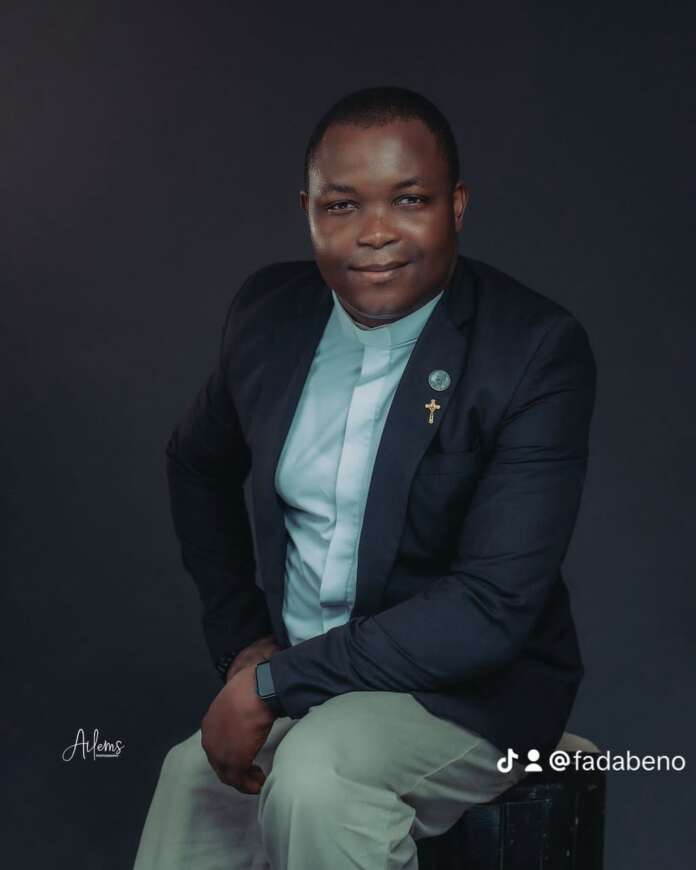
By Fr. Michael ‘Leke Banjo

In a world that wraps power in ego and casts authority as something to be feared, Pope Francis was a striking contradiction: a shepherd who led from within his flock, never towering above them. As Supreme Pontiff of over 1.4 billion Catholics and Head of the Vatican City State, he held one of the most influential offices on earth. Yet his leadership was defined not by grandeur but by gospel simplicity, not by command alone but by the quiet eloquence of mercy.

From the moment he stepped onto the loggia of St. Peter’s Basilica on that cool March evening in 2013, he expressed the kind of pope he would be: one of humility, simplicity, and profound connection with the people. He bowed his head and asked the people to pray for him before he gave his blessing. It was a gesture of humility that echoed the example of the carpenter of Nazareth. And when multitudes began preparing to travel to Rome for his inaugural Mass, he urged them not to come. Instead, he invited them to use that money to care for the poor. With this gesture, Pope Francis took us along the path of charity, drawing attention to the peripheries where Christ suffers in the poor, the hungry, the homeless, and the forgotten.

For Pope Francis, true authority always bore the face of mercy. This vision was beautifully expressed during the Jubilee Year of Mercy when he granted all priests the faculty to absolve the sin and crime of abortion, a faculty previously reserved to bishops and specially designated confessors. With this decision, he did not reduce the seriousness of the offence but widened the reach of reconciliation. Through this pastoral action, he proclaimed that no one is beyond the embrace of God’s forgiveness, reminding us that the Church and the priesthood exist because of sinners. All priests continue to enjoy this special faculty.

For the Jubilee Year of Hope, Pope Francis did not limit the opening of the Holy Doors to the four major basilicas alone; he also included a prison on the outskirts of the city. In this profoundly symbolic act, he reminded the world that grace reaches even the most forgotten places. That sacred door in the prison is a living image of the Church’s mission to go to the margins and restore dignity to the excluded. The same spirit inspired the establishment of the World Day of the Poor, where Pope Francis celebrated Mass with the poor and then invited them to dine with him. In those moments, there was no throne, only a silent homily on the worth of every human life. He cared deeply about the plight of single and unwed mothers, insisting that they and their children should not be denied the sacraments, as long as they are properly disposed.

His choice of the name Francis was intentional. Inspired by the poverello of Assisi, he embraced a life free of excess. He lived in the modest Domus Sanctae Marthae rather than the Apostolic Palace, travelled in a simple car, carried his bag, and decreed that his funeral should be simple, with his tomb “without particular ornamentation” (cf. Pope Francis, Spiritual Testament, June 2022). His simplicity came from genuine spirituality, and his authority did not impose; it inspired. I recall how tears flowed from my eyes when I saw him kneel on Holy Thursday of 2016 to wash the feet of refugee men and women, some of them Muslims and Hindus. He tenderly kissed their feet and looked lovingly into the eyes of each of them, reflecting that, though we may be different in our cultures and religions, we are all brothers and sisters seeking peace. Pope Francis showed that greatness lies not in domination but in service, not in control but in tenderness, not in disdain for others but in respect for all. In Pope Francis, power stooped to lift the weak. I wish all those in positions of power, whether in the religious or civil domain, would emulate the example of Pope Francis.

As I reflect on his life and witness, I find in his simplicity and love for the poor and lowly a path I deeply desire to follow. His example reminds me that holiness is not distant or reserved for the extraordinary, but close, gentle, and human. I pray for the grace to live with this spirit, to be present to others with compassion, especially the forgotten and the wounded. Lord, grant me the courage to walk this path faithfully. Teach me to lead by serving, to speak the truth with gentleness, and to love with the wideness of your mercy. Amen.

(Fr. Michael Banjo is the Secretary General of the Catholic Secretariat of Nigeria)

Pope Francis to be buried on Saturday 

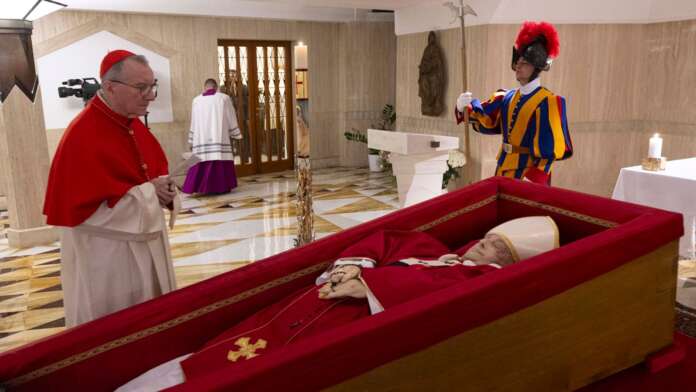
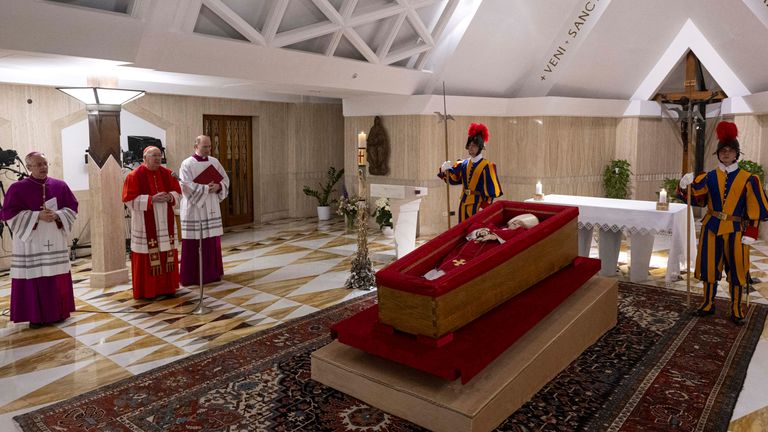
Vatican Secretary of State Cardinal Pietro Parolin, left, prays in front of the body of Francis. Pic: Vatican Media/Handout/AP

The Vatican has announced that the funeral of Pope Francis will take place on Saturday morning.

Officials confirmed the service would be held in St Peter’s Square and begin at 9 am UK time (10 am local time).

It comes after the 88-year-old died on Monday morning, with officials later saying he had suffered a stroke and heart failure.

Following the funeral, a conclave to choose a new pope will begin on 5 May.

The liturgy for the funeral will be presided over by the dean of the college of cardinals, the Most Reverend Cardinal Giovanni Battista Re.

The body of Pope Francis is placed in an open casket during the rite of the declaration of death in Santa Marta residence at the Vatican, April 21, 2025. Vatican Media/­Handout via REUTERS ATTENTION EDITORS - THIS IMAGE WAS PROVIDED BY A THIRD PARTY. REFILE - CORRECTING DATE
Image: The body of Pope Francis is placed in an open casket. Pic: Vatican Media/­Handout/Reuters

Following the service, “the coffin of the Roman Pontiff will then be taken to St Peter’s Basilica and from there to the Basilica of Santa Maria Maggiore for burial,” a Vatican spokesperson said.

Earlier on Tuesday, the first images of the Pope lying in state were released, showing the late pontiff in his casket with the Vatican secretary of state praying over him.

The coffin is currently in the chapel of the Santa Marta residence, where he lived during his 12-year papacy.

A Vatican employee told Sky News she saw the Pope’s coffin on Tuesday morning.

She described the atmosphere as “so sadly impressive”, with some of the pontiff’s closest aides around his body in tears.

The Pope’s body will be taken into the adjacent St Peter’s Basilica on Wednesday at 8 am UK time, allowing people to pay their respects in the lead-up to the funeral.

Sky News

Violent Colonial History of Looted Human Remains: How Oxford academics drank from cup made from human skull

Oxford academics drank from a chalice made from a human skull for decades, a book that explores the violent colonial history of looted human remains has revealed.

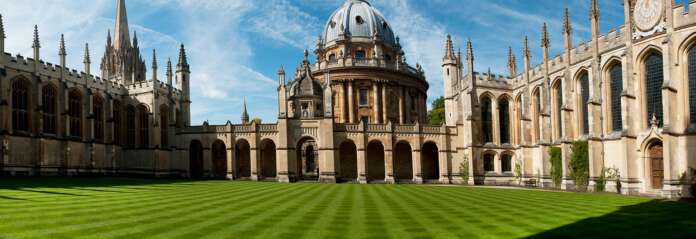
The skull-cup, fashioned from a sawn-off and polished braincase adorned with a silver rim and stand, was used regularly at formal dinners at Worcester College, Oxford, until 2015, according to Prof Dan Hicks, the curator of world archaeology at the university’s Pitt Rivers Museum.

Hicks, whose forthcoming book, Every Monument Will Fall, traces the “shameful history of the skull”, said the cup was also used to serve chocolates after it began to leak wine.

The archaeologist said mounting disquiet among fellows and guests put an end to the senior common room ritual and, in 2019, the college invited Hicks to investigate the skull’s origins, and how it became what he calls “some sick variety of tableware”.

Hicks said debates about the legacy of colonialism usually focused on how the prominent Britons who profited from it, such as Cecil Rhodes or Edward Colston, had been memorialised by statues, objects or institutions bearing their names.

Click here to continue reading.

Harvard drags Trump administration to court over federal funding and academic freedom

[Download the Court Process]

By Michelle WatsonBrad LendonMatt Egan and Jeff Winter, CNN

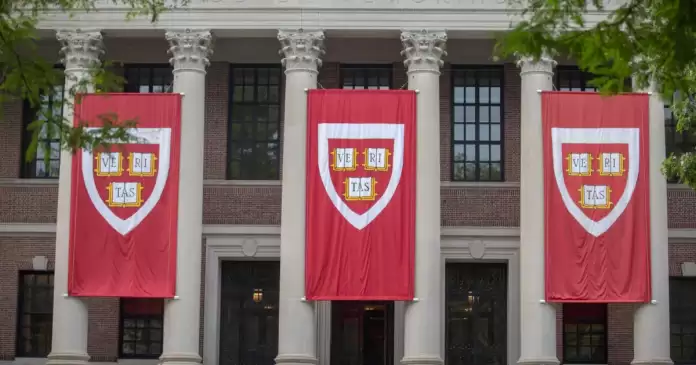
Harvard University sued the Trump administration Monday in a new escalation of the fight over institutional oversight, independence and federal funding for the Ivy League school.

University President Alan M. Garber said in a letter to the Harvard community that the administration’s recent actions — including a $2.2 billion federal funding freeze at Harvard, with even more money potentially on the line — “have stark real-life consequences for patients, students, faculty, staff, researchers, and the standing of American higher education in the world.”

The Trump administration is demanding Harvard give it access to all university reports on antisemitism and anti-Muslim bias on campus generated since October 2023, as it ramps up a confrontation with the school that risks billions in federal money amid a broader push to bring elite US colleges in line with its political ideology.

“The gravy train of federal assistance to institutions like Harvard, which enrich their grossly overpaid bureaucrats with tax dollars from struggling American families is coming to an end,” White House principal deputy press secretary Harrison Fields said in a statement Monday evening. “Taxpayer funds are a privilege, and Harvard fails to meet the basic conditions required to access that privilege.”

Harvard emerged as the first elite US university to publicly rebuke the White House’s demands, which Trump officials have said aim to combat antisemitism following contentious campus protests in response to the Israel-Hamas war in Gaza.

“Under whatever name, the Government has ceased the flow of funds to Harvard as part of its pressure campaign to force Harvard to submit to the Government’s control over its academic programs. That, in itself, violates Harvard’s constitutional rights,” Harvard wrote in the lawsuit.

“The Government has not – and cannot – identify any rational connection between antisemitism concerns and the medical, scientific, technological, and other research it has frozen that aims to save American lives, foster American success, preserve American security, and maintain America’s position as a global leader in innovation,” the suit, filed Monday, said.

Garber, who is Jewish, said in his letter he knows there are valid concerns to the rise of antisemitism and that the university has task force groups designated to help “address intolerance” in our community.

“Make no mistake: Harvard rejects antisemitism and discrimination in all of its forms and is actively making structural reforms to eradicate antisemitism on campus,” the school’s lawsuit says. “But rather than engage with Harvard regarding those ongoing efforts, the Government announced a sweeping freeze of funding for medical, scientific, technological, and other research that has nothing at all to do with antisemitism and Title VI compliance.”

The university said it’s not looking for money.

“Instead, it seeks an order declaring unlawful and setting aside sweeping agency action taken in violation of Harvard’s constitutional rights under the First Amendment and its rights guaranteed by statute and regulation,” the suit said.

The Trump administration has said it would freeze more than $2.2 billion in grants and contracts after the Ivy League school refused to submit to demands, including that it eliminate diversity, equity and inclusion programsban masks at campus protests; enact merit-based hiring and admissions reforms; and reduce the power of faculty and administrators the White House has said are “more committed to activism than scholarship.”

The university must turn over all reports generated by school task forces on combating antisemitism and anti-Muslim bias on campus, including drafts never released to the public, a letter Saturday from the Department of Health and Human Services’ Office for Civil Rights to Harvard leadership says.

The letter, published by The Free Press, also requests the names of anyone involved in preparing the reports and says they should be made available for interviews by federal officials.

The letter is among the latest twists in the Trump administration’s growing fight with Harvard. It comes as some Jewish organizations and students at Harvard say the White House’s recent threats – from pulling research funding to ending its eligibility to host international students – are not making them safer or more welcome but instead, as some wrote, “pawns in a broader political agenda.”

Another $1 billion in federal health research contracts to Harvard could also be withheld, The Wall Street Journal reported over the weekend, as the Internal Revenue Service is making plans to rescind the tax-exempt status of the university and the administration has threatened Harvard’s ability to enroll foreign students.

Other universities, including Princeton, Cornell and Northwestern, also have seen federal funding paused amid similar demands.WSJ: Another $1B in jeopardy for Harvard

The threat of rescinding a further $1 billion in federal money follows the White House’s fury after Harvard made public an April 11 letter from the federal Task Force to Combat Anti-Semitism, demanding it allow federal government oversight of admissions, hiring and the ideology of students and staff – on top of other demands laid out in a prior letter – people familiar with Harvard’s response said, the Journal reported Sunday.

CNN has reached out to Harvard and the White House for comment on the Journal’s report.

Harvard strongly rejected the Trump administration’s demands in the April 11 letter, with Garber, the school’s president, saying in an April 14 letter to the academic community the “University will not surrender its independence or relinquish its constitutional rights.”

The demands go beyond the power of the federal government, and the majority “represent direct governmental regulation of the ‘intellectual conditions’ at Harvard,” rather than combating antisemitism, the university president has said.

Anticipating rocky relations with the incoming administration, Harvard in January hired high-powered lobbying firm Ballard Partners, and a source confirmed to CNN the relationship is ongoing. Ballard has deep ties to Trump and previously employed White House chief of staff Susie Wiles and Attorney General Pam Bondi.

The latest back-and-forth between the US government and America’s oldest university marks a sea change in how the Trump administration intended to engage with Harvard, according to the Journal.

Before the April 11 letter’s release, “the administration was planning to treat Harvard more leniently than Columbia University, but now officials want to apply even more pressure to the nation’s most prominent university, according to the people,” the newspaper reports. “People familiar with Harvard’s response say there was no agreement to keep the letter private, and that its contents – including requirements that Harvard allow federal government oversight of admissions, hiring and the ideology of students and staff – were a nonstarter.”

Columbia University, on the heels of President Donald Trump’s revocation of $400 million in federal funding over campus protests, last month made policy changes in a dispute over federal funding, including restrictions on demonstrations, new disciplinary procedures and immediately reviewing its Middle East curriculum.

Although it has prompted a furious response from the university, the letter sent to Harvard April 11 may not have been meant to be sent at that time, The New York Times reported Friday. It was believed inside the administration the letter first would be circulated to members of the task force, the Times reported, citing two unnamed people familiar with the matter.

A White House official confirmed its authenticity Saturday, telling CNN the White House “stands by the letter.” Garber said the demands go beyond the power of the federal government, and the majority “represent direct governmental regulation of the ‘intellectual conditions’ at Harvard” rather than combating antisemitism.

Feds’ possible overreach concerns ADL chief

The Anti-Defamation League’s CEO and national director also has expressed concern the Trump administration may be overreaching in the Harvard case, looking to punish the university outside of the antisemitism debate that has simmered since last spring’s protests, which sparked rampant fear among Jewish students and staff on many US campuses.

“The issue of combating antisemitism on campus should be addressed on its own process and merits. Other debates on higher education may be important, but they can and should be resolved separate from fighting antisemitism on campus,” Jonathan Greenblatt wrote Friday in an article published in the Times of Israel.

Similarly, Harvard’s chapter of Hillel, a global advocacy organization for Jewish college students, wrote last week on social media: “(D)espite positive elements of the government’s recent demands (such as streamlining disciplinary processes), the current, escalating federal assault against Harvard – shuttering apolitical, life-saving research; targeting the university’s tax-exempt status; and threatening all student visas, including those of Israeli students who are proud veterans of the Israel Defense Forces and forceful advocates for Israel on campus – is neither focused nor measured, and stands to substantially harm the very Jewish students and scholars it purports to protect.”

An open letter signed by more than 100 Jewish students at Harvard says tying government academic demands to complaints of antisemitism makes them “pawns in a broader political agenda.”

“We have a variety of views on what actions constitute antisemitism and how to address it,” reads the letter shared with CNN. “But we overwhelmingly oppose these drastic funding cuts to our university.”

Some Harvard critics unite against threats

The effort by Harvard leadership to publicly fight back against the administration may draw Trump’s ire, but it is uniting stakeholders on campus, an employee told CNN.

“Garber’s (April 14) letter sent a jolt of energy through the campus,” said the employee, who declined to be named because they are not authorized to speak publicly for the university. “The Trump administration’s demands were so far beyond the pale. Nothing has united Harvard’s deeply fractured campus more.”

Some prominent Harvard alumni are also hailing the university’s defiance in the face of government pressure.

The White House threats “will backfire as even those most critical of the university pull together against dictatorial overreach and as the political motivations behind the prosecution becomes apparent,” Larry Summers, a former Harvard president and PhD recipient who was a top economic official in the Clinton and Obama administrations, said in a post to X.

Summers has been very critical in the past of how Harvard leaders have handled antisemitism on campus but is now defending the institution’s response to the government’s demands.

“An enemies list did not work out for President Nixon. It won’t for President Trump,” Summers wrote.

Massachusetts Gov. Maura Healey, a graduate of Harvard and a Democrat, said Trump’s push to revoke Harvard’s not-for-profit status is “outrageous,” she told CBS News’ “Face the Nation” on Sunday. “It’s part of this continued playbook that Donald Trump has been using, which is to silence critics.”

“First he went after the law firms, then he went after companies, then he went after everyday Americans. Now he’s going after colleges and universities, using any and all tactics to try to shut them down, to silence them,” Healey said.

Click here to download the process.

harvard-university-sues-the-trump-administration

CNN’s Jeff Zeleny, Kara Scannell, Piper Hudspeth Blackburn, Betsy Klein, Andy Rose, Nicki Brown and Liz Enochs contributed to this report.

TIPS