Home Blog Page 370

$220m fine: FCCPC hails tribunal’s judgment against Meta, WhatsApp

The Federal Competition and Consumer Protection Commission (FCCPC) has hailed the  Competition and Consumer Protection Tribunal for its judgment in the appeal filed by Meta Platforms Incorporated (Facebook) and WhatsApp LLC.

This is contained in a statement by the FCCPC Director, Corporate Affairs, Mr Ondaje Ijagwu, on Friday in Abuja.

Ijagwu said the Executive Vice Chairman of the commission, Mr Tunji Bello, also commended FCCPC’s legal team for their exceptional diligence.

He said the tribunal resolved issues one to seven in favour of the FCCPC, dismissing the appellants’ objections to the commission’s findings, orders, and legal competence.

Ijagwu said the tribunal’s three-member panel, led by Mr Thomas Okosun, affirmed the commission’s authority and actions in nearly all the contested issues.

He said the tribunal determined that the commission complied with prevailing laws, discharged its mandate, and exercised its powers within the confines of the 1999 Constitution.

Ijagwu said the tribunal affirmed the fine of 220 million dollar against Meta Platforms Incorporated and WhatsApp LLC by the commission and further awarded 35,000 dollars to the FCCPC as cost of investigation.

He recalled that the case arose from a 38-month joint investigation initiated by the FCCPC and the Nigeria Data Protection Commission into the conduct, privacy practices, and consumer data policies of Meta Platforms and WhatsApp.

According to him, dissatisfied with the order last year, Meta and WhatsApp appealed to the tribunal, challenging both the legal basis and the findings of FCCPC.

”The Tribunal resolved issues one to seven largely in favour of the FCCPC, dismissing the appellants’ objections to the commission’s findings, orders, and legal competence.

”The tribunal held that the FCCPC acted within its statutory mandate, reaffirming its authority under Section 104 of the FCCPA to regulate competition and consumer protection even in regulated industries,” he said.

Ijagwu reinstated FCCPC’s commitment to not only championing the rights of Nigerian consumers but also ensuring fair business practices in the country.

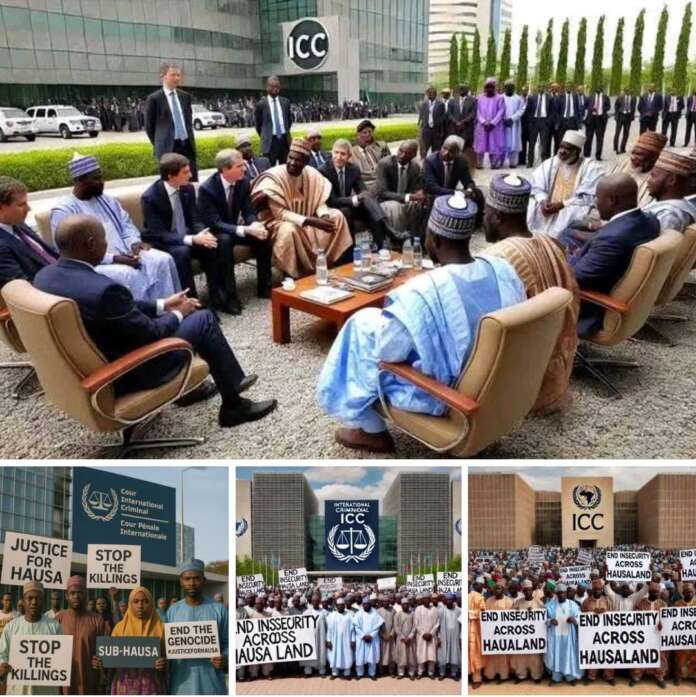
Hausa ethnic group writes ICC, says “Justice must prevail—not just for the Hausa people, but for the future of human rights and international law”

Open Letter to the International Criminal Court (ICC): The Plight of the Hausa Ethnic Group

To the Esteemed Members of the International Criminal Court,

We, the undersigned members and representatives of the Hausa ethnic group, write to you with heavy hearts and an unwavering hope that justice will prevail. Our communities are under siege. Our people are being killed, displaced, and traumatized. We appeal to your conscience and commitment to justice to urgently intervene in the humanitarian crisis unfolding across the Hausa heartlands of Northern Nigeria.

Ongoing Crimes Against Humanity For years, Hausa towns and villages have suffered from continuous, systematic attacks by armed Fulani bandits. These attacks are not random or isolated. They are part of a calculated, ethnically targeted campaign that bears all the hallmarks of crimes against humanity—and possibly genocide. The perpetrators execute their crimes with impunity, torching entire settlements, abducting women and children, slaughtering innocent civilians, and wiping out entire families.

Entire communities have been uprooted. Our people are forced to flee their ancestral homes, seeking refuge in makeshift camps without adequate food, water, or security. Our traditional rulers, community leaders, and clerics have been silenced or murdered. This is not mere banditry—it is ethnic cleansing, and it is being enabled by the silence and inaction of the Nigerian state.

State Complicity and Institutional Silence

What deepens our anguish is the blatant protection afforded to these bandits by powerful elements within the state. Influential Fulani elites and religious scholars have used their platforms not to condemn these crimes, but to normalize them, defend the perpetrators, and obstruct justice. Government responses have been either nonexistent or woefully inadequate—often suspiciously absent in areas experiencing the worst violence.

The ethnic composition of the leadership in Nigeria has fostered a dangerous environment of favoritism and impunity. Despite numerous pleas for protection, security forces are routinely withdrawn or ordered to stand down, allowing the attackers free rein. This deliberate neglect is tantamount to complicity.

A Call for International Justice

We turn to the International Criminal Court because every local avenue has failed us. We possess irrefutable evidence: photographs of mass graves, videos of burning villages, testimonies from survivors, and credible reports from humanitarian observers. The cries of our people echo in every corner of Hausaland—and yet the world remains silent.

We call on the ICC to:

  1. Initiate a preliminary examination into the situation in Northern Nigeria, with specific focus on ethnically motivated violence against the Hausa people.
  2. Investigate the roles of state actors and Fulani elites in enabling or facilitating these crimes.
  3. Recognize the atrocities being committed as crimes against humanity and potential genocide.
  4. Hold accountable all those responsible—whether through direct violence or through obstruction of justice, incitement, or dereliction of duty.
  5. Recommend reparations and restitution for the victims and displaced communities.

A Plea for Peace, Dignity, and Justice

This is not just a regional issue—it is a matter of global human rights. When an ethnic group is targeted, displaced, and dehumanized without consequences, the entire world order based on justice and dignity begins to crumble. The Hausa people, like all others, have a right to live in peace on their ancestral lands. We are farmers, traders, scholars, and builders of civilization. We are not at war with our neighbors, but we are being exterminated.

We plead with the international community not to look away. Stand with us. Help us. Let not the cries of our women and children be in vain. Let the world remember that silence in the face of evil is complicity.

Justice must prevail—not just for the Hausa people, but for the future of human rights and international law.

Yours faithfully,
Hausa Native Advancement and Development Initiative
On Behalf of the Hausa People

hausaactivist!#Hausawa #ICC

ATBU fires lecturer over sexual harassment of postgraduate student

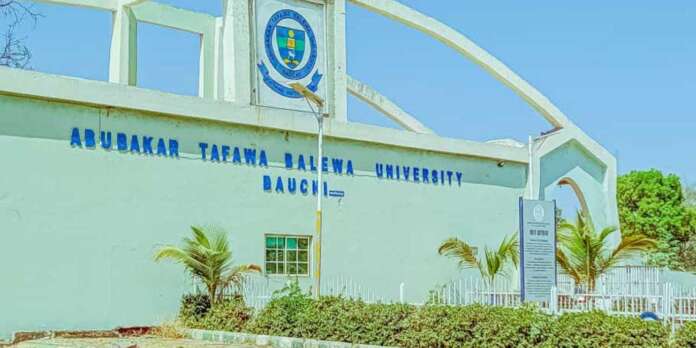
The Governing Council of Abubakar Tafawa Balewa University (ATBU), Bauchi, has dismissed a lecturer, Dr. Usman Mohammed Aliyu, over an allegation of sexual harassment involving a female postgraduate student.

The dismissal follows a petition filed last year by Mrs Kamila Rufai Aliyu, a postgraduate student in the Department of Chemical Engineering, Faculty of Engineering and Engineering Technology.

DAILY POST recalls that Kamila’s husband, Alhaji Ja’afar Buba, had petitioned the university authorities to investigate Aliyu for allegedly sexually harassing his wife after she refused his advances.

However, in a dramatic turn of events, the lecturer filed a defamation suit in reaction to the allegations.

The student, a married woman, alleged that Aliyu made sexual advances, harassed her, and issued threats of failing her in his course if she didn’t succumb to his sexual demands.

The husband of the victim, Ja’afaru Buba, through his legal counsel, had filed petitions against the lecturer with the university’s management, the head of the department and the Independent Corrupt Practices and Other Related Offences Commission, ICPC.

In the petition, Kamila’s lead counsel, Barrister Mohammed Sani, stated: “Our client, Kamila Rufa’i Aliyu, a student of the M.Eng. Chemical Engineering program at ATBU, was repeatedly harassed by Dr. Usman Mohammed Aliyu, who taught her courses such as CHE 635 (Polymer Processing) and currently teaches her CHE 656 (Fluidization).

“Despite knowing she was married, Dr. Aliyu invited her to his office multiple times and sent her inappropriate love messages via WhatsApp.”

The petition further stated that Kamila resisted Aliyu’s advances, leading him to allegedly threaten to fail her in exams and prevent her from graduating.

It was also claimed that Aliyu told Kamila’s friends he would fail her due to her refusal.

Sani argued that Aliyu’s actions violated university regulations and conditions of service.

In an update on the matter in its April 22, 2025 edition (Vol. 39, No. 5), the university’s official newsletter, ATBU Herald, announced that the institution’s Governing Council, at its 96th regular meeting held on April 11, 2025, approved Aliyu’s dismissal based on the findings of the Senior Staff Disciplinary Committee.

The report stated that the lecturer was found guilty of an “indecent relationship involving a student,” in violation of Chapter 3, item f.1(o) of the Senior Staff Conditions of Service.

The university has directed Aliyu to hand over all university property in his possession and submit his staff ID card to the Chief Security Officer with immediate effect.

This marks one of the most high-profile disciplinary actions the university has taken in recent years and underscores ATBU’s stated commitment to upholding ethical standards within its academic community.

Non-hormonal male contraceptive implant lasts at least two years in trials

An implantable, non-hormonal male contraceptive has been shown in trials to last for at least two years.

The contraceptive, known as Adam, is a water-soluble hydrogel that is implanted in the sperm ducts, preventing sperm from mixing with semen.

The company behind the product, Contraline, says the approach offers a reversible alternative to condoms and vasectomies, with the hydrogel designed to break down in the body after a set period of time, restoring fertility.

Contraline has released details of its phase 1 clinical trial, revealing Adam can successfully block the release of sperm for 24 months, with no sperm detected in the semen of the two participants who have so far reached this time point in the trial. In addition, it said no serious adverse events had been recorded.

“This is really exciting because our goal since day one has been to create a two-year-long male contraceptive – that is what the demand is for: a two-year-long, temporary or reversible male birth control. And we have the first data to show that that’s possible,” said Kevin Eisenfrats, the founder and chief executive of Contraline.

Eisenfrats said the 25 participants in the clinical trial were enrolled at different points in time, with more results expected to follow. “It’s great proof of concept,” he added..

Eisenfrats said the implant was inserted in a minimally invasive procedure that took about 10 minutes and used local anaesthetic, meaning the patient remained awake.

Adam is not the first male contraceptive in development that acts by blocking the sperm ducts (vas deferens), although Eisenfrats said some other implants had used materials that did not break down in the body. He said there was little data to show fertility was restored after these were removed, while there were also concerns such implants could cause scarring of the vas deferens and lead to permanent sterilisation.

The results from the Adam clinical trial have not yet been published in a peer-reviewed journal and do not include data on the reversibility of the implant. However, Eisenfrats said the hydrogel had a predictable lifespan and had been shown to break down over time in animal trials, with work using lower doses in men revealing a shorter period of efficacy.

“The way to think about this is sort of like the IUD [intrauterine device] for men,” Eisenfrats said, adding that after a two-year period men could decide whether to get another implant. The team is working on a procedure to enable “on-demand reversal”. Eisenfrats said sperm tests could be used by men at home to check whether the contraceptive was still effective.

Contraline said it was expecting to begin a phase 2 clinical trial in Australia later this year involving 30 to 50 participants.

Prof Richard Anderson, an expert in hormonal male contraception at the University of Edinburgh, welcomed the findings. “It’s impressive that this looks like something that does actually work, which is great,” he said.

‘We’ve now got hormonal and non-hormonal methods in advanced clinical development, which is potentially a much better position than we’ve been in previously in terms of actually getting something on the market for men to really use.”

But Anderson and Prof Jon Oatley, of Washington State University, said at present no data had been released showing the reversibility of the Adam implant, and it remained unclear how long a single implant lasted.

Anderson also said it had yet to be shown that the implant could be removed, while Oatley said the long-term ramifications of blocking the vas deferens were unknown.

Oatley said that while the Adam implant could be a strong contraceptive option for men, uptake may be limited. “Given a choice of a pill, patch, injectable or surgery, I believe that most men would choose pill or patch over surgery,” he said.

The Guardian UK

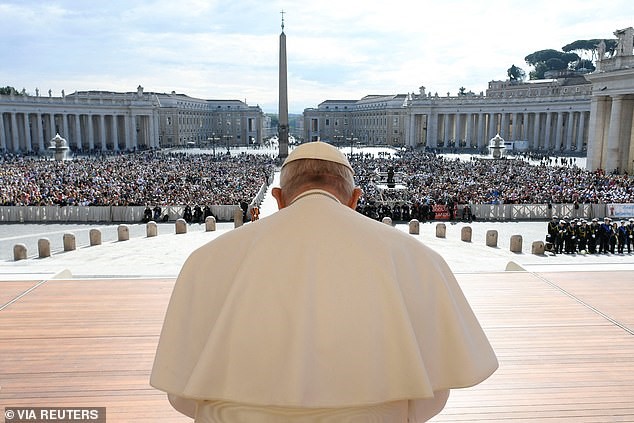
The church Pope Francis kept returning to – and chose as his final resting place

By Laura Gozzi

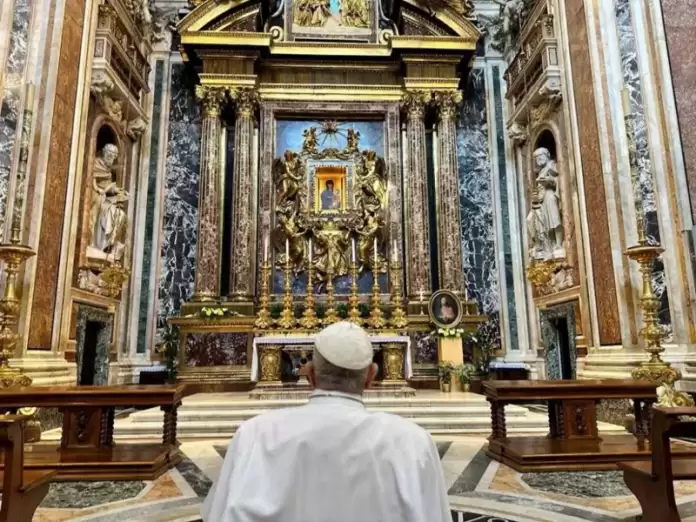
Every time Pope Francis came back to Rome after a trip abroad, he made sure to pay a visit to the church of Santa Maria Maggiore.

It was a fitting choice: Francis was particularly devoted to the Virgin Mary, and Santa Maria Maggiore was the first church to be dedicated to her when it was built in the 4th Century.

It is one of Rome’s four major basilicas and one of the oldest in the city.

On Saturday, it will also become Francis’s final resting place.

It is a short walk from some of Rome’s most recognisable landmarks like the Colosseum, and a stone’s throw from the city’s endlessly bustling and chaotic central Termini station. The diverse Esquilino neighbourhood is close by.

Santa Maria Maggiore feels steeped in the “real” Rome – despite technically being a part of the Vatican state.

The square it stands on – lined with bus stops, cafes and shops – certainly seems a world away from the awe-inspiring St Peter’s Square and its imposing basilica, under which Popes are usually buried in centuries-old crypts.

And yet the chapels, mosaics and gilded wood of Santa Maria Maggiore remain stunning. Seven other popes are buried here.

The basilica also hosts what is said to be a relic of Jesus’s crib and an icon of Mary, to whom Pope Francis would pray asking for protection before a journey.

Santa Maria Maggiore’s senior priest, the Lithuanian Rolandas Makrickas, gave Italian newspaper Il Messaggero his account of how the Pope’s decision to be laid to rest there came about.

He said: “In May 2022… I asked him if he wasn’t by any chance thinking about being buried in [the basilica], given how often he came.”

Francis smiled and said that Popes are buried in St Peter’s – “and that was that”, Makrickas thought.

The priest continued: “A week later he called me and said, ‘the Virgin Mary has told me to prepare my tomb’.

“Then he simply told me, ‘find a place for it, because I want to be buried in this basilica and you’ve been a bit of a prophet’.”

The place Mackrickas found is next to the icon of Mary that the Pope so loved. It is now cordoned off and obscured by plywood.

A security guard who wished to remain anonymous told BBC News stories of Pope Francis visiting the church on many occasions.

“Yes, we used to see him all the time when he came here,” he said, interrupting himself to sternly invite tourists to put their phones away or cover their shoulders.

“After a few times of seeing him, one time he looked at me and asked me, ‘why are you always here?’

“And I said, ‘Holy Father, I’m working just as you are’.”

As the security guard spoke, people continued to stream in from the blazing sunshine into the quiet shade of the basilica.

Several queued outside wooden booths, each topped with a sign indicating in which languages the priests inside could hear confessions.

Every few minutes, the chatter would be momentarily quietened by a voice hissing over the loudspeaker: “Silenzio.”

Outside, a woman called Pat from Manchester was squinting at the sun and gathering her thoughts.

“I came here because this is where the Pope used to come before any journey,” she told the BBC, raising her voice over the sound of the midday bells tolling.

“That’s why I’ve always wanted to come and it hasn’t disappointed.”

After a pause, she said: “Beautiful isn’t the word. It’s just vast, it’s enormous.”

Apologising for not being able to put her emotions into words, she said she was “particularly impressed” that many of the six chapels hold different masses at different times, “so if you’re late for one, you can go into another”.

Pat heard the news about the Pope’s death when her plane from the UK landed in Rome on Monday morning.

It did not scupper her visit. As a devout Catholic, she said Santa Maria Maggiore “was always the place I wanted to come” because Francis loved it so.

“I came without any sort of preconceived idea and I made a point of not reading up about it, I just wanted to take the atmosphere in, and feel it.”

“And I did,” she said, looking up at the basilica. “I am full of the spirit.”

On Saturday afternoon, after the world has had a chance to bid farewell to him, Pope Francis will make his final journey from the Vatican to Santa Maria Maggiore, as he did so often in life.

The church will be shut for a few hours, then the stream of visitors will resume.

Some, like Pat, will continue to come to the basilica and try to put something intangible into words. Others will simply admire the mosaics.

And on the left hand side, by an icon of the Virgin Mary, Santa Maria Maggiore’s newest resident will begin his rest.

BBC

US urged to re-designate Nigeria as country of particular concern over incessant killings

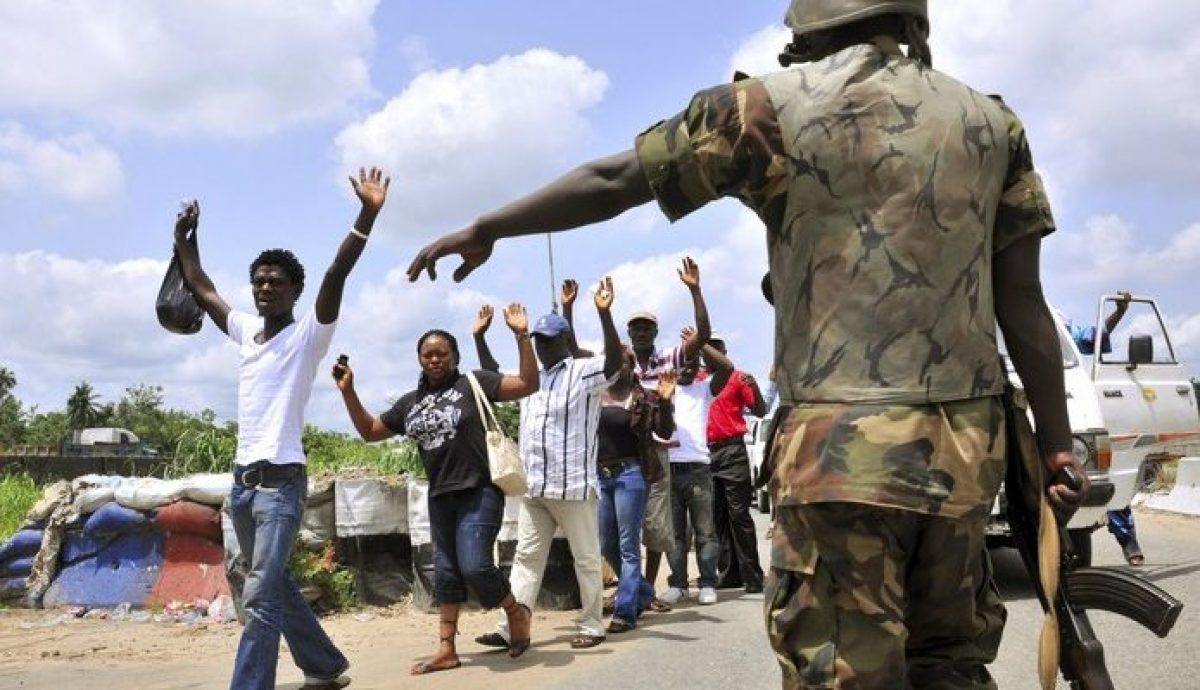
The United States of America has been asked to redesignate Nigeria as a Country of Particular Concern (CPC) and subsequently place it on the US watchlist over the rising spate of killings by bandits and herdsmen.

The call was made by a delegation of American Veterans of Igbo Descent (AVID) and Rising Sun & Ambassadors for Self Defense; during its recent visit to the Capitol Hill, Washington DC, where it met with some US congress members to lobby for the release of the incarcerated leader of the Indigenous People of Biafra, (IPOB), Mazi Nnamdi Kanu.

It will be recalled that the US President Donald Trump, in his first term, had designated Nigeria as a CPC nation, but his successor, Joe Biden removed Nigeria out of the watchlist when he assumed power.

Addressing the press after the Capitol Hill engagement, the President of AVID, Dr Sylvester Onyia, said they also sensitised the congress on the rising violation of human rights, calculated ethnic cleansing and religious atrocities perpetrated in Nigeria by those bent on dispossessing the Indigenous people of their ancestral lands.

He decried the barbaric activities of the killer herdsmen and bandits slaughtering Nigerians, mostly Christians, “while the Government has failed to protect the hapless people”.

The AVID President, who also recalled the killing of 27 unarmed Biafra agitators
Celebrating the inauguration of President Trump in 2017 by the Nigerian security operatives in Port Harcourt, Rivers State, demanded US action.

He further said the delegation was at Capitol Hill to sensitise the US Congress on the plight of the IPOB Leader, Mazi Nnamdi Kanu, who has been in solitary confinement since his abduction in Kenya and extraordinary rendition to Nigeria in 2021.

AVID and its allied group renewed their demand for the immediate and unconditional release of Kanu, who they insisted, “is not Nigeria’s problem but part of its solution”.

“We are here to bring our concerns to the American folks that Mazi Nnamdi Kanu needs to be released now.

“He is unjustly incarcerated. We have told President Ahmed Tinubu, just as we told President Buhari, who arrested him, to release him because he didn’t do anything to anybody.

“We also came to remind the world about what happened in January 20, 2017, when President Donald Trump was being inaugurated for his first tenure.

“The Nigerian security forces shot at, and killed 27 youths of Igbo descent celebrating Trump’s inauguration in Port Harcourt. The innocent victims did nothing other than cheering a US President.

” This happened and nobody has been brought to account. So, we are asking the US Government, now under President Trump, to look into the matter because it was democracy that was being celebrated, and those innocent youths were slaughtered by the Nigerian security personnel as chicken.”

A member of the delegation, Rev. Father Augustine Odinmegwa, accused Britain of complicity in Kanu’s continued incarceration, wondering why the British Government has not demanded his release despite being her citizen.

“Why are they still holding Mazi Nnamdi Kanu? We believe that as a British citizen, the British Government has a hand in it. Kanu was discussing the atrocities being committed in Nigeria.

“Those holding Nigeria down do not want any development in the country. Jihadists and Fulani herders are busy killing and displacing innocent indigenous Nigerians and grabbing their lands, and the world is watching.

The delegation argued that if no urgent action were taken to stall the advancement of the rampaging bandits and criminal herdsmen into the South East, they would soon seize crude oil in the region, and challenge the US and Western interests.

” We want the world, more especially the US Government to look into it. If nothing is done now, these jihadists will get hold of the South East and the Christians that they are trying to exterminate, then get hold of the sweet crude. Once this happens, the next thing will be to challenge the US and even Britain.

Rev. Odimegwa expressed shock and worry over the recent advice by the Director General of the Department of State Security, Adeola Ajayi, for Nigerians to take measures to defend themselves against bandits, saying that such advice coming from a high profile intelligence chief, suggested that “Nigeria is either becoming or is already a failed state “.

” The DG of DSS, who in US, we can equate to the Director of Homeland Security, is privy to top secret intelligence. For him to publicly tell Nigerians to arm themselves and defend themselves, means that the country is incapacitated.

“It means that the people are now on their own. The primary responsibility of every government is protection of lives and property. Is the Nigerian Government abdicating its responsibility?

Describing the atrocities of bandits and Fulani herdsmen as genocidal, Odimegwa called for urgent US action to avoid further mayhem and displacements and emigrations.

” What is happening in Nigeria is that a group of bandits and terrorists, has taken it upon themselves to be massacring people at will. They carry arms, and are all over the place unchecked.

“They are decimating ethnic nationalities in the name of herdsmen/farmers’ clash which is a ruse. There is a hidden agenda because they are rather carrying out ethnic cleansing and religious atrocities.

The delegation, therefore, urged South East Governors to prioritize the defense of their people by ensuring the establishment of vigilante groups in every community; and to get rid of every stranger inhabiting forests in South East.

The group also urged Ndigbo in the diaspora to assist their various local communities to form and equip formidable local vigilante groups to help secure lives and property as government has failed in its primary responsibility.

“Igbos in US, Europe and other parts of the world, wake up. Raise money and ensure that your respective communities are protected. Establish working vigilante groups. The time to pretend that everything is okay in Nigeria is gone.
Nnamdi Kanu has been warning Nigeria about these mercenaries sponsored to kill them, and the Nigerian Government has failed to act.

Contributing, Kanu’s international lawyer, Bruce Fein who accompanied the delegation, said “Kanu is a victim of a crime perpetrated by the nation of Nigeria.”

He recalled how the IPOB leader was “in 2021, kidnapped and tortured in Kenya, then against international protocols, extraordinarily renditioned to Nigeria and subjected to solitary confinement ever since then”.

Mr Fein accused Nigeria of violating 16 human rights covenants vis-à-vis the continued incarceration of Kanu.

“The UN Working Group in Geneva, has very unambiguously, called for the immediate and unconditional release of Mazi Nnamdi Kanu. The Nigeria Government has violated 16 human rights covenants that are binding on all nations whether or not they accepted them. Nigeria has flouted this for three years Kanu is remanded in solidarity confinement.”

On some of the steps that could be taken to pressurize Nigeria to free Kanu, his international attorney said Nigeria could be suspended from the UN General Assembly; face arms embargo and hike in trade tarrifs by the Executive Orders of the US President.

” During the apartheid, South Africa was suspended from the UN General Assembly until Nelson Mandela was released from detention. We have petitioned the UN urging it to take similar action against Nigeria. The US President can also issue executive order increasing trade tarrifs against Nigerian products until Kanu is released.

Another member of the delegation, John Gregg, an American who said he had spent 20 years in Southern Nigeria, warned that the failure of the US intervention could result into thousands of emigrants from the region seeking refuge in the US.

” In fact, if we (US) don’t do anything, that place (South East region), is going to implode, and more people will be coming here as emigrants. Over 90 per cent of the victims of these bandit/herdsmen attacks are Christians.

“A recent statistics said about 30,000 people , mostly Christians, were either killed or extremely violated; and another 10,000 displaced in the past nine years. Put together, we are talking of about 40,000 people.”

Contributing, Dr Evans Nwankwo, who was also on the delegation, said the forces of darkness were on rampage to overtake Nigeria, and called on the US congress to take immediate action against the masterminds.

” I’m asking the US congress to be the light that will overtake the darkness trying to overshadow Nigeria. Let them enact laws to stop what’s going on in Nigeria by designating Nigeria a Country of Particular Concern, CPC.”

He cited the abduction, and continued captivity of Leah Sharibu; as well as the stoning of Deborah Samuel, a student of College of Education, Sokoto; as proofs that human rights violation in Nigeria was at its peak.

He, however, expressed satisfaction with the level of cooperation the delegation elicited from the US congress during the engagements.

” I’m glad the US congress is taking notes and giving us attention. We want Nigeria to be designated as a CPC country which Trump designated it before but the Joe Biden administration removed it.

“Now, both the Senate and the House of Representatives are coming together to put Nigeria back as CPC country which needs to be watched, and may be sanctioned until they change their ways. The US holds the beacon of hope for democracy in the world, and that’s why we’re here”.

He lambasted those referring to Kanu as a separatist, arguing that before calling for a referendum, Kanu was urging the Nigeria Government to address the plights of the oppressed people, and resolve youth’s unemployment but he was ignored.

Nwankwo, who said about 4-5 million indigenous Nigerians displaced by bandits and herdsmen are today squatting in Internally Displaced Persons, IDP centres, declared that all the forewarnings and predictions by Kanu about the evil agenda of bandits had all come true.

He regretted that instead of releasing and engaging Kanu for solution to Nigeria’s woes, the authorities had continued to detain him indefinitely.


Rivers takes over from Benue as HIV capital of Nigeria

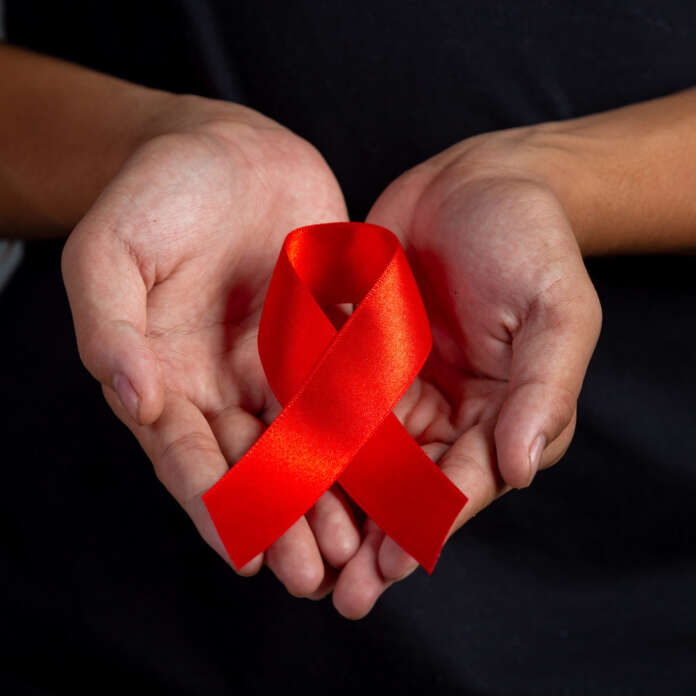
Woman hand holding red ribbon HIV awareness concept World AIDS Day and World Sexual Health Day.

Rivers State now leads the country with 208,767 people living with HIV, followed closely by Benue State (202,346) and Akwa Ibom (161,597), according to the latest spectrum estimates from the National Agency for the Control of AIDS.

Across Nigeria, more than two million individuals are currently living with HIV, underscoring the urgent need for sustained prevention, widespread testing, and reliable access to treatment.

Lagos, the nation’s commercial hub, ranks fourth with 108,649 recorded cases, while Anambra reports 100,429 and the Federal Capital Territory 83,333—one of the highest tallies in the north-central region. Other states in the high-prevalence bracket include Delta (68,170), Imo (67,944), Enugu (61,028), Edo (60,095) and Taraba (58,460).

Mid-range prevalence is seen in Abia (54,655), Kaduna (54,458), Kano (53,972), Plateau (51,736), Borno (50,433) and Oyo (50,063). At the lower end of the spectrum are Kwara (20,259), Kebbi (19,339), Ekiti (18,857), Sokoto (15,223), Ebonyi (14,151), Zamfara (13,253) and Yobe (11,956).

In the past year, an estimated 43,683 Nigerians died from HIV-related causes—28,589 adults (13,650 males and 14,939 females) and 15,094 children aged 0–14. Despite these tragic losses, 1,753,425 people living with HIV now know their status, including 1,693,457 adults (579,209 males and 1,114,401 females) and 54,983 children.

Treatment coverage has expanded significantly: 1,735,808 people are currently on antiretroviral therapy—1,690,057 adults (577,632 males and 1,112,425 females) and 45,751 children. Of those on treatment, 1,160,256 were tested for viral suppression, and 1,112,339 achieved a suppressed viral load, demonstrating the impact of scale-up efforts.

However, critical gaps remain in preventing mother-to-child transmission. Although 93,186 pregnant women were identified as needing ART, only 31,095 received it—highlighting a shortfall in reaching this vulnerable group.

Dr. Temitope Ilori, Director-General of NACA, reassured Nigerians that the Federal Government has mobilized resources to avert any drug shortages.

“The Federal Executive Council approved $1.07 billion for healthcare reform under the Human Capital Opportunities for Prosperity and Equity programme, alongside ₦4.8 billion for HIV treatment. The National Assembly also allocated ₦300 billion to the health sector in the 2025 budget,” she said.

These measures, she added, are aimed at closing funding gaps and ensuring the sustainability of Nigeria’s HIV response.

Agbakoba says government has failed to focus on good governance

  • Adds: Nigeria’s biggest problem is over-concentration of power at the centre

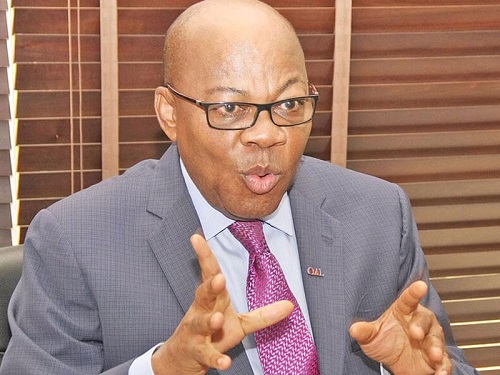
A former President of the Nigerian Bar Association (NBA), Dr. Olisa Agbakoba, SAN, has warned that Nigeria must undergo deep-rooted political and economic reforms to make progress.

Speaking in an interview with Vanguard’s Olayinka Ajayi, Dr. Agbakoba evaluated some of the policies of President Bola Tinubu, including the fuel subsidy removal and naira devaluation and more.

Below are excerpts.

Before I am misinterpreted, let me be very careful to say that it does seem as if some of the structural problems regarding the issue of devaluation and fuel subsidy removal are beginning to have an impact positively, but not sufficiently to make an impact on the street.

So a man who has a high blood pressure reading of over 160 by 120, means it is very critical. It needs to come down to about 140 to 100. So it sums up Nigeria’s position. While these adjustments are good, even though we have to ask where the product of the fuel subsidy is, what it has done can be called a correction.

A correction is when you are going in a particular direction, and you know that that is not the correct direction. So nobody can dispute that the removal of the fuel subsidy is not in the right direction because only a few benefited, and the big question is, where is it going? Is it going into social institutions, hospitals, and schools? It’s a good idea that it’s happening and I think it was reflected in pricing: fuel pricing is not good. They can be N100 or N200, but certainly not N1,200. The current price is N930. Food pricing is high but stable, but not as before.

So if this is possible, why is it not possible to achieve more success? The reason is: if you have read Why Nations Fail, nations fail precisely because of the sort of nonsense going on in Rivers State.

It shouldn’t be happening at all. It’s a needless distraction. The rift between APC and PDP is not to the benefit of the people of Rivers State. That is the problem the authors of Why Nations Fail described.

The government fails to focus on good governance. Nigeria’s biggest problem is the over-concentration of power at the centre. If we are to achieve the N500 trillion targeted budget, which is possible, we must break up the overcentralised system to do at least eight constitutionally recognised political zones. 

The Middle Belt Zone needs to come out of the North-West. The Edo area needs to come out of the South-South, each with its independent economic constitutional structure. People say there’s a delay in the Supreme Court; it takes up to 10 years to get a verdict. There’s only one Supreme Court. In the United States of America, there are as many supreme courts as there are states.

So why should the Magistrate Court in Yaba head to the Supreme Court? So when you open up the process, you have 36 Supreme Courts. In every county in America, which we call a local government, there’s a police chief, but here, we have only one.

On Trump’s policies

Do you know why President Trump wanted to make friends with the President of Ukraine but it backfired? It is because the world is shifting to a green economy. The green economy is driven by critical minerals, and North Central is ranked number four in the world for critical minerals.

Under the North-Central is about $6 trillion worth of resources that are not being utilised; rather, political leaders are fighting for the crumbs rather than saying, ‘If we work together, we can dig deep.’ That is why we should be talking about what President Tinubu can do. The fuel subsidy removal we thought was not a good idea has worked because it has lowered the temperature, but it has not lowered it to the point where it’s making an impact. Not until we start buying fuel at the rate of N200 can I congratulate President Tinubu. But it ought to be put on record that the naira has been stable.

My prediction is if these things go well, we should be going about N1000 to $1 in the middle of 2026. We must move away from what the Western world tends to paint us as. We have what we call formal democracy, where every four years there are elections.

But what is the quality of the elections we are having? In the West, what they look at is the checklist. One of the checklists is elections. But Nigeria, since 25 years ago, has not reached the four important processes from authoritarian to semi-authoritarian to liberal, but I will put Nigeria as a semi-democracy, and that’s very kind. Because the rule of law remains challenging, accountability remains challenging; these are the critical ingredients for a nation moving toward liberal democracy.

What Trump is doing is what I recommended a long time ago because I read this from Mrs Margaret Thatcher, a British stateswoman and Conservative politician who served as Prime Minister of the United Kingdom from 1979 to 1990. Her government was a catchment of efficiency, which is what Elon Musk has done. This Department of Efficiency is what we need. 

So the budget is in deficit because we have an inefficient civil service, and they consume 90 per cent of the public revenue. For instance, the colonial heritage of the cabinet office, which is now called the Secretary to the Government of the Federation, SGF, in Nigeria. We have the SGF, we have the Head of Service and the Chief of Staff. Three guys doing the same thing. I don’t know which one should stay; we are running an executive government, not a parliamentary one.

Those duplications are the things we need to look at. So if we begin to apply the Elon Musk formula, you can reduce Nigeria’s civil service substantially. You can’t expect Nigeria to move forward if you do not take revolutionary action. That’s the only way you can get results.

He Held the Faith — Now we must

From Rome to Nigeria, a Young Woman Reflects on the Legacy of Pope Francis

By Olu Abikoye, a Nigerian Lawyer and Youth Witness at St. Peter’s Square

In January 2025, I stood in St. Peter’s Square in Rome, one Nigerian among youth from across the globe. We had gathered not just to observe, but to witness a moment — and it became far more than any of us expected.

Pope Francis began with the Angelus prayer, his voice steady despite the obvious frailty of his body. But the moment did not end with tradition. After the prayer, he turned his gaze to us — young people from every nation — and spoke with calm strength: “You are the future. Do not give up because of the worries you face.”

It was not a grand address. It was a quiet charge. He ended with a blessing that felt deeply personal — as if, in his final months, he wanted to be sure we knew what mattered: faith, service, and one another.

That moment changed me. I am a young lawyer from Nigeria. I understand what it means to feel overwhelmed — by systems, by uncertainty, by the sheer weight of expectations. But Pope Francis reminded us all: leadership is not performance. It is presence.

This wasn’t a grand speech. It didn’t need to be. Pope Francis never relied on pomp or performance. He led with presence. He chose proximity over prestige. And in that moment, I realised something: the real power of the Church is not in how loudly it proclaims, but how humbly it loves.

Throughout his years as the 266th Pope of the Catholic Church, Pope Francis modelled leadership rooted in humility. He spoke for the environment long before it became fashionable, urging global stewardship in his landmark encyclical, Laudato Si’. He defended the poor, welcomed migrants, elevated the dignity of women, and called institutions to account with courage and grace.

He did not retreat from hardship — he walked through it, blessing others along the way. Yes, he also suffered. And yet, he served.

For young people like me, his passing wasn’t just the end of a papacy — it felt like the passing of a torch.

Not with a spotlight, not with applause — but with the quiet weight of trust.

He looked at us that day — really looked — and made it clear: we are not just successors of faith, but holders of it. Not tomorrow. Now.

The future? It’s not borrowed. Not deferred. It’s ours to bear.

What he left us wasn’t just a message.

It was a model.

Not to admire — but to adopt.

He may no longer be here to speak.

But everything he stood for still is —

Not performance. Presence. Not convenience. Courage.

He did not run from duty. He did not wait for comfort.

And now that his voice is quiet, ours must rise — with simplicity, with presence, and sometimes, with silence.

In Nigeria, where public trust is fragile and the future often feels deferred, this message matters.

His passing invites a question larger than any one faith:

Who will carry forward the work?

— the work of mercy, of justice, of leading with humility, of showing up when it’s hardest to do so.

This is a moment for young people — from every background, belief, and walk of life — to reflect on what we are willing to carry forward. Because in every corner of our world, the same question resounds:

Who will stand for others?

Who will serve, even when it is hard?

Who will show up when it matters most?

Pope Francis did.

Now it’s our turn.

The baton is in our hands now. Let’s not drop it.

Olu Abikoye

About the Author:

The writer is a Nigerian lawyer who encountered Pope Francis on more than one occasion. Her final meeting with him in January 2025, during a youth gathering in Rome, inspired this reflection on his legacy and the torch he has passed to this generation.

CBEX Ponzi and ‘Miracle Money’

By Olusegun Adeniyi

Long before the late Sergei Mavrodi arrived on the Nigerian financial scene in November 2015 with his MMM pyramid scheme, his reputation as an international fraudster preceded him. As far back as 2007, Mavrodi had been convicted in Russia for defrauding 10,000 investors. But somehow, he survived brushes with the law over sharp practices to go global with a Ponzi scheme that promised 3,000 percent ‘return on investment’ after upending the savings of more than a few people in his country. With such tantalising promise, it came as no surprise that Mavrodi would hit the jackpot in Nigeria where too many citizens are looking for ‘miracle money’.

Unfortunately, by December 2016, the scam had unravelled, leaving about three million Nigerians holding the wrong end of the candle just days before Christmas. “What is the scam here, if all members are warned in advance about all the risks, the possible and impossible ones?” an unrepentant Mavrodi asked in a letter he posted on the page for swindled participants of the scheme but addressed to then President Muhammadu Buhari. “They know there are no investments at all. The warning is a red text on a yellow background placed on the most prominent place of the website.”

Following that misadventure, the Security and Exchange Commission (SEC) warned Nigerians about patronizing Ponzi schemes. SEC listed a few of these ventures to include Now-Now Alert, Flip Cash Investment, Result Investment Nigeria Limited, Helping Hand and Investment, No Failure Development and Empowerment Nigeria Ltd, and several others. Despite the warning, patronage for these Ponzi schemes only increased. A few of them also devised a clever way to legitimise their businesses: They boycotted industry regulator, SEC, and secured certificates of registration with the Economic and Financial Crimes Commission (EFCC). That became the tool for deceiving the unwary.

The latest of these ‘businesses’ is Crypto Bridge Exchange otherwise called CBEX which has scammed our people to the tune of more than a trillion Naira, going by most reports. Registered with the Corporate Affairs (CAC) last September, its EFCC certificate was obtained in January this year. Because they do their businesses online, it is easy for most of these crooks to evade accountability, but it is also obvious that they have collaborators within the system. It is important that they be identified and brought to justice.

Meanwhile, I have read the lamentation of several of the victims, but they have only themselves to blame. The Yoruba people have a way of putting this: ni ńwá’fà ńw’ófò.” Crudely translated, it means financial deals that are too good to be true most often end in tears. Perhaps the United States SEC definition of Ponzi schemes would be more useful. “A kind of pyramid scheme that operates on the ‘rob Peter to pay Paul’ principle,” the US commission explains. “With the promise of large returns as bait, the fraudster takes in money from new investors and uses it to pay off the earlier investors until no more new recruits can be found and the whole scheme collapses, with the newest investors losing everything.”

It is easy for all kinds of dubious businesspeople to prey on the greed and ignorance of gullible Nigerians. That is because the virtual collapse of the moral frame of our government mirrors other fractures in our society. There is also a way in which we can connect this to the get-rich-by-any-means mentality that is at the heart of the activities of ritualists as captured in my column of last week. Incidentally, I received several mails on that column but one stood out for me. It is from a young man, Oluwafisayo Agbolabori. He highlighted several things that are often ascribed to ‘miracles’ by many Church leaders in Nigeria in a manner that absolves people of their responsibilities. “At the individual level, such ‘miracles’ corrupt the minds of the gullible into thinking that there is an ‘invisible hand’ somewhere that could change N3,000 to N3,000,000,” he wrote. “As a Christian, I strongly believe in miracles. But my point is this: Instead of sharing these ‘miracles’ that, at best, can’t be replicated by most of our people, the clerics can share the potency (miracle) of self audit, hard work, self reliance etc…”

I agree with Oluwafisayo. The mentality that stupendous wealth could be ‘created’ outside productivity or credible investment also explains why promoters of Ponzi schemes continue to thrive. But the real enablers are the regulatory institutions whose certificates assist these crooks in their nefarious activities. That is where the real inquisition should begin on this matter.

Francis, The Exemplary Pope
Whether you are a Pentecostal or a Catholic, there is something about the Papacy that makes almost every occupant a unifying force for Christians. But in the death of Pope Francis, just as it was with Pope John Paul II in 2005, there is a sense of universal grief. Whatever misgivings anybody had about some of his positions on contemporary issues, Pope Francis was a genuine shepherd who preached love and tolerance in a world where hate and bigotry have become the defining ethos. “Pope Francis will long be remembered for his outreach to those on the margins of the Church and of society,” said Archbishop Timothy Broglio, president of the United States Conference of Catholic Bishops.

From his humble background as a chemical technician and bouncer in his early life, to Bishop in his native country of Argentina, Pope Francis preached social justice for all humanity. He emphasized that clerics must be like medics in a “field hospital” attending to people where they are. And he demonstrated uncommon humility throughout his life and ministry. For instance, in an unprecedented gesture to make the notorious warlord rivals of South Sudan embrace peace, he kissed their feet one by one at the Vatican, after organizing a spiritual retreat for them in April 2019.

There is hardly any worthy social cause that the late Pope did not endorse. On immigration, he tasked leaders to erect bridges and not walls and he supported the campaign on the sustainability of our environment. “The universe unfolds in God, who fills it completely. Hence, there is a mystical meaning to be found in a leaf, in a mountain trail, in a dewdrop, in a poor person’s face,” Pope Francis wrote in his famous ‘Laudato Si’ delivered in 2015 while advocating “a new way of thinking about human beings, life, society and our relationship with nature.” 

But perhaps the most controversial legacy of Pope Francis was his taking sides with the marginalised communities in every sphere of life by preaching inclusivity. On that score, he challenged doctrinal orthodoxy on the LGBTQ issue with his famous refrain, “Who am I to judge?” on matters of faith and sexual choices. It was not a popular position even among the Catholics, to put it mildly. Within the Pentecostal family, it was almost an anathema.

As I write this piece, I received a forwarded message. After reading it twice, I felt it perhaps sums up the message Pope Francis was trying to pass to some of us who could not understand him. Almost as if the sender was reading my thoughts, she followed up with a terse message: “It’s easy to be judgemental. The late Pope is a shining example of how NOT to be. A sad loss.” I was shocked that the message reflected exactly what I was thinking at the time.

On reflection, it couldn’t have been an accident that Pope Francis died on Easter Monday. “There are three virtues that the world still needs — faith, hope and love,” King Charles of England wrote in his Easter message last weekend. “And the greatest of these is love”. Yet, to love means we must embrace and respect others even when we disagree with their choices. Therefore, to those whose knowledge of the Bible is restricted to what happened to Sodom and Gomorrah, Pope Francis is reminding us that there is also Psalm 130 verse 3 in the same Bible: “Lord, if you kept record of our sins, O LORD, who could stand?”

Now, to the WhatsApp message. Like all such messages, nobody knows the original writer, but here it goes, though slightly abridged:

I chuckled the first time I came across the phrase, “Until you have money to finance your temptations, don’t brag about morals. Too much is hidden in poverty.” It peeled back the comfortable layers of ‘self-righteousness’ we often wear and exposed an uncomfortable truth: that what we sometimes call morality may, in fact, be a privilege of limited options. It reminded me of another saying: “You call it corruption – until it comes your way. Then you’ll call it connections. And if you’re religious, you might even call it grace.”

In our moral superiority, we mistake the absence of opportunity for strength of character. And in doing so, we judge others through a lens clouded by comfort, detachment, and unchecked privilege. It’s easy to seem disciplined when nothing desirable is within reach. Easy to appear loyal when there’s no better offer on the table. Easy to claim honesty when a lie has never promised to save you. And so, we stand on our ‘safe little hills’ of assumed virtue, pointing fingers at those who fall—never pausing to ask whether we’d have done any better in their place. Maybe we haven’t resisted as much as we think. Perhaps we’ve just never been offered the shortcut.

This isn’t to romanticize failure or excuse poor choices. It’s not to say wrong becomes right if it’s understandable. No. It’s a call to humility. A reminder that judgment without context isn’t strength. It’s easy to judge others simply because they sin differently than you. It’s easy …to scoff at the one who compromised – until your own values are tested not in theory, but in fire. And when that ‘fire’ comes – and it does come – you begin to understand that real morality is quiet. It’s forged in private. And it costs.

We shouldn’t glorify mistakes or blur the line between right and wrong. But we must stop weaponizing virtue. Because morality isn’t proven by the absence of failure. It’s revealed in the presence of options. It’s folly to assume we’re better simply because we haven’t faced the same storms. Life has a funny way of humbling people. The very thing you once judged may become the thing you one day understand. And when that moment comes, may you be met with compassion – not condemnation. We’re all human. All learning. All navigating the chaos of life with the tools we’ve been given, in stories the world may never fully know. So, hold your standards high – but hold your heart higher. Speak truth—but season it with tenderness. And let your integrity be the kind that doesn’t need a stage to be real.


Pope Francis did not author the above. But that, I guess, was the message he was trying to pass to some of us. May his legacy endure!

You can follow me on my X (formerly Twitter) handle, @Olusegunverdict and on www.olusegunadeniyi.com   

The views expressed by contributors are strictly personal and not of Law & Society Magazine.

TIPS