Home Blog Page 367

Former Girlfriend of Alleged Killer of LASU Graduate Speaks: He was extremely toxic so I broke up with him

A former girlfriend of Tolani, also known as Dian, the alleged killer of Lagos State University graduate Adijat Adisa, has revealed she ended their relationship due to his toxic behaviour.

The ex-girlfriend, who chose not to reveal her name in a WhatsApp chat with Vanguard, said she dated Dian (Tolani) when she was younger and couldn’t speak up at the time when she he raped her.

She further revealed that when she saw the video interview of the deceased’s mother calling for justice, she felt sad and hoped he would be caught. She added that, according to her source, Dian (Tolani) is currently not in Nigeria.

In her words, while speaking to our correspondent, she said, “I know him very well because we dated for a while, but I broke up with him because he was extremely toxic.

“I don’t know how true it is that he killed the young lady, but I know he’s toxic. This case has been trending on TikTok since March. I even sent it to a few friends who knew us when we were together. Right now, Tolani is not in Nigeria.

“We dated back then, which is why I once posted him on my WhatsApp status, but that was a long time ago. I texted one of my friends who isn’t in Nigeria and is also Dian’s (Tolani’s) best friend. According to him, Tolani hasn’t said anything, but he’s not in Nigeria, so obviously, they’re together, and he’s hiding him. I just stayed calm.

“The case is very serious. I pray they catch him. Because he’s currently on the run, and he has turned off all his handles. They should catch him honestly because I am a victim of rape from him. I was young and couldn’t say a word to anyone.”

A source also revealed that the suspect is the son of her former school proprietress at Standard Children School, located in the Iju-Ishaga area of Lagos State. The source added that the suspect’s Facebook name is “Ancestor Diane Funds”, which may suggest his involvement in internet fraud, commonly known as “Yahoo Yahoo”.

Continuing, she added, “The mother used to be our proprietress when both her children attended the school. But after they graduated, I started seeing her selling foodstuffs. Diane used to be very humble back then, until I started noticing his lavish lifestyle on Facebook.”

The story began trending after an interview with the mother of the deceased, who called on the Lagos State Police to seek justice for the alleged killing of her daughter.

In a video interview with Punch, Adisa alleged that her daughter was killed and used for ritual purposes by her boyfriend.

She said she had single-handedly raised Adijat from primary school through university and the completion of the National Youth Service Corps (NYSC) programme.

The mother of two explained that her daughter had been dating a man identified as Dian, whom she had met only once. Adisa said she became suspicious after seeing scars on her daughter’s body and advised her to end the relationship.

According to her, Adijat failed to show up at work on February 26. Later that day, Dian called to say they had a misunderstanding and that Adijat had fainted at his house.

She said the case was reported to the police after her daughter was confirmed dead. The police allegedly found charms in the suspect’s house.

“When I met him, I told my daughter I didn’t like him and asked her to stop seeing him. She told me he is from Igbira. I said I don’t like those people,” Adisa said.

“One morning, her boss called to say Adijat didn’t show up at work. I tried calling her several times, but her number wasn’t going through. I began to panic.

“The guy she was dating also called to say he had been trying to reach her but couldn’t. Later that evening, he called again and said she had fainted after a disagreement at his house. He asked me to come to his house in Abule Egba.

“When I got there, his father confirmed that my daughter was dead. We went to Meiran Police Station to report the case.

“My daughter went to his house on February 26, and he killed her that same day. The police took photos of charms found at his home. We have pictures showing how he hacked my daughter’s face. The mortuary also confirmed scars on her head and hands.

“I don’t know if he’s a Yahoo boy, because my daughter never told me what he did for a living. She only said he graduated from Lagos State Polytechnic, once worked at Stanbic Bank, and now owns a boutique in Agege and a pure water factory.”

Adisa added that some of his family members tried to suppress the case at the Meiran Police Station, prompting her to transfer it to Panti. She called on Nigerians to support her demand for justice, stating that her daughter’s blood was found in a bucket.

When contacted, the Lagos State Police Public Relations Officer, CSP Benjamin Hundeyin, confirmed the incident and said the suspect is still at large.

“It’s clear the boy committed the offence, but he is still at large. We don’t arrest by proxy, so we can’t arrest his family members. However, we are making efforts to find and arrest him,” Hundeyin said.

Establishing an independent population record by Southeast for comparison with the National Population Commission (NPC) data

Press Release

The issue of underrepresentation of Ndi Igbo in federal appointments has long been a contentious matter, with concerns escalating over the composition of the National Population Commission (NPC). Given the critical role this commission plays in census activities, determining population figures that directly affect resource allocation, political representation, and developmental funding, the lack of fair Igbo inclusion raises serious questions about the credibility and accuracy of census data regarding the Southeast. This discrepancy has led to justified concerns about the population figures that would be declared for the Southeast.

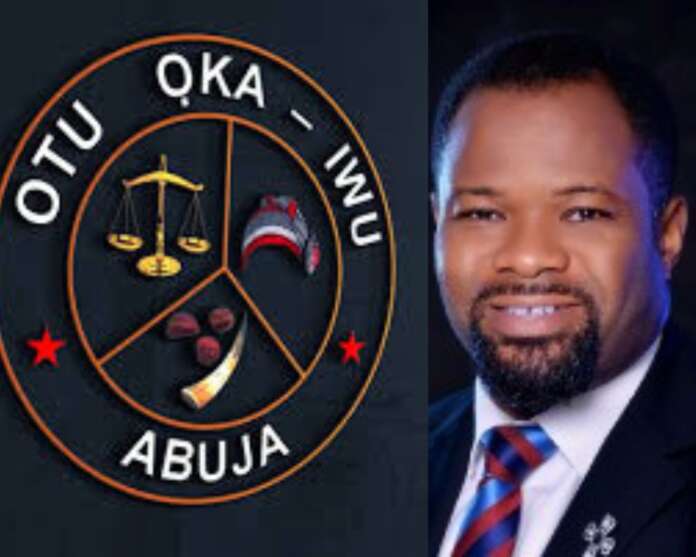
Otu Oka-Iwu Abuja strongly advocates for a proactive approach and advices that the Southeast should conduct its own census and maintain independent records, allowing for an objective comparison against NPC declared figures. This measure is necessary to safeguard the region’s political and economic interests and ensure that national population data does not become a tool for marginalization.

The power to conduct a population census in Nigeria is exclusively vested in the federal government through the National Population Commission (NPC) by virtue of Section 213(4) and Second Schedule, Item 8 of the Exclusive Legislative List of the 1999 Constitution (as amended), the Federal Republic of Nigeria Official Gazette No. 2 (2009) and the National Population Commission Act (Cap N67, Laws of the Federation of Nigeria, 2004) establishing the National Population Commission (NPC) as the only body authorized to conduct population and housing censuses in Nigeria.

However, given the challenges of none inclusion of Ndi Igbo in the recent composition of NPC, Otu Oka-Iwu Abuja advocates that the Southeast should establish its own independent regional census initiative to verify and maintain accurate records of its population. This can be achieved by the formation of an Independent Igbo Census Bureau (ICB) and a collaboration with Town Unions and Local Governments to conduct sample based audits in Igbo states.
By doing this, the Southeast will be applying a global best practice and initiative to ensure the accuracy of population data from the NPC. Several countries and regions have implemented independent population audits alongside official government censuses. India, with its vast population, has developed independent verification mechanisms to cross-check official census data where census accuracy is disputed. Kenya has faced challenges with census accuracy, particularly in marginalized regions. In the United States’, the U.S. Census Bureau conducts a Post-Enumeration Survey (PES) to assess the accuracy of official census results. This survey identifies undercounts and overcounts, ensuring that population figures are not manipulated for political purposes.

In South Africa, a dual census methodology, where independent audits are conducted alongside government led censuses have been employed to ensure that population figures reflect reality. State led demographic initiatives have also been conducted by Lagos State under the Household Enumeration Project although for urban planning and development projections. The State Population Mapping is also an initiative geared towards tracking the demographic shifts and assess infrastructure needs in Kaduna State.

By adopting elements from these global and state models, the Southeast can establish a credible, independent population audit system that ensures fair representation in national policymaking. Otu Oka-Iwu Abuja urges Southeast Governors, and lawmakers to immediately commission this initiative and safeguard the region’s demographic identity. The initiative to conduct demographic studies and population surveys will not only enhance independent data collection for regional planning, economic forecasting but will provide grounds to challenge of census discrepancies using comparative data If there are concerns about NPC’s official census figures. Southeast can use state collected data to highlight disparities and to engage the Census Tribunal for redress If the Southeast believes that NPC census figures underrepresent its true population.

Indeed, Igbo representation in NPC matters is because, the composition of the NPC significantly impacts how census data is collected and processed. If Igbo representatives are excluded or underrepresented, key decisions, such as resource allocation for census operations, methodology for data gathering, and analysis, may not sufficiently factor in the demographic realities of the Southeast. There is also the Risk of downplaying Igbo population figures because historically, there have been discrepancies in population figures allocated to the Southeast versus other regions, with suspicions that the numbers reported for Igbo states have been systematically undercounted.

Without fair representation in the NPC, there is a risk that official census results may continue to misrepresent the true population strength of the Southeast, weakening its bargaining power in national policymaking. Census data directly influences representation in legislative seats, federal allocations, and infrastructure development. If the Southeast is shortchanged in population figures, it leads to reduced political leverage, lower funding for developmental projects, and diminished electoral influence, all of which have long-term consequences for Ndi Igbo.

With independently verified census data, the Southeast can challenge discrepancies in NPC figures with factual evidence. This initiative would ensure that the Southeast is not forced to accept population statistics that may have been skewed to serve political interests. A comparative census will allow Ndi Igbo to demand for equity and defend its interests while reinforcing the need for transparency in national population reporting. Ignoring the underrepresentation of Igbo interests in the NPC risks reinforcing systemic marginalization. By conducting its own census, the Southeast will establish a credible population record that serves as an unbiased benchmark against official NPC figures.

Otu Oka-Iwu Abuja calls on Southeast Governors, lawmakers, and stakeholders to support this initiative. The time has come to take charge of the region’s demographic identity and ensure that every Igbo citizen counts, both in numbers and in national policy.

Sir Chidiebere Nwabueze Udekwe, KSC
PRESIDENT
OTU OKA-IWU ABUJA

Who knew that Pope Francis used WhatsApp to stay connected to torture survivor of Argentina’s ‘Dirty War’?

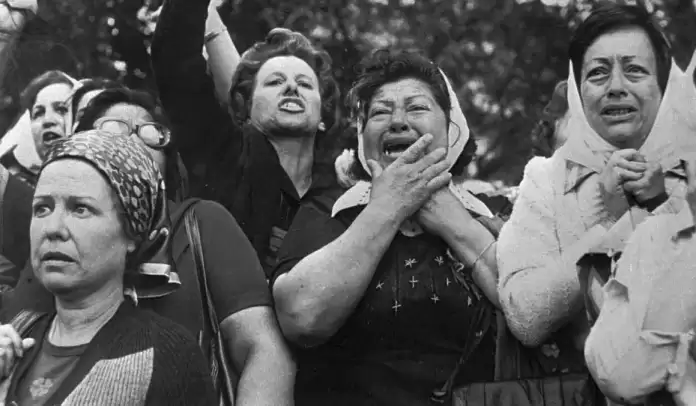
Members of the Mothers of Plaza de Mayo protest in Buenos Aires, Argentina, on November 21, 1977. Each had at least one child "disappeared" by the military regime. Eduardo Di Baia/AP

By David Culver, Abel Alvarado, Evelio Contreras and Rachel Clarke

Ana María Careaga was just 16 when she was kidnapped, stolen by the regime then running Argentina. To her mother, Esther Ballestrino de Careaga, it was as if she had vanished.

It was an event that would change not just the lives of both the women and the daughter Ana María was carrying, but the future of Argentina. And it was something a priest named Jorge Bergoglio would never forget.

It was 1977 and Argentina was under the grip of a military dictatorship following a coup the year before. Those who opposed the regime were abducted, tortured, and killed – victims of what would become known as the “Dirty War.”

There was no notification or public record of the detentions, and families had no idea what had happened to their loved ones.

By the time Ana María was seized, her brother-in-law had already disappeared. Soldiers took her to the clandestine detention center known as El Atlético, where she was tortured – even after she told her captors she was three months pregnant.

Although the extrajudicial kidnappings were becoming increasingly common, families did not speak of them — until mothers took a stand.

On April 30, 1977, a dozen or so women, each the mother of a missing child, gathered in Plaza de Mayo, the grand square in front of the Casa Rosada presidential palace in Buenos Aires. They were ordered to disperse, but instead linked arms and continued to walk slowly around the square.

Each Sunday, more women would come to join in, soon to include Esther who became one of the leaders of Las Madres de Playa de Mayo (the Mothers of Playa de Mayo.)

Esther knew Bergoglio long before he had even joined the priesthood. She had been his boss while he was a high schooler working a technical internship at a laboratory.

“He says she taught him the culture of work,” Ana María told CNN on Thursday, standing in Buenos Aires’ ornate Santa Cruz Catholic Church. “He says she sent him to get some tests done and he brought back the results very quickly.” She questioned him on his speedy work, and he revealed that the tests were coming out the same, so he merely copied them out. “She told him, ‘You have to do it right,’ and sent him to do it again,” Ana María said. It’s an account Bergoglio confirmed after he became Pope Francis, and the two stayed in touch as he joined the priesthood and rose to become a leader of Argentina’s Jesuit community.

‘The disappeared are my children’

While Ana María was detained — always chained and blindfolded, she said — her mother and other members of the movement met in a back room at the Santa Cruz Church in downtown Buenos Aires.

Ana María turned 17 while still in captivity, and she was released on September 30, 1977, by then seven months pregnant.

Within days of a medical check arranged by her mother, she left for Sweden, where she was granted asylum.

“That was the last time we saw each other,” Ana María said. “We wrote letters to each other, and in one letter she tells me that when I was kidnapped, she was like an automaton, thinking about (me) the whole time. She left in the morning and came back at night, out all day with the mothers searching, searching, searching.”

Even when her daughter was safe, Esther kept campaigning for those who had become known as the “disappeared.”

“When she returned to the plaza after I was released, the mothers asked her, ‘What are you doing here if you’ve already recovered your daughter?’” Ana María told CNN. “And she said, ‘I’m going to continue until they all appear, because all the disappeared are my children.’”

To Ana María, and perhaps to the priest who’d befriended her mother, it was a reflection that “the struggle wasn’t just individual, but a collective one.”

Months after her daughter’s release, in December 1977, Esther and others met as usual at Santa Cruz when they were betrayed. Stepping out of the church, she and others were abducted.

“They had been taken to … a clandestine center for torture and extermination, and then they were thrown alive from the ‘death flights,’ which was the final solution they (the regime) boasted of having found to get rid of the bodies,” Ana María said. The “death flights” where prisoners were killed by being tossed from a plane over land or sea is now a documented horror of the Dirty War.

Many bodies were never recovered, but days after she disappeared, the remains of Esther washed up on land.

“What the Mothers say is that the sea did not want to be an accomplice and returned the bodies,” Ana María said.

Esther’s remains were unidentified though and buried in a mass grave.

Ana María did not know of her mother’s disappearance until she called to tell her of the birth of her granddaughter, the baby carried while she was detained.

“She was born on December 11, and we called on December 11, 1977, to say that she had been born, and that’s when we found out that my mom had been kidnapped three days earlier,” she said. “My mom didn’t know that she had been born safely.”

‘I did what I could’

As Archbishop of Buenos Aires, Bergoglio testified about Esther during a 2010 trial related to Dirty War atrocities. In an excerpt posted on YouTube by journalist Uki Goñi, he said he had known her for more than 20 years.

“It caused me great pain,” Bergoglio said of learning of her abduction. “I tried to get in touch with relatives, I wasn’t able to. They were mostly … in hiding.”

He said he had tried to speak to people who could help but had not approached the authorities. His actions or lack thereof during the Dirty War hung around him as unanswered questions, even as the Vatican dismissed allegations against him.

“I did what I could,” he told the trial. “I remember her as a great woman.”

Decades later, long after the fall of the military regime in 1983, the remains from the oceanside mass grave were identified, and found to include Esther.

Families petitioned Bergoglio to allow them to be buried not in a cemetery, but outside the Church of Santa Cruz — the last place they had walked free.

“He said it was an honor,” Ana María told us. “He remembered his friend Esther and said it was an honor and authorized it so we could, as the faithful of this church say, sow them in the last free land that their feet trod.”

To commemorate her mother and all the others who challenged the regime, April 30 is now recognized as the founding of the Mothers of the Plaza de Mayo.

The Vatican publicized a message then Pope Francis sent to Ana Marìa in 2018 to play on a radio show she hosts. “I very much remember your mother,” he said then. “She worked hard, she was a fighter and together with her many women who fought for justice, both because they had lost their children or simply because mothers who, seeing the drama of so many missing children, came together to fight for this as well.”

Standing just off the main altar inside Santa Cruz Church, Ana María calmly pulled out her replacement phone — her original had been recently stolen. Fortunately, her WhatsApp messages had been backed up, preserving the Pope’s words, and her memories.

She still has that recording on her phone. In it, the Pope tells her: “I’m glad you follow these footsteps of your mother and that you broadcast it to others in your radio show. So today, in a special way, I pray for mothers, I pray for you, I pray for your mother Esther, and I pray for all the men and women of good will who wish to carry forward a project of justice and fraternity among all. May God bless you all.”

Esther Ballestrino de Careaga never met her granddaughter. But Pope Francis did, spending about an hour with her last year when she visited Rome, her mother said, proudly showing a video of the two together. “He knew the whole story because my mom told him everything they had done to me, the torture, everything,” Ana María said.

As another April 30 anniversary approaches, Ana María has only memories now of her mother and the Pope.

Of her mother, she said: “I have a very vivid memory of a very loving, hard-working, and committed person. I feel she left me with many values, and she’s present in our history because disappearance generates that — disappearance is the permanent presence of an absence.”

She carries a directive from the Pope as well.

“When my daughter went to see him last year, he told her that we had to continue bearing witness,” she said. “We, right now in Argentina, are going through a very difficult time, and I say … we need to remember again.”

“Everything that happened, the 30,000 disappeared, and how the Mothers created a civilizing pact in this country, a social contract of ‘never again.’ And that’s why it’s so important to preserve memory, which was also what the Pope said: that memory had to be preserved.”

Credits: CNN

The Pope Francis I knew: Reflections from CNN’s Vatican correspondent

Christopher Lamb and his family met Pope Francis at an event at the Vatican in February 2022. Christopher Lamb/CNN

By Christopher Lamb

Pope Francis had a great sense of humor. When I met him once at the back of the papal plane, I cracked a joke with him that was a little bit close to the line. Luckily, he roared with laughter and told me “Sei cattivo!” (“You’re naughty!”). Every day, he used to say, he prayed the words of St. Thomas More: “Lord, give me a sense of humor.”

Francis took what he did seriously. But he never took himself too seriously.

One thing that struck me about him was his intuition and pastoral instincts. Whatever the situation, he always seemed to find the right words to say. When I met him with my family one time, my youngest child was crying.

“Whenever they see a man in white, they think I’m a doctor and about to give them some medicine!” he joked.

His ability to read people was also vital in his leadership. When he met bishops, he would get them into a circle and ask which one wanted to start speaking. It allowed him to understand the dynamics of a group, which helped him make appointments and decisions in the future.

Francis liked to make himself accessible. He would say his door was always open – but that same door also had a sign on it that read “no whining.”

There was never a dull moment covering his pontificate. As pope, he gave more media interviews than anyone else, but he never had a spokesperson or media advisers. Predicting his next move was notoriously difficult, and when it came to appointing new cardinals, no one knew in advance who he’d be choosing or when. New cardinals would talk about their phones blowing up in the middle of a Mass as people tried to contact them to tell them the news.

Francis wasn’t naïve, however. He was a politically savvy pope, very decisive and often stubborn. He wanted to stay true to himself and not become scripted. My enduring memory is of a very human pope who was full of surprises. He leaves big shoes to fill.

Culled from CNN

Justice has finally been served, victims of gender-based violence, can now break their silence —Ezeilo, SAN commends FCT High Court for death sentence on late Singer, Osinachi’s husband


Law teacher, Senior Advocate of Nigeria and a six-year United Nations Special Rapporteur on Trafficking Persons in Africa, Prof. Joy Ngozi Ezeilo, has hailed the judgment of the FCT High Court, which sentenced Peter Nwachukwu, husband of the late gospel singer, Osinachi Nwachukwu, to death by hanging.

Describing Justice Njideka Nwosu-Iheme’s verdict as a landmark, Ezeilo, SAN, in a tweet, said the ruling will not only act as a deterrent to potential offenders but also offer hope to victims of gender-based violence.

The tweet reads:

“Justice has finally been served for the late gospel singer Osinachi, as the FCT High Court has convicted and sentenced her husband ( Peter Nwachukwu)for her tragic death in April 2022.

“This landmark ruling not only acts as a deterrent to potential offenders but also offers hope to victims of gender-based violence, encouraging them to break their silence. The mother and the twin sibling, now raising the three children who endured this traumatic experience, deserve unwavering support. Let this victory for justice catalyze change and protection for everyone.”

On 23 January 2003, an Owerri High Court presided over by Justice Njideka’s mother-in-law, Hon. Justice Chioma Nwosu-Iheme, now a justice of the Supreme Court, sentenced seven persons, including Chief Vincent Duru, alias Otokoto and Chief Leonard Unaogu to death, for their involvement in the brutal murder of 11-year-old Ikechukwu Okoronkwo on September 19, 1996, at Otokoto Hotels, Owerri.

Also condemned to death for the same offence were Alban Ajaegbu, Sampson Nnamito, Ebenezer Egwuekwe, Rufus Anyanwu and Lawrence Eboh. In her over three-hour judgment, Justice Nwosu-Iheme described Chief Duru as “a hardened and unrepentant murderer.”

Nwosu-Iheme said she found it extremely difficult to believe the stories told by Chief Duru to the effect that Chief Unaogu and himself did not know each other before this ugly incident nor ever regarded themselves as close friends.

On 18 May 2018, however, the Supreme Court overturned the verdict.

In her lead judgment, Justice Kudirat Kekere-Ekun held that the circumstantial evidence relied on to convict and sentence the appellant by the lower courts was not sufficient.

Husband of late gospel singer, Osinachi Nwachukwu sentenced to death by hanging

A High Court of the Federal Capital Territory (FCT), in Wuse Zone 2, Abuja, presided by Hon. Justice Njideka Nwosu-Iheme on Monday sentenced the husband of late gospel singer, Osinachi, Peter Nwachukwu, to death by hanging.

Nwachukwu was found guilty of culpable homicide resulting in the death of the deceased (his wife) on April 8, 2022.

The judge held that the prosecution has proven the burden of proof placed on it by the law and subsequently found the defendant guilty.

Nwachukwu was arraigned on June 3, 2022, by the Office of the Attorney-General of the Federation (OAGF), on behalf of the Federal Government, on a 23-count charge.

The charge was on culpable homicide punishable with death, criminal intimidation, cruelty to children, criminal intimidation of children, spousal battery, among others.

In the course of the trial, the prosecution called 17 witnesses, including two children of the late Osinachi, who testified as fourth prosecution and fifth prosecution witnesses, PW4 and PW5, respectively. The prosecution also tendered 25 documents as exhibits before the court. The defendant testified for the defence and further called four other witnesses and tendered four exhibits in his defence.

Shortly before sentencing, the defendant’s counsel, Reginald Nwali, in his allocutus pleaded with the court to be lenient in its judgment.

Similarly, the prosecution counsel, Mrs Aderonke Imala, urged the court to give force to the law as stipulated.

Justice Nwosu-Iheme subsequently sentenced Nwachukwu to death by hanging on Count 1, while he was sentenced to two years imprisonment each on Counts 2, 3, 8,9, 12, 13, and 18.

The court sentenced him to six months imprisonment on Count 10, three years imprisonment in Count 11, while he was fined the sum of N500,000 and N200,000 respectively on Counts 6 and 7.

On 23 January 2003, an Owerri High Court presided over by Justice Njideka’s mother-in-law, Hon. Justice Chioma Nwosu-Iheme, now a justice of the Supreme Court, sentenced seven persons, including Chief Vincent Duru, alias Otokoto and Chief Leonard Unaogu to death, for their involvement in the brutal murder of 11-year-old Ikechukwu Okoronkwo on September 19, 1996, at Otokoto Hotels, Owerri.

Also condemned to death for the same offence were Alban Ajaegbu, Sampson Nnamito, Ebenezer Egwuekwe, Rufus Anyanwu and Lawrence Eboh. In her over three-hour judgment, Justice Nwosu-Iheme described Chief Duru as “a hardened and unrepentant murderer.”

Nwosu-Iheme said she found it extremely difficult to believe the stories told by Chief Duru to the effect that Chief Unaogu and himself did not know each other before this ugly incident nor ever regarded themselves as close friends.

On 18 May 2018, however, the Supreme Court overturned the verdict.

In her lead judgment, Justice Kudirat Kekere-Ekun held that the circumstantial evidence relied on to convict and sentence the appellant by the lower courts was not sufficient.

NAN/Vanguard Newspapers

Tributes continue to pour in for a great advocate for justice and human rights, Joseph Otteh

Many do not know that Joseph Otteh and Access To Justice (A2J ) were the first winners of the Gani Fawehinmi Award for Social Justice and Human Rights, 2010, which was instituted by the Nigerian Bar Association (NB) through its Human Rights Institute. The award was N1million and a plaque.

The initiative for the award came from the Open Society Justice Initiative (OSJI).

Joseph Otteh, the Convener of Access (A2J) to Justice, reportedly became ill on the night of March 27, 2025, and passed away the next day in a Lagos hospital.

Not a few have hailed the life of this activist who spent most of his life striving for a more transparent, independent, and accountable judiciary.

Otteh’s work through A2J which he founded focused on strengthening the legal system and ensuring justice for all.

With decades of experience fighting for judicial reforms, the rule of law, and human rights protections, Otteh was a well-known voice in legal advocacy.

He was a Global Public Service Scholar at NYU and received a Master’s degree in law from both the University of Lagos and New York University.

He also served as a Visiting Researcher at the Danish Centre for Human Rights.

Otteh authored Fading Lights of Justice and Litigating in the Public Interest.

He contributed extensively to legal scholarship, consulting for institutions such as the British Government’s J4A Programme, the Open Society Initiative for West Africa (OSIWA), the Nigerian Bar Association, the European Union’s Rule of Law and Anti-Corruption Programme (RoLAC), and the International Commission of Jurists (ICJ).

As a key figure in legal reforms, Otteh served on committees that shaped Nigeria’s legal framework, including the Lagos State Committee on the Review of Criminal Procedure Laws and the Committee on the Review of the Coroner Law.

Joseph Otteh contributed significantly to strengthening human rights safeguards and improving justice administration in Nigeria and through A2J he helped drive advocacy for judicial independence and accountability.

He earned accolades such as the MacArthur Foundation’s Award for Effective and Creative Institutions and more.

Okechukwu Nwanguma of RULAAC had a lot to say:

“I met Joseph Otteh at the civil liberties organization (CLO), where he was head of the legal project.

“Among his outstanding intellectual works was the publication entitled ‘Justice Denied’.

“His contributions to judicial Independence were immeasurable.

“Joseph Otteh, through his leadership at Access to Justice (AJ), significantly advanced judicial independence, integrity, and effectiveness in Nigeria. His pivotal role in reforming the Lagos State coroner’s law is particularly notable, marking a major step toward accountability regarding extrajudicial killings.

“He received an award recognition for his immense contributions.

“Otteh’s impact earned AJ the prestigious $650,000 MacArthur Foundation award in 2009, highlighting their efforts against human rights abuses. He attributed this achievement to the successful advocacy for coroner law reform, aiming to reduce extrajudicial executions by ensuring that deaths are properly investigated.

“He contributed to the efforts to address Police Brutality.

“In an interview, Otteh emphasized that police brutality is an acute issue in Nigeria, despite the country’s democratic status. He remarked on the shocking prevalence of police violence, torture, and extrajudicial killings, noting that such problems are not unique to Nigeria but are prevalent across multiple regions, particularly in countries with stable governance.

“He spoke on human rights under democracy in Nigeria.

“Otteh assessed human rights conditions post-military rule, suggesting that while some individual rights have gained better protection in Nigeria’s democracy, there remained systemic issues, particularly related to police violence and extrajudicial killings. He acknowledged the courts’ ability to provide remedies but reiterated the need for continued advocacy to ensure all rights are upheld.

“He understood the challenges and projected to the future.

“He expressed concern over the potential for political instability and military interference in governance. Despite the progress made, Otteh highlighted ongoing challenges, including the inadequacy of responses to police brutality and the increasing rate of extrajudicial killings, underscoring the need for sustained efforts to address these critical issues.

“In short, Joseph Otteh’s commitment to enhancing access to justice and safeguarding human rights remains a vital part of Nigeria’s ongoing struggle for a just society. His legacy serves as a reminder of the continuous need for advocacy and reform in the face of systemic abuses.”

Olumide Ayeni (SAN) wrote: “The profundity of the Access to Justice Programme assisted us in reforms of the administration of justice sector in Ogun State in my time as Attorney-General.”

A lawyer, Kingsley Ejiofor, wrote: “Nigeria has lost a great man! He stood for what was right and just.

“I called him Prophet Jeremiah following his Vanguard article of 20 February 2025 on the state of the Judiciary, amongst other issues he highlighted. He simply laughed it off and sent an emoji to me.

‘‘May his gentle soul rest in perfect peace.”Bob Arnot wrote: “Joseph worked with us on DFID and EU-funded programmes.

“He was a modest man and an excellent colleague. Condolences to his family and friends from the Arnot family.”

Senior Programme Manager, Africa, at National Endowment for Democracy, Christopher O’Connor, wrote: “Joseph will be missed. He was a tremendous advocate for judicial reform.

“I am certain his legacy of compassion and vision for a better tomorrow will continue to inspire others.”

Prof Chidi Odinkalu wrote: “Raised in Agbor, Delta State, in the Niger Delta by a father who was a high school teacher from Imo State, Joe was one of the first two colleagues whom I engaged in the legal directorate of the Civil Liberties Organisation (CLO) in Lagos in 1991.

“He brought tremendous integrity, intellect, and industry to the role, and had remarkable reserves of both clarity and empathy.

“Joe received his legal education at the Obafemi Awolowo University, in Ile-Ife.

“In 1999, Joe founded the group Access to Justice ‘to work towards rebuilding the institutional credibility of the Nigerian legal and justice system, restoring public faith in its institutions’.

“He approached that task with both courage and single-mindedness, doing a lot of good along the way.

“Joe epitomised the lawyer as a gentleman and professional of civic virtue.

“Unknown to most, Joe was the force & craftsman behind the current revision of Nigeria’s Fundamental Rights (Enforcement Procedure) Rules.

“It reflects very much not merely his ability to identify problems but also his commitment to forging the relationships required to address them.

“On 28 March, Joe succumbed reportedly to complications from diabetes, leaving behind an aged mother, wife and three children.

“Thirty years ago, in 1995, Joe authored a defining study of the customary court system in the 17 states of southern Nigeria under the title: The Fading Lights of Justice.

“As an advocate, Joe did his utmost to ensure that those lights were kept aflame; to postpone the date when the future he divined would come to pass.

“That title could only have come from a man who was well ahead of his time and had the acuity to see the future.

“The heavens will be enriched by the acquisition of this incredible angel.”

Odinkalu, Ojudu, Jinadu, Onyeagocha, 14 others warn that Tinubu’s govt has put democratic foundations at great risk

  • Caution against country’s move towards one-party state
  • We didn’t fight to end military dictatorship only to enthrone civilian authoritarianism, they say
  • Presidency insists Tinubu not building one-party state

Eighteen notable personalities, comprising professionals from different backgrounds, on Sunday, alleged that President Bola Tinubu’s administration is making effort to dismantle the democratic foundations of the Fourth Republic towards reducing Nigeria to one-party state.

Consequently, they called on Nigerians to be vigilant and speak out to protect hard-fought democracy. 

In an open letter titled, “Defending Democracy: A Call to Resist the March toward a One-Party State in Nigeria,” they expressed serious concern about the emerging authoritarian rule that constitutes a grave threat to Nigerians’ hard-won civil rule.

The letter was jointly signed by Professor Adele Jinadu, Senator Babafemi Ojudu, Abubakar Siddique Mohammed, Professor Chidi Odinkalu, Chief Tola Adeniyi, Dr Jibrin Ibrahim and Olufemi Adegbulugbe.

The other signatories are: Richard Akinola, Abdul Mahmud, Dr Sam Amadi, Auwa Ibrahim Musa (Rasfajani), Nnimmo Bassey, Adeola Soetan, Honourable Uche Onyeagocha, Uzodinma Uwaogbe, Mma Odi, Femi Aborishade and Osa Director.

Describing themselves as Democrats, they expressed intense concern that President Bola Tinubu’s administration was using subterfuge to castrate political pluralism by muzzling opposition and inducing defections to the ruling All Progressives Congress (APC). 

According to them, the government is deploying coercive organs of the state, including the Economic and Financial Crimes Commission (EFCC), to blackmail, intimidate and force key opposition figures to do its bidding. 

They noted that the creeping authoritarianism has dire consequences, including a risk of returning to a culture of impunity, where the absence of opposition breeds arrogance and unaccountable governance.

Besides, they said the ugly trend jeopardises the federal character of the Nigerian democracy by suffocating the diversity of voices and interests that make up the republic, as they warned that the situation stifles the political space for young Nigerians to organise, question, and contribute to the national discourse.

While reminding President Bola Tinubu of his role in the bitter struggle that culminated in the restoration of civil rule in Nigeria in 1999, they asserted that the current drift toward a one-party state is a betrayal of the ideals that many of us—and indeed President Tinubu himself—fought for during the darkest days of military.

“We urge the Nigerian people, civil society, the media, and the international community to stand vigilant and speak out. History will not be kind to silence in the face of this unfolding danger.

“We did not fight to end military dictatorship only to enthrone civilian authoritarianism. We must rise now to defend democracy, or risk losing it forever,’ they stated.

Part of the letter read: “We, the undersigned democrats, raise our voices in alarm and solidarity at this critical hour in the life of our nation.

Nigeria’s democracy—hard-won through decades of struggle, sacrifice, and steadfast resistance against authoritarian rule—is under grave threat.

“We are witnessing, with increasing dismay, a calculated and systematic effort by the administration of President Bola Ahmed Tinubu to dismantle the democratic foundations of our republic and reduce Nigeria to a one-party state.

“Under this administration, political pluralism is being eroded not by persuasion or performance, but by bribery, blackmail, and coercion. Serving and former governors, senators, members of the House of Representatives, and key opposition figures are decamping en masse to the ruling party, not out of conviction, but out of fear and pressure.

“The pattern is disturbingly clear: an invitation by the EFCC for questioning on financial impropriety is swiftly followed by political capitulation. This weaponisation of state institutions for partisan gain corrodes public trust and undermines the integrity of our democracy.”

‘We must say it clearly: a democracy without opposition is not a democracy. The presence of multiple, vibrant parties is not a luxury—it is the lifeblood of any democratic system. It provides citizens with real choices, ensures accountability, encourages debate, and fosters innovation in governance.

“The drift toward a one-party state is a betrayal of the ideals that many of us—and indeed President Tinubu himself—fought for during the darkest days of military dictatorship. It is not what we envisioned when we stood in the streets demanding civil rule. It is not what the constitution guarantees. And it is not what Nigeria’s future demands.

“The implications of this creeping authoritarianism are dire:

  • We risk returning to a culture of impunity, where the absence of opposition breeds arrogance and unaccountable governance.
  • We jeopardize the federal character of our democracy by suffocating the diversity of voices and interests that make up our republic.
  • We stifle the political space for young Nigerians to organize, question, and contribute to the national discourse.

“This must stop.

“We call on Mr President to remember the democratic path that brought him to power, to respect the multi-party architecture of our republic, and to end the persecution and intimidation of opposition leaders.

“The strength of a democracy lies not in the dominance of one party, but in the ability of many to coexist, compete, and cooperate for the good of all.

“We urge the Nigerian people, civil society, the media, and the international community to stand vigilant and speak out. History will not be kind to silence in the face of this unfolding danger.

“We did not fight to end military dictatorship only to enthrone civilian authoritarianism. We must rise now to defend democracy, or risk losing it forever.”

Tinubu not building a one-party state —Presidency

  • Dismisses allegations of coercion, bribery, blackmail

The Presidency has dismissed claims that recent defections of prominent opposition politicians into the All Progressives Congress (APC) are part of a plot to create a one-party state, insisting that democracy in Nigeria remains “strong and alive” under President Bola Tinubu.

In a statement issued Sunday, the Special Adviser to the President on Information and Strategy, Bayo Onanuga, accused “disgruntled opposition figures” and “partisan human rights crusaders” of peddling falsehoods about Nigeria’s political direction following the defection of key Peoples Democratic Party (PDP) leaders, including Delta State Governor Sheriff Oborevwori and former PDP vice-presidential candidate Dr. Ifeanyi Okowa.

The intervention came as the PDP’s National Working Committee (NWC) prepares for a critical meeting this week to address mounting internal challenges, including a surge of defections, leadership disputes, and growing divisions over coalition talks ahead of the 2027 elections.

The party’s recent troubles have sparked alarm among its loyalists and some political observers, who fear the opposition is disintegrating in the face of APC’s strategic political gains.

“The seismic shift caused by Akwa Ibom Governor Umo Eno’s open declaration of support for President Tinubu, along with the defections in Delta and Rivers States, certainly threw the opposition into disarray,” Onanuga said.

“But contrary to their baseless claims, democracy is not under any threat in Nigeria.”

He dismissed allegations of coercion, bribery, and blackmail in securing defections, stressing that President Tinubu’s administration remains committed to democratic ideals, including freedom of association and multi-party competition.

“The opposition cannot blame President Tinubu and the governing APC for their poor organisation, indiscipline, and gross incompetence in managing their affairs,” the statement added.

“It is not part of President Tinubu’s job to organise or strengthen opposition parties.”

Within the PDP, however, the defections have exposed deeper fractures that could shape the party’s fate heading into 2027.

Governors and party leaders are sharply divided over whether to pursue a coalition with other opposition groups – a strategy championed by former Vice President Atiku Abubakar – or focus on internal rebuilding.

The NWC is expected to deliberate on recommendations for a national convention and decide on its stance regarding a coalition at an upcoming National Executive Committee (NEC) meeting.

But insiders warn that the party risks further implosion if it fails to present a united front.

The leadership vacuum, highlighted by disputes over critical offices such as the National Secretary, has also fueled concerns that the PDP might lose more ground to an increasingly assertive APC.

Despite the Presidency’s assurances, some opposition figures argue that the scale and speed of recent defections are alarming and could damage Nigeria’s fledgling multi-party democracy if not checked.

They accuse the APC of using the “power of incumbency” to tilt the political playing field in its favor – charges the ruling party strongly denies.

Yet analysts note that political realignments are not unusual in Nigeria’s volatile political environment, especially as election cycles approach. President Tinubu himself rose to power partly by building alliances across party lines to defeat a sitting government in 2015 – a fact the State House emphasized in its defense.

“Politicians changing party affiliation is not new or peculiar to Nigeria,” Onanuga said.

“President Tinubu is an avowed democrat and a firm believer in multi-party democracy,” he added.

A nation of defectors

By Lasisi Olagunju

“I am a defector, my dictionary defines the act of defecting as ‘abandoning a person or a cause, apostacy, revolt, backsliding.’ Not to put too fine an edge on it, I am a traitor…” (Joseph Frolik in ‘The Frolik Defection: The Memoirs of an Intelligence Agent’).

If in 2003 Senator Bola Ahmed Tinubu did what Ifeanyi Okowa and the Delta State governor did in April 2025, he would not be president in 2023. Tinubu is president because long ago, he knew the power of staying strong, holding on and rowing hard inside his own boat. He clearly knew that “tough times don’t last, only tough people do.” It is the reason he stands.

If Tinubu had insisted on contesting the presidency in 2007, 2011, 2015 and 2019, he would have lost on each of those occasions. And, losing exhausts and dissipates the loser. And, if he lost on those successive occasions, by now, he would be ragged, tired and thrashed. I hope all serial entitled contesters would reflect on this.

If Tinubu had refused to back down on his vice presidential ambition in 2015, and had, in anger, poured salt into the engine of his party, he would not have, in 2023, succeeded the man who jilted him and their agreement.

If Tinubu had vowed ‘Senate or nothing’ in 2007, where would he have been today? He tried going to the Senate in 2007. There was a storm. He used his might to pick the ticket but found it too hot for him to hold without losing his prized Lagos. He weighed the trophies, dropped the Senate ticket for Ganiyu Solomon and retained Lagos. He said: “I had obtained and filled the INEC form to go to the Senate, then I realised that I have a governorship candidate, Mr Babatunde Fashola and Obasanjo was the president, determined to win Lagos State. I told myself, ‘if I go ahead I will strive to win my seat while leaving Fashola to his fate’. Then one morning, I called Gani (Ganiyu Solomon) and told him to follow me to Abuja, we landed and off we went to INEC office, withdrew my form and handed him another form. Gani was shocked, he asked me for what sir, I said fill the form, he did and that was how I was able to concentrate in the governorship election, Fashola won and Gani (Solomon) also won his seat. We must make sacrifices.” If Tinubu had insisted on going to the Senate in 2007 and had lost Lagos that time, he probably would not be president of Nigeria today.

If Tinubu had, like the Delta defectors, feared arrest and trial for his sins (and we are all sinners), he would have abandoned his ACN and run into Goodluck Jonathan’s party in 2011. That was when the Code of Conduct Bureau got him arrested and the Code of Conduct Tribunal docked and took his plea for offending the law. And, if he had caved in that time, he would not be Commander-in-Chief today. Right before him this hour, those who arrested and tried him yesterday are on their knees. With total submission, they bow and pay him in hard currencies of homage and obeisance.

I have always believed that a life of political engagement is full of perks but fraught with risks. People should be ready to take the heat of those risks or they get out of the kitchen.

The vice presidency is just one life away from the very top job. Senator Ifeanyi Okowa almost became our vice president in 2023. Last week, he proved that he was (and forever is) unworthy of being in the presidency. He abandoned the rudder and jumped into the ship of the enemy. If he had been vice president and, like Goodluck Jonathan, become president, he most probably would have pleaded being under pressure and handed over our country to the enemy across the border. A trainee who jumped ship would sell his craft to the enemy if put in the cockpit.

Defectors are deserters. In war, desertion is a capital offence. William May in his ‘The Sin Against the Friend: Betrayal’ holds that betrayal and treason are babies of the same womb. He says: “Every act of betrayal—whether public or private—involves a very simple triad: the betrayer, the betrayed, and the enemy. In its primary form, the sin may be defined as a deed whereby we deliver into the hands of the enemy those who have placed themselves trustingly into our hands.” The Latin root for the terms ‘betrayal’ and ‘treason’, May says, is ‘tradere’ which means to “hand over, to hand on, to deliver, hence to betray.” The Greek word for ‘betray’ is ‘paradidomi’. It also means literally “to hand over or to deliver over” someone or something under one’s care. I heard those who defected in Delta State promising to deliver their people to their enemy in the next elections. Their act, their words and their lineup ghastly define betrayal with all its synonyms.

I heard the acting chairman of the PDP, Umar Damagum, saying the next election won’t be about how many governors a party controls. Really? He referenced Peter Obi, candidate without governors, whose velocity and momentum harvested votes in hurricane proportions in 2023. Perhaps, Obi would have won that election if he had just four governors to write some more election results for him. But he had none to match those who had heist for heist. Regime politicians who are buying governors and ex-governors; who are gathering dry wood and wet wood know the degree of fire they need to cook their enemies in the next desperate contest for food, power and privileges.

All armies know the worth of proven horses of war. That is why no side in war condones defection. A political party is an army just as politics is war. An army properly called, at great and in all costs, forbids desertion. When an army is fissured to the extent that it cannot keep its troops and commanders, its fate won’t be about just losing the present or the next war; it will die. Splits and side switching kill armies and their troops; depletion of human assets pushes a political party into the Intensive Care Unit.

Like Sango, Tinubu falls on his enemies like the blacksmith’s hammer. Bola Tinubu is not yet half-way into his first term but he is already all out buying all sorts of broke and terrified players in the other companies. Even Kwankwaso, owner of Kano and its two million votes, may soon steam his own ship under so that in peace and tranquility Tinubu’s submarine will sail smoothly into 2027. The proprietor of the NNPP was at the Villa a few days ago where he described the president as his brother and friend since 1992. Can the PDP and all who seek to dethrone Tinubu in 2027 find out why people who leave this president’s fold always go back to him and those he takes rarely leave? Why does he not lose his prized officers and men to his enemies?

But how useful will these defectors be to Tinubu’s army? Village nut crackers know what it means to expend energy and resources on nuts that lack kernels. I read stuffs online and listen to informed commentaries in critical circles. One stakeholder agreed that if Tinubu had behaved like the defectors, he won’t be in power today but queried how terrified, captured troops would be able to deliver victory to their captors. He said, “Even if INEC decamps to APC, it won’t change anything. The people will not support them (the defectors) since they did not join APC on account of any sterling performance or out of love for Tinubu.”

Some others say the defection blitzkrieg from the battle tanks of the potentate in Abuja was a counter-offensive. Regime loyalists say the defections were brilliant results of deft moves of the only political genius in Nigeria. A newspaper headline yesterday said ‘Tinubu’s counter-attack scatters opposition.’ The wounded parties say the fisher of men caught his latest captives with bribe or bludgeon – or both. Whichever, the man deserves some applause and I am giving it to him. But that appears to be where it ends.

Why is the genius in politics not felt in governance? Or is politicking both the means and the end of politicking? The World Bank said last week that more Nigerians will fall into poverty in 2027. Every Nigerian knows this projection to be an understatement. The prediction is already true in 2025. Yet, a genius is in charge of our affairs.

As elections come, and elections go, hunger and insecurity worsen for the people; the system decays while politicians who run it get better. Privileged power elite in the south are busy messing up themselves in the banquet hall. From the elite of the north comes a stream of threats of doing Pakistan if this India won’t be theirs to use and keep. The people are not the reason for the threats. The entire north – north west and north east and north central – is wracked by mass poverty, mass hunger, mass death. The United Nations in January this year, in a report, painted a horrific picture of what life and living in Nigeria, particularly in the north, would be this year: “In 2025, 33 million people in Nigeria will face acute food insecurity during the lean season with alarming levels of malnutrition threatening millions of children. In Borno, Adamawa and Yobe states, 5.1 million people will be affected.” The report added that 3.6 million people were already in need of life-saving assistance in those states while “a total of 7.8 million people are considered to be in need of humanitarian assistance.” The UN Resident and Humanitarian Coordinator in Nigeria, Mohamed Malick Fall, who read the report said the needs were “driven by conflict, climate shocks, and economic instability”, with the compounding effects of flooding, disease outbreaks, food insecurity and malnutrition deepening vulnerabilities. You won’t hear the elite issue threats because of these; they won’t hold conclaves on these because these problems are not theirs to suffer. Vulnerability is never an elite malaise. They would rather jump ship than suffer any loss of altitude.

“Seasons come and go, but nothing ever happens. We are never saved.” That sums up our situation. It is the simplification – or domestication – of a verse of despair and helplessness in the Bible: “The harvest is past, the summer is ended, and we are not saved” (Jeremiah 8:20). The despair in that verse is followed by a barrage of desperate, desolate demands: “Is there no balm in Gilead? Is there no physician there? Why then is there no healing of the land?” You and I know why there can’t be any healing of this land. If this land is healed and made to walk, our doctors will lose their job, their billions will lose value and their status debased.

The president comes on fiery as Sango. Sango is the spirit that commands relatives of his victims to come give thanks. Worshippers of Sango say he folds his arms deceitfully before causing havoc (Ebiri ká’wó pòn’yìn s’oró). They say he is the owner of the jungle from whom people must run (Oní’gbèé à n sá fún). They call Sango gatherer and keeper of important heads for special use (A sa nlá nlá orí pa mó). He is the one who fights dirty and still maintains his innocence. To President Tinubu I present this tribute.

A brilliant ex Tribune, ex The Guardian top journalist (now in the US) gasped at the game of Delta. He chose to salute our Sango and his feat in his own words – these: “The Lagosisation of Abuja is fully on course. The judiciary. Checked. The legislature. Checked. The five fingers of a leprous hand, well on course. What’s left? A Daniel Kanu for the mother of all rallies — one million man march! Could anyone have imagined that even Abacha was a learner; that, in the camp of the ‘progressives’ was the ultimate idán gangan? Who cares about food on the table of voters, or jobs, or good hospitals, or fuel prices? All steakholders – sorry, stakeholders – have been taken care of one way or another. The state is me! L’etat, c’est moi! Pure genius!!”

The views expressed by contributors are strictly personal and not of Law & Society Magazine.

Natasha to Akpabio: “…forgive this…woman who mistakenly believed her seat in the Senate was earned through elections, not erections”

The suspended Senator representing Kogi Central at Nigeria’s Senate, Senator Natasha Akpoti-Uduaghan has taken a satirical swing at Senate President, Godswill Akpabio, posting a mock apology over allegations of sexual harassment which she first raised earlier this year.

In a letter shared on her official Facebook page late Sunday, Natasha, adopting a tone heavy with sarcasm, apologised for what she described as the “grievous crime” of maintaining dignity and self-respect in Akpabio’s presence. 

She suggested that legislative success in some quarters appeared to be tied to personal compliance rather than merit, and mocked the idea that her refusal to entertain alleged advances constituted a disruption to an established order.

The senator further ridiculed what she portrayed as an inflated sense of entitlement among some male politicians, implying that competence and electoral victory were secondary to personal submission. 

She also affirmed her continued resistance to such pressures, describing herself as “unafraid, unbought, and unbroken”.

The letter reads, “SATIRICAL APOLOGY LETTER

“From the Desk of Senator Natasha Akpoti Uduaghan

“Dear Distinguished Senate President Godswill Akpabio,

“It is with the deepest sarcasm and utmost theatrical regret that I tender this apology for the grievous crime of possessing dignity and self-respect in your most exalted presence. I have reflected extensively on my unforgivable failure to recognize that legislative success in certain quarters is apparently not earned through merit, but through the ancient art of compliance — of the very personal kind.

“How remiss of me not to understand that my refusal to indulge your… “requests” was not merely a personal choice, but a constitutional violation of the unwritten laws of certain men’s entitlement. Truly, I must apologize for prioritizing competence over capitulation, vision over vanity, and the people’s mandate over private dinners behind closed doors.

“I now realize the catastrophic consequences of my actions: legislation delayed, tempers flared, and the tragic bruising of egos so large they require their own postcodes. For this disruption to the natural order of “quid pro quo,” I bow my head in fictional shame.

“Please find it in your magnanimous heart — somewhere buried deep beneath layers of entitlement — to forgive this stubborn woman who mistakenly believed that her seat in the Senate was earned through elections, not erections.

“I remain,

Yours in eternal resistance,

Senator Natasha H Akpoti Uduaghan

TIPS