Home Blog Page 366

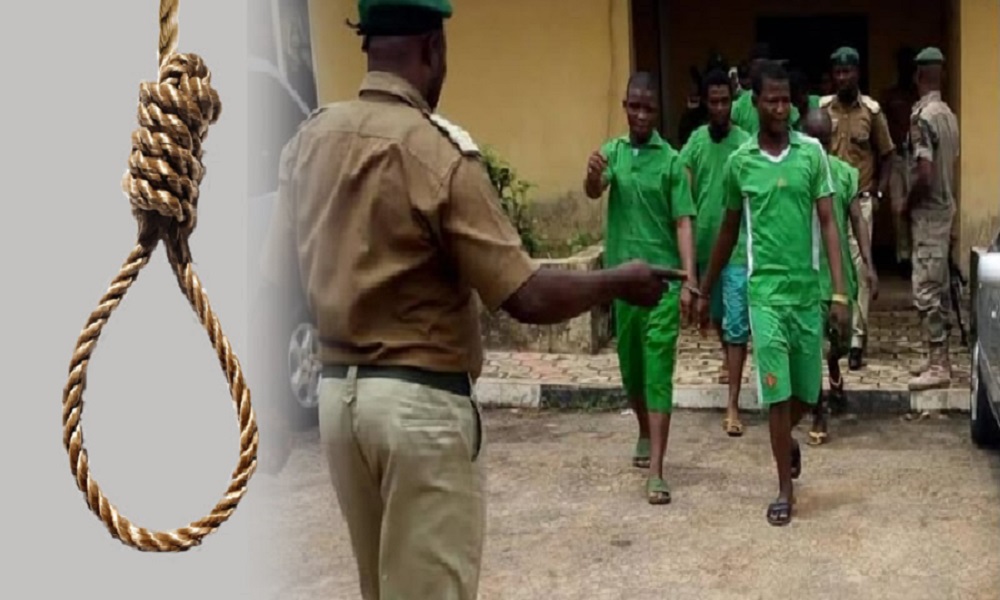
The Hand of God: How a man on death row escaped the hangman by the whiskers

By Richard Akinnola

ThankGod Ebhos is a man of great recipient of God’s grace.

Adams Oshiomhole, then Governor of Edo state, signed some execution warrants in respect of some long-time inmates on death row at Benin prison.

On June 24, 2013, the day of the executions by hanging at the prison gallows, ThankGod watched four of his colleagues hanged. He was the next in line. Execution ritual in prison includes reading out the execution warrant, asking the convict his last words to his family, then prayer by the invited priest or Imam.

When it got to the turn of ThankGod, even when everything was set for his execution, the divine hand of God showed.

The execution warrant was read. However, there was a snag. He was sentenced to death by firing squad by a Robbery and Firearms tribunal sitting in Kaduna in May 1995 over a robbery that took place in 1988. He was tried under the Robbery and Firearms Decree. He was not tried by the regular court because it was during the military regime. After his conviction, he was later transferred to Benin prison.

The death warrant was read to him, that he was to die by firing squad and not by hanging. The Sheriff paused. He was confused. The gallows prepared was for death by hanging, being under a democratic dispensation. He therefore sought clarification from his superiors if the execution by hanging should proceed, contrary to what was in his execution warrant, which was firing squad.

Having obtained clarification from his superiors, he was directed to stop the execution and ThankGod was returned back to the condemned cell.

Immediately, Amnesty International and some local NGOs continued their advocacy for his release. Eventually, he was released in 2014, after spending 19 years on the death row.

-Richard Akinnola

NBAWF Annual Conference 2025: Welcome Message from the Chairperson, NBA Women Forum, Huwaila Muhammad Ibrahim

  • Hon. Justice Binta Murtala Nyako delivers Keynote address
  • Conference offers free medical check-up

Dear Esteemed Delegates,

On behalf of the NBAWF, I am delighted to warmly welcome you all to our Annual Conference here in the vibrant city of Abuja.

This gathering marks yet another milestone in our collective journey to empower, connect, and inspire women within the legal profession. As we come together to exchange ideas, foster meaningful dialogue, and chart new paths for progress, I am confident that this conference will be both enriching and transformative for each one of us.

May your time here be filled with productive engagements, memorable moments, and impactful collaborations. I wish you all a fruitful, eventful, and rewarding stay in Abuja.

Thank you for being a vital part of this inspiring event.

Warm regards,
Huwaila Muhammad Ibrahim Chairperson, NBA Women Forum

In the meantime, Hon. Justice Binta Murtala Nyako, a justice of Nigeria’s Federal High Court and the President of the International Association of Women Judges (IAWJ will deliver the keynote address.

Also. there will be a clinic available during the opening ceremony.

The following services will be available for conferees to take advantage of:

• Blood pressure check

• Blood sugar level check

• HPV vaccination

An enduring tragedy of blood, tears and pain

By Olufunke Baruwa

In the heart of Nigeria’s Middle Belt, a region once known for its scenic beauty and cultural diversity, a grim and persistent crisis endures. Home to large Christian populations, the region has continued to reel from waves of violence that have left thousands dead or maimed, villages destroyed, and communities displaced.

Despite years of reports, pleas, and government interventions, the killings have intensified as part of a broader pattern of ethno-religious and communal violence that has plagued Nigeria for decades. However, the scale and persistence of attacks on farming communities have given the conflict a uniquely tragic dimension.

In Plateau State, once the home of peace and tourism, the crisis dates back to 2001, when riots in Jos claimed over a thousand lives. What began as sporadic religious tension has since evolved into a relentless campaign of terror, largely targeting rural communities. These attacks, often attributed to militant herders and sometimes jihadist elements, have increased in sophistication and brutality. Entire villages have been razed, churches burned, and families wiped out overnight.

Benue State, the “Food Basket of the Nation,” has seen an uptick in retaliatory violence since the implementation of the 2017 Anti-Open Grazing Law intended to regulate the movement of herders. Farming communities, predominantly Christian and largely Tiv and Idoma, have borne the brunt.

In his Easter message, Bishop Matthew Hassan Kukah of the Catholic Diocese of Sokoto lamented that Nigeria is “gradually becoming a huge national morgue” and urged the President to urgently address the nation’s security challenges. He noted that the ongoing violence is not merely a result of herder-farmer clashes but reflects deeper issues of religious and ethnic intolerance.

Addressing the broader implications of the violence, Bishop Kukah warned against the temptation for communities to resort to self-help or form militias, which could further destabilise the nation. He emphasised the importance of a professional and accountable military force in restoring peace and order.

Targeted, Systematic, and Underreported Violence

In January, over 30 people were killed in a coordinated night raid in Mangu LGA of Plateau State. Eyewitnesses described gunmen moving from house to house, raping women, executing families and torching homes.

In March, another massacre in Kwande LGA of Benue State left 25 villagers dead, including many women and children. Survivors fled into the forests barefoot, returning days later to the charred remains of their homes.

Over the Easter period, when Christians celebrate hope and renewal, communities were once again plunged into mourning with a series of brutal attacks. In Plateau State’s Bokkos and Mangu LGAs and Benue’s Guma and Gwer villages, gunmen launched coordinated assaults on predominantly Christian villages, killing dozens and leaving scores injured. Entire families were wiped out in the dead of night, homes were set ablaze, and places of worship desecrated.

Human rights organisations and local monitors report that at least 500 people have been killed across both states since the beginning of the year. Over 300,000 remain internally displaced, many of them living in substandard camps without access to basic healthcare, education, or protection.

Community leaders, religious bodies, and international observers have consistently characterised the killings as targeted attacks on Christian communities. “This is not just a land conflict. This is ethnic and religious cleansing by stealth,” said Rev. Gideon Para-Mallam, a prominent peace advocate based in Jos.

He’s not alone. The Christian Association of Nigeria (CAN) and several Christian leaders across the region have condemned what they describe as the government’s failure to protect its citizens and its silence in the face of targeted violence. “Our people are being wiped out, and the world is silent,” one Benue-based priest said during a memorial mass in February. “How many more must die before this is seen for what it is?”

Several attacks go unreported in national media, often reduced to statistics or generic headlines like “Clashes Between Farmers and Herders,” which many local communities feel whitewashes the religious and ethnic dimensions of the crisis.

Since January, human rights monitors report that over 500 people have been killed across Plateau and Benue. More than 300,000 remain displaced, many living in squalid camps without healthcare, education, or protection.

A Security Apparatus in Question

The Nigerian government has repeatedly pledged to address the insecurity, yet meaningful change remains elusive. Military operations in the region have yielded few results, and there are widespread accusations of collusion and negligence on the part of security forces.

In Plateau State, locals allege that despite repeated calls for help, security operatives often arrive hours after an attack—if they come at all. “We saw the soldiers at the checkpoint. We told them what was happening. They said they had no orders,” recounted a survivor of the January Mangu massacre.

Benue State’s governor, Hyacinth Alia, has condemned the attacks and appealed to the federal government for support, but even his calls have grown increasingly desperate. “We are under siege. We are mourning every week. Our people are tired, and their faith in government is waning,” he said during a press conference in Makurdi last month.

Beyond the staggering death toll, the psychological and social costs are immense. Children are growing up in displacement camps, traumatised by violence. Communities are fracturing under the strain of continuous attacks and displacement. Churches that once served as sanctuaries have become makeshift morgues.

Entire generations are being traumatised and denied the chance at a normal life. Farming communities, once the backbone of local economies, are abandoning their land out of fear. Hunger and malnutrition are rising, with the UN warning that the ongoing violence could worsen food insecurity across Nigeria.

The Path Forward – Accountability and Justice

In a recent report, Amnesty International condemned the Nigerian government for failing to investigate and prosecute those responsible for the attacks. The U.S. Commission on International Religious Freedom has also renewed calls to designate Nigeria as a “Country of Particular Concern” due to religiously motivated violence.

But human rights experts say what’s needed most is political will at home. “There can be no peace without justice. Nigeria must move beyond rhetoric and begin to hold perpetrators accountable,” said Dr. Fatima Akilu, a psychologist and conflict expert. “Until communities see justice, the cycle of violence will continue.”

Ending the crisis in Plateau and Benue requires more than military force—it demands a multi-pronged approach that addresses the root causes of the violence: land disputes, religious intolerance, weak governance, and impunity. Reconciliation initiatives, while important, must be accompanied by firm action against perpetrators and meaningful support for victims.

The federal government must also reform its security architecture to ensure that response times are swift and impartial. Early warning systems, better surveillance, and community policing could save lives. Moreover, media and civil society must play a role in amplifying the voices of victims and shifting the narrative. “We cannot normalise this violence,” said journalist Solomon Elisha, who has covered the Middle Belt crisis for over a decade. “Silence and euphemisms help the killers.”

How many more must die in the Middle Belt before Nigeria—and the world—truly responds? This crisis is not just a northern Nigerian problem; it is a national tragedy and a moral stain. For every village burned, every place of worship desecrated, and every child orphaned, the country inches further from the ideals of unity and peace.

Let’s call exhibits and witnesses by name

By Chinua Asuzu

Let’s assign substantive descriptions to exhibits, grounds, issues, and witnesses.

Add substantive descriptions to procedural labels. Don’t merely refer to Exhibit XYZ, Ground 4, Issue 1, or PW5– name the exhibit, ground, issue, or witness. When you say Exhibit ABC or Issue 3, nobody knows immediately what you’re talking about. When you say PW2, no one can instantly tell whom you are referring to. Your reader must cross-reference to know what or whom you mean.

So say “the doctor’s report” for the exhibit, “the statute-bar question” for the issue, and “Dr Helen Kaine” for the witness. A ground (of appeal, for example) can be identified as “the statutory-interpretation ground” or “the misdirection ground.”

To stay in sync with others who don’t agree with this style (and for whom we have the utmost respect), or just to further communication, enclose the procedural label in parentheses: “the doctor’s report (Exhibit XYZ)”, “Dr Helen Kaine (PW2),” “the statute-bar question (Issue 1),” or “the misdirection ground (Ground 2).”

Never merely say Ground 1 or Issue 2—specify the kernel of the ground or issue. Assign to it a substantive description, not a code. We’re neither in the mafia nor in the secret service.

FIDA Nigeria Abuja seeks collaboration on promotion and protection of rights of women, children, and vulnerables with National Human Rights Commission

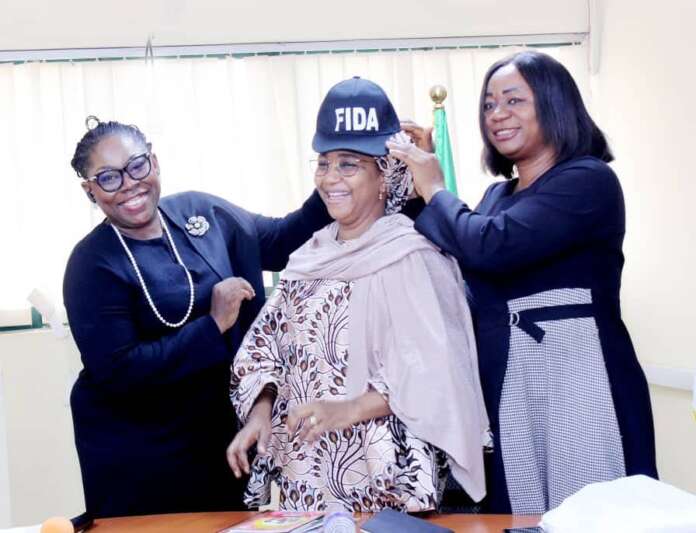
The International Federation of Women Lawyers (FIDA) Nigeria, Abuja Branch, recently paid a courtesy and advocacy visit to the Executive Secretary of the National Human Rights Commission (NHRC).

The purpose of the visit, according to a statement signed by FIDA Abuja Publicity Secretary, Chimdindu Onyedim-Etuwewe was to deepen collaboration on the promotion and protection of human rights, particularly for women, children, and vulnerable populations.

The full statement reads:

The delegation was led by Chioma Onyenucheya-Uko, Chairperson of FIDA Abuja Branch, alongside the Chairperson of Gwagwalada Branch and other Executive Members of Abuja Branch. The purpose of the visit was to strengthen institutional synergy between FIDA Nigeria, Abuja Branch and the NHRC on issues of access to justice and the protection of fundamental rights.

In her remarks, the Chairperson commended the NHRC for its outstanding role in safeguarding human rights across the country, and her continuous support to FIDA over the years.. She emphasized the need for continued collaboration and proposed that more female staff members of the NHRC be encouraged to join FIDA. According to her, this would facilitate joint advocacy, knowledge-sharing, and effective service delivery to vulnerable groups.

She further requested slots for greater participation of FIDA members in NHRC trainings and initiatives, especially those focusing on women and children’s rights. The Chairperson also raised concerns about the slow pace of justice in courts and proposed that FIDA and NHRC work together to explore interim support mechanisms that provide immediate relief to victims while awaiting court resolution, leveraging on NHRC’s statutory quasi-judicial powers.

Responding on behalf of the Executive Secretary, Rabi Anwar, the Director of Legal Services of the NHRC welcomed the FIDA delegation and appreciated the Branch’s advocacy efforts. She acknowledged the alignment between both organizations’ mandates and reassured the team of NHRC’s commitment to defending the rights of vulnerable groups through its specialized departments and ongoing programs.

The Director assured on the Commission’s favorable disposition to the Branch’s request for deeper collaboration. She also pledged to encourage female NHRC staff to join FIDA – and showed example by immediately securing a membership form for herself.

As a token of appreciation and shared commitment, the Branch presented some advocacy resources and materials to the NHRC. In return, the NHRC shared some of its recent publications and resource materials, symbolizing a mutual dedication to human rights advancement.

This advocacy visit underscores FIDA Abuja’s steadfast commitment to building strategic partnerships with key institutions like the NHRC to advance gender justice and human rights in the Federal Capital Territory and beyond.

Chimdindu Onyedim-Etuwewe
Publicity Secretary,
FIDA Abuja Branch.

Joseph Otteh to be buried 20 June

Joseph Otteh, the founder of Access To Justice (A2J ), who passed away in Lagos on 28 March 2025, will be buried on 20 June 2025 in Okporo, Orlu LGA, Imo State.

However, the funeral activities and proceedings will mostly take place in Lagos.

Otteh leaves behind a wife, three young children, and an elderly mum.

Joseph Otteh and Access To Justice (A2J ) were the first winners of the Gani Fawehinmi Award for Social Justice and Human Rights, 2010, which was instituted by the Nigerian Bar Association (NB) through its Human Rights Institute.

He was a Global Public Service Scholar at NYU and received a Master’s degree in law from both the University of Lagos and New York University.

He also served as a Visiting Researcher at the Danish Centre for Human Rights.

Otteh authored Fading Lights of Justice and Litigating in the Public Interest.

He contributed extensively to legal scholarship, consulting for institutions such as the British Government’s J4A Programme, the Open Society Initiative for West Africa (OSIWA), the Nigerian Bar Association, the European Union’s Rule of Law and Anti-Corruption Programme (RoLAC), and the International Commission of Jurists (ICJ).

Meanwhile, the late activist’s wife, Mrs Ogechi Chuma-Otteh in a statement, encourages friends and colleagues to send tributes in honour of his memory.

Her statement reads:

Dear Colleagues and Friends,

As we remember our dear Barrister Joseph Chukwuma Otteh’s life as a son, husband, father, friend and colleague alongside his remarkable contributions to the legal profession, we invite you to share your tributes and memories in honour of his legacy.

Your reflections will be invaluable in celebrating his life, character, and the impact he made on all who knew him.

Please send your tributes to [email protected] by 10th May, 2025, to enable us go to print early.

Please incorporate the following:

Sender’s Full Name
Sender’s Designation/Relationship (where applicable)
Sender’s Organisation/Association (where applicable)
Sender’s Location

Thank you for joining us in commemorating a life lived in the service of all that he touched.

With deepest sympathy

Mrs Ogechi Chuma-Otteh
For : The Family

Joseph Otteh: A Tribute to the gentle giant of justice

By ‘Deji Ajare

Joseph Otteh was not merely an advocate; he was the very essence of justice, integrity, and humility embodied in human form. Tall, gentle, and ever reflective, Joseph approached life and work with an uncommon blend of kindness, patience, and remarkable intellect. His quiet strength and unwavering dedication have left an indelible mark on Nigeria’s justice sector and beyond.

My first encounter with Joseph was serendipitous yet unforgettable. Towards the end of 2019, a respected colleague, Madam Ugonna Ezekwem, drew my attention to a project seeking a Project Director—a position she believed suited my passion for justice. My meeting with Joseph felt more like a warm reunion between old friends rather than a formal interview. He was transparent, kind, and engaging. His vision was clear: he sought someone who would step into leadership and eventually assume greater responsibilities as he transitioned to a mentoring and advisory role. Although I expressed initial reservations, Joseph, ever insightful and open-minded, gently persuaded me to embark on the journey, allowing flexible arrangements so that I could remain largely in Abuja, traveling to Lagos and Anambra as needed. Thus began a most fulfilling professional partnership, albeit brief yet immensely impactful.

Working closely with Joseph revealed layers of a remarkable personality. He possessed an unmatched depth of knowledge and was generous in sharing his wisdom. His writings were masterpieces that conveyed clarity, depth, and passion. As I marvelled at his skill, he patiently guided me, instilling confidence in my capabilities. Under his mentorship, my professional growth accelerated significantly.
Joseph’s contributions to Nigeria’s justice landscape are monumental. He was instrumental in shaping significant reforms such as the enactment of the Fundamental Rights (Enforcement Procedure) Rules and pivotal reforms in the Coroner’s Law of Lagos State. His advocacy was not loud; it was effective, strategic, and enduring. His legacy, meticulously built over years of dedicated work, stands as an ideal, for all who believe in justice and fairness.

One notable trait that consistently stood out was Joseph’s remarkable patience—a stark contrast to my often restless nature. Even when deadlines loomed and pressure mounted, Joseph remained calm, composed, and gracious. His ability to manage stress without losing his gentle composure was genuinely inspiring.

Joseph had unwavering faith in those he mentored, including myself, a confidence that empowered me profoundly. I eagerly anticipated many more years of drawing from his vast reservoir of knowledge and experience, an opportunity now lost to the cruel hands of death.

Indeed, death is peculiar—it seeks to extinguish, yet it often magnifies the legacy of great souls like Joseph Otteh. May his life’s works, advocacy, and kindness continue to inspire and impact generations to come.
Joseph, your family will deeply miss you. Access to Justice will profoundly feel your absence. The entire civil society landscape will mourn your departure. But your legacy will undoubtedly thrive and flourish.

Rest well, dear Joseph Otteh. Your footprints remain etched in the sands of time.

Adieu, dear friend and mentor.

‘Deji Ajare

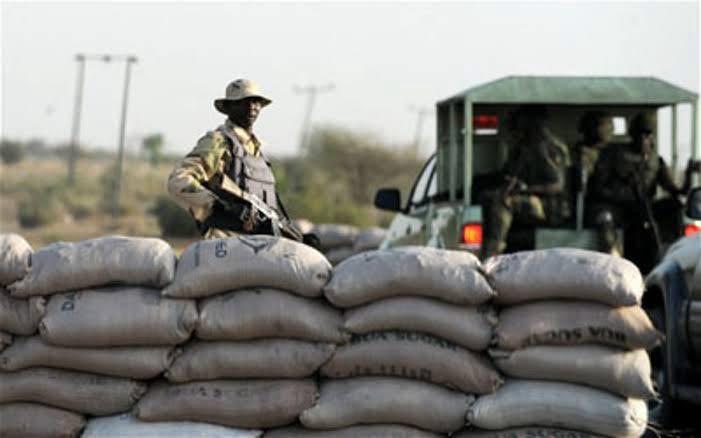
Amnesty International Country Director says notorious bandit leader Mai Jikka blocks the Funtua–Tsafe highway almost daily, yet it’s 45 minutes drive and 32 security checkpoints South East

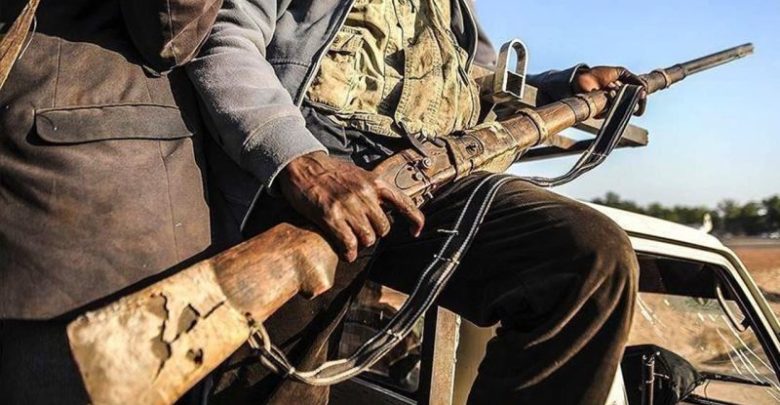
A post which has gone viral on Facebook, X and Instagram, attributed to Sanusi Isa, Country Director of Amnesty International, Nigeria, said no terror leader was as ruthless as
Mai Jikka.

Isa wrote: “No terror leader is as ruthless as Mai Jikka. Apart from having a wide stock of automatic machine guns, he also owned a large stock of bombs.

“Many of Mai Jikka’s victims narrate his atrocities. Whenever his gang stopped commuter vehicles, he ensured that all those who identified as Hausa by tribe a picked out and slaughered instantly while those who identify as Fulani are spared and given token “for transport.

Isa Sanusi

“Last week, he amputated a man from Tsafe with axe. He is described as Shekau of Zamfara. Mai Jikka is mainly based at Mayanchi with at least 50 fighters always at his beck and call. Mai Jikka is estimated to be between 23–24 and made it clear to his victims that he is on a “vengence mission against Hausa people.”

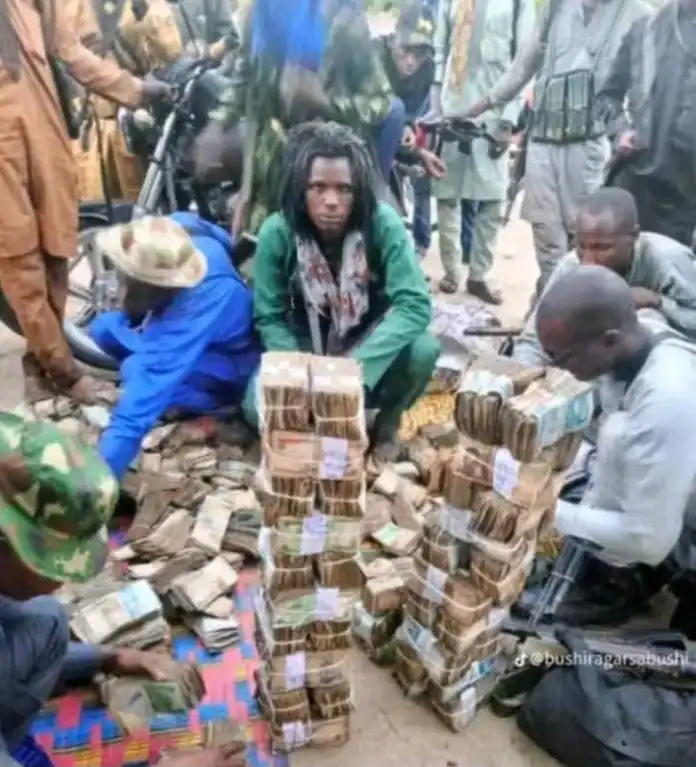
“He finances his operations through ransom from kidnapping. From time to time, he uses his TikTok page to display his arms and stash of cash. In the areas where Mai Jikka operates, parents try to protect their female children from rape by sending them to sleep in other villages or towns, far away from Mai Jikka’s ruthless operations.

“Mai Jikka is the only one out of many of such ruthless gang leaders operating across Zamfara, Sokoto, and parts of Kebbi state.

“These are ruthless savages, terrorists and jihadists who are bent on destroying Nigeria. Unfortunately, the government is not doing enough to obliterate these bandits.”

—Sanusi Isa.

But it is a different ball game in the South East, where an average commuter will reportedly encounter not less than 32 security checkpoints on a 45-minute drive from Onitsha to Enugu.

1. Army Gate Onitsha

2. Nkwelle Junction

3. Awkuzu Junction Army

4. Awkuzu Junction FRSC

5. Dunukofia LG hqts Police

6. Enugwu-Ukwu Junction Police

7. Amawbia Junction Police

8. Unizik Junction Army

9. Mopol base Awka Junction Police

10. Prince and Princess hostel front army

11. Amansea boundary Police

12. Ugwuoba boundary Police

13. Ugwuoba bridge police team

14. Ugwuoba Junction Army

15. Ugwuoba Junction NDLEA

16. Ugwuoba Junction FRSC

17. Ugwuoba Central Army

18. Oji River Junction Army 1

19. Oji River Junction Army 2

20. Ezeagu Express Army

21. Near Nkwo Ezeagu Police

22. Near tiles factory Police

23. Umumba Ndiuno Express Police 1

24. Umumba Ndiuno Express Police 2

25. 9th Mile Checkpoint

26. Nsude Express (approach to Ninth Mile) Police

27. Ngwo Express Army

28. Ngwo Express anti-terror squad

29. Onyeama Hill (near refuse dump) Army

30 Onyeama Hill (near coal mine), Army

31. Abakpa Interchange Police

32. Abakpa Junction FRSC.   

Popular US cleric, Bishop T.D. Jakes hands over church leadership to daughter and son-in-law

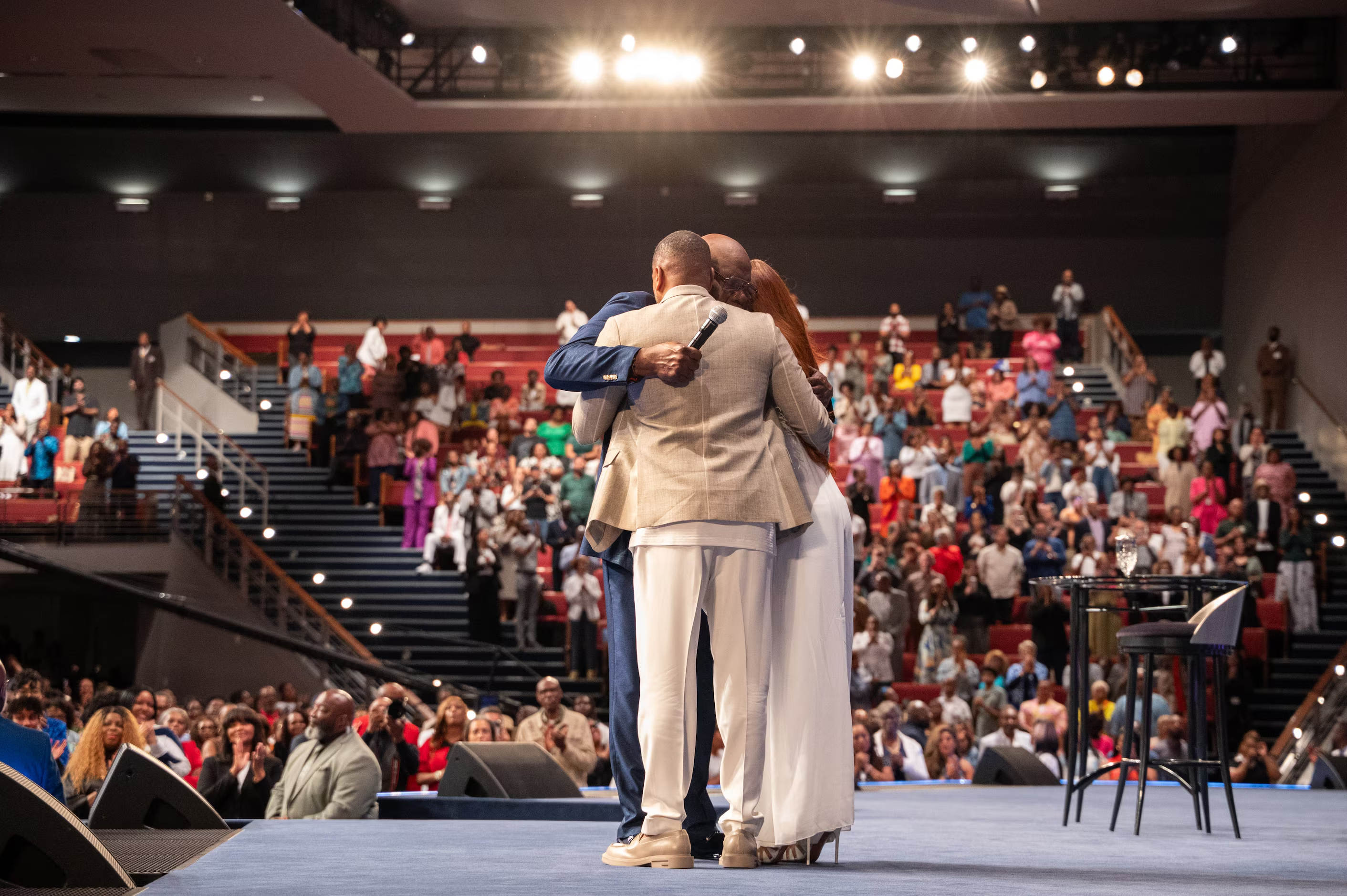
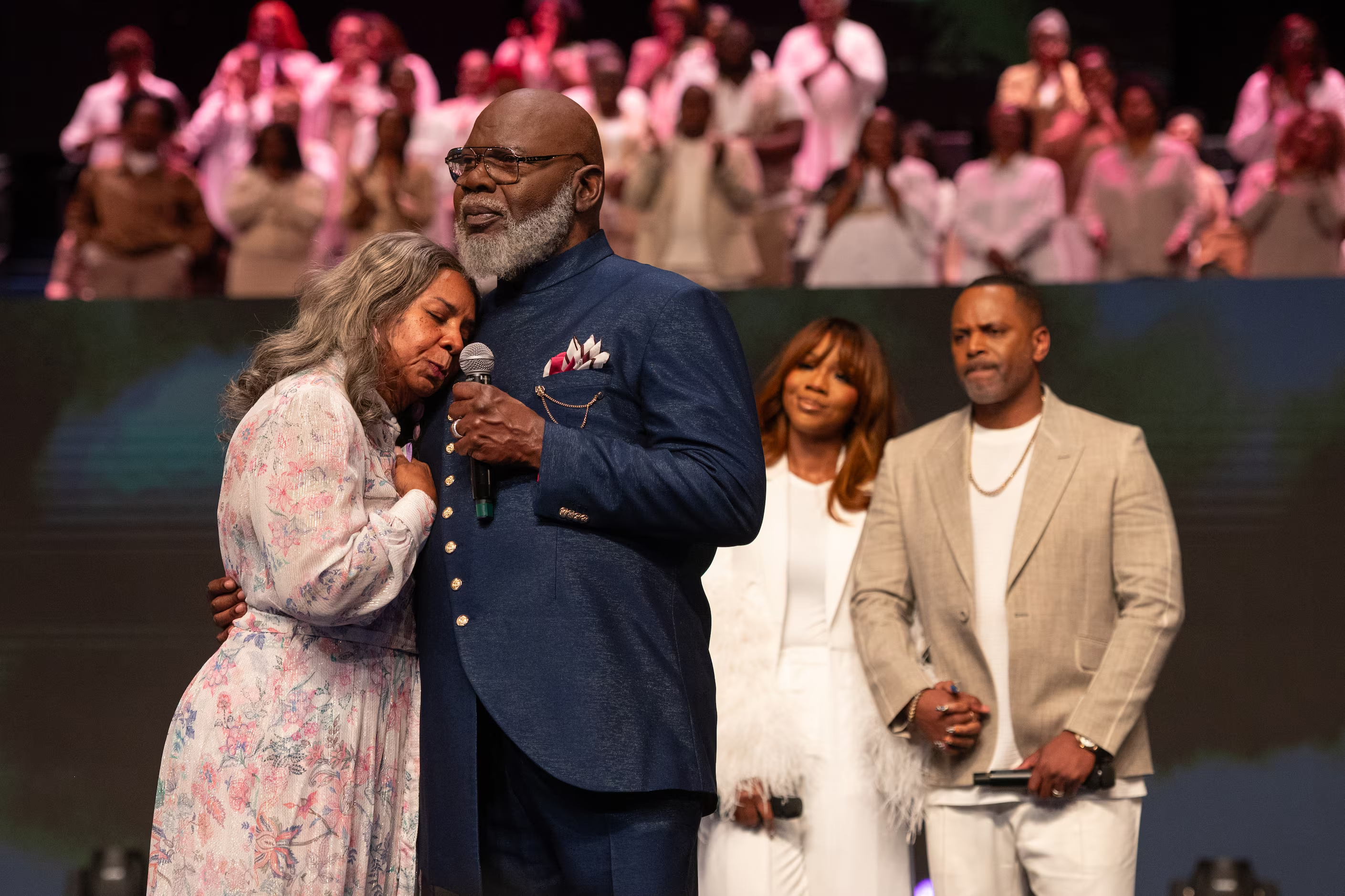
Famous American preacher and founder of The Potter’s House in Dallas, Texas, Bishop T.D. Jakes has announced that he is stepping down from leading the megachurch, handing over the reins to his daughter, Pastor Sarah Jakes Roberts, and her husband, Pastor Toure Roberts.

The announcement was made during a Sunday morning service on April 27, 2025, about five months after Jakes suffered a massive heart attack while preaching.

Addressing the congregation, Jakes said his recent health scare played a major role in his decision to transition leadership.

“You have been faithful to God, and you have been faithful to me,” Jakes told the church. “And I’m so grateful. I cannot afford, especially after November, to risk something happening to me and you, the sheep without a shepherd.”

The leadership transition is set to officially take place in July.

Sarah Jakes Roberts, speaking after her father’s announcement, expressed her deep appreciation.

“I’m grateful, I’m honored, as your daughter,” she said. “I’m so happy you’re going to get some rest.”

Meanwhile, in an interview with Craig Melvin on NBC’s TODAY show, Jakes recounted the moment he suffered the heart attack. He explained that he had not experienced the typical symptoms associated with cardiac arrest and only realised the severity of his condition after being taken to the hospital.

“I didn’t really realise what was happening to me onstage until I got to the hospital in an ambulance and fussing that it happened onstage, by the way, because I didn’t want it to happen,” he said. “And the doctor leaned over my ear and said, ‘You had a massive heart attack.’”

Jakes said that he had felt none of the usual warning signs.

“No numbness, no sharp pain, no anything. I just kind of drifted off to sleep. I didn’t know what it was, but I almost died,” he recalled. “(The doctor) said five minutes later, I’d have been dead on arrival. The right side of my heart had completely stopped getting blood at all.”

T.D. Jakes founded The Potter’s House in 1996, building it into one of the most influential churches in the United States. His transition marks a significant generational shift in leadership, with Sarah and Toure Roberts now poised to guide the congregation into its next chapter.

Adenuga, politicians and lessons in loyalty

By Suyi Ayodele

Go to the ant, you sluggard. Consider her ways and be wise”, Proverbs 6:6.

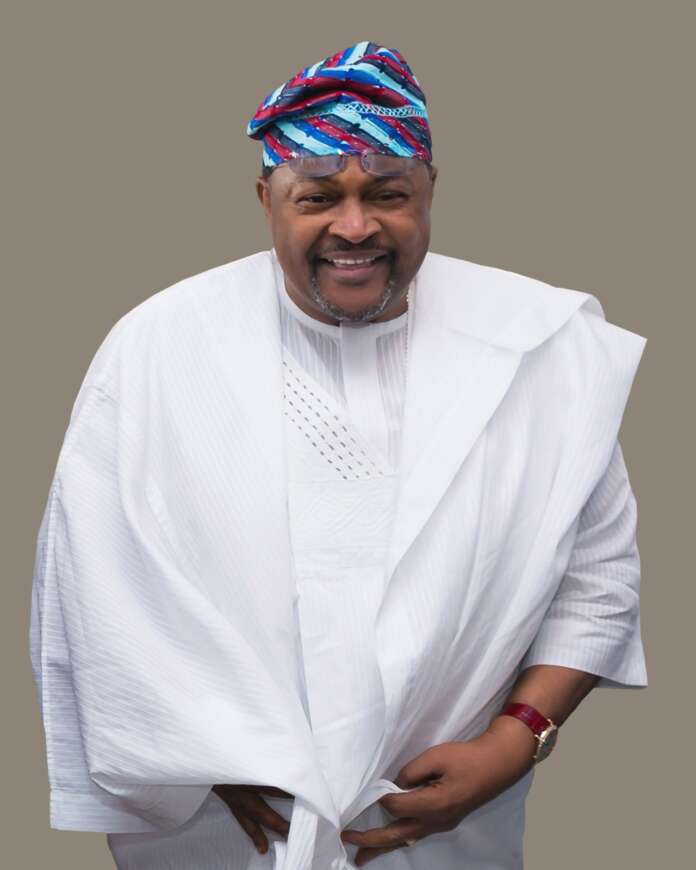
The business colossus and owner of Globacom, the nation’s giant telecommunication outfit, Dr. Mike Adenuga Jnr (GCON), is 72 years old today.

In celebrating the giant man of means on his birthday, I have decided to use the ‘thesis’ written about him 12 years ago as a link between the character of the man the entire world has been celebrating in the last two weeks and the characters of the locusts God, in His infinite wisdom, sent to oversee our affairs as a nation.

The ‘thesis’ was written by no other person than the maverick retired General and Military President, Ibrahim Badamasi Babangida (IBB), when Dr. Adenuga turned 60 on April 29, 2013. We shall come to that presently.

The essence of this piece goes beyond celebrating Dr. Adenuga. His life, his character and his attitudes as espoused in the IBB’s thesis of 2013 are referenced here to draw the attention of our ‘ruiners’ and rulers alike to the fact that what is lacking in our polity is character. And not just character, but good character.

The last one week has been very instructive in the history of Nigeria as our politicians set the agenda for the 2027 general elections. Nigeria, we all know by now, is a cruise. We elected, or we were told that we elected President Bola Ahmed Tinubu for a term of four years, with a proviso for renewal after the first four years. Unfortunately for us, and to the damnation of good governance, President Tinubu had hardly taken the oath of office on May 29, 2023, when the race for his second term began.

Thus, the President and his acolytes have spent the last 23 months plotting and ‘strategising’ for the second term ambition. This is one of the reasons why the government has not been able to address any of the litanies of problems confronting us as a people. Rather, President Tinubu, who in recent times has turned out to be a ‘visiting president’ with France as his preferred base, has engaged in all manners of arm-twisting to get everybody on board of his rudderless ship as he ‘consolidates’ his hold on the political landscape.

With the recent gale of defections that hit the half-dead opposition Peoples Democratic Party (PDP) last week, it is crystal clear, even to the blind that the nation is on its path to a one-party State.

The beauty of the defections of the opposition key figures to the ruling All Progressives Congress (APC), is the fact that when the looming calamity of a one-party State in the hands of Tinubu hits, no one will be spared; not the defectors nor the one-leg-in-one-leg-out PDP leaders, like the one who boasted that he would remain in the PDP but work for its downfall from within. Sadder enough, not those APC men and women who today are hailing President Tinubu as the “master strategist”, would escape the ruination!

A few hours after Governor Sheriff Oborevwori of Delta State defected to the APC last week with the entire PDP structures in the state, I got a call from an elderly fellow, who was worried about the character of our political leaders. The old fella expressed disgust that former Governor Ifeanyi Okowa, who was also the vice-presidential candidate of the PDP in the 2023 presidential election, could defect to the APC. He asked: “What is Okowa looking for again?” My interlocutor was equally disturbed that the political class was inadvertently making a dictator of President Tinubu. He asked again: “What is wrong with our politicians?”

While I did not answer the old man’s queries on Okowa or other issues he raised, I nevertheless have no doubt in my mind about what the problems are with our politicians. Someone, long ago told me that “betrayal is the bedrock of our politics.” He could be right, and he could also be wrong.

But I think that the major flaw is in the character of the political class. Beyond the issue of lack of clear-cut ideological orientation, the major fallacy of the show of shame going on in the name of everyone trying to get on board the ship of the ruling party is pure character deficiency.

While one also has no doubts that the present administration, in its desperate bid to retain power in 2027, would spare nothing, including harassing the opposition to buckle, IBB illustrates what makes a good man in his ‘thesis’ to Dr. Adenuga Jr. at his 60th birthday anniversary in 2013.

Dr. Mike Adenuga Jr. (GCON), I daresay, is a book, a voluminous book and a reader’s delight. He should be studied; he should be read. Our politicians need a lot to learn from the personality of the man many of his associates call the Great Guru (GG) or Mr. Chairman.

It is worthy of note that whatever Mr. Chairman has achieved today, and will also add as he ages, was not dropped on his laps like meteors discharged from the cosmic forces. No! Dr. Adenuga’s character, especially the ethos of an Omoluabi, the Yoruba measurement of good character and upbringing, played vital roles in projecting the business icon to this enviable height.

The first of that Omoluabi ethos is Adenuga’s fidelity to friendship. The man who holds the title of Apesin of Ijebuland has demonstrated that in many ways. But the one that comes easily to mind is his encounter with the monstrous government of retired General Olusegun Obasanjo in late 2005.

For whatever reason, Obasanjo, who then harboured an undisclosed animosity against IBB and was engaged in a battle of trust with his then Vice President, Atiku Abubakar, decided to vent his anger on the common friend of the duo, Adenuga.

When the Ijebu man would not play ball, Obasanjo decided to go after him with the government’s attack dog, the Economic and Financial Crimes Commission (EFCC). Adenuga’s home then at the highbrow Oko Awo Close, Victoria Island, Lagos, was violated by EFCC operatives. The man remained undeterred. He held on to his known dictum of owning Globacom ‘bullet, powder and barrel’.

When the harassment was becoming unbearable, rather than betray his friends, Adenuga decided to discomfort himself. While Obasanjo was assembling another ‘army of invasion’ in Aso Rock Villa to ship Mr. Chairman to detention, the man decided to surprise everyone. Abandoning the comfort of his home and the growth of his business concerns, Adenuga shipped out of the country on self-exile. He first landed in Accra, Ghana, and then later to Paris, France. For good 18 months, Adenuga remained in exile and did not return to Nigeria until Obasanjo completed his second term and a new President Umaru Musa Yar’Adua, took over.

Eighteen months of absence of the ownership in the life of a business like we have in the Mike Adenuga Group means a lot. Anything could have happened. And a lot indeed happened while the man was away. On his return, and in one of the meetings with his top aides, Dr. Adenuga acknowledged that a lot had taken place in his business. Thus, in his reaction to one of the issues that arose, he intoned: “My absence for 18 months has corrupted all of you. Now that I am back, all that nonsense will stop!” (The Guru’s Memorable Quotes, 2nd Edition- an in-house cartoon-led magazine).

Capturing that singular incident, IBB, in his 2013 tribute to Adenuga at his Diamond birthday celebration wrote: “Mike, truly you epitomize hard-work, perseverance, doggedness, humility, diligence and patriotism. The fact that you treasure the virtue of true friendship and loyalty to any cause you believe in, gives you the cutting edge. I am eternally grateful for all the troubles you had to go through because of me in the hands of a regime that tried to derail our friendship and relationship.”

The smiling General also added these lines: “Even when you came under severe pressure by that same regime which I helped to nurture, to blackmail me in order to hang me, you remained eternally loyal and steadfast. Only a businessman of character, sound upbringing and virtue could choose friendship instead of his economic empire. Only a man of dependable poise, with an open mind and fear of God, would choose to sustain an age-long friendship instead of sacrificing the same on the altar of avarice, greed and economic interest.”

What are the lessons for the Hallelujah orchestra echoing the Tinubu-threatened-us-with-EFCC slogan to justify the mass defections of PDP and other political parties’ members to the APC in droves?

One, Adenuga could have succumbed and played along with his kinsman, Obasanjo, an Egba man. The Ijebu business icon could have placed premium on the economic gains that the enormous government patronage would have accrued to him by betraying IBB or Atiku. But he chose to be noble. He chose to stay committed to friendship and good conscience.

Rather than betray his friends, he decided to suffer the ignominy of an exile for committing no crime. He abandoned his fame, his wealth, his comfort and family and left Nigeria. He literally swallowed fire so that his friends could drink water!

Beyond that, he risked the government coming after his businesses. He was not ignorant of what the Nigerian Government did to the late Moshood Kashimawo Olawale (MKO) Abiola’s business concerns. Adenuga never lost sight of the fact that such a fate could also befall him. But he allowed his character to come into play.

He realised that there would be a tomorrow. He opted for self-discomfort. Today, the entire world is celebrating him for who he is and what he stands for. His character delineation is loyalty! He did not shift base; he did not jump ship.

This is what the Nigerian political class which has copiously proven to be lacking in grit and mettle ought to learn. This is why it is possible for a man who contested to be vice-president in an election his party scored over six million votes, to jump ship at the slightest appearance of EFCC uniform by his gate! Ever wonder why our politics has not gone beyond this level of bread-and-akara dinner? Check the characters of those we call leaders, people without scruple!

Further in his 2013 ‘thesis on Adenuga, former President Babangida posited again: “Such tribulations are prices we have to pay for true friendship. Your ability to remain focused in the face of pressure coupled with your capacity to identify and nurture talents is the reason why you are MIKE ADENUGA. There can never be another MIKE ADENUGA of your orientation.”

This is another chapter of Adenuga, the Book, which the Nigerian political elite must read. Even those among them who claim to be offspring of the legend, Chief Obafemi Awolowo, are not better off. They, like the Avatar, Awolowo, once said, “Are like a bird of passage that lacks the quality of permanence”, as they keep jumping from one political party to the other! One politician once told me that “the hunger of four years is not a small matter!” Really! So, if we all belong to one political party, who will call out the government for not doing the right thing?

IBB said of Adenuga: “…your capacity to identify and nurture talents is the reason why you are MIKE ADENUGA. There can never be another MIKE ADENUGA of your orientation.” How true is this assertion? Yes, it is true that it is only God that is incomparable. When we take the discussion down to our situation and the improvements that individuals have brought to play in Nigeria, Dr. Mike Adenuga stands out! Will there be another Mike Adenuga Jr.? No doubt, not in this generation!

Mr. Chairman’s tenacity of purpose, “capacity to identify and nurture talents” and his ability to “remain calm, collected and unassuming, with an élan that is symbolic of humility and training, despite many achievements’, especially “when others are losing their heads as a result of unethical conduct and greed”, as penned by IBB 12 years ago, are indeed some of the virtues that stand Dr. Adenuga out in the Nigerian “society whose moral fibre has ebbed considerably.”

And in closing that chapter of the ‘thesis’, IBB, again, expressed gratitude by saying, “I remain grateful for being a true friend indeed.” How I wish that when the time comes and we are to write about these characters dotting our political landscape, we shall be bold to say they are indeed the friends of the people of Nigeria!

In closing this piece and as the world gathers today to celebrate one of the gifts of God to this generation, I wish Dr. Michael Adeniyi Agbolade Ishola Adenuga (GCON), The Book, The Great Guru, many happy returns at 72!

Agba yin a dale, Sir.

The views expressed by contributors are strictly personal and not of Law & Society Magazine.

TIPS