Home Blog Page 364

Upholding the Integrity of the Judiciary: NJC rises to the occasion

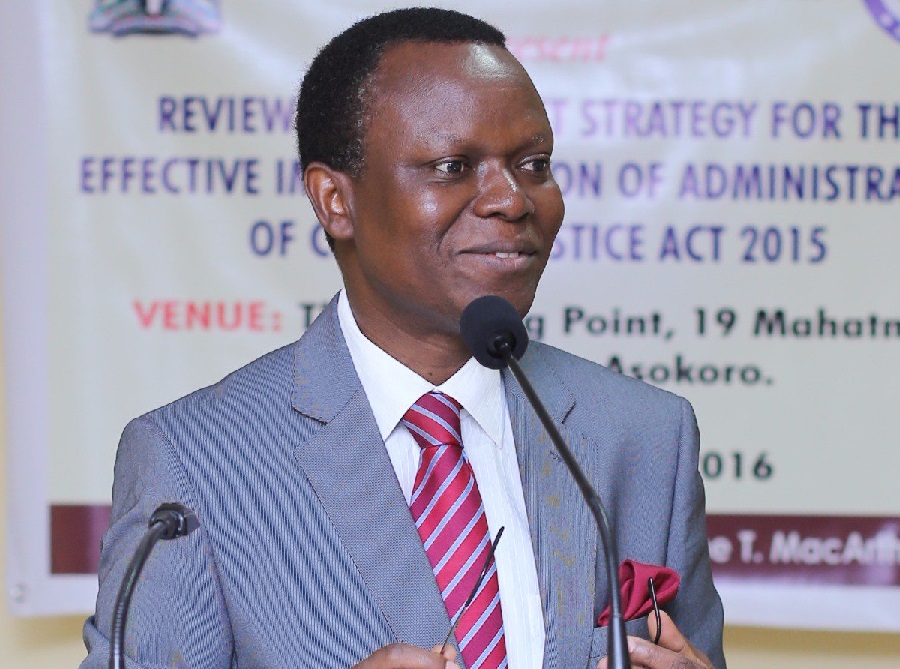
By Prof. Yemi Akinseye-George, SAN

The National Judicial Council (NJC), under the distinguished leadership of the Hon. Chief Justice of Nigeria, Hon. Justice Kudirat Motonmori Kekere-Ekun, GCON, has once again demonstrated unwavering commitment to upholding the independence, integrity, and constitutional order of the Nigerian judiciary.

At its 108th Meeting held on the 29th and 30th of April 2025, the NJC took a bold and principled stance on a number of critical issues affecting the administration of justice in Nigeria. Most notably, the Council directed the Governor of Imo State, Senator Hope Uzodinma, to comply with Section 271(4) of the 1999 Constitution (as amended) by appointing the most senior judge of the State’s High Court as Acting Chief Judge.

This move reaffirmed the supremacy of the Constitution and ensured that due process is not undermined by political interference. It is hoped that Governor Hope Uzodinma, a beneficiary of an epochal judicial decision of the Supreme Court which literally made him Governor against the wishes of the electorate of Imo State would humbly comply with the directive of the NJC.

Landmark decisions to strengthen accountability
The NJC, chaired by Hon. Justice Kekere-Ekun, also made several landmark decisions aimed at strengthening accountability within the judiciary. In a rare but necessary show of firmness, the Council suspended three serving judicial officers without pay for one year, having found them guilty of serious misconduct. These disciplinary actions were guided by the Revised Code of Conduct for Judicial Officers and rooted in the commitment to preserve public trust in the judiciary.

Among those suspended was Hon. Justice Jane E. Inyang, who was found to have issued inappropriate ex parte orders that compromised the integrity of the judicial process. Similarly, two Judges were suspended for violations that included delivering rulings without hearing the parties and restraining law enforcement agencies from performing their statutory duties. These decisions, although stern, were necessary to reinforce the message that judicial robes do not shield anyone from accountability.

Additionally, the Council issued queries to other judicial officers, including Hon. Justice Theophilus Nnamdi Nzeukwu and Hon. Justice V. U. Okorie, for attempting to subvert constitutional procedures in the appointment of an Acting Chief Judge in Imo State. The NJC’s intervention not only corrected an impending constitutional breach but also sent a strong message that manipulation of the appointment process will not be tolerated.

Commendable Resolve of the NJC
Under Justice Kekere-Ekun’s stewardship, the NJC has deepened its resolve to cleanse the judiciary of unethical behavior while promoting transparency. At the same meeting, the Council empanelled nine committees to investigate 27 judicial officers facing allegations of misconduct, demonstrating a proactive and institutionalized approach to disciplinary processes.

Quiet Revolution?
Equally praiseworthy is the Council’s new revolutionary decision to publish the names of candidates being considered for appointment to superior courts of record. This groundbreaking decision opens up the appointment process to public scrutiny and invites civic participation, thereby enhancing transparency and reinforcing the legitimacy of judicial appointments. This approach to judicial appointments will significantly improve the quality of judicial appointments. The NBA and other civil society organizations have long advocated for this. That this milestone has been reached after the death of its foremost advocate, Joseph Otteh of Access to Justice who died recently should be an encouragement to other advocates for change. It shows that sooner or later, the reforms will see the light of day.

The NJC also dealt judiciously with several petitions, including those concerning alleged irregularities in judicial appointments and complaints lacking merit. Importantly, individuals who deliberately peddle falsehoods to undermine the judicial selection process were appropriately sanctioned, with one petitioner barred from future judicial appointment exercises.

These bold and transparent actions are a testament to the visionary leadership and integrity of Hon. Justice Kekere-Ekun. At a time when public confidence in institutions is under strain, the Chief Justice has steered the judiciary with courage, impartiality, and fidelity to constitutional norms. Her tenure continues to inspire hope that the judiciary can indeed be a bulwark against impunity, a guardian of justice, and a model of institutional discipline.

The NJC’s recent actions serve as a beacon of reform and integrity, and the Nigerian judiciary—under the guidance of Hon. Justice Kekere-Ekun—deserves commendation for its principled and courageous decisions. The path may be arduous, but with such leadership, the restoration and preservation of public confidence in the rule of law is not only possible—it is inevitable.

Professor Yemi Akinseye – George SAN, FCIArb,
Professor Yemi Akinseye – George SAN and Partners,

Nigerian military arrests personnel aiding terrorism in north east, as Borno resettles 300,000 ex-Boko Haram terrorists

  • What About Their Victims?

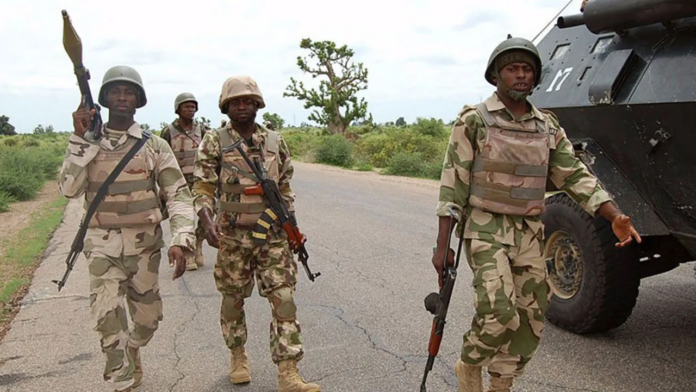
The Defence Headquarters has confirmed the arrest of four individuals accused of supplying logistics to terrorists in the North-East, including two members of the hybrid forces who had been working alongside troops in counterinsurgency operations. 

The arrests were made during a coordinated military operation conducted between April 26 and 29 across Bama, Kukawa, and Madagali local government areas in Borno and Adamawa states. The Director of Defence Media Operations, Major General Markus Kangye, disclosed that the two hybrid force personnel were found to be aiding terrorist logistics, marking a serious breach of trust within the military ranks.

Kangye expressed deep concern over what he described as a betrayal and warned military commanders to intensify the sensitisation of personnel, particularly hybrid force members, against actions that could undermine ongoing operations against insurgents. 

He noted that, “In a well-coordinated operation conducted from 26–29 April 2025 in Bama, Kukawa, and Madagali LGAs of Borno and Adamawa States, troops intercepted four terrorists’ logistics suppliers. Sadly, two of them were confirmed to be members of the hybrid forces.”

Beyond the arrests, Kangye reported that troops, in collaboration with hybrid forces, carried out a series of offensive operations including raids, clearance missions, and fighting patrols in Gwoza, Dikwa, Bama, Chibok, Gujba, Geidam, and Yunusari local government areas. Several terrorists were killed, six kidnapped victims were rescued, and weapons, ammunition, motorcycles, and bicycles were recovered. 

In the South-South region, the military also recorded significant progress in its campaign against oil theft and illegal refining. According to Kangye, over 86,000 litres of stolen crude oil, 72,000 litres of illegally refined diesel, and more than 2,600 litres of petrol were recovered. Troops also dismantled numerous illegal refining sites and seized boats, tricycles, vehicles, storage tanks, and mobile phones used in the illicit operations.

In the meantime, Borno State Governor, Babagana Zulum, disclosed that the state has reintegrated no fewer than 300,000 repentant Boko Haram terrorists over the past three years.

Governor Zulum made the revelation while receiving the Minister of Defence, Badaru Abubakar; the Chief of Defence Staff, Gen. Christopher Musa; and other top military commanders during their visit to Maiduguri.

“Borno State has, within the last three years, received more than 300,000 repentant Boko Haram fighters — and not all of them are fighters. Some of them are farmers,” he said.

While acknowledging the efforts of the Nigerian military, the governor noted that several challenges continue to hamper the effective fight against terrorism and called for urgent interventions.

He stressed the importance of combining kinetic and non-kinetic approaches in the ongoing counterterrorism efforts.

“Manpower is very essential. While I’m aware of the constraints of the Nigerian Army — because right now, you are everywhere in Nigeria: the North-East, North-West, North Central, as well as southern Nigeria — I’m aware of your limitations,” he said.

“But still, considering the northeastern region, the Nigerian Army should look into the possibility of sending more trained manpower. There is a difference between Boko Haram, ISWAP, and bandits.”

Governor Zulum further warned of the growing external support for terrorist groups operating in the region.

“ISWAP and Boko Haram are terrorists getting support internationally, and looking at our porous borders, they remain infiltrated through the Sahel, which is our major problem.”

He emphasised the strategic importance of securing the Sahel to achieve lasting peace across Nigeria.

“If the Sahel is not secured, Nigeria will never be secured. So, there is a need for us to fortify the security situation in the Sahel with a view to ending the crisis in the entire nation.”

The governor also called for enhanced air capabilities to counter the evolving threats posed by terrorist groups.

“We need air support. I know the kind of constraints you face accessing fighter helicopters and others, but attack helicopters are very important in these areas, and drones are also very important.”

Highlighting recent developments, he said: “The last attack that happened in Wulgo, carried out by ISWAP and Boko Haram — a confirmed statement said it was carried out with the support of armed drones. They hit the MNJTF (Multinational Joint Task Force) with drones.

“This is the time for the Nigerian military to rise again and procure sophisticated drones and anti-drone equipment so that we get rid of these problems.”

Governor Zulum described the situation as a serious setback for Borno State and the entire Northeast region.

However, with ‘repentant’ Boko Haram members being pampered while their victims, who have undergone severe physical and psychological violence, have received very little attention and care from the Nigerian government, survivors of insurgency in Borno state are crying out for justice and reparations for the atrocities they suffered in the state.

Read Also: As govt. pampers ‘repentant’ Boko Haram members, survivors demand justice

DSS witness reveals no weapon of terrorism was found on Kanu during arrest in Lagos

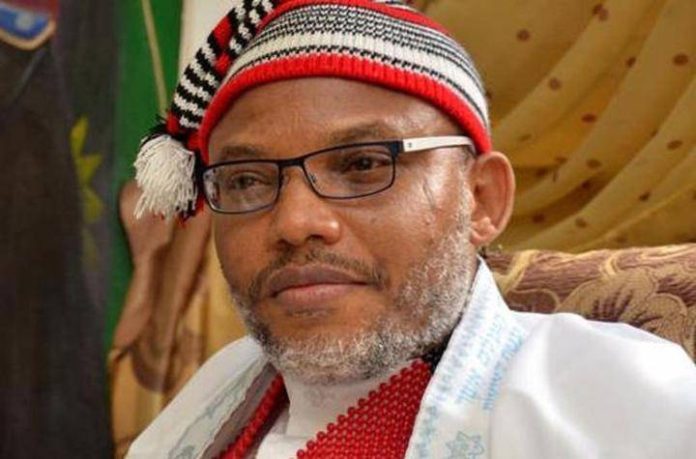
Nnamdi Kanu, leader of Indigenous People of Biafra, IPOB.
  • Read Part of Kanu Agabi’s cross-examination of FG Witness

A Federal Government’s witness admitted at the Federal High Court in Abuja on Friday that no weapon of terrorism or violence was recovered from the Biafra nation agitator, Nnamdi Kanu, during his arrest on October 15, 2015, in Lagos.

The witness, an official of the Department of the State Service, DSS, code-named PWAAA, also informed the court that no arms of public disturbance were recovered from the lady arrested alongside Kanu.

In a cross-examination conducted by Kanu’s lawyer, Kanu Agabi SAN, the witness said all the items were the personal property of the Biafra nation agitator.

He said the recovered items may not be ordinarily offensive, but the intention of the defendant may be something else.

PWAAA also told the court that he did not analyse any of the items because his mandate was to enforce an arrest and obtain a statement from Kanu.

Answering a question, the DSS operative admitted analysing the cell phone of the defendant, but the report of the analysis was not made available to the court because it was immaterial.

In the 10 years that the items were impounded, he admitted that the properties may have lost their value and become of no use.

He further explained that he did not bring anybody before Kanu to confront him on any issue of terrorism.

The witness also admitted that Kanu’s statement was obtained without the presence of his lawyer.

He admitted not knowing any person put on trial by the federal government on account of agitation for Biafran nation actualization.

According to him, the only one he knows is Simon Ekpa, who he said would soon be brought to the country for trial for supporting Kanu in the agitation.

The witness said he read in the newspapers and on social media about those backing the defendant in the agitation.

He said he does not remember Kanu complaining of corruption in high places, unemployment among youths and tendering apologies to the President for insults hurled at him and negative remarks against Igbo leaders.

The witness further said that he could not remember when Kanu described IPOB as a voluntary organisation that was not involved in carrying arms against the nation.

He admitted that there were killings in some parts of the country, especially in the North, but that the government has been doing its best to stem the tide of the killings.

The witness also said he would not know whether the killings were a result of self-determination agitation.

The items recovered from Kanu and admitted as exhibits are; 1 Black laptop, 2 Multi mix transmitters, 1 Mini white Apple iPad with pouch, 1 Grey Apple iPad with pouch, 1 Grey MacBook with pouch, 1 Grey MacBook with case, 1 Mini drone sound wave speaker, 2 Mini white speakers, 1 Large computer mouse, 1 White adaptor, 1 Laptop adaptor and1 Carton bag with laptop

Others are two 3g modems, 2 Glo modems,
1 Glo Hawaii modem, 1 MTN modem, 1 Etisalat modem, 1 Flash drive, 1 Camcorder,
1 Hand recorder in a black pouch, 1 MacBook Pro adaptor, 1 Mic stand, 1 Phillips headphone, 1 Radio Sharp mic with cord, 1 Pro sound mic with cord, 1 4G LTE modem, a bunch of cards, 1 Power adaptor for mixer. 1 Easy Blaze white modem, 1 Samsung phone,1 Black Motorola phone and 1 Nokia phone.

Also found on him are 1 Black Samsung phone, 1 Black phone, 1 D-Link black modem,
1 8GB flash drive, 1 Extension wire adaptor,
1 Pair of shoes, 1 Belt, 1 Pair of ciderwood sneakers and 1 Footwear.

Other items are 1 Black Softech wristwatch, 2 Singlets, 1 Sealed Hermes perfume, 1 Trinket, 1 Pokham perfume, 1 Fredrick Peckham wristwatch, 1 Diesel wristwatch, 1 Alexander Christy collection wristwatch, 1 Club wristwatch and 10 items altogether.

The last items are 3 Bank MasterCards, Copies of documents, 1 Copy of IPOB complementary card, Documents tagged IPOB, 1 White clipper, 1 Bottle of medicine, 1 Oman perfume, 2 Mini scented oils, 1 Empty black purse, 1 Nigerian passport bearing the names Okwu Kanu Nwannekaibeya Nnamdi Ngozichukwu and 1 British passport bearing the name Okwu Kanu Nwannekaibeya, 1 Black purse, 1 Passport holder, 1 Card holder, 1 Box of Rocarden wristwatch and 4 Bundles of cords.

Meanwhile, Justice Omotosho has fixed May 6th, 7th and 8th for the continuation of cross-examination based on the agreement of lawyers.

Below are excerpts of the cross-examination.

Agabi: Did you take my client’s statement with or without his lawyer?

Witness: His statement was taken without his lawyer

Agabi: From the video evidence, were you the person interrogating him?

Witness: I was among.
Agabi: Did you appear in the video?

Witness: No

Agabi: What was your assessment specifically?

Witness: To arrest Nnamdi Kanu and bring him to Abuja and interview him.

Agabi: Apart from the defendant, did you obtain statements from others?

Witness: Personally No

Agabi: At the time of arrest, you withdrew from him all the items presented in court?

Witness: Yes

Agabi: Where those all his personal properties?

Witness: Yes

Agabi: Are there other items that haven’t been presented? Items considered offensive?

Witness: My lord, the items might not be offensive but the action behind it

Agabi: No, answer me correctly. Did you analyse the items?

Witness: My task wasn’t to analyse the items.

Agabi: So you didn’t analyse it?

Witness: I didn’t, except his phone.

Agabi: Is the phone analysis in evidence?

Witness; stutters…. mo because it was considered immaterial

Agabi: Do you agree that most of the items have lost their use function it’s over 10 years?

Witness: yes

Agabi: In 10 years since you first arrested him, have you seen anyone who claims he committed a crime?

Witness: I didn’t

Agabi: You said you found him with someone. Did you find anything incriminating on the person?

Witness; No

Agabi: Did you confirm the person as a facilitator of terrorism?

Witness: No

Agabi: Did you find any instrument of violence on my defendant?

Witness: None

Agabi: Did you contact any of the persons the defendant named in his statement as working with him?

Witness: He didn’t name anybody.

Agabi: Is it only one statement that was obtained from him

Witness: In Lagos, yes, but in Abuja, other statements were obtained.

Agabi: Apart from the defendant, is there any other person standing in trial with him?

Witness: I don’t know

Agabi: I put it to you that in the entire nation, this defendant is the only person standing trial for the agitation of Biafra.

Witness: I don’t have Information to that, all I know is I did the arrest in Lagos

Agabi: From your knowledge, the agitation does not have any other person apart from the defendant.

Witness: Certainly not correct

Agabi: So, who are the rest?

Witness: From the news on social media, I know Simon Ekpa.

Agabi: So, because of what you read from social media, you want my defendant to be sentenced to death.

Witness: I have said what I know, Simon Ekpa is working with him.

Agabi: Is the Simon Ekpa standing trial with my defendant?

Witness: I know he was arrested

Agabi: But is he standing trial with my defendant?

Witness: I don’t know

Agabi: We are keeping count of your I don’t know

Agabi: Is the defendant charged with damaging the properties of people or the government?

Witness: What I know is he is charged with terrorism (goes ahead to define terrorism )

Agabi: But is he charged with damaging anyone’s property?

Witness: Maybe not personal, but remotely. He instructed people to destroy government properties.

Agabi: Do you know a single person who damaged any properties according to my defendants’ instruction?

Witness: It’s not my duty to answer that question.

(He turns to the judge and asks if he can be limited to the questions he answers. The judge says no.)

Agabi: Did my defendant say the nation is suffering from corruption?

Witness: I can’t remember

Agabi: He said the nation is suffering from corruption, true or false?

Witness: That question should not be put to me.

(The judge to the witness: You don’t dictate the questions that should be asked you, answer yes or no.)

Agabi: Do you remember my defendant saying the country lacks infrastructure?

Witness: I can’t remember, but he called the country a zoo

Agabi: Can you remember if he apologised for the uncomplimentary remarks he made about the president and Igbo leaders?

Witness: I can’t remember.

Agabi: You won’t remember if he described IPOB as a voluntary organisation?

Witness: I can’t remember.

Agabi: Do you remember he said IPOB does not engage in an armed struggle

Witness: I can’t remember

Agabi: You know there’s been killings in the country, in Kaduna state?

Witness: Yes

Agabi: The killings, is it from agitation of separation of states?

Witness: No

Agabi: For many years, there’s been killings in Zamfara, is it as a result of agitation for separation?

Witness: No

Agabi: There’s been killing in Benue, is it a product of agitation for separation?

Witness: No

Agabi: There’s killings in Plateau states, is it as a result of agitation of separation?

Witness> No

Agabi: Are our highways safe?

Witness: To some extent, they are safe.

Agabi: Many villagers have lost their lives. Nigerians killed in churches and mosques

Witness: I remember few of those instances

Agabi: Are those killings a product of agitation of separation?

Witness: No

Agabi: Schools have been attacked and students unalived.

Witnes: Yes

Agabi: Are these killings have anything to do with the agitation of separation?

Witness: No

Agabi; Do you say IPOB was proscribed?

Witness: Yes

Agabi: Who were the parties to the action in which IPOB was proscribed?

Witness: the federal govt

Agabi: Do you know if the application was ex parte?

Witness: No

Agabi: Since the proscription of IPOB, do you know any IPOB member that has been prosecuted?

Witness: No

Agabi: Do you know any IPOB member?

Witness: No but I have seen him during a broadcast issuing directives to IPOB members

Agabi: Have you seen any IPOB member being prosecuted?

Witness: No

Agabi: Is it a crime to propagate ideologies?

Witness: No

Agabi: Which are the states to which IPOB message is directed to?

Witness: Majorly south east and south south states

Agabi: Name them

Witness: (He names the south eastern states.)

Agabi: These states have lawmakers, governors, etc, being represented nationally

Witness: Yes

Agabi: And they are constitutionally established

Witness: Yes

Agabi: These states have the security personnel and they receive federal allocation

Witness: Yes

Agabi: Every Nigerian lives in all the states you mentioned.

Witness: Yes

Agabi: So does it mean the people of these states you mentioned don’t carry out their supposed leaders’ orders?

Witness: There are people in that state who carry out his instructions

Agabi: Do you have evidences ?

Witness: No

Agabi: Are you aware that even the court apologized to my defendant for some of the wrongs done to him?

Witness: I wasn’t in court that day

Agabi: Are you aware the people of the south east are in the DSS, Airforce, military, etc.?

Witness: I’m aware

Agabi: A former inspector general of the police and others are from the south east

Witness: Yes

Agabi: In line with all these offices mentioned, nobody from that region is guilty of the accusations you made against them.

Agabi: We have mentioned states where there’s unrest, and the southeast isn’t part of them.

Witness: We have videos where miscreants commit atrocities and mention Nnamdi Kanu as their leader, and he sent them to do it.

Agabi: Do you have evidence of that?

Witness: Personally, no, but the service has.

Seyi Tinubu refutes allegation of ‘bribing, abducting, torturing’ NANS president

  • Watch the video of how it all started

Seyi Tinubu, son of President Bola Tinubu, has refuted allegations made by the President of the National Association of Nigerian Students (NANS), Comrade Atiku Abubakar Isah, describing them as an attempt to defame his character.

Reacting in an Instagram post on Friday, Seyi stated, “Wow.. how can someone lie with so much confidence…?? Wow wow… an attempt to defame my character. May God be with you, Comrade Atiku Isah.”

In another post, he added, “I have never held a meeting to discuss any subject matter with Comrade Isah in Lagos or anywhere else in the world. I have never knowingly met him before. Neither did I visit any location with thugs.”

“All these allegations made by Atiku Isah are completely fictional.”

The response followed claims made by Isah during a press conference on Wednesday, in which he alleged that Seyi Tinubu and Minister of Youth Development, Ayodele Olawande, offered him a N100 million bribe in Lagos to promote the president.

According to Isah, he rejected the offer, stating that he could not promote a president who had not delivered results. He claimed that, upon refusal, plans were made to abduct him.

“I was abducted on the 15th of April. I was stripped naked, beaten seriously in collaboration with the MD of NTA… I did that to gain my freedom, but immediately, I released a press statement that I was forced under duress. Because I was naked, I was beaten. They claimed they would share the video,” he alleged.

He further accused unnamed individuals of threatening to cover up any potential fallout, even suggesting that his life could be taken with no consequences.

“They told me that nothing would happen if they shared the video, and even if they killed me, Seyi Tinubu would order a cover-up. Ladoja, who was involved, said he would instruct the Inspector General of Police to cover it up and that if the police didn’t comply, he would go,” Atiku said.

“I made it clear that even if I am shot, I will still come to this hall. The inauguration proceeded, and I was announced as president. I want Nigerians to know what has happened and that we will not give up. Seyi Tinubu can do anything he wants, but we are determined.”

Watch the video below.

UK Security Protection: Prince Harry Loses Appeal

Prince Harry has lost a long-running legal battle challenging the United Kingdom’s government’s decision to downgrade the level of taxpayer-funded security he receives when visiting the country, a move that allows authorities to proceed with a more limited, “bespoke” arrangement for the Duke and his family.

The Court of Appeal upheld an earlier High Court ruling that found the decision by the Executive Committee for the Protection of Royalty and Public Figures (Ravec) which stripped Harry of automatic police protection following his 2020 departure from royal duties was lawful.

Harry’s legal team had argued that the decision left the Duke, his wife Meghan, and their two children vulnerable and “singled out” for “inferior treatment.”

They contended that his life was “at stake” and that the court had “erred in law” by allowing the change to stand.

The case centred on a February 2020 Ravec decision that determined Metropolitan Police protection was no longer “appropriate” following the Sussexes’ move abroad.

Instead, Harry would be offered a tailored security arrangement requiring him to give 30 days’ notice of any planned travel to the UK, with each visit assessed individually for risk.

The court heard that Harry, who began legal proceedings in September 2021, had offered to personally fund the security measures, but Ravec rejected the proposal.

The committee expressed concern that allowing private funding for police protection would be wrong “in principle” and could compromise the integrity and availability of a limited pool of specially trained officers.

The Duke’s legal representatives argued this refusal, and the overall decision-making process, violated official policy and unfairly disadvantaged Harry in comparison to other members of the royal family.

Despite this, a High Court judge in February 2024 dismissed the claim, finding that Ravec acted within its powers and did not breach policy.

Harry was granted permission to appeal on limited legal grounds, focusing on whether Ravec had deviated from its own guidelines, a challenge now firmly rejected by the Court of Appeal.

During the appeal hearing, held in April, Harry’s barristers reiterated that the downgraded protection put his family at risk.

“The claimant’s consistent position has been that he should be given state security in light of the threats he faces and his status,” they said.

While the legal dispute continued, Harry has made several high-profile trips to the UK, including for the funeral of Queen Elizabeth II and the coronation of King Charles III. Each visit triggered a fresh Ravec review, with protection granted or denied on a case-by-case basis, often supplemented by privately funded security.

This ruling closes one chapter in Harry’s legal tussles with the UK establishment, though others remain ongoing.

The Duke was also engaged in a separate High Court case against the publisher of the Daily Mail, alongside other celebrities, accusing the outlet of unlawfully gathering private information. A two-day hearing for that case is scheduled for next week.

The Sussexes stepped down as senior working royals in early 2020 and relocated to the United States, citing intense media scrutiny and a desire for greater autonomy.

Since then, Prince Harry has launched several legal challenges, many involving privacy and security as he redefined his role outside the traditional royal framework.

Breaking! Justice for Bamise: Rapist/ murderer Lagos BRT driver sentenced to death by hanging

A Lagos State High Court sitting at the Tafawa Balewa Square has sentenced a driver, Andrew Nice Ominikoron, to death by hanging.

Ominikoron, a driver of the Lagos Bus Rapid Transit (BRT), was sentenced to death for killing Bamise Ayanwola, a 22-year-old fashion designer.

Hon. Justice Sherifat Sonaike, the trial judge, gave the verdict on Friday.

Ominikoron and others now at large were accused of conspiring, raping and killed Bamise.

In February 2022, Bamise entered a BRT bus but never got to her destination.

Security operatives later found her naked body by the roadside.

The driver of the BRT she boarded was eventually arrested and charged to court for murder.

The driver, Ominikoron, pleaded not guilty but he has now been convicted and sentenced to death.

In March 2022, Ominikoron, 47, was arraigned by the Lagos State Government on four counts charge bordering on alleged rape, conspiracy sexual assault and murder.

According to the charge, the murder occurred on February 26, 2022, at about 7pm near the Lekki-Ajah Conservation Expressway, Lagos.

The prosecution said Ominikoron conspired with others now at large and forcefully had sexual intercourse with Bamise after which he murdered her. The defendant pleaded not guilty to the offence.

However, the convict, while giving his testimony during trial earlier, told the court that he illegally picked up Bamise at the Chevron bus stop on a return trip to Oshodi after he had off-loaded passengers on the Oshodi-Ajah route at around 8pm that day.

Kenyan lawyer accuses ex-girlfriend of biting his privates during domestic dispute

Controversial Kenyan lawyer, Raymond Nduga has accused his former lover, Sylvia of damaging his private parts.  

Recall that Nduga came to limelight after he was caught on camera viciously slapping his ex-girlfriend, Dorris. 

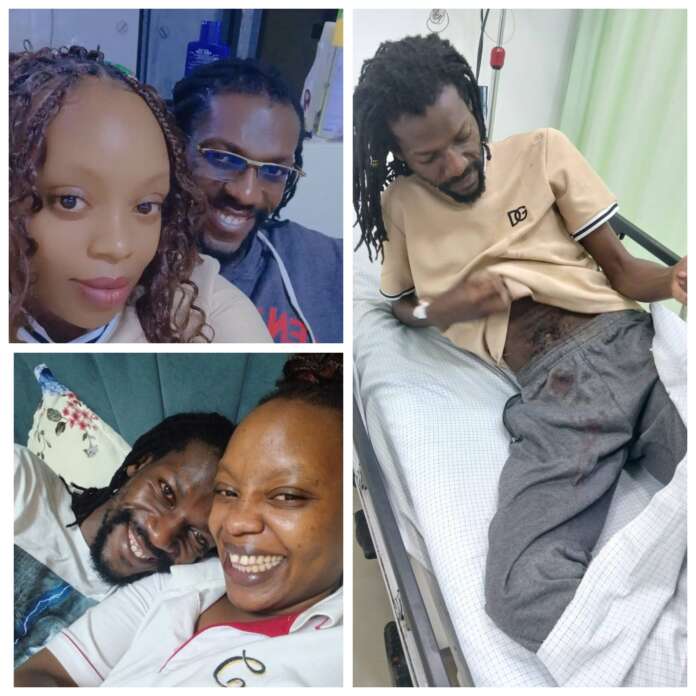
The latest drama became the subject of online chatter after Nduga posted graphic photos on social media, showing injuries he sustained during a violent altercation with Sylvia. 

In a Facebook post, Nduga shared disturbing details of an incident that left him hospitalised and nursing a serious injury to his private part. 

According to the post, Sylvia allegedly bit him during an altercation, causing severe pain and rendering him semi-conscious. 

The situation escalated further when Nduga accused Sylvia of taking advantage of his vulnerable state to transfer money from his phone to another number.

He claims that she and her sister, who was also present, attempted to flee the premises but were detained by the management of the establishment where the incident took place. 

He accompanied the post with two photos—one of himself in a hospital bed, appearing to be in pain, and another posing with the woman accused of injuring him. 

Nduga further alleged that Sylvia’s mother visited the hospital and footed part of his medical bill in exchange for him withdrawing a police complaint. 

The women involved were reportedly taken into custody and held at Kileleshwa Police Station, pending further investigations. 

In an exclusive interview with TUKO.co.ke, the outspoken lawyer detailed the events that led to the now-public dispute, stating that what began as a romantic relationship turned into a nightmare. 

“I took Sylvia in as my partner. She had a child and I embraced both of them. At the time, she wasn’t accustomed to the lifestyle I live. I reside in Kileleshwa and do shopping worth KSh 20,000 in one go — this overwhelmed her. My goal was to uplift her, but to her, I became a target,” Nduga recounted. 

Nduga further claimed that his trust was betrayed when he learned that Sylvia was allegedly siphoning money from him to support her baby daddy, who reportedly resides in Eastlands, Nairobi. 

According to the lawyer, a friend tipped him off about the arrangement, revealing that Sylvia was secretly financing her former partner using funds obtained from Nduga. 

“I discovered she was channelling my money to support her baby daddy. This revelation shocked me, especially given the sacrifices I had made to provide for her and her child,” he said. 

Upon confronting her, Nduga alleged that Sylvia became aggressive and retaliated violently and unexpectedly. 

One of the most harrowing parts of the incident, according to Nduga, was the alleged physical assault. 

He claimed that during an altercation, Sylvia bit his private part, causing serious injuries.

He later shared photos of the wound, which he says he sustained during the attack. 

“She attacked me and bit a very sensitive part of my body. I was left nursing injuries and even passed out at some point. Later, I discovered that she had taken advantage of my state to swindle more from me,” he claimed. 

Nduga initially reported the incident to authorities and pressed charges, but says he later withdrew the case following a plea from Sylvia’s mother.

He, however, made it clear that this was on strict condition that her family would pay for his medical treatment, a promise he now claims has not been honoured. 

“I withdrew the case out of respect for her mother, who personally came and begged me. But I made it clear, they had to cover the treatment costs. Since then, they’ve gone silent. They don’t pick up my calls,” he said.

“If they continue dodging me, I’ll have no choice but to press new charges. I won’t let this slide, especially after suffering both emotionally and physically,” he warned. 

“If they continue dodging me, I’ll have no choice but to press new charges. I won’t let this slide, especially after suffering both emotionally and physically,” he warned. 

"Jezebel" - Kenyan lawyer accuses ex-lover of biting his private parts during domestic dispute

Linda Ikeji

A Forgotten Hero: Who remembered that Abubakar Rimi initiated 1st May as public holiday amidst criticisms in honour of Nigerian Workers?

By Kunle Odufuwa

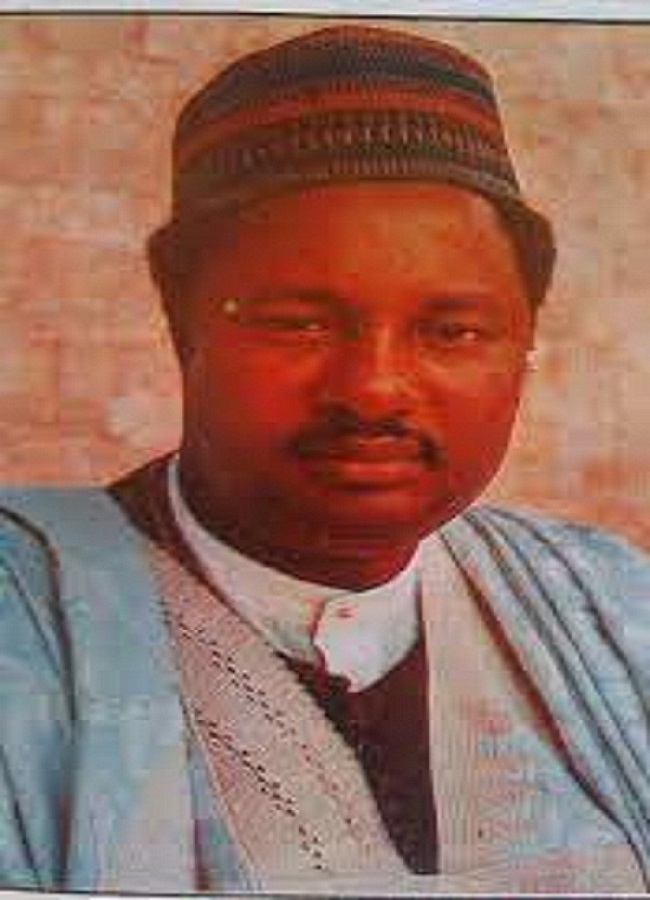
We celebrate May Day as a work free day every year but forget to celebrate the late Abubakar Rimi the then Peoples’ Redemption Party (PRP) Governor of Kano state and a member of the Progressive Governors Forum in the Second Republic who first declared May I, as a public holiday in Nigeria in 1980 amidst criticisms and condemnation by the members of the then ruling NPN that Rimi’s action was aimed at inciting the Nigerian Workers against the then Federal Government headed by Alhaji Shehu Shagari.

Interestingly, the government declared May Day as a national work-free day the following year (1981) in an attempt to ensure that Rimi and the other progressive governors who had decided to adopt Rimi’s initiative did not take political advantage of the situation.

Today, May Day is a national holiday in Nigeria in line with other countries of the world.

Thanks to the revolutionary decision by the late Alhaji Abubakar Rimi.

May his patriotic soul rest in perfect peace. I wish Nigerian Workers a rewarding May Day. ALUTA CONTINUA.

– Kunle Odufuwa

Meanwhile…

In the United States, the holiday was first celebrated in 1886, as part of the struggle for the eight-hour workday. On May 1st of that year, hundreds of thousands of workers across the country went on strike, demanding better working conditions and shorter working hours.

ICPC reveals N71.2b out of N100b student loan diverted from universities by management

One of Nigeria’s key anti-graft monitors, the Independent Corrupt Practices and Other Related Offences Commission (ICPC), on Thursday, disclosed that only a mere N28.8 billion was disbursed to students in various tertiary institutions instead of N100 billion released to the schools.

ICPC revealed that its preliminary findings uncovered that about N71.2 billion has been diverted by the management of different universities that had taken custody of funds.

The spokesman of the commission, Demola Bakare, told journalists in Abuja that key stakeholders, including the Director-General of the Budget Office and the Accountant-General of the Federation, have been invited.

Bakare also disclosed that senior officials from the Central Bank of Nigeria as well as the Chief Executive Officer and Executive Director of NELFUND were invited to provide documentation and explanations relevant to the case.

Daily Trust reports that the Director-General of the National Orientation Agency, Lanre Issa-Onilu, had two weeks raised the alarm that the universities were trying to sabotage the Tinubu-led government on the students’ loan scheme.

Issa-Onilu alleged that no fewer than 51 tertiary institutions were implicated in illegal deductions and exploitation related to the NELFUND scheme, while calling on the anti-graft agencies to unravel the fraud and halt it.

Similarly, reports from the media also alleged that these institutions were said to have made unauthorized deductions ranging from N3,500 to N30,000 from each student’s institutional fees received through the loan fund.

Giving an update on the issue, the ICPC spokesman explained that the commission had swung into action following the alarm, adding that those found culpable would be brought to book.

Bakare said, “The Commission confirmed that its Chairman’s Special Task Force immediately swung into action upon receiving the report.

“Letters of investigation and invitations were dispatched to key stakeholders, including the Director-General of the Budget Office, the Accountant General of the Federation, and senior officials from the Central Bank of Nigeria.

“Additionally, the Chief Executive Officer and Executive Director of NELFUND were invited to provide documentation and explanations relevant to the case.

“Preliminary findings revealed a significant gap in the financial records of the disbursement process. While the Federal Government reportedly released N100 billion for the scheme, only N28.8 billion was disbursed to students, leaving an unaccounted sum of N71.2 billion.”

While giving the breakdown of the NELFUND’s records, Bakare said the ICPC’s strength of investigation revealed that the total money received by NELFUND as of March 19, 2024, was N203.8 billion.

“The breakdown showed that N10 Billion was an allocation from the Federation Allocation Account Committee, N50 billion was from the Economic and Financial Crimes Commission, N71.9B was from the Tertiary Education Trust Fund, while another N71.9 billion was also from the same Tertiary Education Trust Fund,” the ICPC official told journalists.

According to him, responses received by the commission were critically analyzed, and interviews were conducted with the concerned individuals.

He noted that the ICPC, however, found that the total amount disbursed to institutions from inception to date is about N44,200,933,649.00, while a total of 299 institutions have benefited from the funds released.

“To date, the total amount disbursed to 299 beneficiary institutions stands at approximately N44.2 billion, with 293,178 students having benefited from the fund.

“The ICPC confirmed that a clear case of discrepancies has been established in the administration of the student loan scheme and announced that its investigation will now extend to beneficiary institutions and individual student recipients.”

He said the commission would, from time to time, provide further updates as the investigation progresses.

“Comprehensive investigations into the alleged discrepancies surrounding the disbursement of students’ loans under the Nigeria Education Loan Fund (NELFUND) have commenced,” he stated.

When Suspension Is Not Enough: Justice, once compromised, must be cleansed not merely paused

By John Onyeukwu

On April 30, 2025, the National Judicial Council (NJC) concluded its 108th meeting, which took place over two days (April 29 and 30). At the end of that meeting, the Council announced the suspension of three judges for one year without pay. The affected judges are Justice Jane E. Inyang of the Court of Appeal, Uyo Division; Justice Inyang Ekwo of the Federal High Court, Abuja Division; and Justice Aminu Baffa Aliyu of the Federal High Court in Zamfara State. These decisions, among others, have sparked renewed debates about judicial accountability, integrity, and the sufficiency of disciplinary measures within Nigeria’s judicial system.

While the NJC’s action reflects an effort to uphold standards, it also reveals a deep institutional hesitation: Why stop at suspension for misconduct grave enough to merit a one-year penalty without pay? The better course, legally, ethically, and institutionally, would have been retirement or dismissal.

The Legal and Ethical Standard
The Constitution of the Federal Republic of Nigeria, 1999 (as amended), provides under Paragraph 21 of Part I of the Third Schedule that the NJC has the power to “recommend to the President or the Governor the removal from office of judicial officers and to exercise disciplinary control over such officers.” When misconduct is established, the Council must not only ask: What is proportional? It must also consider: What preserves the sanctity of the judiciary?

Suspending a judge for a year implicitly acknowledges severe wrongdoing. But to have such a person return to the bench after a period of “cooling off” is to gamble with public confidence. As Justice Oputa famously said, “Justice must not only be done, but must be seen to be done.” A judge who has been found wanting, especially at this level, casts a long shadow over every case they hear post-reinstatement.

Other jurisdictions have addressed this issue with finality. In the United States, for example, Article III judges may only be removed by impeachment, but once serious misconduct is proven, retirement (with or without benefits) or resignation is the norm, never mere suspension. The Judicial Conduct and Disability Act of 1980 permits suspension in minor cases but insists on protecting the public’s perception of judicial impartiality.

In the UK, the Judicial Conduct Investigations Office (JCIO) has consistently emphasized that “continued public confidence in the judiciary is the overriding consideration in judicial discipline.” Retirement or removal is applied when that confidence is irreparably damaged, even absent criminal conviction.

Practical Implications of Reinstatement
There are two dimensions to this problem: institutional trust and litigant prejudice. Can litigants trust the judgment of someone previously sanctioned for misconduct? Can fellow judges rely on them? Will lawyers approach their courtrooms with full faith?

Bringing back judges who have served suspension, particularly of such duration, reinforces a culture of minimal accountability. It undermines the credibility of judicial oversight mechanisms and disincentivizes whistleblowing within the system.

The Case for Mandatory Retirement in Serious Misconduct
The NJC should adopt a bifurcated disciplinary policy:

For minor infractions, suspension, warning, or reprimand should suffice.

For grave infractions, suspension should only be used as a temporary measure while processes for retirement or removal are finalized.

The NJC can look to Section 292 of the 1999 Constitution, which allows for removal for “inability to discharge the functions of office or for misconduct.” This power should be used not sparingly, but responsibly and decisively.

Conclusion
The judiciary is the last hope of the common man. A judiciary that tolerates the return of judges guilty of serious breaches sends the wrong message, to its peers, to legal practitioners, and to the Nigerian people.

Suspension may serve a bureaucratic function. But justice, integrity, and public trust demand more. Where misconduct is proven and grave, reinstatement should never be an option. Instead, the NJC should firmly recommend retirement.

Justice, once compromised, must be cleansed not merely paused.

The views expressed by contributors are strictly personal and not of Law & Society Magazine.

TIPS