Home Blog Page 363

Awolowo and the North’s latest warning 

By Lasisi Olagunju

When vultures surround you, stay awake so that you do not die a stupid death. Whether you are in business or you are in politics or you are anything of value, stay alive and stay alert. People shave people’s heads in their absence. In 1938, Britain was rumoured to have toyed with the idea of donating Nigeria to Germany as one of its several offerings of appeasement to Hitler. I read of the “strong rumour” in Chief Obafemi Awolowo’s first book, ‘Path to Nigerian Freedom’, published in 1947 – page 38.

Hitler, two years earlier (September 11, 1936), insisted on “Germany’s right to colonies.” Nine months before Hitler’s insistence, his minister of propaganda, Goebbels, served a notice that “the time will come when we must demand colonies from the world.” In June 1938, Mary E. Townsend published her ‘The German Colonies and the Third Reich.’ She cited two successive editions of the London Times of October 1936 which reported that Hitler had “gained concessions in Africa.”

The German cup, as it turned out, passed from Nigeria. The rumoured offer to Hitler was eventually not consummated but the mere thought of it tells how ‘valued’ our country and its people were in the heart of those who possessed it. But it is needless to run from fate. You put destiny in a sheath, it destroys the sheath; you put it in a scabbard, it ruins the scabbard. If Nigeria missed being possessed by Germany’s Hitler in 1938, the country’s subsequent history of abduction and rape up to this moment is proof that our fathers were right with their theory of inevitability of fate. A snake swallowing its tail, and swallowing it hard is Nigeria. It is a pool of water-snakes feasting on hapless fishes.

On Friday this week, it will be 38 years since Chief Awolowo died. Two months before he died on 9 May, 1987, Awo spoke rather cryptically of his “continuing to serve even after death.” Almost 40 years after his transition, his views of Nigeria, his analyses of the systemic problems of the country and his solutions to them have remained the main issues of discussion.

Awolowo’s ‘Path to Nigerian Freedom’ has proved a worthy carrier of its title. But the path it shows has remained not taken. The late Pius Adesanmi once, at an Awolowo Foundation event, questioned the choice we make as a country. He spoke on what he called “Igbo ree; Ona ree (the bush is here; the path is here).” The choice was – and is – for us to make. We’ve consistently chosen the bush.

I read the Arewa Consultative Forum (ACF)’s boast of last week that the North had the muscle and the number to choose the next president for the other parts of the country. It reminded us that: “The North has 19 out of the 36 states. We also have the FCT as a veritable component. We have a majority in the Senate, the House of Representatives, the National Economic Council as well as the Council of State. The North occupies close to 75 percent of Nigeria’s land area and about 60 percent of the population. An area that is this big and this strong can never be subdued by any opponent…For the moment, it will suffice to say that Northern Nigeria is watching and auditing the actions of the elected and appointed officials, especially at the federal level.”

Northern leaders always flaunt their population and land mass to intimidate the South. Assets when not harnessed to profitability become liabilities. We say here that a vulture may be a large bird, but what it feeds on is rotten flesh. The elephant in its ponderous majesty is as clumsy as they come. Àwòdì tí ń gbé adìẹ lọ́sàn-án ò sanra tó igún. I wonder why it did not occur to the ACF that kites that snatch chicks in broad daylight do not have vulture’s large frame. It is not by size.

Everything the ACF said was a threat directed at President Bola Tinubu on his second-term ambition. Of course, the Tinubu pigeon got the full import of the incantations from the Northern raptor. He rushed to Katsina on Friday – two days after the warning shot was fired. He was there for two days, he even slept there. Tinubu should clap for himself. Did Buhari sleep one night anywhere in Southern Nigeria in his eight years? The visit was Tinubu’s appeasement offering to Hitler to avoid a ‘world war’. Let us hope the aggrieved are pacified now.

Unlike what our teachers taught us, sovereignty is no longer the supreme will of the state; its locus is with any set of human beings “sufficiently strong to compel obedience” to their whims. The North self-assuredly thinks it is the Nigerian sovereign. It said so through the ACF and the president got the message.

The North thought Goodluck Jonathan was its problem; it got its traditional enemies in Benue and Plateau and the West to join it in removing Jonathan. The North thought having a northern president would solve its existential problems. It brought in Muhammadu Buhari. Under Buhari, the North’s problems multiplied in geometric proportions. It thought a Muslim Muslim ticket was what it needed to be safe and feed well. It brought in a ‘Muslim’ government in May 2023. Less than two years into the tenure of that government of faith, the North is grunting and grumbling very loudly; it shouts marginalization. A million change of government won’t help the north. It must help itself.

The ACF also expressed concern over insecurity in the North. It said the security challenges in the North were worsening by the day. It then called on the federal government to act swiftly “before it becomes too late.” I will be happy and dance if I find out that it is not already too late.

By now, it should be clear to the wise that the problem of the North is not, strictly, Bola Tinubu and his ways. The problem wasn’t Jonathan; neither was it Buhari. The problem of the North is the North – its bad ways. Why would a region not have problems of mass poverty when it spurns mass education of its mass children, youths who own tomorrow? Mass procreation plus mass illiteracy must equal mass misery. It is simple arithmetic. Why will there not be blistering insecurity where mass poverty reigns? If you turn your back to where the world faces, you won’t see what the world sees. How will a president relate with a people that take offence when asked to position their eyes towards the future? The best rules the rest in that country called Saudi Arabia. The elite there have used education to elevate their country and their faith. China’s huge population is a huge economic blessing to it. But, the key to northern Nigeria is in the hands of a band of clerics and dark elites who exploit their people’s unquestioning faith in their region and religion, warts and all.

I read a beautiful piece on Saturday from a gentleman from the North, Idris Muhammed Abdullahi. He wanted a deliverer for northern Nigeria. Like the ACF and its leaders, Abdullahi didn’t write for Nigeria; his interest was the North. He lamented the decay and disappointment that rules his region. He cited the establishment of the Northwest Development Commission (NWDC). He said it was supposed to mark a turning point in the development of the region. “What then happened?” he asked and added that: “One man handpicked all its executives. The commission has now become a personal ATM, hemorrhaging funds meant for schools, irrigation, rural roads, and youth empowerment. It has transformed from a symbol of hope into yet another playground for elite looting.”

What the gentleman wrote of the North is true of everywhere in the country. And it is historical. Nigeria is an elite PoS – or the soup pot of the powerful. How each of our people reacts to it has also historically made the difference. Wrong, when accommodated, festers. Chief Awolowo said it in a more elegant and profound way 46 years ago. He told ‘Africa’ magazine in April 1979 that “since independence, our governments have been a matter of a few holding the cow for the strongest and most cunning to milk. Under the circumstances, everybody runs over everybody to make good at the expense of others.”

The most popular page in Awo’s ‘Path to Nigerian Freedom’ is page 47. That is where you find the famous quote: “Nigeria is not a nation. It is a mere geographical expression.” Seventy-seven years after that book was published, to be called Nigerian has remained “merely a distinctive appellation” distinguishing “those who live within the boundaries of Nigeria from those who do not.” Each constituent part of the country has held tight to its gene. When we talk or act, it is for where each of us comes from. Read the ACF statement again. It speaks about ‘us’ and ‘them’ and boasts of assets without discussing the liabilities.

The groups in the South think the North a pampered, pompous parasite. Think of why Max Siollun, author of ‘What Britain Did to Nigeria’, described Nigeria as “just a page in a colonial accounting ledger” and why the British officially took the 1914 amalgamation to be a marriage between a poor, hapless husband and a helpless “southern lady of means.”

Check the tone of the ACF complaints; the challenges of governance have been reduced to a North versus South battle. Now, I ask: For how long shall we remain so “tightly fragmented” and have our growth stunted?

In the 1947 book above, Chief Awolowo observed that the various nations that make up Nigeria cannot progress and prosper together unless they are properly organized in a federation. “The languages differ…Their cultural backgrounds and social outlooks differ widely; and their indigenous political institutions have little in common. Their present stages of development vary.” It is in that book that you read how, 77 years ago, the ethnic groups in the South readily embraced Western civilisation while “the extremely conservative” Hausas and Fulanis took “very reluctantly to Western civilization.” As it was in 1947, so it is in 2025. If thrown up a hundred years from now, the northern hand fan will land side down.

A copius quote from Chief Awolowo here: “All these incompatibilities among the various peoples in the country militate against unification. For one thing, they are bound to slow down progress in certain sections, and on the other hand they tend to engender unfriendly feelings among the diverse elements thus forced together.” Chief Awolowo warned that “incompatibilities such as we have enumerated are barriers which cannot be overcome by glossing over them, They are real, not imaginary obstacles. Those who place these groups under the same constitution ignore them at their peril – more so, as it appears that these incompatibilities tend to grow in size as those concerned become more educated and civilized.”

If you can find time to read the book, check what the author wrote while citing the Welsh and the Scottish peoples’ experiences and agitation for self-rule. Check his words on other positive examples and the reason some of us say we are postponing the evil day if we think elite looting facilitated by a unitarised Nigeria will ever bring peace and plenty. Listen to Chief Awolowo: “For upwards of seven hundred years, the Irish people struggled to, and eventually did break away from England in spite of the fact that the latter did everything possible to give the former equal status within the British Constitution.” When you read him, you discover that, indeed, two of the three other examples he cited, Yugoslavia and Czechoslovakia, have already unravelled as he predicted; the third, the Dutch-speaking Flemings of Belgium, despite several constitutional interventions, still demand degrees of autonomy. Some of them, in fact, have not stopped chanting “Let My People Go.”

So, what is the solution?

The solution is knowing that there is no regeneration in spring water flowing towards the desert. Tell the North, tell the South. “Whatever would direct itself after the setting sun, an ashen death lies in wait for it” (Ayi Kwei Armah). Chief Awolowo pointed at the empirical facts of history which he said “are enough to guide us.” He posited that it had been shown beyond all doubts “that the best constitution for… diverse peoples is a federal constitution.” He pointed at the Constitution of Switzerland, which he said “is acclaimed to be the best and the most democratic in the world since it gives complete autonomy to every racial group within the framework.”

In a truly federal Nigeria, there won’t be allegations of Muhammadu Buhari regime marginalising the South; neither will there be a Bola Tinubu government suffering the stigma of being a Yoruba government. A weak centre will be too unattractive to attract do-or-die politics; neither will it serve as a fetter holding down any part that wants to run. It will serve any one content with crawling to continue to crawl – as we compulsorily do today.

But can we take a redemptive bend? The wise would say we are too far gone to retrace our steps. “No spring changes the desert. The desert remains” – that, again, is from Armah. Creating a workable system – a system that works – is what we have refused to come up with. We know what it is and how it will serve us, but we just won’t go for it. For us, the bush is the way.

The views expressed by contributors are strictly personal and not of Law & Society Magazine.

Imminent implosion that will consume the forces against civil liberties

By Dr Vincent Adedara

Corruption is the bane of greatness in Nigeria, if you can compromise and cooperate with the corrupt institutions in Nigeria, you will not be incarcerated. I witnessed a raid of a building around my house in the night around 1.30 am by EFCC, l thought there was an armed robbery attack until l saw a bus with inscription of EFCC, I was in charge of the house because the Landlord is not in Nigeria, EFCC broke the doors of the house when the residents were fast asleep and surrounded the house and shooting to the air. It was a terrible day as we were afraid of stray bullets.

The operation was not different from armed robbery attacks. Some boys were raided and taken into custody, their cars were detained after releasing them as collateral. One of them told me they said he must pay in dollars to have his car released. Most often, the car will be abandoned by these boys, and next, you can’t trace the cars again. The same Gestapo way of arresting Nigerian citizens as if armed robbers are on a raid is the style through which Very dark man was arrested, and they will not release him soon because he may not be willing to compromise or cooperate with them in their understood institutional language.

Do Anti Anti-Graft Agency prosecute high-profile corrupt officers in power who have destroyed the economy of the country? Anti-graft agencies should stop being a political tool in the hands of the government in power and stop chasing squirrels when they have elephants to capture.

Have you not seen uniform officers going around with POS machines? If fraudsters are caught, they have to pay a percentage of the money in their accounts through ATM or money transfer or bitcoin transfer or payment in dollars at times for them to be released or go to jail through trumped-up charges and unfounded complex accusations that will make you settle quickly. And if you are eventually charged, your bail conditions will be made stringent so as to stay long in prison because you failed to compromise. That is why you will see fraudsters arrested in the night, and the following morning, you will see them in the street again.

A percentage had been paid. People are afraid to say the truth because, you can be roped in for what you know nothing about and be left in jail for a long time. That is the system in Nigeria, lots of innocent people suffer more for what they knew nothing about in the country especially the poor than what they know. An innocent person will be coerced into paying for trump up offences and it must be done within time given.

An officer in Uniform only knows a bible verse in the Bible and once quoted it to me when l was insisting on my right some time ago. He quoted Matthew 5:25 precisely and accurately: “Settle matters quickly with your adversary who is taking you to court. Do it while you are still together on the way, or your adversary may hand you over to the judge, and the judge may hand you over to the officer, and you may be thrown into prison”.

They are very smart and have support from the top hierarchy, and if you fail to play along, you will be frustrated. Even lawyers have compromised. Instead of standing strong, they will tell you, if you can’t beat them, you join them. We need urgent intervention in Nigeria, maybe intervention through revolution without bloodshed.

All segments of our institutions are corrupt by 80 percent, including civil service, police, ICPC, and EFCC in particular. The eighty percent will eventually corrupt the remaining twenty percent of officers with integrity. All the officers in uniform are only doing “thief snatched it, thief collected it.” You can be fraudulent. Just have enough proceeds of crimes in your account to pay, and you will soon be free. There is no saint anywhere in our country; most of our security institutions are not better than Yahoo boys institutions.

We are in a country where a sitting Senate president was alleged with sexual harassment on different occasions and the first victim called “Port Harcourt girl” had allegedly slapped him for such harassment in the past and the second victim alleged huge sum of money was paid into her account as “sexual advance fee”, yet we allow the man to still preside as a Senate president. l can understand that everything is possible in Nigeria, including the Senate President getting a third time for President Tinubu.

Insofar as he is loyal to the government, he is untouchable, and he can commit any atrocity and still be ignored and covered. A chairman of the Ethics Committee in the Senate was indicted for fraudulent practices in the USA. He is still presiding because he is loyal to his fellow Mafias. We have many corrupt individuals with cases in court still being reappointed into sensitive positions. It is a Nigerian style of leadership.

To submit a petition at FCID Alagbon, Lagos, you will have to pay ₦50000 “facilitation fees,” and in Abuja, it is ₦100000. And if you refuse to pay the “facilitation fees”, your petition will be “put away”, another vocab clause. I see this as a pre-bribe fee, to be followed by an interlocutory fee, and post post-investigation fee may be the last fee.

Finally, if your matter is considered for investigation especially outside jurisdiction, for the men in uniform, it depends on institutions without exception, you will pay for fueling, logistics and hotel bills of the officers and we say they will uphold justice, equity and rule of law, unofficial financial payments will becloud the sense of good judgement of the officers and he who plays the piper will eventually dictate the tunes, justice will become cash and carry system in Nigeria more soon with a blatant obstruction of access to justice even for the rich.

Innocent people are being killed extra judicially because of money and bribes. Justice is a no-go area for the poor in Nigeria. Justice is for the highest bidders, the more money or influence you have, the better justice you get. There is no equality again but a mere bulldog and paper tiger in the constitution, especially for the poor.

This is the reason everyone especially the young men are looking for money at all costs so as to belong and be part of the society where money and influence dictate justice direction, the position you will occupy in Nigeria depends on money and influence, there is no merit again, then Nigeria is sitting on gun powder kegs, kidnapping, robbery and fraud will increase mostly because of nepotism, inequality and corruption of the system.

If you don’t believe it, check high profile offices in Nigeria with third class graduates and even school certificates leavers frolicking because of influence and money they can garner to bribe through while we have first class graduates and even master and PhD holders riding “Okada” for livelihood because of insensitive people we call leaders in Nigeria, Youth are becoming money mongers because we have portrayed to them that no good things can come from anyone who has no millions in his or her accounts.

Institutional failures in Nigeria are driving many of our young men into survival strategies, and anti-graft institutions are running after them to share out of the corrupt proceeds they managed to grab fraudulently.

Civil service is the worst, they help politicians to siphon money, teach them how to perfect their corruption, no level of government is excepted, corruption is endemic and viral. Until there is a serious reform in the civil service, the fight against corruption will remain a mirage in Nigeria.

There is an implosion waiting to occur in Nigeria, which will consume the forces against civil liberties. Endsars is a replica , it is going to be spontaneous and uncontrollable if we don’t nip it at the bud timeously and many political classes and those responsible for the institutional failures will be caught in the webs. My intuition cannot be wrong.

Adedara is a solicitor in Nigeria, England and Wales

The views expressed by contributors are strictly personal and not of Law & Society Magazine.
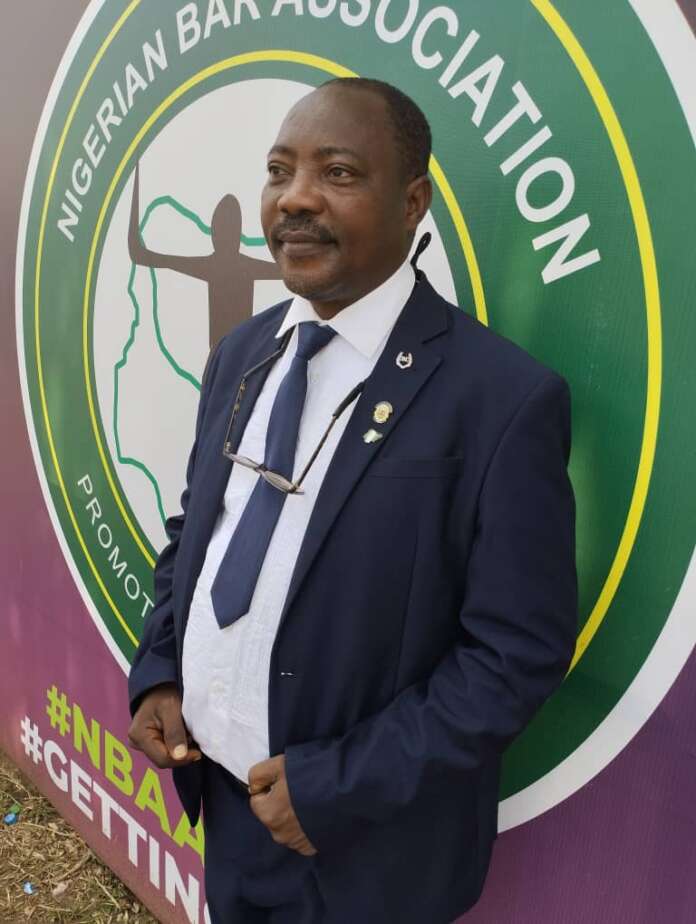
How N80bn was discovered in sacked refinery MD’s accounts amid $2.96bn probe

The Economic and Financial Crimes Commission (EFCC) has uncovered a staggering N80 billion in multiple bank accounts belonging to one of the recently sacked managing directors of the Nigerian National Petroleum Corporation Limited (NNPCL) refineries.

The discovery was part of an ongoing investigation into the alleged misappropriation of $2.96 billion for refinery rehabilitation.

LEADERSHIP recalls that the anti-graft agency arrested former managing directors and senior officials of the three major state-owned refineries, including Port Harcourt Refining Company (PHRC), Warri Refining and Petrochemical Company (WRPC), and Kaduna Refining and Petrochemical Company (KRPC).

Recall the NNPCL management had also fired the managing directors of the three refineries under its purview.

Some other senior officials of the national oil firm were also asked to leave, including a former chief of the National Petroleum Investment Management Services, a subsidiary of the NNPCL, Bala Wunti.

The new management also asked many officials with one year to their various retirement dates to leave.

The EFCC is now probing the disbursement and usage of $1,559,239,084.36 for the Port Harcourt refinery, $740,669,600 for the Kaduna refinery, and $656,963,938 for the Warri refinery, a total of $2,956,872,622.36.

Among those in EFCC custody were former Managing Director of PHRC, Ibrahim Onoja and his counterpart at WRPC, Efifia Chu.

A senior official at the EFCC, who pleaded anonymity due to the sensitivity of the matter, said on Saturday that arrests were part of a wider investigation into how billions of dollars were allegedly siphoned from the national coffers under the guise of quick-fix refinery maintenance.

“We are investigating the money that was released for the rehabilitation of all three refineries—money disbursed in recent times. All the principal officers within that time frame are being invited,” the source revealed.

“Some have been arrested already, and we are still on the lookout for others. Nigerians are interested in seeing our refineries work. We are asking: where is the money, and what has happened to the refineries?”

Another NNPCL insider disclosed that one of the sacked MDs had been with the EFCC for about a week.

“Large amounts have been discovered in his accounts. About N80bn has so far been discovered in his various accounts. The way things are going, it may be bigger than Emefielegate.”

Further confirmation came from a different official who simply stated, “All the three of them are being investigated by the EFCC. It is indeed sad!”

Meanwhile, leaked official documents have revealed that the EFCC’s probe extended to the immediate-past Group Chief Executive Officer of the NNPCL, Mele Kyari.

In a letter dated April 28, 2025, and titled ‘Investigation Activities: Request for Information’, addressed to the current leadership of the NNPCL, the anti-graft commission named Kyari and 13 other senior executives in connection with alleged abuse of office and financial misappropriation.

The EFCC requested the NNPCL to furnish certified true copies of emoluments and allowances for the listed officials, including those already retired. Others under investigation include Abubakar Yar’Adua, Isiaka Abdulrazak, Umar Ajiya, Dikko Ahmed, Ademoye Jelili, Mustapha Sugungun, Kayode Adetokunbo, Efiok Akpan, Babatunde Bakare, Jimoh Olasunkanmi, Bello Kankaya, and Desmond Inyama.

“The commission is investigating a case of abuse of office and misappropriation of funds in which the underlisted officials of your organisation featured,” the document stated.

“In view of the above, you are kindly requested to furnish certified true copies of their emoluments and allowances, including that of those who have retired and no longer work with your organisation,” the anti-graft commission told the NNPCL boss.

The NNPCL’s spokesperson, Olufemi Soneye, has not reacted at the time of filing this report.

Leadership

Lawyers bemoan perennial snail pace in justice delivery, advocate for reforms

Over and over, conversations have been held about how the delay in justice delivery has frustrated litigants and made a mess of the court’s processes and many Nigerians’ quest for justice.

Although the blame has sometimes been placed on lawyers, many of them have spoken out against trial delays amid calls for holistic reform in the Nigerian judiciary.

They maintain that the prolonged and delayed trials of suspects are unhealthy and dangerous for the nation’s judicial system.

Prominent lawyers in the country told LEADERSHIP that confidence in the judiciary will continue to be eroded by prolonged and delayed prosecution of suspects.

Weeks ago, at a meeting with the Inspector-General of Police, Mr Kayode Egbetokun, the Chief Justice of Nigeria, CJN, Justice Kudirat Kekere-Ekun, had blamed prison congestion and prolonged trials on poor investigative processes, a lack of thorough case preparation, and delays in prosecution.

Justice Kekere-Ekun urged the police and other sister agencies to complete their investigations before filing charges to prevent cases from being dismissed due to a lack of evidence.

The CJN called for enhanced coordination among the police, the Ministry of Justice and the Judiciary to ensure seamless prosecution of cases.

The CJN further expressed concern over some law enforcement agencies’ non-compliance with court orders, saying such an attitude weakens the justice system’s integrity.

She said the rule of law requires strict adherence to judicial decisions, adding that any disobedience undermines public trust in law enforcement and the judiciary.

However, a senior advocate of Nigeria, Abdul Balogun, said failure to adhere to the rule of law by practitioners in the justice system is part of the causes of prolonged trials.

According to him, if the problem is not checked as soon as possible, it could cause serious disruption to societal peace and order.

“It’s a time bomb waiting to explode if nothing is done. We can’t pretend that all is well with the country’s judicial system. Some areas need to be looked into, and one of these areas is delayed cases and prolonged trials of suspects.

“Stakeholders should come together and find a way out, in the situation the justice system has found itself. If trials are prolonged, some material elements in the case may be forgotten, affecting justice delivery. Many innocent Nigerians have been sentenced to death or life imprisonment as a result of delayed trials”, he said

Also, a US-based rights activist and founder of the United States Law Group, Mr Emmanuel Ogebe, condemned the prolonged and delayed trials of suspects, saying some of his clients have been victims of Nigeria’s poor justice delivery system.

Ogebe mentioned the case of one of his clients who had been on death row for 10 years until the Supreme Court sealed his fate on March 8, 2025.

According to Ogebe, his client, Sunday Jackson, a student in 2015, was said to have murdered a Fulani herdsman during a misunderstanding.

He said following his prolonged trial, Jackson lost everything, including his wife, his home, his belongings and his house.

Ogebe said, “When the man was in prison, his second daughter was born, and he did not know till I went to see him in prison after seven years. Are we living in a civilised society?

“I was the one who told him that his wife gave birth. He didn’t even know his wife had left. We were looking for his photograph. His uncle said herdsmen had destroyed his house, and therefore, they could not recover his pictures.

“I later called and asked them to ask the ex-wife, and they said the ex-wife had died. So, the man had lost everything already. Even if you release him now after ten years, what will he return to? Now, his life will be taken; this is unacceptable.”

Another lawyer, Suleiman Ale, called on the judiciary’s leadership to urgently find a solution to the problem.

According to him, most of the time, poor, innocent Nigerians are the victims of an inefficient justice system. “The rich can always find a way out to expedite their cases in court, but the poor, who are still struggling to survive, may not have the means to push for the expeditious hearing of their cases”, he said.

LEADERSHIP reports that a greater percentage of inmates held in custodial centres are awaiting trials, inmates, some of whom spend months and years behind bars due to inefficiencies in the justice administration process

Why do popes choose different names and what could the name of the new pope be?

By Issy Ronald

Like the other ceremonies and traditions that accompany the advent of a new pope, his newly chosen name will be imbued with centuries of Catholic history and dissected for its many layers of meaning.

Changing his name is one of the first actions the new pope takes as head of the Roman Catholic Church and can play a hugely symbolic role in setting the tone for his pontificate.

It is a precedent that was set in the early Middle Ages and, while there is no doctrinal reason for a pope to choose a new name, it has become part of the election process.

So, how did this tradition come about, what are the meanings behind different papal names, what name could the next pope choose and how will it be announced?

Why do popes choose a new name?

St. Peter, the first pope and one of the 12 apostles, was renamed from his birth name of Simon by Jesus, but this was before he became head of the church.

Another 500 years would pass before Pope John II, who was head of the church from 533 to 535, started the papal tradition when he shed the name Mercurius, which he thought was too like the name of the pagan god Mercury.

The next pope to change his name was Peter Canepanova in the 10th century, who became John XIV to avoid being called Peter II (more on that below), said Liam Temple, assistant professor in the history of Catholicism at the Centre for Catholic Studies at Durham University.

After the 10th century, taking a different name became common practice for popes once they had been elected, as popes from countries such as France and Germany adopted more Italian-sounding names to mimic their predecessors.

And that then became the custom, with only a handful of popes keeping their baptismal names since, including Marcellus II and Adrian VI, who both served as head of the church in the 16th century.

What makes a pope choose a specific name?

Each name is steeped in its own history and connotations, linked to the achievements or failings of the previous popes or saints who carried it.

“Linking to the names of previous popes who weathered crises, inspired reform, or were incredibly popular can often, although not always, play a role in the choosing of a name,” Temple told CNN.

For example, Pope Francis chose his papal name to honor St. Francis of Assisi, with his love for peace and nature, as well as his care for the poor and focus on cooperation between different sects of the church. These associations established the priorities for Francis’ papacy.

His predecessor, Pope Benedict XVI, chose his papal name to show his commitment to peace and reconciliation by honoring St. Benedict and Pope Benedict XV, who was head of the church during World War I, Temple said.

Are any names off-limits?

One name that the new pope definitely won’t adopt is Peter, out of respect for the first pope, St. Peter the Apostle – but also perhaps because of a centuries-old prophecy that Peter II will be the last pope to serve.

There are other names that aren’t necessarily off-limits but are less likely to be chosen because of their associations with the most recent pope who bore them, said Temple.

He identifies the name Urban as an unlikely candidate for the new pope because it would “harken back to Urban VIII, who started the trial of Galileo Galilei, and would not sit well in modern debates about science, faith and religion.”

In a similar vein, the name Pius would evoke memories of Pius XII, whose role during World War II has been increasingly criticized, Temple added.

What could the next pope be called?

If the new pope wishes to continue on a reforming path, Temple said that names like Leo, referencing Leo XIII who was known for his dedication to social justice, fair wages and safe working conditions, or Innocent, referencing Innocent XIII who sought to root out corruption, might be appropriate choices.

A new pope who is elected from the Global South, like Pope Francis, may also choose a name adopted by early non-Italian pontiffs such as Gelasius, Miltiades or Victor, who all hailed from the African continent, Temple added.

Over the centuries, there have been 44 papal names used only once – most recently Pope Francis’ own.

His decision to choose a unique name had “massive historical ramifications,” Temple said, for “it had been around 1,100 years since the last uniquely named pope in the form of Pope Lando, whose pontificate lasted less than a year in the 10th century.”

John is the most popular name, with 21 popes choosing to adopt it – although, somewhat confusingly, the last pope to take that name was John XXIII, after historians accidentally misnumbered the popes after John XIV.

Gregory and Benedict are also popular pontifical names with 16 and 15 uses, respectively, while Innocent and Leo come close behind with 13 uses each. (Benedict X was declared an antipope, and expelled from the papal throne, hence the discrepancy in numbering for subsequent Benedicts.)

How will the new pope’s name be announced?

After white smoke has risen from the chimney of the Sistine Chapel and the bells of St. Peter’s have rung, the newly elected pope’s name will be conveyed to the world in a Latin pronouncement.

The senior cardinal deacon will step onto the central balcony of St. Peter’s Basilica, accompanied by two priests, and will deliver the iconic announcement: “Habemus Papam” (“We have a pope”).

The new pope’s name, as well as his baptismal names, will be translated into Latin in the announcement but his former surname will remain in his native language.

For example, when Pope Francis was elected in 2013, his given names of “Jorge Mario” were delivered as “Giorgio Marium,” but his surname “Bergoglio” remained the same.

His papal name was announced as “Franciscum” and was the last word of the proclamation, as is customary.

Culled from CNN

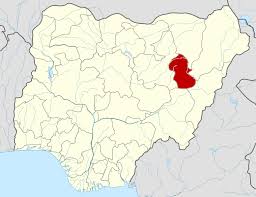
The Gombe Christian procession deaths

Gombe State

By Tribune Editorial Board

During the Easter celebrations recently, five persons were killed and 13 others injured in a truck accident in Tashan Gona in Billiri Local Government Area of Gombe State. According to the sector commander, Federal Road Safety Corps (FRSC), Samson Kaura, the incident occurred at about 7:20 a.m. on Easter Monday after a truck laden with grains suffered brake failure and lost control, veering into a group of Christian faithful who were participating in a religious procession to mark Easter.

The incident was also confirmed by the Gombe State Police Command, which said the victims included two males and three females, adding that eight others were receiving treatment and responding positively at the Federal Teaching Hospital, Gombe, and the General Hospital, Billiri. The Command’s PPRO, DSP Buhari Abdullahi, said: “A trailer truck transporting grains from Adamawa State to Gombe lost control due to brake failure while approaching a gathering of Christian faithful who were in procession to celebrate the Easter season in Billiri town.

The vehicle veered off the road and tragically ran into the crowd, including some Muslim residents who were observing from the roadside. Police operatives from Billiri Division swiftly responded to the distress call, providing immediate rescue efforts and conveying the injured victims to the nearest hospital for emergency medical attention. In the aftermath of the incident, some aggrieved youths in the area set the vehicle ablaze, looted shops, and subsequently marched to the Billiri Divisional Police Headquarters.”

The Easter Monday incident was, sadly, the third in six years. In April 2019, eight persons were confirmed dead and 30 others injured as vehicles crashed into religious processions in Alheri junction, Biu Road, Gombe State. An operative of the National Security and Civil Defence Corps (NSCDC) reportedly rammed his car into a procession of Christian youths. The youths, who were celebrating Easter, ran after the NSCDC operative and another occupant of his car and lynched them. Said the chairman of the Gombe State Battalion Brigade of the Boys Brigade, Isaac Kwadang: “The NSCDC officer, though not on official duty, met the procession, exchanged words with the youths, and drove past them. He allegedly switched off his car’s full lights, reversed the vehicle, and rammed the procession killing eight people on the spot.” The Chief Medical Director of the Gombe State Specialist Hospital, Shuaibu Muazu, confirmed that some dead bodies were deposited in their facility.

In December last year, a Sharon seven-seater mini-bus also ‘lost control’ and crashed into a procession of Christians on their way to the Government House and the Emir of Gombe’s palace for the traditional Christmas homage. Although no lives were lost at the scene, several people sustained injuries and were rushed to various hospitals for immediate medical attention. According to an eyewitness, the Christian faithful had just concluded Christmas services at their respective churches in Tunfure and had gathered to begin the procession, singing praises and drumming in high spirits, when tragedy struck.

The eyewitness, who narrowly escaped the crash, said that the vehicle unexpectedly ploughed into the crowd from behind. Said the Gombe State Police Command at the time: “Today, Wednesday, 25th December 2024, at about 1400hrs, Christian faithful from the Tunfure community, while on procession escorted by teams of policemen along Bauchi Road, were on their way to the Emir’s Palace and Government House. A Sharon vehicle loaded with bags of rice, with registration number yet to be identified and driven by an unknown individual, lost control and crashed into the procession, injuring at least 22 people. Thankfully, no lives were lost. The victims were evacuated to the Federal Teaching Hospital (FTH) for medical attention.” The statement added that the vehicle was set ablaze by an angry mob, while the driver fled to an unknown location.

The procession tragedies are, of course, not limited to Gombe State. For instance, during the Easter Monday celebrations in Adamawa State in 2019, a commercial bus rammed worshippers, injuring 17 people. The incident happened in the Numan Local Government Area. One of the witnesses, Stanley Jaule, said the affected worshippers were marching towards a mountain referred to locally as Galilee when the bus crashed into their procession from the rear.

Although accidents can and do happen, the government has a bounden duty to work hard at preventing them, especially when they become rather recurrent. In Gombe, there are suggestions in some quarters that the incidents reported as accidents may have been underlined by some sinister motives. But whether or not such insinuations are true, there is a disturbing aspect to the procession accidents, particularly given their religious and cultural nature and the frequency of occurrence.

If other incidents were mere accidents, the one involving the NSCDC official, who sadly was subjected to mob justice, certainly looks premeditated or at least vengeful, given that the official had been involved in an argument with the procession participants, and manoeuvred his vehicle in an extremely reckless manner that suggested that he drove the vehicle in a fit of rage. Indeed, certain reports of the incident on international platforms ascribed a murderous intent to it.

That is why, even if it does nothing else, the state government, which commendably hinted at the prosecution of the suspects in the present case, must ensure that future processions receive adequate security coverage, and are organised in such a manner as to eliminate the possibility of the loss of life. The processions do not take place all the time, only at Easter and Christmas when the Gombe Christian faithful pay homage to their traditional and political leaders. Society loses nothing by having such processions which, ordinarily, are joyous occasions. It is also instructive to note that the latest accident happened after the vehicle in question veered off the road, meaning that the procession participants were quite mindful of the need to allow free flow of traffic.

Going forward, the organisers should be more security- conscious. Prior to the event, there should be massive public awareness. In the same vein, the government should look into the larger question of the enforcement of traffic regulations. For instance, the reported cases of brake failure may be underlined by a deliberate refusal on the part of the owners/drivers to ensure proper maintenance of trucks. The government must not allow the procession notoriety to continue.

US Congressman rejects gift from visiting members of Nigeria’s Federal House of Reps.

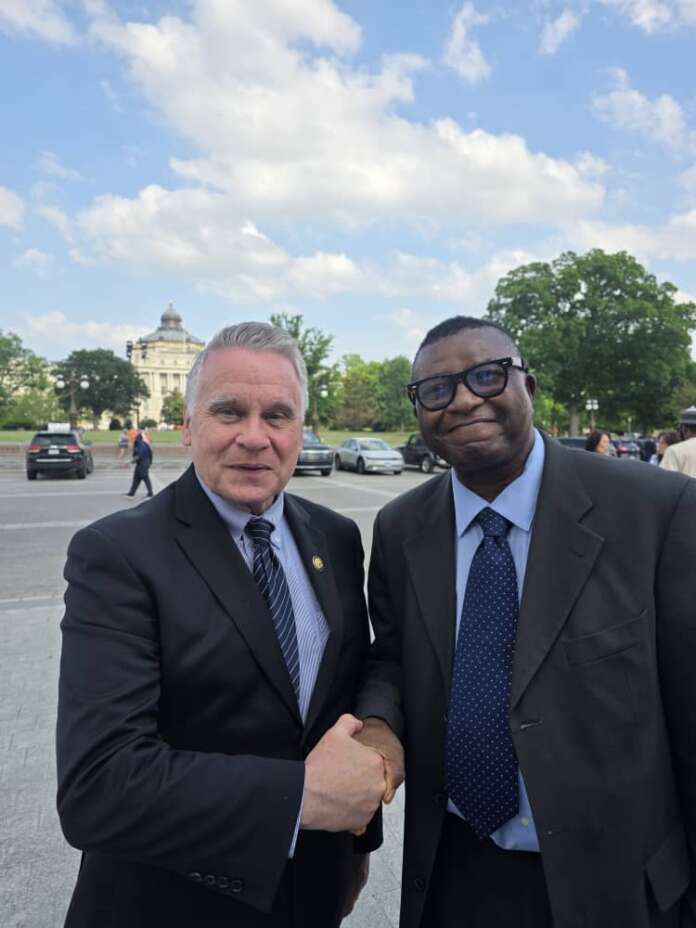
Sonnie Ekwowusi with Congressman Chris Smith, the longest serving Hon. Member of the US House of Representatives, having clocked 45 years in the US House of Representatives

By Sonnie Ekwowusi

A United States congressman, Chris Smith, has rejected a gift presented to him by visiting Honourable Members of the House of Representatives from Nigeria.

Before departure to the US, the Members of the House of Representatives bought a small gift for Congressman Chris Smith, the longest-serving member of the US House of Representatives (He has spent 45 years in the US House of Representatives), to appreciate his scholarship.

However, upon presenting the gift to Congressman Smith, he publicly rejected it, stating that as gentlemen of honour and integrity serving their various constituencies, American legislators do not accept or receive any gift from anybody for their stewardship.

Amazing. We are bringing the rejected gift back to Nigeria. A big eye-opener. A big lesson.

Another thing I found edifying was that the American Senators and Members of the US House of Representatives are very simple and humble people. No airs about them. No pride. No hubris.

Anyway, American democracy has come a long way. Whereas Nigeria celebrates 25 years of kakistocracy, the US shall mark 250 years of democracy next year.

National Orientation Agency says reintegration of repentant Boko Haram fighters essential for national security, as Nigerian military arrests personnel aiding terrorism in north east

The National Orientation Agency (NOA) has expressed its commitment to supporting Operation Safe Corridor (OSC), a federal government initiative aimed at deradicalising, rehabilitating, and reintegrating repentant insurgents into society. 

The pledge was made during a courtesy visit by OSC Coordinator Yusuf Ali and his team to the NOA headquarters in Abuja. During the meeting, NOA Director-General Lanre Issa-Onilu acknowledged the widespread misinformation surrounding the initiative and admitted to having previously held reservations due to limited understanding of the programme. 

In a related development, the Defence Headquarters has confirmed the arrest of four individuals accused of supplying logistics to terrorists in the North-East, including two members of the hybrid forces who had been working alongside troops in counterinsurgency operations. 

The arrests were made during a coordinated military operation conducted between April 26 and 29 across Bama, Kukawa, and Madagali local government areas in Borno and Adamawa states. The Director of Defence Media Operations, Major General Markus Kangye, disclosed that the two hybrid force personnel were found to be aiding terrorist logistics, marking a serious breach of trust within the military ranks.

Kangye expressed deep concern over what he described as a betrayal and warned military commanders to intensify the sensitisation of personnel, particularly hybrid force members, against actions that could undermine ongoing operations against insurgents. 

In a statement shared via the agency’s official X account, Issa-Onilu said his perspective had shifted after engaging with OSC officials and gaining deeper insight into the programme’s rationale. He described OSC as a necessary component of national peacebuilding and security strategy, especially in regions affected by insurgency.


Reintegration of repentant Boko Haram fighters essential for national security - NOA

 He explained that many of those enrolled in the programme were not ideological extremists but individuals who had been abducted, coerced, or misled during insurgent activities in the north-east. He stressed the need for strong community-based reintegration mechanisms, warning that without local and institutional support, many former insurgents would remain isolated and at risk of recidivism. 

The NOA chief commended the military and other security agencies for their ongoing efforts to restore stability, while calling for broader public education to dispel falsehoods and strengthen national cohesion. He emphasized that correcting misconceptions and building community trust were vital to the programme’s long-term success. 

In his remarks, Yusuf Ali highlighted the importance of using both kinetic and non-kinetic approaches in addressing national insecurity. He voiced concern over the persistent stigmatisation of former insurgents and the misinformation that fuels public resistance to their reintegration. 

Ali noted that Operation Safe Corridor, which has been operational for nearly a decade, continues to receive support from the United Nations, state governments, traditional leaders, and religious institutions. He reaffirmed the programme’s objective of contributing to sustainable peace and preventing future cycles of violence.

Blessed Are the Crooked Judges

By Chidi Anselm Odinkalu

When he was a Justice the Court of Appeal in the Port Harcourt Division, during the tenure of Mohammed Bello as Chief Justice of Nigeria (CJN), Alloysius Katsina-Alu was the subject of allegations of serious misconduct which ended up before the Advisory Judicial Committee (AJC), the predecessor to the National Judicial Council (NJC). Upon finding the allegations established, the AJC determined that Katsina-Alu would be denied elevation beyond the Court of Appeal. Less than one decade later, he was a Justice of the Supreme Court. In 2009, he assumed the office of CJN.

On 30 April 2025, the NJC, this time under the leadership of a different CJN, announced that it would similarly ban from elevation for a period of five years, Inyang Ekwo, a judge of the Federal High Court in Abuja. Additionally, the Council decided to place him on a “watch list” for five years and to suspend him from judicial functions for one year.

According to the NJC, these measures became necessary because in a 2023 case, Inyang Ekwo “delivered a ruling in a pending application without hearing the parties” and “ignored an application to set aside the proceedings of the Court conducted in the absence of the parties.” These, the Council found, violate Rules 3.1 and 3.3 of the Revised Code of Conduct for Judicial Officers in Nigeria.

For the avoidance of doubt, Rule 3.1 of the Judicial Code of Conduct requires judges to be “true and faithful to the Constitution and the law and [to] uphold the course of justice….” Nigeria’s 1999 Constitution guarantees fair hearing in judicial and legal proceedings as a fundamental right. Accordingly, Rule 3.3 of the Judicial Code of Conduct requires all judges to ensure that they afford to all parties in proceedings before them a “full right to be heard according to law.”

A judge holds office under the Constitution. Before assuming office, the judge publicly swears to an oath to uphold that Constitution and to do justice to all persons in accordance with it. Put differently, Inyang Ekwo violated the most basic expectations and entitlements of litigants before a court and a judge.

Inyang Ekwo became a lawyer in 1991 after graduating with a degree in law from the University of Cross-River State. After a career spent mostly on the staff of the Corporate Affairs Commission in Abuja, he was translated to the bench of the Federal High Court on 3 January, 2008. His path to this judicial sinecure was smoothed in no small measure by family networks which lock-in closely with the founding military administrator of the South-Eastern State (the legacy state of both Cross-River and Akwa Ibom States).

By 2023 when the facts of his latest mis-conduct arose, Inyang Ekwo had been a judge for over 15 years. Judicial inexperience was not one of his liabilities.

The measures announced by the NJC against Inyang Ekwo this past week were the second in eleven months. On May 16 2024, the same NJC found the same Inyang Ekwo guilty of “abuse of discretionary power of a judge by wrongly granting an ex parte order.” He was therefore “barred from being elevated to a higher Bench for a period of two years.” That decision of the NJC had not spent its first year when they found the same judge guilty of even more egregious violations this time. This suggests that Inyang Ekwo is a compulsive recidivist in judicial misconduct. Even now, there remain other serious complaints against the same judge still under investigation with the NJC and many more questions besides to resolve.

First, it is not clear whether the Council reminded itself of the subsisting punishment when it decided on its dispositions in the latest one.

Second, if the NJC determined last year to preclude Inyang Ekwo from elevation for two years; and this year in another case to do the same thing for five years, are these to run concurrently or consecutively?

Third, it’s not exactly clear what placing a judge on an NJC “watch-list” means or why anyone would consider the proposition anything other than absurd.

Fourth, what would it take to persuade the NJC that a person is too crooked for judicial office?

This last question is at the heart of the problem with what the NJC claims to have done in this latest instalment of a pattern of decision-making that enables judicial corruption instead of curbing it.

Inyang Ekwo was one of three judges suspended by the NJC this time. Jane Inyang (no relation of Inyang Ekwo) was appointed a Justice of the Court of Appeal in September 2023 after eight years as a Judge of the Federal High Court. According to the NJC, while a case was still pending before her at the Federal High Court, Jane Inyang “issued inappropriate ex parte orders for the sale of a petrol station and other businesses” in dispute in the case. This was the same kind of mis-conduct for which the Council issued Inyang Ekwo with a letter of caution in May 2024.

This time, however, the NJC decided to suspend Jane Inyang from judging for one year and without pay. Like Inyang Ekwo, she will also be denied elevation for five years. That means that after five years and with this record, she could find herself a Justice of the Supreme Court. The fact that a judge with this kind of record was promoted to the Court of Appeal while the complaint against her mis-conduct was – in all likelihood – pending says all that anyone needs to know about the state of disrepute into which judicial appointments in Nigeria have fallen.

In the case of Aminu Baffa Aliyu, another judge of the Federal High Court to whom the NJC applied similar measures, they found that he unlawfully restrained the security services from performing their statutory functions and, even worse, effectively overruled the Supreme Court in order to do so. The NJC decided in addition to suspending him without pay for one year, to preclude him from elevation for three.

In August 2017, when the United Nations Office of Drugs and Crime (UNODC) and the National Bureau of Statistics (NBS) issued a joint report naming the Nigerian judiciary as “the second highest receiver of bribes in the Country” after the Nigeria Police Force (NPF), the NJC bristled, dismissing the conclusion as “not only subjective but speculative.”

The NPF is the oldest institution in the country and also the largest employer. A standard cover-up procedure in the Force is to transfer out of station officers against whom serious allegations of misconduct subsist, granting them a cooling off sabbatical during which they are reported as unaccounted for. A not-too-dis-similar practice occurred in parts of the Catholic Church in the past to cover-up for priests caught in allegations of clerical abuse.

Academics sometimes also take sabbaticals with or without pay to enable them recharge their intellectual batteries or pursue other interests for the advancement of knowledge.

These latest dispositions by the NJC are worse than slaps on the wrist of errant judges. Far from discouraging judicial misconduct, the Council consecrates a ninth Beatitude: blessed are the crooked judges for they shall be entitled to a sabbatical. Put differently, the NJC seeks the beatification of judicial corruption into high virtue for which recidivist judges like Inyang Ekwo or rampant ones like Jane Inyang receive a year-long sabbatical. Judges who prize fidelity to their judicial oaths must wonder why they bother.

This institutionalizes cover-up under cover of judicial ceremony. Two words describe what the NJC now does on judicial discipline: complicit scandal. It is a tendency that deserves close attention and study as a model of how the judiciary accomplishes its own evisceration.

A lawyer and a teacher, Odinkalu can be reached at [email protected]

The views expressed by contributors are strictly personal and not of Law & Society Magazine.

She sang for God, but behind her voice was a life of silence and suffering… Many are like her, too afraid to speak out…

By Kemisola Ibitoye

Osinachi Nwachukwu was a Nigerian gospel singer known for her powerful voice that inspired many people. She became famous for her performance in the popular song “Ekwueme” and was seen as one of the most gifted voices in African gospel music. But behind her success was a personal struggle that remained hidden until her sad death in April 2022.

She was born on November 12, 1979, in Isuochi, Abia State, and was one of a pair of twins. Osinachi grew up in a strong Christian home and started singing when she was very young. Over time, she felt called to sing gospel music. Her emotional and soulful voice helped her stand out in the music world. Her big break came with the song “Ekwueme,” which she sang with Pastor Prospa Ochimana. The song became a favorite in churches across Nigeria and other countries. She also sang in other popular gospel songs like “Nara Ekele” and “You No Dey Use Me Play.” Even though she became well-known, Osinachi stayed humble and lived a simple life focused on her faith, her family, and worship.

Osinachi was married to Peter Nwachukwu, a pastor and gospel minister. While their union appeared stable from the outside, it was later revealed to be the site of years of severe domestic abuse. According to testimonies from her family, friends, and even her children, Osinachi suffered greatly under the hands of her husband. He reportedly controlled every aspect of her life, her finances, her movements, and even her musical engagements. Many who worked with her noted that he would insist on being present during her performances and allegedly collected her earnings. Her children later testified in court that they had witnessed him physically abusing their mother on multiple occasions.

On April 8, 2022, Osinachi died at the National Hospital in Abuja. Her husband claimed she succumbed to throat cancer, but suspicions from her family led to an investigation. Medical reports and autopsy results revealed that her death was not caused by any illness, but rather by injuries consistent with physical trauma, including a fatal blow to the chest. The police arrested Peter Nwachukwu on April 11, 2022, and charged him with a range of crimes, including culpable homicide, domestic violence, emotional abuse, and child cruelty.

The trial that followed drew national attention. Prosecutors presented evidence, including testimonies from Osinachi’s children, her twin sister Amarachi Eze, and other close associates. The children recounted how their father often beat their mother and warned them not to speak about it. Friends also revealed that Osinachi had confided in them about her fears and suffering but refused to leave the marriage due to her deep religious beliefs and fear of judgement from her church community.

On April 28, 2025, after nearly three years of legal proceedings, the Federal Capital Territory High Court in Abuja found Peter Nwachukwu guilty of culpable homicide. Justice Njideka Nwosu-Iheme sentenced him to death by hanging. Additional sentences were handed down for other charges, including years of imprisonment and monetary fines.

She left behind four children, three boys and one girl, who were all minors at the time of her death. Following their father’s arrest, the children were placed under protective custody and later cared for by extended family. Government officials, religious leaders, and concerned Nigerians offered support in various forms, including educational scholarships and counselling services to help them cope with the trauma they had experienced.

Her story highlighted the dangers of enduring abusive relationships under the guise of religious or societal expectations. The case serves as a reminder of the consequences of unchecked domestic violence and the importance of creating supportive environments where victims can seek help without fear of judgment or reprisal.

Osinachi’s death is not an isolated tragedy. It is part of a much larger crisis. Every day in Nigeria, women and girls suffer and die at the hands of those closest to them. Many of these cases go unreported or are dismissed due to cultural stigma, fear, or lack of legal support. This growing pattern of gender-based violence, particularly femicide which is the killing of women because they are women, demands urgent attention and action.

To help address this crisis, FAME Foundation has been operating a Femicide Tracker. The tracker collects and documents real-time data on cases of femicide across Nigeria. It serves as a tool to raise awareness, influence policy change, and support efforts to end gender-based violence.

Osinachi’s story is a heartbreaking example of a silent cry that went unheard for too long. Through the Femicide Tracker, we are working to ensure that no more voices are silenced and that every woman’s life is protected and respected.

This article, written by Kemisola Ibitoye was originally published by Fame Foundation on 30 April, 2025

TIPS