Home Blog Page 359

FIDA Abuja shows support for Lady Ngozi Okogbue at a thanksgiving service in honour of her mother who died at 98

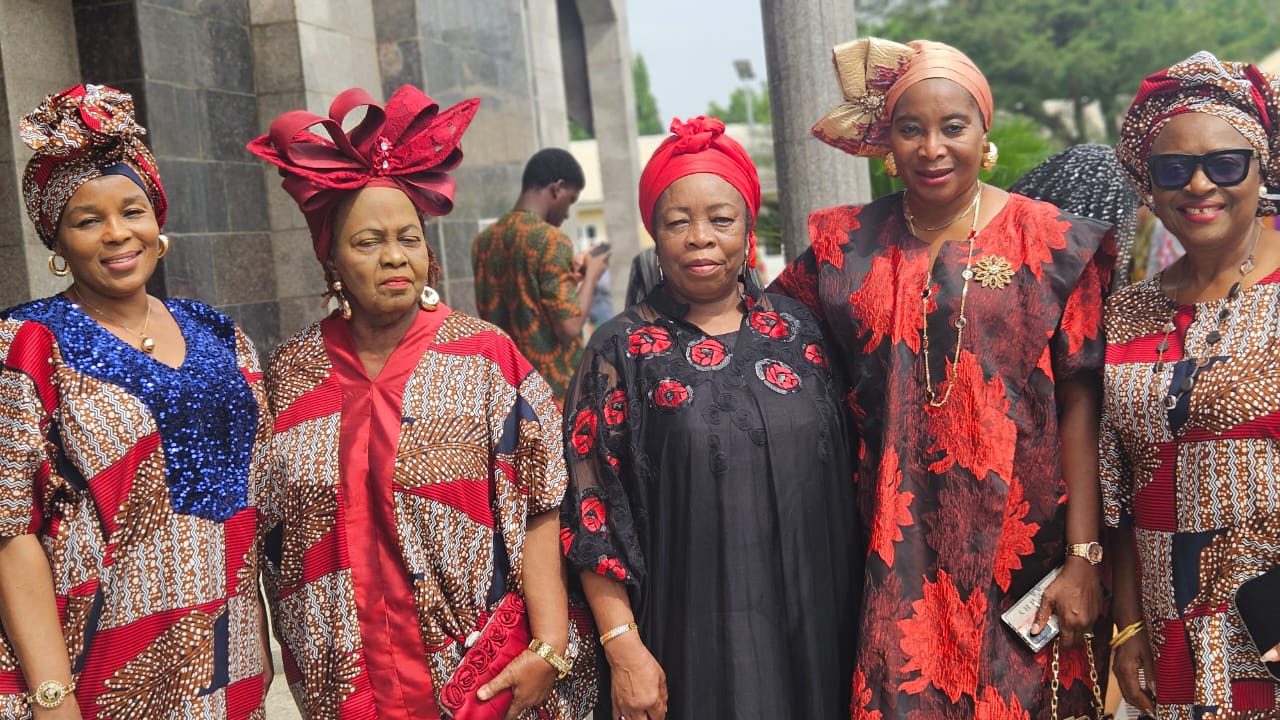
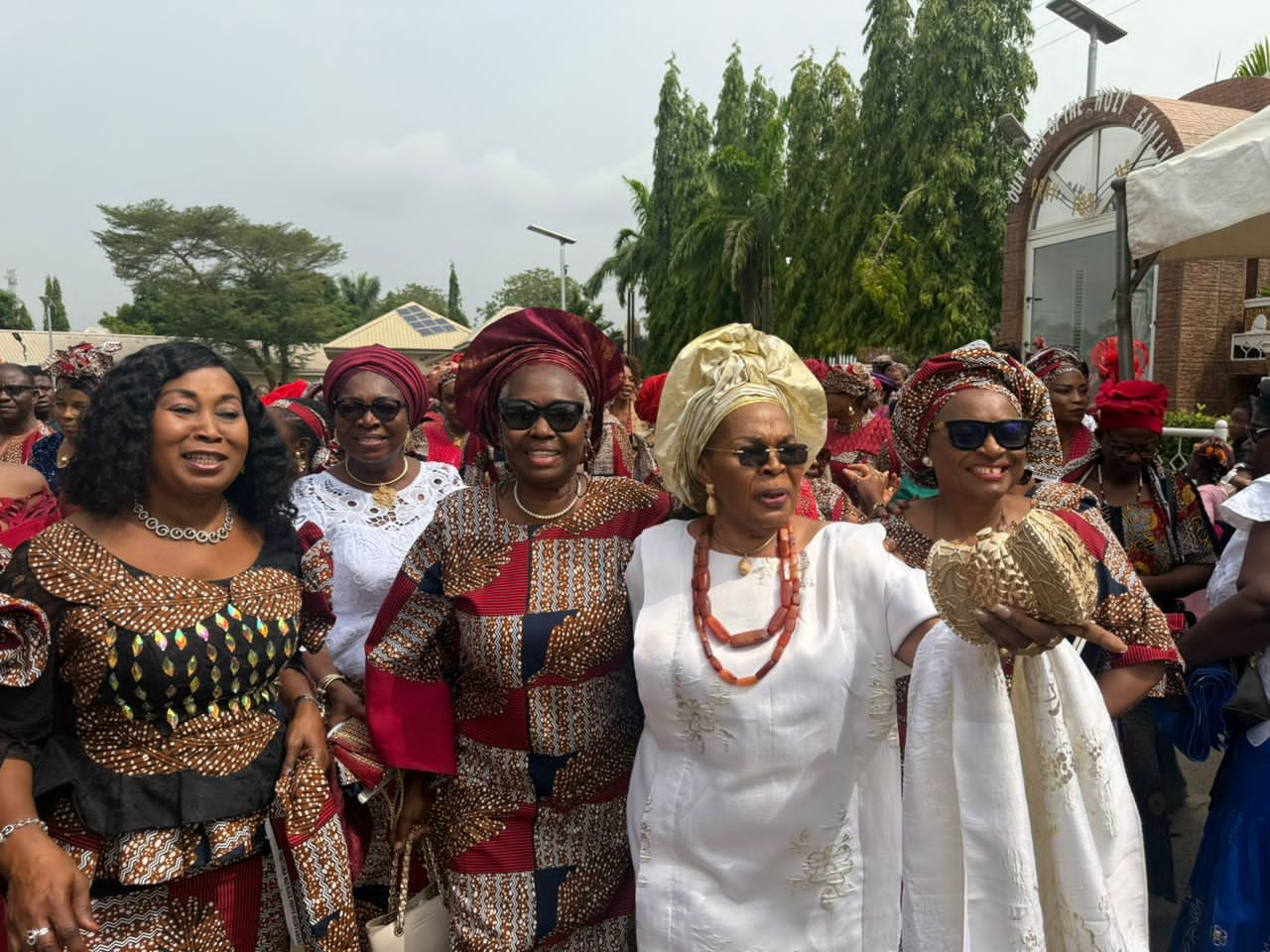
The International Federation of Women Lawyers (FIDA Nigeria) Abuja Branch were fully represented at Lady Ngozi Okogbue’s thanksgiving service in honour of her mother, the Late Ojiefi (Lolo) Bernadette Chiemezie Obegolu, who died at age 98.

She was buried on Friday, 25 April, at her hometown, Obeledu in Anaocha Local Government Area, Anambra State.

FIDAns honour Lady Okogbue.jpg

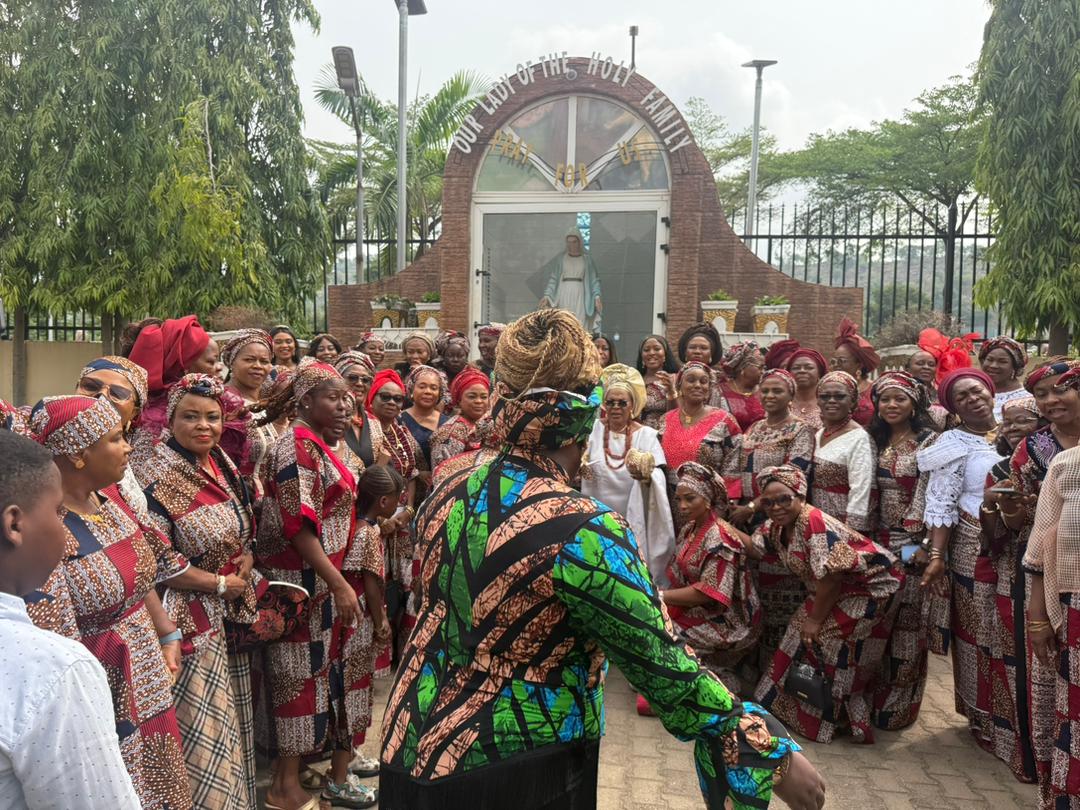
On Sunday, 4 May 2025, the FIDA delegation turned out in numbers at the Holy Family Catholic Church, Life Camp Abuja, demonstrating strong solidarity for the branch’s former Chair of the Correctional Services Watch Committee.

Lady Okogbue at other times served as Electoral Committee Chair as well as the Chair of Law Reform Committee (now Parliamentary Committee).

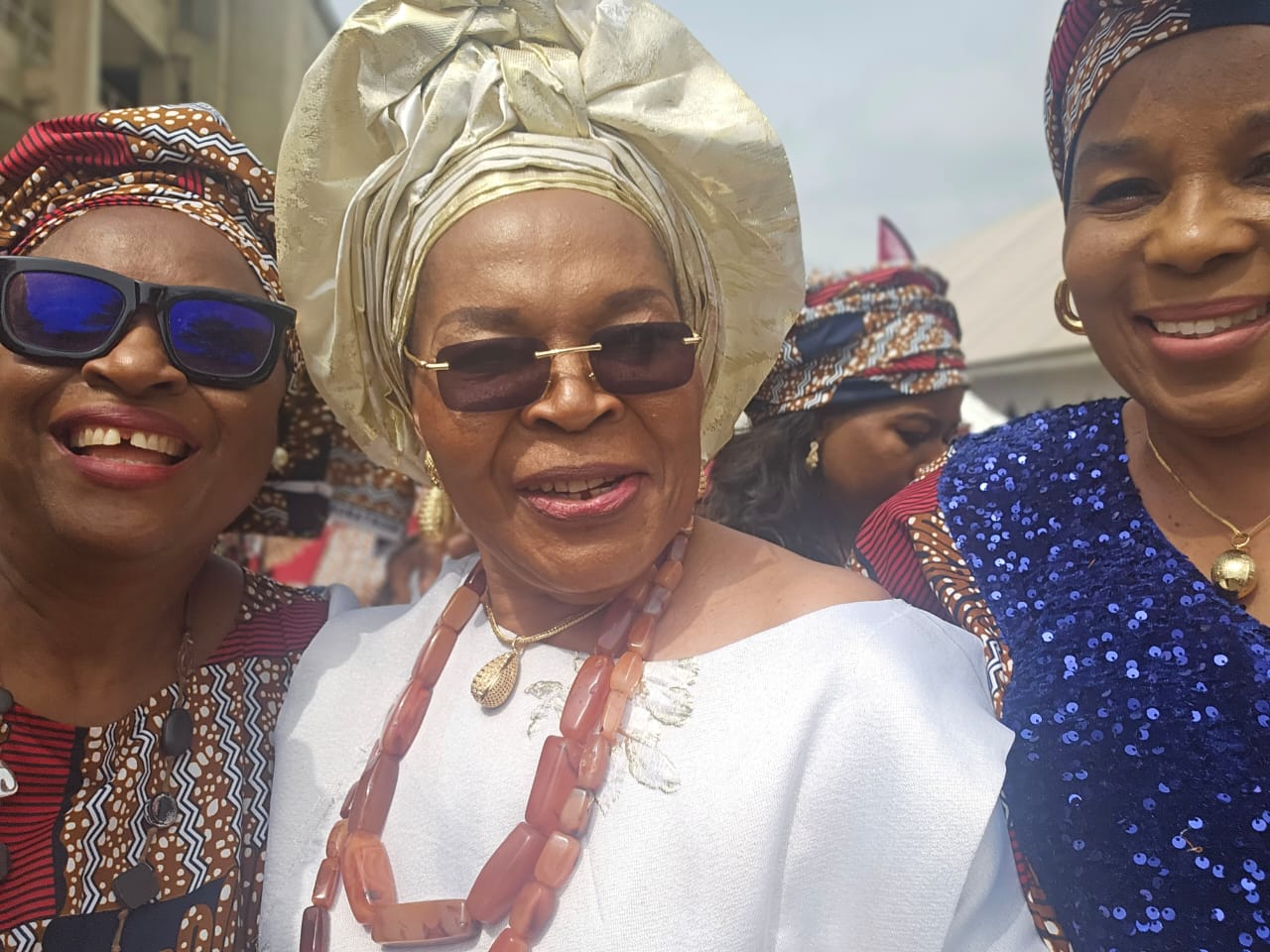
Lady Ngozi Okogbue and Chioma Onyenucheya-Uko, Chiar of FIDA Abuja

Among those in attendance were the National Secretary, Rekia Adejo-Andrew, the Branch Chairperson, Chioma Onyenucheya-Uko, and the Branch Secretary, Mimi Ayua, along with Chief Mrs. Awomolo, SAN, Ngozi Ikenga, Princess Frank-Chukwuani, Ozioma Izuora, Ogechi Abu, Nachamada Shaltha, Lillian Okenwa, June Idang, Folake Adeola, and many others.

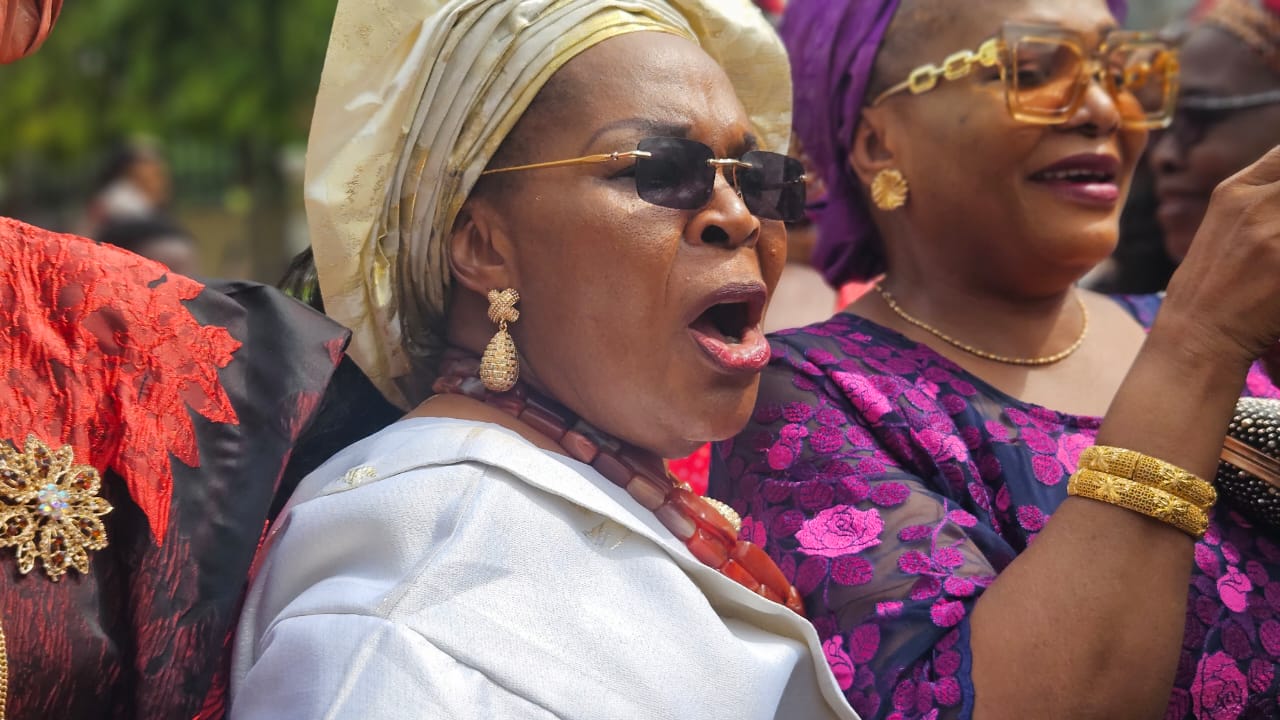
Lady Okogbue and Mrs. Ozioma Izuora
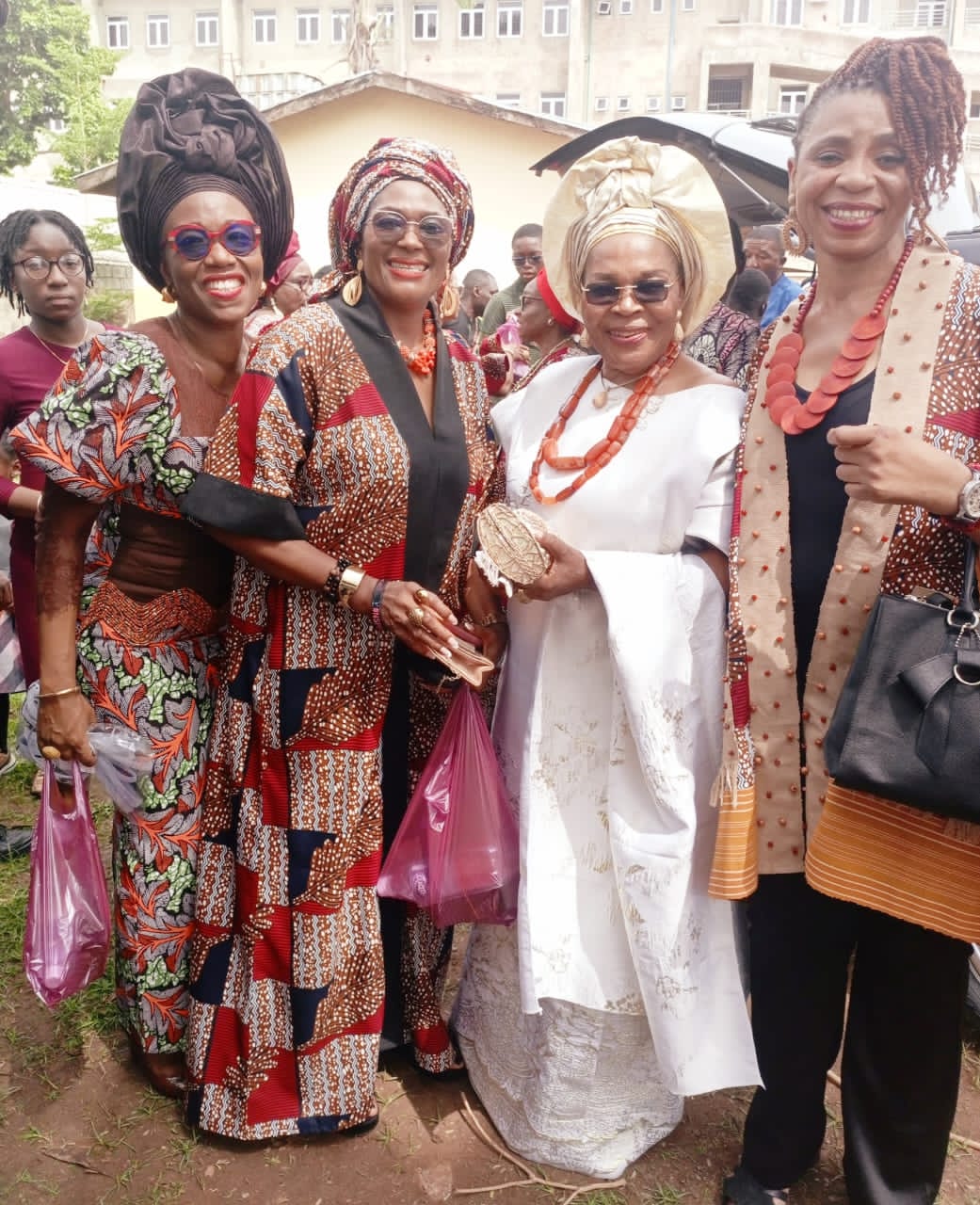
Lady Okogbue and friends

Loved by many, other friends and well-wishers were also at the Thanksgiving service to honour her.

Lady Ngozi Okogbue expressed her sincere gratitude for the branch’s presence and support in the heartfelt message below.

FIDA, A GREAT SISTERHOOD!

When I lost my beloved mother more than a couple of months ago, I was devastated. True enough, my mom was a nonagenarian, indeed virtually a Centenarian (less two years), and given that not many make it that far in these climes, especially given our current economic challenges, her passing would hardly be described as untimely. Yet, when it came, it became a different reality entirely, throwing my family and me into a spiral of sorrow and melancholy and with that renewed sense of the futility and meaninglessness of “this thing called life,” now here, now gone!

But I had not reckoned with what I was to experience as the real sweetness of humanity.

Many reached out to me with rich balms of consolation and assurance of their presence and support of different kinds for me. FIDANs and FIDA Abuja were exceptional in their support.

Allow me therefore, to use this opportunity to thank you all for your loving support all the way in this journey culminating in the Mass of Thanksgiving of Sunday, 4th May where an overwhelming number turned up to thank God with my family and me for a successful burial as well as the safe journey back to base for all who went for the burial out in Anambra State.

I thank you all for being part of it all.

May the soul of Ojiefi Bernadette Chiemezie Obegolu continue to rest in perfect peace, Amen.

May we all enjoy the benefit of longevity of life like she did, all in pristine health of mind and body,
Amen.

Thank you endlessly, FIDA and FIDANs.
Be, and remain blessed!

Lady Ngozi Okogbue Adadlebube
Daughter

Watch the video of Barr. Lady Ngozi Okogbue’s Thanksgiving at Holy Family Catholic Church, Life Camp, Abuja.

A video of Lady Okogbue dancing in with pallbearers

Watch also the video of Lady Okogbue and her husband’s family making a grand entry with the famed Ijele masquerade at her mum’s burial on 25 April 2025, at Obeledu in Anaocha Local Government Area, Anambra State. Anambra State.

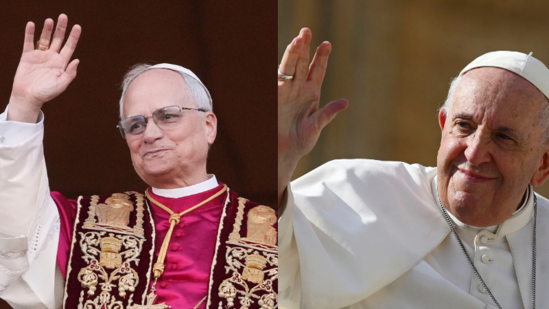
Did Pope Francis have a successor in mind? What to know about the rise and rise of Fr. Robert Prevost (Pope Leo XIV)

Timeline:

  • 1955: Born in Chicago. 
  • 1977: Graduates from Villanova University with a degree in mathematics. 
  • 1982: Receives a master’s degree in divinity and is ordained. 
  • 1985: Begins his missionary work in Peru as a member of the Augustinian Order. 
  • 1999: Returns to the US, serving as provincial prior and later prior general of the Augustinians. 
  • 2014: Returns to Peru and is appointed apostolic administrator of the Diocese of Chiclayo by Pope Francis. 
  • 2015: Pope Francis apponts him Bishop of Chiclayo. 
  • 2019: Pope Francis appointed Bishop Prevost as member of the Vatican Dicastery for the Clergy.
  • 2020: Pope Francis appointed Bishop Prevost as member of the Vatican Dicastery for Bishops.
  • 2020: Pope Francis appointed Bishop Prevost as apostolic administrator of the Diocese of Callao in Peru.
  • 2021: Pope Francis had private audience with Bishop Prevost in Rome, sparking speculation about a new role in Chicago (where he hails from) or in Rome.
  • 2023: Pope Francis called Bishop Prevost from Peru to Rome and appointed him Prefect of the Vatican Dicastery for Bishops, where he oversaw the evaluation and recommendation of episcopal candidates worldwide. 
  • 2023: Pope Francis appointed Bishop Prevost President of the Pontifical Commission for Latin America. 
  • 2023: Pope Francis created Bishop Prevost a Cardinal.
  • 2023: Pope Francis in an unprecedented move appointed Cardinal Prevost as Member of Seven Vatican Dicasteries: Doctrine of the Faith; Evangelization; Eastern Churches; the Clergy; Institute of Consecrated Life and Societies of Apostolic Life; Culture and Education; and Legislative Texts.
  • 2023: Pope Francis appointed Cardinal Prevost a member of the Pontifical Commission for Vatican City State.
  • 2025: Pope Francis promoted Cardinal Prevost from the rank of Cardinal Deacon to Cardinal Bishop, assigning him the Suburbicarian Diocese of Albano.
  • 2025: Elected Pope, taking the name Leo XIV

Below is the biography of the 267th Bishop of Rome By Vatican News

The first Augustinian Pope, Leo XIV is the second Roman Pontiff – after Pope Francis – from the Americas. Unlike Jorge Mario Bergoglio, however, the 69-year-old Robert Francis Prevost is from the northern part of the continent, though he spent many years as a missionary in Peru before being elected head of the Augustinians for two consecutive terms.

First Augustinian Pope

The new Bishop of Rome was born on September 14, 1955, in Chicago, Illinois, to Louis Marius Prevost, of French and Italian descent, and Mildred Martínez, of Spanish descent. He has two brothers, Louis Martín and John Joseph.

He spent his childhood and adolescence with his family and studied first at the Minor Seminary of the Augustinian Fathers and then at Villanova University in Pennsylvania, where in 1977 he earned a Degree in Mathematics and also studied Philosophy. 

On September 1 of the same year, Prevost entered the novitiate of the Order of Saint Augustine (O.S.A.) in Saint Louis, in the Province of Our Lady of Good Counsel of Chicago, and made his first profession on September 2, 1978. On August 29, 1981, he made his solemn vows.

The future Pontiff received his theological education at the Catholic Theological Union in Chicago. At the age of 27, he was sent by his superiors to Rome to study Canon Law at the Pontifical University of Saint Thomas Aquinas (Angelicum). 

In Rome, he was ordained a priest on June 19, 1982, at the Augustinian College of Saint Monica by Archbishop Jean Jadot, then pro-president of the Secretariat for Non-Christians, which later became the Pontifical Council for Interreligious Dialogue and then the Dicastery for Interreligious Dialogue.

Prevost obtained his licentiate in 1984 and the following year, while preparing his doctoral thesis, was sent to the Augustinian mission in Chulucanas, Piura, Peru (1985–1986). In 1987, he defended his doctoral thesis on “The Role of the Local Prior in the Order of Saint Augustine” and was appointed vocation director and missions director of the Augustinian Province of “Mother of Good Counsel” in Olympia Fields, Illinois (USA).

Mission in Peru

The following year, he joined the mission in Trujillo, also in Peru, as director of the joint formation project for Augustinian candidates from the vicariates of Chulucanas, Iquitos, and Apurímac. 

Over the course of eleven years, he served as prior of the community (1988–1992), formation director (1988–1998), and instructor for professed members (1992–1998), and in the Archdiocese of Trujillo as judicial vicar (1989–1998) and professor of Canon Law, Patristics, and Moral Theology at the Major Seminary “San Carlos y San Marcelo.” At the same time, he was also entrusted with the pastoral care of Our Lady Mother of the Church, later established as the parish of Saint Rita (1988–1999), in a poor suburb of the city, and was parish administrator of Our Lady of Monserrat from 1992 to 1999.

In 1999, he was elected Provincial Prior of the Augustinian Province of “Mother of Good Counsel” in Chicago, and two and a half years later, the ordinary General Chapter of the Order of Saint Augustine, elected him as Prior General, confirming him in 2007 for a second term.

In October 2013, he returned to his Augustinian Province in Chicago, serving as director of formation at the Saint Augustine Convent, first councilor, and provincial vicar—roles he held until Pope Francis appointed him on November 3, 2014, as Apostolic Administrator of the Peruvian Diocese of Chiclayo, elevating him to the episcopal dignity as Titular Bishop of Sufar. 

He entered the Diocese on November 7, in the presence of Apostolic Nuncio James Patrick Green, who ordained him Bishop just over a month later, on December 12, the Feast of Our Lady of Guadalupe, in the Cathedral of Saint Mary.

His episcopal motto is “In Illo uno unum”—words pronounced by Saint Augustine in a sermon on Psalm 127 to explain that “although we Christians are many, in the one Christ we are one.”

Bishop of Chiclayo, Peru,  from 2015 to 2023

On September 26, 2015, he was appointed Bishop of Chiclayo by Pope Francis. In March 2018, he was elected second vice-president of the Peruvian Episcopal Conference, where he also served as a member of the Economic Council and president of the Commission for Culture and Education.

In 2019, Pope Francis appointed him a member of the Congregation for the Clergy (July 13, 2019), and in 2020, a member of the Congregation for Bishops (November 21). Meanwhile, on April 15, 2020, he was also appointed Apostolic Administrator of the Peruvian Diocese of Callao.

Prefect of the Dicastery for Bishops

On January 30, 2023, the Pope called him to Rome as Prefect of the Dicastery for Bishops and President of the Pontifical Commission for Latin America, promoting him to the rank of Archbishop. 

Created Cardinal in 2024

Pope Francis created him Cardinal in the Consistory of September 30 that year and  assigned him the Diaconate of Saint Monica. He officially took possession of it on January 28, 2024. 

As head of the Dicastery, he participated in the Pope’s most recent Apostolic Journeys and in both the first and second sessions of the 16th Ordinary General Assembly of the Synod of Bishops on synodality, held in Rome from October 4 to 29, 2023, and from October 2 to 27, 2024, respectively.

Meanwhile, on October 4, 2023, Pope Francis appointed him as a member of the Dicasteries for Evangelization (Section for First Evangelization and New Particular Churches), for the Doctrine of the Faith, for the Eastern Churches, for the Clergy, for Institutes of Consecrated Life and Societies of Apostolic Life, for Culture and Education, for Legislative Texts, and of the Pontifical Commission for the Vatican City State.

Finally, on February 6 of this year, the Argentine Pope promoted him to the Order of Bishops, granting him the title of the Suburbicarian Church of Albano.

Three days later, on February 9, he celebrated the Mass presided over by Pope Francis in St. Peter’s Square for the Jubilee of the Armed Forces, the second major event of the Holy Year of Hope.

During the most recent hospitalization of his predecessor at the “Gemelli” hospital, Prevost presided over the Rosary for Pope Francis’s health in Saint Peter’s Square on March 3.


Kogi JSC fires judge for buying property under litigation in his own court, suspends Magistrate over misconduct

Having been found guilty of purchasing a property that was subject to litigation before him, the Kogi State Judicial Service Commission (JSC) has ordered the compulsory retirement of Judge Alemeru Adekunle Bamidele of an Area Court in the state.

Also, a magistrate, Tanimu U. Muhammed has been suspended from adjudicatory duties for a period of two years and issued a warning letter.

According to a report by PUNCH, these decisions were reached at the Commission’s 136th meeting held in Lokoja, and disclossed in a statement released on Thursday by the Secretary to the Commission, Dr. Tanko Muhammed.

Providing details on the development, Dr. Muhammed said the actions followed recommendations made by the Commission’s Disciplinary Committee, which first investigated the allegations.

“The allegations against the officers were first investigated by the Commission’s Disciplinary Committee, which made appropriate recommendations to the JSC,” he said.

The retired judge, Bamidele, was found guilty of misconduct for purchasing a property that was subject to litigation before him. According to the Commission, he ordered the sale of the building, acquired it himself, failed to complete the payment, and went on to issue a court order without granting both parties a hearing.

“The sacked judge was found to have bought a building which was the subject matter of litigation before him, after ordering the sale of the same and refused to make full payment for the property. He was found to have issued a court order without hearing both parties,” Muhammed explained.

In the same meeting, the JSC cleared four other judicial officers of wrongdoing after reviewing allegations against them. They include Magistrate Abdul Musa Mopah, Mr. Yunusa Medugu, Deborah O. Ebiloma Esq., and Anuhi Safiya Oiza.

ALSO READ: BREAKING: Lagos BRT Driver Sentenced to Death by Hanging for Killing Bamise Ayanwola

Meanwhile, the Commission has also inaugurated a six-man committee to explore ways of enhancing the welfare of magistrates and area court judges across the state. The committee is chaired by the Attorney-General and Commissioner for Justice, Muizudeen Abdullah.

PUNCH


Recruiters withhold salaries of ‘bullied’ staff, month after UBA terminated their contracts

The recruitment firms which the United Bank for Africa employs to hire staff for its Customer Fulfilment Centre (CFC) in Lagos State have yet to pay the salaries of at least 10 employees sacked in early April, FIJ has gathered.

FIJ earlier reported on April 6 how some employees wrote an anonymous email to the bank’s management, complaining about how Uzoamaka Onyeka, head of the UBA CFC, and Oluchi Akaeme, CFC unbound unit manager, insulted and harassed them.

The bank then withdrew access to its servers from the employees it suspected were behind the report and tasked security personnel with keeping them off company grounds. What followed were exit interviews with the hirers and termination letters.

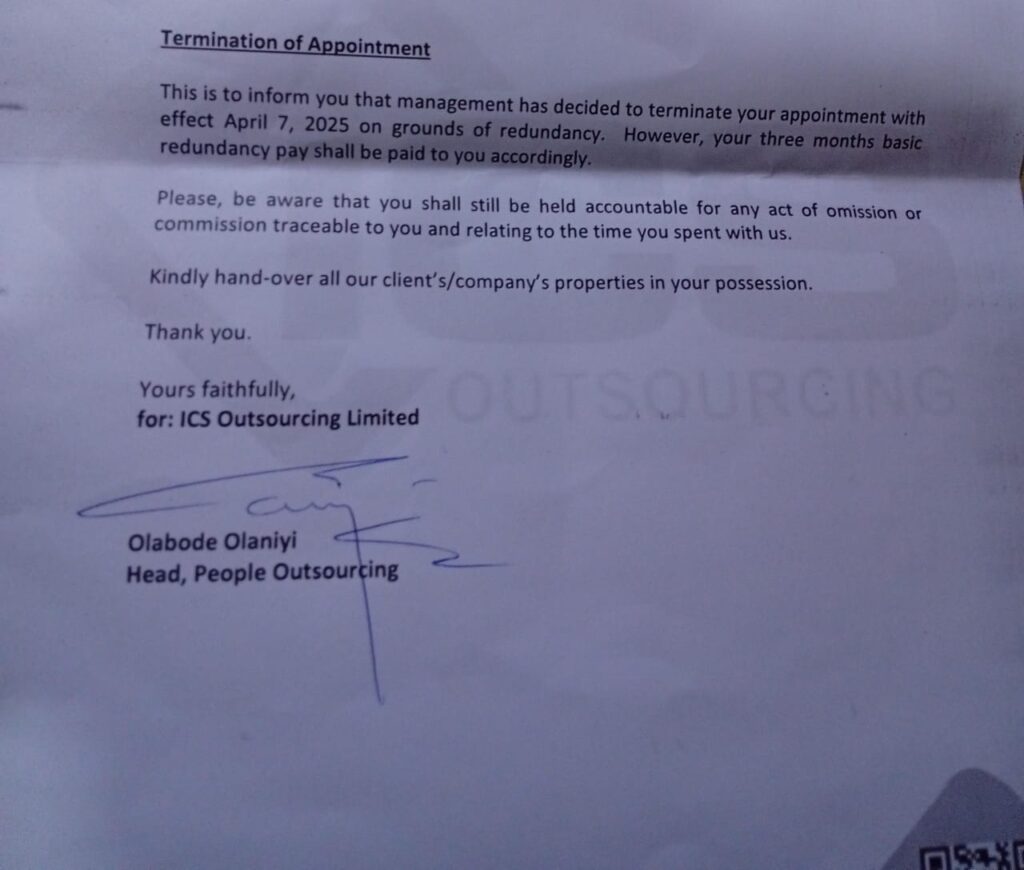
While UBA kicked them out on April 4, the hirers did not tell them they were being let go, and one served them backdated termination letters that read April 7, 2025, after several days of probe.

Termination letter reading April 7, 202
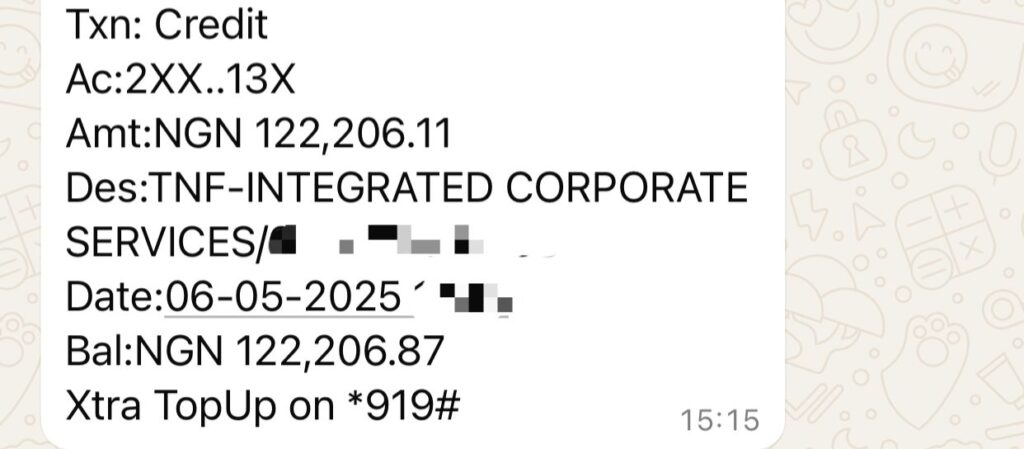
ICS Outsourcing’s payment to a sacked hire on May 6

ICS Outsourcing Limited, Tribest Corporate Support, Strategic Outsourcing and C & I Outsourcing are four recruiters that FIJ learnt had terminated staff contracts.

Although ICS issued a termination letter and paid the contractually bound salary on May 6, staff who got into UBA through other recruiters say they have yet to receive their due.

FIJ quizzed these former staff. “No, they have not paid us anything,” they said.

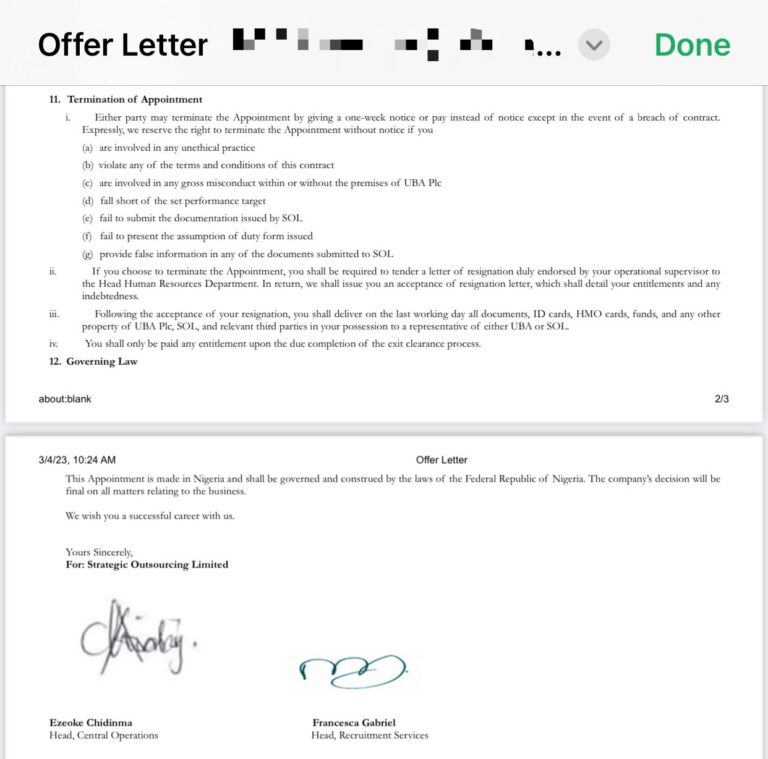
Strategic Outsourcing’s offer letter

FIJ saw the entry-level contracts of some of the sacked employees. While they have all moved to more permanent contracts, the probation contracts state that the company would pay staff upon termination unless they are found guilty of infractions.

On Thursday, FIJ called all four recruiters. ICS was the only recruiter who answered the phone call. They said they could not comment on details of the contract.

Yahaya Bello Vs EFCC: Court adjourns to June 26 for ruling on EFCC’s request to ‘Cross-Examine’ own witness

The Federal High Court in Abuja has fixed June 26 for ruling in the Economic and Financial Crimes Commission (EFCC) ‘s application to “cross-examine” its own witness, Nicholas Ojehomon, in the alleged money laundering case instituted against the immediate past Governor of Kogi State, Yahaya Bello.

Justice Emeka Nwite fixed the date after listening to arguments by EFCC and Yahaya Bello on the propriety or otherwise of the prosecution’s cross-examination of its own witness after the cross-examination by Bello’s lawyer, Mr Joseph Daudu, SAN.

Disagreement arose when Daudu vehemently objected to the procedural mode of cross-examining the witness after cross-examination by the defence.

Daudu told Justice Emeka Nwite that the only option open to EFCC was to re-examine the witness as required by law and not to cross-examine the witness.

Specifically, the senior lawyer argued that for EFCC to lawfully cross-examine the witness, the agency must first declare such a witness hostile.

When the matter was called for continuation of cross-examination, the defendant’s counsel asked the witness, Nicholas Ojehomon, whether he had testified in other courts concerning the issue of school fees paid by the Bello family to the American International School in Abuja. He said yes.

But the witness, an Internal Auditor at the American International School, Abuja, said he could not mention the exact courts.

He admitted testifying in a similar charge involving Ali Bello but added that he never said anything adversely against former Governor Yahaya Bello, just as he had not said anything negative or adversely against him in the instant charge.

After Daudu SAN concluded the cross-examination of the witness, Nicholas Ojehomon, the EFCC’s lawyer, Olukayode Enitan SAN, moved to also cross-examine the same witness on Exhibit 19, a judgment copy of the High Court of the Federal Capital Territory.

He told the court that he was not re-examining the EFCC’s witness, but cross-examining him because the document was admitted in evidence from the bar during cross-examination by the defence.

“I am not re-examining him, I am cross-examining him because they brought this document,” he said.

The defendant’s lawyer, however, drew the court’s attention to the fact that the position by the EFCC lawyer was not only unknown but strange to law, in line with the Evidence Act.

“If you want to cross-examine your own witness, you have to first declare him a hostile witness. You cannot cross-examine him based on the document,” Daudu SAN argued.

However, Enitan SAN added that he had the right to draw the attention of the court to some specific paragraphs in the document.

At this point, the judge asked: “Do you have any provision of the law to support this?”

“I will draw your Lordship’s attention to Section 36 of the Constitution. They sought to tender this document, we objected, and the court granted their prayer. Fair hearing demands that the complainant too has the right to examine this because Section 36 of the Constitution talks of fair hearing,” Pinheiro responded.

Daudu in response, said, “We are not saying that they cannot re-examine the witness. That is what Section 36 under the law says about fair hearing. But if it is to cross-examine him, he will have to show us the law that backs that.

“He cannot come under the guise of fair hearing to want to cross-examine the witness,” the Defendant’s lawyer maintained.

The judge, at the end of the arguments, refused to allow cross-examination of the witness by the EFCC lawyer.

“Under the procedure, the witness gives evidence in-chief and the defendant cross-examines, then the prosecution re-examines.

“With due respect, what I will do is if you people are so skewed to continue with this, it is better to address me on this, and I will take a position,” he stated.

After taking arguments for and against the request, Justice Nwite fixed June 26, 27 and July 4 and 5 for ruling and continuation of the trial.

The 3rd prosecution witness had on Thursday said there was no wired transfer of fees from the Kogi State Government or any of the local Governments in the state to the account of the American International School, Abuja.

He also read out a part of a previous Federal Capital Territory High Court judgment that said there was no court order for the school to return fees to EFCC or any judgment declaring the money as proceeds of money laundering.

MultiChoice: Court affirms FCCPC’S power to investigate exploitative price hikes, Tunji Bello welcomes judgement

The Federal High Court in Abuja has struck out the suit filed by MultiChoice Nigeria Limited seeking to restrain the FCCPC from investigating its recent price increases for DStv and GOtv services, declaring it an abuse of court process.

The court, presided over by Justice James Omotosho, ruled that MultiChoice’s suit was duplicative and improper, given the existence of a similar matter involving the same parties pending before another court.

Consequently, the Court struck out the application in its entirety.

Recall that Multichoice had defied FCCPC’s invitation in February and proceeded to hike subscription rates barely eight months after similar increase. Instead, the cable service provider filed an application to restrain the Commission from asking questions as to the rationale behind its incessant price increase.

In his ruling, Justice Omotosho went further to affirm key provisions of the FCCPA 2018 regarding price regulation and the scope of the Commission’s mandate.

The FCCPC’s legal team was led by Prof. Joseph Abugu (SAN), while Mr. J. Onigbanjo (SAN) led the MultiChoice’s team.

The Court recognized that Section 88 of the FCCPA vests the President of the Federal Republic of Nigeria with the authority to regulate the prices of goods and services when necessary. It also affirmed that the President may delegate this authority to any agency, particularly the FCCPC, for enforcement.

The Court further upheld that, under Section 17 of the FCCPA, the FCCPC is empowered to investigate exploitative pricing practices and to submit its findings, data, and recommendations to the President to inform decisions on price regulation.

Additionally, the Court confirmed that once the President declares specific goods or services as subject to price regulation, the FCCPC possesses full enforcement powers to implement such regulations.

In a swift reaction, the Executive Vice Chairman/Chief Executive Officer of the Commission, Mr. Tunji Bello, described the ruling as an affirmation of the rule of law and a significant step towards curbing procedural tactics aimed at obstructing lawful regulatory oversight.

“It sends a clear message that regulatory agencies will not be hindered by procedural roadblocks when exercising their lawful mandate to ensure fairness, transparency, and accountability in the marketplace,” he stated.

According to him, “Nigerian consumers can be assured that the Commission is fully committed to investigating and addressing exploitative pricing and other anti-consumer practices, in line with the provisions of the Federal Competition and Consumer Protection Act (FCCPA) 2018.”

The statement of the FCCPA was signed by Mr Ondaje Ijagwu, Director, Corporate Affairs.

The National Assembly can neither summon a governor nor take over a functioning State House of Assembly

By Obioma Ezenwobodo

Introduction

Recently, the Benue and Zamfara States Houses of Assembly have been enmeshed in political crises that have led to the suspension of 13 of the 32 members and 10 of the 24 members, respectively. By way of intervention, the National Assembly, via the House of Representatives, has issued summons to the Governors and the Speakers of the Houses of Assembly of both States as a prelude to eventual takeover of the functions of both Houses by the House of Representatives.

This write-up is not an endorsement of the actions or inactions of the different political actors in both States, nor is it a justification of the suspension of the legislatures, but an attempt to shed light on the extant constitutional provisions to streamline public opinion and actions of stakeholders for the sustenance of democracy. It is admitted that the National Assembly’s intervention might have been spurred by good faith to forestall the breakdown of law and order in the affected States. Despite this, the National Assembly cannot go outside or beyond the Constitution in executing its functions, as the Courts will pronounce such actions unconstitutional, null, and void. See A-G., Abia State v. A-G Federation (2002) 6 NWLR (Pt. 763) 264.

Extent of the Federal and States’ Legislative and Executive Powers

Nigerian constitutional democracy is anchored on a Federal system of government that consists of the Federal Government, States Governments, and Local Government Areas. Section 2(2) of the Constitution of the Federal Republic of Nigeria (CFRN), 1999 (as altered) provides that Nigeria shall be a Federation consisting of states and a Federal Capital Territory. Further, section 4(1), (2), (3) and (4) vests legislative powers of the Federal Republic of Nigeria on the National Assembly, with absolute powers to legislate on matters included in the Exclusive Legislative List as set out in Part 1 of the Second Schedule of the Constitution and also, with discretionary powers on matters included in the Concurrent Legislative List set out in the first column of part II of the second Schedule to the Constitution.

The notable exceptions to these provisions are as provided in section 11(3) and (4), which provide that when the Federation is at war, the National Assembly can make laws for matters not included in the Exclusive List, and also when a State House of Assembly is unable to perform its functions.  On the other hand, section 4(6) and (7) vests the legislative powers of a State on the House of Assembly of a State with powers to legislate on matters not on the Exclusive Legislative List, matters on the Concurrent Legislative List that have not been covered/legislated by the National Assembly and any other matter which it is empowered to make laws on. By Section 4(8), the legislative powers of both the National Assembly and the States are subject to the Courts’ jurisdiction and reviewing powers. Deriving from the above, it is wrong for the House of Representatives to assume jurisdiction in internal wrangling or disputes escalating in both States’ Houses of Assembly in complete disregard of the review powers bequeathed on the courts by the Constitution. See Government of Plateau State & Ors v. Nwaokorie (2014) LPELR-23368(CA).

The Federal structure of the country is further deepened by the provisions of section 5(1) and (2) which distinctively delineated and conferred executive powers of the Federation on the President while subject to laws made by the National Assembly, and executive powers of the State on a Governor equally subject to laws made by the House of Assembly of the State. The literal implication being that the National Assembly has supervisory jurisdiction to check and balance the executive powers of the President through its power to conduct investigations and oversight as provided by section 88.  On the other hand, the House of Assembly of a State has a similar supervisory jurisdiction to check and balance the executive powers of a Governor through its power to conduct investigations and oversight as stated in section 128.

The National Assembly cannot summon a Governor

Deducting from the federal system of government enunciated above, it is clear that the idea of the National Assembly summoning an executive Governor of a State that is subject to laws made by his State House of Assembly is without basis. The public discourse had hitherto centered on whether the National Assembly could summon the President and not whether they could summon a Governor. To crystallize the proposal for the National Assembly to acquire powers to summon the President, the Assembly had through some constitutional alterations, sought enact such powers which is yet to materialize. It is therefore needless to argue in favour of the National Assembly summons on the States’ Governors as there is no constitutional provision to support same.

By the provisions of Section 108, the question of a Governor attending a meeting of the House of Assembly is totally within his discretion and choice, devoid of any summons or invitation. For better appreciation, section 108 (1) and (2) read thus:

“(1) The Governor of a State may attend a meeting of a House of Assembly of the State ether to deliver an address on the State affairs or to make such statement on the policy of government as he may consider to be of importance to the State.

(2) A Commissioner of the Government of a State shall attend the House of Assembly of the State if invited to explain to the House of Assembly the conduct of his Ministry, and in particular when the affairs of that Ministry are under discussion.

A careful perusal of the above provision indicate the use of the discretionary/permissible term ‘may’ in subsection 1 and the use of the compulsory/mandatory term ‘shall’ in subsection 2. The implication is that the duty to attend a House of Assembly meeting is at the discretion of a Governor, while the duty is mandatory on his Commissioner to attend when invited by the House of Assembly. In other words, it is only a Commissioner who can be invited, while a Governor can exercise his choice of attending the meeting of the House of Assembly.

These provisions are specific to the right of attendance of a Governor to a meeting of the House of Assembly vis-à-vis any other legislative House as against the general provisions of sections 88 and 89 that deal with the powers of the National Assembly to compel attendance of any person to give evidence in an investigative hearing. Section 88 is not just a general provision but a subjective one at that, as it starts with the phrase, ‘subject to the provisions of this Constitution’. It is a well-settled principle of law that where an issue is governed by general and specific provisions, the latter will prevail in the interpretation of the issue before the court. This is because a specific provision will be deemed to have anticipated the issue as against the general provision. See Jack v. University of Agriculture Makurdi 2024 LPELR-SC. 262/2000 and Ibori v. Ogburu (2004) 15 NWLR (Pt. 895) 154.

A similar provision to section 108 is section 67 which equally gives the President the discretionary right to attend meetings of the National Assembly. These provisions imply that there is a parallel between the functions of the National Assembly and the President and between the House of Assembly of a State and a Governor. It is therefore an anathema for the National Assembly to summon a Governor under any guise, same as it would be for a House of Assembly of a State to summon the President under any guise.

It is worth noting also that the provisions of section 308 that confer immunity on the President and Governors against criminal/civil proceedings, or arrest, act as a shield against summons by the legislative houses, which could be enforced by way of arrest of the defaulting party or person.  

The National Assembly cannot summon the Speaker or Members of a State House of Assembly in the Exercise of their Legislative Duties

By appreciating the concept of federalism and its provisions in the Constitution, the Leadership of the National Assembly has no constitutional basis for summoning the leadership of another legislative house operating at the State level, as the same summons cannot be extended to it. Section 110 provides for the regulation of the procedure of the State House of Assembly by providing that a House of Assembly shall have the power to regulate its procedure, including the procedure for summoning and going on recess. Thus, the actions, proceedings, happenings, and businesses of a House of Assembly are regulated and managed by itself and not those of the National Assembly, subject to the reviewing authority of the courts as provided by section 4 (8). It therefore follows that the proceedings or businesses of a House of Assembly are not subject to the supervision or review by the National Assembly but rather by the Courts. 

The National Assembly cannot take over a Functioning State House of Assembly

The Constitution only permits the National Assembly to take over and make laws for a State when the state’s House of Assembly is unable to function. Section 11 (4) provides thus:

“At any time when a House of Assembly of a State is unable to perform its functions by reason of the situation prevailing in that State, the National Assembly may make such laws for the peace, order and good government of that State with respect to matters on which a House of Assembly may make laws as may appear to the National Assembly to be necessary or expedient until such time as the House of Assembly is able to resume its functions; and any such laws enacted by the National Assembly pursuant to this section shall have effect as if they were laws enacted by the House of Assembly of the State.”

Gleaning from the above provision, the situation that would warrant a State House of Assembly to be deemed to be nonfunctional must be such situation that is prevalent in the State and not necessarily limited to political crisis within the House. To this effect, the situation in the State must be such that makes it impossible for the House of Assembly to perform its functions. It is safe to deduce that such a situation could be a natural disaster, war, a terrorist attack, or more.

In an attempt to provide clarity on when a House of Assembly could be deemed to be non-functional and therefor rip for the National Assembly to take over its functions, section 11 (5) provides that for the purposes of subsection (4), a House of Assembly shall not be deemed to be unable to perform its functions so long as the House of Assembly can hold a meeting and transact business. The textual explication is that a House of Assembly that sits and transacts business is immune from being taken over by the National Assembly. The question of when a House of Assembly is deemed unable to perform its functions lies in the House forming a quorum to meet for business. Section 96 provides that the quorum of the House of Assembly shall be one-third (1/3) of all the members of the House. It therefore implies that when a House has quorum of 1/3 of all the members of the House to meet and perform its functions, the National Assembly would have no legal justification to take over or assume the functions of the House.

This issue has been judicially decided and acted upon by the Federal High Court in 2019 in an unreported case between the then Deputy Speaker of Edo State House of Assembly against the National Assembly where Omotosho J. held that nothing before it shows that the House is unable to sit as the House has been carrying out its legislative duties and thus the National Assembly lacks the power to take over the Edo State House of Assembly.

Conclusion

Gleaning from the enunciated authorities and facts of the extant events unraveling in both the Benue and Zamfara States Houses of Assembly, it is without doubt that both Houses still have the requisite quorum of 1/3 of all the members to continue transacting legislative business pending the amicable resolution of the crises by concerned political actors or through the instrumentality of the Courts. Therefore, any attempt to take over the businesses of both functional Houses of Assembly by the National Assembly would amount to a forceful takeover of government contrary to section 1(2) and exercise of legislative powers in utter breach of the Constitution. In the case of Edo State House of Assembly & Ors v. Igbinedion & Ors (2021) LPELR-55990(CA) (Pp 93 – 93 Paras E – F), the Court, per Ekanem JCA, sounded a note of warning against such an action by holding thus:

“The legislative powers of the Legislature cannot be exercised inconsistently with the Constitution and when it is so exercised, it is invalid to the extent of such inconsistency. See Section 1 (1) and (3) of the Constitution of the Federal Republic of Nigeria, 1999 (as amended) and INEC V. Musa (2003) 3 NWLR (pt. 806) 72.”

It is therefore apposite that the National Assembly should tow the path of law and reason by not meddling in the affairs of sub-regional States’ Houses of Assembly as that would amount to deliberate usurping and forceful takeover of the functions of a Constitutional body. 

Obioma Ezenwobodo LL.M

Managing Partner, Resolution Attorneys

Executive Director, Policy & Legislative Advocacy Network (PLAN)

Pioneer Chairman, Nigerian Bar Association, Garki Branch, Abuja (2022/24)

[email protected]

Doctor admits he hid spycams inside bathroom air fresheners because he wanted to compare his ‘small penis’ with other men

A doctor has been jailed for secretly installing spy cameras in bathroom air fresheners because he wanted to compare his ‘small pen!s’ with other men.

Yu Young Um, 34, secretly recorded over 24 people over the course of more than three years as they went to the toilet in a Scotland Airbnb and at staff accommodation.

The anaesthetist was found guilty of 23 charges in April following a trial at Glasgow Sheriff Court and jailed for 18 months on Thursday, the Crown Office said.

Prosecutors told how Yu Young Um installed the cameras at his property in the Hyland Area of Glasgow, which he had partially rented out.

Doctor admits he hid spycams inside bathroom air fresheners because he wanted to compare his

It was only when one victim became suspicious after noticing two air fresheners which appeared to be facing the toilet and shower that the truth emerged, prosecutors said.

On closer inspection, hidden cameras were discovered inside the plastic containers, and a further search found a third device inside a smoke alarm.

The victim contacted police and the cameras were seized along with a mobile phone, laptop, and storage device which contained recordings of several people.

Doctor admits he hid spycams inside bathroom air fresheners because he wanted to compare his

Yu Young Um was also found guilty of covertly filming people in private situations within staff accommodation at Dumfries and Galloway Royal Infirmary.

Fraser Gibson, procurator fiscal for Glasgow and Strathkelvin, said: ‘Ju Young Um carried out these invasive offences in a calculated and premeditated manner.

‘He abused a position of trust to significantly violate the privacy of numerous individuals for his own sexual gratification.

Doctor admits he hid spycams inside bathroom air fresheners because he wanted to compare his

‘I give thanks to all those involved in securing this prosecution, which has held Um accountable while also protecting others from harm.

‘We will continue to take action against those responsible for this type of offending as we strive to keep the communities we serve safe.’

The offences took place between November 2020 and August 2024.

In his evidence, the convict said he was diagnosed with ‘suspected gigantism’ as a teenager which was ‘possibly’ why he had a ‘small penis’.

Yu Young Um will remain on licence for a further nine months once he is released from prison, during which time he will be subject to close monitoring and supervision.

His name has been added to the s£x offenders register for 10 years.

A total of 21 men and nine women, four of whom were doctors, were filmed by Yu Young Um, who was diagnosed as having a form of body dysmorphia following his arrest.

The 34-year-old initially recorded his first victim in secret through a window as he showered, using a mobile phone, but then decided to take things up a notch, attaching a camera to a smoke alarm of a fellow doctor’s bedroom.

One medic said he felt ‘shocked and betrayed’ at being filmed using the toilet at Yu Young Um’s home in Glasgow’s Hyndland area after going for dinner.

Another had nine recordings made of him showering and using the toilet over a three-month period.

Ju Young Um said he did not seek medical help until 20 years after being diagnosed with suspected gigantism. He was later suspended from his work as a doctor, with his lawyer telling the sentencing that his client was aware of the ‘harm and distress he has caused his victims’ and acknowledged his crimes were ‘morally wrong’. 

Sheriff Owen Mullan told Ju Young Um his actions had met the threshold for a custodial sentence because of the ‘shock and distress suffered by victims’.

Detective Sergeant Cameron Gilchrist, of Police Scotland, said: ‘Ju Young Um now faces the consequences of his despicable and distressing actions.

‘Our thoughts remain with his victims who had their privacy violated. We hope that his sentencing will bring them some comfort.

‘S£xual crime, of any nature, is not to be tolerated and we will thoroughly investigate any reports made to us, no matter how much time has passed.

‘I would urge people to come forward and you can be assured of being fully supported by officers and our partner agencies.’

Read Also: How Access Bank’s Stephen Ejezie secretly filmed 400 Videos of nude colleagues in office

LindaIkeji

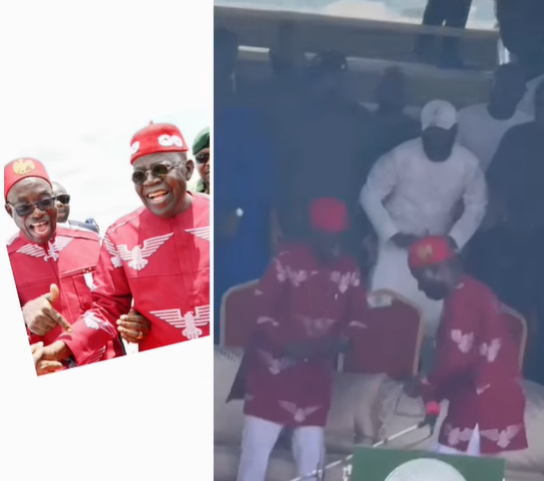
President Tinubu shows off his dancing skills in Anambra

President Tinubu put up a show in Anambra state today when he showed off his dancing skills. 

He and the governor, Charles Soludo, thrilled residents of the state by dancing to a song by Flavour.

Watch a video of him dancing below

Dead man ‘resurfaces’ via AI to address killer in court

In an unprecedented moment in an Arizona courtroom, the voice and likeness of a man killed in a 2021 road rage incident were brought back to life through artificial intelligence, allowing the victim to posthumously address his killer.

Chris Pelkey, a 37-year-old Army combat veteran and devout Christian, was fatally shot by Gabriel Horcasitas at a red light in Chandler in March 2021.

According to police, the incident unfolded after Pelkey exited his vehicle and approached Horcasitas’s car, prompting Horcasitas to open fire.

This week—three and a half years later—Pelkey’s presence returned to the courtroom in a video generated by AI, delivering what is believed to be the first victim impact statement of its kind.

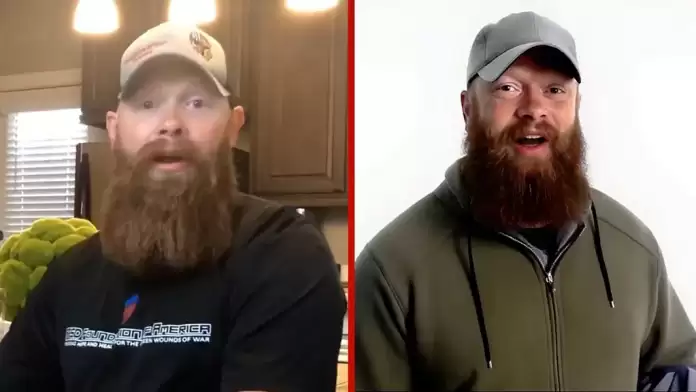
“To Gabriel Horcasitas, the man who shot me, it is a shame we encountered each other that day in those circumstances,” said the AI-generated video of Pelkey, who appeared wearing a grey baseball cap and his distinctive red-and-brown beard. “In another life, we probably could have been friends.

“I believe in forgiveness, and a God who forgives. I always have, and I still do.”

The groundbreaking presentation was made possible by Pelkey’s sister, Stacey Wales, and her husband, who compiled more than 40 impact statements from friends and family before deciding to recreate what they believed Chris would have said.

“All I kept coming back to was, what would Chris say?” Wales told local news outlet ABC-15.

Using archived audio and video footage of Pelkey, the couple trained an AI model to simulate his voice and facial expressions.

Wales described the emotionally complex process as a “Frankenstein of love” in an interview with Fox 10.

The use of AI in court drew praise from Maricopa County Superior Court Judge Todd Lang, who sentenced Horcasitas to ten and a half years in prison on manslaughter charges.

“I loved that AI, thank you for that. As angry as you are, as justifiably angry as the family is, I heard the forgiveness,” Lang said. “I feel that that was genuine.”

Chris’s brother, John Pelkey, also endorsed the digital tribute, describing it as a moment of healing.

“That was the man I knew,” he said. “Waves of healing” came over him as he watched the video, he added, noting that he believes Chris would have chosen to forgive his killer.

As artificial intelligence begins to take root in the American justice system, the U.S. Judicial Conference’s advisory committee has announced that it will soon seek public comment on how to regulate AI-generated content as evidence in courtrooms.

Vanguard

TIPS