Home Blog Page 358

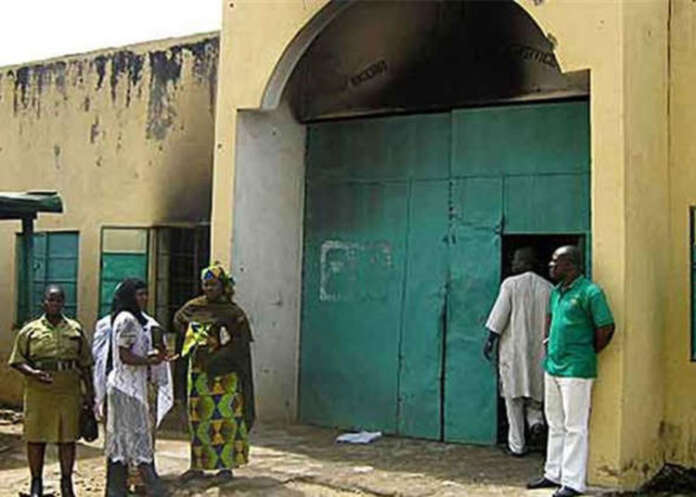
Chief Judge of FCT frees 30 inmates from Keffi prison, knocks police and Magistrates over illegal detentions

To address the unending overcrowding in custodial centres, Hon. Justice Husseini Baba-Yusuf, the Chief Judge of the Federal Capital Territory (FCT) High Court, recently discharged 30 inmates awaiting trial from two custodial centres in Keffi, Nasarawa State. This significant intervention was carried out in collaboration with the Public and Private Development Centre, a non-governmental organisation.

During a visit to the Keffi Medium Security Custodial Centre, Justice Baba-Yusuf freed 24 inmates, while six women were released from the Keffi Old Medium Security Custodial Centre. The Chief Judge emphasized the need to ensure that individuals who should not be behind bars are granted their freedom. “We are giving hope to those who had none,” Baba-Yusuf stated, adding that the ongoing project aims to continuously review the situation at other custodial centres, including Kuje and Suleja.

His Lordship attributed the congestion in the centres to factors such as inefficient magistrates, police delays, and the lack of sufficient logistical support for the correctional facilities. He called for improvements to speed up justice delivery and prevent the wrongful incarceration of innocent people.

Lucy Abagi, CEO of the Public and Private Development Centre, reiterated her organisation’s commitment to decongesting custodial centres nationwide. She commended Baba-Yusuf for his involvement, stressing the importance of addressing cases where people, particularly women, had been wrongfully incarcerated. Many of the released women had been victims of Gender-Based Violence and were unable to pay bail amounts as low as N20,000, with some of them facing prolonged detention without conviction.

Chioma Onyenucheya-Uko, Chairperson of the International Federation of Women Lawyers (FIDA) in Abuja, condemned the abuse of power that led to the wrongful detention of women and pledged to continue educating women about their rights to prevent such injustices.

The Controller of Keffi Medium Security Custodial Centre, Yau Ibrahim, thanked the FCT Chief Judge for his visit and expressed support for the effort to decongest the centres. This initiative highlights a growing movement toward a more equitable and efficient justice system.

The students loans legislation has just been dis-virgined as the latest initiate of Nigeria’s incurable corruption as a conduit for embezzlement of public funds

By Dr. Tonye Clinton Jaja

Some lawyers have opined that the problem with Nigeria is not that we have a shortage of well drafted legislation/laws to drive development.

They are of the view that the problem is that the government officials who are entrusted with implementation of the said legislation/laws are not committed to implementation of the said legislation/laws.

These lawyers are of the opinion that the government officials who are entrusted with implementation of Nigerian legislation/laws are more interested in how to manipulate said legislation/laws for their own personal gains and to embezzle the public funds allocated for implementation of those legislation.

This is not just a theory, there is empirical evidence to support the view that embezzlement of public funds meant for implementation of Nigerian legislation/laws is at an all-time high.

In the 2024 rule of law index Report of the World Justice Project (WJP), Nigeria is ranked as 120 out of 140 countries when it comes to strict compliance with the Rule of Law.

In the Laws of the Federation of Nigeria, 2004 Edition, there are a total of 552 legislation/laws.

As at the year 2021, an additional 344 legislation/laws had been enacted.

As at 14th April 2025, the Voice of Nigeria (VON) announced on its website that Nigeria has a total of 777 (seven hundred and seventy-seven) legislation/laws.

“The Laws of the Federation of Nigeria (LFN) Revision Committee has reviewed 697 out of 737 laws, with 40 remaining. The committee has pledged to complete the review process by September 2025 as part of efforts to modernise, consolidate, and harmonise the country’s federal statutes.”

Over 60% of these legislation/laws are enacted for establishment of federal government agencies or statutory corporations.

This is against the backdrop of the 2011 Stephen Oronsoye Report on Rationalisation of Federal Government Ministries, Departments and Agencies (MDAs) that stated that there is a proliferation of MDAs which needs to be curtailed by reducing and scrapping mergers of the existing over 900 MDAs to 191 MDAs.

However, instead of reduction in the number of legislation/laws that establish Nigerian MDAs, there has been an increase in the number of MDAs since the year 2011.

The latest example of how government officials have dis-ingenuously utilised these legislation/laws that establish Nigerian MDAs as a conduit for embezzlement of public funds is the Students Loans Act, 2024.

“The Nigerian Education Bank Act, 1993, was the legislation that established the Nigerian Education Bank (EDUBANK). EDUBANK’s purpose was to provide educational loans to Nigerian students, researchers, and related organizations. The Act outlined the bank’s functions, including educational lending, project financing, and advisory services. The Act was subsequently repealed and re-enacted in 2024 as the Student Loans (Access to Higher Education) Act, 2024, addressing challenges encountered with the previous legislation.”

The noble objective(s) for which the said legislation/law (Student Loans (Access to Higher Education) Act, 2024 which is to provide access to higher education for students from indigent Nigerian families appears to be defeated.

We have recently read about how the Independent Corrupt Practices and Related Offences Commission (ICPC) reported that only about ₦28bn out of the total of over ₦100bn of the funds were disbursed to the final beneficiaries, the indigent students.

The allegation is that the bulk was embezzled by the government officials at various higher education institutions who were charged with disbursing the said funds.

Of course, there has been rebuttal of the ICPC report by both the ICPC and the officials of the Nigerian Education Loans Fund.

However, majority of Nigerian citizens can read between the lines!!!

The views expressed by contributors are strictly personal and not of Law & Society Magazine.

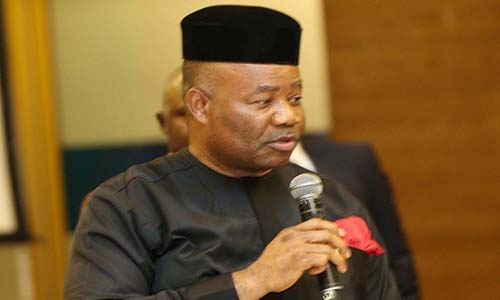
For He is A Jolly-Good Fellow: Senate President Akpabio as a jolly-good-fellow-can you reduce the cost of governance by establishing an 18 man committee to oversight the Rivers State Administrator?

By Dr. Tonye Clinton Jaja

On the 7th May 2025, I received a WhatsApp phone call from a former legislator and member of the National Assembly who has a personal working relationship with His Excellency Godswill Obot Akpabio-GOA, who is the President of the Senate of the Federal Republic of Nigeria.

In defence of the Senate President, Akpabio, this former law-maker said that Akpabio has a very jovial personality, he is not a person who takes anything to heart.

He cited as an example how Akpabio reconciled with His Excellency Nyesom Ezenwo Wike, the Minister of the Federal Capital Territory (FCT) who has previously spoken unprintable names against AKPABIO.

In a nutshell, in defence of the Senate President, he is a “Jolly-Good-Fellow”!!!

This is also the same testimony of the wife of Akpabio, who had previously stated that it is in Akpabio’s nature (second nature) to make light of every situation by cracking a joke!!!

According to his wife, that is the reason why Akpabio is always misunderstood!!!

We would give Akpabio the benefit of the doubt in this regard.

As long as his jokes are not at the expense of public funds, we can enjoy Akpabio’s jokes.

However, there are two jokes that Akpabio is cracking that we the members of the public are not finding funny or laughing at because it comes at huge expense and depletion of public funds.

On 6th March 2025, in violation of both the judgments of Nigerian courts of law and the Standing Orders of the Senate of the Federal Republic of Nigeria, Akpabio sanctioned the imposition of a six month (180days) suspension upon Senator Natasha Akpoti-Uduaghan.

Whereas both the courts of law and the relevant Senate Standing Orders stipulates a maximum of 14 days suspension for any erring legislator.

This is a joke taken too far by Akpabio and we, members of the public (especially the constituents of Kogi Central Senatorial District) are not finding it funny or laughing because it has negative financial consequences upon them.

Below is a detailed breakdown:

The negative financial consequences upon the 500,000 constituents of Kogi Central Senatorial District because of the six months suspension upon Senator Natasha Akpoti-Uduaghan

Both the courts of law and the Standing Orders of the Senate stipulate 14 days as the maximum period of suspension for any errant legislator.

The negative financial consequences of this extended period of suspension is that the over 500,000 registered voters and constituents would not receive the over ₦200,000,000 that is allocated to each Senator for use as constituency projects. Senator Natasha could have build hospitals, roads or other infrastructure for her constituents!!

See the confessions about constituency funds received by Senators this by Senator Abaribe on this website: https://www.google.com/amp/s/www.vanguardngr.com/2024/03/2024-budget-how-funds-were-shared-among-senators-on-zonal-basis-abaribe/amp/

Another joke that Akpabio is cracking that is not funny to the public purse is how he has recently appointed an 18 Man Committee of the Senate to oversee the Rivers State Administrator.

This is a function that could have been performed by the Senate Committee on Establishment and Public Institutions.

The drain on public funds by this Committee on the Rivers State Sole Administrator can be computed using the following estimates:

  1. Sitting allowance of ₦1,000,000 per sitting per month x 18 Senators for four months =₦72, 000,000
  2. Clerk of the Committee and secretarial services-₦8,000,000;
  3. Oversight visit to the office of the Sole Administrator of Rivers State @ ₦5,000,000 per Senator x 18 Senators and 2 Secretarial staff-₦100,000,000
    Grand Total-₦180,000,000

This is a very conservative estimate.

Let me conclude by stating for the records, that in contrast to the EXPENSIVE jokes of Akpabio, the Speaker of the House of Representatives, National Assembly is seriously devising ways of reducing the cost of governance by actively getting funding of international donor organisations like the United Nations Development Programme (UNDP) and UKAID, Konrad Adenauer Stifung (KAS) to cover the costs of major operations of the House of Representatives such as it’s Constitutional Review Committee.

The views expressed by contributors are strictly personal and not of Law & Society Magazine.

Soludo’s Brewery Comment: A Professor’s lapse in judgment -History beckons

By The Razor News Editorial Board

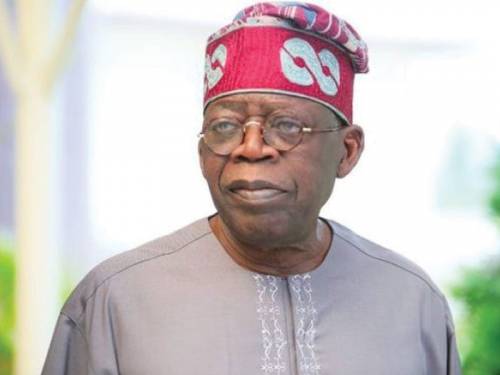
Governor Chukwuma Soludo’s recent remark during President Bola Ahmed Tinubu’s one-day visit to Anambra State has left many scratching their heads in dismay.

By stating that the last presidential visit to Anambra State was in 2012 to commission a brewery and private enterprise, Soludo aimed to contrast it with President Tinubu’s visit to commission projects he claims are better.

The governor’s comment, intended to tout his administration’s achievements, took a cheap jab at his predecessor, undermining the dignity of the office he holds.

However, this statement was unnecessary and unbefitting of a professor of economics.

Government is a continuum, and such petty remarks only serve to undermine progress that transcends administrations.

Ironically, Soludo’s jab reveals a lack of understanding of economic principles he should be well-versed in.

Commissioning productive outfits like industries, which can employ people and drive economic growth, is far more beneficial than inaugurating social projects with limited impact.

The 2012 presidential visit likely had a more lasting impact on Anambra’s economy and citizens’ lives.

Moreover, Soludo’s statement backfired. The New Government House President Tinubu commissioned was not built by his administration stricto sensu ; it’s a project that has been ongoing for nearly three decades.

Besides, the New Government House commissioned by President Tinubu is a Commonwealth building that over 90 percent of Ndi Anambra would not have access to in their lifetime.

This context makes the governor’s remark seem more like a desperate attempt to claim credit than a genuine celebration of progress.

The “Solution Fun City” project, which Soludo prides himself on, raises questions about the role of government in such ventures.

In states like Lagos, similar projects are driven by the private sector, freeing up government resources for critical infrastructure and public services. This approach has contributed to Lagos’ lead over other states.

Soludo’s comment was a lapse in judgment, unworthy of his office and academic background.

As a professor of economics, he should prioritize productive investments that benefit the masses over vanity projects.

Anambra State deserves progressive thinking, focused on tangible development rather than petty politicking.

Supreme Court holds that women’s bare breasts in public do not qualify as “lewd”

The Minnesota Supreme Court has ruled that a woman being topless or otherwise exposing her bare breasts doesn’t inherently qualify as “lewd” under the current Minnesota statute.

The ruling, which was released late last week, effectively overturned a Court of Appeals decision against the defendant, who was arrested and cited with a misdemeanor in 2021 after she was observed in Rochester “walking around a gas station parking lot with her breasts exposed.”

According to court records, the woman had exposed herself in an officer’s presence at least two other times in the weeks leading up to her arrest. When asked why she was revealing her breasts, she allegedly said, “I think Catholic girls do it all the time.” The arresting officer found a vial containing cocaine in her purse.

While she was cited for misdemeanor indecent exposure for willfully and lewdly exposing her private parts, court records indicate she moved to have those charges dismissed, arguing that breasts are not “private parts.” She argued that, under the state statute, “the exposure of breasts, without an additional showing, is not ‘lewd,'” and said that Minnesota’s indecent exposure statute is “unconstitutionally vague.”

The district court found the woman guilty on all charges, and said her exposure was “‘legally obscene.”

But in the April 30 opinion, authored by Justice Karl Procaccini, the Minnesota Supreme Court sided with the woman, saying that to be guilty of “lewdly” exposing oneself, a person would need to be involved “in conduct of a sexual nature,” and said the state “did not present evidence sufficient to prove that the appellant ‘lewdly’ exposed her ‘body, or the private parts thereof.'”

In a concurring opinion, Justice Sarah Hennesy did raise the concern that “the definition of ‘private parts’ remains ambiguous,” and suggested that future cases might still require wrestling with the subjectivity of what conduct an individual would believe is sexual in nature.

“Undoubtedly, reasonable minds will differ in determining what constitutes engaging in ‘conduct of a sexual nature’ when breasts are exposed,” she wrote. “For example, if a woman exposes her breast while dancing, is she engaged in conduct of a sexual nature? How do we know that such conduct is sexual? Does the determination depend on the way she is dancing?”

At the same time, Hennesy pointed up a double standard.

“Interpreting ‘private parts’ to include female — and not male — breasts would lead to the continued stigmatization of female breasts as inherently sexual and reinforce the sexual objectification of women,” she wrote. “As other courts have recognized, the idea that female breasts are primarily sexual is rooted in stereotypes.”

Read the full opinion and concurrence below:

https://www.scribd.com/document/858114385/Minnesota-Supreme-Court-rules-that-women-s-bare-breasts-do-not-qualify-as-lewd#from_embed

CBS News

Ex-NLC Deputy President, Akinlaja to Tinubu’s Govt. —You cannot use ₦22 trillion pension funds to sustain infrastructure development

A former Deputy President of the Nigeria Labour Congress (NLC), and former General Secretary of Nigeria Union of Petroleum and Natural Gas Workers, (NUPENG), Hon. (Comrade) Joseph Iranola Akinlaja, has expressed concerns regarding President Bola Tinubu’s administration’s intentions to use part of over N22 trillion pension funds for infrastructure development in Nigeria, adding that the funds are exclusively for workers’ pensions after their retirement.

Akinlaja, who was also a two-time member of the Federal House of Representatives in a chat with with some journalists, including Veracity Desk (veracitydesk.com), at his Lagos residence on Thursday, May 8, 2025, advised the government to perish the plan, citing potential negative impacts on Nigerian retirees who depend on their pensions after their active life in service.

Akinlaja

The foremost labour leader emphasized that Nigerians were skeptical about the government’s intent to use pension funds to support national growth and infrastructural development.

According to the Ondo born politician and businessman, there was need for the government to adhere to the provisions of the Pension Reform Act of 2014 (PRA 2014) and the revised Regulation on Investment of Pension Assets by the National Pension Commission (PenCom), while also stressing that accountability, transparency, fiscal discipline and the rule of law should never be compromised or violated.

Akinlaja also cautioned against exceeding the regulatory investment limit of the pension funds.

He said, “While I have tremendous regard for this government, we must also not lose sight of some Nigerians who are skeptical about the government’s plans to use pension funds for infrastructure development, judging from the experience of the past; many public funds had been looted, and in some cases when such looted funds were recovered they were not properly channeled to judicious use.

“In the developed countries, for example, such pension funds are borrowed or loaned to the government to address infrastructure deficits. As we all know this is workers’ money and all workers will not go on pension the same day, so this gives the opportunity for the government to use such funds for public interest in record time and later repay the money back to the pension account after utilizing it accordingly and appropriately.

“Before 2023, workers in the public service were on non-contributory pension schemes. That period, the pension arrangement was not beneficial to Nigerian workers because it was subjected to budgetary vagaries of the government. Therefore, retirees who served the nation during their youthful years were made to go through hell. These are people who have contributed to the economic development of the nation. It would be totally unfair to make them suffer non-payment of their pensions and gratuities as of when due. Stories abound of pensioners who slumped and died while queuing to get their pensions. Some pensioners even went to Abuja to picket the government, some of them slept there for months, eating and sleeping in the open air in protest against non-payment of their pensions and gratuities. Never should we go back to those dark and horrifying eras again.

“Meanwhile, it wasn’t an easy task for us, the leadership of NLC back then, but we succeeded in doing what we needed to do, to ensure that the public sector tapped into the benefits of contributory pension scheme like their counterparts in the private sector.

“In the private sector at that time, pensions and gratuities were on contributory scheme where workers contributed and employers on their parts complimented the contributions for pensions and gratuities. These funds were set aside and given to Actuarial insurance companies to manage profitably for collection by workers when they eventually retire. Through that system, the money was for the workers and properly planned in such a way that both employers and employees can’t touch the money. The Actuarial companies also added dividends to the money, so the money was not only safe but also increased in volumes where it was kept.

“Instead of an Actuarial companies for the private sector, the pensions funds of the workers both in public and private sectors of the economy was now given to Pension Funds Administrators (PFAs) by choice of the workers with a commission established by law to be responsible for regulating, overseeing, and guaranteeing the responsible governance of pension affairs in Nigeria, known as the National Pension Commission, and the 2004 Pension Reform Act established it. By this, the money was to be kept with the PFAs for safekeeping and for easy payment of gratuities and pensions when the time was right. Now, barring any bureaucratic bottlenecks, pensioners should be able to collect their pensions and gratuities as at when due and seamlessly.”

Giving outright disapproval to the government’s intentions on pension funds, the one-time General Secretary of NUPENG has this to say:

“If government will now deep its hands on the money meant for pensioners and not pay back to the covers of the pension funds, as some people have anticipated based on the benefits of hindsight, the government should please distance itself from the pension funds. If allowed, it would amount to double jeopardy for the real owners of the money, who could possibly be at their vulnerable state or so weak, due to old age. So what then becomes the fate of the workers when they retire from active service and are left with nothing to fall back to?

“We have seen how successive governments have recovered looted funds in the past and won’t be able to account for it. As we speak now, some government Ministries, Departments and Agencies have either delayed or failed to pay their own part of the contributory pension funds for the workers on their payroll, therefore there is trust deficit, it would be advisable for the government not to tamper with the pension funds, but to look elsewhere to fund infrastructure deficits in the country,” Akinlaja noted

…turning the NNPC around

By Punch Editorial Board

Like a recurring decimal, anytime the NNPC helmsman is removed, other firings follow. So, it was within the regular sequence of events that usually follow the sacking of the CEO when some top managers of the company were fired after the removal of the former CEO of the company, Mele Kyari.

Allegations of fraudulent acts are usually part of the package. Kyari and some former MDs of subsidiaries, especially the refineries, are facing the Economic and Financial Crimes Commission’s investigations.

However, beyond the firings and the fraud allegations is the reality that changing a top management team does not necessarily lead to improved performance.

The problem with the NNPC is that the government is too involved in the running of the company. This needs to change.

There are too many Federal Government interventions in hirings and firings and the day-to-day business of the company, which have turned it into a glorified parastatal rather than a world-class oil company.

Every successive Nigerian president has elected to be the petroleum minister and often will change the top management and appoint his men to the positions.

However, firings and hirings have never changed anything substantially in the NNPC because lack of transparency and corruption always remain.

The Finance Minister, Wale Edun, has hinted that the company will undergo a forensic audit. That is a welcome decision. The transactions that took place under Kyari should be examined by eagle-eyed auditors.

The fact that the refineries that were said to have resumed production in Port Harcourt and Warri are said to be performing sub-optimally should be investigated.

Beyond all that is the urgent need for the company to be listed on the Nigerian Stock Exchange. Listing will help to reduce corruption in the company and will promote transparency.

If this government is interested in turning around the fortunes of the company, it must encourage the company to list.

Going forward, appointments to the company’s top management positions should be based on competence rather than a need for geo-political balancing.

The choice of the management team should be merit-based and dwell less on politics and ethnic leanings.

The NNPC, if well restructured, could evolve into first, a regional energy giant and later a global giant.

Malaysia’s Petronas, Brazil’s Petrobras and Saudi Arabia’s Aramco became oil giants because the governments of those countries created enabling environments for the companies to thrive.

Saudi Aramco has both the world’s second-largest proven crude oil reserves, at more than 270 billion barrels and the largest daily oil production of all oil-producing companies.

On December 11, 2019, the company’s shares were listed on the Saudi Exchange.

Petrobras is also a listed company, and the Brazilian government directly owns 54 per cent of its common shares with voting rights, while the Brazilian Development Bank and Brazil’s Sovereign Wealth Fund each control 5.0 per cent, bringing the state’s direct and indirect ownership to 64 per cent.

Although Petronas (Petroliam Nasional Berhad) of Malaysia is a government-owned company and is not publicly traded, many of its subsidiaries are. Petronas Gas Berhad is a subsidiary and is listed on Bursa Malaysia. There are other Petronas-related companies, like Petronas Chemicals Group Berhad, which are listed on Bursa Malaysia.

The three companies have refineries that are working so effectively, unlike the NNPC-owned refineries, which have almost become liabilities rather than assets.

So, turning the NNPC around for the good of the country will take the determination of President Bola Tinubu to do the appropriate thing for the company once and for all by reducing the government’s interference in operations, appointing top management by merit, and privatising it outright.

Punch Editorial Board

Oby Ezekwesili, UNILag Faculty of Law congratulate Abiola Akiode-Afolabi, the Pioneer Acting Director of Safeguarding Centre at the University of Lagos

Following her appointment as the pioneer Acting Director of the newly established Safeguarding Centre at the University of Lagos, congratulations have been pouring in for Dr. Abiola Akiode-Afolabi.

In a post made on their LinkedIn page, the University of Lagos Law faculty wrote:

“Congratulations to Dr. Abiola Akiyode-Afolabi, of the Department of Public Law, on her appointment as the Pioneer Acting Director of the newly established Safeguarding Centre at the University of Lagos.

“This groundbreaking Centre is committed to fostering a safe and conducive environment for students, staff, and visitors of the University. As the pioneer head, Dr. Akiyode-Afolabi will play a pivotal role in shaping policies, building institutional structures, and driving a culture of awareness and accountability around safeguarding issues.

“Her leadership and dedication to human rights make her uniquely suited to lead this initiative.

“We wish her a successful and impactful tenure as she takes on this important responsibility.

#UniversityOfLagos hashtag#UNILAG hashtag#HumanRights

Dr Oby Ezekwesili tweeted: “Big congratulations to you, our Dean-General@abiolaak! You’re a woman of character, competence and capacity and @UnilagNigeria is fortunate to have you. Blessings and hugs.”

Akiode-Afolabi had earlier tweeted: “I am honored to be appointed as the Pioneer Acting Director of the newly established Safeguarding Centre at @UnilagNigeria. I look forward to building a safer, more inclusive environment for all. Let’s drive the culture of accountability and protection forward! #Safeguarding#Unilag#HumanRights

Between the Lines: What the Court of Appeal missed in Union Bank v. Origin Oil & Gas Ltd

By Stephen Azubuike

Introduction
Banks ensure the wheel of commercial activities continues to roll through the provision
of credit facilities to business entities. Commercial lending also offers investment
benefits to banks, which include increased revenue and financial stability. As businesses
grow and the banks become more stable, stronger bank-customer relationships are
built.

One of the biggest threats to this bank-customer relationship flows from non-repayment
of loans, which is capable of exposing the banks to risks. Usually, where there is a
breach of the covenant to repay, the affected bank (as creditor ) would take legal steps
towards debt recovery.

But that is not where the real gist is. What we find in some cases is that debtors often
dispute the sum being claimed by the banks on the basis that the figures are inflated
and coated with excessive and unlawful charges recorded on the debtors’ accounts.
Acknowledging the possibilities, banks are often open to what is commonly known as
account reconciliation exercise, where it is hoped that such issues would be amicably
resolved.

Undoubtedly, such an allegation of unlawful charges is one issue that taints the
integrity of some banks. This was the development in an interesting case involving
Union Bank (“the Bank”) and Origin Oil and Gas Ltd. (“the Company” or “Origin
Oil”).* The case was instituted by the Company against the Bank at the Federal High
Court, Lagos Division, where the Learned Trial Judge, Hon. Justice A. Lewis-Allagoa,
made some impeccable findings, and relying on compelling legal reasoning, upheld the
claims of the Company against the Bank. But, in a controversial Judgment, the Court of
Appeal, Lagos Division, overturned that decision. The Judgment, respectfully, raises fundamental concerns about judicial appreciation of expert evidence, complex banking transactions, and the principles of the law of evidence applicable to documentary exhibits.

Background: The Dispute Over Excess Charges

The case originated from the Federal High Court, Lagos. The Respondents (Origin Oil) had obtained an Import Finance Facility from Union Bank and later discovered what it described as excessive and arbitrary charges on its account. The Respondent had, by several emails, requested clarification and removal of those excessive charges, but the Bank remained largely evasive. Believing these charges violated Central Bank of Nigeria (CBN) guidelines, the Company commissioned a forensic audit.

The resulting report, presented in Court by a Forensic Auditor and Chartered Accountant (PW2—Fola), highlighted unauthorised debits. The Forensic Auditor gave oral evidence and was subjected to cross-examination. His qualifications and findings were not discredited.

Union Bank, in response, requested an independent audit by the CBN. The application for the independent audit was granted by the Court. However, the resulting CBN report was produced in Court upon a subpoena duces tecum and tendered from the bar without the testimony of any CBN official. In other words, the CBN report was not subjected to the test of cross-examination on the findings,  conclusion and qualifications of its authors.

By a well-considered Judgment, the trial Court ruled in favour of Origin Oil, relying on the tested evidence of the forensic auditor. But on appeal, the Court of Appeal overturned this decision, rejecting the Forensic Auditor’s testimony and leaning instead towards the untested CBN report.

Critical Findings and Holding by the Trial Court

In deciding the case, the trial Court made some critical findings which formed the basis of its decision. These were as follows:

1.   The trial Court ran through the evidence and exhibits before the Court and found that there was nothing in those exhibits suggesting the restructuring or renewal of the $2 million facility as claimed by the Bank.

2.   The trial  Court found that the  Bank was liable for applying unlawful and excessive charges and manipulations on the Company’s accounts. According to the trial Court, “the Defendant [the Bank] did not only admit the manipulations in its Statement of Defence and Final Address, though they termed those manipulations to be occasional wrong debiting.” (p. 51) In making this finding, the trial Court heavily relied on the report of the Forensic Auditor.

3.   The trial Court discountenanced the CBN report on the basis that the report was tendered in Court by an official of the CBN based on subpoena duces tecum, as the official did not give any oral evidence and was not cross-examined on the report. The CBN official did not claim to be an expert, nor did he claim to be the author of the report. Consequently, the trial Court held that the CBN report had no weight and no probative value, and that the Court could not rely on it.

4.   The trial Court also found that while the Company called an expert witness in the person of the Forensic Auditor, the Bank failed to call its own expert witness. Rather, the Bank relied on its staff (DW1 and DW2) who lacked experience in maers of Leers of Credit and issues relating to core banking.  DW2 (Barbara), who was superior to DW1   (Mercy) worked in the   Revenue Assurance Department of the Bank—more like a customer complaints unit. Regardless, the Bank’s witnesses claimed to have reviewed the Leers of Credit that led to the subject maer of the case. The Court held that the Bank’s staff called as witnesses did not qualify as experts and that the evidence of the Company’s expert—the Forensic Auditor—remained unchallenged. Also, the Bank’s witnesses relied on the   CBN   report in making their Statements on Oath, being their oral evidence-in-chief.

5.   The CBN report formed the main basis for the Bank’s Counterclaim.

In its Judgment delivered on  4  July  2024,  the trial Court granted the claims of the company while dismissing the Bank’s counterclaim.

Appeal to the Court of Appeal**

Aggrieved by the decision of the trial Court, the Bank appealed to the Court of Appeal where it challenged the trial Court’s reliance on the report of the Company’s hired Forensic Auditor on the ground that the Forensic Auditor was hired for a fee, without an order of Court and without recourse to the Bank. Also, the Bank believed it was needless for the Company to hire the Forensic Auditor in view of the intervention of the CBN as a referee.

The Bank argued that there was no evidence tendered to support the oral claims by the Forensic Auditor regarding his qualifications as an expert.

More so, the Bank contended that the trial Court was wrong for discountenancing the CBN report and for holding that there was no evidence of the existence of the $2 Million facility which ultimately led to a dismissal of its Counterclaim and in granting the claims of the Company.

In its Judgment delivered on  10  January  2025,  the  Court of  Appeal upheld the arguments of the Bank. It reversed the decision of the trial Court and granted the Bank’s Counterclaim.

Fatal Errors: What the Court of Appeal Missed:

An examination of the Judgment of the Court of Appeal reveals four critical missteps/errors:

1.  Misapprehension of the $2 Million Facility

The Court of Appeal dismissed the Company’s argument that the facility was never disbursed  (or was instantly repaid) as illogical.  But this position aligns with standard banking practices,  where inter-account transfers and internal reconciliations are routine. The Court of Appeal failed to appreciate that the Company’s dollar account showed no such debit, nor was there any restructuring document.  The  Court’s hasty rejection of this possibility displayed a superficial grasp of commercial banking mechanisms.

2.  Unfair Discrediting of Expert Testimony

The  Court of Appeal faulted the trial Court for relying on the Forensic Auditor’s report, arguing that his qualifications were not established. This was notwithstanding the finding by the trial Court that the Company’s expert witness was a Forensic Auditor and a  Chartered  Accountant.  This is a misapplication of the law.  The position remains that once a witness is presented as an expert, and his expertise is stated (for example, a Chartered Accountant as in this case), it is for the opposing party to challenge those credentials during cross-examination. As held in the case of Heritage Bank Ltd v. B.U Chuma & Sons Ltd & Anor (2024) LPELR- 61937(CA), it is the duty of the opposing counsel in appropriate cases to cross-examine the expert witness effectively in order to raise doubts as to the witness’s competence or expertise. Where counsel fails to do so, the court would be at liberty to treat the witness as an expert and rely on the testimony of the expert witness.

Moreover, in Magaji v. Lado & Ors (2023) LPELR-60463(SC), the Supreme Court cautioned against judicial incursion into adversarial proceedings. The Court of Appeal’s rejection of the Forensic Auditor’s credentials and status as an expert, on its own accord, and without any prompting or challenge from the Bank, offends this principle.

3. Mixing up the Bank’s Witness and the CBN Official

The Court of Appeal erroneously attributed the tendering of the CBN report to the Union   Bank staff and witness named Barbara Peters, stating she had been subpoenaed. In truth, the report was produced by a CBN official who did not testify and was not cross-examined. This factual error undercuts the credibility of the Court of Appeal’s Judgment and calls its reasoning into question.

4. Improper Reliance on Untested Documentary Evidence

The Bank’s witnesses admitted that their Statements on Oath were based on the CBN report, but they also claimed that their evidence was based on a reconstruction of the Company’s accounts.  This naturally sends the wrong signal and raises some questions on the integrity of the report and the substance of their evidence.

Beyond this,  the trial  Court had made a critical observation which the  Court of Appeal appeared to have neglected to the effect that the CBN official who tendered the CBN report did not give any oral evidence and was never cross-examined on the report. Subpoenaing a witness solely for the purpose of tendering documentary evidence is allowed in law. But given the nature of the instant case and the relevance of the report, it was not ideal for the Court to place much weight on such an untested report dumped on the Court, especially where the Company had another report from its own hired expert—the Forensic Auditor.

Furthermore, notwithstanding the heat of dispute and without any evidence or compelling reason, the Court of Appeal gave undue regard to the CBN report. According to the Court:

“…The  fact  that  it  [the  CBN  report]  emanated  from  a  Public Office, in the proper admissible format and in compliance with the  Order  of  Court  renders  it admissible with the appropriate probative value attached to it.”

Also, the Court of Appeal described the CBN as “an impartial, court-appointed arbiter” as far as the instant case was concerned.

Clearly, the Court of Appeal was swayed by the position of the CBN as the regulator of the financial sector in ascribing so much validity to the CBN report as if the report

must be automatically binding on the Court for the singular reason that it emanated from the CBN without more. That cannot validly be!

In Etim & Anor v Akpan & Ors (2019) LPELR-48681(CA), it was held that documents must be verified by oral evidence or cross-examination in order to have any probative value. Similarly, in ACN v. Lamido & Ors (2012) LPELR-7825(SC) it was held that documentary evidence, especially from third-party sources, must be authenticated through the proper evidential process. The Court of Appeal’s reliance on the untested CBN report undermines these sacrosanct evidentiary principles.

5.   Failure to acknowledge the import of the Bank’s admission of imprudence

It is important to note that initially, the Bank had contended that there were no unlawful entries in the Company’s accounts. But the CBN report captured unlawful entries and excessive charges, which the Bank eventually admitted. At the trial Court, the Bank made an unsuccessful attempt to dilute the impact of this admission by claiming that the unlawful entries were mere “occasional wrong debiting”.

The inevitable implication of this is that the Bank was imprudent. The admission of unlawful entries and excessive charges gives more validity to the report of the independent expert—Forensic Auditor—called by the Company, which also highlighted those excessive charges and applied penal provisions of the CBN Guidelines on the effect of the charges.

6.   There was no justifiable basis for granting the Bank’s Claims

With respect, how the Court of Appeal came to the conclusion that the Bank’s Counterclaim succeeded merely because it held that the Company’s claims failed is unimaginable.  In less than a  page,  the  Court of Appeal “considered” the Bank’s Counterclaim and upheld all the claims, relying wholly on the CBN report.

Indeed, the Counterclaim, having been built on the untested CBN report, was bound to fail in the absence of any other compelling evidence, and in view of the forensic report of the Company’s expert witness.

A Judgment that Undermines Judicial Clarity

The errors in the appellate decision go beyond technicalities. They strike at the heart of justice delivery in commercial disputes. The trial  Court took pains to distinguish between credible and speculative evidence. It rewarded rigour and punished laxity. With respect, the Court of Appeal did the opposite.

This case underscores the judiciary’s responsibility to understand commercial realities, respect the evidentiary process, and avoid conflating legal roles and standards. When courts undermine expert evidence, elevate untested documents, and misstate facts, they risk shaking public confidence in adjudication.

Conclusion

In sum, I believe the errors I identified in the Court of Appeal’s Judgment are compelling. More was expected from the Court of Appeal in this case. In my opinion, an appeal by the Company to the Supreme Court may likely succeed.

Until then, Union Bank v. Origin Oil & Gas Ltd stands as a cautionary tale; a case where judicial error did not merely miss the fine print, it missed the point entirely.

Stephen Azubuike Esq.., a Lawyer, writes from Lagos.

  • SUIT NO. FHC/L/CS/1431/2016 – Origin Oil and Gas Ltd & Ors v. Union Bank
  • APEAL NO. CA/LAG/CV/625/2024 – Union Bank v. Origin Oil and Gas Ltd & Ors

Between the Lines: What the Court of Appeal missed in Union Bank v. Origin Oil & Gas Ltd

By Stephen Azubuike

Introduction
Banks ensure the wheel of commercial activities continues to roll through the provision
of credit facilities to business entities. Commercial lending also offers investment
benefits to banks, which include increased revenue and financial stability. As businesses
grow and the banks become more stable, stronger bank-customer relationships are
built.

One of the biggest threats to this bank-customer relationship flows from non-repayment
of loans, which is capable of exposing the banks to risks. Usually, where there is a
breach of the covenant to repay, the affected bank (as creditor ) would take legal steps
towards debt recovery.

But that is not where the real gist is. What we find in some cases is that debtors often
dispute the sum being claimed by the banks on the basis that the figures are inflated
and coated with excessive and unlawful charges recorded on the debtors’ accounts.
Acknowledging the possibilities, banks are often open to what is commonly known as
account reconciliation exercise, where it is hoped that such issues would be amicably
resolved.

Undoubtedly, such an allegation of unlawful charges is one issue that taints the
integrity of some banks. This was the development in an interesting case involving
Union Bank (“the Bank”) and Origin Oil and Gas Ltd. (“the Company” or “Origin
Oil”).* The case was instituted by the Company against the Bank at the Federal High
Court, Lagos Division, where the Learned Trial Judge, Hon. Justice A. Lewis-Allagoa,
made some impeccable findings, and relying on compelling legal reasoning, upheld the
claims of the Company against the Bank. But, in a controversial Judgment, the Court of
Appeal, Lagos Division, overturned that decision. The Judgment, respectfully, raises fundamental concerns about judicial appreciation of expert evidence, complex banking transactions, and the principles of the law of evidence applicable to documentary exhibits.

Background: The Dispute Over Excess Charges

The case originated from the Federal High Court, Lagos. The Respondents (Origin Oil) had obtained an Import Finance Facility from Union Bank and later discovered what it described as excessive and arbitrary charges on its account. The Respondent had, by several emails, requested clarification and removal of those excessive charges, but the Bank remained largely evasive. Believing these charges violated Central Bank of Nigeria (CBN) guidelines, the Company commissioned a forensic audit.

The resulting report, presented in Court by a Forensic Auditor and Chartered Accountant (PW2—Fola), highlighted unauthorised debits. The Forensic Auditor gave oral evidence and was subjected to cross-examination. His qualifications and findings were not discredited.

Union Bank, in response, requested an independent audit by the CBN. The application for the independent audit was granted by the Court. However, the resulting CBN report was produced in Court upon a subpoena duces tecum and tendered from the bar without the testimony of any CBN official. In other words, the CBN report was not subjected to the test of cross-examination on the findings,  conclusion and qualifications of its authors.

By a well-considered Judgment, the trial Court ruled in favour of Origin Oil, relying on the tested evidence of the forensic auditor. But on appeal, the Court of Appeal overturned this decision, rejecting the Forensic Auditor’s testimony and leaning instead towards the untested CBN report.

Critical Findings and Holding by the Trial Court

In deciding the case, the trial Court made some critical findings which formed the basis of its decision. These were as follows:

1.   The trial Court ran through the evidence and exhibits before the Court and found that there was nothing in those exhibits suggesting the restructuring or renewal of the $2 million facility as claimed by the Bank.

2.   The trial  Court found that the  Bank was liable for applying unlawful and excessive charges and manipulations on the Company’s accounts. According to the trial Court, “the Defendant [the Bank] did not only admit the manipulations in its Statement of Defence and Final Address, though they termed those manipulations to be occasional wrong debiting.” (p. 51) In making this finding, the trial Court heavily relied on the report of the Forensic Auditor.

3.   The trial Court discountenanced the CBN report on the basis that the report was tendered in Court by an official of the CBN based on subpoena duces tecum, as the official did not give any oral evidence and was not cross-examined on the report. The CBN official did not claim to be an expert, nor did he claim to be the author of the report. Consequently, the trial Court held that the CBN report had no weight and no probative value, and that the Court could not rely on it.

4.   The trial Court also found that while the Company called an expert witness in the person of the Forensic Auditor, the Bank failed to call its own expert witness. Rather, the Bank relied on its staff (DW1 and DW2) who lacked experience in maers of Leers of Credit and issues relating to core banking.  DW2 (Barbara), who was superior to DW1   (Mercy) worked in the   Revenue Assurance Department of the Bank—more like a customer complaints unit. Regardless, the Bank’s witnesses claimed to have reviewed the Leers of Credit that led to the subject maer of the case. The Court held that the Bank’s staff called as witnesses did not qualify as experts and that the evidence of the Company’s expert—the Forensic Auditor—remained unchallenged. Also, the Bank’s witnesses relied on the   CBN   report in making their Statements on Oath, being their oral evidence-in-chief.

5.   The CBN report formed the main basis for the Bank’s Counterclaim.

In its Judgment delivered on  4  July  2024,  the trial Court granted the claims of the company while dismissing the Bank’s counterclaim.

Appeal to the Court of Appeal**

Aggrieved by the decision of the trial Court, the Bank appealed to the Court of Appeal where it challenged the trial Court’s reliance on the report of the Company’s hired Forensic Auditor on the ground that the Forensic Auditor was hired for a fee, without an order of Court and without recourse to the Bank. Also, the Bank believed it was needless for the Company to hire the Forensic Auditor in view of the intervention of the CBN as a referee.

The Bank argued that there was no evidence tendered to support the oral claims by the Forensic Auditor regarding his qualifications as an expert.

More so, the Bank contended that the trial Court was wrong for discountenancing the CBN report and for holding that there was no evidence of the existence of the $2 Million facility which ultimately led to a dismissal of its Counterclaim and in granting the claims of the Company.

In its Judgment delivered on  10  January  2025,  the  Court of  Appeal upheld the arguments of the Bank. It reversed the decision of the trial Court and granted the Bank’s Counterclaim.

Fatal Errors: What the Court of Appeal Missed:

An examination of the Judgment of the Court of Appeal reveals four critical missteps/errors:

1.  Misapprehension of the $2 Million Facility

The Court of Appeal dismissed the Company’s argument that the facility was never disbursed  (or was instantly repaid) as illogical.  But this position aligns with standard banking practices,  where inter-account transfers and internal reconciliations are routine. The Court of Appeal failed to appreciate that the Company’s dollar account showed no such debit, nor was there any restructuring document.  The  Court’s hasty rejection of this possibility displayed a superficial grasp of commercial banking mechanisms.

2.  Unfair Discrediting of Expert Testimony

The  Court of Appeal faulted the trial Court for relying on the Forensic Auditor’s report, arguing that his qualifications were not established. This was notwithstanding the finding by the trial Court that the Company’s expert witness was a Forensic Auditor and a  Chartered  Accountant.  This is a misapplication of the law.  The position remains that once a witness is presented as an expert, and his expertise is stated (for example, a Chartered Accountant as in this case), it is for the opposing party to challenge those credentials during cross-examination. As held in the case of Heritage Bank Ltd v. B.U Chuma & Sons Ltd & Anor (2024) LPELR- 61937(CA), it is the duty of the opposing counsel in appropriate cases to cross-examine the expert witness effectively in order to raise doubts as to the witness’s competence or expertise. Where counsel fails to do so, the court would be at liberty to treat the witness as an expert and rely on the testimony of the expert witness.

Moreover, in Magaji v. Lado & Ors (2023) LPELR-60463(SC), the Supreme Court cautioned against judicial incursion into adversarial proceedings. The Court of Appeal’s rejection of the Forensic Auditor’s credentials and status as an expert, on its own accord, and without any prompting or challenge from the Bank, offends this principle.

3. Mixing up the Bank’s Witness and the CBN Official

The Court of Appeal erroneously attributed the tendering of the CBN report to the Union   Bank staff and witness named Barbara Peters, stating she had been subpoenaed. In truth, the report was produced by a CBN official who did not testify and was not cross-examined. This factual error undercuts the credibility of the Court of Appeal’s Judgment and calls its reasoning into question.

4. Improper Reliance on Untested Documentary Evidence

The Bank’s witnesses admitted that their Statements on Oath were based on the CBN report, but they also claimed that their evidence was based on a reconstruction of the Company’s accounts.  This naturally sends the wrong signal and raises some questions on the integrity of the report and the substance of their evidence.

Beyond this,  the trial  Court had made a critical observation which the  Court of Appeal appeared to have neglected to the effect that the CBN official who tendered the CBN report did not give any oral evidence and was never cross-examined on the report. Subpoenaing a witness solely for the purpose of tendering documentary evidence is allowed in law. But given the nature of the instant case and the relevance of the report, it was not ideal for the Court to place much weight on such an untested report dumped on the Court, especially where the Company had another report from its own hired expert—the Forensic Auditor.

Furthermore, notwithstanding the heat of dispute and without any evidence or compelling reason, the Court of Appeal gave undue regard to the CBN report. According to the Court:

“…The  fact  that  it  [the  CBN  report]  emanated  from  a  Public Office, in the proper admissible format and in compliance with the  Order  of  Court  renders  it admissible with the appropriate probative value attached to it.”

Also, the Court of Appeal described the CBN as “an impartial, court-appointed arbiter” as far as the instant case was concerned.

Clearly, the Court of Appeal was swayed by the position of the CBN as the regulator of the financial sector in ascribing so much validity to the CBN report as if the report

must be automatically binding on the Court for the singular reason that it emanated from the CBN without more. That cannot validly be!

In Etim & Anor v Akpan & Ors (2019) LPELR-48681(CA), it was held that documents must be verified by oral evidence or cross-examination in order to have any probative value. Similarly, in ACN v. Lamido & Ors (2012) LPELR-7825(SC) it was held that documentary evidence, especially from third-party sources, must be authenticated through the proper evidential process. The Court of Appeal’s reliance on the untested CBN report undermines these sacrosanct evidentiary principles.

5.   Failure to acknowledge the import of the Bank’s admission of imprudence

It is important to note that initially, the Bank had contended that there were no unlawful entries in the Company’s accounts. But the CBN report captured unlawful entries and excessive charges, which the Bank eventually admitted. At the trial Court, the Bank made an unsuccessful attempt to dilute the impact of this admission by claiming that the unlawful entries were mere “occasional wrong debiting”.

The inevitable implication of this is that the Bank was imprudent. The admission of unlawful entries and excessive charges gives more validity to the report of the independent expert—Forensic Auditor—called by the Company, which also highlighted those excessive charges and applied penal provisions of the CBN Guidelines on the effect of the charges.

6.   There was no justifiable basis for granting the Bank’s Claims

With respect, how the Court of Appeal came to the conclusion that the Bank’s Counterclaim succeeded merely because it held that the Company’s claims failed is unimaginable.  In less than a  page,  the  Court of Appeal “considered” the Bank’s Counterclaim and upheld all the claims, relying wholly on the CBN report.

Indeed, the Counterclaim, having been built on the untested CBN report, was bound to fail in the absence of any other compelling evidence, and in view of the forensic report of the Company’s expert witness.

A Judgment that Undermines Judicial Clarity

The errors in the appellate decision go beyond technicalities. They strike at the heart of justice delivery in commercial disputes. The trial  Court took pains to distinguish between credible and speculative evidence. It rewarded rigour and punished laxity. With respect, the Court of Appeal did the opposite.

This case underscores the judiciary’s responsibility to understand commercial realities, respect the evidentiary process, and avoid conflating legal roles and standards. When courts undermine expert evidence, elevate untested documents, and misstate facts, they risk shaking public confidence in adjudication.

Conclusion

In sum, I believe the errors I identified in the Court of Appeal’s Judgment are compelling. More was expected from the Court of Appeal in this case. In my opinion, an appeal by the Company to the Supreme Court may likely succeed.

Until then, Union Bank v. Origin Oil & Gas Ltd stands as a cautionary tale; a case where judicial error did not merely miss the fine print, it missed the point entirely.

Stephen Azubuike Esq.., a Lawyer, writes from Lagos.

  • SUIT NO. FHC/L/CS/1431/2016 – Origin Oil and Gas Ltd & Ors v. Union Bank
  • APEAL NO. CA/LAG/CV/625/2024 – Union Bank v. Origin Oil and Gas Ltd & Ors

TIPS