Home Blog Page 252

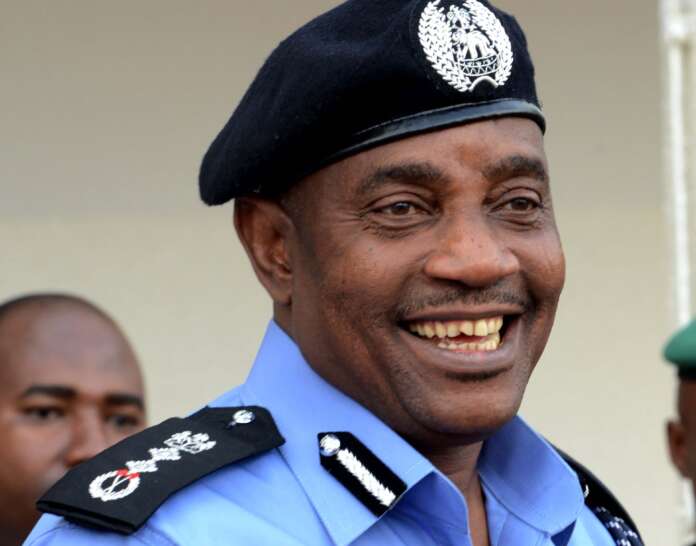
Dr. Solomon Ehigiator Arase, CFR: The cerebral scholar in police uniform

By Prof Mike Ozekhome SAN

In the quiet dawn of August 31, 2025, Nigeria lost a towering uniformed figure whose life was a testament to national service, unwavering dedication to duty, intellectual sagacity and an unyielding commitment to justice. Dr. Solomon Ehigiator Arase, CFR, the 18th Inspector-General of Police and former Chairman of the Nigeria Police Service Commission (PSC), was snatched by the cold hands of death at 69 after a brief illness at Cedarcrest Hospital in Abuja. His departure leaves a gaping void in the hearts of his family, colleagues, the security forces, and a nation he so diligently served with unparalleled patriotism.

Yet, in this moment of grieving and sorrowing, we must celebrate a legacy that continues to illuminate the path towards a safer, fairer and a more humane and just Nigeria. Born on June 21,1956,  an Ora mother and Benin father, in Owan West Local Government Area, Edo State, Solomon Arase rose from humble beginnings, nurtured in a home that prized education and discipline very highly. His journey was one of relentless pursuit of knowledge and excellence, forged in the fires of academic rigor and practical wisdom. He earned a Bachelor’s degree in political science from Ahmadu Bello University, Zaria, in 1980, immersing himself in intellectual traditions that were later to shape his vision of law enforcement as a tool for social justice and equity. This foundation propelled him to further academic heights: a Bachelors degree in law from the University of Benin and a Masters degree in law (specializing in corporate management and finance) from the University of Lagos. He did not stop after these three degrees. He went on to obtain a Masters in Strategic Studies, and a Ph.D. doctorate degree in Public Law. As a Fellow of the Nigerian Defence College (fdc) and a member of prestigious bodies such as the International Association of Chiefs of Police (IACP), the International Bar Association (IBA), the Nigerian Bar Association (NBA), and the Body of Benchers, Arase embodied a rare fusion of scholarly depth and operational prowess. His intellectual contributions extended beyond the classroom, as he authored influential books on policing, police reform, accountability and democratic security management that enriched national and global discourse.

Joining the Nigeria Police Force on December 1,1981, as a Cadet Assistant Superintendent of Police (ASP), Arase’s career spanned over three decades of exemplary service across operations, investigations, administration, and intelligence. He served as Principal Staff Officer to three successive Inspectors-General of Police between 2002 and 2008, honing his strategic acumen at the highest levels. As Commissioner of Police in Akwa Ibom State, Assistant Inspector-General in charge of intelligence, and head of the Criminal Intelligence and Investigation Bureau (CIIB) , he demonstrated tactical brilliance tempered with empathy. His international engagement with the United Nations peacekeeping mission in Namibia brought a global perspectives, enriching Nigeria’s security framework with lessons in conflict management and resolution.

Appointed the 18th Inspector-General of Police in April, 2015, by then President Goodluck Ebele Jonathan, Arase’s brief tenure until June 21, 2016, was transformative. A reformer extraordinaire, he introduced bold initiatives that reshaped and repositioned the Nigeria Police Force. He established the Intelligence Response Team (IRT), an elite unit that tackled high-profile crimes with precision, and the Complaint Response Unit (CRU), a pioneering mechanism to address public grievances against police misconduct, including abuse, corruption, and extortion. These were not mere administrative changes but bold steps toward accountability and service-oriented policing. Arase championed community policing to foster collaboration with local communities, enhanced forensic investigation capabilities, introduced Safer Highway Patrols to bolster road safety, and prohibited intrusive searches of citizens’ phones to uphold civil liberties.

As a human rights -compliant lawyer in police uniform, Arase insisted on the police using intelligence gathering mechanisms to first investigate crimes before arresting and detaining citizens. This contrasted sharply with the earlier mantra of first detaining citizens before commencing investigations. Even in crises situation such as the Agatu Massacre in Benue state to which he was deployed to assess damages, his approach remained rooted in strict professionalism and compassion. His receipt of the National Police Medal (NPM) and the highly priced national honour of Commander of the Federal Republic (CFR) underscored the respect he commanded for these reforms and more.

Retirement did not dim Arase’s influence; it rather amplified it. Appointed Chairman of the Police Service Commission (PSC) in January 2023, by then President Muhammadu Buhari, he served until June 2024, promoting merit-based recruitment, transparency and holistic depoliticization of police appointments—often against entrenched interests whose toes were sorely bruised in the process. In just two months, he fostered harmonious relations between the PSC and the Nigeria Police Force, cleared pending disciplinary matters to unblock career progressions, and oversaw fair promotion interviews while warning against corruption.

Post-retirement, Arase, though retired, was not tired. He lunched into legal practice, security consultancy for the Office of the National Security Adviser (ONSA) and the European Centre for Electoral Support. He also contributed to international efforts such as the UN Committee on the Prevention of Torture in Geneva. He chaired a task force to revise the anti-community development association laws in Edo State and served as National Legal Adviser to the Alumni Association of the National Defence College (AANDEC). His work with the Human Rights Centre at the University of Oslo and presidential committees on police reform cemented his status as a global advocate for democratic security.

Beyond his professional achievements, Arase’s heart beat for the marginalized. Through the Solomon Ehigiator Arase Foundation (SEAF), he invested in Nigeria’s future by awarding scholarships to 29 outstanding students in 2025 alone, focusing on fields such as medicine, engineering, and criminology, with special emphasis on children of fallen police officers and youth from underserved communities. This was not mere philanthropy but a profound act of legacy-building, reflecting his deep belief that true security begins with education and empowerment. In a nation grappling with inequality, SEAF stood as a beacon of hope, nurturing the next generation of leaders to carry forward his values of integrity, service, and excellence. Dr. Solomon Ehigiator Arase was more than a police officer; he was a patriot, scholar, transformer, and healer of societal wounds. His reforms built bridges of understanding between authority and trust. His policies safeguarded human dignity, while his foundation whispered assurance that every citizen’s dream matters. As President Bola Tinubu aptly noted in his tribute, Nigeria will miss his “experience and contributions,” a sentiment shared and echoed across divides by governors, statesmen and women, IGP Kayode Egbetokun and countless others.

To his beloved family—his wife, children, including Solomon Arase Jr (my mentee) and loved ones—I extend my deepest condolences. I say to you: your loss is our collective grief; yet his spirit endures in the many lives he touched. Today, we do not merely mourn a man who held office; we honour a visionary whose life was a tapestry of integrity, deep intellect and committed service to his fatherland. Dr. Arase taught us that true leadership is measured not by rank, epaulets and decorations, but by the lives touched and uplifted, the systems reformed and the hope kindled. His legacy blooms in the CRU that gave voice to the voiceless; the scholarships that lifted dreams from obscurity; and the reforms that mended fractured trust and dashed hopes. May Dr. Solomon Ehigiator Arase rest in perfect peace, and may his life inspire us to build the just, equitable society he envisioned and worked so hard to realise.

Adieu, Ehigiator. Goodbye Solomon, the man who possessed Solomonic wisdom in tons. Fareware Arase. I can authoritatively accord you with the reasonating words of Julius Caesar after his swift victory against Asia Minor in 47 BC, vini vidi vici ( you came, you saw, you conquered). Yes, you came, you served and you illuminated dark crevices for all to follow.

Right of reply to Tanimu Yakubu – the DG of the Budget Office of the Federation

By Nick Agule

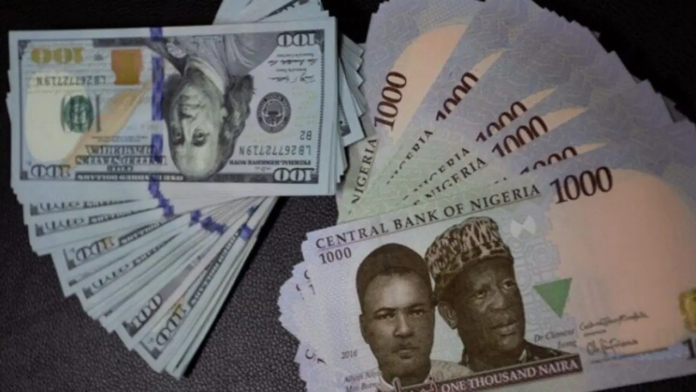
Sir, your assertion that by devaluing the Naira, the Tinubu government has hit a “perfect sweet spot” (because a weak Naira has made Nigerian goods to become cheaper on global markets, thus generating an export surge) only holds water if our exports consistently exceed imports.

But when imports dominate as they currently do, the supposed gains from exports vanish, and the forex reforms (devalued Naira) become yet another burden on ordinary Nigerians through high imported inflation!

Before a weaker Naira can translate into export gains, Nigeria must first confront and resolve its deep structural deficiencies. Without fixing the fundamentals – power, infrastructure, production capacity, and regulatory bottlenecks, all underpinned by the rule of law – currency devaluation only amplifies hardship, not competitiveness.

With just 5kMW for 240 million people, industrialisation is stillborn! No country in history has industrialised on the back of generators or fragmented power solutions. Only robust grid solutions can ignite real industrial growth.

The power crisis can be tackled with 3 decisive moves:

  1. Unbundle transmission
  2. Fix the DISCOs
  3. Put the private sector in the driving seat and let capital efficiency lead (note: the President Jonathan’s so-called privatisation of the power sector was a sham that needs to be fixed).

Yet the most seemingly out-of-depth minister in this government is the one in charge of power. Every time he speaks, it’s about tariffs. But Nigeria’s power problem isn’t pricing or tariffs – it’s output.

When MTN & co entered Nigeria’s telecom sector, tariffs weren’t their concern. The real opportunity they saw was in scale. While NITEL was stuck offering 500k lines, MTN & co envisioned 100 million lines and got to work deploying capex to build the infrastructure. Today, they deliver over 200 million lines at a fraction of NITEL’s old tariffs and still remain highly profitable.

The same principle applies to power. If competent, well-capitalised private operators are allowed to lead, they won’t fixate on tariffs either. The real opportunity lies in expanding supply from the current 5kMW to say 100kMW Nigeria actually needs.

Unfortunately, this is the vision the power minister has failed to grasp. His obsession with tariffs has blinded him to the scale of opportunities possible in output growth.

Because something as basic as power is in deficit, while officials spin export figures, we’re importing nearly everything from any product with iron or steel content (because our steel plants are dead), including vehicles, aircraft, arms, building materials, etc. pharmaceuticals and even gas are on our import list while we are flaring our own gas!

As for the touted food exports, one cargo of wheat imported from Ukraine alone wipes out the entire narrative.

Another huge import not attracting mention is – seats on flights. Right now, as I type, Nigerians are idling away in Addis Ababa, Nairobi, Casablanca, Cairo, Maroc, Istanbul, Doha etc – doing nothing but waiting for connecting flights to Europe, America or Asia. The cost of importing airline seats alone dwarfs whatever exports we’re boasting about.

Until we confront the structural deficits in our economy – power, production, infrastructure, security, law and policy, etc. – export optimism remains daydreams!

Tariffs won’t build factories. Speeches won’t revive steel. And forex tweaks won’t industrialise a nation running on fumes. Nigeria doesn’t need cosmetic reforms. We need courage, competence, and a complete reset and perhaps some prayers!

Nick Agule is a Nigerian citizen passionate about good governance and the deepening of our democracy.

See the DG’s article in the comments of this post: https://www.facebook.com/share/p/1BCcTR2myn/

Nick Agule
Email: [email protected]
X: @NickAgule
Facebook: Nick Agule, FCA
05.09.2025

The views expressed by contributors are strictly personal and not of Law & Society Magazine.

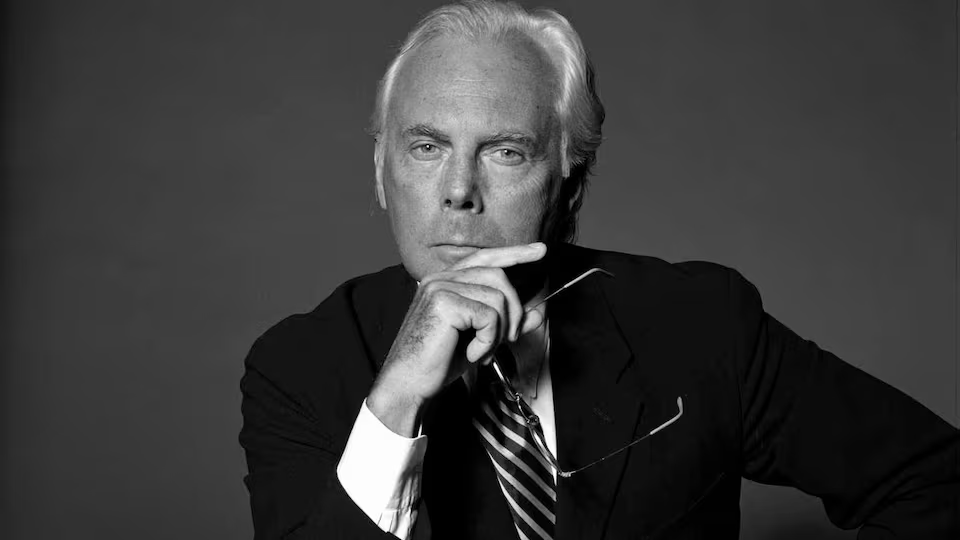
Giorgio Armani obituary: Billionaire fashion designer who exuded style

The Italian brand owner whose fluid suits reinvented power dressing and ultimately led to a global brand worth billions.

The Times

Giorgio Armani was not merely the most commercially successful clothes designer of the late 20th century, but also a prime mover in the revolution that transformed fashion from the preserve of an elite into an all-pervasive commodity targeted at the many.
When Armani presented his first collection in 1975, there still remained a rigid division between what was regarded as high fashion and all other clothing, which, apart from trends in the new youth sector, was largely utilitarian. Celebrated designers made their names and fortunes by concentrating on couture; one-off garments tailored by hand for a select, well-heeled clientele. What was seen on the catwalk would influence the mass market, but few women could hope to own a piece that bore a designer’s name.


Armani, however, had little interest in couture; he did not stage a show of it until 2005. This was perhaps because he had never formally trained as a designer, coming to fashion instead through jobs as a window dresser and menswear buyer at a Milan department store. From the start, his focus was the customers he had encountered there, the smartly turned out middle class that bought ready-to-wear or, in Italian, pronta moda.
Having grown up under the fascist government of Benito Mussolini and then having lived through the social changes of the Sixties, Armani had a dislike for clothing that resembled a uniform and imposed conformity. Accordingly, when he began to design, he turned his attention first to that emblem of male hierarchy, the suit.

In a radical innovation that became his signature style, Armani dispensed with the jacket’s traditional construction — the shoulder padding, stiffeners and linings that gave it an air of martial authority. Then he narrowed the lapels, lengthened the coat, moved the buttons and enlarged the pockets. What emerged was a fluid and relaxed look, a suit that, in his words, “gives confidence without defining personality”.

As he was quick to appreciate, this was an image sought by a vast new group of customers: working women. Made in neutral colours and cut generously rather than close to the body, his clothing projected a feminine identity appropriate to the office, and in the Eighties his so-called power suits became a staple of many a female executive’s wardrobe. “I realised that they [women] needed a way to dress that was equivalent to that of men,” he said. “Something that would give them dignity in their work life.”

The consumerist boom of that decade, and the aspirational way of life that remained its most potent legacy, were central to the business’s rapid expansion. Ironically, it was a film which pointed up the emptiness of materialism — American Gigolo (1980) — that made a star as much of Armani’s clothes for men as it did of the actor wearing them, Richard Gere. Armani was quicker than others in grasping the value to be had in associating his brand with celebrity, the popular embodiment of success, and was the first designer to open a public relations office in Hollywood.

Before long, the Armani name was among the most recognisable and visible in what was becoming for the first time an industry with global reach. By the early Eighties, he had established lower-priced lines, such as Emporio Armani and Armani Jeans, which aimed at volume sales rather than exclusivity. It was an approach that inverted the received wisdom of fashion, but by offering an affordable taste of the good life to the newly flush professional classes and the young, it showed how fashion might greatly broaden its appeal and influence.

Much later, Armani himself would complain that the fame of his models (such as David and Victoria Beckham) had come to overshadow what it was they were endorsing. Yet without doubt, the glamorous yet narcissistic images created for his media campaigns had played their part in the rise of a culture that worshipped the superficial. The conspicuous display of brand logos, much associated with Armani, was perhaps only its most obvious manifestation.

It was a moot point to what extent fashion and its handmaiden advertising had fuelled, or simply responded to, this desire to be sold expensive dreams. Certainly, Armani had done no more than his rivals, such as the conglomerate Louis Vuitton Moët Hennessy, and often with less vulgarity, in taking advantage of the forces at work — be it the economic awakening of Asia or the availability of easy credit — to give people what they craved.
By comparison with other designers, Armani was something of a paradox. If fashion is about defining the moment, then his clothes rarely strove to be fashionable. He experimented little once his brand was established, and he nearly always wore just a blue T-shirt and white or black trousers. He called such conservatism “consistency”, and he was perhaps correct in deducing that his customers bought Armani more for the spirit that the clothes expressed than for their cut. Again, however, it was revealing that someone who had sold the world on a vision of easygoing Mediterranean style should in person be very much a northern Italian, an austere perfectionist driven by a relentless work ethic.


The second of three children, Giorgio Armani was born in 1934 in Piacenza, 45 miles southeast of Milan. His father, Ugo, was an accountant for a haulage company, but it was his strict mother, Mariù, who did more to mould him. Both had what he described as “a simple elegance”. He grew up during the Second World War, when the family often had little to eat and regularly had to take shelter from Allied bombing raids. “War,” he once said, “taught me that not everything is glamorous.” His father was later imprisoned for nine months on account of his membership in the Republican Fascist Party.

As a teenager, Armani was severely injured when he and a group of friends flung a bag of explosives that they had found on to a fire. He lost his hair (which grew back straight rather than with its previous curls), and for three weeks he had to lie in bed with his eyes closed. His sight was never again perfect, and afterwards he often wore sunglasses, even indoors, to shield himself against strong light.

His initial ambition was to become a doctor, and for three years he studied medicine at the University of Milan. A period spent at an army hospital while undertaking military service scotched this inclination, and he turned instead to photography. With some pictures of his sister that he had taken, he approached La Rinascente, Milan’s leading department store, and soon found himself working on its window displays.

By the mid-Sixties, he had been taken on by a contemporary of his, Nino Cerruti, to revamp the latter’s Hitman menswear range. Cerruti later denied any suggestion that he had “discovered” Armani; Armani, he said, “discovered himself… men like Armani are so rare that, when one emerges, even the blind are aware of it.”

It was while with Cerruti that Armani learnt the economics of fashion — how saving an inch of fabric tots up on an order for 1,000 pairs of jeans. No less important, however, was his meeting at the same period with Sergio Galeotti, an architectural draughtsman who would become his partner in both his private and professional life.

It was Galeotti who, in 1973, persuaded Armani to set up as a freelance designer and to open an office in Milan. They formed the fashion company together two years later. Although at first it only supplied the ideas rather than controlling production, Galeotti negotiated a contract with their manufacturer that gave the pair an unprecedented level of supervision over such ready-to-wear clothing.

The company had early success in America. In 1982, Armani refused to show for a season as a protest against criticism of a collection of his inspired by the work of the Japanese director Akira Kurosawa (together with neo-realist cinema, Oriental minimalism was one of his chief influences). As a result, Time magazine featured him on its cover, and sales in the US tripled in a year. The relative informality of Armani’s suits appealed to those who otherwise felt uncomfortable wearing one, such as Americans; they also became seemingly ubiquitous in the media and entertainment professions.

After Galeotti’s death from Aids in 1985, Armani grew more introspective. He later reflected how, “Sergio made me believe in myself. He made me see the bigger world” and when asked in a rare interview about the greatest failure of his career he replied: “Not being able to stop my partner dying.” Yet to the surprise of many, even this personal loss failed to halt the business’s expansion. Unlike most designers, Armani proved surprisingly adept at finance and asserted greater control over the company’s manufacturing capacity. The Nineties were marked by a growing diversification, into sunglasses, accessories, sportswear and even restaurants, such as above its store in Knightsbridge. In 1987, Armani supplied the costumes for the Prohibition-era film The Untouchables. Other notable clients of the period included the England, Liverpool and Chelsea football teams.

By 2001, the company’s turnover was $1.6 billion (Armani ultimately built a personal fortune of $12.1 billion). That year, he became the first living designer to be given a retrospective show at the Guggenheim Museum in New York, and in 2007 he was the first to broadcast a show live on the internet. As property and travel became the new touchstones of the middle classes, Armani set up a household goods division and, in 2010, opened a hotel in the Burj Khalifa, Dubai.

By its 35th anniversary in 2010, the business had 300 shops and several thousand other points of sale in 37 countries. Armani occasionally lamented that he had little time to enjoy the wealth it brought him, and noted that he was smiling in only a few photographs. He owned houses in St Tropez, Antigua and Manhattan, but was happiest at that on Pantelleria, a volcanic island south of Sicily.

In later years he treated himself to ever larger yachts, but when not travelling for promotional work spent most of his time in the studio above his store in Milan. Although essentially a modest man, and shy in public — he never learnt English fluently — he had a reputation for being an exacting employer who dictated rather than delegated. “Re Giorgio” (King Giorgio) remained chief executive and creative director of his company until his death.

He was seen frequently with his nieces and nephew, and had recently announced succession plans involving his niece Silvana and his long-term right-hand Leo Dell’Orco. However, he believed that the company which bore his name was now so synonymous with modern living that it would continue to prosper whoever was at the helm.
“Life,” he once said, “is a movie. And my clothes are the costumes.”👊🏽

Giorgio Armani, fashion designer, was born on July 11, 1934. His death at the age of 91 was announced on September 4, 2025

Culled from The Times

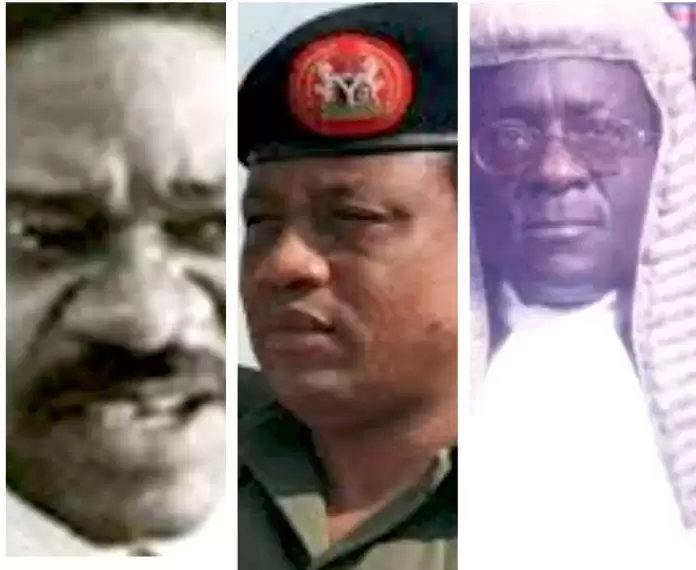
Spitting on Dele Giwa’s Grave; Throwing Gani Under the Bus: The Yakubu Mohammed’s “Revelations”

By Richard Akinnola

Today, Friday, September 5, is the 16th anniversary of the death of Chief Gani Fawehinmi. There is no better way to honour Gani on the anniversary of his passing than to rebut the lies peddled against him by Mr Yakubu Mohammed, a director of Newswatch. First thing that struck me was the question – What would Gani had done in the present circumstance? I answered – He would have written a book to counter Mr Mohammed as he did to his erstwhile friend, Dr Olu Onagoruwa who lied against him in his book after he left as Abacha’s Attorney-General, in a counter book he titled-“The lies and lies of Dr Olu Onagoruwa.”

So, in the present circumstance, this is my tentative response, which may be developed into a book because of some annexures which can’t fit into this space.

Mr Yakubu Mohammed, was one of the co-founders of Newswatch, in which Dele Giwa was the founding Editor-in-Chief.

He recently turned 75 and decided to come out with his memoir. Understandably, there was no way the book could not have touched on the assassination of Dele Giwa on October 19, 1986.

I have read the book, which l bought for N30,000 at Rovingheight, particularly chapter 17 – Assassination of Dele Giwa – and a follow-up interview with The Niche newspaper. Nothing much in the book on this issue but the issue of Glory Okon and his tirade against Gani in his interview with Niche.

In both instances, he exculpated General Ibrahim Babangida from the assassination of his colleague, Dele Giwa. He went up to lacerate Gani Fawehinmi, who staked his life on the matter. I have no problem if, in his opinion, the Babangida junta did not kill his colleague but it is uncharitable to go ahead to seriously lampoon Gani Fawehinmi for accusing Babangida junta of the assassination, someone who put his life on the line in his quest to get justice for Mr Mohammed’s colleague, a trajectory culminating in 38 cases and 214 court appearances, by my records.

On pages 236-237 of the book, instead of naming Gani Fawehinmi directly, he coyly said:”During the Giwa tragedy, some people who might have been rubbed the wrong side by the Babangida administration were ready to swear that nobody else but Babangida could have killed Dele Giwa. Such people, including assorted social critics and human rights activists could not have numbered among his fans and they did not fail to show it.
“Though many patriots who felt genuinely touched by the tragedy made commendable and altruistic efforts to put pressure on the investigating agencies to do their duty, the few who had axe to grind, went too far in my view. In many instances, they invented their own stories and helped to reshape the narratives, resorting in the process to blatant fallacies and unhelpful conjectures.

“The methods they adopted narrowed the investigation to a few options instead of widening the options…designed to produce a pre-determined outcome. It was as a result of this that the board of Newswatch Communications felt the urgent need to put a disclaimer to the angle being pursued by Gani Fawehinmi which was decidedly narrow”.

Some of the things Mr Mohammed said in the Niche interview:
“Gani Fawehinmi was not the Newswatch lawyer. Dele Awokoya, who used to be in his chambers, was our lawyer. I am not disowning him but he was not our lawyer. Gani had passion for big cases and we were attracting big cases, so he was interested. When he came to defend us against Chief Rotimi Williams, we didn’t invite him. But because he had his own grouse against Rotimi Williams, he took over and we thanked him for that. It is true that Dele wrote him a letter after his encounter with the SSS but he was not Newswatch lawyer….

Dele wrote him a letter after his encounter with the SSS. And when Dele spoke to Akilu, he told him he had spoken to his lawyer. Of course, you are free to pick anybody as your lawyer but for Newswatch, it was Dele Awokoya….

“The people Gani accused of Killing Dele went to court, all the way to the Supreme Court…
“My conjecture all along is that Dele’s assassination has nothing to do with Newswatch because if it was Newswatch, first, they should have come to our office and bomb us when we are holding our editorial conference….

“Billy, who brought it to his father, made a statement and someone sitting down there said, “Billy, state that this parcel was from Babangida….”

First, let me address the erroneous claim of Mr Mohammed to the effect that the people Gani accused, fought their matter to the Supreme Court. Let me give the correct trajectory of the case.

After a see-saw of legal fireworks by Gani on the issue of private prosecutor, hia appeal got to the Supreme Court which held that he had the locus standi to privately prosecute the two Security Chief he believed killed Giwa.

On Friday, December 18, 1987, the Supreme Court, in a unanimous decision of the seven Justices, upheld the appeal of Gani Fawehinmi, that he had the right to privately prosecute the two Security Chiefs of Babangida he accused of being behind the murder of Dele Giwa.

Pursuant to that judgment, Gani Fawehinmi filed an application at the Lagos High court, seeking for an order of Mandamus to compel the State’s DPP to either prosecute the two security chiefs or he be given the fiat to do so.

The matter was assigned to Justice Olusola Thomas, who, on Thursday, January 21, 1988, made the following order:

“I hereby order that Mr J.A. Oduneye, the former Director of Public Prosecutions (now Solicitor-General of Lagos State), do exercise his discretion whether or not to prosecute Col. Halilu Akilu and Lt-Col. A.K. Togun for the murder of late Dele Giwa and, if he declines to prosecute, that he do endorse a certificate to the effect on the information submitted to him by the applicant on Monday, the 3rd November, 1986. This order of the court shall be carried out on or before Monday 25th day of January, 1988”.

Pursuant to this order, Gani Fawehinmi sent a letter to the DPP, accompanied it with the court’s ruling.

Based on this, the Solicitor-General wrote to Gani Fawehinmi that the State was ready to prosecute the suspects (See annexures 1&2).

On the basis of this, the murder information was filed and it came before Justice Eniola Longe, in the case of The State v. Col. Halilu Akilu and Lt. Col. Kunle Togun (Charge no. ID/4c/88).The prosecutor was Mrs Eniola Fadayomi, the Attorney-General of Lagos, while Chief Rotimi Williams, SAN, was counsel to the accused persons, who were not in court. Williams raised a preliminary objection to the trial, which was agreed with by the prosecutor. Subsequently, the charges were quashed and the accused persons freed.

Gani Fawehinmi said if he had been granted the fiat to privately prosecute, he would have loved to put Babangida in the witness box. “l have 420 questions for Babangida. Let him stand in the witness box and answer those questions. Then, we will all know who killed Dele Giwa. I think God wants to establish a principle through the death of Dele Giwa. They killed the wrong person and they are targeting the wrong lawyer.”

After the court discharged the duo of Akilu and Togun, they both filed defamation suits against Gani and the court awarded N6million as damages to them for defamation, that is, N3million apiece but Gani challenged the decision at the court of appeal which upturned the decision of the lower court and the court upbraided the high court judge for the award. The decision of the Court of Appeal is reported in Nigeria Weekly Law Reports (1994) 6 N.W.L.R Part 351. So, the matter ended at the Court of Appeal.

Now, to other issues in the interview.

He accused Fawehinmi of falsely accusing Babangida regime for the murder.
Mr Mohammed went on to state that contrary to insinuations, the issue of investigating Gloria Okon, who purportedly died in custody, was never contemplated by the Newswatch.

Mr Mohammed is entitled to his own narrative on the matter. However, l have few posers for him. The Glory Okon angle was never manufactured by anyone in the media. It was part of the information filed in court by Gani Fawehinmi which naturally had to be reported.

Gani Fawehinmi died 16 years ago. Almost 20 years before his death, Mr Mohammed couldn’t summon the courage to confront him that he was lying. It took 16 years after Fawehinmi’s death, for him to come out to say that Fawehinmi lied against the Babangida government.

I don’t have any evidence that Generals Haliru Akilu, Kunle Togun and Babangida killed Dele Giwa but I’m not in any doubt that such an assassination by parcel bomb, with the sophistication associated with coupling such an instrument 39 years ago, could only have been done by a sophisticated security network of a government, particularly considering the fears Dele expressed to Gani two days before the assassination , that his life was in danger. Like Funmi his widow posited then, this was a time when N500 was enough to hire a killer, since Dele was a night crawler. That a hired killer could have just shot him, instead of the tedium of coupling a parcel bomb, which was novel in Nigeria.

While Mallam Mohammed is free to own his truth and defend Babangida, I have the following questions for Mr Mohammed:

  1. Why didn’t he confront Gani Fawehinmi when he was alive?
  2. Why didn’t he contradict his colleague, Mr Ray Ekpu, when he (Ekpu) petitioned and appeared before the Oputa panel, particularly regarding six questions he said Babangida’s security Chiefs refused to answer?
  3. Why didn’t he counter Major Debo Bashorun, a former aide of General Babangida, who came out with a book titled -“Honour for sale: An insider account of the murder of Dele Giwa”, published in 2013 where he accused the Babangida regime of being behind it and how he was almost killed for refusing to be part of the cover up?
  4. Why didn’t he counter Late CP Abubakar Tsav, who testified at the Oputa panel as the first investigator assigned to investigate the murder and his preliminary report indicting the Babangida regime?
  5. Why didn’t he counter Mr Ray Ekpu’s evidence at the Oputa panel regarding the issue of Gloria Okon?

For ease of reference, let me recount what Mr Ray Ekpu said at Oputa panel.

Ray Ekpu’s posers inter alia before the Oputa panel

“What was the result of the police investigation?

Akilu had told Funmi that he wanted to inform Giwa that he should expect a message from the ADC. Based on this, he got a thorough description of how to get to Giwa’s house. What is the message?

“Dele Giwa was denied the right to life.The seeming helplessness of the police with regard to the security officials concerned with the events in Giwa’s last four days and government’s inexplicable stand in the question of an open judicial inquiry had begun to fuel speculations that there was a deliberate attempt to cover up the assassination.
One is happy that this Commission is here and all the things that have been covered can now be uncovered.

“Up till today, the following questions remain unanswered.-

  1. Why was Akilu interested in Giwa’s home address that weekend?
  2. Why did Akilu not phone him in the office on weekdays, after all,they were not friends?
  3. Does he need a home address in order to tell Giwa that the matter is now settled?
  4. Why did he not inform Giwa of the reason for his asking for the home address?
  5. Was the gun running allegation a cover so that if Giwa died as he did, it will be said that it was the arms he allegedly imported that exploded in his home and took his life?
  6. How did the parcel bomb get to the shores of this country or was it locally manufactured?” THE GLORIA OKON ANGLE

In the course of his cross-examination at the Oputa panel after his evidence, counsel, Dele Awokoya asked Mr. Ray Ekpu:
“Now, there was this Gloria Okon angle to the matter, can you please explain to the Commission that angle?
Ekpu: Yes, there was a lady called Glory Okon, who was arrested in Kano for alleged drug smuggling. This lady was detained in a prison in Kano and after some days, I cannot remember the exact number of days, she was said to have died in detention. There were all kinds of allegations and speculations about whether she actually died while in the detention or she was spirited out of the country. Newswatch was working on a story on Gloria Okon. But at the point that Dele died, the story was an idea which had been put on our register of stories to be investigated. Several of our reporters were to be put on the story. It was at this point that Dele died.”

The Cross-examination of Chief Gani Fawehinmi by Mrs. Nwandu, the Commission’s counsel.

Mrs. Nwandu: Chief Fawehinmi, just a couple of questions for you.

A: Yes, ma.
Q: Your petition speaks volume about your single- minded devotion to the cause of our fallen friend. We commend your investigative effort. Just a few questions for you. You mentioned the name of Gloria Okon during the cause of your testimony in person but you did not elaborate. Could you tell the Commission?

A: Thank you very much indeed. I am happy that the Editor-in-Chief of Newswatch, Ray Ekpu had told the Commission the issue of Gloria Okon was also being worked on by Newswatch at that time. Dele Giwa was not in the country. Dele Giwa was abroad gathering information on Gloria Okon. The meeting of the 9th of October that was held by the Chief Executives of the Newspapers with Haliru Akilu and Togun was to the effect that it was an order that any member of the newspaper that publishes or that has any information on whatever that will affect the wife of the President or the President himself, must be cleared with the security. Now, on Gloria Okon, Gloria Okon was a courier for Mrs. Maryam Babangida.

Q: Courier for what Chief?
A: Courier for drugs, and it was so published in some of the papers. My Lord, what happened was that Gloria Okon was arrested for carrying drugs and when she spoke and squealed and released the name of the wife of President Babangida, she was promptly taken into somewhere else and…

Q: So Chief, to where?
A: And the information was that she was murdered during the regime of Buhari.

Q: Chief, just a moment.
A: The government set up.

Q: Excuse me, I am sorry.
A: The government of Buhari set up an investigation.

Chairman: He is giving you the connection
Chief Fawehinmi: He set a panel and this is very crucial Sir. He set up a panel to look into it. Before the panel could submit its report, on the 27th of August, 1985, Buhari had been toppled and Babangida came to power and the report was submitted to Babangida. And because of this, well, Babangida did not want the press to know the details of this report. And in one of the Exhibits I tendered, it was shown, according to Gloria Okon, that a big man was involved. When the report was given to Babangida, he refused to release it to the public up till today. Babangida has not released it to anybody. Till today that I am talking to you Sir, the investigation that was begun during Buhari’s regime which was concluded after Buhari was toppled and which report was given to Babangida had never seen the light of day. And so they thought that Dele Giwa had gotten all the information… And Mr. Togun said it much on the 27th of October 1986 at the airport, that when they reached an agreement for certain things that should be done, that nobody should blackmail them by trying to publish the same thing. So, what was that something that Togun was referring to at the Airport on October 27th 1986? That something was Gloria Okon.

Q: Chief, the last question now. Before Dele Giwa’s death, you said he was investigating Gloria Okon. Is that correct?
A: He was genuinely out to investigate Gloria Okon, there is no doubt about that.

Q: Yes, Chief.
A: There is no doubt about that but they did not want him to pursue it.

Q: All right Chief, yes, thank you very much. Now, was he able to confide in you, did he tell you the outcome of that investigation before he died?
A: Ray Ekpu has just told you that even they had it on their register. But before they could even finish up, the man had died. Then what else do you want me to say?”

These are not my words. These are extracts from the proceedings of Oputa panel, which recommended that investigations into the murder be re-opened.

Due to public curiosity regarding the Glory Okon angle, as a journalist in the Vanguard, l interviewed Prince Bola Ajibola, the Attorney-General in Babangida’s government regarding the issue of Glory Okon and the purported report on his death. Prince Ajibola said he would call for the report. The story was the lead in SUNDAY VANGUARD of January 18, 1987 with the headline – Glory Okon: Ajibola to call for report. This interview, Ajibola later told me, almost put him in trouble with the government. I won’t go into details of what he told me in confidence. That’s all l knew about the matter.

So, l don’t know if Glory Okon is a fictional character or not.

I would have thought that Mr Mohamed would have aligned himself with the recommendations of the Oputa panel, which recommended that the murder be re-investigated, instead of engaging in his current red herring, lampooning Gani who put his life and resources on the line in his quest for justice for those he believed killed his colleague.

Assuming without conceding that Gani was wrong, what other alternative leads have Mr Mohammed proffered, apart from exculpating Babangida?

Mr Mohammed also lied against Gani in his interview with Niche newspaper that Gani was telling Billy Giwa, son of Dele Giwa, to accuse Babangida of the murder. Apart from the fact that this is a blatant lie because the statement volunteered to Gani by Billy did not accuse Babangida but only related what transpired between his dad and Akilu few days before the assassination and how he received the parcel from the security man before he went to give his father. I would publish the full text of Billy’s statement later. How Mr Mohammed is stridently trying to exculpate Babangida and at the same time, throwing Gani under the bus, is intriguing.

With due respect, it evinces an act of cowardice on the part of Mr Mohammed to come out with this accusation against Gani, 16 years after his death.

In his interview in Niche newspaper, Mr Mohammed went further to uncharitably accuse Gani of being an ethnic chauvinist – all in his attempt to deodorize Babangida and his government. It’s within his prerogative to do a PR job for his friend but he doesn’t have the liberty to blatantly lie that Gani of all people, is an ethnic chauvinist, who allegedly accused him (Mohammed) of supporting Babangida because he (Mohammed) is a northerner. What an odious fallacy!

In case Mr Mohammed doesn’t know, the first case that brought Gani to limelight in 1969 was the case of a Northerner, Bala Abashe, who had alleged that the Secretary to government of Benue-Plateau state, Andrew Obeya allegedly snatched his wife. This earned Gani Fawehinmi his first detention where he was when his first son, Mohammed was born. For Mr Mohammed to start retailing disparaging comments that Gani accused him of supporting Babangida because he was a northerner, is perverse, to say it mildly.

In the third part of his interview with NICHE, Mohammed continued his disparagement of Gani when he falsely claimed that Gani Fawehinmi was never the Newswatch lawyer. I find this lie perversely disingenuous. How can a lawyer hold your brief without you disowning him? He said Dele Awokoya, who used to be in Gani’s Chambers was Newswatch lawyer. Is he aware that Dele Awokoya, a very brilliant lawyer for that, even when he was in Gani’s Chambers as deputy head of Chambers, was handling some cases on behalf of the Chambers, involving Dele Giwa? Mohammed even went further to claim thus: “When he came to defend us against Chief Rotimi Williams, we didn’t invite him but because he had his grouse against Rotimi Williams, he took over the case and we thanked him for that”. Blatant lie! I knew when Dele Giwa approached Gani with the letter that Rotimi Williams initially wrote to Newswatch, demanding an apology or he would go to court for defamation. It was when Dele, as Editor-in-Chief of Newswatch, briefed Gani that Gani wrote a letter on behalf of Newswatch that the magazine stood by its story. I was there the day Dele came to brief Gani. I was at the “Judges Hall of Fame” in the Chambers the day he came to brief Gani. After both of them emerged from Gani’s office, they normally had to pass through the Judges Hall of fame. Gani saw Dele off in his usual courtesy. As he was coming back to his office, Gani sighted me and he was in high spirit as he said to me in Ondo dialect – “Richie, ka wa, ka wa”(meaning, Richie, come, come). That was when he informed me about the brief that Dele came for, regarding the letter Williams wrote to Newswatch, demand a retraction and apology over the story. Subsequently, when Williams sued Newswatch, Gani filed his defence.

I knew about these facts because l was on top of it. How? Because when Dele Giwa briefed Gani, he (Giwa) informed me, that l was likely to be a witness in the matter and the reason is simple.

When The Guardian started in February 1983, one of its House styles was that everyone would be addressed as simply Mr. No honorific prefixes like Dr, Chief, Alhaji. So, when General Muhammadu Buhari junta promulgated Decree 4 and Tunde Thompson, Nduka Irabor and The Guardian were charged before a Tribunal in 1984, l was the judicial reporter that covered the trial. Rotimi Williams was The Guardian counsel. Based on our House style, when l started reporting the matter, in my report, l would write Mr Rotimi Williams but when the newspaper came out, l would see Chief Rotimi Williams. Subsequently, l started writing Chief Rotimi Williams.

At the end of the trial, Newswatch published a piece on “The death of Simply Mr in The Guardian.”It was this story in which Williams was alleged to have given The Guardian a condition that except he was called Chief, he would not defend the newspaper. Chief Wiliams claimed this was defamatory and that was the reason Giwa told me l was likely going to be a witness in the matter.

Subsequently, Gani responded with his own letter on behalf of Newswatch. So, how can Mr Mohammed falsely claim that Gani hijacked the case because he had a score to settle with Williams? That is a blatant lie, an egregious allegation of professional misconduct which is grossly unfair to a dead man who cannot defend himself. Was that the first time Williams and Gani would clash in court? Gani’s issue with Williams wasn’t personal but professional. He had a running battle with those he called the cabal in the legal profession, to wit, Rotimi Williams, Richard Akinjide and Kehinde Sofola. They had been tackling each other in the courtroom, the height of which were the Gani Fawehinmi v. Legal practitioners Disciplinary Committee and Gani Fawehinmi v. NBA matters, where Williams and Sofola represented the NBA.

Let me reiterate and educate Mr Mohammed what transpired. Williams wrote Newswatch through Dele, asking for a retraction and an apology. Dele went to brief Gani, who responded on behalf of Newswatch that the magazine stood by its story. Then, Williams filed a Writ against Newswatch and Gani filed his defence, pleading justification, that Williams had no reputation to claim based on what Justice Charles Abbot said about him in a 1949 case.

In the case, No. M3550, decided on June 6, 1949, in which Williams was accused of stealing his client’s money entrusted to him. It was the sun of 2,700 pounds.
Though Justice Abbot did not convict Williams, he nonetheless upbraided him, where the judge said, inter alia: “…Balogun paid him 100 pounds for professional fees which he never performed and made no offer to return. I will not say more than that the conduct of accused 1 in this regard savours of rapacity wholly unbecoming of a member of the profession to which he belongs.” This was part of Gani’s defence on behalf of Newswatch.

So, if Gani went to this length to defend a client, only for Mr Mohammed to come out 40 years after to throw him under the bus, is most unfortunate.
I wish Mr Mohammed really knew how fastidious Gani was when it came to documentation. So, you mean Gani would just jump on a case where he wasn’t briefed, without requisite documentation? It means you never knew Gani. Mr Mohammed, if you claim Gani had an axe to grind with Babangida, which government did Gani not fight? Was he less brutal to Gowon, Shagari, Abacha, Shonekan or Obasanjo? The only government that he seemed to support was that of General Buhari because of his war on corruption, which led him on collision course with the NBA. Even at that, it wasn’t total.

In 1985, Gani launched a blistering attack on Buhari over his efforts to undermine the judiciary, leading to the forced resignation of Justice Yaya Jinadu of the Lagos High Court. In my law column in Vanguard, l highlighted the travails of Justice Jinadu and when Gani read it, he told me the issue should be developed into a book and that was how his Nigerian Law Publication commissioned me to write a book on the episode. The book, SALUTE TO COURAGE:THE STORY OF JUSTICE YAYA JINADU, published in 1988, was launched at the Nigeria Law school auditorium in February 1989. I had to highlight this to show that there was no government that Gani did not fight. It’s therefore sheer blackmail to state that Gani accused the Babangida government over Dele Giwa because he had an axe to grind with it.

I wonder why Mr Mohammed was silent on the book written in 2013 by Major Debo Bashorun on the murder of Dele Giwa, which is more detailed.

Also, in the Niche interview, Mr Mohammed admitted that though Dele Giwa wrote to Gani over his encounter with the Security Chiefs few days before his murder, he still insisted Gani was not Newswatch lawyer. How can Dele Giwa write a letter to Gani as Editor-in-Chief/Chief Executive on Newswatch letterhead, and you claim that he was just Dele’s personal lawyer and not Newswatch lawyer? Was the letter on Dele’s personal letterhead? That is disingenuously preposterous.

It is grossly uncharitable to accuse Gani of hijacking, as it were, a case he was not briefed, when in actual fact, he dutifully represented various media house pro bono when briefed. I suspect maybe Mr Mohammed was not carried along by Giwa when such decisions were made because among the quartet in Newswatch, he was the only one that seemed “anonymous”. He seemed to walk in the shadows of the trio of Dele Giwa, Ray Ekpu and Dan Agbese. Or Mr Mohammed has forgotten, how same Gani, as Newswatch lawyer, saved Mr Ray Ekpu from going to prison for contempt before the Justice Sampson Uwaifo judicial panel of inquiry, which was set up the Babangida government to look into the cases of those detained by the previous Buhari government.

Mr Ekpu had written in his column, a piece titled “A hollow ritual” in the Newswatch edition of February 3, 1986, wherein he described the panel as a Kangaroo court and was therefore cited for contempt.
Gani Fawehinmi, was counsel to Ray Ekpu, Dare Babarinsa, Soji Omotunde, Joyce Osakwe, Dele Olojede and Nosa Igiebor, who were the accused.
When the warrant for the arrest of the reporters was served on Newswatch, Dele Giwa, as Editor-in-Chief immediately briefed Gani Fawehinmi to defend them.
On the day they appeared, an obviously angry Justice Uwaifo announced that the accused persons would be sent to prison, pending when the tribunal would be able to hear their case.
Gani furiously objected, saying it would be unconstitutional for the judge to send them to prison for an offence that had a maximum penalty of N20 fine.
Said Gani:”My Lord, there is no law in Nigeria that gives you the power to commit these journalists to prison. The power you are relying on is unknown to the Nigerian constitution”.
Eventually, the tribunal released others but fined Ekpu N20. Gani appealed this and it was set aside.

Dear Mr Mohammed, l went into this detail to pooh-pooh your egregious assertion that Gani was never Newswatch lawyer. Is that a fair statement to make against someone who prevented your colleagues from being sent to prison after being briefed by Giwa?

Whatever personal animosity you have against Gani should not degenerate to the level where you serially lied against him.

So, if Gani was not Newswatch lawyer, how come he wrote to formally withdraw as Newswatch lawyer after Giwa’s murder? Can you withdraw from a client if you were not briefed? How come Mohammed didn’t come out to disown Gani then? Why now, 39 years after Giwa’s murder and 16 years after Gani’s death? With due respect sir, it smacks of cowardice.

Also, in 1987, Newswatch was proscribed by the Babangida government by virtue of Newswatch (Proscription and Prohibition from circulation) Decree No. 6 of 1987. Through Gani’s arrangement, he got Dr Olu Onagoruwa to challenge the proscription, while Gani served as his lawyer. Yet, the same man who fought the interest of your magazine is now being thrown under the bus, in a most unkind way. Would one be wrong to surmise that this probably is the hand of Esau and the voice of Jacob?
Mr Mohammed said his conjecture was that Giwa’s murder had nothing to do with Newswatch, otherwise, the perpetrators would have sent the bomb to Newswatch “and bomb us when we are holding our editorial conference.” I didn’t know whether to cry or laugh at this jejune statement. So, the Abacha strike force that shot Alex Ibru, the late publisher of The Guardian, on the street of Lagos, ought to have come to The Guardian to shoot him and his editors at Rutam House to prove that he was targeted because of The Guardian or Sgt Rogers should not have shot Kudirat Abiola at 7up area of Lagos but in Abiola’s house. Bagauda Kalto also should have been bombed inside TheNews premises! I’m really embarrassed reading this from an elderly senior journalist.

Dear Mr Mohammed, please, feel free to defend your friend, Babangida but it is cowardly to throw Gani Fawehinmi under the bus with your egregious accusations, 16 years after his death, thereby spitting on the grave of Dele Giwa, your colleague, 39 years after his murder.

This is the same Babangida, who, on three different occasions, in interviews, stated that the only genuine critic he respected was Gani Fawehinmi.

In the TELL magazine edition of July 24, 1995 at pages 9-20 titled “l am the Evil Genius”, Babangida said:

“If there is one man l respect, it is Gani. It sounds strange.l appreciate you that you have a strong conviction and fight for it consistently. This is the context in which l see Gani. He was a dogged fighter and l respect him for this. In fact, there are three of them l respect like that. They are Gani, late (Professor) Awojobi and Dr Yusuf Bala Usman. None of them says anything without doing his homework first”.

If you say in your interview that your conjecture is that the death of Giwa has nothing to do with Newswatch and you are exculpating the Babangida government that was so accused, is there something Mr Mohammed knows that the public doesn’t know? If he has foreclosed one angle, can he also proffer other angles?

Finally, since Mr Mohammed talked about conspiracy theories, I’m just wondering the reason security agents stopped newspapers from further carrying the advocacy promo on their front pages after Giwa’s murder titled “Who killed Dele Giwa?”

In closing, l adopt the recommendation of the Oputa panel that the murder be re-investigated.

PS: Mr Mohammed may not be aware of this. Since 1986 when Dele Giwa was killed, Gani Fawehinmi put Dele’s mother, Madam Elekhia on a monthly allowance till Gani died on September 5, 2009. That’s for 23 years! Please, Mr Mohammed, even if you don’t like Gani, respect such a person sir for this gesture towards your late colleague’s mother, a gesture you didn’t extend to her.

  • Akinnola was a friend and associate of late Chief Gani Fawehinmi

The views expressed by contributors are strictly personal and not of Law & Society Magazine.

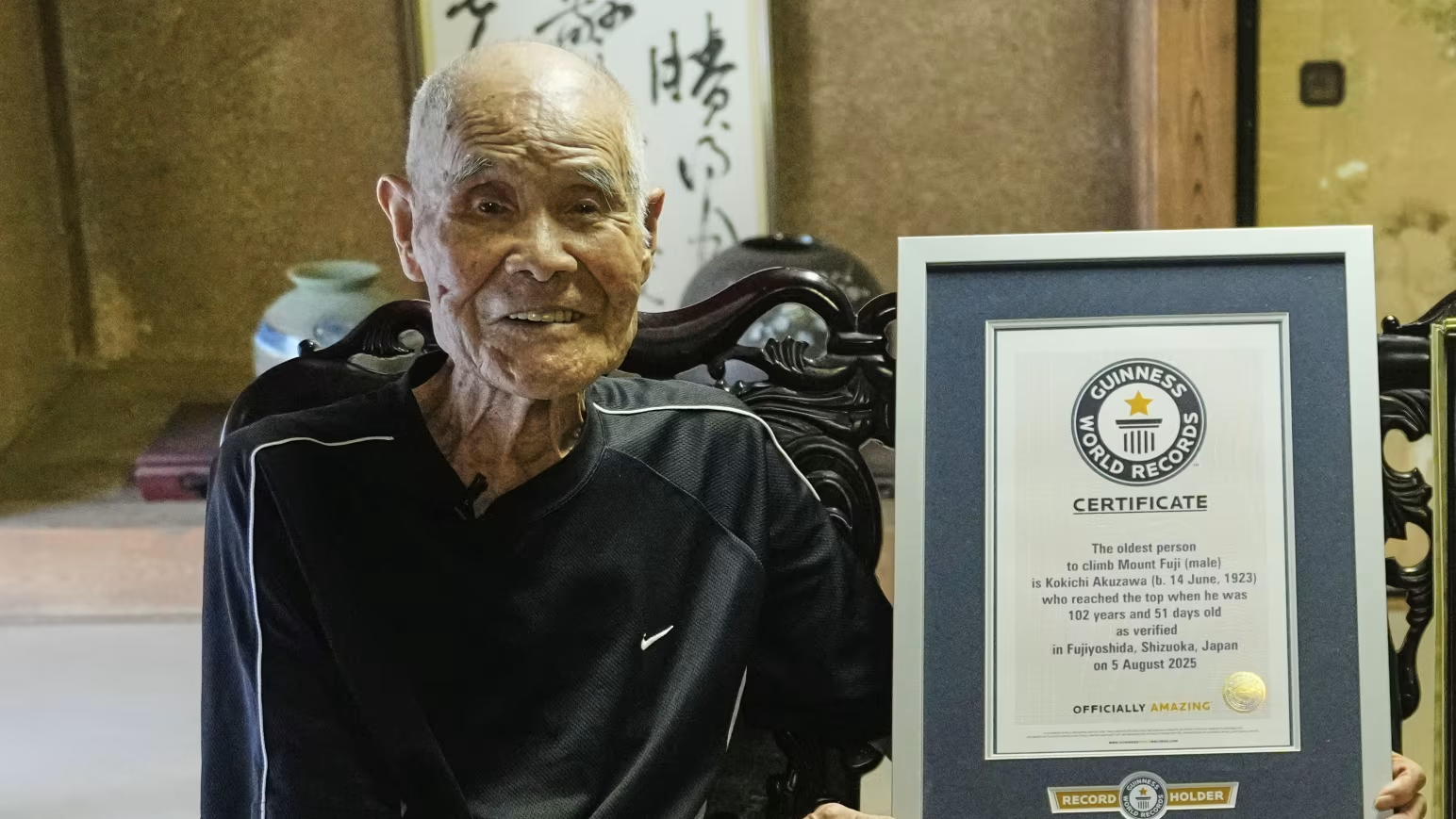
102-year-old Japanese becomes oldest person to summit Mount Fuji

Kokichi Akuzawa poses for a photo with his certificate in Maebashi, northeast of Tokyo, on September 3, 2025. Hiro Komae/AP

Kokichi Akuzawa almost gave up during his trek to become the oldest person to summit Mount Fuji at age 102, an achievement recognized by Guinness World Records after he reached the top in early August.

“I was really tempted to give up halfway through,” Akuzawa told The Associated Press in a recent interview. “Reaching the summit was tough, but my friends encouraged me, and it turned out well. I managed to get through it because so many people supported me.”

Akuzawa climbed with his 70-year-old daughter Motoe, his granddaughter, her husband and four friends from a local mountain climbing club.

The climbing party camped for two nights on the trail before their August 5 ascent to the top of Japan’s tallest mountain, which peaks at 3,776 meters (12,388 feet).

“I’m impressed I climbed so well,” he said, communicating with the help of his 75-year-old daughter Yukiko, who repeated questions into her father’s ear because he is hard of hearing. Akuzawa added that he doesn’t take any mountain for granted at his age. “It’s better to climb while you still can.”

The trip was not Akuzawa’s first record-breaking ascent up Mount Fuji. He was 96 the first time he became the oldest person to scale the country’s most famous mountain. In the six years since, he overcame heart issues, shingles and stitches from a climbing fall.

Akuzawa spent three months training before the Fuji climb, waking at 5 a.m. for hour-long walks and tackling roughly one mountain each week, mostly around Nagano prefecture to the west of Gunma in central Japan.

Climbing began in his youth

Surrounded by relatives and framed paintings of mountains in his home in Maebashi, about 241 kilometers (150 miles) northwest of Tokyo, Akuzawa recalls what first drew him to the mountains 88 years ago. While the magic of reaching the summit is undeniable, it was the people who kept him coming back.

“I climb because I like it,” he said. “It’s easy to make friends on the mountain.”

Akuzawa was a capable student and worked as an engine design engineer and later as a livestock artificial inseminator, a profession he held until age 85, his family said.

“Whether you liked studying or not, you could enjoy the mountain just the same,” he said. “Intelligence didn’t matter up there. We were all on equal footing and moved forward together.”

This photo provided by Motoe Hoshino shows her father Kokichi Akuzawa as they were climbing Mount Fuji, west of Tokyo, on August 5.

This photo provided by Motoe Hoshino shows her father Kokichi Akuzawa as they were climbing Mount Fuji, west of Tokyo, on August 5. Family courtesy photo/AP

Akuzawa once enjoyed climbing solo, but with the passing years as his strength decreased he leaned more on help from others. His record climb last month was another test that he passed with assistance.

“Mount Fuji isn’t a difficult mountain, but this time was harder than six years ago. Harder than any mountain before,” he said. “I’ve never felt this weak. I didn’t have pain, but I kept wondering why I was so slow, why I had no stamina. I’d long since passed my physical limit, and it was only thanks to everyone else’s strength that I made it.”

Winding down his climbs

Akuzawa has been asked if he will attempt another Mount Fuji climb.

“I’d love to keep climbing forever, but I guess I can’t anymore,” he said. “Now I’m at the level of Mount Akagi,” a nearby summit standing about half the height of Fuji with a peak of 1,828 meters (5,997 feet).

These days, Akuzawa spends his mornings volunteering at a senior care center and teaching painting at his home studio.

Mountaineering and painting demand time and dedication but both offer peace, he said.

“People who climb mountains, people who paint; if they can create something whole on that path, that’s the most fulfilling thing,” Akuzawa said.

Akuzawa’s daughters want him to paint Fuji at sunrise for the next addition to the depictions of mountain ranges covering his living room walls.

“I’ve got a lot of requests,” he said, prompting laughter from the assembled family. “I want to paint some scenes from the summit of Mount Fuji, places that hold special memories for me, since this was likely my last time reaching the top.”

The untold story of Peter Agbor’s walk to the Nigerian Bar

By Peter Agbor, Esq

I Couldn’t Hold a Pen, But I Held On”

I always told myself as a young law student at the University of Calabar that I could never fail a law course. And for years, I kept that vow. Then, everything changed.

The First Signs

In my 400 level, second semester, my world began to shift. One year after losing my mother, just six days before my 300 level exams, I started noticing strange changes in my body. My hands began to shake whenever I tried to write. Holding a pen became a struggle. My voice grew weaker, my legs lost balance. I did not understand what was going on with me, but I did remember that these symptoms began after I had a very serious migraine which caused me to spend over N50, 000 (Fifty Thousand Naira) on drugs. Most of my colleagues observed what was happening and advised that I should not write the exams as I was not mentally stable, coupled with the fact that I was with my mom for about 2 months in the hospital until her death. Despite their misgivings, I wrote the exams and did not have a single carry over.

The next challenge was how to tell my father what was happening to me. How could I tell my dad, who had just buried his wife, that his “star boy” was breaking down? I feared something bad would happen to him if he knew my challenges, and so kept it all to myself, convincing myself that it may just be typhoid or malaria. Even when he would ask me over the phone what was wrong with my voice, I would lie that I just had a bad cough. At this point I began to avoid having conversations with anyone, not even with my close friends.

But by my final year, (2024-2025), it got worse. I could not have a firm grip of the pen to write and my once neat handwriting became something my lecturers could not read. My dream of graduating with a 2:1 slipped through my fingers as my scripts came back with E’s.

“Not With This Writing, You Can’t Pass”

One of my lecturers, Dr. Amarachi Ijiomah was the first to notice. Unable to decipher my handwriting on my script, she sought for my phone number, called me, and asked me if I have any plans of going to Law School. Then she said words that cut deep: “Not with this writing, brother. You can’t pass the Bar exams.”

I explained it was something new, something I couldn’t understand. I even sent her an old notebook where my writing used to be clear. She felt bad for me, encouraged me, and gave me N20,000 to see a neurologist. I did, and was referred to do a brain and spine MRI scan, which tests came back inconclusive. I was however diagnosed with a degenerative ailment, caused maybe from a shock or untreated illness.

I left the hospital with expensive drugs I could barely afford (Rilozule), and a body I no longer recognized. The doctor recommended that I should undergo physiotherapy.

Another lecturer who reached out to me upon seeing my exams script, was Asso. Prof. Udoaka. I met with him and as a father, he encouraged me and prayed for me. My graduation was not without the help and intercession of Dr. Anne Agi, and Asso. Prof. Rose Ohiama Ugbe, the Dean of Law at the time. All these people knew about my condition even before my family.

Should I Still Dare Law School?

By the time my mates went to Law School in 2024, I still had carryovers, not because I failed, but because lecturers couldn’t read my scripts. Then I saw an announcement for backlog admission.

“How will I write?” I asked myself. Then I remembered something: during my undergraduate days, I once saw a student write exams with a computer, and I had undertaken a computer program in 2020 during the COVID break. Although I could not type fast, I figured I could work on perfecting that.

That was it. If my hands would fail me, I would use a computer. I told my dad. He reluctantly agreed to let me take the form. Prof. Udoaka was very worried about me. He worried that the programme would be too stressful for my health and pointed out my handwriting challenge. I convinced him that I had a plan: if I didn’t get better, I would apply for a computer-based exam. He was impressed with my plan. He prayed for me and wished me good luck.

Yola, My New Battlefield

I arrived at the Nigerian Law School, Yola Campus, in June 2024, with all my tools (notebooks for plan A and a laptop plus an external keyboard for Plan B). My roommates, Ishaku Umar and Timileyin Samuel, became my brothers. They carried my burdens as though they were their own. These guys would do anything to make sure I was fine.

While I was doing my clearance with my colleague, Jane Agube Esq, who helped me with filling the forms, I was asked if I would like to change campus to any campus close to my home. I informed the authorities I was fine with the Yola campus as I was already settling down pretty well in Yola.

But life was not easy. I couldn’t take notes because of the hand tremors, so I began to record lectures on my phone, even though it was banned. I tripled my workload: exercise, practice typing, read, and rest so I wouldn’t collapse.

The voice of Dr. Anne Agi, my lecturer back in Calabar, kept ringing in my ears after she prayed for me before I left: “I may not have money now to give to you, but please, when you go there, try not to procrastinate. Read every day.”

Her words became my lifeline.

The Breaking Point

By the time I got back to Calabar in September for my externship program, walking was almost impossible. But I managed to finish it through the help of my friend and colleague Ojo Bassey.

My law office attachment was with Prof. Dada, Okey & Opara Chambers. I enjoyed proper mentorship, guidance, advice, financial support and constant prayers from my principals. In fact Prof. Dada was always so kind and supportive and Barr. Oke Jumbo specifically prayed for me to have a federal government job when I graduate. I also enjoyed the assistance from my friend, and co-extern Oringo Bamidele.

Back to Yola

At the end of my externship, as I prepared to go back to Yola for my final term, my health deteriorated further. My family begged me to quit. But I wouldn’t. My family saw the resilient spirit in me, they had no choice but to give in. The price of my drug had skyrocketed to N500, 000 per pack and the scarcity of it was even the most scary part. I had to return to campus with a half pack.

I undertook a 20 hour trip by road back to Yola. Upon arrival, I could barely stand on my own without falling. That’s when real fear crept into me. Questions started popping up in my head – Maybe I should have stayed back home as my family advised; what if I am sent back home?

Then I remembered I had not exercised or undergone any physiotherapy for a couple of weeks prior to my trip and asked my friends to register me at a gym facility. They did, but I could not continue for a variety of reasons. My friend, Thankgod Nweke, then took it upon himself to always arrange with his other friends Barr. Melody and another lady to assist me by driving me in their car after lectures.

Once I settled in, through the office of the Dean of student affairs, Mr. Balla Bello, I applied officially for a Computer-Based Bar Finals with my medical reports from the University of Calabar Teaching Hospital. After a few days, I was told to redraft it using the office of the Deputy Director General, (DDG) Nigerian Law School, Yola campus. As usual, Thankgod came through, he re-drafted and submitted my application and followed up on my behalf since it was pretty difficult and stressful for me to go there. A couple of weeks later, I was told to go to the campus medical center for assessment and a report was written to the DDG.

At this point I would walk just a few steps and my legs would be very weak. The only things I enjoyed doing was spending long hours reading my books (even though I was still not certain if my application will be granted), and using the gym.

I shared my story with the Campus Chaplain, Dr. Yakakusak Aduak who would often pray for me, check on me often, and encourage me.

On a certain day while in class, my name was announced that the DDG, Barr. Salmanu Rilwana had summoned me to his office. What followed was one of the scariest days of my life. I feared that my application had been rejected and I was to be sent home.

I was assisted there by my classmates, Egbe Mathew Esq and Moshood Abilola Esq. We met a full panel waiting: the DDG, Dean of Students Affairs, the campus medical doctor and his staff, and other office assistants. My heart sank. This full panel just for me? Were they about to send me home?

At this point, I began to shake. I closed my eyes and took a deep breath, but all that didn’t seem to help.

The DDG asked me how I intended to write my exams. I managed to tell him I would prefer a CBT bar finals. He then asked me how I want to shade the MCQ given how small those boxes are and how any little mistakes can ruin the exams. I didn’t have an answer to that question.

At this point I almost started crying but the man in me kept saying it is not over yet. At least I had been fasting and praying so I knew God would not just abandon me like that.

He handed me his laptop and asked me to type some words written on a piece of paper. My hands shook uncontrollably. I tried but I was really nervous and one leg trembled so badly an office assistant burst into tears and ran out. Egbe Mathew Esq kept on encouraging me to be calm so I could type the words, but all that wasn’t helping at all. I kept making mistakes.

The DDG shook his head. I felt finished.

He then informed me that the reason he called for the meeting was because my application had reached the Director-General of the Nigerian Law School, Professor Isa Hayatu Chiroma, SAN, who had reached him from Abuja, asked about my condition and wondered if I would be able to use a computer to write the bar finals, considering the limited time. So he thought to test me and get back to the DG and from what he had seen, I was not capable.

He then handed us over to Barr. Arthur Chukwu, in what I would term as a constructive dismissal. Mr. Chukwu then tried to kindly convince me to consider deferring my admission to the following year, but I insisted I was ready to write my Bar finals, if only the school can provide me a system and an external keyboard. I begged for just one more chance.

My hope hung by a thread.

Seeing that I was bent on continuing my studies and writing the Bar exams, the DDG instructed that I present an affidavit from my parents to the effect that they were in support of my decision to stay on and write the exams and that should anything happen while writing the exams, the Law School would be absolved of liability.

Mr. Chukwu then asked me to speak with my group mentor, Barr. Mrs Hope Lifted Haruna, who was the professional ethics lecturer and report back.

I thanked them all and left. There was hope. I informed my father who swore to the said affidavit, absolving the school of liability and sent same to me which I submitted.

The Law School Became Family

With the help of Egbe Matthew, I arranged a meeting with Mrs. Hope Haruna. I explained my predicament and Mathew explained that denying me a chance to write the exams would do more damage to me. Even though she noted that I should not have returned if I was feeling this weak, she was very sympathetic and assured us she will contact a couple of persons and get back to me. She advised that I should be calm.

I must add that Mrs. Haruna was a bit familiar with me as I had answered her questions a couple of times, during our group pre-class tasks, which no one else could answer and the class would always clap for me. These were incentives that kept me pushing. Also I had just written a pre-bar test on criminal litigation and scored 20 over 20. I also scored high grades in other courses; never below 18 over 20. So I felt I was too ready for the exam.

True to her word, Mrs. Haruna reached out to others. The very next morning, I received a message from Dr. Yakakusak Aduak, (the Campus Chaplain) that he would like to see me. Mrs. Haruna had spoken to him and he had also spoken to Mr. Aliyu Hamidu (a former Law School DDG) and another lecturer who all wanted to see me. I met with them and Dr. Yakakusak Aduak, Mr. Aliyu Hamidu and another lecturer, joined the fight for me. Dr. Rebecca Badejobi, Dean of Student Affairs, also fought in my corner.

We had written the Corporate Law pre-bar test and both lecturers were very interested in my results. I scored 18 over 20 and they were impressed with me. Dr. Aduak encouraged me and was even ready to take me to a neurologist who is related to Mr. Aliyu Hamidu whenever I was free.

That evening, after the dinner, Mr. Aliyu Hamidu still looked for me to assure me that everything was under control and that I should continue reading. He further assured me that he was already in contact with the DDG on my case and that every assistance would be provided.

Three days to the exams, the Dean of Student Affairs sent for me. I went to her office with the help of Egbe Mathew. She informed me that the DDG had set up a test for me to check my readiness. While we waited, we read out notes from our phones as the Bar exams was close and at this time, every minute you spent without your books was counting against you.

When it was time, we were ushered into the DDG’s office where a table with a computer and an external keyboard had been prepared for me. As I was assisted to the table, Egbe whispered in my ears: “You can do this bro.” I sat down before the computer and typed with all my heart.

This time, I typed better. I was able to show some proficiency in my typing. I knew because the DDG smiled. “Mr. Agbor, go and prepare. The Law School has added 30 minutes to your time. For multiple choice questions (MCQ), you’ll type your answers like the visually impaired candidates do. Instead of shading, you will type your options A or B which will be printed and attached to your MCQ sheet and submitted”.

I almost cried. For the first time in years, hope returned. I felt relief!

I had been given a chance; now I knew it was my duty to deliver like the Hebrew women. I waited for the Bar finals.

At this point I was already the most popular student on campus, everywhere I was being assisted to, the people would hail me: “Inakwana Barr. Peter”.

From the DDG down to the cleaners, they all know Agbor Peter (the sick guy).

In fact, I was bleeding through the nose while in Yola and I experienced seizures lots of times.

Colleagues who I didn’t know would be looking for me after lectures to drive me back to my hostel.

Bassey Ojo would always come to my room as early as possible to assist me to class room.

The staff in charge of attendance were not left out. They went out of their way to wait for me to arrive to sign the attendance sheet and they were always there, patiently waiting never complaining at my slow pace, just to ensure I signed.

I became an inspiration to many, and on days when I was strong, I would go to class very early and surprise them all, even though I could decide not to go and I will still be pardoned. In fact Glory Sule Esq would always call me her source of inspiration.

Dr. Aduak even invited a missionary who was a trustee of the chapel in campus to come and pray for me.

The students, both Muslims and Christians would always come to my room to pray for me. I received a lot of cash gifts from them, most of them telling me you have come too far to look back, and a few of them marveling at my determination and declaring that if it were them, they won’t return.

The Bar Finals

On the day Bar Finals began, I was ready. I wrote my examinations in the DDG’s office.

I was supervised by his office assistant, Mr. Abdullahi and the Secretary to the DDG, known as ‘Mama Hassan’ and even by the DDG himself, who would always come in daily to ask me how Ibwas doing and to ask if I have submitted my phone before starting.

These people were not just invigilators but spectators who were cheering me up to make them proud.

I would tell them to reduce the Air conditioner when I didn’t feel okay and they would.

I would always go there with a bottle of water and would drink at intervals.

For the duration of the bar finals, the campus ambulance was kept in the administrative block, close to where I wrote my exams, instead of by the classrooms where over 500 students were writing their exams. I did not need a prophet to tell me it was kept there for me.

Of course the bar finals is one of the simplest exams I have ever written.

My most difficult moments in the exams was whenever I had to sign the attendance list and fill in the information like my exam number, name and date on the answer booklet. It was a big deal for me as the rule is that all candidates must fill those areas themselves so that the Council can see that they sat for the exams.

Some days I would condemn up to three or four sheets before getting something a bit legible. The staff were always so patient with me. I thank them and commend the patience they exhibited.

There were my cheerleaders.

And when it was all over, I signed out of the law school knowing I had done my best. I was so grateful to God who despite my very obvious weakness had shown me favour, preserved me and seen me through.

A couple of weeks after I returned home I felt ill and was rushed to the hospital. I was struggling to breathe. I was diagnosed with tuberculosis, I had to commence treatment immediately. Though the medications caused me more numbness and weakness.

The Result That Changed My Life

On August 1st, 2025, results came out, at about 10pm. A few classmates who have checked theirs were already jubilating in the class WhatsApp group.

I didn’t have the courage to check. My heart was pounding. I was filled with so much fear, and questions in my head.

What if I failed?

What if I get a missing script?

What if the marker couldn’t see my exams number I wrote on the attendance sheet?

What if all my friends’ sacrifices were wasted?

My biggest fear about failure was the process involved in applying for a CBT bar resit. Who would assist me the way my friends did in Yola!?

For me, failing would be the end of wearing a wig and gown

I sent my details to a friend, Jane, and waited.

The tension continued to grow, the pressure kept growing each time a message dropped in the class group.

Minutes later, she replied by posting a picture with a caption: “Major…”

Without looking, I just knew I passed. I don’t remember clicking on the screenshot photo but I must have because it opened up and there it was: my results. I passed the Bar exams with a second class.

I screamed!!!!!!

The last time I was this happy was in 2018 when I first gained admission into the Faculty of Law.

Now I had to deal with the congratulations from Friends, families and colleagues.

Although one person I would have loved to break this news to is my beautiful late mom.

What’s Next for Me?

Today, I’m called to the Bar. But my journey is far from over.

For me it’s just a world filled with so much uncertainties not just because of the unemployment in the country but my health challenges.

My colleagues have proceeded for the National Youth Service Corps (NYSC) and on our platforms I see them posting pictures of themselves in their various camps and I am happy for them but the thought that I cannot join them for my service year on health grounds, really hurts me.

My drugs, once N38,000 naira, now cost N500, 000 (Five Hundred Thousand Naira) per pack. Walking is still difficult. My health is uncertain. Of course I still believe that I will be fine, one day I will have to walk on my own without the aid of someone’s even though I lack proper medical attention at the moment, but amidst all my challenges, I still got big dreams.

Yet, I still dream. I want to work and earn like every graduate. I want to further my studies if I can find institutions as accommodating as the Law School. One day, I want to own my own chambers, employ other lawyers, and give back the same way others carried me.

My story is not just mine. It belongs first to God who preserved me by his mercy. Then to my lecturers who refused to give up on me, my friends who carried me,the law school that opened its doors wider to accommodate my weaknesses, and to everyone who believed I could still wear the wig and gown. There are no words worthy and weighty enough to thank them all.

I couldn’t hold a pen. But I held on. And that made all the difference.

This is me sending out my appreciation to God and to all who stood by me from the Law School Director General, the Deputy Director General of the Yola Campus, staff, students and all my friends mentioned above and those I have not mentioned. I remember you all. Thank you.

Peter Agbor, Esq

For media inquiries or to support Peter’s continued health journey, please contact: 09031740863.

Mr. President, time to call the saboteurs to order

By Muiz Banire

At the recent commissioning of the 30 km Lagos–Calabar coastal road on May 31st, 2025, the President of Nigeria, President Bola Ahmed Tinubu, under the compelling need to preserve the coastal lands abutting the ongoing road infrastructure, directed that no land should be allocated within 50 meters of the road. This was to preserve the setback not only for probable future expansion but also to safeguard the land for deserving and appropriate development. The President further directed the Lagos State Government to liaise with the Office of the Surveyor-General of the Federation before making any allocation of such lands.

That was all the President pronounced and nothing more. Yet, it appears that was all the hawks at the federal level needed to invade the sovereignty of the states and begin feasting on their assets and people.The first salvo came from the Minister of Housing and Urban Development, who published an advertorial in The Nation newspaper on Thursday, February 20, 2025. In it, the Minister asserted that ownership of all landed properties abutting the waterfront, shoreline areas, and waterways setbacks resided in the federal government, relying allegedly  on a Supreme Court judgment of January 2024 in the case between the National Inland Waterways Authority v. Lagos State Waterways Authority.

The advertorial went further to request all waterfront property owners, including the President of Nigeria, to “regularize” their title documents by approaching the Ministry for “proper documentation and titling of properties, licenses, permits, and statutory charges….” As if under hallucination, the publication also challenged the competence of the Lagos State Building Control Agency (LABSCA) to enforce physical planning laws in the state. Clearly, there is either a serious disconnect or sheer mischief in this.

It does not appear to me that the officials are that ignorant of the law. Certainly, greed must be beclouding their reasoning and objectivity. In a further display of predation, the publication, purportedly relying on the Land Use Act, claimed ownership and control of all lands along the shorelines, naming Banana Island, Osborne Phase I and II, Lekki Waterfront, among others. In a similar manner, the Office of the Surveyor-General of the Federation issued a publication on July 2nd, 2025, Punch Newspapers, directing all owners and stakeholders of lands within the “setbacks” of all shorelines, coastal roads, and lagoons to present their documents for recertification. It even purported to revoke all approvals already granted.

Arrogantly, it further commanded the state government not to issue planning permits without recourse to the office. Wonders shall never end. The Surveyor-General asserted: “It is also pertinent to state unequivocally that the indiscriminate creation of islands will no longer be tolerated, and all existing unauthorized sand filling should stop forthwith, as efforts are being put in place by the Government for proper maintenance and control of the infrastructural master plan along the shorelines nationwide.”

Consequently, holders of “existing approvals already granted on or before the date of publication” were expected to submit them to the Surveyor-General for “verification, harmonization, and compilation,” while all new approvals were implicitly barred. As if insolence was insufficient, the Surveyor-General followed up with another advertorial in Daily Trust of Friday, August 22, 2025, threatening demolition of properties “conceived without proper survey coordination,” whatever that means.

Again, the advert reiterated that: “All approved, pending, and intended requests for issuance of allocations and Certificates of Occupancy on island and lagoon developments are hereby suspended, and must be submitted for proper survey coordination to the Presidency, Office of the Surveyor-General of the Federation.” One Abdulganiyu A. Adebomehin signed this advertorial. Ironically, I understand he is an indigene of Lagos from a riverine area. Where, one wonders, did he or the federal government derive such powers to suspend allocations and Certificates of Occupancy? This is the confusion Lagos State has been thrown into. Let us examine the publications one after another.

The Ministry’s advertorial was premised on a purported Supreme Court judgment of July 2024 in National Inland Waterways Authority & 3 Ors v. Lagos State Waterways Authority & 5 Ors. That judgment never conferred ownership of all lands within the setbacks of coastal areas, lagoons, or waterways on the federal government. It was simply a case of interpleader summons concerning who had the right to collect levies and charges from ferry and boat operators. The issue of land title never arose, nor was it decided. It is either that proper legal advice from the Attorney-General of the Federation was not sought, or whichever lawyer counseled them failed to distinguish between the ratio decidendi of a court decision and an obiter dictum, the latter being non-binding. Neither the Land Use Act nor the constitutional provisions cited by the officials support their claims. Section 49 of the Land Use Act is clear: only lands in the possession of the federal government and being used by its agencies and parastatals belong to the federal government. Any other claim is baseless.

Both on the strength of the statute and case law, the content of the advert is indefensible. None of the powers arrogated to itself by the Federal Ministry of Housing exists. Hence, what the Ministry of Housing sought to do via its advertorial is illegal. No citizen is under any obligation to observe illegality. Indeed, even the directives referred to in the Surveyor-General’s publication do not exist. I have already captured the President’s pronouncement aptly in my introduction.

Certainly, he could not have directed the usurpation of state powers, powers which, as Governor of Lagos State, he arduously and successfully fought to secure. It is either that the directive is being misconstrued or executed maliciously and mischievously. 

I have had the privilege of engaging Mr. President on this, and he categorically denounced such atrocious directives. The implications are clear: the advertorials are ultra vires and must be ignored. The laws and regulations cited are totally inapplicable. Where did the Surveyor-General derive the power to revoke allocations or regulate islands? What business does his office have with lagoons? Is he aware of the decision in H.R.H. Oba Yekini Adeniyi Elegushi & 5 Ors v. AG Federation & 2 Ors (2000), which nullified a Decree that sought to compulsorily acquire lands within 100 meters of lagoons and waterways? That judgment remains extant and unappealed and could no more be appealed.

Where did the office of the surveyor General derive the power to impair the competence of the state governments to exclusively deal with the issues of development approvals? This much, in AG Lagos State v. AG Federation & 36 Ors (2003), the Supreme Court settled the matter: states have exclusive competence to deal with planning approvals. It is contemptuous for any official to tamper with that position. In the light of the above, the Surveyor General’s act can only be self-induced. The surveyor General seems to forget that the consultation the President meant was just for coordination and nothing more.

In case these officials are ignorant, let me remind them that the President himself, as Governor, fought and won these battles at the Supreme Court. Since then, the position remains sacrosanct. Unfortunately, due to these unguarded publications, confusion has engulfed the real estate market and disrupted the livelihoods of Lagosians. I have been inundated with agitations about this federal onslaught. This madness must stop. These actions are being undertaken for selfish purposes, not the common good. Nigeria is neither a jungle nor a banana republic; it is a country governed by law. The rule of law must prevail. The essence of leadership and institutions birthed by the Constitution of the Federal Republic of Nigeria, 1999 (as amended) is to obey and observe the dictates of the law at all times.   

Any attempt to do otherwise is an invitation to anarchy which must be resisted. Officials who act otherwise must be called to order urgently. Their intention is clearly to dent the President’s reputation in Lagos and sabotage his electoral fortunes in 2027. These are saboteurs who must be dealt with decisively. Even assuming without conceding that the President gave such directives, are Ministers and Permanent Secretaries not duty-bound to advise and guide him properly? Instead, their actions portray incompetence.  Even where they lack knowledge, one would have expected them to consult further before actioning such directives capable of portraying the President as a lawless person. One of the trophies President Tinubu earned as Governor was reclaiming state rights from federal encroachment.

That legacy cannot now be wished away by self-serving officials. These latter-day disciples that constitute themselves into evil public and civil servants need to be tamed urgently. The most embarrassing of all is the Surveyor-General of the Federation, who, I understand, hails from a riverine part of Lagos. As the Yoruba proverb says: “Ti won ba ran omo ni’se eru, afi ti omo je” if a child is sent on a slave’s errand, he should execute it in the dignifying manner of a freeborn. The concept of omoluabi, which the Yoruba people are known for, does not allow a person whose faculties are intact to desecrate law and order.

He must remember: “Ile ni abo isimi oko” (home is the refuge after the farm work). Office is transient. “Ile”, it is said, “ni abo isimi oko”. This is pregnant with meanings and the literal rendition above does not do justice to this aphorism of the Yoruba which has a lot in store for the returnee after his many years of sojourn in a foreign land or a protracted stay in public service. In due course, he will return to the very community he seeks to undermine. For some of us, we will resist every attempt to destroy the President’s legacy, particularly one that protects Lagos communities and preserves the state’s developmental gains. Enough is enough.

The views expressed by contributors are strictly personal and not of Law & Society Magazine.

NBA sues Nigeria Police, challenges the legality of police tinted glass permit policy

One of the key resolutions of the National Executive Council of the Nigerian Bar Association at its pre-conference NEC meeting held on the 23rd day of August 2025 in Enugu is that the NBA should challenge the legality of the Nigeria Police Force tinted permit policy in court.

In April 2025, the Inspector General of Police purportedly introduced a policy which mandated members of the Nigerian motoring public to apply for and obtain annual motor tinted glass permits from the Nigeria Police Force for a fee. The Inspector General of Police in the same month purportedly launched a digital portal (possap.gov.ng) through which the application for tinted glass permits were to be processed. We are being informed that the portal and the policy are to be managed by a private vendor and there is no indication that the funds generated from the enforcement of the purported policy will go into the Federation Account.

The Inspector General of Police initially pegged the date of commencement of the enforcement of the Policy to the 1st day of June 2025 but subsequently extended the date to the 2nd day of October 2025.

Despite the fact that the date of commencement of the enforcement of the purported policy has been extended to the 2nd day of October 2025, there have been several reported cases of harassment and extortion of citizens by the Policemen in checkpoint duty on the basis of this same Policy, thus raising serious concerns of threats to and violation of citizens’ fundamental rights to dignity of human person, right to privacy, right to freedom of movement and the right to own movable property guaranteed as by the Constitution of the Federal Republic of Nigeria 1999, as amended.

Furthermore, the introduction and proposed enforcement of the tinted glass permit Policy has raised several other genuine concerns including the validity of the Motor Tinted Glass (Prohibition) Act (Decree 1991), a military-era law under which the Police has sought refuge. A critical scrutiny of the Act would confirm concerns that the legislation may be unable to satisfy the test of a law reasonably justifiable in a democratic society under Section 45 of the 1999 Constitution as to justify reliance on it to deprive citizens of their rights to privacy and free movement.

Moreover, the fact that the legislation does not make provision for renewal of tinted glass permits or payment of fees for renewal are serious issues which clearly reveal that the Policy lacks statutory foundation.

Furthermore, that payment for the permit is being made into a private account: PARKWAY PROJECTS Account No: 4001017918 raises serious concerns of transparency surrounding the utilisation of funds realized from the exercise given that the account is neither domiciled with the Central Bank of Nigeria nor associated with the Treasury Single Account of the Federal Government of Nigeria.

Against the above backdrop, the Nigerian Bar Association, through its Section on Public Interest and Development Law (SPIDEL) has on Wednesday the 2nd September 2025 instituted a public interest action before the Federal High Court, Abuja in Suit No: FHC/ABJ/CS/182/2025 between: The Incorporated Trustees of the Nigerian Bar Association v. The Inspector General of Police & Anor essentially challenging the legality of the tinted glass permit policy.

The NBA-SPIDEL under the leadership of its Transition Committee Chairman, Prof. Paul Ananaba, SAN and the Section’s Public Interest Litigation Committee chaired by Mr. Olukunle Ogheneovo Edun, SAN whose proactive efforts were responsible for the accomplishment of this task, have been directed to pursue this litigation to a logical conclusion.

As we await the assignment of the suit to a Judge, we urge all parties to the suit to respect the judicial process, the fundamental rights of Nigerians, suspend the enforcement of the Policy while awaiting the pronouncement of the Court on this vexed matter.

Prof Paul Ananaba, SAN
Chair, SPIDEL
Nigerian Bar Association

Lagos State Judiciary’s Non-Custodial Sentencing Practice Direction debuts

The Lagos State Judiciary has launched a new Practice Direction on Non-Custodial Sentencing.

The initiative, developed in collaboration with the MacArthur Foundation, the Development and Advocacy Center, Law Hub, seeks to standardise the application of non-custodial sentencing across Nigeria.

Delivering his address at the launch, the Chief Judge of Lagos State, Hon. Justice Kazeem Alogba, harped on the importance of uniformity in sentencing and described non-custodial measures as a necessary societal shift.

“Non-custodial sentencing has come to stay. It is not just an alternative; it is a permanent change in the administration of justice,” Alogba said. “What we must now ensure is that judges, agencies, and all stakeholders understand their roles and responsibilities in enforcing it.”

He explained that the new practice direction and compendium of guidelines would help eliminate inconsistencies, provide judges with clearer direction, and minimize conflicts among institutions supervising offenders. Timely enforcement of judgments, he added, remains crucial to sustaining public confidence in the justice system.

Representing the MacArthur Foundation, Senior Programme Officer Yvonne Darkwa-Poku reaffirmed the foundation’s long-standing commitment to criminal justice reform in Nigeria. She commended Lagos State for its leadership, describing the launch as a major step towards ensuring fairness, reducing prison congestion, and making justice more responsive to societal needs.

“MacArthur began supporting work on criminal justice reform long before the ACJA was passed in 2015,” Darkwa-Poku said. “To see our grantees pushing for nationwide adoption and implementation of reforms such as this gives us great hope.”

Mrs. Yemisi Akile of the Human Rights Commission welcomed the reform, noting that the commission had for more than two decades conducted prison audits highlighting persistent congestion. “This reform provides a realistic solution, and we welcome it wholeheartedly,” she said.

In her welcome address, Mrs. Adenike Oluwafemi, representing Mr. Osita Okoro, Executive Director of Law Hub, said the practice direction was long overdue.

“Nigeria faces the persistent challenge of custodial overcrowding, with our correctional centres holding far more individuals than they were built for,” she said. “This document provides judges with a clear framework for implementing non-custodial sentences effectively. Since reforms in Lagos often set the pace for other states, creating this framework here is essential for driving national adoption.”

Oluwafemi described the guidelines as a product of extensive consultation with stakeholders, including the Judiciary, the Police, the Ministry of Justice, and the Nigerian Correctional Service. She praised Justice Alogba’s leadership, describing him as “a dependable partner in our shared goal of criminal justice reform.”

The Lagos State Commissioner of Police, Jimon Olohundare—represented by Charles Akinrosoye, head of the Command’s Legal Department—said non-custodial sentencing would ease congestion in correctional centres while improving public perception of the judiciary.

Other speakers, including representatives of the Lagos State Attorney General, the Nigerian Correctional Service, the Nigerian Bar Association (NBA), and civil society organizations, emphasized the importance of inter-agency collaboration and timely implementation of judgments. They agreed that strict adherence to the new guidelines was essential for achieving the intended impact of non-custodial sentencing in Nigeria.

Waving at planes as Imo churns is chasing rats while the house burns

By Chinedu Agu

In the heart of Igbo folklore lies a tale as old as wisdom itself; a man whose hut caught fire in the dead of night.

As flames devoured his home, his neighbours shouted, pleading with him to fetch water or salvage what he could. But his eyes, gleaming with misplaced zeal, fixed on the fat rats darting from the blaze. “Let me catch these rats first,” he declared, brandishing a stick and chasing shadows. By the time he returned, triumphant with just a rat in hand, his roof had collapsed, his treasures turned to ash, and the rats had long vanished into the night. The villagers laughed, but their laughter was laced with sorrow, for they recognized foolishness cloaked in action.

Today, that parable is no longer confined to fireside tales. It has become the lived reality of Imo State. The man in the story is no longer a hapless villager; he is a governor. The burning hut is Imo; our home, our pride, our heritage. And the rats? They are the hollow, ceremonial distractions that consume his attention — like the recent, comical spectacle at Abuja’s Nnamdi Azikiwe International Airport, where the governor was photographed waving at President Bola Ahmed Tinubu’s departing plane.

He was in Abuja not for a high-stakes meeting to secure federal support for Imo’s crumbling infrastructure. Not for a summit to attract investment to a bleeding state. But to stand at the departure gate, a cheerleader in a customary well-tailored white apparel and red cap, grinning for the cameras while Imo churns and burns.

This is not leadership. It is a performance.

And while the Governor plays to the gallery in Abuja, the fires of neglect, injustice, and despair rage unchecked across Imo’s 27 local government areas.

Read Also: Tears From Enugu: A lawyer’s heartbreaking diary from a state that works to a state in ruins

Nowhere is this inferno more devastating than in Imo’s justice sector. Once a beacon of hope, a sanctuary where the common man could seek redress, the Imo judiciary has been reduced to a hollowed-out shell. Since November 2024, Imo Judiciary has operated without a constitutionally recognised Acting Chief Judge. In a state bursting at it seams with the finest of legal minds, the Governor has not found a qualified lawyer to appoint an Attorney-General since that seat became controversially vacant in May 2025. This is a deliberate assault on the justice sector.

The consequences are dire. For the first time in living memory, Imo has no vacation courts; a shocking abdication of judicial responsibility. Across the state, citizens languish in police cells, their pleas for justice silenced by a system that has shut its doors. Bail applications gather dust. Fundamental rights, enshrined in Chapter IV of the Constitution, are treated as luxuries, not guarantees.

A Senior Advocate of Nigeria in Owerri, speaking to the media recently, laid bare the gravity of this crisis: “In my 41 years at the bar, I have never witnessed this state completely shut down its courts during vacation without provisions for urgent matters. Lives are at stake, and Imo’s judiciary is comatose.”

His words should have jolted the Governor into action. Instead, they were drowned out by the roar of jet engines in Abuja, as the Governor waved at a plane carrying promises Imo will never see.

The collapse of justice is but one flame in the inferno consuming Imo. The state is besieged by crises that demand urgent, focused leadership, yet the Governor’s gaze remains fixed on fleeting distractions and departing plane.

Arbitrary arrests and indefinite detentions have become the hallmark of life in Imo as I pen this piece.

From Owerri to Orlu, citizens live under the shadow of state-sanctioned intimidation. The right to liberty, guaranteed under Section 35 of the Constitution, is now a privilege dispensed at the discretion of security operatives. Families whisper of loved ones whisked away in the dead of night, with no charge, no trial, and no hope.

The notorious Tiger Base in Owerri has become a synonym for terror. Young men dread its name, knowing it as a place where extortion, torture, and inhuman treatment thrive. Reports from human rights groups, including Amnesty International, document cases of suspects held without trial, subjected to brutal interrogations that violate every tenet of decency. In 2024 alone, over 200 complaints of unlawful detention were lodged against Tiger Base, yet no investigation has been launched. The Governor’s silence is deafening. I am not sure what is discussed at State Security Council meetings.

Orlu, Okigwe, and Ohaji/Egbema remain battlegrounds where violence festers unchecked. Armed groups roam freely, displacing families and shuttering businesses. It’s no longer news that over 5,000 residents have fled their homes since 2023 in Orlu, according to local NGOs.

Farmers abandon their fields, traders lock their shops, and children grow up knowing fear as a constant companion. Yet, the state government offers little beyond platitudes, leaving communities to fend for themselves.

Bulldozers have become instruments of despair. Homes and businesses are razed without adequate notice, compensation, or adherence to the constitutional right to a fair hearing.

Imo roads are a metaphor for its governance—broken, neglected, and deadly: Akwakuma junction to Egbeada; Akwakuma junction to Hardel junction; Worldbank Roundabout to Hospital junction; Worldbank Roundabout to Umuguma; Worldbank roads; Yar’ Adua drive from Worldbank; Orji Flyover stretching across Amakohia Flyover to Egbeada Housing Road [just to mention but a few] are all in very scary states.

The tragedy of Imo’s decline is stark when viewed against the progress of its neighbours.

In Abia, Governor Alex Otti has launched a relentless campaign to revive Aba, transforming its streets from swamps of decay into hubs of commerce. Aba, once derided as a sleazy backwater, has today risen into a transformed city — a transformation that now mocks and shames Owerri, the Imo capital. And what more shall I say of Umuahia? As the popular saying goes, “Ebe Aba dị otu a, kedu ka Umuahia ga-adị?” — if Aba shines this bright, how radiant then is Umuahia! Step into that city, and you will behold transformative governance at work.

In Enugu, Governor Peter Mbah has strengthened institutions while also leading in infrastructural developments. I have previously said a lot about this city and you just need to take a trip to that place and see things for yourself.

Ebonyi’s Governor, Francis Nwifuru, is confronting insecurity head-on while steadily laying the foundations of institutional and infrastructural development.

Anambra’s Charles Soludo is channeling resources into technology to spur economic growth, even as he tackles insecurity with remarkable zeal. And yet, as an aside, it should trouble every Imolite that Imo, which sometimes ranks just behind Anambra in receiving the highest federal allocation in the Southeast, has so little to show for it.

These leaders are not perfect, but they are present, rooted in their states, not chasing clout in Abuja. None would abandon their people to wave at a plane while their house burns.

Imo’s neighbours — Abia, Anambra, Ebonyi, and Enugu — remind us of what leadership looks like: focus, accountability, and a commitment to the gritty work of governance.

Meanwhile, the Governor seems content to play the courtier, seeking validation in the corridors of Aso Rock rather than the streets of Owerri.

He who chases rats while his house burns will return to find nothing but ashes.

The Governor’s actions—or lack thereof—signal his priorities, and they are not with Imo. The judiciary lies in ruins, its independence shattered. Citizens rot in detention, their rights trampled. Communities cower under violence, abandoned by a government that should protect them. Families watch bulldozers crush their dreams, with no recourse or remedy.

This is not an accident. It is a failure of leadership—a deliberate choice to prioritize optics over outcomes, political dominance over people’s welfare.

History will not record Imo’s plight as a natural disaster; it will record it as the consequence of a Governor who chose to wave at planes while his state burned and churned.

Governance is not found in the departure lounges of Abuja’s airports. It is in the trenches of justice, where judges are free to uphold the law. It is in the streets of Orlu, where families yearn for safety. It is on the roads of Okigwe, where commuters deserve safety.

Until Imo has such leadership, the flames will continue to spread, and the rats—those fleeting, meaningless distractions—will always slip away.

The question is: will we stand by, laughing bitterly like the villagers in the parable, or will we demand that the Governor return to the burning house and save what is left of Imo? The choice is ours, but time is not.

Chinedu Agu is a Solicitor and Notary Public, past secretary of NBA Owerri, and can be reached on [email protected] | 08032568512.

Friday, 5 September 2025.

The views expressed by contributors are strictly personal and not of Law & Society Magazine

TIPS