Home Blog Page 251

Suspected fraudster remanded for allegedly seizing late businessman’s companies, diverting ₦200 million

A Federal High Court in Lagos presided over by Justice Deinde Dipeolu has ordered the remand of a middle-aged man, Solomon Ehiem, at the Ikoyi Correctional Centre following allegations of fraudulently taking over companies belonging to a deceased businessman.

According to the Police Special Fraud Unit (PSFU), Ehiem and an accomplice who remains at large conspired to unlawfully assume control of three companies—Refron 22 Gas Limited, Refron 410 Gas Limited, and J.C. Nwadike Tech Company—previously owned by the late Chima Joseph Nwadike.

The police further alleged that Ehiem fraudulently transferred, retained, and took possession of ₦200 million from the companies’ accounts for his benefit.

Ehiem was arraigned on a three-count charge of conspiracy, stealing, and fraudulent conversion. He pleaded not guilty.

The prosecution, led by Justin Enang, told the court that the offences took place in Lagos in February 2025 and violated Sections 20(a) and 18(1) & (2)(b) of the Money Laundering (Prevention and Prohibition) Act, 2022. The offences are punishable under Section 18(3) of the same Act.

Following the plea, the prosecution requested a trial date and asked the court to remand the defendant pending the conclusion of proceedings.

The matter has been adjourned to 12 August 2025 for the hearing of the bail application.

Dauda Musa Komo was a worthy son of Zuru

It has been a little over two months since the passing of Colonel Dauda Musa Komo (rtd) in Port Harcourt, Rivers State, where he served as Military Administrator between 1993 and 1994, but the Zuru people of Kebbi State, where he was raised, are still mourning.

A former President of the Zuru Emirate Development Society (ZEDS), Col. Komo, reportedly played a pivotal role in the growth and development of Zuru.

Described as a great icon, a man whose life embodied service, integrity, and commitment to the advancement of his people, members of ZEDS attest that his indelible contributions will forever be remembered and should serve as a beacon of inspiration for current and future generations.

He was on Saturday, 12 July 2025 laid to rest with full military honours at the family cemetery in Zuru, Kebbi State. The funeral ceremony was attended by senior military officers, both serving and retired, family members, friends, associates, and dignitaries from the Zuru Emirate.

Komo was appointed by late General Sani Abacha as Military Administrator of Rivers State during one of the most turbulent periods in the Niger Delta’s history. He was tasked with maintaining order amid escalating unrest fuelled by the environmental degradation caused by oil companies and the protests of the Ogoni people

His tenure saw the establishment of the Rivers State Internal Security Task Force, led by Major Paul Okutimo. But the darkest chapter of Colonel Komo’s administration came with the arrest, trial, and execution of Ken Saro-Wiwa and the Ogoni Nine in 1995. Saro-Wiwa, a prominent environmental activist, led the Movement for the Survival of the Ogoni People (MOSOP) in their resistance against environmental devastation and exploitation.

During the Service of Songs for Colonel Komo on July 11, 2025, Senator Lawrence Ewhrudjakpo, who represented Senator Douye Diri, Governor of Bayelsa State, described him as “a revered elder statesman, a father figure, and a mentor to many across the nation.

“His legacy is deeply rooted, far-reaching, and widely acknowledged with profound respect. Without a doubt, his absence will be strongly felt across all spheres where his influence brought guidance, calm, and purpose.

“For us in Bayelsa State, the Late Colonel Komo is remembered as a stabilising figure, a symbol of strength and foresight during his tenure as Military Administrator of the old Rivers State, from which Bayelsa was later created. His leadership left a lasting imprint on the region and its people.

“On behalf of His Excellency, Senator Douye Diri, the Executive Governor of Bayelsa State and Man of Peace (MOP), we extend our heartfelt condolences to the family over this irreparable loss.

“May the family draw strength and comfort from the exemplary life he lived—as a patriotic leader and a sacrificial servant of God.

Lieutenant Colonel Ibrahim Shittu, Acting Deputy Director Army Public Relations 8 Division, in a statement on the burial, said: “All gathered to pay final respects to a distinguished senior officer whose exemplary service, professionalism, and life of impact remain worthy of emulation.

“Born on 5 March 1954 in Zuru, Kebbi State, Colonel Komo hailed from the Zuru Local Government Area. He began his educational journey at the primary level before gaining admission into the Nigerian Military School, Zaria, where he obtained the West African School Certificate in 1973.

“He proceeded to the prestigious Nigerian Defence Academy as a member of the 15 Regular Course and was granted Regular Combatant Commission on 20 March 1976 on the rank of Second Lieutenant at the prestigious Royal Military Academy Sandhurst, United Kingdom.

“An officer of the Nigerian Army Signals Corps, Colonel Komo served with dedication and distinction, rising to the rank of Colonel on 5 January 1997. He retired from active military service effective 1 June 1999, after a meritorious career spanning over two decades. He passed away on 30 May 2025.”

Chief of Army Staff, Lieutenant General Olufemi Oluyede, was ably represented at the funeral by the Commander 1 Brigade Nigerian Army, Brigadier General Timothy Opurum.

In his tribute, Brigadier General Opurum described the late senior officer as a brilliant, resourceful, disciplined, confident and professional military officer with impeccable integrity. He noted that Colonel Komo approached leadership not merely as a position, but as a solemn responsibility, demonstrating unwavering commitment to mission success and the welfare of his subordinates.

He further described the deceased as a courageous leader who faced every challenge with resolve, consistently placing the mission and his team above personal comfort. His calm strength in the face of adversity, Brigadier General Opurum remarked, was a constant source of reassurance to those around him.

Highlighting Colonel Komo’s legacy as Military Administrator of Rivers State, Brigadier General Opurum praised him as a champion of peace and a people-oriented leader. At a time of widespread unrest, he initiated a state-wide peace mission that successfully reconciled warring communities and restored stability. His administration prioritized impactful developmental projects and people-centred programmes, including the rehabilitation and dualization of major roads, expansion of access to clean water, improved housing for civil servants, and the empowerment of rural communities to complete abandoned projects through state-supported labour initiatives. He also introduced reforms that enhanced the efficiency of the state’s revenue system.

Highlights of the funeral rites included the traditional firing of volleys, the presentation of the national flag to the Next of Kin, the sounding of the Last Post, and the Reveille. All symbolizing the nation’s final salute to a gallant officer.

Falcons, D’Tigress and the shame of our empty hospitals

For the 10th time, Nigeria’s female national team, the Super Falcons, returned home with the trophy of champions. In other words, this was not the first time these super ladies were winning at the finals of the Women’s African Cup of Nations. They had won nine times earlier. Nigeria now has 10 trophies of that tournament shining proudly bright on a shelf somewhere.

Our basketball team, D’Tigress, followed suit a few days after the Falcons feat. They were treated the way the Falcons were treated.

An ope [novice] may win once, may even win the second time; but the Yoruba will insist that no ope wins three consecutive times. Our girls have shown the world that their superior skill and wins are not a fluke; that their victory is not a flash-in-the-pan thing. The Nigerian teams are the undisputed total champions of the tournaments. Whatever or whoever has shamed the nation till those trophies berthed on the shores of Nigeria, the Super Falcons and the D’Tigress lifted our heads and gave us bragging shoulder pads to walk tall and proud.

There is something about women and consistency in victory. President Bola Tinubu said as much in a statement a few days ago:

“Nigerian women have never failed this nation in sports. From the Super Falcons standing tall on the world stage, to our athletes breaking records on the track, and D’Tigress building a basketball dynasty, our women have consistently made us proud. To all our young people watching today, let the story of D’Tigress remind you that greatness is a product of hard work, discipline, and belief. Nigeria belongs to those who dare to dream and are willing to give their best to make those dreams a reality.”

Now, let me dare to ask: What did the nation do to celebrate our warrior girls after each of the past nine wins? Did we give them $100,000 each? Did we give them three-bedroom apartments? Did all the governors of Nigeria speak with one voice and announce N10m for each player? Did the presidents in the saddle during each of the previous nine wins beautify the wings of our queens with national honours? Did those former Presidents give each member of the coaching team $50,000 (about N75.6m)?

No, they did not. They were either too busy, too unaware, or too broke to do anything. We know the right thing, what we don’t know is how to do what is right.

Have you ever seen a juju or fuji musician at an owambe party who doesn’t know what to say or sing when he or she sees the rich and famous stroll into the arena? Have you even been to a Nigerian wedding or 50th or 60th birthday party without aso-ebi and ‘amala-on-point’ and hawkers of crisp naira notes for spraying, EFCC be damned?

There are unwritten rules for all our engagements. Nobody needs to tell us. We just know what is socially expected of us.

I have always known that Nigerians, leaders and followers, always know what is right. We know what to do and when to do them. Our problem is not lack of knowledge. It is refusal to do that which is right and proper. Have you ever seen a Yoruba socialite not raining money on a musician when the band ‘louds’ it for him?

Back to where we started. Nigerians are people who know what is right. Our leaders have and will always know what is right. Whether they will do it and when they will do it is the problem. When I heard the announcement of the largesse, my heart leaped for joy, then my head butted in and started asking questions.

Now, if our leaders know what is right, why is the country like this? Is it that they do not have what my people call ‘itiju’ or why are we surrounded with so much shame and shameful scenarios?

And for those whose fingers are itching to finger President Bola Ahmed Tinubu, put your fingers right back in your pocket. As far as I am concerned, what President Tinubu did for the Falcons was right, timely and appropriate. Rewarding excellence can never be wrong. The governors and their N10m each was not also bad.

We didn’t get here in one day. Let us not be emotional. The people who did not see the shame in not blessing the Super Falcons’ first nine trophies were the ones who watched arrogantly as our doctors and nurses left in thousands. And that is my grouse today.

Can we appreciate our doctors and nurses the way the Falcons were appreciated? Can we just focus on our real problems, our leaders through the years who picked their teeth, adjusted their caps and ties and did nothing as our hospitals lost their glory?

What Tinubu did for the footballers is done, let us look back and ask why some people behaved as if once the sun went down they could go into their gardens to pluck replacement nurses and doctors. Let us ask why those we elected to protect us between 1999 and 2025 allowed the rest of the serious world take almost all our doctors and nurses away, doctors and nurses that were trained with public funds, your tax and mine?

What kind of people are we, really?

In three years, about 42,000 nurses that we trained with billions of naira left Nigeria. Most of them are in the NHS system in the UK. Five years ago, both Nigeria and UK needed more nurses than they had. UK system knew what to do and did it. The country offered our nurses more money than they had ever seen, hauled them on the plane and left our healthcare stranded.

The National Association of Nigerian Nurses and Midwives estimates that Nigeria currently needs at least 800,000 additional nurses and midwives to meet its current health care requirements. Meanwhile, as at March 2020, there were only 180,709 registered nurses and 126,863 midwives. Deduct 15,000 nurses who japaed in 2024 alone and imagine how bad things have become.

What exactly were our leaders thinking, that the hospitals will run themselves, that those in the administrative departments will transform into midwives with the wave of a magic wand?

We lost 42,000 nurses in three years. In one year we lost 3,974 doctors. And we did what?

What was the right thing to do? Filling the gaps with fresh employment of nurses and doctors would have made a little sense, right? Increasing the wages of those who stayed or are yet to leave would have also helped, but did we do any of that?

The cost of training one doctor in Nigeria has been put conservatively at $21,000 and we let them go!

Let us leave God to judge the men of yesterday who did not do what they ought to have done. Let us come to the ones in charge today. Let us ask them if their legacy will also be to do things by the book, hide behind civil service rules and thumb their noses at us by being politically correct.

Dear Ministers of Health, Professor Muhammad Ali Pate and Dr Iziak Adekunle Salako, will these hospitals where one doctor is expected to see 50 patients per day and nurses work endless shifts be what you will be remembered for?

Dear Head of Civil Service of the Federal Republic, Mrs Didi Walson-Jack, do you have plans to do something about the figures on your table showing the nation has more civil servants in Housing, Water Resources, Census offices etc than in the health sector?

I believe doctors, nurses and teachers should earn more anywhere in the world. Luxembourg, Switzerland, the United States and America agree with me.

South Africa pays its doctors $3,400 (that is about N5 million per month.) Before you start a protest that doesn’t mean anything, look at those countries again, are they not the ones where Nigerians go to for medical tourism?

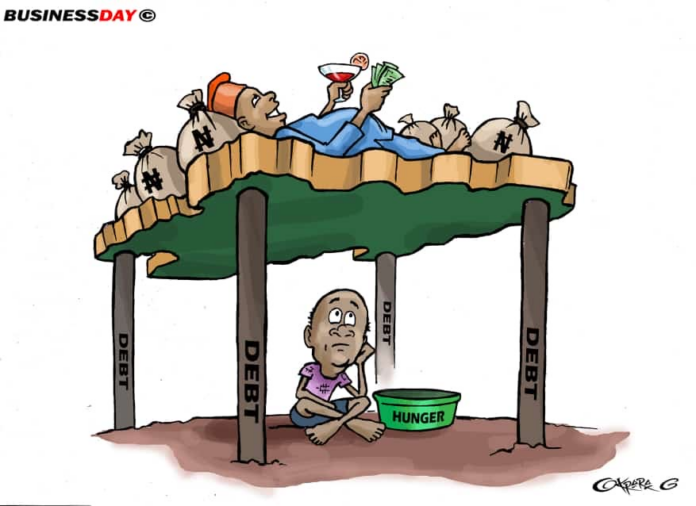
The lender will always be the master of the debtor. Period.

Even with the special salary scale for health workers, doctors in Federal Medical Center earn as low as N250,000 and N300,000. South Africa just down the road pays $3,400. What is a smart young doctor supposed to do when he gets that kind of counter offer?

Maybe because those who fix wages in Nigeria are envious and unpatriotic because this is nothing personal. Leaders who treat doctors and nurses like clerks will always have blood on their hands.

How? Because those who cannot afford to go to Canada and Switzerland to get good healthcare will die needless deaths. Because the doctors and nurses will down tools, ignore the dying and both government and striking medical personnel after plenty of back and forth will walk through the blood of the dead to sign agreements.

How many Nigerians have died in how many strikes of doctors and nurses? How many more will die before we agree that we are a nation of bloody money ritualists?

Or is it not ritualist that we call those heartless fellows who pluck out eyes and scrape off women’s breasts to get ahead in life?

After years of not doing right by our health sector, loss of brilliant doctors and nurses to more serious climes, we are still at this point where nurses and doctors still go on strike and we carry on as if it is just another industrial dispute.

Really? Do people go into coma or die when clerks and executive officers down tools?

It is either these basic things elude us or governments through the years do what they do intentionally.

The most disheartening, disappointing, sad and tragic part is when Nigeria finally decides it has enough to employ, it opens its portals to all the sectors, yes, to employ for every ministry and agency, in the spirit of whatever drives the recruiters.

Why? This is the part that leaves me befuddled.

You need philosophers and journalists the same way you need doctors? How?

This is a desperate situation Nigeria is in and state and federal government must find ways and means of addressing this matter with the attitude it demands.

There it is, ways and means. Let us do what needs to be done.

It is bad enough that we cannot turn our palm trees to palm wine or palm oil for export.

Can’t we also do ‘ways and means’ to lure our stolen doctors back to the country? Considering the number of Nigerian doctors doing well overseas why can’t we fund their return so we can replicate more five-star hospitals like The Duchess in Lagos?

This is not about one profession being more important than the other. It is about being realistic about our national needs.

A nation that does not have enough teachers, nurses or doctors is a nation playing Ludo game with its future. Britain, Canada, America knew we are not a serious nation. They brought their Ludo board, trounced us while pretending that it was just a game. Then they took away our best brains.

The 36 states, all of them are guilty. They all have Ministries of Local Government and Chieftaincy that are better staffed than the hospitals.

We cannot continue to create all kinds of ministries and agencies for political opportunities instead of funding and fixing our real problems.

Let me stroll off on a justifiable arrogant note: Our boys should come and learn football from our girls. They should come and take lessons in how to play and win back-to-back, ten times and forever.

The organizers of Women’s African Cup of Nations should leave this WAFCON thing with us and find a new name for the next tournament. Our shelf is full, we are unbeatable, and we have just started.

The Police need not be educated or reminded that they can’t question the AG’s decision to exercise the power of nolle prosequi —Osigwe on detention of Anambra DPP

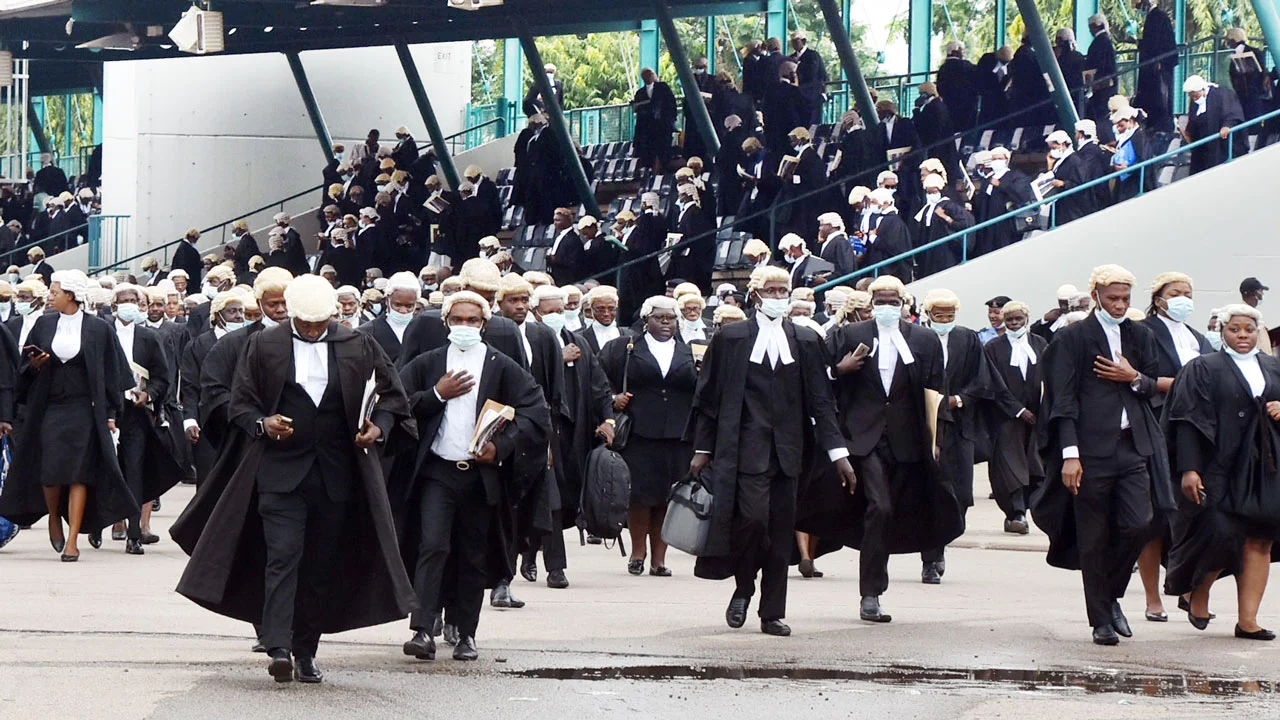
The President of the Nigerian Bar Association (NBA) has condemned Tuesday’s arrest and detention of the Director of Public Prosecution (DPP) of Anambra State and three other lawyers in her department, describing the action as “shocking and indeed provocative.”

Sounding an alarm over the incident in an X post (formerly Twitter), Law teacher and ex-Chair of the National Human Rights Commission (NHRC) Prof. Chidi Odinkalu said: “The Inspector-General of @PoliceNG has absolutely no powers to even think about arresting a DPP & State Counsel for doing their jobs. This lawlessness cannot be allowed…”

The NBA President, in a statement titled: IT IS AN OVERREACH FOR POLICE TO PURPORT TO HAVE POWER TO INVESTIGATE AN ATTORNEY GENERAL FOR DISCONTINUING A CRIMINAL MATTER, stated that: “The Police need not be educated or reminded that they cannot question the Attorney General’s decision to exercise the power of nolle prosequi.”

The full statement reads:

In another new low and affront to the Constitution of the Federal Republic of Nigeria as well as the legal profession, the Nigeria Police Force has purported to have the power to investigate the exercise of the power of the Attorney General of Anambra to take over, continue, and/or withdraw criminal proceedings before the courts of the State.

It is shocking and indeed provocative that the IGP Monitoring Unit of the Nigeria Police invited and released on bail the Director of Public Prosecution and some other law officers in the Ministry of Justice for exercising the power of the State Attorney General to enter a nolle prosequi in respect of a criminal matter. In continuing to display their brazen assault on the office of the Attorney General, the Police have also extended an invitation to the Attorney General of the State in purported exercise of constitutional powers.

We will be failing in our duty if we shut our eyes to this unsavoury development, as we are committed to ensuring that all forms of executive recklessness and impunity are stopped by our law enforcement agencies.

The Police need not be educated or reminded that they cannot question the Attorney General’s decision to exercise the power of nolle prosequi. This power is not even subject to judicial review or questioning by other authorities, including the Police. This prerogative power of the Attorney General is spelt out in Section 211 of the Constitution of the Federal Republic of Nigeria. The NBA will not, therefore, sit idly by while the Police overreach themselves by brazenly assaulting the Constitution in this manner. We fear that if this is allowed to happen, the Police may one day purport to have the power to investigate a judicial officer for delivering judgments.

The office of the Attorney General will never be cowed. No amount of invitation, purported investigation, and/or intimidation will deter the holder of the office and the officers in his/her Ministry from discharging his/her constitutional duties. An Attorney General and his/her law officers should be able to execute these duties without any form of intimidation, threat, harassment, fear, and/or victimization. The Police must not only cease and desist from any further invitation and purported investigation of the Attorney General and the law officers, but also must tender an unreserved apology to the Attorney General and these officers for this unlawful act.

The matter also calls into question the needless invitation of these law officers to Abuja from Anambra State and the purported investigation of these law officers. The purported investigation once more calls into question our policing and investigative model, which requires that matters that should ordinarily be investigated by Police divisions are investigated by the Office of the Inspector General of Police. This not only suggests that the divisions or the Police in a state may not be competent to investigate matters within their jurisdiction, or cannot be trusted to do a good or thorough job. This mode of investigation, which is usually abused, imposes great cost on persons being investigated and puts them to severe hardship and disruption of their daily activities. It must be reviewed.

The Nigerian Bar Association calls on the Inspector General of Police to call off this investigation, as this action is clearly in breach of the Constitution of the Federal Republic of Nigeria, 1999 [as amended], and portends a grave danger to our democracy.

The Bar must also take this as a wake-up call to provide adequate protection of lawyers from job hazards and abuses by insisting on prosecution and discipline of errant officers, naming and shaming affected officers, etc.

If the invitation and investigation is not called off immediately, the NBA National Litigation Committee, led by Ama Etuwewe, SAN, is hereby directed to provide legal services to these lawyers and also immediately consider taking all legal actions necessary to protect them from the abuse of their fundamental human rights and the subversion of the prerogative powers of an Attorney General to take over, continue, and/or discontinue a case.

Mazi Afam Osigwe, SAN
President, Nigerian Bar Association

Tinubu mourns Nigeria’s First female editor-in-chief, Doyin Abiola

  • ‘An Amazon and an icon in Nigerian journalism’ — President Tinubu

President Bola Tinubu has mourned the death of Dr. Doyin Abiola, Nigeria’s First female editor-in-chief of a national daily newspaper, and one of the county’s most influential media figures.

She died at the age of 82, early on Wednesday.

In his condolence message on Wednesday, President Tinubu described Mrs Abiola as “an Amazon and an icon in Nigerian journalism.”

“She broke the gender barrier, becoming the first woman to edit a national newspaper and the first Managing Director of a daily newspaper,” the president wrote.

Read the full statement on Mrs Abiola by the president below.

I received with deep sadness the news early on Wednesday of the passing of Dr. Doyinsola Hamidat Abiola, a trailblazing journalist, editor, and former Managing Director of the defunct Concord Group of newspapers and wife of the late Bashorun MKO Abiola.

Doyin Abiola, 82, was an Amazon and an icon in Nigerian journalism. She stayed in the journalism course since starting as a reporter with the defunct Daily Sketch after graduating from the University of Ibadan in 1969, majoring in English and Drama.

She broke the gender barrier, becoming the first woman to edit a national newspaper and the first Managing Director of a daily newspaper.

Her immense contributions to journalism and gender equity laid a foundation for generations of women. Her impact on our democracy was even more profound.

Doyin embodied integrity, tenacity, hard work, commitment to excellence and dedication to public good and democratic good governance.

In 1980, she emerged as the pioneer Editor of National Concord, owned by the late MKO Abiola. She later became the managing director and editor-in-chief of all the Concord titles, including founding the Weekend Concord, which set new standards for making people the focus of reporting.

I had a good relationship with the late Doyin, which stemmed from my close relationship with the late MKO Abiola.

As MKO’s wife, Doyin became acquainted with politics and took a keen interest in it, particularly when her husband ran for the country’s presidency in 1993.

She played a prominent role in MKO’s election, mobilising and providing direction for the media under her control.

And when the June 12 election, won by her husband, was annulled, she did not stand aside. Despite the military junta shutting down the Concord Group, she also joined the fray, demanding the validation of the election. She was a soldier of democracy in her own right.

Nigerians will never forget Doyin Abiola’s leadership during her illustrious journalism career, her championing women’s empowerment, and her commitment to democracy.

I commiserate with the Abiola and Aboaba families, her only daughter, Doyinsola, and the government and people of Lagos and Ogun States.

May her soul rest in peace. May this nation be blessed with more women of Doyin Abiola’s calibre and pedigree.

Bola Ahmed Tinubu, GCFR

President, Federal Republic of Nigeria

Born in 1943, Dr. Abiola spent over three decades in the media industry, breaking barriers and shaping public discourse through journalism.

She earned a degree in English and Drama from the University of Ibadan in 1969 and began her career at Daily Sketch, where she wrote a widely read column, Tiro, focusing on public and gender issues.

In 1970, she travelled to the United States for postgraduate studies, and later obtained a PhD in Communications and Political Science from New York University in 1979.

On her return to Nigeria, she joined Daily Times as a Features Writer and rose to the position of Group Features Editor.

She was later appointed to the paper’s editorial board, working alongside the likes of Stanley Macebuh, Dele Giwa, and Amma Ogan.

Doyin went on to become the pioneer daily editor of National Concord, and in 1986, was appointed Managing Director and Editor-in-Chief, making her one of the most powerful women in Nigerian media at the time.

As editor and later Managing Director/Editor-in-Chief, Dr. Abiola led the National Concord newspaper to become one of Nigeria’s most influential media platforms.

Under her leadership, the Concord Group expanded to publish as many as 14 newspapers and magazines.

Doyin once turned down an offer to become “Woman Editor” at Daily Times, a role she felt underestimated her capabilities.

She insisted on being judged by merit rather than gender, eventually joining as a Features Writer and rising to the role of Group Features Editor.

During General Sani Abacha’s regime, soldiers invaded the Concord premises and destroyed printing presses. The newspaper was proscribed for 18 months.

She later recalled in a 2001 interview that despite the pressure, she remained committed to truth and justice in journalism.

Beyond her newsroom accomplishments, she served the industry in various capacities.

She chaired the Awards Nominating Panel of the maiden Nigerian Media Merit Award and sat on the Advisory Council of the Faculty of Social and Management Sciences at Ogun State University.

In 1986, she was named an Eisenhower Fellow.

Years later, she received the Diamond Awards for Media Excellence Lifetime Achievement Award for her outstanding contribution to journalism and democracy in Nigeria, becoming only the second woman to receive the honour.

She also served as Chairperson of the CNN African Journalist of the Year Awards.

She was married to the late Chief MKO Abiola, the winner of the annulled June 12, 1993 presidential election, and stood by him during the years of political turmoil that followed.

Funeral arrangements are expected to be announced by the family.

Lawyer’s appeal against disbarment over sexual harassment of pupils dismissed

A lawyer who was disbarred after he was found to have sexually harassed two pupils and a person on mini-pupillage has had his appeal dismissed.

Robert Michael Kearney, called in 1996 and who practised in criminal law, was disbarred by the Bar Tribunal and Adjudication Service following a tribunal’s sanctions hearing in December 2024.

Kearney appealed against the sanction on five grounds, including that he was afforded ‘insufficient credit’ for mitigation, his rehabilitation was ‘wrongly characterised as “personal mitigation”’, and the tribunal had failed to give any or sufficient consideration to the totality principle.

However, in Robert Kearney v The Bar Standards Board, Mrs Justice Hill, sitting in Manchester, said she did not find the way in which the tribunal assessed Kearney’s evidence of rehabilitation or his wider character evidence ‘in any way “wrong”’.

She added that there was ‘nothing wrong’ in how the tribunal approached the totality issue or how ‘identified and applied the relevant mitigating factors’, adding: ‘Their approach to this issue was entirely consistent with the Sanctions Guidance and the particular facts of the appellant’s case.’

Referring to the tribunal’s sanction, the judge said the tribunal’s ‘detailed and clear reasons…fully explain why the tribunal did not consider that a further period of suspension was the appropriate sanction’.

She added: ‘The tribunal was considering an unusually serious situation in that [Kearney] was being sanctioned for two disciplinary cases involving sexual misconduct towards one mini-pupil and two pupils, and had already previously been sanctioned for sexual misconduct twice by way of sexual harassment of a mini-pupil and a pupil.’

Kearney first appeared before the tribunal in 2018 when he was reprimanded and ordered to pay a £1,000 fine. In March 2021, he appeared before the tribunal over allegations of inappropriate behaviour and was suspended for six months and fined £3,000. He appealed the sanction, which was dismissed. Kearney appeared before the tribunal again, and a consolidated sanctions hearing was held in January 2023. He successfully appealed his sanction of disbarment, and the sanctions hearing was relisted to December 2024 when the Bar Tribunal and Adjudication Service disbarred him.

The judge said: ‘The tribunal, when considering what sanction to impose, was fully entitled to have regard for his pattern of misconduct, and to reflect on the question of why the previous investigations and sanctions had been ineffective in preventing his misconduct towards Pupil A and Pupil B. For cases within the upper range of seriousness, which both cases were for the reasons the tribunal gave, the Sanctions Guidance made clear disbarment was the “indicative sanction”.

‘In those circumstances the sanction of disbarment was not manifestly excessive; nor was it wrong or clearly inappropriate, which is the test applicable to this appeal.’

Dismissing the appeal, the judge said Kearney’s disbarment was neither ‘wrong’ nor ‘clearly inappropriate’.

© The Law Society Gazette

Does Africa matter? DRC criticises global lukewarmness to genocide in Congo

DRC - Conflict - Fleeing Villagers

Although both conflicts involve significant human suffering, the war in Ukraine has garnered more global attention than the genocide in the Democratic Republic of Congo (DRC). Could it be the involvement of major global powers in the Russia/Ukraine conflict and the perceived threat to the international order? 

Is it about one conflict being more newsworthy, or the fact that the crisis directly threatens the security of European nations, leading to a greater sense of urgency? Beyond exploitation of its huge reserves of mineral resources, does Africa really matter?

DRC has criticised the seemingly lukewarm attitude civilised world to the genocide perpetrated on its soil by neighbouring countries pillaging Congolese natural resources.

Speaking during the Commemoration of GENOCOST at the Triumphant Church, Gishiri, Abuja, the DRC Ambassador to Nigeria, Pascaline Gerengbo Yakivu disclosed that: “The Congolese Government, referring to Law Number 22/065 of December 26, 2022, establishing the fundamental principles relating to the protection and reparation of victims of conflict-related to sexual violence and other crimes against peace and security, crimes against humanity, has established a National Day of Tribute to the victims and to the people who provided them with relief and assistance. This day, celebrated on August 2 of each year, is called GENOCOST, which means Genocide for Economic Purposes.”

She noted that August 2 was chosen for the commemoration because August 2, 1998, marked the beginning of the long, arduous march with multiple forms of suffering for the Congolese people, culminating in the clashes between the Ugandan and Rwandan armies on Congolese soil in Kisangani.

The Ambassador, while expressing concern that every day, peaceful citizens are forced to flee their homes to take refuge in the bush, far from their natural environments, lacking everything, dying of hunger and diseases caused by their wandering situation, said that the international community needs to take urgent action to stop the crisis.

She decried that: “They have not harmed anyone; they suffer all these horrors of war just because they are Congolese. All this, in the total indifference of other countries and the international community, even though they are praised as civilised nations.

“The armies of these neighbouring countries that continue to cause death and desolation to all these innocent and peaceful citizens are, however, known, and for nearly three decades, these foreign armies, particularly that of Rwanda, have been supporting the M23/AFC terrorist groups that are conducting operations in the Democratic Republic of Congo, occupying large territories for false reasons, raping, killing, and plundering our natural resources from the Eastern part of the country. If nothing is done, the populations of this part of our territory are going to be exterminated or flee far from their native lands because it is a situation that best suits these predatory states.”

She further decried that: “Today, while we commemorate this genocide of the Congolese, a large part of our territory is occupied, causing more than 7 million internally displaced people.”

The envoy said: “All the research carried out by our state institutions and by credible foreign organisations on the numerous deaths caused by incursions and occupations by foreign armies, attest that more than 10 million deaths have been caused by this situation, and more recently, in Komada in Ituri Province, during a Catholic church service, congregants were murdered by RDF armed groups. How long will these massacres of Congolese people continue?”

She said: “Imagine what 10 million deaths represent? We have countries both here in Africa and in other continents whose entire populations do not exceed 10 million inhabitants.”

The envoy said: “The awareness of the sons and daughters of the DRC has awakened them to demand reparations for the damages suffered and to denounce the hypocrisy of the international community.

“The DRC seized this opportune moment, with the publication of the various documented UN reports, to ensure that sanctions against the perpetrators of this genocide could be taken by the appropriate international bodies in order to restore peace in the region, with a view to alleviating the suffering of our victim populations.

“It is time for the international community to gather the courage it takes to recognize this genocide which is at the same level of other known ones around the world.

“This is how the collective memory of the Congolese victims will be honoured and recognised by the International Community.”

Land Grab: Why Uni-Abuja needs presidential protection – Part 2

By Martins Oloja

As I had noted in the first issue of this article for the attention of the Visitor to the University of Abuja: ‘How is the University of Abuja established in 1988 by an Act of the National Assembly as a federal government owned tertiary institution affected by the power of the FCT Minister to revoke plots of land for overriding public interest?’

As I was saying, the FCT Minister should visit the University of Abuja Teaching Hospital and other faculties and see things for himself before insulting them as land grabbers. The reasons for the needs assessment by the FCT minister aren’t far-fetched. As an opinion writer, Humphrey Ukeaja has rightly noted, the curious land grab by the FCT authorities actually “threatens the University of Abuja’s future”.

This strange development, where a remarkable portion of a nascent federal institution’s strategic land asset is suddenly reclaimed, provokes serious curiosities about the government’s foresight, policy consistency, and priorities of a ruling class in a developing country. 

The University of Abuja, established barely 37 years ago, is still a young institution, striving to carve out its niche and build the basic infrastructure necessary for a 21st-century education superstructure that can support development. And the authorities in Abuja and the Visitor’s men who seem complacent about the curious land grab should note that stripping the university of such a massive landmass abruptly under the guise of grabbing land for individuals who are hungry for plots of land should not just be concerning, it should be seen as a decision that threatens to cripple and undermine the growth of the young university.

I like Humphrey’s submission: ‘Universities, globally, are not just classrooms and lecture halls; they are sprawling ecosystems designed for diverse functions: academic expansion, research hubs, student accommodation, recreational facilities, and future technological advancements’. The vast plots of land for universities are not mere empty spaces; they are canvases for innovation, expansion, and the creation of self-sustaining academic cities.

Let’s us quickly amplify voices of reason to the education authorities in Abuja that the University of Abuja, despite its considerable initial allocation, is far from realising the infrastructural sophistication of its counterparts, nationally and globally. Doubtless, as I was saying, a visit to the campus reveals a stark reality: the institution lacks the cutting-edge facilities essential for country and global competitiveness. I join others in asking, ‘where are the state-of-the-art research parks, the dedicated AI and robotics hubs that are hallmarks of emerging trends in education, or the robust innovation centers that foster start-ups?

As I was also saying, our University of Abuja currently struggles with inadequate student housing. The institution lacks modern, comfortable lodges and well-equipped hotels that are capable of attracting international students and faculties. As the clear-headed Humphrey has noted, one would expect to find commercial amenities like a university-owned water factory, advanced sports complexes, extensive medical facilities, and robust conference centres. 

These are not luxuries: they are classic features of a modern university. These basic tools are to facilitate learning, research, and community engagement. Instead of facilitating the acquisition of the vital infrastructure, the Minister’s arbitrary action of retrieving 7,000 hectares can only serve to stunt the development of the university that has already been relegated to a reproachful state.

Universities, even in a global context, are expected to last for centuries, and it is inconceivable that any ivory tower should develop its entire plots of land within two or three decades of its operations. According to available records, the university began operation in 1988 with few Faculties, Departments and Units which gradually and over time increased to its current level of twelve Faculties and over 50 000 students.

There is no armour against the demographic fact that every day, the population of the country increases, and so the academic planning and other relevant sections of the university must forecast the incremental admission rate, including additional faculty/ non- teaching members of staff.

There is therefore the need for additional classrooms, libraries, laboratories, offices, hostels, sporting facilities, auditoria, recreation areas, cafeterias and car parks and others. Technological devices can’t replace all these physical features for now, the world over. Again, universities are expected to solve contemporary national challenges like epidemics, food shortage, security challenges, increasing housing demands, etc all of which necessitate that academics isolate themselves in their laboratories so that useful ideas that would move the society forward can strike them.

In the same vein, the universities teach the doctrine of sustainable development, which dictates that we cannot utilise all of land resources at once such that the university will be choked up after some years without any land for expansion to accommodate additional programmes and facilities to be used to resolve emerging challenges. Even the National Assembly’s relevant committees, notably education and sustainable development should tell the FCT Minister and the Visitor this.

The Minister of FCT needs to note that the original Title of the University of Abuja land is traceable to the 1989 Ministry of the Federal Capital Territory grant of the main campus Giri District parcel, which was physically occupied in 2001. In 2002, the Title Deed was signed by the then Honourable Minister of the FCT, Mohammed Abba Gana, an engineer as “Land Set Aside for the Use of the Government of the Federal Republic of Nigeria.”

And so a conceptual confusion emerged when ESV. Ebere M.Orjiogo, the Deeds Registrar noted in a letter on the issue that the decision of the Honourable Minister to revoke the statutory right of University of Abuja to its land stems from the recommendations of an old ‘Joint Technical Committee on University of Abuja (Lands and Sundry Issues)’ comprising the representatives of the Federal Capital Territory and the University. 

It has emerged from facts available that the FCT Minister might not have been properly briefed on the point at issue, as the information made available to the University Council by the officers of the University who were privy to this matter did not uphold ESV. Irjiogo’s claim, which might have been exploited to take a rash decision on a public university’s plots of land.

Specifically, on October 13, 2020, the University of Abuja Management paid a courtesy visit to the then Minister of FCT as was done to the predecessors. During the courtesy visit, the University Management appealed to the Minister to settle the indigenes of the Giri District who were still occupying part of the University land so that Management could commence the process of removing the illegal structures and fencing the entire land for adequate possession. 

Consequently, a Joint Technical Committee was constituted to examine the request made by University Management, and the Committee only met immediately after the inauguration. The representatives of the University were never invited to subsequent meetings of the Joint Technical Committee until March 2022, when the then Vice Chancellor received a copy of the Report it knew nothing about. 

It is now clear to the university that some fifth columnists within the FCT Administration who were hell bent on illegally dispossessing the University of Abuja of its prime land must have doctored the report to include the machination of the recommendation upon which the FCT Minister acted recently without due diligence. That is one reason the Minister should probe the allegation (of forging a report) to avoid injustice to the University as a result of the absence of one of the two cardinal principles of natural justice: hear or listen to the other side.

As it is conventional in public service, in this regard, the FCT Minister may want to call for Minutes and the Attendance Register endorsed by those who attended the purported meetings of the Joint Technical Committee that made the absurd recommendation for the revocation of the statutory right of occupancy of Uni-Abuja’s plots of land.

What is worse, the Main Campus land in question has a large quantity of granite rock outcrop within its boundary that is undeveloped and if the size is reduced to 4, 519.80 HA as stipulated in the revocation letter, twenty one percent (21%) of the excised and re-granted land would have gone leaving only grossly inadequate 2,039.8 HA as the Pro Chancellor of the University, Dr. Lanre Tejuosho has revealed in a television interview.

Besides, the authorities in Abuja should note that the University has begun implementation of the Federal Government directive on Public- Private Partnerships with a number of Corporations such as National Land Development Agency (NALDA), Raw Materials Research and Development Council ( RMRDC), National Agency for Science and Engineering Infrastructure (NASENI ), Federal Ministry Of Agriculture, Economic and Financial Crimes Commission (EFCC ), National Automotive Design and Development Council ( NADDC), Tertiary Education Trust Fund (TETFund) amongst others showing interest in using various parts the Uni-Abuja’s land for one meaningful project or the other. 

Another reason for concern: the Uni-Abuja has signed Partnership Agreements with private organisations for value exchange that are currently being processed for approval by the Infrastructure Concessions Regulatory Commission (ICRC) for the establishment of Medical Research Resort, Cash Crop Processing Centre, Students Agropreneurship Centre, Vaccine Production, Agriculture demonstration farms, Ranching Techniques, large scale fish and poultry farming, etc. These Partnership Agreements and Infrastructure are located where the FCT Minister has excised. The negative consequences of the revocation are endless, including costly litigations for breach of contract/Agreements, battered image for the University and the country.

Other significant projects lined up on the revoked plots include the International Conference Centre sponsored by TEFund, Botanical Garden for Botany Department, Zoological Garden for Zoology Department and fully functional Institute of Education.  The Faculty of Agriculture Teaching Farms for arable and cash crop demonstrations, of which land preparations have commenced for this planting season, is also on the revoked portion of University land. Where will they take the students for the needed exposure on agriculture and allied disciplines?

A glimpse at the Master Plan of the University of Abuja also reveals that student hostels, several research Institutes /Centres of Excellence such as sickle cell research and trainning centre for which the university had received grants for construction, are located on the revoked land. On internationlisation policy, it is understood that the university is collaborating with several universities in Europe and the Americas to have modern equipment for their laboratories as well as hubs in Engineering and Computing. 

According to findings too, the Food and Agriculture Organisation, an agency of the United Nations, recently flagged off special grant to universities worldwide on promoting Genetically Modified Food. Uni-Abuja has raised specialist academics in relevant departments to reap from this giant step at forestalling global Food shortage. Land availability is very central to enhancing cooperative research with other universities within and outside Nigeria on this.

So, the FCT Minister’s actions risk sending a dangerous message: that education and its enabling environment are not useful to the Tinubu administration, after all. For our young University (UniAbuja), that has been ruthlessly neglected and underfunded for 37 years, the loss of 7,000 hectares out of 11,000 hectares is not merely a reduction in size: it is a ghastly injury on its development strides. And so President Tinubu, the Visitor to the University, should not bear a hand in the death of the only federal, sorry, federation university in the capital of the federation, because they call him ‘Father’.

The views expressed by contributors are strictly personal and not of Law & Society Magazine.

Bandits attack Federal University Lafia, rape, maim students

The degenerating security crisis in Nasarawa State has reached a terrifying new height after a large convoy of heavily armed bandits stormed the Federal University of Lafia, leaving behind a devastating trail of rape, assault, and bloodshed.

Sources within the University community, who pleaded strict anonymity due to the sensitive nature of the attacks, told Daily Independent that for over two weeks, students have been subjected to unrelenting terror, ranging from kidnapping and killings to widespread sexual violence. 

But the worst came on July 26, 2025, when the bandits launched a full-scale assault.

According to witnesses, the attackers —moving in a coordinated convoy of vehicles— invaded student-populated areas surrounding the University, including Akunza, Gandu, and Burkan Kwato, slum-like satellite villages where thousands of students reside due to the institution’s inadequate hostel infrastructure. 

It was in the off-campus communities that the bandits unleashed one of the most horrific attacks on a Nigerian university in recent times.

 “On the 26th of July 2025 alone, over 30 female students were raped by the bandits who mobilised and invaded the student villages in a large convoy and vehicles.

 “The operation is similar to the Boko Haram episode in the Chibok and Dapchi Girls Kidnap incident. The Lafia rape is a sad reminder of the collapse of the Nigerian State that has led to the gross devaluation of life and human rights abuses of the Nigerian people in the hands of bandits and terrorists. 

 “In the same operation, male students who resisted the invasion were brutally hacked and butchered by the bandits. By the end of the invasion, the bandits had left a trail of blood, tears and sorrows on the mind of the University community.”

Despite the gravity of the assault, sources lamented the shocking silence from both local and national media, as well as the lack of political response.

 “What is more worrisome is the fact that the invasion did not draw the attention of both the local and national media. It appears, the non-media coverage and reportage is a deliberate strategy of conspiracy of silence by the ruling political class of the state.”

Since its establishment in 2011, the Federal University of Lafia has experienced a surge in student population, but without corresponding infrastructure, particularly housing. 

Thousands of students are left to seek accommodation in poorly secured neighbourhoods surrounding the institution, making them easy targets for criminals.

The mass rape and coordinated invasion by the bandits has now ignited urgent calls for accountability, security reinforcement, and a national response to what many are calling a “mini-Chibok tragedy in Lafia.” 

Reacting, the Nasarawa State Police Public Relations Officer, Ramhan Nansel, denied that a large number of students were raped.

While speaking to SaharaReporters, he said armed robbers attacked the University on July 31. 

“What happened was that armed robbers attacked the University on July 31st, and it was during the incident that they robbed a lady of her bag, and then one male student was injured with a cutlass while trying to escape.”

He denied that it was possible for the rape incident to have happened while police personnel were stationed in Lafia.

“We cannot be in Lafia here, and 30 students would be raped while we would do nothing, and the university management will keep quiet too. It is a sensational report, and I was surprised when I heard it that 30 students were raped.”

Malawi decriminalises defamation, but in Nigeria, it remains a civil and criminal offence

The Malawi Constitutional Court has declared Section 200 of the Malawi Penal Code, which criminalises defamation, unconstitutional.

While delivering its ruling on Wednesday, 16 July, the High Court of Malawi, sitting as a constitutional court, ruled that the criminalisation of defamation infringes on the right to freedom of expression.

The court argued that although safeguarding individuals’ reputations is important, imprisoning someone for defamation is an excessive measure.

The defamation lawsuit was filed by political activist Joshua Mbele, who had been facing criminal charges after allegedly making remarks about a government official.

In his suit, Mr Mbele argued that the law was being used to silence critics and stop public debate.

He contested the constitutionality of the law, asserting that it suppressed legitimate criticism and silenced dissenting voices.

Ruling in his favour, the court compared Malawi’s defamation laws with those in other African and Commonwealth countries, noting a growing trend toward decriminalisation in jurisdictions that uphold freedom of expression as a fundamental right.

“The threat of imprisonment under section 200 has a chilling effect on public discourse and democratic participation,” the court noted, adding that the broad wording of the law made it susceptible to abuse and arbitrary enforcement.

The court then ordered that section 200 of the Malawi penal code be struck down with immediate effect, effectively barring any future prosecutions under the provision. The government can appeal the ruling.

Defamation is criminalised in Nigeria

In Nigeria, defamation remains both a civil and criminal offence.

According to Sections 373–375 of the Criminal Code and Sections 391–395 of the Penal Code, individuals found guilty of criminal defamation can face imprisonment, fines, or both.

Many Nigerian scholars, journalists, and human rights advocates have argued that criminalising speech undermines democratic values.

Experts and analysts have called for decriminalising defamation, stating that it fails to meet the international human rights standard.

“All laws that support criminal defamation in Nigeria’s criminal jurisprudence should be immediately repealed and cases initiated under those laws should be struck out by the courts,” said Jibrin Ibrahim, a professor of Political Science.

In practice, these Nigerian laws have often been weaponised by powerful individuals to target journalists, whistleblowers, and critics. Many journalists and activists have been arrested, detained, or dragged through lengthy legal processes.

Legal experts also say that the continued use of criminal defamation laws enables Strategic Lawsuits Against Public Participation (SLAPPs), a tactic used by politicians, corporations, and other influential figures to silence legitimate criticism by burdening defendants with costly and time-consuming legal battles.

CPJ welcomes ruling

The Committee to Protect Journalists (CPJ) described the Malawi Constitutional Court’s ruling on repealing the criminalisation of defamation as a major landmark.

In a statement issued on Monday, the CPJ said, “Malawi’s Constitutional Court has taken a monumental step towards protecting press freedom and affirmed that criticism and dissent are essential to democracy by ruling criminal defamation to be unconstitutional.”

“Authorities should immediately comply with the judgment, and other laws that may unduly restrict the work of journalists must also be reformed,” Muthoki Mumo, CPJ’s Africa programme coordinator, also noted.

In the unanimous decision in Malawi, three constitutional court justices ruled that the defamation law was a “disproportionate and unjustifiable limitation on constitutional freedom,” according to a summary of the judgment reviewed by CPJ.

Similarly, the Malawian chapter of the Media Institute of Southern Africa and other civil society organisations urged the government not to appeal the ruling.

They also called for reform of other laws that restrict free expression.

Read Also: In the Matter of Dele Farotimi before the Star Chamber

© Premium Times

TIPS