Home Blog Page 242

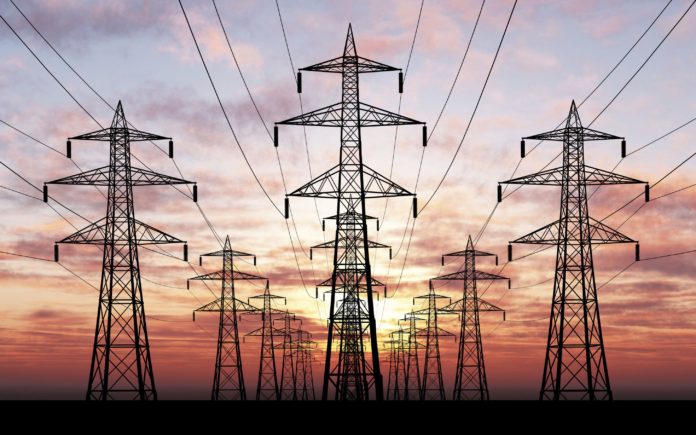
Nigeria’s electricity market puzzle

By Punch Editorial Board

The escalating tariff-setting dispute between the Nigerian Electricity Regulatory Commission and state electricity regulators, highlighted by the Enugu case, exposes deep tensions in Nigeria’s electricity sector reform.

While NERC urges the distribution companies to cooperate with state regulators, this conflict reveals legal ambiguities, market complexities, and financial challenges that require a balanced approach combining federal oversight with state-level autonomy.

The Electricity Act 2023 and recent constitutional amendments have decentralised electricity regulation by empowering states to oversee generation, transmission, and distribution within their territorial boundaries.

This establishes a dual regulatory framework where states control intra-state electricity infrastructure and markets, including tariff-setting for distribution companies operating wholly within their boundaries.

Conversely, the Federal Government, through NERC, retains authority over the national grid, wholesale generation, and cross-boundary transmission, ensuring grid stability and market coherence.

Currently, at least 10 states—Edo, Ekiti, Enugu, Imo, Kogi, Lagos, Niger, Ogun, Ondo, and Oyo—have established regulatory agencies, with Plateau, Abia, and Delta preparing to follow.

However, tariff-setting for electricity drawn from the national grid remains highly contentious.

State energy commissioners argue that the Electricity Act empowers them to regulate their power markets, while DisCos contend that states lack the authority to price cross-border electricity.

This dispute is crystallised by the Enugu State Electricity Regulatory Commission’s decision to cut the wholesale generation tariff from the federally approved NGN112.60 per kWh to NGN45.75 per kWh, leading to a Band A tariff reduction for Mainpower Electricity Distribution Limited customers from NGN209.5 to NGN160.4 per kWh.

Experts say this poses a critical legal question: Does state regulation of distribution include setting generation prices for power sourced externally?

NERC insists tariffs must incorporate full upstream generation and transmission costs. If not, states must subsidise any shortfall to avoid destabilising the national electricity market and increasing federal financial burdens.

Nigeria’s electricity market continues to depend heavily on federal subsidies due to structural inefficiencies, widespread non-payment, theft, and technical losses.

Overall aggregate technical, commercial, and collection losses reached 39.61 per cent as of Q1 2025.

The Nigeria Bulk Electricity Trader buys power from generation companies at a uniform, government-guaranteed rate of NGN112.60/kWh, but DisCos often recover less than these full costs.

This shortfall has pushed the sector’s debt beyond N4 trillion, which the Tinubu administration has promised to pay.

Related News
Nigeria needs total digital transformation of the electricity sector to boost economy
Grid collapse, debts crippling power plants – GenCos
NDPHC boss earns Tinubu’s leadership commendation
The Enugu tariff cut will create a reported N1 billion monthly shortfall for Mainpower, which has resulted in reduced power allocation from its parent company, Enugu DisCo.

In contrast, operators like Aba Power, whose tariffs reflect real costs without subsidies, demonstrate that sustainable pricing linked to operational efficiency is achievable.

Therefore, Nigeria’s electricity sector’s long-term viability depends on reducing subsidy reliance through cost-reflective tariffs and operational improvements.

While the Electricity Act’s dual regulatory framework is conceptually sound, its success hinges on clearer boundaries and cooperative mechanisms.

States should regulate generation, transmission, and distribution exclusively within their territories, while NERC must retain control over the national grid, interstate power transit, and wholesale tariff-setting for cross-boundary flows.

Industry experts insist that federal oversight ensures system-wide reliability and prevents fragmented pricing that could erode investor confidence or trigger financial instability.

Given the current standoff, an urgent convergence of views among NERC, state regulators, DisCos, and other stakeholders is critical.

As NERC Vice-Chairman Musiliu Oseni emphasises, open communication, transparency, and mutual respect are vital for consensus-building. Without alignment, tariff conflicts risk deepening financial crises, deterring investment, and degrading service quality.

Despite a total installed capacity of 13,625MW, total power output remains at a dismal 5,000MW, a disgraceful statistic for a country of 237 million inhabitants and a drag on the economy.

Nigeria’s continental peers, South Africa and Egypt, generate 58,000MW each.

Efficiency gains should arise from cutting operational and technical losses, improving billing and collections, and adopting smart technologies such as SCADA integration and coordination with regional bodies like the West African Power Pool.

The dispute highlights the need to unbundle existing DisCos into smaller, more manageable units to improve operational focus, accountability, and responsiveness.

Furthermore, re-awarding licences to operators with proven financial strength and technical expertise would ensure quality power delivery, limit rent-seeking, and justify tariffs that reflect true service costs.

Stakeholders should prioritise dialogue, regulatory clarity, and structural reforms that foster an efficient, effective, and profitable electricity sector while protecting consumers through fair pricing.


Punch Editorial Board

Tobi Amusan, turning pain into podium glory with World Championships silver

Tunde Eludini

Tobi Amusan added another chapter to her remarkable career on Monday, winning the silver medal in the women’s 100 metres hurdles at the World Athletics Championships in Tokyo.

The Nigerian hurdler clocked 12.29 seconds to finish second behind Switzerland’s Ditaji Kambundji, who took gold in a national record of 12.24s.

Grace Stark of the United States claimed bronze in 12.34s.

Bittersweet moment

For Amusan, it was a bittersweet moment. In 2021, she had narrowly missed out on a medal at the Tokyo Olympics, finishing fourth in the same stadium.

Speaking with MakingofChampions media crew in Tokyo moments after her race, the world record holder admitted that memory weighed on her when she returned to Japan for the championships.

“I remember in 2021, I came here and I came fourth. The moment I heard World Championships was going to be kept here, I had a PTSD,” Amusan confessed. “But then I had to snap out of it and told myself I’m not leaving here without the gold medal. I don’t know, but I’ll take a silver. It’s been God. The journey has been extremely rough. I’ve taken more L’s than wins. I’m just thankful that I have a great support system, my coach, my family, my mentors, my loved ones.”

The 28-year-old has endured a turbulent journey in recent years. From the glory of her world record-breaking run of 12.12s in Oregon in 2022 to a series of injuries, administrative battles, and questions over her form, Amusan has had to fight to stay at the top. This silver medal, she insisted, was as much for those who kept faith in her as it was for herself.

“This is for everyone who supported me through it all,” she said. “Look at the kind of lineup we have in the women’s hurdles—it’s anybody’s race. I kept saying to myself yesterday, it’s not of the swift but of God who shows mercy. I worked really hard and I deserve this. I’m just thankful I didn’t leave here with no medal again this year.”

Early signs

Earlier this season, Amusan had signalled her intent with a season’s best of 12.24s. That performance, she revealed, convinced her she was on track for another strong showing on the world stage. “Trust me, I knew I was coming. A 12.29 to get the silver medal—we’ll take it. It could be better, but we’ll take it.”

Amusan also touched on her personal reinvention this season, which included a new cropped hairstyle that drew attention before the championships.

“I was just tired of braiding my hair,” she laughed. “I train Monday through Saturday. There’s no time to rest, and on Sundays when I should rest, I don’t want to sit at a salon. So I just chopped it off into a pixie. No stress, no drama.”

New coaches

Her switch to a new coaching setup has also been instrumental. Amusan thanked her Jamaican coaches for helping her adapt and rediscover her form.

“The first two months were really tough, but look at it—the hard work paid off. I’m just thankful. They trusted me and believed in me, and this is for them.”

The Nigerian star, who has become a symbol of resilience for her country, admitted the pressure of carrying national expectations is immense.

“People always look at me as Nigeria’s medal,” she said. “I know they try, but this is my small body putting the whole country on my back. This is bigger than me. I come out here as Tobi Amusan first, but also for Nigeria and the whole world. Every time I show up, win or lose, I’m thankful.”

After another podium finish on the global stage, Amusan confirmed her season is over. “Season has ended. Vacation activated,” she smiled.

Premium Times

Widow laments, ‘My son sold the only land my husband left and blew the money on nonsense’ 

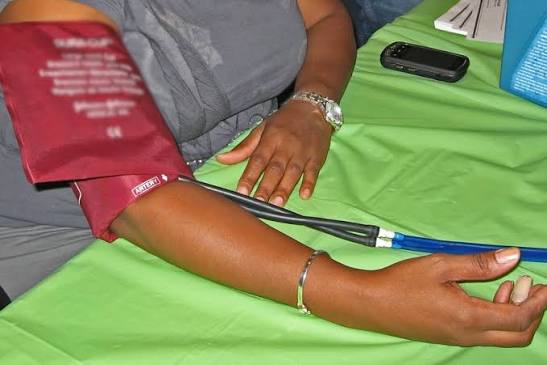
A medical doctor has shared an encounter with a patient suffering from high blood pressure. 

The doctor said he asked the woman why her blood pressure was through the roof, and she blamed it on her son’s behaviour. 

The doctor wrote on X: “This elderly woman complained that she hasn’t slept  properly for days, i checked her b.p and it was crazy high. I asked her why and she said her son is giving her problems. The boy sold the only land her husband left for them and blew the money on nonsense. 

“The last one he did was to steal the TV in her sitting room and sell it. So people don’t even pity their parents and it’s so sad. She said he’s doing music and i wonder how he expects to blow. Smh.”

Medical doctor reveals reason elderly woman gave for her high blood pressure after she was hospitalised

Suicidal pensioner survives balcony fall after killing woman he fell on

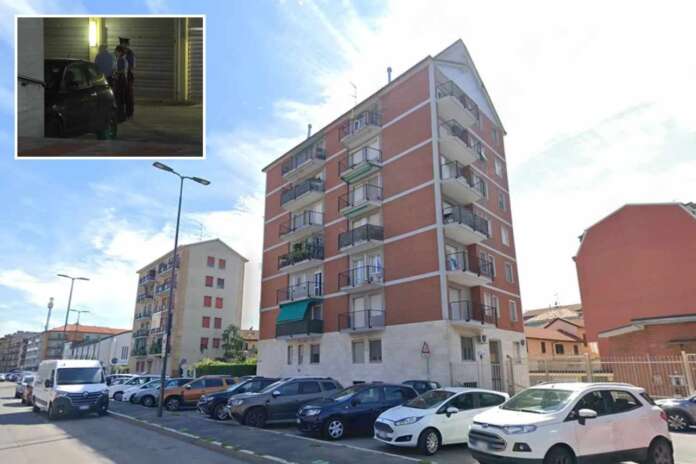
A tragic accident in Milan has claimed the life of an 83-year-old woman after a 70-year-old pensioner jumped from a fourth-floor apartment and landed on her.

Francesca Manno was walking through the courtyard of the building in the Baggio district on Sunday, September 14, at around 6 p.m. local time when the man fell on her, according to local media reports.

The pensioner, who lives in the same building, had climbed over his balcony railing in an apparent suicide attempt. Initial fears of a double suicide were later dispelled when authorities confirmed that Manno and the man were strangers.

Passersby alerted emergency services, and paramedics rushed to the scene. Despite efforts to revive her, Manno was pronounced dead at the site. Witnesses said she bore the full impact of the fall.

The man survived with multiple leg fractures and was transported to Niguarda Hospital. Doctors confirmed he was not in a life-threatening condition. Carabinieri officers from the Radiomobile unit and the San Cristoforo station confirmed that the fall was a suicide attempt. He has since been charged with involuntary manslaughter and remains under investigation.

The incident comes amid another tragedy in Italy, where 15-year-old figure skater Matilda Ferrari was killed by a cement truck while crossing the road near her home in Val Rendena, Trentino, on Monday morning. The driver was reportedly passing through a green light. Rescue teams and local doctors attempted to save her, but she was pronounced dead from severe injuries.

Manuel Cosi, the mayor of Giustino, where Matilda lived, expressed his grief: “We are shocked… Giustino has lost a star.”

Both incidents have cast a shadow over northern Italy as communities mourn two lives lost under tragic circumstances.

‘Darkness has overwhelmed the light of justice in our legal system, ‘ J.S. Okutepa

I think the leadership of the legal profession must do something urgently to save Nigeria from lawlessness, the desecration of the nobility of the legal profession, and the democratic strangulations that Nigeria as a nation faces. The Nigerian justice system, as my lord Hon Justice Oludotun Adefope-Okojie, JCA Rtd, put it most frankly and in an undiluted truth, during his lordship’s speech at the book launch recently, is almost in a comatose”.

The snail pace of justice delivery, the nearand almost non-immediate available remedies for victims of oppressive proceedings, and the use of state apparatus for persecution are so grievous to be ignored. It is a time bomb waiting to explode. There is this almost everything goes kind of legal practice in Nigeria, and the almost near total collapse of ethical standards in legal practice has almost made the legal profession the most hated and the greatest enemy of the people. The legal profession has failed, in my view, to take advantage of the constitutional duties bestowed on it to instil discipline and ensure corruption-free society.

As my learned friend of the Inner Bar, Rotimi Jacob SAN, put it most admirably: “There is no better test of excellence of a government than the efficiency of its Judicial system, for nothing more nearly touches the welfare and security of the average citizen than his sense that he can rely on the certain and prompt administration of justice. Law is respected and supported when it is treated as the shield of innocence and the impartial guardian of every private civil right. If the law is dishonestly administered, the salt has lost its flavour if it is weakly or fitfully coerced, the guarantee of order fails. If the lamp of justice goes out in darkness, how great is the darkness”

In response to this view, I said: “I think the light of justice has not only gone out in darkness, but darkness has overwhelmed the light of justice in our legal system. Sadly, those who are responsible for this sorry state are members of the legal profession at the bar and on the bench.

Lending his learned voice to this, my learned friend Olajide Akinola Esq said: “I honestly agree with this. The truth is, the light of justice didn’t just go out on its own. We, as lawyers and judges, allowed darkness to overwhelm it. Every time a lawyer uses technicalities to frustrate justice, every time a judge compromises integrity, we contribute to this sorry state. The system is not failing by accident; it’s failing because the very custodians of justice, the Bar and the Bench, have failed to protect it. Until we admit our own complicity and take responsibility, no government reform will save the profession.If the temple of justice has collapsed, then we, its priests, must be held accountable. And if there’s any hope of rebuilding, it must start with us”

There is an urgent need for the legal profession to save itself from the ridicule the profession has put itself in. The crooked manner legal practice is being done in Nigeria needs a thorough review. We are too religious in appearance but far from God and the fear of God in action and practice. In most cases, truths are murdered on the altar of fabricated lies and stories to support fraud and fraudulent practices. If you have handled electoral cases, you will see the lawlessness and fraudulent practices by some practitioners to support democratic improprieties and impositions. That is where you see how not to practice law. Nigerians are in hell because the legal profession is failing the nation and its citizens.

As I keep saying there is nothing wrong with the institutions. It is those in charge of institutions who have destroyed the institutions. When a judge knows the law but applies the law in his adjudications to serve a predetermined agenda, that judge, in my view, is a lawless judge not fit to be on the bench. Yet we have seen judgments delivered by these lawless judges, and we kept quiet. Too bad. There are lawless lawyers, too.

[Download Full Judgment] Mike Ozekhome and the Tali Shani web

 A London property tribunal last week concluded that neither Prof. Mike Ozekhome, SAN, nor Ms Tali Shani was entitled to claim ownership of a London property linked to one-time Minister of the Federal Capital Territory (FCT), the late General Jeremiah Useni, due to irreconcilable testimonies of witnesses called by both parties.

Click here to download the full judgment.

Judgment

Tribunal rules doctor who left patient during operation to have sex with nurse could continue medical practice

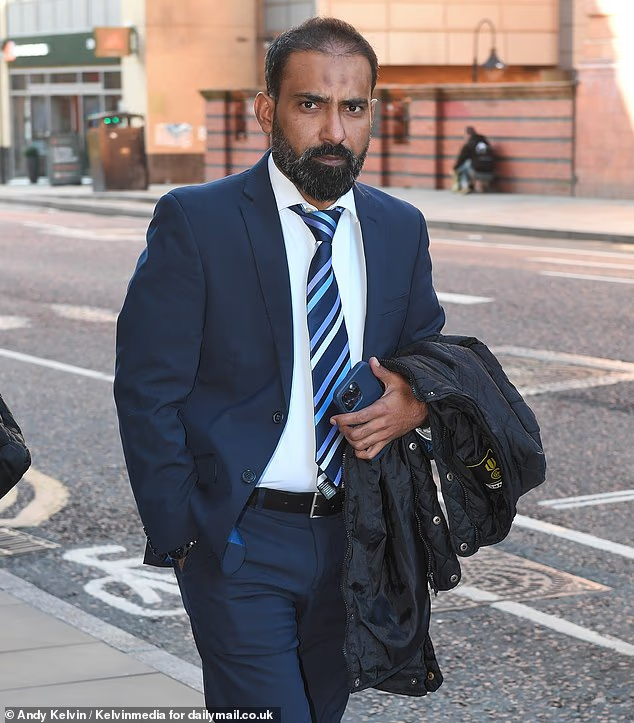
A medical tribunal has ruled that the 44-year-old doctor who left a patient midway through an operation to have sex with a nurse is at “very low risk” of repeating his serious misconduct.

Dr Suhail Anjum and the unnamed nurse were caught in a “compromising position” by a colleague who walked in on the pair at Tameside Hospital. The consultant anaesthetist had asked another nursing colleague to monitor the male patient, who was under general anaesthetic, so he could go to the bathroom

Read Also: Tribunal hears how senior doctor abandoned patient in the middle of surgery to have sex with a nurse

Instead, Anjum, a married father of three, went to another operating theatre at the hospital in Ashton-under-Lyne, Greater Manchester, where sexual activity took place with Nurse C on 16 September 2023.

A Medical Practitioners Tribunal Service (MPTS) hearing was told another nurse at the hospital described seeing Nurse C “with her trousers around her knee area with her underwear on display” and that Dr Anjum was “tying up the cord of his trousers”.

Anjum was absent from the operating room for eight minutes and the patient came to no harm.

The matter was reported to management and Anjum was dismissed in February 2024 following an internal investigation. Last week he told an MPTS disciplinary tribunal he wanted to resume his career in the UK and relocate with his family after they had since moved to his native Pakistan where he worked as a doctor.

Read Also: Sexual harassment in hospitals: Patients struggle with shame in silence over unethical practices

Anjum promised there would never be a repeat of a “one-off error of judgment”. Giving evidence, he said: “It was quite shameful, to say the least. I only have myself to blame. I let down everybody, not just my patient and myself but the trust and how it would look.

“I let down my colleagues who gave me a lot of respect.”

On Monday, the tribunal determined that Anjum “had put his own interests before those of the patient and his colleagues” and the incident involving Nurse C “had the potential to distract Dr Anjum … and he may not have been able to give his full attention to the patient’s care”.

The tribunal chair, Rebecca Miller, said his actions, while they did not harm the patient’s safety, were “significant enough to amount to misconduct that was serious”.

However, she was satisfied that Anjum was determined not to repeat his past misconduct and considered the risk of repetition to be “very low”.

No sanction will be imposed on the doctor and the hearing will reconvene in Manchester on Tuesday to decide whether to issue a warning on Dr Anjum’s registration.

Anjum had admitted engaging in sexual activity with Nurse C and that he knew she was “likely to be nearby” when he left his patient. He also admitted his actions had the potential to put his patient at risk.

The Guardian

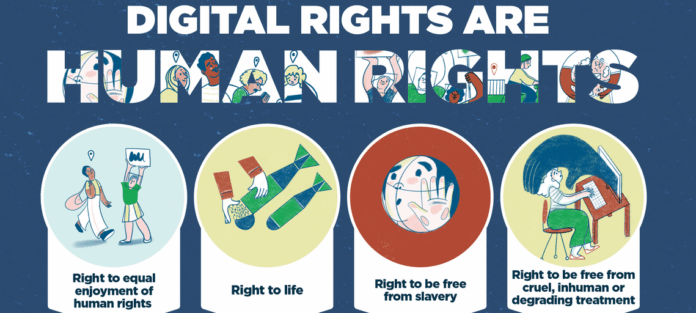
Digital rights lawyer calls for protection of digital space from hate speech

By Mojirayo Ogunlana

Yesterday, 15th September 2025, I represented the Nigeria Bar Association Section on Public Interest and Development Law (SPIDEL) at a Roundtable on Ethical and Hate-Free Politics organized by the National Human Rights Commission (NHRC), ably led by the Executive Secretary, Dr. Tony Ojukwu OFR, SAN.

Speaking in the panel on Hate Speech, Human Rights & Elections in Nigeria’s politics, in the stead of the Chairman of the SPIDEL Transition Committee Chairman, Prof. Paul Ananaba, SAN, I addressed the issue of hate speech across platforms affecting women and vulnerable groups.

Read Also: Otu Oka-Iwu Abuja demands apology from NIDCOM Chair over ethnic hate speech against Igbos

As an advocate of an open, free and safe Internet, I am aware that while canvassing for an Internet where freedom of opinion and expression is protected, there’s also the need to protect the digital space from hate speech. We must emphasize that digital platforms amplify marginalized voices in society. Digital platforms provide avenues for citizens to engage in governance through sharing of opinions and perspectives that would otherwise be disregarded or silenced. Freedom of Expression (FOE) is vital to the society and it fosters democracy by ensuring a healthy and thriving civic space.

However, as important as FOE is, not all speech is protected, especially speech that qualifies as propaganda for war and any advocacy of national, racial or religious hatred that constitutes incitement to discrimination, hostility or violence- Article 20 International Covenant on Civil and Political Rights (ICCPR).

In this vein, hate speech promotes division, hatred, divisive expressions and incites violence on a large scale that is to the detriment of the society.

Nevertheless, in addressing hate speech, we must not limit or prohibit freedom of speech. International law mandates that in dealing with cases of hate speech, there must be an intention to invite violent action.

Therefore, in crafting legislations we must ensure that they are not vague, ambiguous, overboard or suppress dissent. In the ECOWAS case of 23, October 2023, The Incorporated Trustees of Expression Now Human Rights Initiative V. Federal Republic of Nigeria, the Court held that Articles 3(1)(1) and 2, 15(2)(1) of the Nigeria Broadcasting Code (6th Edition) and Article 15(5) (1) of the Amendments to the Code contravene Article 9(1)&(2) of the African Charter on Human and Peoples’ Rights (ACHPR). The basis was that these provisions prohibited speech that was protected, and were too vague, ambiguous and overboard and the sanctions imposed in Article 15 were excessive. The Court ordered Nigeria to align this code with its international obligations and bring it to international standards.

The truth is that over-regulating hate speech can violate the right to freedom of expression, and under-regulating may lead to intimidation, harassment or violence against vulnerable groups.

Read Also: Nigerians Kick as Senate Introduces Bill Prescribing Death Penalty for ‘Hate Speech’

In addressing this, the government must ensure a multi-stakeholder approach so that all voices will be represented and we can have a homegrown and contextualized solution.

Furthermore, there is a dire need for a community-based Initiative that will serve as a tool for educating the populace as well as deter them from offending in this regard.

#DigitalRights

#hatespeech

#NHRC. Maitama abuja.

Video: Panic as staff jump from storey building while fire guts UBA Lagos Island branch

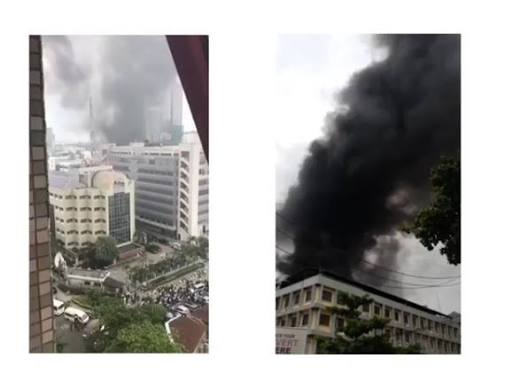
The six-storey building, Afriland Tower, on Broad Street, Marina, Lagos Island, housing the United Bank for Africa, went up in flames on Tuesday.

The inferno was said to have started from the inverter room located in the basement of the building before it spread to other floors.

Videos showed flames emitting from the six-storey building with bank employees seen climbing out of the window on a ladder to escape the inferno.

Confirming the fire outbreak, the Lagos State Fire and Rescue Service, in a statement by Deputy Controller General, Ogabi Olajide, said that efforts were ongoing to contain the fire.

Mr Olajide said, “A fire outbreak is currently being battled at a six-storey building on Afriland Tower, Broad Street, Lagos Island. The call was received at 13:38 hours, and fire crews from Ebute Elefun Fire Station and Sari Iganmu Fire Station responded. Evacuation of occupants is in progress, while firefighting operations have doused the earlier panic prior to the arrival of first responders.’’

Watch the video below

DSS slams cybercrime charges against Sowore, others over anti-Tinubu Post

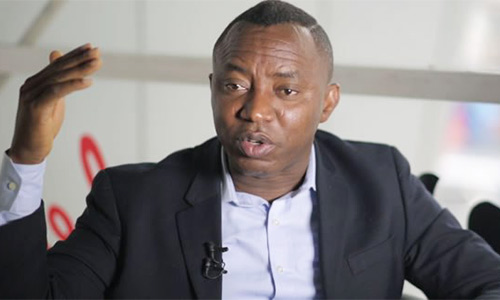
Finally, the Department of the State Service DSS has filed Cybercrime charges against the controversial activist, Omoyele Sowore and two others for allegedly making false posts against President Bola Tinubu to cause breakdown of law and order in the country.

The criminal charges filed on Tuesday at the Federal High Court in Abuja has X. Incorporation and Meta (Facebook) as two other defendants.

In the 5-count criminal charges marked FHC/ABJ/CR)481/2025, Sowore was accused of using his official x handle page at Yele Sowore to tweet “This criminal @ official PBAT Actually went to Brazil to state that there is no more corruption under his regime in Nigeria. What audacity to lie shamelessly!.

The alleged offending post said to be contrary to Section 24(2) (b) of the Cybercrimes Prohibition and Prevention Act 2024 was said to have been made on August 25 within the jurisdiction of the Federal High Court.

In count two, Sowore was said to have on August 26 used his official page Facebook to send the same false message out for the purpose of causing a breakdown of law and order in the country especially among those who hold divergent views on the person of President Bola Tinubu.

The alleged offence is said to be contrary to Section 24(2) (b) of the Cybercrimes Prohibition and Prevention Act 2024

In count three, the activist was accused of using the instrumentality of X, via his his official account X account at Yele Sowore to publish defamatory material on his online platform to wit “This criminal @ official PBAT Actually went to Brazil to state that there is no more corruption under his regime in Nigeria. What audacity to lie shamelessly!.against the personality and reputation of President Bola Tinubu.

He was said to have committed an offence contrary to section 375 of the Criminal Code.

The Department of the State Service DSS which filed the charges on behalf of the federal government also accused Sowore of using the instrumentality of his Facebook platform to publish defamatory material against the Nigeria’s President contrary to section 375 of the Criminal Code.

In count five, the defendant was alleged to have intent to cause public fear and disturbances published false information against the reputation of President Bola Tinubu contrary to section 59 of the Criminal Code Act and punishable under the same act.

The Director of the Public Prosecution of the Federation DPPF, Mohammed Babadoko Abubakar signed the charges.

Meanwhile, no date has been fixed for arraignment of the defendants.

The DSS had two weeks ago wrote, Sowore and other defendants to pull down the offending post or be prepared to face the legal consequences.

The charges read, “That you, Omoyele Sowore, adult, male on or about the 25th day of August, 2025, within the jurisdiction of this Honourable Court, did use your official X Handle page, @Yele Sowore, to send out a message/ tweet as : ‘THIS CRIMINAL @ OFFICIAL PBAT ACTUALLY WENT TO BRAZIL TO STATE THAT THERE IS NO MORE CORRUPTION UNDER HIS REGIME IN NIGERIA. WHAT AUDACITY TO LIE SHAMELESSLY!’, which you know the said message to be false but posted it for the purpose of causing a breakdown of law and order in the country, especially among individuals who hold divergent views on the personality of the President and Commander- in- Chief of the Armed Forces of the Federal Republic of Nigeria, Bola Ahmed Tinubu (GCFR) and thereby committed an offence contrary to Section 24 (1) (b) of the Cybercrimes (Prohibition, Prevention, etc) Amendment Act, 2024.”

Count Two read, “That you, Omoyele Sowore, adult male on or about the 26th day of August, 2025, within the jurisdiction of this Honourable Court, did use your official Facebook page, Omoyele Sowore, to send out a message/ post as : ‘THIS CRIMINAL @ OFFICIAL PBAT ACTUALLY WENT TO BRAZIL TO STATE THAT THERE IS NO MORE CORRUPTION UNDER HIS REGIME IN NIGERIA. WHAT AUDACITY TO LIE SHAMELESSLY!’, which you know the said message/post to be false but posted it for the purpose of causing a breakdown of law and order in the country, especially among individuals who hold divergent views on the personality of the President and Commander- in- Chief of the Armed Forces of the Federal Republic of Nigeria, Bola Ahmed Tinubu (GCFR) and thereby committed an offence contrary to Section 24 (1) (b) of the Cybercrimes (Prohibition, Prevention, etc) Amendment Act, 2024.”

Count Three, “That you, Omoyele Sowore, adult, male on or about the 25th day of August, 2025, within the jurisdiction of this Honourable Court, using the instrumentality of X, via your official X account @Yele Sowore, did knowingly published defamatory material on your online platform viz: ‘THIS CRIMINAL @ OFFICIAL PBAT ACTUALLY WENT TO BRAZIL TO STATE THAT THERE IS NO MORE CORRUPTION UNDER HIS REGIME IN NIGERIA. WHAT AUDACITY TO LIE SHAMELESSLY!’, against the personality and reputation of the President and Commander- in- Chief of the Armed Forces of the Federal Republic of Nigeria, Bola Ahmed Tinubu (GCFR) and thereby committed an offence contrary to Section 375 of the Criminal Code Act.

Count Four, “That you, Omoyele Sowore, adult, male on or about the 26th day of August, 2025, within the jurisdiction of this Honourable Court, using the instrumentality of Facebook, via your official Facebook account Omoyele Sowore, did knowingly published defamatory material on your online platform viz: ‘THIS CRIMINAL @ OFFICIAL PBAT ACTUALLY WENT TO BRAZIL TO STATE THAT THERE IS NO MORE CORRUPTION UNDER HIS REGIME IN NIGERIA. WHAT AUDACITY TO LIE SHAMELESSLY!’, against the personality and reputation of the President and Commander- in- Chief of the Armed Forces of the Federal Republic of Nigeria, Bola Ahmed Tinubu (GCFR) and thereby committed an offence contrary to Section 375 of the Criminal Code Act.

Count Five read, “That you, Omoyele Sowore, adult, male on or about the 26th day of August, 2025, within the jurisdiction of this Honourable Court, with intent to cause public fear and disturbance, published false information on your official X and Facebook account @Yele Sowore, respectively, against the personality and reputation of the President and Commander- in- Chief of the Armed Forces of the Federal Republic of Nigeria, Bola Ahmed Tinubu (GCFR) and thereby committed an offence contrary to Section 59 of the Criminal Code Act and punishable under the same

TIPS