Home Blog Page 238

TICAD-9: When will Mr. President nominate Nigerian ambassadors? By Martins Oloja

Let’s not get it twisted, this week’s noisy Mission To Tokyo has again exposed the consequences of the absence of ambassadors in our foreign missions for two years.

Nigeria has again been under fire at the just-concluded Tokyo International Conference on African Development (TICAD-9) in Japan after observers noticed that the country’s booth was left unmanned despite the presence of a large government delegation.

The TICAD9 2025 Nigeria’s President attended has been so mismanaged and poorly explained that a Nigerian entrepreneur based in Japan, Idris Ayodeji Bello’s alarm on social media, expressing embarrassment that Nigeria was the only country without representation at its exhibition stand has become a great news point.

Bello who claimed he was compelled to salvage the country’s image, said he informally assumed the role of an “Honorary Consul,” taking charge of the Nigerian stand to engage curious visitors.

He noted that for hours, he fielded diverse questions from international delegates and investors, ranging from agriculture and real estate to oil and gas, manufacturing, and even fashion. ‘Ambassador’ Bello also disclosed that his impromptu representation caught the attention of Nikkei Asia, one of Japan’s leading financial publications, which interviewed him on why Nigeria remained a strategic partner for Japan, particularly in the context of shifting global trade dynamics sparked by the Trump administration’s trade policies.

His words: “I hate to show negative things about Nigeria but it is sad that Nigeria is the only unmanned booth at TICAD9 in Japan… So ashamed, I have now designated myself as an ‘Honorary Consul’ and taken over the booth to engage visitors,” Bello wrote, noting that several Japanese attendees had approached him with questions about Nigeria. The emergency brand ambassador added: “It’s been a few hours now fielding questions and inquiries on all topics under the sun from crops to real estate…to sports…Thank God for residual knowledge from the life of an Afropreneur…”

Reacting to the development, angry critics and speakers for the opposition platforms have accused the government of unspeakable negligence. They criticised what they described as the administration’s ‘anyhow-ness’ pointing out that despite traveling with a large entourage, no official was available to man the booth.

One critic noted: “This is incompetence that follows the President abroad. After this jamboree, who will follow up to ensure that Nigeria actually benefits from TICAD9? When we asked them to appoint ambassadors, they went ahead and appointed KWAM 1…”The ugly incident has fueled debate in the media with many Nigerians questioning accountability and the effectiveness of the country’s participation in high-level international events. But curiously, the government’s reaction to criticism of empty booth, absence of delegation at Japan Summit was quite confounding and poorly coordinated. Ministry of Foreign Affairs said contrary to claims made by the participant at TICAD9, Nigeria’s booth had not yet been opened, barely a day to the end of the Summit. Yet another spokesperson noted that Nigeria didn’t go there for the optics, insisting that Nigeria didn’t go there for the trade exhibition in a pavilion.

Nigerian officials post claimed: “Contrary to a tweet made by a participant at TICAD, the Nigerian Booth at #TICAD9 has not yet been opened. The booth will be officially inaugurated on Thursday, 21st August 2025, after which it will become fully operational and serve the delegates of TICAD”.
The Ministry of Foreign Affairs responded to the criticism, stating that the booth had not yet been officially inaugurated and would be fully operational after the opening ceremony. Presidential spokesperson Bayo Onanuga clarified that Nigeria’s official delegation was focused on strategic discussions, not trade exhibitions. He emphasised that the country’s presence at TICAD9 aimed to foster bilateral and multilateral partnerships, stimulating economic growth and development.

And so as Nigeria’s uncoordinated response to reports of an empty pavilion at the (TICAD-9) has sparked widespread criticism, re-echoing concerns about the country’s diplomatic effectiveness, the controversy coincides with the ongoing debate about Nigeria’s failure to post ambassadors to foreign missions for two years after recalling them.

Here is the thing, it is now clear that the absence of ambassadors in foreign missions for two years has raised concerns about Nigeria’s diplomatic relations and economic growth. Some of the implications include: Diplomatic Gap: The lack of ambassadors has resulted in a significant diplomatic gap, affecting Nigeria’s ability to engage in high-level diplomatic discussions and negotiate meaningful trade agreements. Economic Losses: Many Nigerian companies rely on our embassies to navigate foreign markets and attract investment. Without ambassadors, this support is slowed down, reducing opportunities for economic growth and international business expansion. National Security Risks: Ambassadors play a key role in intelligence sharing, joint operations, and rapid crisis response. Without them, Nigeria may be cut off from vital global security networks.

The empty pavilion in Tokyo highlights the reproachful challenges Nigeria faces in its diplomatic efforts, particularly with the inexplicable absence of ambassadors in foreign missions. The government must address these concerns and ensure effective coordination among agencies to promote Nigeria’s interests abroad. By doing so, Nigeria can strengthen its diplomatic relations, attract foreign investment, and promote economic growth.
Nigeria’s ambassadorial crisis has been strangely ongoing for nearly two years, with the government yet to appoint new envoys to represent the country abroad. In September 2023, President Bola Tinubu recalled all Nigerian ambassadors, citing the need for a fresh start. However, the delay in appointing new ambassadors has raised serious questions and concerns about what the country’s interest is at the moment. There have been so many promises unfulfilled in this regard. What is worse, so many fake lists have appeared on the social media networks.

The delay in appointing new ambassadors has been attributed to various factors, including financial constraints: The Minister of Foreign Affairs, Yusuf Tuggar, once cited financial and economic challenges being faced by the current administration as a reason for the delay. Government priorities have also been implicated, in this regard. There is a point that the government may be prioritising domestic economic reforms over foreign policy considerations, leading to a delay in appointing new ambassadors. This claim too has been incredible as domestic policies have been crushing even as a former finance minister who now serves as chief executive of the WTO, Dr. Ngozi Okonjo-Iweala recently noted that government has indeed stabilised the economy.

Impact on Nigerians Abroad
The absence of ambassadors has also affected Nigerians living abroad, who face administrative challenges and difficulties in accessing essential services. Some of the issues Nigerians in the diaspora face include: travel difficulties. Without ambassadors, Nigerians may face challenges in obtaining travel documents, emergency assistance, and other essential services, some of which have dominated social media space in recent time.
There may be financial distress too to diplomats serving abroad without organic diplomatic heads at the Missions. There have been reports that foreign service officers are being owed salaries already, leading to financial difficulties in meeting family and social obligations.

The TICAD-9 crisis has now brought to the fore why President Tinubu should expedite nomination of new ambassadors to address the diplomatic vacuum and protect Nigeria’s interests abroad. Although the Nigerian government has attributed the delay to financial constraints and procedural issues, however, experts have argued that these reasons are unconvincing, given the country’s significant budget allocation for foreign missions. The lack of ambassadorial appointments therefore suggests a disconnect between budget planning and diplomatic priorities.

For instance, a Nigerian Ambassador to the United States could have played a crucial role in negotiating with US authorities to ease visa restrictions, promoting better understanding, and advocating for Nigeria’s interests. The absence of a Nigerian ambassador in the US has left a void in diplomatic representation, hindering the country’s ability to effectively address these critical issues. Besides, all the verbal darts that a Nigeria-born British politician, Olukemi Badenoch who has served as a Leader of the Opposition and Leader of the Conservative Party in the U.K has been hurling on Nigeria from the United Kingdom should have been dealt with from the source if Nigeria had had a High Commissioner to the United Kingdom. That is one more reason the Nigerian government must prioritise appointing qualified Ambassadors to the United States, United Kingdom and other global powerhouses to protect and promote the country’s interests, particularly regarding visa policies and bilateral relations.

Meanwhile, whatever happened to us in Tokyo this week could have been better managed if the president’s men had allowed a properly coordinated information management. It was a diplomatic impasse that the Foreign Affairs Ministry and the presidential communication team should have been allowed to manage and control the damage professionally.

The role played by another presidential ‘spokesman’ Otega (TheTiger) Ogra
Has complicated the damage control mechanism of the president’s men. He claimed in the controversy:
“I feel compelled to set the record straight regarding Nigeria’s so-called booth at TICAD, which has become the subject of some unfortunate commentary. The space in question is not a conventional national pavilion. It is set out as part of the designated spillover area typically used by delegates without access to the main auditorium to follow proceedings or engage informally.

These rooms can often be used as workspaces, quiet zones, or hubs for side meetings or as some countries have done, converted to National pavilions. They are not required to be continuously manned or styled as permanent showcases. Any Nigerian delegate can use the space at any time to work, provide support for official activity, or showcase material…Now to the heart of the issue. Nigeria is not in Japan for optics. We do not need to mimic others to prove our relevance. Visibility is not the only metric. Value is.While some chase optics, Nigerian officials have been working deliberately, consistently, and with focus…”This claim contradicted what the Foreign Affairs Minister and Mr.Bayo Onanuga claimed. This isn’t good for the optics they all sought too.

All told, President Tinubu should not delay the list of ambassadorial nominees a day longer than necessary. The list of competent nominees should be filed to the National Assembly today to avoid the reproachful discussions of our image in global context.

The views expressed by contributors are strictly personal and not of Law & Society Magazine.

Lady who left home for church vigil dies at boyfriend’s house in Osun

A young lady who told her family that she was going to a vigil in church over the weekend has reportedly died in her boyfriend’s house at the Oke-Esa area of Esa-Oke in the Obokun Local Government Area of Osun State.

The lady named Omole Bidemi was said to have fallen ill while visiting her boyfriend and died on the way to the hospital.

A resident of the area, Tosin Adeola, told newsmen that the deceased left her home that night for church but decided to see her boyfriend’s, known as Yinka, on Oke-Esa Street. Less than 30 minutes later, her death was announced.

According to the resident, the news of her death caused outrage as residents gathered at the house, insisting on an explanation about her death.

“She usually goes to a vigil every Friday, and on the said day left her house around 9 p.m., only for us to hear that she died after visiting Yinka, her boyfriend.

“It’s true people were angry at the news and demanded an explanation, but the arrival of police at the scene prevented further escalation of the situation as her boyfriend was taken into custody,” she said.

The State Police Public Relations Officer, DSP Abiodun Ojelabi, while confirming the incident, said the boyfriend, Yinka, is in police custody, helping with the investigation.

The police spokesman disclosed that the police were informed that the lady fell sick as she got to Yinka’s house, and a foam-like substance was coming out of her mouth before she was rushed to a hospital.

“But unfortunately, the lady died on her way to the hospital, which led to an outrage in the community. But for the timely arrival of security operatives, the situation could have been further complicated.

“The deceased’s body has been moved to the hospital, and an autopsy is expected to be carried out to determine the cause of her death,” said Ojelabi.

NBA-AGC 2025: Malema calls for united Africa without boundaries to counter exploitation, division

  • Urges African countries to break free from World Bank, IMF “debt trap” loans

South African activist and Leader of South Africa’s Economic Freedom Fighters (EFF), Julius Malema, has made a passionate call for African unity, asserting that, that is the only way to counter external exploitation and division.

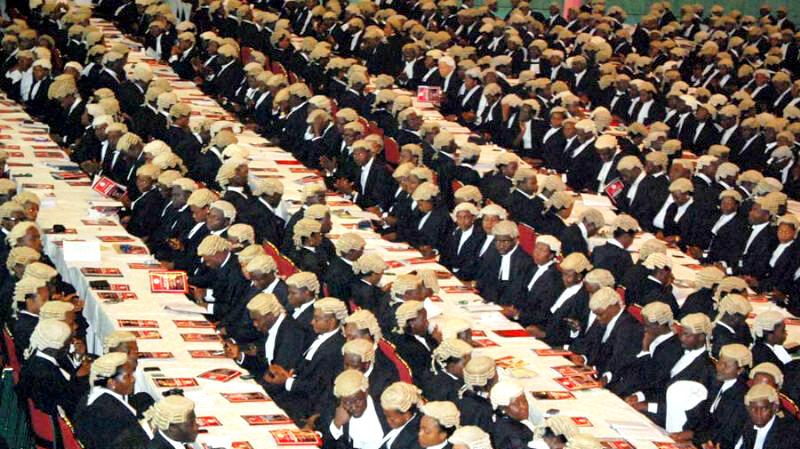
Malema made the call on Sunday at the opening ceremony of the ongoing 2025 Nigerian Bar Association (NBA) Annual General Conference held at the International Conference Centre, Enugu State.

The keynote speaker at the conference, tagged ‘Stand Out And Stand Tall’, urged the continent to stand firm against imperialist forces.

“Africa must resist those who seek to plunder our land and resources,” Malema, leader of the Economic Freedom Fighters (EFF), declared. “Our minerals and wealth belong to Africans, and we must reclaim them.”

He advocated for local industrialisation to process Africa’s natural resources, emphasising the continent’s potential for self-reliance.

“We have the capacity to build industries and stop the extraction of our wealth by foreign powers,” he said.

Malema envisioned a united Africa with no borders, proposing a single president, currency, military, and parliament.

“A unified African currency would surpass the strength of the U.S. dollar,” he asserted, adding, “We are not pawns of foreign agendas.”

He called for Africans to see themselves as equals to global powers like China, Russia, and the United States.

“We are not a dark continent; we shine with the brilliance of our diamonds and our people,” Malema proclaimed.

Lamenting centuries of imperialist exploitation, he stressed that Africa’s salvation lies within. “Our future is not in Washington, London, or Beijing—it’s in Africa,” he said.

Malema also urged deeper collaboration between Nigeria and South Africa to make the African Continental Free Trade Area (AfCFTA) a transformative reality.

“Together, we can champion fair trade, nurture industries, and prioritize education and innovation,” he noted. “Africa is a continent of giants, not beggars.”

He condemned xenophobia, calling for solidarity among Africans.

“We must love and respect each other to demand respect from the world,” Malema said. “Unity is our greatest strength.”

The activist also appealed to African nations to regulate loans from international financial institutions like the World Bank and the International Monetary Fund (IMF), warning that such borrowing risks ensnaring the continent in a cycle of debt.

“These loans are a trap that chains Africa’s future to foreign powers,” Malema declared, emphasizing the need for oversight to prevent unsustainable debt.

He highlighted the EFF’s proposed Public Finance Management Amendment Bill in South Africa, which would mandate parliamentary approval and transparency for foreign loans.

“This legislation will ensure accountability and protect our people from exploitative financial agreements,” he stated.

Malema also championed stronger ties between Nigeria and South Africa, recalling Nigeria’s solidarity during South Africa’s apartheid era.

He urged both nations to lead Africa’s industrialization by processing the continent’s vast mineral and energy resources locally.

“Africa must build its own factories and stop the plunder of our wealth,” he said, advocating for a united, self-reliant continent.

Rejecting external dependency, Malema envisioned a borderless Africa with a unified currency, military, and parliament.

“A single African currency would rival the dollar,” he asserted, adding, “Our salvation lies not in Washington or Beijing but in Lagos, Johannesburg, Abuja, and Pretoria.”

He condemned imperialist exploitation and division, calling for Pan-African unity to harness the continent’s potential.

“We are not a dark continent but a shining one, rich with diamonds and human talent,” Malema proclaimed.

He also stressed the importance of rejecting xenophobia and fostering solidarity to earn global respect.

“Africa is a continent of giants, not a begging power,” he concluded, urging transformative action through the African Continental Free Trade Area (AfCFTA).

‘ADC is a mere distraction’

By Lasisi Olagunju

Yesterday, someone asked me to give my current impression of that coalition party called the ADC. I asked if the person knew the meaning of the idiom: a loud fart in a windstorm, or simply, a fart in the wind. That is my impression of the party that came loud and furious like Hurricane Katrina just a few weeks ago. And unlike that hurricane of devastating results, the ADC appears to have gone limp like a boastful eunuch’s potency, so soon after its entry.

Apart from beautifully written press releases, what else have you seen of the ADC that should make any person in government uncomfortable, or make the distraught street trekker hopeful of a coming change? ADC’s National Secretary is Mr Rauf Aregbesola. The secretary is the engine room of the party. But the gadfly appears more interested in the politics of Western Nigeria than in making the party run strong from its national secretariat. Last month, the party announced its plan to inaugurate a 50-man policy committee to set an agenda for Nigeria. Have you heard anything about that since then? That is how you know the difference between a thunder clap and a fart.

A party seeking power does what the man seeking a woman does. They show practical, consistent, engaged behaviour. The party must do what great chess players do: “Great players consider their opponent’s threats before they think about their own moves; they avoid moves that will help their opponent. They also take the initiative whenever possible.” That is how ‘chess fox’, a website on the game of chess, put it. If a party is interested in taking power, you would know from its plans and moves. I have not seen anything extraordinary in the footfall of the ADC for it to be seen as a viable alternative to the party in the Villa. Could that be the reason why the South-West chapter of the ruling APC dismissed the ADC as “a mere distraction” last Friday?

If a party is tired of being in government, you would see it pandering to, and pampering the opposition. Goodluck Jonathan was seen doing exactly that between 2013 and late 2014 with the Buhari/Tinubu combo. Jonathan nursed the APC boa with so much naivety until it was matured enough to constrict and consume him. I have not seen such suicidal inclinations in Bola Tinubu and his APC. Indeed, what we hear from the party in power is that “Tinubu is not Jonathan.” And I think those saying that are very right in their assessment of the man who owns Nigeria. Tinubu is not just a vote seeker; he is a ruthless vote maximizer. That is not the kind of man you can confidently remove with press releases.

During the Ileya festival of 2016, a group of young drummers went to Tinubu’s Boudillon to try their luck with him. And they were very lucky. He met them drumming and singing. The big man loved their song and danced to their beats with gusto and meaningful gestures.

As the boys beat the drums, they also sang out what the drums were saying: “Novice they are/ they don’t know anything/Ajanaku emerges from a distance, they went for canes/ The Elephant is more than an animal you beat with sticks…(Òpè ni wón o, won ò mo nkankan/ Àjànàkú yo l›ókèrè, wón lo m›óré dání/ Erin kojá eran à nf’òpá lù…). This battle song was composed for the Lion of Boudillon nine years ago. I wrote about it here on October 3, 2016. That was seven years before the lion roared his way into the Villa. Now, Tinubu is in power, controlling all weapons of war, peace and politics. Anyone who would fight and worst him needs more than canes and bluster.

“People tell stories. And, as they tell stories, they express and explore their ideas about the world and their place in it.» That line belongs to Christine Goldberg in her interrogation of ‹The Construction of Folktales› published in 1986. Nine years ago, Boudillon celebrated the Elephant›s steeze in the face of impotent sticks. The song and its drumbeats stand on all four with an old folktale on a jungle that could not overcome its overbearing king:

Long ago, Lion (Kiniun) ruled the forest with pride and guile. Every animal feared his roar. Whenever he was hungry, he pounced on whichever creature he desired. He would snatch food from the monkeys, chase the antelopes away from their grazing fields, and even drink the river dry before Elephant could take a sip.

One day, Tortoise (Ijapa) called a secret meeting. “Brothers and sisters,” he said, “Lion is too powerful for one animal to fight. But if we work hard and stay united, we can defeat him.”

The animals nodded, but their hearts were not together. Monkey boasted, “With my speed and skill, I can handle Lion alone.” Elephant grumbled, “Why should I dig or plan with smaller animals? My strength is enough.” Antelope said, “What’s the use of all this talk? Lion will eat whom he wants anyway.” And the little Rat whispered, “Even if I try, the big ones will not notice me.”

So, instead of making a real plan, they argued and scattered. Some went to sleep, some local, regional champions boasted, some acted as moles for Lion, others simply refused to work. Only a few, halfheartedly, scratched the ground, saying they were “preparing a trap.”

When Lion came roaring to the river, the animals rushed at him without order. Monkey leapt from the trees, but Lion caught him with one paw. Elephant charged blindly, but Lion sidestepped and bit his ear. Antelope ran forward, bleating, and was knocked aside. Even Tortoise, who tried to crawl near Lion’s feet, suffered a badly broken shell.

Lion laughed thunderously. “So this is your rebellion? Disorganised, lazy, and divided? You thought you could defeat me without planning and unity? If you would farm like the king, you would do what the bard suggested: you would make a million heaps in one day!»

That day, during the fight, many of the animals were injured. Each one had at least some bruise to treat, exactly as the palm trees of Ijaye nursed wounds of defeat 180 years ago. The scars, up to today, tell the gory news of the war that ruined their pride. The defeated animals limped back to the forest, ashamed and sorrowful. Tortoise shook his head: “I warned you. No one defeats Lion with pride, laziness, and quarrels. Disunity and half-work only strengthen the oppressor. Unity without action is empty; hard work without planning is wasted; pride and quarrels make the weak even weaker before the strong. Until we learn to plan, to work hard, and to unite, Lion will always rule over us.”

The views expressed by contributors are strictly personal and not of Law & Society Magazine.

Open Letter to Taiwo Oyedele: The Hair-Splitting Difference Between Debts and Loans: President is taking foreign loans, not debts, Nigerian economy is growing, and other tales by moonlight as told us by “Seasoned” Economists

By Dr. Tonye Clinton Jaja

Dear Respected Taiwo Oyedele, Chairman, Presidential Committee on Fiscal Policy and Tax Reforms, Sir,

I have always loved teaching and lecturing. As a teenager, after I successfully passed the West African School Certificate Exams, I was paid to be teaching arts subjects as a private tutor in homes of wealthy parents within our congregation in Port Harcourt.

Thereafter, under the tutelage of Prof. Nasiru Tijani, former Deputy Director-General of the Nigerian Law School, Lagos campus, I began teaching tutorials for law school students in the year 2006.

My simple, straightforward philosophy of teaching is that: I should be able to explain complex legal concepts in a manner that is understandable by a six year old child.

I have just watched a video of your good self trying to explain the current economy under President Bola Ahmed Tinubu (PBAT).

On behalf of the majority of Nigerians who are not “seasoned” economists like yourself, we request for your good self to explain in simple and unambiguous terms some of these complex economic concepts.

My question is this of all these explanations and the recent statement by Dr. Ngozi Okonjo-Iweala that the Nigerian economy is stabilised and growing under PBAT, why are the majority of Nigerians still impoverished?

If the economy is stabilised and growing, why are we still obtaining loans?

Let me conclude by asking a very simple and straightforward question: “what is the difference between loans and debts?”

As you have tried to differentiate that PBAT is obtaining foreign loans and not incurring debts upon Nigeria.

Yours faithfully,
Dr. Tonye Clinton Jaja,

The views expressed by contributors are strictly personal and not of Law & Society Magazine.

Death of world’s nicest judge

By Lasisi Olagunju

He was just a municipal court judge in a US city. Some years ago, he was asked: “In your 38 years of sitting on the bench, is there a case you still think about today?” This judge looked up and did not hesitate before answering yes, there was a case, and he told the story:

“I get upset even thinking about it. I felt crumbled at that moment. I’ve never forgotten that (case) up to this day, and I was on the bench for 38 years… It was my first day on the bench. I asked my dad, I said, ‘Dad, why don’t you come down and view me? I am sitting on the bench today for the first time.’ A woman came before me who had three kids. She owed, I think, $300 in parking tickets. And she said, ‘I just can’t pay the money, I don’t have the money.’ And I said, ‘Maybe I can place you on a payment programme.’ She said, ‘You can place me on a payment programme, but I can’t pay anyway.’ So, I said, ‘Okay, the fine is $300, see the clerk. If you don’t pay, the car is going to be booted.’

“The court is over, and I said, ‘Dad, how did I do?’ He said, ‘Frank, that woman, you failed her.’ I said, ‘Dad, she was arrogant, she was rude.’ He said, ‘She was scared. You should have talked to her, you should have understood her problem; you can’t treat people like that, Frank.’ And, I can tell you without fear of contradiction, it never happened again after that. Never.”

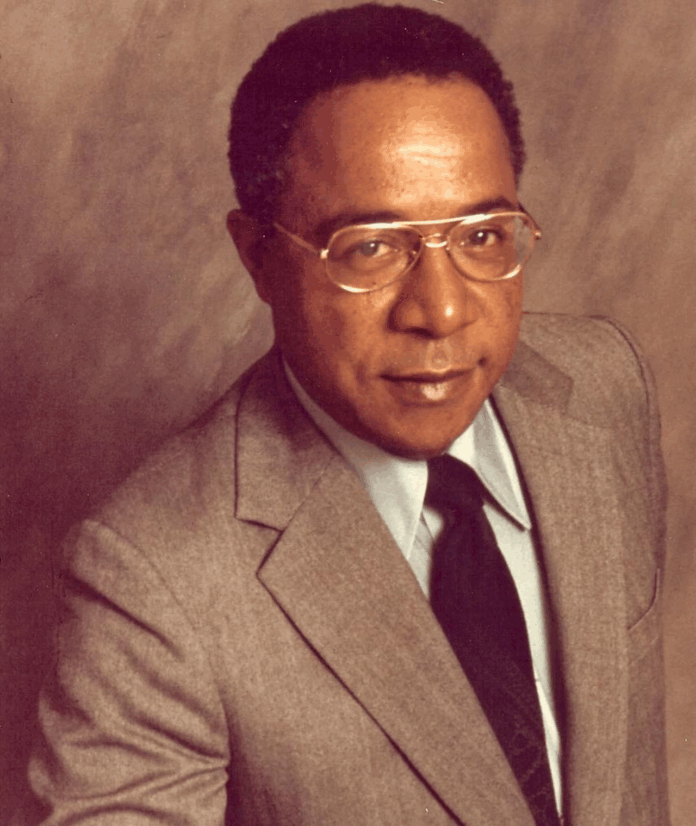
Judge Frank Caprio of Providence, United States, was that judge. Several headlines hailed him as “the nicest judge in the world” as he passed away at age 88 on Wednesday, last week (August 20, 2025). His official social media accounts, which announced his passing, said he “passed away peacefully” after “a long and courageous battle with pancreatic cancer.”

If you are an Internet-captured person, as I am, your addiction must have included hours watching Judge Caprio’s hit TV show ‘Caught in Providence.’ The show documents the latter years of his career, which ended when he retired in 2023. You watch him episode after episode, you see law and empathy meshing with compassion to deliver justice.

The Economic Times reported the case of a single mother who appeared before Caprio with her child for a speeding ticket. The judge asked the child to give the appropriate sentence for the mum. The child suggested “five days in jail.” The court heard the child and burst into great laughter. Judge Caprio dismissed the case.

Gulf News published what it called the man’s “five most humane cases that moved the world.” The cases, in Gulf News’ voice and words, are summarised here: “A young motorist who was caught running a red light argued that the signal changed suddenly. Judge Caprio, upon learning the defendant was a high school student with dreams of college, decided to waive the violation on the condition the student must graduate from college. A father was charged with speeding 10mph over the limit. Judge Caprio called the defendant’s son to give a verdict on his father’s guilt. The boy admitted his father was guilty with no hesitation. Instead of punishing the father, the judge praised the boy’s honesty and dismissed the case. A man, Jose Barrientos, was ticketed for parking near a fire hydrant while his son picked him up from hospital after a brain surgery. After hearing the emotional context, Judge Caprio immediately dismissed the ticket and inquired about Jose’s health. A veteran pleaded guilty to parking illegally near a VA hospital. Judge Caprio acknowledged the parking challenges veterans face and commended the defendant for service. Recognising the fine as too harsh, he dismissed the ticket and all fees. A woman received a ticket for parking two minutes early before allowed hours. Judge Caprio found the violation absurd and playfully threatened jail but then dismissed the case, sparking laughter in court.”

The Irish Sun newspaper recalled one of his gracious moments on the Bench: “He received multiple Daytime Emmy Award nominations and left social media users in tears for the way he handled a speeding ticket involving a 96-year-old Victor Colella. Colella appeared in an episode of Caprio’s show and was in court, representing himself, after being fined for speeding in a school zone. Caprio immediately dismissed Colella’s case after the elderly man explained to him that he was not a fast driver, and was only driving to take his 63-year-old son, who is handicapped, to get his blood work because he had cancer. ‘You are a good man. You really are what America is all about. Here you are in your 90s and you’re still taking care of your family. That’s just a wonderful thing for you,’ Caprio told Colella in admiration.”

On Instagram, the man had 3.4 million followers. On that platform, he shared stories of spectacular compassion and of mercy around the world. It is there I saw one of his quotes: “Kindness is the verdict I hope we all deliver more often.”

Watch his videos. The man sits a very patient judge. Justice Kayode Eso, late respected jurist and man of erudition, in his ‘The Mystery Gunman’ (1996) submits that ‘patience’ is one of the great attributes required of a judge sitting nisi prius. He says: “Patience in this context should never be confused with slow thinking. A trial court judge has to be endowed with a lot of patience. He listens to sense and nonsense with equanimity. His mind analyses the evidence simultaneously with watching the demeanor of witnesses…When the right judge is not in the right court, justice is never done.” (page 170-171). The American judge had patience in great abundance and it was manifestly deployed in service of justice.

In life, Caprio was celebrated across the world; in death, he came alive as a global hero. BBC’s announcement of his death came with the headline “Nicest judge in the world Frank Caprio dies aged 88′; The Guardian says ‘Frank Caprio, US judge who found fame online for his compassion, dies aged 88.’ The Associated Press and the CNN say: ‘Frank Caprio, Rhode Island judge who drew a huge online audience with his compassion, dies at age 88.’ The New York Times says: ‘Frank Caprio, Kind Judge on Rhode Island TV, Dies at 88.’ An online commenter said: “This is how men leave their mark on history… The date of birth and death does not matter as much as what is in between!”

Caprio’s trademark phrase is: “I don’t wear a badge under my robe. I wear a heart.” In him, we find that judicial systems thrive when they temper rules with the most humane of the spirit of man. Nigerian judges can learn that integrating empathy into adjudication nurtures public trust and humanises the legal system. They can learn more from Caprio. The American judge did not run a rat race to be richer than the world’s richest. He did not set out for it, but he got a trophy richer than the treasures of Mansa Musa and King Solomon put together. He died as “the world’s nicest judge.” It is not likely that history will ever forget his humanity.

His story is almost identical with that of a judge who lived ten centuries ago in China. Bao Zheng (999–1062) dispensed justice fairly and evenly. He condemned the lowly of the low who erred just as he sentenced the Emperor’s family members who sinned. Dutch scholar, Sinologist and emeritus professor at Harvard, Wilt L. Idema, in 2009 wrote ‘Judge Bao and the Rule of Law’. In that piece, Idema sums up Bao’s story in these words: “Pure, orthodox and incorruptible, Judge Bao has been serving as the preeminent embodiment of justice in China for almost a thousand years, so much so his court cases have been adapted as stories, novels and plays over the centuries.”

In Nigeria, our lawyers are currently meeting in Enugu. They call their congregation ‘Annual General Conference.’ Whatever the theme of their meeting is, I feel they should tell themselves and inform one another that the darkest hour of the judiciary since 1960 is now. They should ask why it is not possible to have a Caprio or a Bao in Nigeria and why, in recent times, almost every (political) decision that comes out of our courts is caught in the web of deliberate ambiguity and vagueness. What kind of judiciary feels no horror that court judgments are so capriciously ambivalent such that victories in them are claimed by both plaintiffs and defendants?

I wonder how both lawyers and judges felt when they heard the Sultan of Sokoto, Alhaji Saad Abubakar, yesterday (Sunday) at the NBA conference, saying what everybody is saying: the integrity of the judicial system is being undermined by corruption, and justice is being sold to the highest bidder. He said: “Today, justice is increasingly becoming a purchasable commodity, and the poor are becoming victims of this kind of justice, while the rich commit all manner of crime and walk the streets scot-free.”

There is a trending excerpt from General Olusegun Obasanjo’s new book where he declares Nigeria’s judiciary as being “deeply compromised.” There is nothing new in what the former president wrote. Indeed, more than one lawyer have told me that they are afraid to go to court in this era because they are no longer sure that law and facts have a place in our courts; they are horrified that certainty and predictability of the law have taken a flight from our judiciary.

Obasanjo, in his new book, ‘Nigeria: Past and Future’, is quoted by a Nigerian news website, the Cable, as lamenting the “steady decline of the judiciary’s integrity” while ramming in this: “I went to a state in the North about ten years after I left public office. Next to the government guest house was a line of six duplex buildings. The governor pointed to the buildings and stated that they belonged to a judge who put them up from the money he made from being the chairman of election tribunals.” Obasanjo concludes that part with a warning that “where justice is only available to the highest bidder, despair, anarchy, and violence would substitute justice, order, and hope.”

I have serving and retired judges as friends. They are as embarrassed as hell with what we have as judiciary in 2025 Nigeria. They all believe that the house has fallen.

Our lawyers are meeting in Enugu as a body, the NBA. I have heard some members of that association dismissing the conference as a mere jamboree. They may be wrong. And they will be wrong if the conference comes out with a definite cure for the ailments of our courts. If judges are the problem, they were lawyers before they became judges. The Yoruba say a bad head did not become bad in just one day; they say rot is always gradual and incremental. Now, because the courts are rotten, no one is safe; no business has rest of mind; and no position or property is secure. The courts have become as capricious as magicians; they conjure decisions to the shock of facts and the law.

ALSO READ: I’m not desperate to be president — Atiku

Robert H. Jackson was an Associate Justice of the Supreme Court of the United States in 1953 when he published his ‘The Task of Maintaining Our Liberties: The Role of the Judiciary’. In it, Jackson urges “that the lawyer, as a leader of public opinion, can do no greater service to our institutions than to see that the people are repeatedly warned and kept everlastingly aware that they must be their own guardians of liberty and that they cannot thrust that whole task on a handful of judges.”

Some Nigerians reading that quote will hiss. They will say our judges and lawyers are Siamese twins in behaviour and misbehavour. Lord Denning says as much in his ‘Road to Justice’: “It is the lawyers who have made the law what it is.” If we agree that lawyers are as guilty as the judges in the eclipse of the sun of justice in Nigeria, can we, therefore, re-examine the training process of lawyers and the recruitment process of judges? If we agree with Sean Kierkegaard that “life can only be understood backwards” then we must be ready to learn from those who had been here and who made life better than they met it. If there are persons among Nigerian judges and lawyers who still read, I suggest they consult Justice Kayode Eso on pages 169 to 171 of his book cited earlier here. He has some nuggets there on how we got it wrong and what should inform appointment of judges in Nigeria.

The United States had Frank Caprio, the nicest judge in the whole world. China had Bao Zheng, pure, orthodox and incorruptible. We also had a golden, glorious past before the affliction of today. If we will get it right again, we have to bleach dirt out of the Bar and drain the swamp of the Bench.

The views expressed by contributors are strictly personal and not of Law & Society Magazine.

AIG pays victim’s medical bill after police assault in Lagos

AIG Margaret Ochalla, the Assistant Inspector General of Police in charge of the Force Criminal Investigations Department (FCID) Annex, Alagbon, Lagos State, has been commended for her intervention in the case of an alleged police assault involving a Lagos resident, Olawale Iyanda.

She was praised for donating ₦200,000 to cover Iyanda’s medical expenses, following reports that he was injured during an encounter with a team of policemen, said to have been led by an officer identified as Inspector Kalu.

The gesture came after Iyanda, accompanied by his father and lawyer, Barrister Olayinka Sanni, visited the AIG at her office to express gratitude for what they described as her professional and compassionate handling of the incident.

The AIG reportedly assured the family of a fair investigation and disciplinary measures where appropriate. According to sources familiar with the matter, the AIG also directed the Commissioner of Police, X-Squad, to investigate complaints related to a police operation in the Egbeda area of Lagos State, which took place two weekends ago.

The investigation led to the questioning of the officer involved and a Point-of-Sale (POS) operator reportedly connected to the case. During initial inquiries, it was revealed that Mr Iyanda had previously been the subject of community complaints, though no official charges were brought against him.

As part of efforts to ensure transparency and fairness, AIG Ochalla facilitated the return of recovered funds to the complainant and further demonstrated personal concern by offsetting his hospital bills.

Barrister Sanni, during the visit, described the AIG as “a true reformist who leads with integrity,” and urged other public officials to emulate her approach to leadership and accountability.

Mr Iyanda also expressed his appreciation, stating that the experience had changed his perception of the police.

“I was really traumatised, but my two meetings with Madam (AIG Ochalla) have changed my view about the police,” he said.

His father added his voice, thanking the AIG not only for ensuring his son’s release but also for taking swift action to address the officers’ conduct.

RMAFC’s Recent Promotion to the Super League, By Waziri Adio

The Revenue Mobilisation, Allocation and Fiscal Commission (RMAFC) crept into the news last week after it announced a plan to review Nigeria’s revenue allocation formula and the salaries of political office holders. Predictably, the second part of the proposal has generated significant interest from the public. The focus is not misplaced. Even when RMAFC is within its constitutional mandate to undertake the proposed actions, Nigerians also have the right to ask questions about how their resources are administered. But these intended actions are not the only things that should interest Nigerians about RMAFC. The recent change in how the commission is funded deserves close scrutiny too.

Quietly and unknown to many, RMAFC was recently promoted to the league of public institutions that, colloquially, are called “juicy agencies.” I prefer to call them “Super Agencies.” These are the few agencies that are bestowed portions of or commissions from certain revenue handles. The intention is always from a good place: to ensure that the affected organisations have predictable and adequate resources to fund their critical operations. But the application usually throws up a plethora of unintended consequences. From relative lack, these agencies suddenly get awash with more money than they need, and which they find ways to burn anyway. Inevitably, they turn to theatres of waste, patronage and graft.

I want to state upfront that, though many Nigerians might not know what it does or might not be directly affected by its work, RMAFC is an important institution to the Federation. It is one of the 14 executive bodies incorporated in the Third Schedule of the 1999 Constitution. It is charged by its establishment law and the constitution with tracking “accruals to and disbursements of revenue from the Federation Account” and with reviewing, regularly, the revenue allocation formulas and principles to ensure that they are in line with prevailing realities. These are important functions in a federal system. RMAFC is our permanent revenue commission, heir to the eight ad-hoc revenue commissions that we had between 1946 and 1980. RMAFC is important to federal finance, resource mobilisation and accountability. To effectively discharge its functions, RMAFC should have adequate and predictable resources. This might not have been so.

The financial lot of the commission has been altered by three recent developments, though this may not necessarily be to the best interests of all concerned. This first one is that the National Economic Council (NEC) approved that RMAFC should be allocated a fraction of non-oil revenue of the Federation every month to fund its operations. According to Professor Charles Soludo, the governor of Anambra State, who briefed the press on 12th December 2024 about NEC’s decision on this issue, the council noted the onerous responsibilities placed on the commission and its need for alternative and improved funding. NEC, a constitutional body like RMAFC, is charged with advising the president on the economy, but it is also a powerful platform for inter-governmental relations and for building consensus among the beneficiaries of the Federation Account. NEC also approved for the law setting up RMAFC to be sent to the National Assembly for repeal and re-enactment. The significance of this should not be missed because the legislators represent the states.

The second development, according to a syndicated article by a commissioner of RMAFC, is that a new law for the agency was signed on 2nd April 2025. I have not read this new law, nor have I seen a release by the Presidency on its signing. I know there have been various attempts to repeal or amend the RMAFC law, notably in 2016, 2018, and 2023. We have to take the commissioner at his words, especially because the chairman of the commission, Mr. Mohammed Bello, recently thanked legislators for helping to pass the new law. In Section 14, the new law reportedly provides for parts of the commission’s funding to come from a first-line charge from the Federation Account. So, this provides a cover for the earlier approval by NEC, though it is not clear if the law mentioned a percentage.

Presumably, it is based on this law that the Federation Account Allocation Committee (FAAC) started transferring 0.5% of non-oil component of Statutory Revenue to RMAFC since April this year. By the way, I have taken the time to watch the briefing by Governor Soludo after the NEC meeting of December 2024 and I have read reports of the coverage of that briefing. The figure that Soludo kept mentioning was 0.05% of non-oil revenue, which is not exactly the same as 0.5%. Maybe one zero got mixed up somewhere. But it seems the memo that FAAC got was 0.5% of non-oil revenue and that is what it has been applying. It is important to state here that even 0.05% of non-oil revenue would still have been a major improvement on RMAFC’s prior funding, and may be about right.

The third development is that, on 22 July 2025, the two chambers of the National Assembly approved the sum of N105.14 billion as the 2025 budget of RMAFC. The entire sum was projected to come from what the commission would get as statutory transfer from 0.5% of Federation’s non-oil revenue, broken down as follows: N37.20 billion from January to June 2025 and N67.94 billion from July to December 2025. Not surprisingly, RMAFC intends to spend the entire sum, allocated as follows: N20.6 billion for personnel; N8.9 billion for overhead; and N71.5 billion for capital. If there was any hope that RMAFC might be an exception to the feverish urge to splurge by suddenly over-resourced agencies, that hope flew out of the window with the commission’s revised budget for 2025, approved by the same set of legislators who had been passing its previous budgets.

To start with, the commission’s initial budget for 2025 was N5.6 billion. In what planet would the revised budget of a public institution be about 20 times of its initial budget for the same year? The original budget of RMFAC for 2025 was as follows: N3.6 billion for personnel, N1.1 billion for overhead and N916 million for capital. The RMAFC management didn’t shudder to think about the incongruity of the personnel budget rising by 472% (from N3.6 billion to N20.6 billion), the projection for overhead going up by 709% (from N1.1 billion to N8.9 billion) and the capital budget leaping by 7,705% (from N916 million to N71.5 billion) for the same year. But more troubling is that the legislators, who in theory are there to provide necessary checks, went along with the cruise. This goes to illustrate the point that trusting supervisory and oversighting institutions to provide the desired restraint on the super agencies is an unrealistic expectation.

For additional context, the total approved budgets for RMAFC in the five years between 2020 and 2024 was N13.37 billion: N2.35 billion in 2020; N2.22 billion in 2021; N2.82 billion in 2022; N2.71 billion in 2023; and N3.27 billion in 2024). The commission proposed and the legislators approved a one-year budget that is eight times its total approved budget for five years. If a credible case had been made that RMAFC was underfunded in the past and that this affected its effectiveness, the sensible thing would have been to establish the extent of its reasonable funding gap and see how to bridge it while ensuring greater predictability. This approach probably would have led to a maximum of a five-fold jump in budgetary allocation for the commission, and even with that there would have been legitimate concerns about operational and absorptive capacity. But they went for the easy option of a revenue earmark, the dream of most government agencies, and RMAFC joyfully ended up with a 2025 budget that is 32 times its approved budget for the preceding year, 2024. What an amazing grace!

My sense is that when NEC went for this earmark option, scant mind was paid to what the seemingly insignificant percentage would translate to in practical terms. Someone should have asked for the basis of whatever percentage was being considered, run or asked their aides to run the numbers on the actual non-oil revenue for a month, and compared the result with the previous allocation to the agency or its reasonable needs. It is most likely that the governors and others at NEC just thought 0.5% of non-oil revenue will not hurt anyone (well, this is assuming it was 0.5% that they signed off on and not 0.05%). Well, non-oil revenue is now a major feature of Statutory Revenue, as oil revenue continues to underperform. (For July 2025, for example, mineral revenue underperformed by 76% while non-mineral revenue over-performed by 40%.)

Crucially, while half a percentage is paltry by itself, it swells into significance when applied to trillions of Naira. And this is how it has played out. According to FAAC documents, RMAFC received N4.6 billion for April this year, N5.7 billion for May, N12.5 billion for June and N10.5 billion for July. That’s a total of N33.3 billion in just four months in 2025. In these four months, RMAFC has received about 250% of its approved budgets for five full years. It is conceivable that the commission did not receive the entire N13.37 billion for the five years, because of how it was previously funded. The genius of being attached to a portion of Federation’s revenue and as a first-line charge is not just the certainty of getting funded as long as the Federation earns non-oil revenue but also of over-abundant resourcing as non-oil revenue continues to grow in size and significance without any link to needs or efforts of the beneficiary. It is the sweetest of spots. RMAFC is just the latest in a growing league of agencies to crack the code to such a jackpot.

But revenue distribution is always a zero sum. What is available to an agency in excess of its needs is what is not available to fund critical needs elsewhere. And as usual, we create new problems in solving old ones because of inadequate rigour and unwillingness to learn from even our own experience. Ill-considered decisions come with costs. The brunt of the predictable profligacy, the misallocations, the diversions and the capture in these agencies is borne, at the end of the day, by the citizens and the country. This is why it is important to course-correct early with RMAFC beyond it yields to predictable patterns and to have a practical strategy for addressing the distorted resourcing and the pernicious latitude of a few agencies at the expense of the collective.

The views expressed by contributors are strictly personal and not of Law & Society Magazine.

DNA: Tinubu’s priority for chaotic children’s healthcare, By Ikeddy Isiguzo

Statistics on the health of Nigerian children are dreadful, dreary, depressing, and deadening. Death surrounds our children from conception to birth, for those who make it out alive. The Federal Government is disinterested in these issues that compromise the future – if there is any – of Nigeria.

In its place, the government waits for international organisations to lay foundations on which only the ruination of Nigeria can be built. Government officials have keyed into those hand downs that have permeated health, education, agriculture, and other sectors of what is left of Nigeria.

Here are some of the statistics on the health of Nigerian children:

■ For every 1,000 live births, 41 babies don’t survive

■ 40% of children under age five are stunted and 8% wasted

■ 47% of children (aged 0–17 years) live in income poor households

■ 67% experience multi–dimensional poverty

■ 57% birth registration for children under age five

■ 2.1 million children have never been vaccinated, the highest globally

■ 1 in 4 primary school children are out-of-school, and 3 in 4 do not develop foundational learning skills

■ One of every five households practises open defecation.

These facts are in The UNICEF State of the World’s Children (SOWC) 2024 report, “The Future of Childhood in a Changing World,” released in November 2024. The statistics depict governments’ lack of conviction in actions that could ameliorate the situations.

According to Heath Watch magazine’s analysis of the 2024 report, “UNICEF’s report underscores that solutions are within reach, provided Nigeria can rally the political will and allocate the necessary resources to implement them. Strengthening healthcare systems is a crucial step, involving investments in rural health centres, the training of skilled birth attendants, and the establishment of reliable supply chains for essential medicines. Equally important is scaling up nutrition programmes to combat stunting and wasting, particularly in conflict-affected regions where mal-nutrition has taken a severe toll”.

It continued, “Education must also take centre stage, with efforts focused on rebuilding schools in the North East, promoting girl-child education, and ensuring that learning environments are safe and conducive for all children”.

Governments have ignored these obstacles to children’s healthcare and well-being. The indifference is a blight on the future and contrasts with the attention that elections and healthcare get. It is obvious that government has unsustainable interest in the future.

What the Tinubu administration considers important, urgent, and very immediate is a policy on newly born Nigerians to undergo DNA tests for their births to be registered.

DNA, or deoxyribonucleic acid, is the hereditary material in humans and almost all other organisms. Nearly every cell in a person’s body has the same DNA, according to genome.com. A DNA test is used to determine parentage.

Minister of Health, Muhammad Ali Pate during a stakeholders’ dialogue on strengthening family health and child protection systems, said consultations were on the card to make DNA testing mandatory for registration of new borns.

“Mandatory DNA testing at birth will address the growing cases of paternity-related conflicts, while also serving as a safeguard against child theft, trafficking, and illegal adoptions. It is a proactive step toward securing the rights of every Nigerian child,” Dr. Pate told the stakeholders.

The Minister said the move was aimed at ensuring every Nigerian child has a verifiable identity from birth, thereby enhancing national planning, legal protection, and social welfare delivery.

A verifiable identity of the Nigerian child is more important than combating multiple issues that make those who survive stunted adults, mentally and physically. This is the summary of the Health Minister’s stand on the state of the Nigerian child.

Pate is not a surprise. He is a globally renowned health expert that international organisations like to be around because of his convictions on their policies.

Pate’s humble beginnings in Misau Local Government Area of Bauchi State, some thought, would have seen him approach healthcare from the prism of access, especially, for both the rural and urban poor.

One of the issues in the proposed test is a call for subsidy so that Nigerians can afford DNA tests. Another subsidy for a project that would not improve health of even the children? Who would fund the subsidy? International organisations? Or the ever-borrowing government will borrow more to fund the current health priority?

Ali can do more with his global contacts than investing in more poverty for more Nigerians? There would be tensions.

What would be the fate of those who are unable to pay for the DNA test? Would they be denied the opportunity to deliver in hospitals? And would their children not be entered in the national births register?

The reasons for the proposed policy are tenuous. The speed of implementing it points to possible interests of foreign partners of the Federal Ministry of Health?

There are fears that the ever-ready, ever-willing leadership of Obong Dr Godswill Akpabio at the National Assembly would award approval to any bill on this issue in a matters days, or hours, if an approval would gladden the President.

Dr. Pate is an illustrious international scholar whose pedigree includes scholarly academic backgrounds as a student, and faculty at some of the world’s top universities. He had also worked at the World Bank for over a decade.

In 2019, Pate was appointed as the Julio Frenk Professor of Public Health Leadership at the Harvard T.H. Chan School of Public Health. He resigned, in 2013, as Nigeria’s Minister of State for Health to be Professor at Duke University’s Global Health Institute in the USA.

Dr. Pate was appointed Minister from GAVI where he was the Chief Executive Officer. GAVI’s dedication to vaccines often raises concerns about its interests.
Whose project is the DNA test? Is it the best the Tinubu administration can offer to Nigeria’s chaotic healthcare that creates a more doubtful future for the Nigerian child?

If Tinubu is in search of an area of impact in children’s healthcare, Dr. Pate should look at the 2024 UNICEF report again. Everyone described as pathetic and urged urgent actions.

The bad news is that the situations the 2024 report highlighted have worsened as would be seen when the 2025 report is made public in November.

Finally…

ODDITIES that issue from Anambra State, the consistent brutalities and terror that law-enabled officials inflict on ordinary citizens, in a possible test of their illegal powers, question the ability of Governor Charles Soludo to rein in those he appoints to responsibilities. The now-dismissed officials of Udogachi who invaded an NYSC female hostel, acting like armed robbery and kidnappers are not new in Soludo’s government. They get away with mild punishments, if that ever happens.

In March 2024, Wilfred Ezike, a.k.a Mgbilimgba, and an Onitsha businessman was repeatedly beaten with pestle, and machetes until his ankles and knees were crushed. The assaults were also by Anambra State task force officials. There is no record of them being punished.

On 11 October 2024, identified officials of Anambra State Waste Management Agency with armed policemen broke into the home of Okechukwu Akaneme, a former President of Onitsha Chamber of Commerce, former Chairman of Nigerian Union of Journalists, Onitsha Federated Chapel, beat him to stupor, and crushed his spinal cord. The matter was over unresolved waste management fees. Akaneme died in July after 10 months in hospitals.

The Anambra State Government remains incoherent about these extra-judicial measures that state officials use.

An NYSC hostel is like a diplomatic zone. Special courtesies are extended to inhabitants of such places. Traditionally, we do not treat guests the way these louts did.

What intelligence did the invaders have to force their way into the hostel? What is this craze about uncladding women?

Government agencies should do their work, but within the confines of the law. The reports from Anambra are not palatable. Governor Soludo should do more to contain his men.

Isiguzo is a major commentator on minor issues.

The views expressed by contributors are strictly personal and not of Law & Society Magazine.

Evil Unhinged: How 29-year-old man dismembering 39-year-old pregnant sister-in-law

Police operatives have arrested a man who allegedly dismembered the body of his pregnant sister-in-law, Esther Enemo, at Egbejila Road in Temidire community, Ilorin, the capital of Kwara State.

The Kwara State Police Public Relations Officer, Adetoun Ejire-Adeyemi, disclosed this on Saturday, August 23, 2025.

Ejire-Adeyemi said the incident occurred in the early hours of Thursday, August 21.

‎He stated: “At [about] 9 a.m., a resident of the area, reported a suspected foul play within the residence of one Mrs Esther Enemo.

“In a swift response, a team of police detectives visited the scene, where the dismembered body of Mrs Esther Enemo (aged 39 years) was discovered in the bush behind her residence.

“Further search led to the recovery of other parts of her body concealed in a sack and dumped beneath a nearby community bridge.

”The suspect, (name withheld), aged 29 years, younger brother to the victim’s husband, who was seen leaving the house a few minutes before the discovery of the incident, has been arrested in connection with the crime.

”Meanwhile, the husband has also been contacted for necessary clarification.

“The remains of the deceased have been deposited at the University of Ilorin Teaching Hospital (UITH) morgue for autopsy.

‎”The Commissioner of Police (CP), Ojo Adekimi, has ordered a full-scale investigation into the matter, assuring that the command will leave no stone unturned in ensuring that justice is served.”

Ejire-Adeyemi expressed the command’s regret of the incident and appealed to members of the public to remain calm and avoid speculations that would incite fear or tension within the community.

He assured the public that the police would unravel the circumstances surrounding the incident and bring the perpetrators to face the full weight of the law.

Ejire-Adeyemi urged the residents to continue to cooperate with the police by providing useful information that would aid ongoing investigations and security operations.

The Conclave

TIPS