Home Blog Page 237

Rejoinder to Prof. Odinkalu: Neither Afam Osigwe (NBA) nor JK Gadzama (NLS) can resurrect the independent Nigerian Bar- Only Gani Fawehinmi or Falana, SAN, hold the credentials to lead by example

By Dr. Tonye Clinton Jaja

Dear Prof. Odinkalu, Sir,

Many thanks for your recent article on the subject matter of the independence of the Nigerian legal profession. It is published online at ttps://lawandsocietymagazine.com/how-to-stand-tall-for-an-independent-bar/

The current leadership of the Nigerian Bar Association-NBA is compromised and lacks the moral authority to lead an independent Bar because of the saga of the ₦300,000,000 received from the Rivers State government of Governor Fubara.

As an alternative, many Nigerian lawyers had hoped that Chief JK GADZAMA SAN and his NLS would provide a welcome relief.

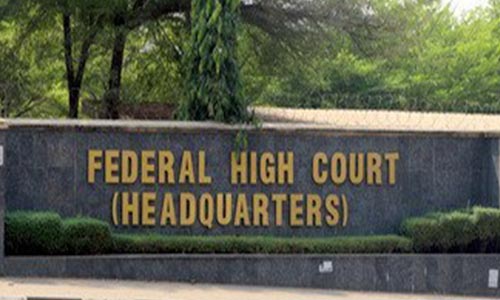
However, the Federal High Court, Abuja, is now looking into the debacle of the last NLS election of public officers that held in July 2025.

Ironically, Chief JK GADZAMA SAN ran the NLS on the platform and promises of righting the wrongs that the NBA’s electoral process was fraught with, such as rigging and other allegations.

So as it stands now, institutionally, the Nigerian legal profession is IRREDEEMABLY FLAWED.

It appears that the remedy is to adopt the South African model to an independent legal profession.

In South Africa, they have six professional Associations of lawyers apart from the Bar Association and Law Society of South Africa, respectively.

They established a professional Association of independent lawyers. Their website is available online at https://www.ialpsa.co.za/

This is the kind of professional association led by lawyers such as Femi Falana SAN, who are the true embodiment of the virtues and qualities of independence of the Nigerian legal profession.

Lawyers who can speak truth to power and demand accountability from officials of any government in power, as did the late Chief Gani Fawehimi, SAN.

The views expressed by contributors are strictly personal and not of Law & Society Magazine.

NBA-AGC 2025: Protesters demand release of jailed LP candidate

Numerous voters from Enugu South Urban constituency staged a peaceful protest at the ongoing Nigerian Bar Association (NBA) conference in Enugu, demanding the release of Barr. Bright Ngene, a Labour Party (LP) candidate.

Ngene won the state constituency seat at the State Assembly in the 2023 general elections. Last Tuesday, the Independent National Electoral Commission (INEC) also declared Ngene as the winner of the rerun election held in Enugu South 1 State Constituency.

Ngene has been remanded at the Enugu Maximum Custodial Center since July 28, 2024, after an Enugu South Magistrates’ Court sentenced him to seven years’ imprisonment for alleged conspiracy and stealing.

The protesters accused the Enugu State government of orchestrating Ngene’s imprisonment and intimidating judges from hearing the case on appeal.

“As you can see, we are here with friends of Barr. Bright Ngene, who was unjustly incarcerated. We are here to register our peaceful protest to inform the world about what has been happening in Enugu State for the past year,” the leader of the protesters, Mr. Akachukwu Benedict, told journalists.

Benedict added, “The charges brought against him are baseless, and the judicial process was not followed. Judgment was delivered in less than two weeks, and the man has been in detention since then. Efforts to have the matter heard in the High Court have been unsuccessful because judges are recusing themselves from the case.”

He continued, “We are here to appeal to the Nigerian Bar Association to look into this matter and ensure that the judicial process is followed. Let me make it clear that we are not afraid of going through the judicial process.

“We have consistently asked for the case to be assigned to a judge, and we will accept whatever judgment comes our way. However, up until now, we have not seen any progress, and the case has been in limbo at the State High Court.

“Several judges have recused themselves, and I recall that on March 11, 2025, one of the judges called for the judgment from the Magistrate Court, only to recuse himself from the case on the day of the sitting. Since then, the case has not been assigned to any judge, and the man has been languishing in jail unjustly.

“This is the highest form of injustice. We cry out that the South East is being marginalized, but within the South East, we are marginalizing ourselves. This is not right, this is unfair, and it is not good for our democracy. We have written to every organ of the NBA, but there has been no response. As I speak, Barr. Ubani Monday is aware of this case and is here; Femi Falana is also aware and is here.

“Top Senior Advocates of Nigeria are aware of this case and are here. We have done all we can, and we have decided to resort to peaceful protest. We are not here to fight or quarrel; we are here to beg. Please, let this man be freed so that he can go and represent the people who voted him into the House of Assembly.”

The protesters demanded the intervention of the NBA, lamenting that various courts in the state have compromised in the case.

They carried placards with inscriptions such as “Injustice anywhere is injustice everywhere. Free Barr. Bright Ngene,” ” NBA, it’s Barr. Bright Ngene today,” “It could be another lawyer tomorrow,” “Injustice to one Lawyer is injustice to all lawyers,” “Enugu State judiciary must be independent from the executive!” “Say no to miscarriage of justice,” and “The people’s choice is not a crime, Free Bright Ngene.”

Benedict appealed to the NBA to look into the matter and ensure that the judicial process is followed.

“We are not here to fight or quarrel; we are here to beg. Please, let this man be freed so that he can go and represent the people who voted him into the House of Assembly,” he pleaded.

Three-year-old walks into hospital with knife stuck in her head

A toddler walked into a hospital in China with a fruit knife seemingly lodged deep in the side of her head.

Footage taken outside the Dongchuan People’s Hospital, in south-west China, appeared to show the little girl being walked around by her mother with a six-inch blade stuck just above her right ear.

The girl was seen tottering about as her mother is guided to the hospital by a member of staff in a white coat.

According to local media, the mother, whose surname is Hu, claimed she was changing bedsheets when she swung a sheet and sent the sharp object soaring into her daughter’s head.

But a hospital staff member reportedly said the mother admitted to picking up the knife to ‘scare’ the young girl, who at the time was having a tantrum, before accidentally stabbing her.

The knife was then lodged in her skull with its handle sticking out.

Hu reportedly tried and failed to take the knife out herself before taking her daughter to hospital instead of calling an ambulance.

Following a craniotomy carried out by a neurosurgeon to safely remove the blade, the girl’s condition is reportedly stable.

She is said to currently be under observation.

A doctor told China Business View that the girl’s miracle survival was thanks to the softness of her skull.

The doctor said: ‘If the girl’s mother had recklessly pulled the knife out, the risk would have been enormous. The correct action was to seek immediate professional medical help’.

Police reportedly ruled the near-fatal incident an accident and have confirmed there was no criminal intent.

The footage took Chinese social media by storm, with millions being left in disbelief at the shock footage and many criticising the mother for what happened.

Daily Mail

Nigeria signs direct flight, other agreements with Brazil

President Bola Ahmed Tinubu on Monday signed a landmark Bilateral Air Service Agreement with Brazil, signalling the establishment of direct air links between Nigeria and South America’s largest economy.

The agreement was formalised during Tinubu’s official state visit to Brasília according to a statement by Tunde Moshood, the Media aide to the Aviation and Aerospace Development, Minister Festus Keyamo.

Brazil on Monday accorded full military honours to Nigeria’s President Bola Tinubu during an official reception at the Planalto Palace in Brasília.

The ceremony, held at the presidential seat of power, was hosted by Brazil’s President Luiz Inácio Lula da Silva, who formally received Tinubu.

Tinubu’s Special Adviser on Information and Strategy, Bayo Onanuga, confirmed the development in a statement shared on X, noting that the Nigerian leader was greeted with the traditional military parade reserved for visiting heads of state.

“Brazil’s President Luiz Inácio Lula da Silva welcomed President Bola Tinubu with full military honours at the Planalto Palace in Brasília on Monday, August 25, 2025,” Onanuga wrote.

At the signing ceremony which was witnessed by the Nigerian President, Tinubu and the Brazilian President Luiz Inácio Lula da Silva in Brasilia also had the Nigeria’s Minister of Aviation and Aerospace Development, Festus Keyamo, signed the agreement on behalf of Nigeria, while Brazil’s Minister of Transport, Silvio Costa Filho, also signed for the host country.

The BASA creates a new framework for direct flights between Nigeria and Brazil, with the potential to significantly enhance trade, tourism, investment, and diplomatic relations.

The statement further noted that, “ It also marks a key step in Nigeria’s broader efforts to strengthen international partnerships and improve global connectivity.”

Tinubu had arrived in Brazil with a delegation that included Minister of Finance and Coordinating Minister of the Economy, Wale Edun; Minister of State for Foreign Affairs, Bianca Ojukwu; Minister of Agriculture and Food Security, Abubakar Kyari; and other senior government officials.

According to the statement, the Brazilian President welcomed the agreement, expressing his administration’s commitment to expanding cooperation with Nigeria in sectors such as aviation, agriculture, and infrastructure.

ALSO READ: DNA: Tinubu’s priority for chaotic children’s healthcare, By Ikeddy Isiguzo

He described the BASA as a reflection of the strong ties between both countries and an opportunity to deepen economic and cultural collaboration.

Tinubu is also scheduled to hold meetings with key Brazilian government officials, including the President of the Senate, the President of the Chamber of Deputies, and the President of the Supreme Federal Court.

The two-day visit will include high-level discussions between Nigerian and Brazilian delegations across various sectors, as both nations explore opportunities for mutual growth and development.

The statement reads, “The ongoing state visit will also see President Tinubu meeting the President of the Brazilian Senate at the National Congress, the President of the Chamber of Deputies, and the President of the Supreme Federal Court.

“The working visit, which continues tomorrow, will also feature high-level engagements between Nigerian and Brazilian delegations across various sectors, underscoring both nations’ commitment to building a future of mutual growth and prosperity.”

A voyage to Caligula’s Rome

By Suyi Ayodele

Rome’s history offers timeless lessons for all nations to jealously guard their freedom. Consider one of its emperors, Caligula. Born Gaius Caesar Augustus Germanicus, he reigned from AD 37 to AD 41. Known as Little Boots, Caligula’s four-year reign epitomised tyranny.

Albert Camus captured his ruthlessness in his 1938 play “Caligula,” while Stephen Dando-Collins’ 2019 book, “Caligula: The Mad Emperor of Rome,” and Kate Zusmann’s article, “Roman Emperor Caligula: The Mad Tyrant of Rome,” give vivid portraits of his excesses.

Zusmann wrote: “Caligula’s reign lasted only four years, but his cruel and unpredictable behavior earned him a reputation as one of the most notorious emperors in Roman history… He engaged in construction projects to emphasize his power and divine status. He humiliated senators by forcing them into menial tasks or public spectacles.”

Though he initially presented himself as a noble leader, he soon became Rome’s worst emperor. He wielded taxation and reckless spending as weapons of control.

One account records: “Caligula squandered 2.7 billion sesterces in his first year and addressed the deficit by confiscating estates, levying fines, and even imposing the death penalty to seize wealth. He crippled the Roman Senate in the process.” Freed from opposition, he built an extravagant bridge at Baiae and introduced crippling taxes on everything—taverns, artisans, slaves, food, litigation, weddings, even prostitutes and their pimps. Taxes doubled in just four years, leaving ordinary Romans broken and resentful.

Is this not eerily familiar? In some places in Nigeria today, task force agents harass even mourners transporting corpses. They must pay the state.

Caligula’s Rome is a warning. When opposition disappears, tyranny grows unchecked, and taxation becomes limitless. Nigeria is already on that path.

Read this report: “It was gathered that governors on the shopping list of the APC include the Enugu State governor, Peter Ndubuisi Mbah, Bayelsa State governor, Douye Diri, Plateau State governor, Caleb Muftwang and the Zamfara State governor, Alhaji Dauda Lawal.”

That was how the Nigerian Tribune concluded its lead story on page five of its Monday, August 25, 2025, edition, titled: “Tension grips PDP leaders as APC targets more govs.” Two riders followed: “South-East, South-South, North-Central govs on shopping list” and “Tinubu to receive another PDP gov on arrival.”

An average student of Nigeria’s political history should be deeply troubled by this report. The concern is not just the well-known fact that Nigeria’s political elite rarely show fidelity to principles, loyalty, or decency, but rather the imminent danger this trend poses to the survival of democracy and to the ordinary masses.

We must ask ourselves: what awaits the common man if Nigeria slides into a one-party state? Can the current wielder of power—the architect of this emerging no-opposition order—truly manage such a system? If today, under the pretense of multiparty democracy, impunity has already reached its peak, what happens when there is no one left to challenge those in power?

History warns us that we are about to repeat our mistakes. Nigeria has a peculiar habit of forgetting her sordid past. Some call it resilience; I disagree. What we parade as resilience is actually a battered psyche. Nigerians have been beaten into submission by those who weaponized poverty. With crumbs thrown here and there, leaders get away with political robbery. We have been conquered.

The sages warned us that thunder must not be allowed to strike twice in the same place. Their reasoning was simple: if bad history repeats itself, its second coming will be catastrophic—so tragic that no one will have the words to describe it.

That Nigeria is gradually sliding into a one-party state should raise the alarm. Euphemism has no place here. A one-party Nigeria under President Bola Ahmed Tinubu is an invitation to disaster. The consequences will not stop with the opposition; even those within the president’s inner circle will eventually taste the venom. Tyrants spare no one—not even their favourites. We are headed down that perilous road.

Make no mistake: a one-party state will kill this democracy. It has happened before—not once, but twice. Some of us lived through it, others read about it. Nigeria lost two republics because those in power chose tyranny and crushed opposition.

The First Republic collapsed when the ruling Northern Peoples Congress (NPC) attempted to monopolise political power. It formed alliances, coerced defections, and silenced dissent. Opposition leaders were detained on trumped-up charges. Resistance sparked the violent Operation Wetie in Western Nigeria in 1962. By January 15, 1966, the First Republic was dead.

What followed were the January and July 1966 coups, and then a 30-month civil war that consumed over two million lives. Yet, we learnt nothing. When the chance came again in 1979, we squandered it.

By mid-1982, the ruling National Party of Nigeria (NPN) had perfected its plan to decimate opposition. It swallowed the PRP in Kano and Kaduna, captured the NPP in old Anambra, and went after the Unity Party of Nigeria (UPN). Oyo and Bendel fell to its onslaught, while only Ondo resisted—and that resistance produced bloodshed. By December 1983, the Second Republic collapsed, swept away by the military coup of Major-General Muhammadu Buhari. For the next 16 years, Nigeria was under the jackboot.

Whichever way we spin it, the truth is clear: the destruction of opposition in both the First and Second Republics laid the foundation for their collapse.

Those who defend the current defections as freedom of association miss the point. We are not disputing that right. What we warn against is the danger of acquiescing while political and economic power concentrate in the hands of one man. As Aesop warned: “Those who voluntarily put power into the hands of a tyrant must not wonder if it be at last turned against themselves.”

Those who think they can collaborate with the ruling party, pledging loyalty in opposition but serving power in secret, should think again. When tyranny consumes a nation, no one is spared.

ALSO READ: Otu Oka-Iwu Abuja decries divided development, demands justice for Ndi Igbo amid systemic exclusion of Southeast from Nigeria’s future

As the proverb goes, when heaven falls, it falls on everyone; the rain has no enemy.

Caligula reigned until his own guards turned on him. Tyranny and rebellion are monozygotic twins. Let today’s plotters of a one-party Nigeria take note.

Steven Levitsky and Daniel Ziblatt, in “How Democracies Die” (2018), explain it best: democracies rarely collapse through external invasion. They are destroyed from within, through the slow erosion of norms and the ambitions of authoritarian leaders. Nigeria is walking that path again.

Chude Jideonwo and Adebola Williams, in “How to Win Elections in Africa (2017),” observe that political parties in Nigeria are not built on coherent ideology but on opportunism. The APC, they argue, never stood on any deep philosophy; it merely capitalised on the weaknesses of the PDP. That explains why even serving PDP governors are defecting in droves to join it. But what exactly is the attraction? To answer that, let us revisit one of our old moonlight tales.

Long ago, when animals behaved like humans, Ikún, the deaf squirrel, desired to live as long as mortals. It went to a diviner to seek the Oracle’s blessing.

The divination was swift and stern: for Ikún to live long, it must avoid anything sweet that came from the enemy.

Ikún protested. Why should it shun sweet things when everyone knew it delighted in them?

The Oracle replied with finality: what is sweet kills faster than anything else.

Ikún left, troubled. It wondered who its enemy could be. The only one that came to mind was the groundnut farmer, whose produce it relished. Resolving to obey the warning, Ikún avoided the groundnut farm.

The farmer soon noticed that Ikún no longer raided his crops. Suspicious, he tried several tricks. He attempted to smoke Ikún out of its burrow, but failed—for as elders say, orò burúkú kii ká ikún mólé (misfortune never meets the squirrel at home). He tried hunting it at night, but that too failed—for ikún kii jé l’óru (the squirrel never ventures out at night).

At last, the farmer set a trap, using ripe banana as bait. The fruit was carefully placed over the blade, waiting to spring at the slightest tug.

Not long after, Ikún wandered by and spotted the banana. Overjoyed, it rushed forward. Banana was a delicacy, and its sweetness irresistible. Ikún took a bite, wagged its tail, and forgot all about the Oracle’s warning. It bit again, wagged its tail, and then tried to carry the whole banana away.

In a flash, the trap snapped. Ikún was caught between the jaws of death. Too late, it realised the truth: the sweet gift from the enemy was a lure to destruction. With its dying breath, it remembered the Oracle’s words.

Our elders, who preserved this tale, summed it up in the saying: ikún nje gèdè, ikún nre di; ikún ò mò pé ohun tó dùn mà únpa èniyàn (the squirrel wags its tail while eating banana, not knowing that what is sweet is what kills a man).

And that, precisely, is what the defecting governors are doing today. The banana from the ruling APC is sweet, but beneath its sweetness lies a deadly trap.

The views expressed by contributors are strictly personal and not of Law & Society Magazine.

Arrest the looming menace Now!

By M.O. Idam, Esq.

It is becoming a dangerous era to raise a child in Nigeria. Young people are radicalised daily with unethical teachings flying up and down online—in the name of content.

The impact of these teachings must be waiting for all of us somewhere along the streets of the future.

If there exists no mechanism to police teachings that tend to radicalize the mind and possibly shift human behaviour from ethical norms to unapproved societal standards, then we all must be ready to welcome a generation with a distorted orientation.

One is already freely indoctrinating a sea of Nigerian Youths, another is on her way to start her own. Undoubtedly, several others will follow in no time. By the time they are done, the already morally fragile Nigerian young people would likely be turned to either beasts or wild beings against each other.

The National Universities Commission (NUC) and the Ministry of Education must call these content creators to order now before we wake up to a society where human relationships have turned brutish, short and nasty like the Hobbesian order of nature.

It is not a joke any more!

M.O. Idam

The views expressed by contributors are strictly personal and not of Law & Society Magazine.

Who Takes the Blame: ASUU or the FGN?

By Jeff Godwin Doki,  Ph.D                                                        

If you must blame the hawk for wickedness, first blame mother-hen for exposing her children to danger. (African Proverb).

It is becoming increasingly clear that, in very recent times, the Nigerian media has become awash with Press statements, comments, and interviews from the Academic Staff Union of Universities (ASUU). The careful observer would have noticed also that ASUU’s recent body language points clearly to only one thing, which is that: the clouds are gathering for yet another heavy ‘downpour’ (show down) between ASUU and the FGN and it would, perhaps, be the first ‘downpour’ since President Bola Ahmed Tinubu took over power in 2023. Central to ASUU’s demands are four key items namely: (1) Renegotiation of the 2009 ASUU-FGN agreement (2) Sustainable funding of Nigerian Universities (3) Revitalization of Nigerian Universities (4) Victimization of Colleagues in LASU, KSU (now Prince Audu University) and FUTO .

For the careful observer who has followed the ASUU-FGN conflict over the past few years, these demands would seem dejavu because most of them have been there for a fairly long period of time and they have been debated, they have been combated, they have been re-emphasized, they have been re-asserted by ASUU as a union. Lamentably, they have simply been ignored and discarded by both past and present Governments in Nigeria. So, what are the demands of ASUU and what are the issues in contention?

The first is the Federal Government’s violation of the Collective Bargaining Principle. For the benefit of the doubt, Collective bargaining is a principle in labor law where there is a written contract between an employer and a trade union in which both sides negotiate to reach a consensus on issues like wages, working hours, benefits and other workplace matters. In other words, Collective bargaining is a process of reaching an agreement where both parties discuss their needs and interests in order to find a common ground. Central to the Collective Bargaining principle is the expectation that once agreed upon, the collective agreement should be implemented by the employer and strictly monitored for compliance.

For the Academic Staff Union of Universities (ASUU), the first agreement between ASUU and the Federal Government of Nigeria was signed in 1981 under the civilian regime of Alhaji Shehu Shagari. But two years after the agreement, the military took over power from Shagari in 1983. And during the many years of military rule——-especially the regime of General Ibrahim Babangida—— the soldiers embarked on a systematic harassment and intimidation of academic staff and even the arrest and detention of some of its union leaders and outright proscription of the union. But to its credit, it was the same military junta of Gen. Babangida that signed the second agreement with ASUU in 1992. The 1992, Agreement is significant in at least two ways among others.

First, it introduced the Education Tax Fund (ETF) which later metamorphosed to the Tertiary Education Trust Fund (TetFund) in 2011. Second, it has brought about rapid infrastructural development to the tertiary education sector and its presence in all tertiary institutions in Nigeria is something that cannot be missed even by the most indifferent spectator. To all these must be added the fact that TetFund is one of the most glaring and clearest examples of ASUU struggles. But, as is in the nature of authoritarian regimes, the 1992 agreement, beneficial as it was, was summarily truncated by the military junta.

 It is twenty-six years today since the military have retired to the barracks and civilians, who are supposed to be more tolerant and democratic, have been in power. It is the height of irony that all the civilian regimes in Nigeria since 1999 have refused to obey the collective bargaining principle as enshrined in the International Labor Organization (ILO) Convention No. 98 of 1949 and Convention No. 154 of 1981. Consequently, ASUU as a union has lost faith, trust and confidence in the present democratic dispensation.

Fast forward to 2009. In that year also the FGN signed another agreement with ASUU. The Government team was headed by Chief Gamaliel Onosode while ASUU was represented by Dr. Abdullahi Sule who was later replaced by Prof.Ukachukwu Awuzie. Over the years, ASUU has made series of efforts to get the government to renegotiate this very agreement. The efforts of ASUU bore fruits in March, 2017 but sadly the Federal Government has two times turned down the two draft agreements especially the ones headed by Emeritus Prof. Nimi Briggs and the most recent one submitted by the Alhaji Yayale Ahmed committee in February, 2025.

By all standards, the 2009 agreement seems to be more forward-looking because it has great promise and is aimed at addressing thorny issues like funding, salaries and welfare. Government’s refusal to implement or renegotiate the 2009 agreement, therefore, is an abundant testimony of the fact that the Nigerian Government does not care about university education and this is the major reason for the prolonged crisis in the university system. Undoubtedly, the implementation of the 2009 agreement would have provided a solution to the numerous problems bedeviling university education in Nigeria today.

The other key demand of ASUU as a union is funding and revitalization of Nigerian universities. But here again, it could be perceived that these two issues—–funding and revitalization——are also tied to the re-negotiation or implementation of the 2009 agreement. And this is true because Nigerian universities if properly funded would motivate university teachers to conduct research in libraries and well- equipped laboratories. If properly funded, both the university teacher and the student could have access to electronic and physical journals, books, chemicals and reagents.  Former ASUU President and INEC Chairman, Prof. Attahiru Jega has captured this unfortunate reality in the following words:

               Inadequate funding limits resources and impacts quality of education

               delivery. Poor infrastructure and overcrowding hinder effective learning

               environments. Training qualified manpower and addressing teacher shortages

               positively affects imparting quality education. Development of technology in

               teaching and research is necessary and requires appropriate investment in

               software and hardware and in training and retraining of necessary staff.

Lest we forget, education remains a basic human right as outlined in article 26 of the Universal Declaration of Human rights, article 28 of the Convention on the rights of the child and article 11 of the African charter of the rights and welfare of the child. All these Conventions emphasize the need for the state to provide free and compulsory basic education. But instead of doing this, the Nigerian leadership is more interested in establishing new universities in the country. We find ourselves in a situation where universities are established not for pragmatic reasons but just to score some cheap pollical points. As a matter of fact, the idea of the university as the ‘ivory tower’ has been completely eroded in Nigeria and we fear that one day every Nigerian Senator shall have a university located at his very backyard. Just look at this: there are 72 Federal universities in Nigeria, 108 State universities and 159 private universities.

Add this up and you get a total of 339 universities in just one country (not a region) that allocates a paltry 7% of its total budget to the education sector. In contrast, a country like the United Kingdom has a number of about 130 universities only because it is a country deeply concerned with quality and global recognition. Other examples are the Republic of South Africa which has only 26 universities, East Africa, with 19 countries, has 340 universities and the entire North Africa, with seven or more states, has 360 universities. And this explains why foreign universities are considered among the best in global university rankings. Is it surprising that many Nigerian students flock to foreign universities to acquire higher education? It is in this regard that the National Universities Commission (NUC), has played a quisling role.

It seems clear that the Commission lacks the capacity to effectively perform its role as a regulatory body saddled with the responsibility of enhancing quality in the university system. Rather, the Commission encourages the establishment of private universities charging extortionate fees which are not commiserate to the services offered and which are essentially profit-driven. ASUU’s demand for a review of the laws governing the NUC and JAMB, therefore, is truly justified. In Nigeria, private universities consider their students as customers because of their capacity to pay high charges and fees. At the end of the degree program, students in private universities are compensated with ‘first class’ degrees. It is on record that a private university in Nigeria churned out 150 first class graduands at one convocation ceremony.

Philosophers say that there is nothing so bad that does not carry with it a few good things. As a parenthetical remark, therefore, the recent seven years moratorium on the establishment of universities in Nigeria by the FGN is commendable. Same commendation may go to, Mr. Francis Nwifiru, the Ebonyi state Governor who has recently resolved the lingering crisis in the Ebonyi State University (EBSU) by addressing issues of funding, student’s welfare and the re-opening of the ASUU secretariat in that university. 

Moving away from issues of funding and revitalization is the Nigerian government’s usurpation of the duties of university Senates and Governing Councils. And this brings us to the issue of university autonomy and freedom, another key demand of ASUU. To put it modestly, university autonomy simply means the freedom of a university to manage and govern its own affairs independently and without external interference particularly from the government or its agents. In other words, university autonomy is the freedom for the university to determine or shape its curricula, select or appoint staff (including Vice chancellor), admit students, manage finances and determine research priorities.

Unfortunately, the Nigerian leadership has denied universities this autonomy by constantly meddling into the affairs of both federal and state universities. The most recent example is the Government’s attempt to impose someone whose promotion to the rank of Professor is dubious at the Alvan Ikoku University of Education Owerri. The second recent example is the Government’s deliberate interference in the process of electing a substantive Vice chancellor at the University of Abuja (now Yakubu Gowon University). To all these must be added the victimization of several academic staff in Lagos State Univeristy (LASU), Kogi State University (now Prince Abubakar Audu University) and Federal University of Technology Owerri (FUTO). And this is just a partial list of the universities and the numerous issues at the heart of ASUU’s demands.

For now, it is clear that the FGN has a strong habit of treating ASUU demands with levity and disdain. And it is this kind of attitude that has all the potential of creating endless crises in Nigerian universities. This same attitude leaves one with a millipede of questions: why is the university the target of government animosity? Why has the Nigerian government refused to give the education sector the attention and priority it deserves? Why is the political class in Nigeria insincere in dealing with issues concerning education? The number of questions begging for answers are as long as a railway line. The conclusion is that the Nigerian government has deliberately refused to fund the education sector and this accounts for the monumental rot in the system as well as the unending conflict between ASUU and the FGN.

To put it bluntly, quite often, and in very recent times, the Federal Government has consistently pushed ASUU to embark on avoidable strike actions in Nigeria just to turn back and seize the salaries of ASUU members and create the impression that the union is intransigent and insensitive. I think that the time has come for Parents, teachers, students and other stakeholders in the education sector to hold the FGN responsible for this kind of mischief and hypocrisy which finds memorable expression in the proverbial wisdom of our folks: If you must blame the hawk for wickedness, first blame mother-hen for exposing her children to danger. In other words, should ASUU embark on another strike action in the coming days, the Federal Government should take the blame. 

Jeff Godwin Doki is a writer, public analyst, conflict manager and a Professor of Comparative Literature with the University of Jos, Nigeria.

The views expressed by contributors are strictly personal and not of Law & Society Magazine.

Abavo Community weeps over kidnapping, laments 10 years neglect of Agbor – Amukpe Road project

  • Begs FG to intervene in 10-year abandoned road project saga

The Abavo Community in Ika South Local Government Area of Delta State on Friday raised concern over the abandoned Agbor-Amukpe road dualisation project, saying it has led to an increase in criminal activity and economic paralysis in the region.

The community said that the terrible condition of the 10-year-old project has created a “kidnapper’s perfect hunting ground,” making commuters “sitting ducks for ambush.”

At a press conference held at the Market Square, the President-General of Abavo Clan Union, Justine Onyeibe, said that the contract for the vital economic corridor was awarded in two sections in 2014, with Messrs CCECC handling the Agbor-Amukpe section where the community is situated.

According to him, while contractors were mobilised between 2015 and 2016, the project has since been abandoned.

“The terrible, potholed, single-lane stretches, often reduced to a muddy track during rains, is not just an inconvenience; it is the single greatest enabler of criminal activity in our region,” Onyeibe declared before traditional rulers, community leaders, and the media.

Onyeibe described the human and economic cost of the neglect, painting a picture of “perishable dreams” where agricultural produce like yam, cassava, plantain, and tomatoes “rot in heaps by the roadside” because farmers cannot get them to distant markets.

“The dualisation of this road is nothing short of a revolution for Abavo,” he asserted, outlining its profound potential impact on Agriculture, Commerce, and Industry.

He argued that a completed road would slash transport costs, attract large-scale agro-investors and processing plants, create jobs for the youth, and transform Abavo from a bypassed town into a commercial hub, even as it would also provide quicker access to healthcare and education.

Describing the project as “a covenant with the people,” Onyeibe called on the government to see it through to timely completion.

He said, “Our message to the Federal Government is simple and clear: Eliminate the scourge of kidnapping on this highway by completing its dualisation. The state of this road is not just an inconvenience; it is the single greatest enabler of criminal activity in our region. The terrible, potholed, single-lane stretches, often reduced to a muddy track during rains, is a kidnapper’s perfect hunting ground. It forces traffic to slow to a crawl, making vehicles sitting ducks for ambush. It creates isolated, deserted stretches where criminals can operate for hours without fear of interruption or security patrols. This abandoned project has inadvertently designed a security nightmare. Every crater-filled stretch is a potential trap. Every overgrown bush, allowed to thrive because construction halted, provides cover for men with guns and evil intentions.”

Onyeibe charged the media to act as watchdogs and amplifiers of the community’s struggle, ensuring the road’s story becomes one of “prosperity, growth, and development.”

The text of the press conference was obtained by Arise News in Abuja.

Onyeibe said, “Our lands are fertile, blessed by nature to produce some of the most bountiful harvests in the region. Our people are hardworking, innovative, and resilient.

“For decades, Abavo, on the Uromi-Amukpe Road, has been an economic hub in the heart of Delta State. Yet, for all our blessings, we have been held back by one critical, crippling constraint: inadequate road infrastructure. When the contracts for the dualisation of the Uromi-Amukpe Road were awarded in two sections, it was perceived to be a revolution that would most profoundly impact on the economic development of the Abavo people.

“The Agbor-Amukpe section that Abavo situates, was awarded to Messrs CCECC while the Uromi-Agbor section was awarded to Messrs Setraco. Awarded in 2014, the contractors were mobilised between 2015 and 2016 to commence work.

“But 10 years after, this road has been a barrier, rather than a bridge to economic transformation. The dualisation of this road is nothing short of a revolution for Abavo, and its impact will be felt most profoundly in critical areas of Agriculture, Commerce and Industry.

“The story of perishable dreams: yams, cassava, plantain, leafy vegetables, tomatoes, peppers, and many other agricultural produce that rot in heaps by the roadside; unable to reach distant markets before they spoil, will disappear. This new, modern highway will be the artery that pumps life into our agricultural sector. This means more food on tables across regions and more money in the pockets of our farmers.

“The cost of transporting our famous yams, cassava, plantains, and palm produce is so high that it eats into the meager profits of our hardworking farmers; this is stunted commerce. Large-scale agro-investors look at our land with desire, but look at our road with dread, and ultimately take their investments elsewhere.

“With a smoother, faster, and more reliable connection to major markets in Warri, Benin, Asaba, Calabar, Lagos, Kano, Benin Republic, Cameroon Republic and beyond, our perishable goods will travel in hours, not days. A dual carriageway signals stability and accessibility. It will attract agri-businesses, processing plants for our cassava into garri, flour and starch, yam into flour, packaging facilities for our vegetables, and factories for our palm produce.

“With Value addition and entrepreneurship, our youth will no longer see agriculture as a sign of poverty, but as a field of opportunity. They will venture into food processing, logistics, export, and digital marketing of Abavo’s produce to a wider world. This road is a powerful tool for youth engagement and poverty alleviation.This will create jobs here, in Abavo, moving us from being mere producers of raw materials to creators of finished goods. Easier access will mean cheaper and quicker availability of farm inputs like fertilizers, seedlings, and equipment. This will empower our farmers to increase their yield and improve their practices, knowing that getting their produce to market is no longer a gamble.

“The benefits extend far beyond the farms. This road will catalyze a complete economic awakening for Abavo Town. Imagine tourists and visitors from neighbouring states easily driving in to experience our famous Festivals including the New Yam Festival, Igue and Ikaba Festivals and to buy directly from our farms. Imagine new markets springing up, new hotels welcoming visitors, and new shops servicing the increased flow of people and goods. Abavo will become a commercial hub, not a bypassed town.

“Beyond economics, this road means quicker access to healthcare facilities in the cities for emergencies. It means our children can travel to universities and return home more safely. It connects us not just to markets, but to opportunities, to knowledge, and to a better standard of living. To our partners in government, this road is more than a government project; it is a covenant with the people of Abavo. It is a promise of a future where our wealth is not trapped in our soil, but is harvested, transported, and multiplied. We say thank you for envisioning this project. We urge you to see it through to timely completion. To the contractors, we say, build with quality and with the future in mind.

“To the Media, we charge you to continue to be the watchdog and the amplifiers of this progress. Let us work together to ensure that the story of the Amukpe-Abraka-Abavo-Agbor-Uromi road becomes a new reality; a story of prosperity, of growth and development, and of a thriving Abavo, finally connected to its destiny.”

NBA-AGC: AFBA commends NBA leadership, members for unwavering commitment to defense of justice, nation-building

Goodwill Message

The African Bar Association (AFBA) is delighted to extend its warmest goodwill message to the. Nigerian  Bar Association (NBA) on the occasion of its 2025 Annual General Conference, holding from 22nd to 28th August 2025 in the coal city of Enugu, Enugu state, with the theme “Stand Out, Stand Tall.”

This week-long Conference provides yet another opportunity for the Nigerian Bar, one of Africa’s most vibrant legal communities, to showcase excellence, engage in robust intellectual discourse and reaffirm its role as the champion of Justice, democracy, human rights, and the rule of law.

The chosen theme is both timely and. visionary in an era when the legal profession across Africa is confronted with complex challenges-ranging from governance and constitutional crisis to transactional crimes, human rights abuses and threats to judicial independence call to “Stand Out, Stand Tall” is a clarion reminder of the duty of lawyers to lead with courage, integrity and professionalism,.

The AFBA commends the leadership and members of the NBA for their unwavering commitment to the defense of justice, their contribution to nation-building, and their continued role in strengthening the voice of’ the African legal profession,01n  the global stage.                                                                              –

As you gather for this great, annual event, we wish you fruitful deliberations, renewed solidarity, and impactful resolution that will continue to position the Nigerian Bar as a beacon of excellence and a standard-bearer for the African Legal Community.

On behalf of the African Bar Association, we congratulate you once again and assure you of our steadfast partnership in the service of justice and humanity.

Long live the Nigerian Bar Association!

Long live the African Bar Association!

Long live the Legal Profession in Africa!

Yours in Brotherhood,

High Chief Ibrahim Eddy Mark.

President

Just In: Seven Killed, Eight injured in Southern Kaduna terror attack despite peace deal with bandits

  • Bandits sack Kwara communities, over 3,000 residents flee

Another fatal terrorist attack has claimed seven lives in Southern Kaduna, despite a peace pact between the Kaduna State government and bandit leaders operating in the state and other parts of northern Nigeria.

SaharaReporters can exclusively report that heavily armed attackers struck late Sunday night into the early hours of Monday, killing seven people, mostly minors.

Sources told SaharaReporters that several adults managed to escape.

Mr. Iliya Tata, a community leader and Public Relations Officer 1 of the Irigwe Development Association, confirmed the incident and shared graphic images with SaharaReporters’ New York office.

“There was an attack on Sunday night, August 24, by Fulani marauders at a community known as Angwan Rimi in Kamaru Ward of Kauru LGA (local government area) of Kaduna State,” he stated.

“Seven persons have been killed, while eight others sustained gunshot injuries and machete cuts.”

‎The leadership of the Irigwe Development Association, Kamaru branch, condemned the heinous attack and urged all communities to protect themselves.

They also called on security agencies to take urgent action and ensure the safety of the affected areas.

“Reports indicate the following persons were murdered in cold blood, and those who were injured. Jacob Zaka, 12; Magret Mathias, 5; Delight Paul, 1; Sati Markus, 9; Confidence Yakubu, 15; Veronica Paul, 25; Matthew Sunday, 14; and Felicia Francis 15,” the organisation said.

“We use this medium to call on the Federal Government, Kaduna State governments and Kauru Local government to intervene by making sure lives of the people and our communities are well protected.

‎“Once again, we appeal to all members of the public to remain calm during this mourning period, trusting that the security will do the needful to restore the confidence of the people. May God Almighty condole us on this unfortunate incident.”

He provided the names of eight locals who were critically injured and are fighting for their lives: Mathew Sunday, 14; Jethro Istifanus, 7; Jackson Istifanus, 5; Emmanuel Morris, 14; Agatha Sylvester, 9; Joy Markus, 9; Devine Paul, 1; and Mary Ishaya, 12.

Meanwhile, the Kaduna State government, in collaboration with federal agencies, launched what it called the “Kaduna Model”—a holistic peace initiative aimed at addressing both the symptoms and root causes of insecurity.

The pact involved direct engagement with notorious bandit leaders operating in areas like Birnin Gwari and Giwa. These were not petty criminals; they were warlords like Yellow Jambros and Dogo Gide, men accused of mass killings, kidnappings, and extortion across Kaduna and neighboring states.

Yet, under the new peace deal, many of them laid down their arms. Around 200 fighters reportedly surrendered, some even enrolling in government-run rehabilitation programs.

The initiative included promises of disarmament, reintegration, and rural development. Roads once feared, like the Kaduna-Birnin Gwari highway, reopened, and villagers began returning to their homes. The government touted these as signs of progress, a fragile hope in a region long defined by despair.

Still, the pact was not without controversy. Critics, including Christian leaders and other stakeholders, voiced concern over the lack of transparency and the exclusion of victims from the peace process.

The Northwest Governors Forum had previously agreed to reject negotiations with criminals, making Kaduna’s unilateral move a bold departure.

Governor Uba Sani defended the approach as a “carrot-and-stick” strategy, insisting that peace must be pursued from a position of strength. 

In the meantime, not less than 3,000 residents of 15 communities in Babanla town in Ifelodun Local Government Area of Kwara State, at the weekend, reportedly fled the communities over the reported incessant attacks by suspected kidnappers and bandits.

In another development, Bauchi State Police Command has confirmed that one Irmiya Yohanna, 40, of Kaduna-Bogoro in Bogoro Local Government Area of the state, has been gruesomely killed.

In Kwara, already, the federal government has deployed five war fighter jets, while police have also deployed joint security personnel to the town to protect life and property.

THISDAY checks investi-gations revealed that among the affected communities deserted by the residents are Eka, Upper Eka, Lower Eka, Kudagbari, Gbanmu, Oloruntele, Baba Sango, Ibudo Idowu, Ibudo Olosun, Ayetoro, and Apata Olosun.

It was gathered that the suspected kidnappers and bandits have been attacking these communities forthe  the last two months.

Sources close to the Babanla town told journalists over the weekend that the incident has forced many of the affected residents to relocate to safer areas, which hitherto has affected the socio-economic growth of the areas.

Sources said that the latest incident was last Friday, when over 200 bandits invaded the main town of Babanla and killed about five persons, including a police man, and also carted away property.

Speaking with journalists at the weekend on the incident, the traditional ruler of Babanla town, His Royal Highness, Oba Alliu Alabi Yusuf Adegboyega, said: “The bandits and kidnappers have been terrorising us here in Babanla communities for the past two months now.

“And the situation was so serious that several residents of 15 communities that surrounded Babanla town have deserted the communities for fear of being attacked by the bandits.”

He said that,he last attack happened ast Friday ,where over 200 bandits on motorbikes invaded the main town of Babanla and attacked the police station and shops of the residents of the town.

During the attack, five people were killed, including a policeman man and also burnt the police station at Babanla.”

Oba Adegboyega, who lauded the quick response from he state government and security agencies in the state for curbing the attack, said that the response of the affected stakeholders has restored normalcy to the town.

He also said that the deployment of soldiers, vigilantes, policemen, and war-fighting jets has gone a long way to restore peace to the town.

Adegboyega, however, called for the establishment of military barracks in the area to bring a permanent solution to the influx of suspected kidnappers and bandits to the town and other adjoining towns and villages.

Meanwhile, the state Police Command at the weekend has reinforced more security agents in Babanla town.

The state Police Commissioner, Mr. Adekimi Ojo, stated this in Ilorin in a statement after a joint on-site assessment with the state Director of State Security Service(DSS) of the town.

The statement, which was signed by the state Police Command Public Relations Officer(PPRO), Adetoun Ejire-Adeyemi, said: “‎On August 8, 2025, armed criminals in their hundreds, riding on motorcycles, invaded Babanla community, attacked the Divisional Police headquarters, and raided the market.

“The assailants fired sporadically, killing five people, including a police officer, Adejumo Wasiu. A swift and coordinated response by police operatives, Nigerian Army personnel, vigilantes, and local hunters repelled the attack, restored order, and initiated a full-scale manhunt for the perpetrators.

“Today, the state Commissioner of Police, Adekimi Ojo, accompanied by the Director of the Department of State Services (DSS), Kwara State Command, paid an on-the-spot assessment visit to Babanla to evaluate the security situation.

“They met with His Royal Highness, Oba Yusuf Aliyu Alabi Arojojoye II, the traditional ruler of Babanla. They held high-level discussions aimed at consolidating peace and strengthening inter-agency and community-security collaboration.

“The joint security delegation toured key locations in the community, including the market, the Divisional Police headquarters, and surrounding areas to ensure that stability has been fully restored.

The Commissioner of Police ordered sustained armed patrols, continuous intelligence gathering, and the deployment of specialised tracking teams.

“At the same time, the DSS pledged continuous intelligence support to apprehend all those involved in the attack.

“The Command reiterates its unwavering commitment, in synergy with sister security agencies, to safeguarding lives and property in all parts of Kwara State. Residents are urged to remain calm, vigilant, and cooperative with security agencies by providing credible information,” he stated.

TIPS