Home Blog Page 191

Man wins in court after exposing FRSC, then gets arrested by police; says his phone was formatted

A Nigerian man who had exposed a Federal Road Safety patrol team for using worn-out tyres has shared a new video alleging that police destroyed his personal items after a court ordered they be returned to him.

In the clip recorded outside the Scorpion Police Station, he displayed his phone and camera eyeglasses, claiming both were damaged beyond repair.

“This is my phone. This is my camera eyeglass. Look at what they turned it to,” he said. “There’s nothing on my phone, it’s been completely formatted.”

According to him, he had gone to court on April 23 over the release of his seized items, including his car. The court ruled that the items be returned.

But moments after stepping out of court, he said he was arrested by SWAT officers who claimed there was a fresh petition accusing him of cyberbullying.

“I got arrested right in front of the court gate,” he recounted. “That’s what led to prison.”

He added that his car’s memory card and camera were no longer functional when he went to retrieve them from the Road Safety office.

The man alleged that the damage to his gadgets was deliberate, saying they contained evidence of his earlier encounter with the patrol team.

“If they were interested in the truth from the start, they would have checked the videos,” he said. “It was never about justice — it was about trying to delete somebody, destroy somebody, deal with somebody.”

Watch the video below.

FIDA mourns passing of Ex-International President, Jethlyn Burrows

  • To be buried Saturday in the Bahamas

The International Federation of Women Lawyers (FIDA) has announced that its one-time global president, Jethlyn Burrows, who died on 1 October, will be buried on Saturday.

Announcing her passing and funeral arrangements, Ezinwa Okoroafor, FIDA Global President, in a statement said Ms Burrows “was greatly loved and will be sorely missed.”

The statement reads:

“With great sadness, the International Federation of Women Lawyers (FIDA) announces the passing of Jethlyn Aletha Musgrove Burrows, her International Director and former President, on Wednesday, the 1st of October, 2025.

“Jethlyn of the Bahamas Chapter served as FIDA President from 2014 to 2017. She thereafter remained on the FIDA  Executive as first, Parliamentarian, then Director, in line with FIDA’s Constitution. She was also a past President of FIDA Bahamas, in addition to other principal roles she played. Jethlyn was greatly loved and will be sorely missed.

“She will be laid to rest on Saturday, the 18th of October, after a funeral service at the Cathedral of Christ the King, in Freeport, Bahamas. We ask that you remember her family and friends in your prayers.”

In her tribute, Victoria O. Awomolo, SAN, who was FIDA Africa Regional Vice-President from 2017-2020, noted that Jethlyn Burrows’ “leadership and grassroots influence throughout the seven hundred islands in the Bahamas was legendary.”

“This is to further express my deep condolences on the home call of our dear sister and former International President of FIDA International, Jethyln Burrows.

“Her death came as a shock to me and all of us. She was a courageous, committed and dedicated Fidan, who repositioned FIDA on the world map, particularly the Grand Bahamas Branch.

“Her leadership and grassroot influence throughout the seven islands in the Bahamas was legendary. Within a short time after the presidency of our Organization was thrust upon her, she took up the challenge and galvanized the whole world to recognize FIDA more.

“She helped to midwife FIDA’s new constitutional amendment, relevant to the needs of our Organization. Her indelible marks and strong voice cannot be forgotten. May her soul rest in perfect peace and may God comfort us, her son and the entire family.
Adieu,” Victoria O. Awomolo, SAN

Meanwhile, Charisse Brown, the First female President of The Grand Bahama Development Company Limited and immediate past treasurer of FIDA International, announced that “there has been such an outpouring of condolences and expressions of love on the passing of our dear FIDA Sister Jethlyn, that her sons Alex and Andrew would like to capture and save your tributes in memoriam. Below are instructions as to how you can send tributes/expressions of condolences, if you so wish.”

The instructions read:

We invite family, friends, and loved ones to share their memories, reflections, and tributes in honor of Mrs. Jethlyn Aletha Musgrove-Burrows. Your words will help celebrate her life, faith, and love. Please click the link below to submit a written message, photo, or short video tribute.

https://forms.gle/jQoUzt75JA4Rm3xt6

Thank you for helping us honor her beautiful legacy.

Wilfred & James / Alex & Andrew

Father of late Bilyaminu Bello forgives Maryam Sanda, backs Tinubu’s pardon

L-R: The father of late Bilyaminu Bello, Alhaji Ahmed Bello Isa, and the father of pardoned Maryam Sanda, Alhaji Garba Sanda addressing journalists on Tuesday in Abuja. Credit: Damilola Aina

The Father of late Bilyaminu Bello, Alhaji Ahmed Bello Isa, on Tuesday publicly accepted the clemency granted to his daughter-in-law, Maryam Sanda, by President Bola Tinubu, saying he has long forgiven her for the death of his son.

Speaking at a press conference on Tuesday in Abuja, the elderly Bello said he welcomed the presidential pardon as “the will of God,” describing the release of Sanda as an act of mercy that would allow her to care for her two children.

“I am happy that the father of the nation has released Maryam so that she can look after her children.

“We as Muslims accept whatever comes from Almighty Allah. I have forgiven her and bear no grudges against the Federal Government or her family. Vengeance cannot bring back my son, but forgiveness can bring peace,” he said.

Maryam Sanda, the daughter of a former Aso Savings Executive, was convicted and sentenced to death by hanging in January 2020 for the murder of her husband, Bilyaminu Bello, a nephew of former Peoples Democratic Party’s National Chairman, Alhaji Bello Haliru Mohammed.

The killing, which occurred in November 2017 during a domestic dispute in Abuja, sparked nationwide outrage and drew attention to issues of domestic violence and justice.

Bello disclosed that his appeal for mercy dated back to 2019, even before the court handed down the death sentence.

He said he had written multiple letters to authorities, including the then Attorney General of the Federation, Abubakar Malami, and the Commissioner of Police in the Federal Capital Territory, seeking leniency for his daughter-in-law.

Earlier on Monday, a statement signed by Dr. Bello Mohammed on behalf of some relatives criticised the pardon, describing it as “the worst possible injustice any family could be made to go through.”

But reacting, Bello dismissed the statement, saying it did not represent his views.

“That is their personal opinion. I am the father of the deceased, and I have chosen forgiveness. We may not all see things the same way, but I believe this is the right path, for peace, for the children, and for Allah’s mercy,” he said.

At age 8, I was healed of asthma and pneumonia at Uma Ukpai’s crusade — Gospel singer Frank Edwards

Top gospel artist, Frank Edwards, has paid tribute to the late Nigerian evangelist, Rev. Dr. Uma Ukpai, recalling how he miraculously received healing through the preacher’s ministry as a child.

In an emotional post shared on Instagram on Monday, Edward revealed that he was healed of asthma and pneumonia at the age of eight during one of Ukpai’s crusades in Enugu.

“At age 8, I got healed of asthma and pneumonia in one of your crusades in Enugu!

“Thank you for specially impacting the world! You finished well, papa. Rest on,” Edwards wrote.

The award-winning singer, who has often shared his testimony of overcoming chronic respiratory illness, described the encounter as a defining moment that freed him from years of dependence on inhalers and shaped his musical journey.

Read Also: Just In! A general goes home! Uma Ukpai dies at 80

News of Rev. Ukpai’s death was announced by his family on Monday.

He passed away on October 6, 2025, at the age of 80.

The family described his passing as a “glorious transition,” noting that he dedicated over six decades of his life to evangelism, teaching, and humanitarian service.

Based in Uyo, Akwa Ibom State, Ukpai was widely known for his large-scale crusades, emphasis on faith healing, and efforts to strengthen the Christian faith across Nigeria and beyond.

Details of his funeral arrangements will be announced later by the family.

Punch

Why death row inmate Sunday Jackson was not on the controversial mass presidential pardon list, By Emmanuel Ogebe

Amidst the uproar following the presidential pardon of over 100 convicts of multifarious crimes, including fraud, murder, bribery, corruption and kidnapping, award-winning international human rights lawyer Emmanuel Ogebe has clarified why Adamawa farmer Sunday Jackson was conspicuously absent on the list.

The general public and political figures, including former Vice President Atiku Abubakar, have condemned President Bola Tinubu’s recent decision to grant presidential pardons to dozens of convicted criminals, including drug traffickers, describing the move as a grave setback to Nigeria’s anti-drug campaign and a dangerous affront to justice and morality.

The Washington-based lawyer said he had been reached by several people lamenting why Sunday Jackson, a student farmer on deathrow for 10 years for successfully defending himself from a Fulani herdsman’s attack while he was farming in Adamawa state, was not on the list.

Ogebe said, “I want to appreciate everyone who has expressed disappointment that Jackson was not on the just-released presidential pardon list especially given that it was politically connected persons and not the common man who seemed primarily to benefit from this.

However, the fact of the matter is constitutionally, the President has no power to pardon Sunday Jackson for a state crime, as he was convicted under Adamawa state law.
For comparative illustration, Donald Trump pardoned over a 1000 convicts who participated in his January 6 2021 insurrection. However he has been unable to pardon himself because his own 34 criminal convictions were by New York State. Only New York State can pardon him. That’s why he is still a convict while he has pardoned many ex-convicts.

In the Sunday Jackson case, President Tinubu can therefore not be blamed because the ball is not in his court.

In fact, I can say that after consultation with his community stakeholders, I met the Attorney General of the Federation about the Sunday Jackson case. The Hon AGF told me that they had a similar case where the parent of the murdered spouse said the FGN should pardon the killer spouse so his grandparents won’t be orphans.

Based on this interaction, I believe that President Tinubu would have pardoned Sunday Jackson had his conviction been on a federal offense because like in the aforementioned case, the father of Jackson’s attacker has already written to Governor Fintiri of Adamawa asking for a pardon for Jackson.

That said, a constitutional question has been raised by Nigerian Canadian activist Josephine Akioyamen:

“ Among those granted clemency was Farouk M. Lawan, the former lawmaker convicted in 2021 for soliciting and accepting bribes while serving as Chairman of the House Committee on Fuel Subsidy. His conviction was once celebrated as a rare victory for accountability in high office. Tinubu’s decision to pardon him erases that victory and sends the message that corruption remains untouchable in Nigeria.

The president also extended clemency to violent offenders. Kelvin Prosper Oniarah, a notorious kidnapper linked to multiple murders in the Niger Delta, and Maryam Sanda, convicted of murdering her husband, were among the beneficiaries. These decisions cannot be justified under any moral or legal principle. They trivialize the pain of victims and make a mockery of justice.

A Constitutional Question

Section 175 of the 1999 Constitution of the Federal Republic of Nigeria empowers the president to grant pardons, but that authority is limited to federal offences, that is, crimes prosecuted under federal law and decided by federal courts. Offences tried under state criminal laws are beyond presidential reach. Only state governors, acting on the advice of their respective state advisory councils, can grant clemency in such cases.

The official list of 175 pardoned convicts released by the presidency does not specify which courts handled their cases or whether their convictions were under federal or state law. Crimes like homicide, fraud, and robbery are often prosecuted in state courts under state penal codes. If even a portion of those pardoned were convicted by state courts, the president’s action exceeds his constitutional powers. In that case, those pardons would not only be morally wrong but legally void.” (Tinubu’s Pardons Mock Justice, Breach the Law, and Reward Criminality by Akioyamen Josephine).

The FGN should disclose the jurisdiction of the charges convicted on to ensure there was no state offense unconstitutionally pardoned. If there is one single state convict pardoned, the Sunday Jackson should be the topmost beneficiary as well.

Regarding the general reaction to the mass pardons, I only wish to state that the president should be sensitive to the message he is sending. Buhari freed many of the rioters who killed over 1000 people in the 2011 post-election violence and this indicated that he was indeed complicit with them, just like Trump’s J6 pardons.

While both did it for their loyalist election thugs, some believe Tinubu has done this to attract votes for 2027 reelection. Whatever the case, it does not look good when the ruling class members who rarely are held accountable are then summarily released without paying their debt to society.

I will note however that the execution of Ken Sarowiwa was an unconscionable travesty. In our legal system, a capital offense convict has an automatic right of appeal. Wiwa was sentenced and executed the same day without exercising his constitutional rights of appeal which I stated in a press statement at the time of his execution.

That execution was manifestly illegal as already established by our courts in the celebrated Supreme Court decision of Nasiru Bello v. A. G Oyo State (1986) 5 NWLR (Pt. 45) 828 almost 10 years earlier. In that matter, Oyo State’s flawed action in executing a convict despite a pending appeal led to landmark pronouncements on due process and compensatory damages to the family.

Therefore beyond pardon, Wiwa et al are eligible for compensation to their families from the FGN. This is where we should be looking at this point.

With regard to Sunday Jackson, I would urge President Tinubu to write to Gov Fintiri to respectfully request a pardon for him. Presiding Justice of the Supreme Court panel Helen Ogunwumiju JSC already pleaded with Gov Fintiri to pardon him in her dissenting judgment; Prof Ojukwu SAN of the Nigerian Human Rights Commission has also supported a pardon for Jackson. There is no single Nigerian in prison today who has received as much public outcry and support for clemency.

‘Mr Sunday Jackson is sentenced to death for defending himself, yet Maryam Sanda, who stabbed her husband multiple times, gets clemency. What a country!’ an X user reportedly noted.

While we continue to wait for the Adamawa state government, which recently pardoned six convicts, we are now exploring more legal options frenetically.

We are looking for Jackson’s forked legal aid counsel, Francis Ogbe, ESQ. Anyone with his contact should reach us with his details ASAP.

We discovered a major constitutional ground of appeal with regard to his expired judgment, which was not included which could have saved Jackson. We hope if we find and can prove this, the court might be able to revisit and redress this travesty.

Anyone who knows Francis Ogbe Esq should kindly contact us as a matter of life and death.”

The President Cannot Delegate Mercy: A constitutional rejoinder

By Kachi Okezie, Esq

The recent article by Richard Akinnola II, titled “Release of Drug Convicts and Murderers – Blame the Committee, Not the President,” advances the proposition that where a Committee on the Prerogative of Mercy recommends the release or pardon of certain convicts, and such recommendations turn out to be ill-advised or embarrassing, responsibility should primarily rest with the committee, and not with the President who merely “assents” to its advice. With great respect to the author, that position is legally untenable. The Constitution of the Federal Republic of Nigeria vests the prerogative of mercy solely and exclusively in the President of the Federal Republic of Nigeria, not in any committee, council, or advisory body.

Read Also: Richard Akinnola says, ‘Blame release of drug convicts and murderers on the committee, not the president’

To adumbrate the purport of this assertion, the Constitutional text is worth a visit. The relevant constitutional provision is Section 175(1) of the 1999 Constitution (as amended), which provides that:

 “The President may—

(a) grant any person concerned with or convicted of any offence against any law of the Federation a pardon, either free or subject to lawful conditions;

(b) grant to any person a respite of the execution of any punishment imposed on that person;

(c) substitute a less severe form of punishment for any punishment imposed on that person; or

(d) remit the whole or any part of any punishment imposed on that person or any penalty or forfeiture otherwise due to the State.”

By its express language, the section states that “the President may” — not that the President shall act on the recommendation of a committee. The power is clearly personal, discretionary, and non-delegable. It is an executive power vested in the Head of State as a matter of constitutional prerogative, not bureaucratic procedure.

The nature of the prerogative of mercy itself is equally worth exploring. In particular, it is worth noting that though rooted in common law traditions, the prerogative of mercy, has been constitutionalised in Nigeria. It is not an administrative act to be executed by proxy; it is a sovereign function to be exercised with circumspection, informed discretion, and a full sense of responsibility.

Historically, the prerogative of mercy originates from the royal prerogatives of the English Crown — a discretionary, personal power of the monarch to temper justice with mercy. In de Smith’s Constitutional and Administrative Law (7th ed., 2021), the prerogative of mercy is described as “a personal act of grace, legally unfettered but politically accountable.” The same principle holds in Nigeria’s republican context: while the President may be assisted by advisory mechanisms, the constitutional act of pardon remains his alone.

This whole episode raises the question of delegation and non-delegation of Constitutional powers in Nigerian law. Under Nigerian constitutional jurisprudence, where the Constitution expressly vests a power in a specific office, that power cannot be delegated unless the Constitution itself provides for such delegation. The Supreme Court has affirmed this principle in a line of cases, including AG Bendel State v. AG Federation (1981) 12 NSCC 314, where it was held that constitutional powers must be exercised strictly in accordance with the provisions that create them.

Similarly, in Enefe v. State (1997) 3 NWLR (Pt. 492) 257, the Court emphasised that the prerogative of mercy “is a special and personal power of the President or Governor, exercisable at their discretion within constitutional limits.” Thus, while committees may advise, their recommendations have no binding legal force until and unless the President personally exercises his discretion under Section 175.

From the foregoing, the role of the Advisory Committee on the Prerogative of Mercy is brought into sharp focus. The establishment of such committees is purely administrative, not constitutional. Their role is strictly advisory, and they exist to assist in the collation and review of petitions, to ensure due process and fairness in the consideration of clemency applications. However, their recommendations do not and cannot constitute an act of pardon.

To suggest that the President merely “signs” the recommendations of the committee is to fundamentally misunderstand the constitutional structure. The President cannot be a rubber stamp for a body that lacks constitutional personality. The act of signature is not perfunctory; it is constitutive of the pardon itself. Once signed, the responsibility — moral, legal, and political — attaches to the President, not to the committee.

A cardinal feature of constitutional democracy is accountability, specifically, the principle of executive accountability. By vesting the prerogative of mercy in the President, the Constitution ensures that there is a single point of responsibility. It is for this reason that Section 175(3) requires that the President, in exercising this power, “shall act in accordance with the advice of the Council of State.” But even here, the Council’s role is advisory, not determinative. The framers anticipated that the President may be guided by others, but not governed by them.

Thus, the President cannot validly disclaim responsibility for the consequences of his own constitutional act. Once he has granted a pardon, the decision becomes an executive act of the Presidency, not a bureaucratic misstep. The Constitution provides him the power — and with it, the burden of its use.

The prerogative of mercy is a profound constitutional power — one that combines justice with compassion, and discretion with accountability. It is not a committee function, nor can it be converted into one without violating both the spirit and letter of the Constitution. To argue that “the blame should go to the committee and not the President” is to invert constitutional responsibility. Committees may err; advisers may mislead; but the President decides, and therefore, the President bears responsibility. The Constitution did not say collective mercy; it is presidential mercy.

Ultimately, the power to forgive — like the power to punish — belongs to the sovereign, and in a constitutional democracy, that sovereign act resides in the President alone. So, when the President, Governors and of late, even Local Government Chairmen, relish attaching the additional prefix of “Executive” to their already loaded titles, it should be borne in mind that it carries a cost.

Kachi Okezie, Esq is a legal practitioner, chartered mediator and consultant.

The views expressed by contributors are strictly personal and not of Law & Society Magazine.

Spirit pardons Kindred spirits? By Suyi Ayodele

The elders of my place caution that the sacrificial akara should not be given to an emèrè child to share. When you ask why, they respond that she will merely make her kindred spirits the sole beneficiaries. And when that happens, the elders further caution, the tragedy (ultimate death) which the sacrifice is designed to avert will eventually happen.

Having shared this traditional caution, I would like to turn to my own childhood experiences. Growing up in the hinterland can be fun. In my part of Yorubaland, we have special children called emèrè. They are mostly females. Emèrè are not abíkú, which the Igbo call ogbanje. The difference here is that while a typical abiku dies and returns to the same parents as many times as he or she can muster before he or she is overpowered, an emèrè remains a pain in the neck of her parents through frequent and indeterminable illnesses. The illnesses don’t kill her but merely drain the resources of her parents.

Powerful children, Yoruba metaphysics says that emèrè are husbands of witches (emèrè ni oko ajé) because they are stronger and more ‘wicked’! Emèrè children are treated specially, most times, with utmost attention. They are fragile in looks and conduct. They are also particularly spoilt in the real sense of the Yoruba concept of àkébajé. Parents offer sacrifices to appease them to stay here on earth. Our belief is that emèrè children have their kindred spirits waiting for them by the gates of heaven. If an emèrè eventually dies, it is believed that a replacement might not come easily. Everything is therefore done to prevent such a tragic end.

So, to keep them alive with their suffering parents, sacrifices, known in the local dialect as osè, are offered. The sacrificial items, mostly small edibles ranging from groundnuts to sugarcane, ekuru (white moi moi) to akara, are prepared and offered to children who are in the same age bracket as the emèrè. After the preliminary prayers, the emèrè is asked to share the items with the ever-joyous children who sing traditional praise chants for her.

But there is a strange practice in the sharing of the sacrificial edibles. While all the other items are given to the ‘celebrant’ to share, the akara is never given to her. The explanation for this exception is illustrated in the saying that nobody gives the sacrificial akara for the emèrè to share; otherwise, she will simply give it to her kindred spirits to pave the way for her journey to the great beyond (A kìí fún emèrè ní àkàrà osè pín kí ò má baà pín fún egbé è láti pa ònà orun mó).

In our elementary Government classes from Form Three to Form Five of those days, the then Miss Folake Afolabi, and Messrs Abayomi Oduntan and Vice Principal Ojo repeatedly listed what they called “The Presidential Powers of an Executive President.” We were taught that an Executive President is both the Head of State and Head of Government, a fountain of honour; he declares a state of emergency; assents to and vetoes bills; declares wars and signs treaties; and has the prerogative of mercy, among almost twenty of such powers.

On the prerogative of mercy, we were told that an Executive President has the right to pardon a convict on death row. And once pardoned, such a beneficiary can no longer be held in relation to the offence(s) that led to his or her conviction.

President Bola Ahmed Tinubu exercised his prerogative of mercy power last week and set free 147 ex-convicts. The controversy that greeted that act is one that will not abate in a hurry. In all the comments for and against the action by the President, everyone, including the President’s political enemies, agreed that Tinubu’s action was, and is, within the ambit of the law. The Constitution allows him to extend pardon to any manner of convicts, and his action cannot be subjected to any judicial review. Good enough.

However, the grey area in the review of the President’s exercise of his prerogative of mercy has to do with the morality that informed the choices of some of the ex-convicts President Tinubu set free. Majority of the people who frowned at the list of the beneficiaries of the President’s kindness argued, and very correctly too, that the huge percentage the President allocated to convicts of drug-related offences speaks volumes of the President’s disposition to the fight against narcotics in the nation.

The argument here is that of the 147 convicts President Tinubu pardoned, 60 of them are those who were convicted and sentenced to various terms of imprisonment for dealing in hard drugs. A simple arithmetic puts that figure at 40.8 percent of the total number of 147 beneficiaries! Many, justifiably, concluded that if not for anything, Mr. President should have exercised discretion in freeing those drug lords.

Reviewing the arguments for and against this latest action of President Tinubu, I drew inspiration from the words of wisdom by our elders as quoted above—that one should not give the sacrificial akara osè to an emèrè to share. Of the “Executive Powers of an Executive President” those good teachers of yore taught us, the one that looks more like an akara osè (sacrificial akara) is the prerogative of mercy. In the hands of an emèrè president, who causes the people pain and agony, draining their meagre resources by the minute, that power can be easily abused. The morality of 60 drug offenders benefiting from the list of 147 pardoned ex-convicts flies in the face of decency!

Colleen Shogan, a former Senior Executive at the Library of Congress, U.S. Senate, on December 2, 2022, wrote The History of the Pardon Power: Executive Unilateralism in the Constitution. In the article, which was published by The White House Historical Association under the Rubenstein Center Scholarship, she said that when the exercise of the clemency power is not used discretionally, the one who wields the power suffers public opprobrium. Hear her:

“Gerald Ford’s 1974 pardon of Richard Nixon was arguably the most famous exercise of executive clemency in American history. After Ford’s pardon of Nixon, his approval rating fell over twenty points in the ensuing days. Many political analysts conclude that Ford never recovered from the pardon, thus severely damaging his chances to win election to the White House in 1976.” She added that Ford’s explanation—that he granted the pardon as an act of mercy to Nixon and for the broader purpose of restoring domestic tranquillity in the nation after Watergate—could not salvage the situation.

Imo Udofa, Professor of Law, University of Uyo, reinforces Shogan’s arguments. In his The Abuse of Presidential Power of Pardon and the Need for Restraints, published in the Beijing Law Review, Vol. 19, No. 2, June 2018, Udofa argues that “The power of pardon is virtually unfettered and unchecked by formal constraints in most jurisdictions, thereby rendering it susceptible to abuse.”

Udofa further states that “The recent exercise of presidential power of pardon by the current American President, Donald Trump, by granting pardon to Joe Arpaio (a former sheriff of Maricopa County, Arizona, who was found guilty in July 2017 of criminal contempt for defying a judge’s order against prolonging traffic patrols targeting immigrants) has rekindled the discussion on the uses and abuses of the pardon power…. It has been argued that Arpaio should have been allowed to serve his punishment, and the presidential pardon amounted to a presidential endorsement of the criminal contempt for which Arpaio was punished.”

In Nigeria, the teacher of law says the case of President Goodluck Ebele Jonathan’s pardon of Chief D.S.P. Alamieyeseigha, former Governor of Bayelsa State, convicted of several corruption charges, remains the most controversial exercise of presidential pardon power in the country.

He posits further that while “The power to grant pardon is of ancient origin and recognised today in almost every nation…. However, in recent times, the pardon power has been abused as political and other extraneous factors tend to determine its application. It has also been seen as capricious and inaccessible by ordinary people. The usefulness of the power has seriously been dented by lack of control and checks in most jurisdictions, including Nigeria.”

“Sacred” as prerogative of mercy is, Udofa says its application should be alongside “checks and guiding principles.” I add here: with utmost discretion!

The U.S., for instance, punishes tax evasion and drug-related offences severely. On drugs, the U.S. would go to any length to get the culprit to book. That was why, against international conventions, the administration of President George H. W. Bush ordered the invasion of Panama in an operation code-named Operation Just Cause and had President Manuel Antonio Noriega Moreno (February 11, 1934 – May 29, 2017), simply Noriega, kidnapped on January 3, 1990, on the accusation of dealing in hard drugs.

The views expressed by contributors are strictly personal and not of Law & Society Magazine.
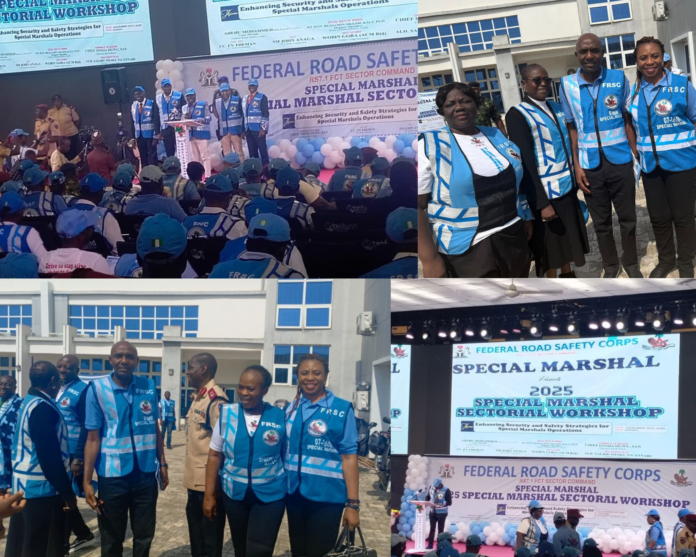
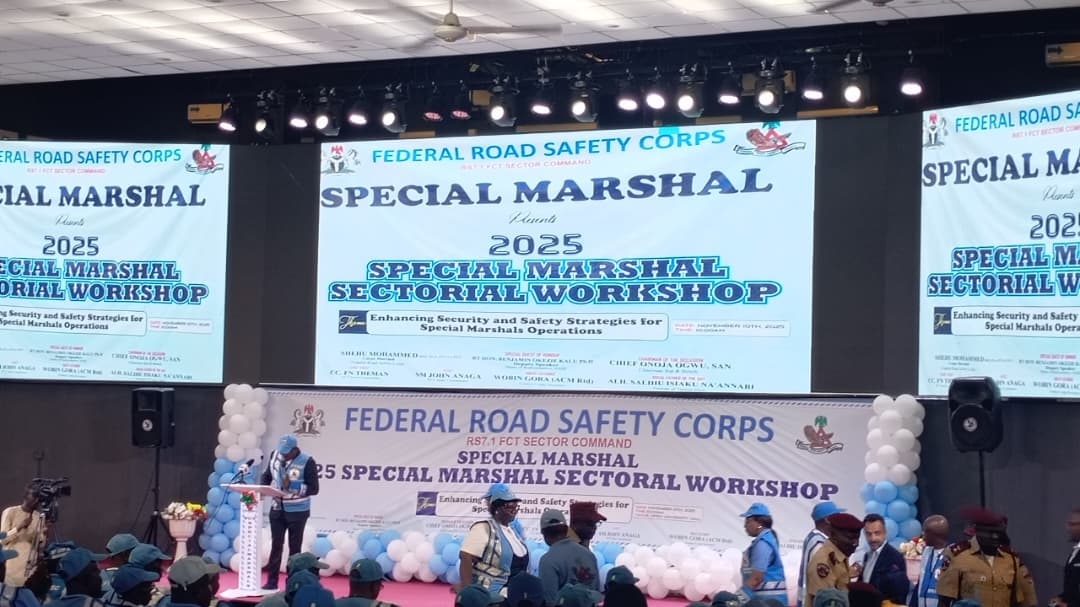
We all have a responsibility to make our roads safe —Onoja, SAN

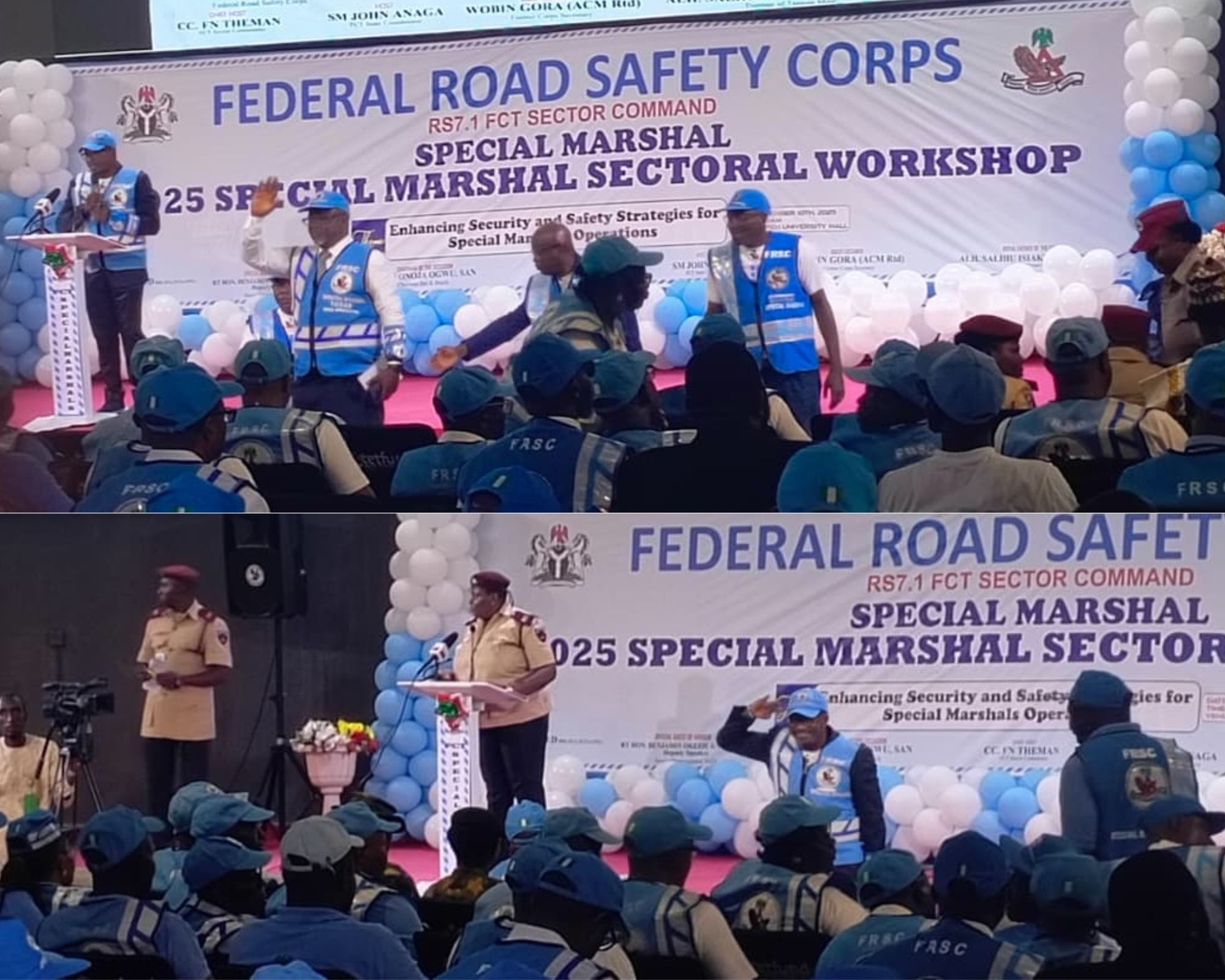
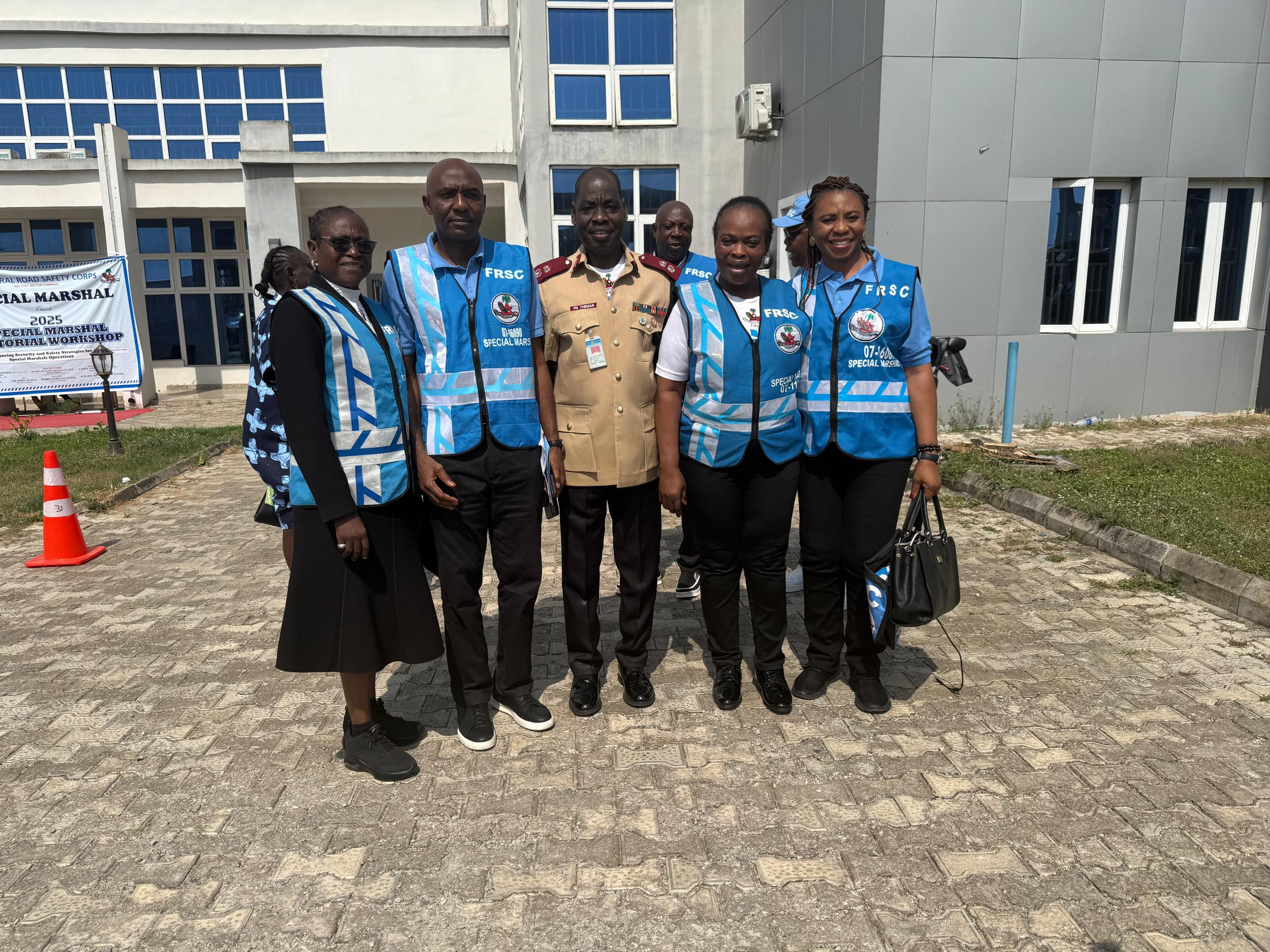
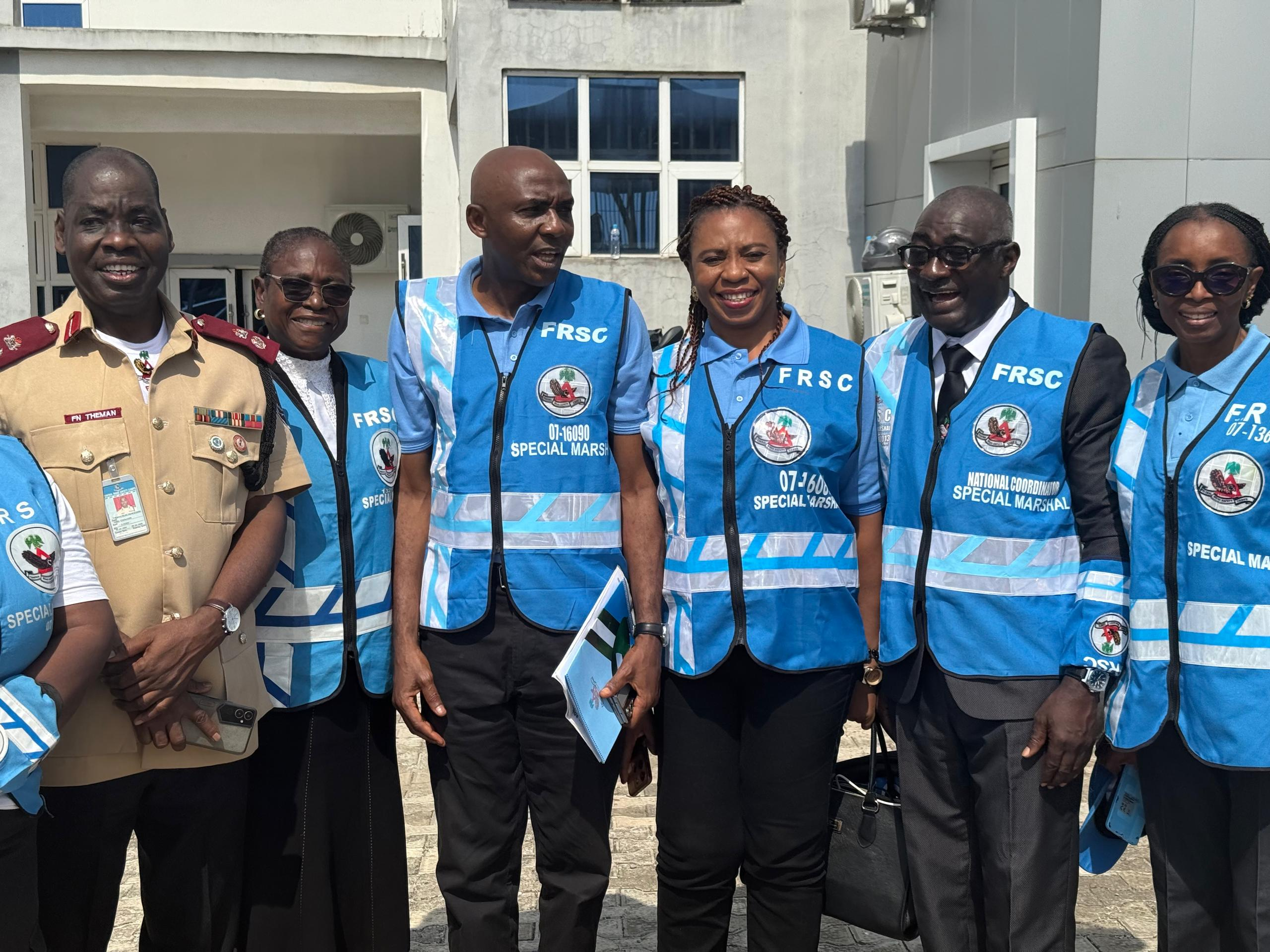
  • As FRSC FCT Sector Commander decorates newly enlisted Special Marshals

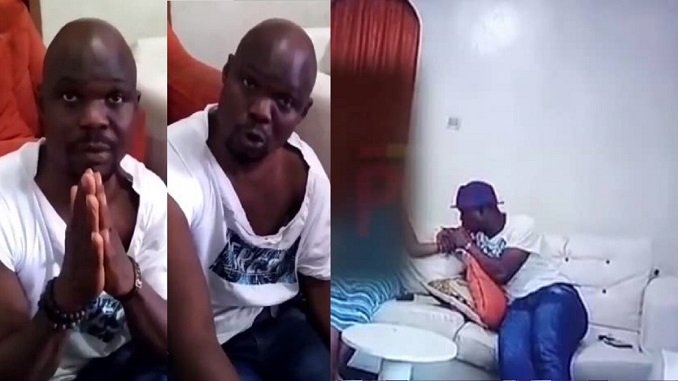
Author and Senior Advocate of Nigeria, Dr. Ogwu James Onoja, at the weekend restated that road safety in Nigeria is a shared responsibility involving the Federal Road Safety Corps (FRSC), which enforces laws and manages traffic, and all road users who are responsible for their own behaviour.

Speaking at the induction and decoration ceremony of the newly enlisted Unit 1 Special Marshals, which took place at the ceremonial hall of Bar & Bench House in Wuye, FCT, on Saturday, Dr. Onoja Onoja, who remarked that “responsible road users are responsible road leaders,” made the following assurances:

“We’re committed to this task. We feel honoured to serve. Together we will do our best.”

The Senior Advocate of Nigeria also presented the FCT FRSC Sector Commander, Corps Commander Felix N. Theman, with a set of his most recent publications — Fundamental Rights(Enforcement Procedure) Rules, 2009: Practice, Procedure, Forms and Precedents.

The FRSC Sector Commander expressed his appreciation for the books and then commended Chief Onoja as well as the other inductees for their commitment to serve.

Richard Akinnola says, ‘Blame release of drug convicts and murderers on the committee, not the president’

  • Kokori community in Delta state celebrates after President Bola Tinubu granted amnesty to convicted and dreaded kidnap kingpin Kelvin Oniarah

Prolific Nigerian journalist, author, lawyer, and activist, Richard Akinnola, has asked Nigerians to blame the committee that complied and forwarded the names of killers, drug barons and peddlers, and the like, to President Bola Tinubu for presidential pardon.

According to Akinnola, “Normally, a Governor or President merely signs what had been recommended by the committee because of the confidence he has in the committee.”

However, Residents of Kokori community in Delta state are in celebratory mood after President Bola Tinubu granted amnesty to convicted and dreaded kidnap kingpin, Kelvin Oniarah.

Below is the full text of Akinnola’s position.

Between January 2006 and April 2007, l was privileged to be a member of the Advisory Council on the Prerogative of mercy to the Lagos State Governor, under the Chairmanship of Funke Aboyade.

We carefully scrutinized applications for prerogative of mercy and even visited the prison to interview some of the inmates.

Our recommendations to the Governor, either to commute death sentences to years of imprisonment or for release of certain categories of inmates, sent through the Attorney General, came after very careful and meticulous considerations.

Normally, a Governor or President merely signs what had been recommended by the committee because of the confidence he has in the committee.

Therefore, if there had been errors or inappropriate recommendations for the release of certain inmates, the blame should go to the committee and not the Governor or president, even though the buck stops at their tables and they are vicariously liable to errors of omission or commission by the Committee.

In respect of the recent pardon of certain categories of inmates by the President, many of which are quite embarrassing, acting on the recommendations of the presidential prerogative of mercy committee.

l think the blame should go to the Committee and not the president, though be assented to the recommendations. With due respect to the members, it was a very embarrassing and shoddy exercise by the committee, by recommending the release of some people convicted for serious offences, barely few years into their conviction. They just embarrassed the President who would not be in a position to know the details of most of the convicts.

-Richard Akinnola

Meanwhile, the 44-year-old was a dreaded leader of a kidnapping and robbery gang that was implicated in the killing of many police and military officers as well as some other victims.

On 25th September 2013, a combined security team of the Nigerian Army and DSS operatives arrested Kelvin.

Kelvin, also known as Kelvin Ibruvwe masterminded the kidnap of prominent lawyer, Mike Ozekhome (SAN) on 24th August, 2013, along Auchi–Benin road.

He is also responsible for the following kidnaps:

  1. A Judge of the Edo State Judiciary,
  2. A top female official of the Federal Inland Revenue Service (FIRS),
  3. Dr Chudi NWIKE, a former Deputy Governor of Anambra State, who was killed by Kelvin while in captivity,
  4. Several members of the NYSC and security agents.

He also masterminded various attacks against security personnel, carried out several armed robberies and kidnap operations in Delta, Edo, Rivers and Anambra States.

ONIARAH maintained operational bases and detention camps in Warri and Kokori communities in Delta State, Ugbokolo community in Benue State, Benin City in Edo State, and Aba in Abia State.

It would also be recalled that on the 18th September 2013, Kelvin issued a 60-day ultimatum to the federal government to release some of his boys who were arrested by the DSS or he would wreak havoc on innocent Nigerian citizens.

He was among those granted pardon by President Tinubu in the recent amnesty for some prisoners and has walked home freely after spending 12 years in prison out of his 20-year sentence.

Watch the video below…

Illegal demolition of properties by Lagos State government

By Sonnie Ekwowusi

The law is clear that even if there are statutory laws breached by the victims, the government nevertheless should have apopori taken the victims to court. It cannot use force or proceed to carry out the demolition to eject the victims. The Lagos State government must go to court to obtain a court order before the ejection, and, if it must carry out a demolition it must first obtain a court order before doing so. Simply waking up in the morning and using the bulldozer to demolish Igbo properties is barbaric and a travesty of the rule of law.

We ought to be governed by the rule of law, and not rule by force or rule by ethnic sentiments.

Therefore, the Lagos State government acted mala fide by taking the law into its hands and demolishing the properties of innocent Igbo persons without a court order

There are many decided cases on this famous of which is Ojukwu V Governor of Lagos State

I would advice apex Igbo socio-cultural organization and the agrieved to seek a remedy at a Nigerian court or at the ECOWAS court.

Refraining from seeking a remedy in court on the presupposition that the judiciary is corrupt is a defeatist option.

The aggrieved can get remedy in the Nigerian court or at the ECOWAS court

Sonnie Ekwowusi

The views expressed by contributors are strictly personal and not of Law & Society Magazine.
TIPS