Home Blog Page 182

Birthday and Chieftaincy congratulations message from AWLA Nigeria President to Mazi Afam Osigwe, SAN

On behalf of the African Women Lawyers Association (AWLA) Nigeria, I extend my warmest congratulations to Mazi Afam Osigwe, SAN, on the occasion of his birthday and as he is honoured with a prestigious chieftaincy title.

Mazi Afam Osigwe is more than a distinguished name on the roll of silk—he is a living testament to what vision, discipline, and humility can achieve.

He embodies quiet strength and purposeful leadership, a man whose influence at the Bar is defined not by titles, but by service, wisdom, and compassion.

His brilliance wears simplicity with pride; his laughter inspires, his counsel strengthens, and his presence commands both respect and admiration.

Through every challenge, he leads with grace, proving that true power is not domination but service guided by purpose.

Mazi’s life and leadership remind us that greatness is not noise—it is consistency, integrity, and showing up when duty calls, even when applause is absent.

He carries the Bar in his heart and humanity in his hands, bridging intellect with compassion and exemplifying what it means to lead with vision and humility.

As he celebrates another year of impactful life and receives this honour from his people, may his path continue to shine brighter.

He does not merely follow history—he shapes it.

Congratulations, Mazi Afam Osigwe, SAN, on your birthday and well-deserved chieftaincy honour.

— Mrs. Caroline Ibharuneafe
President, African Women Lawyers Association (AWLA) Nigeria

London court jails Nigerian drill rapper and accomplice for life over brutal gang murder

A London court has sentenced Nigerian drill rapper Lekan Akinsoji and his accomplice, Sundjata Keita, both 27, to life imprisonment for the cold-blooded murder of 21-year-old Ahmed Deen-Jah in east London.

Akinsoji, from Forest Gate, will serve a minimum of 28 years, while Keita must serve at least 22 years before being considered for parole.

The Old Bailey heard that on April 2, 2017, the pair dressed in black, wearing balaclavas and gloves, and launched a planned gang “ride-out” near Custom House station.

They chased Deen-Jah, known on the streets as “Grinna,” into a corner shop, where Akinsoji stabbed him in the heart. The victim died at the scene, just metres from his home.

Prosecutor Anthony Orchard KC said the murder was not random, but part of a long-running feud between two rival east London gangs.

Just ten days before the attack, Akinsoji appeared in a drill video titled Armed and Ready, where he chillingly rapped, “No face, no case, no evvy (evidence).”

Deen-Jah’s father, Abubakar Jah, who moved to the UK from Sierra Leone in 1995, said the family had been destroyed by the tragedy.

“Four years after Ahmed’s death, my younger son Junior was also murdered. Losing both sons has caused unbearable pain,” he said.

His mother, Hawa Deen Conteh, described the killing as a “senseless act of violence” that forever changed their family.

“We hope no other family suffers the heartache we’ve endured,” she said.

Keita refused to testify during the trial, while Akinsoji’s violent lyrics and gang links played a key role in the conviction.

The judge condemned the murder as a “shocking, ruthless act of gang violence” that ended a young man’s life and devastated an entire family.

Tinubu’s Retired Service Chiefs Get Luxury Send-Off: Bulletproof SUVs, Prados, and $20,000 yearly medical allowance

President Bola Ahmed Tinubu’s newly approved retirement benefits for outgoing military chiefs have stirred nationwide attention.

Under the Harmonised Terms and Conditions of Service (HTACOS) 2024, each retired service chief will receive a bulletproof SUV and a Prado Jeep—or equivalent vehicles—as part of their exit package.

The vehicles will be maintained and replaced every four years by their respective military services.

According to the document, each retired chief will also receive $20,000 annually for medical expenses in Nigeria or abroad.

The benefits include five domestic staff, one security officer, nine guards, three drivers, personal firearms, and lifelong access to military escorts.

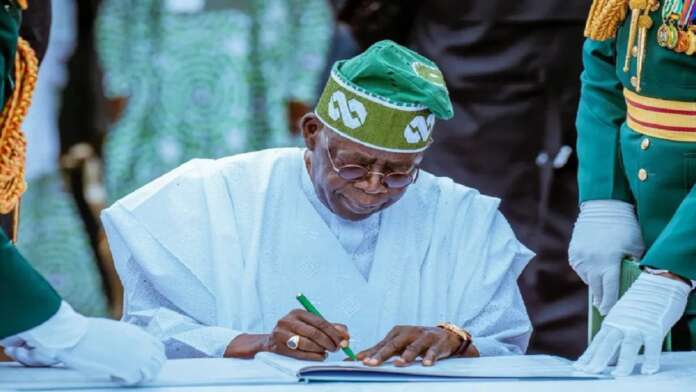
President Tinubu approved the new package after removing the former Chief of Defence Staff, General Christopher Musa, and two other service chiefs on Saturday.

Their replacements include General Olufemi Oluyede as Chief of Defence Staff, Major-General W. Shaibu as Chief of Army Staff, Air Vice Marshal S. K. Aneke as Chief of Air Staff, and Rear Admiral I. Abbas as Chief of Naval Staff.

Major-General E. A. P. Undiendeye remains Chief of Defence Intelligence.

The government said the reshuffle aims to strengthen Nigeria’s national security structure and improve coordination among the armed forces.

However, military sources said the move would trigger a wave of voluntary and forced retirements among senior officers.

Over 60 generals may have to step down as a result of the new appointments, in line with military hierarchy traditions.

Each category of senior officers will also receive graded benefits. Lieutenant-Generals will get a Land Cruiser, a Hilux, and $20,000 in annual medical coverage.

Major-Generals and Brigadier-Generals will receive a Land Cruiser and $15,000 for yearly medical expenses. One-star officers will receive a Toyota Camry and $10,000 for medical care each year.

The Federal Government will need substantial funding to meet the cost of these benefits for all retiring officers.

Meanwhile, the Senate’s joint committee on Defence, Army, and Navy is expected to begin screening the newly appointed service chiefs this week.

Former Presidential Investigative Panel Chair, Chief Okoi Obono-Obla, described Tinubu’s reshuffle as a strategic realignment aimed at reforming Nigeria’s security structure.

He said the move shows Tinubu’s “deep understanding of Nigeria’s power balance” and his determination to inject “fresh energy and ideas” into the military leadership.

According to Obono-Obla, “This change signals a new phase in Tinubu’s first term — one focused on decisive security action and national stability.”

Deadly shooting shatters homecoming celebration at Lincoln University, Pennsylvania

A night of celebration turned tragic when gunfire erupted during a homecoming event at Lincoln University in Pennsylvania on Saturday, October 25.

One person was killed, and six others were wounded in the shooting, which occurred around 9:30 p.m. near the football stadium on the historic Chester County campus.

“This is a devastating night in southern Chester County,” District Attorney Christopher de Barrena-Sarobe said on Sunday morning. “It was a chaotic scene, and people fled in every direction.”

Police detained one person found with a gun, but no charges had been filed as of early Sunday.

Officials confirmed that six victims were taken to local hospitals. Their conditions remain unknown. Several others were injured while fleeing the scene.

Investigators said the shooting did not appear to be a planned attack but noted there was evidence suggesting multiple gunmen. Authorities are now reviewing “viable evidence” gathered from the parking area between the football stadium and the International Cultural Center.

“We’re operating as if this is not an incident designed to inflict mass harm on a college campus,” de Barrena-Sarobe explained.

District officials urged anyone with photos, videos, or information about the shooting to come forward and assist in the investigation.

Lincoln University Police Chief Marc Partee said the homecoming celebration, meant to unite alumni and students, was marred by senseless violence.

“This was to be a joyous occasion,” Partee said. “Instead, gunfire interrupted what should have been a night of pride and community.”

Pennsylvania Governor Josh Shapiro expressed sympathy and pledged state support for the investigation.

“My administration has offered full assistance to President Brenda Allen and local law enforcement,” Shapiro said on X. “Please keep the Lincoln University community in your prayers.”

The campus was briefly placed on lockdown before authorities confirmed there was no ongoing threat.

University officials announced that counseling services would be available to students and staff beginning Sunday morning.

Outrage on social media as Nigerians renew calls for justice in Ochanya’s 2018 rape and death case

Nigerians on social media are demanding the reopening of the 2018 rape and death case of 13-year-old Ochanya Elizabeth Ogbanje, whose tragic story continues to stir public outrage.

Ochanya reportedly endured years of sexual abuse at the hands of her uncle, Andrew Ogbuja, and his son, Victor Ogbuja, in Benue State — abuse that ultimately led to her death from complications of vesicovaginal fistula (VVF).

In 2022, the Benue State High Court acquitted Andrew Ogbuja due to what it described as insufficient evidence, while Victor remains on the run. Andrew’s wife, Felicia Ogbuja, was sentenced to five months in prison for negligence.

Recent viral posts, petitions, and advocacy campaigns on X have reignited public anger, accusing the justice system of failure and calling out family complicity in the abuse.

Many Nigerians are urging authorities to reopen the case and ensure that all those responsible for Ochanya’s suffering are held accountable.

Will Tinubu be sole candidate in 2027 poll?

By IfeanyiChukwu Afuba 

At the end of its second plenary summit this year, the Catholic Bishops Conference of Nigeria expressed concern at the continued weakening of the opposition in the current political dispensation.

In a communique issued September 19, 2025, signed by his lordships Lucius Ugorji and Donatus Ogun, president and secretary, respectively, the bishops cautioned against a turn to a one-party state. ‘There seems to be suppression of opposition as Nigeria appears to be tilting to a one-party state, the development of which is not a good omen for democracy,’ the release read in part.

Interventions of the Church on the state of the nation are often, in general, reflective terms, filled with Biblical exhortation. It’s indicative of the seriousness of the matter when such statements are subject-specific and the defect emphasised with a prophetic ring as in the instant. The shrinking of democratic space in the past three years is disturbing and shows no sign of abating yet. If anything, the chances of a constricted race in which President Bola Tinubu contests against no notable presidential candidate, are growing by the day.

The opposition remains a fundamental component of democracy, serving as a bridge between the government in power and the electorate. As emphasised in the maxim that absolute power corrupts absolutely, opposition ranks form a protective belt in democratic practice. Active opposition serves to hold government accountable and promote transparency in administration. It bears stating that the opposition is necessary for sustainability of the system.

It’s desirable for the opposition to point out the lapses of an incumbent administration and, indeed, to question certain decisions and policies. More insights and better perspectives tend to be gained from such exchanges. By generating alternative solutions to problem areas, opposition parties broaden participation in the political process. Good governance is enabled by the opposition’s watchdog role. An active opposition further offers a choice of alternative government to the voter. A thriving opposition is not merely an important part of democracy; it’s essential in strengthening and enriching democratic governance.

Whither then the present democratic dispensation with opposition participation in 2027 election looking so unviable? None among the potential contenders in 2027 has the experience of Atiku Abubakar. When Atiku debuted in the presidential arena in 1993, Bola Ahmed Tinubu was operating at senatorial level. Since 1999, Akitu has been juggling the reins of presidential office, standing as candidate from 2007. 

The veteran presidential candidate, however, is unsure of a platform to contest the 2027 poll because his latest political tent, African Democratic Congress, is embattled. It’s no ordinary or accidental logjam. The ADC is locked in a curious, leadership dispute. If a rival faction led by Ibe Kachikwu, laying claims to the leadership, succeeds, Atiku knows that will be the end of his aspiration. Peter Obi, the candidate of regional and generational anger in the 2023 poll, is caught in similar bind. Obi is yet to find a secure party where he will run for the next presidential election. His last party, Labour Party is also under siege.

On Tuesday, October 14, 2025, Mr Julius Abure, was suddenly acknowledged as national chairman of Labour Party at INEC’s quarterly interactive meeting with political parties. If Abure’s predictable recognition by INEC persists, Mr Obi knows he cannot emerge as Labour Party candidate anymore. Former President, Goodluck Jonathan, who is believed to be warming up for a second tenure shot at the presidency, similarly faces an uphill task. His party, the PDP, had long been a target of destabilisation plots. The Abuja super minister’s agents in PDP, who have so far made a good job of undermining the PDP from within, now face the titanic battle – denying Jonathan a stable and cohesive PDP on which to vie. 

Expectedly, the Presidency rejects allegations of subverting opposition parties. In two comments in quick succession, Special Adviser to the President on Information & Strategy, Bayo Onanuga dismissed perceptions of government’s efforts at derailing major opposition parties. 

In a release, April 28, 2025, Onanuga stated that ‘no policy, official action or directive from the presidency seeks to “dismantle democracy” or “weaken opposition or create a one – party state.” Returning the blame, the disclaimer submitted: ‘The opposition cannot blame President Tinubu and the governing APC for their poor organisation, indiscipline, and gross incompetence in managing their affairs. It is certainly not part of President Tinubu’s job to organise or strengthen opposition parties.” Onanuga was also on hand to aver that the Presidency was not involved in opposition crisis when ADC’s relaunch met with difficulties in July this year.

While freedom of speech may not be under threat, the mainstay of opposition relevance, freedom of political association, has become problematic. Today, the environment necessary for the opposition to flourish hardly exists. Government has a responsibility in this regard.

Leadership succession is a major issue for Nigeria, as it is for many other countries. It should be obvious that the management of transition processes impact on the stability of the polity. Our experience harps on the need for a credible electoral process, inclusive frameworks, plural political choices and participatory decision-making. Alienation of the opposition has often come with serious consequences. Regime authorities, by their agenda and priorities, have the choice either of aggravating or ameliorating the challenges of democratic succession. Military termination of the Second Republic was facilitated by the political rift arising from the conduct of the 1983 election.

A bitterly disputed general election left in its wake a tensed-up polity, which softened the ground for ambitious soldiers. A different form of opposition suppression affected General Ibrahim Babangida’s transition programme to the Third Republic. A sweeping, generational ban on experienced politicians from participating in the transition cast the exercise in suspicions of a hidden agenda. The restrictive nature of the programme seemed designed to get rid of opposition to self-succession by the political elite. General Sani Abacha similarly began a transition process with exclusion agenda.

The junta succeeded in staving off prospective presidential aspirants with the punitive failed banks and failed contract decrees. Mercifully, divine intervention stopped the tearing of an already broken country. Much of the power game in the Fourth Republic has seen the ruling parties using instruments of authority to put the opposition at a disadvantage.

Perceptions of selective use of such bodies as the EFCC to ensure political compliance are rife. The ruling party has, on occasions, been seen to have sponsored the impeachment of opposition and independent-minded governors. In the immediate past administration, executive excesses left a climate of intimidation hovering over the judiciary. What is the worth of democratic rights without a free judiciary?

It’s therefore very important that the opposition has the room to operate and effectively play its complementary role. Beyond Onanuga’s protestations,the government’s weakening of opposition parties need not be by direct means. The PDP’s loss of four governors to the APC in 2025 alone is unprecedented. In just a space of four months Akwa Ibom’s Umo Eno, Enugu State’s Peter Mbah, Bayelsa State’s Duoye Diri publicly defected to the APC.

The fourth, Rivers State’s Simnalaya Fubara is considered to have joined the ruling party quietly for tactical reasons. The illegality of Fubara’s suspension as Governor was clear enough. No one among the defenders of the ridiculous action has cited the constitutional provision defining state of emergency as power to abort constitutional order. Only a state House of Assembly and a court with requisite jurisdiction may intervene on the mandate of an elected Governor. The bullying represented by Fubara’s experience can serve as indirect message to the opposition. You either play ball or get beaten. 

Many Nigerians are still struggling to understand how the Supreme Court in all of five months was unable to hear the PDP Governors’ suit challenging the constitutionality of Rivers State emergency rule. Where lies the confidence that litigations on party leadership tussles will be justly addressed? How can opposition parties stand strong, free from ruling party underhand tactics?

And while the ruling party finds the defections into its fold fair and square, she says nothing about the illegitimately inherited mandates therefrom. Electoral mandates belong to political parties whose logos appear on the ballot papers. What right do defecting politicians have to transfer the mandate from their originating parties to another party? Defections rob the electorate of their authority, their values, and their self-esteem. Rewarded mandates from defection transactions is a potential source of instability.

A scenario in which major opposition parties and candidates are not in the ballot in 2027 is not far-fetched. That would be an unprecedented, costly development. A situation in which opposition parties are adopting the incumbent as their candidate amidst protests from their members would be unhealthy and counterproductive in the long run.

With no provision for independent candidates, no lawful efforts should be spared to ensure that parties give expression to the yearnings of their membership, as well as the mood of society.

The views expressed by contributors are strictly personal and not of Law & Society Magazine.

A Nation’s Paradox: Between Rumoured Coup and Nationwide Protest

By Citizen Richard Odusanya

Let me begin with an excerpt from one of my reflections, written on May 29 – the second
anniversary of the administration of President Asiwaju Bola Ahmed Tinubu (PBAT):
That open letter of May 29, followed by another on June 12 (our Democracy Day), was not
written in condemnation but in constructive engagement — a citizen’s sincere effort to
reach out to leadership in the spirit of partnership and shared responsibility. My intention
was, and remains, to awaken our collective conscience toward purposeful governance
and people-centred progress.

Regrettably, rather than moving steadily along a deliberate path of renewal, the nation
seems to be drifting — uncertain in direction, yet burdened by the weight of expectations.

Today, our dear country finds itself at a painful crossroads. Over 31 million Nigerians are
facing acute hunger, while an estimated 133 million live in multidimensional poverty.
These are not mere statistics; they represent the silent anguish of families, communities,
and generations. The causes are multifaceted — ranging from conflict and displacement
to economic dislocation, policy inconsistency, and insecurity that has overstretched both
our institutions and our hope.

And this morning, as I pondered on these realities, two unsettling issues loomed large in
public discourse: the rumoured coup and the planned nationwide protest. Both, though
differing in nature, reflect a nation searching for direction — a paradox of frustration and
aspiration intertwined.

At such a delicate time, may wisdom prevail — among leaders and citizens alike. The path
forward must be one of dialogue, reform, and renewal, not confrontation or despair. For
nations are not destroyed by the noise of dissent but by the silence of conscience.
“Today, I write to you not as a critic but as a patriot — one deeply concerned about
the state of our beloved nation. I write as a citizen who believes in the urgent
necessity of a national rebirth — a renaissance of values, leadership, and collective
purpose. My hope is that millions of our compatriots, at home and abroad, will
begin to experience a unity that transcends division and a renewed commitment to
our shared destiny.”

Restoring Confidence and Stability: What Government Can Do
To make the very thought of a coup or any unconstitutional intervention a complete
impossibility, the government must deliberately rebuild the invisible but powerful bridge
between the people and the state. This requires not grand declarations but pragmatic,
people-centred actions that restore trust, fairness, and hope.

(1) Rebuild Economic Confidence at the Grassroots.
Hunger is a national security threat. The government must urgently scale up local
food production through guaranteed input supply, rural security for farmers, and
price stabilization mechanisms. The National Grain Reserves and Strategic Food
Supply Programme must be revived and transparently managed.

(2) Reignite Public Service Efficiency and Integrity.
Nigerians are losing faith not in democracy itself but in the way it is managed. A
visible and merit-based civil service reform — cutting waste, reducing duplication,
and rewarding performance — will renew confidence that government works for
all, not for a few.

(3) Strengthen Communication and Public Engagement.
Silence and mixed messages breed rumours and mistrust. The government must
create a credible, non-partisan Citizens’ Communication Platform — a regular,
structured interface between leadership and citizens — to listen, clarify, and
respond.

(4) Tackle Corruption Beyond Optics.
When citizens perceive selective justice, cynicism replaces patriotism. There must
be a consistent, transparent, and exemplary fight against corruption — starting
from the top. Public declaration of assets by senior officials and publication of
major contract details will send a powerful signal.

(5) Secure the Nation, Protect the Dignity of Every Nigerian.
The military must be seen as protectors of the republic, not potential arbiters of its
fate. Regular welfare reviews, professional training, and civilian oversight should
strengthen their loyalty to constitutional authority while maintaining morale.

(6) Build a Social Compact with the Youth.
No democracy survives if its youth feel excluded. The government should institute
a National Youth Economic Empowerment Compact — focused on skills, digital
jobs, and entrepreneurship — to harness their creativity rather than allow
frustration to ferment instability.

(7) Institutionalize Dialogue and Inclusive Governance.
There should be a National Dialogue Platform where labour, civil society, and
religious and traditional leaders can regularly interface with the government on
critical socio-economic issues — forestalling street confrontations and restoring
mutual respect.

And A Call for Collective Responsibility
Nigeria does not need saviours in uniform or protests in the streets to survive. What we
need are leaders with empathy and citizens with patience and participation.
When governance becomes more listening, responsive, and fair, agitation for extraconstitutional solutions will find no audience.

Let the government lead with humility, and the people respond with faith. That is how
nations heal and how democracies endure.

NIGERIA WILL RISE AGAIN

Citizen Richard ODUSANYA.
Public Affairs Enthusiast and Good Governance Advocate
[email protected]

The views expressed by contributors are strictly personal and not of Law & Society Magazine.

Akwaaba: Civic lessons from Ghana on how order, decency, and discipline build a humane society

By Sylvester Udemezue

During my recent visit to Ghana as part of the Nigerian Law School delegation to the 2025 Annual General Conference of the African Bar Association (AfBA), I encountered a society where order, discipline, and basic human decency flow naturally into everyday life.

At the outset, I must express deep appreciation to the Director-General of the Nigerian Law School, Prof. Isa Hayatu Chiroma, SAN, Life Bencher, whose visionary leadership and unwavering commitment to academic excellence have continually opened global platforms for staff growth and professional development. His consistent encouragement of participation in international conferences such as AfBA reflects a rare dedication to human capital development within the Nigerian Law School.

Ordinary experiences on the streets of Accra revealed how much difference civic responsibility and social order can make in building a peaceful and functional community. What struck me most was not grand infrastructure or government projects, but the quiet civility of daily conduct: the small, consistent gestures that hold society together and make it feel organized, humane, and serene. The following are some of my personal observations and experiences in Accra: moments that, when pieced together, show how ordinary discipline can create extraordinary order.

  1. The Airport Taxi Encounter: Upon arrival at the Kotoka International Airport, some of my colleagues and I (seven in number) met a taxi driver named Mr. Dominic. When we asked him to take us to a safe and affordable hotel, he smiled warmly and said, “Relax, you’re in Ghana, not in Nigeria where you could easily be kidnapped or robbed. You’re safe here.” We were speechless. That statement alone spoke volumes about our country’s global image. Meanwhile, his calm assurance, offered with such sincerity, set the tone for everything that followed. It was not just a welcome to a new country, but an introduction to a culture grounded in quiet confidence and civic decency.
  2. Public Trust: For want of space, only three of us boarded Mr. Dominic’s taxi. On one occasion, he parked the vehicle and, without hesitation, left the ignition on and the doors unlocked as he stepped out to help us inspect a hotel. When we expressed concern, he simply smiled and said, “Nothing will happen. No one will touch it.” That quiet confidence in others (that unspoken faith in the honesty of strangers) was both humbling and profoundly moving.
  3. Commercial Buses: The Trotro Experience: In Ghana, the ubiquitous public buses are called trotros. They’re called Danfo in Nigeria. One remarkable feature of these vehicles is that their doors remain closed while in motion. I moved through seven different parts of Accra and never once saw a trotro driving with its door open. The sense of order and safety appeared ingrained: an unspoken rule followed by all.
  4. The Conductor’s Permanent Seat: Each trotro has a conductor with a specific seat inside the vehicle. Twice, I mistakenly sat in that space, only to be politely informed that it was reserved for the conductor. The conductor never stands or clings onto a permanently open door while the bus is in motion. This small arrangement spoke volumes about organization and respect for structure: everyone has a defined role, and everyone honors it.
  5. Traffic and Orderliness: What impressed me most on Accra’s roads was the order. Vehicles moved smoothly, lanes were respected, and drivers obeyed traffic lights. I rarely saw uniformed traffic officers directing flow. It seemed as though obedience to traffic regulations was part of civic instinct rather than external enforcement.
  6. Absence of Harassment or Extortion: Throughout my stay, I saw no touts or street agents harassing commercial drivers or collecting illegal levies. Public transport operated peacefully and professionally, free from interference. This created a sense of dignity around the transport system and respect between drivers and passengers alike.
  7. Respect for Pedestrians: In Ghana, motorists demonstrate an admirable courtesy toward pedestrians. When someone steps onto the road, drivers slow down to let them pass. I found this habit of yielding to others (especially the vulnerable) both civil and humane. In Ghana, most motorists are careful so as to not harm people. It is the kind of respect that builds trust among citizens.
  8. Speed and Caution: City driving in Accra is deliberate and measured. Drivers appear conscious of their responsibility to others; they maintain moderate speed on city roads. You can sense their deliberate efforts to avoid harm to others. The absence of reckless driving is not due to fear of punishment but a cultivated awareness that safety is everyone’s duty.
  9. Composure and Humanity in Public Transport: Trotro drivers and their conductors maintain remarkable composure. They are calm, polite, patient, and approachable. Even when the bus fills up or delays occur, voices remain calm. Their quiet professionalism adds to the sense of collective peace that defines city life.
  10. Everyday Kindness and Patience: One evening, I told the driver of a trotro I boarded that I wanted to buy roasted corn. Without hesitation, he stopped and waited patiently for me to buy. Later, when I asked for water, he instructed his conductor to get it for me, assuring me I could pay later with my fare. None of the passengers complained. That simple kindness, rooted in patience and shared humanity, left a lasting impression.
  11. Steady Electricity: During my stay, power supply remained constant: not once did the lights flicker. When I inquired how often electricity goes off, someone replied, “Only when there is a fault.” Consistent infrastructure reflects consistent systems: and perhaps the discipline of maintaining them.
  12. Taxation and Documentation: At our hotel, we received an official, government-printed receipt and were asked to complete an alien form for record purposes. This showed how structured and accountable Ghana’s civic administration is. It was clear that every guest, resident, and business operation is part of a functioning system that values documentation and responsibility.
  13. No Open Grazing: Across all seven areas I visited, I never saw livestock wandering along city roads. The absence of open grazing was a quiet reflection of urban order: of clear boundaries between rural and civic life, and of respect for communal space.
  14. Round-the-Clock Transportation: In Accra, apart from taxi cabs, some trotros run day and night. I personally confirmed this when I took a trip from Trade Fair to Osu around 1:00 a.m. The streets were calm, safe, and active. Continuous movement without chaos is possible only where there is public trust and low crime.
  15. A Moment of Comic Relief: Once, we chartered a trotro from Osu to an area known as Palm Wine. Along the way, the driver stopped briefly to pick up a group of young ladies. When we protested, he laughed good-naturedly and said, “I just wanted to bring some fine ladies for you to toast.” Everyone burst into laughter, but we insisted he should drive since the trotro was on charter; he cheerfully continued the journey. Even humor in Ghana seemed clean and harmless, rooted in friendliness rather than mischief.
  16. Currency and Quality of Goods: The Ghanaian Cedi is stable and respected. Besides, everyday items (from serviettes and handkerchiefs to shopping bags) are of good quality. Cleanliness in restaurants and public places is a visible norm. Even at the airport, there were no touts or unnecessary disorder. Everything worked with a quiet precision that reflected collective pride.
  17. A Stranger’s Kindness: Once, outside Labadi Beach Hotel, I met a lady waiting for a trotro. When I asked for directions to an MTN office, she not only offered to guide me but volunteered to use her own ID to help me register a SIM card. Her generosity was genuine and spontaneous: the kind of kindness that comes naturally in a culture where humanity still matters.
  18. A Lesson in Integrity: On our last night in Accra, the three of us dined at AllDay Food Court, Opposite Socca Bet at Palm Wine Area in Accra, but soon realized we had run short of Ghanaian Cedis. The manager, Joshua, without hesitation, allowed us to go, trusting that we would return the next morning to settle the bill. When a bystander cautioned him, saying, “Don’t trust Nigerians,” we reassured him that we would not disappoint.True to our word, early the next morning, we arranged and had 280 Cedis transferred to him via mobile money as early as 06:00AM. A few moments later, Joshua sent a message expressing deep gratitude and relief. He confessed that after we left their the previous night, his boss had made him pay the money from his own pocket, fearing we would never return. Our honesty, he said, had restored his faith in Nigerians. We are not sharing this story for self-praise, but to highlight a moral truth: whatever you do abroad reflects on your country. As the Nigerian proverb reminds us, “The reputation of a village rests on the character of its people.” Every action we take beyond our borders either polishes or tarnishes the collective image of our nation. In the words of the late diplomat and author, Kofi Annan, “We may have different religions, different languages, different colored skin, but we all belong to one human race.” It is by our conduct, by the quiet integrity we show when no one is watching, that we affirm this shared humanity and uplift our national identity. We must therefore always remember that to travel abroad is to carry the invisible flag of one’s country. As the saying goes, “Wherever you go, you represent where you come from.” Thus, being a good ambassador is not a title; it is a responsibility: one that demands honesty, humility, and respect. Our encounter with Joshua was a gentle reminder that integrity transcends borders, and that sometimes, a simple act of honour can speak louder for one’s country than a thousand speeches.
  19. Order and Comfort in Public Transport: In Ghana’s Accra, the trotro (the popular commercial bus) carries only three passengers per row. That is, each row of seats behind the front is strictly limited to three occupants, ensuring that everyone sits comfortably without being cramped. This simple rule, diligently observed, promotes not only physical comfort but also respect for personal space and orderliness: values that make public transport in Accra remarkably more humane and efficient.
  20. Safety First: The Culture of Helmet Use in Accra: In Accra, every commercial motorcycle rider wears a helmet: without exception. Across the seven areas I visited within the city, I did not encounter a single rider without one. This simple but powerful habit reflects a collective consciousness about safety and responsibility. Wearing a helmet is not seen as a burden or a regulation to evade, but as a personal commitment to preserving life. It is a quiet reminder that self-discipline begins with valuing one’s own safety.
  21. Homecoming: When it was time to leave, I felt enriched and humbled. Ghana had welcomed me not only with its hospitality but with its quiet lessons in civic maturity. Now, that I’m back from Ghana, you may tell me “Akwaaba,” which means “welcome” in the Ghanaian language, but in this case, it should be “Welcome back home”. However, from the reflection above, it appears the word “Akwaaba” has taken on a deeper meaning: an invitation to embrace the values that hold a society together.

REFLECTIONS AND TAKEAWAYS

My days in Ghana reaffirmed that true national strength lies not only in laws or leadership, but in the discipline, decency, order, and empathy of everyday citizens. The calm obedience to simple rules, the culture of patience, the sense of collective respect: these are the invisible foundations of a humane society. Discipline, when lived daily, becomes culture. Order, when internalized, becomes peace. And humanity, when practiced quietly, becomes a nation’s soul. We must learn to take personal responsibility in how we drive, speak, lead, serve, and treat one another, etc. Change begins not in government houses, but in the hearts of ordinary citizens.

Akwaaba!

May this reflection inspire in us a renewed sense of duty—to build communities where respect, decency, and civic responsibility are not exceptions but everyday habits.

May I once again express my profound gratitude to the visionary Director-General of the Nigerian Law School, Prof. Isa Hayatu Chiroma, SAN, Life Bencher, whose exemplary leadership, foresight, and unwavering commitment to academic excellence, professional development, and global engagement continue to advance the School’s visibility and inspire its staff toward broader intellectual and civic exposure. But for his sagacity and support, I would not have enjoyed this enriching experience nor had the opportunity to witness firsthand, from a neighbouring country, how civic order and moral discipline can sustain a peaceful and progressive nation.

Respectfully,
Sylvester Udemezue (udems).
08021365545.
[email protected].
(26 October 2025).

Coups and rumours of coups

Nigerians may be hard-pressed, but a military takeover of power must be left out of their options, writes Monday Philips Ekpe.

Dateline: April 22, 1990; Lagos, Nigeria. It was a Sunday. I left my house in Ojodu early in the morning for my church somewhere off Oba Akran Avenue, Ikeja. I decided to have a brief stopover at my friend’s residence in Ipodo. There, I joined a small crowd gathered around a transistor radio listening to the commanding voice of Major Gideon Orkar making his ill-fated coup announcement. Many aspects of that speech, particularly the summary dismemberment of the country that would have seen off states in the far north from the rest parts, instantly played up in my mind as harbingers of a doomed project.

The planners of that attempt at power change had probably convinced themselves that they were more Nigerian than the millions of their fellow compatriots they were seeking to excommunicate from the federation. They also most likely assumed that Nigerians, especially southerners and middle belters, had become sufficiently disenchanted with the regime of General Ibrahim Babangida that they would simply troop to the streets in celebration of their self-appointed saviours. I told whoever around me cared to listen – right in the midst of the tension and precariousness which had gripped the entire nation before the denouement – that the gamble would surely go up in smoke.

Orkar’s was indeed a broadcast like no other before it. The sheer arrogance, bravado, misjudgement, juvenility – with some touch of silliness – displayed by the coup plotters made the officers and men who countered their action even more confident of victory from the start. The odds weighed heavily against the adventurists, both from within their own constituency and among the civilian population. There were many experienced military men at the time who had participated in and witnessed the incursion of soldiers into the nation’s political leadership right from that of Lt. Col. Chukwuma Kaduna Nzeogwu’s gang in January 1966 which scuttled the First Republic. With such persons under Babangida’s command and the failure of the anticipated popular uprising, the putschists stood no chance. Posterity will portray them as examples of prosecutors and victims of high-stake opportunism which is a key underlying factor of military in politics.

Fast forward October 2025. Just when the people of Nigeria appear to have forgotten the idea of “khaki boys” shooting their way to the seat of government, it has sneaked back into national reckoning via an online news story. It didn’t seem like something to be wished away without some explanation. And the top military hierarchy did just that. Its statement in part: “Democracy is forever. The DHQ urges members of the public to disregard the falsehood being circulated by the purveyors of misinformation and enemies of our nation. The Armed Forces of Nigeria (AFN) remains firmly loyal to the Constitution and the federal government under the leadership of the Commander-in-Chief of the Armed Forces, President Bola Ahmed Tinubu, GCFR.”

Expertly-crafted, restrained and bold like the noble profession of soldiering. Only that public communication isn’t always straightforward and easily acceptable to the target audience(s). Whole bodies of studies have been undertaken to fathom the impact of rumours on information dissemination. There is a consensus that when the subject matter is either juicy or sensitive, interested parties would do well not to expect miracles in its resolution. The wild energies of this internet-driven era have complicated what should ordinarily be an honest clarification from the country’s security architecture to a curious or apprehensive citizenry.

The news report that ignited the rumour mills had two major alibis for deeming the alleged threat to Tinubu’s office credible. One, the cancellation of some activities earlier lined up in commemoration of Nigeria’s 65th Independence Anniversary. Two, the arrest of some officers in connection with what was described by the authorities as professional misconduct. The first reason shouldn’t have been given much thought. After all, successive administrations have serially undermined the status of October 1 in the country’s political history by organising low-key celebrations, hiding behind various pretexts.

The logic employed by the military in its efforts to explain the shift of the Independence Day events hasn’t also helped the situation. It’s not convincing. So, is there any coverup? There shouldn’t be. The federal government and military should do whatever they can to calm the minds and hearts of the citizens. The people have suffered enough. Many of them have memories of uniformed personnel bulldozing their way onto the nation’s driver’s seat. Major General Johnson Aguiyi-Ironsi who became head of state after Nzeogwu’s murderous plot had his rule and life truncated that same year in July. General Yakubu Gowon’s time ended in 1975 in a bloodless move. General Murtala Mohammed, his successor, wasn’t that lucky as he was assassinated the following year. General Olusegun Obasanjo then took the baton and successfully midwifed the Second Republic in 1979.

Then, “I, Brigadier Sani Abacha of the Nigerian Army, on behalf of the Nigerian Armed forces…” put a nail to the coffin of democracy, yet again, in December 1983. Major General Muhammadu Buhari who assumed the number one position was in 1985 also swept out through another declaration, “I, Brigadier Joshua Dogonyaro of the Nigerian Army…” It was Babangida’s turn to lead. And, later in 1993, Abacha’s. But for death that overpowered him in 1998, he would have transmuted into a civilian president. General Abdulsalami Abubakar who then picked the mantle appeared glad to usher in the current Fourth Republic in 1999.

Yes, it’s becoming apparent that Nigerians are stuck with the present crop of politicians, most of whom cannot swear with ‘akpabana’ ‘sango’, ‘orumila’, ‘sopona’, ‘otemute’, ‘tuluwe’ and ‘tonlo’ to demonstrate their willingness to serve the people creditably. Instead, they prefer to take their oaths of office with the Bible or Quran because the God declared by these books is merciful. They have substantially messed up the ideals of democratic governance, arguably the world’s best form of government at least in theory.

True, most people can’t tell with certainty where help would come from. Even then, without prejudice to the veracity of the coup allegation, soldiers should just stay in their barracks and cantonments. They should leave Nigerians alone to grapple with the sad legacies of the prolonged and intermittent militarisation of the political space. Any day they become truly fed up with being taken for granted by their leaders, they will seize the moment and take ownership of their beleaguered country and endangered destinies.

Ekpe, PhD, is a member of THISDAY Editorial Board

The views expressed by contributors are strictly personal and not of Law & Society Magazine.
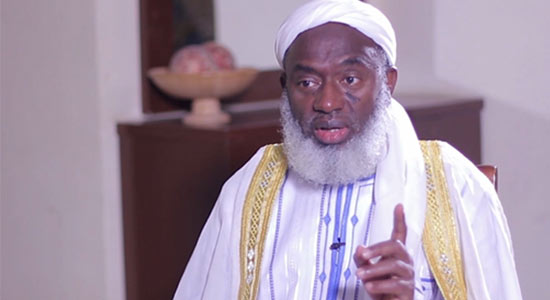
Odinkalu urges Tinubu to remove FCT Minister Wike, citing allegations and addiction concerns

Law Teacher and a former Chair of Nigeria’s Human Rights Commission (NHRC), Prof. Chidi Anselm Odinkalu, has asked President Bola Tinubu to remove the Minister of the Federal Capital Territory, FCT, Ezenwo Nyesom Wike, asserting that the minister’s “heavy alcohol consumption is affecting public duties.”

Odinkalu in statement, wherein he counselled that the minister immediately seek treatment for alcohol dependency, said that: “On Saturday, 25 Oct., 2025, I woke up to an emission on multiple platforms by the official spokesperson of the Minister of the Federal Capital Territory, FCT, Nyesom Wike, which concatenates a desperate body of inanity, fantasy, and a generous dose of idiocy about me.”

The full text of the Sunday, 26 October 2025 release reads:

IT’S TIME FOR PRESIDENT BOLA TINUBU TO PUT FCT MINISTER, NYESOM WIKE, OUT OF HIS MISERY

By

Chidi Anselm Odinkalu

On Saturday, 25 Oct., 2025, I woke up to an emission on multiple platforms by the official spokesperson of the Minister of the Federal Capital Territory, FCT, Nyesom Wike, which concatenates a desperate body of inanity, fantasy, and a generous dose of idiocy about me.

I’m grateful to the citizens who have responded to him & equally flattered that my life preoccupies the highest levels of Nigeria’s government. However, because I consider this a total waste of public resources, it’s important that they hear from me directly as a citizen.

As Minister for the FCT, Mr. Wike currently presides over a 21st century city overwhelmed by the stench of human faeces occasioned by the collapse of the sewage system.

Yet, I distract him.

I’m a private citizen. I teach; I write; and I also engage in advocacy on matters of legal and public significance affecting Africa’s governance and institutions, including Nigeria’s. When I do, my positions and asks are public.

As part of my public advocacy, I have called attention to a pattern of avoidance by Mr. Wike concerning serious and well-founded accusations of habitual:

  1. use of criminal violence to pervert the outcome of elections in Nigeria;
  2. Looting of public assets in his various political roles at the State and federal levels, including as Governor and as Minister;
  3. Laundering assets from Nigeria for the acquisition of luxury real estate in Florida in the USA;
  4. Non-compliance with the asset declaration laws in Nigeria in relation to his unlawfully acquired and looted assets; and
  5. Chronic and criminal corruption of every level of the judicial system from the lowest to the highest courts in Nigeria.

Each of these should ordinarily be enough to preclude Mr. Wike from public office. Together, they should ensure that no serious government could have anything to do with him besides asking him to clear his name (if he has any).

The rmemission by & in the name of Mr. Wike is part of a long-running effort on his part to distract attention from my work linking him to a habit and pattern of judicial insider-dealing and corruption of the judiciary.

Mr. Wike has parlayed that corrupt record into purchasing a seat for life on the Body of Benchers (BoB). His membership of the BoB remains an indelible blot on what is supposed to be a body of legal practitioners of the highest distinction in the country.

Instead, Mr. Wike struts Nigeria’s public space with both impunity and arrogance, peddling influence and abusing public office and assets habitually for his private gain.

In the past year, Mr. Wike has sought to bully or use the BoB to persecute me or squelch my work on his undisguised role in judicial corruption. He failed. That is now under examination by the UN Special Rapporteur on Independence of Judges and Lawyers, Margaret Satterthwaite.

This week-end emission is his latest gambit. He will fail too.

Mr. Wike has also used public assets to sustain a habit of dependence on expensive alcoholic beverages which have manifestly become a danger both to his wellbeing and to the public good.

Even now, it is not too late for Mr. Wike to seek and receive the attention he desperately needs for unhealthy addiction to alcoholic beverages.

For that to happen, however, Mr. Wike must quit and vacate the high office he currently holds. And if he chooses not to, the President should, as an act of compassion, take immediate steps to put him out of his misery.

Signed

Chidi Anselm Odinkalu

TIPS