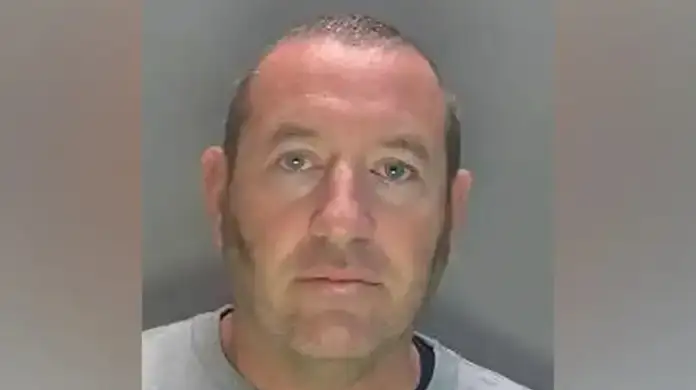
Serial rapist David Carrick was described as a monster – a Metropolitan Police officer whose actions were also branded abhorrent, manipulative and a vile misuse of power.
The 50-year-old’s mask of respectability was ripped away in 2021 as an avalanche of testimonies piled up from women describing the harrowing abuse he inflicted upon them.
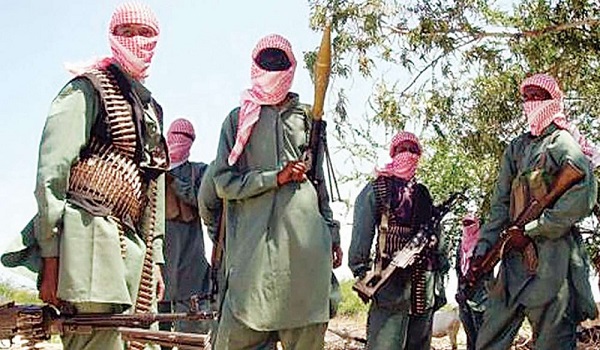
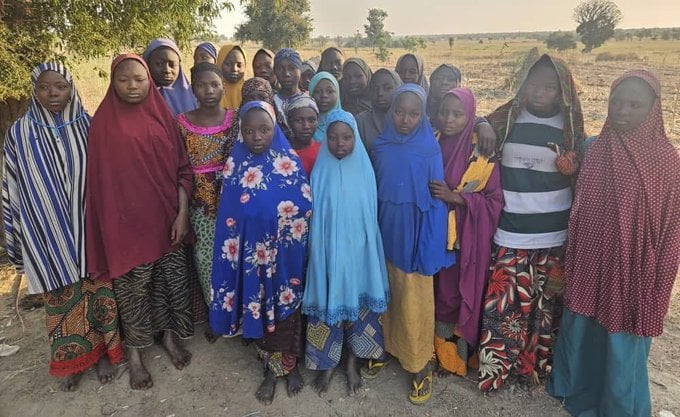
The father of one of the students abducted from St. Mary’s Private Catholic Primary and Secondary Schools in Papiri, Agwara Local Government Area of Niger State, has died due to complications related to emotional trauma.
The Chairman of the Christian Association of Nigeria, Northern Region and Federal Capital Territory, Rev. John Hayab, confirmed the development on Channels Television on Tuesday, disclosing that the deceased, Mr Anthony, died of a heart attack hours after the abduction of his three children.
Hayab said, “One of the parents of the abducted children from the school died yesterday of a heart attack. Mr Anthony died of a heart attack following the abduction of his 3 children.”
The cleric noted that public misinterpretations should not distract from the core issue, explaining, “People don’t understand that when you tell it as it is, you’re not speaking against anybody. You are only trying to state the problem.” Rev. Hayab revealed that parents and officials remain too shaken to engage the press.
He said, “The pains, the trauma, are still very fresh. We tried speaking to the parents today, and they were scared of speaking to us.” He disclosed that another attempt to reach families for confirmation ended in silence. Despite the grief, the school administration confirmed a glimmer of hope as fifty pupils found a way out of the terrorists’ forest enclave.
The proprietor of the school, Most Rev. Bulus Dauwa Yohanna, also confirmed the escape and safety of 50 pupils following verification visits to their homes.
“As much as we receive the return of these 50 children that escaped with some sigh of relief, I urge you all to continue in your prayers for the rescue and safe return of the remaining victims. For the records, 251 primary pupils; 14 secondary students; 12 teachers are still in the custody of the abductors,” the statement read, signed electronically by Daniel Atori, Media Aide to the bishop.
The school memo further detailed the pupil distribution before the attack. It read, “In the primary section, out of the 430 pupils, 377 are boarders; 53 are non-boarders.
“Aside the 50 that escaped, 141 were not carried away. As it stands now, 236 pupils, 3 staff children, 14 students, making a total 253, including 12 staff, are still with their abductors.”
A witness of the Department of State Service (DSS) on Wednesday told the Federal High Court in Abuja that Tukur Mamu, standing trial on alleged terrorism funding, was not at any time appointed by the Federal government to negotiate with terrorists that attacked -Abuja-Kaduna train in .2022.
The witness, who is an operative of DSS, said that Tukur sidelined the Chief of Defence Staff Committee put in place to negotiate for the release of those abducted during the March 28, 202,2, train attack.
Led in evidence by DSS lawyer, David Kaswe, the witness whose identity was not made public for security purposes said defendant “was not mandated by the government to engage in any form of investigation or negotiation with terrorists, but acted on his own for his personal benefit.”
The witness alleged that the defendant encouraged terrorists to discuss ransom payments with victims, collected money on their behalf, confirmed amounts, and “facilitated payments illegally.”
He further claimed that the defendant benefited financially from the ransom negotiations and possessed firearms unlawfully, and even provided terrorists with information on how to create a website.
He added that huge money recovered from the Kaduna residence of the defendant exceeded the threshold permitted by law, and that the defendant’s lifestyle “changed significantly” during the negotiation period.
“He was arrested in the company of four family members while on a trip to Egypt, and he bought two flash cars during the negotiation period,” the witness stated.
During cross-examination, defence counsel Johnson Usman, SAN, challenged several aspects of the DSS investigation.
Usman questioned whether the DSS, which has operatives at all Nigerian airports, verified how the defendant and his family travelled to Egypt to which the witness replied that he was not aware of their travel details but confirmed that the defendant’s passport was in DSS custody.
When asked if he was a diligent investigator, the witness affirmed that he was, though he admitted he did not open the defendant’s passport during the investigation, stating it was not necessary because he worked with a preliminary report.
The defence also queried inconsistencies regarding the negotiation process. Usman suggested that the terrorists asked victims to propose negotiators, and victims suggested several names.
The witness agreed that the victims introduced names, but insisted only the defendant (Mamu) agreed to engage with the terrorists, and maintained the defendant was not part of the CDS committee.
Usman further pressed the witness on hostage releases during the crisis. He noted that before the defendant’s involvement only one hostage had been released.
Meanwhile Justice Mohammed Garba Umar has adjourned further cross examination of the witness to January 29, 2026.
An Abuja-based lawyer, Ahmed Abdulrahman, accused of cyberbullying serving Senator Umar Shehu Buba, has been returned to custody at the Force Investigation Department FCID following his inability to perfect the bail conditions imposed on him by the Federal High Court in Abuja.
The legal practitioner was returned to custody alongside four others, namely Daure David, 35; Ishaq Muhammed, 25; Abdulrashid Musa, 30; and Nasir Abubakar, 21, as the 2nd to 5th defendants respectively and put on trial along with him.
Justice Rita Offili Ajumogobia of the Federal High Court in Abuja had on Monday slammed bail conditions considered to be tough on the lawyer.
Among other things, the Judge had ordered that the lawyer must produce two sureties who will stand for him throughout the trial.
In a ruling on his bail application, Justice Ajumogobia ordered that the two sureties must have landed properties in the Federal Capital Territory, and that the properties must have a Certificate of Occupancy.
Additionally, the judge ordered that the original copies of the Certificate of Occupancy be deposited with the court registrar.
Also, the two sureties must deposit their Passport with the Registrar of the court throughout the duration of the trial.
Justice Offili-Ajumogobia, while granting the lawyer bail in the sum of N5M and two sureties in the like sum, ordered that the lawyer must be kept in custody until he perfects the bail conditions.
However, three days after the bail was granted, the defendant was still unable to get sureties with properties in Abuja with a Certificate of Occupancy to stand for him, prompting his return to the custody of FCID.
Abdulrahman and four others are being prosecuted by the Inspector-General (IGP) on allegations bordering on cyberbullying Senator Shehu Umar Buba, Chairman, Senate Committee on National Security and Intelligence.
The IGP, in the charge, marked: FHC/ABJ/CR/526/2025 and filed by Anthony Egwu on October 6, named Abdulrahman, 41 years; Daure David, 35; Ishaq Muhammed, 25; Abdulrashid Musa, 30; and Nasir Abubakar, 21, as 1st to 5th defendants respectively.
The defendants were, on October 30, arraigned on an 11-count charge which also bordered on cybercrime, defamation, and advance fee fraud, among others.
They, however, pleaded not guilty to the counts, and Justice Ajumogobia ordered their remand at the Force Criminal Investigation Department (FCID).
In count one, the defendants were alleged to have, sometime in 2025, conspired among themselves “to commit an offence, to wit: cyberstalking against Senator Shehu Buba Umar.”
The offence is said to be contrary to Section 27(1)(b) and punishable under Section 21(1)(b) of the Cybercrimes (Prohibition, Prevention etc.) Act 2015 (as amended) 2024.
In count three, Abdulrahman, who is the 1st defendant, was alleged to have, sometime in 2025, intentionally sent a video via his TikTok handle with the user name “Kibanna Channel” and his YouTube channel to defame the lawmaker by linking him to sponsorship of banditry with a view to tarnishing his image as a serving Senator.
The suspect was alleged to have stated that “Senator Umar, a serving Senator of the Federal Republic of Nigeria, is a sponsor of banditry and called for his investigation, a statement you made by means of computer systems and network, knowing same to be false, for the purpose of causing breakdown of law and order and causing the Senator fear of death”.
The offence is also said to be contrary to Section 24(1)(5) of the Cybercrimes (Prohibition, Prevention, etc) Act 2015 (as amended) 2024, among other counts.
In one of the counts, Daure David was accused of attempting to collect N5 million from Senator Umar Umar under false pretence that the money would be used to settle those planning to protest against him.
The matter has been adjourned to December 9 for further mention.
As the world begins the 2025 United Nations 16 Days of Activism Against Gender-Based Violence, the International Federation of Women Lawyers (FIDA) is issuing an urgent warning: digital spaces—once celebrated for empowerment and connectivity—have become dangerous terrain for women and girls.
In a statement marking this year’s campaign themed “UNiTE to End Digital Violence Against All Women and Girls,” FIDA Global President, Ezinwa Okoroafor, said the rise of online abuse is deepening global gender inequality and threatening the safety, dignity, and human rights of millions.
“Digital platforms, while transformative, have also become spaces where abuse thrives,” Okoroafor said. “Cyberstalking, online harassment, and non-consensual image sharing inflict real and lasting harm, silence voices, and undermine progress toward gender justice.”
She called on governments, institutions and individuals to take “collective responsibility” for ending technology-facilitated violence, stressing that accountability, digital literacy and strong legal protections must be at the centre of global action.
“When technology is safe, inclusive, and equitable, it becomes a powerful tool for empowerment,” Okoroafor added. “Every action counts.”
Nigeria: ‘Digital violence is driving women out of online spaces’
In a parallel statement, FIDA Nigeria described digital violence as “one of the fastest-growing and most alarming forms of abuse today,” warning that technology is increasingly being weaponised against women and girls.
Signed by Country Vice President Eliana Martins and National Publicity Secretary Chineze Obianyo, the statement outlined a wide spectrum of online harms—ranging from cyberbullying and trolling to image-based abuse, impersonation, gaslighting, doxing and sextortion—each leaving deep emotional, psychological and reputational scars.
FIDA Nigeria said the mounting wave of digital intimidation has forced many women and girls to withdraw from online platforms entirely, depriving them of learning, earning, leadership and innovation opportunities. “The erosion of confidence undermines their rights to free expression, privacy, and participation,” the group said. “It also stalls national efforts toward gender equality and inclusive development.”
Despite laws such as the Cybercrimes Act of 2015 and the Violence Against Persons Prohibition Act, FIDA Nigeria lamented that poor enforcement, anonymity of perpetrators and weak accountability by tech platforms have created a climate of impunity.
‘Digital Violence Is Not Free Speech—It Is Violence’
As the 2025 campaign kicks off, FIDA is demanding decisive action from governments, law enforcement, tech companies and civil society.
FIDA Nigeria urged authorities to enforce existing laws, prosecute offenders swiftly, and adopt survivor-centred approaches. It called on technology companies to strengthen content moderation, enforce community standards, and educate users about digital safety and reporting tools.
“Digital violence must never be trivialised or dismissed as free speech,” the organisation said. “The safety of women and girls cannot end at the click of a button.”
Both FIDA Global and FIDA Nigeria insist that online spaces must uphold the same standards of dignity, privacy and respect that apply offline—and that eliminating digital abuse is essential to safeguarding human rights in the digital age.
Across Nigeria today, one of the most persistent yet least-discussed challenges threatening public safety is the growing disregard for traffic rules. From major highways to inner-city roads, a disturbing culture of carelessness has taken root—fuelled not only by motorists’ indiscipline but also by the disappearance of essential road signs and markings that should guide responsible road use.
This combination—citizen negligence and institutional neglect—has created a silent national crisis. Road Signs: The Missing Language of Our Highways
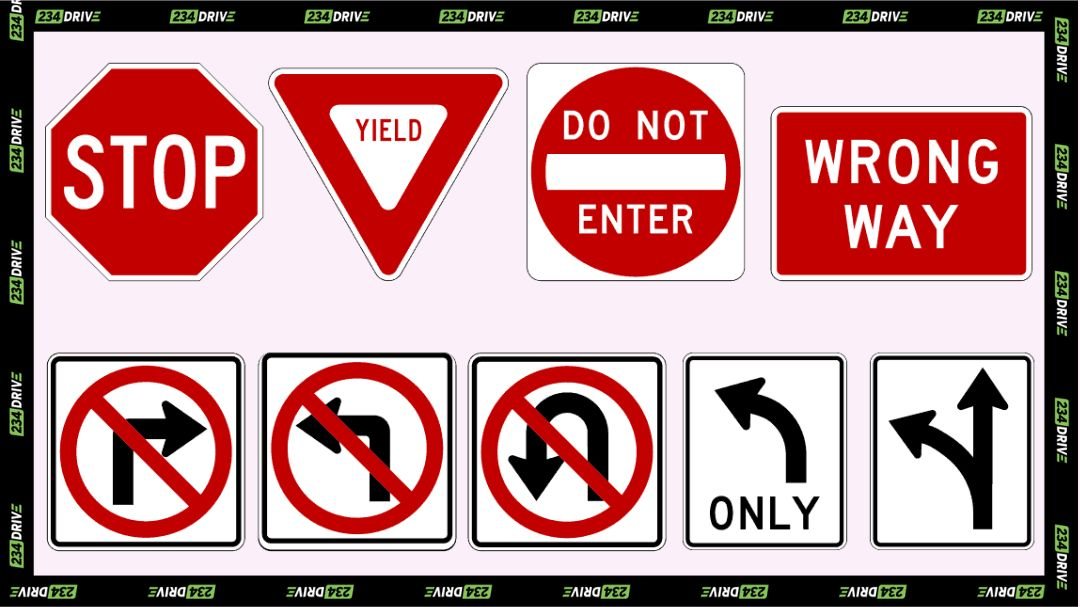
Traffic signs are the basic language of any functional road network. They tell drivers where to stop, slow down, give way, cross carefully, or expect hazards. Yet across Nigeria, these safety markers have largely vanished.
It is now common to find:
Zebra crossings without visible stripes, faded or never repainted for years, leave pedestrians to gamble with their lives.
Speed bump warning signs are completely absent, causing motorists to slam unexpectedly into bumps, sometimes leading to accidents.
Missing “Children Crossing” signs, especially near schools, creates dangerous conditions for pupils.
Damaged or uprooted road signs are left unreplaced for months or years.
Non-existent traffic lights at critical junctions, or lights that function randomly like seasonal decorations.
Our roads have become wordless spaces—highways without instructions—and yet we expect drivers and pedestrians to magically conform to rules they can no longer see.
When Citizens Become Victims of System Failure
It is easy to blame Nigerians for recklessness on the road—and indeed, many motorists display shocking impatience, speed, and disregard for rules. But the truth is more complex: you cannot obey a sign that does not exist.
A driver approaching a village at night with no speed-limit sign, no reflective road markings, and no bump warning is being asked to drive safely with half the required information. Pedestrians at a zebra crossing that has faded into the asphalt cannot be sure cars will stop because the motorist often does not see any crossing at all.
This infrastructural neglect feeds indiscipline. When the physical environment does not promote order, chaos becomes the default.
The Human Cost: Accidents That Should Never Happen
Road traffic accidents remain one of the leading causes of death in Nigeria. The Federal Road Safety Corps (FRSC) has repeatedly noted that preventable crashes—those caused by speeding, poor visibility, and lack of proper signs—account for a significant number of fatalities.
Some everyday tragedies include:
Motorists crashing into unpainted speed bumps.
Pedestrians knocked down while using an unmarked zebra crossing.
Cars veering off poorly marked roads at night.
Children injured near schools without appropriate signage.
These are not accidents. They are consequences of systemic failure.
Two Problems, One Crisis: Indiscipline + Neglect
Nigeria’s traffic problem is a two-way street:
Government failure to maintain road signage and markings
Public disregard for traffic rules—even where signs exist
Even when road signs are present, many drivers behave as if they are optional suggestions. Some refuse to wait at pedestrian crossings. Others treat traffic lights as decorations. Motorcyclists and tricycles weave through lanes as though the rules do not apply to them.
But the absence of signs has worsened the culture of disregard because it removes the daily reminders that shape responsible behaviour. In countries with high road discipline, signs are not merely decorative—they are constant reinforcements of the law.
Rebuilding Order: What Must Be Done
To address this national problem, a comprehensive approach is needed:
1. Restore and Maintain Road Infrastructure
Repaint Zebra crossings across cities and highways.
Replace missing road signs and install reflective signage.
Introduce solar-powered traffic lights, especially at busy junctions.
Mark speed limits clearly and consistently.
2. Enforce Traffic Laws More Strictly
FRSC and state traffic agencies must enforce compliance without fear or favour. Discipline grows where consequences are certain.
3. Public Education and Civic Training
Nigerians must be taught—through campaigns, schools, and media—that road signs are not suggestions; they are life-saving tools. Pedestrians, too, must understand their rights and responsibilities.
4. Community Ownership of Road Assets
Local communities should be empowered to report missing signs, vandalised infrastructure, and dangerous road conditions quickly.
Conclusion: Our Roads Reflect Our Values
A nation that cannot maintain simple road signs is revealing something deeper—an erosion of civic responsibility, institutional efficiency, and respect for life.
If Nigeria is to reduce road accidents, protect pedestrians, and restore order, then both government and citizens must act. Repainting a zebra crossing may seem a small task, but to a child crossing the road on a school morning, it could be the difference between safety and tragedy.
Traffic rules are not about control—they are about preserving life. And until both the people and the authorities begin to treat them as such, the roads will remain one of the most dangerous places to be in Nigeria.
Hon. Justice Ibrahim S. Galadima is a judge of the National Industrial Court of Nigeria (NICN), Jos Judicial Division.
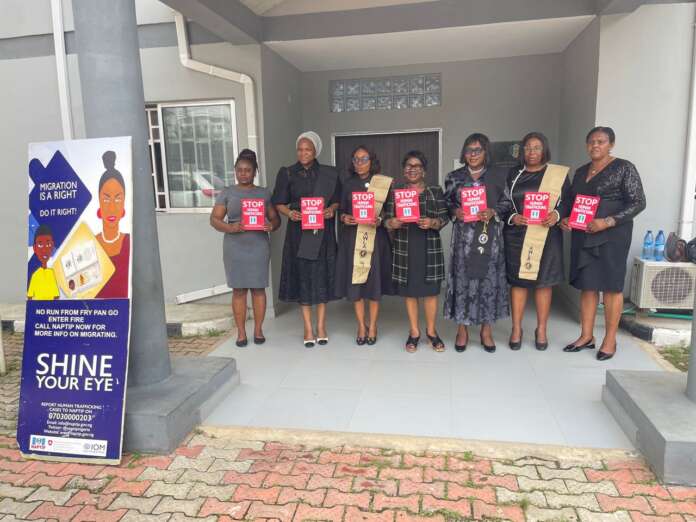
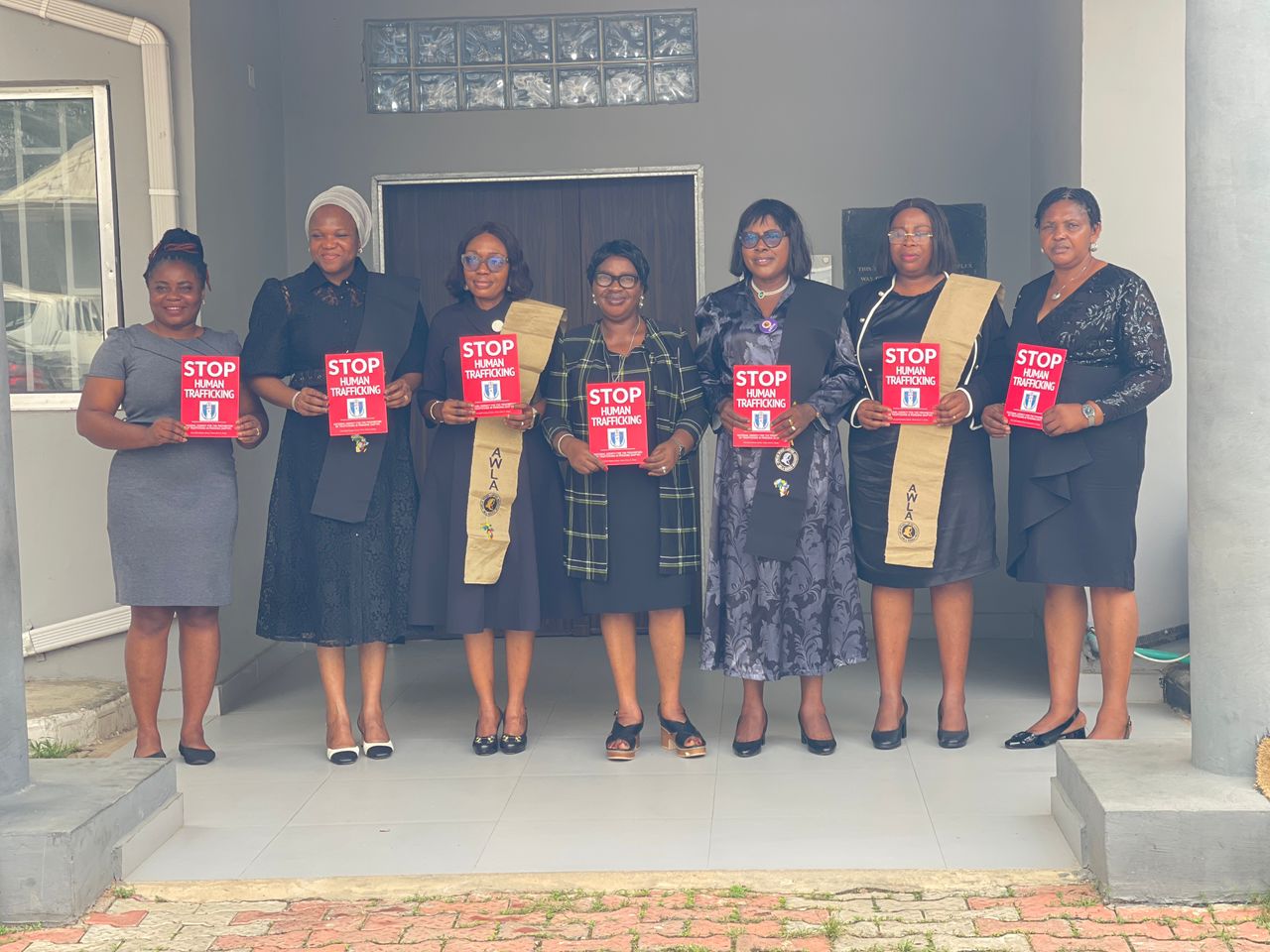
The National Executive Committee of the African Women Lawyers Association (AWLA) Nigeria, led by its National President, Mrs Caroline Ibharuneafe, has paid a courtesy visit to the National Agency for the Prohibition of Trafficking in Persons (NAPTIP) to strengthen strategic collaboration in the fight against discrimination, exploitation, and gender-based violence across the country.
The delegation was received by the NAPTIP Zonal Coordinator, Mrs Comfort Agboko, who commended AWLA for its consistent advocacy and frontline role in protecting the rights of vulnerable women and children.
During the meeting, Mrs Ibharuneafe emphasised the urgency of deepening partnerships between legal advocates, enforcement agencies, and civil society groups to ensure that gender-based abuses are prevented, prosecuted, and ultimately eradicated.
She noted that AWLA is expanding its nationwide interventions and is committed to supporting NAPTIP with legal expertise, community sensitisation and survivor-focused programmes.
“We believe collaboration is the strongest tool we have. When agencies and NGOs work as one, perpetrators have no hiding place,” she said.
In her remarks, Mrs Agboko pledged NAPTIP’s readiness to work closely with AWLA, describing the association as a critical stakeholder in the fight against human trafficking, harmful practices and gender-related crimes. “This partnership will help amplify our collective impact. Together, we will ensure that vulnerable groups—especially women and children—receive the protection and justice they deserve,” she stated.
Both organisations agreed to a series of joint programmes, including legal clinics, public sensitisation campaigns and rapid-response support for victims of abuse.
The visit marks a renewed commitment by AWLA and NAPTIP to advancing a safer and more equitable society, where the rights and dignity of women and girls are fully upheld.
The federal government has revealed that 24 of the schoolgirls abducted from Government Girls Secondary School, Maga, in Danko/Wasagu Local Government Area of Kebbi State, have been rescued.
The Special Adviser to President Bola Tinubu on Information and Strategy, Bayo Onanuga, confirmed this in a statement issued on Tuesday.
Details of the efforts that led to the rescue of the students are still sketchy at the time of this report, but an official announcement is expected tonight.
On November 17, bandits attacked the school and abducted 25 female students after killing an official and injuring a security guard.
According to a BBC report, two of the girls escaped from their captors. Quoting Hussaini Aliyu, an official from Danko Wasagu LGA, the BBC reported that the two students ran away as they were being led into the bushes by the bandits and escaped across farmland.
On November 19, Hussaini Aliyu, chairman of Danko/Wasagu LGA in Kebbi, released names of the 25 abducted schoolgirls.
The list of the kidnapped students, seen by TheCable, is organised according to their class categories.
After the incident, Bello Sani, commissioner of police in Kebbi, said additional police tactical units, alongside military personnel and vigilante groups, have been deployed in the area.
Sani said the combined team was combing suspected escape routes and surrounding forests in a coordinated search-and-rescue operation aimed at recovering the abducted students and apprehending the perpetrators.
Waidi Shaibu, chief of army staff (COAS), also directed troops of Operation FANSAN YANMA to leave no stone unturned in the ongoing search-and-rescue operation for the abducted students.
President Bola Tinubu also directed Bello Matawalle, minister of state for defence, to relocate to Kebbi over the abduction of schoolgirls.
Tinubu ordered Matawalle to move to the state “to monitor security efforts to secure the release of the abducted students”.
Famous Ondo farmer and businessman, Ayoola Fadayomi, aka “MARD MAN”, has refuted recent allegations that he was involved in land grabbing, cultism, and sponsoring attacks against residents of the Igba community in Ondo East Local Government of Ondo State or anywhere else.
Reacting to a story published by Sahara Reporters on Saturday, November 22, 2025, Fadayomi, in a statement on Tuesday, November 25, 2025, dismissed the claims as baseless fabrications aimed at discrediting him and destabilising the peaceful community. He further noted that the plot was politically motivated, orchestrated by a certain individual who is attempting to twist facts and mislead the unsuspecting members of the public.
Regarding the land-grabbing allegation, Fadayomi equally clarified that he was not involved in any illegal sale of community land as purportedly published; instead, he accused his detractors of land-grabbing themselves to suit their selfish interest against extant rules in the state. He emphasised that the real issue lies in the protracted criminal and unlawful activities of one Ojo Ajisaf, whose modus operandi is to set people up by raising false petitions to the Police alleging attack on his person and raising unfounded alarm of cultism, armed robbery, attempted murder, etc.
“Ojo Ajisafe usually decorates himself with what looks like blood, akin to acting a Nollywood script to whip up sentiments, give false narrative, and paint a picture of machete attacks or brutal, violent crime. This is what he normally present to the Police in most instances with fake MRI scan to hoodwink the Police in order to facilitate the arrest of people they marked as their enemies and take their lands, Police then will arrest these innocent ones charge them to magistrate court, and as we all know Magistrate Court doesn’t have jurisdiction to prosecute such matter but will only refer the case to DPP to take action. This may take months, making those who have been wrongfully accused languish in a correctional facility in perpetuity, and when their matters are finally decided at the Court, Ajisafe and his sponsors will use their connections to keep them for years in the prison facility.
“This is their heinous plan for me, too, but sadly for them, I beat them to their vicious and wicked games. This individual, Ojo Ajisafe, boasts freely to the hearing of so many people that he has the backing of a wealthy and well-connected personality in the country, including the Inspector General of Police and other heads of security agencies in the country. It is on record that several Ondo residents have suffered this fate at the hands of Ajisafe, his ilk, backer and pay master, and they have used this illicit tactic to unlawfully take people’s land illegally in Ondo State.
“I found it irresponsible for anyone to even drag my name into any land dispute in the Igba community in Ondo East. I don’t have any land in that part of the state, so what could have been my interest in Igba? This is a serious allegation designed to malign my personality and soil the good name I have built for many years, and I assure them this will never work. Nigeria is governed by law and order, and no one, no matter how highly placed, is above the law, including Ojo Ajisafe and his co-travellers.
“I have also informed our peace-loving and highly revered Governor in Ondo State to help us intervene and probe these wild allegations against me without prejudice so as to prove my innocence. I have also taken a step further by informing my legal team to sue for defamation against Ojo Ajisafe for maligning and damaging my reputation. Their attack on me is totally unacceptable, irresponsible, reprehensible, and preposterous.
“I also saw in the publication where I was nicknamed, “Mad man.” This is absolutely infantile in its entirety. It is unfair and also not true, and I need to accurately set the record straight quickly. Back in the day, during my secondary school in the 90s at St. Joseph College Ondo, I was a skilful footballer, and my admirers and colleagues in school gave me the appellation “MARD MAN,” which stemmed from a popular Indian film during that time. These facts are there and can be seamlessly verified by anyone who cares to know the truth. Responsible citizens hinge on facts, and not fiction and posterity will judge everyone accordingly.
“It is also not correct that I am the Chief Security Officer to a former member of the House of Representatives and a leading political figure in Ondo State, Hon. Joseph Iranola Akinlaja. I am not a member of any security agency, so in what capacity would I be serving as a CSO to Hon. Akinlaja or anyone else? This jaundiced narrative is a lie from the pit of hell and should be taken with a pinch of salt.
“Meanwhile, SaharaReporters, as a watchdog, should not undermine the integrity of its reporting. The platform’s commitment to balance is crucial for maintaining credibility and trust in its narratives. When people like Ojo Ajisafe presented a misleading story with libellous content, the honourable thing for SaharaReporters to do was to confirm the veracity of the story before going to press. That is what the ethics of the profession demanded and should be sacrosanct.”
I have read with keen attention and deep reflection the extensive statement issued by Sir Ifeanyi Ejiofor, former Lead Counsel to Mazi Nnamdi Kanu. His sober, detailed, and painfully honest account has confirmed what many of us particularly those familiar with high-stakes constitutional litigation have feared for years.
Sir Ejiofor’s account is not a personal lamentation; it is a forensic dissection of how a serious, internationally sensitive criminal trial descended into amateur theatrics, misinformation, and catastrophic mismanagement.
As someone who has repeatedly warned about the danger of turning a matter of life, liberty, and constitutional justice into a stage for Instagram performers, social media “legal consultants,” and content-hungry opportunists, I wholeheartedly agree:
If the old, competent, battle-tested legal team had been allowed to function without interference, the outcome of this case would have been entirely different.
Under Ejiofor and later Prof. Mike Ozekhome, SAN, the legal team achieved monumental victories in multiple courts, the unprecedented Court of Appeal judgment of 2022, sustained diplomatic engagements with international actors and strategic litigation that had positioned Mazi Nnamdi Kanu for a major breakthrough. These were not coincidences; they were the product of strategy, discipline, and mastery of criminal procedure.
It is, therefore, tragic indeed heartbreaking that all of this progress was upended because those who lacked the depth, experience, or maturity to handle such a delicate matter chose personal glory over professional responsibility, and content creation over legal strategy.
Sir Ejiofor rightly highlighted how: sensitive legal strategies were leaked to individuals with no understanding of high-level litigation; senior advocates and well-respected legal minds were pushed aside; the defence was fractured at the very moment unity was required; the trial was turned into a public circus instead of a carefully managed legal process; self-representation was encouraged in a matter that demanded structured, technical, and coordinated defence.
In criminal litigation, especially one involving national security, international law, and constitutional violations, every misstep is a weapon for the prosecution. Every careless public statement becomes a judicial landmine, and every contradiction reinforces the State’s case. This is exactly what happened.
The tragedy now confronting the nation and the grave injustice done to Mazi Nnamdi Kanu is a direct consequences of the negligence, inexperience, and harmful theatrics of those who hijacked the legal process.
If justice is to be restored, if this travesty is to be corrected, and if the struggle for fairness, liberty, and constitutional order is to be reclaimed, then:
The legal team must be rebuilt around professionalism, not popularity.
Senior advocates with track records must retake control of strategy.
All forms of social-media showmanship must be eliminated.
A unified, disciplined defence is urgently required.
International legal and diplomatic engagements must be revived. This is a time for competence, not confusion. A time for strategy, not selfies. A time for advocacy, not entertainment.
I unequivocally agree: Had the old, experienced, coordinated team remained in charge, the trial outcome would not have been what we witnessed. Nigeria has lost not only time and opportunity but also a chance to uphold justice at a critical moment in our history.
The path forward demands humility, unity, professionalism, and a return to real lawyering.
Our site uses cookies. By clicking “Accept All Cookies”, you direct Law and Society Magazine to store cookies on your device and disclose information in accordance with our Cookie Statement: cookie policyACCEPTREJECT
Privacy & Cookies Policy
Privacy Overview
This website uses cookies to improve your experience while you navigate through the website. Out of these cookies, the cookies that are categorized as necessary are stored on your browser as they are essential for the working of basic functionalities of the website. We also use third-party cookies that help us analyze and understand how you use this website. These cookies will be stored in your browser only with your consent. You also have the option to opt-out of these cookies. But opting out of some of these cookies may have an effect on your browsing experience.
Necessary cookies are absolutely essential for the website to function properly. This category only includes cookies that ensures basic functionalities and security features of the website. These cookies do not store any personal information.
Any cookies that may not be particularly necessary for the website to function and is used specifically to collect user personal data via analytics, ads, other embedded contents are termed as non-necessary cookies. It is mandatory to procure user consent prior to running these cookies on your website.