Home Blog Page 180

Tinubu converts Maryam Sanda’s pardon to six-year sentence after public outrage, signs new clemency list and justice reforms

President Bola Ahmed Tinubu has reversed the pardon earlier granted to Maryam Sanda after widespread public backlash.

Sanda, convicted in 2020 for killing her husband, Bilyaminu Bello, will now serve a 12-year sentence instead of going free.

She had spent six years and eight months at the Suleja Medium Security Custodial Centre before her name appeared on the clemency list.

The President’s decision follows intense criticism from Nigerians who saw her pardon as a betrayal of justice.

Many condemned the initial pardon as a blow to the fight against gender-based violence and impunity.

The revised clemency list, signed by President Tinubu, includes 86 individuals who received either pardons or commuted sentences.

The President stated that the review was guided by national security, public sensitivity, and the need to maintain public confidence in the justice system.

Convicts of kidnapping, fraud, drug trafficking, and arms dealing were deleted from the original list after consultations with the Council of State.

Others had their death sentences reduced to life imprisonment rather than full release.

Among those granted clemency are Oroka Michael Chibueze, Adesanya Olufemi Paul, Daniel Bodunwa, and Ex-Corporal Michael Bawa.

Notably, Tinubu also approved posthumous pardons for Major General Mamman Vatsa, Ken Saro-Wiwa, and members of the Ogoni Nine.

Other notable names include Herbert Macaulay, Farouk Lawan, and Anastasia Daniel Nwaobia.

To improve accountability, Tinubu ordered that the Presidential Advisory Committee on Prerogative of Mercy be moved to the Ministry of Justice.

He also directed the Attorney-General to issue new clemency guidelines requiring mandatory consultation with prosecuting agencies.

Officials said this ensures only qualified individuals benefit from presidential mercy.

The Nigerian Correctional Service has received the approved list for immediate implementation.

President Tinubu thanked citizens and stakeholders for their feedback on the controversial matter.

He reaffirmed his commitment to justice reform and fairness in Nigeria’s judicial system.

The decision, though controversial, signals a shift toward stricter oversight of presidential pardons in the country.

FRN v Okeke: Taming domestic violence (2)

By Ebun-Olu Adegboruwa, SAN

NTRODUCTION
If you tag them as the celebrity couple of the times, you will not be far from the truth. They dazzled us with their fairy tales of romance, of faithfulness and loyalty, and of endless love and mutual satisfaction. But all that façade was shattered last week when the bubble burst between the caring husband and his darling wife. We saw a distressed angel singing the songs of trauma, abuse, and caging.

The internet was agog with messages of solidarity, empathy, and then condemnation of the supposed aggressor. She should rank to be his daughter in love, deserving of the best of care, attention, and doting. Listening to the tales as narrated in her videos then gave a different impression which should never be associated with his personality and profile. The dust had not settled when we heard his own side of the drama, of alleged immaturity, drug abuse, and other sordid tales.

The crowd of supporters became divided. Who is to blame? Which story is more plausible? How can they be reconciled? Online in-laws and matrimonial experts devoted pages upon pages of their blogs and social media handles to analyze, dissect, and pontificate on the romantic adventure that seemed to have hit the rocks.

Good enough, family members and loved ones on both sides have since intervened to secure harmony, reconciliation, and peaceful reunion. That has been the prayer and good wish of all persons of conscience for divine intervention to restore conjugal bliss to the admirable couple.

The case has however brought to the fore the need for legislative intervention to stem the monstrous tide of domestic crisis, marital woes, and internal wranglings between couples and family members. The family is the foundation of every society and it must be protected, secured, and preserved. Governments at all levels must make it a matter of urgency to convene stakeholders to work out the strategy of enhancing matrimonial peace through legislation.

The Matrimonial Causes Act, the Marriage Act, and the Family Law of the various States are all of ancient origin and thus outdated to address the trending issues between couples and family members. These pieces of legislation were inherited from the colonial powers and they do not reflect the unique cultural identities of the people, their faith, and the impact of their traditions on the marriage institution. The concept of cultural and traditional arbitration all have their good and ugly effects on the oldest company of mankind.

So too it is for religious interventions, some of which have worked to revive collapsed unions while some have ruined them completely. From all indications, the concept of marriage as a union of one man and one woman to the exclusion of all others is strange to the Nigerian culture and tradition. Traditionally and culturally, marriage is seen mainly as a joint project involving the nuclear and the extended branches.

While the couple is free to develop themselves and work out a template for the success of their union, the issue of constant oversight by their parents, siblings, friends, and colleagues should not and cannot be discarded. Permit me at this juncture to return to the case of FRN v Okeke as reported in (2025) 16 NWLR (Pt.2011) 293, a judgment of the Supreme Court of Nigeria which highlights the evil of domestic abuse and the need for urgent and deliberate action.

The Effect of Duration Between Act of Accused Person and Death of Deceased in Determining Cause of Death

In determining cause of death, the duration between the suspected act of death (i.e. the actus reus) and the death is not important. Accordingly, an accused person could be guilty of the offence of murder or manslaughter even if the duration is long. In so far as the court comes to the conclusion correctly that the act of the accused person caused the death of the deceased, a conviction and sentence will be proper in law.

The Effect of a Break in Chain of Causation on Guilt of Accused Person

In order to hold an accused person criminally responsible for murder, the chain of causation must not be broken. Once there is a broken link in the chain of causation, that broken link must be resolved in favour of the accused person as it affects the actus reus of the offence. Put another way, where the injury which was inflicted prior to the death of the deceased is not the proximate, legal, or direct cause of the death of the deceased, the benefit of doubt must be given to the accused person because the available evidence in such a situation does not pin the accused person down to the death of the deceased.

This is so because of the novus actus interveniens and nova interveniens, id est that there is an intervening or supervening cause. Thus, the cause of death of the deceased in a murder trial should be established with certainty because the act which caused the death is, in most cases, a certain act.

Per SANKEY, J.S.C. at pages 319–320, paras. E–C:
“Thus, the injury sustained on the date in question for which the deceased was treated and discharged overnight, was clearly not the proximate, legal, or direct cause of death. This is a classic case of where there are obvious novus actus interveniens (intervening) and nova interveniens (supervening) causes of death. Accordingly, in the face of possible multiple causes of death, not excluding the unexplained healed scar on the neck of the deceased which remained unexplained by the appellant, largely due to the absence of an autopsy report which was rightly highlighted by the court below, the appellant undoubtedly did not prove positively that it was the act of the respondent that led to the death of the deceased.

At the risk of repetition but for the sake of emphasis, the cause of death which is stroke due to hypertension, is not traceable to the injury inflicted on the deceased’s head by the respondent, which had long since healed, and so was not even considered significant, contributory or even worthy of mention in the death certificate. Since it cannot therefore be said with any degree of certainty that it was the act of the respondent that led to the death of the deceased, the doubt raised in the mind of the court below from the evidence presented by the appellant, must be resolved in favour of the respondent. That’s the law.”

The Meaning and Synonyms of “Scar”

“Scar” means a mark left on the skin or within body tissue where a wound, burn, or sore has not healed completely and fibrous connective tissue has developed. Synonyms of “scar” are “mark,” “blemish,” “scratch,” and “wound.”

LESSONS FROM THE CASE

The events leading to this case happened a very long time ago, so I suppose that the respondent must be free by now, given that the Supreme Court dismissed the appeal against his acquittal by the Court of Appeal. But I can see the pain in the hearts of the family of his father, who seemed to have died in vain and for no good cause. There are so many lessons to learn from the case.

ESSENCE OF FAMILY VALUES

First, it should be the responsibility of the head of every family through the head and body to “train up” their children at their tender ages, in sound doctrine, obedience, mutual respect, and other family values. Whatever provokes a brother to take out a bottle to hit his own blood sister speaks to lack of proper home training and a faulty foundation.

Siblings are to dwell together in love and unity, with mutual care and respect as the basis of cohabitation. If and when such disputes arise that cannot be resolved between them, they should be trained to escalate and not retaliate. A boy should learn to report his sister to his father or mother and not to plan to strike her with a bottle or knife.

And if at all he was provoked to such an intolerable limit by the sister, his planned action should abate immediately his father appears. The fact that the respondent still intended (that is the narration) to hit his sister with the bottle despite the presence of his father on the scene also speaks to improper breeding.

FAILURE OF THE HEALTHCARE SECTOR

The other lesson from this case is the growing issue of medical negligence, wrong diagnosis, and failure of the healthcare sector generally.

From the facts of this case, the respondent’s father went to lodge a report against the respondent at the Police Station by himself. The Police Officer at the Police Station took him to the Teaching Hospital in Abuja. He was treated overnight and discharged. After over two weeks of the incident, the deceased suffered a stroke. He was taken to a private hospital, St. Mary’s Catholic Hospital Abuja, where he was attended to and received treatment until he died on 6th November 2011.

A person hit with such a heavy object as a bottle, with force by a man, on his head, should be kept in the hospital for proper observation. Comprehensive laboratory tests, extensive scans, and other medical examinations should be carried out to determine the extent of damage. The father was taken to a teaching hospital, which should be the tertiary level of medical care with the best facilities and equipment, but he was treated overnight and discharged. There was no follow-up treatment to monitor his progress until he suffered a stroke two weeks later.

FAILURE OF PROSECUTION

The respondent in this case was arraigned before the High Court of the Federal Capital Territory on a charge of culpable homicide punishable with death under section 221 of the Penal Code. Perhaps the complainants and the police were overwhelmed with emotion which clouded the exercise of proper judgment in drafting the charges.

In a case such as this, you cannot approach the court with a single charge strategy, especially in a domestic case where witnesses may be unwilling to allow the family to suffer the double tragedy of losing the father and the son. Alternative charges of manslaughter, assault occasioning harm, or such other legal handcuffs should have been slammed upon the respondent.

The reality of this tragedy may be that the same respondent may now be the head of the family to manage the assets of the deceased father. Such is life.

Read Also: FRN vs Okeke: Taming domestic violence (1)

Will PDP masquerades fight in the open again?

Here I come from, masquerades do not eat or sit with women. Masquerades do not even eat, do they? They are from another world and are treated like that. In Yorubaland, they arrive through the ‘Igbale’ forest and return to the land of the ancestors via the same route, accompanied strictly by the initiated. There are things that the initiates must not do in the presence of the uninitiated.

I still remember vividly the visits of the family masquerade to my father. He is the eldest living male, and the representatives of the ancestors always accorded him the respect of an ancestral visit once in three years. Madigbol’esu (do not collide with Esu) is a fierce and feared masquerade. And when he came to the earth, everybody knew. Before his arrival in our compound, my father would have gotten ready the drinks of the elders. Once ‘Baba’ arrived, all of us children and my mother would relocate to another part of the house. Daddy, his brothers, and Madigbol’esu would go into the sitting room, doors and windows securely locked.

All of us knew the drill. Even the dancers that accompany the masquerade knew the drill. For years, in PDP, the elders, the initiates, and the novices have been talking at the same time. They have hurled sacred things at one another in the market square. Once again, the PDP masquerade is eating in the open. Like they used to, and I am warning them, like I did many times in the past: “Awo ko gbodo t’oju ogberi da’fa nu.”

Why is it so difficult for elders of the PDP to go into a room, secure the doors and windows before sharing the drink of the elders? Why are they fighting in front of the uninitiated? Why are the PDP masquerades yanking each other’s masks in front of women and uninitiated men? Do they need an oracle to tell them that an unmasked masquerade is no longer a masquerade? He’s just like me or the next guy.

Am I supposed to respect that man (yeah, that is what a disrobed masquerade is — an ordinary man) even if he still attempts to speak in a guttural voice?

These disrobed men and women had held many conventions in the 16 years they were in power. Each one had its own colourful drama. But I thought that meant these elders came away from each convention with a lesson. I thought the PDP would have learnt at least half a dozen lessons, from where the APC would have to borrow half a dozen leaves. But no, the lessons are still far away, unlearnt.

PDP and its colorful ways. The party never disappoints. Please, who started this idea of printing one, only one nomination form, for an elective position? I know that it was in PDP I first heard of it years ago. Is this not supposed to be a democracy? PDP is People’s Democratic Party. The party, I thought, had planned a peaceful convention. Then it decided to print just one form for the office or position of the Chairman of the party! A party that is afflicted on all sides decided to court more affliction. If there is no consensus, how can there be a consensus candidate?

Now, the single form has been obtained, filled, and submitted. Alhaji Sule Lamido is asking for a form or he will go to court. Won’t that muddy up the already troubled pond? What will PDP do now — call in deliverance pastors for prayers, reprint another form, or fish out a photocopy someone is hiding?

I remember a governorship primary for a southwest state that was held in another southwest state. The ‘wuruwuru’ event held after one name had already been sent to INEC. The winner of the evening market ticket brandished his black-market ticket and celebrated it like he would be sworn in the following morning. All kinds of drama followed without a happily ever after.

Who remembers the days when PDP gave one aspirant the ticket and another the flag? The occupiers of the party secretariat carried on like Lagos Omo Onile who would sell one plot of land to 10 people and watch from afar as the ‘landlords’ tore one another’s agbada. Old men and women, they promised to feed the multitude with food they didn’t have.

For us in the newsroom through those 16 years of PDP in power and in office, the stories were interesting. The game provided great headlines. But even as the media houses smiled to the bank, they knew PDP was dancing at the edge of a cliff. We all knew it would not end well. We just did not know when it would end. And when it did, it was thunderously deafening — that fall.

So, why is PDP, that is supposed to be scrambling to its feet, doing this again in 2025? Why is the party claiming there was a consensus when all was not well? And why is this break in the ranks coming from an elder like the former governor of Jigawa State, a respected politician and leader?

What does this mean, really? With so many governors and senators, representatives gone to APC, days to its much-awaited convention, can the PDP afford this new drama?

Years ago, I spoke with one of the elders of the PDP on the morning of the party’s convention. I asked if it was not possible to do the PDP convention magic and still elect their officers. When he sounded more unhappy than confident, I knew the masquerades were on their way to the market. And the trip was short. With windows open, doors ajar, the masquerades went for one another’s throat, the women and children watching in shocked silence. Each elder had to prove that he was a bigger elder. A community where there are no leaders is a community on its way to extinction.

The gray hair on the heads of PDP elders must begin to count for something from here on. The old men must sit together and stop behaving like children. The way they are all dragging at their umbrella, it won’t be long before what remains of the PDP covering finally peels away. And when the harmattan comes, the man who wears only his underwear will know the true meaning of cold.

So, will the much-awaited convention of the PDP be its end? Will the PDP masquerade find its way back into the sacred grove? Now that the uninitiated have seen the mouth of the ancestral being, can the masquerade still claim that he is not a mere man? Are the APC masquerades learning anything?

From tears to triumph — the woman who waited 18 years, and God answered with five miracles

For 18 long years, Chinyere Onyebuchi Elendu lived in the quiet ache of waiting — waiting for the sound of a baby’s cry to fill her home in Aba, Abia State. What began as a love story soon turned into a journey of heartbreak, faith, and, finally, divine reward.

“I told myself that as long as I’m alive, I must bear children for my husband,” she said, her eyes glistening with both memory and gratitude. “Even when people said I should rest, I refused to give up.”

A Marriage of Faith and Patience

Chinyere met her husband through a family friend. Their love story seemed ordinary at first, until the waiting began. They got married on December 19, 2006, filled with the dreams every young couple holds — laughter, love, and little feet around the house.

But a year passed. Then two. Then ten. Doctors’ reports came and went, each one colder than the last. “I conceived in 2009,” she recalled softly, “but my baby boy died two months after birth.”

That loss cut deeply. Yet, instead of surrendering to despair, Chinyere and her husband fought harder — visiting hospitals from Abuja to Cotonou, Asaba, Lagos, and Port Harcourt — chasing hope wherever it flickered.

“We did nine IVFs. All failed,” she said. “Sometimes after tests, I couldn’t move my body. I would be in pain, crying through the night while the world slept.”

Between Hope and Despair

Each failed treatment bruised her body and spirit. People whispered. Some called her names. Others offered pity that stung more than silence. Still, her husband stood beside her — calm, patient, unshaken.

“When I got tired, I’d tell him. But leaving my marriage was never an option,” she said. “He was not the cause of my pain. We carried it together.”

By 2024, after nearly two decades of medical disappointments, Chinyere decided to stop struggling. “I told God I was done,” she said. “I handed everything over to Him.”

And that’s when heaven answered.

The Miracle Call

It was April 2024 when she went to the hospital, expecting a routine test about her menstrual cycle. “They said they’d run a pregnancy test. I was nervous because that was the last thing on my mind.”

Minutes later, a nurse called her — screaming with joy.

“She told me, ‘Madam, you’re pregnant! And the test shows thick red — not one baby!’”

At first, Chinyere thought it was a cruel joke. “I pinched myself. I couldn’t believe it. I told God, please, let this not end in tears again.”

Four weeks later, the ultrasound confirmed multiple heartbeats. “That was when I knew this was not a dream. For the first time in years, I crossed the line where pregnancies used to end.”

Five Tiny Miracles

The journey was not without trials. At eight months, Chinyere suffered placenta previa, a dangerous condition that caused heavy bleeding. “I laid my hands on my stomach and prayed. The bleeding stopped before we reached the hospital.”

Days later, doctors performed a cesarean section. When the surgery was over, she heard the cries — not one, but five tiny voices.

“I couldn’t stop crying,” she said. “After all the pain, God gave me five at once.”

The babies were moved into incubators, and she visited them daily. “The doctor told me to speak to them — that hearing my voice would help them grow stronger. Two weeks later, they were in my room.”

Her husband’s joy was indescribable. “When I called him, he was singing. The hospital had already told him. We cried and laughed together.”

Life After the Miracle

Now, her home is full — of laughter, cries, and endless feeding schedules. “Feeding five babies is no joke,” she admitted with a tired smile. “I breastfeed for almost three hours. Sometimes I don’t sleep until midnight. But each cry reminds me that God remembered me.”

Her husband, a borehole driller, and her mother, who has stayed since the birth, have become her support pillars. “People are trying to help. But it’s not easy — feeding five children in this economy,” she said.

Hope for Others

Since the birth, women struggling with infertility have been visiting her home in Aba, hoping to “tap into the blessing.” Some have since conceived.

“Barrenness is not something I wish on anyone,” she said. “If God could remember me after 18 years, He can do it for anyone. I did nothing special — it was just mercy.”

A Testimony That Touched Heaven

From the pain of 18 childless years to the joy of five babies, Chinyere’s story is one of unshakable faith and grace beyond reason.

As she cuddles her children, her voice trembles with emotion: “These babies came when all hope was lost. God waited until the world had written me off — and then He wrote my story again.”

Mrs. Chinyere Elendu can be reached on 07035371131

What Are You Teaching Your Children? Video of boy praying calmly after being trapped in elevator melts hearts

The video of a young boy who chose prayer over panic when he got trapped alone in an elevator has gone viral.

In the touching clip, the little boy could be heard praying softly, saying,

“Lord, please open the door… I’m a little scared but I know You’re here with me.”

Moments later, the elevator doors miraculously opened, and he was reunited with his family.

The video has since melted hearts across social media, with many praising his calm faith and composure.

Watch the video below.

Nigerian resident doctors set for nationwide strike as FG owes N38 billion in unpaid allowances

The Nigerian Association of Resident Doctors (NARD) has announced plans for an indefinite nationwide strike starting November 1, accusing the federal government of owing doctors and other health workers an estimated N38 billion in accumulated allowances.

Speaking at a press briefing in Abuja, NARD President, Dr. Muhammad Suleiman, said the strike follows the government’s failure to meet the association’s 30-day ultimatum, despite years of broken promises.

“This is not just about doctors; it’s about every health worker who’s been abandoned. Mr. President, you are the father of the nation — please intervene,” Suleiman pleaded. “Those in offices get their salaries regularly. It is we who are saving lives that are left unpaid.”

According to NARD, the government owes health professionals varying arrears — from seven months to over two years — including unpaid allowances dating back 10 years. The association also revealed that doctors’ salaries have not been reviewed in 16 years.

At the Obafemi Awolowo University Teaching Hospitals Complex (OAUTHC) in Ile-Ife, 83 doctors under the 2022 waiver are yet to be paid, while 40 others have not received their March 2024 salaries. Similar issues persist at the Federal Teaching Hospital, Lokoja, and the University of Uyo Teaching Hospital, where several doctors remain off the government payroll.

“Across all hospitals, doctors are overworked, underpaid, and mentally drained,” Suleiman said. “The system is collapsing, and our patience is wearing thin.”

The association’s communiqué accused the government of failing to pay five months’ arrears from the 25% and 35% CONMESS salary review, unpaid 2024 accoutrement allowance, and promotion arrears since 2021.

It also condemned the government’s failure to implement the one-for-one replacement policy, which has worsened manpower shortages and forced remaining doctors to work excessive hours “in violation of international best practices.”

Institutions such as the Benue State University Teaching Hospital reportedly owe 18 months’ salaries, while members at the Federal Medical Centre, Owo, are owed between four and eight months of pay.

NARD said the federal government’s total debt to healthcare workers stands between N35 billion and N38 billion, adding that without immediate intervention, the nation’s hospitals could soon grind to a halt.

“The time for promises is over,” Suleiman warned. “We’ve waited, negotiated, and hoped — now, we are taking action.”

Digital Colonialism: How big tech is quietly recolonising Africa through data and AI — Tech Law expert warns

Africa’s digital boom hides a darker truth — a silent takeover of the continent’s data and technology by global powers.

In his paper presented at the just-concluded annual conference of the African Bar Association (AFBA), which took place in Accra, Ghana, Solomon Vendaga Ater, an award-winning writer and expert in Technology Law, warns that Africa faces a new form of domination — digital colonialism.

This is not about land or labour, but control over data, the lifeblood of the digital age, he cautions.

Ater explains that as Africa celebrates its startup growth and mobile penetration, powerful companies in the Global North are quietly extracting value from African users’ data. This process, called datafication, turns human life into raw material for artificial intelligence systems.

Just as colonial powers once seized physical resources, today’s tech giants harvest African data — often without consent or compensation — to train AI models that generate billions abroad.

He describes this as a continuation of history under a modern disguise: “Digital colonialism entrenches global inequalities under the banner of innovation.”

The paper highlights how 95% of Africa’s submarine internet cables are foreign-owned, and 85–95% of African data is processed outside the continent. This means foreign laws like the U.S. CLOUD Act and China’s National Intelligence Law can access African data, creating serious privacy and sovereignty risks.

Foreign platforms deepen this dependency. Google dominates over 90% of search traffic, while WhatsApp connects up to 500 million Africans. These platforms shape public opinion and control digital narratives, often sidelining local culture and innovation.

Ater calls this “a digital fiefdom,” where control is not over land, but over algorithms that influence thought, behaviour, and democracy.

Globally, he situates this in a rising “digital Cold War” between the U.S. and China. Both superpowers race to dominate AI infrastructure, leaving Africa caught between rival tech ecosystems with incompatible standards.

But Africa is not without hope. Ater celebrates the African Union’s Continental AI Strategy (2024) as a major step toward digital independence. The policy, anchored in the principle of Ubuntu, promotes ethical, inclusive AI rooted in African values.

He urges countries to localise AI development and invest in compute sovereignty — building local data centres, AI labs, and high-performance computing systems. “Control over compute is the new sovereignty,” Ater writes.

Without decisive action, he warns, Africa risks becoming “a perpetual data colony,” supplying the world with digital raw materials while importing finished AI products at a premium.

To reclaim digital independence, Ater recommends five urgent steps:

  1. Localise AI governance and ethics rooted in African culture and accountability.

    2. Build compute sovereignty by investing in local infrastructure and enforcing data localisation.

    3. Mobilise financing, operationalise the $60 billion Africa AI Fund, and attract private investment.

    4. Strengthen regional cooperation through ECOWAS, SADC, and AfCFTA to build a unified digital market.

    5. Adopt Africa-first innovation policies, prioritising local tech in government procurement.

    He concludes with a clear warning: “Africa’s choice is not whether to adopt AI — but whether to do so on its own terms or remain digitally colonised.”

    Ater’s message is unmistakable — Africa must own its data, build its AI, and reclaim its digital destiny before it’s too late.

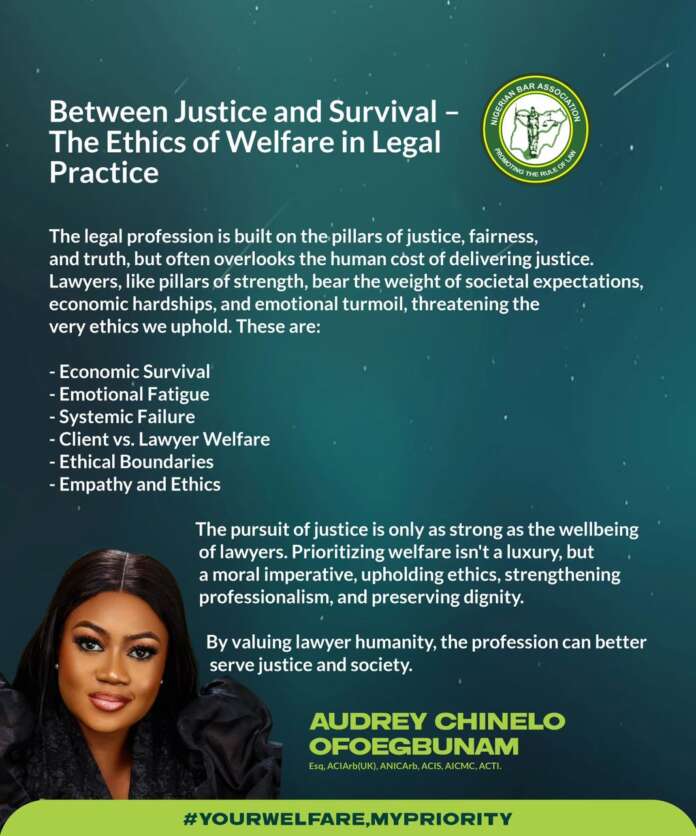
    When Will It Stop? Kidnap of Ucheagwu Jeffrey Lotanna, Esq. highlights Nigeria’s security challenges —Audrey Chinelo Ofoegbunam

    It is with great sadness and concern that I heard about the kidnapping of another colleague-Ucheagwu Jeffrey Lotanna.

    This incident is a stark reminder of the insecurity plaguing our nation, and it’s heartbreaking to see innocent lives being disrupted.

    To the family of our kidnapped colleague, I offer my deepest sympathies and assure you of my prayers and solidarity during this difficult time. May you find strength and hope in these trying moments.

    To the authorities, I humbly ask: when will it stop? When will our people be safe? When can we say we are safe?

    Security issues in Nigeria must be taken seriously and addressed with urgency. The safety of citizens should be a top priority.

    I call on the government and security agencies to intensify efforts to combat kidnapping, banditry, and other forms of violence. Our nation deserves peace, stability, and security.

    May our kidnapped colleague be released soon and unharmed. May God comfort his family and grant them peace. Amen.

    “Justice Must Not Wait: Femi Falana advocates for urgent recommitment to criminal justice reform at ACJA@10”

    Human rights lawyer Femi Falana, SAN, has called for renewed political will to make justice work for all Nigerians.

    He spoke at a public lecture marking the 10th anniversary of the Administration of Criminal Justice Act (ACJA) 2015, hosted by the Centre for Socio-Legal Studies (CSLS) in Abuja.

    Falana said the ACJA was never a cosmetic reform but a human rights intervention designed to end decades of systemic injustice.

    Before its enactment, Nigeria’s criminal justice system relied on colonial relics that served control, not justice.

    He recalled how endless adjournments and abusive remand practices left over 70 percent of inmates awaiting trial for years.

    “The ACJA replaced oppression with fairness and gave life to constitutional justice,” Falana declared.

    He noted that the Act’s impact has been remarkable, cutting average trial durations in federal courts from 44 months to 22 months, adding that ACJA’s innovations—such as day-to-day trials and frontloading of evidence—reduced procedural delays nationwide.

    Falana praised the adoption of ACJA-inspired laws in all 36 states and the FCT, describing it as a “national consensus for justice reform”, while also highlighting non-custodial sentencing as a humane alternative that prevents the criminalisation of poverty.

    He commended states like Lagos and Kaduna for adopting community service and parole to decongest correctional centres, but warned that justice delivery remains uneven across Nigeria due to weak enforcement and chronic underfunding.

    The Senior Advocate lamented that many ACJA provisions, like mandatory detention inspections, are “beautiful on paper but ignored in practice.”

    Falana cited the case of COP v. Chinedu Agu as proof that unlawful remand orders still violate citizens’ rights and then called on magistrates as well as prosecutors to uphold the law’s safeguards against arbitrary detention.

    The rights advocate condemned the Supreme Court’s decision striking down Section 396(7) of the ACJA, which once allowed elevated judges to conclude pending trials.
    According to him, the ruling unintentionally revived delay tactics that frustrate anti-corruption cases.

    Urging lawmakers to close constitutional gaps that prevent socio-economic rights from being enforceable in court, Falana described the ACJA as a “silent constitutional corrective” that brings fairness to Nigeria’s poor and vulnerable.

    He argued that access to justice should be treated as a social right, not a privilege of wealth or status and called for increased funding for the Legal Aid Council and expansion of non-custodial measures across all jurisdictions.

    “Justice must leave the courtroom and reach the police cell, the correctional centre, and the village square,” he insisted.

    He warned that without institutional discipline and political courage, the ACJA’s promise could fade into history.

    “The law has given us the foundation,” Falana concluded. “What remains is the will to build a just society.”

    The event, attended by senior judges, prosecutors, and civil society leaders, ended with a renewed call for sustained reform.

    Participants agreed that the next decade of the ACJA must focus on enforcement, digital transformation, and equal access to justice.

    Click here to download the lecture.

    A-DECADE-OF-THE-ACJA-CHARTING-THE-COURSE-OF-CRIMINAL-JUSTICE-REFORM-IN-NIGERIA-21

    Ph.D. (In View): The road to recognition without achievement

    By Prince Charles Dickson, PhD (Not in View)

    There’s a peculiar sickness that has gripped our dear Nigeria, one that doesn’t cause fever or headache but swells the ego faster than garri in hot water. My brother and friend a full professor (not in view), Chris Kwaja, recently wrote in his Reflections—”Nigeria and the obsession with titles. What title is the PhD in view?”

    It was one of those posts that stab the conscience but tickle the ribs at the same time. When I saw it, I called him—Chris, my brother in view—and we had an extensive conversation on how we got here.

    We both laughed, sighed, and asked the same question: Who should we blame? The Mallam in view or the system that is viewing him?

    Let’s not pretend—we are a title-loving people. From “Honourable” to “Engineer,” “Chief,” “Alhaji,” “Evangelist,” and now, “PhD. (in view).”

    Somewhere in this jungle of academic aspirations, we have turned “in view” into a permanent residence. In Nigeria, once you start your PhD, even if you haven’t finished your proposal, you have earned the social right to update your WhatsApp bio to “Dr. (in view).”
    And woe betide you if you forget to add it in your next conference attendance tag; how else will people respect you?

    You cannot just be “Mr. Okoro.” God forbid! You must be “Dr. Okoro (in view).” Even if the view is still in the far horizon, like the Mambilla Plateau seen from Wukari.

    Once upon a time, we went to school to learn. To read, to think, to expand our minds, to pursue knowledge for its own sake. Now, education is a fashion show. The PhD gown has become an agbada for intellectual owambe.

    Back in the day, we used to say, “He is a scholar.” Now, we say, “He has a PhD.” The difference? The scholar reads, the PhD poses.

    The road to the doctorate, which should be a lonely and rigorous journey of research and reflection, has turned into an expressway of certificates-for-sale. Somewhere in the crevices of our educational system, PhDs are being issued faster than sachet water. For the right price, you can get your “Doctorate in Leadership and Transformational Strategic Governance” from a mushroom university that doesn’t even have a functioning website.

    It used to be cars, then houses, then foreign trips. Now it’s a PhD. And like all Nigerian status symbols, it’s not the substance that matters; it’s the show.

    At weddings, people now introduce themselves like this:
    “Distinguished ladies and gentlemen, permit me to recognize the presence of Dr. (in view) Mrs. Amina Bala Mohammed, who is currently rounding off her thesis on ‘The Impact of Instagram on Marital Fidelity in Gombe Metropolis.’” We clap. We nod. We smile. We have normalized mediocrity dressed in regalia.

    Meanwhile, some of the most intellectually stimulating people in the room may not even have a Master’s degree. But they don’t count because in our society, knowledge without a title is like soup without salt.

    Let’s be honest, the problem didn’t start with the PhD hunters. The system created them. Our institutions have replaced scholarship with certification. We worship paper, not ideas. We have built an economy of degrees instead of an ecology of learning.

    We judge competence by the length of titles on letterheads. You can’t be appointed a consultant unless you have a PhD. Even if your field experience could fill ten libraries. We are quick to say, “We need qualified people,” when what we really mean is “We need titled people.”

    It’s the same disease that makes a Nigerian pastor add “Dr.” before his name because his congregation will give more respect and more offerings if he is a doctor. It’s why political appointees get honorary doctorates the moment they assume office. And it’s why you’ll see billboards reading:
    “Congratulations to His Excellency, Dr. Chief Hon. (Ambassador Extraordinary) Senator Engineer Pastor Prince Alhaji Barrister (PhD, DBA, JP, OON) on your well-deserved appointment.”

    At this point, even angels in heaven are confused.
    A friend once said the only thing longer than a Nigerian PhD journey is the Lagos traffic. Both are full of bumps, frustration, and constant viewing without arriving. But unlike traffic, most people never get to the destination.

    We all know someone who started a PhD in 2010 and is still “in view.” If you ask, they’ll tell you, “I’m finalizing my chapter four.” Chapter four has now become the Bermuda Triangle of Nigerian academia—many enter, few return.

    And those who finish sometimes emerge with these so shallow they couldn’t fill a teacup. Yet, we celebrate them with convocation ceremonies, hire them to teach others, and call them “Dr.” without blinking. The system claps, the Mallam bows, and mediocrity gets a standing ovation.

    Somewhere between our obsession with titles and our neglect of substance, we lost the essence of scholarship. A real scholar is a servant of knowledge. He doubts, questions, argues, and refines ideas. But today, our so-called academics spend more time forming WhatsApp groups for “PhD in View Scholars Association” than reading or researching.

    The university, which should be a temple of ideas, has become a marketplace of CV-padding. Supervisors are overworked, underpaid, and sometimes underqualified. Universities are underfunded, libraries are understocked, and plagiarism is underpunished.
    In this chaos, the “in-view” culture thrives.

    So, back to my conversation with Chris. Who do we blame—the Mallam in view or the system that is viewing him?

    The truth is, both are guilty.
    We have created an ecosystem where you can’t be heard unless you prefix your name with “Dr.” So everyone rushes to get one, legit or otherwise. The irony? The more “Doctors” we produce, the sicker our intellectual health becomes.

    “Wanting recognition without achieving the target,” I told Chris, “the PhD is on the road.”
    We laughed—but it was a bitter laughter. Because truly, that’s where many are: on the road, seeking applause for a race they haven’t finished.

    In a saner clime, the title “Doctor” carries weight. It means years of disciplined inquiry, contribution to knowledge, and mastery of a field. You are a global citizen! In Nigeria, it often means you survived university bureaucracy, paid your dues (literally), and printed a thesis few will ever read.

    Our PhDs are on the road because we have turned learning into logistics. We move from one seminar to another, taking selfies with PowerPoint slides, quoting Paulo Freire without understanding him, and uploading certificates online as if they were badges of sainthood.
    What we need is a cultural reset, a return to scholarship for its own sake. We must make it cool again to read, to think, and to question. To pursue the doctorate of thought, not just the doctorate of title.

    Supervisors must demand rigour, universities must reward originality, and the government must fund research as a national priority, not a luxury. Above all, society must learn to respect knowledge—whether it comes with a title or not.

    Until then, “PhD (in view)” will remain our new national joke—an endless highway of ego, where everyone is viewing and no one is arriving.

    So, to “Mallam in view,” I say:
    May your view one day become clear.
    May your thesis find coherence.
    May your supervisors reply to your emails.
    And may your defense be less terrifying than our economy.
    But until then, my people, let us remember:
    A true scholar does not need to shout “Dr.” before wisdom speaks.

    TIPS