Home Blog Page 178

The coup that dare not speak its name, By Farooq Kperogi

I was initially disinclined to write about the alleged attempted coup to dislodge President Bola Ahmed Tinubu from power because the Defence Headquarters (DHQ) has publicly denied it and characterized news reports suggesting that it did happen as “false and misleading.”

News of the coup attempt was first exclusively reported by Sahara Reporters. The report came two weeks after the Director of Defence Information, Brigadier General Tukur Gusau, signed an October 4 news release that said 16 officers had been arrested and would face “military justice” over “issues of indiscipline and breach of service regulations.”

The military’s investigations, Gusau said, found that the 16 officers’ grouse “stemmed largely from perceived career stagnation caused by repeated failure in promotion examinations, among other issues.” That, at first glance, appeared to be an ordinary disciplinary matter. Armies, like all bureaucracies, struggle with ambition, thwarted aspirations, and internal politics.

Sahara Reporters took that explanation and detonated it. The platform reported that the detained officers were not disgruntled mid-career soldiers sulking over promotion bottlenecks—they were alleged coup plotters. Then things escalated.

Premium Times, which is famous for exercising editorial restraint and avoiding sensational political speculation, confirmed the thrust of the report. “The report is true,” Premium Times quoted a “military source familiar with the matter” as having told them. Daily Trust independently corroborated the same details. Both could not have lightly risked their reputational capital by echoing Sahara Reporters without high-confidence sourcing.

Premium Times even repeatedly amplified its story across social platforms in a manner that signaled editorial certainty rather than sensational opportunism. At that point, the military’s principal counterargument consisted of sterile adjectives: “false,” “misleading,” “malicious.” No substantive rebuttal emerged.

Beyond throwing around lazy, stereotyped adjectives to dismiss the report, the Defence Headquarters hasn’t said anything of substance to dispute the facts about the alleged coup. No counter-facts. No evidence contradicting the reporting. Denial, in institutional crises, loses persuasive power when it fails to offer credible, detailed alternative explanations.

The implausibility reached comedic levels when authorities attempted to explain President Tinubu’s abrupt cancellation of Nigeria’s Independence Day parade. They claimed the president needed to attend a sudden, unspecified bilateral meeting abroad and that the parade would distract the Armed Forces of Nigeria from fighting terrorism and banditry.

That justification collapsed under the most cursory scrutiny. Independence celebrations do not jeopardize counterinsurgency operations. Moreover, no emergency diplomatic engagement materialized that week. Institutions do not peddle obvious falsehoods to hide nothing. The more laughable the cover story, the more likely the secret is real.

Matters intensified when Sahara Reporters released the names of the alleged plotters. Premium Times and Daily Trust again verified key elements of the revelation. The Defence Headquarters, usually swift to debunk anything unflattering, stayed mute. Silence, in this context, was not golden; it was incriminating.

Then came the political earthquake: President Tinubu dismissed and reshuffled top military leadership. The timing was too convenient to be coincidence. Reshuffling service chiefs in the immediate aftermath of coordinated reporting on a coup attempt looks less like routine personnel management and more like crisis containment. These clocks do not run independently—they strike in synchrony.

One additional ripple deepened the intrigue. Sahara Reporters disclosed that security forces raided the home of a former governor, Timipre Sylva, on suspicion of involvement in the alleged plot. His spokesperson confirmed the raid. Nothing further illuminates the seriousness of a situation than the government’s decision to search the home of a former senior federal official who is close to the northern political establishment.

The logical inference, supported by mounting circumstantial evidence, is that Nigeria experienced a coup attempt that did not reach critical mass. The authorities are managing information not to reassure the public but to avoid panic, prevent copycat adventurism, and preserve a veneer of stability for investors and international partners. Political communication by the state has been characterized by opacity rather than candor.

But the surface drama pales beside the subterranean danger. The ethnic and religious composition of the alleged conspirators raises existential questions about Nigeria’s fragile national fabric. Media reports indicate that the detained officers are overwhelmingly northern Muslims from Niger, Nasarawa, Katsina, Gombe, Bauchi, and Jigawa, with only two officers from Plateau and Delta States breaking the pattern.

Whether this distribution emerged by coincidence or design hardly matters. Perception often outweighs empirical truth in moments of national strain.

Had the coup succeeded, Nigeria would have sleepwalked into catastrophe. The South would have interpreted it as a northern Muslim repudiation of a southern presidency. Old suspicions, suppressed but never extinguished, would have surged back into public consciousness. It would have felt like June 12, 1993 revisited—only with uniforms and guns instead of decrees and judicial machinations.

The last time Nigeria faced a crisis of southern electoral legitimacy invalidated by military fiat, the nation nearly splintered. Peace was restored only when northern elites agreed that a Yoruba president was necessary to stabilize the federation in 1999. That moment, painful and imperfect, was a rare episode of elite consensus for national survival.

A northern-led coup against a Yoruba president today would have ignited resentments more combustible than those of the 1990s. The wounds of June 12 have not fully healed because symbolic injustices linger long after material conditions improve.

Nigerians may be suffering intolerable hardship and spiraling insecurity today, yet economic distress does not erase group memory or neutralize grievance politics. People seldom tolerate perceived humiliation of their collective identity, even when their pockets are empty. In crises framed as existential, identity routinely overwhelms material interests.

This is the cardinal danger that the authorities appear eager to downplay. Nigeria is not merely a geographical expression, to borrow Chief Obafemi Awolowo’s once-controversial phrase. Nigeria is a precarious compact among ethnicities, religions, histories, and anxieties.

Military adventurism, when layered upon identity fault lines, becomes political arson. It is not an assault on one administration; it is an assault on the delicate architecture that keeps the republic intact.

This moment demands two sober reflections.

First, the military must confront its internal contradictions, promotion culture, and factional tensions transparently and responsibly. Armed forces that cannot discipline discontent ethically and lawfully inadvertently invite disloyalty and adventurism. The aborted plot is only a symptom.

Second, the government must resist the reflex to smother inconvenient truths. Secrecy accelerates suspicion. Nigeria’s citizens have matured politically; they can process national challenges without descending into chaos. Shielding the public from reality infantilizes the electorate and breeds cynicism.

Federal cohesion today rests on credibility rather than coercion. The Nigerian constitution is only as strong as the public trust that undergirds it. Democratic legitimacy cannot be defended with half-truths and clumsy denials. It must be upheld with transparency and accountability.

Something serious happened in those barracks. Nigerians can feel it in the tone of the denials, the choreography of the shake-ups, the eerie quiet of usually voluble institutions. The government’s instinct to suffocate the story is understandable, yet it is also counterproductive. The more the truth is suppressed, the more combustible it becomes.

The great paradox of power is that strength grows from candor, not concealment. Nigeria has survived crises more convulsive than this one. It can survive this, too. Survival requires confronting the truth head-on, acknowledging the fissures, and recommitting to democratic stability as a non-negotiable national imperative.

A nation that tiptoes around its dangers invites its downfall. A nation that stares them in the face earns its future. Let Nigeria choose the latter.

The views expressed by contributors are strictly personal and not of Law & Society Magazine.

19-year-old teacher jailed for life over sexual assault on nine-year-old boy

  • Driver arrested in Lagos for rape, robbery of women

A Federal Capital Territory High Court sitting in Abuja has sentenced a 19-year-old teacher, Abdullahi Abbass, to life imprisonment for sexually abusing his nine-year-old pupil — a conviction the National Agency for the Prohibition of Trafficking in Persons hailed as a major win in its fight against sexual violence.

In a statement on X on Saturday by the agency’s National Press Officer, Vincent Adekoye, NAPTIP said the judgment was delivered by Justice M. Osho–Adebiyi of the Federal Capital Territory High Court in Abuja.

The agency said the convict, who worked in a private school in the Kwali Area Council, lured the victim after school hours on March 19, 2025, and raped him through the anus.

“The convict was the class teacher of the victim. On the 19th March 2025, after school hours, he sent another pupil to call the victim from their home. He thereafter took the victim down the street where he lived and raped the male victim through the anus,” the statement read in part.

The agency added that the victim reported the incident to his mother, leading to the suspect’s arrest and prosecution.

Abbass was arraigned on two counts of rape and sexual abuse and was convicted on October 29, 2025, under Section 2 of the Violence Against Persons (Prohibition) Act, 2015, which prescribes life imprisonment.

Reacting to the judgment, the Director-General of NAPTIP, Binta Adamu Bello, commended the judiciary and partners for their role in securing the conviction.

She said, “This is a landmark judgment that carries the commensurable punishment for the offender. This will serve as a deterrent, and his name shall feature prominently in our Sex Offenders Register.

“I wish to say that the speedy investigation and arraignment of the Convict is a testimony to our renewed commitment and determination to tackle the incidence of domestic violence, rape, and other forms of sexual abuse in the Country.

Bello also praised the Nigerian Police for its collaboration and reaffirmed the agency’s commitment to tackling rape and other forms of sexual violence across the country.

Similarly, PUNCH Online reports on June 19, 2025, that a teacher, Pascal Ofomata (34 years old), was convicted and sentenced to 12 years imprisonment for defiling his 11-year-old male JSS 1 student at St. Christopher’s Junior Seminary, Onitsha. The incident was tried by a Sexual and Gender-Based Violence Court in Awka, Anambra State, presided over by Justice Peace Otti.

In a related development, Operatives of the State Criminal Investigation Department, Panti, Lagos State Police Command, have arrested a man allegedly responsible for a string of violent crimes, including rape, defilement, assault, indecent assault, and multiple armed robberies targeting female passengers across parts of Lagos State.

The Lagos State Command, Police Public Relations Officer, Superintendent of Police Abimbola Adebisi in a statement posted on the command’s X handle on Saturday, said after the strict directives from the Commissioner of Police, Lagos State Command, Olohundare Jimoh, the detectives of the State Criminal Investigation Department commenced a detailed and discreet investigation into the complaint from victims of the dastardly acts of the suspect.

Over the past few months, several women in Lagos have taken to social media to report disturbing experiences involving drivers who allegedly lured or picked them up before robbing, assaulting, or sexually violating them.

The statement read, “The painstaking investigation by the Police Joint Investigation teams resulted in the arrest of this vicious and very notorious suspect on 31st October, 2025, at about 0940 hrs.

“The operational vehicle being used by the suspect, a red colour Toyota Corolla vehicle with registration number JJJ 226 HT, in committing the crimes and offences was recovered from his possession.

“The suspect is currently in Police detention. Investigation is being intensified to arrest other suspects who are suspected of having been involved in the commission of the crimes.”

The statement added that the recovered vehicle has been secured as an exhibit and will be used in the prosecution of the suspect.

The Command urged any of the victims of this vicious and notorious suspect to report to the State Criminal Investigation Department, Panti, to provide relevant information and evidence to help the investigation.

“Their identities will be properly protected. The Commissioner of Police, Lagos State Command, reassures the public of the Command’s firm commitment to protecting all residents, ensuring justice for survivors, and maintaining the security of Lagos State. He further noted that updates on the investigation will be provided in due course,” the statement added

FCT resident doctors down tools from November 1, accuse FCT administration of neglecting welfare issues

Healthcare delivery across Abuja is set to face serious disruptions as the Association of Resident Doctors under the Federal Capital Territory Administration (ARD-FCTA) has declared an indefinite strike, effective 12 midnight on Saturday, November 1, 2025.

The doctors said the decision followed years of unresolved welfare and administrative challenges affecting their members.

In a letter dated October 30, 2025, addressed to the Minister of the FCT, Nyesom Wike, and signed by ARD-FCTA President, Dr. George Ebong, and General Secretary, Dr. Agbor Affiong, the association announced that its members would withdraw their services indefinitely.

The letter, acknowledged by the offices of the FCT Minister, the FCT Head of Service, and the Health Services and Environment Secretariat on October 31, signaled a potential paralysis of operations across FCTA-owned hospitals, where resident doctors make up the majority of the workforce.

This move comes on the heels of a similar declaration by the Nigerian Association of Resident Doctors (NARD), which had earlier announced a nationwide strike starting the same date.

According to ARD-FCTA, members unanimously voted to join the national strike during an emergency congress on October 29. However, the association stressed that it would continue its strike even if NARD later suspended its action.

“Even if NARD suspends or calls off its strike, ARD-FCTA will continue with its own indefinite action until all our demands are satisfactorily met,” the letter stated.

The association’s demands include:

Immediate payment of outstanding salary arrears for members employed since 2023.

Recruitment of new doctors, with a written commitment to conclude by the end of 2025.

Immediate release of the 2025 Medical Residency Training Fund (MRTF).

Correction of irregular salary payments and stoppage of erroneous deductions.

Promotion and conversion timelines to be completed within one month.

A Memorandum of Understanding (MoU) to ensure prompt skipping, conversion, and promotion processes.

ARD-FCTA, which comprises doctors working in 14 district and general hospitals as well as the Department of Public Health, warned that the strike would continue until every item on its list of grievances is addressed.

As Abuja residents brace for the fallout, healthcare services in major hospitals such as Wuse, Asokoro, and Maitama District Hospitals are expected to be hit hardest.

This latest strike underscores the growing crisis in Nigeria’s public health sector, where frequent industrial actions, poor working conditions, and unpaid benefits continue to undermine patient care and staff morale.

Unless swift action is taken, Abuja could soon face a complete shutdown of secondary healthcare services, further exposing the cracks in the nation’s healthcare system.

Sir Peter Cresswell obituary: High Court judge whose attack on Lloyd’s of London led to significant reform of the insurance market, dies aged 81

The Times
Thursday, October 30 2025

In November 2000, Peter Cresswell, then a High Court judge, delivered a legal ruling that condemned the operations of the Lloyd’s of London insurance market and devastated more than 200 investors known as “Names”.

He gave his decision in a 600-page judgment at the end of a vast legal undertaking that was typical of a man who was both brutally logical and in possession of a moral compass underpinned by firm Christian values.

Cresswell attacked Lloyd’s, which had won the case. “The catalogue of failings and incompetence in the 1980s by underwriters, managing agents, members’ agents and others is staggering,” he said, “and brought disgrace on one of the City’s great markets.”

At the same time, he reached out to the Names, who had lost the hearing and, in many cases, faced financial ruin. “I recognise that no words can adequately describe the devastation that has been caused to many individuals in financial and personal terms,” he said, adding that many Names were “innocent victims” who had “suffered enormously”.

After overseeing litigation for three years between 1993 and 1996 and hearing a case that lasted six months in 2000, Cresswell rejected claims that Lloyd’s had defrauded the investors.

Each of the Names had pledged their own wealth with unlimited personal liability to underwrite insurance policies, each providing capital to a Lloyd’s syndicate to share in its profits — and losses.

As the 1980s wore on, however, losses mounted exponentially, eventually reaching £8 billion. Half of them arose out of asbestos claims in the United States; others from a series of disasters, including an explosion on the Piper Alpha oilrig in the North Sea, and damage caused by an earthquake in San Francisco and ferocious storms in northern Europe.

The 230 Names alleged that they had signed up to Lloyd’s under false pretences. They claimed that those running the insurance market were all too aware of the build-up of asbestos-related claims and had made misrepresentations to encourage new underwriters to join the market. The system was widely known as “recruit to dilute”.

Of the 34,000 underwriters who lost money as a result of the crisis, the vast majority settled when Lloyd’s offered a deal that vastly reduced their liabilities after the litigation presided over by Cresswell. Most Names agreed to pay back £100,000 each. Others reached agreement later; 230 held out.

As well as the cost to the Names, the case took a heavy toll on the judge, who was an intensely private man. He faced criticism both in the media and among some of those involved in the insurance market, including many Names. His critics included people he knew well.

According to those close to him, Cresswell was “deeply hurt” by the criticism. He “felt isolated” and “lost confidence”.
Yet he found support among colleagues in the High Court and, in 2002, the Court of Appeal unanimously upheld his findings.

A former judge who specialises in financial law said: “The litigation by the Lloyd’s Names went to the heart of London as a global insurance sector. Mr Justice Cresswell managed the case with a sure hand, and although the Names were ultimately unsuccessful, his criticisms of Lloyd’s led to fundamental reforms which put the market on a sustainable basis.”

Lloyd’s introduced significant structural changes. A new company was founded to deal solely with historic losses. Rules were established to ensure that underwriting was backed by liquid assets. Limited liability was introduced for Names.

A tall, imposing man with chiselled good looks, Cresswell was called to the Bar at Gray’s Inn in 1966 and in his early years undertook criminal as well as commercial work. He built a highly successful practice in financial disputes. He became a QC in 1983 and appeared in cases such as the landmark Libyan assets litigation. Three years later, he became a recorder.

At the same time, Cresswell stood out as an increasingly influential figure in the legal profession. He became a member of the Senate of Inns of Court and Bar in 1981, and chairman of the Common Law and Commercial Bar Association four years later.

In 1990, he was elected chairman of the General Council of the Bar in what Frances Gibb, then legal correspondent of The Times, called “one of the most critical years” in its history. He was 45, one of the youngest men to head the Bar.

In an interview at the time, Gibb wrote of Cresswell: “His style is quietly forceful and tough; not a man to have on the other side of the negotiating table.”
At the time, the Bar was facing a Conservative government determined to introduce more competition into the legal profession, reform rights of audience and end the monopoly enjoyed by barristers in the higher courts.

Although the Courts and Legal Services Bill passed into law, Lord Mackay of Clashfern, the lord chancellor, made several compromises to safeguard the position of barristers and the independence of the Bar. Much of the credit for this was handed to Cresswell.

According to Sir William Blair, who was often Cresswell’s junior in his cases: “He built a relationship of trust with Lord Mackay. The Bar in general opposed expanding the rights of audience to solicitors in the High Court and above. He understood, however, that these reforms were inevitable and focused on achieving a sensible result. With hindsight, we can see that these reforms developed the role of advocacy and, rather than threaten the Bar, the removal of restrictive rules raised standards generally.”

Cresswell also used his position to pursue one of his great causes — access to justice for all. He wanted to see an expansion of legal aid and called for “renewed emphasis on the importance for those joining the Bar of doing legal aid work, and the need to represent individuals in difficulty in the civil and criminal courts”.

After his year as chairman of the Bar, Cresswell was appointed a judge in the High Court in 1991 when he received the customary knighthood. He was put in charge of the Commercial Court two years later.

Blair said: “He pioneered case management techniques in the most complex litigation of its day. In emphasising the value of mediation over pursuing cases to trial, he was ahead of his time. He believed in consensus rather than conflict. Sometimes mistaken for weakness, this was fundamental to the way he served as a judge.”

He retired from the High Court in 2008 and became an arbitrator and mediator in domestic and international legal disputes involving commerce and business, with a high rate of settlement.

Cresswell also acted as a judge in the Grand Court of the Cayman Islands and the Qatar International Court. He was a founding editor of the Encyclopaedia of Banking Law.
Peter John Cresswell was born in St Helens on Merseyside in 1944, but grew up in Iver in Buckinghamshire. He was the only son of Madeleine Cresswell and her husband, Jack, who was an Anglican vicar. They also had a daughter, Gillian. The household was austere. His mother and father instilled in him “a quiet faith and unshakeable belief in the family”. He was a committed Anglican throughout his life.

Peter was given an assisted place at a private school, St John’s in Leatherhead, where, according to the family, he had a “very tough time”.

He later gained a place at Queens’ College, Cambridge, where he studied law, gained a reputation as a “wheeler-dealer” and pursued two great passions: fishing and golf.
He had been taught to fly fish by his mother during holidays in the Lake District and later in life became something of a legend among fly fishermen. At the same time, he became an authority on the lifecycle of the salmon and developed an active interest in the conservation of rivers.

With other like-minded fishermen, he took over a run-down property in the Outer Hebrides, which involved a three-hour walk to the river, and transformed it into a renowned sporting estate. He introduced a 100 per cent catch-and-release policy long before this became the norm. He also fished on the Spey and managed a beat near his home at Wherwell on the Test in Hampshire.

Amassing a huge collection of old salmon flies, he bought boxes of them from antique shops and vintage outlets around the country, often keeping only a solitary fly and selling the rest through an anonymous intermediary on eBay. He became president of the Flyfishers’ Club in 2003.

When he proposed to his future wife, Caroline Ward, whom he had known since childhood, she accepted his hand in marriage on condition that he pursued only one of his great, time-consuming hobbies; the other had to go. The casualty was golf.

The couple were married in 1972 and had two sons, Oliver and Mark. Both parents carried the recessive gene for cystic fibrosis. Oliver was born with the disease and died in 1986 at the age of 13. Cresswell later worked with the Cystic Fibrosis Trust, becoming a trustee, then a member of the board. His wife, who worked for Christie’s, the auction house, developed spinal cancer and died in 2003. His son Mark, who is a fund manager, survives him.

Peter Cresswell and his grandson Felix sitting on rocks by the River Spey.
Cresswell on the banks of the Spey with his grandson Felix
After being buffeted by personal loss and difficulties in the aftermath of the Lloyd’s case, Cresswell finally found a new lease of life with the birth of two grandsons, Felix and Jack. He also found a new partner, Pamela Montgomery, a Canadian who is an international art teacher. They met in the Cayman Islands.

When he died, his son received letters of condolence from many judges — and even more from ghillies.👏🏽

Sir Peter Cresswell, High Court judge, was born on April 24, 1944. He died of cancer on September 10, 2025, aged 81

https://www.thetimes.com/article/9f317099-a6b3-4379-bf6c-b4d585e943f3?shareToken=40835146ed0ce17eda6f12d290c09c73

Court orders remand of man after alleged murder of wife over “kuli-kuli”

A High Court in Kano State has ordered that a man, identified as Idris Kurma, be remanded in a correctional facility for allegedly strangling his wife to death after she reportedly refused to prepare kuli-kuli (groundnut cake).

Kurma appeared before Justice Musa Dahiru on a charge of culpable homicide, contrary to Section 221 of the Penal Code, as presented by the prosecuting counsel, Barrister Lamido Abba Soron Dinki.

The accused pleaded not guilty when the charge was read to him.

In the course of the proceedings, the prosecutor requested time to enable the state to call its witnesses, while defence counsel, Ibrahim Adakawa, applied for access to all necessary details of the case.

Justice Dahiru granted both requests and adjourned the matter to December 12, 2025, for continuation of hearing.

According to court records, Kurma, who lives in Goda, Shanono Local Government Area of Kano State, allegedly strangled his wife, Aisha Idris, after she refused his request to make the local delicacy.

The Conclave

As the disgraced prince prepares to leave Windsor, Britain is left asking a harder question: Has King Charles protected the Crown — or hastened its decline?

King Charles has taken an extraordinary step against his own brother.
In a stunning move to contain years of scandal, the monarch has begun the process of stripping Prince Andrew of all royal titles — and evicting him from his Windsor estate.

Buckingham Palace called the action “necessary censures.”
Behind those cold words lies the deepest royal divide since Edward VIII gave up the crown in 1936.

Andrew, now 65, has spent nearly two decades shadowed by his friendship with convicted sex offender Jeffrey Epstein.

The controversy reignited this month after the release of a posthumous memoir by Virginia Giuffre — the woman who accused Andrew of sexually assaulting her as a teenager.
Giuffre died by suicide in April, but her story still echoes across Britain.

Her family issued a pointed statement: “An ordinary American girl brought down a British prince with her truth and courage.”

Her brother, Sky Roberts, called the King’s decision “a joyous, happy, and sad day all at once.”

Buckingham Palace confirmed that Andrew will now be known simply as Andrew Mountbatten Windsor.

He will lose his 30-room mansion, Royal Lodge, and move to a smaller property on the King’s private Sandringham estate.

“These censures,” the Palace said, “are necessary, notwithstanding the fact that he continues to deny the allegations against him.”

The decision came after what palace insiders described as “serious lapses of judgment.”
Though Andrew denies wrongdoing, the Palace concluded that his continued association with Epstein — including recently revealed correspondence — made his position untenable.

His fall is historic.
The last time a royal lost his titles was over a century ago, when a distant cousin fought for Germany in World War I.

Now, a son of a queen — once ninth in line to the throne — has been publicly cut down by his own brother.

Even stripped of titles, Andrew remains eighth in line to the throne. Removing him entirely would require parliamentary legislation and the consent of Commonwealth nations — a lengthy and politically sensitive process.

Public anger has swelled as new details emerged about Andrew’s finances.

Documents revealed he paid just $1 million for his Windsor mansion and a token “peppercorn rent” each year — even after stepping back from royal duties in 2019.
Polls now show him as the least popular royal in modern history, with over 90% of Britons holding an unfavourable view.

Critics say the King’s actions, while bold, don’t go far enough.

Republic, an anti-monarchy campaign group, announced plans to launch a private prosecution against Andrew for alleged sexual misconduct.

“Losing titles isn’t justice,” said Republic’s CEO Graham Smith. “The monarchy is protecting itself, not the public.”

The scandal has also reopened painful questions for the royal family:
Who knew what about Andrew’s relationship with Epstein? Why wasn’t action taken sooner?

The Palace, meanwhile, has sought to shift focus.
“Their Majesties’ thoughts and sympathies remain with victims and survivors of all forms of abuse,” the statement read.

For many, the King’s decision marks the end of Andrew’s public life — and perhaps the beginning of the monarchy’s reckoning.

“Andrew’s story shows the call is coming from inside the castle,” one royal observer noted. “This is no longer a crisis from outside — it’s a collapse from within.”

Alleged Genocide Against Christians: Donald Trump blacklists Nigeria

  • Classifies it as a country of particular concern

United States President Donald Trump has redesignated  Nigeria as a country of particular concern.

This follows the groundswell that accompanied the allegations of United States Senator Ted Cruz, who accused Nigeria’s government of enabling a “massacre” against Christians, citing a rising number of attacks against the community in the country.

In a statement on social Media on Friday, Trump said Christianity was facing an existential threat in Nigeria.

“Christianity is facing an existential threat in Nigeria. Thousands of Christians are being killed. Radical Islamists are responsible for this mass slaughter. I am hereby making Nigeria a “COUNTRY OF PARTICULAR CONCERN” — But that is the least of it. When Christians, or any such group, is slaughtered like is happening in Nigeria (3,100 versus 4,476 Worldwide), something must be done!”

“I am asking Congressman Riley Moore, together with Chairman Tom Cole and the House Appropriations Committee, to immediately look into this matter, and report back to me.

“The United States cannot stand by while such atrocities are happening in Nigeria, and numerous other Countries. We stand ready, willing, and able to save our Great Christian population around the World!”

Weeks ago, American Fact-Finder, Mike Arnold, noted that the pattern of attacks is consistent.

He attributed the ongoing violence to three intertwined drivers: radical Islamist conquest, illicit ‘blood mineral’ mining, and politically motivated demographic re-engineering.

“The term farmer herder clashes is, in many instances today, cynical doublespeak. Weaponizing historical land disputes to mask jihadist conquest. For centuries, herders and farmers co-existed with rare, very rarely lethal disputes,” he said.

“Now villages are systematically razed, churches leveled, and tens of thousands are dead. This is a systematic terror and not grazing conflicts. A lie akin to calling Bosnia’s ethnic cleansing a neighborhood spat.”

Citing Article II of the 1948 United Nations Convention on the Prevention and Punishment of the Crime of Genocide, Arnold asserted that Nigeria’s situation meets the international legal threshold for genocide.

According to him, after five years of investigation, he could say, “The campaign of violence and displacement in northern and middle belt Nigeria does indeed constitute a calculated current and long-running genocide against Christian communities and other religious minorities without any reasonable doubt. To continue to deny this is to be complicit with these atrocities.”

Arnold warned that continued denial of the atrocities only emboldens perpetrators.

“To continue to deny this is to be complicit with these atrocities,” he said. “I say this not in anger, but in truth and grief. My stated assignment from my host was to speak the truth and I have done that to the best of my ability. I believe Nigeria has a bright future.”

“I believe in Christian Muslim harmony. I believe good people of every tribe and faith and party must stand against this evil, but first we must name it. Here I stand,” he added.

He concluded that his team’s report would be submitted to U.S. policymakers and international human rights organisations upon return.

This is a developing story…

Betrayed from Within: Soldiers say Boko Haram ‘reintegration’ is fueling new attacks

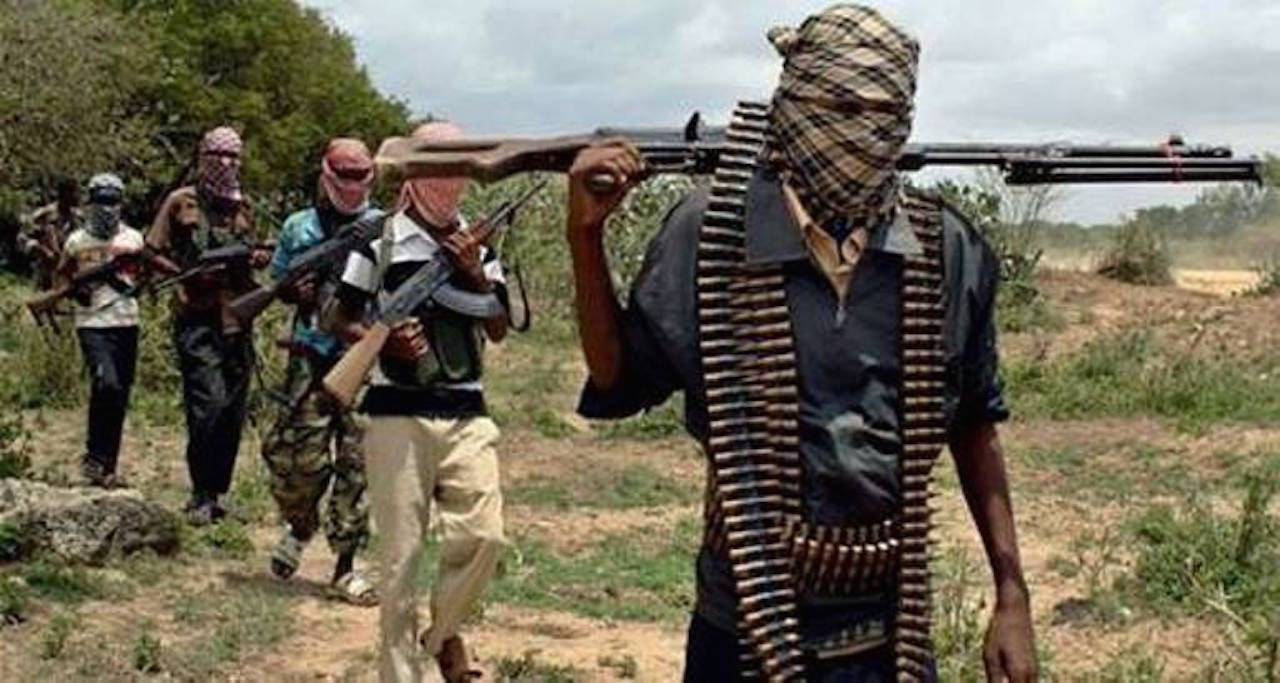
Frontline soldiers in Yobe and Borno say a government peace policy has become a weapon against them.

What was meant to end the insurgency, they warn, is now arming it with intelligence.

The Nigerian military’s reintegration programme, known as the “Borno Model,” aims to rehabilitate surrendered Boko Haram fighters.

But soldiers say these “repentant” ex-fighters are feeding information straight back to their old commanders.

“They know our camps, our routines, our armouries,” one soldier said. “They pretend to work with us, then disappear back into the bush.”

Since 2016, officials have celebrated thousands of surrenders and rehabilitation graduations.

In July 2024, the Borno State government proudly announced that 8,490 “low-risk returnees,” including minors, had been reintegrated.

But in the field, soldiers tell a darker story.

Many troops say they are forced to patrol, share intelligence, and even live with ex-Boko Haram members.

“We go on patrol together,” a soldier said. “They guide us through the forest. But we don’t trust them.”

That distrust runs deep.

Several soldiers said the ex-fighters received uniforms, motorbikes, and stipends—sometimes more than regular troops.

“They wear our uniforms,” one soldier complained. “If they escape, they can commit crimes with our identity.”

Anger is growing inside the ranks.

“These are men who killed our colleagues,” another soldier said. “Now they eat beside us. How can we trust them?”

The soldiers allege that the “repentant” fighters have leaked critical information—troop numbers, patrol schedules, even armoury locations.

Insurgents have used that intelligence to strike at night, ambush supply convoys, and seize weapons.

There’s precedent for these fears.

In October 2024, thirteen “repentant” ex-fighters fled Borno with rifles and motorcycles provided by the state.

It confirmed what many soldiers had warned: insider access is being exploited.

Experts say reintegration itself is not the problem.

Around the world, former fighters are often rehabilitated to reduce violence.
But such efforts require tight screening, community acceptance, and constant monitoring.

In northeast Nigeria, soldiers say those safeguards don’t exist.

Commanders under political pressure to show “success” are deploying unvetted ex-fighters alongside loyal troops.

The result, they argue, is deadly.

“Boko Haram now knows when we rest, when we move, when we reload,” one soldier said.
“They hit us at our weakest moments. Someone is telling them everything.”

Security analysts agree the policy needs urgent reform.

They recommend biometric tracking for all returnees, strict separation from military camps, and transparent reporting of resources.

Without that, they warn, reintegration risks becoming a revolving door back to insurgency.

The policy’s failure has broader consequences.

In a region already ravaged by violence and displacement, every betrayal costs civilian lives.

When military cohesion breaks, entire communities suffer.

Advocates insist that peacebuilding and protection can coexist—but only with accountability.

Soldiers who raise concerns, they say, should be heard, not silenced.

For now, troops on the front line feel abandoned.

“They tell us these men have changed,” a soldier said bitterly. “But every time we bury our own, we know they haven’t.”

Reintegration was meant to heal the wounds of war. Instead, it may be reopening them—one insider attack at a time.

Married for Safety, Trapped by Fear: The lost childhoods of Zamfara’s daughters

At 13, Basira Nasiru dreamed of wearing a nurse’s uniform, not a wedding gown.
She loved school, books, and the sound of laughter with friends in Gidan Goga, Zamfara State.

Then one morning, her parents told her she was getting married.
They said it was for her safety, not for love.

Bandits roamed nearby villages. Kidnappings were common.
Her parents believed marriage would shield her from abduction and rape.
It didn’t.

Her husband left days after the wedding, searching for work.
He returned only long enough to get her pregnant, then disappeared again.

Across Zamfara, this story repeats itself.
What once was a cultural tradition has become a desperate survival strategy.

Parents marry off their daughters to protect them from danger.
But instead of safety, the girls find abandonment, poverty, and pain.

A 2021 report by Save the Children found that almost half of northern Nigerian girls marry before 15.
In Zamfara, 67 percent of young women aged 20–24 were married before 18.

Insecurity fuels the crisis.
Families live in fear of attacks, displacement, and rape.

Isa Menasiri, a farmer, lost one daughter to kidnappers.
He sold his farm to pay the ransom.
She came home sick and broken—and later died.

“There are no schools anymore,” Isa said quietly.
“We have no choice but to marry them off.”

In villages where schools are burned and teachers have fled, education feels like a dream.
Parents see marriage as the only way to protect their girls.
But protection often becomes a prison.

Fifteen-year-old Hauwa tried to run away when her parents planned her marriage.
They warned her never to return if she refused.
She now lives displaced, begging for food, still married but forgotten.

Hadiza Bala, a mother of three, understands the fear.
“When bandits kidnap girls, they use them as sex slaves,” she said.
“Some never come back alive.”

So parents choose marriage over mourning.
But the cost is their daughters’ futures.

Mariam Idris, now 20, married at 13.
She has three children, no education, and a husband who disappeared months ago.
“I cried every day,” she said. “Marriage was supposed to save me, but it destroyed me.”

Across Zamfara, abandoned teenage mothers live in silence.
Many return home with babies and no support.
Their parents, already poor, struggle to feed another mouth.

Health workers in Anka confirm that teenage pregnancies often end in tragedy.
Hospitals are far, short-staffed, and under attack.
A doctor said many girls die in labour before help arrives.

Nigeria accounts for nearly a third of the world’s maternal deaths.
In Zamfara, many of those deaths are of teenage brides.

Community leader Hammad Muhammad says insecurity has driven parents to desperate decisions.
“No one wants to marry off a child,” he said. “But we are living in fear.”

Eighteen-year-old Meimuna knows that fear.
She left her husband after years of neglect and abuse.
Now she raises three children alone in her father’s house.

“I wanted school,” she said. “Instead, I got marriage and hunger.”

Experts say forced marriage in Zamfara is no longer cultural—it’s survival.
Families see it as one less mouth to feed, one less target for kidnappers.

Child rights advocate Musa Omar calls it “a crisis of protection gone wrong.”
“The law exists,” he said. “But it’s not reaching the girls who need it.”

Despite the Child Protection Law passed in 2022, the cycle continues.
Poverty deepens, schools remain closed, and girls keep disappearing into early marriages.

What began as a shield has become a wound.
In trying to protect their daughters, families are losing them in another way—one wedding at a time.

2025 World Polio Day: Reflections on Rotary’s Humanitarian Journey; By Max Amuchie

For Rotarians the world over, October 24 every year is a significant day, a day set aside to mark the World Polio Day. It also serves to commemorate the birthday of Jonas Salk, the man who developed the polio vaccine.

For this year, District 9127, under the leadership of the District Governor, Dame (Dr) Princess Joy Nky Okoro, hosted the other five Rotary International District Governors in the country in an all-Nigeria week-long celebration that lasted from October 17 to October 25.

​Rotary’s dedication to eradicating polio is one of the most significant efforts in the history of public health and its involvement has been a game-changer, demonstrating the power of private-sector commitment to a global health goal.

​Rotary began its efforts in 1979 with a multi-year project to immunise children in the Philippines. This led to the launch of PolioPlus in 1985, which was the first and largest internationally coordinated private-sector support of any public health initiative. ​

In 1988, Rotary joined with the World Health Organisation (WHO), the U.S. Centres for Disease Control and Prevention (CDC), and UNICEF to launch the Global Polio Eradication Initiative (GPEI). The Bill & Melinda Gates Foundation later joined as a key partner. 

​Rotarians worldwide have contributed over $2.9 billion and countless volunteer hours to the eradication effort. They also play a crucial role in advocating for and securing more than $11 billion in funding from donor governments. 

​Beyond money

For any Rotarian, the fight against polio is not just a humanitarian project—it’s a four-decade pledge that embodies the organisation’s motto of “Service Above Self.” It’s a commitment that goes far beyond financial donations, representing a unique blend of global advocacy, local action and persistent dedication until the last case of the wild poliovirus is found. 

Nigeria’s Triumph: The Eradication of Wild Poliovirus

Nigeria’s success in ending wild poliovirus transmission is one of the most significant public health achievements of the 21st century. As the last country in Africa to eliminate the disease, Nigeria was certified free of wild poliovirus on August 25, 2020, an official declaration that certified the entire African region as wild polio-free. 

This victory was the culmination of decades of dedicated effort, overcoming immense challenges ranging from conflict and remote geography to vaccine hesitancy. 

In 2012, Nigeria accounted for roughly half of all global wild polio cases. It was a huge challenge, spurring a renewed national priority effort.

Two years later, in 2014, Nigeria was removed from the list of endemic countries, and in 2016 the last case of indigenous wild poliovirus was recorded in Borno State.

Finally, in 2020, Nigeria and the entire African Region got certified wild polio-free. The ultimate goal was achieved after meeting the stringent four-year zero-case requirement.

Nigeria’s victory proved that, with unwavering commitment and global partnership, even the most persistent and devastating public health crisis can be solved. 

 The Final Vow: Persistence in the Endgame

Rotarians have been fighting polio since 1979. The current stage, with the wild virus remaining endemic only in Afghanistan and Pakistan, demands the highest level of commitment and that’s exactly what Rotary International and Rotarians the world over have given and are committed to continue giving to completely eradicate this disease.

The ‘End Polio Now’ campaign is more than just a public health initiative; it is the single greatest embodiment of Rotary International’s core values. It serves as the clearest articulation of Rotary’s commitment to placing humanitarian causes at the centre of its identity, uniting millions of members behind a singular, transformative goal: to ensure no child ever suffers from the debilitating disease again.

At its heart, the fight against polio is driven by the foundational motto: Service Above Self. This principle demands an enduring, selfless commitment that far transcends local club projects. For Rotary, this translates into mobilising over $2.6 billion, deploying countless volunteer hours, and maintaining a relentless focus across political, geographical, and logistical barriers. It is a long game—a testament to Rotary’s sustained willingness to give its resources, time, and global influence not for credit or recognition, but purely for the well-being of humanity.

The scale of the initiative also perfectly aligns with the value of Fellowship and Global Reach. Polio eradication is a multi-national partnership involving the World Health Organisation, UNICEF, the US CDC, the Bill & Melinda Gates Foundation and the Sir Emeka Offor Foundation but it is anchored by the diverse network of Rotary clubs. Members from over 200 countries and geographical areas have collaborated, demonstrating that differences in culture or language dissolve when faced with a shared humanitarian objective. This global fellowship transforms individual local clubs into a unified force capable of complex, worldwide coordination, illustrating the power of diverse connections focused on a single mission.

Furthermore, the Polio fight embodies Integrity and Perseverance. Eradication is a slow, difficult, and often dangerous task, requiring Rotarians and frontline workers to operate in some of the most challenging regions on Earth like in crisis-hit Northeast of Nigeria. The continuous, ethical dedication required to reach the very last child with the vaccine, year after year, reflects the integrity of the process. There is no simple reward for Rotarians, only the steadfast determination to complete what they started, thereby proving that the commitment to a promise—the promise of a polio-free world—is immutable.

Polio is Rotary’s defining mission because it synthesizes every core value into concrete, life-saving action. It is the gold standard for global volunteering, showcasing how strong leadership, integrity in action, and a unified global fellowship, all centred on “Service Above Self,” can lead to the successful pursuit of the world’s most critical humanitarian objectives. When the final case of wild polio is recorded – that is when Pakistan and Afghanistan become polio free – it will be the ultimate validation of Rotary’s enduring purpose.

 Reflections

 People join Rotary for a variety of reasons that most times fall into two main categories namely the opportunity for Service and the benefits of Fellowship and Personal Growth.

Rotary has two official mottos. The one commonly cited is ‘Service Above Self’. This is the principal and most famous motto. It embodies the humanitarian spirit of Rotary and its members, emphasising that the primary purpose is to volunteer and serve the needs of others.

The older motto is One Profits Most Who Serves Best: This reinforces the idea that true reward comes from successful service to the community and the world.

If Rotarians live by this dual credo and apply them in their daily lives and in pursuing humanitarian causes, the society and the world will be a much better place.

The fight against polio and Rotarians’ avowed commitment to ensure the total eradication of this disease can be seen in the context of the organisation’s two mottos.

•Dr Max Amuchie, a member of the Nigerian Guild of Editors (NGE) and Associate of the Nigerian Institute of Public Relations (NIPR), is the District Media Relations Chair, Rotary International District 9127

TIPS