Home Blog Page 177

Towards religious peace in Nigeria 

By IfeanyiChukwu Afuba 

It was almost a case of fire on the mountain, run, run, run. The Christian genocide controversy emerged as the dominant, most discussed, most contested subject in the public space, in the past eight weeks. It beat the sensational rumours of a coup plot to the background.

Even 2027 political stories were partially eclipsed in the surge and stridency of comments. Official presidency spokespersons, civil society groups, ruling party loyalists, religious organisations, pro – state religion lobby, politicians in search of cheap popularity, defenders of religious supremacy, all came out forcefully on the contentious subject.

The heated exchanges on whether there has been genocide against Christians in Nigeria were revealing. They offered more than glimpses into the sensibility religious practice evokes in Nigeria. The face – off has once again shown how easily mismanagement of religion polarises Nigerian society. But even more revealing was the alarm triggered by the  prospect of United States/European sanctions on Nigeria.

Those who denied that organised religious killings have taken place in the country went further to accuse others who saw the matter differently of unpatriotism. This reaction speaks of a sense of panic. The outright denials of religious persecution seem primarily intended to stave off sanctions. The knee – jerk responses implicitly acknowledge the grievous consequences that would follow a religious crisis in Nigeria.

Although liberal perceptions of the dispute by some Christian voices may have blunted the prism of Christian persecution, the effect can only be temporary. Vatican Secretary of State, Pietro Parolin, Catholic Bishop of Sokoto Diocese, Mathew Hassan Kukah, and President, Pentecostal Fellowship of Nigeria, Wale Oke all took the moderated stance that the violence by non state actors ravaging the north and south of Nigeria has made victims of both Christians and Muslims. This description locates the cause of the violence in social, ethnic and governmental dimensions.

This indistinct analysis is both disagreeable to popular Christian attitude and at odds with established patterns of the attacks. Not surprisingly, cantankerous Islamist, Ishaq Akintola, hailed the exoneration of a jihadist plot by Christian voices. Interestingly, Kukah had in 2022 interpreted the violence as assault against Christians by Fulani herdsmen. The effort to avoid the term genocide is appreciated. It’s probably informed by a decision to emphasise solution rather than indictment. De-escalation however, does not change the facts, and the facts define the problem.

It should be stated clearly that incidents involving both Christian and Muslim casualties does not remove the agenda of Christian genocide. The Muslim community has not made an outcry of existential threats. Their exposure to the killings and destruction of the past two decades is different from the experience of Christians. A peculiar antagonism has been associated with the onslaught on Christians. It’s an assault not merely motivated by intolerance and disdain for Christianity but fuelled by pride in Islamic triumphalism. Accordingly, the two dissimilar encounters cannot be regarded or treated as the same narrative.

A common feature of the bloody invasion of Christian communities, sanctuaries such as Churches, rectories, seminaries has been the chant of “Allah akhba” to the bangs of violence. That battle cry is internationally recognised as jihad-oriented. The jihadist chant has regularly accompanied killer-herdsmen attacks on farming communities. These operations have been severe in Plateau and Benue States as well as parts of Niger and southern Kaduna States. Intensified strikes in Benue and Plateau States are notorious by their regularity, viciousness, scale of destruction and land seizures.

Benue and Plateau States are particularly attractive for two reasons. First, for their geographic and agricultural riches respectively. The second obsession with the two States stems from the implications of their demographics. Geo – politically classified as north central, their quest for independent identity is traced to Christian – dominated populations. Enthusiasts of an Islamic caliphate do not like this and seek to alter the demography. Continued attempts at seizure of ancestral lands is not merely to find pasture for land. The patterns of aggression fit a script of ethno – religious cleansing.  

Regional Chairman, Church of Christ in Nations, Rev Ezekiel Dachomo recently released a video of killings by suspected Fulani militants in Heipang and Fan districts of Plateau State. “I made the video for record – keeping so that future generations will be able to see how we were terrorised and persecuted. The video is also evidence that a Christian genocide is going on in the north.” Online newspaper, Daily Post, October 25, 2025, further quoted the clergy from Plateau State as saying that his life had come under threat for making the revelations.

On Benue State, we have the authoritative account of the Catholic Bishop of Makurdi Diocese, Wilfred Anagbe. “The attacks are targeted at Christian indigenous groups in Nigeria. They’re doing this systematically’ the bishop told _The_ _CatholicThing_ , February 1, 2024. As recently as September 11, 2025, Anagbe submitted: “The accurate word to describe the situation is genocide. The total elimination of the Christian population is underway. They change the names of villages to Arabic names. In the State of Benue where my diocese is located, 98 percent of the population is Christian and it has become one of the most dangerous. The attackers are foreign Muslims who destroy Churches, kill defenceless residents, and expel others (https://zenit.org).” Details of the massacres are too harrowing to reproduce.

No less harmful to the cause of a united, peaceful and just federation are the non-violent forms of Islamisation agenda. The adoption of Sharia as a legal code by some States in the north conflicts with the letters and spirit of Nigeria’s Constitution. Section 10 of the 1999 Constitution (amended) prohibits the elevation of any faith as state religion. Section 38 guarantees right to freedom of thought and religion while Section 42 prohibits discrimination against any citizen on ground of religious conviction. These provisions define Nigeria as a multi religious State.

The combined effect of these provisions is not merely the principle of State neutrality; they behove the State to ensure that all religions have equal rights and freedom to practice their faith. Neutrality is replaced with partisanship in Nigeria’s membership of Organisation of Islamic Cooperation and other such faith-based associations. Nigeria’s membership constitutes oppression of the country’s population that do not subscribe to Islam. By the same token, the practice of Sharia impedes the freedom of non – adherents. A fundamental conflict exists in the freedom to change one’s religious beliefs enshrined in Section 38 and Sharia’s zero tolerance to renunciation of Islam. A Christian who chooses to sell alcohol cannot do so in a Sharia – ruled State. Nor can the propensity for human rights violations be ignored.

A sense of religious supremacy inspires persecution of other religions. And this is true of the Nigerian situation. At some point, under Nigeria’s most parochial government, the three service chiefs, chief of defence staff and inspector general of Police were all Muslims. Unapologetic, Mohammadu Buhari saw his scandalous appointments as a show of power. His provincial presidency, had by that trend of political patronage, sent out a message about religious hegemony. Such level of discrimination was sufficient to bring bigots acting religious supremacy in the streets.

In December 2024, as Christians prepared to celebrate the incarnation of Christ, an imam placed a banner in front of a mosque in Lekki, Lagos with the toxic words “Jesus is not God.” A sub note below further screamed: “He was a prophet and messenger of God.” Following public backlash, the initial banner was replaced two days later with a recast of the same revisionism. The new banner read: “Allah is the Lord of Jesus Christ.” It takes an entitlement mentality to poke these fingers of provocation in the eyes of a faith. What would happen if a Christian made such deliberate mockery of Islam in Nigeria?

For a harmless opinion that a class WhatsApp group be free of religious stuff and restricted to academics, Deborah Samuel was hunted down and lynched to death in 2022 in Sokoto. When will the suspects, captured in viral videos, be tried for murder? In 2016, Pastor Eunice Olawale was stabbed to death in Kubwa, Abuja, as she preached Christ’s sacrificial death and resurrection. Who is enraged by the proclamation that Christ is God?

The surprise and worry, then, is why we’re not more careful, more sensitive, just and fair in handling religious disputes. Why do the authorities allow religious crises to fester, knowing that not addressing them complicates matters? Now that the Government appears to be engaging the problem, it should not be one of fire brigade approach. The government’s interest should move from controlling the narrative to upholding the Constitution. What has been lacking is firmness and fairness in applying the laws.

Among other measures, the agenda for religious peace should include restoration of lands usurped by invaders; punishment for murder, arson and desecration of places of worship. If all religions are treated equally and citizens’ rights are protected, there would not be petitions and outcry. International scrutiny would not arise, let alone, threat of sanctions.

Afuba is Director, Government & Politics Exchange, Awka.

The views expressed by contributors are strictly personal and not of Law & Society Magazine.

Running a deadly, devilish form of capitalism

By Citizen Richard Odusanya

Let me begin by clarifying: I am not anti-capitalist. In its classical sense, capitalism is one
of humanity’s most remarkable inventions. Long before modern markets, people were
exchanging shells and goods as early as 8,000 BCE. This simple act of trade became the
seed of civilization’s growth. Properly harnessed, capitalism has lifted billions out of
poverty, rewarded creativity, and driven the greatest technological progress in human
history. In its purest form, it is a system of productive freedom—a beautiful engine for
human advancement.

However, what we are running today is no longer that noble system. It has mutated into
a deadly, devilish form of capitalism—one that devours rather than develops. This version
prioritizes greed over growth, speculation over service, and profit over people. It
commodifies everything, even human dignity. It thrives on inequality, exploitation, and
environmental depletion, creating a society where the rich weaponize opportunity while
the poor inherit despair.

The late John Nash, the Princeton mathematician and Nobel laureate, offered an
important insight that exposes this flaw. His theory—depicted in the film A Beautiful
Mind—proved that if each person pursues only their self-interest without regard for the
collective good, society ultimately regresses. Sustainable prosperity requires mutual
benefit, not ruthless competition.

Sadly, across sectors—from politics to banking, education to governance—we have
enthroned a warped form of capitalism that rewards corner-cutting and punishes
conscience. At this juncture, we appeal to all leaders at all levels in these and every other
sector of endeavour, to think of society against self as a precondition for the growth and
development of our dear motherland, Nigeria.

Ours is not a free market; it is a captured market, where connections trump competence and short-term profit eclipses long-term vision. Regardless of who is in government, we must understand that Nigeria is not like the societies we reference in our conversations, and Nigerians are not Europeans, Americans or Asians; we are unique in our ways, and our approach to economics and its realities must reflect our character. Our laws must be modified beyond what obtains in the East or West to change our mindset, reconfigure our brand of capitalism and release our arrested progress.

We thus assert that the call for reform must go beyond economic models to moral
renewal. We must humanise capitalism again—tie enterprise to empathy, profit to
purpose, and success to service. Until we do, what we are running is not an economy but
a machine of moral erosion, driven by brilliance but blinded by greed.

Odusanya is a Public Affairs Enthusiast and Good Governance Advocate
[email protected]

The views expressed by contributors are strictly personal and not of Law & Society Magazine.
A Command Crisis: The reckless decapitation of our military

The Armed Forces—and indeed, the wider Nigerian society—are still reeling from the shock of power wielded not as a scalpel, but as a sledgehammer.

In a single, brutal stroke, disguised as “restructuring,” the Armed Forces are set to witness the orchestrated mass decapitation of their senior leadership, with an estimated 60 senior officers to be forced into premature retirement.

This is not reform—it is an act of profound institutional disruption that threatens to immolate the very professionalism and cohesion upon which national security depends. To dress this purge in the language of “a new direction” is a grotesque deception—a political gambit that sacrifices military stability at the altar of personal control.

Let us be clear about the immediate casualty: morale. The military covenant is built on the bedrock of trust and continuity. By abruptly uprooting scores of senior officers under opaque, politically tinged justifications, the administration has sent a corrosive message to every soldier, sailor, and airman: your service is disposable. Loyalty and competence are meaningless; your career now hangs on the whim of fickle political calculations.

How can an officer corps be expected to focus on mortal threats in the field when they must constantly look over their shoulders, waiting for the next arbitrary sledgehammer to fall on their careers? This move does not merely distract them—it tells them their sacrifice is utterly worthless.

This ambush on morale is compounded by a willful destruction of the military’s brain trust. The notion that a modern military can function without institutional memory is not just naïve—it is strategically suicidal.

The purged officers were not mere epaulettes hanging as decorations on a shoulder, nor simple titles on a flowchart; they were repositories of hard-won strategic knowledge, architects of operational relationships, and guarantors of institutional continuity. By eviscerating them en masse, a needless strategic vacuum has been created.

The forces now risk becoming leaderless, disoriented, weak, and dangerously vulnerable. Our adversaries are not blind; they see this self-inflicted disarray and are undoubtedly preparing to exploit it to the hilt. In the face of rampant banditry and insurgency, this purge is a self-defeating blunder.

Of course, the apologists for this chaos will prattle about the need for “new vigour.” But this hollow, cynical, and shortsighted slogan cannot mask the reality: it is impossible to inject vigour into a system paralyzed by shock.

A mass, abrupt attrition is the very antithesis of effective management. It is strategic chaos disguised as decisive action. The timing—reeking of political panic in the wake of coup rumours—reveals the true motive: it is not about strengthening the military, but about securing a political flank.

The regime may have just traded an imaginary instability for a guaranteed, continuous, and very real institutional crisis. It may have chosen to fight the spectre of rumoured disloyalty by ensuring that no one has any reason to remain loyal anymore.

The most damning indictment of this purge is the signal it sends. To the troops daily risking their lives in the field, it screams that their professional command structure is now fragile and politically contaminated. Their personal faith—that essential ingredient of esprit de corps—is being eroded.

To our enemies, it broadcasts an unmistakable message of weakness and internal confusion. They need not defeat a united, focused military; they simply need to wait for a distracted, demoralized one to make a fatal mistake.

The constitutional power to command the military is not a licence for its destruction. This purge is a catastrophic error in judgment that undermines morale, erodes institutional knowledge, and weakens defence capacity. The solution to security challenges cannot lie in such a self-destructive experiment.

The damage has been done. The question now is whether the humility to reverse course exists. There must be an immediate halt to this reckless campaign. A clear and honest explanation must be issued to the forces, and the arduous task of rebuilding the trust so carelessly destroyed must begin at once.

Poloma is a Nigerian author, historian, and public affairs commentator.. His most notable work, The First Regular Combatant: Brigadier Zakariya Maimalari, stands as a landmark contribution to Nigerian military history. [email protected]

The views expressed by contributors are strictly personal and not of Law & Society Magazine.
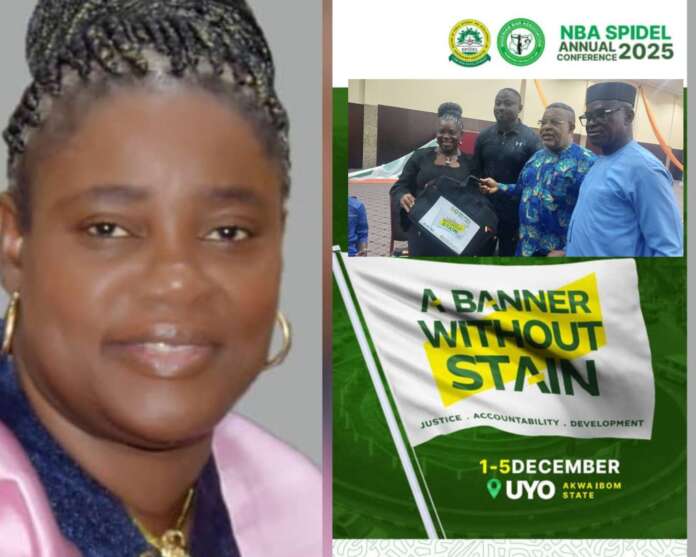
19-year-old South African female undergrad commits suicide after being raped by schoolmate

A 19-year-old undergraduate of Nelson Mandela University in South Africa, Sesethu Enhle Mboza, committed suicide after she was brutally raped by a fellow student.

According to the advocacy group, Women For Change, Mboza took her life on 29 October 2025. 

“After allegedly being r@ped in October, Sesethu opened a case with the police. The perpetrator was arrested but later released on bail,” the group said in a statement on Sunday.

“Despite this, Nelson Mandela University failed to take adequate action, allowing her alleged attacker to remain on campus. 

“Sesethu suffered from severe trauma and panic attacks after repeatedly seeing her perpetrator on campus, the very place where she should have felt safe. 

“Women For Change is deeply shocked and outraged that a student charged with rape was allowed to return to campus, the very environment where his victim should have felt protected and supported.

“This is not only a failure of compassion but a complete disregard for the safety and mental well-being of survivors. Where are the Gender-Based Violence policies that universities are required to have in place to protect their students? Survivors should never have to relive their trauma by crossing paths with their perpetrators.

“We call on Nelson Mandela University and all higher education institutions to take full accountability and urgently strengthen their GBV response mechanisms. No survivor should ever be left feeling unsafe, unheard, or unsupported within a place of learning. Sesethu’s life mattered. She deserves justice.”

19-year-old varsity student comm!ts suicide after being r@ped by schoolmate

💰 Blood Gold: How Nigeria’s hidden mines are funding bullets, bandits, and a billion-dollar war

Thirty-five years ago, Hussaini Isah dug for gold with calloused hands and quiet hope.
Back then, the forests of Zamfara whispered opportunity, not fear.

Today, his world is different. He still digs—but now under the shadow of guns, not sunrise.

“It was hard work,” he said softly, “but it fed us. Now, it’s life or death.”

Across northern Nigeria, gold has turned from blessing to blood. The once-peaceful fields of Zamfara and Kaduna now glitter with violence.

Each speck of gold unearthed funds bullets that echo across the savannah.

The Billion-Dollar Drain

Nigeria loses over $9 billion yearly to illegal mining. Much of it vanishes through the North-West—straight into the hands of terrorists.

In Zamfara’s gold belt, Kachalla Mati, the successor to slain warlord Halilu Sububu, rules the mines. He reportedly earns ₦300 million weekly, trading gold for guns.

The gold travels through Niger and Mali, then on to Dubai— where it’s laundered into the global market, gleaming and guiltless.

Every gram carries the weight of lost lives.

The Rise of the Bandit Miners

Banditry began with rustled cattle and ransom kidnappings. But since 2022, gold has become the new oil of terror.

The Nigerian military attacks their camps. Yet, the bandits always return—stronger, richer, and deadlier.

Between 2018 and 2023, more than 4,758 people died in Zamfara and Kaduna.
That’s more than deaths from Boko Haram in the North-East.

Gold, portable and priceless, has become the perfect weapon.

“We Dig, They Gain”

When Isah bends to work, he knows who truly profits. Armed men arrive, guns cocked, and demand their share.

“They beat us,” he said. “Sometimes, they kill.”

Another miner, Kabiru Dahiru, described their rule like a mafia. Each worker carries a paper “pass” signed by a bandit boss. Without it, they risk abduction—or worse.

“The ticket keeps us alive,” Dahiru said.

Bandits rarely dig themselves. They force miners to extract gold, then seize the treasure.

For every ten bags of gold-laced sand, locals keep one—if they’re lucky.

Gold Trails and Dark Deals

From Anka and Maru to Birnin Gwari, the gold travels in whispers. At Gusau’s Pollo Market, traders pile the metal in grams, digo by digo.

Before insecurity, the market made ₦250 million weekly. Now, much of that gold moves underground—straight to the black market.

Bandit leader Mati admitted the trade openly.

“We sell some here,” he said, “but most goes abroad. Sometimes, directly to Dubai.”

Each week, his group extracts gold worth up to ₦300 million. That’s enough to buy sixty brand-new AK-47 rifles.

The Golden Highway of Death

To reach the mining towns, you drive through silence and fear. The Kaduna–Birnin Gwari highway, once deadly, now feels uneasy calm.

Abandoned villages whisper stories of lives erased. Shrubs cover burnt homes where families once gathered at dusk.

In Anka, soldiers guard a fragile peace. Thousands displaced by attacks now live in makeshift camps.

“They killed twenty-six people that day,” said Aisha Abubakar, eyes glassy with grief.
“Four of them were my brothers.”

The Shadow Traders

Not all villains carry guns. Some wear smiles and gold dust on their palms.

Middlemen, often respected locals, buy gold for “unknown” clients. They weigh, pay, and transport the loot—sometimes for bandits themselves.

“They use agents,” said Rabiu Bawa, a vigilante commander. “We know some of them.”

Experts call it a war economy—a chain linking miners, traders, smugglers, and gunrunners.
Weapons slip through porous borders in Katsina and Niger. Each transaction feeds another round of terror.

From Gold to Guns

Inside this hidden economy, gold is currency and weapon. Bandits use it to buy rifles, bullets, and power.

“We don’t pay cash,” Mati said. “We give gold, they give guns.”

His “partners” in Algeria and Mali deliver weapons worth their weight in metal.
A single AK-47 costs ₦5 million—about 39 grams of gold.

In May, Mati bragged that forty new rifles had arrived. He refused to show them.

Security experts say such exchanges keep the violence alive. The more gold they mine, the deadlier they become.

The War Nobody Sees

Nigeria now ranks fifth on the Global Terrorism Index. Four of the top five countries sit in the gold-rich Sahel.

Weapons flow from Libya, Sudan, and Algeria—straight into bandit hands. Even corrupt security agents sell guns for quick cash.

Locally-made rifles fill the gap, costing as low as ₦500,000. Bullets are sold in “mudus,” at nearly ₦1 million per bowl.

“Even ammo is easy to get,” said security analyst Dr. Kabiru Adamu.

Hope in the Dust

The government has banned illegal mining and launched reforms. But in Zamfara’s forests, the bandits still call the shots.

Isah no longer digs under their command. He fled to Giwaye, a safer village near Anka.

“The gold here is little,” he smiled faintly, “but at least, I’m free.”

For him, freedom is worth more than gold.

Every gram mined in the North carries a story—of hunger, fear, and resilience.
Until Nigeria reclaims its gold, bandits will keep digging.
And the earth will keep bleeding.

This article was adapted from one originally published by Daily Trust on Saturday, 25 October 2025.

“Every Click, a Risk”: NHRC, lawmakers, and experts sound alarm on Nigeria’s growing online child exploitation crisis

The National Human Rights Commission (NHRC) has called on tech giants and digital platform operators to tighten online safety standards and shield Nigerian children from mounting threats such as cyberbullying, grooming, sextortion, and exposure to harmful content.

Speaking at the Child Online Safety Forum in Abuja on Monday, NHRC Executive Secretary Tony Ojukwu — represented by Ngozi Okere, Director of Women and Child Protection — stressed that while the internet offers vast opportunities for learning and innovation, it also exposes children to grave risks that demand urgent collective action.

“We must ensure that tech providers adopt stronger guidelines and child-focused safety tools,” Ojukwu urged. “This includes enforcing age-appropriate content filters, establishing effective reporting systems for abuse, and safeguarding user privacy.”

He emphasised that technology companies have both a moral and social responsibility to put child safety ahead of profit, urging them to move beyond profit-driven algorithms to create safer, more inclusive online spaces.

Ojukwu revealed that the NHRC has already introduced an automated online reporting system and a toll-free hotline (6472) for anonymous reports of cyberbullying, grooming, and other online abuses. The initiative is part of a broader effort to make justice more accessible to victims and support the proposed Child Online Protection Bill, which seeks to legally safeguard children in Nigeria’s digital environment.

“Protecting children online is not just a legal duty — it’s a collective moral obligation,” Ojukwu declared. “Stronger laws, greater awareness, and real accountability from tech companies can help us build a digital world that empowers rather than endangers our children.”

Lawmakers Push for Stronger Regulation

Also speaking, Olumide Osoba, Chairman of the House Committee on Justice, reaffirmed the National Assembly’s commitment to laws that compel digital service providers to prioritise user safety.

Osoba, sponsor of the Child Online Access Protection Bill (HB 244), warned that the lack of regulation leaves millions of Nigerian children exposed to exploitation, identity theft, and violent content.

“The internet should empower, not endanger,” he said. “Our bill will compel internet providers to block harmful content, criminalise online grooming and cyberbullying, and promote digital literacy among parents and children.”

Data Paints a Grim Picture

The urgency of the call was underscored by alarming findings from Gatefield’s “State of Online Harms 2025” Report, presented at the same event.

According to the report, 68.9 million Nigerians have faced online harm — including gender-based harassment, sexual abuse, and cyberbullying — amid soaring internet usage that now exceeds 137.8 million users nationwide.

“With rising internet adoption comes an explosion in digital dangers,” said Shirley Ewang, Gatefield’s Advocacy Lead. “This is no longer a side issue — it’s a national crisis.”

Key findings from the report include:

  • 50% of Nigerian internet users experience online abuse regularly.
  • 58% of victims are women — particularly those in politics, journalism, and public life.
  • X (formerly Twitter) accounts for 34% of all reported online harms, followed by Facebook, WhatsApp, and Instagram.
  • 99% of online harms are linked to fake news, while 95% involve misinformation — especially during elections.
  • 90% of children have faced at least one cyber risk, and 97% have reported sexual exploitation online.

Ewang warned that deepfakes and violent imagery are being weaponised to spread false narratives, eroding public trust in tech platforms.

“One in three Nigerians no longer trusts social media to keep them safe,” she noted. “While 86% of citizens support regulation, they insist it must protect—not silence—free expression.”

A Call to Action

To confront this digital emergency, Gatefield, in partnership with Paradigm Initiative and the National Online Safety Coalition, proposed three urgent steps:

1. Launch nationwide digital literacy campaigns targeting women and children.

    2. Hold big tech companies accountable through localised content moderation systems.

    3. Update Nigeria’s cyber laws to tackle emerging threats such as AI-driven deepfakes.

    Ewang concluded with a stark warning:

    “Online safety is not optional — it’s an urgent national priority. Every time a Nigerian child logs on, they face a real threat. The time to act is now.”

    The Herbalist’s Trap: How a 22-year-old was lured to his death by a friend he trusted 🔥

    When 22-year-old Liberty Friday answered a friend’s call, he never knew it would be his last.

    His brother, Chika Friday, still remembers that tragic day — September 30, 2025.

    “It started with a phone call,” Chika said. “Someone claiming to be a kidnapper told my younger brother in Enugu that Liberty had been abducted.”

    The kidnappers demanded ₦20 million ransom. Liberty’s faint cries came through the phone before the line went dead.

    Later, the family discovered the shocking truth — strangers didn’t kidnap Liberty. His herbalist friend lured him.

    The herbalist, barely 23 years old, had called Liberty that morning. “He told him to come alone,” Chika said.

    Liberty asked a commercial motorcyclist to take him there. Neither of them came back.

    Liberty’s girlfriend, Abigail, overheard the call. She was sick and resting beside him.
    “The herbalist told Liberty to come immediately,” she said. “The phone was on speaker. I heard everything.”

    When Liberty vanished, the herbalist denied knowing anything. But Chika wasn’t convinced.

    “I kept pretending to believe him,” Chika said. He sent small amounts of money — ₦10,000 every two days — just to keep communication open.

    “He said he needed the money to ‘check’ if my brother was still alive.”

    The herbalist later demanded ₦400,000 to perform a charm that would make Liberty return home.
    Desperate, Chika sent ₦120,000 as bait while working with the police.

    Through these transactions, they tracked the herbalist’s phone and fintech account.

    On October 24, 2025, Chika set the final trap.

    “I told him I wanted to bring the money in person,” he recalled. The herbalist agreed — but asked Chika to give the cash to his mother. “I refused. Then I alerted the police waiting nearby.”

    The next day, officers stormed the herbalist’s den. He was arrested without a fight.

    What came next broke the family’s heart. The herbalist confessed everything.
    He and his elder brother had killed Liberty and the motorcyclist on October 1, a day after the abduction.

    “He said they blindfolded both victims,” Chika said quietly. “When Liberty’s blindfold fell off, his brother insisted they must die.”

    They gave their victims a substance to weaken them, then attacked with sticks and cutlasses.

    The herbalist’s elder brother fled to Warri. Police later arrested him after he threatened someone with acid. He confessed too.

    Chika spent over ₦300,000 sending money to the herbalist and another ₦550,000 assisting the police. “Tracking them cost millions,” he said. “But no amount can bring Liberty back.”

    The family of the slain motorcyclist later came for his body. Liberty was buried amid tears and disbelief.

    “I still can’t believe my brother died that way,” Chika said. “They were almost the same age. They were supposed to be friends.”

    Now, Chika wants justice — and a warning to others: “Be careful who you trust,” he said. “Not every friend means well.”

    Sometimes, betrayal doesn’t come from strangers. It comes from those who know your voice — and call you “friend.”

    Nigeria ranks lowest in life expectancy in Africa, Tunisia highest

    A new report has ranked Nigeria as the African country with the lowest life expectancy, with newborns in the nation projected to live an average of 54.8 years in 2025.

    The ranking, based on Statista’s Forecast of Life Expectancy at Birth in Africa, placed Tunisia at the top with a life expectancy of about 77 years, followed closely by Algeria, Cabo Verde, Morocco, and Mauritius, each averaging between 75 and 77 years.

    The North African nation is followed closely by Algeria (76.7 years), Cabo Verde (76.4 years), Morocco (75.7 years), and Mauritius (75.3 years), making North African and island nations the region’s leaders in health and longevity.

    Across the continent, the average life expectancy stands at just over 64 years, highlighting persistent disparities in access to healthcare, nutrition, and living standards between regions.

    The top 10 countries with the highest projected life expectancy are: Tunisia  (76.9 years), Algeria (76.7 years),

    Cabo Verde (76.4 years), Morocco (75.7 years), Mauritius (75.3years), Libya (73.2 years), Seychelles (73.1years), Egypt (72.0 years), Western Sahara (71.8 years), São Tomé and Príncipe (70.1 years)

    Nigeria is the lowest at 54.8 years, followed by Chad (55.4 years), the Central African Republic (57.9 years), South Sudan (57.9 years), Lesotho (58.2 years), Somalia (59.1 years), Mali (60.9 years), Guinea (61.1 years), Benin (61.1 years), and Burkina Faso (61.5 years).

    Higher life expectancies in northern and island nations may be linked to stronger healthcare systems, higher living standards, and greater investment in education and social services. Conversely, many sub-Saharan countries continue to struggle with conflict, poverty, inadequate medical infrastructure, and a corrupt ruling elite that misallocates the country’s resources, all of which contribute to lower average life expectancies.

    Statista, the global data and business intelligence platform behind the report, compiles statistics and insights from over 22,500 sources across 170 industries. Founded in Germany in 2007, the company now operates in eight locations worldwide, employing around 1,450 professionals.

    Meanwhile, health experts have attributed Nigeria’s low life expectancy to a combination of factors, including high infant and under-five mortality rates, insecurity, poor healthcare infrastructure, a growing burden of noncommunicable diseases (NCDs), food insecurity, malnutrition, and unhealthy lifestyles.

    Former president of the Nigerian Medical Association (NMA), Prof. Francis Faduyile, told LEADERSHIP Sunday the country’s poor ranking is closely tied to high child and maternal mortality rates.

    “When we talk about life expectancy, it refers to the average age people are expected to live in a particular area. The major problem in Nigeria is that many children die during early childhood. Nigeria has very high neonatal and perinatal mortality rates. When you add maternal deaths and other early deaths together, it brings down the national average,” he explained.

    Prof. Faduyile added that while some Nigerians live into their 80s or 90s, the high number of deaths among children and young adults drags down the national figure.

    “Imagine 100 people: if 20 die between ages zero and five, and another 15 die between 15 and 30, the average age of death drops, even if others live long,” he said.

    He further highlighted violent conflicts, road accidents, and inadequate management of NCDs such as diabetes, hypertension, and cancer as major contributors.

    “We still record too many deaths from accidents and armed conflicts. Many cancer patients also die because treatment is expensive and facilities are inadequate. To improve life expectancy, we must tackle maternal and child mortality, strengthen healthcare systems, and promote prevention and early treatment,” he noted.

    Likewise, a chief consultant paediatric surgeon at the National Hospital, Abuja, Prof. Emmanuel Ameh, linked Nigeria’s low life expectancy to persistently high infant and under-five mortality rates, as well as preventable deaths among young adults.

    “Nigeria has the second-highest infant and under-five mortality rate in the world, just behind India. With children under 15 making up over 40 per cent of our population, anything that affects that age group significantly impacts overall life expectancy,” he explained.

    On mental health and insecurity, an associate professor of psychiatry at the College of Medicine, University of Lagos, and consultant clinical psychologist at LUTH, Dr. Charles Umeh, said widespread insecurity and poor living conditions are taking a toll on Nigerians’ mental health, which in turn reduces life expectancy.

    “Nigeria is like a gunpowder keg waiting to explode; the country is filled with mental health issues. Distress in internally displaced persons’ camps, insecurity, and trauma all contribute to early deaths,’ he said.

    He emphasised that psychological well-being was key to longevity.

    “The body must be nourished emotionally, psychologically, and mentally to function properly. When those are missing, lifespan reduces. There is no health without mental health,” he said.

    While genetics play a role, Dr. Umeh told LEADERSHIP Sunday that lifestyle and stress management have a greater impact.

    “Except you inherit a life-shortening disease, longevity depends largely on how you live. Managing stress well promotes resilience and longer life, but in today’s Nigeria, that’s increasingly difficult,” he added.

    Speaking on how poor diet and economic hardship deepen the crisis, a food scientist and project officer for cardiovascular health at Corporate Accountability and Public Participation Africa (CAPPA), Bukola Olukemi-Odele, said poor nutrition and worsening economic conditions were major drivers of the decline.

    “Food is an integral part of human existence. When economic hardship leads to food insecurity and malnutrition, it directly affects life expectancy,” she said.

    Citing the UN Global Health Report 2025, she noted that Nigeria’s life expectancy has fallen to 54.8 years, nearly 20 years below the global average of 74.4 years.

    “The high cost of living has made nutritious foods like fruits, vegetables, and proteins unaffordable. Children under five are exposed to malnutrition, while adults resort to processed foods high in salt and sugar, increasing the risk of hypertension, diabetes, and heart disease,” she explained.

    Olukemi-Odele warned that widespread micronutrient deficiencies further worsen health outcomes and lead to early deaths.

    “If you control what people eat, you control their health and quality of life,” she said.

    Meanwhile, the 2024 Nigeria Demographic and Health Survey (NDHS) showed some progress in child survival, with under-five mortality dropping from 132 deaths per 1,000 live births in 2018 to 110 deaths per 1,000 in 2024. However, it was not so for neonatal mortality, which rose slightly from 39 to 41 deaths per 1,000 live births.

    Minister of state for health, Dr. Iziaq Salako, emphasised the need for renewed focus on newborn health.

    “Up to 45 per cent of under-five deaths occur during the neonatal period. We must intensify efforts to tackle the leading causes of newborn deaths,” he said.

    He revealed the launch of the Maternal and Neonatal Mortality Reduction Initiative (MAMII) and the Nigeria Child Survival Action Plan (2025–2029) to improve outcomes through targeted interventions.

    On the way forward, health experts have urged the government to take urgent action to strengthen healthcare delivery, address food insecurity, and promote healthier lifestyles. They warn that Nigeria’s life expectancy could fall even further without decisive intervention.

    Independent and Unaccountable: A new code for Nigeria’s judiciary

    By Chidi Anselm Odinkalu

    Among the doctrines that underpin the legal process in Nigeria, few are as profound and pervasive as judicial independence, but no doctrine in the ecosystem of the law rivals its elusiveness. The idea is ubiquitous in the syllabus of every programme leading to the award of a degree in law, in political science or public administration. After leaving the university, the practitioner will encounter it regularly in conferences and in after-dinner speeches.

    Judicial independence is more than the stuff of law faculties and after-dinner fares. It is a fundamental human right in Nigeria. Indeed, the guarantee of the right to fair trial in section 36(1) of Nigeria’s constitution requires that every court should be “constituted in such a manner as to secure its independence and impartiality.”

    Judges have a notional obligation to uphold it. The Code of Conduct for Judicial Officers in Nigeria contains five mentions of the words “independent” or “independence” and obligates them to observe “a high standard of conduct so that the integrity and respect for the independence the judiciary may be preserved.”

    Despite the repetitive and obligatory genuflections before its shrine, however, few people take even appearances of judicial independence seriously, and many are these days happy to advertise undisguised ridicule for it.

    Take for instance what happened last week. On 29 October, a leading national newspaper ran the headline: “FIRS, Judiciary Strengthen Collaboration on Emerging Tax Laws.” It would have been easy to disregard it as the handiwork of a distracted or mis-informed reporter. The reportage, however, belied that.

    The National Judicial Institute (NJI) had organized what it called “a capacity-building workshop for Justices of the Supreme Court, Court of Appeal, and Judges of the Federal High Court on (Nigeria’s) new tax law.” Effectively, this was a training for the most senior and most influential judges in Nigeria.

    Established in 1991, the NJI is the statutory body responsible for continuing studies or judicial education by judges and magistrates in Nigeria. It is headed by an Administrator, who is a retired senior judge and operates under the governance of a board chaired by the Chief Justice of Nigeria (CJN). The Board approves all of its activities, including conferences, workshops, and trainings.

    The NJI is funded by appropriations from the National Assembly, but it also can receive sponsorships sometimes for its activities. The sums had not yet been disclosed at the time of writing, but credible reports appear to indicate that the Federal Board of Inland Revenue (FIRS) substantially sponsored this latest training on the new tax laws. It is suggested, however, that the sponsorship was generous.

    One of the headline speakers at that training for these most senior judges in Nigeria was the Executive Chairman of the Federal Inland Revenue Service (FIRS), who happens to share the same first name as the infamous tax collector in the Christian Holy Book. To minimize the association with its Biblical forebear, the name this time is stylized to “Zacch”. In his address, Executive Chairman, Zaccheus, called “for deeper collaboration between the judiciary and tax authorities to ensure fair interpretation and enforcement.”

    The call for collaboration of any sort, whether deep or shallow, between judges and anybody or institution, clearly misapprehends the mission of the judiciary or invites them to be nobbled for value. It is not immediately clear if the judges had any response for Zaccheus on this occasion. There, however, is evidence on the basis of previous conduct which offers us some clues.

    This is far from a first in recent times for a senior public official to seek to corrupt the judiciary under the guise of seeking their collaboration. In his memoirs, The Accidental Public Servant, former Minister of the Federal Capital Territory and immediate past Governor of Kaduna State, Nasir el-Rufai, proudly tells the story of how as minister two decades ago, he led his staff to meet his High School senior, Lawal Hassan Gummi, who served in his time as Chief Judge of the High Court of the Federal Capital Territory.

    Following that meeting, he gloated, “The FCT judiciary supported us strongly throughout my tenure.” The manner of the support is clear from the fact that it subsequently became nearly impossible to secure any orders against the FCT administration while those two were in office. The few cases that escaped this institutionalized nobbling did not survive to enforcement.

    Two years ago, in November 2023, the incumbent Chief Judge of the Federal Capital Territory, Husseini Baba Yusuf, led the Bench of his court to the office of Nasir el-Rufai’s current successor as the Minister of the FCT, Nyesom Wike. At the meeting, the Chief Judge reminded the Minister that “as a judiciary we are part of the government and we expect that we should be able to do things that should make government work….”

    As an act of prostitution of judicial powers, it is impossible to beat this. He did not have to wait too long to make good on this institutional willingness to be at the equestrian beck and call of the FCT Minister. When the FCT High Court filled judicial vacancies on its bench in the first quarter of 2024, they dutifully allocated one out of the twelve new vacancies on offer to the FCT Minister, to which he promptly deputed his sister-in-law.

    This is far from the only way in which the politicians ensure that the courts are no longer constituted or able to fulfill the basic constitutional requirement of independence.

    In July 2022 apparently, as he swore in a new Chief Judge for the state, Imo State Governor, Hope Uzodinma, at the same time procured the State House of Assembly to amend the High Court Law. Under the new amendment, where there is no substantive Chief Judge, the power to manage and assign cases in the High Court is transferred from the most senior judge (who is supposed to act until a new Chief Judge is appointed) to the Chief Registrar of the High Court.

    There are well-founded suspicions that this amendment was procured a little more recently but backdated to 2022 to make it look older than it is in order to amputate the judicial role of the recently sworn-in Acting Chief Judge, Ijeoma Ogugua, whom the governor has been entirely unenthusiastic to allow into the role. The Acting Chief Judge functions under the authority of the National Judicial Council (NJC), in whose composition the Governor has no role.

    By contrast, the Chief Registrar is appointed by the State Judicial Service Commission, whose members are entirely beholden to the State Governor. In other words, by depriving the Chief Judge of the power over judicial dockets and case assignment and transferring it to the Chief Registrar, the Governor effectively makes himself the owner, controller, and manager of all cases filed in the High Court of Imo State.

    This is an arrangement that makes the life of the Chief Registrar unbearable and that of the Acting Chief Judge untenable. Almost assuredly, it is also manifestly unconstitutional.

    Unconstitutional is, however, not a standard that necessarily or at all bothers these peddlers of political roguery. In their books, the judges are there to be massaged in public and ransacked in private. Preachments about judicial independence are there to impress law students, pre-occupy their teachers, and distract the un-initiated. Sadly, the current leadership of the judiciary at various levels at both state and federal levels have been complicit partners in this very political ravishing of their institutional virtues.

    Increasingly, doctrines of judicial independence serve only one purpose: to render the judges independent of accountability for breaching it. The value of judicial independence, rather ironically, now lies in the absence of accountability for publicly flouting it.

    A lawyer and a teacher, Odinkalu can be reached at [email protected]

    The views expressed by contributors are strictly personal and not of Law & Society Magazine

    Breaking! Donald Trump threatens military action against Nigeria, escalates claim of Christian persecution

    United States President Donald Trump revealed on Saturday that he has asked the Defense Department to prepare for possible military action in Nigeria if the Nigerian government “continues to allow the killing of Christians.”

    The U.S. government will also immediately stop all aid and assistance to Nigeria, Trump said in a post on Truth Social.

    Trump said the U.S. may “very well go into that now disgraced country, ‘guns-a-blazing,’ to completely wipe out the Islamic Terrorists who are committing these horrible atrocities.”

    On Friday, Trump redesignated  Nigeria as a country of particular concern.

    This is a sequel to the groundswell that accompanied the allegations of United States Senator Ted Cruz, who accused Nigeria’s government of enabling a “massacre” against Christians, citing a rising number of attacks against the community in the country.

    In a statement on social Media on Friday, Trump said Christianity was facing an existential threat in Nigeria.

    “Christianity is facing an existential threat in Nigeria. Thousands of Christians are being killed. Radical Islamists are responsible for this mass slaughter. I am hereby making Nigeria a “COUNTRY OF PARTICULAR CONCERN” — But that is the least of it. When Christians, or any such group, is slaughtered like is happening in Nigeria (3,100 versus 4,476 Worldwide), something must be done!”

    “I am asking Congressman Riley Moore, together with Chairman Tom Cole and the House Appropriations Committee, to immediately look into this matter, and report back to me.

    “The United States cannot stand by while such atrocities are happening in Nigeria, and numerous other Countries. We stand ready, willing, and able to save our Great Christian population around the World!”

    Weeks ago, American Fact-Finder, Mike Arnold, noted that the pattern of attacks is consistent.

    He attributed the ongoing violence to three intertwined drivers: radical Islamist conquest, illicit ‘blood mineral’ mining, and politically motivated demographic re-engineering.

    “The term farmer herder clashes is, in many instances today, cynical doublespeak. Weaponizing historical land disputes to mask jihadist conquest. For centuries, herders and farmers co-existed with rare, very rarely lethal disputes,” he said.

    “Now villages are systematically razed, churches leveled, and tens of thousands are dead. This is a systematic terror and not grazing conflicts. A lie akin to calling Bosnia’s ethnic cleansing a neighborhood spat.”

    Citing Article II of the 1948 United Nations Convention on the Prevention and Punishment of the Crime of Genocide, Arnold asserted that Nigeria’s situation meets the international legal threshold for genocide.

    According to him, after five years of investigation, he could say, “The campaign of violence and displacement in northern and middle belt Nigeria does indeed constitute a calculated current and long-running genocide against Christian communities and other religious minorities without any reasonable doubt. To continue to deny this is to be complicit with these atrocities.”

    Arnold warned that continued denial of the atrocities only emboldens perpetrators.

    “To continue to deny this is to be complicit with these atrocities,” he said. “I say this not in anger, but in truth and grief. My stated assignment from my host was to speak the truth and I have done that to the best of my ability. I believe Nigeria has a bright future.”

    “I believe in Christian Muslim harmony. I believe good people of every tribe and faith and party must stand against this evil, but first we must name it. Here I stand,” he added.

    He concluded that his team’s report would be submitted to U.S. policymakers and international human rights organisations upon return.

    TIPS