Home Blog Page 176

US and FFK’s drum of war

By Suyi Ayodele

On our way we are going to fight

On our way we are going to war

If it happens, we die on the battlefield 

Never mind we shall meet again

Kóláwolé agbára únbẹ 

A lè ja o

Fuji icon, Abdulrasaq Kóláwolé Ilori, popularly known as General Ayinla Kollington, waxed the above lyrics in his 1986 album, E Bá Mi Dúpé.

Kollington left the Military as a non-commissioned officer. When such a man says he is heading to the front lines, his relations have every reason to worry, given his limited or non-existent experience he possessed in real combat.

But the fuji crooner’s case is far better than the position of Femi Fani-Kayode (FFK), former Minister of Aviation, who, on Sunday, warned the United States of America, USA, that there would be war should the Big Brother, US, make good its threat to intervene in Nigeria’s plight in the hands of insurgents, militarily.

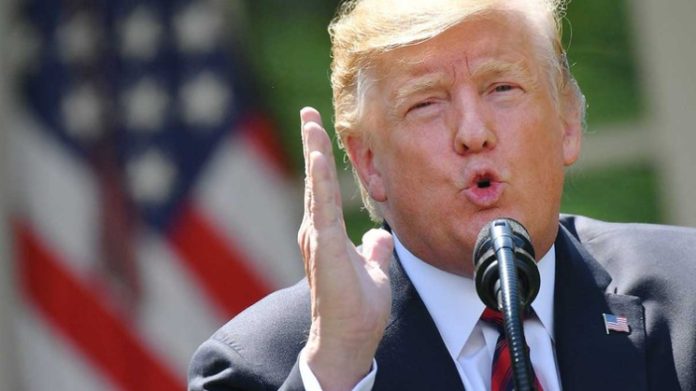
Here is what FFK said about the impending military action threatened by President Donald Trump of America: “… if he carries out his abominable threat, there will be a war. We shall not leave the country, but we will fight it out with them…”

When a man promises to give you a cloth to wear, our elders caution that you should first look at the rag your would-be benefactor puts on. What is FFK’s pedigree that he would threaten war with the US? Who prepared pounded yam for him and asked him not to worry about the soup with which to eat it (ta ló gún iyán fún un tó ní t’obè ò sòro)? Could it be that the Ile Ife-born politician listens more to the lyrics of Kollington above? Or is there an intoxicating spirit somewhere ministering to his sanguinary needs?

FFK’s father, the Late Chief Victor Babaremilekun Adetokunbo Fani-Kayode, known simply as Remi Fani-Kayode, was elected the Deputy Premier of the defunct Western Region in 1963. His principal was the late Aare Ona Kakanfo of Yorubaland, Chief Samuel Ladoke Akintola. Remi Fani-Kayode was so powerful in the Akintola administration that he was nicknamed, Fani Power. He was, indeed, a great power wielder, consummate politician, brilliant lawyer and alternate Premier of the most cosmopolitan region. He was romanticised such that friends and foes feared him.

But on the night of January 15, 1966, some young military boys under the leadership of the late Major Kaduna Nzeogwu, decided to overthrow the government of Alhaji Tafawa Balewa, Nigeria’s first Prime Minister. When the soldiers struck in Ibadan, capital of Western Region, the man known as Fani Power was picked up effortlessly!

Accounts of that mid-night raid across the capitals of the three regions of Nigeria and Lagos, say that Chief Remi Fani-Kayode did not fire a single catapult at the mutinous soldiers who came for him! Neither did he scratch the skin of the soldiers with his fingernails. Remi Fani-Kayode simply obeyed as he was thrown, like a bag of Kano onions, into the trunk of the van the soldiers rode to his place.

Those who witnessed that era and who knew Fani Power, say that FFK is nowhere near his father in terms of reach, boldness and dexterity. Yet, when the old Fani-Kayode saw guns, his ‘boldness’ evaporated as he begged for his life and led the rampaging soldiers to the residence of his principal, Akintola, where the late Yoruba Generalissimo was said to have shot several times at his assailants before he was overpowered and killed.

Almost six decades after his father surrendered willingly to a few Nigerian soldiers that came for him at the dead of the night, FFK is boasting that should Trump make good his threat to send troops to our shores, “We shall not leave the country, but we will fight it out with them!” Pray, from whom did he inherit the boldness? Has he ever used a catapult to kill a lizard before such that he would boast of a full-blown war with the US?

How did we get to this stage in our nation’s history that the American President, Trump, would have to warn our government to wake up and halt the ‘genocide’ of Christians in the country, otherwise, America would rise to the occasion? 

In a series of tweets over the weekend, Trump threatened to send military help, promising that he would be coming to Nigeria “gun-a-blazing.” I checked the semantic implications of the phrase, “gun-a-blazing”, and my dictionary says it means: “to do something with great energy, force, and enthusiasm or be very aggressive…”

Ask me a hundred times, I will tell you that Trump means business. Yes, the motive may not be altruistic; it can never be, not with the Western world. But his choice of diction indicates a man who will do what he has said. And, sincerely, I pray that it doesn’t get to that level. Should it happen, the jubilation among Nigerians will make the jubilation when General Sani Abacha expired to pale into insignificance. This will be so, not necessarily because Nigerians are less patriotic. But more because the present administration has not demonstrated any strand of leadership in protecting the lives of the people!

Trump went ahead to say: “I am hereby instructing our Department of War to prepare for possible action. If we attack, it is going to be fast, vicious and sweet.” Other top Pentagon officials and political advisors of Trump had also spoken in that direction. It appears an American interest is at risk in Nigeria. The signs are ominous enough for any serious government to ignore. More worrisome is the fact that the Tinubu government’s vuvuzelas who are always quick to respond in aggressive manners to this kind of threat, are loudly silent!

The US, we all know, does not joke with its interests, anywhere in the world. Moreso in “a disgraced country” like Nigeria as Trump christened us. Who do we blame for this? Nobody should be naive enough to think that the US is talking because it loves us. Something is at stake; something that is of a huge benefit to the US, I dare say! So, how did our cock demystify the comb on its head for the Fox to play with? Remember the fable of the cock and the Fox? 

Our mothers told us that at the beginning of life, the Fox feared the cock because of the redness of the comb on the cock’s head. The Fox believed that the comb was fire, and it avoided the cock, accorded it its due respect. 

But when a man has what it does not value, it gives it out cheaply. For whatever reason, the cock, one day, approached the Fox and told the Fox that it had no reason to fear him because the comb was nothing but a soft mound of flesh. To prove that, the cock asked the Fox to touch the comb and when the latter did and was not scourged, it descended on the cock and made a feast of it. Of course, chicken venison is usually delicious, and the Fox does not forbid a good meal. This is why the cock, and other of its avian family members, are delicacies for the Fox. 

Right from our independence, Nigeria has played major roles in the maintenance of peace and tranquillity on the continent of Africa. We were not just christened Giant of Africa for fun. In the Congo crisis and other crises that threatened the existence of Africa, the Nigerian Military distinguished itself. We restored order in many countries and stabilised democracy in not a few others.

But for the roles of Nigeria in the West Africa sub-region military intervention codenamed the Economic Community of West African States Monitoring Group (ECOMOG), probably, countries like Liberia and Sierra Leone would have been in tatters today. Our military personnel distinguished themselves in those campaigns and were awarded laurels by the United Nations (UN). 

Also, when the apartheid White overlords held on to the jugulars of our South African siblings, Nigeria was the rallying point. The nation committed personnel and resources to get South Africa its independence. The entire world acclaimed our feats, and we savoured the moments, beating our chests that we are indeed, the Giant of Africa in deeds. 

Now, in the year of the Lord 2025, America is issuing us a threat to fix the insurgency ravaging our nation or it sends troops to come and fix it for us in a fast, vicious and sweet manner! How did we get here? What happened to the wonders our Military performed in foreign lands? Why can’t we replicate what we did to help others in our own land? 

In answering these questions, we draw strength from the table of the cock and the Fox and more in the moral lesson of an old man and his son on why no man should lend himself as an instrument in any evil machination. 

The aged man, according to the story, gathered his children and told them that in all they did, their names must not be mentioned when evils were being planned. When asked why, the old man said that no evil perpetrated by any man would go without a full remittance to the plotters. 

Next door, the narrative says, was an equally old man who terrorised the community. But contrary to the projection that no evil man would die without reaping the fruits of his evil deeds, the old, wicked man prospered, had seven sons and five daughters; all of them also prosperous, and he died peacefully. 

While his funeral rites were underway, one of the children who took the moral lesson from his father reminded the father that his theory was wrong and cited the case of the dead wicked old man. The father looked at his son and said: “No man who has not been successfully buried can be said to have died a peaceful death.”

The father and son were still at the a-tete-a-tete, when they heard a loud bang from the wicked man’s compound. What followed was a great burst of flames and the corpse lying in state together with the 12 children of the deceased, were trapped in the inferno and burnt beyond recognition! At his funeral, the wicked old man lost all he had here on earth!

The story states further that what ignited the fire was a spark from the gunshot fired in traditional salute to the deceased. The spark dropped in a keg of gunpowder and the resulting flame spread rapidly to the thatched roof, where gallons of palm oil were stored on the rafter, fuelled by the harmattan wind.

The man who relayed this story to me said that it was from that cradle that he made up his mind that never would he join anyone in any evil plot. Such comes back to haunt and harm their perpetrators. 

This is what the President Bola Ahmed Tinubu administration is reaping as Trump threatens military action. It is the reward of the evil voyage of 2014 Tinubu, the late General Muhammadu Buhari, Rotimi Amaechi and Chief John Odigie-Oyegun, as opposition leaders then made, when they approached the US Government of Barrack Obama to block President Goodluck Ebele Jonathan from accessing military fighter jets and other arms and ammunition needed to confront the Boko Haram and other insurgent groups of that period.

Through destructive opposition and the desperation to get Goodluck out of the way, the Tinubu gang sold Nigeria cheaply to the US Government. I have checked the photo of the foursome with John Forbes Kerry, the US Secretary of State under Obama, as they negotiated away Nigeria’s sovereignty in their bid to gain control of power.

Eleven years down the line, that evil voyage has come to collect its IOU from Tinubu. Unfortunately, of the four who sold out Nigeria to the US in 2014, one of them, Buhari, is no more. Today, both Amaechi and Oyegun are poles apart from Tinubu, who is left to carry the ant-infested firewood of that desperate misadventure!

So, what do we do in this circumstance? One, we must agree that there is a genocide of Nigerians across the Federation. This genocide may not necessarily be targeted at the Nigerian Christians; the fact remains that the proportion of Christians killed so far towers far above their Muslim counterparts. Someone, somewhere, is waging a war against the nation and our government remains lethargic!

The second admittance is that in its response to these mindless killings, the Nigerian Government, in the last 11 years of the All Progressives Congress (APC) administration, has been non-existent. Truth be told, the Tinubu government’s emphasis on politics above the welfare and safety of Nigerians, gives credence to the designation of Nigeria as a slaughter slab. There is no way anyone will be able to rationalise the unfeeling reactions of President Tinubu to the calamities bandits and insurgents are visiting on helpless Nigerians.

This is therefore the best time for Tinubu to show that he has the aptitude to lead this country. He should make no mistakes about it: the US will strike if the situation continues. That will be too bad, not only for the President, but for all of us. The cost will be too much for us to bear. Our government must act, and act decisively.

Rather than asking us to prepare for war against the US as FFK suggested in his response, the Tinubu administration, I suggest, should show more seriousness in the fight against the killings going on across our nation. It is an embarrassment to the nation, and more to the Commander-in-Chief, for bandits, armed with sophisticated weapons, to flood our cities to attend the wedding ceremonies and other social engagements of their ‘commanders’ and our armed forces did nothing!

It is a shame that while the rain and bad roads would not allow the President to visit the victims of the attacks in Benue communities where over 200 Nigerians were slaughtered, the same elements allowed him to attend the state banquet the Benue State Government organised in his honour. He ate, drank, belched and flew back to Abuja, leaving the living to bury their dead! That shows the priority of the president at that critical moment, politics above the people’s safety!

The views expressed by contributors are strictly personal and not of Law & Society Magazine.

Air India crash sole survivor, Vishwash Kumar Ramesh says death of brother ‘took all my happiness’

Vishwash Kumar Ramesh Photograph: Jacob King/PA

The sole survivor of the Air India plane crash that killed 241 people in June has said it is a miracle he is still alive, but the death of his brother “took all my happiness”.

Almost four months on from the crash in the Indian city of Ahmedabad, Briton Vishwash Kumar Ramesh said the incident had left him with constant flashbacks.

The 39-year-old said the death of his brother, Ajay, who was on the same flight, meant his family had “lost everything”.

“I lost everything – my happiness. God gave me life but took all my happiness, and from my family,” he told the PA news agency.

“It completely brought down my family … it’s very difficult for me and my family.”

The London-bound Boeing 787-8 Dreamliner crashed into a medical college shortly after taking off from Ahmedabad airport on 12 June, killing everyone on board except Ramesh.

Among those killed were 169 Indian nationals and 52 British nationals, making it one of the deadliest plane crashes in terms of the number of British fatalities. Besides those on board flight AI171, another 19 people died and 67 were seriously injured on the ground.

Ramesh said the crash itself was still too painful to discuss, adding he could not bring himself to speak about his first memory after the incident. His advisers said he still has not spoken about it with close family.

In a statement prepared with the assistance of his advisers, he said he was broken and stays awake at night because of the flashbacks.

He said: “I get flashbacks all the time, I just stay awake, I sleep maybe three to four hours. Yes it’s a miracle I survived, but I lost everything, I lost my brother, I’m broken.”

He told PA: “My family have given me good support. My mother, father and my younger brother totally broke down, like mentally. And also me – mentally, physically.”

He continued: “My uncle, my cousin, my friends, (advisers) Sanjiv, Radd – they have given me good support – they’re always here.

“Mentally and physically – I’m not talking about too much with my family as I’m in my room, alone. I don’t like to talk too much. I’m just sitting on my bed and thinking.

“I lost my brother, 35 years old – every day I’m struggling.”

preliminary report into the incident from India’s Aircraft Accident Investigation Bureau found both of the plane’s fuel switches moved to the “cut-off” position “immediately” after takeoff, stopping fuel supply to the engine. It remains unclear why this happened.

Credit: The Guardian

Nigeria’s health crisis deepens as doctors’ strike grounds hospitals nationwide

Public hospitals across Nigeria were thrown into chaos on Monday as the doctors’ strike entered its third day.

Patients waited helplessly while emergency and routine services remained crippled by the walkout.

The Nigerian Association of Resident Doctors, NARD, began an indefinite strike on November 1 over welfare, unpaid salaries, and poor working conditions.

At the National Hospital in Abuja, empty wards and deserted corridors told the story of a collapsing system.

Only a few consultants and house officers struggled to handle a sea of stranded patients.

Expectant mothers, the elderly, and surgery patients were turned away due to the absence of doctors.

“There are no doctors,” one pregnant woman lamented. “They only attend to those almost due for delivery.”

Another woman who came for prenatal care left heartbroken after being told no doctor was available.

For others, the situation was devastating. A patient’s sister said her sibling’s kidney surgery was cancelled.

“She waited a week. They finally gave her blood, but now the doctors are on strike,” she said tearfully.

Some patients waited hours, hoping to be among the few selected for attention.

“There’s only one doctor seeing ten patients,” a man with his elderly father said. “We were lucky to arrive early.”

The strike follows failed talks between NARD and the federal government over unpaid arrears and hazard allowances.

The doctors also demand new hires to replace those who have left for better opportunities abroad.

Nigeria’s health system, already weakened by years of neglect, now faces deeper cracks as the strike drags on.

The Federal Ministry of Health said it has started paying over ₦33.3 billion owed to health workers.

According to officials, ₦21.3 billion was moved into the payroll system, and another ₦12 billion is being processed.

Some doctors confirmed receiving partial payments, raising hopes that the strike could soon end.

But NARD dismissed the government’s claims as “half-truths.”

The group said most doctors have received little or nothing despite government promises.

“Our demands are not new or unreasonable,” NARD said. “They are the bare minimum for a functional health system.”

The association listed over 19 unresolved issues, including unpaid promotions, salary shortfalls, and poor working conditions.

NARD revealed that some doctors still earn ₦50,000 to ₦100,000 less than they should each month.

The union also challenged the government’s claim of hiring 35,000 health workers in two years.

“How many of them are doctors, and where are they posted?” NARD asked.

The association warned that Nigeria’s pool of resident doctors has fallen from 16,000 to fewer than 10,000 in a decade.

“What we need is retention, not rhetoric,” the group said.

Despite receiving ₦10.6 billion for residency training, NARD insisted the fund is a legal right, not a privilege.

The group also condemned the delay in reinstating two doctors dismissed from the Federal Teaching Hospital, Lokoja.

“Selective justice only worsens mistrust,” NARD declared.

They urged the government to act before approving the 2026 budget to prevent further breakdown in talks.

NARD criticised recent policy changes by the Medical and Dental Council, calling them unfair and demoralising.

The group demanded adjustments to professional allowances to match the new ₦70,000 minimum wage.

“This struggle goes beyond money,” NARD said. “It’s about dignity, safety, and survival.”

Doctors across Nigeria continue to leave for countries like the UK, Canada, and Saudi Arabia in search of better pay.

“The ‘Japa’ trend isn’t greed,” the doctors said. “It’s a fight for survival.”

NARD called for urgent pension reforms and genuine dialogue, not government press releases.

“Industrial peace can’t be achieved through words,” they said. “Only through sincerity and justice.”

As the strike continues, millions of Nigerians remain trapped between a broken health system and a government slow to act.

From Killer to Redeemed Son: The painful journey of ex-cultist Billy Oyiza back to his mother’s arms

At 41, Billy Oyiza’s homecoming was not a celebration. It was a reckoning.

After seven years behind bars, the former cultist returned to Ankpa, Kogi State, to face the family he shattered.

Once feared for violence, Billy now held a small Bible, his only companion on the road to redemption.

The journey from Lagos to Ankpa was more than a trip home. It was a slow, painful march toward forgiveness.

“I was restless,” he said quietly. “I made my mother a widow. What if she rejects me?”

Each mile dragged his guilt deeper. Each thought reminded him that freedom could not erase the past.

Billy had confessed earlier to killing three rivals and indirectly causing his father’s death during his cult years.

“I joined willingly,” he admitted. “Nobody forced me. I wanted power, and cultism looked like the fastest way.”

By his second year at Lagos State University, Billy had become an enforcer — a man feared by everyone.

But in 2018, everything changed. A gang clash turned deadly. Revenge burned through his veins.

He pulled the trigger on a rival cultist — his neighbour — without thinking. The man died instantly.

Police arrested him that same day. His parents were in court during his arraignment.

“When they read ‘murder,’ my father slumped,” Billy recalled. “He died right there. I killed my father with shame.”

Those words have haunted him ever since.

He served seven years in Kirikiri Correctional Centre, where faith replaced fury and guilt replaced pride.

Released in October 2025, Billy stepped out as a changed man — broken, but reborn.

Still, nothing prepared him for the homecoming.

“When I got home, my mother was at the farm,” he said. “I waited, rehearsing my apology.”

The house stood silent. His father’s photographs hung on the walls, staring at him like ghosts.

When his mother finally returned, her basket slipped from her hands. She froze, trembling.

“She ran to me crying,” Billy said. “We both wept. I couldn’t speak. All I said was, ‘Mama.’”

They clung to each other, two wounded souls bound by love and pain.

“My son, who made me a widow, has come back,” she whispered.

Her words pierced him like glass. It was forgiveness wrapped in sorrow.

“I’m sorry, Mama,” he cried. “I can’t undo the past, but I’ll spend my life making it right.”

Inside the house, silence returned — heavy and sacred.

When he saw his father’s photograph, he fell to his knees.

“Papa, forgive me,” he prayed. “I’ll honour your memory with my life.”

Later, they went to his father’s grave. His mother placed a trembling hand on his shoulder.

“Your father loved you,” she said softly. “Promise me you’ll never return to that life.”

“I promised her,” Billy said. “And I meant it.”

Today, he walks through Ankpa with quiet humility. Some people greet him. Others look away.

“I don’t blame them,” he said. “I understand. I was once a bad man.”

He now speaks in churches and schools, warning young people about cultism.

“Cultism promises power,” he tells them. “But it only delivers pain and death.”

His story has become a lesson — one that stirs tears, shock, and hope in equal measure.

In Ankpa, people whisper his name not in fear, but in awe of his transformation.

“I believe my father is at peace now,” Billy said. “His death woke me up.”

He looked into the fading evening light, clutching his Bible.

“Prison didn’t destroy me,” he said slowly. “It remade me. I was lost, but now I live again.”

Frozen Horror: Parents and grandmother charged after boy found dead in cooler

A California family now faces murder charges after an 8-year-old boy was found dead inside a cooler filled with ice.

Police discovered the child, identified as Isaiah H., in a Lynwood apartment on October 28 after a neighbour requested a welfare check.

Investigators say Isaiah was brutally abused by his parents and grandmother over several months before his death.

According to prosecutors, the boy’s mother, Destiny Luckie Harrison, father, Daniel Alberto Monzon, and grandmother, Ana Carcamo Zarceno, caused his “willful harm resulting in death.”

All three face one felony count each of murder, torture, and child abuse leading to death.

Monzon and Zarceno also face additional charges as accessories after the fact.

Authorities believe Isaiah died on October 24, days before his body was found.

Court documents reveal the abuse began as far back as April 2025.

When the case reached court on October 31, only Harrison appeared before the judge.

Her lawyer covered her face with folders to hide her from cameras.

Monzon refused to attend, and Zarceno claimed she was too sick to appear.

Each suspect’s bail is set at $2 million, and they could face up to 32 years to life in prison.

Detectives say identifying Isaiah has been difficult because both parents are accused of killing him.

Officials could find no school records showing that the boy ever attended classes.

After Isaiah’s body was found, police removed three other children — ages 16, 14, and 9 months — from the same apartment.

One of those children is now a witness in the case.

The Los Angeles County District Attorney’s Office has vowed to seek justice for Isaiah.

“This child endured unimaginable pain,” officials said. “We will ensure those responsible are held accountable.”

Isaiah’s story has shaken the Lynwood community, leaving neighbors in disbelief that such cruelty happened so close to home.

Many are now calling for stronger child welfare checks — before another innocent life is lost.

“Even While Pregnant, He Beat Me”: Ngozi Nwosu speaks out on surviving domestic violence and choosing life over marriage

Veteran Nollywood actress Ngozi Nwosu has broken her silence about enduring domestic abuse in her former marriage.

She revealed that she suffered severe physical violence, including beatings during pregnancy, before choosing to walk away.

Speaking on the podcast Real Life Matters with Aunty Ayo, hosted by actress Ayo Adesanya, Nwosu shared her painful experience.

She said marriage should never be treated as a “do-or-die affair,” urging women to prioritise safety over societal pressure.

According to her, social media often glamorises pain while masking the brutal reality many women face in private.

“When you see real beating, correct pummeling, you won’t even remember social media,” she said. “You’ll struggle for your life.”

Nwosu explained that she endured the abuse silently and refused to make her struggles public while it lasted.

“I didn’t want to wash my dirty linen in public,” she said. “It was well while it lasted, but I don’t want to talk about it.”

She admitted she once tried to leave her marriage after being beaten, but was persuaded to stay by family members.

“He beat me even while I was pregnant,” she recalled. “I said this marriage is a no-no for me.”

Her elder sister begged her to stay, saying the man was sorry and asking what people would say.

“I agreed, but once beaten, always beaten,” Nwosu said. “If you take it once, be ready to take it forever.”

The actress expressed deep sympathy for women trapped in abusive relationships.

She referenced the late gospel singer Osinachi Nwachukwu, whose death was reportedly linked to domestic violence.

“When it’s too much, you have to move,” she advised. “It’s your life we are talking about, not theirs.”

Legal experts have also raised concerns about outdated marriage laws that fail to protect victims of domestic violence.

Senior Advocate of Nigeria Ebun-Olu Adegboruwa noted that Nigeria’s matrimonial laws are relics of colonial times.

He argued that these laws do not reflect modern realities or the cultural and emotional complexities of Nigerian families.

According to him, domestic violence cases like FRN v Okeke show why legal reforms and stronger enforcement are urgent.

He emphasised that a broken chain of causation or weak evidence often prevents abusers from being held accountable.

The case also exposed flaws in Nigeria’s healthcare system, where poor diagnosis and negligence can worsen abuse outcomes.

Adegboruwa urged families to instil respect, self-control, and compassion in their children from an early age.

He said domestic violence often stems from poor upbringing and a failure to resolve conflicts peacefully.

“The family is the foundation,” he wrote. “When it collapses, society bleeds.”

For Nwosu, survival came through courage and self-worth.

“I chose life over marriage,” she said. “No woman should die proving loyalty to pain.”

‘Facts must replace fiction’, NARD to FG’s over claims on doctors’ welfare

The Nigerian Association of Resident Doctors (NARD) has faulted the recent statement by the Federal Ministry of Health and Social Welfare, titled “FG Reaffirms Commitment to Doctors’ Welfare and Industrial Harmony in the Health Sector”, describing it as misleading and inconsistent with realities faced by doctors nationwide.

In a detailed rejoinder issued on Monday, NARD accused the ministry of presenting an “optimistic narrative” that does not reflect the true situation in Nigeria’s health sector.

“We do not intend to join issues with the Ministry, but for the sake of transparency, truth, and the health of Nigerians, it is imperative to set the records straight, particularly for the President of the Federal Republic of Nigeria, Asiwaju Bola Ahmed Tinubu, who may have been misinformed about the true nature of our grievances,” the association stated.

According to NARD, the union has 19 outstanding demands that have repeatedly been presented to the Federal Government, describing them as “neither new nor unreasonable” but as “minimum requirements for a sustainable healthcare system and for restoring dignity to medical practice in Nigeria.”

NARD said, despite government claims of releasing over ₦30 billion to offset arrears owed to health workers, doctors have received only a small fraction. The association listed numerous unpaid allowances and arrears, including the 25%/35% CONMESS review, accoutrement allowance, promotion arrears, upgrade arrears, and salary backlogs, some of which have remained unsettled for over five years.

While acknowledging partial payments of CONMESS arrears just before the association’s Total, Indefinite, and Comprehensive Strike (Operation TICS), NARD noted that “many resident doctors have yet to receive the full payment of these accrued arrears.”

The group condemned what it called “unacceptable bureaucratic delays” in promotions and upgrades, adding that many medical officers have waited over five years for their legitimate entitlements.

“The frequent excuse of ‘IPPIS-related issues’ is untenable,” the association said, urging the government to consider alternative payroll solutions if the Integrated Payroll and Personnel Information System (IPPIS) continues to fail.

NARD decried persistent salary shortfalls, ranging from ₦50,000 to ₦100,000 in the October 2025 payroll cycle, and demanded the creation of a specialised health-sector payroll platform “that ensures accurate, timely, and transparent payments.”

The association challenged the government’s claim of recruiting 20,000 health workers in 2024 and another 15,000 in 2025, demanding disaggregated data on how many of them are doctors and where they are posted.

It noted that Nigeria’s active pool of resident doctors has dropped from 15,000–16,000 a decade ago to barely 9,000–10,000 today.

“What we need is retention, not rhetoric,” NARD said, attributing the decline to poor remuneration, unsafe work environments, and delays in salary payments.

While acknowledging the release of ₦10.6 billion for the 2025 Medical Residency Training Fund (MRTF), NARD stressed that the fund “is a statutory right, not a privilege.” It urged timely, transparent, and equitable disbursement of the MRTF and periodic reviews to reflect current inflation and training costs.

NARD commended the reinstatement of three of five doctors dismissed from the Federal Teaching Hospital, Lokoja (FTHL), but condemned the continued delay in reinstating the remaining two.

“Selective justice only deepens mistrust and prolongs industrial action,” it said, insisting that all five doctors must be reinstated immediately.

The association also cautioned that while it welcomes the appointment of a professional negotiator to mediate collective bargaining, the process “must not become another endless committee without deliverables”, urging that all agreements be implemented before the 2026 budget approval.

NARD criticised the Medical and Dental Council of Nigeria (MDCN) for its re-categorisation of certificates from the West African Postgraduate Medical Colleges, saying the move has demoralised resident doctors and undermined regional training standards.

It demanded the reversal of the policy and the inclusion of resident doctors among beneficiaries of the Specialist Allowance, which it described as a matter of fairness and recognition of service.

The association further called for the release of the professional allowance table, which it said should reflect adjustments linked to the new N70,000 minimum wage and correct long-standing discrepancies dating back to 2019.

NARD urged the Federal Government to address these urgently to restore industrial harmony.

According to the association, the struggle goes beyond financial gains:

“Our struggle transcends money. It is about dignity, safety, and survival. Nigerian doctors work in hazardous environments, often collapsing from exhaustion without recognition or compensation. The ongoing JAPA syndrome is not greed-driven but survival-driven,” NARD stated.

The group also called for comprehensive pension reforms that reflect the peculiar risks and sacrifices of medical professionals.

Reiterating its willingness to engage in genuine dialogue, NARD said the strike is not against Nigerians but for the survival of the nation’s health system.

“Industrial peace cannot be achieved through press statements but through justice, sincerity, and respect for agreements,” the association added.

The statement was signed by Dr Mohammad Usman Suleiman (President), Dr Shuaibu Ibrahim (Secretary General), and Dr Abdulmajid Yahya Ibrahim (Publicity and Social Secretary).

Vanguard

Saluting our permanent patriarchs

By Lasisi Olagunju

Respect old age. A “strictly by invitation” conclave of Yoruba cardinals sat for two days last week, not in the traditional capital, Ibadan, but in aged Akure, Ondo State. They took the masquerade to the eastern ancestral grove and had it costumed there. If your masquerade was not there, it is because your buttocks were deemed too small for the gilded stools there. And by not being there, you just missed balls of àkàrà made specially in frying pans of honey. The cardinals sat and chose for the whole race and decreed that “we must speak with one voice.” Their Holinesses danced to African pop singer, Angélique Kidjo’s ‘Agolo’ in their own sacred way and ordered that the waist-beads of their Olajumoke must remain where it is. Who are we to say the mouth of the elder stinks? That is the judgment of age, the decree from the ancestors’ gavel. Coourt!

It is an African thing. Of what use is age if you can’t use it to dominate the youth? Àgbà kò níí tán l’órí ilè is a daily prayer in Yoruba land. It simply means “may elders not be extinct in our land.” What the Akure papacy wants is already being done in other parts of Africa. The results have been phenomenal. I am moving from Cameroon to Côte d’Ivoire, then Tanzania, and then other places where age is prized far higher than rubies.

They say wisdom comes with age. If that is true, no matter how “disgraced” Donald Trump says we are, East and West, Nigeria has pearls of ancestral wisdom. To our immediate East, we have Paul Biya of Cameroon; a little far west, there is Alassane Ouattara of Côte d’Ivoire. They are the current champions. Our immediate western neighbour, Benin Republic, has just banned the main opposition candidate and his party from the next presidential poll. These and many more enjoy the nod of the lords who created these countries.

I have ‘data’ people, young persons around me. They flirt into my fort and speak grammar and literature. First, they talk “gerontocracy”; then I hear “heart-cutting paradox” of Africa being the world’s youngest continent by median age, “yet it is being governed by some of the oldest leaders on earth.” Talk is cheap. What do they know? What an elder sees while seated, a child in space can’t see.

Indeed, Africa, this moment, has the wisest gathering of aged priests of power ever assembled.

In the North, there sits Abdelmadjid Tebboune of Algeria (80), Abdel Fattah el-Sisi of Egypt (71), and Kais Saied of Tunisia (67 — just under seventy, but invested with self-made powers broad enough to last him till eternity).

In West Africa, the procession of patriarchs includes Bola Ahmed Tinubu of Nigeria (73), Joseph Boakai of Liberia (80), and Alassane Ouattara of Côte d’Ivoire (83). Nana Addo Dankwa Akufo-Addo of Ghana, now 81, bowed out, leaving the stage in January 2025 for his old rival, John Dramani Mahama, 66, to steer the ship once again.

In Central Africa, Mother Africa is still blessed with the grandest of elders: Paul Biya of Cameroon (92), Teodoro Obiang Nguema Mbasogo of Equatorial Guinea (83), and Denis Sassou-Nguesso of the Republic of the Congo (81).

In Eastern and Southern Africa, the grey reign continues: Yoweri Museveni of Uganda (81), Isaias Afwerki of Eritrea (79), Emmerson Mnangagwa of Zimbabwe (83), and Cyril Ramaphosa of South Africa (73). Hage Geingob of Namibia passed away on 4 February 2024 at the age of 82. He was succeeded by 84-year-old Nangolo Mbumba, who served until the March 2025 election that brought Netumbo Nandi-Ndaitwah, 73, to power — the country’s first female president.

Farther east, Djibouti’s parliament has just erased the age barrier that once capped presidential ambition, clearing the path for 77-year-old Ismaïl Omar Guelleh to seek a sixth term in 2026. And on the Ethiopian plateau, President Taye Atske Selassie will turn 70 next year.

We respect and value age; that is why Africa remains forever at the top. We are the continent where wisdom and endurance sit enthroned in power. 

President Alassane Ouattara of Côte d’Ivoire is 83. He has just clinched a fourth term with the ease of a man ordering breakfast. Cast your gaze eastward to Cameroon, 92-year-old Paul Biya is there. BBC last week described him as “the leader who never loses.” He has kindly agreed to remain in office after only 43 years of national service – or should I simply call his reign ‘uninterrupted power supply’? Forty-three years in some democracies would be called eternity; here in Africa, from the Mediterranean to the Cape of Good Hope, it is continuity.

Nigeria has so much to learn especially from Cameroon where grey hair rules completely and totally. Cameroon has a council of elders whose word is law. I searched the World Wide Web, asking the oracle for the secret of that country’s success. It is the bent gait of the leaders and the age of their ideas. It is difficult to believe, but it is true, the elders list is real: To President Biya’s right is the President of the Constitutional Council, Clément Atangana; he is 84 years old. Atangana it was who oversaw the recent election and announced the results that are being celebrated with stones and bullets in the streets of the country.

There is also René Claude Meka, the 86-year-old Chief of Defence Staff. He guards the guards in the name of democracy. The president of the senate is Marcel Niat Njifenji, 91 years old. With Cavayé Yéguié Djibril, the 85-year-old Speaker of the National Assembly, Njifenji sees that laws are made for the good governance of the republic. They make laws, and when they finish minting the laws, they pass them to 83-year-old Laurent Esso, the indefatigable Minister of Justice. He executes the law and its convicts. The job of this council of elders is to keep the grandfather in power and tell the young to wait for their time.

We have done well with democracy in Africa. It is no longer about freedom and welfare, and good living and life more abundant. It is about endurance – like dull, painful sex.

Latecomer Nigeria does not (yet) have its own official elders council as Cameroon. It should quietly be taking notes; that is what the wise do. We should envy Cameroon; Cameroon deserves our envy.

In Bénin, the constitutional court on 27 October, 2025, ruled to exclude the principal opposition party, Les Démocrates, from participating in the upcoming 2026 presidential election. The coast is clear for democracy in that country and for the incumbent. In East Africa, Tanzania’s presidential election was held on Wednesday last week. But the gods of polls had cracked the palm kernel of victory for the incumbent before the election day. President Samia Suluhu Hassan stood (and stands) on terra firma. She won before winning. Her opponents, candidates of the two primary opposition parties, were removed from the ballot by the gods of democracy. Their supporters are outside, burning tyres and getting buried.

Nigeria will do better than Benin and Tanzania. If those ones had appreciated better intelligence, they would not run into the quicksand of protests harrying their hills. Instead of shutting the gate against opponents and running against themselves, how about those opposition candidates simply defecting into the ruling party? If you check the physics of politics, you will understand why politicians are ferromagnetic beings; they respond to the magnet of money and power. In Nigeria, nobody will be disqualified in the next elections. The magnet in the ruling party sucks them into the vortex of power, and that ends it. Never mind what an Abuja court said on defection last Friday. The defected should forfeit their seats. Who does that? The higher courts will correct the abnormal orders.

Yoruba ancestors are great scientists. There is this Yoruba spell that pulls whoever it wants into its bossom:

Gerere,

Àwọ̀n maa wo won bo,

Gerere…

 (Swiftly/ Net, drag them here/ Swiftly).

People of depth who massed in Akure last week know how this magnetic net is woven. It works in Yoruba’s Lagos – it is working in Nigeria. The Tanzanian lady should have come to learn here.

I read online about children of protest dreaming of Tanzania in Nigeria. No. It won’t happen. Where is the main opposition party, the PDP? By the time we reach 2027, no opposition contraption will be well enough to stagger out of the ICU. After that feat, we will move to the next. What is next? Third term?

‘Third term’ is scandalous; we don’t want that chain for the neck of our Olajumoke. The respectable career goal is to be so good as to be begged to become king.

Let the children of anger keep punching their tired tabs and overused phones. Someone told me that when they finally look up from those chinko phones and ask, “Who’s that old man on the ballot again?” the answer will definitely be: “The same man you voted for when you were in primary school.”

Africa is proof that democracy is tired of term limits. The British blessed us with permanent secretaries; why not bless ourselves with permanent councils of elders complete with a permanent presidency. Imagine the elegance in that alliteration: “permanent presidency.” Pulsating.

Even in America where we copied this democracy nonsense, they are already building a throne for their king and sewing very regal royal robes. They have a king.

I read Thomas E. Cronin’s ‘On the Origins and Invention of the Presidency’ and laughed at the folly in the wisdom of the past. Cronin, by “presidency” meant American presidency.” He wrote: “In 1787 fifty-five of America’s best educated and most experienced men assembled in Philadelphia. Their average age was 42, most were lawyers or businessmen. Two-thirds had served in the Congress at one time or another; nearly twenty had served in the Continental army. Seven had been governors in their states. It was a convention of the well-bred, well-fed, well-read and well-wed.” These were the people, the 55 wise men who invented America’s presidential democracy, the one we copied like that poor student who Rank-xeroxed his mate’s exam script, name, matric number, all.

The mandate of the American wise men, according to Cronin, was “to devise an executive office that would also be effective and safe; strong enough to command respect, to help maintain order, to help conduct effective diplomatic affairs, to provide for more efficient administration, yet not so strong as to threaten civil liberties, or in any way aggrandize power contrary to the welfare of the general public.” They did what they had to do and for 229 years, they thought they got it right. They were wrong. Trump, holding Muhammadu Buhari’s toothpick, is at this moment, laughing at their wisdom.

A permanent presidency – a king – is being considered by those around America’s Trump. Or where were you last week when former White House chief strategist, Stephen Bannon, told The Economist that President Donald Trump would serve a third term? Stephen Bannon described a third term for Trump as essential to the nation’s future, a “vehicle of divine providence”, an “instrument of divine will” and “the will of the American people.” We were very unfair to President Olusegun Obasanjo, a successful third term for him would have been a valuable part of contemporary America’s literature review.

This is the age of the aged. We should tell William Shakespeare that he lied; that the poet lied in his claim that “All the world’s a stage,

And all the men and women merely players;

They have their exits and their entrances;

And one man in his time plays many parts,…”

Shakespeare says the drama of life always comes to an end for actors and for spectators. It is not so in Africa. Go to Togo, don’t they have Faure Gnassingbé there after Gnassingbé Eyadéma? Gnassingbé served as the president of Togo from 1967 until his death in 2005. Gnassingbé Eyadéma’s son, Faure, filled what would have been a gap immediately and has led Togo since then. What else is the meaning of immortality?

Nigeria can improve on this. One man can be president; his son governor; his brother minister; his grandchildren commissioners.

The president can even combine all those posts and positions if he wants. It will be answered prayers.

This is a satire, but sometimes words fail the satirist and his satire. Satire itself is a dangerous thing because sometimes it stops being seen for what it is. But on this, I double down and hiss on reason and good judgment. This is the age of wisdom, I cling to the tail of the elephant of the aged, he alone can take us up the mountain before us.

In ‘As You Like It’, Shakespeare’s Jaques delivers the locus classicus on the seven ages of man. Life, Shakespeare’s character says, unfolds in seven acts; he calls them “ages”. First comes the helpless infant, “mewling and puking” and crying in a nurse’s arms; then the reluctant schoolboy, weeping and creeping to class with a shining face. Next, the lover, scribbling and sighing over verses, love poems, to his beloved; followed by the fiery soldier, proud, quick to quarrel, chasing fleeting glory: “A soldier, / Full of strange oaths, and bearded like the pard, / Jealous in honour, sudden and quick in quarrel, / Seeking the bubble reputation /Even in the cannon’s mouth.” Then appears the wise judge, full of proverbs and dignity, his form rounded by comfort. Then age steals in, turning him into a thin, slippered old man, his once-bold voice now trembling and shrill. At last, the curtain falls on all, a return to infancy, “second childishness” and forgetfulness, bereft of sight, sound, taste, and self:

“Last scene of all,

That ends this strange eventful history,

Is second childishness and mere oblivion;

Sans teeth, sans eyes, sans taste, sans everything.”

For all enemies of age, I render, in modern English, the last stage in the passage above, Act II, Scene VII:

“The final stage of life

that ends this strange and eventful journey

is a return to childishness and complete forgetfulness;

without teeth, without eyes, without taste, without anything at all.”

The Shakespearean last stage is the age of nothing and nothingness. That is the age of our leaders. In nothing, nothing is bad. We love our own old age, we want it as long as it is Idi Bebere, the voluptuous, supple waist of Olajumoke.

The views expressed by contributors are strictly personal and not of Law & Society Magazine.

Trump’s wrath of Oedipus

By Lasisi Olagunju

Mr Donald Trump and his Generals are buckling their armour to wipe out terrorists who kill Christians in Nigeria. “I am hereby instructing our Department of War to prepare for possible action. If we attack, it will be fast, vicious, and sweet…” the American president tweeted yesterday. Nigerians who heard Trump probably wondered where he is going to start from. People abducting people, people killing people are everywhere in Nigeria: North-East, North-West, North-Central, the South – everywhere. The forests are deeply infested; the cities have them thick behind seedy walls. How do you kill terrorists in a terror territory without killing everyone?

I risk this question: Who is the real killer here?

What is killing Nigerian Christians, indeed, what is killing Nigerians of all faiths, is not just religion or religionists. The true assassin is the Nigerian structure; an abnormality sculpted with the cold chisel of Mr. Trump’s America and its complicit allies. As Tacitus once wrote of Rome, “They make a desert and call it peace.” Nigeria is a malformed republic calcified by those who pretend to defend it. The Nigerian structure empowers extremism and fetters the law. It enjoys the backing of the West. 

Now, Trump says he is coming. Some saviours come to compound calamities. In Ola Rotimi’s ‘The Gods Are Not to Blame’, the Nigerian adaptation of Sophocles’ Oedipus Rex, Odewale is the celebrated liberator who becomes king. There is Baba Fakunle, the old, blind diviner of Kutuje. When the king, Odewale (the Oedipus figure), summons the seer to help identify the cause of the kingdom’s troubles, Baba Fakunle immediately sees the king himself as the source of the curse afflicting the land: “You are the murderer you seek”, the blind tells the king. He proceeds to even call him “bed sharer.” But the hot-tempered king thinks the prophet subversive, a coupist. 

Tiresias in Sophocles’ Oedipus Rex, like Ola Rotimi’s Baba, is the blind who perceives what the sighted king cannot see. The blind reveals that the sickness of the city flows from King Oedipus himself. He is the murderer. Oedipus, who vows to cleanse Thebes, is the source of the plague and “pollution” of Thebes. Today’s world has Oedipuses; it has no Tiresias. The truth bearer exists neither in America and its allies nor in their viceroys, defenders of peace who switch off rights in search of freedom.

Donald Trump described Nigeria as “a disgraced country.” It is surprising that Nigeria has had no word to reply to that insult. His threats are directed at the bad children in the forests of the north. There is not a whimper from the ACF and the Northern Elders Forum. Where is their usual courage? Where is the Federal Government? If I would be cynical, I wouid ask: Why not invoke our efficient Cybercrime Act to deal with this? In case the government missed the assault, it is there in Trump’s tweet on Truth Social:

“If the Nigerian Government continues to allow the killing of Christians, the U.S.A. will immediately stop all aid and assistance to Nigeria, and may very well go into that now disgraced country, ‘guns-a-blazing,’ to completely wipe out the Islamic Terrorists who are committing these horrible atrocities. I am hereby instructing our Department of War to prepare for possible action. If we attack, it will be fast, vicious, and sweet, just like the terrorist thugs attack our CHERISHED Christians! WARNING: THE NIGERIAN GOVERNMENT BETTER MOVE FAST!”

America’s Secretary of War, Pete Hegseth, with a “Yes sir” replied Trump with ‘automatic alacrity’. He said his boots were “preparing for action” on the soil of Nigeria. He posted on X:

“Yes sir. The killing of innocent Christians in Nigeria — and anywhere — must end immediately. The Department of War is preparing for action. Either the Nigerian Government protects Christians, or we will kill the Islamic Terrorists who are committing these horrible atrocities.”

Greek historian and Athenian General, Thucydides, underlined the causes of war: power, fear, and ambition. He warned that “the strong do what they can and the weak suffer what they must.” Secretary Pete Hegseth’s words are a salute, and a promise of death wrapped in benevolence. He and his boss spoke as relievers of the besieged of Nigeria. We thank them for their interest. But where are they going to start from?

“They can start from anywhere,” a voice replied me. 

“Where is anywhere?”

It is cool to read Trump’s promise of reprieve; we’ve seen too much not to embrace any messiah who comes around. Too many have died with their blood calling for vengeance. But this Trump rain, if it ever falls, won’t fall on one roof. Oedipus comes into Thebes, kills their terror and for that is made king. Years later, the saviour’s coming becomes bad, mass death. 

I read online many who are happy that Bola Tinubu’s government is facing fire from America. Some of these are even from the Muslim North. Ancient Romans would see this and intone: “Amicus meus, inimicus inimici mei” (my friend, the enemy of my enemy). Mathematical sociologists would dust up Frank Harary’s formalisation of the Balance Theory; they would trace their signed graphs, and point to Fritz Heider’s insight that a pair of friends with a common enemy forms a balanced triangle: A friend of my friend is my friend (+ × + × + = +). A friend of my enemy is my enemy (+ × – × – = +). An enemy of my enemy is my friend (– × – × + = +). Politics!

It is strange that a government that has conquered everyone is now being conquered from a strange angle. “History shows that there are no invincible armies and never have been” (Joseph Stalin). 

I would have joined in the celebrations to welcome Trump but for the fact that history shows me the strong disguising ambition with the language of virtue; I hear the powerful invoking justice and faith while pursuing dominance. If I asked the Greek to use human history and experience to analyse Mr. Trump’s threat of a war to end all terrorist wars in Nigeria, Thucydides would likely have viewed Trump’s threat with cold, unsentimental realism. To him, the tough-talk would not be an act of moral outrage but a performance of power. He would see in Trump’s posture not compassion for the Nigerian victim of terror; the historian would see the timeless logic of empire: using other people’s tragedy to affirm strength and moral superiority.

As Thucydides might have put it, “War is not so much a matter of right as of necessity.” From history to literature, we find that those who claim to fight for justice are often merely fighting for influence. In the eyes of experience, America’s preparation “for action” would be less about saving faith, limbs and lives; it will be more about staging yet another play in the endless drama of power.

So, I ask: Is the noise from the US truly targetted at the Nigerian Wall of Jericho? We wait to see. 

We are a complicated country with complex problems. If Trump kills all today’s terrorists tomorrow, how about the next generation of killers that will come out the day after? The hatchery is not tired of making them. 

So, where is the way? Donald Trump’s message of war? It cannot be the way. One thing is certain, this crisis and the response to it echo a tragic pattern: leaders are chasing false targets; messiahs will end up as wrathful Oedipuses whose presence will poison the land. These healers, they will spread plague.

The views expressed by contributors are strictly personal and not of Law & Society Magazine.
The guest is not the problem—The filth is

By Kachi Okezie, Esq

The air in Abuja is thick with outrage. It’s not the familiar stench of insecurity or the chronic haze of corruption that hangs over the nation, but the collective indignation triggered by President Donald Trump’s threat of military action against Nigeria, contingent on the government’s failure to stop the ongoing massacres of Christians.

The predictable reflex is to rally behind the flag, denouncing the threat as an assault on national sovereignty and an act of neo-colonial arrogance. But this furious distraction is a luxury Nigeria cannot afford. The painful truth is that Mr. Trump’s warning is not the cause of our national shame; it is merely the bright, unwelcome spotlight shining on the profound and prolonged governance failure that created the crisis in the first place, and the docile citizenship that has tolerated it thus far.

Nigerians must resist the urge to unify against the messenger. They must blame their leaders for creating the conditions that make such an external threat plausible. And this dates back over a decade before the emergence of Bola Ahmed Tinubu as President just two years ago.

As the adage goes, “Nothing inspires cleanliness more than an unexpected guest.” Trump is the unexpected guest forcing the Nigerian elite to confront the tragic reality of their broken contract with the people.

The idea of a modern state is rooted in a simple but sacred exchange: citizens cede some freedoms to a governing body in return for security and justice. This is the social contract.
Philosophers like John Locke argued that the sole justification for a government’s power is its ability to secure the life and property of its citizens. By this metric, the Nigerian state has demonstrably failed.

For years, communities across the Middle Belt and the North—Christian and Muslim alike—have been subject to wave after wave of violence: terrorist attacks, banditry, and sectarian killings. The fact that the massacre of Christians has become a persistent, internationally recognised feature of our national life signals that the government has failed at its most fundamental reason for existence.

When state security forces fail to respond to distress calls, when survivors recount tales of security personnel arriving only after the attackers have left, and when the perpetrators act with impunity, the Nigerian government has effectively broken its deal with its citizens. It is this failure to contain internal threats that is the root cause of instability; the external threat is merely a tragic consequence of it.

The notion of sovereignty—a nation’s right to govern itself without external interference—is a cherished principle, especially for post-colonial states. Yet, the current global consensus views sovereignty as an obligation, not an absolute shield. In contemporary international law, sovereignty is conditional, not absolute.

This concept is codified in the international norm known as the Responsibility to Protect (R2P). Endorsed by the UN General Assembly, R2P is built on three pillars. The first, the primary duty to protect populations from mass atrocities (genocide, war crimes, ethnic cleansing, and crimes against humanity) rests with the individual state itself. Secondly, the international community must assist states in meeting this duty. And, thirdly, if a state is “manifestly failing” to protect its populations, the international community must be prepared to take collective action.

The violence targeting Christians falls under the umbrella of mass atrocities. The R2P principle assigns the primary fault and failure to the Nigerian government for its “unwillingness or inability” to meet this core sovereign duty. The litmus test is simple: “Can not or will not?” Some prefer: “Unable or Unwilling?” That is to say: is this a case of the Nigerian government being unable to protect its people or unwilling to do so?

This reframing is essential. The threat of intervention—however politically motivated—is a measure considered only because the Nigerian leadership has essentially forfeited its exclusive right to manage the crisis through its prolonged inaction. An external spotlight is only possible because the internal light of accountability has been extinguished.

The inability to stem the violence, it seems from all available reports, is not solely a problem of military capacity; it is a profound problem of political will and pervasive impunity. It’s a crisis of impunity and will.
Nigerian security analysts have consistently argued that the security crisis is fueled by a governance crisis, including widespread corruption, the creation of ungoverned spaces, and the failure to reform security architecture. As one commentator noted, “Bad leaders see the problems, close their eyes and do something else!” This perfectly describes a political elite that prioritises political maneuvering over decisive action.

The most corrosive element is the culture of impunity. When thousands of lives are lost and there are virtually no high-level prosecutions—when attackers consistently escape justice—it sends a clear message to perpetrators that violence is a low-risk, high-reward enterprise. This failure to prosecute publicly and mete out consequence, is the government’s biggest liability, cementing the perception that either the state is complicit or simply too incompetent to enforce the law.

The former Catholic Bishops’ Conference of Nigeria once issued a stinging rebuke to the leadership: “Since the President who appointed the Heads of the nation’s Security Agencies has refused to call them to order, even in the face of the chaos and barbarity into which our country has been plunged, we are left with no choice but to conclude that they are acting on a script that he approves of.” This quote crystallises the belief that the failure is deliberate, or at least politically convenient, and thus squarely the fault of the executive.

Against the foregoing backdrop, to focus our energy on President Trump’s inflammatory language is to indulge in a politically convenient distraction. It’s said that “a “weak leader gives blame and takes credit, but a “strong leader takes blame and gives credit.” It is respectfully submitted that the only honourable way to neuter any threat of external interference is to remove its justification. Nigeria’s leadership must immediately quit denying the religious dimension in ghis saga and acknowledge the clear religious and ethnic components of the violence instead of vaguely blaming “bandits” or “farmer-herder communal clashes.”

The government must end impunity, create, fund and empower specific judicial and military task forces with a mandate to achieve high-level prosecutions for mass atrocities within a defined timeline. Specifically, the government must immediately do away with its abhorrent non-judicial de-radicalisation programmes and bring all enemy combatants within the civil legal process so that victims would be involved in the law enforcement and justice delivery process.

Protection of ALL Nigerians must take priority over pomp. The government must radically recalibrate security deployments, pulling personnel from guarding politicians and allocating them to high-risk, vulnerable communities. The real danger is not a foreign force that may never arrive, but the continued presence of a domestic failure that is systematically eroding the foundations of our country.

By shifting the blame outward, we merely prolong the internal failure. The time for deflecting is over; the time for decisive action to protect Nigerian lives is now. This is not about foreign policy; this is about reclaiming our nationhood.

An apt Igbo proverb translates: “If your home is unkempt, it’s bound to attract the passing fly.” Trump is not the problem: we are.

The views expressed by contributors are strictly personal and not of Law & Society Magazine.

TIPS