Home Blog Page 174

Double Trauma: Terrorists threaten Kaduna community with mass revenge, as 250 students remain missing in Niger state

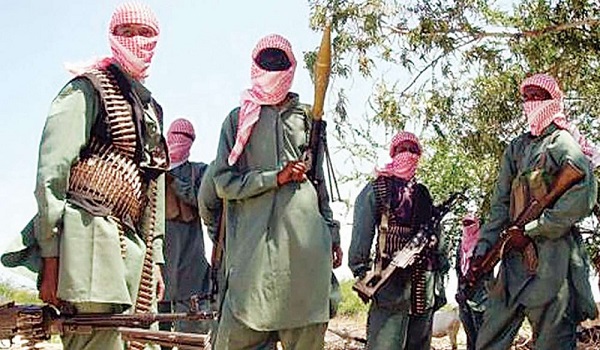
Residents of Ungwan Nungu in Sanga Local Government Area of Kaduna State are on edge after terrorists issued fresh threats of retaliatory attacks in the wake of a military operation that killed two fighters and led to the recovery of an AK-47 rifle, ammunition, and roughly ₦1.6 million believed to be ransom money.

Community members told SaharaReporters that ten villagers, six women and four men, were abducted from their farms on November 29, the latest in a string of attacks that have turned routine farm work into a high-risk venture. In an earlier assault, at least 15 people, mostly children, were kidnapped, with several later abandoned because they were too weak to keep up with the captors.

A Hausa-language audio message obtained by SaharaReporters reveals a militant vowing revenge, accusing locals of tipping off soldiers who later ambushed the gang during a ransom-collection attempt.

“We have ‘entered the same trousers’ with you,” the speaker warned, swearing that the group would “repay” the community for the loss of their men and their rifle.

According to residents, troops intercepted the terrorists on Friday as they attempted to retrieve ransom payment from relatives of kidnapped villagers. The military recovered the rifle, one round of 9mm ammunition, and cash believed to be meant for the abductors.

But the militants now claim the seized weapon must be paid for, or the entire community will face widespread assaults.

“From the farms to the villages to the roads, we will be attacking you unless you pay for the rifle,” the speaker said, vowing that the group would return “after we have fully prepared.” He warned of mounting casualties if their demands were not met: “Because of that rifle, only God knows how many lives will be lost.”

A community negotiator, also heard on the recording, pleaded that residents had no role in the military operation. He said soldiers had confronted the villagers, accusing them of hiding information about ransom negotiations. “The Nigerian military is angry because yesterday we took money to deliver to you and we did not inform them,” he said.

For residents of Ungwan Nungu, the threats feel chillingly real. With militants naming farms, roads, and villages as targets, civilians say they remain largely unprotected, despite increased military activity in the region.

A Nation Still Reeling From Another Mass Abduction

The Kaduna threats come as Nigeria grapples with the national trauma of one of its worst school kidnappings in years: more than 250 children from St. Mary’s Catholic Secondary School in Niger State remain missing two weeks after gunmen stormed their dormitories and marched them into the bush.

Parents say they have received no updates, no ransom demands, and no proof of life.

“We are not happy with what is happening,” said farmer Sunday Gbazali, whose 14-year-old son was taken on November 21. “I never knew the pain until it happened to me… We don’t know if he is sick, healthy, or even alive.”

Another parent, who asked not to be named for fear of reprisal, said hope is fading despite assurances from national security adviser Nuhu Ribadu. “Unfortunately, days have passed, and we are left with little hope,” he said.

The Christian Association of Nigeria (CAN) reported that 303 children and 12 staff were abducted, though about 50 pupils escaped in the immediate aftermath. Some of the missing children are as young as six years old. Their school was guarded only by unarmed volunteers who fled when the attackers arrived.

The mass abduction has drawn international scrutiny, reviving painful memories of the 2014 Chibok schoolgirls kidnapping and raising new questions about government preparedness. President Bola Tinubu has declared a nationwide security emergency and ordered the recruitment of thousands of additional military and police personnel in a bid to stem the escalating violence.

Ribadu told Catholic leaders in Kontagora that “the children are doing fine and will be back soon,” though no independent verification has been provided.

DSS nabs doctor for allegedly supplying drugs to kidnapping gangs in Kwara

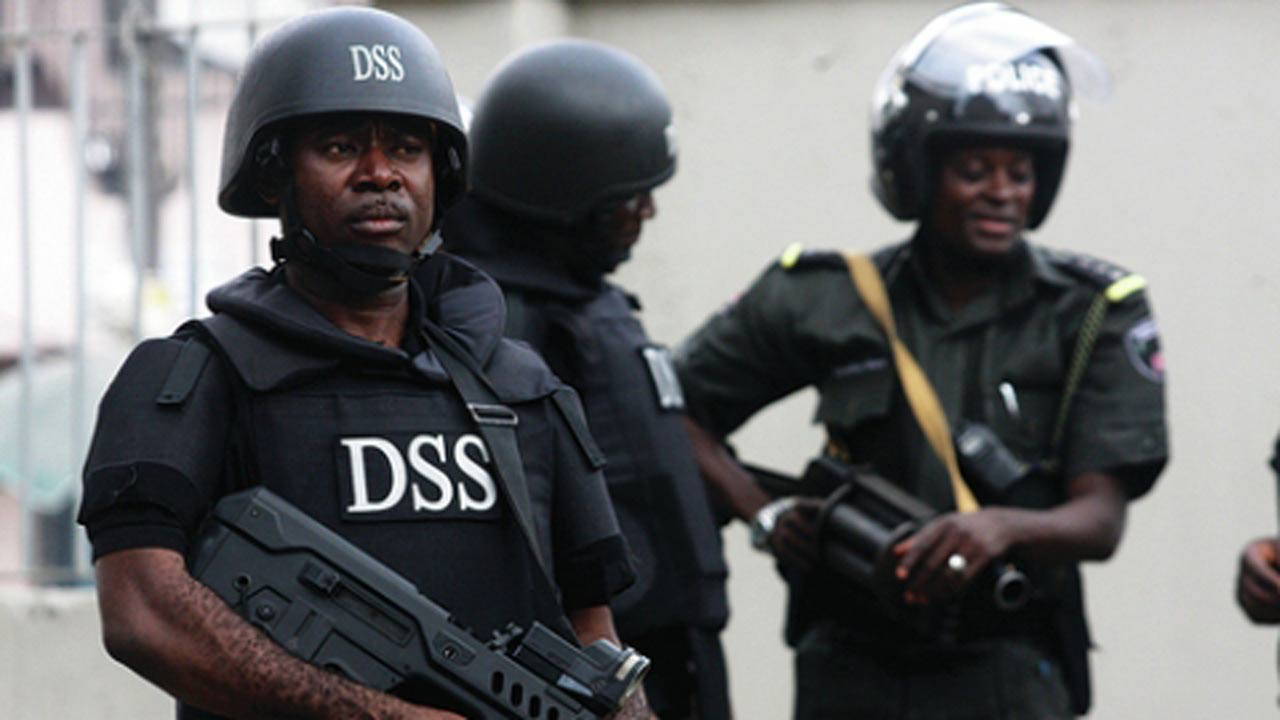
The Department of State Services (DSS) has reportedly intercepted and detained a medical doctor alleged to be a key courier supplying essential drugs to kidnapping syndicates operating across parts of Kwara State.

The doctor, whose identity has not yet been released, was arrested in the Jebba axis after intelligence reports linked him to the transport of medical supplies from Sokoto to criminal gangs hiding in forested areas of the state.

SaharaReporters gathered that the kidnapping networks have recently grown desperate for medical care, especially as several members reportedly sustained gunshot injuries in clashes with security operatives.

According to a statement posted by the Kwara State Government on Friday on its X handle, the administration explained that the secret service reported that the criminal gangs appear to be desperate for medical care after sustaining gunshot wounds during encounters with security forces.

The statement read, “The Department of State Service has taken into custody a medical doctor who was ferrying drugs from Sokoto to kidnappers in parts of Kwara State.

“The doctor was intercepted in Jebba area following intelligence reports about the activities of the kidnappers and their couriers.

“The secret service says the criminal gangs appear desperate for medical care following gunshot wounds sustained in encounters with security forces.

“So, we are advising improved security measures in health facilities in thickly forested areas which the kidnappers may target,” according to a security official.”

Previously, SaharaReporters reported that two Chinese nationals had been kidnapped in Kwara State.

SaharaReporters gathered that the two men were working at a BUA road construction site in the state.

They were working on the Bode Saadu/Kaiama/Kosubosu road project during the week when they were forcefully whisked away by the gunmen.

They were taken off the construction site on December 1 by a group of masked armed men, sources told SaharaReporters.

“Gunmen recently invaded the BUA road construction site along Bode Saadu/Kaiama Road. On December 1, 2025, between 11pm and 4am, they attacked the site which is located less than 2 kilometers away from the village of Bielesin/Fallah and close to another village called Olokiti,” a security source told SaharaReporters.

“The gunmen fired sporadic gunshots for about 2 to 3 hours before abducting two Chinese Nationals working with the company. As at today, there is no information from the gunmen.

“No casualty was reported as well, except for these two Chinese Nationals who were taken away to an unknown destination.”

The inside story of the fake coup in Guinea-Bissau, By Owei Lakemfa

Umaro Mokhtar Sissoco Embalo on November 26, 2025 sat in his office as the President of Guinea-Bissau.

 As a retired General, the 53-year-old knew when he was beaten. Three days earlier, he had succumbed to unbearable pressures that he allowed general elections to be held despite his fears. His tenure had expired on February 27, 2025.

Rather than hold elections in accordance with the constitution, he had it postponed. The Constitutional Court had come to his aid by setting September 4, 2025 as the new date for his departure or mandate renewal. The seven-month extension had seemed a long way off. But like the debtor who sets the month end for him to pay his debts, the payment day soon came, finding him like a cornered rat. He finally agreed to hold the election in November. 

He had in his five years as President tried to prepare for a possible re-election.

Amongst a number of repressive measures, he had twice proscribed the parliament, the National Peoples’ Assembly, NPA, because it was controlled by the opposition African Party for the Independence of Guinea and Cape Verde, PAIGC. That was the party that led the country through the liberation struggles and won its independence. Embalo had joined the PAIGC in 2016 and was later that year appointed the Prime Minister under President Jose Mario Vaz.

 But two years later, amidst disagreements, he left the PAIGC to establish the Madem G15 party.

He was declared winner of the disputed November 2019 elections and sworn in as President in February 2020. However, despite his best efforts, the PAIGC maintained control of parliament and, as it turned out, the support of the people. So he dissolved the parliament. But when new elections were conducted, the opposition PAIGC maintained control of the parliament. So, five months into the life of the new parliament, he again dissolved it unconstitutionally, and this time, refused to allow new elections.

He also moved against the judiciary, putting it under armed siege, and forced the Chief Justice out. But these seem to make the PAIGC stronger. So, when the presidential election became inevitable, he banned the PAIGC and its candidate. But rather than fight the bans, the PAIGC decided to adopt the Independent candidate, Fernando Diaz da Costa.

 Embalo might have thought he would have a walkover, but now, the election results starring him in the face, showed he had lost.

However, he was not the only person who had the results, the opposition also had them. Worse still, the international observers, like those of the African Union Election Observation Mission led by former Mozambican President Filipe Nyusi, also had them. Also, the observers of the West African Elders Forum, WAEF, led by Dr Goodluck Jonathan, former President of Nigeria, equally had the results.

I interviewed a leader of the opposition and asked him how they came to the conclusion they had won the election even when the electoral commission had not made a formal announcement. He explained: “On each of the voting table, there are representatives of the candidates, Electoral Commission, Public Ministry, judicial police and election observers. Votes were counted manually and in public view.

These were entered into the tally sheet and the representatives signed. People present, like the representatives, took photographs of the signed tally sheet. There are a total of 4,000 voting tables. Then you have diaspora voting. These results were then taken to the regional electoral centres and tallied with the few diaspora voting which took place in a handful of countries, including a total of six countries in West Africa. So, the representatives and observers have photocopies or photographs of the result sheets and these are what showed that we won the election.”

A fundamental pre-election agreement between the opposition candidate Fernando Diaz and the PAIGC is that if he wins, parliament will be reconvened and all unconstitutional decisions will be reversed. 

Embalo knew that with his loss of the election, he might be moving from the presidential office to prison. If he fled, Diaz will be sworn in and, if he resigns, constitutionally, the person who will replace him is the President of the National Assembly who is the leader of the PAIGC.

Given the fact that he has limited options, he decided to execute a childish prank. He phoned the media to announce that he was being overthrown. He continued to give interviews, including that he was being moved to the headquarters of the Armed Forces General Staff. 

Then, the head of his presidential guard, General Denis N’Canha, announced a coup which he claimed was being carried out to stop politicians allied to an unnamed drug baron from taking over the country. But, why would anybody execute a coup against an opposition candidate who had allegedly lost the elections?

His Excellency Jonathan who was on ground, gave a graphic presentation of the events in Guinea-Bissau: “I wouldn’t call it a coup. It was not a coup. I would just say, for want of a better word, maybe it was a ceremonial coup. Because for two things: It is the president, President Embaló, who announced the coup. Later, the military men came up to address the world that they were in charge of everywhere.

“Then Embaló had already announced the coup, which is strange. Not only announcing the coup, but Embaló, while the coup took place, was using his phone and addressing media organisations across the world that he had been arrested. 

“The military doesn’t take over governments, and the sitting president that they overthrew would be allowed to be addressing press conferences and announcing that he has been arrested. Why does this happen? Who is fooling whom?”

The next day, the alleged coup plotters who turned out to be loyal to Embalo, sent their boss to Senegal while announcing that they would be in power for one year. Senegal found out that it had been fooled by Embalo. Its Prime Minister Ousmane Sonko said the so-called coup was a “sham”. Given the fact that his cover had been blown, Embalo fled Senegal and was last heard about in the Democratic Republic of Congo.

Nigeria has done very well by giving President-elect Dias asylum in its embassy in Bissau, and invited the regional Economic Community of West African States, ECOWAS, military, stationed in the country, to provide extra security for him.

 The next step should be that the coup plotters in Bissau, be ordered to step down and allow resumption of constitutional rule. This was what Nigeria and ECOWAS did in Gambia in the case of Yahaya Jammeh in 2017.

As for Embalo, he needs to be returned to Guinea-Bissau and tried for crimes against the country, including for treason.

The views expressed by contributors are strictly personal and not of Law & Society Magazine.

Chief Justice Kekere-Ekun reasserts judiciary’s duty to defend human rights

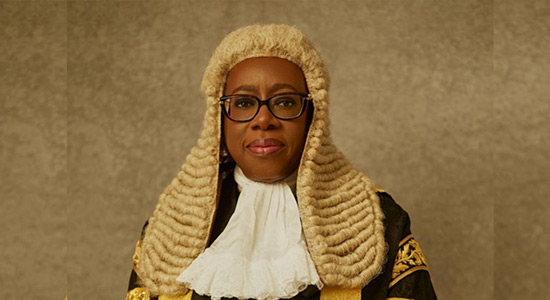
The Chief Justice of Nigeria (CJN), Honourable Justice Kudirat Kekere-Ekun, has reaffirmed the commitment of the country’s judiciary to the protection of human rights as enshrined in the 1999 Constitution and other international laws and treaties.

She emphasised that the judiciary remains steadfast in its constitutional mandate to uphold the rule of law and protect the rights of citizens.

The CJN spoke on Thursday at the conference on “Proportional Force and Respect for Human Dignity: A Dialogue in Governance” organised by the National Human Rights Commission in collaboration with Citizen FM.

The Administrator of the National Judicial Institute (NJI), Hon. Justice Babatunde Adeniran Adejumo, represented the Chief Justice of Nigeria at the conference.

In the goodwill message, Hon. Justice Kekere-Ekun congratulated the National Human Rights Commission on its 30th anniversary and commended the organisers for holding the conference on International Human Rights Day.

She emphasised that when authority is exercised with restraint, discipline, and accountability, it strengthens public trust and reinforces the legitimacy of institutions.

The CJN reiterated the judiciary’s commitment to protecting human rights and providing remedies where they are infringed.

“Let me make it abundantly clear that the judiciary remains steadfast in its constitutional mandate to uphold the rule of law and protect the rights of citizens”.

The CJN further commended the National Human Rights Commission for promoting dialogue and awareness on critical human rights issues in Nigeria.

Miyetti Allah Drops Bombshell: Allege Fulani herdsmen victims of 25-Year ‘genocide’

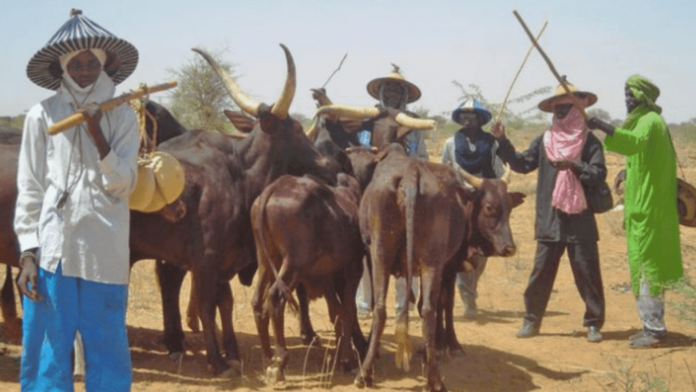
The Miyetti Allah Kautal Hore Fulani socio-cultural association has claimed that Fulani pastoralists have been the victims of systematic and deadly attacks for 25 years, describing the situation as the only thing “close to genocide” in Nigeria. 

Speaking on Channels TV on Thursday, Miyetti Allah’s National Secretary, Engr. Saleh Alhassan said that those alleging Christian genocide in the country are merely seeking foreign aid.

Alhassan said, “If we must be honest in this country, if there is anything close to genocide in Nigeria, it’s genocide against the Fulani pastoralists in the last 25 years across the country, from Plateau to Benue to Zamfara to Kebbi State. 

“Pastoralists have been deliberately targeted, killed, displaced, and some state governors even enacted laws that criminalised pastoralism.”

He said that media reporting on insecurity involving pastoralists has fuelled misunderstanding of the crisis. 

According to him, ongoing narratives in sections of the media are “very unfortunate,” insisting that Fulani pastoral communities have been “repeatedly targeted, killed, displaced, and criminalised in several states.”

Alhassan maintained that Miyetti Allah supports government-led initiatives aimed at restoring peace. 

“As an organisation that has been campaigning for peace, we are in support of all government efforts to ensure sustainable peace across the country,” he said.

The Miyetti Allah official criticised what he described as “genocide town criers,” whom he accused of sensationalising the crisis to attract international sympathy and funding.

He cited the example of a bishop who reportedly took accounts of violence in Benue State to the United States. 

“What he is looking for is foreign aid. He failed to contextualise the actual conflict,” Alhassan alleged, questioning why local institutions were being sidestepped. 

“The Senate invited organisations to present memoranda on how to solve the farmer-herder crisis. Up till now, we have not been invited by the Senate to discuss that memorandum,” he said, adding that agencies such as the National Human Rights Commission were available for engagement.

Alhassan claimed that since U.S. President Donald Trump’s recent remarks referring to killings in Nigeria, attacks on pastoralists have intensified.

“In the last three weeks, pastoralists have been devastated in Kebbi State. They have been attacked in Niger State, in Benue State. 

“It is the locals who attacked the citizens. Pastoralists were destroyed and not a single word from the security agencies, not even the media,” he said.

He further alleged, “We have attacks on pastoralists in Kebbi State; no action was taken. Attacks on pastoralists in Niger State; no action was taken. Attack on pastoralists in Benue State, Ohimini Local Government, precisely, for crimes they have not committed.”

Alhassan argued that herders are frequently blamed without evidence, saying, “If there are conflicts in Benue, you accuse the pastoralist. After investigation, you will discover that even the locals are responsible for it.”

He called on the government to adopt a comprehensive strategy that addresses all actors involved in the country’s complex security landscape. 

While acknowledging that some herders may contribute to violence, he insisted that portraying them as the primary aggressors is misleading.

“Yes, we can have some of the herders involved in the conflict, but the way the conflict is being viewed as if the pastoralists are out there to kill and destroy people, that is not the truth. That is not the narrative,” he said.

Alhassan’s comments come amid heightened security challenges in several northern states, where communities continue to suffer from banditry, mass abductions, and farmer-herder clashes.

In the last two weeks alone, no fewer than 350 people have been abducted, with at least seven deaths recorded during multiple attacks.

Among the most notable incidents include mass abductions of schoolgirls and their teachers in Kebbi and Niger states, where over 300 schoolchildren and teachers were kidnapped following coordinated raids on schools.

The abduction of 38 worshippers during an attack on a Christ Apostolic Church in Eruku, Kwara State, which also left at least three dead.

An attack on a church in Kogi State, where gunmen kidnapped a pastor and his wife during Sunday service at the newly established Cherubim and Seraphim Church in Ejiba, Yagba West Local Government Area.

The kidnapping of a bride-to-be and her bridesmaids in Chacho village, Wurno LGA of Sokoto State.

The escape of the Ojibara of Bayagan in Ifelodun Local Government Area of Kwara State, Alh. Kamilu Salami, and six others, after bandits demanded ₦150 million for the monarch’s release.

The persistent insecurity has deepened tensions across affected regions, complicating efforts to stabilize relations between farming communities and pastoralist groups.

Rotary District 9127 rolls out drums for Family of Rotary fun fair December 6

Rotary International District 9127 will, on Saturday, 6th December, roll out drums to celebrate the 2025 edition of the Family of Rotary fun fair.

The celebration will be held at Monaliza Events and Sports Centre, Abuja, at 12 noon.
A statement signed by Dr Max Amuchie, Media Relations Chair, Rotary International District 9127, said the celebration would be declared open by Dame (Dr) Princess Joy Nky, District Governor, Rotary International District 9127, assisted by Rotary leaders in the District, including Rotarian Nneka Atuanya, District Chair, Family of Rotary.

The statement said the yearly celebration aims to bring together Rotarians and their immediate and extended families, as well as friends of Rotary, to have fun and unwind in a relaxed atmosphere.

Amuchie said the event would feature activities like soap soccer, lawn tennis, football and tug of war challenge. Others are cycling, cultural display, Ogene music and much more.

From Emergency Rule to Embassy Role: Rivers’ ₦254 billion mystery and the six-month reign haunting Ibas’ nomination

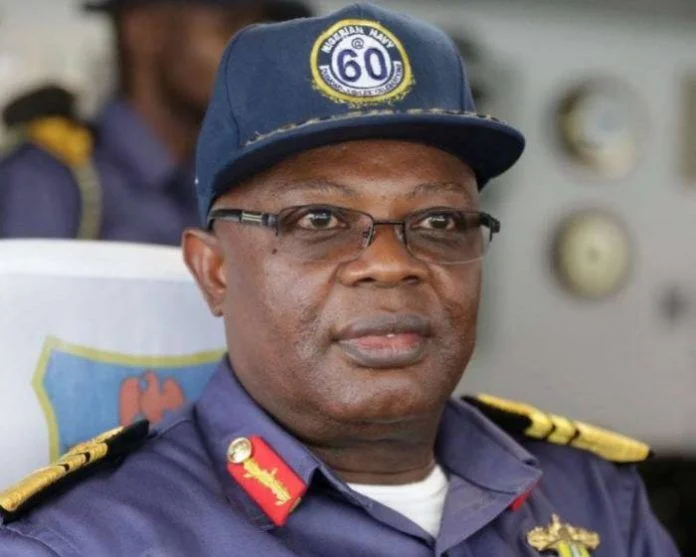
President Bola Tinubu has nominated former Rivers State Sole Administrator and ex–Chief of Naval Staff, Vice Admiral Ibok-Ete Ekwe Ibas (retd.), for an ambassadorial posting—despite ongoing public outcry over allegations of financial misappropriation during his brief but controversial stewardship of the state.

The nomination appeared in a new list of non-career ambassadorial picks transmitted to the Senate on Thursday during plenary, where Senate President Godswill Akpabio read the president’s letter urging lawmakers to fast-track confirmation.

Other nominees include former presidential aide Ita Enang; former Imo First Lady Chioma Ohakim; and former Interior Minister and retired Army Chief Abdulrahman Dambazau.

Tinubu’s latest batch follows an earlier list of 32 nominees—featuring former INEC Chairman Mahmood Yakubu, former governors Ifeanyi Ugwuanyi and Okezie Ikpeazu, former minister Femi Fani-Kayode, and ex-presidential aide Reno Omokri—reflecting a broader diplomatic overhaul already drawing intense scrutiny.

A Nomination Wrapped in Controversy

The president’s selections arrive just weeks after public anger over a sweeping pardon granted to 175 convicts, further heightening political tensions around the administration’s approach to accountability and patronage.

Read Also: ‘Political Rewards or National Interest?’ Ex-Foreign Affairs Chief slams Tinubu’s ambassadorial list

Among the most vocal critics of Ibas’ nomination is prominent environmental and human-rights advocate Annkio Briggs, who has long accused the retired admiral of mishandling the state’s finances during his six-month tenure as sole administrator. Speaking on Channels Television’s Sunday Politics, Briggs demanded a full accounting.

“He has squandered our funds,” Briggs said. “He must provide a thorough account to the people of Rivers State—and indeed to all Nigerians. You cannot take charge of our resources for six months and walk away as though nothing happened. He spent our money. That is a fact.”

Over ₦254 Billion in Six Months

An investigation by The PUNCH found that Rivers State received at least ₦254.37 billion from the Federation Account Allocation Committee (FAAC) between March and August 2025—precisely the period Ibas presided over the state under emergency rule. The figure, derived from National Bureau of Statistics (NBS) data and FAAC meeting documents, places Rivers among the country’s highest earners during the period.

Monthly inflows ranged from ₦38.42 billion to ₦44.66 billion, averaging ₦42.40 billion, with projections suggesting total receipts could approach ₦297 billion by September.

More than half of these revenues—₦133.24 billion, or 52.4 percent—came from the constitutionally guaranteed 13-percent oil derivation, underscoring Rivers’ vulnerability to oil-market volatility. In several months, derivation payments exceeded statutory allocations by nearly fivefold.

The state also received ₦107.78 billion in VAT revenue, alongside electronic money transfer levies, ecology funds, and exchange-rate gains. Yet heavy debt servicing—amounting to ₦26.31 billion over the six months—significantly reduced net disposable income.

The Missing Accountability Report

Despite the unprecedented inflows, Rivers State has not published its mandatory 2025 Budget Implementation Report, leaving citizens and civil society groups unable to track how billions of naira were spent on salaries, pensions, capital projects, or recurrent obligations. The opacity has fueled demands for an investigation into Ibas’ management of the state’s finances.

Growing Calls for a Probe

At an online policy forum hosted by NPO Reports and Iwadi Development Initiative, stakeholders reiterated the need for a full audit of the period between March and August 2025.

“The public deserves answers,” one speaker said. “The spending of ₦254.37 billion cannot be left unexplained.”

Ibas stepped down last week following the expiration of the emergency rule. Still, his nomination for an ambassadorial role ensures that the debate over accountability in Rivers State is far from over.

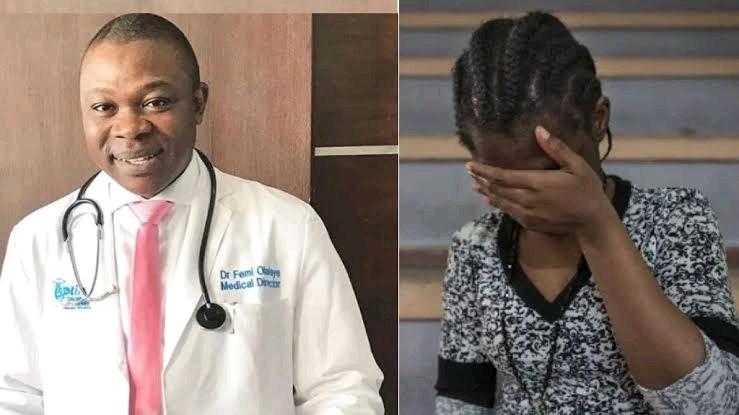
A Case That Won’t Go Away: After acquittal in Lagos, Nigerian Doctor Olaleye confronts fresh sex-offence charges at UK Crown Court

Lagos-based physician Dr Femi Olaleye, whose conviction for sexual offences was overturned last year by the Lagos Division of the Court of Appeal, is expected to appear before Maidstone Crown Court in Kent, United Kingdom, on Friday, December 5, to face a fresh set of sexual-offence charges.

UK authorities say the alleged offences occurred years before Olaleye relocated to Nigeria, and long before his prosecution there. The case—No. 46/XY/11332/23—is listed for 9 a.m. at the Kent court.

Law enforcement sources told SaharaReporters that Olaleye was arrested last Thursday at Heathrow Airport and is currently being held at North Kent Police Station in Northfleet, ahead of his arraignment.

Olaleye, once described as a father figure to the alleged victim, is also accused of attempting to bribe the minor to alter her testimony, an offer she reportedly rejected.

Read Also: Lagos doctor, Femi Olaleye, freed weeks after Appeal Court nullified his rape conviction

The doctor’s legal troubles span two countries. In 2023, he was convicted by Justice Rahman Oshodi of the Lagos Sexual Offences and Domestic Violence Court and sentenced to life imprisonment. But in November 2024, the Lagos Court of Appeal set aside the verdict, citing inconsistencies in the prosecution’s evidence.

Unwilling to let the matter rest, the Lagos State Government, acting through the Office of the Director of Public Prosecutions, has filed an appeal at the Supreme Court, seeking to reinstate the original conviction. A hearing date has not been fixed.

In its notice of appeal, Lagos State argues that the appellate judgment undermined the credibility of trial-court findings in sensitive sexual-offence cases and relied on what it called “misplaced” technicalities. The government is pressing the Supreme Court to clarify whether the Court of Appeal erred by questioning the uncontested age of the victim, a key element in charges of child defilement and sexual assault under Lagos law.

Legal analysts say the case could become a defining test for how Nigerian appellate courts treat sexual-violence prosecutions, particularly those involving minors.

Meanwhile, UK authorities are examining what sources describe as multiple allegations linked to Olaleye during his earlier years in London, before he reportedly left the country and later faced similar accusations in Nigeria.

Olaleye, Medical Director of the Optimal Cancer Care Foundation, departed Nigeria shortly after the appellate court freed him, only to be detained on arrival in the UK, where his past appears to have caught up with him once again.

NBA declares Nigeria’s security architecture ‘failed,’ calls for sweeping overhaul, condemns faulty pardons, and judicial decay

The National Executive Council (NEC) of the Nigerian Bar Association (NBA) has issued a sweeping communiqué following its quarterly meeting in Benin City, delivering some of its strongest positions yet on national security, judicial reforms, governance, and the state of the legal profession.

The meeting, held on November 20 and attended by national officers, past presidents, branch leaders, and observers, reviewed the condition of the Bar and the country at large. The council warned that a deteriorating justice system, rising insecurity, and increased political interference are threatening the rule of law in Nigeria.

NBA Raises Alarm Over Arbitrary Arrests, Security Agency Abuse

NEC, according to the communiqué signed by NBA President Mazi Afam Osigwe, SAN, and General Secretary Dr Mobolaji Ojibara, expressed “deep concern” over widespread arbitrary arrests and repeated disregard for court orders, noting what it described as a troubling trend of security agencies interfering in civil matters. The association warned that such abuses “undermine the integrity of the justice system and violate constitutional guarantees.”

The council also condemned what it called the “partisan conduct” of the police during the recent PDP leadership crisis and criticised courts issuing conflicting orders, urging discipline within the security architecture and restraint within the judiciary.

Major Reforms: Electoral Committee, Judicial Review Body, and Lagos House Probe

The Bar approved the constitution of the Electoral Committee of the NBA (ECNBA) to oversee the 2026 national elections, stressing transparency and technological reliability. Aham Ejelam, SAN, will chair the committee.

In response to concerns over contradictory appellate court judgments, NEC established the Editorial Committee of the Adjudicature Review Committee, tasked with producing a quarterly Nigeria Adjudicature Review to strengthen judicial scholarship and coherence.

NEC also ordered a sweeping review of the troubled Build-Operate-Transfer agreement for the NBA Lagos House—long plagued by revenue shortfalls—appointing Dr. Olisa Agbakoba, SAN, to lead an inquiry into the stalled project.

Pardons, Clemency, and Calls for Legal Reform

Addressing President Bola Tinubu’s controversial pardons of 175 convicts—including individuals convicted of murder, drug trafficking, unlawful mining, and armed robbery—NEC warned that such decisions “undermined accountability and public confidence.” The Bar, however, welcomed the President’s reversal of several pardons.

NEC insisted on the urgent need for a statutory framework to regulate presidential clemency powers to ensure transparency, protection of victims’ rights, and insulation from politics.

Security Crisis: NBA Calls for State Police, Tech-Driven Policing, and an End to Amnesty Deals

In one of its most forceful positions, NEC declared that Nigeria’s escalating insecurity—marked by mass killings, kidnappings, and destruction of property—reflects a “failed” and “over-centralised” security architecture.

The council demanded:

  • Decentralised security control and establishment of state and local government police
  • Deployment of modern surveillance tools, including drones and cyber-tracking
  • A secure civilian self-protection licensing regime
  • Stronger border monitoring
  • An end to negotiations or amnesty for terrorists and bandits
  • Rejection of integrating “repentant terrorists” into security agencies

NEC also called for urgent action to rescue abducted schoolgirls in Kebbi State and address the killing of Brigadier-General M. Uba in Borno.

Judicial Sector: Appointments, Working Conditions, and Controversies

The Bar criticised the “neglect” of private practitioners in recent judicial appointment shortlists, which it said overwhelmingly favoured Ministry of Justice officials. It called for amendments to the National Judicial Council (NJC) guidelines, including written competency examinations.

NEC also decried unsafe working conditions for magistrates, particularly in Ondo State, and condemned the playing of partisan political music at the All-Nigerian Judges Conference, demanding a public apology.

On structural reforms, NEC approved a three-year tenure for NBA representatives on the Council of Legal Education to strengthen institutional memory.

Trump’s Comments, Abuja Clash, and Abuse of Police Powers

NEC expressed concern over U.S. President Donald Trump’s recent remarks suggesting potential deployment of American troops to Nigeria, warning that such comments “risk inflaming tensions” and undermine national sovereignty.

The council also condemned the confrontation between the FCT Minister and military personnel in Abuja, insisting that land-related enforcement must follow due process—not force.

NEC further denounced the Lagos State Commissioner of Police for unlawfully declaring activist Omoyele Sowore “wanted,” insisting that only a court may issue such proclamations.

Legal Actions, New Branches, and Rehabilitation Initiatives

The Bar announced ongoing litigation challenging the police’s refusal to convert qualified legal practitioners within its ranks into the specialist legal cadre, as well as a suit contesting the police’s tinted-glass permit regime.

NEC also approved nine new NBA branches and unveiled a Post-Custodial Rehabilitation Fund to support the reintegration of former inmates after observing conditions at Kuje Correctional Centre.

The meeting ended with the announcement of the 2026 Annual General Conference Planning Committee, chaired by Abdul Mohammed, SAN.

    NBA-SPIDEL 2025 virtual conference platform now live

    Dear Colleague,

    Great news! The NBA-SPIDEL 2025 Virtual Conference Platform is now live, giving all registered delegates full access to stream the conference remotely and earn 2 CPD points upon attendance.

    If you have already registered, simply log in to the virtual platform to join the sessions:

    🔗 Virtual Platform: https://virtual.nigerianbar.online
    📧 Login: Use the same email you used during registration
    🎥 Access: Click “Virtual Rooms” to enter the live sessions

    For colleagues who have not yet registered but wish to join the conference virtually and earn the 2 CPD points, you can still register online:

    http://🔗 Register here: http://nbaspidel.ng/

    We look forward to your active participation.

    Henry Barnabas Ehi
    Assistant General Secretary
    Nigerian Bar Association

    TIPS