Home Blog Page 171

‘Legal Brief On Genocide’: Sack INEC Chairman, Prof Amupitan now! —Nigerian Shari’ah Council to Tinubu

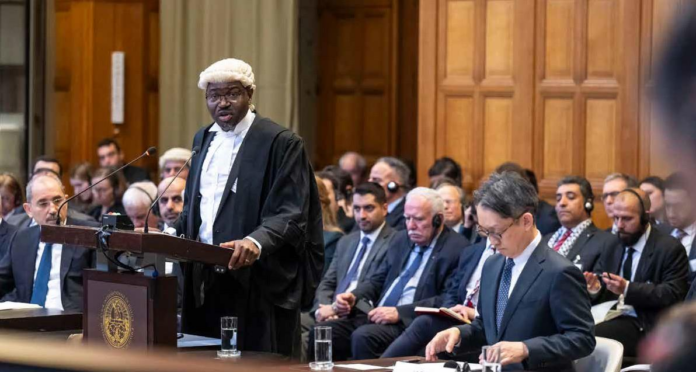
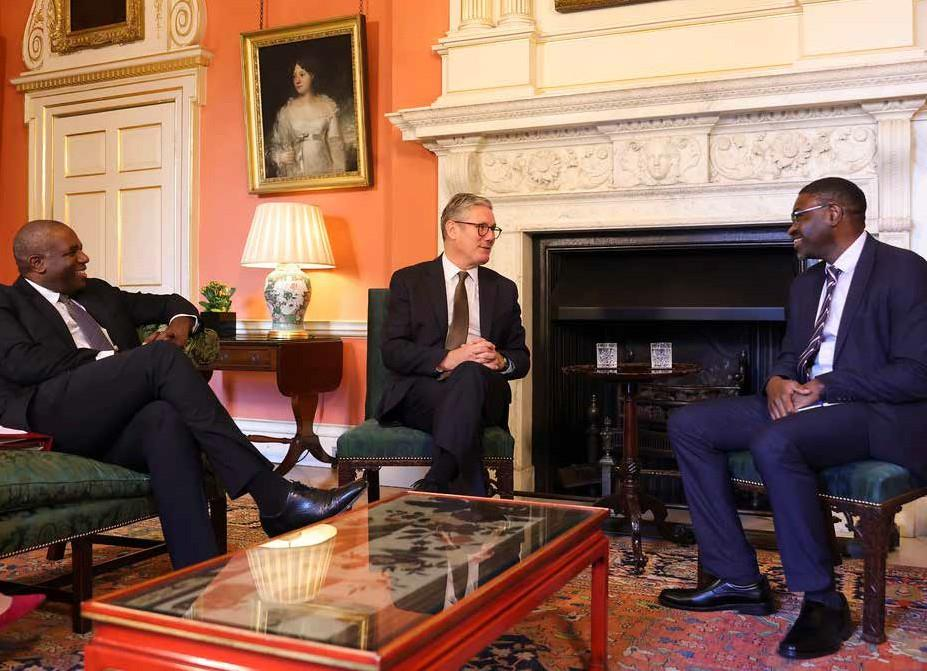
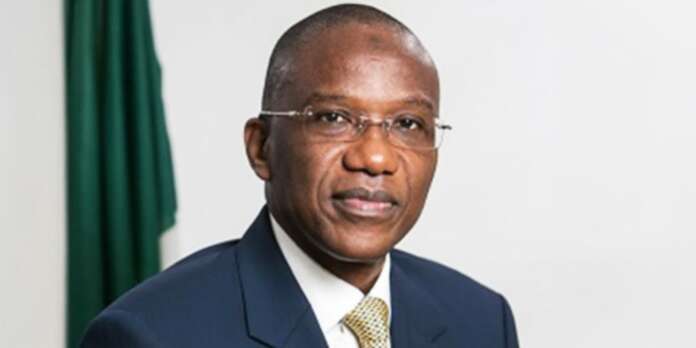
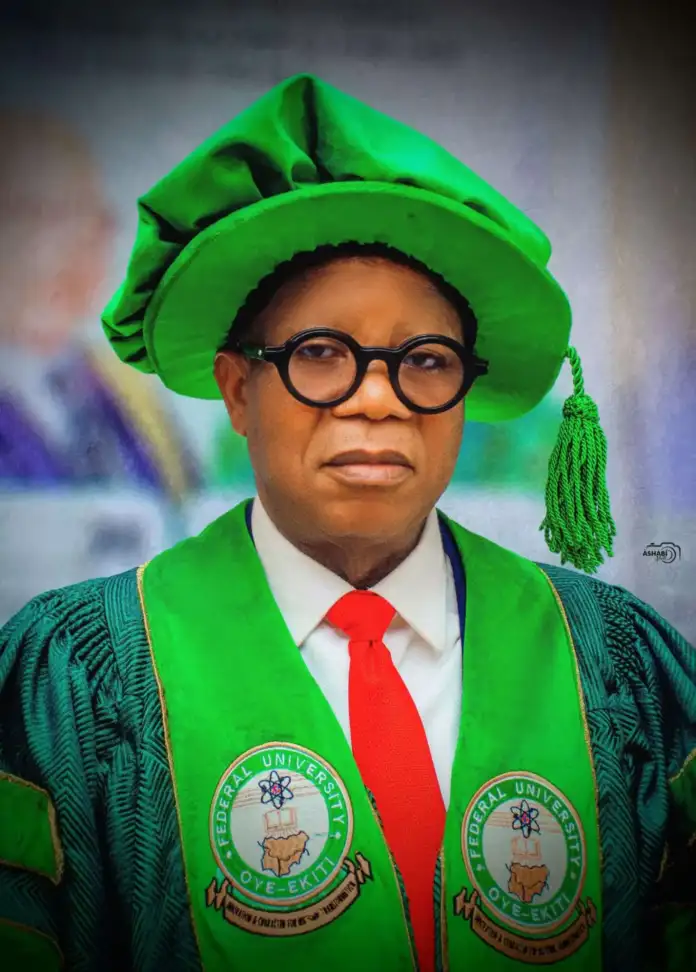
The Supreme Council for Shari’ah in Nigeria (SCSN) has called on President Bola Tinubu to immediately reverse the appointment of the newly inaugurated Independent National Electoral Commission (INEC) Chairman, Prof Joash Ojo Amupitan.

The Shari’ah Council’s call on Saturday followed SaharaReporters’ exclusive report that revealed that Professor Amupitan once authored a legal brief in 2020 containing 

SaharaReporters had on Thursday exclusively obtained the report titled “Nigeria’s Silent Slaughter” where the Senior Advocate of Nigeria, in his legal brief, called for urgent intervention to stop what he termed “pogrom and attacks against the Christians and minority groups in Nigeria.”

Amupitan, recently appointed by President Bola Tinubu to head the country’s electoral commission, had titled his contribution, “Legal Brief: Genocide in Nigeria – The Implications for the International Community.” 

The document — published by the International Committee on Nigeria (ICON), a global advocacy network promoting human rights and religious freedom — was officially signed under Amupitan’s law firm, Prof. Joash Ojo Amupitan (SAN) & Co., Legal Practitioners & Corporate Consultants, with offices in Jos and Abuja. 

The Shari’ah council described Amupitan’s legal brief as “provocative, distorted and bigoted assertions” against Muslims in Northern Nigeria.

In a statement issued on Friday, November 7, 2025 (16th Jumada I 1447 AH), the SCSN said it received with “deep disappointment and grave concern” the SaharaReporters investigation alleging that Amupitan’s 2020 legal document characterised Northern violence as “Christian genocide” and linked the insecurity in the North to the 19th-century Jihad of Sheikh Uthman bn Fodio. 

The Council said it found such a stance “regrettable and disturbing”, especially from someone “now entrusted with overseeing Nigeria’s democratic integrity.”

“If indeed Prof. Amupitan authored the said document, his submissions are not only unbecoming of a person of learning but dangerously inimical to the unity, peace, and stability of our country,” the statement read.

The Council described Amupitan’s reported claims as “divisive, sectarian, abusive, and factually inaccurate narratives against a majority faith community.”

It further “categorically debunked the falsehood” contained in his alleged analysis of “Christian genocide,” insisting that the violence ravaging Northern and North-Central Nigeria is multi-dimensional and not a one-sided religious persecution.

“If we strip away the mischievous emotional language and examine the facts objectively, the reality is that the violence in Northern and North-Central Nigeria is complex and multi-dimensional. Both Muslims and Christians have suffered immensely from extremist attacks, banditry, and communal conflicts rooted in accumulated neglect, poverty, and social injustice.”

Citing humanitarian data, the SCSN claimed that Muslims have suffered more casualties than any other group in the ongoing crises.

“Credible humanitarian data from independent and international sources reveal that Muslims have suffered more casualties in these conflicts than any other group. This is an incontrovertible reality easily verified by mapping the epicentres of violence from Borno to Zamfara, Katsina, Sokoto, Kebbi, Niger, and Yobe, where over 90 percent of the victims are Muslims.”

The Council condemned what it called Amupitan’s attempt to associate modern insecurity with the historic jihad of Sheikh Uthman bn Fodio, describing it as “a malicious distortion of history and a deliberate insult.”

“The Jihad of Sheikh Uthman was not a war of hatred or extermination; it was a spiritual, moral, and social reform movement that restored justice, knowledge, and governance rooted in ethics. These instituted ideals are still admired across the African continent today.”

The SCSN said Amupitan’s record and writings “call into serious question his ability to conduct free and fair elections in a multi-religious, multi-ethnic nation.”

“Presiding over Nigeria’s electoral system demands the highest standards of neutrality, fairness, and inclusivity. By his own words, Prof. Amupitan has demonstrated a deep-seated prejudice that calls into serious question his ability to conduct free and fair elections.”

The Council, therefore, demanded that President Tinubu “immediately review and reverse” Amupitan’s appointment, declaring that “the integrity of Nigeria’s electoral process cannot be entrusted to someone whose record reveals open hostility toward one of the country’s largest faith communities.”

The statement also appealed for calm among Nigerians across all religious divides, urging both Muslims and Christians to unite against common national threats.

“We urge all Nigerians, Muslims and Christians alike, to reject narratives that seek to pit one faith against another. Our common enemies are injustice, corruption, poverty, and insecurity.”

The Supreme Council for Shari’ah in Nigeria, in conclusion, reaffirmed its commitment to peace, unity, and the pursuit of truth based on fairness and mutual respect. 

Amaju Pinnick defends $1.2m Kebbi stadium amid outrage, says FIFA oversaw project by the book

Former Nigeria Football Federation president Amaju Pinnick has broken his silence over the storm surrounding the $1.2 million Kebbi mini-stadium.

The controversy erupted after FIFA showcased the facility as one of its Forward Programme achievements, sparking outrage online over its modest look.

Many Nigerians questioned how a small stadium could cost nearly $1.2 million.
FIFA’s post quickly went viral, fueling accusations of mismanagement within the NFF.

In an interview on Arise Television, Pinnick dismissed the criticism as unfair and uninformed.

He insisted the project met global standards and followed Nigeria’s procurement laws.

Pinnick explained that FIFA directly handled the funds, with the NFF only serving as a conduit.

“The contractor won through an open tender monitored under the Public Procurement Act,” he said.

He added that milestone payments were made only after FIFA’s strict reviews.

“It hurts me when people cast baseless aspersions,” Pinnick said.
“Such attacks damage Nigeria’s reputation and discourage genuine efforts to develop sports.”

According to him, the Kebbi facility now hosts Kebbi United and Zamfara United and has staged several tournaments.

He described it as modest but fully compliant with FIFA standards.

“Why shouldn’t I be proud?” he asked. “The pitch alone involves deep engineering to prevent flooding.”

Pinnick argued that the cost reflected the infrastructure and materials used.

Social media users, however, remained unconvinced.

Many compared the Kebbi project to similar FIFA-funded facilities abroad, calling for greater accountability from Nigerian football officials.

One X user wrote, “How do you spend $1.2 million to build this? Where are the rest of the projects?”

The NFF later issued a statement denying any misuse of funds.
It said all FIFA and CAF grants are project-specific and audited at every stage.

“The monies for development purposes are tied to specific projects and strictly monitored,” the NFF clarified.

Despite the uproar, Pinnick maintained his stance that every process was transparent.

He urged Nigerians to focus on the progress being made rather than spreading misinformation.

Legal expert Comfort Umaru champions powerful conversation on work-life balance for women in law at global webinar

Gender advocate and legal expert, Comfort Olubo Umaru, will headline a webinar focused on women’s leadership and workplace inclusion.

The event, organised by the National Association of Women Judges of Nigeria and the International Association of Women Judges, explores work-life balance in the justice sector.

With the theme “Enhancing Work-Life Balance and Accessibility in Court Settings,” the webinar aims to help women in law manage family and career demands.

Umaru will lead the session on “Definition of Concepts and World Bank Observations and Recommendations.”

Participants will include members of the Nigerian Bar Association Women Forum, FIDA, African Women Lawyers Association, and Magistrates Association of Nigeria.

Organisers say the forum will promote awareness about family-friendly court facilities and highlight the Abia State Judiciary’s innovative creche for working mothers.

Discussions will also focus on accessibility in courtrooms, career satisfaction, and gender-supportive policies in the justice system.

Comfort Umaru brings over two decades of experience in both private practice and public service.

She has worked with leading Senior Advocates of Nigeria and served as Registrar at the National Industrial Court.

At the court, she supervised litigation, appeals, and record management before joining the National Judicial Institute in 2015.

Since then, she has represented the Institute in international gender and justice initiatives with UNODC and UNICEF.

Her projects include ensuring justice for women in terrorism cases and supporting children affected by violent extremism.

Recognised as an expert in Sexual and Gender-Based Violence training, Umaru has mentored judges, magistrates, and law enforcement officers nationwide.

Between 2019 and 2024, she tutored on Nigeria’s Code of Conduct for Magistrates in partnership with the Judicial College of England and Wales.

She also led research and evaluation programs at the National Judicial Institute, improving gender data collection for judicial appointments.

Recently, she represented Nigeria at UNODC’s Beijing +30 event in Vienna, advocating for stronger gender inclusion in legal systems.

Currently studying Legislative Drafting, she hopes to strengthen gender representation in future laws and policies.

Through the Women in Leadership in Law initiative, Comfort Umaru continues to inspire a generation of women lawyers to lead with purpose, balance, and equity.

Clear your schedule to join in the conversation.

📅 Date: Thursday, 13th November, 2025.
🕙 Time: 10:00 AM (WAT).
💻 Platform: Zoom / YouTube Live.
Join Zoom Meeting
https://us06web.zoom.us/j/82458329448?pwd=VPuCDEzKjbXav76Yh0PVo8pLaxYPQq.1

Meeting ID: 824 5832 9448
Passcode: WILILTEAM

Join via YouTube:
https://youtube.com/live/TBwt0vGHAF0?feature=share

In the eye of Trump’s storm

The government should urgently arrest the colossal tragedies that have brought Nigeria to her knees, writes Monday Philips Ekpe

President Donald Trump of the United States of America, a man not given to conventional international diplomacy, announced last week, toeing the line of Senator Ted Cruz and co., that Nigeria was guilty of genocide against Christians. His administration also promptly tagged Nigeria a Country of Particular Concern (CPC). Trump’s trademark incendiary tweets also didn’t disappoint: “If the Nigerian government continues to allow the killing of Christians, the USA will immediately stop all aid and assistance to Nigeria, and may very well go into that now disgraced country, ‘guns-a-blazing,’ to completely wipe out the Islamic terrorists who are committing these horrible atrocities.

“I am hereby instructing our Department of War to prepare for possible action. If we attack, it will be fast, vicious, and sweet, just like the terrorist thugs attack our cherished Christians! Warning: The Nigerian government better move fast!” Back at home, the Trump government has been shut down for weeks because of the federal lawmakers’ inability to cross party lines to pass the enabling budget but he had the liberty to make declarations that have now significantly triggered and disrupted public discourse in Nigeria.

The official response has, as expected, been that of denial. Other entities have also joined our government to reject the albatross being hung on the neck of this already overburdened country; while some others have hailed the plan of ‘gallant’ Trump to come to the rescue of his beloved brethren. For long, Nigerian political leaders have exploited our fault-lines, notably religion, region and ethnicity, to secure advantages over their rivals. But never in our history has any superpower publicly threatened to directly intervene in the nation’s domestic affairs on any of those counts. All of a sudden, a problem most probably not anticipated has dropped on the laps of the government of President Bola Tinubu and the stressed people of Nigeria at such a difficult time.

We’re clearly unprepared for this period. There are slippery grounds here to worry about. The military hierarchy is being rejigged in the midst of a coup scare that’s unprecedented since the commencement of the current democratic dispensation. The masses now watch helplessly as politicians demonstrate crass opportunism in the form of unconvincing and dubious defections from ‘sinking’ parties to the one that controls the centre and, by implication, every machinery or resource which guarantees access to power and more power, thereby undermining opposition severely. The same disempowered people are aware that they can only hope to survive today’s painful socio-economic realities while facing an uncertain tomorrow.

Most Nigerians are actually staying afloat courtesy of the sheer grit they’re known for. Attempting to grapple with the possibility of a foreign-powered warfare on their soil with all the challenges translates to psychological torture. Now that the Chinese leader, President Xi Jinping, has countered Trump, the picture of the future may have become even foggier. These two elephants mustn’t fight in whatever manner on our fragile soil.

Trust the internet-savvy local population. Tinubu’s own tweet in 2014: “The slaughtering of Christian worshippers is strongly condemnable. It calls to question the competence of (President Goodluck) Jonathan to protect Nigerians” has resurfaced and gone viral as a reminder of yesterday’s missile from a set of political power seekers to a besieged and demonised sitting head of state. Then there was a ‘clueless’ administration to remove by all means. After all, propaganda is always cosy for the person dishing it out. Some commentators have since concluded that the Law of Karma is at work; that, for the treatment he meted out to Jonathan, the combined forces of nature and ill-luck have returned to serve him his own bouquet of troubles in full measure.

But, quite frankly, there’s no time to gloat. Neither is it even sensible to. For, this matter is bigger than Tinubu and his open ambition to clinch another presidential term in 2027. At stake, mainly, are Nigeria’s sovereignty and the reinstatement of the sanctity of human life being constantly and savagely eroded. At least three critical requirements apply here. One, selfless, visionary leadership. Two, the capacity of the statutory institutions to rise above their present underperforming levels and protect lives and property. And, three, the willingness and capability of the citizens to rise above their differences in order to fight a common cause, not to talk of any enemy from within or outside.

Sadly, however, the arguments out there centre mostly around who between Christians and Moslems have suffered more casualties. The complexity of the situation in accentuated by the fact that the key variables which appear conflicting are indeed all true. At no time has the body of Islamic worshippers in Nigeria declared war on their Christian counterparts, thereby making any generalisation or profiling unfair and dangerous. The terrorists and insurgents – spearheaded by Boko Haram – have used their faith as pretext for the bulk of these criminalities. Many of the defenceless people and communities that have been brutalised, traumatised and wiped out have cogent reasons to trace their travails to religion and language. Their cries must, therefore, not be silenced. The calamities that keep befalling the nation have so far been liberalised, having touched Nigerians regardless of their affinities. And more. Ours is truly an unfortunate cocktail of woes.   

Genocide, slaughter or massacre? The Convention on Genocide adopted by the United Nations General Assembly (UNGA) in December 1948 defines genocide as “acts committed with intent to destroy, in whole or in part, a national, ethnic, racial or religious group”. Hair-splitting over the semantics, theatrics and politics of the evils that confront us at this point is self-sabotaging. Must the barbaric treatments experienced by some Nigerians first fit into the moulds of those perpetrated by the Nazis during the Holocaust, Janjaweed in Darfur, Sudan and Tutsis and Hutus against each other in Rwanda to qualify for heinous crimes against humanity? And why should it take a Trump moment to jolt us into action?

President Tinubu has now seen the need to appoint individuals to head our diplomatic missions abroad. He has also declared a state of emergency on our security, whatever that means. In God’s name, let’s get help if our own strength has failed us. Nigerian citizens are tired of meetings and pronouncements that produce little or nothing. The silly debates about the religion that has lost more people must stop. It’s time to halt abruptly ending precious lives like flies.

Ekpe, PhD, is a member of THISDAY Editorial Board

The views expressed by contributors are strictly personal and not of Law & Society Magazine.

ICC sex abuse accuser targeted in secret spy operation linked to Qatar, leaked files reveal

ICC Prosecutor Khan

A woman who accused the International Criminal Court’s chief prosecutor of sexual abuse was secretly targeted by private intelligence firms.

The covert operation allegedly acted on behalf of Qatar, according to leaked documents obtained by The Guardian.

Investigators reportedly sought her passport details, family information, and data about her child to discredit her claims.

Sources say the mission aimed to find anything that could undermine her credibility or link her to Israel.

The accused prosecutor, Karim Khan, denies all allegations and calls them part of a politically motivated smear campaign.

People close to Khan claim Israel orchestrated the claims after he sought arrest warrants for Benjamin Netanyahu in 2024.

The London-based intelligence firm Highgate led the operation, describing itself as a “strategic advisory” company for global elites.

Working with another firm, Highgate allegedly investigated the woman’s ties to Israel but found none.

Leaked files suggest a diplomatic unit within Qatar commissioned the surveillance effort.

The woman said she was horrified, calling the spying “disturbing, incomprehensible, and heartbreaking.”

Highgate confirmed working on an ICC-related project but denied acting against any individual or receiving payment from Qatar.

Sources claim other ICC officials were also targeted in the operation, deepening the court’s internal crisis.

Khan’s tenure as ICC prosecutor has been rocked by controversy since the abuse allegations surfaced last year.

The accuser, a lawyer in her 30s, worked directly for Khan and described repeated coercive and abusive encounters.

The alleged misconduct reportedly occurred in hotel rooms, at the ICC office, and at Khan’s home.

A UN watchdog is currently investigating the claims, with Khan stepping aside pending the inquiry’s outcome.

Another woman later accused Khan of mistreatment during her time as an unpaid intern.

Khan’s lawyers insist he “categorically denies” wrongdoing and claims he is the victim of a smear campaign.

The Guardian found no evidence that Khan personally directed the spying but confirmed his representatives met with Highgate.

The revelations expose a growing power struggle around the ICC and raise fears of global interference in justice.

Parliamentary MP for NGOs, Jamila Mahmoud Juma’s unstoppable journey of justice and empowerment”

When Jamila Mahmoud Juma walks into a room, people notice—not because of power or position, but because of purpose.

Her journey from a young law student in Zanzibar to a Member of Parliament representing NGOs is a story of courage and conviction.

Jamila’s passion for justice began early. After earning her law degree from Zanzibar University, she set her sights on advocacy.

Armed with determination, she pursued a Master’s degree in Public Policy Analysis and Administration from Peking University, China.

Those years sharpened her vision of a fairer world where women’s voices would no longer be silenced.

Back home, Jamila turned that vision into action. She co-founded the Zanzibar Female Lawyers Association (ZAFELA) and the Zanzibar Gender Coalition.

Her goal was simple yet bold—to unite women, empower communities, and challenge systems that perpetuate inequality.

She led projects tackling gender-based violence, inspiring others to stand up for justice and human dignity.

Jamila’s leadership didn’t stop there. She joined hands with organizations across Africa and the world, including the UN Women Advisory Board, the African Women Leaders Network, and the UNDP CSO Advisory Board.

Colleagues describe her as tireless, focused, and deeply compassionate—a leader who listens, learns, and leads with empathy.

Over the years, she’s also served on numerous boards championing women’s rights, child protection, and human rights.

Her work with the Tanzania Human Rights Defenders—Zanzibar Branch and FAWE Zanzibar has cemented her as a trusted advocate.

Now, as she takes her seat in Parliament, Jamila sees her appointment not as a reward, but as a responsibility.

“This is about continuing the fight for equality and opportunity,” she says with quiet confidence.

Her story is proof that one woman’s determination can ripple through generations—turning dreams into change and advocacy into action.

For Jamila Mahmoud Juma, the journey has only just begun.

Nurse jailed for murdering 10 patients to reduce his workload

A palliative nurse was convicted on Wednesday of the murder of 10 patients with lethal injections and the attempted murder of 27 others and was handed a life sentence by a German court.

Prosecutors had argued that the nurse injected his mostly elderly patients with painkillers or sedatives to ease his workload at night.

The crime was found to be particularly severe, said a spokesperson for the court in Aachen, meaning the nurse has little chance of being released after 15 years, the minimum time that can be served for a life sentence in Germany.

The nurse committed the crimes between December 2023 and May 2024 in a clinic near Aachen in western Germany.

The verdict can be appealed.

Investigators are looking at several other suspicious incidents during the nurse’s career, German media reported.

In the worst killing spree in Germany’s post-war history, a former nurse was jailed in 2019 for life for murdering 85 of his patients.

CNN

U.S. Supreme Court Backs Trump: Birth sex to replace gender choice on U.S. passports

In a landmark win for President Donald Trump, the U.S. Supreme Court has cleared the way for his passport policy.

The court’s ruling allows the administration to restrict passport gender designations strictly to birth sex.

The decision, issued Thursday, November 7, reverses a lower court’s pause on the controversial rule.

It effectively ends the “X” gender option introduced under President Joe Biden in 2021.

The 6-3 decision, split along ideological lines, permits Trump’s policy to take effect while lawsuits continue.

The court’s unsigned order said listing birth sex “does not violate equal protection principles.”

It described the designation as “a historical fact” rather than discrimination or unequal treatment.

Trump signed an executive order on his first day back in office recognizing only two sexes.
The move dismantled several transgender rights and diversity policies enacted during Biden’s presidency.
U.S. Attorney General Pam Bondi hailed the ruling as a victory for “biological truth.”
She wrote on X that “there are two sexes,” vowing to keep defending that “simple truth.”

White House spokesperson Anna Kelly called the ruling “a victory for common sense and President Trump.”
She said the administration was elected to eliminate “woke gender ideology” from federal policy.

Gender markers have appeared on U.S. passports since 1976.
For decades, Americans could choose a gender marker reflecting identity rather than birth certificate details.
That policy now faces a sharp reversal as the new rule takes effect nationwide.

Earlier this year, a Massachusetts judge blocked the rule, calling it unconstitutional under the Equal Protection Clause.
Trump’s legal team appealed, arguing the lower court “had no basis in law or logic.”
By lifting the block, the Supreme Court handed Trump one of his biggest cultural victories yet.

The decision marks a major rollback of Biden-era LGBTQ+ protections.
It also sets the stage for renewed political and legal battles over transgender rights in the coming months.

‘They take the money and go’: why not everyone is mourning the end of USAID

When Donald Trump set about dismantling USAID, many around the world were shocked. But on the ground in Sierra Leone, the latest betrayal was not unexpected.

By Mara Kardas-Nelson

Earlier this year, Donald Trump appointed a 28-year-old Doge alumnus, Jeremy Lewin, to oversee his administration’s approach to global aid. Lewin’s primary task has been to gut the US’s aid funding. In an interview with the New York Times, Lewin argued that the traditional approach, which he termed the “global humanitarian complex”, didn’t help poor countries “progress beyond aid”, instead keeping them dependent. The system, he continued, has “demonstrably failed”.

This isn’t just the Trump administration’s view. For decades, there has been a robust debate in academic and policy circles, discussed over drinks by development practitioners, written about by critical economists and postcolonial independence leaders, and percolating into the broader consciousness, that aid isn’t working, or at least not as promised. When the news of Trump’s USAID cuts broke this year, President Hakainde Hichilema of Zambia told the Financial Times that cuts in aid were “long overdue” and would force countries such as his to “take care of our own affairs”.

Click here to continue reading.

“UK ignored genocide warnings in Sudan, chose ‘least ambitious’ plan despite intelligence alerts”

Displaced Sudanese in the Um Yanqur camp in the western Darfur region after fleeing El Fasher. Photograph: AFP/Getty

Britain ignored internal warnings that El Fasher would fall amid ethnic cleansing and possible genocide, a new report reveals.

Officials rejected stronger atrocity prevention plans for Sudan despite detailed intelligence predicting mass killings and rapes.

Instead, they chose what insiders called the “least ambitious” of four options, citing aid cuts and limited staff capacity.

Weeks later, El Fasher fell to the Rapid Support Forces, unleashing widespread killings, sexual violence, and mass displacement.

Thousands remain missing as survivors recount targeted attacks driven by ethnicity and revenge.

An internal UK paper outlined possible strategies for civilian protection, including an international intervention mechanism.

But officials opted for minimal action, allocating only £10 million to humanitarian groups like the Red Cross.

The document admitted Britain had “taken the least ambitious approach” to preventing atrocities and sexual violence in Sudan.

Human rights expert Shayna Lewis condemned the decision as a political failure with deadly consequences.

“Atrocities are preventable, but the UK chose inaction,” she said. “This makes Britain complicit in Darfur’s ongoing genocide.”

The UK holds a key role at the UN Security Council as Sudan’s “penholder,” responsible for shaping global action on the conflict.

Yet a review by Liz Ditchburn found that staffing shortages and aid cuts crippled the government’s response.

She wrote that officials lacked the capacity to manage “a complex new programming area” focused on atrocity prevention.

The report said Britain’s funding constraints also limited protection for women and girls facing sexual violence in Sudan.

A proposed support programme for them was delayed until 2026 due to a lack of funds.
Labour MP Sarah Champion criticised the government’s “shortsighted” decision to prioritise cost-cutting over human lives.

“Atrocity prevention should be core to UK foreign policy, not treated as optional,” she warned.

Despite criticism, UK officials insist their £120 million aid package is helping civilians and supporting peace efforts.

They pledged at the UN to hold RSF leaders accountable for war crimes, though rights groups remain sceptical.

Analysts say Britain’s hesitation echoes past global failures—like Rwanda—where political caution cost countless lives.

TIPS