Home Blog Page 170

Family condemns protection of military men who opened fire, injured policemen on Anambra election duty

The family of one of the officers of the Nigeria Police Force involved in providing security during the Anambra State governorship election, who were shot by some Nigerian Army personnel on Sunday in Onitsha while returning from election duty, has alleged a cover-up of the matter.

Agabi Yusuf, a brother of one of the injured police officers from Nasarawa state, told SaharaReporters on Monday that neither the Anambra State Police Command nor the Nasarawa State Police Command he has contacted provided clear details on the current status of the matter.

“My only surviving brother was shot yesterday in Anambra state by soldiers while returning from election duty. The Nigeria Police is trying to sweep it under the carpet and divert justice” Yusuf said.

“I need help to get justice. The PRO of Nasarawa state said he is not aware of the matter, that he only saw it on social media (this is exactly 24 hours after the incident), while the Anambra PRO is insisting that the matter has been resolved. 

“I asked him the outcome of the resolution, and he said I should come to Anambra if I want to know,” he added.

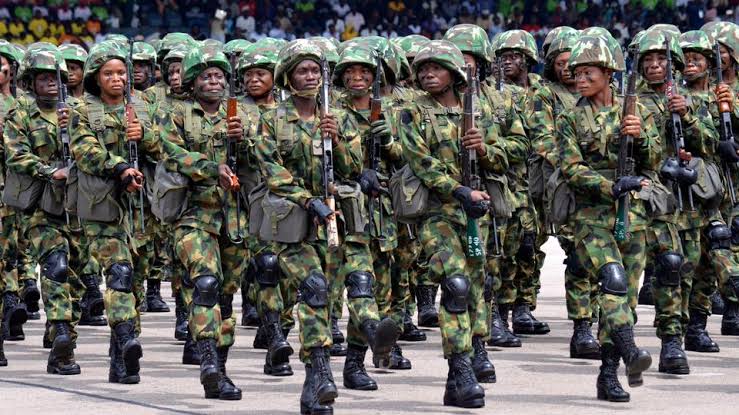
SaharaReporters reported on Sunday, November 9, that the army personnel were involved in an argument with the policemen at a checkpoint along Onisha Road before opening fire on the police officers.

“Happening now on our way coming back from the Anambra State election, we had a misunderstanding with Army personnel at a military checkpoint.

“Before we knew what was going on, they opened fire on us. One of us was shot directly in his chest, with many other policemen were injured,” a policeman told SaharaReporters.

The police officer told SaharaReporters on Sunday that the issue had escalated to a riot to the extent that they called for backup.

Narrating what transpired, Yusuf, whose brother was shot in the chest, told SaharaReporters that the officers were returning to Nasarawa state after the election duty when the incident happened in Onitsha.

“They reached an army checkpoint, and the soldiers granted their convoy passage; then the other side also granted their cars passage.

“One luxurious bus scratched one of the vehicles the policemen were in. On questioning the soldiers why they allowed the other side to come in while they had waved them to pass, one of the soldiers got furious and started saying, “they are just police,” and he used the butt of his rifle to break one of the glasses in the policemen’s convoy,” Yusuf said.

According to him, the action of the soldier triggered the policemen’s anger, and all of them alighted and demanded that their car be repaired. 

“The soldiers suddenly became confrontational and started firing in the air, but one of the soldiers just deliberately aimed into the crowd and opened fire, which hit my brother in the chest, slightly above the heart,” he said.

Unfortunately, Yusuf said that his efforts to get details of the case, including whether the soldier who shot his brother has been arrested, have failed as the Anambra and Nasarawa state police spokespersons are not providing any reasonable information on the matter.

“Now, the issue is that the police, for reasons best known to them, are avoiding holding the soldiers accountable and refusing to make the matter public on their official handles,” Yusuf told SaharaReporters.
 
“I called the State PRO for Nasarawa state in the morning, which is exactly 24 hours after the matter happened. The man reluctantly said he hadn’t heard about the matter; he only saw it online.

“I insisted that, considering his office, he can’t say he hasn’t heard an issue as delicate as this for the past 24 hours, but he just trivialised the matter as if it is nothing (maybe cause he thinks there is nothing I can do).”

In his further efforts, Yusuf said he called the police spokesperson of the Anambra state police command under whose jurisdiction the incident occurred, but he gave him a cold response and asked him to come to Anambra State if he wanted details on the matter.

“I then called the Anambra Police PRO, but he was trying to avoid the matter by just telling me that the matter has been resolved,” Yusuf said.

“I questioned him to tell me how it was resolved and the outcome, he then changed his words and said they are looking into the matter, that it takes a process before the Nigerian Army will release the soldier to them. 

“And he is refusing to disclose any information that will be of help to us, the family, even though I properly introduced myself to him. He just said I should come to Anambra if I want to get any information.”

SaharaReporters contacted the Anambra State Police Public Relations Officer, SP Tochukwu Ikenga, for comments on Yusuf’s allegations and explanations on the status of the matter.

However, though the police spokesperson read the message sent to him on WhatsApp, he has not responded as of the time of filing this report.

Residents of Niger state petition NJC over Magistrate who detained student activist for criticising Governor Bago

Some residents of Mokwa in Niger State have petitioned the National Judicial Council (NJC) over the unlawful detention of students activist, Isah Mokwa, by Magistrate Murtala M. B. Ibrahim of Chief Magistrate Court 1, Minna.

The petition, addressed to the NJC Chairman at the Supreme Court Complex in Abuja, accused the magistrate of abuse of discretion, judicial misconduct, and incompetence in handling the case.

Isah, a postgraduate student at Ibrahim Badamasi Babangida University, Lapai, was arraigned on 27 October 2025 on alleged cybercrime offences. 

The court initially rejected the prosecution’s request for a 14‑day remand, correctly noting that the police cannot detain a citizen under the pretext of an investigation.

“These actions demonstrate contradictory reasoning, procedural irregularities, and a disregard for constitutional rights,” the petition stated. 

“Such conduct reflects a lack of integrity, competence and sound judicial judgment, contrary to the Code of Conduct for Judicial Officers (2016) and Sections 35 and 36 of the 1999 Constitution (as amended).”

isah

Despite the court’s recognition of the lack of a legal basis for detention, Magistrate Ibrahim ordered Mokwa’s detention at Old Minna Prison, citing the absence of a formal bail application. 

When a bail application was later filed, it was denied on the grounds that the court lacked jurisdiction, yet the case was neither dismissed nor transferred.

The petitioners called on the NJC to “investigate the conduct of Magistrate Murtala M. B. Ibrahim” and to “take appropriate disciplinary action to safeguard judicial integrity and public confidence.”

SaharaReporters had reported that Magistrate Ibrahim was among the names shortlisted by the NJC for promotion to High Court judge in Niger State, despite the controversy surrounding his handling of Isah’s case.

The list published by the NJC included “Murtala M. B. Ibrahim – High Court, Niger” alongside other nominees.  

Justice Chinwe Iyizoba leads global push for women’s leadership in law

Retired Court of Appeal Judge, Hon. Justice Chinwe Eugenia Iyizoba, is set to headline a major global webinar under the Women in Leadership in Law (WILIL) project.

The event, organised by the National Association of Women Judges of Nigeria (NAWJN) in partnership with the International Association of Women Judges (IAWJ), focuses on strengthening women’s leadership and inclusion in the justice system.

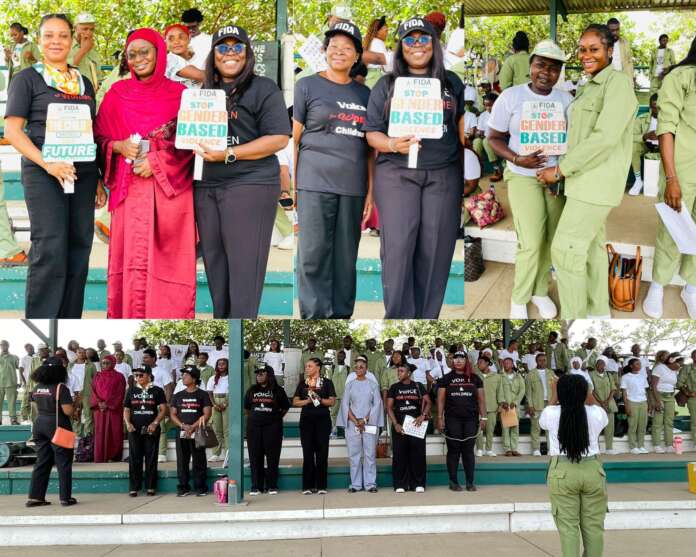
Justice Iyizoba, the Judicial Coordinator of the WILIL Project, extended an open invitation to members of the Nigerian Bar Association Women Forum, FIDA, the African Women Lawyers Association, the Magistrates Association of Nigeria (Women Wing), law teachers, and law officers across the public sector.

The webinar, themed “Enhancing Work-Life Balance and Accessibility in Court Settings,” aims to help women in the legal profession effectively balance family life and career demands.

It will also spotlight key issues such as gender-supportive court policies, career satisfaction, and accessibility in judicial spaces.

The WILIL Project, a multi-year collaboration between IAWJ and Co-Impact, seeks to enable entry, retention, and leadership advancement for women in the judiciary, especially in the Global South.

The initiative is currently being piloted in five countries: Nigeria, Kenya, South Africa, Mexico, and the Philippines.

Justice Iyizoba, renowned for her distinguished career and commitment to gender equality, retired from the Nigerian Court of Appeal in 2020.

A former Attorney General and Commissioner for Justice in Anambra State, she previously taught law at the University of Nigeria, Nsukka (UNN).

She has also served as Regional Vice President (Africa) of the International Federation of Women Lawyers (FIDA) and chaired the Judges Forum of the International Bar Association.

Throughout her career, Justice Iyizoba has embodied excellence, balancing judicial service with family life and inspiring generations of women in law.

Her leadership in the WILIL project reinforces her legacy as a champion for gender equity, professional advancement, and sustainable leadership in the judiciary.

Make space in your calendar to attend.

📅 Date: Thursday, 13th November, 2025.
🕙 Time: 10:00 AM (WAT).
💻 Platform: Zoom / YouTube Live.
Join Zoom Meeting
https://us06web.zoom.us/j/82458329448?pwd=VPuCDEzKjbXav76Yh0PVo8pLaxYPQq.1

Meeting ID: 824 5832 9448
Passcode: WILILTEAM

Join via YouTube:
https://youtube.com/live/TBwt0vGHAF0?feature=share

EFCC witnesses insist no law breached in fund withdrawals by Kogi State

The fourth prosecution witness of the Economic and Financial Crimes Commission EFCC in the alleged money laundering trial of the immediate past Governor of Kogi State, Yahaya Bello, has re-affirmed that fund withdrawals by the state government did not breach any banking law.

During cross-examination before Justice Emeka Nwite of the Federal High Court in Abuja on Monday, Mshelia Arhyel Bata, a compliance officer with Zenith Bank, also reiterated that the name of the former governor did not appear as beneficiary in the account presented as evidence.

The Defence Counsel, Joseph Daudu, SAN, had drawn the witness’ attention to certain withdrawals by one Umar Comfort Olufunke, which the prosecution did not mention.

The prosecution had concentrated on withdrawals by Abdulsalam Hudu, the Cashier of Kogi State Government House.

The withdrawals, in multiples of N10 million, were between December 2017 and April 2018, with beneficiaries being various hotels in Kogi State, according to the witness.

On cross-examination, the witness also confirmed withdrawals by one Alhassan Omakoji between November 2021 and December 2022, which did not exceed N10 million per withdrawal.

He said the withdrawals were in line with the limits set by the Central Bank of Nigeria CBN.

He admitted that he was not aware of any law that regulates how Kogi State Government spends its money or allocation.

He said apart from the beneficiaries like the hotels, there was no way he could know what the state’s transactions were meant for.

The prosecution counsel, Kemi Pinheiro, SAN, thereafter said he had no re-examination for Mshelia and asked for him to be discharged.

The witness had, at the last hearing, comfirmed that the former governor was neither a signatory to nor connected with any of the accounts presented as evidence.

He admitted that, going through Exhibit 22A, from pages 24 to 413, Yahaya Bello was not also listed on any of the documents as a beneficiary of any transaction.

After Mshelia, the fifth prosecution witness, Jesutoni Akoni, a Compliance Officer with Ecobank Plc, was examined by another prosecution counsel, Chukwudi Enebeli, SAN.

He tendered a subpoena written to Ecobank, which was admitted in evidence.

The EFCC lawyer also sought to tender a statement of account of Moses Ailetu companies with certificate of identification, from January 1 to January 31, 2016.

The defence counsel did not oppose it and it was admitted as Exhibit 29.

The witness was told to identify the different columns in the statement, which he did.

He was told to confirm cash deposits by the company, which were between N3 million and N20 million, and totalling N57 million.

On cross-examination, the witness confirmed that former governor Bello was not the beneficiary of the said deposits.

“Confirm that any of the deposits you identified carries the name of Yahaya Bello,” Daudu SAN said.

“None of them carries the name, Yahaya Bello,” the fifth witness responded.

Akoni also admitted that it was not possible to discern the source of funds from the face of the documents.

The prosecution, thereafter, introduced its sixth witness, on subpoena from Keystone Bank.

Mohammed Bello Hassan, a relationship officer with the bank, was asked to produce the statements of account of Dantata and Sawoe, which was tendered as Exhibit, along with the certificate of identification. The defence counsel did not object.

After this, a seventh witness, Olomotame Egoro, a Compliance Officer, on subpoena from Access Bank, was led in evidence by Pinheiro SAN.

He confirmed to the court that he had the 12 sets of documents that had been requested.

“We supplied sufficient customer’s details that were extracted from the account opening packages at the time the customer opened the account,” he said.

The defence counsel did not object to the admission of the account statement proper but kicked against some extractions.

“I am not going to object to the account proper but I will object to all the 12 purported extractions from the account opening documents attached. But I will not object to the statements of account, which were subpoenaed,” he stated.

“Based on our request, he brought other documents believing that we may be in need. We did not actually request for those documents,” Pinheiro SAN responded.

Daudu SAN prayed the court to tell the prosecution to remove “all the extraneous documents attached”.

The prosecution team then began to detach the documents that were regarded as irrelevant.

At this point, Justice Emeka Nwite adjourned the matter to November 11, 2025, for continuation of trial.

Lessons from the global success story of Malaysia’s palm oil development

By Aiyub Omar

Palm oil is one of the most versatile and valuable agricultural commodities in the world today. Found in products ranging from food to cosmetics and biofuels, it has become a cornerstone of economic growth for several developing nations. Among these, Malaysia stands out as a remarkable success story. What makes Malaysia’s journey especially fascinating is that the oil palm tree — Elaeis guineensis — did not originate there.

It came from West Africa, then, when the countries were not yet sovereign nations, from the same region where Nigeria lies. Yet today, Malaysia is one of the world’s largest producers and exporters of palm oil, while Nigeria, once a global leader, lags far behind. Understanding Malaysia’s path from importing palm seeds to building a multi-billion-dollar industry offers powerful lessons for Africa’s agricultural transformation.

The oil palm tree is native to the tropical rainforests of West Africa. It was an integral part of local economies and diets long before colonial times. In the 1870s, British colonial administrators introduced oil palm seeds from West Africa, specifically from Nigeria and the Congo Basin, to the Malay Peninsula. I must emphasise here that it was the British colonial authorities who introduced the oil palm seedlings into British Malaya, not Malaysia, as the country did not yet exist at that time. Ironically, the Nigerians often remind me of the narrative that Malaysia took or appropriated their commodity — a view with which I respectfully disagree.

Initially, the palm was cultivated as an ornamental plant in botanical gardens, not as a commercial crop. However, by the early 20th century, the potential of palm oil as an industrial and edible oil source became apparent. The first commercial planting took place in 1917 at the Tennamaram Estate in Selangor. The colonial authorities and early investors saw palm oil as a diversification strategy to reduce dependence on rubber. This strategic move marked the beginning of Malaysia’s journey to becoming a global palm oil powerhouse.

After independence in 1957, the Malaysian government faced a critical challenge, which was how to diversify its economy beyond tin and rubber exports. Palm oil presented an ideal opportunity. Through deliberate planning and investment, Malaysia transformed what began as a colonial experiment into a national development strategy.

Key milestones included:

Government policy and land schemes: The Federal Land Development Authority, established in 1956, resettled thousands of landless rural families on newly opened agricultural lands. These smallholders were trained, supported, and provided with infrastructure to grow oil palm commercially. This policy simultaneously reduced poverty and expanded the country’s palm oil output.

Research and innovation: Malaysia invested heavily in research through institutions such as the Palm Oil Research Institute of Malaysia, established in 1979 (later merged into the Malaysian Palm Oil Board). Research led to higher-yielding varieties, mechanisation, better processing techniques, and more sustainable practices.

Private sector participation: The government encouraged private investors and local entrepreneurs to participate in the industry, creating a vibrant partnership between the public and private sectors. This collaboration ensured steady technological progress and efficient value-chain development.

Export development and global branding: By the 1980s and 1990s, Malaysia had become a global leader in palm oil exports. The government supported marketing initiatives to build international demand, while refining and downstream processing industries added value to the raw product.

Palm oil became much more than an agricultural success. It became a pillar of Malaysia’s broader industrialisation. Revenues from palm oil exports funded rural development, education, infrastructure, and industrial projects. The industry also spurred the growth of related sectors such as manufacturing, oleochemicals, and bioenergy. By diversifying its economy around a renewable resource rather than fossil fuels, Malaysia avoided the “resource curse” that affects many oil-dependent nations. Today, palm oil contributes significantly to Malaysia’s GDP, employs millions directly and indirectly, and remains one of the country’s top export earners. In 2024 alone, Malaysia exported around 80 per cent of its 19.3 million tons of crude palm oil production. The sector also contributed around 2.3 per cent to the GDP in that year and is a source of livelihood for one million individuals.

Nigeria was once the world’s leading producer of palm oil in the early 20th century. Nigeria stood tall, a position that brought economic prosperity to many regions of the country, especially the South-East. Unfortunately, over the decades, Nigeria lost that leadership to Malaysia and Indonesia, the two nations that ironically built their palm oil success using oil palm seeds originally brought by the British from West Africa. Among other factors attributed to it were the discovery of crude oil and poor government policies.

The discovery of crude oil in Oloibiri, Bayelsa State, in 1956 marked a turning point in Nigeria’s economic history. By the 1970s, oil revenues began to dominate national income, accounting for over 90 per cent of export earnings. As petroleum wealth flowed in, agriculture, including palm oil, was neglected. Government attention shifted to the oil sector, and agricultural policies received little funding or strategic direction. The easy revenue from crude oil created a “mono-product economy”, leaving Nigeria vulnerable to global oil price fluctuations and stifling agricultural innovation.

Unlike Malaysia, which has developed a long-term agricultural master plan, Nigeria’s policies toward palm oil were often short-term, reactive, and poorly coordinated. The regional cooperative systems that once supported smallholders were dismantled, and successive governments failed to implement effective replanting or modernisation programs. Land tenure issues also discouraged large-scale investments, while bureaucracy, corruption, and lack of infrastructure hindered private sector participation. Agricultural research institutions were underfunded, and the link between research and farmers was weak.

Several lessons, however, can be drawn from Malaysia’s experience:

Strategic government intervention: Long-term planning, land reforms, and consistent policies are essential for agricultural transformation.

Investment in research and development: Scientific innovation from seed breeding to mechanised harvesting is the backbone of productivity.

Empowerment of smallholders: Inclusive development ensures that rural communities share in the benefits, reducing poverty and inequality.

Value-added processing: Developing downstream industries transforms raw produce into finished goods, creating jobs and increasing foreign exchange earnings.

Sustainability and global standards: Malaysia’s emphasis on sustainable production and environmental stewardship has enhanced its international reputation, a model worth emulating.

Today, the oil palm industry is a pillar of Malaysia’s economic growth. For Nigeria and other African countries, too, they can revive their palm oil legacy and harness it for national development. On a positive note, Malaysia, through its private sector company, Agrinexus International, is currently managing Nigerian-owned plantations in Cross River, Ondo, and Delta States, and has already achieved higher yields and positive growth. The path forward lies in learning from Malaysia’s strategy and the Nigerian government’s continuous support and guidance, besides diversification, innovation, and investment in sustainable agriculture. The oil beneath the soil may fade, but the oil from the palm can once again fuel a nation’s prosperity if managed with clear vision and holistic purpose and steadfast integrity.

Ambassador Aiyub is a High Commissioner of Malaysia to Nigeria

Mothers cry out, say chatbots encouraged their sons to kill themselves

Megan Garcia had no idea her teenage son Sewell, a “bright and beautiful boy”, had started spending hours and hours obsessively talking to an online character on the Character.ai app in late spring 2023.

“It’s like having a predator or a stranger in your home,” Ms Garcia tells me in her first UK interview. “And it is much more dangerous because a lot of the times children hide it – so parents don’t know.”

Within ten months, Sewell, 14, was dead. He had taken his own life.

It was only then Ms Garcia and her family discovered a huge cache of messages between Sewell and a chatbot based on Game of Thrones character Daenerys Targaryen.

She says the messages were romantic and explicit, and, in her view, caused Sewell’s death by encouraging suicidal thoughts and asking him to “come home to me”.

Click here to continue reading.

Kukah and a nation of marabouts

By Lasisi Olagunju

Sheikh Abubakar Mahmud Gumi (1924 –1992) was shocked when he got to Mecca for the first time in 1955 and discovered that the city had no streetlights. Sheikh Gumi was an Islamic scholar and Grand Khadi of the Northern Region from 1962 to 1967. He was the father of Sheikh Ahmad Abubakar Gumi, the man who makes waves today.

Kaduna, from where the Sheikh took off to Mecca, had a power plant built there as far back as 1929. Street lighting was introduced to Lagos in 1898 – seventeen years after London had it. History says “the first, practical, public use of electricity” in London was in 1881; it was for street lighting.

Every man’s story is a mirror of a part of the past; it is a window into the future of the world. ‘Where I Stand’ is the late Gumi’s autobiography. Gumi wrote on page 69 of that book: “I remember that during my first Hajj in 1955, there was not even electricity in the city of Mecca. The only electric lights were at the royal palaces and the Ka’aba. The streets were lit with oil lamps early in the evening every day, which were extinguished the following morning.”

An entry in William Camden’s book of proverbs published in 1605 says “the early bird gets the worm”. In electricity and other certain matters, Nigeria was that bird. The English word, ‘headstart’ means “an advantage granted or achieved at the beginning of a race, a chase, or a competition.” If development was a race, Nigeria had a headstart over Saudi Arabia 70 years ago. Nigeria also had it over the UAE; Lagos had it over Dubai. The very first power generator came alive in Dubai in 1952. That was the moment the city first tasted electric light and shook hands with modernity. Dubai had its first hospital, Al Maktoum, in 1951; by 1979, it built its first skyscraper. When was Cocoa House, Nigeria’s first skyscraper, built in Ibadan?

Mecca, the holy city that lit its streets with oil lamps in 1955 is today one of the world’s celebrated smart cities. Check the Smart Cities Index released in 2023, 2024 and 2025 by the International Institute for Management Development (IMD). What makes a city the most livable in 2025? In its World Competitiveness Ranking, IMD lists Dubai as the fourth smartest city in the world, and Mecca the 39th out of 146 cities globally. Where are Nigerian cities? Check.

In several areas, Nigeria started well. So, what happened to us? Or what has made a difference between our stunted growth and the grown/ growing nations? Quality of leadership and quality of ideas ruling. To be blessed with a good head is good, but a good head without character ruins. We say lack of character ruins good head.

There is the story of a swift young man who was well ahead of his peers in all races. Well-endowed with talents but lacking in character, the fast-footed went for a race. His feet were swift, but his head grew heavy with pride and prejudice. He stumbled, fell, and was overtaken by all; even the lame boy he once mocked left him behind. Then elders started telling their children: “When a good head forgets character, it runs itself backward, and that is how great heads go bad.”

That is how Nigeria’s Lagos which had electricity as early as 1898, became, according to the Economist Intelligence Unit (EIU) 2025 report, the fifth most difficult city to live in globally (168th out of 173 cities).

But are we doomed to forever run ourselves backward?

I was in the audience at Dr Reuben Abati’s 60th birthday lecture and book launch on Friday in Lagos. I sat up when Bishop Matthew Kukah who delivered the birthday keynote, thoroughly trashed Nigeria for abandoning rational inquiry for magical thinking. Any country that abandons science for sorcery cannot be Saudi Arabia, cannot be United Arab Emirates and definitely cannot be Japan, or South Korea. It cannot have Copenhagen, the reigning best city to live in the world.

Bishop Kukah mentioned “marabouts” as our country’s guardian angels and the instructors of our pilots. Kukah’s imageries and metaphors point at the “spiritualists” as the compass we deploy for our journey of destiny. Superstition rots a nation; irrational beliefs corrode critical thinking; it poisons policy decisions and stunts progress. So, when we search for our golden years, they are always in the past. It is the reason the future increasingly becomes like the moon, unattainable for the moon catcher.

In the lecture entitled ‘Nigeria: Time to Reload’, Bishop Kukah made a striking connection between Nigeria’s underdevelopment and its deep entanglement with superstition, maraboutism, and the misuse of religion. He argued that one of the greatest obstacles to Nigeria’s progress is the replacement of reason and science with fear, fatalism, and spiritual manipulation. For Kukah, this overdependence on marabouts, prophets, and self-styled miracle workers reflects a dysfuntional national mindset. Kukah warned that “all this idea of government by marabouts, shamans, all this blood of sacrifice of protective gear against enemies, slaughtering of cross-bred cows, donkeys, camels, cats with three legs, one eye, no tail, black tongue and so on, will not cut it.” They have never, and will not.

The bishop observed and reminded us that Asian societies built their modernization on moral philosophy and scientific reasoning. He told us that those people drew on the teachings of Confucius, the Mahabharata, and the Japanese ethic of honour. He said Nigeria’s political and social life remained trapped in the orbit of primitive spirituality. He said we are a nation of shortcut takers and jilters of institutional solutions. With a dubious reputation of substitution of superstition for intellect, and of prophecy for planning, the only direction of the national vehicle is backwards. That is why everyone is leaving us behind in all spheres.

Bishop Kukah’s recommendation is that for Nigeria to attain greatness, it must “reload” and rediscover its moral compass; it must rebuild national cohesion, and renew trust in democracy by learning from past mistakes, reclaiming ethical and cultural values, and forging a unifying national spirit rooted in justice, integrity, and shared purpose. He said we must retrieve our country from religious extremists, marabouts and merchants of spirits.

What does it mean to have one’s destiny in the hand of conjurers and manipulators? What Kukah painted is a portrait of the black man trapped forever in the hole of nonsense. The black man outsources his life to men who claim to be God. He does it out of fear. Fear of visible man and invisible spirit. But, the value that is called excellence does not stay in the house of jitters. If you see a black man eating his pounded yam in the dark, it is not moderation, it is the fear of the world who always wants man to eat his pounded yam as boiled yam, soupless.

Swiss linguist, Heli Chatelain, left the United States for Luanda, the capital of Angola, in the year 1885. He was twenty five years old when he was employed to assist missionaries in producing a grammar and a dictionary of a major language in that area. The man soon saw the moral nakedness of his hosts so much that by 1895, he was no longer in doubt on the reason for the black man’s backwardness: “No serious progress is possible as long as this belief and practice (witchcraft) exists,” Chatelain wrote in his ‘Causes of the Retardation of African Progress’, published in September, 1895.

The Swiss told an interesting story: At a point between 1885 and 1895, he met a slave who learnt carpentry on a plantation in Luanda, Angola. The slave was one very intelligent man who laced his competence with diligence. He soon gained his freedom. In freedom, the carpenter quietly set to work on building a brand, and a business, and he was very successful. He became very rich and bought six or seven local houses. He made more money and bought two expensive stone houses which he rented out to white tenants. From the rent, the man’s riches blossomed and were in multiples.

However, despite his wealth, the man moved about in shabby, ragged clothes. He constantly made excuses and told small lies to make people think he was not as rich as they believed. When asked by Chatelain why he behaved that way, he explained: “If I lived well and dressed nicely, people would become jealous, and their envy could bring me harm through witchcraft.” To reinforce his fears, the wealthy carpenter wasted a chunk of his wealth on powerful charms to protect himself from evil spirits which he thought his jealous enemies might send against him. The short narrative ends with the carpenter’s growth severely limited by his belief and his fears.

Why is Nigeria increasingly left behind? Heli Chatelain told more than the carpenter story. There was no system of writing when he arrived his part of Africa in about 1885. His reading the why was that “a genius or innovator in Africa is almost sure to be accused of witchcraft and to suffer death.” He added that “if a man shows any spark of genius, either by an invention or more rational conceptions, his superior talents may be ascribed to an enlisted spirit.” Chatelain ended that point with a declaration that unless the rich was generous with his money “the man who dared to be richer than his neighbours” risked envy which “is as dangerous as revenge.”

Anambra State governorship election was held on Saturday. I am almost certain that all candidates in that election were told by dibias that they would win. A winner has emerged. What happened to the ‘holy’ words of the seers? Governorship elections come up next year in Ekiti and Osun states. Marabouts have whispered to every aspirant in our states that they are the anointed one, the next governor. Already, tremors and quakes are rumbling the political landscape; old walls are cracking; familiar trees are losing their roots and branches. Even if the heavens were to fall, no aspirant would yield ground for another. Brothers will fight brothers; friends will square up against friends. None, not even the most hopeless among them, will step aside or step down. Each claims to have been told a vision that the crown is theirs to seize, take and flee with.

You and I know that the ‘gods’ can only be right if each state were to have more than one ruler. But who will dare tell the desperate to pause and think before the storm comes for all?

For the 2027 presidential election, keep an eye on the main opposition parties. You heard that in the ADC no one will step down for no one, no matter how old. The rumble in their jungle is rooted in spiritual assurances from marabouts in Niger, Senegal, Egypt and Morocco that each of them is the next president. Some of them take their hope from the same spiritual tray, yet the prophecy of electoral success is the same for all who bow before the seers.

Keep an eye on the ruling party, the APC. No one is contesting the ticket with the incumbent president. But, if you find persons angling to be vice president and displace the incumbent number two, find out which dibia or cleric ‘sees’ for them. They know that the incumbent president will have only one running mate, yet all of them are sure that they will be that person. Robert J. Sternberg, the author of ‘Why Smart People Can Be So Stupid’, says “the stupid should wear signs so we know not to rely on them.”

Are these smart politicians stupid for each of them to believe what the seers serially tell them? What is the meaning of stupidity? I read Lewis Anthony Dexter’s ‘Politics and Sociology of Stupidity’ (1962). The author writes about what to do to help the stupid get out of their stupid hole. He writes about introducing technology as a way of “teaching the stupid not to be stupid” or to be “less stupid.” But I also read the frustration of the author at the stupid insisting on remaining “fundamentally” stupid.

As I listened to Bishop Kukah’s lecture on Friday in Lagos, my mind went straight to what a top politician from the north told me recently. The big man said to me that the real problem of Nigeria are the mystics; the seers, prophets and marabouts to whom politicians have outsourced the running of the country and its politics. Our husbands in the political parties seek and woo clerics as the real electorate. Your votes and mine are mere dummies set up to mask what the ‘gods’ have resolved to do on election day. After the election, the oracles rule, they dictate policies and projects; they decide who gets blessed, and who gets damned. They make and unmake the throne and those who sit on it. “That is where we are; the reason we are far behind our past,” the top politician told me.

I believe him. Man won’t learn. In Shakespeare’s Macbeth, Banquo asks the witches to speak if they “can look into the seeds of time, / And say which grain will grow and which will not.” The seers speak to Banquo and more to Macbeth. They tell Macbeth he will be king, and he becomes king. But what is that that we read as the end of King Macbeth?

The views expressed by contributors are strictly personal and not of Law & Society Magazine.

Nigeria’s continued terrorism, other tragedies: Tinubu’s detached attention

By Ikeddy Isiguzo

BOLA Ahmed Tinubu worked so hard to be President of Nigeria that he needs a lot of time to recover from the dreary journey to his success. The other truth is that the most important thing after becoming President was annexing every power handle for his second term.

The road to a second term is proving more treacherous than Tinubu expected after farming out key appointments to those who are in his corner.

His dedication to his personal issues has led to our current standing as a country without direction. Tinubu’s selflessness is premium. His silence as Muhammadu Buhari strutted over Nigeria, promoting divisions across political, religious, and ethnic lines, was loud. Those decisions were implicated in many policies and programmes that alienated parts of Nigeria Buhari had chosen to bear the bulk of his religious and ethnic bigotry.

Tinubu campaigned to continue from where Buhari stopped. He has made no specific moves to tackle insecurity which surged under the Buhari administration because Buhari did not deter the terrorists.

Victims of attacks were advised to be good neighbours to their attackers and share land with the killers whose appetite for more blood and land appeared insatiable.

Bandits, kidnappers, terrorists have freely continued to attack whenever they want.

The semblance of security for Nigerians is wearing thin. Illegal miners in the North West, religious fundamentalists in the North East, attackers in Plateau, Benue, and others whose attacks seem to borrow from a cocktail of motivations including land grabbing and more space for illegal mining, have drawn incoherent responses, whether on the battle fields or in effecting measures that can curb the growing savagery.

I wrote on 5 October 2025: “Our most current challenges draw massively from Tinubu’s compassion deficit – he does not care what happens to Nigeria.

“He has added the compassion deficits to better known defects of the man who in 2023 suffocated Nigerians with promises that he platformed not only hope, but a renewed version.

“His answers to keeping his promises are making new ones or tabling incoherent responses. His Independence Day Anniversary speech mirrored this absence of compassion, a loss of touch with the Nigerian reality and an exaggerated importance of a presidency that dedicates its attention to serving a few Nigerians and extrapolating them to represent Nigerians.

“Said Tinubu in his 1 October nationwide broadcast, “We chose the path of tomorrow over the comfort of today. Less than three years later, the seeds of those difficult but necessary decisions are bearing fruit”. “Which fruit? The fruits are reflected in statistics that have no bearing to how Nigerians are eking out a living”.

The momentary attention terrorism, banditry, kidnapping, and other crimes is getting will cease if Trump takes the heat off Tinubu whose concerns are not about people dying and the drain on the economy. Not even the shrinking of Nigeria’s territory worries Tinubu except if it can impact on his chances of winning a second term.

Why has he not asked for international collaboration to end the attacks in different parts of Nigeria? What alternative plan does Tinubu have? Is our President averse to ending terrorism in Nigeria?

Tinubu said on Thursday “We will spare no effort and leave no stone unturned in our mission to eliminate criminals from our society. We urge our allies to stand firmly with us as we amplify our fight against terrorism. We have made significant progress in the past two years, and we will decisively eliminate this threat.” Tinubu called for collaboration from international partners and allies to foster security and economic growth.

“Nigeria will be, and remains, a reliable partner and dependable ally to its friends and a steady voice for stability. We also welcome the collaboration and support of our allies, friends, and partners as we strengthen both security and economic growth,” Mr Tinubu said.

Tinubu acknowledged that Nigeria was indeed faced with terrorism—a challenge the West African country has had for almost two decades—stating that it will not back down in its fight against the menace.

Tinubu stated in a social media post on Friday that Nigeria would continue to assert itself on the global stage with “calm, clarity, and a strong sense of purpose”.

“We are indeed faced with terrorism — a challenge Nigeria has faced for almost two decades, and we will not back down. We will decisively defeat terrorism and claim victory in this battle,” he admitted the challenge.

“Security is non-negotiable, and we will never compromise on this principle. With unwavering courage and a steadfast commitment to the rule of law, we will prevail,” Tinubu said

Brash as Trump’s offer of assistance is, some call it a threat, our government’s best answers to Trump’s charges have been vacuous.

Prof Joash Ojo Amupitan, Tinubu’s recently appointed Chairman of the Independent National Electoral Commission, INEC, in a paper he wrote in 2022 stated, “The alleged involvement of the State and non-State actors in the commission of crimes under international law in Nigeria has complicated an already complex situation”.

“Consequently, the situation beckons the urgent need for a neutral and impartial third-party intervention, especially the UN and its key organs, the military and economic superpowers.”

According to the renowned academic, international law supersedes absolute state sovereignty in cases of genocide and crimes against humanity.

“In a globalised world, State sovereignty diminishes to accommodate the common interests of the global community concretised by a mixture of consent, consensus and compelling norms.”

The matter of international law versus state sovereignty would be understood as every country should behave well, for every country’s well-being.

How well has Nigeria handled the crisis in almost 20 years? Could things have been done better?

Definitely, things could have been better managed. The woolly debates government generated that more Muslims than Christians had lost their lives in the terrorist attacks fell flat.

Was government saying it was not tough on the terrorists because Muslims were their targets? Would that also be telling Trump not to bother because Christians were safe, and whatever happened to Muslims was unimportant?

Tinubu should get to work quickly and be clearly involved in the planning of the war against terror, in Nigeria. There is no time for the circuitous debates that could delay action.

Finally…

NIGERIA has had no ambassadors in more than two years of Tinubu’s administration. The diplomatic assets Nigeria require to maintain relations with other nations have depreciated in those years.

The absence of ambassadors has left our missions with diplomats who in are not of adequate status to attend most high-level engagements.

The processes that lead to ambassadorial appointments may not be exhausted in eight months – the 2027 elections would be months away. The chances of appointing ambassadors in Tinubu’s first tenure are increasingly diminishing.

DEFECTION is the biggest political strategy of the All Progressives Congress, APC. The defectors are flying to safety from their current parties to APC which seems to be the only party that would be eligible to present candidates for the 2027 elections.

They dread a worse situation – the Economic and Financial Crimes Commission, EFCC, coming after them for financial infractions. The ride to a one-party state is on a fast lane.

But some men of courage should be able to provide the opposition without which democracy declines to a dictatorship.

IS there a prize for whoever kills the Peoples Democratic Party, PDP? The race to strike the killer blow on the party is stiff. More contenders are joining.

Our democracy will further be minimised if PDP allows itself to finish itself at a time Nigerians were thinking there was a possibility that the party would be the major opposition in the 2027 election.

The curated crisis in the party could not have been on for so long if there were no beneficiaries, within and outside PDP.

Isiguzo is a major commentator on minor issues

The views expressed by contributors are strictly personal and not of Law & Society Magazine.

Shock as chefs and driver allegedly poison former NBA President’s staff, steal his car

A shocking crime has rocked the household of former Nigerian Bar Association President, Augustine Alegeh, SAN.

According to Arise TV anchor Ojy Okpe, two chefs and a driver employed by Alegeh allegedly poisoned members of his staff before stealing his vehicle.

The story broke on Friday morning during Okpe’s What’s Trending segment, where she described the incident as “both shocking and tragic.”

Displaying photos of the suspects on air, Okpe revealed, “Two chefs and a driver actually poisoned their staff and stole a vehicle belonging to a Senior Advocate of Nigeria.”

She added that the poisoning appeared to be part of a plan to steal Alegeh’s car.
“These young men stole his car. Just to steal a car, they poisoned their colleagues,” Okpe said, urging Nigerians to help identify them.

She warned viewers against employing the suspects if seen, noting that they remain on the run.

“If you know their whereabouts, do not hire them. Call the police immediately,” Okpe appealed.

The Arise TV host described the crime as a grim reflection of rising insecurity and moral decay in the country.

She expressed hope that the perpetrators would soon be apprehended and brought to justice.

As of press time, the condition of the poisoned staff and the status of the stolen vehicle had not been confirmed.

Nobel Prize co-winner in the structure of DNA, James Watson dies at 97

Renowned molecular biologist and one of the Nobel Prize winners for discovering the structure of DNA, James D. Watson, has died at the age of 97.

The brilliant but controversial American biologist whose 1953 discovery of the structure of DNA, the molecule of heredity, ushered in the age of genetics and provided the foundation for the biotechnology revolution of the late 20th century, died Thursday after a brief illness, according to a statement from his former employer.

His death was confirmed by Cold Spring Harbor Laboratory on Long Island, where he worked for many years. The New York Times reported that Watson died this week at a hospice on Long Island.

In his later years, Watson’s reputation was tarnished by comments on genetics and race that led him to be ostracized by the scientific establishment.

Even as a younger man, he was known as much for his writing and for his enfant-terrible persona – including his willingness to use another scientist’s data to advance his own career – as for his science.

His 1968 memoir, “The Double Helix,” was a racy, take-no-prisoners account of how he and British physicist Francis Crick were first to determine the three-dimensional shape of DNA.

The achievement won the duo a share of the 1962 Nobel Prize in medicine and eventually would lead to genetic engineering, gene therapy and other DNA-based medicine and technology.

Crick complained that the book “grossly invaded my privacy” and another colleague, Maurice Wilkins, objected to what he called a “distorted and unfavorable image of scientists” as ambitious schemers willing to deceive colleagues and competitors in order to make a discovery.

In addition, Watson and Crick, who did their research at Cambridge University in England, were widely criticized for using raw data collected by X-ray crystallographer Rosalind Franklin to construct their model of DNA – as two intertwined staircases – without fully acknowledging her contribution. As Watson put it in “Double Helix,” scientific research feels “the contradictory pulls of ambition and the sense of fair play.”

In 2007, Watson again caused widespread anger when he told the Times of London that he believed testing indicated the intelligence of Africans was “not really … the same as ours.”
Accused of promoting long-discredited racist theories, he was shortly afterwards forced to retire from his post as chancellor of New York’s Cold Spring Harbor Laboratory (CSHL).

Although he later apologized, he made similar comments in a 2019 documentary, calling different racial attainment on IQ tests – attributed by most scientists to environmental factors – “genetic.”

‘TOUGH IRISHMAN’
James Dewey Watson was born in Chicago on April 6, 1928, and graduated from the University of Chicago in 1947 with a zoology degree. He received his doctorate from Indiana University, where he focused on genetics. In 1951, he joined Cambridge’s Cavendish Lab, where he met Crick and began the quest for the structural chemistry of DNA.

Just waiting to be found, the double helix opened the doors to the genetics revolution. In the structure Crick and Watson proposed, the steps of the winding staircase were made of pairs of chemicals called nucleotides or bases. As they noted at the end of their 1953 paper, “It has not escaped our notice that the specific pairing we have postulated immediately suggests a possible copying mechanism for the genetic material.”

That sentence, often called the greatest understatement in the history of biology, meant that the base-and-helix structure provided the mechanism by which genetic information can be precisely copied from one generation to the next. That understanding led to the discovery of genetic engineering and numerous other DNA techniques.

Watson and Crick went their separate ways after their DNA research. Watson was only 25 years old then and while he never made another scientific discovery approaching the significance of the double helix, he remained a scientific force.

“He had to figure out what to do with his life after achieving what he did at such a young age,” biologist Mark Ptashne, who met Watson in the 1960s and remained a friend, told Reuters in a 2012 interview. “He figured out how to do things that played to his strength.”
That strength was playing “the tough Irishman,” as Ptashne put it, to become one of the leaders of the U.S. leap to the forefront of molecular biology. Watson joined the biology department at Harvard University in 1956.

“The existing biology department felt that molecular biology was just a flash in the pan,” Harvard biochemist Guido Guidotti related. But when Watson arrived, Guidotti said he immediately told everyone in the biology department – scientists whose research focused on whole organisms and populations, not cells and molecules – “that they were wasting their time and should retire.”

That earned Watson the decades-long enmity of some of those traditional biologists, but he also attracted young scientists and graduate students who went on to forge the genetics revolution.

In 1968 Watson took his institution-building drive to CSHL on Long Island, splitting his time between CSHL and Harvard for eight years. The lab at the time was “just a mosquito-infested backwater,” said Ptashne. As director, “Jim turned it into a vibrant, world-class institution.”

GENOME PROJECT
In 1990, Watson was named to lead the Human Genome Project, whose goal was to determine the order of the 3 billion chemical units that constitute humans’ full complement of DNA. When the National Institutes of Health, which funded the project, decided to seek patents on some DNA sequences, Watson attacked the NIH director and resigned, arguing that genome knowledge should remain in the public domain.

In 2007 he became the second person in the world to have his full genome sequenced. He made the sequence publicly available, arguing that concerns about “genetic privacy” were overwrought but made an exception by saying he did not want to know if he had a gene associated with an increased risk of Alzheimer’s disease. Watson did have a gene associated with novelty-seeking.

His proudest accomplishment, Watson told an interviewer for Discover magazine in 2003, was not discovering the double helix – which “was going to be found in the next year or two” anyway – but his books.

“My heroes were never scientists,” he said. “They were Graham Greene and Christopher Isherwood – you know, good writers.”

Watson cherished the bad-boy image he presented to the world in “Double Helix,” friends said, and he emphasised it in his 2007 book, “Avoid Boring People.”

Married with two sons, he often disparaged women in public statements and boasted of chasing what he called “popsies.” But he personally encouraged many female scientists, including biologist Nancy Hopkins of the Massachusetts Institute of Technology.

“I certainly couldn’t have had a career in science without his support, I believe,” said Hopkins, long outspoken about anti-woman bias in science. “Jim was hugely supportive of me and other women. It’s an odd thing to understand.”

Reuters

TIPS