Home Blog Page 151

Video: “Who’s fooling who? When they were ready to announce the results, Embaló announced that there is a coup”, Ex- President Jonathan on Guinea Bissau ‘coup’

Former President Goodluck Jonathan, who recently returned from election monitoring duties in Guinea-Bissau—where he was trapped and later evacuated after the military seized power—has alleged that the “so-called coup” in the West African country was engineered and proclaimed by the ousted President Umaro Sissoco Embaló, and was not a genuine military coup per se.

This comes as the Authority of Heads of State and Governments of the Economic Community of West African States (ECOWAS), yesterday, suspended Guinea-Bissau from all decision-making bodies of the regional bloc.

The coup leaders on Thursday swore in an Army General as Guinea-Bissau’s new Head of State to serve as transitional president for a period of one year. Gen. Horta N’Tam took the oath in brief and quiet proceedings at the army headquarters, a day after the Army coup that toppled Embalo and the country’s democratic structures.

Jonathan told Journalists in Nigeria that it was Embaló that first announced what he termed a “ceremonial coup” before the military came in to take over, saying that he was surprised and embarrassed by such an action.

The former Nigerian president said the ousted President made phone calls to other countries and spoke with journalists that there was a coup, unlike a normal coup d’état.

He said: “There was no coup in Guinea-Bissau. What happened in Guinea-Bissau, I wouldn’t call it a coup. It was not a coup. Maybe some people will describe it as a ceremonial coup. It was President Embaló who announced the coup, before later, a military man came up and addressed the world that they had taken charge, which is strange.

“Embaló not only announced the coup, but he was using his phone, making calls and addressing media organisations around the world that he had been arrested. I am a Nigerian and close to 70, and I know how they keep ex-heads of State when a coup takes place.                                          

“The military doesn’t overthrow a government and a sitting President they have overthrown would be allowed to be using their phones and addressing press conferences, that he has been arrested. Who is fooling who?

“What happened in Guinea-Bissau is quite disturbing to me, who believes in democracy. I feel more pain than the day I called Muhammadu Buhari to congratulate him when I lost the election as a sitting president. What is happening is that we are going back to the past in Guinea-Bissau when the military was in charge.

“The election was peaceful. During the meeting of Heads of Observers’ missions, and all the observers gave their account, nobody said anything different. The elections were peaceful, the counting of votes was carefully done, conduct of officials was okay. The same thing with party agents. When they had finished collating the results, the nine regions were ready.”

Speaking further, the former Nigerian President said: “When they were ready to announce the results, Embaló announced that there is a coup. That they have taken over and they have arrested him. But, from every indication, nobody arrested him.”

Jonathan then charged ECOWAS and AU to ensure that the result of the election, which, according to him, was ready, should be announced and let the winner be known and acknowledged.

Jonathan also explained why he returned to Nigeria aboard an Ivorian aircraft, saying he felt the need to speak to Nigerians to thank them “for the show of empathy and encouragement” when he was trapped in the West African country.
According to him, both President Tinubu and Côte d’Ivoire’s President Alassane Ouattara made arrangements to evacuate him and his delegation from Bissau.

But the Ivorian team secured landing clearance first due to stronger regional ties between the two countries.

“While we were in Bissau and this so-called coup happened, the information we got was that the whole country was agitated, young and old, irrespective of religious or political divides.

“And I sincerely appreciate Nigerians, and I want them to hear directly from my mouth to appreciate their concern. And secondly, to thank my president, President Tinubu, and the Ivorian president, President Ouattara.

“Both presidents were to send aircraft to lift us, but somehow you know Côte d’Ivoire is closer to Guinea-Bissau, and there’s always some relationship between the Francophone countries and the Lusophones, who are among the Francophones.

“They were able to penetrate their system to get a landing permit before Nigeria could do that. So the Ivorian aircraft was already on its way to pick us up,” he said.
He explained that Côte d’Ivoire’s aircraft was already en route when he was informed that the Nigerian jet had received approval to depart.

“So when we learnt that the Nigerian aircraft were about to leave, we asked them not to bother. That is why, if you see the pictures, I was brought by an Ivorian aircraft,” he said.
Meanwhile, ECOWAS has suspended Guinea-Bissau from all decision-making bodies of the regional bloc.

The Authority of ECOWAS Heads of State and Government, under the chairmanship of President Julius Maada Bio of Sierra Leone, the Mediation and Security Council (MSC), met virtually on Thursday at the level of Heads of State and Government following the military coup on Wednesday and suspended Guinea-Bissau after reviewing the situation.

The West African leaders acted in accordance with the provisions of the ECOWAS Protocol on Democracy and Good Governance, warning the coup leaders to restore the democratic order and return to their barracks.

A communique issued after the meeting read: “The MSC decides, in accordance with the provision of the ECOWAS Protocol on Democracy and Good Governance 2001(A/SP/12/01), to suspend Guinea-Bissau from all ECOWAS Decision-making bodies until the restoration of full and effective constitutional order in the country.”

“The MSC also said it holds the coup leaders in the country individually and collectively responsible for the protection of the life and property of all citizens and residents of Guinea-Bissau and for the security and safety of all detainees.”
It also advised the army to return to their barracks and maintain peace and their constitutional role, even as it ordered the ECOWAS Stabilisation and Support Mission in Guinea-Bissau (ESSMGB) to continue helping protect the institutions of Guinea-Bissau.

“The MSC decided to continue to monitor the situation in Guinea Bissau and reserves the right to use all options provided for by the 2001 ECOWAS Supplementary Protocol on Democracy and Good Governance and the 2012 Supplementary Act on Sanctions, including sanctions on all entities deemed culpable of disrupting the electoral and democratic process in Guinea Bissau,’’ it added.

The MSC then mandated the Authority’s chair to lead a high-level mediation mission to Guinea-Bissau to engage with the leaders of the coup and ensure the complete restoration of constitutional order.

The appointed members of the mission include Faure Gnassingbe, President of Togo; Jose Maria Pereira Neves, President of Cabo Verde; and Bassirou Diomaye, President of Senegal, and will be accompanied by the President of the ECOWAS Commission, Dr. Omar Touray.

Watch the video below:

How internal sabotage, institutional rot, and foreign scrutiny undermine Nigeria’s sovereignty and credibility

When the State Betrays Its Own: Chibok, Internal Sabotage, and Nigeria’s Security Crisis

By John Onyeukwu

Given all the conversation around security, insecurity, the alleged Christian genocide, and the multiple conflated narratives emerging from the face-off between Minister Nyesom Wike and Navy Lieutenant A.J. Yerima, the issue of the security saboteurs who denied Nigeria the opportunity of international support in rescuing the Chibok girls in 2014 should not be allowed to fall through the cracks. It goes to the very root of our national credibility and institutional decay. The moral and operational breach that Professor Akinyemi described is not just history; it is a mirror reflecting how internal betrayal continues to undermine national sovereignty, global partnerships, and public trust in our security institutions.

According to Professor Akinyemi:

“When the Chibok girls were picked up by Boko Haram … the Americans came in quietly at the invitation of the Jonathan administration … They discovered the camp … and they said, all right, we will throw gas into those camps … The Americans sent the reconnaissance aircraft … what did they find? Boko Haram militias were wearing masks; which means somebody within the Nigerian army had leaked to Boko Haram what the plan was. The Americans pulled out. They were not going to subject their troops to this.”
— Prof. Akinwande Bolaji Akinyemi on Arise “Morning Show” Program on Tuesday November 11, 2025

Akinyemi’s revelation remains one of the most disturbing illustrations of how the Nigerian state has become its own saboteur. It exposes a nation in which the line between patriot and betrayer is blurred, where decay within institutions is as dangerous as the insurgents outside them. This episode reveals a philosophical failure of collective morality, a political collapse of institutional discipline, and an economic burden that continues to erode national credibility and external confidence. It underscores how moral compromise within governance structures weakens diplomacy, drains investor trust, and fuels the cycle of insecurity that perpetuates underdevelopment. In essence, it is a sobering portrait of a state trapped in self-inflicted paralysis, unable to reconcile its ideals with its realities.

The Chibok betrayal speaks to a broken social contract. The state exists, first and foremost, to protect life and community. When it fails to do so, worse still, when its own institutions compromise such efforts, it forfeits its moral authority. A state that leaks the coordinates of its own rescue mission cannot credibly claim to be sovereign. This is the tragedy of Nigeria’s moral corrosion: citizens no longer trust that those in uniform or in power will act in the nation’s best interest. Patriotism becomes a private virtue rather than a public creed. The foundation of civic trust, which underpins every functional state, is eaten away from within. And when moral legitimacy collapses, the symbols of statehood, the flag, the anthem, the constitution, lose their unifying force. Cynicism replaces faith, self-preservation overtakes duty, and the idea of Nigeria itself begins to fracture. True sovereignty, therefore, cannot rest on military might or constitutional form alone; it must be anchored in moral integrity and a collective belief that the state stands for justice, fairness, and protection of all citizens.

Akinyemi’s account underscores how far Nigeria’s security institutions have drifted from professionalism. Internal compromise is not a one-off event; it is systemic. The infiltration of the armed forces and the politicisation of intelligence have made it nearly impossible to conduct joint operations with credibility. In the Chibok case, the Americans did not withdraw because of fear, they withdrew because of mistrust. Trust is the ultimate currency of international security cooperation, and Nigeria had spent it recklessly.

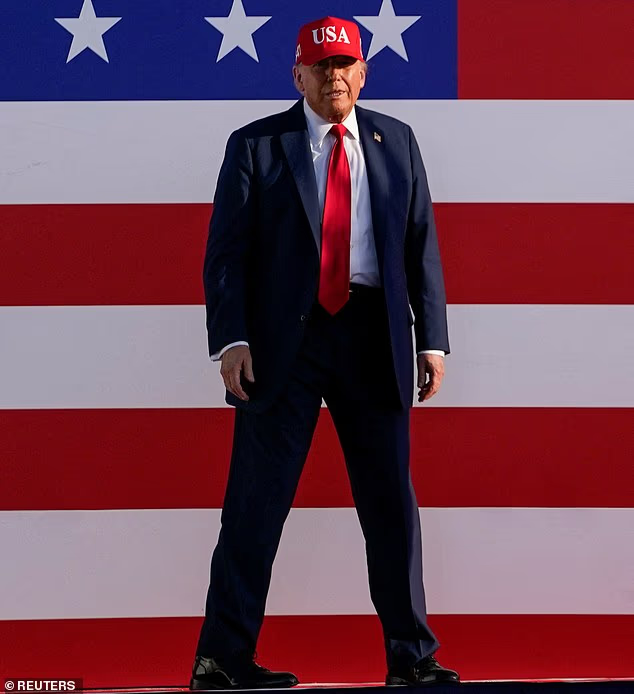
The reverberations of that mistrust are visible even today. When former U.S. President Donald J. Trump recently declared that America could consider deploying troops or conducting airstrikes in Nigeria, he was not merely making a provocative statement — he was reflecting a deep-seated perception that Nigeria’s institutions have failed to maintain internal control. Nigeria’s measured response, reaffirming its sovereignty while expressing willingness to cooperate on counterterrorism, was diplomatically sound but strategically constrained. Yet beneath that restraint lies a bitter reality: a country that cannot police its own command structure invites external interference in the name of “assistance.” Each scandal of leaked intelligence or compromised mission deepens this reputational wound. A nation that cannot enforce discipline within its own ranks is perpetually at risk of being lectured, labelled, or even threatened by external powers, not because of external bias, but because of internal decay.

The implications of insecurity and internal betrayal are devastating. Insecurity is a tax on productivity. It raises the cost of logistics, drives away investors, and discourages international partners from engaging in high-risk environments. Each act of institutional betrayal, like the Chibok leak, compounds the perception that Nigeria cannot safeguard sensitive operations or sustain reform. The result is a shrinking appetite for investment, even in promising sectors like mining, energy, and technology. Economic growth becomes hostage to uncertainty, and policy reforms are met with skepticism rather than support. Internationally, it diminishes Nigeria’s soft power, turning Africa’s most populous country into a case study of how corruption corrodes capacity and credibility.

Nigeria’s challenge goes beyond rebutting Trump’s rhetoric. It must rebuild credibility through competence. Credibility is not asserted in press releases; it is earned through consistent performance and demonstrable integrity. This means aligning foreign policy messaging with domestic discipline, ensuring that words and actions mirror each other. The nation’s diplomatic corps must evolve from reactive defence to proactive engagement, presenting evidence, shaping narratives, and cultivating allies through transparency and professionalism. In an era where perception shapes policy, sovereignty in the 21st century is not just about borders; it is about trust, and trust, once lost, is expensive to rebuild, both in money and in time.

Beyond diplomacy and defence, Nigeria’s struggle is one of national orientation, a crisis of identity and collective purpose. A people who no longer believe in the moral authority of their state will not defend it. The same moral corrosion that undermines security operations also fuels electoral fraud, economic mismanagement, and social division. It creates a society where citizens seek personal escape rather than collective renewal. Rebuilding Nigeria’s national orientation requires more than propaganda; it demands a deliberate cultural shift toward public virtue, civic duty, and institutional integrity. Schools, religious institutions, the media, and community leaders must become vehicles for national reawakening, not agents of cynicism. National orientation is not about slogans or jingles; it is about restoring shared values that make patriotism rational again. The war for Nigeria’s survival is no longer just in the forests of Sambisa, it is in the minds of Nigerians, where the true contest for nationhood and moral redemption must now be fought and won.

Another dimension of internal security compromise is the silence and controversy surrounding the recruitment of so-called “repentant terrorists” into the Nigerian military and security agencies. While reintegration programs are theoretically designed to convert former militants into law-abiding citizens, the lack of transparency around these processes raises serious operational and ethical concerns. Reports suggest that some individuals with proven allegiance to insurgent groups are being integrated without adequate vetting, creating potential vectors for insider sabotage and intelligence leaks. This policy, or lack thereof, mirrors the same internal vulnerabilities revealed during the Chibok rescue operation, highlighting how attempts at reconciliation without institutional rigor can inadvertently weaken national security rather than strengthen it.

From a constitutional perspective, the Chibok betrayal underscores a profound tension between the state’s duties and its operational realities. The 1999 Constitution of the Federal Republic of Nigeria mandates that the government protects life and guarantees security for all citizens. When internal sabotage compromises operations designed to uphold these constitutional obligations, the state is not merely failing tactically, it is failing legally and morally. Such breaches weaken the rule of law, undermine the social contract, and raise fundamental questions about the enforceability of constitutional guarantees. Ensuring compliance with these provisions requires rigorous institutional reform, transparent accountability mechanisms, and a recommitment to constitutional principles as the foundation of both sovereignty and public trust.

Akinyemi’s story, Trump’s warning, and Nigeria’s defensive diplomacy all converge on one undeniable truth: Nigeria’s greatest threat is not foreign; it is internal. The world no longer doubts the courage of Nigerians, it doubts the coherence, discipline, and reliability of the Nigerian state. To reclaim credibility, Nigeria must undertake a comprehensive restoration of moral and operational discipline within its security agencies, enforce accountability at the highest levels, and rebuild an ethical framework that underpins governance across all sectors. This is not a cosmetic or sentimental exercise; it requires a strategic, systemic reawakening of the civic and institutional conscience that once defined the republic.

The Chibok tragedy was a lesson in how betrayal from within can be far deadlier than any external attack. Every leak, every compromised operation, and every failure to enforce internal discipline erodes not only national security but also the trust of citizens and partners alike. A decade later, the critical question remains: will Nigeria finally reform its institutions, confront the rot within, and reclaim its sovereignty and global standing, or continue to outsource its security while defending a hollow notion of independence? The future of the republic, its dignity, and the safety of its citizens depend entirely on the answer. Strategic renewal is no longer optional, it is an existential imperative.

The views expressed by contributors are strictly personal and not of Law & Society Magazine.

Italy Makes History: Parliament unanimously declares femicide a crime

Protests against violence against women have taken place across Italy recently, often led by feminist group Non Una Di Meno (Not One Less) - this demonstration took place in Rome on Saturday

Deputies in the Italian parliament have voted unanimously to introduce the crime of femicide – the murder of a woman, motivated by gender – as a distinct law to be punished with a life sentence.

In a symbolic move, the bill was approved on the day dedicated to the elimination of violence against women worldwide.

The idea of a law on femicide had been discussed in Italy before but the murder of Giulia Cecchettin by her ex-boyfriend was a tragedy that shocked the country into action.

In late November 2023, the 22-year-old was stabbed to death by Filippo Turetta, who then wrapped her body in bags and dumped it by a lakeside.

AFP via Getty Images A large crowd of people outside the Basilica of Santa Giustina. On the wall of the basilica is a large poster several metres high showing Giulia Cecchettin in a red dress sitting on a swing.
Thousands gathered outside the church where Giulia Cecchettin’s funeral was held to pay their respects in December 2023

The killing was headline news until he was caught, but it was the powerful response of Giulia’s sister, Elena, that has endured.

The murderer was not a monster, she said, but the “healthy son” of a deeply patriarchal society. They were words that brought crowds out across Italy demanding change.

Two years on, MPs have voted for a law on femicide after a long and passionately debated session of parliament. It makes Italy one of very few places to categorise femicide as a distinct crime.

Introduced by Prime Minister Giorgia Meloni, the law was backed by her own hard-right government as well as opposition MPs. Many wore red ribbons or red jackets to remember the victims of violence.

From now on, Italy will record every murder of a woman that is motivated by her gender as femicide.

“Femicides will be classified, they will be studied in their real context, they will exist,” Judge Paola di Nicola, one of the authors of the new law, said of its significance.

She was part of an expert commission that examined 211 recent murders of women for common characteristics, then drafted the femicide law.

“Talking of such crimes as rooted in exasperated love or strong jealousy is a distortion – that uses romantic, culturally acceptable terms,” the judge argues, surrounded by her research at her home in Rome.

“This law means we will be the first in Europe to reveal the real motivation of the perpetrators, which is hierarchy and power.”

Italy will now join Cyprus, Malta and Croatia as EU member states that have introduced a legal definition of femicide into their criminal codes.

Judge Paola di Nicola sits in an arm chair looking directly into the camera. She is surrounded by books and is wearing a suit and a statement necklace.
Judge Paola di Nicola helped draft the new law on femicide, the first of its kind in Europe

There is no agreed worldwide definition of femicide, which makes it hard to count and compare statistics.

The Italian law will apply to murders which are “an act of hatred, discrimination, domination, control, or subjugation of a woman as a woman”, or that occur when she breaks off a relationship or to “limit her individual freedoms.”

The latest police data in Italy shows a slight fall in the number of women killed last year to 116, with 106 said to be motivated by gender. In future, such cases would be recorded separately and trigger an automatic life sentence, meant as a deterrent.

Gino Cecchettin isn’t sure such a law would have saved his daughter: her killer was sent to prison for life in any case.

But he does think defining and discussing the problem is important.

“Before, many people especially from the centre and extreme right didn’t want to hear the word femicide,” Mr Cecchettin told the BBC. “Now this is a world where we can speak about it. That’s a little step, but it’s a step.”

His own focus is on education, not legislation.

After Giulia’s murder, her father describes taking “a very intense look into what was happening around me” then deciding to create a foundation in her name devoted to preventing others suffering as his family have.

“I wanted to understand what had come to [Filippo’s] mind,” Gino Cecchettin explained. “He was a student, a beloved son. Like a normal guy.”

What he found, he says, was a society full of stereotypes about women and notions of male superiority, and young men struggling to manage their emotions.

His daughter’s ex-boyfriend had stabbed her to death in a premeditated attack when she refused to get back together with him.

Getty Images A crowd of women with their fists in the air and holding picket signs with anti-femicide slogans in Italian. This was protest which took place in May 2025 following the murder of Martina Carbonaro. The woman in the foreground is carrying a bunch of keys.
Protesters gathered following the death of 14 year-old Martina Carbonaro who was killed by her ex-boyfriend in May 2025

Mr Cecchettin now tours Italian schools and universities to talk to young people about Giulia and about respect.

“If we give them the right tools to handle their life they will not act as Filippo, they will probably act in a different manner. They will not stick to the model of the Superman, or the Macho Man,” is his hope.

But getting those ‘tools’ into schools – in the form of a mandatory course of emotional and sexual education – has not been easy. Far-right MPs have resisted all but optional sex education classes for older children. The Cecchettin Foundation wants them to be obligatory and start early, when young people get access to the internet.

The femicide law itself has its critics.

When the bill was first presented earlier this year, one group called it a “poisoned meatball”.

“There is no lack of protection, no legal gap to fill,” is how law professor Valeria Torre of Foggia University puts it.

She believes the new definition of femicide is too vague and will prove difficult for judges to implement.

Also, as most women killed in Italy are murdered by current or former partners, proving that the motive is gender will be challenging.

“I am afraid that the government just wants to persuade people it’s doing something for the problem,” she told the BBC. “What we really need is more economic effort for this problem…to overcome the problems of inequality in Italy.”

Even those who approve of legislating against femicide agree that it must come with far broader measures against gender inequality.

A plain white room with three dummies. One is dress as a woman and two as men. They are posed like they are posed as if they are riding the underground or metro with a display of a carriage behind them.
Museum of the Patriarchy is a temporary exhibition imagining a day when the patriarchy has ended

Italy’s problems on that front are currently on display at the Museum of the Patriarchy, a thought-provoking new exhibition in Rome.

Italy currently ranks 85th in the Global Gender Gap Index, almost the lowest of all EU states, with just over half of all women in employment, to name just one issue.

“For us, the way to fight against violence against women is to prevent the violence, and to prevent the violence we have to build equality,” argues Fabiana Costantino of Action Aid Italy, which created the temporary museum to imagine a day when male dominance is consigned to the past.

Exhibits include a loudspeaker playing cat calls and a room with the names of women killed by men projected on to a wall.

“There are a lot of forms of violence – like a pyramid,” Fabiana Costantino says. “We have to destroy the base in order to destroy the problem in its worst form, which is femicide.”

Tuesday’s mammoth session of parliament ended late in the evening in Rome with a final speech by a governing party MP vowing that violence against women “will not be tolerated, will not go unpunished.”

The law was approved by all 237 deputies and greeted with a burst of applause.

“This shows that on the fight against violence against women, our country has a common political will,” Judge Paola di Nicola argues, whilst accepting there’s a long way still to go.

“It shows that Italy is finally speaking about violence against women having deep roots. The first effect is to make the country discuss something it’s never confronted before.”

Additional reporting from Giulia Tommasi

BBC

Nigeria confronts unlawful detention in back-to-back victories for justice

A Lagos State High Court has ordered the immediate and unconditional release of a man held without trial for eight years, issuing one of the year’s most forceful rebukes of unlawful detention in Nigeria. The ruling, delivered on 22 October 2025 by Justice Adenike K. Shonubi, also awarded damages against the Lagos State Commissioner of Police for the prolonged violation of the detainee’s fundamental rights.

The applicant, Mr. Sewedo Folorunsho, was arrested in 2012 over an alleged murder and held in a congested police cell for five years before being arraigned on a mere holding charge at the Ebute Metta Magistrate Court in 2017. No formal charge was ever filed in the High Court, leaving him effectively trapped in custody for nearly a decade.

Represented by the chambers of Monday O. Ubani, SAN & Co., Mr. Folorunsho sought enforcement of his constitutional rights, naming the Lagos State Commissioner of Police, the Attorney General of Lagos State, and the Deputy Controller of the Nigerian Correctional Service as respondents.

In a sharply worded judgment, Justice Shonubi condemned the detention as “a gross violation of the rights to personal liberty, human dignity, and fair hearing guaranteed under the Constitution.” The court ordered his release and imposed ₦500,000 in damages on the police commissioner.

Senior Advocate of Nigeria M. O. Ubani, whose firm handled the case, praised the ruling as “a victory for human rights, justice, and the sanctity of liberty in Nigeria.” He noted that the case underscores the danger of unchecked state power and the urgent need for reform.

SSS Orders Separate Release and Compensation

In a separate development highlighting similar concerns, the Director-General of the State Security Service (SSS), Adeola Ajayi, ordered the release of Mr. Kenneth Nwafor, who spent three years in detention after being wrongfully accused of belonging to the outlawed Indigenous People of Biafra (IPOB).

Sources within the SSS told Premium Times that a fresh investigation exonerated Mr. Nwafor of any links to IPOB. The agency awarded him ₦5 million in compensation and offered free medical care — part of a directive by the director-general to review all inherited cases for due process violations.

The move follows the October release and ₦10 million compensation awarded to another detainee, Mrs. Chineze Ozoadibe, an Abuja businesswoman wrongly accused of oil bunkering.

Growing Scrutiny of Security Agencies

Nigeria’s security agencies have faced long-standing criticism over arbitrary arrests and excessive force, particularly in the South-east, where the government continues to confront separatist agitation. Human rights groups say abuses frequently go unpunished, while wrongful detentions often stretch for years without judicial oversight.

IPOB, whose leader Nnamdi Kanu was sentenced to life imprisonment for terrorism in November, has denied involvement in a series of violent attacks across the region. Rights monitors, however, have documented repeated cases in which civilians were killed or detained under the broad label of belonging to or supporting the group.

The twin developments — the High Court judgment and the SSS’s recent actions — are being hailed by advocates as rare but significant steps toward accountability. They say the cases underscore an urgent national conversation about policing, detention, and the protection of constitutional freedoms.

A global emergency on our screens

By Olufunke Baruwa

Every year on November 25, the world pauses to mark the International Day for the Elimination of Violence Against Women. It is both a moment of reflection and a call to action. But increasingly, reflection is no longer enough. As violence against women and girls mutates, adapts, and migrates into new spaces, our responses must do the same.

In 2025, with the global theme for the 16 Days of Activism Against Gender-Based Violence being “Unite to End Digital Violence against all Women and Girls”, the urgency is clearer than ever: the fight against gender-based violence is now also a fight for digital safety, dignity, and justice as the world witnesses the rise of digital violence against women and girls.

Violence against women has never been confined to back alleys, closed doors, or dangerous streets. Today, it lives in phones, computers, social media timelines, encrypted messaging apps, online gaming spaces and comment sections. It is present in revenge porn shared in WhatsApp groups, nude images generated by artificial intelligence without consent, cyberstalking carried out by former partners, sexual extortion on Instagram, misogynistic smear campaigns on X (formerly Twitter), coordinated bullying on TikTok, and doxxing that exposes women’s home addresses and phone numbers to thousands of strangers with the click of a button.

From online harassment to AI-powered abuse, violence against women has gone digital and our response must be just as powerful. For millions of women and girls, the digital world mirrors the same dangers as the physical one and the consequences are just as real. Behind our booming social media culture lies a growing epidemic of online abuse targeting women and girls.

The New Frontline of Violence Is Digital

Digital violence is real violence. Its impacts are severe and long-lasting: trauma, depression, anxiety, reputational damage, job loss, forced relocation, withdrawal from public life, and in some cases, suicide. Yet in many societies, including Nigeria, it is still minimised, misunderstood, or dismissed as a “social media issue” rather than recognised for what it truly is: gender-based violence in a modern guise.

The theme this year does not emerge in a vacuum. According to global estimates, one in three women will experience violence in her lifetime. For women in public life—journalists, activists, politicians, academics, athletes, and entrepreneurs—the risk is far higher online than offline. Women who speak up about politics, feminism, corruption, religion, or social norms attract disproportionate abuse, including rape threats and graphic humiliation campaigns designed to silence them. The intention is clear: to discourage women from participating in public life.

In Africa, and particularly Nigeria, this danger is compounded by other factors: weak legal frameworks for online harms, limited digital literacy, poor cybercrime reporting systems, and deep-rooted gender norms that blame women for the violence they experience. A woman whose private images are leaked is judged, shamed, and interrogated before her perpetrator is ever questioned. She is asked, “Why did you take the photo?” rather than, “Who violated your consent?” The violence is then replicated from the original act to the social response, leaving women and girls unprotected in virtual spaces.

Let us be clear: digital violence is no less harmful because it is not physical. It is psychological, emotional, reputational, economic, and sometimes physical too. Online threats of rape, murder, or abduction are not “jokes.” They create real fear that forces women to change their routines, close their businesses, move homes, hire security, withdraw from digital spaces, or live in constant anxiety. Some women choose silence over safety, erasing years of work building online visibility, advocacy, or professional networks.

Yet, Nigeria is one of Africa’s largest digital populations. Women are increasingly utilising digital tools to build businesses, create communities, educate others, fundraise, advocate, and challenge injustice. Social media has enabled a new generation of female journalists, filmmakers, coders, campaigners, and entrepreneurs. But if digital spaces become unsafe for women, we risk losing one of the most transformative tools for women’s empowerment in the 21st century.

When Violence Goes Viral, Log Off The Silence

The real battle against violence targeting women and girls is happening online, and we must refuse silence. Digital platforms are becoming the new battleground for women’s safety, dignity and freedom of expression.

Ending digital violence requires more than hashtags and webinars. It demands collective action across government, technology companies, civil society, educators, parents, traditional institutions, the private sector and citizens. The responsibility cannot fall on women and girls alone to “protect themselves” by going offline. The solution is not silence, but systemic change.

First, laws must catch up with reality. In Nigeria, although the Cybercrimes Act addresses some offences, it is poorly implemented, little known and often inaccessible. Revenge pornography, deepfake abuse and online harassment remain underreported and under-prosecuted, as TechHerNG, a Nigerian Feminist Tech NGO, seeks to address through Kuram — a GBV reporting portal). Survivors often encounter officers who lack digital expertise, resources, or dismiss cases as mere “internet issues.” Digital violence must be clearly recognised, criminalised and actively prosecuted with survivor-centred support.

Second, technology companies must take responsibility. Reporting systems remain slow, opaque and inconsistent. Harmful content targeting women often stays online for days while survivors suffer. Platforms must move beyond performative policies to real accountability, faster takedowns, stronger victim protections, clearer processes, local language moderators and transparency, especially in African contexts.

Third, education is critical. Digital literacy must include online safety, consent, privacy, respectful communication and bystander intervention. Boys must learn that online harassment is violence, and girls must be empowered to know their rights, report abuse and protect themselves. The internet is not a separate universe; it reflects our values.

Finally, we must confront the root: misogyny. Digital violence is an extension of offline patriarchy. Harmful gender norms and entitlement over women’s bodies and autonomy now find new expression online. Technology did not invent gender inequality and violence against women; it merely amplified it.

Silence Is Part of the Violence

Digital abuse against women is not “just online”. It is real, harmful, and demands urgent action. These 16 Days of Activism must go beyond symbolism. Conversations and campaigns matter, but so do measurable commitments — institutions publishing digital safety policies, media houses protecting female journalists, universities creating reporting systems, employers recognising digital violence in harassment policies, religious leaders preaching accountability, and donors supporting feminist tech solutions led by African women.

Unity in action looks like parents teaching consent and digital responsibility, schools addressing cyberbullying, police trained in digital forensics, judges setting precedents, tech companies hiring African women safety experts, men calling out abuse, communities supporting survivors, and leaders acknowledging that online violence is real violence. Above all, it means believing women and girls.

Violence thrives in silence and anonymity. We must bring it into the open to end it. The internet has empowered millions of women; it must not become another site of fear. We must collectively challenge harmful behaviours and build digital spaces where women and girls can exist, create, lead, and thrive without fear.

If history remembers 2025, let it be as the year we united not only to condemn violence, but to dismantle it both online and offline. In the Digital Age, violence has no justification. We must unite to protect the dignity of all women and girls. The call is clear: Unite to End Digital Violence against all Women and Girls, not some, not a few, but all.

She was a prison officer. He was a convicted rapist. How did she fall for him?

I never thought I’d be that person. And I was’: Cherrie-Ann Austin-Saddington. Photograph: Abbie Trayler-Smith/The Guardian.jpeg

There was a moment in the summer of 2022 when 26-year-old Cherrie-Ann Austin-Saddington, a female prison officer in a men’s jail, had to make a choice. She was on her wing at HMP The Verne in Dorset, in the day room where inmates go to read books and newspapers, when a prisoner called Bradley Trengrove handed her a magazine. Concealed within its pages was a slip of paper with a number written on it – the number of his secret, illicit mobile phone. Under the watchful eye of the prison’s security cameras, Austin-Saddington had to decide what to do next.

“I was thinking, do I report itDo I not report it?” she says. “I wasn’t thinking, I’ll text him – that wasn’t in my head.” But she did not throw the piece of paper away. She kept it, and in the end decided not to report anything.

Click here to continue reading.

Ngige Convoy Attack: How disarmed police escort survived gunshots and lady filming attack was shot dead

Two women were confirmed dead when gunmen attacked the convoy of former Minister for Labour and Employment, Senator Chris Ngige, in Anambra state.

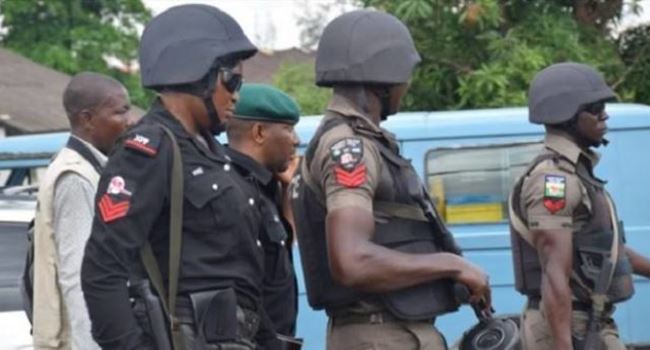
The incident which occurred along Nkpor–Nobi road saw the gunmen dressed in Police and Army uniforms storm the area and open fire on the convoy, which led to one of Ngige’s policemen being shot in the leg, but no Police man was killed.

Confirming this incident, the former Senior Special Assistant to Ngige while he was Governor, Mr Fred Chukwuelobe, in a statement narrated how it happened.

“The former governor was not in the convoy as the time the attack occurred but a policeman in the pilot car was shot and his gun and uniform taken away by the suspected assailants, who were dressed in police and army uniforms”

“Unfortunately, a lady who was recording the shooting was fatally shot by the gunmen”

“A shop owner who raced to find out what was happening was also shot, but he only lost a lot of blood and will be operated upon soon to remove the bullets. He is expected to make full recovery. The pilot car was riddled with bullets”.

“No policeman was killed and the escort leader who was shot has been operated upon and is expected to make full recovery. The shop owner was lucky as the bullets didn’t lodge in his spine.”

“I just got off the phone with His Excellency and he confirmed the development, promising to do all he can to ensure that those injured receive adequate treatment. He also commiserated with the family of the unfortunate lady who was killed while videoing the scene” the statement read.

NBA to award CPD points for SPIDEL annual conference

The Nigerian Bar Association Institute of Continuing Legal Education (NBA-ICLE) has communicated its decision to award three Continuing Professional Development (CPD) points to all delegates at the forthcoming Annual Conference of the Section on Public Interest and Development Law (SPIDEL).

The decision was communicated to the Chair of the SPIDEL Annual Conference Planning Committee, Assoc. Prof. Uju Agomoh through a letter signed by the Director of NBA-ICLE, Sarah Omega Ajijola.

The conference is scheduled to hold from December 1 to December 5, 2025, at the prestigious Ibom Hotels and Golf Resort in Uyo, the Akwa Ibom State capital. To register, click here http://nbaspidel.ng/.

Dated 27th November, 2025, the letter referenced SPIDEL’s application for accreditation of the eagerly awaited conference, and stated that “We are pleased to inform you that your application has been approved.”

It is recalled that NBA had directed that all legal practitioners must complete at least 5 CPD hours annually to be eligible for Practice Licence renewal. The CPD hours must be acquired only through NBA-ICLE-accredited programmes covering legal practice, ethics, and professional development.

Practitioners who fail to meet the MCPD requirements will not be granted licence renewal. Such practitioners shall also be denied access to the NBA Stamp and Seal, effectively preventing them from authenticating legal documents.

NBA-ICLE, in partnership with the NBA National Secretariat, will publish an annual list of both compliant and non-compliant lawyers to enhance transparency and ensure integrity within the profession.

NBA-SPIDEL names champions of annual conference writing competition

The Nigerian Bar Association Section on Public Interest and Development Law (NBA-SPIDEL) has announced the winners of its maiden Young Lawyers/Students Writing Competition on the 2025 Conference theme: “A Banner Without Stain.”

The conference is scheduled to hold from December 1 to December 5, 2025, at the prestigious Ibom Hotels and Golf Resort in Uyo, the Akwa Ibom State capital. To register, click here http://nbaspidel.ng/.

According to a statement signed by Assoc. Prof. Uju Agomoh and Mr. Enome Amatey, the Chair and Secretary respectively of the 2025 NBA-SPIDEL Annual Conference Planning Committee, “The competition sought to inspire young legal minds to engage creatively and analytically with issues of justice, ethical governance, and sustainable development in Nigeria across three categories: Essay, Poetry, and Spoken Word.”

While Ismail Mustapha emerged victorious in the Essay Writing Category, Ekene Evans Ahmed clinched the top prize in the Poetry Category. On the other hand, it was a tie between Favour Ofie Ebiala and Bobby Itseoluwa Osevbuomwan for the Spoken Word Category.

The winners have been invited to attend the NBA-SPIDEL Annual Conference in Uyo where they will receive their prizes under klieg lights.

Below is the full text of the statement.

NOTICE OF RESULT OF NBA SPIDEL, 2025 WRITING COMPETITION

On behalf of the Nigerian Bar Association – Section on Public Interest and Development Law (NBA-SPIDEL) and the entire Conference Planning Committee, we are pleased to announce the winners of our maiden Young Lawyers/Students writing competition on the 2025 Conference theme: “A Banner Without Stain.” The competition sought to inspire young legal minds to engage creatively and analytically with issues of justice, ethical governance, and sustainable development in Nigeria across three categories: Essay, Poetry, and Spoken Word. At the end of a rigorous assessment exercise, the winners are:

ESSAY WRITING CATEGORY
1st Place: ISMAIL MUSTAPHA
2nd Place: ATOYEBI ADEDAYO MICHAEL
3rd Place (TIE):
EIGEGE EYUM JULIET
LOIS CHINAEMEREM OGBU

Honourable Mention: HYCENT OGNONNA

POETRY CATEGORY
1st Place: EKENE EVANS AHMED
2nd Place: MARYAM MUKTAR
3rd Place (TIE):
ALIYU SULEIMAN
AJONGOLO OLUWAFEMI
Honourable Mention: BABAJIDE MICHAEL

SPOKEN WORD CATEGORY
1st Place (TIE):
FAVOUR OFIE EBIALA
BOBBY ITSEOLUWA OSEVBUOMWAN

3rd Place (TIE):
SAMSON CHUBIY’OJO DIVINE
EZE WINNIFRED ADAEZE

Honourable Mention: OKEKE Jemima Chinenyenwa

The result is based on the recommendation of a team of erudite scholars, comprising:
Prof. Usman Shu’aib – Chairperson
Dr. Joe Edet – Alternate Chair
Barr. Imah Nsa Adegoke – Secretary;
Members:
Prof. A.D Baidaiki, SAN
Prof. Nnamdi O. Obiaraeri
Prof. Micheal Adam Etete
Prof. Sam Erugo, SAN
Dr. Yinka Owoeye

We are immensely grateful to the accessors for their time and commitment to this task. We also heartily congratulate the winners for the great feat and wish them greater heights in their future endeavours.

DATED THIS 25TH DAY OF NOVEMBER, 2025

______ ____
Uju Agomoh, PhD Enome J. Amatey
Chairperson, CPC Secretary, CPC
(08036877166) (08063580823)

Insecurity: ‘Tell President Tinubu the truth, not commendation,’ Senator Dickson urges senate

Senator Henry Seriake Dickson, representing Bayelsa West, strongly urged the Nigerian Senate to convey the “truth” about the nation’s deteriorating security situation to President Bola Tinubu, rather than offering commendations.

Following an “elaborate discussion” on security in the Senate, Dickson criticised a proposed motion to commend the President, labelling it “ill-timed, insensitive and even provocative.”

In a press statement issued on Thursday, Senator Dickson expressed his dismay over the recent worsening of insecurity across the country, highlighting rampant killings, abductions, and the tragic loss of military personnel, including a Brigadier General.

He asserted that such a dire situation, where bandits attack multiple states simultaneously and terrorists abduct students, is reminiscent of “nations at war.”

“It is very clear that not only our democracy is under threat, but the nation itself is being reduced, belittled, and threatened,” Dickson stated.

The former Bayelsa State Governor expressed strong disagreement with the “approach and tone” of the motion and some comments from the majority party, which he deemed “unnecessarily political”. He mismatched the gravity of the issue.

He specifically rejected the call for the President and government to be commended, a sentiment he noted was supported by many members of the majority party.

“I believe that the President needs to be told the truth, and that those with access to him, particularly from the majority party and others, should tell the President the true situation of things,” Dickson emphasised.

“The seriousness of the matter is such that there should be no sugarcoating, or attempts to be politically correct, as that is, in my opinion, unnecessary hypocrisy and disservice to the country and even to the president.”

Senator Dickson reminded his colleagues of their constitutional mandate to “oversight the President and the military,” including ministers and security leaders.

He argued that a commendation motion at this time would be “ill-timed, insensitive and even provocative,” questioning how victims, fighting soldiers, and families of the deceased would perceive such a move.

He highlighted the incongruity of supporting commendations while some National Assembly members “cannot visit their communities or their Senatorial Districts because of insecurity and killings,” and where terrorists allegedly run parallel governments.

“How will the victims, the soldiers fighting, the victims of kidnap and families of those killed feel? There are members of the National Assembly who spoke in support of this commendation but who cannot visit their communities or their Senatorial Districts because of insecurity and killings,” Dickson lamented.

The Senator advocated for thorough investigations into the “allocations and disbursements to the military and security agencies” to ensure accountability for “trillions that have been budgeted.”

He stressed the need for “effective oversight, appropriation support and policy advice” to support frontline security personnel.

Dickson also explicitly supported Senate resolutions to inquire into the withdrawal of military personnel in Kebbi, as alleged by the Governor, and the circumstances surrounding the capture and killing of Brigadier General Uba by ISWAP.

As a member of the Committees on Defence and National Security, he pledged to pursue these issues rigorously.

In a personal note, Senator Dickson revealed that the presiding officer had not allowed him to conclude his comments during the debate, an issue he characterised as one of “many instances the Senate President has tried to prevent me from making my contributions.”

He asserted his right as an elected member to “robust discussions and agree and disagree,” vowing not to be deterred by “harassment.”

Emphasising the need for “frankness, strong political will and decisive leadership,” Senator Dickson stressed that “the nation is at war as we are losing our security personnel, our citizens, and our territories. Our reputation is being ridiculed and our democracy and nation are endangered.”

He further extended condolences to the families of all fallen soldiers, security personnel, and victims of insecurity, specifically mentioning Brigadier General Uba.

TIPS