Home Blog Page 150

Tinubu has a police palaver

By Chidi Anselm Odinkalu

When Olusegun Obasanjo returned as the president of Nigeria in May 1999, according to Mohammed Dikko (MD) Yusuf, a former Inspector-General of Police, (IGP) he “inherited a Police Force that was poorly equipped, decimated in numerical strength, deprived of necessary logistics, and lacking, as it were, moral and public support necessary for effective performance and the enhancement of the security of the nation.”

Former IGP, MD Yusuf said these in the report he submitted in 2008 to President Umaru Musa Yar’Adua as the Chair of the second Presidential Commission on Police Reform to report in as many years. Headed by former Deputy Inspector-General of Police (DIG), Muhammadu Danmadami, the first submitted its report in May 2006 to President Yar’Adua’s predecessor and benefactor, President Olusegun Obasanjo. In August 2012, another retired DIG, Parry Osayande, reported to President Goodluck Jonathan as the chair a third Presidential Commission on Police Reform to report in the six years between 2006-2012. The ritual of these reports achieved one thing: they crystallised a diagnosis of the problems of the Nigeria Police Force (NPF) and they are many.

When President Obasanjo returned to power as a civilian 1999 after 15 unbroken years of military rule, there were an estimated 137,000 personnel in the NPF, representing a police-to-population ratio of approximately 1:876.5. The UN Office for Drugs and Crime (UNODC) recommends a ratio of 222 per 100,000 or 1:450.

To address what he believed was a serious shortfall in police personnel, President Obasanjo directed the recruitment of 200,000 additional police personnel over five years from 2000 to 2004 at the rate of 40,000 recruits every year. By 2003, the police population was estimated to be 260,000 and by 2005, Human Rights Watch estimated that Nigeria had 325,000 police personnel.

President Obasanjo deserves credit for identifying the situation with the NPF as a priority and giving attention proactively to the need to fix it. In a mere five years straddling his two presidential terms, he had managed to completely redress the deficit of police-to-population ratio in the country. In 2007, the NPF claimed reported that it had achieved a police-to-population ratio of approximately 1:400, based on an estimated force strength of about 360,000 police officers. At the beginning of President Yar’Adua’s tenure in 2008, this had climbed modestly to 370,900.

But this came at a cost. At the time, all the training institutions in the NPF could only accommodate an intake of 14,000 per year. With no additional investments to upgrade police training institutions, it meant that standards of training, doctrine and orientation had to be sacrificed in the expedited recruitment. When he reported in 2008, MD Yusuf pointed out three consequences that have come to haunt the Force since then.

First, the expedited recruitment was “carried out in a very unwholesome manner without adherence to the established rules and guidelines governing the screening and recruitment of candidates”, which led to an influx of “suspected criminals, people with physical deformities, doubtful background, over-aged and educationally unqualified barely literate entrants into the Police Force.” This “grossly compromised standards and resulted in widespread abuse of established procedure”, resulting in “the enlistment of unsuitable candidates…. many of whose suitability to wear the respected uniform of the Force is in doubt.”

Second, it transpired that many politicians had used the opportunity to insinuate elements from their private networks of violence into the force for future political gain. As a result, the expedited recruitment created an internal market in the outsourcing of police assets. In its 2008 report, the MD Yusuf Presidential Commission on Police Reform estimated that 27% percent of police personnel were engaged in personal guard and protective duties for private individuals and VIPs, thereby creating a situation in which “the rich and powerful behave with impunity because of police protection.” When it reported in 2012, the Parry Osayande Presidential Commission on Police Reform put this proportion at over one-third.

Third, the Force was chronically underfunded to the extent that, as IGP Ibrahim Kpotun Idris pointed out in 2017, “budgetary allocations on paper [were] insufficient to meet the financial needs of the Force, [and] the actual releases are far below what is budgeted.” As a result, the outsourcing of police personnel for guard duties became a subsistence and wellbeing supplement for the officers so deployed and a source of revenue for the commanding officers deploying them, who were often privately rewarded for doing so but also got through that to secure the patronage of their rich and politically connected benefactors.

This is the structure that President Bola Ahmed Tinubu did not appear to have taken account of in designing his recent directive to the Inspector-General of Police to withdraw “police officers guarding VIPs for core police duties.” Four days after this directive, on 27 November, the IGP proudly announced that 11,566 of officers and men under his command had been ordered withdrawn in compliance with the directive. He cleverly failed to say how many had complied. Olusegun Adeniyi, who served as presidential spokesperson when MD Yusuf submitted his report in 2008, warned firmly that the police officers “may not obey” the president or their Inspector-General.

In his directive, President Tinubu had, somewhat naively, added that “VIPs who want police protection will now request well-armed personnel from the Nigeria Security and Civil Defence Corps.” The result will be that officer of the NSCDC across the board will now make more money at the expense of the police personnel whom they will be replacing.

A presidential directive cannot fix this political economy of policing in Nigeria. That requires imaginative and committed commitment of time and leadership. Police personnel depend on the crumbs from the table of VIP benefactors for survival and subsistence. With no functional police training facilities, Many of them have been denied exposure to basic training, formation, and professionalism. They are unlikely to see their uniforms as evidence of a bond to get killed in a gun-fight with Ansaru, Boko Haram, Mahmuda, or any of the number of nihilist groups that now afflict the country.

For many police officers, desertion will be a better alternative than compliance with the order. There will be no capacity to replace the number of officers who could choose to do that. For the leadership of the Force, therefore, discretion is likely to be the better part of valour. Moreover, the Force itself relies on the market that it has created in the commercialization of its human assets for significant informal funding.

For President Tinubu, this is evidence of a failure that he must own. It is not as if the crisis of insecurity in Nigeria is one that he was unaware of before he assumed office. On the contrary, he had weighed in on the matter repeatedly both as an opposition leader and as a senior member of the ruling APC before 2023. Yet, since assuming office over 30 months ago, he has failed to identify the issue as a priority or to address it with the forcefulness and imagination required. Many now believe that he is issuing incomprehensible and untheorized directives under pressure from the fulminations of a foreign leader.

The presidency is not one job. It is many jobs in one. Some of those roles are delegable. But the job of Commander-In-Chief is not. As president, Bola Ahmed Tinubu has excelled in the delegable dimensions of the office. But he has been mostly missing in action in relation to the non-delegable aspects of the presidency. In his most recent directives, he has been found out. It is well possible that his presidency will come to be defined by how he re-tools. That could begin with finding his way to coherence on the issue of police reform.

A lawyer and a teacher, Odinkalu can be reached at [email protected]

The views expressed by contributors are strictly personal and not of Law & Society Magazine.

AWLA NIG, FIDA leaders highlight rising threats to women’s rights at landmark conference

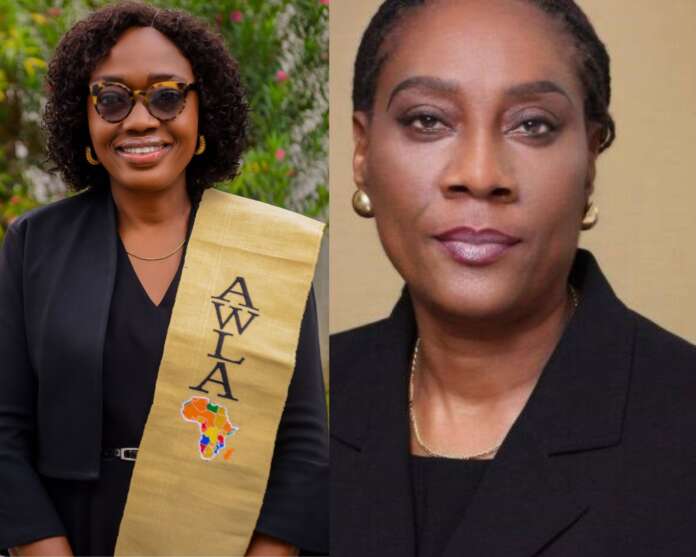
The President of the African Women Lawyers Association (AWLA Nigeria), Caroline Ibharuneafe, and Immediate Past National General Secretary, Bibian Aloba, joined a historic gathering of female legal minds at the opening ceremony of the International Federation of Women Lawyers (FIDA) Nigeria Annual General Conference, which took place in Lagos, Nigeria.

The four-day event, described by organisers as one of the most consequential assemblies of women lawyers in recent years, convened delegates from all 46 FIDA branches nationwide.

The conference, themed “Bridging Gaps, Building Futures: Women’s Rights, Justice and Sustainable Development in Nigeria,” marks another milestone for an organisation that has been at the forefront of protecting women and children’s rights since its founding in 1964 by the late Ambassador Aduke Alakija.

In her goodwill message, AWLA Nigeria President Caroline Ibharuneafe commended FIDA for its “unwavering commitment to justice” and urged deeper collaboration between women-led legal organisations.

“At a time when Nigerian women face mounting threats—from digital harassment to systemic discrimination—our unity is our greatest strength,” Ibharuneafe said. “Women lawyers are not just advocates; we are builders of a fairer future.”

A gathering rooted in history and urgency

The opening ceremony was led by FIDA Nigeria’s Country Vice President, Eliana Martins, alongside senior officers, including the Deputy Country Vice President, National Secretary, Assistant National Secretary Nnena Ibokwe, National Treasurer Beatrice Awa, and Financial Secretary Philomena Nneji. Delegates from Abuja, Lagos, Epe, Ikorodu, and other branches stood together as the hall resonated with the National Anthem, the FIDA Anthem, and the Women’s Anthem—a symbolic display of solidarity and purpose.

But alongside the ceremony’s celebratory moments was a stark reminder of the challenges facing Nigerian women. Day One opened with a sobering presentation on the rising tide of violence against women, revealing that over 2,700 cases were handled in the past year alone. These spanned domestic abuse, harmful traditional practices, sexual assault, and an alarming surge in online harassment targeting young women and girls.

Delegates described the figures as “troubling but unsurprising,” pointing to the urgent need for legal reforms, social protections, and coordinated multi-institutional action.

Women Lawyers Demand Justice and Reform

Throughout the morning sessions, speakers emphasised the central role of women lawyers in shaping Nigeria’s future, particularly in ensuring justice systems respond effectively and fairly to victims of abuse. Discussions also highlighted the crucial connection between gender equality, economic empowerment, and sustainable national development.

AWLA Nigeria President Ibharuneafe stressed that collaboration among women’s organisations is no longer optional. “If we are to bridge the gaps that hold Nigerian women back, our organisations must work not in parallel, but in partnership,” she said.

FIDA, now six decades into its mission, the charge remains steadfast: protect the defenceless, champion justice, and ensure that Nigeria’s women and children are never left behind.

‘A Nation of the Displaced’: Nigerian law reform chief sounds alarm on 3.5 million IDPs, demands shift from camps to justice

Nigeria is facing a displacement crisis of historic proportions, and the nation must urgently replace “palliative relief with transformative justice,” the Chairman of the Nigerian Law Reform Commission (NLRC), Prof. Dakas C.J. Dakas, SAN, warned at the 10th House of Justice Summit on Friday.

Delivering a keynote address titled “From Camps to Justice and Communities,” Dakas told an audience that included former Vice President Yemi Osinbajo, lawmakers, judges, diplomats and civil society leaders that over 3.5 million Nigerians are now internally displaced—a population larger than at least 14 African and 17 European countries.

“Let that sink in,” he said. “Behind every statistic is a shattered home, a disrupted childhood, a woman stripped of dignity or an elderly man who may never return to his ancestral land.”

An expanding humanitarian catastrophe

The NLRC chairman drew from UNHCR reports to paint a stark picture of life inside displacement camps: overcrowding, food scarcity, unsafe water, limited healthcare, and widespread insecurity.
He highlighted the intersectional vulnerabilities of women, children and persons with disabilities, warning that many suffer “double and triple layers of marginalisation.”

Women face rampant gender-based violence, including documented “sex-for-food” exploitation.
Children endure education loss, trauma, and trafficking risks.
Persons with disabilities are “effectively invisible,” he said, trapped in camps not designed for their needs.

“These are not anonymous victims,” he stressed. “They are rights-holders.”

Push Factors: Conflict, land grabbing, climate shocks, and governance failures

Dakas traced Nigeria’s displacement crisis to a constellation of pressures:

  • Insurgency, banditry, and terrorism
  • Resource conflicts and land grabbing, particularly in the Middle Belt
  • Human rights violations
  • Climate-related disasters
  • Economic collapse
  • Government inaction or weak institutions

“When governance collapses, displacement becomes inevitable,” he warned.

A Legal Vacuum: ‘Nigeria has ratified but not implemented’

Although Nigeria ratified the Kampala Convention, it has yet to domesticate it—leaving millions without enforceable protections.

The NLRC chairman called the current National IDP Policy insufficient, describing institutional responses as “under-resourced, poorly coordinated, and structurally weak.”

He urged lawmakers to enact a National IDP Rights Act, enforce electoral participation for displaced citizens, establish a National Reparations Fund, and introduce anti-land-grabbing laws nationwide.

Accountability and the peril of prioritising perpetrators

In one of the speech’s most forceful passages, Dakas warned against policies that rehabilitate insurgents while neglecting their victims.

“When offenders are prioritised over the very people whose lives they destroyed, criminality becomes incentivised,” he said.
“Justice must put victims first.”

He argued that the Nigerian state can still be held responsible for displacement, even when non-state actors cause it, if the state fails to prevent violence or provide redress.

‘Justice Must Reach the Tents and Trenches’: Gloria Ballason honoured

Dakas also delivered an emotional tribute to Gloria Ballason, founder of the House of Justice, calling her “an irrepressible voice for the marginalised” and recounting testimonies of lives saved through her activism.

In a striking moment, he asked the entire audience to stand in her honour.

“Gloria’s work proves that justice is not confined to courtrooms,” he said. “It must reach the tents, the trenches, and the torn edges of society.”

NLRC’s commitment and a call to action

Dakas pledged the Nigerian Law Reform Commission’s readiness to push for comprehensive reforms in partnership with civil society, institutions, and international agencies.

He closed with a story from Yad Vashem, where a young visitor wrote in a guest book: “Why didn’t somebody do something?”

“That question haunts us today,” he said. “The suffering of Nigeria’s displaced demands that we do something—not tomorrow, but now.”

‘Nigeria Is in an Existential Crisis’: Gloria Ballason issues defiant call for justice, not amnesty, at House of Justice summit

In a scathing and emotionally charged address that drew standing ovations, human rights advocate Gloria Mabeiam Michael Ballason declared that Nigeria has reached “a time for justice and return,” warning that the nation’s spiralling insecurity has pushed it to the edge of an existential cliff.

Speaking at the 10th House of Justice Summit & Orange Ball Banquet in Kaduna, Ballason accused the Nigerian government of prioritising “terrorists over victims,” insisting that national healing and stability are impossible without justice, reparations, and the safe return of displaced communities.

The event was chaired by former Vice President Yemi Osinbajo, represented by former Lagos Attorney-General Ade Ipaye, and attended by senior jurists, military leaders, lawmakers, and civil society figures.

A nation bleeding: 300,000 dead, millions displaced

Ballason grounded her remarks in stark data. Since 2009, she said, Nigeria has endured “blistering asymmetrical insecurity,” with more than 300,000 deaths—many caused not just by violence but by displacement, hunger, and lack of healthcare.

“Hundreds of communities have been wiped out,” she said. “Some have been renamed by insurgents who now occupy them with impunity.”

Across Plateau, Benue, Kaduna, Zamfara, Niger, and even Kwara—once regarded as relatively safe—entire populations have been uprooted.
UNICEF estimates 18.3 million Nigerian children are now out of school, a figure Ballason described as “a generational catastrophe.”

Ballason slams government’s ‘curious’ priorities

Taking aim at federal policies that rehabilitate former Boko Haram insurgents under initiatives such as Operation Safe Corridor and the DDRR programme, Ballason warned that these non-kinetic efforts have failed to reduce violence.

“The evidence does not support the optimism,” she said. “Government has a program for insurgents—but none for the victims they destroyed.”

She noted that trial rates for terrorism suspects remain “abysmally low,” destroyed communities are left in ruins, and recent school abductions—25 girls in Kebbi, 315 pupils and teachers in Niger—signal a worsening security collapse.

“When government uses taxpayers’ money to invest in terrorists, the message received is that terrorism is state-sponsored and lucrative,” she argued. “This risks victims taking justice into their own hands.”

‘This is not a death Olympics’

Ballason warned against politicising or ethnically reframing Nigeria’s mass violence, particularly debates around genocide in the Middle Belt.

“These enemies of state kill under different schemes but in pursuit of one end—extermination,” she said. “We cannot reduce human lives to a competition of casualties. This is not a death Olympics. This is an existential crisis.”

Her remarks drew solemn nods from a hall that included former Chief of Defence Staff Gen. Christopher Musa (rtd.), Senator Sunday Marshall Katung, and the Elders Forum chairman, Gen. Zamani Lekwot.

A call for national healing and return

Ballason urged a bold new agenda anchored on four pillars:

  • Justice for victims
  • Reparations and psychosocial healing
  • Resettlement of displaced communities
  • A coherent national framework for security and accountability

“Victims—not perpetrators—are those in need of non-kinetic interventions,” she said. “They must vacate IDP camps and return safely to their ancestral communities.”

She described Nigeria’s violent trajectory as “self-inflicted destruction,” warning that neither insurgents nor their sponsors gain anything tangible from the carnage.

“As they kill and dehumanise, the celestial voice still echoes: ‘Why, O Cain, do you slay your brother?’”

Unity as a last line of defence

Ballason urged Nigerians to stop fighting each other and confront the real threat.

“We have lost too much. We cannot afford to lose ourselves, for we are all we have,” she said, to sustained applause.

She thanked Prof. Osinbajo for what she called his “uplifting and assuring engagement,” praising his willingness to spend over two hours brainstorming solutions for Nigeria and Africa’s “safe return to greatness.”

She also saluted keynote speaker Prof. Dakas C.J. Dakas, SAN, Chairman of the Nigerian Law Reform Commission, calling him “remarkable, brilliant, and unflinchingly dedicated to justice.”

Ballason concluded by calling the hall to its feet for a minute of silence in honour of Nigerians killed in the conflict.

Inside the Senate blowup over Nnamdi Kanu—and his surprising rise in Sokoto prison

A storm erupted in Nigeria’s Senate on Thursday after a northern lawmaker allegedly declared that Indigenous People of Biafra (IPOB) leader Nnamdi Kanu “will die in prison and nothing will happen,” triggering an explosive clash on the Senate floor and a heated objection from Senator Enyinnaya Abaribe.

Multiple senators say Abaribe rose instantly, shouting down the remark and warning his colleague never to repeat it. The chamber quickly descended into chaos as lawmakers scrambled to separate the two men, with shouts echoing across the floor and attempts at restoring order drowned out by the uproar.

“You cannot speak recklessly about a man whose case is before the court,” Abaribe was heard saying. “Nigeria is too fragile for statements like that.”

Another senator attempted to calm the room, urging restraint. “This is the National Assembly—not a battlefield,” he said. “We must disagree with dignity.”

The confrontation comes days after Kanu, leader of the proscribed IPOB movement, was sentenced to life imprisonment by Justice James Omotosho after being found guilty on all seven terrorism-related charges, including membership of a proscribed group, destruction of property, and other offences tied to IPOB’s separatist campaign.

Kanu, who had been held at the Department of State Services (DSS) facility in Abuja throughout his trial, was transferred to the Sokoto Correctional Centre following the verdict.

But his arrival there sparked unexpected scenes inside the prison.

According to information obtained by Daily Sun, inmates in Sokoto reportedly “appointed” Kanu as their “Prison President” within hours of his transfer. Several inmates were said to have rushed toward him, eager to shake his hand and calling him “a man who speaks boldly.”

A senior correctional officer, who asked not to be named, described Kanu’s growing influence behind bars.

“He has practically turned his block into a mini lecture hall,” the official said. “Even people who disagreed with him now sit quietly to listen. Nobody compels them—his confidence draws them in.”

The official added that Kanu’s presence has noticeably shifted the mood inside the facility. “Whether you agree with his ideology or not, you can’t deny he speaks with conviction. That alone has made him a central figure here.”

The Senate has not issued a formal statement on the confrontation, but insiders say leadership may move to address the incident to prevent further escalation.

President Tinubu names Mahmoud Yakubu, Fani-Kayode, Jimoh Ibrahim, Omokri, Ugwuanyi, Ikpeazu, others as ambassadors

Nigeria’s President Bola Ahmed Tinubu has sent a new list of 32 ambassadorial nominees to the Senate for confirmation, days after forwarding an initial batch of three names.

In two separate letters to Senate President Godswill Akpabio, the President requested the swift confirmation of 15 career ambassadors and 17 non-career ambassadors.

The nominees include four women in the career category and six in the non-career group.

Prominent figures on the non-career list include former INEC Chairman, Prof. Mahmud Yakubu; former Aviation Minister, Chief Femi Fani-Kayode; former Enugu State Governor, Ifeanyi Ugwuanyi; businessman and Senator Jimoh Ibrahim; and former presidential aide, Reno Omokri.

Others named are former Ekiti First Lady, Erelu Angela Adebayo; Barrister Ogbonnaya Kalu (Abia); former Katsina Speaker, Tasiu Musa Maigari; former Plateau Commissioner, Yakubu N. Gambo; ex-UBEC deputy executive secretary, Professor Nora Ladi Daduut; former Lagos Deputy Governor, Otunba Femi Pedro; and Barrister Nkechi Linda Ufochukwu (Anambra).

Also nominated are former Oyo First Lady, Fatima Florence Ajimobi; former Lagos Commissioner, Lola Akande; former Adamawa Senator, Grace Bent; former Abia Governor, Dr. Okezie Ikpeazu; and Ambassador Paul Oga Adikwu, Nigeria’s former envoy to the Holy See.

The career ambassador and high commissioner nominees include Enebechi Monica Okwuchukwu (Abia), Yakubu Nyaku Danladi (Taraba), Miamuna Ibrahim Besto (Adamawa), Musa Musa Abubakar (Kebbi), Syndoph Paebi Endoni (Bayelsa), Chima Geoffrey Lioma David (Ebonyi) and Mopelola Adeola-Ibrahim (Ogun).

Others are Abimbola Samuel Reuben (Ondo), Yvonne Ehinosen Odumah (Edo), Hamza Mohammed Salau (Niger), Ambassador Shehu Barde (Katsina), Ambassador Ahmed Mohammed Monguno (Borno), Ambassador Muhammad Saidu Dahiru (Kaduna), Ambassador Olatunji Ahmed Sulu Gambari (Kwara) and Ambassador Wahab Adekola Akande (Osun).

According to the Presidency, the new nominees will be posted to strategic missions in countries such as China, India, South Korea, Canada, Mexico, the United Arab Emirates, Qatar, South Africa and Kenya, as well as multilateral institutions including the United Nations, UNESCO and the African Union. Their specific postings will be confirmed after Senate approval.

Last week, the President sent three nominees—Ambassador Ayodele Oke, Ambassador Amin Mohammed Dalhatu and retired Colonel Lateef Kayode Are—who are being considered for postings to the UK, USA or France.

President Tinubu added that more ambassadorial nominations will be announced soon.

The Conclave

 ‘A National Emergency’: Osinbajo warns Nigeria’s IDP crisis is ‘a monster we must defeat’, says displacement crisis near breaking point

Former Vice President Yemi Osinbajo has issued a stark warning that Nigeria’s deepening humanitarian emergency, driven by insurgency and communal violence, has reached a breaking point—calling for urgent, coordinated, and practical solutions to protect millions of internally displaced people (IDPs).

Speaking via his representative, Ade Ipaye, at the 10th House of Justice Summit in Kaduna on Friday, Osinbajo praised the organization for a decade of “consistent, catalytic leadership,” but stressed that Nigeria’s displacement crisis has grown too severe to ignore.

“This is a big challenge, deserving of very urgent attention and practical, effective solutions,” Osinbajo said. “Governments and all concerned organizations must wrestle and defeat this monster.”

Nigeria’s Displacement Crisis: A generational emergency

Osinbajo underscored the alarming rise in displacement driven by Boko Haram insurgency, communal conflicts, and natural disasters. Citing the Internal Displacement Monitoring Centre, he noted that over 3.4 million Nigerians were living as IDPs at the end of 2024, with women and children making up the overwhelming majority.

The consequences, he warned, are catastrophic:

  • Widespread malnutrition
  • Overcrowded and unsanitary camps
  • High vulnerability to disease
  • The collapse of education access for millions
  • A looming cycle of intergenerational poverty and instability

“The inability of young children to access schools means these problems may be carried over to future generations,” he said.

Government Efforts ‘Inadequate’ as Camps Overrun

Osinbajo acknowledged government attempts to provide IDP shelters, but admitted the measures fall short. Camps, he said, are “struggling with the growing population,” including vulnerable groups such as children, widows, and the disabled.

Efforts remain hindered by poor facilities, inconsistent services, and ongoing displacement across multiple states.

The grim reality, he emphasized, demands a “comprehensive approach”—one that includes emergency aid, rehabilitation, reintegration, and durable long-term solutions.

‘House of Justice Has Done What Many Abandoned’

The former Vice President praised the House of Justice Summit—founded in 2015—for being one of the few civil-society initiatives that has remained active, relevant, and impactful after a decade.

“Unlike so many similar programmes that have fallen by the wayside, this summit has waxed stronger, consistently throwing up useful perspectives and catalyzing positive change,” Osinbajo said.

He also highlighted the summit’s alignment with landmark justice-sector reforms he championed while serving as Lagos State Attorney-General, including the Lagos Multi-Door Courthouse, Citizens Mediation Centre, and Office of the Public Defender.

A Call for Collective Action

Osinbajo urged federal and state governments, humanitarian agencies, development partners, and civil society organizations to forge a united front against the worsening crisis.

“I believe that by working together, we can find solutions to the growing problems of IDPs in Nigeria and ensure they receive the support and protection they need,” he said.

He closed his message by commending participants for “dedicating themselves to the cause of social justice in Nigeria,” a theme central to the House of Justice Summit’s 10-year legacy.

Northern leaders clash over amnesty for bandits as debate on homegrown terrorism deepens

A fresh political storm has erupted in Nigeria after Bashir Dalhatu, chairman of the Arewa Consultative Forum (ACF), urged the federal government to consider granting amnesty and financial assistance to Fulani militias—often described as bandits—similar to the compensation and rehabilitation packages once offered to Niger Delta militants.

Speaking on Arise TV, Dalhatu argued that many of the armed young men fueling insecurity in the North had grown up without access to education or economic opportunity. “The federal government should give these people amnesty and money just like the Niger Delta militants were given,” he said. “If we engage them properly, it could reduce the level of violence we see in the north.”

Dalhatu insisted his position was not a call to excuse criminal activity, but a push for sustainable peacebuilding. “We need a combination of a hand of friendship with clear consequences for criminal behavior,” he said, calling rehabilitation and reintegration essential parts of any lasting solution.

His comments immediately reignited a long-running national debate over how to dismantle the armed groups destabilizing the North-West and North-East.

Senator Shehu Sani, a former lawmaker and rights advocate, pushed back on narratives that external forces are behind the violence. During a separate public forum, Sani argued that the armed groups are overwhelmingly local.

“The terrorists harming people in the North-East are not from Congo or Libya,” he said. “The bandits in the North-West are not from Senegal or Morocco. They are northerners, and many are Fulani from the North-West. We must be honest about this.”

Sani criticized what he called an “externalization of blame,” saying regional leaders must take responsibility for confronting the crisis. “It is for us to solve this problem, not anybody else. They are speaking Fulani, Hausa and Kanuri—our languages.”

Contrary to widespread assumptions, Sani claimed the armed groups number fewer than many believe. “The total number of bandits and terrorists is not more than 5,000,” he said, urging northern leaders to craft a coordinated security response based on accurate assessments rather than political narratives.

As Nigeria grapples with worsening insecurity, the divide between advocates of negotiation and those demanding stronger military action continues to widen. Dalhatu’s call for amnesty—echoing a controversial but once-successful strategy in the Niger Delta—has now propelled the debate back to the forefront, forcing policymakers and regional leaders to confront uncomfortable questions about responsibility, identity, and the path to peace.

Ex-U.S. Judge Ademiluyi says legal establishment failed her after alleged assault and courtroom corruption claims

  • Alleges cover-ups, harassment and retaliation inside U.S. judicial system

    A former judge in Prince George’s County, Maryland, has issued a blistering account of her rise, tenure and eventual exit from the U.S. judicial system, alleging years of retaliation, harassment and institutional cover-ups after she reported being assaulted by lawyers at a professional conference more than a decade ago.

    In an interview, April Ademiluyi, the U.S.-born daughter of Nigerian parents, said her decision to seek a judgeship was driven by her frustration with the justice system after she reported being drugged and sexually assaulted at a 2012 bar association event. Those she accused, she said, were lawyers with connections inside the legal community.

    According to Ademiluyi, she cooperated with local police who helped her record a conversation with one of the individuals involved—only for the recording to later disappear and be replaced with a different version that excluded incriminating statements. The episode, she said, exposed what she viewed as a two-tiered justice system that protects the powerful.

    A Campaign Built on Reform

    A chemical engineer turned attorney, Ademiluyi ran for judge after her experience, vowing to challenge what she describes as entrenched inequities in the county’s courts. Winning the seat on her third attempt, she took office determined, she said, to ensure that wealth and influence would not dictate outcomes in her courtroom.

    Her stance quickly put her at odds with colleagues. She alleges that some judges were involved in improper relationships with private detention contractors, including schemes that incentivised juvenile incarceration. Her efforts to report concerns to federal authorities, she said, provoked hostility from within the system she had just joined.

    Claims of Retaliation and Harassment

    Ademiluyi says that after she began raising alarms, she faced sweeping retaliation: scrutiny of her emails, accusations that she was biased because of her past victimisation, and what she viewed as coordinated efforts to paint her as unfit for the bench. She claims she received threatening letters and was trailed on the road by an unidentified truck—incidents she reported to police.

    “This was from day one to the end,” she said, describing the environment as “extremely stressful” and alleging that no colleague stepped in to support her. By her account, the pressure culminated in her termination after roughly three years on the bench.

    A System Under Scrutiny

    Prince George’s County’s judiciary has faced criticism over the years for political infighting and uneven discipline. However, the specific allegations raised by Ademiluyi—including claims of corruption and retaliation—have not been publicly substantiated by external investigations. Local officials have not publicly responded to her latest statements.

    Ademiluyi says she is not fighting to regain her position, but she continues to pursue litigation tied to how she was treated. She has since stepped away from the courtroom entirely and plans to return to her earlier field of intellectual-property law.

    A Broader Reflection on Power and Justice

    Speaking about the wider justice system, Ademiluyi argues that institutional corruption is not limited to any one country and says she hopes women—particularly African and African-diaspora women navigating male-dominated professions—do not abandon their ambitions.

    “Corruption is everywhere,” she said. “But you keep going. You keep fighting. With perseverance and hard work, success happens.”

    Police in Delta say they’ve arrested two suspects in connection with Justice Ifeoma Okogwu’s death

    The Delta State Police Command said it has arrested two suspects in connection with the alleged murder of retired Delta State High Court judge, Justice Ifeoma Okogwu. The police also said one of the judge’s security guards is on the run, DAILY POST reports.

    Police Public Relations Officer, SP Bright Edafe, confirmed the report to journalists, saying: “We have two suspects in custody, while one of the security is at large.”

    Justice Okogwu reportedly died under suspicious circumstances at her residence in Asaba, the Delta State capital.on Sunday night. The family of the late judge became aware of the tragic incident on Monday morning.

    The victim’s brother, Ogbueshi Godfrey Okogwu, who confirmed the sad incident, disclosed that “My eldest sister was murdered in her house on Sunday night.

    “We only received the news on Monday morning, so we presume the incident happened during the night. A major red flag in the investigation is the disappearance of the night security guard stationed at the Judge’s home. The guard on the morning shift claimed he met the gate wide open when he arrived.

    “He said he simply sat there. Sat there doing what? I do not know. I do not understand this situation at all. The family has already provided Police with the name, details and logo of the private security company responsible for deploying the guards.

    “Police have detained the morning guard and summoned the owner of the security outfit to report to the station. It remains unclear whether the proprietor has complied,” Okogwu stated.

    Describing the disturbing state in which the judge was found, Okogwu noted that her legs, hands and face were tightly bound and her entire house had been thoroughly ransacked.

    “Only God knows what truly happened. We will not know anything concrete until the Police complete their investigations,” he added.

    Meanwhile, the family members of Justice Ifeoma Okogwu are calling for justice following her murder in her Asaba residence.

    The family has deposited the corpse in the mortuary immediately after notifying the police and visiting the security company’s office later that same day.

    TIPS