Home Blog Page 152

Remove The Log in Your Eyes Before Pointing to The Speck in Another’s: A rejoinder to a Nigerian Supreme Court Justice’s concerns over decline of legal knowledge among lawyers

By Sylvester Udemezue

At the recently held 2025 edition of the JASAN Foundation’s Legacy Dialogue 2.0 in Abuja, senior jurists and legal scholars raised alarm over the decline in legal education, ethics, intellectual depth, and mentorship within Nigeria’s legal profession. His Lordship, the Honorable Justice Emmanuel Agim of the Supreme Court of Nigeria, decried the waning reading culture among lawyers, linking ignorance of the law to unethical and corrupt practices within both the Bar and the Bench. He criticised lawyers who, despite holding court judgments in their hands, fail to read or understand them, yet confidently express misguided opinions in public. According to him, true integrity in legal practice stems from knowledge and conscience, not mere appearance. Justice Agim lamented that many modern lawyers now prioritise winning cases at all costs over the pursuit of justice, reflecting a broader moral decay within the profession.

The event (JASAN Foundation’s Legacy Dialogue 2.0, 2025) underscored an urgent need to revive legal education and restore a robust reading culture as the foundation for ethical and intellectual renewal. However, with profound respect, I believe that before the judiciary can credibly lecture the legal education system or lawyers, the judiciary must first confront the rot within its own house. True reform demands honest self-assessment. As Scripture wisely cautions: “First remove the log from your own eye, and then you will see clearly to remove the speck from your brother’s eye.” Reform begins at home; credibility in critique comes only when one’s own house is in order.

THE JUDICIARY’S DEEPENING CRISIS

The judiciary is widely regarded as the soul of every democracy. Yet, in Nigeria, it has become the weakest link in the chain of governance. Across the country, courtrooms overflow with cases, judgments are delayed for donkey years or even decades, and public confidence in judicial integrity continues to erode. Courtrooms are overcrowded, registries ineffective, archaic and underfunded, and procedural inefficiencies rampant. Appointments to the Bench are increasingly perceived as influenced by connections rather than competence, and elevations often appear guided more by internal politics than by merit or integrity. When the courts of the land (institutions expected to embody integrity, fairness, and consistency) become entangled in internal controversies, chronic delays, contradictory decisions, and opaque procedures, they lose the moral authority to prescribe reform elsewhere. Before the Nigerian Bench can critique the Bar or the law school or other legal education institutions, the Judiciary must pause and ask itself sobering questions:

  1. Are our judgments consistent, reasoned, and delivered without undue delay?
  2. Are judicial appointments transparent, merit-based, and ethically sound?
  3. Are the ethical standards of the Bench truly beyond reproach?
  4. Has the administration of justice in Nigeria not become needlessly slow and cumbersome?
  5. Are the judicial processes in Nigeria insulated from political manipulation or external influence?
  6. What concrete, pragmatic steps are being taken to confront and correct these systemic challenges in the Nigerian justice delivery sector?

If clear answers to these pertinent questions remain elusive, then the log still lies within the judiciary’s own eye. So, with due respect, my Lord, the Hon Justice Agim should go back and first get his own constituency (the judiciary) to put its own house in order before he (my Lord) can come to try to lecture other sectors on effectiveness and pragmatic reforms.

JUSTICE DELAYED, JUSTICE DESTROYED : A SYSTEMIC DECAY IN THE NIGERIAN JUDICIARY

Recent realities reinforce the gravity of Nigeria’s judicial crisis. On 28 October 2025, a public-interest lawyer highlighted cases exposing systemic inefficiency: (I) A year-2000 appeal was struck out by the Supreme Court on grounds of incompetence because the appellant failed to obtain leave to appeal. If leave had been granted, the appeal (already 25 years old) would have been the oldest in Nigeria’s legal history. (II). In Pillars v. Desbordes (2021), Justice Agim himself noted that the appeal before the Supreme Court, arising from a Lagos High Court decision delivered in December 2000, had been pending since 2009: a judicial delay spanning over 28 years; (III). Chief Emeka Obegolu, SAN, had earlier recounted that an appeal filed in 2005 came up for hearing in 2022 only for the Court to discover that both parties had died; the matter was then adjourned to 2024 for substitution.

These examples are not anomalies but symptomatic of a chronic malaise: a judiciary where justice moves at the speed of exhaustion, where litigants die waiting, and where “justice delayed is justice denied” often becomes “justice destroyed.”

ARE NIGERIAN COURTS STILL THE “TEMPLES OF JUSTICE”?

In my earlier essay, “Are Nigerian Courts Still the Temples of Justice, the Last Hope of the Common Man?”, I had argued that the judiciary (once hailed as the temple of justice) is now increasingly perceived as the last refuge of the elite. Many ordinary Nigerians no longer view courts as sanctuaries of fairness but as marketplaces where justice is slow, uncertain, and sometimes for sale. This unequal tempo breeds cynicism and erodes the rule of law. High-profile political cases are fast-tracked, while ordinary citizens’ matters languish in courts across the land for decades. When justice becomes selective, the judiciary ceases to be the last hope of the common man. Citizens lose faith, increasingly turning to self-help, vigilantism, or despair: a threat to democracy itself.

NIGERIA’S YOUNG LAWYERS LEARN FROM WHAT THEY SEE IN THE NIGERIAN JUDICIARY

When judges lament the declining quality of advocacy or scholarship among young lawyers, they overlook a crucial truth: learning is both taught and observed; law students and young practitioners are shaped not only by their professors but by the conduct of the Bench and Bar. If they witness conflicting judgments on similar facts, needless and endless adjournments in the courts, and selective application of ethics, the message is clear. When proximity to power rewards mediocrity rather than merit, the values transmitted are distorted. A broken judiciary produces a compromised Bar, regardless of classroom instruction. These is the reality my lord, the Hon Justice Agim ignored!

LEGAL EDUCATION HAS ITS FLAWS: BUT THEY PALE IN COMPARISON TO THE ROT IN NIGERIA’S JUDICIARY

There is no denying that Nigeria’s legal education system requires re-engineering. Curriculum gaps, inadequate exposure to technology, underfunding, overcrowded classrooms, widespread incompetence among some administrators, insufficient practical training, among many other challenges, are genuine concerns. Yet, these challenges are secondary to the structural decay of the judiciary. Law students and young lawyers learn primarily by observing the practice of law. If they witness inefficiency, corruption, and delays at the highest judicial levels, no classroom reform can produce ethical and courageous lawyers. The best teachers of justice are not merely professors but judges in the courtroom. When these judges fail to act with consistency, diligence, efficiency, effectiveness, and integrity, the rot seeps into every layer of legal education.

REFORM MUST BEGIN FROM WITHIN

A judiciary that cannot guarantee predictability, accountability, transparency, or timeliness cannot inspire the confidence necessary for national stability or investment. Reform cannot be achieved through rhetoric or finger-pointing; it demands institutional accountability and action: (a). Modernise courtrooms and administrative processes; (b). Ensure judicial appointments are transparent and merit-driven; (c). Deliver consistent, reasoned judgments and promptly too; (d). Enforce discipline without fear or favour; (e). Improve judges’ welfare to reduce vulnerability to compromise (this has been taken care of to a large extent; in 2024, salaries and allowances of judicial officers in Nigeria suffered a 300-percent increase which was implemented instantly).

The bottomline is that until the Nigerian judiciary leads by example, efforts to reform legal education and the wider legal profession will remain aspirational rather than operational.

THE BENCH, THE BAR, AND THE BURDEN OF RESPONSIBILITY

Both the Bar and the Bench share responsibility for the mess that the legal profession has become in Nigeria. The Nigerian Bar Association must move beyond rhetoric and reclaim its watchdog role, demanding transparency, accountability, and ethical revival at all levels. For the Bench, leadership by example is paramount. Judges and judiciary leaders must rebuild public trust, diligence, integrity, consistency, fairness, and initiate and enforce pragmatic reforms to measure up to prevailing global benchmarks. As the saying goes, “The fish rots from the head.” If the judiciary (the head of the justice delivery system) remains weak, indolent, inefficient, ineffective or compromised, no amount of reform at the lower levels will suffice.

A CALL FOR HONEST INTROSPECTION

The judiciary cannot continue to externalize its failures. True, pragmatic reform demands collective humility and institutional courage. Law schools, Law Faculties, Lecturers, and Lawyers must indeed improve, but the judiciary must first cleanse itself. The courts must model transparency, impartiality, diligence, pragmatism, learning, and promptness. Only then will judges’ critiques of legal education and lawyers carry moral weight.

CONCLUSION:

Legal education in Nigeria has its flaws, no doubt, but these pale in comparison to the deep-rooted decay within the judicial system. The problem is not merely that lawyers know too little, it is that the system they serve has grown too tolerant of inefficiency, inconsistency, indolence and corruption. Until the judiciary removes the log in its own eye (through transparency, accountability, efficiency, and integrity), its lectures on reform will continue to ring hollow. Reform must begin from within. Only a judiciary that embodies these principles can once again become the temple of justice: the true last hope of the common man.

Respectfully,
Sylvester Udemezue (udems), Legal Practitioner, Law Teacher, public-Interest Advocate, and Proctor of The Reality Ministry of Truth Law and Justice (TRM).
08021365545 [email protected].
www.therealityministry.ngo.

The views expressed by contributors are strictly personal and not of Law & Society Magazine.

Video: Man weeps after wife gives birth to sextuplets

A viral video circulating on social media has captured the emotional moment a man broke down in tears after his wife unexpectedly delivered sextuplets.

The clip shows the visibly overwhelmed father standing beside the six newborns in a hospital ward, sobbing uncontrollably as nurses attempted to comfort him. According to reports, the couple had not anticipated the arrival of six babies at once, leaving the man in shock rather than celebration.

In the video, he can be heard lamenting to his wife, saying, “You get mind to give birth to six children,” a reaction that reflects his fear about raising such a large number of babies amid current economic hardship.

Hospital staff are heard assuring him that children are “blessings from God,” urging him to remain calm and trust that he and his wife will receive the support they need. Despite their reassurances, the man continued crying beside the bassinets, struggling to process the reality of becoming a father to sextuplets in a single day.

The video has sparked wide reactions online, with many sympathising with his emotional shock while others encouraged him to embrace the unexpected gift.

Reacting to the video, one @mcee_sweet said;  “E get miracle wey go make u cry sharp sharp 😢😢.”

Also, one @boatnaija said;  “Children Dey bring joy wey my brother come Dey cry 😢😢 it’s well.”

One @amtallgift1 commented;  “Please make help me hold that woman way talk “take heart sir they’re your blessings “😂.”

Watch the video below:

Credit: IntelRegion

“A Miracle at 63: Nigerian Woman Welcomes Natural Twin Birth After 40 Years of Waiting”

When most women her age were cradling grandchildren, 63-year-old Janet Ajibola was cradling her newborn twins—a moment she had prayed for since her wedding day more than 40 years ago.

On October 3, 2025, in a small Lagos maternity centre, Janet delivered identical twin boys naturally—no IVF, no medical intervention, no elaborate procedure. Just persistence, faith and a story that defies everything she had been told about biology and time.

“I delivered twins,” she says with a gentle laugh that carries both wonder and relief. “Not one—two boys.”

A Lifetime of Waiting

Janet, born in December 1962, spent her younger years teaching, later retiring from the Lagos State Ministry of Education before embracing full-time ministry work. Today, she is an evangelist and midwife—helping others bring life into the world even as she privately battled her own long sorrow.

Her marriage will be 41 years in February 2026. Through those decades, pregnancy after pregnancy slipped away. Doctors saw fibroids. Scans repeatedly showed “no foetus.” She went through surgeries in 2009 and 2013. Yet nothing changed.

“I would feel movement,” she recalls. “But the scans always said there was no baby.”

Year after year, someone would test her, pronounce her pregnant, and vanish. Treatments were unfinished. Answers faded. Still, she held on.

Faith That Never Wavered

Janet often says her greatest blessing has been her husband. Soft-spoken, steady, unshakeable.

“He always reminded me that our faith should not depend on scan results,” she says. “He would say, ‘If God does it, we give glory. If He doesn’t, our faith remains.’”

Even when relatives whispered, when society questioned, when the waiting threatened to crush hope, the couple refused to turn against each other. Their home brimmed with children—relatives, neighbours, church members. Many assumed the kids were theirs. It softened the ache.

And through it all, Janet never let her private longing cloud her ministry.

“When I prayed for other women to conceive, they never knew I was still waiting,” she says. “I held on quietly. I simply believed my time would come.”

The Day Everything Changed

Early this year, another woman tested her and said words Janet had never heard: “You are carrying two.”

Still, she stayed cautious. The stomach wasn’t showing much. The signs weren’t obvious. But on October 3, her long wait ended.

Natural delivery. Two healthy boys. A miracle she still struggles to fully explain.

“God is not bound by the laws of nature,” she says simply. “When He decides it is time, no one can stop Him.”

A Message for Women Still Waiting

For women still praying for children, Janet offers gentle, practical advice:

“Every journey is different. Don’t lose hope. Some delays prepare us for a testimony. If people mock you, hold on. If the enemy tries to discourage you, hold on. God’s timing is perfect.”

After more than 40 years of waiting, this grandmother-aged new mother believes she lived long enough to see her promise fulfilled.

And in her arms, two small boys prove that miracles do not age.

AWLA Nigeria President hails Oyo chapter’s “trailblazing 1st year” in fight against digital violence

The President of the African Women Lawyers Association (AWLA) Nigeria, Mrs Caroline Ibharuneafe, has congratulated the Oyo State Chapter of AWLA on the celebration of its first anniversary, commending the chapter’s leadership for its “outstanding commitment to advancing the rights and protection of women and children across the state.”

In a statement issued in Abuja, Ibharuneafe praised Adebimpe Aex-Ndukwe, Coordinator of AWLA Nigeria, Oyo State, and her executive team for their remarkable achievements since their inauguration last year.

“The Oyo State Chapter has demonstrated vision, resilience and purposeful leadership in its first year,” she said. “Under the theme ‘Uniting to End Digital Violence Against All Women and Children,’ this anniversary reflects not only a milestone but a renewed call to action in our collective fight against online abuse, exploitation and discrimination.”

She noted that the chapter’s programmes, advocacy initiatives and community outreach efforts have strengthened AWLA’s mission to empower women, promote legal awareness, and ensure justice for vulnerable groups.

Ibharuneafe described the venue of the anniversary celebration—the Aare Afe Babalola Bar Centre—as a symbolic reminder of the legal profession’s duty to safeguard human dignity. “Your work in Oyo State continues to set a standard for excellence and impact. You have shown what is possible when women unite with purpose,” she added.

The AWLA Nigeria President reaffirmed the national body’s support for ongoing collaborations aimed at combating digital violence, promoting gender equity and defending the rights of all women and children.

“On behalf of AWLA Nigeria, I celebrate your first anniversary and commend every member whose dedication has brought the Oyo State Chapter this far,” Ibharuneafe said. “May the coming years bring greater achievements, stronger partnerships and broader influence in the struggle for justice and equality.”

AFBA slams ‘Brazen’ military takeover in Guinea-Bissau, says ‘No place for military rule in modern Africa’

The African Bar Association (AFBA) has issued a forceful condemnation of the military takeover in Guinea-Bissau, calling the action an “unlawful assault on democratic governance” and a blatant violation of regional and continental legal norms.

In a 27 November 2025. statement signed by AFBA President, High Chief Ibrahim Eddy Mark, the association denounced the sudden interruption of Guinea-Bissau’s electoral process, which occurred just as vote tabulation was underway. AFBA described the move as a direct attack on the sovereign will of citizens and a dangerous setback for the rule of law in West Africa.

According to AFBA, the coup contravenes several key legal instruments, including the ECOWAS Protocol on Democracy and Good Governance, which explicitly prohibits the acquisition of power through unconstitutional means. The group noted that Articles 1 and 45 of the protocol require sanctions against any member state where democratic order is abruptly overturned.

AFBA also cited multiple articles of the African Charter on Democracy, Elections and Governance (ACDEG)—notably Article 23, which categorises military seizures of power as unconstitutional changes of government. Under Article 25, the African Union is obligated to impose punitive measures on perpetrators of such actions, while the AU Constitutive Act bars unconstitutional regimes from participating in AU activities.

AFBA’s Demands

The association called for:

  • Immediate restoration of constitutional order and respect for electoral outcomes.
  • Activation of ECOWAS and AU enforcement mechanisms, including diplomatic and targeted sanctions.
  • Protection of election officials, journalists and political actors, as well as an independent investigation into the crisis.
  • International solidarity with the people of Guinea-Bissau, whose right to freely choose their leaders has been violated.

AFBA further aligned itself with the joint statement issued on November 26, 2025, by the African Union Election Observation Mission, ECOWAS Election Observation Mission and the West African Elders Forum, all of whom condemned the instability triggered by the coup.

“The unconstitutional seizure of power in Guinea-Bissau is a clear breach of the continent’s most fundamental democratic norms, and it must not stand,” AFBA said. “Democracy, justice, and constitutional order must prevail.”

AFBA warns Africa risks losing blue economy potential without urgent legal reforms

The African Bar Association (AFBA) has called for stronger legal and policy frameworks to protect Africa’s coastal communities, warning that the continent risks losing the vast economic potential of its Blue Economy without decisive action.

AFBA President, High Chief Ibrahim Eddy Mark, delivered the message on Tuesday at the Third Memorial Lecture in honour of the late Chief Justice Ambrose Ezeolisa Allagoa in Yenagoa, Bayelsa State. Justice Allagoa, a former Chief Judge of the old Rivers State and a revered traditional ruler, was celebrated as one of Nigeria’s most distinguished jurists.

Mark said Justice Allagoa embodied integrity, courage and judicial excellence, describing him as a rare figure whose contributions to law and public service “continue to illuminate the path of legal development” across Nigeria and Africa.

He noted that the memorial lecture reflects a shared commitment to the values Justice Allagoa championed—justice, fairness and a society governed by the rule of law.

This year’s theme, “Navigating the Blue Economy: The Legal and Policy Framework for Sub-National Stewardship for Coastal Communities,” addresses the increasing pressures facing Africa’s coastal regions. Mark said sub-national governments must adopt strong legal structures to safeguard resources, empower local communities and support sustainable growth.

He argued that the Blue Economy remains one of Africa’s most promising frontiers for diversification, innovation and ecological resilience. But he stressed that progress can only be achieved through inclusive policies, intergovernmental cooperation, stronger regulatory enforcement and unwavering environmental stewardship.

Mark added that coastal populations must be protected from exploitation and environmental risk, noting that their livelihoods are central to Africa’s long-term stability and development.

The AFBA president urged governments to ensure the rights and voices of coastal communities are placed at the centre of policy decisions. He expressed confidence that the memorial lecture would strengthen the region’s commitment to sustainable governance and help advance Justice Allagoa’s legacy of visionary leadership.

He also called on the governments of Rivers and Bayelsa States to formally adopt the annual memorial lecture as a state-supported institution, saying such a move would “truly immortalise this legal giant in his full essence.”

Justice Allagoa, who died in 2003, served as Chief Judge of the old Rivers State and later became the Amanyanabo of Nembe-Brass Kingdom. His career spanned the Bench, public administration and traditional leadership, earning him numerous national honours and deep respect across the country.

Mark closed his message with a reminder that Justice Allagoa’s legacy remains a guide for both Nigeria and the African continent as they pursue justice, responsible leadership and sustainable development.

NICN fines CBN ₦620,000 for delaying hearing in ex-staff law suits

The National Industrial Court of Nigeria, Abuja, on Thursday ordered the Central Bank of Nigeria to pay a ₦620,000 fine for stalling proceedings in the suits filed by 62 former staff members challenging their disengagement.

Justice Osatohanmwen Obaseki-Osaghae issued the order after counsel for the former employees, Ola Olanipekun (SAN), complained that the apex bank’s late filing of a fresh application had forced an unnecessary adjournment in a matter scheduled for hearing.

The 62 former staff, who filed separate suits now pending before the court, are urging the NICN to nullify their termination letters dated May 23, 2024, which were issued under the heading “Re-Organisation”.

They contend that the action violated the CBN Act 2007 and the bank’s internal human resource policies, rendering the sack unlawful and void.

The claimants are seeking reinstatement to their former or equivalent positions, payment of all outstanding salaries and entitlements, and an order setting aside the termination entirely.

Their counsel has also applied for the consolidation of the multiple suits.

The lawsuits have had earlier procedural complications.

In 2024, the President of the NICN, Justice Benedict Kanyip, recused himself after discovering that a lawyer in the CBN’s consortium of counsel, from D.D. Dodo & Co., is his in-law.

The disengaged workers, many of whom helped establish the CBN’s now-defunct Economic Intelligence Unit, claim they were unjustly targeted despite the unit’s significant achievements.

They cite investigations into the P&ID $11 billion arbitration, recovery of ₦3.18 billion concealed by a bank agent, and probes into gaming companies involved in massive, unauthorised foreign exchange repatriation.

They maintain that their termination was punitive, arbitrary, and designed to disband a unit credited with critical financial intelligence successes.

At Thursday’s proceedings, Olanipekun told the court that parties were ready to proceed with the substantive originating summons and the CBN’s pending preliminary objection when the bank suddenly introduced a new motion—filed on November 26, and served that same morning, seeking to convert the case from an originating summons to a writ of summons on the grounds that facts were in dispute.

“It is important to say that we were served with this application this morning,” he said.

He argued that, contrary to CBN’s submission in its motion, the facts in the instant case are perfectly within the rules of hearing it via the originating summons.

He prayed the court to disregard the CBN’s application so that the case could proceed accordingly.

Olanipekun, who said the case involved 62 claimants, described the application as a deliberate setback aimed at delaying the matter and asked the court for a cost of ₦10,000 per claimant, totalling ₦620,000.

“We ask for a conservative cost of N10,000 per person and a total of N620,000.

“This is because this matter was slated for hearing and the claimants and their counsel are diligently ready to proceed so that we can address the injustice done to the claimants,” Olanipekun said.

Responding, CBN’s lawyer, Wilson Inam (SAN), told the court that he filed an application, dated November 26, seeking an order of the court to convert the claimants’ originating summons to a writ of summons because the facts are in dispute.

“I apologise for filing it just yesterday and for serving my learned brother this morning in court,” he said.

Justice Obaseki-Osaghae, however, agreed with the ex-workers’ counsel, holding that the bank’s motion had indeed disrupted the scheduled hearing.

“Cost follows event,” she ruled, awarding ₦620,000 against the CBN, to be paid before the next sitting.

“Cost is hereby awarded in the sum of N620,000, and this should be paid before the next adjourned date,” Justice Obaseki-Osaghae held.

The matter was subsequently adjourned to January 12, 2026, for hearing of pending applications.

Guns will not save Nigerians from bandits and terrorists

By Abimbola Adelakun

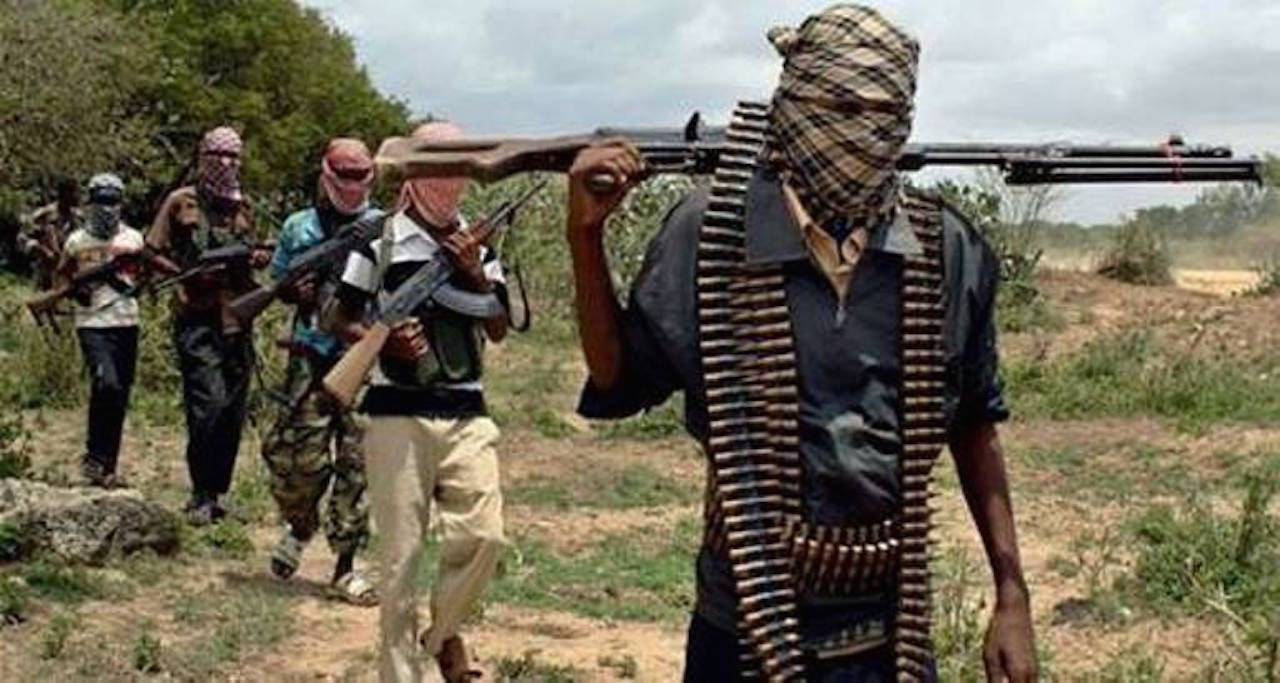
Whether Nigerians should be given the right to bear firearms or not is an argument that recurs each time there is an uptick in security issues. It is a solution that has been proffered by ex-Generals like Theophilus Danjuma; politicians such as former House of Representatives majority leader Alhassan Ado-Doguwa and Senator Kabir Marafa, during congressional sessions; former Governor of Benue State, Samuel Ortom; Lagos LP gubernatorial candidate Gbadebo Rhodes-Viviour; leaders at various levels of government, and of course, Nigerians themselves. Even if one disagrees with them, it is not hard to see their point. How many of us, watching videos of bandits pillaging the church in Eruku, Kwara State, did not fantasise heroically barging into the scene and rescuing the worshippers from their assailants? But real life is not a Hollywood action-packed film.

Guns are complicated objects; their ownership changes society in complicated ways that a disorganised country like Nigeria is not fully prepared to manage. There is little to suggest that owning firearms will do much for the communities under constant siege.

Where do we even start from? Will the guns be carried by individuals or kept by community leaders who will coordinate their use? Individuals who are unskilled in firearm use (and even safety practices) cannot efficiently raise weapons against the marauders without harming themselves in the process. You need some coordination. If the community leaders keep the guns until needed, that will still be an inferior arrangement relative to a properly constituted police force. Besides, what of the quality of weaponry? What if you give people dane guns and their assailants come with machine guns? What if they have machine guns and the bandits come with rocket launchers?

None of those who want Nigerians armed to self-defend address whether the individuals would buy the firearms or if the government would be expected to provide them. We cannot expect the poor farmers whose livelihoods have been severely imperiled by the insecurity situation to still set aside funds to buy guns. It is unfair to task those who themselves have not eaten fully to buy a gun and purchase the bullets it will eat. This will be in addition to the burdens people already carry in every aspect of social life where the government has failed.

Where the government has failed to provide proper infrastructure of education, health, transport, security, water/energy, etc., Nigerians have picked up the slack. Now they must still procure weapons privately just to live like ordinary humans. Who did we offend that we must pay so much for our Nigerian lives? Even if the government wants to pay for the firearms, we will still face the problems of endemic corruption and administrative ineptitude that could jeopardize the whole proposal. Nigeria’s defense budget is already bloated.

Then there is the reality of poverty. If you provide guns to poor communities that you have not yet offered public amenities, do not be surprised when they use their own hands to pass them to the bandits and take a “peace deal” that will at least guarantee their lives. Gun ownership will also change their community dynamics in ways that we cannot simply contain. The enemy we are supposed to kill with a gun is not always easily defined, and while we are waiting for the marauding herdsmen to approach, we will manufacture new enemies.

For a society that does not have gun ranges, gun shows, or communal celebrations of the gun—outlets for dissipating the heady feelings of possessing dangerous weapons—we will soon find ourselves turning against each other. Also, and especially in a country like Nigeria where people are quick with their hands—constantly slapping anyone they deem beneath them across the face—having guns is going to create a problem of aggression. Add to all of these the question of the manufacturing and distribution of firearms. By the time these weapons become freely accessible, we will have created a market that will need the insecurity to continue so that firearms factories can be profitable.

Nigeria has never quite had what you might call a “gun culture,” but we have always had to deal with the problems of gun violence. In the 1970s, the issue of insecurity was a consequence of the Nigerian civil war, which led to the proliferation of weapons and armed robbers. The infamous “Bar Beach Show” that led to the public execution of some robbers was part of the attempt to resolve the gun problem of the period. In the late 1980s to the 1990s, it was the civil wars in Liberia and Sierra Leone that were blamed for the same issues of arms proliferation, insecurity, and armed robbery in Nigeria. Today, we finger the disintegration of Libya in the wake of the Arab Spring for the flooding of Nigeria with weapons now being openly wielded by bandits and terrorists. Nigeria’s internal chaos repeatedly makes the country vulnerable to the mayhem that unfolds in other countries. Yet, in the decades we have had to deal with the issue of insecurity and arms proliferation due to the breakdown in our society or elsewhere, we still have not come up with a solution. The idea of self-defense entices us, but the costs of bearing that burden are far too overwhelming.

It must be said that the reason that the Nigerians pining for that solution are doing so is because they have lost faith in the ability of their government to do right by them. We no longer think the state can organize itself to provide the necessary public infrastructure, and we-the-people are so used to stepping in that we feel even this one too must become our responsibility.

The more the government has retracted from its responsibility to the public, the more we have stepped up; and the more we have stepped up, the more we have lost sight of how to maintain the commons for the collective good. While I completely understand the appeal of self-responsibility, we still cannot afford to give up on the possibility of what can be done with public resources when well organized. There is nothing Nigeria needs to do about the current insecurity that a reformed police force cannot adequately address.

We have enough police officers who can adequately secure our communities if they withdraw them from the rich people they have been deployed to guard, as the government has promised, and rightfully deploy them to serve the people. I have previously suggested that the government needs to license private security outfits for the rich people who need to secure themselves and stop using the police for that indulgence. Private security outfits will be far more effective in ensuring security because they can meet the specific needs of those who need it, rather than serving as mere status symbols.

The reason these privileged elites abuse the privilege of having police officers detailed to secure them by making them carry handbags or wash cars is that they come too cheaply. If they pay for private security, they will take them more seriously. The rest of us Nigerians should be served by the police who should be deployed to the communities across the country to secure lives. We do not need any more privatized solutions. The resort to privatization is one of the reasons the country is in a sordid mess. With firearms in individual hands as a form of “private security,” Nigeria will bury itself with its own hand.

The views expressed by contributors are strictly personal and not of Law & Society Magazine.

Federal High Court hears how Tukur Mamu took N50m cut from Abuja-Kaduna train attack ransom

An investigator with the Department of State Services (DSS) told a federal high court in Abuja that Tukur Mamu, publisher of Desert Herald newspaper, was allocated N50 million from ransom collected from families of victims of the Abuja–Kaduna train attack in 2022.

Mamu is accused of persuading the terrorists to negotiate ransom directly with families of abducted passengers rather than through the federal government’s committee led by the chief of defence staff, allegedly to secure personal financial benefit.

He was nominated by the terrorists as their negotiator and is alleged to have collected ransom payments on their behalf, confirmed the amounts and facilitated their delivery.

The DSS officer, who testified as the sixth prosecution witness (PW6) on Tuesday, gave evidence before Mohammed Umar, the presiding judge, while being led by the prosecution counsel, David Kaswe. The witness testified from behind a privacy screen for security reasons.

He said the testimony was based on four voice notes extracted from Mamu’s mobile devices after his arrest in Egypt and extradition to Nigeria.

The audio recordings, played in open court, contained telephone conversations between Mamu and members of the terrorist group that abducted dozens of passengers during the March 2022 train attack.

“The first voice note that played was for the defendant (Mamu) fixing a date for delivery of ransom,” the witness said.

“The second voice note that played for five minutes was the voice of Shugaba, the leader of the terrorist group. In the voice note, he was appreciating the defendant’s effort and asked him to remove N50 million for his personal use from a particular tranche of ransom sent to them.”

He added that in another recording, the group’s spokesperson, Baba Adamu, asked Mamu to help procure speakers and a public address system “for their preaching activities”, to which the defendant responded that “he was going to look into their request.”

According to the witness, the terrorists also asked Mamu to teach them how to open a website “for their activities”.

SEARCHES, SEIZURES AND FORENSIC ANALYSIS

The witness said after Mamu was intercepted in Egypt, he contacted his in-law, identified as Mubarak Tinja, and instructed him “to move out all his valuables, comprising cash, cars and other items of value, from his house to a safe location, to avoid detection by security agents.”

The witness said after Mamu’s return to Nigeria, DSS investigators executed a search warrant on his house and office in Kaduna, recovering cash in different currencies, several vehicles and other valuables.

He added that some items had already been moved out “in compliance with his directive to his in law.”

“Investigators later traced and recovered about $300,000 and seven vehicles, including a Toyota Camry (Muscle), Peugeot 5008, Lexus, Mercedes E350 and a Hyundai,” the witness said. Vehicle documents tendered through him were admitted in evidence.

He also testified that Mamu voluntarily handed over his Samsung tablet and two phones, which were analysed by forensic experts.

“He also admitted communicating with the terrorists, using his voice notes,” the witness said, adding that the defendant admitted instructing Mubarak to move valuables from his house.

Mamu also admitted ownership of a pump-action gun recovered from his residence, though investigators found that its licence had expired in December 2021 — nine months before his arrest.

VOICE NOTES, VICTMS’ STATEMENTS ADMITTED 

The prosecution tendered the extracted voice notes stored on compact discs and a flash drive.

Johnson Usman, Mamu’s counsel, reserved his objection until the final written address, and the court admitted the exhibits. The recordings were played in court.

The witness further told the court that two of the abducted victims voluntarily wrote statements narrating their experiences; however, they were unwilling to testify in court “because of fear and trauma”.

Their statements, one in English and the other in Hausa, were admitted as exhibits after no objection from the defence.

The court also admitted eight statements made by Mamu during interrogation, along with video recordings of the sessions.

The prosecution counsel said he would file a formal application for the court to visit the location where items recovered from Mamu’s home and office were kept.

MAMU LIVED ABOVE HIS MEANS

At the resumed session on Wednesday, the witness said findings showed that Mamu “was living way above his means” during the 2022 negotiations with the Kaduna train attackers.

He said investigators discovered “that during the course of the negotiations, the defendant’s lifestyle suddenly changed,” and that he “encouraged the terrorists to negotiate the ransom payment with victims’ families” and “benefitted from the ransom paid by the victims.”

He added that the defendant “provided information to the terrorists on how to create a website”, adding that cash recovered from him “was in excess of the threshold permitted by law”.

The witness also said Mamu was never appointed by the chief of defence staff (CDS) committee and “sidelined” the official team during negotiations.

Asked what he meant by Mamu’s lifestyle changing, PW6 said the defendant sponsored four family members on a trip to Egypt and “bought two flashy cars during the period of the negotiations.”

Under cross-examination, the witness admitted he had never travelled outside Nigeria, had not examined Mamu’s passport and was not aware of any DSS invitation or “wanted” notice issued for the defendant. He also confirmed he did not know Mamu’s net worth.

The judge adjourned the case to January 29, 2026, for continuation of trial.

“Justice Must Not Crawl”: Akaraiwe says quest for SAN rank fuelling frivolous appeals, demands overhaul of bench appointments and legal ethics

A former First Vice President of the Nigerian Bar Association (NBA), Ikeazor Ajovi Akaraiwe, SAN has warned that the nation’s justice system is slowing under what he calls “tenacious clogs.”

Akaraiwe, SAN, who delivered the warning on Tuesday during the opening ceremony of the NBA Umuahia 2025 Law Week, told lawyers and judges that deep structural failures trap Nigeria’s justice system. He said the system will continue to struggle until the country confronts its institutional weaknesses.

Akaraiwe argued that the first major clog comes from the Constitution itself. He said the Second Alteration Act, which limits appeals to the Supreme Court, is still ignored. He warned that the Supreme Court remains overwhelmed by appeals that should not reach it.

He noted that some versions of the Constitution circulating nationwide are outdated or incorrect. He described that situation as “scandalous,” and urged strict enforcement of the correct constitutional text.

The senior advocate then turned to poor infrastructure and manpower shortages. He said Nigeria’s courts are far too few for a population exceeding 200 million people. He compared Nigeria’s facilities with Canada’s, noting that Vancouver alone has sixty high courts.

He argued that states like Abia should have at least one hundred High Courts. He said judges are overworked, case lists are overloaded, and justice delivery is painfully slow. He urged heavy investment in technology and case management systems.

Akaraiwe also highlighted poor remuneration and weak professional ethics. He said many young lawyers struggle financially and resort to needless delays to earn appearance fees. He praised the 2023 Remuneration Order but warned that enforcement is still weak.

He said the profession is undermined by unhealthy competition, underpricing and a declining sense of dignity. He added that the Legal Practitioners Disciplinary Committee must enforce higher standards.

Akaraiwe then addressed the quality of appointments to the Bench. He called for a transparent peer review of prospective judges. He argued that Nigeria must only select candidates with proven competence, integrity and temperament.

He warned that judicial independence remains fragile. He noted that courts in many states still depend on the executive for funding and logistics. He said no judge can be independent when basic resources depend on the goodwill of political leaders.

He described weak enforcement of judgments as another major clog. He cited repeated violations of court orders by government agencies. He warned that such disobedience destroys public confidence in the courts.

Akaraiwe also criticised the growing number of frivolous appeals linked to the quest for the Senior Advocate rank. He said many lawyers file unnecessary appeals simply to meet the numerical requirements for the title. He proposed new criteria based on subject-matter groupings. He said this would cut down on needless appellate work and reduce pressure on higher courts.

He also suggested creating a second pathway to the SAN rank. This pathway would rely on a high number of trial court judgments rather than appellate appearances. He argued that this system would encourage faster trials and more pro bono work.

Akaraiwe urged the legal community to commit to institutional, professional and moral renewal. He said Nigeria lacks statesmen who prioritise justice over power. He argued that justice delivery requires political will, professional integrity and ethical discipline.

He called for robust legal education with a strong focus on professional ethics. He said ethics should be taught repeatedly from university to law school. He argued that early training builds moral resilience in young lawyers.

He ended with a call to action. He urged lawyers and judges to remove the clogs delaying justice. He said the courts exist for citizens, not for lawyers. He urged the profession to uphold justice with honesty, courage and humility.

Akaraiwe reminded the audience that Nigeria’s legal legends fought boldly for justice. He urged today’s lawyers to continue that legacy. He said Nigeria can fix its justice system once it finds the will to confront the problems directly.

Click here to download and read the entire paper.

Tenacious-Clogs-NBA-Umuahia-Keynote-Address-by-Ikeazor-Akaraiwe-SAN1

TIPS