Home Blog Page 1429

Did you know?

Did you know that the population of the people in slavery in Nigeria is 1,384,000, more than the total number of all the other 16 West Africa countries when added together, which is 1,081,000?

Did you know that December 2 is International Day for the Abolition of Slavery?

Data from the National Agency for the Prohibition of Trafficking in Persons (NAPTIP) shows that the employment of children as domestic workers, as well as the procurement of persons for sexual exploitation and forced labour, are some of the numerous examples of modern day slavery in Nigeria.

The focus of this day is on eradicating contemporary forms of slavery, such as trafficking in persons, sexual exploitation, the worst forms of child labour, forced marriage, and the forced recruitment of children for use in armed conflict.

Slavery is not merely a historical relic. According to the International Labour Organisation (ILO) more than 40 million people worldwide are victims of modern slavery.

Although modern slavery is not defined in law, it is used as an umbrella term covering practices such as forced labour, debt bondage, forced marriage, and human trafficking. Essentially, it refers to situations of exploitation that a person cannot refuse or leave because of threats, violence, coercion, deception, and/or abuse of power. In addition, more than 150 million children are subject to child labour, accounting for almost one in ten children around the world.

Facts and figures:

An estimated 40.3 million people are in modern slavery, including 24.9 in forced labour and 15.4 million in forced marriage.

There are 5.4 victims of modern slavery for every 1,000 people in the world.

1 in 4 victims of modern slavery are children.

Out of the 24.9 million people trapped in forced labour, 16 million people are exploited in the private sector such as domestic work, construction or agriculture;

4.8 million people in forced sexual exploitation, and 4 million people in forced labour imposed by state authorities.

Women and girls are disproportionately affected by forced labour, accounting for 99% of victims in the commercial sex industry, and 58% in other sectors.

ILO has adopted a new legally binding Protocol designed to strengthen global efforts to eliminate forced labour, which entered into force in November 2016 and the 50 for Freedom campaign aims to persuade at least 50 countries to ratify the Forced Labour Protocol by the end of 2019.

1.Nigeria is not just the most populous nation in Sub-Saharan Africa. It also has the continent’s largest number of people living in conditions of modern slavery.

2.This figure is according to the Walk Free Foundation’s 2014 Global Slavery Index, which defines modern slavery as any practice that traps people in modern servitude, including human trafficking and forced labor.

3.Examples include women tricked into migrating for non-existent jobs (who are then forced to work in brothels or enter into forced marriages), household workers who are promised paid work (but are then forced to work without wages and often without legal immigration status) and others.

4.This number also include children who are forced to work as street vendors or beggars and boys who are forced to work in mines, stone quarries and domestic service.

5.The definition additionally covers children who are forced to fight for military groups. In Nigeria, increasingly frequent reports have suggested that the northern insurgency is incorporating child soldiers more heavily.

6.In April 2014, after the Boko Haram jihadist insurgent group abducted more than 200 girls in northern Nigeria, leader Abubakar Shekau threatened to sell the girls into slavery. Their fate remains uncertain.

7.Many girls are trafficked out of Nigeria, with or without the northern insurgency. The European Union has estimated that 60% of all sex workers in Italy and Belgium are Nigerian women.

8.Nigeria’s total of 834,000 people accounts for about 15% of the 6.4 million people living in modern slavery in Africa.

9.Africa as a whole accounts for about 17% of all the people trapped in modern slavery today.

Sources: Walk Free Foundation with additional analysis by The Globalist Research Center.

https://www.un.org/en/events/slaveryabolitionday/

Confirm Justice Beatrice Iliya as CJ Gombe – FIDA tells Governor

… condemns plot to swear in junior male judge

… calls for respect and non-violation of women’s rights

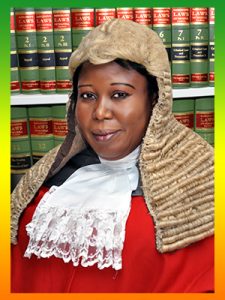
The International Federation of Women Lawyers, FIDA Nigeria has called on the executive Governor of Gombe State, Alhaji Muhammad Inuwa Yahaya to confirm Hon. Justice Beatrice Lazarus Iliya, as the substantive Chief Judge (CJ) of Gombe State.

Condemning the delay and non-confirmation of Justice Iliya as CJ Gombe State, having completed her statutory three months period as Acting CJ, FIDA said this is unjust, particularly in this period of 16 Days of Activism, when the whole world is speaking against Gender-Based Violence and Violence against Women.

FIDA, in league with other groups revealed there are moves to swear in a junior male judge as Chief Judge, notwithstanding that Iliya is the most senior serving judge of the state’s high court.

Part of the statement signed by Rhoda Prevail Tyoden, FIDA Country Vice President/National President and Eliana Martins, National Publicity Secretary reads: “Hon. Justice Beatrice Lazarus Iliya, a noble lady is not due for retirement for another three years minimum period; and has served diligently.

“We therefore strongly object to the planned swearing in of a junior male judge as Chief Judge in her place for whatever reason.

“FIDA Nigeria views the act of swearing in a male judge who is junior to other female judges as the substantive Chief Judge as act of gender discrimination!!

“This is more painful as the UN 16 days activism against Gender Based Violence and Human Rights Violations is on-going.

“We therefore call on His Excellency, the Governor of Gombe State to do the right thing in compliance with the Law by swearing in the most senior Judge who has been effectively acting. This is the only action that can prove that His Excellency is not gender biased and upholds justice.

“FIDA Nigeria stands against all forms of discrimination and injustice.”

Hon. Justice Beatrice Lazarus Iliya’s travails first came to light sometime in August this year when it appeared she would be sidestepped as the former CJ’s retirement became imminent.

Nigerian women rose in unison and criticised the attempt.

The then CJ was to retire in about three weeks. Beatrice Iliya was the most senior but some controversy arose to the effect that she is from the same senatorial zone (Gombe South) with the retiring CJ.

Allusions then were made to the case in Kebbi State where Governor Atiku Bagudu sacked the acting chief judge, Elizabeth Asabe Karatu, and replaced her with Muhtar Imam Jega.

Hon. Justice Beatrice Iliya Karatu had written a petition to the Nigerian Judicial Council, NJC alleging that she was denied her rights to confirmation because she is a Christian. The State House of Assembly refused to confirm Karatu.

The governor refuted her allegation but women groups and rights activists poked holes in his defence.

Five electrocuted at Ikoyi prisons, several injured

...the Dutch are closing prisons, Nigeria gropes in the dark

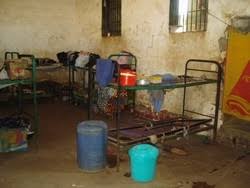
The dilapidated state of Nigeria’s correctional centres demonstrates a condition that cannot guarantee the reformatory process of the inmates. The disregard for welfare of inmates and failure to implement recommendations for prisons reform only worsens an already perilous situation.

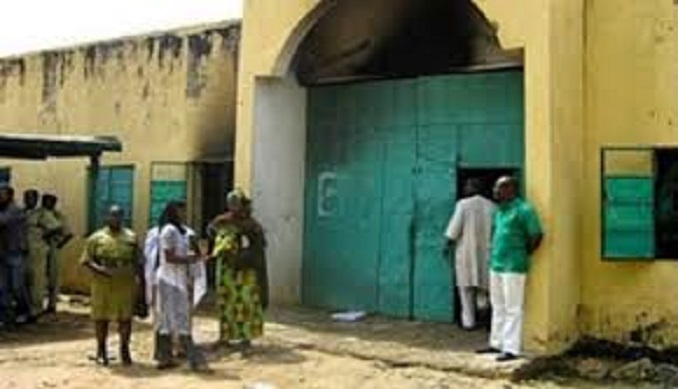
Not less than five inmates were on Monday morning killed and 10 others injured by a loose electric cable inside the Ikoyi Correctional Centre, Lagos.

How can anyone come out here sane? Nigeria!

It was gathered that those injured were being treated at an undisclosed hospital. Although details of the incident were still sketchy at the time of this report, spokesman for the Nigerian Correctional Service (NCoS) in Lagos Rotimi Oladokun confirmed the incident.

He revealed that the Comptroller General of the NCoS Jaffaru Ahmed would yet brief the press on the incident.

The minister of interior confirmed the incident through a release issued by the press officer Jane Osuji on Monday as well a series of tweets on the ministry’s official Twitter handle.

“The attention of the Minister of Interior, Ogbeni Rauf Aregbesola has been drawn to an electrocution incidence at the Ikoyi Medium Security Prison in Lagos,” the statement reads.

“The minister has directed a quick investigation into the root cause and the ministry will in the next few hours share a comprehensive update on the incident.

“While we commiserate with victims of the incident, the minister has ordered immediate medical attention for those affected.”

While Nigeria is still grapling with the basics, the Dutch Are Closing Their Prisons. The number of prisoners in the country has halved in a decade and experts say alternative sentencing programs can further decrease the number.

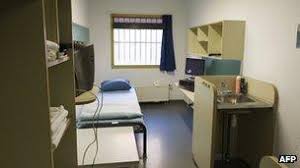
The Bijlmerbajes prison complex in Amsterdam, Netherlands, was closed in 2016 because of low crime rates in Netherlands. For 158 years, this was where the central Dutch city of Utrecht sent its prisoners. And then five years ago – along with almost half of the country’s prisons – it shut down.

A prison cell in Netherlands

A drop in the country’s crime rate in part explains why the Netherlands‘ prisons are emptying. A 2016 government study on capacity also noted that a focus on sentencing, with both an increase in shorter sentences and examining how crimes impact society, have helped reduce the prison population, says Wiebe Alkema, spokesperson at the Ministry of Justice and Security.

The Netherlands now has just 61 prisoners per 100,000 people in the general population, ranking among the lowest in Europe. In comparison, the United States has more than 10 times that figure (655 per 100,000), the highest in the world, according to data from the World Prison Brief, an online database hosted by the Institute for Criminal Policy Research at the University of London. The Dutch justice department predicts that by 2023, the total prison population will drop to just 9,810 people.


How I Was Jailed 12 Years For A Crime I Did Not Commit, And Was Called To Bar As A Lawyer, Akpoghene Edeno

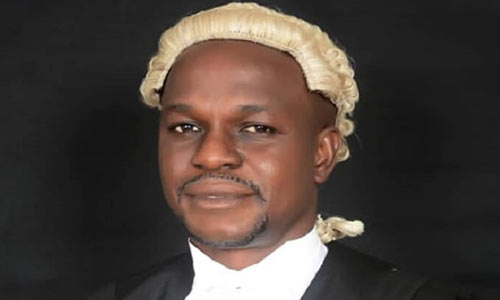
Akpoghene Edeno, who was recently called to the Nigerian bar after spending 12 years in Kwale Prison in Delta State, tells his grass-to-grace story in this interview with ENIOLA AKINKUOTU of Punch

your narrative on how you were arrested for murder, detained for 12 years and acquitted before qualifying as a lawyer has caught the attention of many Nigerians. Can you tell The PUNCH how it all happened?

I was arrested in June 2000 for murder, which was actually committed by a friend of mine. There were allegations that I knew of his whereabouts and so I went to the police station on my own to clear the air. After three months, my friend was apprehended and all of us were charged and detained in prison.

When the trial began, the judge, Justice Marshall Umukoro, granted us a speedy trial. After the prosecution had presented all its witnesses and it was time for us to open our defence, the first accused person’s counsel made a no-case submission, which was overruled by Justice Umukoro. But Justice Umukoro’s ruling was taken to the Court of Appeal in Benin City.

At the stage of the Court of Appeal, there was a delay in hearing. In the process, my father, Patrick, who was a Mathematics teacher in Delta State, felt it was vital that the case be heard on time so that we could know the next step to take.

The second accused person, which was also my friend, Samson, and myself, being the third defendant, were using the same counsel. So, for that reason, my father was always having meetings with Samson’s father to see how we could fast track things at the Court of Appeal.

On October 25, 2005, my father was on his way to go see the father of Samson (the second accused) when he died instantly. He had been through a lot of stress. My mum, who was a petty trader, became a widow and the only one taking care of my younger siblings. She also developed high blood pressure due to the stress and my prolonged detention.

Since you were not the prime suspect, why did the police arrest you?

It was due to sloppy investigation and one of the witnesses. The administration of criminal Justice in Nigeria is faulty. Although I was not under arrest by the time the crime was reported at the police station, I went to the station on my own just to clear my name. The witness was not even at the scene of the crime. The second defendant and I were far away from the scene. Also, the first accused person, who was later sentenced to death, stated that we were not at the scene of the crime when it happened.

So what happened to your court case?

In 2012, the case was brought back to the trial court and Justice Umukoro sentenced the first accused person to death. He discharged and acquitted the second defendant and myself of conspiracy to commit murder, as well as other charges leveled against us by the then Attorney-General of Delta State.

Why was the case delayed for so long?

What delayed the case was that during my time, the Administration of Criminal Justice Act had not yet been signed into law. So there was no time frame for interlocutory appeals. In those days, an interlocutory appeal could stall the ongoing trial for several years, unlike now that trial and appeal can take place concurrently.

How were you able to study law, despite spending 12 years in prison?

In 2010, during my 10th year in prison, I felt there was a need to change my course of study because, prior to my arrest, I was studying Mechanical Engineering at Ambrose Alli University, Ekpoma.

In 2010, I decided to change it because of the oppression I received from the government. I met with the superintendent of Kwale prison and I pleaded with him to allow me to sit for the forthcoming GCE examination, even if it meant I had to be escorted to the exam centre in chains.

I suggested that to him so that he would be convinced that I wasn’t planning to escape. After I had spoken to him, the man was almost in tears. He knew I was innocent. He also took into cognisance the death of my father and my mum’s suffering and finally granted my request.

I had just two months to prepare for the GCE examination. Eventually I sat for it and passed all the subjects that I needed to study law.

On September 28, 2012, I was discharged and acquitted. In the same year, I applied for the Unified Tertiary Matriculation Examination, sat for it and passed. I was admitted to study Law at the University of Benin on merit. I graduated from the university in 2018 in Second Class Upper division and proceeded to the Nigerian Law School where I was finally called to bar on November 28, 2019.

How did you manage to sit for the GCE exam as a prisoner?

The prison has a vehicle called Black Maria, which is used in conveying prisoners to court. So, anytime I had a paper to write, I would be given an armed warder and an unarmed one, who would escort me to the hall. He would remove my handcuffs and stand at a distance. Immediately I finish writing my exam, he would handcuff me again and take me back to prison. That was how I wrote all my papers.

Did you ever believe that you would be released from jail?

Yes. I always believed I would be released. I was about 21 or 22 years-old when I was arrested. By the time I was freed, I was almost 34. From the outset, I had compared myself to Joseph in the Bible.

When you are in prison, it is easy to move closer to God. You are inside one place where you have only two options: Either to bond with the other prisoners or to serve God.

When I was in prison, I was given full access to the library and I was the chief librarian. I was exposed to a lot of books, including law books and Christian literature. These things saved me from depression.

Have you been able to recover lost time since you left prison in 2012? Are you married with children?

Immediately I came out of prison, I returned to school. I didn’t get married because I didn’t want to combine my studies with caring for my family.

Secondly, my mum died a few months after I came out of prison. I was in 100 Level at the time. Her death was due to stress and high blood pressure. My prison experience seriously affected her.

She was footing my legal fees, taking care of my younger ones and regularly visiting me in prison. She wasn’t able to cope with the stress.

Now that you’re a lawyer, which aspect of law will you focus on?

Well, I have just been called to the bar. For now, I will focus on general law. In the future, I will focus on human rights. I have already set up a foundation that looks into the plight of prisoners, although I haven’t registered it yet. About 80 per cent of those in prison are from poor backgrounds.

In prison, I realised that what most inmates need is mental support. Most of these people believe that when they get out, it is only crime that they can take to. Secondly, they feel abandoned. When most of them leave prison, they are stigmatised and this process of re-integration is very hard.

So, I set up a foundation to look at their plight. We focus on rehabilitation, reformation and reintegration. We will collaborate with the prison authorities to ensure that when people are released from jail, they can be easily reintegrated. We have been visiting prisons and teaching the Gospel inmates, as well as encouraging them.

Have you ever felt the need to sue the state for wrongful prosecution?

Yes, I have felt the need to do so. Five years before I was released, I heard from God that I would be set free and there would be pressure on me to sue my accusers, but I should not sue because He would compensate me divinely. I got this message from God in 2007. Till this day, some people have been pressuring me to sue. About four lawyers have asked me to sue the government, but I have decided not to do so because of this revelation.

How did you feel on the day you were called to bar?

As fate would have it, Justice Umukoro, who ordered my release, was present when I was called to bar. He was among the body of benchers that attended the event and he came in his capacity as the Chief Justice of Delta State. He greeted me twice and he was very happy for me. I have even adopted his first name as my middle name. I lost my parents, spent 12 years in prison, but God helped me to achieve my dream in the end.

When you were arrested in 2000, there was no GSM, social media or Internet service in Nigeria. How were you able to adjust to life in the society after 12 years?

That is what they call re-integration. Mine was easy because when I came out of prison, many people who heard about my plight were proud to associate with me. I was not stigmatised. Secondly, I was admitted to the university almost immediately after leaving prison. So I was able to socialise quickly and easily.

The following people helped me to reintegrate into society: Hon Essien Okiemute, who was representing Isoko South Constituency 1 at the Delta State Assembly. He stood by me and even gave me N500,000 when I was going to law school. This was despite the fact that he lost an election.

I must also appreciate Mr. Duncan Afaohokor; Tony Ejumejowo; Chief Malik Ikpokpo, chairman of Isokor LGA; Hon Charles Mallamobi; Chief Jewel Onoawakpo; the Attorney-General of Delta, Peter Mrekpor, who heard of my case and also sent me some money; Justice Marshall Umukoro, who was the presiding judge and is now the Chief Justice of Delta State.

We were framed up, but God used Justice Umukoro to set us free. The current Deputy Governor of Delta State, Kingsley Otuaro, also gave me money for law school; Mr. Rockson Igelige, Akpuzo Okperi, Joe Arausi, Efe Azaino, Joe Arausi and Mr. Dennis Obrogo also helped me after reading my story and gave me some money when I was going to law school.

PUNCH

Mike Ahamba SAN: Special Court’ll compound judiciary’s woes

Chief Mike Ahamba, a Senior Advocate of Nigeria (SAN), in this interview with AKEEM NAFIU of Newtelegraph, speaks on special court for corruption cases, AGF’s power to manage assets recovered by anti-graft agencies, Hate Speech Bill, life jail for kidnappers and sundry issues.

Do you share the view that the new rule issued by the Ministry of Justice, empowering the Attorney General of the Federation, Abubakar Malami (SAN), to manage all assets recovered by anti-graft agencies will promote corruption?

Who will do it and there will not be thinking about corruption? There’s nobody who will take charge that will not be suspected of engaging in corruption. Now, if you look at the Constitution, the president has the power to assign any responsibility given to him as the Chief Executive of this country to any of his ministers. So, if this is an assignment from the president, I think it is constitutional. We can only hope and pray that the Attorney-General will do the right thing with the recovered assets.

However, if it is the Ministry of Justice that came up with the rule, it has no such powers. But, the implementation of such rule must be with the authority of the president.

If the president has asked the Attorney-General of the Federation to take charge, we should allow him to carry out the assignment before criticizing him.

Do you support establishment of Special Courts for speedy dispensation of justice as being canvassed by President Muhammadu Buhari?

I have always been against the creation of Special Court to enhance speedy dispensation of justice. I spoke against it at the National Conference and even in my book which will soon be published.

One problem that we have in this country is that we usually fail to examine why a negative issue is persisting before making attempt to address it.

How will the creation of Special Courts solve the problem of slow pace of justice delivery? By creating more courts, we cannot solve the problem. I think we should focus on the procedure of adjudication in the country as a way out of the problem rather than creating Special Courts.

We should look among other things at what rules are to be amended to enhance quick dispensation of justice. Necessary equipment should also be supplied to existing judges to work with. Why won’t cases be delayed when judges are still writing in long hands? Why are there no recorders for proceedings? These are some of the issues to be addressed. Let’s find the cause of a problem before we look for a solution.

For instance, has the changing of the name of National Electricity Power Authority (NEPA) to Power Holding Company of Nigeria (PHCN) help us in solving the electricity problem in this country? How much positive impact has the changing of Nigerian Prison Service (NPS) to Nigerian Correctional Service (NCS) brought on inmates?

As far as I am concerned, it is the human management of a place that matters and not the change of name or something else. The important thing is for those in charge to know their responsibilities and carry them out.

Besides, the absence of sanctions in appropriate areas is the bane of our society. People must be appropriately sanctioned for failing to carry out responsibilities assigned to them under the law.

What I am saying, in essence, is that creating more courts in the name of Special Courts will only add to the existing problems. People who are directly involved in adjudication should be involved in charting a course for the way out of the problem of justice delay.

The sponsor of the Hate Speech Bill, Senator Aliyu Abdullahi, said he had to come up with the Bill because hate speech is the root of violence in Nigeria. Do you share his view?

I can’t agree with him. It’s not true. Sometimes what is regarded as hate speech could have emanated as a result of what has been done to an individual.

I am against the Bill. It is unconstitutional. That man who came up with the Bill might be the first victim. There must be a proper definition of what constitutes hate speech. If people are complaining because a government is underperforming, we cannot term that as hate speech.

If an issue is affecting me and my people and I decided to air my views, you cannot accuse me of propagating hate speech. If your cattle are destroying my crops and I stand up against it by saying one thing or the other, you cannot accuse me of hate speech.

So, in essence, there must be a proper definition of what constitutes hate speech before coming up with any law to curb it, in order to prevent any infringement on constitutional provisions.

As far as I am concerned, anything that prevents people from expressing their views is against the Constitution of Nigeria. Besides, this Hate Speech Bill is even an issue of misplaced priority by the Senators. It is not in pursuit of peace, order and good government in Nigeria, which is what is suppose to be the main concern of the lawmakers. Anything to the contrary is unconstitutional.

So, any attempt by anyone to gag me not to say my mind on any issue is unconstitutional. Members of the National Assembly are expected to work in line with the dictates of the Constitution and if the lawmakers succeeded in passing the Bill, I, Mike Ahamba, will go to court to test its validity.

Senators are now pushing for life imprisonment for anyone engaging in kidnapping. How far would this measure help in curbing the menace?

Well, I think it’s a step in the right direction. But, the punishment being suggested is not even the issue but I am more concerned about the implementation.

Anyone who involved in kidnapping should be kept in jail to serve as a deterrent to others and also prevent him from continuing in the illicit business.

The problem we are having is the implementation of the laws and not the laws themselves. The failure of institutions to perform their functions under the law is a major problem. This is why we are faced with diverse problems in this country.

Do you think the Independent National Electoral Commission (INEC) is right to have returned anyone as the winner of the last governorship election in Kogi State with the reported violence that characterized the polls?

Well, the Independent National Electoral Commission (INEC) has already declared a winner and it is now left for the judiciary to look at the proper conduct or otherwise of the whole exercise.

If INEC has failed, there’s a remedy called the judiciary. It is the failure of the judiciary that is more dangerous to Nigeria than the perpetrators of the violence. So, judiciary should try not to fail Nigerians.

If it is true that there were widespread violence so that it could not be said that an election has taken place, the judiciary is expected to void it. If on the hand, it was found out that the conduct of the election had complied substantially with the law, then its result should be validated by the court.

The ball is now in judiciary’s court to make proper findings about the conduct of the election and make appropriate declaration.

What do you think can be done to have elections devoid of violence in this country?

Well, I have always been saying that being just and honest is a choice. One day, we shall have an INEC Chairman and others working with him, who will say I will not be part of any irregularity and that would be the end of the problem.

Besides, those at the National Assembly should sit up and come up with a brand new Electoral Act that will be used for the next general election. It’s no longer a matter of amending the existing one.

There should be serious brainstorming by people who are familiar with the contents of all the Electoral Acts used so far for elections in this country and from there, a brand new Electoral Act to be used for future elections will emerged.

In 2003, I identified five safeguard provisions in our Electoral Act and by 2007, those safeguard provisions have been removed to allow rigging. When we attacked this in 2007, more safeguard provisions were removed from the Electoral Act to allow rigging in 2011. The same thing has continued till date.

Therefore, the process of getting a brand new Electoral Act should commence immediately before preparations for the next general election begins. The National Assembly should organize a seminar and invite notable election petition lawyers to speak on what have gone wrong and chart the way forward.

How do you view a statement credited to the Inspector General of Police, Mohammed Adamu, that fake policemen perpetrated violence in the recently conducted Kogi governorship election?  Is the statement enough to exonerate the police of complicity?

In a civilized and decent clime, the IGP ought to have resigned by now. How can IGP say fake policemen operated among his own men? I am not even sure any of those so-called fake policemen have been arrested till date. That’s why violence has continued to trail our elections. You can be rest assured that in 2023, the same thing will repeat itself. Repeatedly, we have failed to take decisive action against perpetrators of violence during elections.

So, the assertion by the IGP cannot exonerate the police of any complicity. In fact, the first police officer that should go now is the Inspector General of Police for coming up with such assertion. I am very surprised that all these are happening under the watch of President Muhammadu Buhari in whom I had absolute belief.

New Telegraph

Noise pollution, cause of mass failure in schools – Banire SAN

A senior Advocate of Nigeria has blamed noise pollution as reason behind increase in students’poor performance at school.

At the 27th annual Scientific Conference and Annual General Meeting held in Lagos, Chairman of Asset Management Corporation of Nigeria (AMCON), Dr. Muiz Banire, attributed the surge in mass failure in schools around the country to noise pollution.

Dr. Banire revealed that having noticed the effects of noise pollution in Lagos, one of the things he did when he was a Commissioner for Environment in the state was to ensure that pollution of all kinds were reduced to a manageable level.

The Senior Advocate disclosed that students now have ear problems because of the different kinds of noise pollution they are exposed to right from their early stages in life.

He said that it is the major reason why students perform below standard in WAEC and JAMB examinations in the recent past.

“We found out that most students had a hearing impairment, some could not even hear what their teachers were saying in class.

“We also discovered that when they get home, they sit close to the grinding machines, besides the loudspeakers of music sellers, and at night, vigils won’t let them sleep, and mosques wake them up at 4 am, vehicle hooting, and indiscriminate use of sirens contributed too, thus affecting the health of young persons.

“I said this before, and I want to say it again, if we do not curtail the extent of pollution, it will lead to early death” he added.

Banire stressed that most worrisome is the fact that, there is no law guiding environmental pollution, and that everybody just operates arbitrarily.

“We need to set a template that will guide us in enforcing laws on environmental pollution in Nigeria. And that should be part of the resolution of this conference, to create a parameter for enforcements.

A significant solution to all these is the three R’s, which are to; reduce waste, reuse waste, and recycle waste, we must apply it, if we want to quell the impact of environmental polution” he said.f

Speaking earlier, the Chairman Local Organizing Committee, Dr. Ayo Olude, said that pollution was the major cause of sickness.

He advised government to make laws that will regulate pollution in the country.

She wheeled it to the bar!

…the survivor’s tale of a new wig

Anyone who passed through the Nigerian Law School would tell you it was a baptism of fire. Passing the Bar finals is another matter. Stories upon stories abound. Some mythical. Some true. From the incredulous to the absurd. Sometimes shocking. At other times overwhelming. Bar finals!

Many make it. Several have to try again and again. The quest for the wig and gown!

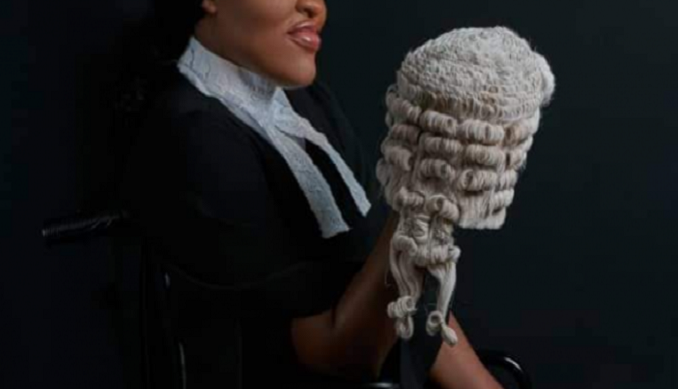
The 2019 Bar finals result had just been released. Her joy was as ecstatic as it was infectious. “Finally, I’ll be called a barrister!” She must have screamed. Bur fate had other plans for her.

A graduate of Benue State University, Ufuoma Peace Oghenerume needed to visit her former school to collect her LLB certificate. Presentation of the LLB original certificate for screening at the Nigerian Law School is part of the condition precedent for being called to the Nigerian Bar. On account of this, she set off to Makurdi. She was already billed to participate in the Call to Bar ceremonies that would run from 26 to 28 of November.  It was a trip that altered the course of her life.

On the 16th of September, she boarded one of the 18 Sitter buses owned by Benue Links Transport Company. A smooth ride it was. The prospective new wig was already imagining herself all dressed up in new robes! Then the crash! It was surreal! It was quick and sudden!

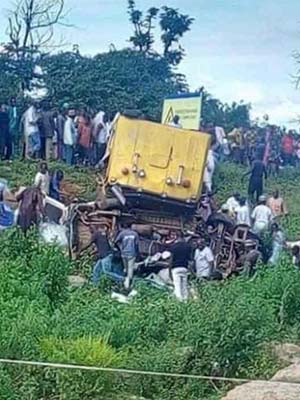
The accident Scene

 They had just approached the Nasarawa Eggon hills. It was a horrific collision with a truck that claimed all lives but two! Ufuoma Peace Oghenerume was the second survivor!

The tragedy did not swallow her but the pains were unbearable. Physical pains. Emotional pains. Battling to survive. It was almost an eclipse of a dream.

Several surgeries later at the National Hospital Abuja, Ufuoma pulled through.

The survivour!

Though on a wheel chair, she made it. She was called to the Bar at the same time as her mates. Today, she is a Solicitor and Advocate of the Supreme Court of Nigeria!

UNN, Nigerian Society and Witch Ways

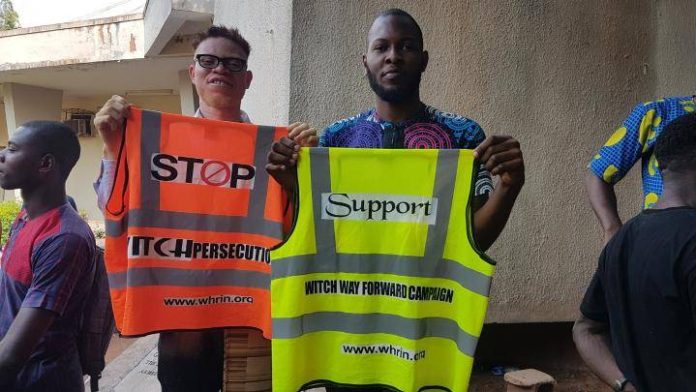
The International Conference on Witchcraft on Tuesday kicked off at the University of Nigeria, Nsukka as scheduled, despite opposition to the conference from the Christian bodies.

Our Correspondent reports that the opening prayer for the conference was conducted by a Catholic priest, while the moderator was a cleric.

Music was also provided by the UNN Christ Chapel choir.

The conference, organised by Prof. B.I.C Ijomah Centre for Policy Studies and Research, UNN, met stiff opposition and criticisms, but organisers rebuffed the calls to cancel the conference, and instead changed the initial theme: “Witchcraft, meanings, factors and practices,” to ”Dimensions of human behaviours.”

UNN management had directed the organisers to drop the initial theme of the conference on account of outcries from various Christian bodies.

However, speaking at the opening ceremony of the conference holding at Nsukka main campus of UNN, the Director of the centre, Prof. Egodi Uchendu, regretted how ordinary academic conference was twisted to cause confusion by social media and other media platforms.

“The casualty of this confusion went beyond being asked by UNN management to change title but also the withdrawal of our keynote speaker, Prof. David Ker.

“I am delighted that social media hyper on the conference didn’t deter participants and organisers from attending the conference, which is completely academic,” she said.

Prof. Damian Opata, in his paper titled “The wealthy are no witches: Towards an Epistemology and Ideology of Witchcraft among the Igbo of Nigeria,” explained that the way witchcraft was propagated and believed by some Nigerians had continued to kill the development of knowledge on the issue.

“Some people have killed the initiative for creative indigenous thinking because of mere belief in witchcraft.

“Pastors, prophets, seers in the foreign religions and charismatic priests of variegated persuasions very frequently use perceived attacks by witches and wizards to put fear in the minds and hearts of their various congregations.”

Continuing, he said, “The truth is, for those who believe that witches and wizards exist, it exists for them; and those who believe it does not exist, it doesn’t exist.

“What we are doing today is completely an academic conference; it’s unfortunate that some people tried on social media to give it  different interpretations.”

Head of Department of Sociology and Anthropology at the UNN, Prof. Peter-Jazzy Eze, who spoke on what he titled, “Which witch? What Anthropology knows of the Adult Bugbear,” explained that witchcraft did not exist but only existed in the mind of the people who believed in it.

“Science and technology have overtaken the superstitious belief of witchcraft, which has no practical proof.”

Eze said it was time Africa dropped the belief in witchcraft and embraced robust knowledge in science and technology, “the application of which is very practical and verifiable.”

“If Africans can fully embrace science and technology, in the next 50 years, there will be nothing like superstitious belief in witchcraft, ” he said. Punch

A lawyer’s angle

Despite the concerted efforts and prayers of Religious groups and organizations in Nigeria, the University of Nigeria Nsuka on Tuesday the 26th of November 2019 held Nigeria’s first highly controversial and much talked about “Witchcraft Conference”.

Organized by Egodi Uchendu, director of B.I.C. Ijomah Centre for Policy Studies at the university, the conference seeks to feature academics reviewing journals and information gathered over the years on witchcraft. The theme of witchcraft is only a topic for academic engagement.

While the conference has shown that it is not actually a gathering of people dressed in Black with pointy hats and flying on broomsticks, i think it a bit amusing to inform Nigerians about the position of Nigerian law as regards “Witchcraft”.

Section 210 of Nigeria’s Criminal Code Act States:

 Any person who-

(a)            by his statements or actions represents himself to be a witch or to have the power of witchcraft; or

(b)            accuses or threatens to accuse any person with being a witch or with having the power of witchcraft; or

(c)            makes or sells or uses, or assists or takes part in making or selling or using, or has in his possession or represents himself to be in possession of any juju, drug or charm which is intended to be used or reported to possess the power to prevent or delay any person from doing an act which such person has a legal right to do, or to compel any person to do an act which such person has a legal right to refrain from doing, or which is alleged or reported to possess the power of causing any natural phenomenon or any disease or epidemic; or

(d)            directs or controls or presides at or is present at or takes part in the worship or invocation of any juju which is prohibited by an order of the State Commissioner; or

(e)            is in possession of or has control over any human remains which are used or are intended to be used in connection with the worship of invocation of any juju; or

(f)            makes or uses or assists in making or using, or has in his possession anything whatsoever the making, use or possession of which has been prohibited by an order as being or believed to be associated with human sacrifice or other unlawful practice;

               is guilty of a misdemeanour, and is liable to imprisonment for two years.

From all incantations……sorry i mean indications, the position of Nigeria’s law is unambiguous about this issue although i’d admit in my years as a lawyer with experience in Criminal litigation matters i am yet to come across a case that involves the trial of a witch. Besides if convicted, how does the Nigerian Government intend on imprisoning such a person? I doubt Nigeria’s prisons are equipped for such a magical task. In my honest and somewhat facetious view i think the law against Witchcraft was promulgated in a time where myth and superstitions held sway over most Nigerians and prosecuting it in today’s world would be a tough concoction.

I’m Fredrick Nwanji and I’m a Lawyer.

To get more news and updates, Follow me on Twitter @RickAnji and on the Opera News App @LawAngle

‘Zacchaeus’ And The Perils Of A Tax Collector

By Azu Ishiekwene

hen the tenure of a chief executive is coming to an end, there’s usually a feverish outbreak of schemes to push him over the edge, for good or bad reasons. 

Lobbyists are masters of the game. They keep a diary of appointment and termination dates – including possible renewal where the law permits – and also keep a meticulous dossier of everything that happens in-between to sway public opinion and, possibly, the appointor.

If the chief executive under scrutiny is a tax collector, then he is despised with the venom reserved for Zacchaeus, the biblical tax collector.  Zacchaeus was the Israelite hired by the occupying Roman government to collect taxes and levies from his own people. 

Even though he appeared to be an honest guy, doing his job as best as he could, the system was so badly tainted that anyone who held that job was viewed with suspicion. Being a rich and short man only made things worse for Zacchaeus.

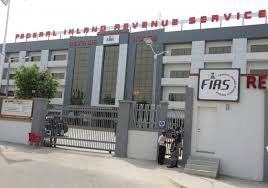
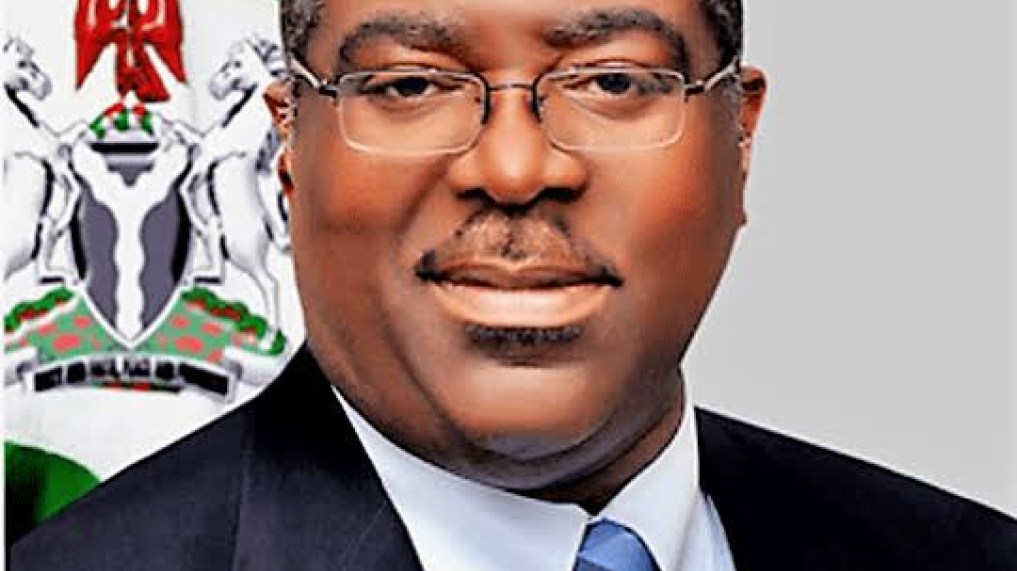
Many modern-day Zacchaeuses like the Chairman of the Federal Inland Revenue Service, Tunde Fowler, may be taller and therefore have no need to climb a sycamore tree to find salvation, but their professional perils have not changed much. 

As Fowler’s first term comes to an end, there has been heightened interest in whether or not he would be retained, with arguments flying on both sides. In a country so spoilt by oil rent that government is only just beginning to take taxation seriously against a wall of resentment by the public that considers paying taxes punishment, tax collectors are still as despised today as they were in the days of Zacchaeus. And their enemies are vocal and influential.

With oil revenues ever more precarious and politicians promising heaven on earth, tax collectors need the skills of Zacchaeus, if not his stature, to survive. 

On his appointment as the nation’s chief tax collector in 2015, Fowler was under pressure to live up to the hype following his accomplishments as the chairman of Lagos State Internal Revenue Service (LIRS), where he raised the internally generated revenue from N600m in 1999 to N20billion in 2015.

The challenges at FIRS were daunting, yet Fowler was also under pressure to meet the high standards set by his predecessor, Ifueko Omoigui-Okauru. With crude oil prices plunging as low as $30 per barrel at some point in the life of the Buhari administration, Fowler needed something beyond the precarious balancing act of Zacchaeus to raise revenue from taxes. The economic recession compounded his misery. 

But he took the plunge. Fowler plugged internal leakages and loopholes instigated by insiders; adopted more efficient tax collection methods; and enticed a large army of tax defaulters through the Voluntary Assets Income Declaration Scheme, which raked in N17billion within the first six months of introduction.

By 2016, FIRS had brought into the tax net 800,000 new corporate taxpayers and by the first half of 2018, tax revenue had increased by 42 per cent. Non-oil tax revenue in the same year was a record N2.852trillion, representing more than 50 per cent of N5.3trillion that year. 

By the end of 2018, he had almost doubled the revenue benchmark from N3.2trillion in 2015 to N5.3trillion. Also, the FIRS generated N1.5 trillion revenue in the first quarter of 2019, and revenue from non-oil taxes had increased to 11 percent compared to the previous year.

With more reforms, including but not limited to tackling multiple taxes/duties/levies; improvements in infrastructure; removal of red tape and better regulatory environment; reduction in corporate taxes; and possibly, introduction of flat rate tax, the revenue from the tax pie could grow beyond its present level. 

As things are now, the relatively narrow taxable base, comprising mainly distressed formal sector workers and struggling small business owners, is reaching its elastic limits. While going after the big-time dodgers, the government needs to grow the economy more aggressively and nurture small businesses to expand the tax base. 

Also, the challenge for countries like Nigeria is how to substantially fund their budgets from incomes not determined by the outside world, which include extractive resources, loans and grants. 

Collaboration and involvement, as well as deploying technology have been crucial to the changes at the FIRS in the last four years. The service signed a memorandum of understanding with the state revenue boards to exchange taxpayer information. 

It also broadened its VAT collection scope with the adoption of States Accountants General (SAG) collection platform, VAT Auto-Collect, integration of GIFMIS platform with ministries, departments and agencies (MDAs) and through e-Service payment option. Due to these efforts, FIRS and states have over 19 million taxpayers nationwide by 2018.

Through collaborative efforts, monitoring and compliance tracking have also improved. And because technology has been put to better use, it is easier to file tax obligations. 

By aggressively enforcing the Taxpayers Identification Number (TIN) registration exercise, 45 million taxpayers would be captured in the tax net by December 2019. The figure was less than half of that when Fowler took over in 2015. 

About 6,772 accounts with balances of between N1billion and N5billion were identified without their owners having TIN and did not file any tax returns. They are reportedly being engaged on what they should henceforth be paying to FIRS yearly at tax.

Some other measures Fowler introduced to grow FIRS tax returns in the last four years include automation and incentives for taxpayers: Integrated Tax Administration System (ITAS); e-registration; e-Filing; e-Payment; e-Receipt; e-TCC (Electronic tax certificate). He is also focusing on big players in the property market who control big portfolios in key cities like Lagos, Abuja and Port Harcourt and don’t pay tax on them. 

Also worthy of note is that within the last four years, FIRS has helped facilitate the payment of N135.8b as outstanding Pay As You Earn (PAYE) tax liabilities owed the states by Federal Ministries, Departments and Agencies (MDAs) from 2002 to 2016. 

The recent reclassification of Nigeria by the World Bank among the most improved countries with regards to the Ease of Doing Business, attributed substantially to the institutional reforms introduced by Fowler at FIRS, means that the future is not gloomy without oil.

With Nigeria’s 2020 national budget estimated at N10trillion and considered perhaps the most ambitious ever laid down by a Nigerian government, taxation becomes a core source of revenue projections, especially with unstable oil price. It is a reminder of the conveniently reminisced glorious past, particularly pre-Independence Nigeria, when regions funded their budgets from taxation, agriculture and real production, not oil rent.

Will the hawks in government allow Fowler to carry through the reforms required to further strengthen the FIRS or will the lobbyists’ pressure for change prove too hard to resist?

Whichever way the government decides, the peddling of the long knives that started with Zacchaeus in Jericho won’t end with Fowler. But the government’s answer will send an important message about how serious the government is with its reforms.

Ishiekwene is the Managing Director/Editor-In-Chief of The Interview

South East, economic checkpoints and security operatives

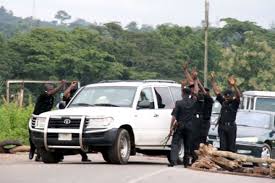
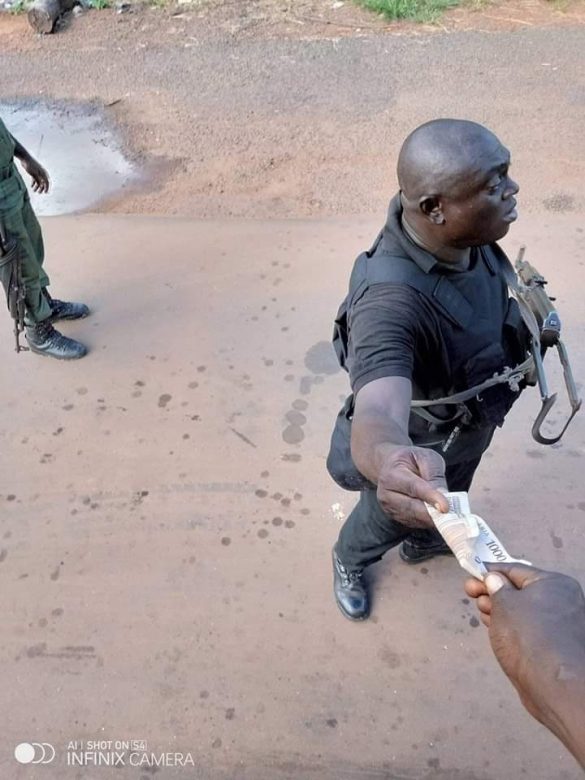
A 2018 report accused Nigerian security and law enforcement agencies of pocketing as much as N100 billion in roadside bribery and extortion in the South-eastern part of the country alone over the last three years. In a statement to PREMIUM TIMES, the International Society for Civil Liberties & the Rule of Law said findings into the report began in August 2015.The report with pictures that seemed to show officers receiving bribes at checkpoints.

BusinessDay Newspaper captured it thus: “Welcome to Southeast Region: Nigeria’s Headquarters of Official Highway Robbery is the title of a 2018 report by the International Society for Civil Liberties & the Rule of Law (Intersociety), a non-governmental organisation. The research for the report was conducted between 2015 and 2016 in the south eastern states of Abia, Anambra, Ebonyi, Enugu, Imo and some parts of Delta States. It graphically indicted the Nigerian police and other security outfits of collecting about 100 billion naira in bribery and extortion from motorists in the region. This amounts to 12% of the regions’ 2019 budget estimate of 870 billion naira (according to a recent presentation by Ike Chioke of Afrinvest.)

Globally, the World Economic Forum estimates that corruption costs the world economy 5% of its combined gross domestic output. This percentage encompasses the various vintages of corruption as categorized in extant research. Of course, if we sum up total institutional corruption in the SE region of Nigeria alone, it would triple this 12% police-specific bribery and extortion in the region.

According to Intersociety, “the report is also in response to the proposed military operations in Eastern Nigeria, code named: “Operation Python Dance IV” and “Operation Crocodile Smile IV”, scheduled for 1st Nov to Christmas Eve of Dec 2019 as well as planned flooding of the two regions particularly the Southeast with alleged greater number of “Federal Road Tollgates”.

“This is even as it is found that 70% of all Federal Roads in Eastern
Nigeria are a death trap.”

But Tony Onyima, a former managing Director of The Sun newspapers went a bit further. Here is his story.

Concerned by the increasing complaints about the pains of Nigerians plying the Lagos-Onitsha route, I decided to seize an opportunity on Wednesday, November 27, 2019 to find out the real situation. For complete experience, I traveled with one of the transporters at Jibowu. After an excruciating traffic along Redeemed Church corridor, we finally commenced the journey to Onitsha at 10:30am. By the time we arrived the Niger Bridge, I had counted 60 checkpoints. I was painstakingly taking notes and few shots. These checkpoints were manned by either soldiers, police, customs, SARS, FRSC or a combination. Below are the locations of the checkpoints to guide your next trip to Onitsha.

LAGOS TO ORE:

  1. Ilisan – Police checkpoint just in front of Babcock University
  2. Ilisan 2 – Another police check less than 300 meters after Babcock
  3. Ijebu Ode toll gate – Customs
  4. Ijebu Ife – Police
  5. Ijebu Itele – Customs, FRSC and Army
  6. Ijebu Itele 2 – Police and FRSC
  7. Ijebu Itele 3 – Police
  8. Ajebandele – Police
  9. Ajebandele 2 – Police
  10. Ajebandele 3 – Police and FRSC
  11. Ajebandele 4 – Army, Police
  12. Ajebandele 5; less than 100 meters – Police
  13. Ajebandele 6; less than 40 meters – Police
  14. Ajebandele 7 – Police
  15. Ajebandele 8 – Police
  16. Ajebandele 9 – Police
  17. Akinfosile – Police
  18. Omotosho – Army
  19. Omotosho 2 – Police
  20. Obatedo – Police
  21. Orilewo – Police
  22. Orilewo 2 – Customs
  23. Orilewo 3 – Police
  24. Orilewo 4 – Police
    ORE TO BENIN:
  25. Ore 1 – Police
  26. Ore 2 – Customs and Police
  27. Ofosu – Army
  28. Ofosu 2 – Police
  29. Ofosu 3 – FRSC and Police
  30. Ugbogui Town – Police
  31. Okada – Customs and Police
  32. Okada 2 – Police
  33. Okada 3 – SARS
  34. Okada 4 – Police
  35. Okada 5 – Police
  36. Okada 6 – SARS
  37. Okada 7 – Army
  38. Okada 8 – SARS
  39. Okada 9 – SARS
  40. Okada 10 – Police
  41. Okada 11 – Police
  42. Okada 12 – Police
  43. Iwinosa – SARS
  44. Benin toll gate – Customs, FRSC, SARS
  45. Benin By-Pass – Police
  46. Benin By-Pass 2 – SARS
  47. Benin By-Pass 3 – Army
  48. Ugoneki – Police
  49. Ugoneki 2 – Police
  50. Abudu – Customs
  51. Abudu 2 – Army
  52. Omumu-Agbor – Army, FRSC, Police and Customs
  53. Agbor – Police
  54. Ekwuoma – Police
  55. Issele Uku – SARS
  56. Issele Uku 2 – Police
  57. Akwa Ukwu – Customs and Army
  58. Ogwashi – Customs
  59. Okpanam – Customs and Police
  60. Onitsha Bridge head – Mopol

You can imagine what will happen in the next two weeks when my brothers and sisters begin their Christmas migration.

We at Law & Society conclude with Bongo Adi‘s words in BusinessDay Newspapers.

“There is no gainsaying that the extortion of transporters increases the cost of doing business in the east. Every naira extorted from the taxis and buses is directly passed on to passengers which increases the cost of living.

Beyond cost of living adjustments necessitated by this brazen menace of daylight banditry by the police, it needs to be stated that it is this sort of maltreatment that breeds disillusion with the government of the day and the system of governance and can be found at the root of current political dysfunction and social disunity in this country. One of the reasons Nnamdi Kanu and his IPOB flag as the justification for their protest is this victimization of the SE citizens of Nigeria by the nation’s security apparatus.

While acknowledging the rising spate of insecurity in Nigeria — not just the south east — that has necessitated increasing police presence, we cannot fail to condemn the increasing militarization of the state and the employment of intimidation as a governance tool. The economic consequences far outweigh any political gains — if there were any.”

TIPS