Home Blog Page 1430

Meet Haben Girma, The First Deaf And Blind Person To Graduate From Harvard Law School

Her memoir was released this month.

Haben Girma wears a lot of hats: she is a lawyer, a disability rights advocate, a 2013 White House Champions of Change honoree, a ballroom dancer and now the author of a new memoir. She does this as all as a Deafblind person. Girma is a child of Ethiopian and Eritrean immigrants. She grew up in Oakland California. She was born Deafblind and attended public school, where she learned sign language, spoken English and Braille. She uses a combination of accommodations to communicate with those around her, including a system she devised where a typist inputs spoken conversation into a keyboard that is linked via Bluetooth to a real-time Braille reader so that Girma can participate in the conversation as it happens. She can answer using spoken English. 

This kind of accommodation combined with a service dog to help her with mobility allowed Girma to become the first Deafblind person to graduate from Harvard Law School in 2013. Since then she has worked as a disability rights lawyer and argued critical cases to increase access to online materials for the blind. Now she has written a memoir about her life experiences.

Who is Haben Girma? Read on to learn more. 

1. Child of immigrants

According to an interview with NPR in 2015, Girma’s mother left Eritrea in 1983, during the war of independence with Ethiopia. Saba Gebreyesus made a two-week trek to Sudan, “walking at night to try to avoid the different military groups fighting in that area.” During the journey, she told her children she once she slept in a tree surrounded by hungry hyenas. She eventually resettled in California and met Haben’s father, another immigrant from Ethiopia. Haben was born in 1988 and attended public schools in Oakland. She told the Harvard Law Bulletin: “My parents tried very hard to make sure I had access to everything, and consequently I grew up thinking I could have access to everything.”

2. Self-advocating at college

When GIrma began college at Lewis & Clark College in Oregon, she faced challenges in the cafeteria: because the food station menus were postedon the wall, she could not access them and, instead, walked to a station and took whatever she was served. Her classmates got to make informed choices about their meals but she never got those choices and felt like she deserved to know what was at all the food stations. She joked to NPR: “What if there was chocolate cake at Station Four?” She asked to have the cafeteria menu made accessible to her electronically so that she could have it translated to Braille but the cafeteria manager wasn’t reliable about doing so and said he was too busy to honor the request. Girma says that at that point “I explained that Title III of the ADA requires businesses to make reasonable accommodations for persons with disabilities; if the cafeteria refused to do this, I would sue.” The menu started to arrive in her email inbox regularly after that. Moreover, the following year, a newly enrolled blind student was also able to take advantage of the system Girma had set up. 

3. Harvard Law School

By the time she was accepted at Harvard, Girma knew she wanted to work as a legal advocate for people with disabilities. She set up a series of systems to make law school work well for her including getting all assigned readings in a digital form so she could either listen to them on her computer — she has some ability to hear high-pitched sounds — or read them on a Braille display. During class Girma had a voice transliterator in the back of the room who would narrate the discussion for her, transmitting from their microphones into her earphones. Sounds amplification worked for her in quiet environments but for noisier spaces, she developed a two-keyboard system to communicate in groups. People can type into a Bluetooth keyboard, and the words pop up on a Braille for Girma to read. “This system has let me communicate everywhere,” she told the Harvard Law Daily, “from the loudest dance club to HLS receptions.” 

4. Champion of Change

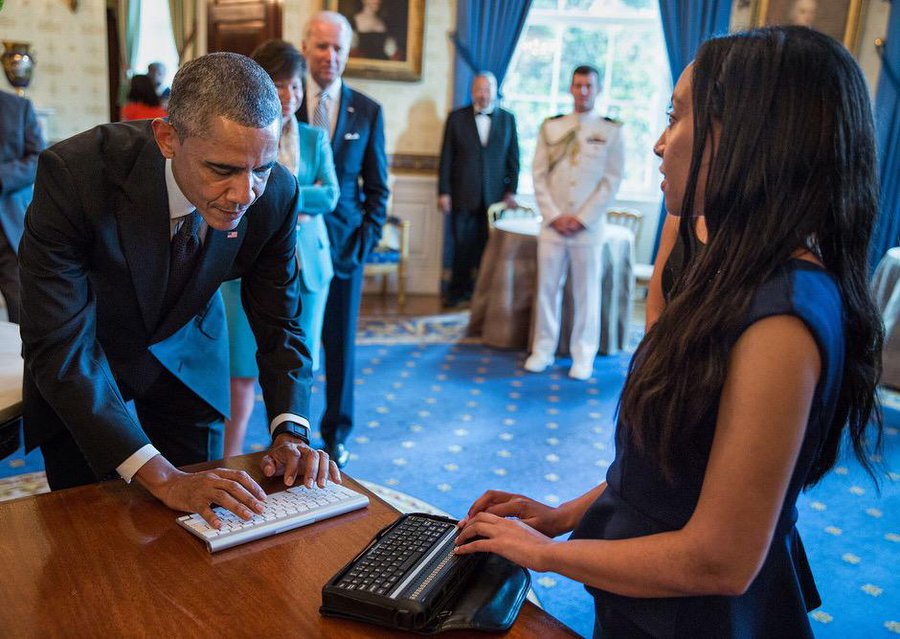
Friends and colleagues aren’t the only ones who have taken advantage of the two-keyboard set up to chat with Girma. In 2013, she was invited to the White House to introduce President Obama at an event celebrating the anniversary of the Americans with Disabilities Acts. She told NBC that Obama entered his side of the conversation into the keyboard but that he was a very slow typist. However, she said the whole interaction was positive, telling NBC: “A lot of people are uncomfortable with something that’s different…they come up with all kinds of excuses that basically say ‘this is weird; I don’t want to get involved.'” But Obama wasn’t. “He graciously switched from speaking to typing so that I could access his words. And we had an awesome conversation.”

petesouza (archived)@PeteSouza44

President Obama types a message to Haben Girma, who is deaf and blind, before she introduced him at ADA reception
View image on Twitter

Girma with President Obama

5. Professional disability rights advocate

After law school, Girma went to work for Disability Rights Advocates, a non-profit in Berkeley, CA.  According to her official bio on the organization’s website, “Working to increase access to technology for people with disabilities, she helped achieve victory in National Federation of the Blind v. Scribd, one of only two decisions to hold that the ADA applies to virtual businesses.” The case involved arguing that Scribd was required under the law to make materials in their online library accessible to the blind. After settling the case out of court, Scribd agreed to do so in 2017. 

6. New memoir out this month

Girma is telling her life story in her new book Haben: The Deafblind Woman Who Conquered Harvard Law. She says she hopes her story gives readers a new perspective on disabled persons, telling People magazine, “I hope people can move away from seeing people with disabilities as incompetent. If we remove barriers, we can have great inclusion.” Girma’s new book was released in August and is available at all major book sellers. 

Rebekah Kuschmider has been writing about celebrities, pop culture, entertainment, and politics since 2010. Her work has been seen at Ravishly, Babble, Scary Mommy, The Mid, Redbook online, and The Broad Side. She is the creator of the blog Stay at Home Pundit and she is a cohost of the weekly podcast The More Perfect Union.

Credit: https://www.yourtango.com/2019327054/who-haben-girma-new-details-first-deaf-and-blind-person-graduate-harvard-law-school

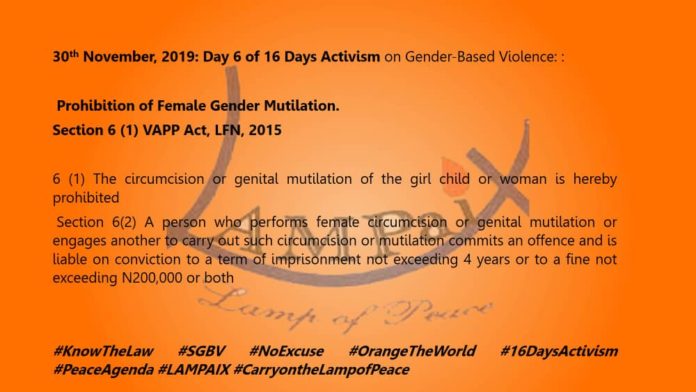
Day 6 of 16 Days Activism on SGBV

Female Gender Mutilation is a crime punishable under VAPP Act. Take the message to those in your villages, churches and mosques who think it’s a choice.

CarryOnTheLampOfPeace #16Days

#ThePeaceAgenda #OrangeTheWorld

#@FIDANigeria

Ladies be careful: The law is biased against you. A man can easily deny pregnancy or paternity of your child

By O. G. Chukkol

O.G. chukkol

The Law seems to be bias against ladies and in favour of men. A man can impregnate a lady and still go free by merely denying responsibility.

Ladies you see, the Law says, he who asserts must prove. In other words, if you allege that a man is responsible for your pregnancy, you must prove it. Mere assertion is not enough. Lawyers in this situation would refer you to sections 131 and 132 of the Evidence Act, 2011 and to many decided cases. Though the burden of proof may be light if you have several witnesses to give oral testimony in support of your case, but even at that, I just hope they can stand cross examination in matters of this nature.

And if you think after giving birth to the child you will sue your man and ask court to conduct DNA test on him, forget it. The reason is because though in the case of Olayinka Vs Adeparusi & Anor (2011) LPELR 8691 CA it was held that our laws permit DNA test in proof of paternity, the same court recently held in the case of Anozia Vs. Nnani & Anor. (2015) 8 NWLR (pt.1461) 241 that such test can be conducted only with the permission of the man if the man is above the age of 18 (an adult).

Furthermore, it was held in that same Anozia Vs. Nnani that conducting DNA test on a party to a case on the application of the other party would amount to resort to the coercive powers of the court to compel her adversary to supply her with the possible evidence she needs to prove her case. In other words, if the court is to embark on this exercise (of ordering a man to be subjected to a DNA test to prove that he was responsible for the pregnancy that resulted in the birth of a child), the court will be leaving its role of adjudication to play the role of inquisition. The court is a trial court and not an investigative agency or body. It would mean a lady is asking the court to assist her to procure the evidence which she requires to prove her case against a man.

The court added in Anozia’s case that it would amount to breach of an adult’s constitutional right to privacy for him to be subjected to DNA test.

Funny and Ironically enough, it is easier for a man to claim paternity of a child if the paternity is attributed to a different person. In other words, a man can sue a lady to claim a child if the lady mentions a different person’s name as the father of her child. Interestingly, he can apply for DNA test to be conducted on himself and the child for paternity of the child to be determined. The reason why law will agree with the man and conduct the DNA test is because the child he is claiming is not an adult yet.

I find the law very funny and quite illogical. What the courts seem to be suggesting is that a child does not have the right to privacy. This reasoning to my mind goes contrary to section 37 of the constitution which gives every citizen the right to privacy irrespective of his age or maturity. However, the position of the courts may be premised on the need to always protect the best interest of the child. But generally I would have preferred the law to allow men to be subjected to DNA test with or without their consent in that such is also in the best interest of the child. Though some men may disagree with my opinion by saying that ladies can abuse it and subject many guys to unnecessary DNA tests which would lead to embarrassment to innocent men.

Whatever perspective one may look at the whole situation from, the law is always the law irrespective of its harshness. It always stands until it is changed either by the legislature or the judiciary through judicial activism. Since the law doesn’t seem to favour ladies and ladies are always at the receiving end of “unwanted pregnancies”, that is, stigma and frustration among others, they need to shine their eyes.

I know the write up is too long but permit me to make a quick and short remark on the controversial statement of the Supreme Court of Nigeria in the case of Ukeje v. Ukeje (2014) 11 NWLR Part 1418 Page 384 to the effect that where a certificate of birth has been issued, evidencing the father of a person, the content of the certificate is conclusive proof that the person named therein (in the absence of proof that the certificate was not genuine) is the father of such a person. It does not matter who gives the information before it was recorded in the birth certificate. Should ladies then adopt this as a device of attributing paternity of children to stubborn guys? With profound respect to the learned justices this statement is too sweeping. I should not be misunderstood as disagreeing with the learned justices, I am only of the view that the statement is too general. I wouldn’t advise any lady to rely on this Supreme Court decision. This decision was based on its peculiar circumstance, so to my mind, adopting it may only lead to embarrassments to ladies.

O. G. Chukkol is a final year student, Faculty of Law, ABU, Zaria and may be reached via [email protected] or 08032470318

USSD Charges: Telcos threaten disconnection

…internet banking in Nigeria endangered

The future of internet banking in Nigeria appears to be under great peril as telecommunication companies threaten to deny banks the use of their platforms for money transfer.

Apprehension in the industry was hightened this week when the companies warned that they might to stop offering the Unstructured Supplementary Service Data (USSD), while accusing banks and the authorities of insincerity on the issue.

USSD is a Global System for Mobile(GSM) communication technology that is used to send text between a mobile phone and an application program in the network.

Speaking under the Association of Licensed Telecommunications Operators of Nigeria (ALTON), they expressed dismay at the silence and inaction of key stakeholders, including the Central Bank of Nigeria (CBN), Nigeria Communications Commission (NCC) and Body of Bank Chief Executive Officers (CEOs).

They also excoriated the role of Communications and Digital Economy Minister, Dr Ali Pantani, who issued a ‘directive’ to stop them from charging for the services they offer to the financial institutions.

Addressing a world press conference towards the group’s 20th anniversary, Chairman of ALTON, Gbenga Adebayo, challenged the argument that the cost of providing the services was ‘sunk’. He wondred if the cost of building a house could be described as ‘sunk’.

Adebayo said the companies invested huge cash to put the infrastructure in place, adding that they have been spending money to keep the base transceiver stations (BTS) running, in addition to other costs.

Adebayo said the operators will soon apply the relevant sections of the Nigerian Communications Act to stop providing links to the banks.

The operators, especially MTN, had stopped the implementation of the N4 charge per 20 seconds for every USSD access to banking services, following the public outcry and subsequent directive from Dr. Pantami.

The carriers insisted that stakeholders are yet to meet to discuss the way forward, “but the banks have continued to charge as much as N55 per transaction, using the same telecoms operators platform.”

Adebayo, while sharing the success story of the industry in the last 20 years, said the industry will not offer USSD services free of charge.

He stressed that the USSD cost was never a sunk cost as championed by the CBN, it is an infrastructure, which the operators have invested so much in the last one decade.

Adebayo said: “I am saying it again that the USSD links will not be offered free of charge. The records are there. We are tracking how much the banks are charging and making on the USSD. When the time comes, and we agree on way forward, we will show them what they have been charging. For the telcos, it cost them so much to provide the service.

“What should have happened is that when we first raised this issue, we made public statement and expected that a stakeholders meeting should have been called to discuss the matter.

“The CBN governor spoke, Minister of Communications and Digital Economy spoke, the NCC withdrew; and since then, nobody has said anything. We expected that a meeting of minds, where all parties (telcos and the banks) would come and talk on the matter to a find a lasting solution, but nothing of such. I am saying it again; we cannot bury this matter under the table and wish it goes away, it won’t go away. The fact is those links won’t be provided at no cost.

“When the time comes, we shall treat it as interconnect debt. We shall invoke the right of the provider of service under the Act of the NCC. So, if the banks will continue to enjoy the service and they won’t pay, telcos will make a case to the NCC for proper disconnect.”

She never gave up!!!

The odds were against her.

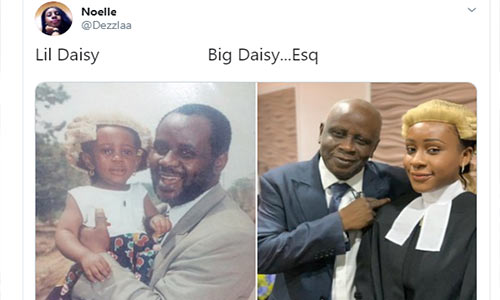
She was a science student. She had little to do with literature. It was all about the laboratory and all manner of science practicals. But – a picture kept flashing in her mind. It was like a little movie. It just wouldn’t stop playing – Her dad carrying her up as little girl and on her head was a lawyer’s wig.

View image on Twitter
Daisy and dad as a little girl

Then she took her chance. “I’ll study law,”she told herself. Then….a lecturer almost eclipsed that dream!

Her tweet:

“Went through a lot to get here….MADE ITTTTTTTTT!!!! Ahhhhhh
Physics, Chemistry and Biology in secondary school….a lecturer that made my life hell and about 2 years of missing results in university…I still came out on top. I can scream.”

Noelle@Dezzlaa · Nov 27, 2019 Big Daisy…Esq

View image on Twitter

This week, Daisy was among the over four thousand men and women called to the Nigerian bar!

FOI Act: Beautiful law facing implementation challenges

By Oladimeji Ramon

There was jubilation, particularly among media practitioners and civil society organisations, when in May 2011 former President Goodluck Jonathan gave his assent to the Freedom of Information Act.

The then new law was “to make public records and information more freely available and provide public access to public records and information.”

Its signing into law was to mark the end of a long battle for transparency and accountability in government institutions by the media and CSOs.

But eight years after the FOI Act was passed, the victory scored by the media and CSOs may have become pyrrhic, as the dream of free access to information is still far from being realised.

Speaking recently at a public hearing on the FOI Act organised by Socio-Economic Rights and Accountability Project, the Dean, Faculty of Law, University of Lagos, Prof. Ayo Atsenuwa, named the failure of government to repeal the Official Secrets Act as one of the major setbacks for the FOI Act.

The law professor also listed “tedious administrative processes of application for information” and widespread disobedience to court orders for FOI Act request enforcement as other factors frustrating citizens.

Atsenuwa added that despite the provision of the FOI Act mandating governmental institutions to be transparent by making information available on their websites, many such websites were “maintained more for public relations goals than to serve FOI standards.”

She said the FOI Act had not worked because after it was passed, the government failed or neglected to “retrain and structure a programme of debriefing of public officers to internalise a paradigm shift to make for more willingness to make information available to citizens.”

Atsenuwa said whereas the FOI Act was a beautiful law, the identified obstacles had hamstrung it.

“The FOI Act can particularly benefit citizens advocacy for good governance in provision of education, health care and water to citizens in the following ways — Expose and fight corruption; gain access to information needed to engage in informed advocacy with institutions of government; and enforce compliance with FOI standards by reporting on failure to comply,” Atsenuwa said in the paper she presented at the SERAP’s public hearing with the theme, “Building the Capacity of Citizens in Use of Freedom of Information Act as a Tool for Promoting Transparency and Accountability in Nigeria’s Health Sector.”

But for the obstacles, Atsenuwa said with the FOI Act, citizens ought to be able to “request allocation, procurement and projects implementation.”

“This information will enable them to track information or documents relating to budgets and finance and what is being done.

“If citizens identify impropriety through the search of records, such findings can be forwarded to the police, the EFCC or the ICPC for further Investigation,” she said.

The law professor explained that any citizen can request information under the FOI Act irrespective of age and notwithstanding any physical disability.

She said all public institutions had been mandated to make such information available within seven days of the formal request.

She said the law mandated all public institutions to oblige all requests for information except if the disclosure of such information will be “injurious to the conduct of international affairs or the defence of the Federal Public of Nigeria.”

She said even at that such information may be made available to the applicant if the public benefit of disclosure outweighs the injury that may be caused.

Atsenuwa said though the FOI Act gives citizens the right to sue any government institution which fails to oblige their requests for information, the enforcement of court orders had been difficult due to widespread disobedience to court orders.

Also speaking at the SERAP public hearing, Dr Fassy Yusuf, a Senior Fellow at UNILAG, said it was regrettable that despite the euphoria that greeted the signing of the FOI Act in 2011, “its implementation has been Herculean and quite challenging.”

He said, “Some of the issues bedevilling its implementation include: unwillingness by public officials to release information to the media, civil society groups and citizens; corruption in low and high places; cumbersome and expensive legal processes; unnecessary bureaucracy/red tape; absence of transparency and accountability in our body polity; lack of democratic ethos and open attitude to information dissemination by public officials, and bad governance.”

Yusuf lamented that as a result of corruption and lack of accountability, public service in the country had brought the citizens no joy.

“SERVICOM (service compliance) that was introduced during the regime of Olusegun Obasanjo died shortly after the euphoria that greeted its birth. It is to be noted that the disposition of the civil service to any law or project would determine its success or otherwise,” he said.

He also bemoaned corruption and bad governance in the country.

He said, “Bad governance has brought the country to its knees and it is responsible largely for the past and present misfortunes. One can only pray and hope that the current administration would be in a position to institutionalise good governance. This is because good governance brings about accountable and responsive democracy, effective and efficient system, egalitarianism and sustainable democracy instead of a token democracy. With good governance, we would have had better implementation of the Freedom of Information Act.”

He said for the FOI Act to serve its purpose, the government of the day must embrace transparency and accountability.

He said, “They are two important elements of good governance. Transparency is a powerful force that when consistently applied can promote accountability in government and assist tremendously in the procurement of information about the health sector from government sources. Lack of accountability has been largely responsible for the distrust of the citizens.

“When public officials realise that their activities are subject to public scrutiny, they become more circumspect in their affairs leading to transparency and accountability in the health sector.”

In order for the FOI Act to succeed, Yusuf said CSOs and citizens must continue to demand its full implementation.

Credit: Punch

Address root causes of gender-based violence, Groups tell FG

…. as FIDA cautions on the dangers of GBV

She was murdered in cold blood. The dead can’t talk. Yet, women strangely remain in abusive relationships. Why not walk away?

Ronke Shonde, a banker and mother of two, was beaten to death by her husband, Lekan Shonde, in Lagos. A manhunt for Mr. Shonde, who fled the murder scene, was launched. Before taking his wife’s life, Mr. Shonde used to “tie her, beat her and take her mobile phones away,” according to a neighbour.

Media in Nigeria is brimming with stories of gender-based violence at home, in the streets and elsewhere. Many of these with unpleasant conclusions. 

A study recently commissioned by the ministry of women’s affairs and social development and the United Nations Population Fund (UNPFA) Nigeria with support from the Norwegian Government found out that 28% of Nigerian women aged 25-29 have experienced some form of physical violence since age 15.

The study also reports that 15% of women experienced physical violence within 12 months preceding the survey Further, the level of exposure to the risk of violence varied based on marital status, and that “44% of divorced, separated or widowed women reported experiencing violence since age 15, while 25% of married women or those living with their spouses have experienced violence.

The most common acts of violence against women in Nigeria include sexual harassment, physical violence, harmful traditional practices, emotional and psychological violence, socio-economic violence and violence against non-combatant women in conflict situation.

Dr. Abiola Akiyode-Afolabi, founding director of Women Advocates Research and Documentation Center (WARDC) declared: “We call on the Federal Government [of Nigeria] to create more institutions that can address the root causes of gender-based violence, the impunity that often goes with the scourge, implement policies and enact laws, for a stronger national response that can support victims and survivors\of violence.”

She added: “The 16 Days of Activism against Gender-Based Violence (GBV) is also a time to remember victims and survivors of GBV and further re-evaluate the effectiveness of interventions currently in place to address the problem.”

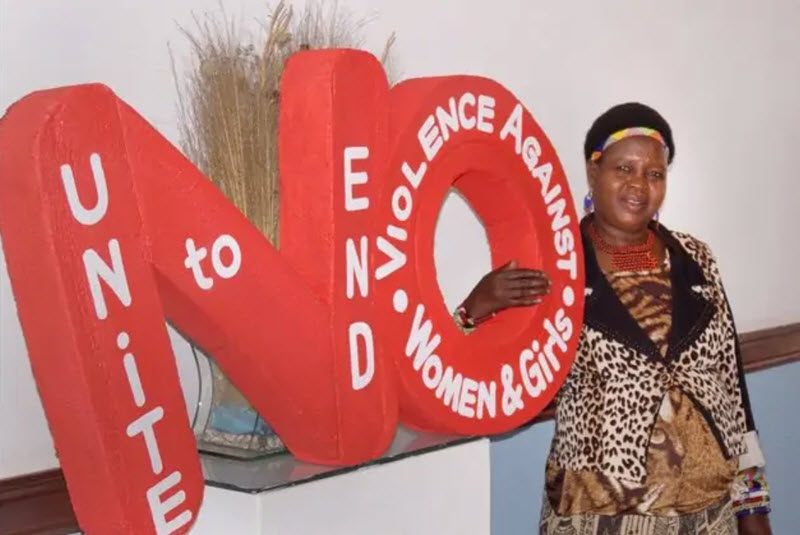
Tagged 16 Days of Activism against Gender-Based Violence, it is an annual international campaign that kicks off on 25th November, the International Day for the Elimination of Violence against Women, and runs until 10th of December, Human Rights Day. It was commenced by activists at the inaugural Women’s Global Leadership Institute in 1991 and continues to be coordinated each year by the Centre for Women’s Global Leadership. It is used as an organizing strategy by individuals and organizations around the world to call for the prevention and elimination of violence against women and girls.

This year, the United Nations Secretary-General’s UNiTE by 2030 to End Violence against Women campaign (UNiTE campaign) marks the 16 Days of Activism against Gender-Based Violence, from 25 November to 10 December, under the theme, “Orange the World: Generation Equality Stands against Rape!”

Uniquely, the Federal Government as a tribute to the event launched a register for sexual offenders aimed at naming and shaming rapists and other perpetrators of gender-based violence.

Three months ago, Ekiti State Government begun the public naming and shaming of convicted sex offenders in the state as part of efforts to curb sexual violence. The state government opened the register with the name of a former Anglican priest, Reverend Asateru Gabriel, who was convicted for sexually abusing a seven-year-old girl. Ekiti launched its Sexual Offender’s Register in 2013.

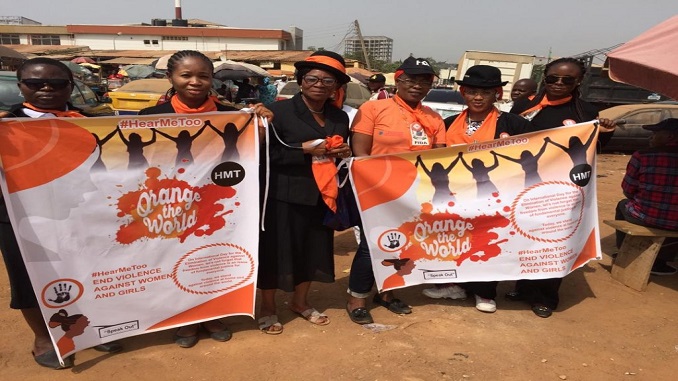
As activists and women groups the world over, express outrage on the rise of gender based violence, the International Federation of Women Lawyers (FIDA), Abuja branch, called on victims of rape to break the silence and speak up. Chairperson of FIDA, Abuja, Rekia Adejo-Andrew, made the call during awareness walk to commemorate the International Day for the Elimination of Violence Against Women on Monday in Abuja. The walk is also in line with the “16 Days of Activism Against Gender-Based Violence.”

FIDA Abuja further took its advocacy to Jabi motor park. Enlightening men on the social and legal consequences of battering and maiming fellow humans, particularly women, their attention was also drawn to the social and legal consequences of such actions – viz loss of life, prison term, psychological effects on children and more.

Meanwhile, legal support was rendered to those who revealed that their partners act violently towards them. Moreover, an enlightenment radio program was held on Wazobia FM where FIDA’s interactions with listeners were highly responsive.

At the same time, Lagos branch of FIDA in conjunction with Project Alert and  Network on Police Reform in Nigeria (NOPRIN), had a press Conference themed: Sexual Violence by Law Enforcement Officers in Nigeria (Police & co) to flag off the event.

Similarly, FIDA Edo partnered with Edo state government to encourage increased female political participation by reducing the rates of political violence, especially violence against women. They also held a sensitisation seminar for students of Benson Idahosa University, Benin and another for the police about their duties of protecting a Rape Victim to get justice.

Then FIDA Benue paid a visit to Government Girls Secondary School, Makurdi were a talk on GBV and Rape was delivered. Thereafter, members of FIDA Benue distributed sanitary towels to over 240 students.

Likewise, FIDA Plateau in collaboration with the Nigeria Association of Women Journalist (NAWOJ) went on the streets to campaign against Child labour and street hawking which are subtle ways of luring girls for rape purposes. In the course of the walk, children especially the girls were interviewed and flyers distributed in condemnation of CHILD labour.

In Bayelsa state, FIDA in collaboration with other gender champions (CSOs/NGOs) embarked on a peace walk to the Nigeria Police Force Headquarters, Bayelsa State Command, Yenagoa. FIDA Chairperson, Tariere Egbegi harped on the need to strengthen the fight against the menace of rape. 

On the other hand, LAMPAIX, a non-governmental organisation gave a charge:

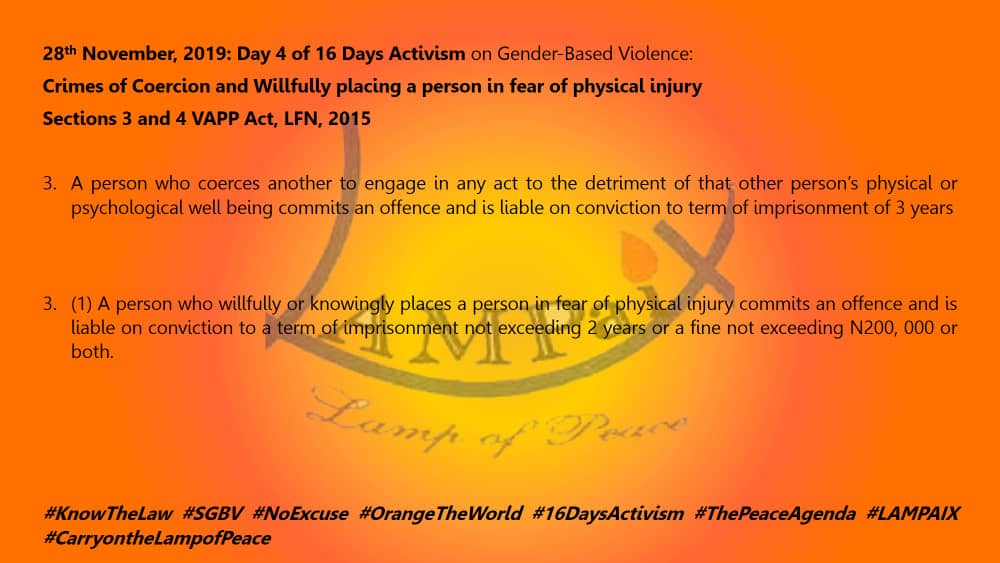
“Day 4 of 16 Days Activism on GBV

The two crimes we feature today are often tied to more serious offences like rape. It is important to understand that these and other crimes too are punishable under VAPP Act.

Don’t say ‘Thank God he/she didn’t rape me!’ Let the perpetrator pay for the crime committed.”

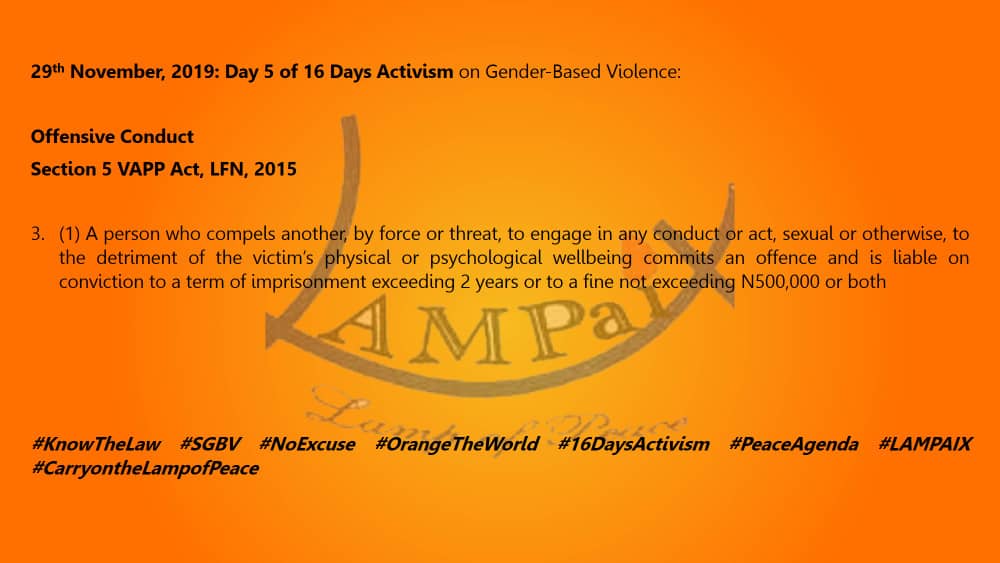
“Day 5 of 16 Days Activism on SGBV

Someone wanted to know if Workplace Sexual Harassment is covered by VAPP provisions. LAMPAIX believe ‘Offensive Conduct’ punishable by 2 years imprisonment takes care of such crimes for now….. Again note that both men and women commit these crimes against the other.

#CarryOnTheLampOfPeace #16Days #ThePeaceAgenda #LAMPAIX #UNWomen @FIDANigeria”

New Female Village Chief Annuls 850 Child Marriages And Puts Girls Back In School

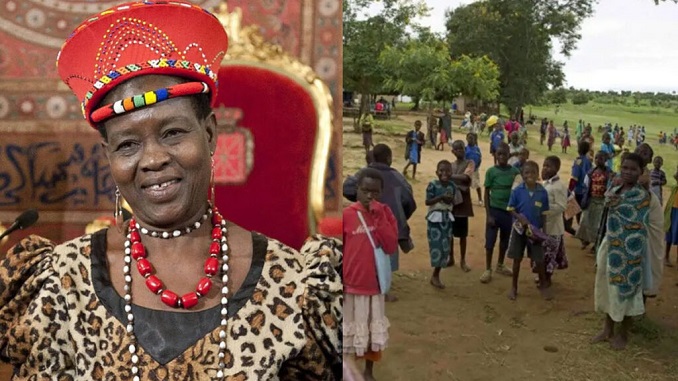
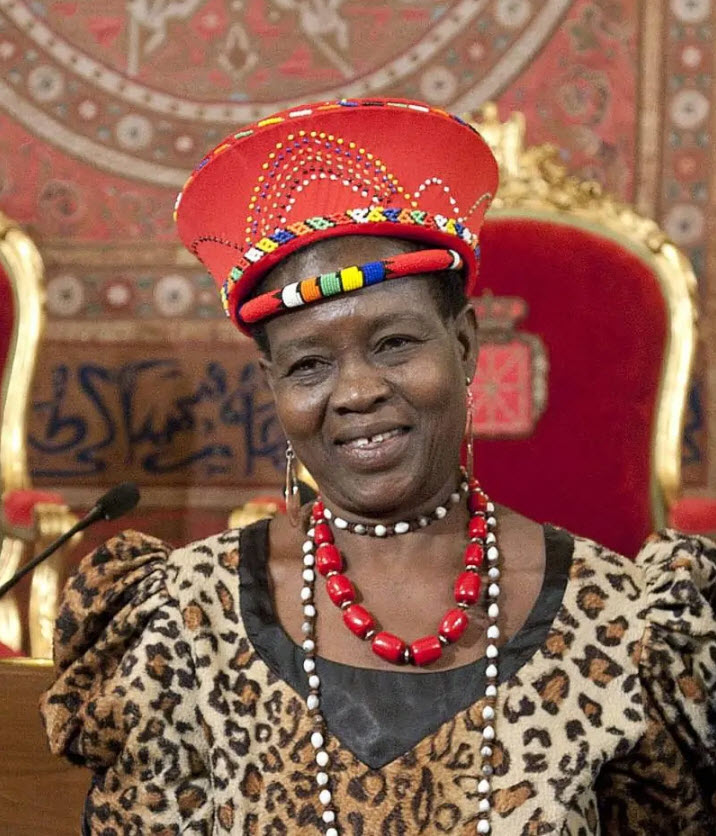
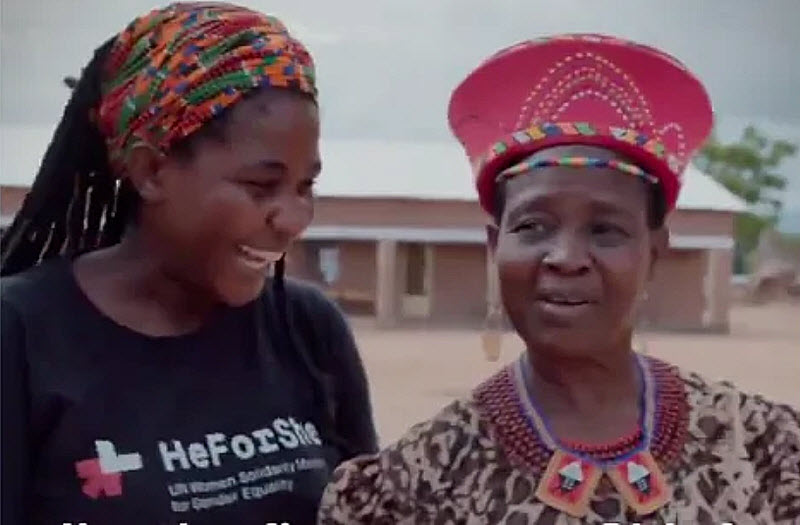
Most people have never heard of a hero quite like Theresa Kachindamoto. She was the youngest of 12 kids who were descendants of village chiefs who presided over Monkey Bay in Malawi, Africa. When she found out that it was her turn to serve as the new senior village chief, Kachindamoto had been working at a city college for the past 27 years. Once she came into power, she immediately set about bringing an end to the practice of child marriage within her jurisdiction. At first, Kachindamoto did not expect that she would ever have a chance to become chief. After all, she resided in a different town, had many older siblings in front of her, plus she was raising five children.

But, thanks to her reputation as someone who was “good with people,” Kachindamoto came into power thanks to a surprise election. And her people told her that the job was hers “whether I like it or not,” she recalled. And although child marriage is considered culturally acceptable in her area, mainly because of the high levels of poverty, it has also been illegal in her country since 2015. However, this did not put an end to child marriages since young girls could still be married so long as they have parental consent. However, Kachindamoto made up her mind to put an end to the long-standing tradition of robbing young girls of their childhoods by forcing them to marry older men and become mothers before they turn 18.

Source: Wikimedia Commons

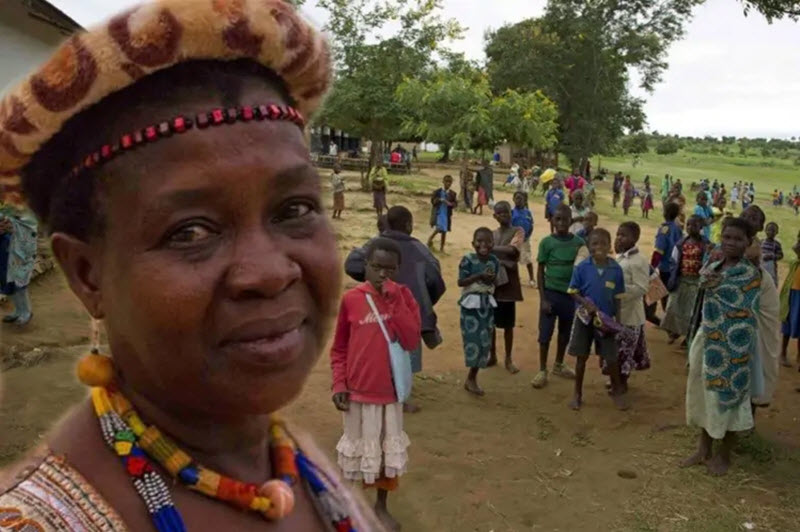
While traveling around Monkey Bay to meet with the people she was to govern, Kachindamoto met with girls as young as 12-years-old with older husbands and children they were raising.

“I told them: ‘Whether you like it or not, I want these marriages to be terminated.’”

Source: Google via Twitter

Kachindamoto’s story may seem small; after all, she’s only a village chief. However, she’s chief to over 900,000 people, which definitely takes her out of the “small-town mayor” category. So far, she has annulled over 850 marriages and sent those girls back to school.

Mawlawi is classified as one of the poorest countries in the world. And, according to a 2012 survey by the United Nations, over half of the country’s girls were married before turning 18.

Also, there are organizations working within the country to warn parents about the dangers associated with early marriage and childbirth.

Sadly, parents are typically so poor that they cannot afford to house and feed their daughters, so they often feel they have no choice but to marry them off to older men.

Source: Swathi Sridharan via Wikimedia Commons

The reality of child marriage is that it often leads to complications in childbirth, primarily because the girls’ bodies are too small to handle the stress of giving birth safely.

Perhaps even worse, these girls are often sent off to despicable camps for “kusasa fumbi,” a word that translates as “cleansing.” However, the practice is really a sexual initiation.

These camps instruct girls as young as seven-years-old on how to perform sexual acts to appease their future husbands.

Kachindamoto was the first chief to impose a hard-line stance against anybody involved in these practices, threatening to fire any sub-chief who sanctioned it.

Source: Affinity Magazine via Twitter

When parents started to protest Kachindamoto’s law, she did not back down. She knew that she could not change the minds of those parents, but she could change the law.

So, she brought together her 50 sub-chiefs and made them sign an agreement that officially abolished child marriage and annulled existing child marriages in her area.

Of course, there were those folks who decided to continue the practice anyway.

However, Kachindamoto demonstrated that she wasn’t messing around by firing four male chiefs who presided over areas where the practice was still taking place. They were only able to get their jobs back once they agreed to enforce the new law by annulling the marriages and sending the girls back to school.

Source: Vital Voices via Facebook

Despite facing numerous death threats, Kachindamoto remained steadfast.

“I don’t care, I don’t mind. I’ve said whatever, we can talk, but these girls will go back to school,” she said.

The new chief also came up with ways to pay for the girls’ schooling, considering that their parents could not afford the fees.

Source: The Wing via Twitter

However, Kachindamoto isn’t satisfied just to sit back and think she’s done enough. The chief also hired a network of “secret mothers and secret fathers” in the villages to ensure that parents are not taking their girls out of school.

And as for those who still complain about their chief’s new law? She says that they are the least of her concerns.

“I’m chief until I die,” she said, laughing.

What an incredible story of courage in the face of a long-standing inhumane tradition. Please be sure to share Kachindamoto’s story with your friends and family.

Source: Relieved

The Reckless Infidel (1)

By Mukhail Suleiman

The moment I saw him, I knew he was one of them. Those intrusive characters who thought they loved you more than you. Those pests who go about buzzing around your ears with their boring message. I was in a bad mood; I was frustrated; I was broke; and very angry. Who wouldn’t be angry? No job, no money; and yet we are being told that Change had become Next Level.

Why are these political parties no different from each other? One is made up of big time crooks who ate and soiled their lips with oil, and didn’t care to wipe their lips. They wanted us to know they were prosperous. The others, with their brooms; were also thieves, who robbed us blind, ate like those under the umbrella, but were smart enough to deceive us into thinking they were saints. We fell mugu. Four years after, we have discovered they were not a shade different from the umbrella boys and girls. In fact, most were under the umbrella, until they changed to wielding brooms.

We were so easy to bewitch. So very easy. The broom men (mostly men, of course) were also adept at eating, but knew how to wipe their lips clean, insisting ‘you know Baba does not allow anybody to eat’. Yet they stuffed their pockets with everything from dollars to Naira.

Are we cursed?

Then he smiled at me, again. I glared back at the religious bastard! He just kept smiling, while I turned away. Next Level. Is it up the ladder or below the ladder? Oh Allah, the most beneficent, the most merciful; when will you rain down your punishment on these wicked bastards?

“Good afternoon, my brother.” I almost jumped as I heard the soft voice. I turned to see the religious bastard standing right beside me in the bus. I was livid. Whether it was the snarling sound I made under my breath, but he took a step away. So, he had the temerity to make an incursion into my space. What is wrong with these Christians? He repeated the greeting.

I shouted back: “What is it, this man?” Everyone in the bus turned to look at me. Like me, they were all looking tired, frustrated, and angry.

The idiot almost jumped out of his skin, as he again cringed back. Serves the fool right, I thought to myself. He dared not do that to me in Maiduguri four years ago. I would have taught him a lasting lesson he would remember when he arrived hell. Bloody infidel!

“I am sorry, sir,” he managed.

“You better be,” i grunted back.

I returned to my political thoughts. When are the innocent ones going to be born in this country? When are we going to escape these blood-suckers, who have left us with a mishmash of terrorists, bandits, kidnappers, militant herdsmen, armed robbers, and to worsen matters, a crop of treasury looters? Oh, Allah, how long before you rain fire and brimstone on them and their children? How can a country for 20 whole years be this unlucky? Who cursed us?

And then it happened again. That voice. That idiot. That religious infidel spoke up, again.

“Good afternoon, sir”. I turned ever so slowly, like a cobra, mustering all the anger, gathering spit from every corner of my mouth to respond and spit in his ugly face.

“Oh, good afternoon, my brother,” another passenger answered. I quickly swallowed the mouthful of spittle, to even my own disgust.

And then the conversation that was to enthral us all began.

“You know that Jesus loves you”.

“Seriously? Is that why you greeted me? I shouldn’t have answered you at all. So Jesus loves me and is allowing the suffering all around us? Please do not disturb me, I am a Muslim, and I don’t believe in your Jesus”.

“You are a Muslim and you don’t believe in Isa al-Masihu? That is strange.”

“That is not what I said. I said I do not believe in your Jesus, not Prophet Isa. Your own Jesus is different”.

I was recoiling and praying that this would get out of hand, so I could shed some blood. I touched my side, but my dagger wasn’t there. I was disappointed. I took a cursory look around, and saw we outnumbered them. I was itching for war. These Christians needed to be taught a lesson.

“But I thought Jesus Christ is the same as Isa al-Masihu, born of a virgin woman named Maryam, announced by Angel Jibrin?

Yees?

“So when did he become my own Jesus?”

“From the day you people said God is his father”.

“In Arab culture which you draw from, can a person be without a father?”

“Okay. From the Jewish culture which you draw from, can a person be without a father to now claim God is his father?”

Now this was getting interesting. I was sure we were all listening but we pretended not to care. I knew my people were waiting for a word of blasphemy, and the bus ride to Gwagwalada was bound to come to an end. I craned my neck and was somewhat disappointed to see the driver and those immediately surrounding him looked like Christians, but I was confident we had the number. But with everyone these days wearing kaftans, could I be that sure? I began to check the foreheads as the two continued their discussion.

“I concede, but what is it Angel Jibrin told Maryan. I thought he said the spirit of God will come into her and she would have a son?” the Christian asked.

And so?

“So, if the spirit of God is the one that caused her to conceive; and we both agree that in Jewish and Arabic cultures you cannot be a living being without a father, who can he, I mean he, Isa al-masihu, claim to be his father?

“I don’t know”.

“Haba, aboki na, how can you say you don’t know. By your admission, the spirit was God’s, just like the sperm from me into my wife stayed in her for nine months and produced my first child, Caleb. So, who is Camel’s father?”

Silence.

I was both confused and angry.

“You are wrong!” I shouted angrily.

Everyone turned to look at me. Was it my voice? Was it the shout? Was it the anger in the voice?

“Gentlemen, let us end this needless debate,” an elderly voice said from behind.

“Nooo!” I shouted again.

This time they all really looked at me. Some listlessly, others with uncomfortable interest.

It was only the preacher that was smiling with something, like gentleness, in his eyes. I felt like throwing a punch at his wide African nose, but held back. For the first time, I noticed he was a burly man. I was sad my dagger was not on me.

“So, why do you say no,” he asked gently

I was lost, waiting for the anger to dissipate, so I don’t sound like a senseless zealot. I changed the direction of the discussion. “You Christians…” as soon as the words came out, I shut my mouth. They had bile, they sounded accusatory and war-like. I quickly reminded myself I was in Abuja and not Maiduguri. Oh, how I missed Maiduguri. May Allah punish those Boko Haram boys!

“What I meant to say was, why do you Christian’s say he is God? That is the worst kind of blasphemy.” I managed to say through clenched teeth.

“Please remember I said we should close this discussion,” the same elderly man cautioned, again, from behind.

“No sir! Are we saying that as Nigerians we cannot have a civilised discussion in a bus”? I couldn’t believe I uttered those words. Everyone turned to look at me as if I was from the moon. I began laughing inexplicably. Almost everyone joined and the tension eased.

“Okay, Mr. Smiley,” I said to the gentle giant, “what is your take on my last question, now that there is no tension again”.

The Christian looked around, and when he saw everyone in the bus fix their gaze on him, he erupted into rapturous laughter that shook all of his frame. When he finished, he asked, “is it me you called Mr. Smiley?”

“Of course, you are the only suffering and smiling Nigerian on this bus,” I replied. I was really seeking to draw him out for a killer punch to his Jesus preachment. He fell for the bait.

“Well, what is your name,” he asked. I was caught off-guard.

“Mukhail Sulaiman,” I ventured

“So your father’s name is Suleiman.”

“Yes, and so?”

“So Suleiman’s son can be called Suleiman?”

“Yes, and so?” It hit me like a bullet before I could take it back. I felt foolish.

“In effect, if the Arabs and the Jews from whom we draw our different faiths believe a man can’t be born without a father and Jesus was born of the Spirit of God, he is the son of God; and if Mukhail can claim to be Suleiman, then Jesus can claim to be God”.

Everywhere went silent like a graveyard.

We drove in that eerie silence until we arrived Gwagwalada. And then he spoke.

“Thank you, Mukhail, for the interesting time. I am not asking you or anyone to become a Christian. Just that we all remember that the Almighty God is the way, the truth, and the life. God bless you all”.

I watched him climb down and walk away as he exchanged numbers with the man he started the discussion with. I made a mental note of the time, hoping to catch a ride with him for a return match. I would have to visit my Mallam and study harder for when I meet him or his type again.

Weeks now, but I never stopped thinking of our discussion.

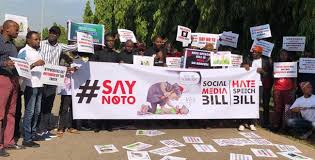
ECOWAS Court judgement Criminalises Nigeria’s Hate Speech Bill

…. as Babangida, Tambuwal, Osoba decry moves to gag free speech

It might be uhuru at last for proponents of free speech as plots to push the hate speech bill in the red chambers appears to be wobbling.

Senate President Ahmed Ibrahim Lawan was today presented with a court judgement to safeguard the Senate from falling into an error with regards to barring free speech in Nigeria.

The November 28, 2019 letter drew the Senate’s attention to a judgement of the Community Court of Justice of the Economic Community of West African States (ECOWAS) which had debarred Nigeria’s government from criminalising free speech in whatever guise.

Delivered by Mackay Chambers and Associates, part of the letter reads: “We hereby inform you that, the exercise in pursuing this Hate Speeches Establishment Bill 2019 is one in futility and therefore, the taxpayers money should not be plunged into it, in view, of the Judgment of the ECOWAS Court which has been termed by the global community as a landmark Judgment, a trailblazer for the global freedom of expression.”

The judgement was the culmination of the arbitration in a case instituted by Festus Ogwuche and Anor v. the Federal Republic of Nigeria.

A part of the certified true copy of the judgement reads:

“That on Tuesday the 11th day of December 2018 in Suit no; ecw/ccj/app/ 10/15; judgment no; ecw ccj jud 31/18, quashed and forbids the Federal Republic of Nigeria from criminalizing free speech in whatever form, colour or clothing and barred her from free speech or press censorships enshrined and guaranteed under Article XIX of the African Charter on Human and Peoples’ Rights, and the ECOWAS protocol on Democracy and Good Governance.”

The judgement states that all these are covenants from the Universal Declaration of Human Rights to which Nigerians enjoy its full declaration

The letter further stated that the hate speech bill runs contrary to section 22 and 39 of the Nigerian Constitution and other international convention to which Nigeria is a signatory.

The letter also disclosed that: “The Hate Speeches Establishment Bill 2019 is contrary to Section 22 and 39 of the 1999 Nigeria Constitution as amended which guarantees freedom of expression. It needs no saying that, any Law or Act that is or are contrary to the grand norm of the Constitution is null and void.”

Meanwhile, former military President, General Ibrahim Badamasi Babangida (rtd) has said that there is no basis for the Hate Speech Bill before the National Assembly, insisting that no one can muzzle the voice of Nigerians.

General Babangida spoke at his Minna hilltop residence when he received the National President of the Nigerian Union of Journalists (NUJ), Chief Christopher Isiguzo who was there on courtesy call.

A similar bill he revealed was presented before the Eighth National Assembly but that he advised against it saying: “I am surprised that this bill has resurfaced”.

“There is no basis for this now; we are developing and we should be allowed to develop; if we make mistakes people can be cautioned. If somebody goes off, you have the right to call him to say ‘no we don’t want this.”

He remarked that “unless people are able to express themselves that the government or those in authority will know what is happening in the country”

The former military president who said the only reason for the bill is that the sponsors want to show “eye- service as we call it in the army,” described the death penalty prescribed in the bill as “crude.”

“If somebody makes hate speech, and you put him in the gallows and shoot him, it is crude; it is not in the 21st Century. It could have happened may be some 300 years ago but not now.”

Babangida told his visitor that he will join the NUJ and other stakeholders in protesting against the passage of the bill saying, “I am with you on this. I will also talk to those of us who could be in position to bring sanity to some of these things”.

The former military president said he had been following media publications on the forth coming elections in the United States of America, adding that “if we had their type of media, I think they should be jailing you all by now.”

He credited himself with opening up the media space in the country even when some of his colleagues opposed his policy, “but today the country is better for it.”

Babangida challenged the media in the country to remain “strongly focused on what Nigeria wants, “ adding that we can only succeed if we allow this freedom unfettered without death threat or N10m it sounds silly”

Earlier the proposed Hate Speech and Anti-social Media bills came under heavy attack and condemnation at the 15th All Nigeria Editors Conference (ANEC) in Sokoto.

Leading the pack, host Governor, Rt. Hon. Aminu Tambuwal of Sokoto State, warned that omnious clouds are gathering over the country, and that Nigeria cannot continue to run democracy like a military dictatorship. According to Tambuwal, “Hate speech and Social Media bills have no place in a constitutional democracy.

Likewise, Osoba offered to lead the Guild, even as a chieftain of the ruling All Progressives Congress (APC), to lobby the senators,  to ensure that the bills do not pass through.

Acting President of NGE, Mr. Mustapha Isa in his welcome address, reminded those behind the bills that there are already enough laws in the country to check the infractions which the proposed bills seek to address. Isa restated the the Guild does not, and will not, support the proposed bills, as they are tantamount to gagging the media

TIPS