Home Blog Page 141

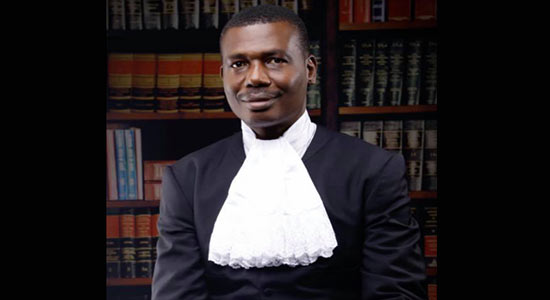
My position on the events surrounding the 2025 SPIDEL elections, By Dr. Anne Agi

Dear colleagues, good afternoon.

When the Electoral Committee of our Section (the Section on Public Interest and Development Law-SPIDEL) issued the notice of elections and called for nominations, I complied fully with the process. I downloaded the nomination form, completed it for the office of Secretary, and submitted it within the stipulated timeline. The Committee neither queried nor faulted my documents. In the report of the committee, published by a member, I was not just recorded as the only validly nominated and qualified candidate for that office, I was the only candidate who applied for that office.

In keeping with the guidelines, I expected the list of cleared candidates to be published. It was never released. As the election day approached, rumour began to circulate that a different list was being prepared. I refused to rely on rumours and waited for due process to follow its course.

Before the conference, I placed a call to the Caretaker Chairman, Prof. Paul Ananaba SAN, to respectfully inform him of my intention. He acknowledged it and stated that he had no objection to my candidature. He then added that I should call Mr. John Aikpokpo Martins to persuade him to step down from the chairmanship race and that once I succeeded, my candidature would present no issues. I was to call him back after I had carried out this assignment. I did not consider this request appropriate and did not act on it.

Indeed, I am not so desperate to be SPIDEL Secretary that I would be moved to do what was being proposed, just to be secretary. It’s not that serious.

While at the SPIDEL Conference in Uyo, I was informed that a meeting had been held on Tuesday, 2 December. Present at that meeting were the NBA President, Mazi Afam Osigwe SAN, the Caretaker Chairman, Prof. Ananaba SAN, Dr. Monday Ubani, SAN, Mr. John Aikpokpo Martins, Mr. Kunle Edun, SAN, Mrs. Princess Frank-Chukwuani, Dr. Uju Agomoh and several senior members of the Section. I was further informed that at this meeting, the electoral committee chairman sought to present the electoral committee report, but the same was jettisoned (grounds upon which he resigned). I was further informed that the issue of my candidature was discussed, and the NBA President reportedly stated categorically that he did not want me. He then personally put forward the name of my branch chairman, Mr. Enome Amatey, who was present at that meeting, as the person he preferred for the office of Secretary. My Chairman did not submit a form for that office or any office.

When the full account of the midnight meeting was brought to my attention, I reached out to some of those who attended to understand whether the reports were true and what position the elders of the Section had taken. The feedback I received was disheartening. I was informed that since the NBA President stated clearly that he wanted neither me as Secretary nor Mr. John Aikpokpo Martins as Chairman, those present felt there was nothing they could do, but comply.

One may wonder why I should be of such consequence that an NBA president would sit in a meeting and insist that I must not emerge as secretary. I am little me, after all. The reason is neither complex nor speculative. The President has long been upset that I did not support or vote for him in the NBA elections. This is not conjecture. He told me so himself two years before he even contested. In 2022, I called him to invite him to my book launch. Rather than receive the invitation, he expressed great anger and said a close friend of mine had told him I was not going to vote for him in 2024, but for Chukwuka Ikwuazom, SAN. He threatened to reveal the name of this friend. I waited. He never did. The call ended. From that moment, every chance meeting was coloured with hostility. I could not understand why anyone would be upset over an election that was still two years away.

After his inauguration, I simply kept my distance.

When I was later approached by a mentor and respected learned silk to serve as Chief Rapporteur of the 2025 NBA Annual General Conference, I declined because of my schedule. When he insisted, I explained the reasons, including my concern that the NBA President would not approve it. The learned silk disagreed and said he would call the president to confirm. The call was made. As I predicted, the President vetoed it. His initial excuse was that I had served as Chief Rapporteur at the 2024 AGC and failed to submit the conference communique. When this got to me, I clarified that I was not the Chief Rapporteur for that Conference. When this was conveyed to the President, he then admitted that the real issue was that I did not vote for him. To avoid misunderstandings, I sent a WhatsApp message to him, correcting the wrong assumption about my involvement in the 2024 AGC and non submission of a communique and moved on.

When the SPIDEL Caretaker Committee was setting up the CPC for the SPIDEL 2025 Conference, I was approached on 2 occasions to serve. I declined again because I knew the NBA President would oppose it.

When the SPIDEL elections approached, I decided to take a chance to serve the section because I believed that a democratic process would prevail, the offices being elective. I believed that SPIDEL, a section that prides itself on public interest and the rule of law, would uphold its own rules. I was wrong.

On the 4th of December, 2025, despite all the rumors, I decided to go to the SPIDEL AGM myself to see whether or not the elders of the Section would keep the banner pristine as they had espoused at the different panels of the conference.

At the AGM, the caretaker leadership announced that the Electoral Committee report had been rejected because of alleged errors, and since they was no time to conduct elections, certain other persons had been selected to man the affairs of the section. Mr. Nasarawa, a member of the electoral committee, then presented a report of the electoral committee different from what is in circulation, to the effect that there were irregularities in the committees work, hence the need to select persons to man the affairs of the section. Some of the irregularities he claimed, included the fact that some persons had been disqualified for non payment of BPF, even when they had network issues. He also informed us that the electoral committee Chairman, Mr. Kunle Edun, SAN had resigned, and he had been directed to present this new report to the AGM.

Yet the original electoral committee report itself has been circulated by a member of the committee and shows that the Committee carried out its mandate in accordance with the published guidelines. It shows clearly that I was validly nominated, unopposed, and qualified for the office of secretary. The only apparent problem was that some preferred aspirants were disqualified on legitimate grounds.

Mr. Nasarawa then reeled out the names of these selected persons, and my name was announced miraculously as a council member, even though I never applied for that position. On the floor of the house, I immediately objected. I made it clear that I did not agree to the truncation of the electoral process and that I would not be pacified by being handed a position I neither sought nor applied for. I requested that my name be immediately removed, and it was. All other selected members were called out, and those individuals came forward and were presented to the meeting as the new executives of the section. A motion was moved and seconded by those recognised by the interim Committee Chairman, Prof. Paul Ananaba, SAN, adopting the selected persons, and all individuals who sought to take counter motions were denied.

The result is that persons who did not go through the legitimate electoral process, including persons earlier disqualified, were announced as the new leadership of SPIDEL.

This action undermines the Electoral Committee, disregards the guidelines and the NBA Constitution, and nullifies the effort of those of us who complied with every requirement. For the office of Secretary, for which I was validly nominated and unopposed, another person was declared Secretary without any election.

It has been said that some of those present at the meeting on Tuesday night, including learned senior advocates, stated openly that they could not contradict the NBA President when he objected to my candidature. I find this profoundly troubling. The leadership of Sections has never been determined by the unilateral preferences of an NBA President. What happened in SPIDEL is an anomaly and a personal vendetta carried too far. It is even more disturbing that men we consider elders of the Bar sat through it in silence.

None of these elders of the section, whom I once held in high esteem, thought it necessary to call me or explain the decision taken at this midnight meeting. Instead, they assumed that inserting my name as a council member would somehow placate me, a position I understand was equally not acceptable to the NBA president. There assumed wrong. This is not a Council I want to be associated with.

Much has been said about sacrifice for SPIDEL. If there is anyone who has sacrificed, quietly and consistently, it is I. We do not publicise the work we do, but the work exists. Until the last administration was suspended, I was the Editor-in-Chief of the SPIDEL Newsletter and produced the first ever official publication of SPIDEL housing articles by members. (The soft copy is attached and printed copies are at the NBA Secretariat). Yet I now hear SPIDEL elders are making phone calls and falsely claiming I abandoned the section, to justify their illegal actions.

Dear colleagues, I am done. Let those who wish to become SPIDEL executives by any means carry on. I will not be part of anything that undermines SPIDEL. The manner in which this exclusion and imposition was executed is nauseating and makes it clear that the years I have devoted to this section are not valued. I would rather invest my time and service elsewhere.

A section that speaks loudly on public interest, due process, and the rule of law must hold itself to those same standards. When gatekeepers forget this, when the procedure is discarded, and when personal grievance becomes the compass, the Section loses its moral voice.

This entire episode has been a sober lesson on betrayal, the fragility of integrity, and the emptiness of friendship when power is involved. Persons I considered to be men of integrity could not say no or take a stand when it mattered. It’s very revealing!

Dear colleagues, I owe you all the truth. This is my record. This is for my peace of mind.

There is a righteous judge.

I remain my father’s daughter.

Dr. Anne Uruegi Agi

AGF takes over trial of lawyer, influencers accused of cyberbullying Senator Shehu Buba

The Attorney General of the Federation and Minister of Justice has taken over the prosecution of an Abuja lawyer and four social media influencers accused of cyberbullying serving Senator Umar Shehu Buba.

The Minister took over the trial of the defendants from the Inspector General of Police at Thursday’s proceedings at the Federal High Court in Abuja.

At the proceedings before Justice Rita Offili Ajumogobia, Nueebu Leyii Abueh announced appearance and the takeover of the prosecution on behalf of the AGF.

The counsel from the Federal Ministry of Justice told Justice Rita Offili Ajumogobia that the AGF has taken full charge of the case from the police.

The takeover of the trial came amid the granting of stringent bail conditions to the defendants by Justice Rita Offili-Ajumogobia.

In three separate rulings on bail applications, the Judge admitted them to bail in the sum of N1M each and one surety each in the like sum.

The surety must be a grade level 12 in the federal government employment.

In the alternative to government employees, the surety must be a person of standing repute and must have landed property at the Abuja Municipal Area Council AMAC of the Federal Capital Territory FCT.

The property must have a Certificate of Occupancy, and the original must be deposited with the Registrar of the Court.

Besides, the surety must swear to an affidavit of means and deposit two passport photographs each before being released on bail.

Justice Rita Offili-Ajumogobia ordered that the inability of the defendants to meet the bail conditions would automatically lead to the revocation of the bail.

Pending the perfection of the bail, the Judge ordered that they should remain in custody.

Meanwhile, the matter has been adjourned to January 26, 2026, for continuation of the trial.

Ahmed Abdulrahman, a lawyer and four other Social Media influencers have been prosecuted by the Inspector-General (IGP) on allegations bordering on cyberbullying Senator Shehu Umar Buba, Chairman, Senate Committee on National Security and Intelligence.

The IGP, in the charge, marked: FHC/ABJ/CR/526/2025 and filed by Anthony Egwu on October 6, named Abdulrahman, 41 years; Daure David, 35; Ishaq Muhammed, 25; Abdulrashid Musa, 30; and Nasir Abubakar, 21, as 1st to 5th defendants respectively.

The defendants were, on October 30, arraigned on an 11-count charge which also bordered on cybercrime, defamation, advance fee fraud, among others.

They, however, pleaded not guilty to the counts, and Justice Ajumogobia ordered their remand at the Force Criminal Investigation Department (FCID).

In count one, the defendants were alleged to have, sometime in 2025, conspired among themselves “to commit an offence, to wit: cyberstalking against Senator Shehu Buba Umar.”

The offence is said to be contrary to Section 27(1)(b) and punishable under Section 21(1)(b) of the Cybercrimes (Prohibition, Prevention etc.) Act 2015 (as amended) 2024.

In count three, Abdulrahman, the 1st defendant, was alleged to have, sometime in 2025, intentionally sent a video via his TikTok handle with the user name “Kibanna Channel” and his YouTube channel to defame the lawmaker by linking him to sponsorship of banditry with a view to tarnishing his image as a serving Senator.

The suspect was alleged to have stated that “Senator Umar, a serving Senator of the Federal Republic of Nigeria, is a sponsor of banditry and called for his investigation, a statement you made by means of computer systems and network knowing same to be false, for the purpose of causing breakdown of law and order and causing the Senator fear of death”.

The offence is also said to be contrary to Section 24(1)(5) of the Cybercrimes (Prohibition, Prevention, etc) Act 2015 (as amended) 2024, among other counts.

In one of the counts, Daure David was accused of attempting to collect N5 million from Senator Umar Umar under false pretences that the money would be used to settle those planning to protest against him.

Meanwhile, the matter has been adjourned to January 26, 2026, for continuation of the trial.

Osimhen crowned GQ sportsman of the year amid Nigeria’s CAF voting scandal

Super Eagles striker and Galatasaray standout Victor Osimhen has been named Turkey’s GQ Sportsman of the Year, adding another major accolade to what has been a career-defining spell in Istanbul.

Osimhen received the honour on Wednesday night at a black-tie ceremony in Istanbul, where GQ Turkey celebrated leading figures in sports, entertainment, fashion and culture.

A Record-Breaking Season

Since joining Galatasaray, Osimhen has become one of the club’s most influential stars. His debut season was nothing short of dominant:

  • 37 goals and seven assists in 41 matches,
  • A domestic league and cup double,
  • And a transfer that made headlines—Galatasaray activated a permanent deal worth €75 million, the highest in Turkish football history.

Though hampered by injuries this season, Osimhen has maintained his scoring touch, netting 11 goals in 14 appearances across all competitions.

A Pillar for the Super Eagles

Osimhen also remains central to Nigeria’s national team. Despite missing the first four games of the 2026 World Cup qualifiers, he returned in explosive form, scoring six goals in five matches and leading Nigeria into the play-offs.

He scored twice in the semi-final win over Gabon, but a late injury limited his impact during the final against DR Congo, where Nigeria fell on penalties.

Osimhen is expected to spearhead Nigeria’s attack at the 2025 Africa Cup of Nations in Morocco, scheduled for December 21 to January 18, 2026.

The striker thanked GQ Turkey, Galatasaray, and fans worldwide, promising to “continue giving his best for club and country.”

Other GQ Honorees

The ceremony also recognised leading figures across Turkish entertainment and culture.

  • Aras Aydın: International Achiever of the Year
  • Sinem Ünsal: Woman of the Year
  • Edis: Music Person of the Year
  • Bahtiyar Büyükduman: Chef of the Year
    Eleven other awards honoured influencers across media, arts and business.

CAF Awards Ignite Controversy in Nigeria

Meanwhile, the release of the 2025 CAF Awards voting results has triggered widespread backlash in Nigeria, with critics raising questions about transparency and fairness.

Morocco’s Achraf Hakimi won African Footballer of the Year with 533 points, ahead of Mohamed Salah (317) and Osimhen (240), despite the Nigerian striker’s exceptional club season.

The fiercest criticism followed the ballot submitted by CAF Technical Expert Daniel Amokachi, who ranked Osimhen fifth, awarding him just one point.
Fans reacted with anger, accusing some delegates of “undermining Nigerian players on the global stage.”

Nigeria’s head coach, Eric Chelle and team captain William Troost-Ekong had both voted Osimhen first, placing Hakimi second.

Debates Also Hit the Women’s Categories

Morocco’s Ghizlane Chebbak won Women’s Player of the Year, ahead of Nigeria’s Rasheedat Ajibade and Esther Okoronkwo.
Nigerian media delegate Samuel Ahmadu prompted further uproar after ranking Ajibade fifth and placing Goalkeeper of the Year winner Chiamaka Nnadozie only fifth on his ballot.

He also ranked Tanzania above Nigeria for Women’s Team of the Year—a category Nigeria still won by a narrow margin.

Calls for CAF Voting Reform Grow

Analysts say the voting irregularities highlight systemic issues. Some national associations failed to submit ballots, while others may have misunderstood the scoring system.

CAF has said votes were based on performances from January 6 to October 15, ahead of the November 19 ceremony in Rabat.

As debate intensifies, Nigerian fans and football analysts are calling for stricter guidelines, greater transparency, and independent oversight to protect the integrity of African football’s biggest awards.

Gunmen strike returning IDPs in Taraba, 17 feared dead

Not less than 17 persons have been reportedly murdered following an unprovoked attack by armed men, suspected to be the Jukun militia, in Tse Ajogo village, Wukari Local Government Area, Taraba State.

The armed men were said to have launched a coordinated attack on returning Internally Displaced Persons, IDPs, in the village, leading to the death of 17 persons, while others are still missing.

According to a popular security expert, Zagazola Makama, the sad incident happened on Wednesday at about 6 am.

Read Also: Enough Is Enough: Advocacy group demands action over mass abductions, protest killings

Quoting reliable sources, Makama said that the latest incident marks the second attack on returning IDPs in Tse Ajogo within two months.

The attackers were said to have stormed the village with dangerous weapons, firing indiscriminately at residents and IDPs.

Makama said authorities have called for heightened vigilance in the area and urged troops to sustain patrols along key routes to protect resettling communities.

“Security operatives are working to track and neutralise the attackers”, he said in a post on his official X handle.

Daily Post

The top 5 airport mistakes first-time international travelers always make

Your first time travelling abroad is a big moment, no matter your age. For many people, that first international trip is when the travel bug truly hits. Once you experience new places and cultures, the desire to explore more only grows stronger.

To help make your first journey smooth and memorable, here are 5 common mistakes every new traveller should avoid.

1. Not checking in early and flight status
A lot of first-time travellers make things harder by skipping online check-in and forgetting to check their flight status. Doing both takes just a minute and saves you so much stress. Check in online to avoid long lines and then quickly confirm your flight status before leaving home so you don’t get caught by delays or last-minute changes.

2. Packing important items too deeply in their bags
A common headache at security is digging through your suitcase for documents you should’ve kept close. Your passport, ID, boarding pass, and phone should be in an outer pocket or a small document pouch you can easily reach.
Keep all travel papers in one small bag that stays with you at all times. Security may ask to see them more than once, and having everything in one place saves you from unnecessary scrambling.

3. Overpacking and assuming airlines never lose luggage
Most new travellers believe, “My bag won’t get lost.” But it does happen, and when it does, preparation matters.

Put your phone number and address inside your suitcase so the airline can reach you quickly.

Add a colourful ribbon, bright tag, or unique marker to your bag so no one picks it up by mistake. You’d be surprised how often people grab the wrong suitcase and have to run back, embarrassed. Also, lighter is better. Many travellers pack far more than they need.

4. Showing up at the airport too late
Rushing through the airport is one of the worst ways to start your journey. Give yourself enough time to deal with traffic, parking or unexpected delays on the way.
Aim for at least 3 hours before an international flight. This gives you time to check in, pass security, find your gate and relax rather than panic.

5. Ignoring the airline’s baggage rules
Every airline has its own baggage limits, and going over them can cost you a lot. To avoid surprise fees at the airport, check your airline’s weight and size requirements ahead of time.

Most airlines allow checked bags up to about 23 kg (50 lbs) and around 90×75×43 cm, though budget airlines usually have stricter limits. Always confirm with your carrier before packing.

On top of your checked bag, most major airlines also allow one carry-on. It must fit in the overhead bin and usually weigh under 7 kg (15 lbs). If it’s too big or too heavy, you might be forced to check it and pay extra.

Culled from Vanguard.

Enough Is Enough: Advocacy group demands action over mass abductions, protest killings

As Nigeria observes International Human Rights Day and concludes the 2025 Sixteen Days of Activism Against Gender-Based Violence, a prominent civil society organisation has warned that the country is approaching a critical breaking point amid escalating insecurity, widespread abductions, and persistent reports of human rights abuses.

In a statement on Tuesday, Media & Teens Network called on President Bola Tinubu’s government to take “decisive and transparent” action to confront what it described as a worsening cycle of violence and state failures that continue to endanger millions across the country.

The appeal came at a time when Nigeria is reeling from a wave of devastating attacks.

Hundreds of Children Abducted

Media & Teens Network highlighted two major school kidnappings that shocked the country in recent weeks. More than 50 girls were abducted from Government Girls Comprehensive Secondary School in Maga, Kebbi State, where the Vice Principal was killed during the attack. Days later, 315 pupils were seized from St. Mary’s Catholic School in Papri, Niger State.

The youngest victim is six years old.

Although around 100 of the Papri students were released this week and some others escaped earlier, the fate of at least 165 children and staff remains uncertain. According to community members, three parents have died from stress-related medical complications since the abduction.

“The question Nigerians are now asking is: When will the remaining 165 children come home?” the organisation said.

Questions Over Nigeria’s Military Priorities

Media & Teens Network in the statement signed by its Executive Director, Lillian Okenwa, also questioned Nigeria’s security strategy after credible reports indicated that the Nigerian Air Force carried out rapid precision strikes in neighbouring Benin Republic to help block an attempted coup. The mission, which reportedly lasted about half an hour, sparked criticism within Nigeria over what many citizens see as a striking contrast with the government’s response to domestic threats.

“If Nigeria can deploy coordinated military power to defend another nation’s democracy, why has that same urgency not been used to rescue Nigerian children or dismantle terror enclaves at home?” the group asked.

Women Killed During Protest in Adamawa

Tensions escalated further this week after soldiers escorting a senior military commander allegedly opened fire on a group of women protesting delayed security responses to attacks on their communities in Lamurde, Adamawa State.

Twelve women were shot, according to local accounts. Seven died at the scene, and five remain hospitalised. Community leaders said the protesters were expressing frustration after militia groups attacked multiple villages, allegedly without resistance.

“The women were angry, frustrated and tired of burying their own,” one elder told the group. “They were demanding answers. Instead, what they got were bullets.”

The Nigerian Army has denied responsibility, blaming local militias. Media & Teens Network said the pattern of civilian casualties and shifting narratives demands independent scrutiny.

Seven Demands for Government Action

The organisation issued a list of urgent demands, including:

  • Immediate rescue operations for the remaining abducted schoolchildren.
  • An independent public inquiry into the Adamawa protest killings.
  • A review of military rules of engagement, particularly regarding civilian protection.
  • Domestic counterterrorism operations that match the speed and precision of recent foreign deployments.
  • Strengthened school and community security in line with Nigeria’s Safe Schools Declaration.
  • Accountability mechanisms for security agencies implicated in abuse.
  • Renewed federal commitment to ending gender-based violence and mass abductions.

“Nigeria is at a breaking point,” the group warned. “Citizens cannot continue to live, and die, under the shadow of unchecked violence, kidnappings, and systemic failure.”

Desperation at 30,000 Feet: Nigerian man tries to flee country by clinging to aircraft

Amid worsening living conditions in Nigeria, some are turning to desperate and dangerous alternatives.

One such case emerged at the General Tunde Idiagbon International Airport in Ilorin, Kwara State, where airport security apprehended a suspected stowaway, Segun Martins, as he attempted to hide beneath an aircraft preparing for takeoff.

The Nigerian Civil Aviation Authority (NCAA) confirmed the incident on Tuesday, stating that Martins gained unauthorised access to the underside of an Overland Airways aircraft moments before it was scheduled to taxi.

NCAA spokesperson Michael Achimugu said ground personnel spotted Martins trying to conceal himself between the aircraft’s landing gear and immediately subdued him. He was later handed over to the Airport Police Command for further investigation.

According to Achimugu, the suspect told investigators he believed the aircraft was headed to the United States and planned to flee the country by clinging to the plane.

“At approximately 1502 hours, a male, identified as Segun Martins, gained unauthorized access to the foot of an Overland aircraft about to taxi for takeoff and attempted to conceal himself between the aircraft tyres,” Achimugu wrote on X.

“Ground security apprehended the individual and handed him over to the Airport Police. Martins stated that he believed the aircraft was bound for the United States of America and intended to escape by hiding on the aircraft.”

Human Rights Day 2025: What meaning do human rights hold without proper accountability? Ezeilo, SAN

As we commemorate yet another Human Rights Day (10th December), I ask: What meaning do human rights hold without proper accountability? What value do they have if Nigerians are still living in fear and deprivation, denied the essentials of life—food, shelter, healthcare, and clean water?

How can we celebrate rights when even the freedom to protest is at risk? My heart aches for the seven courageous women whose lives were tragically cut short while bravely demanding justice and accountability. So, on this Human Rights Day, ask yourself, can we truly be satisfied with ourselves or our nation when so many fundamental rights remain unfulfilled?

Human rights in Nigeria is at a critical juncture, facing ongoing and deeply rooted challenges such as systemic abuses, restrictions on freedom of expression, and continuous struggles for justice and equality. Many Nigerians continue to show remarkable resilience and determination in their fight for change; however, widespread violations still pose a serious threat to the dignity and rights of countless individuals.

This situation underscores the urgent need for genuine reform, stronger protections, and greater accountability to ensure that fundamental rights—such as the right to life, food, shelter, healthcare, and clean water—are recognized and safeguarded for everyone.

The responsibility to protect, enforce, and fulfill these rights rests with the government, as the duty bearers.

Prof. Joy Ngozi Ezeilo ( SAN, OON)

Despite backlash after viral clip of her allegedly humiliating Governor Adeleke, First Lady dismisses it as ‘needless controversy’

Nigeria’s First Lady, Senator Oluremi Tinubu, is facing heavy criticism after a viral video showed her interrupting Osun State Governor Ademola Adeleke during a public event—an exchange many Nigerians have described as disrespectful and unnecessary.

The incident occurred on Monday in Ile-Ife, Osun State, where the First Lady was being conferred with a chieftaincy title by the Ooni of Ife, His Imperial Majesty Adeyeye Enitan Ogunwusi. The ceremony drew a high-profile audience, including former President Olusegun Obasanjo, governors, cabinet members, lawmakers, and top traditional rulers.

In the widely circulated video, Governor Adeleke—known for his jovial public persona—began his remarks with a short Christian hymn. Within seconds, Mrs. Tinubu stood from her seat, approached the podium, gestured toward him, and whispered something. Adeleke paused, visibly confused. As he attempted to conclude the hymn, the First Lady again gestured toward him, warning that his microphone would be switched off if he continued.

The moment instantly ignited social media outrage, with many Nigerians accusing Mrs. Tinubu of humiliating the elected governor. Critics said her actions were inappropriate, unconstitutional, and unbecoming of her office.

On Tuesday, the First Lady dismissed the backlash as “needless controversy,” accusing critics of exaggerating a minor interaction.

“Those entrusted with leadership understand their duties and how to steer the affairs of society,” she wrote on Facebook. “More often, it is the followers and critics who scrutinize every step, amplify minor missteps, and turn them into needless controversy. Ọṣun lè tèǹtẹ̀—Osun is ahead.”

Critics Call It ‘Bullying’ and ‘Public Humiliation’

Reactions have been intense. Dele Momodu, publisher, politician, and chieftain of the African Democratic Congress, described the First Lady’s behaviour as “totally beneath her office.”

“The First Lady carries no constitutional authority to publicly reprimand an elected governor,” Momodu wrote, adding that her conduct amounted to “public humiliation before a global audience.”

He also questioned why a pastor—Tinubu is a long-time member of the Redeemed Christian Church of God—would object to a governor offering praise to God before his speech. Momodu asked whether she would have treated a northern governor reciting Qur’anic verses the same way.

Renowned academic and columnist Dr. Farooq Kperogi echoed the criticism, labelling the First Lady’s demeanour “arrogant and imperious.”

Akintunde Bello, Senior Special Assistant to Governor Adeleke, said Mrs Tinubu’s actions were inappropriate and should be condemned.

Still, not everyone agreed.

Some allies of the ruling All Progressives Congress (APC) defended the First Lady. Dayo Fashola, an aide to former Osun Governor Adegboyega Oyetola, insisted online that the exchange was “lighthearted.” Another social media user argued that Mrs. Tinubu showed “respect” by standing up to speak directly with the governor rather than sending an aide.

Silence From Adeleke, the Presidency

Neither Governor Adeleke nor the Presidency has issued a formal response. Meanwhile, the footage continues to fuel nationwide debate—ranging from questions about decorum in public office to concerns over the First Lady’s growing influence in national politics.

What began as a celebratory cultural event has quickly evolved into one of the most polarising political flashpoints of the week, underscoring how intensely Nigerians scrutinise the actions of those close to power.

More seats for women in parliament; an overdue idea, Premium Times Editorial

Stakeholders have pointed out the urgency of the greater representation of women within the political decision-making space, particularly in the Nigerian legislature, both at the national and lower levels, hence, the advocacy in this regard has been ramped up more recently. The popular expectation is that this would soon become a reality, with the advanced stage of work on the Reserved Seats for Women Bill in the National Assembly.

When this comes into existence, it will – no doubt – inaugurate a paradigm shift in representative democracy in our country that fosters an inclusive agenda, which bridges the gender gap in Nigerian politics. This would be an unprecedented and progressive affirmative action initiative.

The Deputy Speaker of the House of Representatives, Benjamin Kalu, and 12 other lawmakers, are sponsors of the “Reserved Seats Bill.” It seeks to create an additional 182 seats for women in the Senate, House of Representatives, and the Houses of Assembly in the 36 states of the federation, including the Federal Capital Territory (FCT), Abuja.

Specifically, the proposal is for 37 new seats to be established essentially for women in each of the chambers of the National Assembly, and three new seats in each of the state legislatures. Political parties are to align with this imperative in their nomination of flag bearers across electoral constituencies in the country.

This comes against the backdrop of the diminishing representation of women in our parliaments, as evident in the present lack of women in 14 state houses of assembly. Since the Sixth National Assembly, running from 2007 to 2011, which had 27 female lawmakers, there has, regrettably, been a regression or slide that has become the norm.

Read Also: FIDA global President amplifies calls for women’s reserved seats in parliament, ignites national debate

Currently, Nigeria has only 20 female lawmakers in both chambers of the National Assembly – with 16 in the House of Representatives and four in the Senate – out of a total of 469 legislatures. This is highly unfortunate and unacceptable, in a country having women as nearly 50 per cent of the population!

Public hearings have been held across the country towards this desired change, which would require an alteration of relevant sections of the 1999 Constitution, as amended, after which approval would be required in, at least, 24 state houses of assembly, or two-thirds of the total number of legislatures, as a statutory imperative. This would, by no means, be a walk in the park, according to the Policy and Legal Advocacy Centre (PLAC), a leading driver of the campaign.

Read Also: Women’s Groups submit memorandum for reserved seats bill

This is due to the socio-cultural and religious inhibitions that are still strongly against women in many parts of the country. Therefore, women and rights groups, non-governmental organisations and the media, should not drop the ball until this glass-ceiling is broken once and for all. The United Nations and European Union are among the caravan of supporters of this process.

Reserved seats for women are, as the Federation of International Women Lawyers (FIDA) observed, not a favour or gift to women, but “a correctional tool, a long-overdue restructuring, and an investment in national stability and inclusive governance.” It is unthinkable that this unique demographic in our country – comprising mothers, caregivers and perhaps, the largest vote bank – has been marginalised for too long, even when the indices are stark, in terms of the capacity and intellectual prowess of women to perform at the highest levels of human endeavour.

Read Also: Akpabio, Kalu throw weight behind reserved seats for women, say Nigeria can’t progress with ‘half its talent outside the room’

There is no need to look any further for proof of this, than in Dr Ngozi Okonjo-Iweala, who is the Director-General of the World Trade Organisation. She is in her second tenure on the job. And, this was after she had served in the World Bank as its Managing Director. At the United Nations, Amina Muhammed is a Deputy Secretary-General. There is also Tobi Amusan, a world record holder in the 100 metres hurdles. These are global accolades or diadems that women have bestowed on Nigeria.

Indeed, men cannot be in a better position to champion concerns affecting women, than themselves. Concerns around reproductive rights, violence against women, sexual harassment, maternal and infant mortality crises, child rights, equal economic opportunity and legal rights are existential challenges facing Nigerian women. More of their voices in parliaments across various levels, will undoubtedly exert more rigour in the policy space on these issues, and re-write wrongs of the past where they exist.

This balancing act is envisaged to last for four electoral cycles or 16 years, during which the clause shall be inviolable. This is considered a fair time-frame in which difference ought to have been made. The danger is that anything more could enthrone a sense of entitlement, which could promote indolence towards attaining the goals of the affirmation of women’s presence in the agora. This should be enough period for them to build capacity, enrich their political repertoires or skills-set, necessary for contesting alongside men in a healthy electoral democracy, unless strong cases persist for extending the utilisation of this mechanism.

Indeed, the legislature is a crucial platform for socially-conscious women to rise to national prominence as critical change agents. The roll call of those who have tread this progressive path is quite long. Golda Meir was elected as a member of the Israeli parliament – the Knesset – in 1949, from where she became a minister of Labour and then Foreign Affairs, before rising to the position of Prime Minister in 1956.

In the United Kingdom, Margaret Thatcher defeated Edward Health in 1975 to emerge as the Leader of the Conservative Party, enroute to becoming the UK’s longest serving prime minister between 1979 and 1990. From the German Bundestag or parliament, Angela Merkel occupied several ministerial positions before attaining the post of Chancellor from 2005 to 2021. These are no craven amazons in politics.

In Nigeria, Abike Dabiri-Erewa was a female lawmaker who leveraged the parliament towards further public service, through the dexterity she brought to bear on her remit in the House of Representatives Committee on Media and Public Affairs, which she chaired from 2003 and 2007. She subsequently pioneered the Nigerians in the Diaspora Committee to national relevance.

Following the creation of the Nigeria Diaspora Commission, President Muhammadu Buhari appointed her its chairperson in 2016. The agency has successfully intervened in responding to the plights of Nigerians abroad, in times of crisis. The Dabiri-Erewa example is a model for the efficacy of women in public roles.

From Africa, Europe and around the world, available statistics indicate that Nigeria are coming late to this party. Rwanda has 51 women in its parliament of 80 lawmakers. In South Africa, there are 173 women out of 387 legislators. Senegal has 63 of them, in an aggregate of 165 lawmakers. Burundi, Ethiopia and Chad have made significant strides in this regard.

In Italy and Belgium, there is a gender parity of 50 per cent representation across the sexes in their parliaments. France has a parity law that ensures equal access to both sexes in elective positions, as enshrined in its 2000 Constitution.

This global panorama of progress offers the background for why Nigeria should no longer dither in promoting principles for greater female participation in political decision-making. Granting women more seats in parliament aligns with Sustainable Development Goal number five on gender equality. Nigeria is one of the 193 countries that adopted the 2030 development agenda, for which it has repeatedly expressed its commitment to achieving. Its avowal of this is now under a critical test.

Ours is a society in crucial need of gender equity, fairness and equal opportunity, in order to thrive according to its potentials. It is difficult to believe that for a nation that had its first elections in 1923, women were only enfranchised in the North in 1979, while their Southern counterparts had attained this in 1943. That a woman cannot stand as a surety in Nigeria, and neither run for election in her matrimonial place, are follies of this democracy worth being excised from our system as quickly as possible.

TIPS