Home Blog Page 142

FBI hunts 73-year-old ‘fake heiress’ accused of stealing nearly $30 million from banks

Mary Carole McDonnell, a 73-year-old American woman who allegedly posed as an heiress in California, is on the run after scamming nearly $30 million from banks and institutions, the Federal Bureau of Investigation announced.

She is wanted for her alleged involvement in a fraud scheme in Los Angeles County and Orange County, Calif., from approximately July 2017 to May 2018, according to the FBI’s press release.

The agency alleges that McDonnell, who also has ties to Montgomery, Ala., falsely claimed to be an heir to the McDonnell Aircraft Family and that she would have access to an $80 million secret trust.

The woman is alleged to have “knowingly, and with the intent to defraud, devised and participated in a scheme to obtain money, funds, assets, and property owned by Banc of California,” the FBI said.

Through this alleged scheme, the FBI claims McDonnell fraudulently obtained approximately $14.7 million from the bank to which she knew she was not entitled and has not repaid.

McDonnell also allegedly defrauded other financial institutions “in a similar manner” of over $15 million, per authorities.

She is described as a blonde woman weighing 145 pounds and 5’7″ with a scar on her right knee.

McDonnell previously served as the chief executive officer of the now-defunct Bellum Entertainment LLC, a Burbank-based production company that produced shows including I Married a Murderer and It Takes a Killer, according to KTLA.Entertainment center

The entertainment company was previously under investigation by the California Labour Commission for alleged wage nonpayment to dozens of its former workers, Deadline reported in 2017.

A federal arrest warrant was issued for McDonnell in U.S. District Court, Central District of California, Santa Ana, California, on Dec. 12, 2018, after she was charged with Bank Fraud and Aggravated Identity Theft, according to the FBI.

TikTok bans nighttime livestreams in Nigeria over rise in explicit sexual content

TikTok has suspended access to its late-night LIVE feature in Nigeria following a surge in livestreams containing explicit sexual content, including cases of users engaging in real-time sex acts before large online audiences.

The suspension was communicated to Nigerian users on Monday through an in-app system notification, in which the company said it was conducting a safety review to “ensure the platform remains safe and our community stays protected.” TikTok did not specify how long the restriction will remain in place.

According to internal enforcement data shared during TikTok’s West Africa Safety Summit in Dakar, Senegal, the platform has struggled with escalating misuse of its LIVE feature in Nigeria. The company reported that in the second quarter of 2025 alone, it issued warnings and demonetised more than 2.3 million LIVE sessions and penalised over one million creators for violating monetisation rules.

Nigeria accounted for 49,512 banned LIVE sessions during the period — one of the highest enforcement figures across the region.

Read Also: TikTok Cracks Down: 2.3 million live sessions sanctioned as sexual content surges

In recent months, late-night TikTok LIVE sessions in Nigeria became widely known for hosting sexually explicit activity. Some creators performed erotic acts in exchange for virtual gifts, while others organised coordinated adult shows aimed at generating rapid payouts from the platform’s gifting system.

The temporary nighttime ban now prevents users in Nigeria from hosting or viewing LIVE broadcasts during the hours most associated with the spread of sexual content. TikTok said the measure is part of a broader review of its safety protocols in the country and noted that similar restrictions have previously been implemented in other markets experiencing spikes in policy violations.

TikTok has not provided a timeline for restoring late-night LIVE access as its investigation continues.

Vanguard

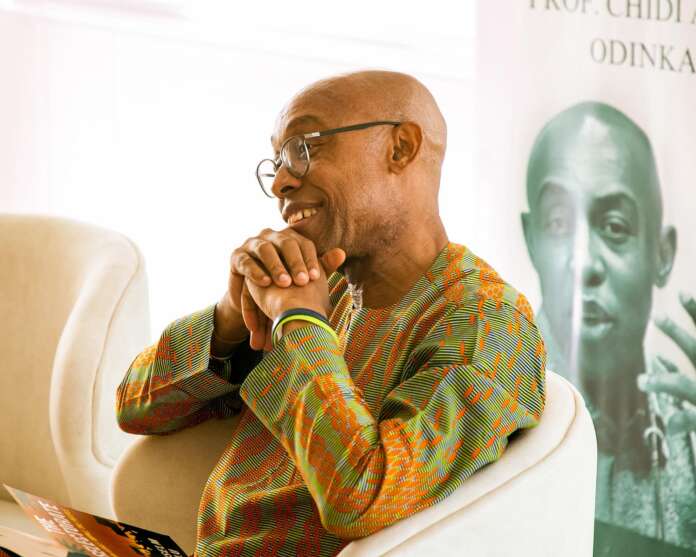
Video: Soyinka condemns Seyi Tinubu’s ‘excessive’ security escort

Nobel laureate, Professor Wole Soyinka, says President Bola Tinubu must be cautious about his approach to regional security, domestic governance, and the use of state protection for privileged individuals.

Prof. Soyinka said this at the 20th Wole Soyinka Centre for Investigative Journalism Awards in Lagos on Tuesday.

All these were captured in a now viral four-minute, 25-second video shared on Tuesday night by #Nigeriastories on X.

Soyinka had recounted an encounter, which he described as recent, in his hotel in Ikoyi, Lagos State, that left him shocked at what he considered an extravagant display of state security.

Read Also: Nigeria can fire precision missiles at Benin coupists—So why not at bandits at home?

He described seeing “an excessively large security battalion assigned to a young individual close to the Presidency,” an entourage he said was “sufficient to take over a small country.”

Soyinka revealed that the young man turned out to be Seyi Tinubu, the President’s son.

Soyinka on Tinubu’s son

He said the discovery concerned him enough to contact National Security Adviser Nuhu Ribadu.

“I was so astonished that I started looking for the national security adviser. I said track him down for me. I think they got him somewhere in Paris. But he was with the president; he was in a meeting.

“Then, I said I’ve just seen something I can’t believe I don’t understand and I described the scene to him I said do you mean that a child of the head of state goes around with an army for his protection or whatever.

“I couldn’t believe it. Later on, I did some investigative journalism, and I found that apparently this is how this young man goes around with his battalion, his heavy armed soldiers,” he said.

“I was astonished,” Soyinka said, adding that “children must understand their place. They are not elected leaders, and they must not inherit the architecture of state power simply by proximity.”

Read Also: The House that Stayed

In a separate remark captured at the same event in honour of veteran poet Odia Ofeimum and many others, Soyinka urged Tinubu to reconsider the scale of security personnel attached to Seyi, stressing that such resources are urgently needed elsewhere.

He humorously observed that if a major insurgency were to break out, perhaps the President should ask Seyi to “go and handle it,” given the size of his escort — but added that “beyond the humour lies a serious matter of priority and fairness.”

Read Also: Nigerian soldiers in Benin Republic

He warned that concentrating a battalion of operatives around one individual is inconsistent with a nation battling kidnappings, rural attacks, insurgency and criminal violence, insisting that security deployments must reflect national realities, not privilege.

Turning to the media, Soyinka praised journalists for resilience but urged stronger editorial discipline in an era of escalating misinformation.

He cautioned that “the next great conflict may well be triggered by the misuse of social platforms,” calling for renewed commitment to truth and verification, and describing credible journalism as one of Nigeria’s strongest defences against chaos.

PUNCH Online reports that the video shared at about 22.18pm on Tuesday night had garnered over 27,000 views, 466 reposts and 81 quotes.

Benin coup, Lagos demolitions

Also in the viral footage, Soyinka warned that Nigeria’s involvement in the recently halted coup attempt in the Republic of Benin carries significant risks.

Soyinka described the intervention as “another unnecessary military entanglement next door,” arguing that Nigeria should focus on reinforcing democratic institutions rather than resorting to reflex military deployment.

He cautioned that instability in neighbouring countries inevitably spills into Nigeria.

He noted, “What happens in Benin inevitably affects us. Instability anywhere in the region echoes across our own sense of security.”

Beyond regional matters, Soyinka turned to domestic issues, criticising the ongoing wave of demolitions across Lagos.

He said he had personally received photos and testimonies of displaced families and stressed that even necessary urban reforms must prioritise dignity.

“Let us not strip away the humanity of the people affected,” he said, calling for evacuation procedures that protect the vulnerable.

PUNCH Online reports that the trending video continues to circulate widely on X, drawing public comment and discussion on governance, accountability in the country.

Late November, Tinubu ordered the withdrawal of police officers attached to Very Important Persons across the country, directing that they be redeployed to core policing duties.

While there is no official communication or light response yet from the Presidency as of Tuesday night, PUNCH Online reports that no video confirmation or acceptance that the individual Soyinka raised the alarm about is indeed Seyi Tinubu.

Watch the video below.

https://www.facebook.com/punchnewspaper/videos/soyinka-decries-seyi-tinubus-excessive-security-escort/1244743090827875

“Nigeria is becoming ungovernable because justice has collapsed”—SAN Akaraiwe warns

At a memorial lecture in Anambra State, Senior Advocate of Nigeria (SAN) Ikeazor Ajovi Akaraiwe warned that Nigeria’s growing insecurity is inseparable from the country’s collapsing justice system, arguing that “justice is not the last resort—it is the first step toward national security.”

Speaking Thursday, November 27, at the Nigerian Bar Association (NBA) Anaocha Branch’s 2nd Biennial Memorial Lecture in honour of the late Chief Charles E. N. Obegolu, Akaraiwe delivered a sweeping indictment of Nigeria’s justice architecture, linking delayed trials, weak investigations, political impunity, and constitutional loopholes to the country’s deepening instability.

Akaraiwe described Obegolu—his former senior at the Bar—as a relentless defender of the oppressed, a lawyer “who could not stand injustice” and whose legacy offers a roadmap for rebuilding public trust.

“Justice Delivery Is the Foundation of Social Security”

Speaking on the lecture theme, Justice Delivery as a Pathway to Social Security, Akaraiwe said justice is not merely a courtroom ideal but “the organising principle that determines how safe citizens feel, how peacefully communities coexist, and how confidently investors operate.”

He argued that where justice systems function, countries enjoy stability and cohesion—but “when justice fails, society becomes vulnerable.”

He linked justice delivery to the core pillars of social security:

  • Social harmony: fairness reduces communal tension
  • Socioeconomic rights: access to food, shelter, and healthcare
  • Equitable resource distribution: reducing inequality and resentment
  • Reduction in self-help: citizens abandon vigilante justice when the state works
  • Public trust: fairness strengthens confidence in government

The Constitutional Roadblock

A central part of Akaraiwe’s address focused on the non-justiciability of Chapter II of Nigeria’s Constitution—the section that outlines the country’s fundamental objectives, including social justice, national cohesion, and equitable resource allocation.

He cited landmark Supreme Court decisions—Abacha v. Fawehinmi, Odeh v. AGF, Mojekwu v. Edo State—that repeatedly ruled that the provisions in Chapter II are aspirational and unenforceable.

But he argued that the time has come for the Supreme Court to reverse itself.

“The framers of the Constitution could never have imagined Presidents Buhari and Tinubu, who would—with impunity—concentrate major appointments on certain geopolitical zones and religions while neglecting others,” he said.

Using Chinua Achebe’s Eneke the Bird proverb, Akaraiwe insisted that because political leaders have “learned to shoot without missing,” the law must “reinvent itself” to keep them within moral bounds. He urged lawyers to bring fresh Chapter II cases before the Supreme Court.

Nigeria’s Insecurity Is a Justice Failure

Turning to Nigeria’s security challenges—from kidnapping and banditry to terrorism and cybercrime—Akaraiwe argued that these crises are “not merely policing problems but justice problems.”

He outlined how the justice system fuels insecurity:

  • Endless trials embolden criminals
  • Delayed judgments discourage victims
  • Weak investigations sabotage prosecutions
  • Corrupt justice actors undermine public confidence
  • Overloaded judges create systemic paralysis

“When citizens see offenders walk free while victims suffer, society absorbs a dangerous message: the State is unable or unwilling to protect you,” he said.

A Broken System Holding Nigeria Back

He described courts plagued by “court not sitting” notices, abrupt judge transfers, and caseloads so heavy that one judge may handle over 1,000 cases. He warned that Nigeria cannot maintain social order with a justice sector that is “understaffed, overwhelmed, outdated, and under-prioritized.”

To reverse the trend, he called for:

  • Modernised courts with digital processes, virtual hearings, and case-tracking
  • Sentencing reforms to decongest prisons
  • Improved police investigations
  • Stronger integrity systems to root out corruption

Justice as National Security

Akaraiwe insisted that social security begins with justice, not welfare programmes.

“Social security means citizens can live, work, and prosper without fear,” he said. “Nigeria must reposition justice as its primary national security strategy.”

He concluded by urging the NBA and government to emulate Chief Obegolu’s courage and devotion.

“Chief Obegolu understood—long before many of us—that justice delivery is the lifeblood of societal peace,” he said. “To honour his memory, we must build a justice system that truly serves society.”

The house that stayed

“Fame flickers, wealth crumbles—but character stands steady.”

Horace Greeley reminds us that the treasures we chase are temporary. Status fades, fortune shifts, and applause dies out. Only character remains—the quiet, enduring truth of who we really are. It is the legacy that outlives achievement and the measure by which a life is truly remembered.

The House That Stayed

Elias Rourke had once been the richest man in the county. His name gleamed on billboards, charity plaques, and the side of a sprawling estate that locals would whisper about as if it were a small kingdom. For decades, he believed success meant climbing higher—more land, more deals, more admiration.

But time, as it always does, changed the landscape. A market crash took his fortune. Investors turned their backs. The estate that once held lavish parties now echoed with emptiness. Elias watched the world he built dissolve, piece by piece, until all that remained was a small cottage he had inherited from his mother—plain, quiet, and almost forgotten.

Read Also: Death came for the king’s seven sons, By Funke Egbemode

He moved there reluctantly, carrying the weight of a vanished life.
At first, people came out of curiosity, expecting bitterness or shame. But what they found surprised them. Elias tended his small garden. He helped repair neighbors’ fences. He walked to the schoolhouse each morning to read stories to children whose parents worked long hours.

He no longer owned factories, stock portfolios, or fleets of trucks. But he began owning something far more difficult to build: trust.

One winter evening, a violent storm ripped through the valley. Power went out, roads washed over, and fear spread quickly. Without hesitation, villagers rushed to the one place they all knew would be warm, safe, and open—Elias’s little cottage. The former tycoon greeted them with blankets, lanterns, and the calm assurance of someone who had learned what truly mattered.

As families gathered in the glow of the fireplace, a young boy whispered,
“Mr. Rourke… why do people always come here?”

Elias smiled softly.
“Because houses fall. Fortunes fall. But character stays where it’s built.”

When the storm passed, people returned to their homes—but they spoke of Elias differently now. Not as the man who had once owned everything, but as the man who had never lost himself.

And in the quiet of that modest cottage, Elias finally understood:
The only riches worth keeping are the ones time cannot steal.

Anonymous.

FHC slams use of Justice Ojukwu’s photo in Okogwu murder story, confirms she is alive and healthy

The Federal High Court of Nigeria (FHC) has condemned the use of the photograph of one of its Justices, Hon. Justice Ijeoma Ojukwu, in the media publications of the gruesome murder of the retired Delta State High Court Judge, Justice Ifeoma Okogwu.

The Court affirmed that contrary to the wrong use of the image and created impression, Justice Ijeoma Ojukwu is alive and discharging her judicial functions in her division.

In a statement on Wednesday in Abuja, the Federal High Court said that the continued use of Justice Ijeoma Ojukwu’s photo in place of the murdered Justice Ifeoma Okogwu was reckless, misleading, malicious and unprofessional as it has subjected Ijeoma Ojukwu to emotional distress.

The statement, signed by the Director of Information of the Court, Dr Catherine Oby Christopher, demanded the immediate removal of all posts, articles, broadcasts, and digital content containing the wrongful use of Justice Ojukwu’s photograph.

The statement read “The Federal High Court of Nigeria hereby issues this formal refutal and strongly condemns the recent dissemination of false, misleading, and malicious media publications that wrongfully used the photograph of Honourable Justice Ijeoma Ojukwu of the Federal High Court in connection with reports on the tragic murder of Honourable Justice Ifeoma Okogwu, a retired Judge of the Delta State High Court.

“For absolute clarity, the Federal High Court affirms that Honourable Justice Ijeoma Ojukwu is alive, healthy, and currently serving with distinction as a Judge of the Federal High Court of Nigeria.

“His Lordship has no direct, indirect, or remote connection whatsoever to the unfortunate circumstances surrounding the death of Justice Okogwu.

“The publication and circulation of Justice Ojukwu’s image in this context are not only factually inaccurate but also defamatory, professionally reckless, and legally actionable.

“This misrepresentation has caused significant emotional distress to His Lordship, her family, colleagues, and the broader judicial community. It also constitutes a breach of fundamental journalistic and ethical standards.

“Pursuant to applicable laws, including the laws of defamation under Nigerian jurisprudence, the Cybercrimes (Prohibition, Prevention, etc.) Act, and relevant regulatory standards governing media practice, the Federal High Court demands the following with immediate effect:

“Immediate removal of all posts, articles, broadcasts, and digital content containing the wrongful use of Justice Ojukwu’s photograph.

“A clear, unambiguous public retraction, expressly acknowledging the misidentification and correcting the misinformation.

“A written and publicly published apology directed to Honourable Justice Ojukwu, disseminated across all platforms on which the erroneous information was originally shared.

The Federal High Court advised all media organisations, journalists, bloggers, and online publishers to exercise strict due diligence in verifying facts and images before publication, particularly when reporting on judicial officers whose reputational integrity is essential to the administration of justice.

It warned that failure to comply with the notice, or any continued publication, sharing, or circulation of the false image after the formal refutal, will be construed as deliberate malice and bad faith.

“The Federal High Court will not hesitate to initiate appropriate civil and criminal proceedings against any individual, organisation, or platform found culpable.

“The Court remains unwavering in its commitment to protecting the dignity, safety, and integrity of all judicial officers serving the Federal Republic of Nigeria”, it said.

Death came for the king’s seven sons, By Funke Egbemode

I hear things

Do you also hear them? That it is the rich and powerful that are behind our woes, that it is men like us who made their money killing and selling other humans like chattels. They call it ransom, but it is buying and selling. Kidnapping is buying and selling of other human beings, hauling off other people’s children and loved ones into the forest and selling them back to their relatives. They call it ransom, that money they make from the pain and anxiety of others.

I hear things. Did you hear them last week or this week? That the people we call bandits and criminals are not faceless. There are people who know them, people who know where they live but are afraid to tell, to talk. I hear that these criminals live among us. Some even wear turbans, others cassock. They pretend to be holy. We even believe they are. But they are mean and mindless. They are all about the money. They don’t care whose blood or how much blood they have to walk through to fly first class or drive brand new cars. They just want the easy soft life, at all costs. It does not matter who it costs, as long as they are not the ones paying. So they ravage the villages, highways and school dormitories and take away our loved ones. They go to church to steal, to kill and to destroy. They have the power. The rest of us are defenseless victims. They buy and sell us, live among us, and spend their blood money anyhow they like. They come to town after devouring our souls and bodies to spray money made from our tears at parties we are barred from.

Those who should arrest them walk and work with them.

That is what I hear. Do you hear those stories too?

They said the bandits and kidnappers remit money to the corridors of power. Indeed, I just heard that they helped build the corridors of power. They bought the cement, Italian tiles and satin paints. You feel like crying? Me too. I hear all of them or most of them are involved! How then do they sleep? What do they need so much money for, especially since they cannot sleep their evil sleep on two evil beds or drive in two luxury cars at the same time? Why does the pain of the poor and powerless mean nothing to them? They already have money, why do they keep taking from those who don’t have? They already fly in private jets and first class cabin, why do they steal and steal from those who travel by road?

Imagine bowing, kneeling and greeting a bandit or bandit funder without knowing. They go to Umrah more frequently than “Iyawo Alhaji’ (go and watch the movie). They know all the prayer mountains, all the big prophets. Olorun ku suuru. Thank God for God. If I were God, I will wait for some people to go to River Jordan in Israel like they do so regularly, then I will freeze them there. But God is patient. He has watched them do this to us. He won’t wait forever, that much I know.

I’ll tell us a story.

There once lived this small community of people. They were surrounded by powerful tribes. They were virtually defenceless compared to the military power and sheer number of the tribes around them. They were called the Gibeonites. One year, the most powerful of those nations, Israel, wanted to pass through their land. The Gibeonites were terrified, not just because this powerful nation had a great army and they didn’t but because the god of that powerful tribe was also power­ful. Indeed, the entire kingdom lived in awe of them because of their God who could kill and make alive.

So terrified were the Gibeonites when they heard that the Israelites were coming that they resolved to confess their weakness and seek protection. They begged that Israel spared their land. They found favour and were promised that no evil, no war, no destruction would go near their land.

Several years later, a zealous king came and forgot that solemn promise and covenant to protect Gibeon. He moved his army against this small nation and killed so many of them. Husbands became widowers. Men watched their children being trampled to death by the horses of the Israelites. The elderly died in their hundreds. Homes were burnt and family compounds that once bubbled with laughter became desolate. By the time the army of Israel was done with Gibeon, there were a few people left. There was so much tears, blood and mourning. But what could the Gibeonites do? Noth­ing. They buried their dead and tried to move on.

King Saul and his army celebrated their victory and drank wine and made merry. Israel thought it was over. King Saul thought he had won another victory for his people. The Gibeonites had nobody to defend them, or so they thought. God was silent too.

Several years later, there was severe famine in the land of Israel.

King Saul had joined his ancestors and a new king, David, was on the throne. He tried everything he knew but the drought persisted. He ran to God and asked why this evil had befallen his people. God told him: ‘Saul and his family are guilty of murder. He put to death the people he was supposed to protect.’

In other words, God saw it all. He saw the zeal of Saul for his people. He saw the weakness of Gibeon. He saw how the army of Israel mauled and beheaded defenceless children, men, women, the elderly. He watched as Saul’s army burnt down homesteads and celebrated with wine. He watched the Gibeonites make graves in hundreds. He saw their tears, felt their pain. And why wouldn’t he?

He created both the powerful and the defenceless. He’s the God of the valley and God on the mountain. He’s the God of heartless Nigerian armed bandits and God of the mourning parents and frightened Christians.

Back to our story. David then summoned the Gibeonites, apparently in an attempt to pacify them so that God could take away the famine that was ravaging the land of Israel. After so many years of suffering in silence, accepting that the genocide su­pervised by King Saul was their fate, the Gibeon­ites poured out their hearts. They demanded a huge sacrifice.

‘Our quarrel with Saul and his family can’t be settled with silver or gold. And we do not want to kill any Israelite. Just hand over seven of Saul’s male descendants and we will hang them before the Lord at Gibeah.’ (2 Samuel 21:6) That was what the com­pensation for what Saul did to a defenceless tribe. Seven of his children were killed in one day.

What is the lesson here?
It is about the Agatu killings, mass abduction of children from their school beds, the invasion of churches and killing of men of God, from Yobe to Kwara.  It does not matter how much terms we come up with to describe the evils ravaging our land,  the repercussion and compensa­tion that this nation will pay in the future will be proportionate to the genocide or the terrorism. The Lord of vengeance will do something about the senseless killings that we all think will go away if we ignore them long enough.

The men who are using their power to fund and protect terror will pay with their blood because they have shed blood. Those whose jobs are to protect the weak but look the other way will find the Lord’s vengeance on a narrow path. This is dedicated to all those who arm evil men to descend on defenseless homes to kill and destroy. I know they are reading this, your evil is waiting for you tomorrow.

How do I know?
All the years that it looked like God did not hear, see or do anything about the decimation of Gibeon, He was there. All the time Saul felt he’d gotten away with the massacre, God knew his sons’ blood would be used to cleanse the land. All the time Israel cel­ebrated its victory over a small town, God knew the famine waiting for them.

Let not those in authority who can stop the geno­cide going on all over the country, and have done nothing, think the day of hanging on Gibeah will not come. Let Nigeria not think that famine is not waiting in the years ahead. Do we even know the sins, bloodshed that we are paying for right now? Does it not look like we’re going through famine because this definitely was not the way we used to be? Surely, the blood of the defenceless will be avenged. All the holy books taught us that, including the Ifa oracle.

God is watching. Vengeance may not come now. He may not send famine tomorrow because we already have famine for horrible things we did in the past. But let our leaders do what they ought to do because when God decided to avenge Gibeon, only Saul’s sons, seven of them, I repeat, only King Saul’s sons and their blood were requested as sacri­fice.

The views expressed by contributors are strictly personal and not of Law & Society Magazine.

Nigeria’s FIDA takes fight against digital violence to NYSC members

As part of global events marking the 2025 16 Days of Activism Against Gender-Based Violence, FIDA Nigeria Abuja Branch on Tuesday launched an outreach campaign to the NYSC Legal Aid Community Development Service (CDS) group.

According to a statement signed by Chimdindu Onyedim-Etuwewe, Publicity Secretary, FIDA Nigeria Abuja Branch, the sensitisation programme aligned with this year’s international theme—“Unite! Invest to End Digital Violence Against Women and Girls.”

During the session, Chairperson of the branch, Chioma Onyenucheya-Uko, briefed corps members on the growing dangers of technology-facilitated abuse, including online harassment, cyberstalking, non-consensual image sharing, and other forms of digital exploitation.

Onyenucheya-Uko explained the legal protections available under Nigerian law, outlining how victims can seek redress and how offenders can be held accountable.

The Corps Members also received guidance on digital safety practices, responsible online behaviour, and how to support women and girls who face digital abuse.

Other speakers emphasised the pivotal role young Nigerians can play in building safer online spaces, noting that NYSC members are often positioned at the frontline of community education and early intervention.

FIDA Abuja reaffirmed its commitment to advocating for the rights and safety of women and girls, and pledged continued collaboration with government and civil society partners to strengthen awareness, reporting systems, and community-level protection mechanisms.

Attah Ameh Oboni, the Legendary Igala monarch who defied colonial power

Attah Ameh Oboni, one of the most storied monarchs in Igala history, is remembered for his fierce independence, extraordinary charisma and a dramatic reign that reshaped the political landscape of his people.

As colonial authorities and Northern political elites tightened control over traditional institutions in the mid-20th century, Attah Ameh emerged as a ruler unwilling to bend. His assertiveness—and refusal to conform to the expectations placed on earlier kings—created growing tensions with regional power brokers and the British Crown.

The breaking point came during a high-profile meeting in Kaduna attended by paramount Nigerian traditional rulers and representatives of the British monarchy. When Attah Ameh was asked to remove his cap as a gesture of respect, he stood his ground, refusing to follow a protocol others had accepted. What happened next would become the stuff of legend.

According to accounts passed down through the years, Attah eventually lifted the cap—triggering a swarm of bees said to have been nesting inside. The unexpected chaos sent dignitaries scrambling from the hall, abruptly ending the meeting and cementing Attah’s reputation as a ruler unlike any other.

What followed only deepened his mystique. Efforts to detain him reportedly failed as he slipped through tight security under unexplained circumstances, later reappearing calmly in his vehicle. His driver, Amanabo, claimed a cool breeze signaled Attah’s return—a detail that fed the lore surrounding the monarch.

But behind the drama lay political maneuvering. As frustrations mounted, some local rivals sought to remove Attah from the throne. Petitions—built on allegations later widely viewed as false—accused him of ritual wrongdoing during the Ocho cultural festival. These claims were used to justify pressure on the throne and resulted in the banning of Igala cultural festivals for nearly 63 years. The prohibition was only reversed recently following an appeal by the current Attah Igala.

In his final days, Attah Ameh is said to have issued solemn warnings about the consequences for those who had worked against him. Stories passed down through families speak of uncanny events—withered limbs, strange misfortunes and even multiple burials—that followers interpreted as the fulfilment of his words.

He also foretold a period of division in Igalaland that would eventually give way to renewed unity under the reign of one of his own bloodline.

Later, under Agabaidu Idakwo Ameh Oboni II, many within the Igala nation see the gradual reconnection and reconciliation of their people as the continuation of Attah Ameh Oboni’s legacy—a legacy built on defiance, resilience and an unyielding belief in the dignity of his throne.

His story endures not only as folklore or royal history but as a reminder of a monarch who, in the face of immense political pressure, refused to bow.

A new Attah Igala is currently on the throne. His Majesty Matthew Alaji Opaluwa Oguche Akpa II, the 28th paramount ruler of the Igala Kingdom in Kogi State, Nigeria, was officially appointed in October 2021 and crowned in March 2022, succeeding the late Attah Michael Ameh Oboni II.

Click here to read more about the famous king.

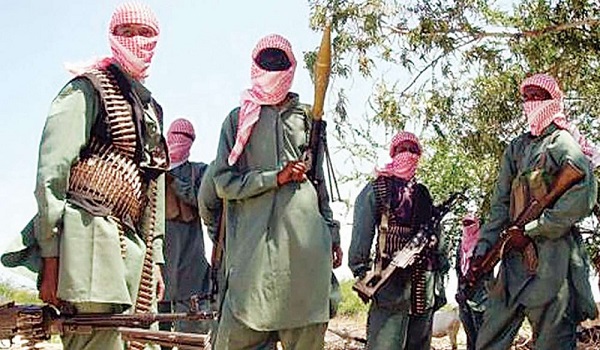
Gumi inisists FG must negotiate with bandits, says kidnapping children is lesser evil than killing soldiers

Islamic cleric Sheikh Gumi has described the kidnapping of schoolchildren as a “lesser evil” compared to killing soldiers, insisting that Nigeria must negotiate with bandits to prevent greater bloodshed.

Speaking in an interview with the BBC shared on Tuesday, Gumi said that while the abduction of minors is “evil,” it remains less grievous than murder — particularly in situations where kidnapped children are eventually released unharmed.

“Saying that kidnapping children is a lesser evil than killing your soldiers, definitely is lesser. Killing is worse than, but they are all evil. It’s just a lesser evil. Not all evils are of the same power.

He cited previous incidents, including the mass abduction in Kebbi State, arguing that the victims were freed without fatalities.

Why I Have Attended A New Church Every Sunday This Year – Lagos Man0:00 / 1:01

“So it’s a lesser evil than, like, what happened in Kebbi. They abducted children, and they were released. They didn’t kill them.”

The remarks come as more than 315 people — including 303 students and 12 teachers — were abducted in Niger State.

On 7 December, the Federal Government announced the release of 100 students, while an earlier report confirmed the escape of 50 others just days after the kidnapping.

“It’s an evil, and we pray that they escape”, Gumi responded briefly when asked what he would say to their parents.

Gumi also defended his long-held stance that negotiating with bandits is unavoidable, describing engagement with bandits and other non-state actors as a practical strategy to secure peace and save lives, and noting that “everybody negotiates with bandits.”

“That word [‘we don’t negotiate’], I don’t know where they got it from. It’s not in the Bible. It’s not in the Quran.

“In fact, it’s not even in practice. Everybody’s negotiating with outlaws, non-state actors, everybody. So who got it, and where did they get that knowledge from? We negotiate for peace and our strategic interests. If negotiation will bring stoppage to bloodshed, we will do it.”

The cleric stressed that his past engagements with bandits were not carried out secretly or independently.

“I go there with the authorities. I don’t go there alone. And I go there with the press,” he said.

Gumi revealed that his last direct meetings with bandit groups were in 2021, saying he made marathon efforts to bring various factions together, but the federal government at the time “was not keen” on the initiative.

He said once the groups were officially designated as terrorists, he completely withdrew from any contact.

Turning to the wider security situation, the former army captain argued that Nigeria’s military cannot shoulder the burden alone.

“We need a robust army… but even the military is saying our role in this civil unrest, in this criminality, is 95% kinetic. The rest is the government, the politics, and the locals. The military cannot do everything.”

Gumi also maintained that most bandits are Fulani herdsmen, not urban Fulani, urging a clear distinction between the two. He described their struggle as rooted in survival and cattle rearing:

“They are fighting an existential war… Their life revolves around cattle. In fact, they inherit them. They’ll tell you, ‘This cow I inherited from my grandfather.’ They are mostly Fulani herdsmen, not the Fulani town, because you have to differentiate between the two.”

Gumi’s remarks underscore the delicate balance between dialogue and enforcement in addressing Nigeria’s persistent insecurity, particularly in the northwest, where kidnappings, bandit raids, and violence continue to disrupt communities.

PUNCH

TIPS