Home Blog Page 1303

Mixed feelings as Facebook is set to open Nigeria office next year

Pascal Oparada

Up to now Facebook has maintained a hub in Lagos, but now, the social media giant, has announced it would open an office in Lagos in 2021, its second office in Africa and the first to house software engineers.

This was announced by Facebook Programme Manager, Chimdindu Aneke on Twitter.

“We are opening a Facebook office in Lagos, Nigeria later in 2021”, he said.

He added that the office would be the first in Africa by Facebook for the purpose of engineering and “building for the future of Africa and beyond”.

In 2016, Mark Zuckerberg, Facebook founder and wife, Priscilla, invested about $24 million in a Nigerian startup, Andela where it has maintained a hub in the Yaba area of Lagos.

Facebook’s foray into Nigeria is seen by experts as a mixed blessing.

On the one hand, Facebook would deploy its top-notch technical knowledge and make it easier to access its cluster of services in the country.

On the other hand, there are fears that the social networking company would take advantage of Nigeria’s weak data laws to commit infractions.

In Europe, Facebook has been on the slammer for a series of data breaches, the most infamous of which is data theft of over 87 million users during the 2016 US elections.

This has prompted the European Union to roll out the General Data Protection Regulation (GDPR) in May 2018. Yet this has not stopped the social media company from running foul of other laws in Europe.

Other analysts believe there is nothing to fear as the company may have learnt its lessons from the missteps in other countries.

“Facebook is not particularly known to play by the books. When it comes to data breaches, it is the biggest culprit in the globe”, John Ogazi, a tech expert said.

According to Ogazi, it should not be an easy ride for Facebook when it finally sets up fully in Nigeria.

Many employees of the company have complained of a lacklustre attitude of the company to issues of data mining and swift action against those who propagate hate speech on the platform.

An employee, Timothy Aveni posted on LinkedIn recently that he resigned because Facebook had not held Trump to its community standards.

“Over and over the posts abhorrent, targeted messages that would get any other Facebook user suspended from the platform,” Aveni wrote.

Another engineer, Owen Anderson, wrote on Twitter that he was “proud to announce” he was resigning as he would “no longer support policies and values I vehemently disagree with.” Anderson said his departure was “in the works for a while”.

Both employees resigned the same week.

Just last week, celebrities such as Kim Kardashian boycotted Facebook and Instagram over the company’s inability to take action against misinformation.

The campaign, #StopHateForProfit, is aimed at Facebook and Instagram and has attracted such disparate individuals as Kim Kardashian West, Sacha Baron Cohen and Mark Ruffalo.

All have said they would not post to their accounts on Wednesday last week. Collectively they reach millions of followers.

Cohen is a longtime outspoken critic of Mark Zuckerberg, Facebook’s chief executive, arguing the platform is a publisher and as such should be held responsible for the materials on its site.

In remarks last November to the Anti-Defamation League, Cohen said, “It’s time to finally call these companies what they really are — the largest publishers in history. And here’s an idea for them: abide by basic standards and practices just like newspapers, magazines and TV news do every day”.

“Facebook, stop spreading the hate, lies and conspiracies that inflame our societies!” Cohen tweeted in advance of the boycott.

Kardashian West, another regular presence on social media, tweeted: “I love that I can connect directly with you through Instagram and Facebook, but I can’t sit by and stay silent while these platforms continue to allow the spreading of hate, propaganda and misinformation — created by groups to sow division and split America apart — only to take steps after people are killed. Misinformation shared on social media has a serious impact on our elections and undermines our democracy. Please join me tomorrow (Wednesday last week) when I will be ‘freezing’ my Instagram and FB account to tell Facebook to #StopHateForProfit”.

As the social media giant sets up shop in Africa’s populous country, there are worries that the over 33 million active monthly users on the platform would be the better for it.

thexpressng

Students and parents complained after a Dallas high school’s class assignment placed the accused Kenosha shooter on a list of ‘modern heroes’

This news was culled from Yahoo News publication of September 13th, 2020

Students and parents complained after a Dallas high school’s class assignment placed the suspected Kenosha shooter on a list of “modern heroes” that they could choose to defend, CNN reported.

Kyle Rittenhouse, 17, was arrested and charged with first-degree intentional homicide and a string of other felonies tied to the killing of two people at a protest in Kenosha, Wisconsin.

He was suggested as a “hero for the modern age” along with others like Malcolm X, George Floyd, Mahatma Ghandi, and even Joseph Rosenbaum, a man who was shot and killed in Kenosha, NBC reported.

KTVT which reviewed a photo of the assignment, reported that the names of Gandhi and Malcolm X were misspelled.

The school district has apologized for the assignment, which was given to seniors at W.T. White High School in the Dallas Independent School District (ISD).

“Racial equity is a top priority in Dallas ISD, and we remain committed to providing a robust teaching environment where all students can learn. It is important that we continue to be culturally sensitive to our diverse populations and provide a space of respect and value,” Robyn Harris, director of news and information for Dallas ISD told Business Insider in a statement.

Harris said the assignment was removed from Google Classroom and students are not required to complete it. The teacher who assigned it has not been identified by the district.

According to district data, 81% of the students at the school are Hispanic and 10% are African American.

“The juxtaposition of George Floyd’s name with Kyle’s name was just astounding,” Kristian Hernandez, whose younger brother attends W.T. White High School told KXAS about the assignment. “The value of Black lives are not up for debate, and that’s what it felt like this was sort of getting at — by way of the names that were included.”

Hernandez said her brother was in “disbelief” that this was assigned

At least one in five board members of Nigeria’s top companies are female, well above the world average of 17% for female representation on boards.

Three of the top 20 most-capitalized firms in Nigeria have a woman as chair of the board, The Professional Women Roundtable, a Lagos-based gender diversity consulting firm, said in survey published Friday.

Nigerian banks have the most women on their boards, or at least a quarter of board positions. The central bank recommends that lenders allocate at least 30% of board seats to women.

With one in four board positions taken by women, Africa generally has the highest proportion of women on boards, beating second-placed Europe at 23% and global laggard Latin America at 7%, the McKinsey Global Institute said in a report last year. While Nigeria may rank slightly below other African nations such as Botswana and Kenya, Friday’s survey shows that Nigeria still does well at 21%.

Companies that include women in their executive teams are 25% more likely to have above-average profitability, McKinsey said earlier this year.

Political Underrepresentation

Nigeria’s gains in business stand in stark contrast to the position of women in politics. Africa’s most populous country has the lowest proportion of female lawmakers on the continent, according to the Inter-Parliamentary Union, an advocacy group that tallies representation.

Women hold only 4% of seats in the lower house of Parliament, placing it number 184 out of 193 countries for which the Geneva-based group has data. Rwanda ranks highest globally, with 61%.

Nigeria has never had a female president or vice president, and not a single governor of its 36 states has ever been a woman.

Read more

UNILAG alumnus bags 50-years imprisonment for raping student on campus

An Ikeja Sexual Offences and Domestic Violence Court on Monday sentenced John Otema, an alumnus of the University of Lagos, to 50-years imprisonment for raping a 19-year-old student of the institution on campus.

The News Agency of Nigeria (NAN) reports that 34-year-old Otema, a quantity surveyor and facilities manager, was charged before Justice Abiola Soladoye with three counts of rape and assault occasioning harm on two female students.

He was found guilty on two-counts of rape and assault occasioning harm in respect of the rape of the 19-year-old student (Student X) and was, however, found not guilty on a charge of raping a 20-year-old student (Student Y) of the institution.

He bagged 50-years in prison for the rape and three-years in prison for the assault on student X with both sentences to run concurently.

In absolving Otema of raping student Y, Justice Soladoye noted that the demeanor of student Y in her testimony was mischievous and she would not have claimed that she was raped if Otema had paid her the N50, 000 agreed upon before their rendezvous.

The judge quoted a portion of student Y’s testimony which stated,“With intention to scare him off, I asked him for N100,000 but he said he will give me N50,000.

“I gave him my account number but he did not credit my account. Friendship with benefits was the crux of our relationship.”

The judge described student Y as a game player who had embarked on a sexual frolic.

“The defendant, John Osagie Otema in respect of count-one (rape) is found not guilty as there is overwhelming evidence before the court that sexual intercourse between the defendant and PW2 (Student Y) was consensual as it was friendship with benefits,” she said.

In convicting Otema of rape and assault occasioning harm of student X, Justice Soladoye noted that in addition to medical evidence and photographs tendered by the prosecution, student X had also identified the defendant as her assailant who bit her back and punched her eyes.

“For count-two (rape), the defendant is found guilty and is hereby sentenced to 50-years in prison as it the evidence adduced before this court has been proved beyond reasonable doubt by the prosecution.

“With regard to count-three (assault occasioning harm) the defendant is found guilty and is hereby sentenced to three-years in prison as the prosecution has done its job diligently by proving the charge beyond reasonable doubt.”

The judge decried the spate of sexual violence committed against women and girls.

“This State of Excellence has zero tolerance for this sort of crime and the punishment meted out to the defendant will serve as a deterrent to other sex offenders that they too will be caught and brought to justice.

“Women and girls like every other member of the society should be respected and not be turned into prey by sex maniacs,” she said.

Earlier the defence counsel, Mr Fred Onyeka, in his allocutus (plea for mercy) said that Otema is a young man with aged parents who also had his whole life ahead of him.

“He had the misfortune of this matter coming upon him not long after he left UNILAG. He had a good job before this incident occurred and was destined for the very top of his career.

“What has happened will definitely truncate the prospects of his rise to the top of his career if my lord’s intervention in sentencing him does not happen,” Onyeka said.

NAN reports that during the trial, six witnesses – the two students, a policewoman, Insp. Nkem Ejelonu and three UNILAG staff members testified for the prosecution.

Otema, testified solely in his defence. During his testimony he denied committing the offences.

According to the prosecution led by Mrs Arinola Momoh-Ayokanbi, Otema had sexual intercourse with the student Y without her consent on Jan. 31, 2018 at his home at No. 6, Ajileye St., Bariga, Lagos.

The prosecution claimed that earlier that month, Otema had raped student X within the premises of the institution.

“On Jan. 17, 2018 while coming from her hostel to Moremi Hall, Otema parked his car and asked student X for directions to Moremi Hall. He compelled her to enter the car under the guise of giving her a ride.

“He auto locked his car and drove her to the Distant Learning Institute (DLI) area where he assaulted her by punching her face several times, he bit her back, ordered her to undress and took her nude photos.

The offences contravene Sections 173 and 260(1)(2) of the Criminal Code, Law of Lagos State 2015.

21.7m Nigerians are unemployed and 12.2m of them are female – NBS

THE National Bureau of Statistics (NBS) says a total of 21.7 million Nigerians are currently unemployed while 12.2 million among them are female.

According to the NBS’ Labour Force Statistics: Unemployment and Underemployment Report released on Monday, 9.5 million unemployed Nigerians are male.

The report indicates that the country’s unemployment rate within 18 months, rose to 27.1 per cent in the second quarter (Q2) of 2020 from the 23.1 percent recorded in the third quarter (Q3) of 2018.

This indicates more than 17 million Nigerians have become unemployed since December 2014, while the total working age population has grown by almost the same number in the six years, the Cable reports.

The report states that the number of persons in the economically active or working age population (15 – 64 years of age) during Q2 of 2020 was 116,871,186, representing a 1.2 percent increase, from 115,492,969, the figure recorded in Q3 of 2018.

It further showed that the number of persons in the labour force ( people within ages 15 -64, who are able and willing to work) was estimated to be 80,291,894, adding that this was significantly less at 11.3 per cent, than the number of persons recorded in Q3 of 2018.

Of the number of people in the labour force, the report pointed that only 58,527,276 were recorded to be in employment, in Q2 of 2020, representing a fall by 15.8 per cent than the people recorded to be in employment in Q3 of 2020.

According to the report, Imo State reported the highest rate of unemployment at 48.7 per cent, while Anambra recorded the lowest rate of unemployment at 13.1 per cent.

Other states like: Akwa-Ibom State and Rivers State recorded unemployment rate of 45.2 percent and 43.7 percent respectively.

In June, Vice President Yemi Osinbajo disclosed that the economic sustainability committee, which he chairs, received projections that the number of unemployed people may rise to 39.4 million by the end of 2020 if the government did not take prompt measures.

“That unemployment may rise to 33.6 percent or about 39.4 million people by the end of 2020 if we fail to take prompt preemptive measures; that millions more will fall extreme poverty before the pandemic ends; that GDP may fall to between minus 4.40 per cent and minus 8.91%, depending on the length of the lockdown period and strength of our economic response,” Osinbajo had said

These projections balance on the rear view of likelihood of Nigeria plunging into its second recession in four years.

Clement Agba, the Minister of State for Finance, Budget and National Planning on Thursday warned that the Nigerian economy may likely fall into another recession, unless there is a strong economic performance in the third quarter of 2020.

icirnigeria

Ernest Maduabuchi Ojukwu: The Teacher at 60

“Our only hope lies in reforming, reappraising and reorganizing the judicial system not only from the point of appointment of personnel but also to the structural imbalance that affects its independence” — Prof. OjukwuAdvertisement

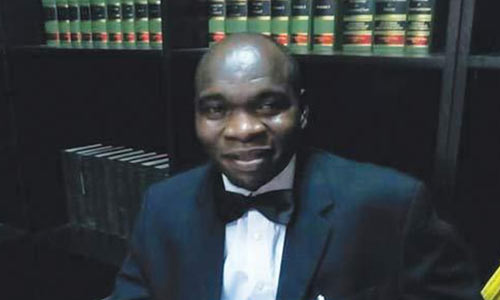
Sitting in class waiting for the lecturer and in walks a man, pulling his briefcase, smartly dressed in a suit, with a bow tie and a measured smile. He is the new lecturer.

He introduced himself as Prof. Ernest Ojukwu, Law of Contract lecturer. He summarized what to expect of the course; the mode of teaching, view on examination; what he expected of us as students being hard work, and that all shall be well otherwise, as Prof. Ojukwu told us, ‘you will see me in your nightmares’.

What he did not say, however, was that we would see him in our “daymares” too. His demand for understanding was high; you could not waltz your way with him; he was too deep, most grounded, and too discerning to be swayed by a mere puff. You had to know what you were talking about, and you had to know through study. And in that way, he changed the game to our study of law.

Soon we realized we did not like the feeling of avoidable ignorance we were sure he would point out and which we would have cured if we were more diligent. We took a decision, four of us- we later progressed to about seven – to study so hard, to know it so well that any grey area was understandably pardonable.Our decision meant more time to read Prof. Sagay’s Law of contract, read all materials he gave, google beyond the pages of textbooks, argue possibilities of engagement with the law, and to have answers and questions ready for him. It was not easy. When we gathered for our involuntary study group on Saturdays -Sundays inclusive- we would nag about Prof’s expectations, then get down to read, argue, and complain intermittently, especially when the law gets too knotty for our brains to assimilate at that moment. In due time, we would inevitably express the pleasure that comes from understanding new knowledge.

Those sessions of knowledge discoveries acquainted us with jurists and their reasoning; some we criticized, applauded, and others we were in awe of like the legendary Master of the Rolls- Lord Denning at which point law took a different meaning for me.

We feared and loved him. We hated him for the workload his expectations required; and we loved him more fiercely for the knowledge he impacted in us, in no time, we were studying the Law of Contracts and other courses except for Constitutional Law taught by the formidable Prof. Epiphany Azinge. Prof.Ojukwu was strict yet kind, firm but would enjoy a laugh or two with us, he cared for us but was impartial in his demand for distinction. He seemed to believe through his conduct the words of Justice Oliver Wendell Holmes ” A mind that is stretched by a new experience can never go back to its old dimensions” he, without doubt stretched our minds by knowledge, the knowledge he gave and demanded in return. He is a principled man.

Prof. Ojukwu is an assured man; you could take him on in class without fear. I remember several times I would say “sir, I’d like to challenge your position on this” and he would say without fail “sure!” and I will go for it, he will unambiguously concede where I was right and reaffirm where he was right without condescension. Prof. Ojukwu is both knowledgeable and gracious.

He encouraged performance appraisal of lecturers anonymously from students; he opined, feedback had to be both ways, and the faculty would share appraisal forms to the class. No slacks were allowed. He also patterned the length of his lecture with scientific research, using only the hours of optimal assimilation and nothing more. He brought about the pre-class mode of study which is front-loading students with pending topics to enable them to prepare and attempt prepared questions before each class. Any gap in knowledge often resulted from skipping questions in the pre-class; this you may get away with but not in Prof. Ojukwu’s class. He is uncompromising and thorough.

By the time contract class ended, our study pattern was formed, other courses became beneficiaries of his instilled discipline. I would yet encounter Prof. Ojukwu in the Law of Evidence course (with a repeat pattern of Law of Contract demands), Public Interest and Social Justice Law, and during our Clinical and Moot Court Practice. Every other lecturer knew that our class–especially the study group members- was no pushover. Lecturers took extra time to prepare before coming to lecture us; we were studious, knowledgeable, vocal, and unafraid- frankly, one could not go through Prof’s grill without being these and more. He is top of the range.

I am thankful to have been his student, actually; proud.

As Professor Ernest Maduabuchi Ojukwu (SAN)turns 60 years old today, our legal education has been the best beneficiary of his gifts, sacrifices, generosity of knowledge, and contributions. Reputed as the teacher’s teacher, the possibility of your law teacher being a former student of his is very high. Ojukwu graduated as a lawyer in 1983 from Obafemi Awolowo University Ile-Ife at twenty-three, was called to the Nigerian Bar in 1984 and subsequently earned his Master of Laws Degree in 1987.

He began his career at twenty five when he joined Abia State University as an Assistant Lecturer in 1985, he would become an Associate Professor (1998) and appointed Dean Faculty of Law, Abia State University, Uturu at 35 years (1995- 2001) Deputy Director-General and Head Nigerian Law School, Augustine Nnamani Campus Agbani, Enugu (2001-2013), Professor of Law Madonna University (2014-2016), Adjunct Professor LLM International Commercial Arbitration Nasarawa State University, External Examiner and Professor of Law at Baze University, External Examiner Kenyatta University Nairobi Kenya, Visiting Scholar, Griffith University Law School Socio-Legal Research Center Brisbane, Australia.

Prof. Ojukwu, has led an active career, he concluded his NYSC- Legal Aid Yola (1984-1985), Counsel, Law Firm of GNA Atulomah and Co, Aba (1985- 1988), Partner Ekenna Nwajei Nwauche & Ojukwu Aba(1988- 1992), Partner, Nwonye and Ojukwu, Aba (1992-2001) a Partner – OJUKWU FAOTU & YUSUF (OFY-Lawyers), Aba, and Abuja (2014) and conferred with the rank of Senior Advocate of Nigeria (SAN) at the Supreme Court of Nigeria in 2014.

A pioneer per extraordinaire, he was the Pioneer/Project Director NBA Institute of Continuing Legal Education, 2006-2010, and 2012-2014. He drafted the Nigerian Bar Association Mandatory Continuing Legal Education Rules and Guidelines – that drives the mandatory continuing legal education program for the legal profession – and set up the NBA Institute of Continuing Legal education in 2007. He produced the draft- Rules of Professional Conduct for Legal Practitioners in force today and designed a clinical legal education curriculum for law faculties and led the design and implementation of a new curriculum for Nigerian Law School. Beside the Legal Practitioners Act, Ojukwu also drafted bills on Legal Education and Legal Services Commission. Which is before the National Assembly.

Ojukwu is also the pioneer and advocate- introducing Clinical Legal Education in Nigeria (and West Africa), now established in over 40 Law Clinics in Nigerian Universities and the Nigerian Law School – committed to training public interest lawyers for the advancement of social justice for pre-trial detainees and the underserved population unable to afford legal services. As President, Network of University Legal Aid Institutions (NULAI) Nigeria – the platform through which he has continued to achieve his dreams of promoting clinical legal, justice education and reform of legal education in Nigeria; he has conducted and organized client interviewing and counselling skills competitions for law students for over 12 years in Nigerian universities.

Prof. Ojukwu’s over 35 years passion for teaching is unmistakable – Law teacher at Abia State University for 15 years (1985-2000)–taught Nigerian Legal System, Criminal Law, Business Law, Conflict of Laws and Human Rights Law at the LLB; Comparative Criminal Law and Civil Litigation and ADR at the LLM. 13 years (2001-2014) Law Teacher at the Nigerian Law School where he taught Civil Litigation, Fundamental Rights-the procedure, ADR, Professional Skills, and Ethics. Supervised many LLM dissertations; and conducted many clinical legal education conferences, teacher training, and curriculum development workshops in Nigeria.

A selfless contributor and active member of the Nigerian Bar Association, he has served in various capacities – Secretary, NBA Aba Branch (1992-1993); Chairman NBA Aba Branch (1997-1999); Sole Member NBA Sub Committee to Investigate Complaints Against Legal Practitioners, 1999;

Chairman, NBA Law Reform Committee (2002-2004); Founder, President, NBA Eastern Bar Forum (2004-2011); Chairman, NBA Legal Education Committee (2006-2008); Co-Chair, NBA Editorial Committee (2002-2004); Chairman NBA Editorial Committee–during which ten volumes of the Nigerian Bar Journals were published (2006-2008); Chairman NBA Academic Forum (2003-2004; 2006-2008 & 2012-2014); Co-Chairman, NBA Conference Planning Committee 2003; Alternative Chairman, NBA Summit on the Future of Legal Education in Nigeria, 2006; and Chairman NBA Strategic Plan Working Group 2012. Member,NBA Special Committee (Made up of President Agbakoba SAN, General-Sec Lawal-Raban, SAN, and Prof Ernest Ojukwu SAN) on the Review of Rules of Professional Conduct (2007).

A prolific author of over eight books, including-Legal Education in Nigeria: A Chronicle of Reforms and Transformation under Tahir Mamman,  a Contributing Author, to 2 International books on clinical legal education, (1) The Global Clinical Movement- Educating Lawyers for Social justice (Oxford University Press) edited by Frank S. Bloch; and(2) Rethinking Legal Education Under the Civil and Common Law: A Road Map for Constructive Change, (Routledge) edited by Richard Grimes; and a Co-Author–Clinical Legal Education: Curriculum, Lessons and Materials, 2013; Handbook on Prison Pre-trial Detainee Law Clinic, 2012; Manual on Prison Pre-trial Detainee Law Clinic, Abuja, 2012; Street Law: Child Rights Manual.; Impact Assessment of Clinical Legal Education in Nigeria; and Freedom of Information: Handbook for Law clinics, 2015. He has delivered over 300 papers at conferences and workshops.

Worthy of mention, Prof. Ojukwu is a member of the Nigerian Bar Association, Nigerian Association of Law Teachers (NALT), International Bar Association (IBA), Commonwealth Legal Education Association, President Network of University Legal Aid Institutions (NULAI Nigeria)- An Association with the objectives of development of clinical legal education and legal aid and Global Alliance for Justice Education (GAJE).

In recognition of his contributions to humanity and the legal profession, Ojukwu has been awarded the Merit Award by the Nigerian Bar Association Aba branch “in recognition of years of selfless dedicated and meritorious service to the bar”; the GOLD MERIT Award for outstanding Contribution to Isuikwuato and humanity by the Isuikwuato Traditional Rulers Council. The traditional title of GBAONWA-GBAONWA Agbonelu, by his community Agbonelu Ahaba Imenyi Isuikwuato LGA Abia State. Award of Excellence and Recognition by Agbonelu Autonomous Community, Ahaba Imenyi Isuikwuato LGA Abia State. Nigerian Bar Association Aba branch merit award for outstanding contribution to legal education in Nigeria and the most contribution to the development of the Nigerian Bar Association Aba Branch, by the Nigerian Bar Association Aba branch, to note a few.

Prof. Ojukwu has led an exemplary life of immeasurable value, and history, beyond the law, will be most gracious to him. He has given so much, generations after us will be thankful for his diligence to his work. If he decides to stop his contributions, history will still be overwhelmingly gracious, having lived more life in 60 years than a thousand men.

People with his commitment, talent, and grit are in short supply; he is over and above the legal profession, a treasure.

On this occasion of his 60th birthday, to say “thank you” seem most inadequate for his contribution to my life, even though I have left the formal setting of his classroom; Prof. still follows my progress, supports my strides, motivates me, and commends me when I do well. He is among the foremost people I reach out to for guidance and clarity, and he obliges me all the time and never fails to let me know his expectations for my growth. I am thankful for the privilege of this access and mindful of the rarity of it.

May life rewards his work with the country he longs for, may more successes be his; may the legal profession rise to the standard of his noble expectations, and may we all walk in these footsteps he has so engraved beyond the power of any erasure.

Happy birthday, Prof. Ernest Maduabuchi Ojukwu SAN and sir, thank you for your service.

@FlorenceOzor

Lifelong student

Harvest of projects in UNN

Jude Chinedu, Enugu

It was literally a harvest of accomplishments as the tenure of Prof Joy Ezeilo as Dean, Faculty of Law of Nigeria’s foremost tertiary institution, the University of Nigeria; Nsukka (UNN) came to an end last week. 

Ezeilo who assumed office on August 1, 2018, officially handed over the mantle of leadership on July 31, 2020, having served out her two year tenure.

However, a day to her exit, the renowned rights advocate showcased plethora of incredible number of projects which she attracted and executed within just two years on the saddle.

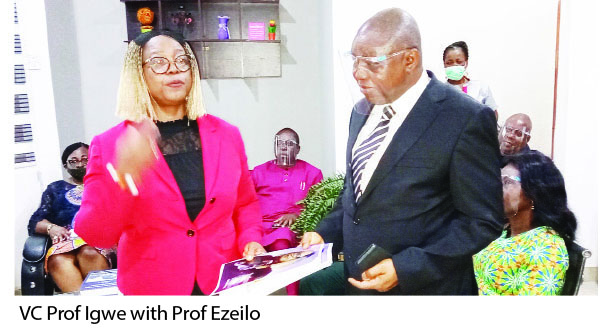
Vice Chancellor of the institution, Prof. Charles Igwe, participated in a project tour and was understandably overwhelmed that such number of projects could be executed by a faculty without assistance from the university.

Ezeilo disclosed at the event that witnessed inauguration of over 60 projects initiated and completed under her leadership in the faculty that the University of Nigeria, Enugu Campus has initiated the construction of an African Centre for Law and Good Governance.

She said that the facility would be named after the first dean of the faculty, Prof. Ben Nwabueze (SAN).

The don said the gesture was one of the steps so far taken to reposition the faculty as the premier law faculty in the country; adding that apart from physical infrastructures, she had initiated major reforms that would transform the institution to a centre of excellence in law studies.

Ezeilo said that the faculty had entered into partnership with the Michigan State University (MSU) that resulted in the award of scholarships to law students of UNN in 2019: “Furthermore, a staff of the faculty; Dr Helen Agu has embarked on a post-doctorate fellowship since September 2019 in MSU.

“Also another fellowship has been secured from University of Cape Town, South Africa, which will start in October 2020.”

She said that the faculty had signed Memorandum of Understanding (MOU) with University of Dundee, United Kingdom, and the University of Venda, South Africa.

Ezeilo further said that the MOU with the University of Dundee would enable staff of the faculty to do Post Graduate course at a discount rate of 50 per cent.

She said that the faculty recorded the successes through the assistance of its former students, explaining that she was motivated to embark on the projects and reforms by the desire to motivate students and lectures to learn and work in the best environment possible.

One of the projects inaugurated include fully-equipped 510-seater modern lecture theatre funded by the alumni class of 1990.

Others are faculty ICT library, lecturers’ offices and students’ Moot Court with complete modern courtroom fittings; upgrading and furnishing of the faculty boardroom to a 70-seater status, re-roofing of Mary Odili Auditorium Complex, attraction and furnishing of United Nations Human Rights Documentation Centre and so on.

In all, Ezeilo expressed her heart-felt gratitude to staff of the faculty for their support whenever they were called upon to “join my high speed train.”

Responding, the Vice-Chancellor of UNN, Prof Charles Igwe, said it was gratifying that all the projects were initiated and completed by Ezeilo within her 18 months and with externally generated funds.

Igwe described the outgoing dean as a pacesetter, whom he said had taken the faculty from zero levels to an enviable height for other deans in the institution to struggle and emulate: “It is amazing that Ezeilo did all these projects without demanding funds from the institution. I encourage other deans and heads of departments to take a tour of the law faculty and understudy the development strides of Ezeilo.

“I must say that the administration of the faculty has done well. I must commend you and your team. This is happening at a time when some other faculties are running to us for things as small as fuel for their generating sets.

“They all have to come here and see what’s going on. This place is totally unrecognizable from what it was in the past and it’s all a result of purposeful leadership. I also commend the 1990 alumni for remembering this institution. That is the way it should be”.

sunnewsonline

Gombe VAPP Alliance Takes Violence Prohibition Law Campaign To Gombe Emir

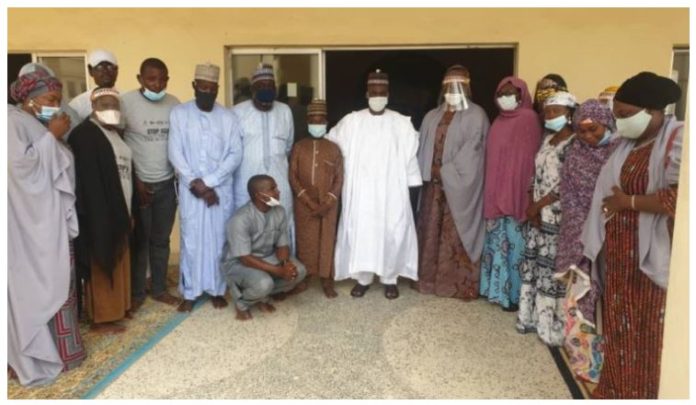
Emir of Gombe (in white Babanriga) in a group photograph with members of Gombe VAPP Alliance after the advocacy visit.

Gombe – An alliance fighting for the domestication of Violence Against People Prohibition (VAPP) Act in Gombe State has sought the support of the Emir of Gombe in seeing that the law is passed in the State.

Speaking when she led other other members of the alliance on an advocacy visit to the Emir of Gombe, Alhaji Abubakar Shehu Abubakar III, the Gombe VAPP Coordinator, Mrs Dudu Mamman Manuga, said there was great need for the law to be domesticated in Gombe State due to the alarming rate of gender based violence in the State.

She said they were in the Emir’s palace to appeal to him to lend his voice to the call because of the situation in Gombe is becoming so alarming and giving the State a very bad name.

She said, “in 2018, a Human Rights Commission report released in early 2019 had it that there were over 300 reported cases of domestic violence in Gombe State alone”.

She explained that “the research looked at five criteria of assessment, sexual and gender based violence and for the index cases, Gombe scored zero for all the five criteria of assessment. We are worst in Nigeria when it comes to sexual and gender based violence issues, the second highest in rape cases in the country”, she stated sadly.

She told our reporter in an interview that “We are not happy and we came to seek the Emir’s support and collaboration and commitment towards ending the menace, that together we will fight the cause.

“We are happy that he has given us his commitment, saying his doors are open to us. We are happy that Gombe is with us having gotten the commitment of the State Government through the SSG and the State House of Assembly. The Royal father has just blessed what we are doing “, she stated.

Responding, the Emir of Gombe, Alhaji Abubakar Shehu Abubakar III, who assured them of his support also acknowledged the existence of gender based violence in the State and said it has become a global menace.

He said he will do all that is needed to ensure that the fight against gender based violence succeeds in the State and that the law equally passed.

VAPP Alliance in Gombe State has twenty-one Civil Society Organizations including NAWOJ, FIDA, NHRC among many others who have tasked themselves to pursue the domestication of the VAPP Act in the State.

independent

Appointment Of Chief Judges: Any Conspiracy Against Women?

By Abdulrasheed Ibrahim

I read a story of a senior lady judge, Hon. Justice Beatrice Lazarus Iliya of the Gombe State judiciary, who was reported to have sent a petition to the National Judicial Council (NJC) protesting against an attempt to stop her from becoming the next Chief Judge of that State. According to the Judge, she is the most senior judge in the State judiciary having being called to the bar in 1981. She had earlier acted as the Acting Chief Judge for three months. In her petition, she lamented what she called “lack of fair hearing, faulty procedure and the criteria used by the State’s Judicial Service Committee for the appointment of the new chief judge”. She said further that rather than being invited to an interview, other two judges (Justice Joseph Ahmed Awak called to the bar in 1983 and Justice Muazu Pindiga called in 1988) who are junior to her were invited. The judge asserted that she had sent a presentation dated April 21, 2020 and a verifying affidavit dated May 6, 2020 wherein she complained that the Attorney General of the State can not preside over a petition against her by “a grain merchant complaining to the governor that she moved into the office of the chief judge when she was in acting capacity.The prayer of the lady judge to the National Judicial Council (NJC) is very simple one as according to the judge:

“…I humbly pray that my earlier presentations and all the issues raised therein should be investigated and resolved before the interview of the shortlisted candidates”

In the news report, the judge was said to have copied her petition to Hon. Justice Rhodes-Vivour, JSC who is the Chairman of the NJC Interview Committee, the Secretary of the NJC as well as the President of the Nigerian Bar Association (NBA).The Attorney-General of Gombe State, Mr. Zubairu Mohammed was reported to have denied the claim by the lady judge that her name was not sent to the NJC but that from their assessment of Justice Iliya alongside Justice Pindiga, the Acting Chief Judge, the latter was found to have better administrative skills than the former.

This is a very serious and interesting matter that must not be taken lightly. I am of the view that since the issue is now before those that matters in the scheme of things particularly the National Judicial Council (NJC), the issue must be critically looked into on what is really happening in the Gombe State Judiciary. Its findings must be made public. We are awaiting answers to questions such as: Was there really any conspiracy to stop the lady judge from becoming the Chief Judge having being called to the bar about 39 years ago? What was the problem or grievance of the grain merchant with the Acting Chief Judge moving into the office of the Chief Judge in the acting capacity? What is the implication of an Acting Chief Judge moving into the office of the Chief Judge? What were the yardsticks used by the Gombe State’s Attorney General to measure the administrative skills between Justice Iliya and Justice Pindiga? In some states, must the position of Chief Judge be exclusively for men at the expense of women even when it comes to their turn to be? At least rational and convincing answers are needed to these questions to settle once and for all the complaints of women judges who have been lamenting their being marginalized when it comes to being appointed as Chief Judges or being elevated to the appellate court in their various states.We have had in the past many examples where women were deliberately schemed out of having what they deserved but with their patience and perseverance,they eventually found themselves in the position that was beyond their imaginations. Notwithstanding the seemingly conspiracy of men against women in our judicial system, such has worked largely in favour of women that were once victims of such conspiracy.

There is no better way to illustrate this point than allowing those women to speak for themselves. Hon. Justice Aloma Mariam Mukthar, the now retired first female Chief Justice of Nigeria, had this to say when she was bowing out of the Supreme Court which is the apex court in the country:

“…I rose to be number two in the hierarchy of the Kano State Judiciary, and was to remain number two for years to come until I was elevated to the Court of Appeal. In 1982 , the then Chief Judge , (an expatriate ) retired , and a Judge that came on board a few years after my appointment as a Judge was made the Chief Judge.When an exercise for appointment of to the Court of Appeal commenced the new Chief Judge asked if I was interested, I answered in the negative, because in spite of the situation on the ground I had no desire to be moving from State to State as the office demands.In 1985, the incumbent Chief Judge left for the Court of Appeal , again history repeated itself , for again I was superceded by the then number four or five in the hierarchy of the court ,after acting as the Chief Judge for sometime, becoming the first woman in the country to discharge the function albeit temporarily. I took it in my stride and continued to work as though I was meant to be number (2) forever! To me, Allah wished it that way, and if he had said ‘no’ nobody could have commanded it to be ‘yes’ .Indeed, it was as though I had full knowledge of what he had in store for me in future. People were always surprised at my attitude towards these developments…”

Despite all the scheming, it worked in favour of Justice Aloma and she later became the first woman to be elevated to both the Court of Appeal and the Supreme Court in Nigeria where she eventually retired as the first woman Chief Justice of Nigeria (CJN). She made history that is today known to the whole world. Another woman judge that went through similar experience was no other than now retired Hon. Justice Clara Bata Ogunbiyi (JSC), let us hear from the horse’s mouth when bowing out of the Supreme Court on retirement from the apex court at the mandatory age of 70:

“With my position as High Court Judge, I remained truly grateful to God and very contented. My pre-occupation at that level was to give my best in the performance of my official function and also ensure that my family life did not suffer. As a result I was indifferent initially in moving up to the ladder to the higher court.However ,through the counsel , assurance and encouragement of my dear husband , I was motivated that I have the intellectual capacity and tenacity to go higher and God helping me , I should not limit my horizon. This counsel now afforded me the encouragement and confidence to inform my Chief Judge of my interest to the Court of Appeal in the event there was an opening for Borno State quarter .His response was that, he would let me know when the time comes .This he never did despite the fact that at that time there was nobody at the Court of Appeal on the Borno quarter. However, he recommended two of my juniors.”

Before I continue with further interesting remarks from Justice Ogunbiyi’s experience, I want to express the view here on the danger in making emperiorship or tyranny of our leaders at all level including the legal profession which judiciary is part of. When you have a system that leaves the Chief Judge with the absolute power or discretion to decide which of the Judges under him go to the appellate court, having the best materials for that appellate position may be compromised and fair deal not achieved as most CJs will always prefer their godsons or goddaughters for that positions at the expense of the good material judges in the system. Favourism and nepotism will always come to play. It is interesting to note that the lady judge in Gombe State in trying to resist her being marginalized in the scheme of thing has equally copied the NBA’s President with her petition. The type of tyrannical power being played out in NBA may not justify its intervention on this issue, as the saying goes that he who comes to equity must come with clean hands. Has NBA moral right to intervene in this issue?

NBA by its discriminatory constitution confers on all its local branches chairmen the powers to behave like godfathers in the conventional politics. A branch chairman has the absolute power to give and not to give a letter of good standing to any aspirant aspiring to run for elections at the NBA national level. If the local chairman does not like the face of an aspirant, he can withhold the letter and that will be the end of the matter. In the Ikeja Branch of the NBA for example, Mr. Dele Oloke as Chairman and his predecessor Mr. Adesina Ogunlana are not best of friends with their attitudes of cat and mouse towards each other.When Ogunlana decided to run for the 2020 NBA Presidential election at the national level, Oloke refused him the letter of good standing and the rest is now history. Unfortunately, the fate of an aspirant in an election that should be left in the hands of the generality of lawyers who are the electorates is made a one man show under the NBA political system. I think from this narrative, we can all deduce the danger in making tyranny of those at the helm of affairs. Perhaps, the National Judicial Council (NJC) in the course of its operation had in the past seen the handwriting on the wall and decided to change tactics. Let us hear further from Justice Ogunbiyi:

“Co-incidentally at this time, recommendations for appointment to the Court of Appeal were no longer the exclusive preserve of the State Chief Judges. Recommendations could also come from Court of Appeal or Supreme Court Justices. Justices of the Court of Appeal Jos Division who sat on my judgments coming from Borno State High Court Bench, on their own volition took it upon themselves and gave in recommendations on my behalf .Similar other Justices that were outside Jos Division also unanimously recommended me for appointment. To me ,these Justices are my destiny helpers and I saw God’s divine purpose at work…I It is gratifying that at my valedictory session on leaving Borno State Bench to the Court of Appeal ,the Hon. Chief Judge remarked in his speech that although he did not recommend me for appointment ,he however applauded those who did so. He even further poured encomiums on my suitability, credibility and integrity as a judge, to the glory of God.”

Confirming the above assertion, Hon. Justice James Ogebe, a retired Jurist of the Supreme Court said in the book titled: HONEY FROM THE ROCK which is a biography of Hon. Justice Clara Bata Ogunbiyi that :

“..When she (Hon. Justice Ogunbiyi) was the most senior Judge and was due for elevation as the Chief Judge of the state, she was bypassed and a Judge far junior to her was appointed over her.She bore this with patience Some of us recommended her to the Court of Appeal and, by the grace of God she was elevated as a Justice of the Court of Appeal…”

I think a lot of lessons need to be learnt from all these. For those women who may not have the livers to resist such injustice, such denial may be a blessing in disguise for them as we have seen in the cases of Justice Aloma and Justice Ogunbiyi who despite such denial eventually made it to the apex court in Nigeria. When a coup was once hatched in Kwara State against Hon. Justice Raliat Habeeb-Elelu as Chief Judge, the woman fought her legal battle up to the Supreme Court to get herself reinstated back to that office where she eventually retired. I do not buy into any act of conspiracy trying to deny women whatever positions they are entitled to in as much as they have the competence, credibility and integrity to hold that positions in question.They need not be cheated out because of their gender. This case of Hon. Justice Beatrice Lazarus Iliya of Gombe State Judiciary must be seriously look into by the National Judicial Council (NJC) and justice done if she actually deserves to be the Chief Judge as she must not be discriminated against on the ground of her being is a woman. Having being called to the bar about 39 years ago and putting such number of years into the practice and adjudication of law is not a small joke.

Many states in Nigeria particularly Lagos State have produced many female Chief Judges that performed wonderfully well in that position .Unlike in many other states, Lagos State has been the most liberal when it comes to the appointment of judges irrespective of the states the appointees come from and they are allowed to assume the position of the Chief Judge whenever it comes to their turn to be. This kind of things is very rare in some states as the highest position a non-indigene judicial officer can reach in those states is the position of the Acting Chief Judge.Those states need to borrow a leave from Lagos State when it comes to giving honour to whomsoever it is due. Competence, Creditability, Integrity and uprightness should be allowed to take precedent over ethnicity, gender and religious considerations.

AGF ABDULRASAQ (SAN): EXIT OF THE FIRST LAWYER

When it comes to the claim of being the first, Alhaji Abdulganiyu Folorusho Abdulrasaq (AGF), the father of the incumbent Governor of Kwara State, Abdulrahman Abdulrasaq will surely be counted among the first. AGF as fondly being called before his death on 25th July 2020 at 93 was the first lawyer to be called to the bar from the whole Northern Region of Nigeria. He was called to the bar at the Inner Temple in London in 1955. He was once gazetted as a Judge in the old Northern Region but AGF declined the appointment to the judicial bench. Due to his closeness to the late Premier of the Northern Region and the Sardauna of Sokoto, Alhaji Ahmadu Bello during the First Republic, he was made the National Legal Adviser of the Northern People Congress (NPC). He was a Parliamentary member of the Northern Region of Nigeria House of Assembly. He was at a time Nigeria Ambassador to the Republic of Cote D’ Ivoire. When the Kwara State was created, he served as the Commissioner for Finance and later as the Commissioner for Health and Social Welfare.

As a Nationalist, AGF took part in all the Pre-Independence Constitutional Conferences in London and was a member of the Committee that drafted the 1979 Constitution.He served as the President of the Nigerian Stock Exchange between 2000-2003.He was the Chairman of the Body of Benchers in 1984 and was conferred with the rank of the Senior Advocate of Nigeria (SAN) in 1985.In appreciation of his service to the nation ,he was conferred with the National Honour of the OFR in 2000.He had earlier in 1984 received the Kwara State Merit Award.He was turbaned and given the traditional titles of Tafidan Zazzau of Zaria as well as Mutawallin of Ilorin in 1962. With the sad departure of this great elder Statesman from the world, we pray the Almighy Allah to bless his soul and give his family, the people of Kwara State and Nigeria the fortitude to bear the great loss.

NOTE: Anyone is at liberty to disagree with my above submissions as I will surely appreciate a balanced, fair and objective rebuttal.

Written by By Abdulrasheed Ibrahim, LL.M, Notary Public, 08055476823, 08164683735: [email protected])
30th July 2020

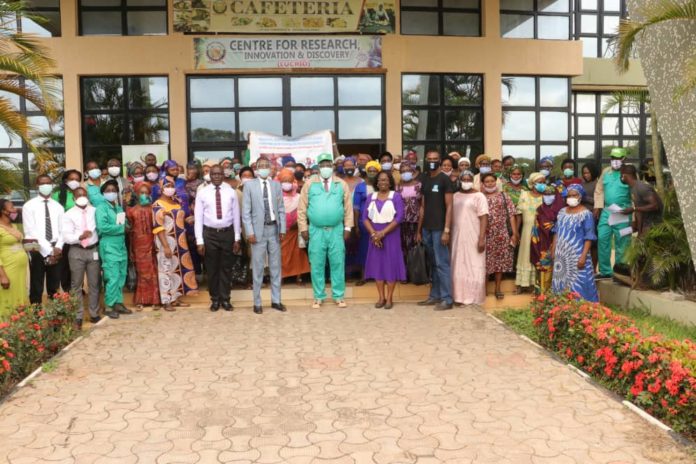
Landmark Varsity, GLOHWOC, WVL project collaborates to promote women capacity development

The management of Landmark University, Omu-Aran, Kwara, has said that its collaboration with the Global Hope for Women and Children Foundation (GLOHWOC) would helped to boost women capacity development and gender equality.

Prof Adeniyi Olayanju, the institution’s Vice-Chancellor made the assertion during a training session for selected women beneficiaries in Omu-Aran, Irepodun Local Government Area of Kwara State, on Wednesday.

No fewer than 62 women selected across the 11 wards of Irepodun Local Government Area of the State participated in the training session championed by GLOHWOC.

The beneficiaries were engaged in fields and hands on training in the areas of cereal, cassava, vegetable and poultry production.

Others are fishery enterprise, ruminants production enterprise, snailery enterprise as well as guinea fowl production enterprise.

Olayanju, in his welcome address at the event, said women as critical stakeholders have essential roles in the realisation of the desired food security in the country.

According to him, several bodies at the front line of women empowerment identified that persistent and systematic inequities in resources, power and roles disproportionately affects women, especially in agriculture and food systems around the world.

This, he noted, had limited the women’s opportunities, development and contribution to global hunger and poverty.

“It is therefore, important, given women’s crucial role in food production and provision, that any effort towards sustainable food security must address their access to productive resources.

“This workshop is, therefore, specifically designed to expose our women in Irepodun to the opportunities toward increasing their participation in agriculture.

“More importantly in fulfillment of the Sustainable Development Goals (SDGs) of the United Nation – to eradicate poverty and gender inequities.

“As an agricultural institution, Landmark University is gender balance when it comes to access to opportunities in agriculture.

“We have highly placed women that are doing great exploits in agriculture today.

“We are not only living it, we are also driving it for impact in our immediate community.

“We believe that when capacity is built, you will not only be helping yourself but others,” Olayanju added.

Mrs Christy Abayomi-Oluwole, GLOHWOC’s Chief Executive Officer, in her remarks, said the training programme was part of the foundation’s larger capacity development project plan for women in Irepodun and Ilorin-South Local Government Areas of the State.

Abayomi-Oluwole, represented by Mr Adesuyi Adeola, the Foundation’s Finance and Administrative Manager, said GLOHWOC is working with support from Global Affairs Canada and ActionAid Nigeria through the women’s Voice and Leadership (WVL) in realising the project plans.

She disclosed that the training was earlier scheduled for April but was shifted to July due to the COVID-19 pandemic.

“These women beneficiaries comprised of the less privileges and vulnerable, and are selected by a constituted project steering committee for training, literary assistance and possible provision of take-off grant for them to be self reliance.

“The project is meant to identify vulnerable persons, especially women, girls and non-registered cooperative societies, for financial literacy assistance for them to be self-sufficient and legally registered to function effectively,” she added.

GLOHWOC is Non-Governmental organisation (NGO) which envisions a society where women, children and other vulnerable populations have the opportunity to reach their utmost potentials.

The foundation established in 2007 and registered with Corporate Affairs Commission (CAC) has its thematic intervention areas to include Gender and Human Rights, Health, Education, and Good Governance.

journalismrendezvous

TIPS