Home Blog Page 1302

Confusion, rage as Policemen storm Anambra, whisk away community leader

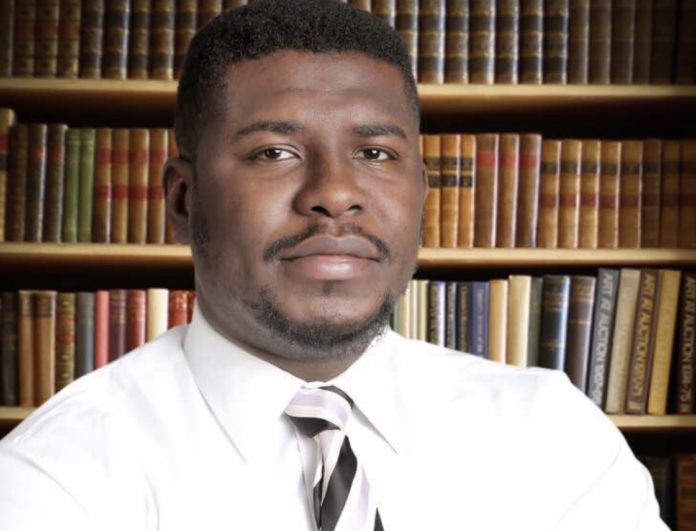
There is intense confusion amidst wild spread condemnation moment after officers from police headquarters in Abuja stormed Ezi Umunya, and whisked away a prominent commuter leader Chigozie Nweke.

Ezi Umunya is a community located in Oyi local area of Anambra state.

The arrest of Nweke on Monday September 21, 2020 by a team of two police officers under Gabriel Alegbu has been described as “politically motivated” by the natives of the community.

Nweke had been drawn in a leadership tussle with Shedrach Obinna over the chairmanship of Ezi Umunya Welfare Association, the town’s grassroot governance structure.

According to an eyewitnesses, the officers from the Force CID headquarters took Nweke to the Divisional Police Station in Nteje, Oyi local government area, to sign off procedurally before whisking him off to Abuja Monday.

Divisional Police Officer at Nteje, S.P. Ogbonna, affirmed that officers from the Force CID arrested Nweke on allegations of defaming the character of another factional leader of the Welfare Association.

Efforts to release Nweke on bail have so far proved abortive.(blueprint)

#CrippledJudiciary: Justice In Danger As Cross River Begins New Legal Year Without A Chief Judge

By Jonathan Ugbal

The new legal year for the Cross River judiciary began on Monday without the usual pomp and pageantry.

This is because there is a vacancy in the administrative court where the Chief Judge sits.

The State has been without a Chief Judge for 20 days now due to differences between the Governor, House of Assembly and the Nigerian Judicial Council.

And, legal practitioners are not finding it easy as cases will not be assigned reports the DailyNews Newspapers.

“The commencement of new legal year actually started Monday but the normal ceremony that goes with it such as Church service, parades, inspection of guard of honour by the Chief Judge and other activities were not done,” said Mr. Paul Ebiala, Chairman of the Calabar branch of the Nigerian Bar Association.

“The Chief Registrar issued a statement that the legal year has started but the other ceremony were postponed till further notice,” Ebiala noted, adding that: “We are still in that quagmire; assignment of cases will not be done by anybody other than a Chief Judge or acting chief judge.

“What will happen now is that the cases that are pending and that had been assigned will be attended to but the new cases that have been filed are the ones that will be affected because they will not be assigned by anybody for now.”

An annual legal vacation in the state started in July during the second acting term of Justice Maurice Eneji. This elapsed on the midnight of September 2, 2020.

The NJC had last year recommended Justice Akon Ikpeme as substantive Chief Judge but, the Assembly refused to confirm her with report suggesting she was not the preferred nominee of Governor Ben Ayade.

CBN Gives Strict Rules On Transfer Of FX Cash Into Domiciliary Account

FX cash deposit into domiciliary account can only be done by the dom account holder.

Newsone Nigeria understands that an internal memo of the Central Bank of Nigeria (CBN), shows that forex cash lodgements into domiciliary accounts can only be done by the account owners.

The strict rule on FX cash by the CBN means if you travel to the United Kingdom (UK) and urgently need some FX to fund your debit card, you will have to return to Nigeria, buy the dollar, pay into your card and return to the UK to continue your shopping.https://tpc.googlesyndication.com/safeframe/1-0-37/html/container.htmlAd by Valueimpression

The CBN memo said the new guidelines are necessary to review the utilisation of inflows into customers domiciliary accounts.

“Forex inflows cannot be credited to customers until the legitimacy of funds is established,” the document read.

“They can have unfettered access by telegraphic transfers up to a limit of $40,000 monthly for payment of medical bills, school fees, subscription to professional bodies subject to existing CBN guidelines.

“Transfers from one customer to another is prohibited. Transfer within related companies is allowed subject to a limit of $50,000 per month.”

According to a report by TheCable, the CBN memo recommended that proceeds from non-oil exports should be sold to banks, used for repayment of dollar term loans, and self-utilisation for trade transactions for LC, bills and Form A.

The report added that oil export proceeds from E&P companies are to be used to pay contractors and service providers employed by the oil companies in addition to the recommended uses for non-oil FX proceeds.

According to the report, offshore FX inflows, FX inflows from other Nigerian banks and internal account to account FX transfers sourced from offshore inflows are to be used for trade transactions subject to eligibility for E-Form M.

“Upon confirmation of the legitimacy of the inflows, customers can have unfettered access, subject to a maximum of $50,000,” the document read.

“Utilisation for trade transactions subject to processing of eligible trade transactions using E-Form M. Payment for services must be backed with demand note from offshore beneficiary and other regulatory documents.

“Related party transfers are allowed to the maximum of the inflow received. The transfer request should be backed by a signed instruction from the account holder.”

The report added that payment of government fees and levies are also allowed to the maritime, oil and gas, aviation. government parastatals and export processing zones.

Newsone Nigeria understands that the new development is coming at a time the Central Bank of Nigeria has been implementing various policies to conserve Nigeria’s forex after the economy was hit by double shocks caused by the COVID-19 pandemic and lowered oil prices.

Before now, the CBN recently announced that it would no longer provide forex for the importation of maize and is currently investigating some gaming companies for alleged forex infractions.

Newsone Nigeria

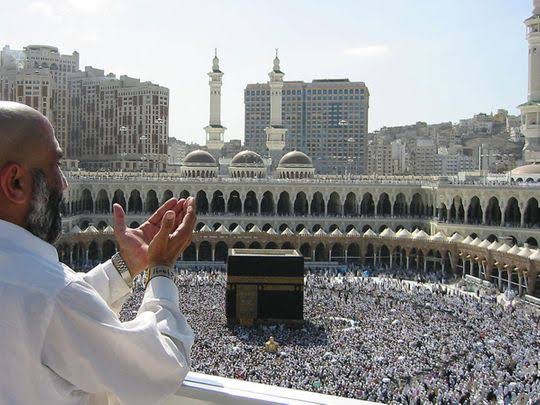
BREAKING: Saudi resumes ‘Umrah’ pilgrimage

Saudi Arabia said on Tuesday it would start allowing pilgrims to perform Umrah in gradual stages, Mouthpiece NGR has learnt. 

The ministry of interior said the country will gradually resume the year-round Umrah pilgrimage from October 4, after it was suspended in March because of the coronavirus pandemic.

In the first stage, “6,000 citizens and residents within the kingdom will be allowed to perform the Umrah per day from October 4”, the ministry said in a statement published by the official Saudi Press Agency.

Visitors from outside the kingdom will be permitted from November 1, when Umrah’s capacity will be raised to 20,000 pilgrims per day, the ministry said.

Zamfara Seeks Whereabouts Of N37Bn FG Refund, Fingers Ex-Governor

Zamfara Government says it has alerted security agencies to track the whereabouts of over N37 billion refunds on Federal Government projects executed by the state.

The state Commissioner of Finance, Rabiu Garba, announced this while addressing journalists in Gusau on Tuesday.

Mr. Garba alleged that the immediate past administration led by former governor, Abdulaziz Yari might have misappropriated the money.

The commissioner said the amount was initially quoted at over N47 billion as the funds used by the former administration in the reconstruction and rehabilitation of 14 federal roads in the state.

“We understood that the cost of the verified projects at the Federal Ministry of Works stood at over N37 billion.

“But when we asked for refunds of the said amount, it was confirmed by both the Federal Ministry of Works and the Debt Management Office that the amount had been paid fully.

“On further investigation, we gathered that the money was collected by the Director-General of Nigerian Governors’ Forum and one lady who also worked in the same place on instructions from former Zamfara government.

“We wonder how people who are not indigenes of the state nor have they ever worked for the state should collect such a colossal amount on behalf of the government and people of Zamfara,’’ the commissioner said.

He assured that the present administration under Gov. Bello Matawalle will do everything possible to recover the money “so that we can use it in the development of the state’’.

But reacting in an interview with the News agency of Nigeria (NAN) on Wednesday, the former Commissioner of Finance in the Yari led government, Muktar Idris exonerated the administration from any wrongdoing.

Mr. Idris said that the immediate past administration constructed the roads at the cost of over N60 billion and claimed the same amount from the Federal Government.

“But a federal government verification committee only approved N37.4 billion refunds which was on completed projects.

“Due to dearth of funds to repay such projects to about 23 states, which stood at over N500 billion, it was agreed at the governors’ forum that the states would collect the refunds in two tranches via promissory notes that would mature in three years.

“The states were to receive 40 per cent in the first instalment, in which Zamfara’s due amount stood at N14.9 billion.

“All the affected state governors also agreed that the director-general of the Governors’ Forum should collect for them.

“I still have the documents with me where we put over N10 billion as discounted from N14.9 billion into our joint account because we needed the money.

“So, we discounted and collected the amount through the Debt Management Office, Mr. Idris told NAN.

He explained further that the second promissory note was for N22 billion which was also discounted to a little over N17 billion.

“All the money had been deposited into the state government’s accounts.

“Zamfara people are free to check and verify these facts,’’ he said.(newsinvestigatorsng)

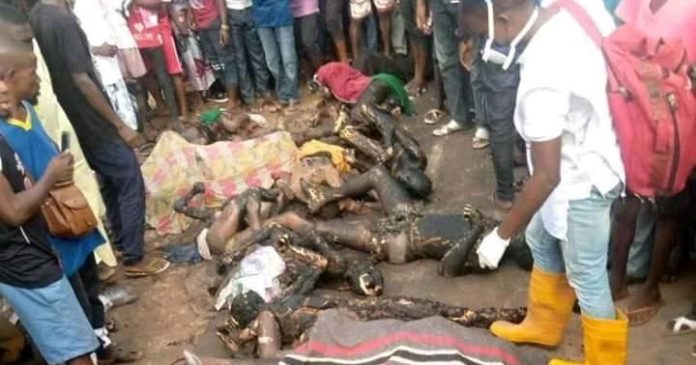
FRSC Confirms 23 Death From Scene Of Kogi Petrol Tanker Accident ( See Full Details)

The Federal Road Safety has confirmed the death of 23 persons at the scene of a petrol Tanker accident that occured at Felele, Lokoja in Kogi State today 

Of the 23, four were burnt beyond recognition 

This is the report as exclusively obtained by CKN NEWS 

FRSC CRASH REPORT FROM RS 8.3 KOGI,  COMMAND

Date: 23/09/2020

Incidence time: 08:30hrs

Report time:08:35 

Arrival time:08:40

Response time: 5min

Route: ZRG-LKJ. Location:

Felele ( by oando filling station.)

People involved: 24

People injured: 1

People killed: 23 ( MALE 10, FEMALE 6 , CM 3, C 4 burnt beyond recognition )

Vehicles involved: 10

1. Vehicle Reg: NA

Vehicles categories: tanker 1, cars 5, tcl 3, mc 2

Causes: SLV, BFL

ACTIONS TAKEN: those killed and injured victim was taken to specialist hospital Lokoja for medical attention. Obstruction clearing is ongoing.

Insurgency: British lawmakers write Commonwealth over killings in Nigeria

Thirteen members of the House of Lords, United Kingdom, have expressed concern over the killings by Boko Haram insurgents in the North-East and Fulani herdsmen in the Middle Belt region.

The upper house of parliament members said the failure of the Federal Government to protect Nigerians was a breach of the Commonwealth Charter.

They requested the Commonwealth to raise the killings with its Ministerial Action Group.

This was contained in a letter to the Secretary-General of the Commonwealth, Patricia Scotland, dated September 14, co-signed by Baroness Cox, Baroness Kennedy, Jim Shannon, Fiona Bruce, former Archbishop of Canterbury, Lord Williams and 14 others.

They cited a report by the UK All-Party Parliamentary Group for International Freedom of Religion or Belief, which accused unnamed officials of being complicit in the bloodshed in the country.

The referenced report was titled, ‘Nigeria: Unfolding genocide?’.

According to the parliamentarians, the APPG’s concerns reflected the findings of a report by Amnesty International, ‘We dried our tears: Addressing the toll on children of Northeast Nigeria’s conflict’, which concludes that the Nigerian armed forces have committed war crimes and crimes against humanity during their operations.

The lawmakers wrote, “The Nigerian army’s former Chief of Staff, Lt. Gen. Theophilus Danjuma, whom some of us have met and spoken to, says the armed forces are “not neutral; they collude” in the “ethnic cleansing in… riverine states.”

“The state’s failure to protect the citizens is a clear breach of its obligations under the Commonwealth Charter in respect of human rights,” the Lords submitted.

The letter added, “There is now an urgent need to ensure adequate protection and aid for those suffering the loss of family members and the destruction of their homes and livelihoods, and to end impunity by ensuring that complaints related to human rights violations are promptly, independently and impartially investigated, and those responsible are held to account after fair trials.”

The group requested the Commonwealth scribe to raise the urgent concerns with the Commonwealth Ministerial Action Group.

“We would be very willing to meet in person (or perhaps more practically, online via zoom) to discuss how we might proceed,” they said.

Nigerian Army, EFCC plan to fight criminality in South-East

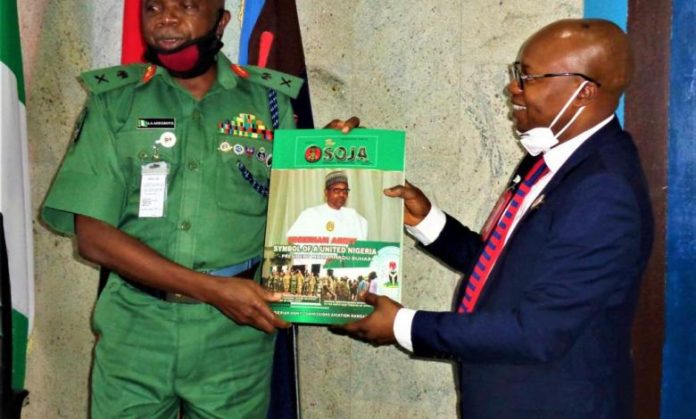
ENUGU – The General Officer Commanding, (GOC), 82 Division Nigerian Army, Enugu, Major General Lasisi. A. Adegboye has commended the Economic and Financial Crimes Commission’s efforts in South East and expressed readiness to strengthen the existing collaboration with the Commission.

This is contained in a statement signed by

Wilson Uwujaren, EFFC head of media and publicity on Tuesday.

According to the statement, Adegboye made the commendation on Tuesday when he received a delegation of the EFCC Enugu Zone, led by the Zonal Head, Mr. Johnson Oshodi at his office.

In his words, “Just like the Nigerian Army ,EFCC has been perceived in the negative by the general public, despite much responsibilities placed on both organisations and tremendous successes achieved. You cannot be deterred. Sometimes, when the attacks come, know that corruption is fighting back, do not be discouraged. Just know that you just hit the right spot.”

Stressing the importance of security and law enforcement synergy, the GOC said the military, the EFCC and the Nigerian Drug Law Enforcement Agency, NDLEA needed constant synergy to address acts of criminality in the zone.

“Count on us to always assist you in your operations here in the South East, especially those likely to turn out violent even as I encourage you to continuously liaise with other law enforcement agencies for better results,’’ Adegboye said.

Oshodi, while revealing that the purpose of his visit was to seek continued support and collaboration of the military, stated that, “we are here to synergise because we are working for the same Nigerian people and we need inter-agency co-operation to achieve a better Nigeria and fight the menace of internal insecurity. We need to team up to curtail or even apprehend the powerhouse of those who sponsor and fuel insecurity in Nigeria.”

According to him, “The menace of terrorism which you fight, is obvious cannot take place without sponsors and it involves lots of funds and laundering of those funds and this is where we come in.’’

He thanked the GOC for the support to the Commission in the areas of training and water supply.

sundiatapost

There Can Be Fair Hearing Without Oral Hearing.

Daily Law Tips (Tip 659) by Onyekachi Umah, Esq., LL.M, ACIArb(UK)

At several times, both judicial and non-judicial bodies/committees are set up to investigate and determine the rights and obligations of persons. It may be by employers, schools, professional bodies, religious groups, unions, associations or government. The members of such administrative bodies or committees may not be educated or lawyers but they have a duty to uphold fair hearing. In investigations, hearings and deliberations of such committees, there may be oral hearing or exchange of documents or even both. This work examines whether investigations and hearings by administrative bodies (committees/commissions/panels/groups) must be done orally or by exchange of documents or both and the implications. 

It is abecedarian, that any judicial, quasi-judicial or even non-judicial committee/commission/body/panel/group that is composed to determine or impose any decision that is likely to affect the civil rights and obligations of any person, is bound to grant fair hearing to the person. This includes administrative/executive bodies, investigative committees, panels of inquiry, tribunals and so on. There is no room or opportunity for such committees/commissions/bodies/panels/groups to be reckless rather they must be fair to all and act in good faith. Fair hearing is a fundamental human right and must be respected by all including administrative bodies (committees/commissions/tribunals/panels/groups).

To achieve fair hearing by an administrative body, must the proceedings/investigations/inquiries/findings/sessions/sittings/delibrations of such administrative body be held orally or by exchange of documents or by the combination of both procedures? This question will be answered through earlier pronouncements in the decisions of Supreme Court of Nigeria and the Court of Appeal.  Below is the position of the appellate courts and consequently the law as it is. 

1. “With due respect to the Learned Counsel for the Appellants, who has made lengthy submissions on this point, but my humble understanding of the indepth study of the cases so much relied upon, hinges on the simple fact that an administrative body, acting in that capacity, has the option to decide whether to deal with the matter before it, by oral hearing or merely on written evidence, and argument provided. Dealing with an appeal on written or printed evidence or communications only, is not, in itself a breach of the principle of fair hearing. See R. v. LOCAL GOVERNMENT BOARD EXPARTE ARLIDGE (Supra) and STUART v. HAUGHLEY PAROCHIAL CHURCH COUNCIL (1936) CHD. 32.” Per SULEIMAN GALADIMA ,J.S.C ( P. 15, paras. A-D ) in the case of GYANG & ANOR v. COP LAGOS STATE & ORS (2013) LPELR-21893(SC)

2. “It is to be noted that a party appearing before an administrative tribunal is entitled to be heard. The Apex Court had made it clear in BABA v. N.C.A.T.C. (1991) 5 NWLR (pt.192) 388 in the following words at pages 427-428. “An administrative Tribunal is not bound to follow the procedure and practice of the Court of law, that although it is bound to observe and comply with the principles of natural justice, that a person who would be adversely affected by its decision is entitled to be given adequate opportunity not only to know the case against him but also to answer it. However, he is not entitled to oral hearing unless such a hearing is expressly prescribed. The absence of oral hearing or an opportunity to be heard before an administrative tribunal does not necessarily tantamount to a denial of natural justice.” Per JA’AFARU MIKA’ILU ,J.C.A ( Pp. 27-28, paras. F-D ) in the case of BASSEY v. CIVIL SERVICE COMMISSION CROSS RIVER STATE & ORS (2010) LPELR-3858(CA)

3. “The decision of this Court in The Queen v. Director of Audit (W.R.) (1961) N.S.C.C. 292; Adedeji v. Police Service Commission (1967) N.S.S.C. 59, (1969) N.M.L.R. 102 and Hart v. Military Governor of Rivers State (1976) N.S.C.C. 622, (1976) 11 S.C. 211 appear to be on all fours with the decisions in England that an administrative tribunal is not bound to follow the procedure and practice of the court of law; that although it is bound to observe and comply with the principles of natural justice, that a person who may be adversely affected by its decision is entitled to be given adequate opportunity not only to know the case against him but also to answer it. However, he is not entitled to oral hearing unless such a hearing is expressly prescribed. The absence of oral hearing or an opportunity to be heard before an administrative tribunal does not necessarily tantamount to a denial of natural justice. Since cross-examination is an oral hearing, it follows from those decisions that its mere denial by an administrative tribunal, such as the Afinnih Panel, did not offend the principles of natural justice in the circumstances of the case.” Per MOHAMMED BELLO ,J.S.C ( Pp. 44-45, paras. C-A ) in the case of BABA v. NIGERIAN CIVIL AVIATION & ANOR (1991) LPELR-692(SC).

4. “… In the determination of his civil rights and obligations, including any question or determination by or against any government or authority, a person shall be entitled to a fair hearing within a reasonable time by a court or other tribunal established by law and constituted in such manner as to secure its independence and impartiality”, The term determination in this context means reaching a decision. Where, as in this case, the body is merely exploring or investigating the facts with no intention or power to decide, there is, in my view, no determination.” Per PHILIP NNAEMEKA-AGU ,J.S.C ( Pp. 35-37, para. B ) in the case of BABA v. NIGERIAN CIVIL AVIATION & ANOR (1991) LPELR-692(SC).

Administrative bodies (committees/commissions/tribunals/panels/groups) are not courts of law and as such are not expected to employ the practice, procedures and technicalities of courts of law. However, the moment any committee/commission/body/tribunal/panel/group is determining any civil right or obligation of a person, it is said to be acting judicially and as such, it must be fair and must act in good faith while upholding the principles of natural justice and fair hearing. 

Where any committee/commission/body/panel/tribunal/group is not determining or affecting the civil rights or obligations of any person, it is not acting judicial and as such may have no obligation to uphold fair hearing. Fair hearing is being fair and granting equal opportunities to all persons. This can be achieved through oral hearing or exchange of documents or even through the both options. There is no legally established hearing option/approach/procedure for all committees/commissions/bodies/panels/tribunals/groups, unless the law/authority establishing a specific committee/commission/body/panel/tribunal/group clearly states a particular hearing option/approach/procedure. Click to read my earlier works on fair hearing. 

My authorities are:

1. Section 36 of the Constitution of Federal Republic of Nigeria, 1999.

2. The judgment of the Supreme Court of Nigeria in the case of GYANG & ANOR v. COP LAGOS STATE & ORS (2013) LPELR-21893(SC)

3. The judgment of the Supreme Court of Nigeria in the case of BABA v. NIGERIAN CIVIL AVIATION & ANOR (1991) LPELR-692(SC).

4. The judgement of the Court of Appeal in the case of BASSEY v. CIVIL SERVICE COMMISSION CROSS RIVER STATE & ORS (2010) LPELR-3858(CA)

#SabiLaw

#DailyLawTips

#SabiBusinessLaw

#SabiElectionLaws

#SabiHumanRights

#SabiLawOnBeatFm

#SabiLawLectureSeries

#CriminalJusticeMonday

#SabiLawVideoChallenge

Speak with the writer, ask questions or make inquiries on this topic or any other via [email protected] or [email protected] or +2348037665878 (Whatsapp only). To receive our free Daily Law Tips, follow our Facebook Page:@LearnNigerianLaws, Instagram: @LearnNigerianLaws and Twitter: @LearnNigeriaLaw

Please share this publication for free till it gets to those that need it most. Save a Nigerian today! NOTE: Sharing, modifying or publishing this publication without giving credit to Onyekachi Umah, Esq. and “LearnNigerianLaws.com” is a criminal breach of copyright and will be prosecuted.

This publication is the writer’s view not a legal advice and does not create any form of relationship. You may reach the writer for more information.

Powered by www.LearnNigerianLaws.com {A Free Law Awareness Program of Sabi Law Foundation, supported by the law firm of Bezaleel Chambers International (BCI).}

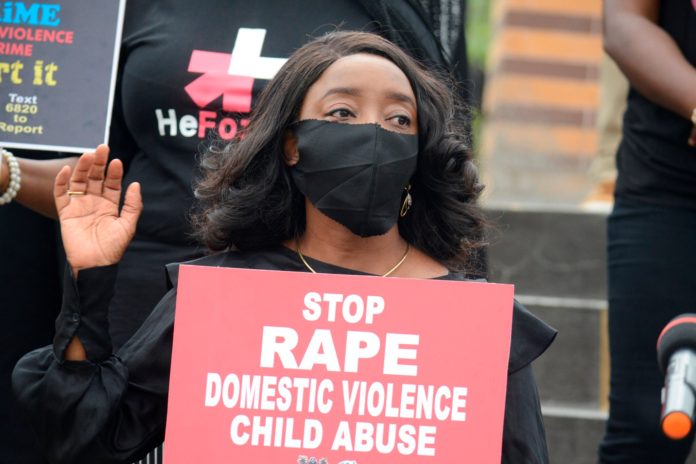
Nothing Happens When Women Are Raped in Nigeria

Ibijoke Sanwo-Olu, wife of the governor of Lagos State in Nigeria, at a Men Against Rape walk in June.Credit...Adekunle Ajayi/NurPhoto, via Getty Images

The pain of women and girls simply isn’t a big deal.

LAGOS, Nigeria — In May, hundreds of thousands of people around the world became familiar with the slight smile of a young student named Uwa Omozuwa. She was studying in a church, working toward a degree in microbiology, when she was violently raped. Within days, she had died from the brutal injuries inflicted by her attacker.

When Ms. Omozuwa’s death became public knowledge, the outrage was swift and sustained. Social media was awash with posters featuring her smiling face and the hashtag #JusticeForUwa. Talk-show hosts, newspapers and blogs focused on the case. People criticized the public response of the Redeemed Christian Church of God, in one of whose branches Ms. Omozuwa was assaulted. This was extremely unusual, since Nigerians rarely engage critically with anything relating to churches.

There was a consensus position: This kind of violence is unequivocally unacceptable. Nigerian women are fundamentally unsafe. Something has to be done about it.

Within weeks of the #JusticeForUwa campaign, another high-profile rape case entered the public domain. D’banj, a pioneering and much-loved star in Nigeria’s music industry, was accused by a young woman of breaking into her hotel room and raping her.

Seyitan Babatayo made the allegations herself, on Twitter, posting pictures and details of how the assault had played out. According to her, D’banj made sexual advances through an assistant. After she refused, he somehow got a copy of her room key, let himself in during the night and raped her.

Unlike Ms. Omozuwa, Ms. Babatayo lived to tell her story. And this time the response was very different. Many — including a prominent human rights activist — cast aspersions on Ms. Babatayo and her perceptions of her experience. Her character was scrutinized (what was she doing in that hotel, anyway?), and her motives became the subject of heated speculation (clearly, she wanted some of D’banj’s fame and money). Her word alone was not enough; to believe her, Nigerians needed her body, too. But Ms. Babatayo had made the great mistake of surviving.

The hypocrisy was typical of Nigeria, a country organized around the lethal combination of a violently patriarchal culture and a puritanical relationship to sex. Here, men are actively socialized into the understanding that women exist to submit to them, meet their needs and confirm their masculinity through sexual availability. Men and boys are conditioned to exercise dominance. And the bodies of women and girls are their most ubiquitous training grounds.

Between January and May, more than 700 rape cases were reported in Nigeria. Given that rape, even when there is a robust social and judicial framework for addressing the crime, is generally underreported and sexual violence tends to be treated in Nigeria as a taboo or “family matter,” it’s safe to infer the true number is far higher. A corrupt police force only makes matters worse.

In the past five years, hundreds of women — including me — have used social media to make credible allegations about sexual violence perpetrated by actors, social media celebrities, lecturers, colleagues, politicians, musicians and pastors. We come forward online because on the internet, we have a better, even if still tiny, chance of being believed and supported. Most survivors who make these claims don’t go to the judicial system, because we know our society.

The truth is, the pain of women and girls — including the kind of pain caused by sexual violence — simply isn’t a big deal in Nigeria. If anything, generalized female pain is a fundamental aspect of our social order. The more abuse a woman is able to meekly accept, the more virtue she is accorded by the people around her. And those who speak out against abuse are put back in their place.

In 2019, for example, a photographer, Busola Dakolo, said that Biodun Fatoyinbo, pastor of a hugely popular prosperity-gospel church, raped her on two occasions about 20 years ago, when she was a minor. She was not the first woman to accuse Mr. Fatoyinbo of rape. The pastor stepped down temporarily, but was back in the pulpit within a month.

That’s the church. In the state, it’s much the same. In 2016, a male senator, Dino Melaye, threatened another senator, Remi Tinubu, with rape. “Nothing will happen!” he bragged. Not only were there no consequences for Mr. Melaye’s threat, a rally was organized in his defense — complete with branded T-shirts, banners and posters. He had spoken the truth: In Nigeria, nothing happens when women are raped.

Perhaps Ms. Babatayo knew that. Her allegations against D’banj were followed by a strange series of events. Her original tweets were deleted and promotional videos for D’banj’s music were posted to her Twitter account. She was arrested by the police and detained for two days. Eventually, after several days of intense scrutiny and upheaval, Ms. Babatayo put out a statement saying that she and D’banj had reached a mutually satisfying “non-monetary” settlement. “I just want my peace,” she said.

As a survivor myself, and one who has come forward publicly as well, I have some small idea of what Ms. Babatayo meant. It is excruciatingly unrewarding, for most of us, to raise our voices against the crushing weight of Nigeria’s culture of misogyny.

I always believed Ms. Babatayo. And I always will. When confronted with rape allegations such as those leveled against D’banj, we tend to ask, “Given the circumstances, why would this man rape someone?” But in Nigeria, the more productive question to ask is, “Why would he not?”

OluTimehin Adegbeye (@OhTimehin) is a writer and a columnist at The Correspondent.

TIPS