Home Blog Page 128

Tinubu digs in as tax reform sparks claims of forgery, protest threats

President Bola Tinubu has dismissed mounting calls to suspend Nigeria’s controversial new tax laws, insisting the reforms will proceed as scheduled despite allegations of legislative tampering, rising political opposition and threats of mass protests.

In a statement issued Tuesday, Tinubu said tax measures that took effect on June 26, 2025—and additional acts slated to begin January 1, 2026—are now firmly in the implementation phase. While acknowledging public concerns, he argued that no “substantial issue” has been established to justify halting what he described as a “once-in-a-generation” fiscal reset.

“These reforms are not designed to raise taxes,” the president said. “They are intended to harmonise Nigeria’s tax system, strengthen the social contract and build a fair, competitive and resilient fiscal framework.”

But the reassurance has done little to quell an escalating backlash that cuts across party lines, labour groups, civil society, professional bodies and even elements within the ruling All Progressives Congress.

The latest flashpoint is an allegation by lawmakers that the tax laws signed by the president differ from the version passed by the National Assembly. The claim was first raised publicly by Rep. Abdulsamad Dasuki on the House floor, triggering outrage over what critics describe as “smuggled” provisions in the gazetted law.

The opposition Peoples Democratic Party seized on the controversy, renewing its demand for an immediate suspension of implementation. In a statement, PDP spokesman Ini Ememobong accused the presidency of prioritising revenue over citizens’ welfare and ignoring calls for a thorough investigation into the alleged alterations.

“A mere suspicion that unapproved sections were inserted into a law with nationwide impact is sufficient reason to suspend its commencement,” the party said, warning that public compliance depends on trust in the legislative process.

Resistance has also emerged from the left. A coalition of labour-aligned groups under the Network of Abuja Left Groups described the tax laws as a “declaration of war” on Nigeria’s working class and called for nationwide protests and a general strike.

“These laws are not reforms but weapons fashioned against working people,” the coalition said, accusing the government of using taxation to service elite interests and foreign debts while deepening poverty at home.

The group urged the Nigeria Labour Congress and the Trade Union Congress to mobilise resistance, warning that “you cannot tax poverty into prosperity.”

Criticism has extended to former presidential candidates. Ex-Vice President Atiku Abubakar warned that the reforms risk choking small businesses and worsening unemployment if pushed through without transparency and broad consultation. Labour Party leader Peter Obi echoed that view, arguing that tax restructuring without productivity growth and governance reforms could prove counterproductive.

Dissent has also surfaced within the APC. Senator Ali Ndume questioned the integrity of the legislative process, cautioning that ignoring public outrage could alienate both citizens and lawmakers.

Legal concerns have further complicated the picture. The Nigerian Bar Association flagged potential constitutional issues and warned that vague provisions and overlapping tax authorities could trigger regulatory chaos and litigation.

Online, criticism has intensified. Social media platforms have been flooded with analyses, personal accounts of financial strain and accusations that public consultations were merely cosmetic. While some commentators support reform in principle, distrust of government assurances dominates the debate.

Still, the presidency remains unmoved. Tinubu warned against what he called “premature, reactive measures,” pledging to work with the National Assembly to address any genuine concerns while maintaining the reform timeline.

Not all stakeholders oppose the rollout. The Nigeria Employers’ Consultative Association has endorsed the January 1 commencement date, warning that further delays would amount to “a crime against Nigeria.”

NECA Director-General Adewale-Smatt Oyerinde said flaws in the law should be corrected through amendments rather than abandonment. “No reform is perfect,” he said. “But refusing to move forward would be far more damaging.”

With 2026 hours away, Nigeria’s tax reforms have become a defining test of Tinubu’s economic agenda—pitting fiscal ambition against public trust. Whether the reforms stabilise Nigeria’s revenue base or deepen resentment may hinge on how credibly the government addresses allegations that now threaten the legitimacy of the laws themselves.

Nigeria to record more births than all of Europe in 2025, UN projects

As 2025 draws to a close, new United Nations population projections are underscoring a profound demographic shift with global implications: Nigeria is expected to record more births this year than the entire continent of Europe combined.

According to estimates from the UN World Population Prospects 2024, compiled and visualised by Visual Capitalist and Our World in Data, the world is projected to record about 132.3 million births in 2025. The vast majority are expected to occur in Asia and Africa, regions that continue to shape the future size of the global workforce and consumer base.

Final national birth figures are typically confirmed after the end of the year. Still, the projections already indicate a widening demographic divide between younger, fast-growing societies and ageing populations struggling to sustain growth.

Nigeria Outpaces Europe

Nigeria alone is projected to record about 7.64 million births in 2025, surpassing Europe’s combined total of roughly 6.3 million births across more than 40 countries.

The comparison is stark. Nigeria is expected to register more births than Germany, the United Kingdom, France, Italy, Spain, Poland, the Netherlands and Romania combined. The figures highlight the growing gap between Africa’s most populous nation and European societies, facing decades of declining fertility.

Globally, Nigeria ranks third in total births, behind India, which is projected to record about 23.1 million births, and China, at roughly 8.7 million.

Asia Still Dominates Global Births

Asia remains the world’s primary birth centre, driven by large populations and relatively young age structures in several countries.

India alone is projected to account for nearly one in every six births worldwide in 2025. China, despite a prolonged fertility decline, remains second globally in absolute birth numbers. Pakistan, Bangladesh and Indonesia also rank among the top contributors, reinforcing Asia’s demographic weight.

Africa, however, stands out as the fastest-growing region by births, reflecting both higher fertility rates and strong population momentum.

Beyond Nigeria, several African countries rank among the world’s leading contributors. The Democratic Republic of Congo is projected to record about 4.56 million births, Ethiopia about 4.18 million, Egypt roughly 2.45 million and Tanzania about 2.42 million.

Notably, the DRC alone is expected to record more births than the United States, which is projected to see about 3.66 million births in 2025. In total, Africa has eight countries among the world’s top 30 by number of births.

Ageing Nations, Rising Pressures

In contrast, Europe and parts of East Asia continue to grapple with aging populations and persistently low fertility rates.

Major European economies such as Germany, the UK, France and Italy are each projected to record fewer than 750,000 births annually, intensifying concerns about labor shortages and the sustainability of pension and healthcare systems.

East Asia’s demographic decline is even sharper. Japan is expected to record fewer than 750,000 births in 2025, while South Korea’s projected 245,000 births underline what demographers describe as one of the deepest fertility crises in the world.

What the Numbers Mean

Demographers caution that population trends are not destiny, but they remain a powerful long-term force shaping economic and political outcomes.

Population dynamics influence labor force size, consumer markets, military capacity and geopolitical influence. Europe’s challenge is maintaining productivity and welfare systems amid shrinking and aging populations. Nigeria and much of Africa face the opposite dilemma: rapidly expanding youth populations without enough jobs, infrastructure and social services to absorb them.

Analysts say whether Africa’s population surge becomes a demographic dividend or a source of instability will depend on governance, education, healthcare investment and economic reform.

A Year-End Reality Check

As 2025 ends, the UN projections deliver a clear message. The global population centre of gravity is shifting decisively toward Africa and parts of Asia. While policy is debated in boardrooms and capitals, the long-term balance of economic and geopolitical power is increasingly being shaped in cities such as Lagos, Kinshasa and Delhi.

That is where much of the world’s future workforce and consumer base is being born.

Romance is over, By Funke Egbemode

There is time for everything. The time for romancing bandits and criminals who call themselves all kinds of designer names is over. We have tried counsel. We cajoled. We begged. We paid ransom. Nothing worked. We only lost more children, more pregnant women, more schools, and more local government areas. The criminals just grew bolder while our national dignity shrank like Okobo’s sick third leg. None of the sacrifices we placed at the road junction was accepted.

But this is a new day. We have done the same thing the same way for years and harvested nothing. What could possibly go wrong with gun-a-blazing or bomb-a-blazing when beg-a-blazing did not work?

Imagine waking up on Christmas Day to news of Uncle Donald sending his unmanned equipment of war into the huts and cabanas of terrorists—and in Sokoto too. I expected that whenever American flying weapons would land, they would scatter ground in Borno, Zamfara, and the North-Central forests where we had lost count of dead bodies. But like a thief in the night, American missiles went to the state that hosts the Seat of the Caliphate. I grabbed the biggest mug, made my tea, and sat to enjoy the sparse details.

That was when I saw the report claiming that my darling Sheikh Gumi said Nigeria must stop cooperating with America to carry out airstrikes. The report said what Trump did had the potential to polarise Nigeria and was detrimental to national sovereignty. Imagine. The old man is worried about our pain and sovereignty—as if pain has not become part of our daily existence: pain of abduction; of parents going to bed as fathers and mothers and waking up to news that their children have been hurled into parts unknown by gunmen; pains of children who suddenly became orphans; landlords who became refugees in IDP camps. Our lives have been full of pain.

Northern able-bodied men who should be in schools and universities are doing menial jobs in the cities. Tomorrow’s leaders of the North are in Lagos, Ibadan, and Port Harcourt as maiguard, maisuya, and mai shayi.

Didn’t Sheikh Gumi hear and see these things? What sovereignty is left for a nation where a few hooded men have turned citizens into commodities of trade by barter—“Give us N150 million and we will return your daughters”? What sovereignty is left for a nation that allows funny flags to be hoisted by strange doctrine peddlers on its territory? These guys had us by the balls and were squeezing mercilessly, openly, in the open.

And the Sheikh counseled that we look for another partner if we must work with others to combat these terrorists who are stripping us naked. Hm. Baba has a point. But a woman in the throes of labour does not ask whether the midwife has tribal marks or whether the doctor wears dreadlocks or tattoos. All she wants is for the pain to end and for her healthy baby to be placed in her arms. The water yam is not allowed to grow beards in the presence of fire. Loju ina, ewura kii hu irun.

Help—and helpers—can come from strange quarters. For years, we lifted our eyes to the hills for divine assistance; why should we turn Uncle Trump down? As I wrote some weeks ago, the bandits must be routed—one way or the other. If we had let Tinubu do it without accusing him of ethnic cleansing and other such crimes, perhaps America would not have had to bomb hideouts of ISIS, ISWAP, and Lakurawa adherents. But Nigerians, the way we are, think that if we do the same things repeatedly, we can achieve different results. It did not work. The bombs were ripe for bombing, and President Donald Trump and his Ministry of War worked with President Bola Tinubu and Nigeria’s armed forces. The rest is the beginning of another phase of our history.

Me, I did not know Mr Trump would do it the way he promised—fast and furious. If he had waited for us to wake up, I would have offered him freshly brewed burukutu with smoked thigh of porcupine (oore).

But seriously, this is the beginning of a new day in the fight against terror, terrorism, and those who profit from sorrow, blood, and bereavement. Trump will come again—and as many times as he deems adequate—to put an end to the regime of nonsense going on in our forests. He is not a man given to nicely worded press statements. He does not watch body language or care if “Uche’s eyes are bloodshot.” Until he is no longer President of the United States of America and class captain of the rest of the world, those terrorists in Sambisa Forest and their founders would do well to relocate from Nigeria.

The captain is also closely watching—and listening—to those who think this is a season like any other. We should all be worried that it came to this. We could have worked it out ourselves, but we politicised every move against terrorism, as if terrorists were Soponna, the Yoruba god of smallpox. We poured palm oil on their heads and built shrines for them. But Soponna, no matter how many drums of oil you pour on his head, is not a kind god. When he strikes, he asks for more palm oil and palm wine. He still kills. Those who survive his strike bear pockmarks—his “I-was-here” signature.

That December 24 night strike was a huge step in a different direction, and its full import will unfold slowly. There will be far-reaching consequences, but we will cross that bridge if we get there. For now, the job we want done is getting done. Gb’omu f’omo, gbo’mo f’omu, ki omo sa ti yo—that is how the Yoruba capture our Christmas military intervention. Give the baby breast or give breast to the baby; as long as the baby is fed, all will be well.

The routing has started.

The views expressed by contributors are strictly personal and not of Law & Society Magazine.

Nigeria on Edge: Fresh Kogi abductions, Boko Haram kills eight in Adamawa

Fresh abductions in Kogi State and deadly Boko Haram attacks in Adamawa have intensified fears that Nigeria’s security crisis is entering a dangerous new phase, with violence spreading across multiple regions even as foreign-backed military operations target extremist groups in the North.

Several people were abducted on Tuesday, December 30, 2025, along the Omi-Odo Ara Road in Yagba West Local Government Area of Kogi State, according to local sources. The road links a cluster of rural communities, and authorities have yet to confirm the number or identities of the victims.

Community leaders told Sunday PUNCH that residents had observed unusual movements of armed men operating in small groups in recent days, raising concerns that militants displaced by recent U.S. airstrikes in northern Nigeria may be migrating southward following Christmas Day attacks.

The abductions came days after U.S. President Donald Trump announced that American forces had carried out what he described as “deadly strikes” against Islamic State targets in northwestern Nigeria. Nigeria’s Federal Government later confirmed it supported the operation, saying the strikes hit terrorist hideouts.

Residents in Yagba West said security agencies were alerted immediately after Tuesday’s incident, while communities were advised to limit movement, remain vigilant and report suspicious activity.

Tension in the area has been building for days. On Sunday night, suspected terrorists carried out a coordinated raid on the Odo-Ere community, also in Yagba West, abducting at least four residents, according to SaharaReporters. Those taken were identified as Shina Ajere, Kehinde Afolabi, Damilola Ogun, and a woman popularly known as Iya Lara.

Witnesses said the attackers, believed to be heavily armed, moved from house to house firing sporadically, plunging the community into panic. Residents said the full scale of the abduction remains unclear, fueling fears that more people may have been taken.

Another nearby apartment was reportedly targeted, bearing visible gunshot damage, although the attackers failed to gain entry.

“The situation was chaotic. Gunshots were everywhere,” one resident said.

Community members have called on security agencies and the Kogi State Government to urgently deploy additional personnel and intensify rescue operations for those abducted.

The violence in Kogi comes as insurgents continue to launch deadly attacks in northeastern Nigeria. In Adamawa State, suspected Boko Haram fighters killed at least eight people in coordinated assaults on Zah, Kijing and Mubang villages in Hong Local Government Area on Monday night.

Residents told Daily Trust that several houses were destroyed during the attacks, raising fears that the casualty figure could rise. Four people remain missing, while many villagers fled their homes to escape further violence.

“Many people believe the number of those killed may be more than eight because several houses were destroyed,” one resident said.

The Chairman of Hong Local Government Area, Inuwa Usman Wa’aganda, confirmed the attacks, saying authorities had recovered eight bodies from the affected communities.

“It is true. Boko Haram attacked Mubang, Zah and Kijing villages. Eight corpses have been recovered so far, and four persons are still missing,” he said.

The Adamawa attacks have heightened security concerns during the Christmas period, especially as previous assaults were reported in nearby Mayo Ladde and Garaha districts, pointing to sustained insurgent activity in the state.

Security analysts warn that as military pressure increases on terror groups in the North, vulnerable rural communities in other regions may face escalating threats, exposing gaps in Nigeria’s internal security response.

Near-death stories and celebrities who escaped death on Nigerian roads

Road accidents remain a frequent and deadly hazard on Nigerian highways, claiming countless lives each year.

Yet, some public figures have narrowly escaped tragedy, walking away from near-fatal crashes with their lives intact.

From world-class athletes to celebrated musicians and gospel ministers, these celebrities’ close calls serve as a stark reminder of the risks on the road—and the resilience of those who survive.

PUNCH Online highlights some celebrities who survived near-fatal accidents:

1. Anthony Joshua

World boxing champion, Anthony Joshua, is recuperating in a hospital following a road accident on the Lagos–Ibadan Expressway on December 29, 2025. The Toyota Lexus jeep he was travelling in with three passengers crashed around midday, and two passengers tragically lost their lives. The Ogun State Government confirmed the incident and extended condolences to the families.

2. Harrysong

Afropop singer Harrysong survived a car accident on June 24, 2016, while travelling from Owerri to Lagos for a Project Fame Season 9 performance. Weeks later, he shared his gratitude on Instagram, describing it as a close call with death.

3. Burna Boy

Grammy-winning artist, Burna Boy, was involved in a car accident on February 26, 2022, in Lekki, Lagos, while driving his Ferrari 458. He sustained minor injuries and expressed surprise that bystanders focused on filming rather than offering help.

4. Dunsin Oyekan

Gospel minister, Dunsin Oyekan, survived a serious crash on September 3, 2022, while travelling from Lagos to Ibadan. Although a crew member had minor injuries, no lives were lost. Oyekan later called it a miracle, revealing that their vehicle had gone under a trailer.

5. Victor Boniface (Super Eagles Striker)

In October 2024, the Bayer Leverkusen player survived a “ghastly” car crash while en route to an airport. Despite the severity of the wreck, he sustained no major injuries.

6. Clinton Joshua (Nollywood Actor)

He survived a devastating accident in late 2025 that left his vehicle “crashed beyond recognition”.

7. Sensational Bamidele

Gospel singer and bandleader Bamidele Adeek, popularly known as Sensational Bamidele, survived a head-on collision in Rivers State in December 2022. The vehicle carrying his team somersaulted multiple times, and he credited divine intervention for their survival.

8. CDQ

Indigenous rapper CDQ was involved in a car crash in Lagos on August 15, 2023. Sharing videos from the scene on Snapchat, he revealed his car was badly damaged, but he escaped without serious injuries.

These incidents underscore the dangers of Nigerian roads while highlighting the resilience and gratitude of those who survive.

Don Pedro and beautiful Benin, By Suyi Ayodele

A few years ago, a telecommunications outfit set out to erect a Base Transceiver Station (BTS) at the back of the palace of Oba of Benin. The coordinate fell on Alaka Street, directly behind the palace. Civil works commenced and completed without incident. The next phase involved assembling the tower components of the 75-metre mast. As the riggers worked, the structure began to take shape within hours. However, as the tower rose and became taller than any building in the surrounding area, trouble began. 

A group of Benin Palace chiefs arrived and issued an immediate ‘stop work’ order. The riggers climbed down, and the company’s management intervened. Explaining the directive, the chiefs said that the height of the tower would enable anyone on the tower to   see the inner recesses of the palace, especially the section where the Oba’s harem lives! They stressed that Benin custom and tradition would not permit such a situation. They noted that around the palace, expansive as it is, no structure is allowed to be taller than the palace itself. The development resulted in a stalemate.

The reigning Oba then, Omo N’Oba N’Edo Uku Akpolokpolo, Oba Erediauwa, was contacted. The company pleaded with him to intervene. A diplomat par excellence, Oba Erediauwa listened to all the parties. He agreed with the submissions of his palace chiefs from the Ewebo and Ibiwe groups. Then, he also considered the economic, social and developmental effects of the telecommunications towers on the people of Benin, his subjects, and other residents. 

Oba Erediauwa said that since the mast would be of immense benefits to the people and since the company had committed so much money into the venture, it would not be fair to ask the company to rig down. But more importantly, Oba Erediauwa reasoned, the people would lose should the construction of the mast be disallowed. He then found a middle way for the problem to be resolved.

Oba Erediauwa ordered that whenever the company’s engineers and riggers intended to climb the tower, they should first notify the palace. By doing so, the monarch said that he would have sufficient time to inform his wives and instruct them to stay indoors for the duration of the work. Everyone present at the meeting chorused Oba gha to kpere (Long live the Oba). Till date, that mast is still standing, and fully operational, contributing to the economic and social development of Benin City.

Yet another encounter with Oba Erediauwa. A few years after the Alaka Street mast erection, the company needed to optimise its network around Ring Road. The problem was that from the Sapele and Sokponba Roads ends of the Ring Road, there used to be a blind spot that cut off communication as one drove to negotiate either Forestry, Mission or Oba Market Roads. The technical unit of the company suggested a booster BTS around the Ring Road. The coordinate fell on the Benin Museum ground and the Roll Out managers negotiated with the museum and got a spot for the mast.

As the excavation work for the civil engineering structure began, a new set of Benin Palace Chiefs appeared. They contended that the entire Benin Museum ground was the bedroom of Omo N’Oba Ovonramwen Nogbaisi of the 1897 Benin Massacre episode. The chiefs added that any excavation beyond two metres would not be allowed as some traditional items were buried in that vicinity. The company needed at lease a 20-metre excavation for its pilling for the four legs of the tower.

The chiefs agreed that such a length of excavation would only be allowed after certain rituals were performed. They fixed the ritual items at N2 million. When the negotiation to beat down the cost failed, an ex-member of staff of the museum, whose mother was a Benin princess, intervened and approached the Oba.

Again, Oba Erediauwa agreed with his chiefs that the museum ground is sacred and any digging beyond two metres would require certain rituals to be performed. Then, having listened to the reasons why a new mast was needed and confirmed that he had received reports of the blind spot in communication around the Ring Road, he agreed that a new mast was desirable. The monarch was shown the picture of the pine tree mast to be erected and how effectively it blended with the vegetation in the museum ground. He then asked why the company was not willing to perform the rituals.

The company’s representatives told the Omo N’Oba about the cost. The Oba kept quiet for a while. Then he addressed his chiefs in the Benin Language. Thereafter, he spoke: “My chiefs have agreed that N50,000 will be enough for the ritual items. Give them and after they have done what they need to do, continue with your work. Thank you, thank you, thank you.” Today, Oba Erediauwa has long joined his ancestors, but the mast is standing gidigba on the museum ground and the blind spot is eliminated! May the soul of Oba Erediauwa continue to occupy its rightful position among his forebears, Ise!

 I have brought out these two narratives to show that justice, fairness and civility reside in the Palace of Oba of Benin. During the height of the misrule of the expired Head of State, General Sani Abacha, when his deputy, General Oladipo Diya and other top military brass were arrested for a phantom  coup plot, it is on record that of all the traditional rulers who visited Abacha in Aso Rock Villa, only Oba Erediauwa and the late Awujale of Ijebuland, Oba  Sikiru Kayode Adetona, refused to make comments. The two monarchs said that having listened to Abacha, they needed to also hear from Diya and his fellow detainees. When that request was declined, the two kings departed Abuja without saying anything about the coup plot. That is tradition, that is culture.

Today, a lot of issues are happening in Benin and the name of Omo N’Oba Ewuare II, the current king is being dragged to them. The Benin throne, unarguably, is one of the last vestiges of the pride of the African Race. The dignity of that throne is too significant to an average Black man for the negative narratives in Benin now. Any child of history, any proud son and daughter of the Black Race, must be worried, greatly troubled and very apprehensive that the revered Benin throne is being mentioned in many negative forms recently.

On a personal note, I would be long dead before I would believe that the Oba of Benin would mobilise, in any slightest imagination, thugs, parading as keepers of Benin tradition and custom, to attack diplomats as it happened two months ago during the ceremony organised at the premises of the controversial Museum of West African Art (MOWAA) for some diplomats and other arts enthusiasts. Unfortunately, the characters who caused such a monumental embarrassment claimed to have acted in the interest of the Benin Palace.

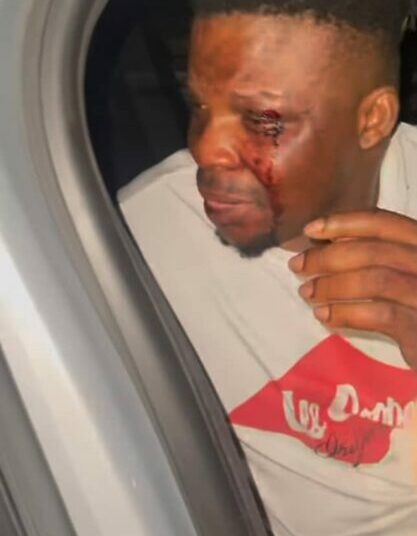
The issue of MOWAA had hardly died down when another set of street urchins, acting in the name of defending the Benin monarch, stormed a football field and kidnapped one of the prominent sons of Benin, Dr Don Pedro Obaseki. The excuse given was that in his closing remarks at a function in the United Kingdom sometime ago, Obaseki ended his contributions with the clause: “Edo gha to kpere” (Long live the Edo people) instead of the usual salutation of “Oba gha to kpere” (Long live the Oba of Benin).” (Long live the Oba). For that infraction, Obaseki was declared an Oghion-Oba (enemy of the Oba) He was beaten and stripped to his boxers before he was dragged to the palace and ended up at the Oba Market Police Station.

The most disturbing aspect of the ugly incident is the claim by Obaseki that while he was in that humiliating position “inside the Oba Palace, I was slapped, beaten, gagged, and forced to kneel while naked. While in this condition, I attempted to plead for my life and dignity as the Oba drove past me.” I earnestly pray that this account is an exaggeration. I cannot not believe that the Omo N’Oba drove past one of his sons in such a degrading state. It is inconceivable that the Omo N’Oba would be informed of such a commotion within the palace and fail to inquire into it or address it appropriately. May Benin Palace never degenerate to that level; may the gods and ancestors never permit it.

That said, I sincerely believe that Omo N’Oba Ewuare II must do something about the men going about harassing people all in the name of the Palace. No African child in his or her right senses would subscribe to any insult directed at any king, more so the Oba of Benin. An average sensible Benin child knows the grave implications of the Benin Palace declaring him or her as an enemy.

With the known acrimonious issues between the current Esama of Benin Kingdom, Chief Gabriel Osawaru Igbinedion, and the immediate Oba Erediauwa, the monarch never declared Igbinedion an Oghion-Oba because he knew the implications. The consequences of anyone becoming an enemy of the Oba of Benin go beyond the Biblical fourth generation! That is the culture. So, the question is: where did these men derive the power to declare anyone the enemy of the Oba when the Omo N’Oba himself has not made such a declaration?

It beats commonsense that in the 21st century, a group of people would descend to the level of barbarism exhibited on Sunday, December 28, 2025, in the stripping of Don Pedro Obaseki, and dragging him from Igbesanmwan Street through Holy Aruosa Church to Ring Road and the ancient Benin Palace all because he allegedly disparaged Benin culture! In my over a quarter of century residence in Benin, I have yet to come across any Benin culture that allows such an animalistic behaviour.

Every tribe has its good, bad and ugly. Benin is no exception. But I must confess here: If you are looking for civilisation and culture, visit Benin. It is no fun when the Benin forebears submit that Aghasoghe Edo, Edo Odion (When you get to Edo- Benin- Edo is still senior). They did not stop there. They added Aghase Edo, Edo Yere’re (When you get to Benin, Benin is still far), to show how complex the culture of the people can be. Benin home and in the Diaspora, have utmost regard for their Oba and believe that Edo Noba ye (Benin is where the Oba resides) and no other place, hence, they conclude Edo ni mose (Benin is beautiful)!

Where the king resides is where justice inhabits and is upheld. Benin cannot be beautiful when we keep recording these ugly incidents in torrents! This is why Oba Ewuare II must act. This is the reason why Umogun, the Uku Akpolokpolo must come out and denounce these charlatans. The time for the Oba to roar like the Ogidigan (great warrior) that he is, is now! Enough of the embarrassment, enough of the image denting. All that is required to end the trend is for the Omo N’Oba to issue a public statement distancing himself from anyone engaged in such barbaric acts. May the gods and the ancestors grant Oba Ewuare II the wisdom to pilot the affairs of his subjects peacefully. Oba gha to kpere Ise!

Sweet Christmas gift of death from America

Otokunado! That is a Benin street lingo. It simply means he who talks and acts the same way (talk and do). If President Donald Trump of America needs an appellation, Otokunado fits perfectly! My old boss has a saying when anything pleasant happens: E sweet my belle.

The Christmas Day bombing of the enclave of the terrorist of the Islamic State of Iraq and Syria (ISIS) in Sokoto State by the American Government, in line with President Trump’s promise, is one event one should not forget easily. It does not matter if America informed President Bola Tinubu before the bombing or it did not inform him. It doesn’t even matter if the claims by the Tinubu administration that it supplied the intelligence to America turned out to be another of the numerous bovine propagandas by the government.

My people say: ró aso mó ìdí, ró ìdí mó aso, kí ìdí má ti s’òfo ni (tie the wrapper round the waist or tie the waist round the wrapper, just ensure the waist is not exposed). The most important news is that the enclaves of the felons were bombed and many of them died! Nigerians should just allow our government to keep telling itself the narratives it chooses to propagate. We should not bother about why the Federal Government, and our Military could not use the same ‘intelligence’ it supplied the American Military, or why Aso Rock waited for President Trump to announce the encounter before it issued its usual nauseating statement!

If an average Nigerian does not know the truth, the nation which carried out the bombing knows how it did it and how many people knew about the plan. President Tinubu, while joining the victory dance, should be encouraged to ponder on the saying of the elders of my place to wit: Alágbò so àgbò sí ojú ebo, oníkálukú dé ibè fi wúre; ebora mo ohùn Alágbò, ebora mo ohún eni tó únwúre ( A man brings  a ram to the shrine for sacrifice and another one takes it to pray for goodness from the deity. The deity knows the voice of the ram provider and the voice of the one using it to pray). While thanking him for the Christmas gifts of death to the most undesirable felons sent to hell, can we remind President Trump that a New Year gift of greater measure would not be a bad idea!

God bless the United States of America and God bless the Federal Republic of Nigeria. Hell to terrorists, the world over!

Makinde and Fayose: The dog and its puppies

Governor Seyi Makinde of Oyo State and his erstwhile friend, former Governor Ayodele Fayose of Ekiti State, are in the news. They are fighting today because they no longer share the same political ideology. Ironically, Fayose still claims to be a member of the People’s Democratic Party (PDP). That itself defines who our politicians are. I don’t know if I am the only one feeling like puking each time Fayose or his new paymaster, Nyesom Wike, the Minister of the Federal Capital Territory (FCT), claim to be in the PDP. The idea is too disgusting for me.

Fayose is after Makinde because the latter said he would not be supporting President Tinubu in 2027. Another disgusting fact is that Makinde in 2023 supported Tinubu against the PDP’s presidential candidate, Abubakar Atiku. How the PDP accommodated that rebellion beats my imagination till this minute. The ex-Ekiti State governor is pissed off because Makinde had the effrontery to declare that he would not be backing Fayose’s god in 2027. To show how an ‘ingrate’ Makinde has turned out to be, Fayose said that the Oyo State governor collected a whopping N50 billion for the Bodija, Ibadan, bomb disaster, and gave the victims a paltry N4.5 billion.

Like he claimed years ago when he said that the late General Muhammadu Buhari would die by the minute, Fayose again added in 2025 that he had the evidence of the payment of the N50 billion to Governor Makinde. When he was dared to publish the evidence, like his front page announsorials of Buhari’s imminent death, Fayose published what turned out to be a request for the sum of N50 billion by the Oyo State Government for the Bodija bomb blast victims.

Did Fayose read the document? Or did his aides read it before it was published? How on earth would a man of Fayose’s standing equate a request memo to actual disbursement when the memo itself is self-explanatory? But he is Fayose and only an Ayodele Fayose could arrive at such a laughable conclusion. That, however, is not my worry here.

I must confess that I was scandalised when Makinde’s media aide, Dr Suliman Olanrewaju, issued a rejoinder, explaining how much was given, how much was disbursed to the victims directly and how the rest was used or is being used. Why would anyone trouble himself to dignify Fayose with a response over a matter that the public has turned to a joke?

Even from President Tinubu’s camp, not a few of them are having fun about how ridiculous Fayose could be when it comes to producing documentary evidence to back up his numerous spurious claims. The same gang that gave Fayose the fake pictures of a ‘dead’ Buhari on a London hospital bed also gave him the information of a N50 billion donation and the ‘evidence’ he published! They told a father that his child is stupid, and he answered that it was fine as long as he was not dead. Pray, what kills faster than stupidity?

Someone I discussed the Makinde-Fayose debacle with asked me what would have been my advice if Governor Makinde had consulted me over the matter. My response was a simple saying of our elders. Those men of wisdom say: A dog that eats its puppies should never be engaged to guard a corpse (Ajá tó ńje omo è, a kìí té òkú tìí).

My interlocutor asked me to explain, and I said if the governor had sought my advice, I would simply send him the last month’s video of Fayose’s mother lamenting that the ex-Ekiti State governor and his children were about sending her out of the house Fayose gave to her to stay. I also said that I would add the videos of Fayose’s younger brother, Isaac Fayose, and the last of his siblings, and ask Governor Makinde to watch and determine the character of the man who is fighting him. It is not every issue that requires a response.

The character of the one raising an issue counts and counts very importantly. A man who could treat his mother and siblings shabbily would not spare anyone. Those men of knowledge in my place caution that when you see a man who intentionally steps on his own cloth, know that he can set yours on fire. That would have been my closing remarks to Governor Makinde!

This is wishing you a fruitful New Year. See you in 2026, Insha Allah!

The views expressed by contributors are strictly personal and not of Law & Society Magazine.

Nigerian schoolboy’s death sparks negligence allegations, conflicting accounts

A Child, a Clinic, and a Question Nigeria Can’t Ignore

The death of 13-year-old Oscar Ezeani, a student of British Spring College, Awka, has ignited public outrage, grief, and sharply conflicting accounts from the boy’s family, the school, and medical professionals—raising urgent questions about student safety, medical consent, and accountability in Nigerian boarding schools.

Oscar died on Tuesday, October 21, 2025, after falling ill while in school custody. His mother, Mrs Odera Ezeani, has accused the school and its medical partners of negligence, alleging that her explicit instructions regarding her son’s treatment were ignored, leading to his death.

“This was not an accident,” she said in a public statement. “It was negligence. It was carelessness. It was a failure of duty, compassion, and humanity.”

A Mother’s Account

According to Mrs Ezeani, she was contacted on Monday, October 20, and informed that Oscar was coughing. She said she advised the school to administer cough medication and explicitly warned against giving a specific antimalarial drug, Amatem, insisting instead on Coartem, which her family routinely used.

She alleges her instruction was disregarded.

The following morning, she said, the school informed her that Oscar was “not responding to treatment.” Her husband rushed to JoyVille Specialist Hospital, Awka, where Oscar had been taken.

What he found, she said, was devastating.

Oscar was reportedly unresponsive, his body cold, and restrained at multiple points. Fluids were allegedly coming from his mouth, nose, and eyes. He was pronounced dead shortly after.

Mrs Ezeani further claimed that no one contacted the family overnight as Oscar’s condition worsened, and that medical attention was delayed. She also alleged that CCTV footage covering the clinic and hostel areas had been deleted or disconnected after her son’s death.

“These inconsistencies and silence forced me to speak out,” she said.

School and Hospital Push Back

In a detailed rebuttal, Dr. Ezinne Nwaneli, a consultant paediatrician who oversees the school clinic and also works with JoyVille Specialist Hospital, rejected claims of negligence and cover-up.

Dr. Nwaneli said British Spring College employs multiple medical staff and follows strict protocols requiring clinical examination and diagnostic tests before treatment. She stated that Oscar’s mother refused consent for blood tests, insisting instead on antimalarial medication and planning to pick him up later for the mid-term break.

“A parent who is not a doctor cannot insist on a diagnosis,” she said, adding that she instructed the school doctor to ask the mother to pick up Oscar if she would not consent to testing.

According to Dr. Nwaneli, Oscar was later given medication purchased from a chemist at the mother’s direction. He returned to his hostel walking unaided.

Early the next morning, Oscar reportedly became weak and was rushed to the clinic on a stretcher. CPR was initiated and he was transferred to the hospital within 30 minutes, but he was pronounced “brought in dead.”

Dr. Nwaneli said an autopsy is pending, and denied allegations that CCTV cameras were tampered with, stating that police had reviewed the footage at the parents’ request.

She suggested that self-medication and refusal of medical advice may have contributed to Oscar’s death, while expressing sympathy to the family.

Unanswered Questions

Despite the competing narratives, several questions remain unresolved:

  • Why was Oscar not referred earlier to a hospital?
  • Was overnight monitoring adequate?
  • Were restraints medically justified?
  • Why do accounts from the family, school, and hospital diverge so sharply?
  • What will the autopsy reveal?

Oscar’s elder sister, also a student at the school, reportedly said he had previously complained of being turned away from the clinic. She said he was active and playing sports hours before he fell critically ill.

Calls for Accountability

Oscar’s family is demanding:

  • A full, independent investigation
  • A transparent autopsy and medical review
  • Public accountability from the school and hospital
  • Stronger safeguards to prevent similar deaths

As investigations continue, the case has reignited a broader debate in Nigeria about boarding-school healthcare, parental consent, self-medication, and oversight—and whether existing systems adequately protect children when they are away from home.

For many Nigerians following the case online, one fact is uncontested: a 13-year-old boy is dead, and the truth of how and why remains painfully disputed.

Tax Reform Crisis:  Reps Minority demands immediate halt over alleged alterations

The Minority Caucus of the House of Representatives has called on the federal government to suspend the implementation of the newly enacted tax reform laws pending the conclusion of investigations into allegations that the laws were altered after being passed by the National Assembly and assented to by President Bola Tinubu.

In a statement issued on Sunday and jointly signed by the Minority Leader, Kingsley Chinda; Deputy Minority Leader, Ali Isa; Minority Whip, Aliyu Madaki; and Deputy Minority Whip, George Ozodinobi, the caucus described the controversy surrounding the tax laws as troubling and deserving of thorough investigation.

“We call on the government to suspend the implementation of the tax laws until investigations are concluded and there is clarity and certainty of the law to be implemented,” part of the statement read.

The lawmakers said the allegations, which centre on claims that versions of the tax laws gazetted and circulated to the public differ from what was passed by both chambers of the National Assembly, could not be dismissed as trivial, given their implications for the rule of law and legislative integrity.

“The gravity of the cause of the controversy is an issue of great concern to all Nigerians, especially since it borders on the accusations of unlawful alterations to the laws as passed by both Chambers of the National Assembly and subsequently signed by the president,” the caucus said.

The caucus confirmed that the issue was formally brought to the attention of the House during plenary by a member, Abdulsamad Dasuki (PDP, Sokoto), who raised concerns over alleged discrepancies between the tax laws passed by parliament and the versions later gazetted and made public.

Mr Dasuki had noted that certain provisions appeared to have been altered outside the legislative process, raising questions about the authenticity and legality of the circulating documents.

Following the lawmaker’s intervention, the House, at plenary the next day, resolved to constitute an ad hoc committee to investigate the allegations of fraudulent alteration, gazetting and circulation of the tax laws.

According to the minority caucus, the decision to set up the committee underscores the seriousness of the matter and the need to protect the constitutional role of the legislature.

“We want to assure Nigerians that the Minority Caucus of the House of Representatives will stand with the entire House to see that the circumstances surrounding this illegality are exposed and the culprits brought to book in the interest of justice for all Nigerians,” the statement said.

National Assembly moves to re-gazette Acts

Amid the controversy, the leadership of the National Assembly last Friday announced measures to address the dispute and restore public confidence in the legislative process.

The leadership disclosed that it had directed the Clerk to the National Assembly (CNA) to re-gazette the tax reform Acts and issue certified true copies of the versions duly passed by both the Senate and the House of Representatives.

The move, according to the leadership, is aimed at ensuring that only the authentic texts approved by parliament and assented to by the president are in circulation.

The Minority Caucus reiterated that, by law, the National Assembly remains the custodian of the genuine versions of all Acts of the federation, as the CNA is responsible for transmitting duly passed laws to the appropriate federal agency for gazetting.

They therefore urged Nigerians to disregard any purported tax laws in circulation that do not bear the signatures of the CNA and the President.

“Such did not originate from the National Assembly, and neither do they reflect the true character of what was actually passed by the Legislature and signed by the president,” the caucus said.

Any attempt to impose what it described as “fake laws” on Nigerians, the caucus warned, amounts to an attack on the independence of the legislature and a threat to democratic governance.

Implementation

The implementation of the tax reform laws is scheduled to commence on 1 January 2026.

The Chairman of the Presidential Fiscal Policy and Tax Reforms Committee, Taiwo Oyedele, has cautioned against delaying the implementation beyond that date.

Speaking on Channels Television’s The Morning Brief last Monday (22 December), Mr Oyedele warned that postponing the reforms would have serious consequences for workers and businesses.

According to him, as many as 98 per cent of Nigerian workers would continue to be subjected to multiple taxation if the new tax laws are not enforced as planned.

Credits: Premium Times

The Sokoto Strike: Confronting the Nigerian genocide claim

By Kachi Okezie, Esq.

The smoke rising from the recent precision strike against ISWAP targets in Sokoto is more than just a tactical victory in a distant theatre of the global war on terror. For the embattled communities of Nigeria’s Middle Belt and North East, those plumes of smoke represent a long-overdue acknowledgement of a harrowing reality: Nigeria has become a killing field, and the international community can no longer afford the luxury of diplomatic silence.

As Nigerians and the world grapple with the implications of direct military intervention on Nigerian soil, the discourse has largely centred on the abstractions of “sovereignty” and “geopolitics.” But to view this event through a purely political lens is to ignore the visceral, blood-soaked context that necessitated it. We must ground this conversation in a truth that many in Abuja and Western capitals find inconvenient: the targeted violence against Christians in Nigeria has evolved beyond mere “insecurity.” It has met the grim, legal, and moral threshold of genocide.

Genocide is not a term to be used lightly; it is the “crime of crimes,” defined by the intentional and systematic elimination of a group. This is achieved through mass killing, violent eviction from ancestral lands, and the calculated destruction of the means of survival. In Nigeria, this definition is being fulfilled with terrifying precision.

For over a decade, a pattern has emerged that defies the “clash of farmers and herders” narrative so often peddled by the state. This is not a resource war; it is an existential one. The evidence is stark: over 90% of the millions of Nigerians languishing in Internally Displaced Person (IDP) camps are Christians. Their villages are not just attacked; they are occupied. Their churches are not just burned; they are replaced. Their farms—the very heartbeat of their survival—are seized by invaders, leaving survivors with no home to return to and no means to feed their children.

Critics often argue that because Muslims are also killed by groups like Boko Haram and ISWAP, the label of genocide is inapplicable. This is a fundamental misunderstanding of international law. The fact that a wildfire consumes everything in its path does not mean the arsonist didn’t have a specific target. What defines genocide is the intent to eliminate a specific group. The relentless, documented targeting of Christian clergy, the destruction of Christian villages, and the rhetoric of the perpetrators—who openly declare their mission to establish a fundamentalist Caliphate—provide the smoking gun of genocidal intent.

The cries for help from the Middle Belt have been piercing, yet they have largely fallen on deaf ears within the corridors of the Nigerian state power. For years, advocacy groups and traditional rulers have submitted petitions and provided GPS coordinates of terrorist hideouts, only to be met with lethargy or, worse, complicity.

When a government fails to protect its citizens, or when sections of its security apparatus are seen to be shielding the aggressors, the social contract is voided. This institutional failure forced the victims to look beyond their borders. Frustrated by a domestic government that seemed more interested in “rehabilitating” terrorists than protecting their victims, Nigerian Christians turned to their global faith community.

That advocacy reached the highest levels of the US government, leading to the decisive action we see today.
Some observers, including recent reports from international outlets like Sky News, have questioned the choice of Sokoto as the strike zone, noting that the most notorious “killing fields” are situated in the Middle Belt and the North East. On the surface, this geographical shift seems puzzling—until one considers the source of intelligence. As one astute commentator recently noted, if the US had relied solely on intelligence supplied by the Nigerian government, it is highly doubtful that Sokoto would have appeared on the radar at all.

The strike suggests that the US is no longer looking through the filtered lens provided by Abuja. It indicates a bypass of local obfuscation, targeting the logistical hubs and gathering points of groups like ISWAP and the Lakurawa militants before they can descend upon the vulnerable populations of the South and Middle Belt. By striking in Sokoto, the US is not ignoring the genocide in the Middle Belt; it is cutting off the head of the snake in the areas the Nigerian state has historically claimed were “secure.”

A curious criticism has also emerged in the wake of the strike: why should one victim group receive “special” international attention? This question misses the mark. If other groups affected by the violence have not mounted similar global advocacy efforts, we must ask why. Did they accept the carnage as an immutable “will of God”? If so, that is a theological choice. But it is a choice that cannot be forced upon those who refuse to be slaughtered in silence.

The Christians of Nigeria have chosen to fight for their right to exist. To object to their seeking of international protection is to essentially demand that they participate in their own extermination for the sake of a false national unity.

The perpetrators are primarily Fulani militants—ranked as one of the deadliest terror groups globally—and jihadist organisations like ISWAP and Boko Haram. These groups share a radical ideology that views the “infidel” as targets for elimination. The Sokoto strike targeted the infrastructure of this extremism. By doing so, the US has signalled that the era of “strategic patience” with Nigerian terror is over.

However, a single mission does not stop a genocide. Sustained action is required on several fronts: an official international inquiry to designate these killings as genocide, accountability for Nigerian officials aiding or abetting militants, and a Marshall Plan for IDPs to ensure Christians can return to their ancestral lands with guaranteed security.

As Nigerians, we must look past the knee-jerk reactions of wounded national pride. Sovereignty is not a shield for state-sponsored or state-ignored mass murder. The lives and dignity of our citizens must be the ultimate priority. The world is finally watching, and more importantly, the world is acting.

The Sokoto strike is a clarion call. It tells the victims that they are seen, and it tells the perpetrators that the world’s most powerful forces are no longer content to watch from the sidelines. It is time to end the bloodshed, seek justice for the martyred, and rebuild a Nigeria where “faith” is a source of peace, not a death sentence.

The views expressed by contributors are strictly personal and not of Law & Society Magazine.

Bandits insist on ₦500m or nothing for snatched Kwara road workers, as ex-customs officer kidnapped in Osun remains in captivity

Bandits have demanded a ₦500 million ransom for the release of five road construction workers abducted at a government project site in Kwara State, as a separate kidnapping in Osun State enters its third week with captors insisting on ₦200 million.

The incidents underscore Nigeria’s worsening kidnapping crisis, where ransom demands are rising even as families say they have been left to fend for themselves.

The five construction workers were abducted on December 15, 2025, at a Kwara State Government road project along the Sabaja–Owa-Onire Road in Isin Local Government Area. According to relatives, gunmen stormed the site around 11:40 a.m., seizing Ademola Afolabi, Abdullahi Lade, Emmanuel Okuwadare Kayode, Fatai Akin, and their driver, Yusuf.

Speaking to journalists in Ilorin on Monday, family spokesperson Dare Boyinbogun accused the state government of neglect, saying the kidnappers had contacted them with what he described as an “impossible” ransom demand.

“They demanded ₦500 million. Since that day, our lives have been suspended between hope and despair,” Boyinbogun said. “These are innocent workers contributing to the development of Kwara State. They went to work believing they would return home safely.”

While acknowledging the efforts of security agencies, he warned that time was running out.

“Every passing hour deepens the trauma—especially for the wives, children and elderly parents who depend entirely on these men,” he said, adding that some families were already facing hunger and severe psychological distress.

One of the wives, Idayat Lade, broke down in tears while appealing for her husband’s release, revealing that she had lost a baby due to the emotional trauma caused by the abduction.

“We just want our husbands back alive,” she said.

The families appealed to the Kwara State Government to establish direct communication with them, provide welfare and counselling support, and strengthen security along construction corridors and rural roads.

Meanwhile, a separate kidnapping case in Osun State has followed a similar pattern of high ransom demands and prolonged captivity.

Emmanuel Owolabi, a retired Customs officer, was abducted near his home in Ora, along the Osun–Kwara boundary, nearly two weeks ago. His captors are demanding ₦200 million, a sum his family says it cannot raise.

Owolabi’s wife, Titilayo, told reporters that the gunmen struck shortly before 7 p.m., firing sporadic shots before dragging her husband away on a motorcycle.

“They were young boys,” she said. “I pleaded with one of them in Hausa. Instead, he beat me and demanded money. Then I heard the sound of the motorcycle taking my husband into the bush.”

During the attack, the gunmen also reportedly killed a village chief identified only as Dennis, who was returning from his farm.

A source close to the family said the abductors used Owolabi’s phone to contact relatives and have allowed him to speak briefly with family members, but negotiations remain stalled.

“They are insisting on ₦200 million. We offered an amount, but they rejected it,” the source said. “He is alive, but still with them.”

The Osun State Police Command confirmed that search-and-rescue operations are ongoing but complained of limited cooperation from the victim’s family.

Police spokesperson Abiodun Ojelabi said authorities were not informed when the kidnappers first made contact. “We are working with the little information available, and the anti-kidnapping squad is on the case,” he said.

In Kwara, the security situation has drawn further attention after a viral video showed suspected hoodlums attacking women protesters near the under-construction Government House in Ilorin.

Governor AbdulRahman AbdulRazaq condemned the assault, ordering police to identify and prosecute those responsible.

“Peaceful protest is a democratic right,” the governor said through his spokesman, Rafiu Ajakaye, adding that the state was intensifying security measures, including the deployment of armed forest guards to flush out kidnappers from forest zones.

For the families of the abducted workers and Owolabi, however, official assurances offer little comfort as ransom demands soar and captivity drags on.

TIPS