Home Blog Page 129

From Barefoot Almajiri to University Graduate: One act of kindness that changed a life

Years ago, a small, barefoot almajiri boy wandered the streets of Dutse, Jigawa State, clutching nothing but hope, hunger, and a desire to learn the Qur’an.

Today, that boy—Ahmad Isa, from Gaya Local Government Area of Kano State—is a university graduate and newly certified member of Nigeria’s National Youth Service Corps (NYSC).

His journey, from street survival to national service, is a quiet but powerful reminder of what compassion, education, and belief can achieve.

Ahmad arrived in Dutse as a child in search of Islamic knowledge. Life was harsh. Like many Almajiri children, he struggled daily—but he refused to beg. Instead, he ran errands, took odd jobs, and worked for families, attending Islamiyya classes before and after his chores.

Everything changed when he met Mr Alan Maiyaki, a Federal Government worker from Edo State posted to Dutse.

Struck by the boy’s honesty, humility, and determination, Maiyaki made a life-altering decision: he enrolled Ahmad in primary school.

Maiyaki says the choice was deeply personal. Raised by a mother who spent 35 years as a teacher, and shaped by his own NYSC experience and work on Millennium Development Goals (MDGs) projects, he had long resolved to support universal access to education.

“After receiving an NYSC award in Niger State in 2006, I promised myself I would help keep at least one child in school,” he recalled. “Enrolling Ahmad was my contribution. Today, he is a graduate.”

With steady guidance, Ahmad balanced Qur’anic studies with formal education. He excelled—graduating from Dutse Capital Secondary School with strong results and scoring 217 in JAMB on his first attempt.

In 2019, he gained admission into the Federal University Dutse, where he studied Criminology and Security Studies, graduating with a Second Class Upper Division.

Throughout the journey, Ahmad says his mentor never allowed his past to define his future.

“He always told me where I came from would not determine where I would end up,” Ahmad said.

On December 18, 2025, Ahmad completed his NYSC in Zaria, Kaduna State, officially bringing to a close a chapter that began on the streets of Dutse.

For his mother, Halima Isa, the moment is deeply emotional. Widowed when Ahmad was just two years old, she never imagined her son would receive a Western education.

“Today,” she said quietly, “I am the mother of a graduate.”

His Islamic teacher, Malam Hassan Yalwawa, who began teaching Ahmad at age five, says the story proves what is possible when Almajiri children receive support.

“Given opportunity and care, they can succeed like any other child,” he said.

Beyond academics, Ahmad also learned tailoring during school. He now runs a tailoring shop in Dutse, where he trains five apprentices, paying forward the opportunity that changed his life.

To many Nigerians, Ahmad’s story is about more than escaping poverty. It is about the unlikely bond between a Kano-born almajiri and an Edo-born civil servant—and a reminder that one act of kindness can still rewrite a nation’s story.

A Mother of 12, Widowed and Fired: How a woman who ‘couldn’t cook’ transformed modern kitchens


In 1924, Lillian Gilbreth’s world shattered. Her husband and business partner, Frank, died suddenly of a heart attack, leaving her with 12 children and a consulting business that immediately collapsed.

Every single corporate client cancelled their contracts. The message was clear: they’d been hiring Frank. A woman—even one with a PhD—couldn’t possibly understand efficiency, business, or engineering. They were catastrophically wrong.

Born in 1878 to a wealthy California family, Lillian had defied expectations her entire life. While most women of her era were denied higher education, she convinced her sceptical father to let her attend UC Berkeley.

She graduated with honours and gave the commencement speech—the first woman allowed to do so.

She earned a master’s degree, then married Frank Gilbreth, a self-taught construction engineer obsessed with efficiency. He convinced her to switch her PhD studies from literature to psychology.

The timing was perfect: psychology was brand new, and so was industrial engineering. Lillian saw the connection no one else did—that understanding human behaviour was just as important as understanding machinery.

Together, they pioneered “time and motion study,” using the new technology of film to analyse how workers performed tasks. While Frank focused on the mechanics, Lillian focused on the people.

She studied worker fatigue, motivation, and happiness—radical concepts in an era when labourers were treated like machines. They tested their theories on the ultimate laboratory: their household of 12 children.
Everything was an experiment. They timed baths, analysed dishwashing, and optimised tooth-brushing. Their kids later wrote about it in the bestselling book “Cheaper by the Dozen”—though the story portrayed Frank as the efficiency-obsessed one. In reality, Lillian was equally fanatical.

Then Frank died, and the professional world rejected her. But Lillian was brilliant. If companies thought women belonged in the home, fine—she’d become the world’s expert on making homes efficient. She couldn’t actually cook. She admitted this freely.
But she understood motion, psychology, and human factors better than anyone alive.
So she studied kitchens like assembly lines.

In the 1920s, kitchens were chaotic—pots at one end, stove in the middle, utensils in another room. Women walked miles daily just preparing meals. Lillian saw wasted motion everywhere.

She convinced her children to help with an experiment: bake a strawberry shortcake in two different kitchen layouts with identical equipment.

The traditional kitchen required 97 separate operations and 281 steps. Her redesigned kitchen? Just 64 operations and 45 steps. What she called “circular routing” became known in the 1940s as the “kitchen work triangle”—organising the stove, sink, and refrigerator in close proximity. This single idea transformed kitchen design forever.

Open your kitchen drawer right now. That layout? Lillian designed it. But she didn’t stop there. She invented the foot-pedal trash can. The shelves inside refrigerator doors, including the butter tray and egg keeper. She partnered with General Electric, interviewing over 4,000 women to determine the optimal height for counters and appliances. Her work wasn’t just about convenience—it was about liberation.

By making housework less physically demanding and time-consuming, she believed women would have time for education, careers, and lives beyond domestic drudgery.

After World War I, she applied the same principles to help disabled veterans. She designed specialised kitchens and workspaces so people with physical disabilities could maintain independence—work that was decades ahead of modern accessibility standards.

Despite corporate rejection, she built a solo career that lasted 50 years.
She consulted for Macy’s, Johnson & Johnson, and countless manufacturers. In 1935, she became the first female engineering professor at Purdue University.
In 1965, at age 87, she became the first woman elected to the National Academy of Engineering. She received over 20 honorary degrees and was called “a genius in the art of living.” Yet even as she shattered barriers, she faced relentless discrimination.

Publishers refused to credit her on books she co-authored with Frank, believing a female author would hurt sales—despite her having a PhD while Frank never attended college.

Corporate executives dismissed her expertise. Male colleagues questioned her credentials. Society expected her to choose between being a mother and being a professional.
She refused to choose and excelled at both.

Think about what she proved: that the men who wrote her off in 1924 as just “Frank’s wife” were spectacularly wrong. That a woman with 12 children could become one of the most influential engineers of the 20th century. That being underestimated can become your greatest advantage if you’re brilliant enough to turn it into opportunity.
She took rejection and turned it into revolution.

Today, every time you step on a trash can pedal, grab butter from your fridge door, or move efficiently between your stove, sink, and refrigerator, you’re using Lillian Gilbreth’s innovations.

She proved that scientific thinking could transform not just factories, but homes. That efficiency wasn’t about squeezing more work from people—it was about giving them time to live. And she proved that the corporations who fired her because they couldn’t imagine a woman understanding business were not just wrong—they were historically, monumentally, embarrassingly wrong.

Lillian Gilbreth lived to 93. She worked until her 80s. She never remarried. She raised 12 children while earning a PhD, teaching at universities, consulting for Fortune 500 companies, and redesigning the modern kitchen.

The companies that rejected her in 1924 are mostly forgotten.
Her inventions are in every home on Earth.
From a widowed mother written off by corporate America to one of the most influential engineers of the 20th century—Lillian Gilbreth didn’t just survive rejection.
She revolutionised the way we live.

‘I Was Kidnapped, Stripped and Humiliated’ — Don Pedro Obaseki breaks silence on Oba of Benin Palace ordeal

My name is Dr. Pedro Obaseki.
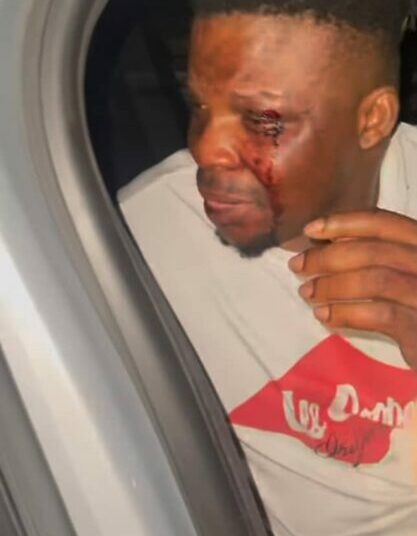
On Sunday, 28th December 2025, at about 11:00–11:30 a.m., while playing football at Uwa Primary School, Igbesanmwan Street, Benin City, I was suddenly attacked by a group of men.

The attackers, some of whom were armed and brandishing guns, forcibly abducted and kidnapped me. These individuals who led this attack identified themselves and this has been duly incidented with Law Enforcement.

During the course of the abduction, they repeatedly stated that they had been sent by the Oba’s Palace to seize me. They alleged that the Palace was angry with me over a speech I had delivered to Edo people in London, which I reportedly closed with the phrase “Edo gha to kpere” (meaning “Long live the Edo people”) instead of “Oba gha to kpere” (meaning “Long live the Oba of Benin”). They further claimed that they had been sent to deal with any Obaseki, beginning with me. My abductors stated that the abduction of Dr. Pedro Obaseki will continue in further attacks on all Obasekis.

I was severely beaten, dragged along the streets, and stripped completely naked. I was dragged along Igbesanmwan Road, taken to the front of Holy Aruosa Church, and publicly paraded in my nakedness. From there, I was further dragged around Ring Road and forcibly taken into the Oba’s Palace. The public beating, stripping, and humiliation occurred over a distance of approximately five (5) kilometres.

Inside the Oba Palace premises, I was slapped, beaten, gagged, and forced to kneel while naked. While in this condition, I attempted to plead for my life and dignity as the Oba drove past me within the Palace compound. Thereafter, I was forced into a Hilux vehicle and transported to the Oba Market Police Station.

I was detained at the police station for approximately five (5) hours. During this period, the State Commissioner of Police, Monday Agbonika, visited the Station on three (3) separate occasions and informed me that I would be released pending clearance from the Oba. Eventually, at about 5:15 p.m., I was released from custody.

This statement is a true and accurate account of the events as they occurred.

-Pedro Obaseki, MBA, PhD.
(Victim)

Trump must finish what he started, By Lasisi Olagunju

There is a Yoruba proverb for our insecurity and the external help we got last Thursday: Let the man see the snake; let the woman kill it. What matters is that the snake dies (Kí ọkùnrin rí ejò, kí obìnrin pa á; ohun tí ó ṣe pàtàkì ni pé kí ejò kú). The proverb is a lesson in pragmatism over pride. It is a proverb of necessity. When danger appears, pride must step aside. Whoever can strike should strike, so long the threat is neutralised. The proverb does not shame the man for failing to act as a man; it does not unduly glorify the woman for wielding the blow. It insists only on outcome: the danger must die.

Slimy, slithering and deadly, terrorists are snakes. But Nigeria is an orísirísi country; a nation of assorted nations that lack consensus on everything, including on whether snakes deserve to die. Some view bandit snakes with horror and revulsion; some, like the pre-Hellenic Crete, in appeasement and supplication, feed terrorist snakes at their family altars. To them, it is a taboo to kill terrorists. America attacked (or said it attacked) those snakes last week.

Nigeria’s security crisis entered a new phase when the United States bombed terrorist targets on Nigerian soil. If the terrorists are the snake, and Nigeria merely “saw” while America “killed”, then the logic is simple: let no one quarrel over who held the machete. Men too limp to be husbands, men with permanently flaccid members, swallow pride and hire helpers. Nigeria is that husband. If bombs from afar kill those who slaughter villagers here, let no one romanticise sovereignty.

National humiliation or international collaboration? A friend from Côte d’Ivoire asked me on Saturday. Again, I read the proverb: Let the man see the snake; let the woman kill it. What matters is that the snake dies. But, in this instance, did the snake really die? Where is the carcass? If the snake did not die, then it means the stranger merely fouled the air for us. This is the point we say Yoruba proverbs are rarely so simple and rarely so innocent.

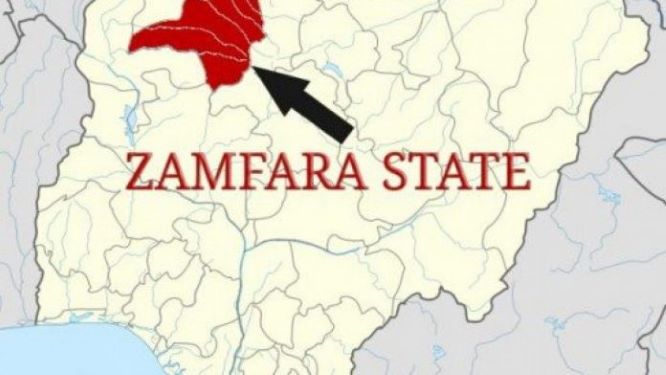
The same tongue that valourises results also prizes and protects ownership of the compound. How safe is the household if the foreign help did not kill the snake? There was a deadly bomb blast in Zamfara on Saturday, two days after the US intervention. What was that?

If the snake was merely hurt, another proverb walks briskly behind the first, slower, more suspicious: À gé kù ejò tí ń s’oro bí agbón (half-dead snake that stings like wasps). This is a proverb of incomplete decapitation, a proverb of unfinished war. Yoruba wisdom rarely travels alone. With help from President-General Donald Trump, it appears we have killed our snake halfway; now, may it not sting like wasps.

Experts and experience say a half-dead snake is more dangerous than a living one. Wounded, it no longer obeys patterns. It stops all announcement of itself. It lashes blindly, vengefully, unpredictably. What was once a visible threat becomes a roaming terror.

If the US strikes merely scattered terrorists, dislodging them without destroying their networks, their ideology, and local knowledge, then we have not killed the snake. We have only bruised it. And a bruised viper, flushed from its lair, often slithers into villages, markets, and soft targets.

The snakes terrorising Nigeria must die, their killers do not matter. If snakes must die, they must die totally and completely. My first proverb demands effectiveness. The second warns against the illusion of effectiveness. Tell Trump not to leave yet. If he has left, he must come back and finish what he started.

There is an existential reason for that demand. A foreign strike may carpet-bomb terrorist camps and dens of bandits, but it can also produce splinter, smaller, angrier cells that sting like scattered bees. As of today, what we have been told is no news about territory recaptured, ideology dismantled, long-term authority over our lives restored. Only echoes.

Yesterday, I read reports of terrified terrorists relocating from their ancestral home. “I felt their movement in my local government as well as in Agatu Local Government Area. They have been running away from Sokoto to coastal areas in Gwer West and Agatu with sophisticated arms and grazing openly. They are in my domain.” A traditional ruler in Benue State was quoted as saying this on Sunday. Someone also read it and said Trump has scared the bandits. And I asked: “really?”

In November 1893, Dallas L. Sharp wrote ‘Feigned death in Snakes’. What he wrote is a useful reminder that what looks like the enemy in flight is often a calculated performance. Sharp’s snake, he notes, does not bite itself in despair; it stages death because it finds itself outmatched in battle. So it lies still, body fouled with its own stench, selling the illusion of uselessness until danger passes.

Terrorism works the same way: not every apparent collapse is defeat, not every silence is peace. Sometimes the snake turns on its back not because it is dead, but because it knows that pretending to be dead is the most effective way to live and strike. Nigeria is a burrow of vipers; it breeds snakes and worships them. The more you kill, the more you see. That is why Mr Trump must be begged to stay and finish his unfinished business.

The views expressed by contributors are strictly personal and not of Law & Society Magazine.

Gov Makinde, his sons and his ‘friends’

Governor, Seyi Makinde of Oyo State

By Lasisi Olagunju

“Beware the quiet man; for while others speak, he watches. And while others act, he plans. And when they finally rest, he strikes.” Not all quotes have the fortune of being attributed to an inventor; the above is one of them. Author known or author not known, the quote is fit for my use and I use it here, guardedly. Reticent Oyo State governor, Seyi Makinde, packed a punch last Tuesday with a media chat that landed like a cluster bomb.

Exactly like America’s missile strike of Thursday, lethal fragments from Makinde’s verbal Tomahawk hit widely, leaving mortal marks on both intended and unintended targets. At a time when everyone ran for cover, the man stood apart and spoke as a rebel with a cause. He had enough firepower for everyone on his firing line. The whole country heard his words and took note of his allusions, what he said, what he left unsaid. That, perhaps, is the paradox of quiet men: they speak sparingly, but when they do, the impact lingers long after the echoes fade.

The quiet man has since gone back to his quiet default mode while proxies have taken up the fight on behalf of those bruised by him. History lends this posture a familiar logic. “Politics is war without bloodshed; war is politics with bloodshed” (Mao Zedong). Historian John Keegan looked at the wars of the Middle Ages and marked the pivotal roles of surrogates. From the Italian condottieri to Sweden’s companies-for-hire, contractual warriors fought at arm’s length for their principals. Surrogates and proxies are baying for the blood of the quiet man who dared to speak out. The governor made revelations and held back revelations. His ‘victims’ are using proxies. This is a season when the worst of us “are full of passionate intensity.” Get your popcorn and watch.

To be dumbstruck is “to be shocked or surprised as to be unable to speak.” The dumbstruck are answering the governor through emissaries. Read John Keegan’s ‘The History of Warfare.’ Read Geoffrey Parker’s ‘Dynastic War’ in ‘The Cambridge History of Warfare.’ Read Shakespeare’s Claudius and his agents in ‘Hamlet’, read Edmund and his tactics in ‘King Lear.’ I would have said read ‘Julius Caesar’ but I cannot see in the Abuja surrogates the moral proxy of reputable Brutus. Besides, the governor appears to be a man with enough capacity to take on adversaries shot for shot.

So, I am waiting for the quiet man’s next speech or chat. Wait for it too. “Surely some revelation is at hand; / Surely the Second Coming is at hand.”

W. B. Yeats wrote ‘The Second Coming’ in 1919. Chinua Achebe picked the title of ‘Things Fall Apart’, his best, from the first stanza of that poem; I picked the above quotes from the second. Read the entire poem, twenty-two lines, two stanzas.

The foregoing is for the ‘friends’ of Makinde; the following is for his sons.

Forty-eight hours after his hard-hitting interview, Governor Makinde calmly crossed into an entirely different realm – the almost meditative opposite of the combative warfare of the previous two days. His birthday.

I was invited to Governor Makinde’s birthday gathering in the thin hours of Christmas morning. As the night made to leave and the D-day raced to release its rays, the man arrived quietly, with his wife and children forming a small human hedge around him. There was music, there were quizzes, there was laughter, there was food. Delight coursed from table to table; the air held a sense of observance and warmth.

Then the celebrant was asked to speak, and the room shifted. If anyone wanted or expected further broadsides to his friend, Nyesom Wike, they were disappointed. Neither did he need to use his day to cite the weeks of darkness in Ibadan to amplify the lack of capacity of those who promised Nigeria electricity.

Makinde stepped forward, thanked everyone, turned to an introduction of members of his family. First, a young lady’s birthday falls on 24th December, and because of that, the lady claimed that she is the governor’s senior by one day. Laughter. Then, the governor called out his last child, his son, whose university in the United States had recently been visited by terror. A gunman had invaded the campus. “He called me,” the governor said, “and told me he had just left the lab when the gunman came and struck there.” The crowd gasped. What followed was not a speech so much as a testimony, a song of victory lifted from Ebenezer Obey: When a good person stands a breath away from the ditch, lightning breaks the dark to show the way. That was it. A governor singing gratitude, counting mercies, acknowledging the invisible hands that sometimes intervene between life and death. As the Book of Psalms puts it, “He shall give his angels charge over thee, to keep thee in all thy ways. They shall bear thee up in their hands, lest thou dash thy foot against a stone” (Psalm 91:11-12 KJV).

Then came an introduction which turned the birthday event into a bowl of questions. His five-member family, the governor said, became seven in 2020/21. Two boys added by fate, by circumstance, and by the unexplainable. He asked them to come out. One, graduating in eight months’ time with a Law degree from a UK university. The other, eighteen months away from a Master’s degree in Architecture, also in the UK.

Who are they?

The governor offered no further details on how a family of five in 2020 became a family of seven grown-ups in 2021.

But, that moment, a whisper whistled by: “They are the Ayoola boys.”

Who?

At the beginning of this democracy, Hon. Kehinde Olatunji Ayoola stood at the centre of Oyo politics. Born in Oyo town in January 1965, Ayoola lived a life whose chapters were many in a book of 55 pages. He was Speaker of the Oyo State House of Assembly at the dawn of the Fourth Republic; a campaign organiser; a gifted narrator and storyteller; and, finally, Commissioner for Environment under Governor Makinde. Then, one bad Thursday in May 2020, he died—55 years old. He lived in a hurry and died so soon in a way that life has not bothered to explain. Ten short months after Ayoola’s death, fate returned to complete its sentence. Ayoola’s wife, Oluwakemi, Professor of Agronomy and lecturer at the Institute of Agricultural Research and Training, Ibadan, also died, leaving behind two teenage boys. The French would read this and exclaim: Quand il pleut, c’est le déluge (when it rains, it pours). Shakespeare warned in Hamlet that “when sorrows come, they come not single spies, but in battalions.” For the Ayoola children, sorrow did not knock; it ambushed.

Someone said there are deaths that end a life, and there are deaths that interrogate the living. Ayoola’s was the latter. He belonged to that rare category of men who were friends to many and friendly to more. Between us there was mutuality of affection and respect. I love gifted writers; Kehinde Ayoola was one. I loved the elegance with which he glided between English and Yoruba, never losing cadence and precision in either. I admired his courage – and loyalty to his friend. I suspect I was not alone in that admiration.

When Governor Makinde announced his death in May 2020, the tribute was intimate, almost private. He did not speak as a governor mourning a commissioner; he mourned as a man remembering a friend, a comrade of trenches; he reminisced their days together in the Rashidi Ladoja campaign days of 2002, the long and unrewarding marches of 2015, and the eventual victory of 2019. It was grief stripped of protocol.

At its best, a friend said politics should be friendship with a public purpose. When Aristotle was asked, ‘What is a friend?’ he replied: ‘One soul dwelling in two bodies’. Roman orator, Cicero, gave a similar definition in his essay ‘On Friendship’. It would appear that Ayoola and Makinde embodied that ideal. In the aftermath of the transition of one, we see politics unfolding itself not as transactional but relational. We see friendship anchored in shared memories, in shared responsibilities; we see humanity in political friendship. That is my takeaway here.

The death of father and mother, almost at the same time, is enough to derail destinies of teenage children. The world is traditionally cold to orphans, and predictably unfaithful to the vulnerable. To the orphaned, there will always be promises and pledges of help and of shoulders to lean on. But, the Yoruba have always understood the fragility of promises made in the heat of grief. I will be your mother rarely survives the test of time. I will be your father often forgets itself midway. Sympathy is cheap; post-sympathy continuity is costly.

Makinde’s condolence message on Mrs Ayoola’s death in 2021 acknowledged this truth: that the mother died “at a time when her two sons and the entire family needed her the most.” It was not a ceremonial lamentation; it was a clear-eyed recognition of orphanhood, of a vacuum that flowers and fine speeches could not fill and would never fill.

In less than ten months apart, the Ayoola boys lost both parents. And that was before their flowers could bud. But they survived because friendship did not die with their parents. Makinde, their father’s friend, and his wife, stepped into the breach which society often leaves unattended. They moved the teenage survivors into their home and got them adjusted and properly integrated. Then, they lifted the boys from here to that space where first-world education awaited them. Makinde performed fatherhood and proclaimed guardianship; he provided structure, scaffolding: education, stability, direction.

The Yoruba say: Eni t’ó s’ojú ò seé, bí eni tó s’èyìn de ni. How do I translate that? Closely, I say those who stand by the dead are more faithful than those who stood beside the living. Or I say: true loyalty is measured not by who stood with you in life, but by who stood firm when you were gone. I may even go with the philosopher and add that it is not who walked with you that counts, but the one who refused to walk away after you were gone.

Mikael Rostila and Jan M. Saarela in 2011 wrote ‘Time Does Not Heal All Wounds: Mortality Following the Death of a Parent.’ They say the death of a parent, especially a mother, is not merely an emotional tragedy; it is a public-health event, one that can cast a long shadow across a child’s entire life. That is how bad the loss of a parent could be. Now, imagine losing both. Henry Longfellow once wrote that “great is the art of beginning, but greater is the art of ending.” For children, however, the harder art is surviving what should never have begun so early – in this case, it is orphanhood.

Ernest Hemingway in ‘A Farewell to Arms’ says “The world breaks everyone, and afterward many are strong at the broken places.” It is a prophecy for the Ayoola family. Today, the boys have father and mother again; they are in universities abroad. Their fate is a living proof that while death may rupture tendons and threaten plans, kindness can step in and stitch the torn. In a world where people forget faces and pledges once the dirges fade, this story offers a metric of applause.

In my few years of existence, I have seen performative friendship contrasted with tested loyalty. The latter is what I salute here. Friendship is what endures after death, and it is never proven by eloquence. It is revealed in catastrophe, in who you choose to lift from the rubble when the world caves in. Our friend, Kehinde Ayoola, was a very good man. Thank you Mr and Mrs Seyi Makinde. Eni t’ó s’ojú ò seé, bí eni tó s’èyìn de ni.

The views expressed by contributors are strictly personal and not of Law & Society Magazine.

How Federal Fire Service’s truck killed 3 brothers, deleted public apology and stayed quiet for 7 months

The Federal Fire Service (FFS) has stayed silent on an investigation it promised to open after the deaths of Attahir Yusuf, Tahir Yunus Yusuf and Muhammad Attahir Yusuf, three brothers who were killed in Abuja by one of its trucks in May.

In July, FIJ noticed that the agency deleted its post apologising to the family of the deceased and promising an investigation into their deaths.

A few days after the incident, a Fire Service spokesperson asked FIJ what the young boys were doing out at such ‘odd hours’.

Weeks after the incident, the driver of the truck, who was not named, was handed over to the police, and a staff member at the Federal Capital Territory (FCT) rescue centre involved in the operation was also suspended.

Click here to continue reading.

Airfares Could Top ₦1 Million: Allen Onyema warns Nigerians over new tax laws

The Chief Executive Officer and Chairman of Air Peace, Allen Onyema has stated that Nigeria’s domestic aviation sector is facing a looming crisis as newly introduced tax laws threaten to drive ticket prices beyond ₦1 million and force airlines out of business, warning that unless urgent steps are taken to reverse the policy, the industry could begin to collapse within months, with severe consequences for passengers, banks and the wider economy.

Speaking in an interview with ARISE NEWS on Sunday, Onyema said Nigerian airlines are weighed down by excessive taxation, levies and charges that leave operators struggling to survive while being wrongly portrayed as profiteers. He explained that the bulk of ticket revenue is lost to statutory deductions, leaving airlines with only a fraction of what passengers actually pay.

“The Nigerian airlines are heavily overburdened by taxes, levies, and all manner of charges. Just take a ticket of about 350,000. What comes to the airlines is about 81,000 Naira. And people, everybody’s talking about the airlines as if they’re making a kill. It’s not true.”

He faulted what he described as multiple and overlapping charges imposed on airlines, including a mandatory five percent deduction on every ticket sold. “We are suffering multiple taxation, multiple charges. For example, the NCA, 5% for every ticket, Mandatorily. That is to NCA alone. There are so many other charges.”

Onyema argued that these charges ultimately reduce passenger demand and contradict international aviation standards. “ICAO, the International Civil Aviation Organisation, says that you are not supposed to go into revenue generating for government. What you do is cost recovery.”

According to him, global aviation best practice, as outlined by the International Civil Aviation Organisation, supports cost recovery rather than revenue generation. “That is, you charge according to the cost of the services you render to the airlines. Who are the ones suffering? The airlines. And that’s why the airlines are not growing.”

Onyema recalled that the 2020 tax law provided critical relief by removing customs duties and VAT on imported aircraft, spare parts, engines and ticket fares. “Now, the tax law of 2020 removed customs duties on imported aircraft and imported aircraft spares and engines, removed VAT on imported aircraft and other spare parts, removed VAT on ticket fares. That is the 2020 Act.”

He said that even with those concessions, airlines were still grappling with numerous other charges across the country. Even then, airlines are still suffering so many other multiple charges all over the country.” Now, the new tax law has brought those things back. All of them.”

He explained that buying an aircraft valued at $80 million would now attract 7.5 percent VAT, while spare parts are similarly taxed. “There’s VAT now on importation of aircraft. So if you buy an aircraft of $80 million, you are supposed to pay 7.5% of $80 million.”

Onyema said the combined effect of high borrowing costs and renewed taxation makes airline operations unsustainable. “Funds borrowed from the bank are 30–35%. So you bring in spare parts, you pay 7.5% on your spare parts. Ticket fares will hit $1.7 million soon. At 35% we are choking. You don’t do that.”

He warned that the financial pressure would inevitably be transferred to passengers, predicting an unprecedented surge in domestic fares if the policy is implemented fully. “Because when you take 5% from what we charge, it reduces the demand. With this new tax regime? Yes. From January? From January. With 7.5% on ticket fares, ticket fares will hit $1.7 million soon.” If we implement that tax reform, Nigerian airlines will go down in three months, At the end of the day, economic class tickets will go to about 1.7 billion Naira if it happens.”

Onyema said airline operators, under the umbrella of the Airline Operators of Nigeria, have repeatedly submitted their concerns to government authorities, including the National Assembly and the tax reform committee. “We submitted. Nobody listened to us. In fact, to be honest with you, the AON, the operators, airline operators, I led them, we went to the National Assembly. We addressed them on this issue and they saw reasons with us. They were surprised at kind of facts we’re bringing out.”

He said lawmakers and consultants expressed surprise at the scale of the burden on airlines and acknowledged the risks to the economy. “We went to the National Assembly. We addressed them on this issue and they saw reasons with us. They were surprised as kind of facts we’re bringing out. We went to the tax consultant, the government hired, the chairman of the taskforce, fantastic gentleman. He gave us audience. He’s going to look at it. He agreed with us. He was even worried.”

According to him, aviation is a catalyst for economic growth and national integration, not a sector to be exploited for short-term revenue.”One thing I credit this regime for is our president is a businessman and from the most I know, he doesn’t want indigenous businesses to crumble. And when it comes to the airline business, it’s a peculiar one. Airlines all over the world are supported by governments, even private airlines. We’re not asking them to give us money, even though in other climes they are giving money.”

“AON is asking let us go back to 2020 Act. That Act respected aviation. That is how it is done. Remove VAT on ticket fares to help the common man. Remove VAT from imported aircraft. Remove those things. And of course, if possible, if possible, create a different window for airlines to buy their equipment. At 35% we are choking. You don’t do that.”

He warned that failure to permanently amend the law could trigger a chain reaction, including airline collapses and heavy losses for Nigerian banks that have financed aircraft acquisitions. “If we implement that tax reform, Nigerian airlines will go down in three months. Within one month, some will go down. Some big ones might go down in three months because if you’re bringing, you won’t be able to, and the banks in Nigeria will take a hit. Because of what they had invested.”

Onyema explained that the federal government would intervene, praising President Bola Tinubu and key economic officials for previously responding swiftly to industry complaints. “One thing I like about the government is that they’re listening. I’m not being patronising. They’re listening because I know so many things we’ve asked them to do and they did it for us.”

Arise News

Is “Call to Bar” synonymous with membership of a bar association?

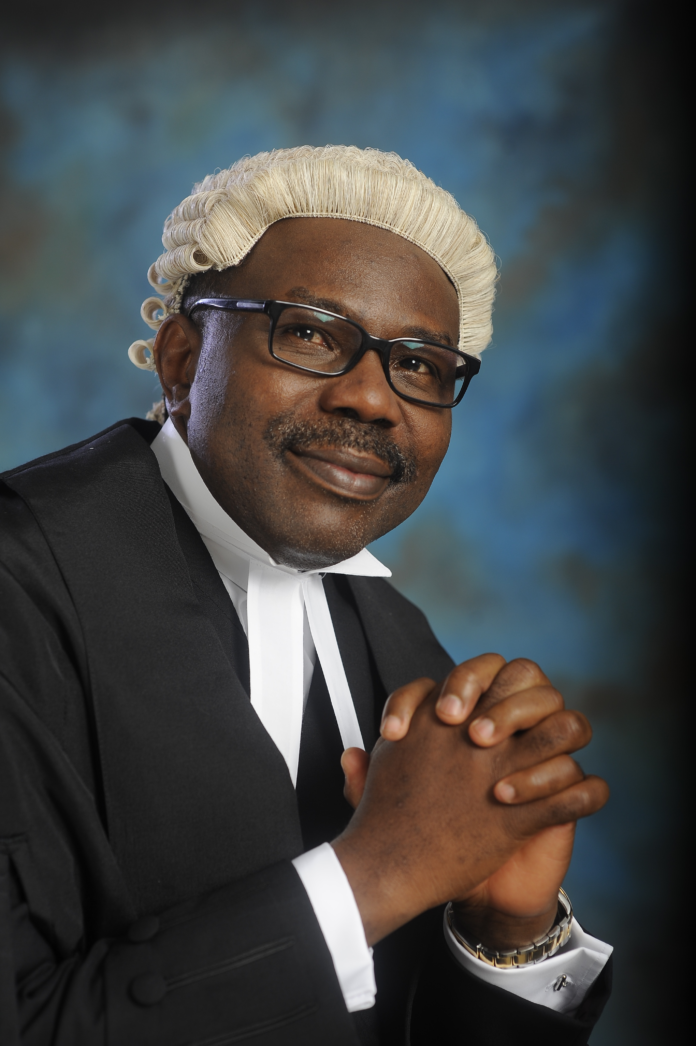
By Prof Ernest Ojukwu, SAN (Teacher)


Generally, the answer is No.

A simpler way to frame the question is this: Does being called to the Bar automatically make one a member of a Bar Association? The answer depends on the jurisdiction. In Nigeria, however, the answer is Yes.

To understand why, it is important to distinguish between being called to the Bar and being a member of a Bar Association, let us look at the following:

Meaning of “the Bar”

The term “Bar” originally referred to the physical railing in old English courts that separated the public gallery from the area reserved for legal practitioners (barristers). Over time, “the Bar” came to signify the collective body of lawyers authorized to practice law in a given jurisdiction.

Being called to the Bar therefore refers to the personal milestone of becoming a qualified lawyer — one who has passed the required examinations, met character requirements, and been formally licensed to practice. By contrast, a Bar Association is the professional organization that represents lawyers, regulates their conduct, offers continuing education, and advocates for the profession.

In essence, being called to the Bar marks your entry into the legal profession and joining a Bar Association makes you part of the structured community of practicing lawyers.

In Nigeria, the authority to call a person to the Bar resides with the Body of Benchers.

Mandatory vs. Voluntary Bar Associations

Bar association membership can be mandatory (integrated/unified bar) or voluntary, depending on the jurisdiction.

England and Wales
In England, there is no “Bar Association” in the typical sense. A barrister becomes a member of the Bar upon being called to it. The Bar Council represents barristers, while the Bar Standards Board regulates them. In addition, there are traditional institutions such as the Inns of Court (Lincoln’s Inn, Inner Temple, etc.), as well as specialist and regional bar associations.

United States
In the U.S., “the Bar” also refers to the collective body of lawyers licensed to practice in a given jurisdiction (states). To practice law, a lawyer must be in good standing with the State Bar, which serves as the regulatory authority in most states. In integrated (or unified) bar states, all practicing lawyers are required by law to belong to the state bar. In other states, regulation is handled by a separate body, and membership in voluntary bar associations (such as the American Bar Association or New York State Bar Association) is optional.

Thus, while one must be admitted to the Bar to practice law, joining a voluntary bar association is not mandatory. For instance, in California, membership in the State Bar of California is compulsory for practice, but joining the California Lawyers Association is voluntary.

Canada
In Canada, legal regulation is handled by provincial and territorial law societies, membership in which is mandatory for practice. Meanwhile, bar associations (such as the Canadian Bar Association, CBA) serve advocacy and professional development functions and are voluntary. Each province or territory has its own CBA branch — for example: CBA–Alberta, CBA–British Columbia (CBA–BC), Ontario Bar Association (OBA), and others.

Regulatory control rests with law societies such as the Law Society of Ontario, Law Society of British Columbia, and Barreau du Québec- and membership is mandatory.

Nigeria
The Nigerian Bar Association (NBA) is sui generis — unique in nature. Although registered as a voluntary association, it enjoys statutory recognition and performs regulatory functions under the Legal Practitioners Act (LPA) and the Rules of Professional Conduct (RPC). (Ojukwu, 2025)

Ordinarily, being called to the Nigerian Bar should not, in theory, require membership in the NBA. However, Nigerian courts have held — though arguably incorrectly — that being called to the Bar is synonymous with being a member of the NBA, but have correctly held that the NBA is a regulatory body for all lawyers, making membership effectively mandatory.

Judicial Authority
In Nigerian Bar Association v. Mr. Oluwole Kehinde (2017) LPELR–49798, the Court of Appeal held:
“The Nigerian Bar Association (NBA) was established for the purpose of regulating the affairs and conduct of all legal practitioners in Nigeria and, upon being called to the Nigerian Bar, there is automatic membership to the NBA… Hence, as long as one has elected to join and remain within the noble profession, he is a member and ought to comply with the directives of the Association.” — Per Nimpar, JCA (pp. 25–27, paras. D–A)

The Court also recognized (correctly) that the NBA’s regulatory powers under the Rules of Professional Conduct (RPC) have the force of law.

Statutory Provisions under the Legal Practitioners Act (LPA)

The LPA formally integrates the NBA into the legal framework:
– Section 1(2) – 20 members of the NBA represent the Association at the Bar Council.
– Section 3(1) – The NBA President and 30 members sit on the Body of Benchers.
– Section 8(2) – The Attorney-General must consult the NBA before prescribing practicing fees.
– Section 8(3)(c) – 90% of the practicing fee is paid to the NBA.
– Sections 10(2), 10(3), and 23A – The Body of Benchers may exercise powers of management over the NBA.
– Section 11(2) – The NBA appoints four members to the Disciplinary Committee.
– Section 15(1) – The NBA President and three members must be on the Remuneration Committee.

Under the Rules of Professional Conduct (RPC), the NBA also handles:
– Lawyers’ stamp and seal issuance,
– Mandatory Continuing Legal Education (MCLE),
– Practice licence renewals,
– Anti–money laundering compliance, and
– Branch-level registration of new practitioners and law firms.

The proposed Legal Practitioners Bill 2025 further expands the NBA’s statutory and regulatory roles.

Conclusion

Given the NBA’s extensive statutory recognition, judicial endorsement, and regulatory authority, it would be purely academic to argue that membership in the Nigerian Bar Association remains voluntary. While “call to the Bar” and “Bar Association membership” are conceptually distinct, in Nigeria, the two have become functionally inseparable.

Nigerians and the sovereignty scam: fearing Trump but paying taxes to terrorists

By Kachi Okezie, Esq.

Nigerians erupted with indignation when US President, Donald Trump, promised a “guns-a-blazing” military intervention in Nigeria to stop what he called the “genocide” of Christians. Not all, though. A small number of mostly oppressed population groups rather cheered in relief. When he followed that rhetoric with a Christmas Day air strike in Sokoto, the cry of “Sovereignty!” became almost a national anthem. That’s notwithstanding the Nigerian government sanctioned the operation.

From government officials to social media commentators, the reactions featured a common theme: Nigeria is a sovereign state; how dare an outsider step in?

But let’s be honest: Nigeria’s sovereignty is at best a polite fiction told with a dizzying dose of cognitive dissonance. While we puff our chests at Washington, we quietly bow our heads to the terrorists who actually run large swathes of our country. We cry “imperialism” at a drone strike, yet stay silent while foreign bandits impose “taxes,” hold townhall meetings, collect levies, and dictate the laws of survival in the North West and North East. Our government doesn’t just lose territory; it’s widely believed to negotiate with the invaders, pay ransoms, and effectively cede control.

This is the Great Nigerian Hypocrisy at play. We invoke the shield of sovereignty only when it’s convenient to hide our own domestic failures. The harsh truth is that if our government had fulfilled its primary constitutional mandate—to secure the lives and property of its citizens—Trump would have no pretext to act. The “invasion” isn’t the primary threat; the vacuum of leadership is.

We worry about Trump stealing our oil, but the average Nigerian in Borno or Sokoto couldn’t care less about oil wealth they never see. They care about farming without being kidnapped. They care about survival. To them, a government that allows terrorists to act as local landlords has already abdicated its sovereignty.

The real “colonialism” isn’t coming from across the Atlantic. It is happening within our borders, where mostly foreign terrorists fill the gaps left by an incompetent state. These bandits are the new governors, the new tax collectors, and the new law-givers.

It is time to stop the performative outrage. Our sovereignty isn’t a flag to be waved only when we feel insulted by the West; it is a responsibility to be earned by protecting our own people. Until we reclaim our land from the “tax-collecting” terrorists and the corrupt officials who allow them to thrive, our talk of sovereignty is nothing more than empty noise.

Nigeria’s dignity won’t be saved by shouting at Trump. It will be saved by finally deciding to govern ourselves with courage, and without fear or favour.

The views expressed by contributors are strictly personal and not of Law & Society Magazine.

History will remember who took the terrorists’ side

By Sa’adiyyah Adebisi Hassan

The truth has started walking, and as usual, lies are scrambling for cover.

The Sokoto State Government has confirmed it: U.S. airstrikes destroyed terrorist camps. No civilian casualties. That single confirmation should have ended the noise. Instead, it exposed something uglier than denial – terrorist apologism disguised as “sovereignty concern.”

FROM “ONION FARM” LIES TO EMBARRASSING SILENCE

For hours, social media was flooded with a rehearsed lie: “Trump bombed a sugarcane farm.” Others upgraded it to “innocent farmers slaughtered.”
Some even accused the U.S. of randomly firing rockets into open fields like a drunk militia.

Now the truth arrives and suddenly, mouths close.

Let this be stated plainly:
The U.S. military does not drop precision-guided munitions based on Twitter gossip.
They conduct surveillance.
They verify targets.
They confirm patterns.
They strike.

This is not Nollywood.
This is not propaganda.
This is how serious militaries operate.

Anyone still pretending that American forces “mistakenly” bombed farmland is no longer misinformed – they are actively laundering sympathy for terrorists.

WHY ARE YOU ANGRY WHEN TERRORISTS ARE KILLED?

This is the question no one wants to answer.

Why are people – especially from terror-ravaged regions – angry that terrorist camps were destroyed?
Why the petitions?
Why the outrage?
Why the panic?

In any sane country:

ISIS being hit is celebrated

Terror camps being destroyed is relief

Foreign assistance against mass murder is welcomed

Only in Nigeria do some people react as if a family compound was attacked.

And don’t insult our intelligence with fake moralism.

If ISIS, ISWAP, or their affiliates were not hit, they would have denied it within hours. Terror groups are loud when they are untouched. Their silence speaks louder than all your press releases.

THE “SOVEREIGNTY” CROWD: LATE TO EVERY FUNERAL

Now enter the professional petition writers.

Suddenly, everyone is a constitutional lawyer.
Everyone is quoting sections.
Everyone is demanding “after-action reports.”

Where were these voices for 16 years while:

Villages were erased

Churches were burned

Mosques were attacked

Children were kidnapped

Women were raped

Entire communities were displaced

Where was this outrage when Nigerians were dying daily?

You did not discover sovereignty yesterday.
You remembered it only when terrorists were touched.

THE DISHONEST NARRATIVE WAR

One of the most disgusting tricks in this episode is the deliberate confusion:

“Bandits, not terrorists”

“Local criminals, not ISIS”

“Don’t internationalize it”

This is not ignorance.
It is intentional dilution.

The moment terror networks grow, recruit, radicalize, coordinate, and massacre civilians, they cease to be local criminals.
That is international law.
That is global counterterrorism doctrine.
That is reality.

The same countries crying “mislabeling” happily accept foreign aid, weapons, intelligence, and training – until the bombs land on people they are uncomfortable losing.

STOP BLAMING FOREIGN HELP – BLAME LOCAL FAILURE

Before screaming “foreign intervention,” ask a harder question:

Who created the vacuum that invited it?

Sixteen years of killings.
Sixteen years of negotiations.
Sixteen years of ransom economics.
Sixteen years of appeasement.

If a house burns for sixteen years, don’t curse the fire truck – curse the people who poured petrol and called it peace talks.

No country invites intervention when it handles its problems decisively.
Intervention arrives when:

Terror is normalized

Justice is postponed

Criminals are negotiated with

Victims are mocked

THE DEAD ARE ALREADY DYING – WHAT IS NEW?

Let us end the fake humanitarian panic.

Every single day, over 50 Nigerians die violently.
Who kills them?
Is it Trump?
Is it America?

Or is it the monsters we refused to confront?

A death is a death – yes.
But pretending that inaction is more moral than stopping killers is intellectual fraud.

No country collapses because terrorists are neutralized..Countries collapse because terrorists are protected by silence, excuses, and cowardice.

THE REAL WORK IS NOT FINISHED

Let this be clear: airstrikes alone are not enough.

If Nigeria is serious, then:

Sponsors must be exposed

Negotiators must be questioned

Spokesmen must be confronted

Political protectors must be stripped

You cannot bomb terror camps and keep terror financiers in Babanrigas and agbadas.

SHAME HAS A SOUND

Those petitioning now were silent when blood flowed.
Those crying “sovereignty” ignored mass graves.
Those screaming “mislabeling” have no tears for victims.

History will not remember your petitions.
It will remember who stood with victims and who defended killers with grammar.

Terrorists were hit.
Civilians were spared.
The lie collapsed.

If that upsets you, then the problem is not the bomb.
The problem is your conscience.

The views expressed by contributors are strictly personal and not of Law & Society Magazine.

TIPS