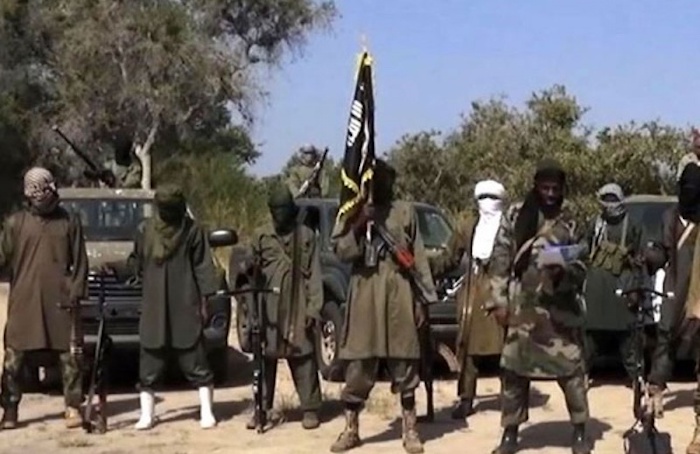
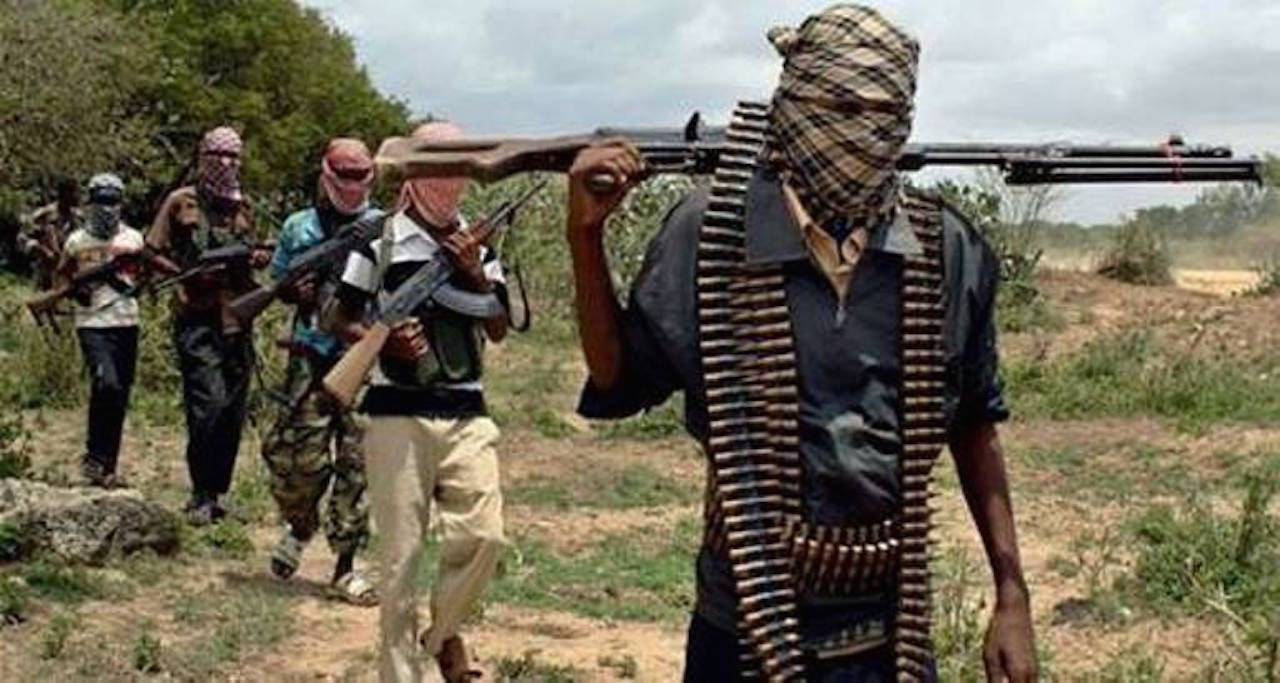
Suspected Boko Haram and Islamic State West Africa Province (ISWAP) fighters intercepted a trailer loaded with maize and three trucks carrying building materials in northern Borno State, underscoring the Nigerian government’s continued failure to secure key territories more than a decade into the insurgency.
The attack occurred around 2:35 p.m. on Monday at Garin Kashim in Guzamala Local Government Area, barely 24 hours after insurgents massacred at least 17 civilians in nearby Guzamala-Abbari village. Despite repeated assurances from Abuja, the area remains effectively ungoverned.
Local and security sources said the insurgents mounted a roadblock, deflated the trucks’ tyres, and set the trailer’s head ablaze. The fire was narrowly contained before destroying the maize consignment. Two drivers remain missing, feared abducted or killed.
The ambush came shortly after 10 newly sworn-in local government chairmen held a meeting with military officials in Mairari village—one of the communities the Borno State Government plans to resettle internally displaced persons (IDPs) in.
“The terrorists don’t want civilians to return,” a security source said. “They have controlled Gudumbali and surrounding communities for over a decade. Any attempt to restore civil authority is violently resisted.”
Gudumbali, the headquarters of Guzamala LGA, has been deserted for years and remains firmly under Boko Haram control, despite repeated calls for federal military intervention.
IDP Resettlement Stalls Amid Renewed Attacks
The Borno State Government recently announced plans to repatriate more than 3,000 refugees from Cameroon and resettle thousands of IDPs. Mairari village was identified as one of the return locations, with temporary shelters already under construction.
But displaced persons in Monguno say the renewed violence has shattered confidence.
“There is no real military presence, no civil authority, and the surrounding areas are controlled by Boko Haram,” one IDP told reporters. “How are we supposed to go back?”
On Sunday, Borno State House of Assembly Speaker Abdulkarim Lawan confirmed that 12 bodies recovered from Guzamala-Abbari were buried in Monguno, while five others killed in nearby Nganzai were interred in Gajiram town.
Lawan, who represents Guzamala, again urged the federal government to reclaim the territory and reconstitute civil governance.
‘Repentant’ Militants vs Abandoned Victims
The latest attacks have reignited criticism of Abuja’s controversial policy of rehabilitating so-called “repentant” Boko Haram fighters while survivors struggle without justice, reparations, or psychosocial care.
In February 2020, Senator Mohammed Ali Ndume warned that many rehabilitated insurgents were returning to violence. His fears appeared validated on April 30, 2024, when gunmen dressed in military uniforms attacked a police station in Maiduguri to free detained fighters, later torching Nigeria Immigration Service and NDLEA checkpoints.
Human rights groups say the focus on deradicalisation has sidelined victims—especially women and girls subjected to rape, forced marriage, trafficking, and unlawful military detention.
A recent dialogue convened by the Al-Amin Foundation for Peace and Development in Maiduguri demanded accountability, reparations, and transitional justice for survivors. Amnesty International has repeatedly accused Nigerian authorities of unlawful detention, forced reintegration, and failure to prosecute perpetrators on both sides of the conflict.
A War Without Governance
More than 15 years after Boko Haram’s emergence, entire local governments in Borno remain outside state control. Roads are unsafe, food supplies are attacked, and civilians continue to die, while Abuja insists progress is being made.
For residents of Guzamala, Monguno, and Nganzai, the question is no longer whether Boko Haram is still active, but whether the Nigerian state has abandoned them altogether.
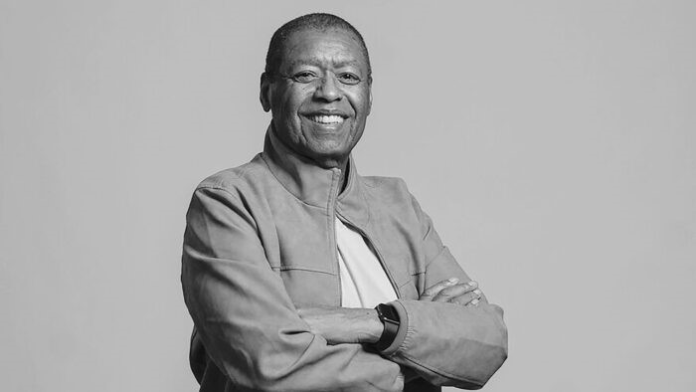
For many millennials and Gen Z Christians, Ron Kenoly and Don Moen were the go-to gospel ministers in the early 1990s to mid-2000s.
On Sundays, pre- and post-morning services or Holy Mass, you’d hear signature songs like ‘Lift Him Up’, ‘Let Everything That Has Breath’, ‘Righteousness, Peace and Joy’, ‘We Are Going Up to the High Places’, blasting on the stereo and from TV screens in homes.
And those are songs from just one of Kenoly’s albums, Lift Him Up, released in 1992.
Kenoly meant so many things to many Christians in Nigeria. While his concert music style is different from the typical hymns, chants, and choral music of the Catholic Church, he made non-denominational Christian worship possible. His songs permeated Catholic and Pentecostal homes.
In an era when gospel music was largely traditional-based, rendered in local languages and often featuring lyrical retelling of Biblical events like Princess Njideka Okeke’s ‘Aka Nchawa 2 – Ihe Eji Amara Dike Erue’, or petitions for God’s blessings in Reverend Fr Mbaka’s ‘Chidera’ and ‘Gozie Mu’, Kenoly’s music provided the missing factor in the Nigerian gospel music culture, which is praise, worship and adoration of God, not for what he can do for, or to ask for his blessings, but for who he is.
He was particularly a bridge for younger, urban-raised Christians who were yet to appreciate the finer points of traditional gospel music rendered in local languages, because they could understand his songs, and relate to the uplifting atmosphere created by the diverse, modern musical instruments deployed in his songs that complement the human voices of both the choir, orchestra, and the lead worshipper.
Kenoly influenced the praise, worship, and adoration in contemporary Nigerian music, appealing to the African music ‘call and response style’ which still exists today. His music comprises the lead worshipper, the choir, and the orchestra. Songs often follow a verse-chorus structure, with the chorus repeated several times, making it easy for listeners to join in.
There are songs for every occasion, worship, praise, adoration, and supplication, and they aid listeners into a state of prayer, worship, even joyful and heartbreaking tears when considering the Lord’s goodness in their lives.
One can still enter and in God’s presence with the songs ‘Majesty’, ‘We Shall Behold Him’, ‘I Bow My Knees’ from his 1998 album Majesty, or roar and dance with joys from tracks as ‘Sing Out’, ‘The Lord Be Magnified which featured an African choir’, ‘Joyfully Joyfully’ from 1995 album Sing Out with One Voice, among others.
The 1990s and early 2000s saw his multiple visits to Nigeria, ministering musically at the Experience concerts in Lagos, Abuja, Port Harcourt, and Jos, Plateau State, in 2016. And he has influenced gospel artistes like Sinach, Dustin Oyekan, Nathaniel Bassey, among others, whose music enunciates the cultivation of a deeper connection with God – via praise, worship, and adoration.
He’s also had an impact on Nigerians of the Catholic faith and the classical music profession.
Chorister Emmanuel Atoku, who grew up with Kenoly’s songs used as song-and-dance choreography in children’s ministry, said the singer-songwriter’s passion, expression, and deep connection with God in worship helped him develop a genuine devotion to Christian worship when he eventually joined the choir at age 14.
And while Kenoly’s style differed from the Classical root of Catholic Choir Music, “he inspired my dynamic musical identity, allowing me to embrace both classical and contemporary worship. He was truly a role model, and his music formed part of my love for choir and Christian music as a whole.”
Sam Ezeugwu, the musical director of the Abuja Metropolitan Music Society (AMEMUSO), said he crossed paths with the gospel music minister as a child, and he would go on to influence his music.
“Kenoly was a part of my childhood musically. Personally, His music crossed paths with mine, influencing my approach to choral arrangements. I have had the privilege of working across diverse genres. Ron Kenoly’s contributions to Gospel music are a testament to the power of music in worship ministry. His impact on Nigerian gospel is undeniable. His legacy will live through the countless lives he has touched,” said Ezeugwu.
Born December 6, 1944, Ron Kenoly was an American Christian worship leader and singer-songwriter. His musical career began after his military service with the US Air Force from 1965 to 1968, during which he sang with the army band The Mellow Fellows.
After some years in the secular music scene, he transitioned to gospel music, where he found his musical break with the album ‘Lift Him Up’, which sold over 500,000 copies and became a major hit among Christian albums in Nigeria and across Africa. His albums Sing Out with One Voice (1995), Majesty (1998), and High Places: The Best of Ron Kenoly were also huge successes.
Kenoly was married to Tavita Kenoly in the 1960s. Their 42-year-old marriage was blessed with three sons, Samuel, Tony, and Ronald Kenoly, who are also singers, until she died in the early 2000s. He died at the age of 81 in February 2026 and is survived by his three sons, his second wife, and a UN Ambassador-at-Large, Diana Kenoly.
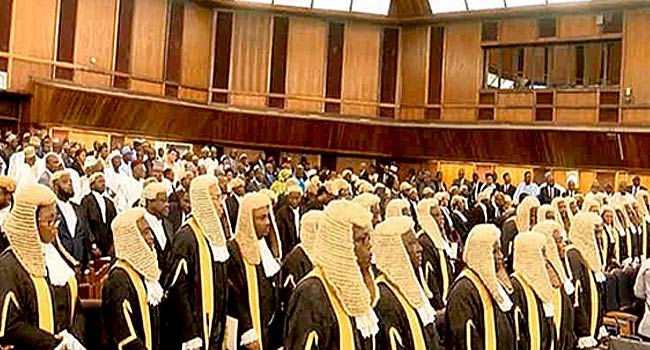
Nigeria’s legal establishment has been thrown into open confrontation following explosive claims by the President of the Nigerian Bar Association (NBA), Mazi Afam Osigwe, SAN, that corruption within the judiciary has reached crisis levels—so severe that court judgments increasingly depend on the “fatness of envelopes” rather than evidence or law.
Speaking at the Ralph Opara Memorial Lecture organised by the National Association of Seadogs in Enugu, Osigwe described Nigeria’s justice system as facing a “moral crisis and democratic emergency,” warning that public confidence in the courts is collapsing.
“The judiciary, once revered as the last hope of the common man, is now widely perceived as a marketplace where justice is auctioned to the highest bidder,” Osigwe said. “This perception alone is fatal to democracy.”
‘Name Names or Stop’: Senior Advocate Fires Back
Osigwe’s remarks immediately drew sharp pushback from senior figures within the profession.
Chief Joe-Kyari Gadzama, SAN, a Life Bencher and former Chairman of the Benchers Mentoring Committee, said the allegations, while serious, were incomplete and potentially damaging unless backed by specifics.
“There is nothing wrong with accusing the judiciary of corruption,” Gadzama told Vanguard. “But it is not enough. The NBA President must provide details, name the corrupt judicial officers and their accomplices, and take concrete steps to ensure investigation and prosecution. Anything short of this is spurious and unfair to the many honest judges.”
Gadzama warned that sweeping accusations risk tarnishing the reputation of diligent judicial officers who continue to uphold their oaths under difficult conditions.
The Data Behind the Accusations
Osigwe anchored his claims in official data. He cited a 2024 joint survey by the United Nations Office on Drugs and Crime (UNODC) and Nigeria’s National Bureau of Statistics, which found that public officials received an estimated ₦721 billion in cash bribes in 2023, with judicial officers ranked among the top recipients.
An earlier Independent Corrupt Practices Commission (ICPC) survey showed that ₦9.4 billion in bribes passed through the justice sector between 2018 and 2020, with lawyers and litigants identified as major bribe-givers.
Transparency International’s 2024 Corruption Perceptions Index ranked Nigeria 140th out of 180 countries.
“This rot has decimated public trust,” Osigwe said. “A compromised justice system protects the powerful and punishes the poor.”
Global Consequences of Domestic Failure
Osigwe warned that judicial dysfunction has driven Nigerians to seek justice abroad, citing landmark cases such as Okpabi v Royal Dutch Shell, where Niger Delta communities pursued redress in UK courts, and the controversial P&ID arbitration case, where a multi-billion-dollar award against Nigeria was overturned in London after fraud was exposed.
“These cases represent a global vote of no confidence in Nigeria’s justice system,” he said.
Calls for Radical Reform
To restore credibility, Osigwe proposed sweeping reforms, including:
Merit-based judicial appointments
State-level judicial academies
Automated case assignment to eliminate manipulation
Mandatory suspension of judges under investigation
Removal of the Chief Justice of Nigeria as chair of the National Judicial Council
Full implementation of judicial financial autonomy
“History will judge us not by our speeches, but by our willingness to act,” he said. “The temple of justice must be cleansed.”
Divided Bar, Shared Anxiety
Other senior lawyers acknowledged corruption but rejected blanket condemnation.
Kunle Edun, SAN, said corruption is a systemic national problem and not unique to the judiciary, adding that its impact is more painful because courts hold society together.
Ken Ahia, SAN, cautioned against equating poor judgments with corruption, noting that heavy caseloads, fatigue, and inadequate preparation also contribute to flawed decisions.
“There are many judges who would never trade their oath for any inducement,” Ahia said.
Similarly, Abuja-based senior lawyer Lamilekan Bakre said sweeping accusations amounted to “hasty generalisation” and ignored the sacrifices of upright jurists.
‘Some Judges Are Corrupt’: A Victim Speaks
Human rights lawyer Maxwell Opara, however, backed Osigwe’s claims, recounting his own experience with what he described as judicial bias and intimidation.
“Some judges are corrupt,” Opara said. “Some are swayed by fat envelopes; others by personal vendettas. The earlier we confront it, the better for all of us.”
Opara detailed a prolonged legal battle in which a judge allegedly refused to recuse himself despite petitions and sworn affidavits alleging bias, eventually forcing him to petition the National Judicial Council.
Judges as Kingmakers?
The controversy echoes arguments made by constitutional scholar and ex-Chair of Nigeria’s National Human Rights Commission (NHRC), Prof. Chidi Odinkalu in his book The Selectorate: When Judges Topple the People, which argues that Nigerian courts, particularly in election disputes, have effectively replaced voters as the ultimate deciders of political power.
Drawing from political science and Nigeria’s electoral history, Odinkalu contends that judges now act as both kingmakers and kings, determining who governs through rulings that often override ballots.
“Democracy no longer collapses with coups,” he argues. “It collapses quietly, with the gavel of a judge.”
A Judiciary at a Crossroads
Despite the criticisms, constitutional rights activist Chief Nkereuwem Udofia Akpan insisted that most judges remain upright and that the National Judicial Council has disciplined erring officers through suspensions and dismissals.
Still, the fierce debate exposes a deepening legitimacy crisis.
As Osigwe warned, the survival of Nigeria’s democracy may hinge on whether the judiciary can reclaim its role as an impartial arbiter, or whether public faith will continue to erode in a system many now see as serving power, not justice.
When the Senate passed the 2022 Electoral Act (Amendment) Bill on Wednesday, many Nigerians expected it to close the gaps exposed in the 2023 general election.
A major reform Nigerians had looked forward to was the legal backing for compulsory real-time electronic transmission of election results. The Senate, however, rejected the proposal, extinguishing expectations of a stronger accountability framework.
The rejection triggered public outrage, renewed distrust in the electoral system, and reopened debates about transparency.
Supporters of the Senate’s amendment insisted that nothing has changed: electronic transmission remains in the law. But critics say something fundamental was lost: a chance to make transparency compulsory.
So what exactly did the Senate do? Why is it controversial? What have the courts said that has led Nigerians to demand real-time electronic transmission of election results? And what does it mean for future elections?
This explainer breaks it down.
WHY ELECTRONIC TRANSMISSION OF RESULTS IS A BIG ISSUE
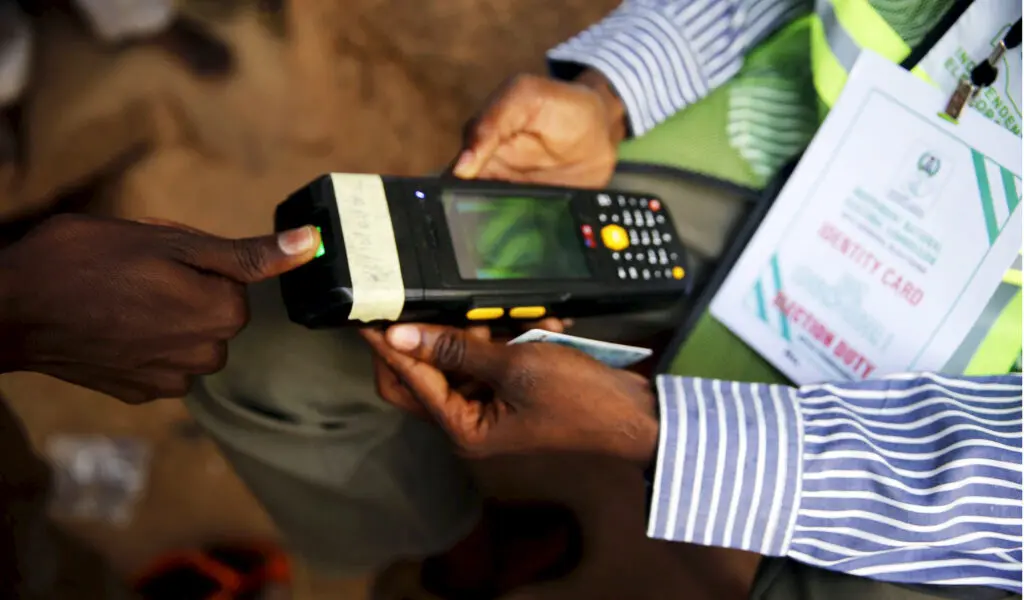
BVAS | File photo
For decades, Nigeria’s elections have been marred by allegations of manipulation during the collation of results. While voting often proceeds peacefully at polling units, disputes usually arise later — when results are moved from one collation centre to another.
To address this, INEC introduced technological tools such as the bimodal voter accreditation system (BVAS) and the INEC result viewing portal (IReV) ahead of the 2023 elections. The goal was to ensure that once the results are counted and signed at polling units, they should be uploaded online for everyone to see.
This would reduce human interference, improve transparency, and allow citizens to verify results independently, no matter their location.
However, because these tools were not clearly entrenched in law, their use remained discretionary. That legal lacuna became a major problem in 2023.
WHAT DID THE SENATE REJECT?
At the centre of the controversy is clause 60(3) of the amendment bill.
The proposed amendment reads: “The presiding officer shall electronically transmit the results from each polling unit to the IREV portal in real time, and such transmission shall be done after the prescribed Form EC8A has been signed and stamped by the presiding officer and/or countersigned by the candidates or polling unit agents, where available at the polling unit”.
It clearly stated that this must occur after Form EC8A has been signed and stamped. Form EC8A is used to record political party votes at the polling units.
This amendment intends to make electronic transmission compulsory, ensure it is real-time, and link it directly to IReV. In other words, it would have transformed electronic transmission from a discretionary exercise into a legal duty.
But the Senate rejected this proposal. Instead, it adopted section 60(5) of the existing Electoral Act 2022, which says: “The presiding officer shall transfer the results, including the total number of accredited voters and the results of the ballot, in a manner as prescribed by the Commission”.
This version leaves everything to the discretion of the electoral umpire, implying that INEC may choose electronic transmission where it is practicable. There have been arguments that several communities in the country are not covered by a telecommunication network to support the electronic transmission of results.
WHAT’S AKPABIO’S DEFENCE?
Akpabio said the Senate merely retained what existed in the 2022 Act — the same provision used in the 2023 elections.
As public criticism mounted, Senate President Godswill Akpabio moved to clarify the chamber’s position.
“The social media is already awash with reports that the Senate has literally rejected the electronic transmission of results. That is not true,” he said.
“This senate under my watch has not rejected the electronic transmission of results. It is in my interest as a participant in the next election for such to be done. So, please don’t go with the crowd.”
From a strictly legal standpoint, Akpabio is correct.
Section 50(2) says that “Subject to section 63 of this Act, voting at an election and transmission of results under this Act shall be in accordance with the procedure determined by the Commission”.
Section 62 (2) further stipulates that the commission “shall compile, maintain and update, on a continuous basis, a register of election results to be known as the National Electronic Register of Election Results which shall be a distinct database or repository of polling unit by polling unit results, including collated election results, of each election conducted by the Commission in the Federation, and the Register of Election Results shall be kept in electronic format by the Commission at its national headquarters”.
The senate did not remove electronic transmission from the law.
WHY CIVIL SOCIETY GROUPS ARE DISPLEASED
Civil society organisations that worked on the proposed amendment see the Senate’s decision as a step backwards.
One of the strongest critics is Samson Itodo, executive director of Yiaga Africa.
“What the senate has done is to betray the trust of Nigerians and to make a mess of all the gains that we have made,” he said.
More importantly, Itodo accused the Senate of ignoring clear judicial guidance. According to him, courts have already ruled that electronic transmission is “unknown to the law” because it is not explicitly stated. Therefore, the national assembly had a duty to fix that gap.
HOUSE OF REPS VERSION
Unlike the Senate, the House of Representatives adoptedthe clause mandating real-time transmission.
This difference reflects two approaches to the reform. While the house made it mandatory, the senate favours discretion, leaving INEC flexibility as provided in the extant law.
Both chambers must now harmonise these differences, among others. The outcome will depend on which amendment the conference committee adopts.
WHAT THE COURTS SAID ABOUT E-TRANSMISSION OF RESULTS
Before the 2023 election
Before the 2023 elections, the Labour Party (LP) went to the federal high court in Abuja, seeking to compel INEC to adopt an electronic method for transmitting 2023 election results.
In January 2023, Emeka Nwite, the presiding judge, dismissedthe case. He ruled that section 60(5) allows INEC to choose its method.
“This is to say that the commission is at liberty to prescribe or choose the manner in which election results shall be transmitted,” the judge said.
He added that nowhere in the law is INEC mandated to use electronic means.
“In view of the foregoing, can the act of the defendant (INEC) in collating and transferring election results manually in the forthcoming 2023 general elections be said to be contrary to the relevant provisions of the Electoral Act, 2022? The answer can only be in the negative as there is nowhere in the above-cited sections where the commission or any of its agents is mandated to only use an electronic means in collating or transferring election results,” the judge said.
“If any, the commission is only mandated to collate and transfer election results and the number of accredited voters in a way or manner deemed fit by it.”
After the 2023 election
After the 2023 election, disputes over IReV and the transmission of results reached the Supreme Court.
In a ruling, Inyang Okoro, who read the lead judgment, made several crucial clarifications.
IReV is not a collation system
The judge said IReV is not a collation system, but is meant to allow the public to view polling unit results on election day; therefore, if IReV fails, the election process does not stop.
The court noted that where the IReV portal fails, it does not stop the collation of results, which, up to the last election, was manually done, adding that the malfunctioning of the IReV deprives the public and even election administrators and monitors of the opportunity of viewing the portal and comparing the result collated with the ones transmitted into the IReV.
INEC has the power to choose transmission methods
The court interpreted sections 60(5), 62(1), and 64 of the Act, stating that INEC is at liberty to prescribe the manner in which election results are to be transmitted.
Although “shall” is used in the law, the court said it does not impose a strict obligation to use electronic means.
IReV failure cannot invalidate elections
The court ruled that the unavailability of the election result on the IReV portal cannot be a basis for nullifying an election, since hard copies are held by INEC, the police, and party agents.
“Thus, the unavailability of the election result on the IReV portal for whatever reason cannot be a ground upon which an election could be nullified, particularly as it was not the case of the appellants that the hard copies of the result sheets did not exist at any level of collation,” the court said.
WHY THESE RULINGS MATTER TO THE AMENDMENT BILL
These rulings created a clear legal reality. Under the current law, electronic transmission is optional. Courts will not compel it. This is why critics expected the amendment to close that loophole.
By refusing to mandate real-time transmission, critics believe the Senate preserved the same legal weakness identified by the courts.
The controversy cannot be separated from what happened in 2023.
During the February 25 presidential election, many polling units failed to upload results promptly. INEC blamed technical glitches, while opposition parties alleged manipulation.
Despite protests, Bola Tinubu of the All Progressives Congress (APC) was declared the winner. His main challengers — Peter Obi and Atiku Abubakar of the Peoples Democratic Party — went to court. Although they lost, many Nigerians felt the system failed.
That is why this amendment matters so much. It was seen as a chance to prevent a repeat in the upcoming 2027 elections.
A GLIMMER OF HOPE
The Senate and House have set up a conference committee to reconcile the amendment since they both passed different versions.
The Senate conference committee is made up of Simon Lalong (Plateau, APC), Adeniyi Adegbonmire (Ondo, APC), Tahir Monguno (Borno, APC), Adamu Aliero (Kebbi, APC), Orji Kalu (Abia, APC), Abba Moro (Benue, PDP), Asuquo Ekpeyong (Cross River, APC), Aminu Abass (Adamawa, PDP), and Tokunbo Abiru (Lagos, APC).
The House of Representatives panel comprises Bayo Balogun (Lagos, APC), who chairs the panel, Fred Agbedi (Bayelsa, PDP), Sada Soli (Katsina, APC), Ahmadu Jaha (Borno, APC), Igariwey Iduma Enwo (Ebonyi, APC), Saidu Musa Abdullahi (Niger, APC), and Zainab Gimba (Borno, APC).
This committee will decide whether the House version prevails or the Senate position is adopted.
Concerns over Nigeria’s culture of public-sector waste have resurfaced, with professionals warning that the rotting Federal Government Secretariat in Ikoyi, Lagos—alongside three adjoining high-rise towers—has become one of the country’s most expensive symbols of neglect.
Built environment experts under the aegis of the Building Collapse Prevention Guild (BCPG) say the abandoned assets are conservatively valued at ₦12.608 trillion (about $9.3 billion) based on 2025 comparative market valuations, yet have been left to decay for decades in one of Lagos’ most valuable real estate corridors.
In an open letter to President Bola Ahmed Tinubu, the group urged urgent intervention to rehabilitate and repurpose the Old Federal Government Secretariat and the adjoining 12-storey Ikoyi Towers, warning that continued abandonment represents not only financial waste but escalating safety, security, and reputational risks for the country.
A National Asset Rotting in Plain Sight
The Old Federal Secretariat, a 12-storey complex completed in 1976, was once the nerve centre of Nigeria’s federal bureaucracy. It was largely abandoned in 1991 after the seat of government moved to Abuja. A 1993 proposal to convert the complex into residential housing for about 480 families never materialised.
The adjoining Ikoyi Towers—three separate 12-storey buildings constructed in 1978—have also remained idle since 2005, according to public records.
Together, the properties occupy some of the most strategic land in Lagos: the Secretariat sits on roughly 120,000 square metres, while the Ikoyi Towers stand on an adjoining three-acre parcel measuring about 12,140 square metres.
Despite their prime location, successive administrations have failed to bring the assets back to life.
Billions Lost to Inaction
In the letter signed by Arc. Bola Arilesere, coordinator of the BCPG Ikoyi–Obalende Cell, and quantity surveyor Adebola Aseyera, the group estimated that Nigeria is forfeiting about ₦93.5 billion annually in potential rental income—net of operating costs—by leaving the buildings unused.
“This loss is particularly painful given Nigeria’s persistent housing deficit and growing demand for premium office and residential space,” the experts said.
They warned that prolonged abandonment has accelerated structural deterioration, significantly increased the eventual cost of rehabilitation, and exposed security personnel, informal occupants, nearby residents, and workers to avoidable safety hazards.
The group also raised alarms over rising vandalism, noting that steel scrap thieves and scavengers have increasingly targeted abandoned government buildings nationwide, stripping valuable components and speeding up decay.
Ikoyi and the Politics of Neglect
BCPG linked the Ikoyi decay to broader concerns about wasteful governance, especially at a time when Nigeria is borrowing heavily while critical infrastructure projects stagnate.
Recent reports from late 2025 and early 2026 have sparked public outrage over controversial budget items, including ₦3 billion reportedly earmarked for books for personal libraries and ₦6 billion for a legislative car park, even as the National Library remains unfinished more than 30 years after construction began.
A February 2026 report by BudgIT’s Tracka revealed that of 2,760 federal projects monitored nationwide, only about half were completed. Ninety-nine projects were fully abandoned, 471 were never executed despite budgetary allocations, and 92 projects worth ₦15.07 billion were flagged as “fraudulently delivered.”
Separately, the House of Representatives has launched an investigation into more than 11,000 abandoned federal landed properties across Nigeria, estimated to be worth over ₦20 trillion.
A Maintenance Culture That Never Took Root
Professionals say the Ikoyi Secretariat reflects a deeper institutional failure: Nigeria’s lack of a maintenance culture.
“Magnificent buildings decay within two decades because upkeep is ignored until collapse looms,” the group warned, describing a cycle where public assets are built, neglected, abandoned, and eventually written off—only for new ones to be funded.
This pattern persists even as federal spending on infrastructure declines. For the 2026 fiscal year, budgetary allocation to infrastructure fell by 13.1 percent to ₦3.56 trillion, down from ₦4.06 trillion in 2025, despite chronic shortages in power, healthcare, roads, and water access.
A Test for Tinubu’s Presidency
BCPG acknowledged what it described as positive momentum from the Lagos–Calabar Coastal Road Corridor, which has sparked housing and urban renewal along the Lagos Peninsula. The group argued that redeveloping the Ikoyi Federal Secretariat and Towers could catalyse similar regeneration.
Ikoyi, widely regarded as part of President Tinubu’s political and residential base, could become a showcase for responsible public asset management, the group said.
“Our sole demand is the restoration of active use to these national monuments,” the experts said. “Such action would enhance public safety, restore confidence in federal infrastructure management, and convert decades of underutilisation into opportunity.”
As Nigeria grapples with shrinking resources, rising debt, and growing public frustration, the abandoned Ikoyi Secretariat now stands as a stark question confronting the federal government: whether reform will extend beyond rhetoric to reclaim assets worth trillions—or whether they will continue to rot in silence.
After decades of failed repairs, ballooning costs, and public assurances that never matched reality, Nigeria has shut down its state-owned refineries—an admission, according to the head of the Nigerian National Petroleum Company Limited (NNPC Ltd), that the country has been “lying to itself.”
Bayo Ojulari, Group Chief Executive Officer of NNPC Ltd, said the decision to halt refinery operations marked a deliberate break from what he described as years of self-deception in Nigeria’s downstream oil sector.
“For years, we told ourselves stories,” Ojulari said while speaking at the Nigeria International Energy Summit. “But the numbers never supported those stories.”
The remarks come months after NNPC declared the Port Harcourt Refinery operational in November 2024 following a rehabilitation project that reportedly cost $1.5 billion. At the time, the company said the refinery was running at 70 percent capacity, with plans to scale up to 90 percent.
Public optimism was short-lived.
Within weeks, the refinery was shut down for what NNPC described as routine maintenance. As of July 2025, operations have yet to resume, overshooting the corporation’s own restart timeline and reinforcing long-standing skepticism around the viability of Nigeria’s government-run refineries.
From Optimism to Admission
The Port Harcourt announcement had sparked a public dispute between NNPC officials and former President Olusegun Obasanjo, who openly doubted claims that the refineries could be successfully revived. In response, NNPC’s spokesperson invited Obasanjo to tour the facilities—an invitation widely viewed as dismissive.
Months later, Ojulari’s comments appeared to validate Obasanjo’s scepticism.
NNPC has since acknowledged that selling the refineries remains an option. Ojulari said rehabilitation efforts proved “more complex than anticipated” and confirmed that “all options are being reviewed.”
For critics, the admission underscores what they say is a pattern of mismanagement stretching back decades.
Billions Spent, No Fuel Produced
Nigeria’s four state-owned refineries—Port Harcourt, Warri, and Kaduna—have a combined installed capacity of 445,000 barrels per day. Yet they have rarely operated at meaningful levels since the early 2000s.
In 2020 alone, NNPC reported spending ₦101.69 billion to maintain three refineries that processed zero crude oil throughout the year. The facilities collectively posted monthly operating losses ranging from ₦5.48 billion to more than ₦10 billion.
Between 2010 and 2023, Nigeria is estimated to have spent more than ₦11 trillion on refinery repairs and turnaround maintenance, even as the country relied almost entirely on imported fuel—draining foreign exchange reserves and worsening energy insecurity.
“We were running processes, not enterprises,” Ojulari said. “Money was going out, but value was not coming in.”
A System That Became a Ritual
Ojulari said internal reviews showed refinery operations had devolved into a ritualised system that rewarded spending rather than performance. Preventive maintenance culture collapsed, while turnaround maintenance cycles, often lucrative for contractors, became the norm.
“These refineries mean a lot to Nigerians emotionally,” he said. “But emotion cannot replace truth.”
He added that continuing to operate loss-making refineries without confronting their structural failures would have been irresponsible.
“At some point, leadership requires honesty,” Ojulari said. “You cannot fix a problem you refuse to acknowledge.”
Dangote Changes the Equation
Ojulari credited the privately owned Dangote Refinery for creating the space to confront reality.
“Whether you love Dangote or not, thank God it is working,” he said. “It allows us to stop pretending.”
With domestic refining capacity now emerging outside government control, NNPC says it is pursuing restructuring talks with “credible partners,” insisting that future reforms will focus on substance rather than cosmetic fixes.
“This shutdown is a moral decision as much as an economic one,” Ojulari said. “This is how nations grow—by telling themselves the truth.”
I wanted to find out who the greatest massager in history was, but the Internet told me history keeps no such Hall of Fame. I asked Google and got no answer; I asked Google Scholar and got silence. Even super-intelligent AI hasn’t been able to help. So, should I just give that crown to Comrade Adams Oshiomhole?
In a private jet, Oshiomhole was filmed completely soaked in massaging the soft leg of a foreign goddess. At the Presidential Villa on Friday, he was heard massaging the ego of the president and his wife.
He said after meeting the president: “I came to see Mr. President. I haven’t seen him this year. Also very importantly, you saw the way and manner President Donald Trump acknowledged not just the President of Nigeria but our First Lady, describing her as a very respectable woman and responsible woman and a pastor of the largest church in Nigeria and he invited her to stand up for recognition. You know that President Trump is very blunt. So, when he used those words to describe our First Lady as a Nigerian, you feel proud. And I think it is important for us to say, Mr. President, congratulations because if it is the other way round, imagine what the opposition would have been saying now. You all saw the applause. For me as a Nigerian, that’s worth celebrating.”
The man who uttered those words was Nigeria’s number one labour leader. I heard him and went back to his private jet video. There he is: his wealthy fingers pulse with practised precision, back and forth, along the stretch from the lady’s toe to her ankle, the slender bridge that carries the foot, delicate, expressive, and graceful.
History may not keep records of hand skills, but it remembers timing. And Oshiomhole’s timing is usually impeccable. Just when Nigerians were still debating whether a foot massage can be therapeutic for an ageing Comrade, or whether artificial intelligence has finally learnt how to embarrass senators, he calmly changed the subject. From the feet of an angel, he moved to the sentinel of the Villa displaying the same deft skill as a masterful masseur.
While Oshiomhole’s media aide blamed the viral private jet clip on AI and cyberbullies, the lady in the video blamed nothing at all. She wrote: “Video wasn’t AI but okay, believe your senator.” She wrote that, dropped a smiling emoji and left the rest to Instagram to do the talking.
Oshiomhole, meanwhile, rose above the noise. He chose a higher calling. He raced to Bola Tinubu’s Villa to applaud Donald Trump for noticing Nigeria and celebrating the First Lady. In the world of austere comradeship, national pride depends on foreign validation.
While I struggled thinking of how to merge the jet massage clip with what Oshiomhole said at the Villa, the Internet pushed the word ‘lotus’ at me. I thought I knew lotus – my generation grew up on Lotus body cream. But what does lotus have to do with Oshiomhole and that famous foot? Google quickly stepped in: lotus is the perfect passive participle of the Latin lavare—to wash, to bathe. From there came the lotores, ancient Roman bath attendants who washed legs, arms and armpits, and every other available body part in public baths. Our comrade is a washerman.
Ancient Rome had public baths called thermae. They were active and widespread during the 1st century BCE and reached their peak use in the 1st to 4th centuries CE. If Adams Oshiomhole had come during those centuries, he would be an attendant in one of the baths. The Roman baths, the Internet told me, were not just about hygiene. They were social hubs, fitness centres, and relaxation spaces rolled into one. Senators, soldiers, slaves, and emperors all shared the same steam, while skilled hands worked with oil, pressure, and quiet confidence. Elbows did serious business. Which is why I am making a comparison here: the Oshiomhole private jet scene looked less like scandal and more like a mobile Roman bath. So when people call Roman bath attendants “ancient wellness influencers”, they are not celebrating unusual people with unusual skills. Like punctilious Oshiomhole, they mastered pressure, posture, and presentation long before Instagram. Like bald-headed, serious-minded comrades, they worked with absolute dedication and carefreeness. They washed anything and everything for anyone to see.
There is always something extra between bald-headed men and the elegance of ladies. Where baldness meets discernment, admiration knows no borders. And for comrades who fight for the masses, admiration easily turns to intoxication when girls are sleek, slim, fair-skinned, and foreign.
It takes rare versatility to be linked to a mid-air foot video and a holy breakfast in the same news cycle. It takes even greater skill to insist that both should make Nigerians proud. In managing time that massages memory, politics that massages truth, power that massages ego, and damsels that demand attention, Oshiomhole is fluent in every department—and masterful in all their techniques.
History may never have a Hall of Fame for masseurs. But if it ever erects one for politicians celebrated for their devotion to the angelic legs of Eves and for spritzing the arse of power with deodorant, Adams Oshiomhole would need no AI to secure his place.
The views expressed by contributors are strictly personal and not of Law & Society Magazine.
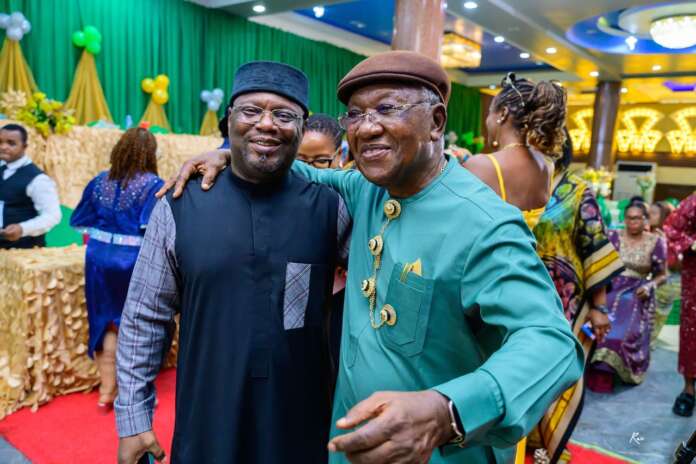
Dr Max Amuchie and Sir Jonas Odocha at the 80th birthday celebration and book launch in Abuja
Distinguished guests, revered elders, family members, friends, ladies and gentlemen,
We gather here today not merely to mark the passage of years, but to honour a life that has given meaning to time itself. An 80th birthday is not measured by age alone, but by the lives touched, the values upheld, and the legacy quietly built over decades.
I stand here with deep humility, fully aware that speaking in honour of Sir Jonas Odocha is not a privilege granted by age, but one earned through relationship, trust, and the generous regard of a man whose life has been an enduring lesson in character. That I am permitted to speak today is itself a testament to Sir Jonas’ belief in investing wisdom forward—allowing the next generation not only to learn from his words, but to grow under the shelter of his example.
Our celebrant and I first crossed paths about two decades ago in Ikoyi, Lagos. At the time, I was the Features Editor at THISDAY Newspaper. I had received an invitation to a party— whose precise purpose has faded with time. What I do remember clearly, however, was learning that a kinsman, a topshot at the Nigerian National Petroleum Corporation (NNPC), was the host.
That evening marked the beginning of a relationship that would profoundly shape my life. I was introduced to Sir Jonas Odocha and his gracious wife, Dame (Dr) Ngozi Odocha—our Big Sister and Auntie, whom we affectionately and fondly call Da Ngoo. From that moment, Sir Jonas and Daa Ngoo became constants in my journey: mentoring me, guiding me, listening patiently, and offering counsel whenever I stood in need.
When I made the life-altering decision to leave paid employment and venture into media entrepreneurship, Sir Jonas stood firmly by me. On July 7, 2015, at the unveiling of Sundiata Post in Abuja, he was among the earliest to arrive. Beyond his presence, he gave substance—serving pro bono for a period as a columnist, lending credibility, wisdom, and encouragement at a crucial stage. Therefore, today, I am here not merely as a journalist or publisher, but as someone paying tribute to a man who has treated me like a beloved son.
Born on January 9, 1946, in Elele, Rivers State, to Anglican missionary parents, Sir Jonas Odocha’s life reflects the power of vision, discipline, and service. From modest beginnings, he rose to national and professional prominence, never losing sight of his roots or his responsibility to give back. Ralph Waldo Emerson once wrote, “The purpose of life is not to be happy. It is to be useful, to be honourable, to be compassionate, to have it make some difference that you have lived.” Sir Jonas has indeed made that difference.
His education at the University of Ibadan and later at the prestigious Imperial College, London, laid a solid intellectual foundation for a distinguished career in Petroleum Geology. His ascent at the NNPC—alongside his secondment to Nigeria LNG as General Manager, Human Resources—and eventual retirement as Group General Manager, NNPC, exemplifies Martin Luther King Jr.’s timeless counsel: “If a man is called to be a street sweeper, he should sweep streets even as Michelangelo painted.” Sir Jonas served with excellence, integrity, and patriotic commitment.
His passion for mentorship extended naturally into academia. As a Visiting Adjunct Associate Professor of Petroleum Engineering at the Federal University of Technology, Owerri (FUTO), he bridged theory and practice, lighting fires rather than merely filling pails. His life affirms the belief that education is most powerful when knowledge is shared generously.
Sir Jonas has always understood the power of ideas and public engagement. From his presence at the unveiling of Sundiata Post to his columns and enduring op-ed contributions, he has demonstrated that thoughtful words can shape minds, institutions, and even nations. Truly, the pen remains mightier than the sword.
Retirement, for Sir Jonas, was not an ending but a new beginning. After a decade of consultancy in Energy, Environment, and Safety, he ventured boldly into farming. His latest book, Farming for Beginners: A Simple Guide for First-Time Farmers, being launched on this occasion, reflects Helen Keller’s conviction that “Life is either a daring adventure or nothing at all.” Once again, Sir Jonas chose purpose over comfort.
Deeply loyal to his roots, he remains a distinguished Old Boy of Government Secondary School, Owerri, and an active member of its Old Boys Association. His life embodies the simple truth that we rise by lifting others.
Faith anchors his values. As a Knight of St. Christopher of the Anglican Church and a major benefactor of St. Simon’s Anglican Church Parish, Ogbor-Uvuru, Aboh Mbaise, Sir Jonas lives out the biblical injunction that “to whom much is given, much will be required.” His generosity speaks louder than any title.
At the heart of his many achievements is family. His enduring marriage to his wife and childhood love, Dr. Ngozi Odocha, reflects Leo Tolstoy’s wisdom that “the sole meaning of life is to serve humanity.” And indeed, service—beginning at home—has defined Sir Jonas’ life.
Geologist, adjunct professor, author, farmer, mentor, churchman, and public intellectual, Sir Jonas Odocha personifies purposeful living. As Winston Churchill once observed, “We make a living by what we get, but we make a life by what we give.” At 80, Sir Jonas continues to give—his time, his wisdom, his voice, and his example.
As we celebrate these eight dazzling decades, we are reminded that legacy is not measured in years, but in impact. Sir Jonas Odocha’s life affirms that a life lived with purpose never truly grows old.
Happy 80th Birthday, Sir Jonas Odocha, our hugely respected Big Daddy, illustrious son of Uvuru, Mbaise; the pride of Da Ngoo, beloved father of CHINOMSO, UGOCHI, EBERE, NNENNA and dotting grandfather of 9 children.
Your impact endures.
Your purpose continues to inspire us.
Thank you.
•Being speech delivered by Dr Max Amuchie, CEO, Sundiata Post Media Ltd, at the 80th birthday celebration of Sir Jonas Odocha and public presentation of his book, Farming for Beginners: A Simple Guide for First-Time Farmers at Chida Hotel, Utako, Abuja on Saturday, 31st January 2026.
In every generation, the Church must answer an old question dressed in new clothing.
Not, “Is this fashionable?” Not, “Is this allowed?” But rather, “Does this glorify Christ?”
For the believer does not merely ask what is permitted. He asks what is profitable. He asks what is pure. He asks what resembles his Lord.
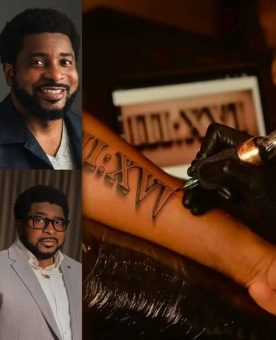
Currently, a conversation stirs the waters of the Nigerian Christian community. A respected pastor, known for counseling families and teaching conservative values, unveiled a tattoo upon his arm. Some applauded his liberty. Others questioned his example. Voices rose. Opinions clashed. Social media became a courtroom.
Yet beneath the noise lies a deeper matter. Not ink. Not skin. But identity. For the true question is not, “What is wrong with a tattoo?” The true question is, “Whose mark do you bear?”
The Ancient Prohibition
The Scriptures speak first in Leviticus: “You shall not make any cuttings in your flesh for the dead, nor tattoo yourselves: I am the LORD.” — Leviticus 19:28 To modern ears, this sounds severe. But the command did not arise from mere dislike of body art. Israel lived among nations who: carved their flesh for the dead, branded themselves for idols, inscribed the names of false gods upon their skin, and cut themselves in frenzy before Baal. Their markings were not decorative. They were devotional. Every incision was allegiance. Every symbol was worship.
So God, jealous for covenant loyalty, said in effect: “You shall not carry the marks of another master.” Israel was to be different — not merely in ritual, but in identity.
From External Marks to Inner Seals
But Christ came. And with Him came a better covenant. No longer written on stone. Now written on hearts. No longer enforced by external signs. Now produced by inward transformation. Under the New Covenant, righteousness is not tattooed on the skin. It is engraved by the Spirit.
Paul declares: “Circumcision is nothing… but keeping the commandments of God.” — 1 Corinthians 7:19 Meaning: outward markings neither save nor sanctify. A man may have bare skin and an unclean heart. Another may carry scars and yet love God deeply. Thus, tattoos do not automatically condemn a believer. But neither are they spiritually meaningless. For though the law has changed, wisdom remains. And Christian freedom is never careless freedom. “All things are lawful… but not all things are beneficial.” — 1 Corinthians 10:23
The Question of the Temple
Scripture introduces another truth — solemn and sobering: “Do you not know that your body is the temple of the Holy Spirit?” — 1 Corinthians 6:19 The believer’s body is not private property. It is sacred space. A temple is not decorated impulsively. It is treated reverently. Not everything that can be done to the body should be done to it. For stewardship is worship. And permanence demands wisdom. What we inscribe on the body today may speak for decades. Thus the Spirit-filled believer asks: Does this honor the temple — or merely express the self?
Identity and Witness
In truth, tattoos throughout history have rarely been neutral. They have marked: tribal belonging, military allegiance, slavery and ownership, secret societies, gang loyalty, or rebellion. They communicate. And communication shapes witness. Christians must remember: The gospel travels not only through sermons, but through symbols. Paul, though free, restrained his liberty: “We avoid anything that may discredit the ministry.” — 2 Corinthians 6:3 Especially leaders. Especially shepherds. Especially those whose lives others imitate. For influence multiplies consequences. What may be permissible for one may become a stumbling block for many. Love sometimes limits freedom.
Fruit, Not Ink
Jesus gave the true measuring rod: “By their fruits you shall know them.” Not: By their clothes. Not: By their hairstyle. Not: By their tattoos. But by: character, humility, obedience, holiness, love. A tattoo neither proves rebellion nor righteousness. Yet it raises a deeper test: What fruit accompanies it? If the Spirit governs the heart, wisdom governs choices.
The Medical Reality
Even science whispers caution. Tattooing is not harmless art. It involves: needles puncturing the skin thousands of times, foreign pigments lodged permanently beneath tissue, risks of infection, allergic reactions, hepatitis transmission if poorly sterilized, heavy metal toxicity in some inks, and keloid scarring — particularly common in darker African skin. Removal often scars worse than application. Thus even physically, the body pays a price. And stewardship of health is also spiritual obedience.
The Higher Call of Discipleship
In this age of personality-driven Christianity, many ask: “How far can I go and still be saved?” But the disciple asks: “How much like Christ can I become?” Jesus never emphasized self-expression. He emphasized self-denial. Paul never defended his rights. He surrendered them for the gospel. “Follow me, as I follow Christ.” This is the pattern. Not trend-following. Not culture-testing. But Christ-reflecting. Freedom Guided by Love
So where does this leave us?
Not in legalism. Not in condemnation. Not in reckless liberty. But in holy wisdom. Tattoo is not automatically sin. Yet neither is it automatically wise. It belongs to that tender category called Christian liberty — where decisions are governed not merely by permission, but by purpose.
Before any permanent mark, the believer should kneel and ask: Can I dedicate this to God? Does this magnify Christ or myself? Will this strengthen my witness? Will weaker believers stumble? Does my conscience rest in peace? For whatever is not from faith is sin. Marked or Sealed? In the end, the believer needs no ink to declare ownership. He already bears a mark. Not visible to the eye. But blazing in eternity. “Having believed, you were sealed with the Holy Spirit of promise.” — Ephesians 1:13 This is our tattoo. This is our brand. This is our identity. Not etched by needles. But sealed by God. And that mark is enough.
@AmbassadorTBrikins
#Christians #church leaders #young believers
#What does the Bible say about tattoos #Leviticus 19:28 meaning #Tattoos in Christianity
The killings continue—unabated—despite presidential orders, military deployments, and repeated assurances that the tide has turned.
In the early hours of Saturday, suspected armed militants stormed Karku community in Kauru Local Government Area of Kaduna State, abducting a Catholic priest and at least 11 others while killing three residents. The attack, residents said, was swift, coordinated, and executed with military-style precision.
The kidnapped priest, Rev. Fr. Nathaniel Asuwaye, is the parish priest of Holy Trinity Catholic Church, Karku, according to the Catholic Archdiocese of Kafanchan. Church officials confirmed that Asuwaye was taken alongside 10 villagers during the assault, which began around 3:20 a.m.
Witnesses described gunmen arriving in large numbers, firing indiscriminately as they moved from house to house before retreating into nearby forests with their captives.
“This attack has left our community devastated,” said Jacob Shanet, Chancellor of the Kafanchan Diocese, who confirmed that three residents—Jacob Dan’azumi, Maitala Kaura, and Alhaji Kusari—were killed during the raid.
The violence extended beyond Kauru.
In Kagarko Local Government Area, the Chief Imam of Janjala Central Mosque, Bello Abdullahi, and a Fulani community leader, Shehu Bello, were abducted in separate but related attacks. Armed groups reportedly struck multiple villages, abducting residents, rustling cattle, and forcing families to flee overnight.
A community leader said the attackers, armed with AK-47 rifles, arrived around 9 p.m., targeting community leaders first.
“They went straight for the imam. Then they took the Fulani leader. That was when people started running for their lives,” the source said.
Residents fled to nearby towns, while others slept in surrounding bushes, fearing further attacks.
Security sources said joint military and police units engaged the assailants in gun battles, but residents say such statements have become routine, rarely followed by arrests or rescues.
The kidnappings occurred days after armed groups reportedly issued a seven-day ultimatum demanding ₦6 million ransom for a previously abducted woman and her four children—an ultimatum that expired without visible security intervention.
Police authorities declined to comment. Repeated attempts to reach the Kaduna State Police spokesperson were unsuccessful.
Religious leaders warn that the attack reflects a deepening national crisis.
“The kidnapping of priests and innocent citizens has become unbearable,” said Rev. Joseph Hayab of the Northern Christian Association of Nigeria. “Despite repeated promises, the violence continues.”
A Familiar Pattern, a Failing State
Public affairs analyst Sa’adiyyah Adebisi Hassan says Kaduna is no anomaly.
“Kwara. Benue. Kaduna,” she said. “Different locations. Same script—massacres, condolences, deployments, silence, repeat.”
Nigeria, she argues, continues to misdiagnose terrorism as criminality rather than organized ideological violence sustained by financing, recruitment networks, and political hesitation.
Other nations confronted similar threats and prevailed by abandoning ambiguity. Sri Lanka dismantled the Tamil Tigers by reclaiming territory and crushing command structures. Colombia broke insurgent networks through intelligence and financial disruption. Egypt, Indonesia, Morocco, Saudi Arabia, and France asserted state authority through surveillance, religious regulation, elite counterterror units, and zero tolerance for enablers.
Nigeria, Hassan argues, has done the opposite—negotiating with killers, protecting narratives, and surrendering territory.
“Nigeria wants to defeat terrorism without offending anyone,” she said. “That is not how states survive.”
Why the Violence Persists
According to Hassan, Nigeria’s failure rests on five realities it refuses to confront:
Terrorism in Nigeria is ideological, not accidental. Extremists operate with political, religious, and financial enablers. Negotiation culture emboldens violence. The state does not control large swathes of its territory. Narratives are protected more than lives.
As long as armed groups dictate movement, worship, and survival in rural communities, no number of operations or press statements will restore security.
The Choice Ahead
Ending the violence, Hassan argues, requires naming terrorism as terrorism, criminalizing incitement, dismantling funding networks, reclaiming territory, and building elite, intelligence-driven counterterror units.
Above all, it requires political resolve.
“Terrorism does not defeat states,” she said. “Indecision does.”
For communities like Karku and Janjala, the consequences of that indecision are already written—in empty homes, mass graves, and abducted leaders.
Until Nigeria chooses authority over ambiguity, tomorrow will bring another kidnapping, another condolence message, and another promise that changes nothing.
Our site uses cookies. By clicking “Accept All Cookies”, you direct Law and Society Magazine to store cookies on your device and disclose information in accordance with our Cookie Statement: cookie policyACCEPTREJECT
Privacy & Cookies Policy
Privacy Overview
This website uses cookies to improve your experience while you navigate through the website. Out of these cookies, the cookies that are categorized as necessary are stored on your browser as they are essential for the working of basic functionalities of the website. We also use third-party cookies that help us analyze and understand how you use this website. These cookies will be stored in your browser only with your consent. You also have the option to opt-out of these cookies. But opting out of some of these cookies may have an effect on your browsing experience.
Necessary cookies are absolutely essential for the website to function properly. This category only includes cookies that ensures basic functionalities and security features of the website. These cookies do not store any personal information.
Any cookies that may not be particularly necessary for the website to function and is used specifically to collect user personal data via analytics, ads, other embedded contents are termed as non-necessary cookies. It is mandatory to procure user consent prior to running these cookies on your website.