Home Blog Page 125

‘It’s a partnership beyond romance, where maturity fuels public service’


Zaynab Ngohemba, the new wife of the Secretary to the Government of the Federation (SGF), Senator George Akume, has explained the motivation behind her recent marriage, describing it as a union founded on maturity, shared purpose, and mutual understanding.

Meanwhile, the lawmaker representing Gboko/Tarka federal constituency in the National Assembly, and senior wife of the SGF Mrs. Regina Akume, has urged her husband, the Secretary to the Government of the Federation (SGF), Senator George Akume, to fully return to Christianity, stressing that his achievements in life were rooted in his Christian faith.


Mrs. Akume appealed in a viral video recorded during the wedding reception of the SGF’s son, held on Sunday in Makurdi, Benue State. Senator Akume celebrated his 72nd birthday last weekend.


LEADERSHIP had reported that Akume married Zaynab, formerly known as Zaynab Otiti Obanor, in a private ceremony in 2025, an event that has since generated widespread interest within social and political circles.

The marriage was confirmed on Friday through a celebratory Facebook post by Abraham Double-D Dajoh, a member of the Dajoh family, who described the union as “beautiful” and “uncommon.”

“We, the entire Dajoh Family, happily join our daddy, uncle, and brother, His Excellency, the Secretary to the Government of the Federation, Sen. George Akume Jugu Dajoh, in welcoming his new and uncommon wife, Queen Zaynab Ngohemba-George Akume Dajoh, into the Dajoh family,” the post partly reads.

In a statement issued on Wednesday by her media aide, David Adeoye, and published by ThisDay, Zaynab said the marriage represented the coming together of two individuals already committed to public service, rather than a major shift in personal direction.

According to the statement, “It is a partnership shaped by maturity, shared purpose, and an understanding that personal stability strengthens public duty.”

“Their union reflects the meeting of two lives already devoted to public purpose. It is not a reinvention of either individual, but a reinforcement of shared values—humility, discipline, empathy, and responsibility,” it added.

Adeoye further noted that the marriage comes at a time when Nigerians were demanding greater integrity and compassion from public office holders, saying the couple’s union reflects those ideals.

“At a time when Nigerians increasingly demand integrity and humanity from those in leadership, this union sends a subtle but powerful signal that service is strongest when anchored in personal stability, shared values, and a long view of legacy,” the statement said.

Zaynab, previously known as Olori Wuraola, was formerly married to the Ooni of Ife, Oba Adeyeye Enitan Ogunwusi, Ojaja II. Their traditional marriage, conducted in March 2016, ended in 2017 after about 17 months.

“I want to tell the world that I still love Mr. George Akume”— Regina Akume

Mrs. Regina Akume, in a birthday prayer for her husband, the lawmaker asked God to grant him long life, sound health, and wisdom, while calling on him to remember his Christian foundation.

“I pray that the Lord will increase his years, grant him good health of mind and body, and give him clarity in thinking and doing things rightly,” she said.

Mrs. Akume further emphasized that Christianity played a central role in her husband’s rise to prominence, cautioning against abandoning the faith.

Again Mrs. Akume publicly reaffirmed her love, loyalty, and marital commitment to her husband, declaring unequivocally that she has no other husband.

She made this latest declaration in a now-viral video recorded during a New Year’s Mass, where she addressed congregants in an emotional yet resolute tone, insisting that her family remains united despite public commentary and speculation.

“I want to tell the world that I still love Mr. George Akume. He is my husband,” she said, gesturing towards members of her family seated in the congregation.
“That is his son sitting there, and that is also his daughter,” she added, calling their names as worshippers watched attentively.

Dismissing public narratives surrounding her marriage, Mrs. Akume spoke firmly:
“That is my man and that is my husband. I have no other husband but him. I do not care what the world says,” a statement that drew loud applause from the congregation.
Beyond addressing marital issues, she also shared a personal testimony, recounting a recent medical challenge which she described as a severe test of her faith and endurance.
According to her, she experienced divine healing and has since fully recovered.

“I thank God for granting me healing and making me healthy again,” she said.
Reaffirming her Christian faith, Mrs. Akume declared God’s supremacy and unmatched power, stressing that no earthly authority compares to divine sovereignty.
“He is the Almighty Father. There is none like Him, and there is no power above His power,” she said.

She further underscored core Christian beliefs on redemption, noting that no sacrifice compares to that of Jesus Christ.
“There is no sacrifice anybody can offer that is above the sacrifice of our Lord Jesus on the cross,” she said.

Her remarks come amid heightened public interest in the Akume family, following reports and discussions in political and social circles over the SGF’s personal life, including claims that he has taken another wife, an issue that has continued to fuel debate both online and offline.

President Tinubu’s legal practitioners bill seeks capture and reprisal

By Chidi Anselm Odinkalu

Twenty-three days after the transmission by President Bola Ahmed Tinubu, the upper chamber of Nigeria’s National Assembly, better known as the Senate, held public hearings on 18 December 2025 to consider the Legal Practitioners Bill. At this pace, the bill will be certain to become law well before the middle of 2026.

The journey to this bill has been somewhat tortured. The last time there was meaningful legislative action on the regulation of the legal profession in Nigeria, the military were in power and that was over 50 years ago. The existing framework governing Nigeria’s legal profession has in fact evolved very little since the Legal Practitioners Act was first enacted two years after independence in 1962. Long before the onset of this millennium, it was evident that the design and regulation of Nigeria’s legal profession needed to be updated. Substantial disagreements, however, existed as to how to accomplish this.

In December 2016, then president of the Nigerian Bar Association (NBA), Abubakar Balarabe (AB) Mahmoud, a Senior Advocate of Nigeria (SAN), constituted a Legal Practitioners Regulation Review Committee under the leadership of Anthony Idigbe, SAN, with a mandate to undertake consultations and rationalize proposals for the reform and regulation of Nigeria’s legal profession. As part of its work, the Idigbe Committee took soundings from the official legal profession and from branches of the NBA. The Committee comprised entirely of lawyers and, in its work, appeared to make little effort to reach out to or consult with consumers of legal services. That was a significant flaw in its process.

Upon receiving the committee’s report, the president of the NBA then set out the desired goals and ambitions of the reform he sought: “We need a legal profession” he declared, “that will inspire confidence in the Nigerian legal system such that entrepreneurship will thrive and foreigners will feel confident to invest in our country thereby generating prosperity for our people.” He complained that – afflicted as it was by chronically incapable regulation – “the Nigerian Bar Association as presently structured and managed cannot provide that leadership expected to produce these outcomes.”

For nearly two decades preceding the Idigbe Committee Report and immediately thereafter, the NBA had been led by SANs. In 2020, the membership of the association elected Olumide Akpata to lead it. An exceptional and able lawyer, Olumide made his name at the commercial Bar. It is fair to say that some traditionalists took personal affront at his election to lead the Bar.

Any hopes for a quick dash to translate into legislative reality the lofty dreams inspired by the Idigbe Committee Report were to be quickly frustrated by an internecine contest that ensued of egos and interests too complex to be rehashed here. As this contest unfolded, the original proposals of the Idigbe Committee vegetated; then mutated, before getting annihilated.

It appears that some interests within the Body of Benchers (BoB) decided in this flux to capture the profession. Much of the contest that followed over the future of the regulatory proposals was to occur within the BoB. A statutory body created by the existing Legal Practitioners Act, the BoB is described under law as “a body of legal practitioners of the highest distinction” in Nigeria responsible for admitting new entrants into the legal profession.

While the BoB sought to subordinate to itself the NBA and all other organs for the regulation of the Legal Profession, the NBA sought to argue for its independence as the professional association of lawyers in Nigeria. As this argument raged, some interests instigated a contest over the assertion of associational monopolies by the NBA with the emergence of a Nigerian Law Society (NLS), in effect forcing the NBA to battle on two fronts for its own survival.

These contests were still ongoing when in 2023, Nigeria elected a new President. Leading protagonists in the BoB, who were also counsel to the new president, acquired presidential leverage in the battle to shape the new regulatory environment. With the strategic landscape thus redefined, the NBA was left to seek tactical accommodation in shaping the content of the new Bill, with a focus on preserving its considerable revenue streams. The original ambitions outlined in 2018 for a radical reinvention of Nigeria’s legal profession suffered a tragic stillbirth.

Among its eight objectives, the bill proposes to advance public confidence in legal services; promote the public interest, rule of law and access to justice; and, above all, “ensure the independence, integrity and honour of members of the legal profession.” There is, however, a clear mismatch between the essential proposals of the Bill and these high-sounding objectives.

For starters, about half of the bill is devoted to provisions for a revamped Body of Benchers, which emerges from these proposals as a supreme regulator – if not owner – of Nigeria’s legal profession. If these proposals become law, the provisions of the bill governing the BoB will prove to be the cemetery of Nigeria’s legal profession.

Far from being a guarantor of an independent Bar, the BoB created by this Bill is a wholly-owned subsidiary of the ruling government. It will be funded by the Federal Government through the National Judicial Council. Among its membership, the BoB will include the Chief Justice of Nigeria; Attorney-General of the Federation; all Justices of the Supreme Court; President of the Court of Appeal and Presiding Justices of divisions of the Court of Appeal; Chief Judge of the Federal High Court and of all state High Courts (including the High Court of the Federal Capital Territory); President of the National Industrial Court; all State Attorneys-General; as well as the President of the Senate, Speaker of the House of Representatives, and the Chairs of Judiciary Committee in both chambers of the National Assembly if they have been lawyers for at least 15 years. The NBA’s representation in the Body will be 61, comprising its president and 60 other lawyers nominated by its National Executive Committee. It will be a no-contest.

Second, the BoB will be responsible not merely for admission into the legal profession but also for discipline. So, Body will subsume the Legal Practitioners Disciplinary Committee (LPDC). Members of the Body will become, in typical Nigerian fashion, above discipline.

Third, to underscore the supremacy of the BoB, the bill now proposes that the Legal Practitioners Privileges Committee (LPPC) can only make, retain or review rules and criteria for conferment of the rank of SAN, including any conditions for withdrawal of the rank “with the approval of the Body of Benchers.”

Fourth, in a specific act of legislative reprisal, the new bill excludes from the LPPC, the President of the NBA – until now a member of the LPPC which determines the conferment of the rank of SAN – unless he or she is a SAN. This provision is a specific reprisal against the NBA for electing in 2020, a president who was not a SAN. For that reason, this provision may, in time, become known as the “Olumide Akpata Reprisal”.

Fifth, the ambitions of the bill venture into the impossible. In addition to regulating the practice of law in Nigeria, it also purports to reserve for Nigerian lawyers only legal services in relation to any matter of Nigerian law; or in relation to any dispute or transaction with substantial nexus to Nigeria. Implicitly, the bill asserts extra-territorial effect. It is hard to see how that can work.

The bill contains other significant provisions, such as the requirement for mandatory pupillage of up to two years for new lawyers or for licensing of foreign lawyers. Even the provision concerning foreign lawyers tone-deaf. It defines a foreign lawyer as “a person entitled to practice law in a foreign jurisdiction.” By this bill, a Nigerian lawyer qualified in another jurisdiction is foreign.

Admirable though its original goals were, Nigeria’s new Legal Practitioners Bill has suffered predictable derailment. If it gets adopted in its present form, the new law will be a shrine to institutional capture. Its main achievement will be to create in members of the Body of Benches, a new breed of super lawyers. The currency of their trade will be influence peddling, the very anti-thesis of what the effort to reform the Legal Practitioners Act was meant to be.

A lawyer and a teacher, Odinkalu can be reached at [email protected]

The views expressed by contributors are strictly personal and not of Law & Society Magazine.

Nigeria’s growing begging economy

By Farooq A. Kperogi

As the economy bites harder and end-of-year festivities rev up, the routine “tax” on middle-class Nigerians (the few of them that still exist, that is,) the political class and Nigerians in the diaspora predictably intensifies.

December is always expensive in Nigeria, but it now comes with an additional, informal levy: the expectation that anyone perceived as doing “well” must redistribute their resources far beyond family obligation.

For a long time, begging in Nigeria was associated with what Marxists once called the lumpen proletariat, that is, the dirt-poor, socially marginal and largely unorganized underclass. In Nigeria, this image was most vividly represented by the almajirai in the North, children sent to Qur’anic schools who were expected to fend for themselves through street begging.

That picture no longer captures the reality. Begging has morphed into a flourishing, multi-layered industry with widening entrants, diversified platforms and increasingly normalized practices. What was once stigmatized has become routinized, rationalized and, in some cases, even celebrated.

One major accelerant of this shift is online begging, or e-begging. It first gained social legitimacy through “giveaways” staged by social media influencers seeking to grow the numerical strength of their subscriber base and boost engagement metrics. What began as a marketing tactic quickly turned into a cultural script. The logic is that public generosity creates visibility, visibility creates clout and clout converts to income.

But the giveaways did something more corrosive. They normalized public solicitation. Today, hordes of Nigerians drop their names and bank account numbers in comment sections without the slightest embarrassment. Sometimes they do so during announced giveaways. Increasingly, they do so even when there is no giveaway at all. The request itself has become the performance.

This represents a sharp cultural break. Shame and moderation, once important moral regulators in many Nigerian societies, have been eroded. Mendicancy has shed its stigma. Asking publicly for money, repeatedly and without restraint, no longer attracts social penalty. In some online spaces, it attracts admiration for “boldness.”

To be clear, taxing wealthier relatives to feed, clothe and educate poorer kin is not new. Many Nigerians from economically deprived homes benefited from the kindness and generosity of more successful relatives. I am one of them.

We also learn that when we climb the ladder, we have a moral obligation to pay it forward. This ethic of mutual aid is deeply embedded in many Nigerian cultures, and it has helped countless people survive in the absence of a functional welfare state.

What has changed is not the ethic itself but its scale, scope and coercive intensity.

In the last few years, driven by rising inequality and the normalization of begging as an income strategy, the financial and emotional burden placed on comparatively well-off professionals has widened dramatically. The obligation now extends well beyond extended family. Acquaintances, friends of friends, former classmates, distant community members and even strangers now feel entitled to private redistribution.

Worse still, not everyone whose burden is carried by others is poor. For many, begging has become a source of passive income, an alternative revenue stream or even the primary means of livelihood. I have heard multiple accounts of people who built entire houses, from foundation to finishing, purely from proceeds of beggary. This is no longer emergency relief. It is enterprise.

What sustains this culture is a peculiar sense of entitlement. For example, Nigerians who live abroad, especially in countries with stronger currencies, are widely imagined to be awash in vast oceans of money.

The brutal realities of rent, taxes, health insurance, childcare and precarious labor markets abroad are erased. They conveniently replace the lived experience of diasporan Nigerians with a crude, ignorant exchange-rate arithmetic.

As a result, even acts of real sacrifice are interpreted not as generosity but as sprouting from effortless abundance.

I once extended a significant financial favor to a relative. Instead of gratitude, I later learned that this person had told another relative that I did not deserve too much praise because the dollar-to-naira exchange rate meant that “a few thousand dollars” from me amounted to millions of naira. The assumption was that thousands of dollars are to Americans what thousands of naira are to Nigerians.

This is fantasy economics, of course, but it is powerful fantasy. It turns helpers into inexhaustible wells. Nothing they give is ever enough because the imagined surplus is infinite.

Politicians and people close to political power experience the same dynamic. Merely being adjacent to authority is enough to generate demands. People assume access to limitless resources, contracts, favors and cash. Every refusal is read as “wickedness.” Every gift is insufficient. Gratitude disappears because entitlement has taken its place.

What makes this phenomenon especially troubling is that it is rarely recognized as structural. It is personalized, moralized and weaponized. If you resist, you are accused of selfishness or betrayal. If you comply, you’re seen as embodying boundless abundance, and the demands escalate. Either way, the individual absorbs the costs of collective failure.

There is no question that the scale and persistence of begging are increasing daily in Nigeria. Previously proud and self-respecting people now engage in what can only be described as executive begging: polished, strategic, emotionally manipulative solicitation performed by people who know exactly how to frame vulnerability for maximum extraction.

Unfortunately, this is not a victimless system. Fairly well-to-do Nigerians, both at home and abroad, are stretched and stressed. They are not simply “helping family.” They are informally tasked with carrying portions of the nation’s social welfare burden. They subsidize state collapse with private sacrifice. But no seems to know or care.

The consequences are profound. Many delay building their own homes. Others postpone retirement savings. Some abandon entrepreneurial ambitions. Intergenerational wealth transfer becomes impossible when today’s surplus is permanently pre-empted by yesterday’s deprivation. What looks like generosity in the short term reproduces fragility in the long term.

This is why the phenomenon deserves systematic study. How much is the begging economy worth annually in Nigeria? What proportion of household income flows through informal redistribution networks? How much investment, savings and productive capital formation is foregone as a result? Until we quantify these questions, we will continue to treat a structural crisis as a series of private moral dilemmas.

Individualizing a structural problem harms everyone. It breeds resentment among givers, dependency among receivers and moral confusion in society at large. We end up with a culture where no one feels responsible for fixing institutions, but everyone feels entitled to someone else’s paycheck.

Nigeria needs a system where the burden of state failure is not casually transferred to individuals lucky enough to escape it. We need social norms that reward productivity and dignity rather than permanent solicitation. We need public policy that reduces desperation instead of romanticizing survivalism. Most of all, we need to recover the idea that begging should be a last resort, not a business model.

Until then, Nigeria’s growing begging economy will continue to expand, insidiously taxing the few who manage to stay afloat while deepening the very inequalities that made it possible in the first place.

The views expressed by contributors are strictly personal and not of Law & Society Magazine.

Terrorists intensify attacks in parts of northern Nigeria, kill scores

Following United States air strikes targeting Islamic State-linked militants in Sokoto State, armed groups have intensified attacks across parts of northern Nigeria.

Findings by Saturday PUNCH revealed that no fewer than 47 people have been killed and 35 kidnapped between December 25, 2025, and January 2, 2026.

But the Defence Headquarters (DHQ) says it has intensified proactive measures to thwart the migration of fleeing terrorists to infiltrate communities across the country.

Some of the attacks were carried out on communities in Adamawa, Zamfara, Kwara, Plateau, Nasarawa, Yobe and Kano states by bandits, ISWAP and Boko Haram fighters.

President Donald Trump, last Christmas, announced in a post on his Truth Social platform that US forces conducted deadly strikes against Islamic State terrorists in Northwestern Nigeria, and vowed more attacks if the militants keep killing Christians.

The Defence Headquarters later said intelligence gathered ahead of the mission confirmed the presence of terrorists in the area, adding that a battle damage assessment was still ongoing.

Renewed attacks

However, monitoring of security incidents between December 25 and January 2 shows an escalation in violence, with many communities coming under renewed assault.

A tally of media reports indicates that at least 82 people were either killed or kidnapped during the period. The figure includes more than 35 people abducted and 47 killed, while over 12 others sustained injuries. The actual number of abductees may be higher, as some reports did not disclose figures.

Several people were abducted when suspected bandits attacked the Omi-Ara community in Yagba West Local Government Area of Kogi State.

In the same council, gunmen also attacked the Odo-Ere community on Sunday night and abducted at least four residents.

On 30 December, women and children travelling from Wanke to Gusau were kidnapped but were later rescued by security forces.

On 27 December, suspected bandits attacked the Adanla community in the Ifelodun LGA of Kwara State and abducted more than eight people.

On 29 December, at least eight people were killed when gunmen carried out coordinated attacks on Kaiwa, Gelawu and Gebbe villages in the Shanga LGA of Kebbi State.

In Zamfara State, 16 women were abducted, two people were killed, and several others were injured when Sabon-Layi village in the Wanke district of Gusau LGA was attacked.

At least seven farmers were reported killed during an attack in Bum community in Jos South LGA of Plateau State.

The traditional ruler of Aafin community, Oba S. Y. Olaonipekun, and one of his sons, who is a National Youth Service Corps member, were abducted in the Ile-Ire district of Ifelodun LGA of Kwara State.

Gunmen also attacked Kunza community in Ashigye village in Lafia LGA of Nasarawa State, killing three people and injuring nine others on 31 December.

On 26 December, bandits kidnapped five travellers along the Ogbe-Egbe Road and injured one other person.

ISWAP also claimed it fired mortars at a Nigerian military camp in Goniri, Yobe State, although the extent of damage was not disclosed.

On Wednesday, a security analyst, Brant Phillips, said ISWAP raided a village, killing 11 “hostile” Christians, destroying a church and over 100 houses and capturing their properties.

This is the first time ISWAP refers to a group of Christians as being “hostile”, following ISCAP using this same wording recently.

A former United States Secretary of State, Mike Pompeo, in a post on X, urged Trump to conduct a follow-up strike to increase the pressure on the terrorists.

He said, “Nigeria’s Christians deserve the chance to worship our Lord without fear. If President Trump follows up last week’s strikes against ISIS with a sustained pressure campaign, we’ll see important advances for religious freedom in Nigeria and beyond.”

Boko Haram kills 14 in Adamawa

The Chairman of Hong LGA in Adamawa State, Usman Inuwa, confirmed that Boko Haram killed 14 people in two villages in the local government.

Inuwa, who spoke with Saturday PUNCH on Friday, said Boko Haram invaded two villages, Mubang and Zar, at night, killing 14 people and injuring two others.

Defence Headquarters Speaks

Director of Defence Media Operations Maj. Gen. Michael Onoja said the military high command was aware of terrorist factions relocating to some communities in response to military pressure carried out on terrorist locations.

Onoja said the influx of armed herders into certain communities was also being viewed seriously.

“Intelligence, Surveillance and Reconnaissance (ISR) assets are actively monitoring terrorist movements across various operational theatres. Several movements have been identified and are presently being tracked,” he said.

He urged communities to maintain composure, vigilance and cooperation with security agencies.

He further encouraged citizens to promptly report any suspicious movement or activity to the nearest security agencies’ formations.

He reiterated the defence headquarters’ commitment to safeguard lives and uphold national security.

“Troops of AFN and other security stakeholders remain committed to denying terrorists, insurgents, bandits, kidnappers and other criminal elements freedom of action in the country,” he said.

Nigerian Association of Law Teachers and the persistent disdain for its own business, objectives, and mandate

  • A Wake-Up Call to the NALT Leadership

By Sylvester Udemezue

(1). Introduction: A New Executive, the Same Old Culture

On 30 October 2024, following my lamentations on NALT’s persistent neglect of its own objectives while chasing after issues unrelated to its core mission, a colleague reassured me thus: “That is about to change. You were obviously absent at the manifesto programme today. The election of the new executive is coming up tomorrow.” That assurance sounded hopeful: a promise of reawakening. It suggested that NALT might finally confront the crisis of focus that has haunted it for decades. The next day a new leadership was installed for the NALT with huge promises of far-reaching reforms and positive changes. Sadly, one year later, after reviewing the papers presented at the just-concluded 56th Annual Conference of NALT, held at the University of Abuja (26–30 October 2025), one is compelled to ask: What has really changed? What tangible innovation has the current leadership of NALT introduced beyond organising another Annual General Conference where most papers once again have little or nothing to do with NALT’s constitutional objectives or the pressing challenges facing legal education in Nigeria?

(2). The Disconnect Between NALT’s Mandate and Its Conferences

The objectives of NALT, as enshrined in its Constitution, are clear: (i) to promote excellence in law teaching and research; (ii) to enhance legal education and pedagogy; (iii) to foster academic collaboration among law teachers; and (iv) to engage meaningfully with stakeholders on issues affecting the development, regulation, and quality of legal education in Nigeria. Yet, the 2025 Conference theme (“Law, National Development and Economic Sustainability in a Globalised World”) though lofty, is once again generic and detached from NALT’s true constituency. Out of the nineteen papers presented (four plenary and fifteen sessional), only a negligible few even tangentially touch on issues of law teaching, research, or education reform. Most others dwell on broad political and economic topics such as: Rejigging the Jurisprudence of Election Petition in Nigeria for National Integration and Cohesion; Challenges to Regional Cooperation for Economic Development; Economic Sustainability, State Sovereignty and the New World Order; and Examining the Implications of Nigerian Tax Reform Regime for National Development and Economic Sustainability.

While intellectually commendable, these papers are far removed from NALT’s foundational purpose. They contribute little or nothing to ongoing crises in law teacher welfare, curriculum review, research standards, professional ethics, ICT integration, or institutional synergy.

(3). The Real Issues NALT Conferences Keep Ignoring

If NALT were faithful to its objectives, its conferences would engage with the core challenges confronting legal education in Nigeria: the very areas crying for reform and advocacy. Legal education in Nigeria currently faces a multiplicity of interconnected crises that have undermined its effectiveness and global competitiveness. Chief among these are: Inadequate funding of law faculties and legal education institutions; Shortage, poor welfare, and low motivation of academic staff, leading to brain drain; Inadequate infrastructure, including poorly equipped libraries, obsolete ICT tools, and overcrowded classrooms; Over-enrolment and unsustainable student–staff ratios; Outdated curriculum misaligned with global practice and professional demands; Weak linkage between law faculties, the Nigerian Law School, and the wider profession, producing a chronic skills gap; Proliferation of law faculties without quality assurance or proper accreditation; Frequent industrial actions and unstable academic calendars that disrupt learning; Poor research culture, weak publication output, and lack of institutional support; Deficient use of ICT and e-learning in pedagogy; Inadequate clinical legal education and practical skills training; Weak regulatory enforcement by the Council of Legal Education (CLE) and the National Universities Commission (NUC); Low motivation and career stagnation among law teachers; Rampant brain drain to other professions and countries; and Lack of alignment between legal-education outputs and the needs of the legal market and society, among others. These challenges are existential to the health of legal education; yet NALT conferences consistently sidestep them, preferring to debate elections, federalism, or tax policy.

(4). Leadership Without Legacy

The situation is worsened by NALT’s short two-year leadership cycle, which hardly allows for vision, continuity, or institutional reform. If every leadership’s main legacy is merely “organising the next conference,” then the National Executive Committee (NEC) might as well be renamed the Annual Conference Planning Committee. Where are NALT’s sustained dialogues with the CLE, NUC, or NBA on curriculum reform, academic ethics, or faculty development?
Where are its policy papers or communiqués on teacher welfare, quality assurance, or technological adaptation in legal education, among numerous others? Without answers to these questions, NALT risks becoming an annual event without an annual impact.

(5). The Fifty Ignored Priorities: What NALT Should Be Discussing

The following fifty (50) pressing research and discussion areas have been lamentably overlooked at NALT’s Annual General Conferences, even though they lie at the very heart of NALT’s mandate and relevance: why is NALT’s leadership lifespan pegged at only 24 months, and what meaningful reforms can a leadership with such a short tenure realistically achieve? When will NALT amend its constitution to create a longer, more stable and impactful leadership structure? How do successive NALT leaderships feel after each conference without discussing topics central to the association’s raison d’être? Would the heavens fall if NALT’s conferences were redirected to tackle the real problems affecting its own constituency (law teachers, law students, and legal education institutions) rather than distant political and economic themes? For instance, NALT conferences should be examining: (1) how to prevent the rampant sex-for-marks syndrome that tarnishes the image of academia; (2) lecturers’ involvement in exam malpractices, such as the shocking incident of a law lecturer caught impersonating a student during Bar Part II examinations; (3) the mistreatment of law teachers within the legal profession, particularly the discriminatory Senior Advocate of Nigeria (SAN) Guidelines that marginalise academics; (4) the serious synergy deficit between law faculties, the Nigerian Law School, and the Council of Legal Education regarding admission, qualification, and professional preparation; (5) the growing role of Artificial Intelligence in law teaching and learning; (6) controversies surrounding university admission quotas; (7) accreditation standards for law faculties and their enforcement; (8) election malpractice and unethical political involvement of some law teachers; (9) curriculum review, update, and implementation to meet global standards; (10) pervasive corruption in the management of law faculties; (11) inadequate teaching and learning facilities; (12) the unhealthy proliferation of substandard law faculties; (13) poor funding of legal education; (14) the negative impact of recurring industrial actions and strikes on the continuity of legal training; (15) the development of practical teaching and learning tools; (16) incompetence and non-commitment among some law teachers; (17) exam malpractice within law faculties; (18) whether substantive and procedural law training should be unified or remain bifurcated; (19) the possible introduction of entrance examinations for the Nigerian Law School; (20) the merits and demerits of making law a second-degree course; (21) synergy between the Bar and academia and the role of practitioners in legal training; (22) utilisation of ICT for effective law teaching and learning; (23) motivation and welfare of law teachers; (24) the poor culture of legal research and weak institutional support; (25) essential skills for effective law teaching; (26) emerging law modules and modernising legal curricula; (27) whether Nigeria has too many or too few lawyers; (28) teacher–student relationship ethics and standards; (29) brain drain among law teachers; (30) the effect of insecurity on legal education; (31) the state of Legal English and whether it should be mandatory throughout undergraduate study; (32) self-assessment of law teaching methods; (33) curriculum development and implementation challenges; (34) piracy in academic publishing; (35) ethics and integrity in academic writing; (36) the fight against plagiarism; (37) the role and effectiveness of the NUC and CLE in regulating legal education; (38) comparative studies on global best practices in legal education regulation; (39) the role of law teachers in promoting justice, ethics, and good governance; (40) inter-faculty collaboration and synergy in legal education; (41) standards and transparency in the award of professorships; (42) management and administration of law faculties; (43) the development of mock and moot trial programmes; (44) externship and internship policies; (45) modes of delivery and management of law examinations; (46) balancing law teachers’ careers with their personal and family lives; (47) motivation and reward systems for outstanding law students; (48) the growth and sustainability of law clinics; (49) issues around sabbaticals and academic exchanges; and (50) other emerging issues crucial to the advancement of law teaching and learning in Nigeria. These fifty areas (though not exhaustive) reflect the true business of NALT and define the intellectual agenda that its conferences should prioritise if the Association must remain relevant, effective, and true to its founding objectives. These are the true businesses of NALT; not the endless recycling of general national topics that have no bearing on its statutory objectives.

(6). The Way Forward: Turning the Annual Conference into an Annual Conscience

NALT’s failure is not intellectual; it is directional. Its conferences overflow with talent, yet suffer from misplaced focus. To reclaim its relevance, NALT must redirect its agenda toward advancing legal education quality and pedagogy; fostering ethical teaching and research culture; strengthening synergy among regulatory bodies; improving teacher welfare, training, and motivation; and aligning legal education with the demands of a globalised legal market, among others. Until NALT transforms its Annual General Conference into an Annual General Conscience, it will remain eloquent but empty: rich in rhetoric, poor in relevance.

Respectfully,
Sylvester Udemezue (udems)
Lawyer; Law Teacher; Member, NALT; &
Proctor, Reality Ministry of Truth and Justice (TRM).

[email protected].

The views expressed by contributors are strictly personal and not of Law & Society Magazine.
    Gumi’s Red Line: When tolerance becomes complicity

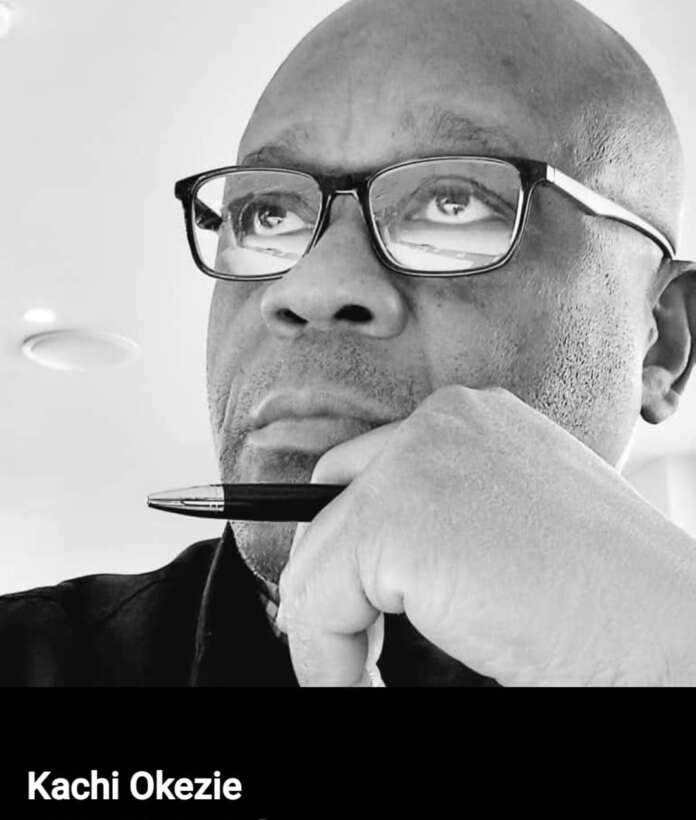
    By Kachi Okezie, Esq.

    For years, Nigeria has teetered on the precipice of a security abyss. From the scorched earth tactics of Boko Haram in the Northeast to the predatory kidnappings of bandit groups in the Northwest, and now the encroaching shadows of the Lakurawa and ISWAP, the Nigerian state is fighting a multi-front war for its very soul. Yet, as the nation bleeds, a discordant and dangerous note continues to ring out from the pulpits of Kaduna.

    Sheikh Ahmad Gumi, a man whose clerical robes once commanded respect, has increasingly transitioned from a self-appointed mediator to a sophisticated apologist for the very forces tearing the federation apart. His recent denunciation of Nigeria’s security cooperation with the United States marks a definitive crossing of the “red line.” It is no longer possible to view Gumi’s interventions as mere eccentric peacemaking.

    When a prominent figure actively seeks to sabotage international alliances essential for dismantling terror networks, while simultaneously laundering the image of mass murderers, his rhetoric shifts from dissent to a form of ideological complicity. The Nigerian government’s continued silence is no longer an act of political patience; it is a dereliction of its primary duty to protect its citizens.

    To understand the danger of Gumi’s current stance, one must look at the long and troubling trajectory of his involvement in global and domestic security crises. This is not a man who accidentally stumbled into controversy; his history suggests a pattern of proximity to radicalism that the Nigerian state has consistently chosen to ignore.

    In 2010, the world was introduced to the darker underside of Gumi’s international connections when he was arrested and detained for over six months by the Saudi Arabian government. The arrest was not a local whim but a direct request from the United States government. American intelligence, while investigating the “underwear bomber,” Umar Farouk Abdulmutallab, discovered that Gumi had been exchanging emails with the young terrorist shortly before his failed attempt to blow up a Northwest Airlines flight over Detroit on Christmas Day, 2009.

    The details of that case remain a chilling reminder of the stakes involved. Abdulmutallab, then only 23, was carrying a device designed to kill 289 innocent people in retaliation for what he called “US tyranny.” He was inspired by Anwar al-Awlaki, a notorious Al-Qaeda cleric. That Gumi was the one corresponding with such an individual should have been a permanent stain on his reputation and a red flag for Nigerian intelligence. Instead, Gumi was held under house arrest in Mecca until the Nigerian government, led by then-Vice President Namadi Sambo, leveraged diplomatic weight to negotiate his release.

    While Gumi claimed innocence and alleged a global conspiracy against him, the fact remains that a sitting Nigerian administration expended precious diplomatic capital to bring back a man who was, at the very least, a person of interest in a global terror investigation. This was the first major instance of the Nigerian state choosing to protect a powerful clerical figure over the rigorous demands of global counter-terrorism standards. This historical shielding has seemingly emboldened him, creating a sense of untouchability that haunts our national security apparatus to this day.

    Since his return and the subsequent escalation of the banditry crisis, Gumi has carved out a niche as the “bandit whisperer.” He has trekked into the deep recesses of the forests, not to demand unconditional surrender on behalf of the state, but to offer excuses for the inexcusable. In Gumi’s worldview, the “bandits”—men who raze villages, rape women, and execute schoolchildren—are merely “aggrieved” victims of neglect. He has consistently downplayed their atrocities, framing their violence as a justified reaction to socioeconomic marginalization or the loss of grazing lands. By doing so, he provides a moral shield for terrorists.

    He has visited their camps, posed for photographs with men brandishing assault rifles, and returned to the cities to demand that the government pay them “compensation” and grant them amnesty. He insists they should not even be called criminals. This is not diplomacy; it is the legitimization of criminality. When a cleric of his stature treats a warlord as an equal stakeholder in a negotiation, he undermines the authority of the Nigerian state and the morale of the soldiers dying in the trenches to uphold it. He effectively tells the terrorist that their violence has earned them a seat at the table, and he tells the victim that their suffering is a secondary consideration to the “grievances” of their oppressor.

    Gumi’s latest outburst targets the burgeoning security partnership between Nigeria and the United States. As the threat of the Lakurawa—a radical sect with links to Sahelian jihadists—grows, Nigeria has sought to leverage global intelligence, surveillance, and tactical support. This is a logical, sovereign decision by a nation under siege.

    However, Gumi has characterized this cooperation as a submission to “imperial tendencies.” He claims that American involvement will act as a lightning rod, attracting anti-American extremist groups to Nigerian soil. This argument is not only intellectually dishonest but dangerously inflammatory. Nigeria is already the epicenter of some of the world’s deadliest terrorist organizations. Boko Haram and ISWAP did not need “American imperialists” to justify their decade-long campaign of carnage. To suggest that seeking help to stop the slaughter is what “attracts” terror is a classic exercise in victim-blaming and mirrors the very rhetoric used by Abdulmutallab to justify his failed Detroit bombing.

    Furthermore, Gumi’s proposed alternatives—Turkey, Pakistan, and China—reveal a profound naivety, or perhaps a more calculated desire to pivot Nigeria away from Western democratic oversight. While every nation pursues its own interests, Gumi’s suggestion that these specific countries offer a “safer” or “cleaner” partnership is baseless. Pakistan has spent decades grappling with the blowback of its own complex relationship with non-state actors; Turkey is deeply enmeshed in the fractured politics of the Middle East and Libya; and China’s security exports are often tied to opaque debt-traps and resource extraction. To discard a strategic partnership with the world’s leading intelligence power in favour of a haphazard pivot to the East—based solely on ideological resentment—is an insult to the professional intelligence community of Nigeria. It suggests that Gumi is more interested in ideological posturing than in the practical reality of stopping the next village raid.

    The most irritating aspect of the “Gumi phenomenon” is not the man himself, but the vacuum of authority that allows him to thrive. For too long, the Nigerian government has watched from the sidelines. There is a palpable sense that the state is “sleeping on its watch,” paralyzed by a fear of the political fallout that might come from confronting a member of a powerful northern clerical family. This inaction has created a culture of impunity. When a regular citizen expresses dissent, they are often met with the full weight of the law. Yet, Gumi is permitted to traverse the country, meeting with wanted men, echoing their propaganda, and casting aspersions on the nation’s defense policy without consequence. This double standard erodes the rule of law.

    The government’s “wait-and-see” approach has been interpreted by the terrorists as a sign of weakness. If the state cannot even silence the tongue of a civilian apologist who has a history of questionable international correspondences, how can it hope to break the back of an armed insurgency? Gumi’s rhetoric emboldens the forest-dwellers; it gives them the impression that they have an “advocate” in the city who can tie the government’s hands through public pressure and religious sentiment.

    True sovereignty is the ability of a state to protect its borders and its people. When Sheikh Gumi suggests that Nigeria should avoid certain allies because it might “offend” the sensibilities of global extremist movements, he is advocating for a surrender of that sovereignty. He is essentially suggesting that Nigeria’s foreign policy should be dictated by the fears of what terrorists might think.

    The “Red Line” has been crossed because Gumi’s activities have moved beyond the realm of free speech into the territory of national security risk. Free speech does not grant one the right to coordinate with enemies of the state or to actively sabotage the military’s international support structures. In any other nation facing an existential threat, such actions would be investigated as economic or security sabotage.

    The time for “dialogue” with Gumi has passed. The government must now demonstrate the political will to uphold the integrity of the Nigerian state. This does not mean a crackdown on Islam or a suppression of legitimate northern grievances; rather, it means drawing a clear distinction between religious leadership and the promotion of anarchy.

    The security agencies must investigate the nature of Gumi’s “mediations” with a fresh eye, considering his past links to international radicalisation. What information is being shared? Is there a financial trail involved in the negotiations he has facilitated? The public deserves to know if these interventions have truly saved lives or if they have merely funded the purchase of more weapons for the bandits. The government must officially and forcefully distance itself from Gumi’s rhetoric. There must be a clear communication strategy that refutes his claims of “aggrieved bandits” and re-centres the conversation on the victims and the necessity of state force.

    Rather than being cowed by Gumi’s “imperialist” labels, the Nigerian government should deepen its cooperation with the US and other allies.modern Modern counter-insurgency requires technology—drones, satellite imagery, and cyber-intelligence—that Nigeria currently needs to bolster. National security is too important to be sacrificed on the altar of Gumi’s outdated geopolitical biases. If Gumi’s statements continue to incite disaffection against the military or provide material support to proscribed groups, the Ministry of Justice must be prepared to act. No one, regardless of their clerical standing or family lineage, is above the law. Nigeria is a nation of resilient, hardworking people who deserve to sleep without the fear of being dragged into the forest. They deserve a government that treats security as a non-negotiable priority, not a subject for endless debate with extremist sympathizers. Sheikh Gumi’s antics have become a distraction at best and a danger at worst.

    By constantly shifting the blame from the killers to the state, and from the terrorists to our international partners, he has made himself a clog in the wheel of national progress. The silence of the Presidency and the security chiefs is being interpreted as complicity. To restore the nation’s dignity, the government must prove that the state still holds the monopoly on the legitimate use of force and the direction of national policy. The red line has been crossed. It is time for the government to wake up, stand firm, and remind both the cleric and the criminal that Nigeria is not for sale, nor is it up for negotiation with those who seek its ruin.

    The views expressed by contributors are strictly personal and not of Law & Society Magazine.

    As Trump’s bruised hand sparks health rumors, he blames aspirin, denies napping

    New bruising on Donald Trump’s left hand is reviving questions about his health nearly one year after he became the oldest president to take the oath of office.

    Across a series of events last week, the 79-year-old Trump appeared with discoloration or light bruising on the back of his left hand, in addition to the more persistent bruise on his right hand that has been visible for months.

    The new bruise appears to complicate the White House’s explanation that the right-handed Trump developed the bruising through constant handshaking along with a regular regimen of aspirin that can make such discoloration more common.

    And while medical experts told CNN there is no fresh cause for concern, calling it a likely benign condition common in older people, they warned that Trump’s reluctance to be more transparent about his health only threatens to intensify the scrutiny that he’s struggled all year to escape.

    “They’re just feeding the curiosity cycle,” said Dr. Jeffrey Linder, chief of general internal medicine at Northwestern University’s Feinberg School of Medicine. “He’s in the public eye, he has a certain image he wants to portray, and even these minor things detract from that image.”

    The fresh bruising on Trump’s left hand represents the latest development to fuel speculation about his health since he returned to the White House — a sensitive topic for him that he’s sought to counter by boasting frequently about his vigour.

    Trump won last year in part by fanning voter concerns about former President Joe Biden’s age and mental and physical fitness for office. Trump has continued to use Biden, 83, as a rhetorical foil and rejected any comparisons with the former president despite their closeness in age, often disparaging his predecessor’s frailty and punctuating his own public events by asking, “Do you think Biden could do that?”

    Yet while Trump has maintained a far more active public schedule, he’s nevertheless been hounded at times by his own set of health questions. After photos over the summer showed swelling in his legs, the White House announced in July that Trump had been diagnosed with chronic venous insufficiency — a common condition frequently found in older people.

    Asked this week about the bruising on Trump’s left hand, the White House declined to issue any new explanation.

    “President Trump is a man of the people and he meets more Americans and shakes their hands on a daily basis than any other President in history,” press secretary Karoline Leavitt said.

    Several medical experts who reviewed photos of Trump’s left hand told CNN that the discoloration wasn’t likely the result of handshaking — given Trump is right-handed — but that his age and aspirin regimen meant there could be some similar explanation.

    “Bruising can be just simply a one-off thing when you have some trauma, you bump into something,” said Dr. Jonathan Reiner, a professor at George Washington University’s School of Medicine and Health Sciences, and who was a longtime cardiologist for former Vice President Dick Cheney. “Aspirin will make you more prone to bleeding.”

    Reiner, who cautioned he has not personally examined Trump, added that he frequently sees similar bruising in patients who take stronger blood-thinner medications than aspirin, raising questions about whether Trump has disclosed all of the medicines he’s on.

    Such medications are common and not an indication of any bigger health concern, he said, pointing to Biden’s disclosure of his use of the blood thinner Eliquis while in office.

    “The question now is less medical than it is transparency,” Reiner said.

    The White House did not respond to questions about Trump’s medications and whether he has fully disclosed them all, instead criticizing the scrutiny over his health.

    “Any so-called medical professionals engaging in armchair diagnosis or false speculation for political purposes are clearly breaking the Hippocratic Oath they’ve sworn to, and they should get their head examined,” communications director Steven Cheung said in a statement.

    From bruising to snoozing, a year of heightened scrutiny

    Trump has long had bruising on his right hand, which CNN has reported predated his return to the White House. But it drew more attention after he began trying to cover it with heavy makeup and bandages and shield it from cameras with his other hand — moves that only heightened suspicions.

    The White House addressed the right-hand bruising at the same time as the announcement of his chronic venous insufficiency diagnosis. A letter released from his doctor at the time said, “President Trump remains in excellent health.”

    In October, Trump returned to Walter Reed after his April physical for an abrupt second visit, which the White House labelled a “routine” checkup, before the president later revealed he received an MRI. The vague disclosure — Trump initially said it was “perfect” but also told reporters he didn’t know which part of his body was imaged — and the administration’s reluctance to offer more specifics spurred a flurry of concern over why his doctors had ordered the scan.

    Weeks later, Trump’s physician, Dr. Sean Barbabella, said in a memo that Trump’s medical imaging was of his cardiovascular and abdominal systems and that both showed “perfectly normal” results. It added that the “advanced imaging was performed because men in his age group benefit from a thorough evaluation of cardiovascular and abdominal health.”

    Reiner told CNN at the time that Trump’s medical screening was not standard procedure. “This, obviously, was performed in response to some clinical concern,” he said. The reason for the screening is “probably not so nefarious,” he added, but suggested it’d be better for the administration to be more forthcoming to avoid that speculation.

    Inside the White House, officials have bristled at the demands for more disclosure, viewing those questions primarily as politically motivated and aimed at sowing doubts about Trump’s vitality.

    After the president appeared to briefly nod off during an Oval Office event last month, the White House denied that he’d fallen asleep and decried it as “a garbage narrative.” A New York Times report days later examining Trump’s health and daily schedule provoked the personal ire of the president, who called it a “hit piece” in a social media post. But during a Cabinet meeting earlier this month, Trump again spent an hour appearing to doze off. (The White House pushed back, saying that Trump had been “listening attentively and running the entire three-hour marathon Cabinet meeting.”)

    Now, the photos of Trump’s left hand — which have already circulated for days on social media — are adding to what voters see as they watch a second-term president on the verge of entering his eighth decade.

    Timothy Naftali, a presidential historian and research scholar at Columbia University’s School of International and Public Affairs, warned that while all administrations face pressure to be transparent about the president’s health, Trump’s insistence on projecting an image of unfaltering vitality means even the smallest displays of vulnerability are likely to attract intense scrutiny.

    “The president is not young,” he said. “And when things are oversold and then there’s a perceived deficiency, its importance is magnified.”

    CNN

    Where Is Erin Brockovich Now? All about the woman that forced corporate America to reckon with environmental crimes

    Attorney Ed Masry and Erin Brockovich speak before a state Senate committee hearing held at Burbank City Hall on chromium-6 in the public water supply. Boris Yaro/Los Angeles Times/Getty Images

    By Jessica Sager 

    Erin Brockovich made history as an activist fighting for clean water, but it wasn’t until Julia Roberts starred in the eponymous movie about her life that she became a household name.

    In 1993, the mom of three became a whistleblower when she noticed illnesses in Hinkley, Calif., may have been tied to a Pacific Gas & Electric (PG&E) plant. Three years later, the case was settled, breaking the record for the largest settlement in a direct-action lawsuit. Brockovich continued working in law and four years after the settlement, her story was immortalized in the award-winning film.

    Since then, Brockovich has inspired new generations of advocates — many of them mothers — to fight against water contamination in their communities.

    “I remember going to watch the film by myself and listening to comments as people walked out of the theater,” she recalled to PEOPLE in 2020. “[They said,] ‘I could do that.’ ‘Well, I wonder if our water is okay.’ ‘I wonder if that would happen to us. Maybe it already is us.’ “

    Read Also: The lawsuit that forced corporate America to reckon with environmental crimes

    Since winning one of the biggest direct-action lawsuits and inspiring an Oscar-winning film, Brockovich hasn’t taken a break from fighting for what she believes in.

    Here is everything to know about where Erin Brockovich is now.

    Who is Erin Brockovich?

    Brockovich is a consumer advocate and environmental activist. She was born Erin Pattee on June 22, 1960, in Lawrence, Kan., and struggled academically as a child because of her dyslexia. After studying briefly at Kansas State University and eventually getting an associate’s degree from Wade College in Dallas, she worked pageant circuits. Brockovich also married and divorced twice during this time.

    Her second husband, Steven Brockovich, lived in southern California, and after their split, Brockovich and her kids moved to Los Angeles, per The Gentlewoman.

    Brockovich got involved in the legal profession after hiring attorney Ed Masry to represent her in a lawsuit over a car crash. They lost the case but Masry later hired Brockovich as a file clerk for his firm at her insistence.

    Brockovich then started investigating PG&E for allegedly leaking toxic levels of the chemical hexavalent chromium (also called chromium-6) into the groundwater of the small town of Hinkley, she recalled on her website. Residents reportedly suffered from ailments ranging from rashes and nosebleeds to higher rates of cancer.

    Masry teamed up with Brockovich to sue the utility company on behalf of Hinkley residents impacted by the contamination, winning a historic $333 million settlement in 1996.

    What did Erin Brockovich discover?

    While working through files for a pro bono real estate case in 1993, Brockovich found medical records that led her to launch an investigation into the Hinkley water supply. She discovered that a PG&E natural gas compressor leaked hexavalent chromium — an additive used to prevent metal from rusting in its cooling towers — into unlined wastewater ponds in the small San Bernardino County town from 1952 until 1966.

    The Center for Public Integrity also alleged that PG&E didn’t inform local water boards about the dumping until 21 years later in 1987.

    According to the Environmental Protection Agency, chromium-6 is a carcinogen, meaning it can cause mutations in cells, leading to cancer, especially if consumed in drinking water. In Brockovich’s findings, plaintiffs in the lawsuit also suffered from miscarriages, skin rashes and digestive issues, per The Guardian.

    Why was Erin Brockovich’s story made into a movie?

    The movie came about through accidental networking: Brockovich told a chiropractor friend of hers about her work, who then shared it with another friend, Carla Shamberg, who was married to producer Michael Shamberg. At the time, the filmmaker was partnered with Danny DeVito on the Jersey Films production company.

    Brockovich told Vulture in 2020 that she eventually met with Carla, Michael and DeVito about the movie rights to her story, but didn’t think it would necessarily go anywhere. In fact, she said the entire process didn’t even seem real to her until she saw the finished film — in which she cameos as a waitress named “Julia R.”

    Brockovich said that the film was “98% accurate” and that she was thrilled with Soderbergh and Jersey Films’ work, but that she did wish more real-life players were featured.

    “I did know that how the people of Hinkley were going to feel [about the movie] was important to us,” she told Vulture. “There were a lot of other people that were involved in this case, other firms, and everybody played a role. I wish they all could have just been seen in the movie. I did worry about how they would feel.”

    Roberts, whom Brockovich described as “very warm,” won the 2001 Best Actress Oscar for her performance, but the film’s fame took a toll on Brockovich’s family life.

    Brockovich said in a 20/20 primetime special The Real Rebel: The Erin Brockovich Story, that her three children struggled with her high profile.

    “I mean, I had to work. I wasn’t making a fortune,” Brockovich said in 2021. “I didn’t see them as often. I think it was tough on them.”

    What did Erin Brockovich get from the PG&E settlement?

    Brockovich got a $2.5 million payout as a part of her fee in the PG&E settlement, per The Guardian. However, the paralegal said the money didn’t last long.

    Brockovich said she paid $1 million in taxes and bought a $1 million mansion that needed extensive repairs due to toxic mold, per The New York Times. She also reportedly gave an ex a $40,000 settlement and spent $250,000 on rehabilitation services for her two older children, who struggled with substance abuse.

    “My children weren’t used to this kind of home, it was like going from rags to riches overnight and I think it catapulted them into a faster lifestyle than they were used to,” she told The Guardian in 2001. “I was so guilt-ridden, having been gone and working, that I found myself going overboard and giving and giving and giving.”

    Did Erin Brockovich actually get sick?

    In a scene cut from the film, Brockovich was hospitalized. In reality, she did fall ill during her investigation into PG&E. Brockovich told The Hollywood Reporter in 2020 that she believes her illness was caused by the water in Hinkley.

    “My white [blood cell] count was dropping dramatically. My immune system was failing,” she said, adding that she still regularly has her white blood cell counts monitored. “I still worry about it today.”

    Are George and Erin Brockovich still together?

    Brockovich and her then-boyfriend George (played in the film by Aaron Eckhart) split right around the time that Erin Brockovich premiered, and he’s since died.

    “George had a brain tumor and there were a lot of things going on that I don’t think a lot of us understood,” Brockovich told Vulture in 2020. “George was a very unique man, and he was so great with my children.”

    The activist went on, acknowledging how his help allowed her to play such a big role in the PG&E case. “I wouldn’t have really been able to, in my opinion, have given as much time as I did Hinkley — and I had become obsessed with these people in the situation of what was going on — had I not known that George was there for my kids,” Brockovich said.

    Where is Erin Brockovich now?

    In 2003, Brockovich hosted her own Lifetime series, Final Justice with Erin Brockovich, and has worked as a consultant on building safer communities for nearly 20 years.

    The original film isn’t the only time her story has been fictionalized, either. In 2021, the ABC series Rebel, loosely inspired by Brockovich’s life, premiered with Katey Sagal in the starring role.

    As a consumer health advocate, Brockovich has continued her activism for decades. She’s worked to raise awareness of water contamination (particularly in Flint, Mich.), harmful medical devices, climate change and corporations’ environmental and health impacts on communities, including the 2023 East Palestine train derailment and its aftermath.

    Brockovich also told PEOPLE that becoming a grandmother in 2013 “reinvigorated” her urge to fight to leave a safer world for her grandchildren, as well as a legacy that would make them proud.

    The activist’s book Superman’s Not Coming: Our National Water Crisis and What We the People Can Do About It was published in 2020.

    “I want us to understand the importance of water,” Brockovich told PEOPLE at the time. “I don’t know that we understand the tipping point that we’re at, and what we can do in our own towns to empower ourselves so we have safer water.”

    She added, “The hope is when people know better, they do better and they rise up. We can turn that tide. I’m going to believe that until the day I die.”

    In March 2025, Brockovich became a global ambassador for Made By Dyslexia, a charity whose mission is to teach the world about the brilliance of dyslexic thinking.

    “Even at 64 years old, the stigma is still not gone. The judgment is still there,” she said on the Lessons in Dyslexic Thinking podcast as someone who was diagnosed with dyslexia as a child. “If we don’t find these people, our brightest minds are going to slide right through the cracks, and we need them.”

    Culled from People

    Teenagers among 40 dead as champagne sparklers ignite Swiss nightclub fire

    • Survivors face long road to recovery

    Switzerland is grappling with one of its deadliest peacetime disasters after a fire ripped through a packed Alpine nightclub during New Year’s Eve celebrations, killing at least 40 people and leaving dozens critically injured.

    The blaze broke out around 1:30 a.m. local time at Le Constellation in Crans-Montana, a popular ski resort destination in Europe. Early reports suggest the fire was sparked by sparklers attached to champagne bottles that were held too close to the ceiling, which was lined with soundproofing or insulation. The flames spread with terrifying speed across the basement venue, trapping revellers inside.

    Eyewitnesses describe chaos as panicked partygoers surged toward the narrow stairway and small exit doors. Many smashed windows to escape, while some hid behind overturned tables to protect themselves from the fire. Video footage circulating online shows the ceiling alight as the crowd desperately tried to put out the flames.

    “The smoke made it impossible to see the exits,” said Valais Chief Prosecutor Beatrice Pilloud. “Many people could not find their way out despite multiple emergency exits.”

    The victims include a mix of locals and international visitors, with teenagers among the dead. Swiss law permits 16-year-olds to drink wine and beer, and many of the partygoers were young. Authorities have confirmed that injured individuals include citizens from France, Italy, Serbia, Belgium, Bosnia, Luxembourg, Poland, Portugal, and other countries.

    Hospitals in the region were quickly overwhelmed. The intensive care unit and operating rooms reached capacity, with about 50 patients transferred to specialised burn centres across Europe. Doctors warn that the severity of the burns will require prolonged treatment, and some survivors face months of rehabilitation.

    Authorities have emphasised that no criminal liability has yet been determined. While investigating the incident, officials are analysing videos and inspecting the acoustic foam on the ceiling for compliance with safety regulations. Police and prosecutors continue to identify victims and assess the causes of the fire.

    “This is one of the worst tragedies in recent memory for our region,” said Eric Bonvin, director of the regional hospital in Sion. “Families are desperate for information, and the care of victims remains our top priority.”

    The fire has raised urgent questions about safety protocols at entertainment venues, emergency preparedness, and the accessibility of flammable materials like sparklers. Pilloud noted that sparklers are widely available and do not require special permits.

    As Switzerland mourns, officials continue to investigate, and the international community has expressed solidarity with the victims and their families. Red-and-white caution tape now surrounds the site, where candles and flowers have been placed to honour those who perished in the devastating blaze.

    Nigerian Educators, Mukaddas and Akinsulure make 2026 global teacher prize top 50

    Two Nigerian teachers, Tijani Mukaddas and Adeola Akinsulure, have been shortlisted among the world’s top 50 educators for the GEMS Education Global Teacher Prize 2026, a prestigious Varkey Foundation initiative, organised in partnership with UNESCO. 

    Mukaddas, a science teacher and founder of the Transit School Initiative in Abuja, earned recognition for tackling Nigeria’s out-of-school children crisis. His flexible, skills-based learning model has helped his community to become the first in the country to record zero out-of-school children. The model, now adopted nationally, has benefited over one million vulnerable children through mobile teaching, digital lesson recordings, safe spaces for girls, house-to-house enrolment drives and an accelerated curriculum that blends academics with vocational skills.

    Akinsulure, a Biology teacher at Omole Senior Grammar School, Ikeja, Lagos, was recognised for transforming students’ performance, despite overcrowded classrooms and limited technology. Through creative, low-cost teaching methods such as role-play, edutainment and short animated videos, she simplified complex science concepts, raising students’ pass rates in regional Biology examinations from 45.3 per cent in 2021 to 99 per cent in 2022. Beyond her classroom, she has trained more than 30,000 pre-service and in-service teachers nationwide, enabling wider adoption of her innovative strategies.

    Congratulating the Nigerian educators, founder of the Global Teacher Prize and GEMS Education, Sunny Varkey, said that the initiative was created to spotlight teachers whose dedication, creativity and compassion deserve global recognition. 

    UNESCO’s Assistant Director-General for Education, Stefania Giannini, also lauded the role of teachers worldwide, describing them as central to educational transformation.

    The global teacher prize, the largest of its kind, will narrow the shortlist to 10 finalists. The overall winner will be announced at the World Governments Summit in Dubai between February 3 and 5, 2026.

    ThisDay

    TIPS