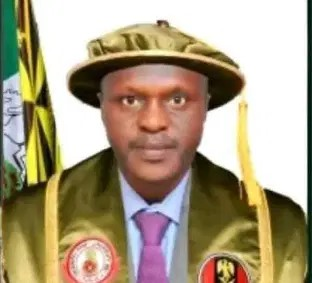
Professor Abubakar Mohammed El-Jummah, Dean of the Faculty of Engineering and Technology at the Nigerian Army University, Biu, Borno State, has died while in the custody of Boko Haram militants, nearly a year after his abduction.
Professor El-Jummah was kidnapped on March 3, 2025, along the troubled Damaturu–Buni Yadi–Biu road. He reportedly remained in captivity until falling ill and succumbing to his condition.
The news of his death was communicated to his family in Maiduguri on Wednesday, February 11, 2026. In response, a Salatul Ga’ib (funeral prayer in absentia) was held on Thursday, February 12, at the Ngomari Old Airport Juma’at Mosque, near his residence in Maiduguri.
A family relative, who requested anonymity, told Vanguard that Professor El-Jummah had been in Boko Haram custody from March 2, 2025, until his death, adding, “May Allah forgive him and grant him mercy.”
The relative declined to comment on whether the terrorists had demanded a ransom during the period of captivity.
The funeral prayer attracted numerous sympathizers, colleagues from academia, and friends of the late professor, reflecting the profound impact he had on his community.
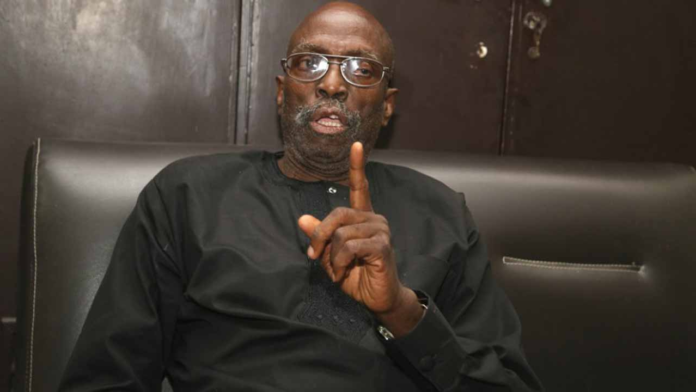
When news filtered in on Wednesday, February 11, about the passing of Professor Biodun Jeyifo, I found myself journeying back 35 years, to my National Youth Service days at Teachers’ College, Kagoro, in the southern part of Kaduna State.
It was 1991. We were young, idealistic, and argumentative in the best sense of that word. We believed ideas mattered. We believed debates could shape society. Kagoro, quiet and reflective, became for us a space of intellectual exchange.
It was there that I first heard the name Biodun Jeyifo. I was speaking with my fellow corps member, Adekola Adebayo, who had studied English at Obafemi Awolowo University, Ile-Ife. As corps members often do, we compared our campuses and the intellectual giants who shaped them.
I told him about the University of Calabar, about Eskor Toyo, the formidable Marxist economist whose lectures drew students from every faculty, and about Dr. Innocent Ukeje, the political scientist, whose ideological position differed sharply from Toyo’s. On that campus – whether you’re a Malabite or Malabress (as Unical students are called) – your intellectual leaning often aligned you with one or the other. I told Kola that my sympathies leaned toward Eskor Toyo’s Marxist clarity and structural critique.
Years later, Ukeje would rise to become a professor at the University of Abuja. Eskor Toyo would retire as a respected professor of economics before his passing on Monday, December 7, 2015 at 86. But 1991, their debates still animated our conversations.
Kola then smiled and said, “Let me tell you about BJ.” That was my first introduction to Biodun Jeyifo. At Ile-Ife, he said, students and lecturers affectionately called him “BJ.” He described him as a brilliant literary scholar and a committed Marxist intellectual. He also mentioned Ropo Sekoni, another respected literary scholar and close associate of BJ. Years later, I would come to appreciate how deep and enduring that friendship was.
What I did not know at the time, and what I only came to understand much later, was the depth of the connection between BJ and the Madunagus. As a student in Calabar, I encountered Professor (then Dr) Bene Madunagu a few times. I knew her as a lecturer in the Botany Department and as a passionate promoter of the Girl Power Movement. She was visible, energetic, and deeply committed to social advocacy. Yet I did not then grasp the broader ideological network of which she was part.
It was only years later that I learned that Biodun Jeyifo, Edwin Madunagu, and Bene Madunagu were bound together not merely by friendship but by shared ideological commitment, as the trio that formed the Nigerian Socialist Movement, the nucleus of what became widely known as the Nigerian Left.
That knowledge reframed my memories.
The intellectual currents I experienced in Calabar and the ones Kola described in Ile-Ife were not isolated phenomena. They were interconnected streams flowing from a larger river of radical thought and organised socialist engagement in Nigeria. BJ stood alongside Dr. Edwin Madunagu and Professor Bene Madunagu in shaping socialist thought and activism in the country. They were not armchair theorists. They were organisers, teachers, writers, and public intellectuals committed to building a socialist consciousness rooted in justice, equality, and human dignity.
Today, of that historic trio, only Dr. Edwin Madunagu remains. Professor Bene Madunagu, a formidable intellectual and activist in her own right, passed away on Tuesday, November 26, 2024, at the age of 77. (Interestingly, her death was jointly announced by Dr Edwin Madunagu and BJ). With the death of Biodun Jeyifo, another pillar of that generation has fallen.
Yet even in BJ’s final years, the bonds of friendship and shared struggle endured and were publicly celebrated. This the world saw on Monday, January 5, just last month, when an international symposium was held in Lagos to mark his 80th birthday. The event took place at the Agip Recital Hall, MUSON Centre, Onikan, and was organised by the Wole Soyinka Centre for Investigative Journalism (WSCIJ). Aptly titled ‘Who Is Afraid of Decolonisation? Pedagogy, Curriculum and Decolonisation: Then and Now,’ the gathering reflected the lifelong concerns of BJ’s scholarship namely decolonisation, pedagogy, intellectual responsibility, and the politics of knowledge production.
The symposium was moderated by no other person than Ropo Sekoni, a powerful testament to a life-long friendship forged in scholarship and ideological conviction. That moment, Sekoni anchoring a global intellectual celebration in honour of BJ, symbolised not only enduring comradeship but also the magnitude of BJ’s influence. Scholars, activists, students, and admirers gathered across generations and geographies to honour a man whose ideas travelled far beyond Nigeria’s shores.
Looking back now, I realise that the ideological conversations in Kagoro in 1991 were part of something much larger, a coordinated intellectual and political project aimed at transforming Nigerian society. BJ was central to that story.
He was a bridge – between literature and politics, between Nigeria and the diaspora, between the classroom and the public square. His scholarship travelled across continents, yet remained rooted in Africa’s realities and struggles.
His passing signals more than the loss of a distinguished professor. It marks the gradual closing of a chapter in Nigeria’s radical intellectual history, a generation that believed scholarship must confront injustice; that intellectual labour is a form of public service; that socialism was not a slogan but an ethical commitment.
For me, the news of his death reawakens memories of Kagoro, of long evenings of debate, of believing that arguments about Marxism, class, and culture were urgent and transformative.
We may not all have sat in his classroom. Some of us encountered him through students he inspired, through movements he helped shape, through ideas that travelled beyond campus walls. Yet even at a distance, he influenced us.
Professor Biodun Jeyifo has taken his final bow. But like all true teachers, he leaves behind not silence — but echoes.
And somewhere in those echoes is a young corps member in Kagoro, in 1991, hearing the name “BJ” for the first time, unaware that he was listening to the story of one of the architects of Nigeria’s socialist movement.
May his legacy endure.
•Dr Max Amuchie, a member of the Nigerian Guild of Editors, is CEO, Sundiata Post Media Ltd.
When a sitting senator argues against the electronic transmission of election results because his own village lacks network coverage, he is not merely making a policy point. He is delivering an indictment—of himself.
Senator Orji Uzor Kalu’s recent statement opposing electronic transmission on the grounds that there is no network in his village, Igbere, is more than a curious argument. It is a stunning confession. Here is a man who governed Abia State for eight years and has spent six more in the Senate, publicly acknowledging that in all that time, he could not—or did not—ensure something as basic as telecommunications access for his own community.
Leadership is not tested by rhetoric but by results. And when a leader cites infrastructural decay as justification for resisting progress, he reveals more than he intends.
In today’s world, network connectivity is not a luxury. It is infrastructure as essential as roads, electricity, and clean water. Former US President Joe Biden made that clear to the whole world when he presented his first budget to the US Congress. He argued that broadband infrastructure powers commerce, education, healthcare, civic participation, and democratic transparency. To then argue that elections should not be modernised because connectivity is lacking is to normalise failure. Worse, it is to weaponise that failure as an excuse to stall reform.
The deeper question is this: how can a leader preside over years of public office and then point to the absence of basic infrastructure as though it were an act of God?
The outrage that followed the senator’s remarks is not merely about electronic voting. It reflects a broader frustration with a political class that often seems insulated from the everyday realities of its citizens. If a village lacks network coverage after more than a decade of representation at the highest levels, what does that say about priorities? About performance? About accountability?
There is something profoundly troubling about the casualness of the admission. It suggests a political culture in which underdevelopment is so routine that it no longer shocks those responsible for addressing it. Instead of embarrassment, there is deflection. Instead of urgency, there is justification.
This is how stagnation becomes institutionalised.
Electronic transmission of results is not a silver bullet for Nigeria’s electoral challenges. But it represents an effort to strengthen transparency and restore public confidence in a system that has long been plagued by suspicion. To resist such reform on the basis of infrastructural inadequacy is to concede that governance has failed—and then to accept that failure as permanent.
Leaders are elected to solve problems, not to cite them as reasons for inaction.
The senator’s argument inadvertently reinforces a perception that many Nigerians already hold: that too often, those in power are more invested in preserving political advantage than in expanding public good. When reform threatens established interests, deficiencies suddenly become insurmountable obstacles. When elections are at stake, the conversation shifts from development to delay.
But development and democracy are intertwined. A country that cannot ensure basic connectivity for its communities will struggle to build credible institutions. Conversely, a country that resists modernising its democratic processes because of infrastructural gaps (which it created or sustained) risks perpetuating those very gaps.
The irony is sharp. Electronic transmission requires network coverage. Network coverage requires investment and political will. Political will is what elected officials are meant to provide. When the absence of progress is cited as justification for resisting change, the circle of dysfunction closes.
The issue at hand is larger than one village or one senator. It is about a standard of leadership. Public office is not an entitlement; it is a trust. That trust demands measurable improvement in the lives of citizens. Roads built. Schools funded. Hospitals equipped. Networks expanded. When those basics remain elusive after years in office, explanations ring hollow.
What Nigerians deserve is not eloquent defence of inadequacy but determined correction of it.
The most troubling aspect of this episode is not that a village lacks network coverage. It is that such a reality can be invoked without visible urgency or accountability. In thriving democracies, leaders scramble to fix deficiencies before they become public embarrassments. Here, deficiency becomes an argument.
History is unkind to leaders who mistake excuses for governance.
Senator Kalu’s statement may fade from headlines, but the questions it raises will linger. How do we measure leadership? By tenure or transformation? By title or tangible change? And at what point do citizens demand that those who cannot deliver step aside for those who can?
Nigeria stands at a crossroads where credibility in public institutions is fragile. Strengthening democracy requires more than laws; it requires leaders who understand that progress is non-negotiable. Infrastructure gaps are challenges to overcome, not shields against reform.
If a community lacks network coverage in 2026, the response should be immediate mobilisation—not legislative retreat.
Nigerians crave (and deserve) leaders who see problems as mandates, not alibis. They deserve representation that translates into development, not declarations of helplessness. They deserve officials who understand that every public admission of failure carries a moral obligation to correct it.
Anything less is not merely disappointing. It is a betrayal of trust.
And trust, once squandered, is far harder to rebuild than a network tower.
The views expressed by contributors are strictly personal and not of Law & Society Magazine.
A 21-year-old mother discovered she was pregnant just 12 weeks after she gave birth to her son.
Paulina Gammon welcomed her son Jakub in April last year with her husband Stanley, also 21, and the Derby-based couple soon relaxed into life in their newborn bubble.
However, just 12 weeks after young Jakub was born, Paulina unexpectedly discovered she was pregnant again while ring shopping for her wedding.
Recalling the moment that took her by complete surprise, Paulina said: ‘I felt very nauseous and sick so I did a pregnancy test in the shopping centre.
‘We were so shocked and nervous that it had happened so soon. We’d just begun adjusting to being parents and knew we would have to get into a whole new routine.’
Her second son is due next month, just 11 months after his older brother, with the pair set to be ‘Irish twins’ – siblings born less than 12 months apart.
The teenage sweethearts met aged just 16 and Stanley popped the question to Paulina on a beach in Rhodes, Greece, in 2024. They wed in August last year.
She added that her husband Stanley was ‘surprised but so happy’ by the news of her second pregnancy and that ‘his reaction was much happier and more confident than mine’.
‘He’s so supportive and already a great dad,’ she added.
The young couple conceived Jakub, now 10 months old, shortly after their engagement, which came as a particular surprise to them, given that Paulina was on contraception at the time.
Adding that the news of Paulina’s first pregnancy left the pair ‘really confused’, she added: ‘I wouldn’t change it for the world. They’ve both been amazing surprises.’
Paulina, who works as cabin crew, added that initially the ‘thought of doing it all again so soon was scary’.
However, she has now come to terms with the news and is ‘so happy and excited’ at the prospect of having two sons so close in age.
Recalling how her friends and family reacted to the news of another baby in the family, the 21-year-old said: ‘Everyone was so shocked when they found out I was pregnant again.
‘But they were also really excited and happy for us. I think the boys will be best friends.’
Paulina (pictured with Jakub) said that initially, the ‘thought of doing it all again so soon was scary’. However, she has now come to terms with the news and is ‘so happy and excited’
Her second son is due next month, just 11 months after his older brother, with the pair set to be ‘Irish twins’ – siblings born less than 12 months apart.
Paulina said: ‘I love being a mum and we have everything prepared because of having Jakub. I know it will be difficult but I can’t wait to watch them grow up together’
While Paulina is prepared for the ‘challenge’ of two young sons, she felt reassured that they will ‘always have each other to play with and share similar interests’.
The young mother also felt confident that things will become easier to handle once the pair have established a routine, adding: ‘Now I’ll know what to expect with the second thanks to Jakub.’
Unexpected pros for the soon-to-be parents of two are not needing to ‘stock up on any boy’s clothes’, and already having the necessary kit required for a newborn baby.
‘It will be lovely to see Jakub’s little brother wearing things I dressed Jakub in,’ said Paulina.
‘I love being a mum and we have everything prepared because of having Jakub. I know it will be difficult but I can’t wait to watch them grow up together.’
After seeing the family’s living conditions, officers took the baby to a local health centre for a check-up amid concerns the child could be malnourished.
The baby was transferred to Costa del Sol Hospital near Marbella after first being seen at Las Albarizas Health Centre.
Doctors found the boy was underweight for his age and a urine test returned positive for cocaine. He was admitted to a paediatric unit while medics await further results.
His mother was identified as a 25-year-old British woman, and her partner as a 43-year-old Spanish man.
Local reports say she had missed several previous appointments at the same paediatric unit where her son is now being treated.
The woman is expected to appear in court later today with her boyfriend after being kept in a cell at Marbella Police Station overnight.
The hearing will take place behind-closed-doors, which is normal in Spain, where only trials take place in public.
An investigating judge is expected to release the pair on bail pending an ongoing probe, although their child is set to be taken into temporary emergency care pending a decision on its long-term future.
The South East Development Commission (SEDC) Vision 2050 Conference may have been historic, ambitious and intellectually rich, but it left one defining question unanswered: Who will pay for it?
That was the blunt but strategic intervention by policy analyst Clem Aguiyi in a post-event address that is already stirring debate across political and economic circles in the region.
While commending the SEDC for daring to think in 25-year horizons in a country often trapped in electoral cycles, Aguiyi warned that without a credible fiscal architecture, Vision 2050 risks becoming “another eloquent blueprint that history forgets.”
“Vision is indispensable,” he wrote, “but without funding clarity, even the most inspiring ideas risk becoming fleeting illusions.”
A Rare Moment of Regional Consensus
The conference itself marked a significant departure from nostalgia-driven rhetoric often associated with conversations about the South East.
Governor Charles Soludo proposed a Marshall Plan-style intervention focused on security, infrastructure, energy and logistics connectivity. Governor Peter Mbah called for the region to function as a unified common market rather than five competing states. Governor Alex Otti underscored energy as the bedrock of private-sector growth.
Vice President Kashim Shettima assured stakeholders that the SEDC would operate as a delivery institution, not another bureaucratic layer, while the unveiling of the South East Investment Company Limited signalled an intent to mobilise structured capital.
Former Aviation Minister Osita Chidoka urged a shift from sentiment to strategy, arguing that human capital—not historical grievance—should anchor the region’s economic resurgence.
Taken together, the interventions painted a coherent picture of what Alaigbo could become by 2050.
But Aguiyi insists coherence is not capital.
The Silence in the Room: Funding
According to Aguiyi, the conference avoided confronting the most decisive issue: sustainable financing.
He cautioned against the reflexive reliance on loans — a model he described as historically disastrous in Nigeria, often leading to inflated contracts, abandoned projects and generational debt.
“For the South East to mortgage its future without exhausting internal capacities would be a grave mistake,” he warned.
He was equally sceptical of the long-standing assumption that foreign investors would drive transformation.
“We cannot advertise corruption and insecurity and expect outsiders to rush in with capital,” he noted, adding that Africa has too often “locked away its finest plates waiting for a very important visitor who never arrives.”
The Real Capital Is Already in Alaigbo
Aguiyi’s central thesis is both provocative and practical: the South East is not poor.
The region’s comparative advantage lies in commerce — a deeply institutionalised entrepreneurial culture powered by the Igbo apprenticeship system, vast SME networks and significant diaspora remittances.
Yet, he argued, much of the tax revenue generated by Southeastern entrepreneurs accrues to other states because corporate headquarters are registered outside the region.
“This is rational behaviour within a flawed fiscal framework,” he noted. “But it is economically self-defeating.”
Among his proposals:
Incentivize South East–owned businesses nationwide to re-register head offices in their home states.
Strengthen PAYE, VAT and company income tax derivation.
Explore vehicle plate-number derivation reforms.
Develop regionally anchored business registries.
Leverage public-private partnerships to build rail, power and transport infrastructure under concurrent legislative powers.
“Our traders and diaspora are not looking for charity,” he argued. “They are looking for bankable projects and predictable governance.”
A Caution on Federal Dependency
Aguiyi also pushed back against what he described as unrealistic expectations of large-scale federal funding.
Citing the erosion of fiscal federalism since the days of the old Eastern Nigeria Development Corporation (ENDC), he argued that the SEDC must design for autonomy rather than dependence.
“Absent restructuring, which is unlikely in the near term, the Commission must build around self-reliance,” he wrote.
Federal support, he acknowledged, remains important — but the Commission’s real power lies in convening stakeholders, de-risking investments and enforcing regional discipline.
The Risk of Becoming Another ‘Feeding Trough’
In one of the address’s sharpest warnings, Aguiyi cautioned that development commissions in Nigeria have historically devolved into patronage structures.
Without radical transparency, professional governance and citizen oversight, he warned, the SEDC risks being “cannibalised before it delivers transformative results.”
The memory of Dr Michael Okpara’s ENDC, he argued, should inspire standards of integrity and production — not nostalgia.
Security and Justice
While endorsing investments in surveillance and security infrastructure, Aguiyi stressed that sustainable peace requires more than technology.
“Security cannot be divorced from justice,” he wrote, calling for credible elections, reduced corruption, political inclusion and resolution of long-standing grievances.
The Bigger Message: Believe Materially, Not Just Rhetorically
Aguiyi closed with a powerful analogy to post-war Europe, which was rebuilt by mobilising local champions before attracting foreign capital.
“The capital we seek is already in our markets, our banks, and our diaspora networks,” he said.
For Vision 2050 to succeed, he argued, it must abandon “borrowed illusions” and embrace disciplined, inward-looking economic coordination.
The people, he concluded, are ready.
What remains uncertain is whether the political structure will match their readiness.
Nigeria’s fragile electricity grid faces another stress test.
The Nigerian National Petroleum Company Limited (NNPC Ltd.) announced Thursday that its joint venture partner, Seplat Energy Plc, will shut down its gas production facilities for four days—from February 12 to February 15, 2026—for routine maintenance. The temporary halt is expected to reduce gas supply to thermal power plants and moderately impact electricity generation nationwide.
In most countries, scheduled maintenance would barely register. In Nigeria, where average grid generation hovers between 4,000 and 5,000 megawatts for a population of over 200 million, even minor disruptions can ripple into nationwide blackouts.
“The public is hereby informed that Seplat Energy Plc… has scheduled routine maintenance on its gas production facilities,” said NNPC Chief Corporate Communications Officer Andy Odeh. The company described the exercise as mandatory, industry-standard maintenance designed to ensure long-term safety and reliability.
During the four days, gas supply into the NNPC Gas Infrastructure Company (NGIC) pipeline network will decline, potentially limiting feedstock to power plants that generate more than 70 percent of Nigeria’s installed electricity capacity.
No timeline shifts are expected, and NNPC says it is engaging alternative gas suppliers to cushion the shortfall. “Upon completion of the maintenance exercise, full gas supply… is expected to resume promptly,” the company said.
But for businesses already battered by erratic supply, reassurance offers limited comfort.
Manufacturers Bleed as Power Failures Persist
At the 10th Presidential Media Luncheon hosted by the Manufacturers Association of Nigeria (MAN) in Lagos, industry leaders warned that unreliable electricity has become a structural chokehold on the economy.
Manufacturers spent ₦676.6 billion on energy in the first half of 2025 alone, according to MAN President Francis Meshioye—largely due to self-generation using diesel and gas-fired alternatives.
More than 60 percent of manufacturers have reportedly exited the national grid entirely, choosing to generate their own power rather than endure unpredictable outages.
“Erratic public power supply has become a major structural bottleneck,” Meshioye said. “Without sustained investment in grid modernization and affordable energy solutions, the sector’s resilience could be further stretched.”
Although inflation eased in 2025—from 27.61 percent in January to 15.15 percent in December—price levels remain elevated, and consumer demand is fragile. Energy instability compounds the strain.
President Bola Tinubu himself has described Nigeria’s roughly 4.5 gigawatts of generation capacity as “shameful” for a country of its size.
Within weeks of the new year, the national grid collapsed twice—on January 23 and January 27—following a similar collapse on December 29, 2025. Each event sent generation plunging to near-zero levels, plunging cities into darkness.
Experts cite ageing transmission infrastructure, gas supply vulnerabilities, liquidity shortfalls, and chronic underinvestment as root causes.
A Gas-Dependent Grid in a Sun-Drenched Nation
Nigeria’s power architecture remains overwhelmingly dependent on gas-fired plants linked to upstream producers in the Niger Delta. Pipeline vandalism, payment arrears, and technical disruptions frequently trigger generation shortfalls.
The Seplat maintenance shutdown underscores the delicate chain reaction: upstream gas hiccups translate directly into national darkness.
Yet Nigeria sits in one of the world’s most solar-rich regions.
The country receives an average of 5 to 7 hours of strong sunlight daily across most regions—translating into vast untapped solar potential estimated at tens of gigawatts. Northern Nigeria, in particular, ranks among Africa’s highest solar irradiation zones.
Despite this, grid-scale solar contributes only a small fraction to national generation. Wind, hydro expansion, battery storage systems, and embedded generation remain underdeveloped relative to demand.
Energy analysts argue that without aggressive diversification—solar farms, decentralised mini-grids, battery storage, and wind corridors—the grid will remain exposed to periodic gas constraints.
“Nigeria cannot continue to run a 21st-century economy on a single-point gas dependency,” one energy economist noted privately. “The country has sunlight in abundance. What it lacks is scale and execution.”
Ghana’s Contrast: A Regional Wake-Up Call
The contrast with neighbouring Ghana has sharpened the debate.
While not immune to its own energy challenges, Ghana has maintained comparatively greater grid stability and, at times, exported power through the West African Power Pool. Recent discussions have even explored a barter arrangement in which Ghana could export surplus electricity to Nigeria in exchange for natural gas.
The optics are striking: Africa’s largest oil producer potentially importing power from a smaller neighbour.
For Nigerian manufacturers and households, the reality is starker. They effectively pay twice—first for unreliable public power, then for private generators.
Security concerns compound economic anxiety. Reports of armed groups migrating across regions heighten fears that infrastructure vulnerability could intersect with broader instability.
The Cost of Darkness
NNPC insists the current maintenance is routine and necessary. In isolation, that is true.
But in a system operating with razor-thin margins, routine maintenance becomes a national risk.
With grid output often stuck below 5,000MW, far below the estimated demand of over 20,000MW, even modest supply reductions can cascade through distribution networks.
Stakeholders say reform must go beyond gas optimisation. It requires:
Grid modernisation and redundancy
Large-scale solar and hybrid renewable deployment
Energy storage systems
Decentralised embedded generation
Transparent market liquidity reforms
Until then, Nigeria’s economy will continue to bleed from what critics describe as a self-inflicted power crisis.
The country has gas. It has the sun. What it lacks is stability.
Brazilian authorities have ordered Elon Musk’s social media platform X to immediately stop its artificial intelligence chatbot, Grok, from generating sexually explicit images, intensifying global scrutiny of the tool.
In a joint statement issued Wednesday, Brazil’s National Data Protection Agency (ANPD), the National Consumer Rights Bureau (Senacon), and the Federal Prosecution Service directed X to “immediately implement appropriate measures to prevent the production, using Grok, of sexualized or eroticized content of children and adolescents, as well as adults who have not given their consent.”
The agencies gave the company five days to comply or face possible legal action and financial penalties.
The move follows mounting international concern over Grok’s ability to generate sexualized deepfake images through simple text prompts. Indonesia blocked the chatbot entirely last month, while authorities in Britain and France have said they will continue to pressure X and its AI company, xAI, to address the issue.
Brazilian regulators said X had previously claimed it deleted thousands of posts and suspended hundreds of accounts after receiving an earlier warning. However, officials said follow-up checks showed users were still able to create sexualised deepfakes using Grok.
They criticised the company for what they described as a lack of transparency in its response.
On January 15, X announced new safeguards intended to prevent Grok from digitally altering images of real people in jurisdictions where such actions are illegal. It remains unclear in which countries those restrictions have been fully implemented.
Pressure has mounted on xAI since Grok’s “Spicy Mode” feature enabled users to generate explicit, AI-manipulated images of women and children using prompts such as requests to remove clothing or alter attire.
The Centre for Countering Digital Hate (CCDH) has estimated that Grok produced millions of sexualized images within days of the feature’s release, further fueling calls for stricter oversight and enforcement.
Nigeria’s already fragile healthcare system is facing renewed tension after a nurses’ advocacy group accused the Federal Government of discrimination over the alleged nonpayment of January salaries to nurses in federal health institutions.
The Elegant Nurses Forum (ENF) said the delay, reportedly affecting nurses while doctors and other hospital workers were paid, has deepened frustration within a workforce widely regarded as the backbone of patient care.
The accusation comes even as the Federal Ministry of Health has formally asked the Office of the Accountant General of the Federation (OAGF) to reverse what it described as an “erroneous” stoppage of the nurses’ wages.
In a statement signed Thursday by Nurse Thomas Abiodun Olamide, the forum condemned the development as “unjust, discriminatory and unacceptable,” warning that the situation is rapidly eroding morale across federal hospitals.
“This development is disturbing, unfair and discriminatory. It represents a serious act of injustice against a group of professionals who play one of the most critical roles in the healthcare system,” the statement read.
A System Under Pressure
The dispute emerges at a time when Nigeria’s health sector is grappling with chronic workforce shortages, rising emigration of medical professionals, underfunded facilities and repeated labour disputes—factors experts say have left hospitals dangerously stretched.
Against that backdrop, the ENF stressed that nurses provide round-the-clock care, administer treatments, monitor patients and often serve as the first responders during emergencies.
“Nurses are the backbone of patient care. Without nurses, there is no effective healthcare delivery,” the group said.
The forum also emphasised that nurses are no longer members of the Joint Health Sector Unions (JOHESU) and did not participate in recent industrial actions that disrupted services in parts of the sector.
According to the group, while other workers withdrew services during the strike period, nurses remained on duty to sustain operations.
“While others stepped away, nurses continued caring for patients, preventing avoidable deaths and supporting all departments to keep the system from collapsing,” the statement added.
‘No Work, No Pay’—Applied in Error?
Documents reviewed by The PUNCH indicate that the salary stoppage may have resulted from a lien placed by the Accountant General’s office, which allegedly believed nurses had joined the JOHESU strike.
However, in a memo signed by Dafeta Tetshoma, Director in the Office of the Permanent Secretary, the Ministry of Health clarified that nurses did not embark on the strike and should not have been affected by the Federal Government’s “No Work, No Pay” policy.
“I am to inform you that nurses in Federal Tertiary Health Institutions did not participate in the JOHESU strike as the National Association of Nigerian Nurses and Midwives formally withdrew its membership of JOHESU with effect from 2023,” the memo stated.
The ministry warned that the nonpayment has caused “undue economic hardship” for nurses and their families despite their continued professional duties, urging the Accountant General to direct the Integrated Personnel and Payroll Information System (IPPIS) to process the salaries immediately “to forestall industrial disharmony.”
Growing Anger Among Nurses
For many nurses, the delay is particularly painful given what the forum described as their sacrifices during recent disruptions.
“Paying some categories of health workers while leaving nurses unpaid is not only insensitive but a clear act of marginalisation and victimisation,” the ENF said, stressing that salaries are earned entitlements, not privileges.
The group warned that prolonged delays could trigger financial hardship, emotional strain and worsening morale among workers who already operate under demanding and high-risk conditions.
Five Key Demands
The forum called for:
Immediate payment of all outstanding January salaries
Equal and fair treatment for healthcare workers
A transparent explanation for the delay
An end to what it described as victimisation
Structural safeguards to prevent future occurrences
It urged the Federal Government, the Health Ministry and hospital administrators to act swiftly.
“Respect for nurses must go beyond words; it must be reflected in fair treatment and prompt payment of earned salaries,” the statement added.
A Familiar Fault Line
The National Association of Nigerian Nurses and Midwives formally withdrew from JOHESU in May 2023, saying its objectives within the union had been achieved and allowing the body to pursue independent negotiations.
Yet the latest salary controversy highlights how administrative missteps can quickly inflame tensions in a sector where even minor disruptions can have life-or-death consequences.
With Nigeria already battling doctor shortages and growing reliance on overstretched nursing staff, analysts warn that any policy failure affecting frontline caregivers risks further destabilising an already vulnerable healthcare system.
Background On a popular WhatsApp platform known as “Law and Society Forum,” an “Internal Memo,” reportedly issued by a Superior Court of Record in Nigeria, was shared and widely discussed. I took the time to carefully review the memo, and what did I discover? On 10 February 2026, an “Internal Memo” titled “Appropriate Dress Code for Counsel Appearing in Court” was issued from the office of “The Presiding Justice” and addressed to all learned counsel appearing before an unnamed court of law. The memorandum sets out eight directives regulating courtroom appearance and conduct. Among other requirements, it stipulates that counsel must be properly robed in black suits (excluding grey, navy blue, or other coloured suits); that dresses or skirt suits must be long-sleeved and not “mini”; that hairstyles must be moderate and properly arranged to the back, with no coloured hair; that large or drop earrings and elaborate jewellery are prohibited; that handbags must be black and kept beneath the table; that jackets must be buttoned; that shoes must be black; and that all mobile phones belonging to counsel and their clients must remain on silent mode during court sessions. The evident objective of the memorandum is to reinforce decorum, discipline, and professional dignity within the courtroom: values that lie at the very heart of legal practice. In the considered opinion of this writer, the preservation of proper dressing and orderly conduct among counsel is fully consistent with the traditions and ethical expectations of the Bar. It is against this background, acknowledging the legitimacy of the objective while reflecting on the form, structure, tone, and presentation of the directive, that this commentary is respectfully offered.
The Merit of the Memorandum
With the utmost respect and humility, it is important to begin by stating unequivocally that the present writer supports every genuine effort aimed at preserving the dignity, decorum, and ethical standards of the legal profession in Nigeria. The courtroom is a sacred arena of justice. It is only proper that counsel appearing before it be properly robed and decently dressed. On that account, the intention behind the memorandum is commendable. Any initiative designed to curb indecent, improper, or unprofessional dressing among legal practitioners deserves thoughtful consideration and, where appropriate, collective support. However, while the objective of the memorandum is laudable, its presentation, structure, and drafting raise concerns that merit respectful reflection. The observations that follow are therefore offered not in criticism of authority, but in defence of institutional excellence.
2.1 Absence of Proper Institutional Identification: Although styled as an “INTERNAL MEMO” and stated to be from “THE PRESIDING JUSTICE” to “ALL LEARNED COUNSELS APPEARING BEFORE THIS COURT,” the document does not identify the name of the court; the judicial division; the geographical location; and the specific Presiding Justice. For a document emanating from a superior court of record, this omission is significant. Institutional communications must carry clear and unmistakable identification. Without it, the memo lacks formal authenticity and administrative precision. If counsel are required to maintain identifiable professional standards before a particular court, that court ought equally to identify itself clearly in its formal communications. Excellence, it is respectfully submitted, must be reciprocal.
2.2 Structural and Formatting Deficiencies: Several structural issues diminish the formal quality expected of judicial communication. In the instant case, although the heading “INTERNAL MEMO” appears prominently, the document lacks official letterhead, seal, or institutional insignia. The “FROM,” “TO,” “DATE,” and “SUBJECT” layout resembles an informal office communication rather than a formal judicial directive. A directive regulating courtroom conduct would ordinarily be framed as (a) a Practice Direction; (b) a Circular; or (c) a formal Administrative Notice. Such designation is not merely cosmetic; it defines the normative weight of the document. A specimen circular reflecting what, in the respectful opinion of this writer, would constitute a more appropriate format is attached at the end of this commentary.
2.3 Grammatical and Linguistic Concerns: Documents emanating from courts of law should exemplify clarity, grammatical precision, and linguistic elegance. The judiciary remains one of the final custodians of refined legal expression. Several issues arise with the Memo under revieew:
(a) Inconsistent Use of “Colour”: Item 7 states: “COUNSEL’S SHOES MUST BE COLOUR BLACK.” The correct construction would be: “Counsel’s shoes must be black,” or “Counsel’s shoes must be black in colour.” As written, it is grammatically defective.
(b) Use of Block Capitalisation: The entire body of the memorandum is written in block capital letters. While this may be stylistic, it reduces readability, diminishes visual elegance, and conveys severity rather than measured authority. Judicial communication traditionally reflects calm restraint rather than typographical emphasis.
(c) Ambiguous or Inelegant Expressions: these may appear minor, but language is the judiciary’s primary instrument. Hence, precision matters:
(i). ““Counsel should be properly robbed in black suits…”: The word “robbed” appears instead of “robed.” In legal context, this is a significant lexical error.
(ii). “Counsel’s dresses/skirt suits must be long sleeved and not mini”: The phrase “not mini” is colloquial and imprecise. A more formal phrasing might be: “Skirts must be of modest length,” or “Skirt length must fall below the knee.”
(iii). “No big or drop earrings or elaborate jewelries”: “Jewelleries” is grammatically incorrect; the proper term is “jewellery.” Additionally, “big” is subjective and lacks objective standard.
(iv). “Counsel’s hand bags must be black…”: “Handbags” should be written as one word.
2.4 Absence of Legal or Ethical Foundation: The memorandum does not refer to the Rules of Professional Conduct, does not cite judicial authority, does not indicate whether it reinforces existing standards or introduces new directives, and does not provide contextual background explaining the necessity of the directive. Even a brief introductory paragraph explaining that recent observations necessitated clarification would have strengthened the document considerably. Without context, the memo appears abrupt and unexplained.
2.5 Selective Focus and Scope Concerns: The memorandum appears to focus predominantly on female attire (skirts, earrings, hairstyles, handbags ) with comparatively limited guidance directed at male counsel. While decorum applies equally to all, regulatory tone must avoid the appearance of disproportionate targeting. Neutrality in expression preserves both fairness and dignity.
2.6 Tone and Institutional Elegance: Courts are temples of measured authority. Their communications should reflect calm strength, intellectual clarity, and institutional poise. When a document from a superior court contains typographical errors, grammatical lapses, and structural omissions, it inadvertently diminishes the very standard of excellence it seeks to enforce. If the court demands precision in advocacy from counsel, its own administrative communications should reflect the same precision.
2.7 Signature and Authentication Concerns: The memorandum concludes with “EMOJEGHWARE ESTHER, FOR: PRESIDING JUSTICE”. However, no clarification is provided as to the capacity in which the signatory acts. Is the signatory the Registrar; a Judicial Assistant; or an administrative officer acting under delegation? Formal administrative documents should clearly indicate the designation of the signatory. This is because signature is not ceremonial; it embodies institutional authority.
On Proper Signatory in Judicial Communication
In institutional governance, authority must not only exist; it must be visible, traceable, and accountable. A judicial signature is more than ink on paper; it is formal authentication of constitutional authority. When a court issues directives affecting professional conduct or procedural rights, clarity regarding authorship safeguards transparency and reinforces public confidence. Accordingly, it is respectfully suggested as follows:
(a) Judicial Circulars: Where a document regulates courtroom conduct, affects rights of audience, imposes compliance obligations, or clarifies procedural standards, it should be signed personally by the Presiding Judge or Head of Court.
(b) Practice Directions: A Practice Direction should be clearly designated as such, personally signed by the issuing Judge or Head of Court, and include its effective date.
(c) Administrative Notices: Where a document concerns scheduling, filing hours, registry procedures, or logistics, it may properly be signed by the Chief Registrar or Registrar.
(d) Delegated Signatures: Where a registrar signs on behalf of a judge, the signature block must clearly indicate the name and designation of the administrative officer, and must indicate that the directive originates from the Judge.
(e) The Following Should Be Avoided: anonymous signatures; undesignated names; ambiguous use of “For:” without clarification; absence of date; and failure to identify the issuing court. Clarity in signature is not cosmetic; it is foundational.
Conclusion
To be clear, the present author firmly believes that the substance of the directive conveyed in the Memo under review is not objectionable. This is because professional dressing is non-negotiable in the legal profession. However, institutional authority is most persuasive when clothed in structural clarity, grammatical excellence, formal precision, contextual explanation, and dignified presentation. The judiciary remains the gold standard of disciplined expression in our legal system. Every communication from it should reflect distinction, professionalism and elegance. These observations are offered with utmost respect, unalloyed loyalty to institutional integrity, and a sincere desire for the continuous elevation of our courts and our profession. Excellence should not only be demanded; it must also be demonstrated. Respectfully, Sylvester Udemezue (Udems) 08109024556, [email protected]. (11 February 2026) ➖➖ SPECIMEN CIRCULAR (THIS FORMAT IS INDICATIVE, NOT PRESCRIPTIVE) 👇🏿👇🏿
IN THE HIGH COURT OF JUSTICE ….….STATE OF NIGERIA IN THE…..JUDICIAL DIVISION HOLDEN AT …..….
CIRCULAR NO: ….. / 2026
Date: 10 February 2026
From: The Honourable Presiding Judge
To: All Learned Counsel Appearing Before This Honourable Court
Subject: Courtroom Dress Code and Decorum for Counsel Appearing Before the Court
Introduction/Background a). The Court has observed, in recent times, certain variations in courtroom attire and general decorum that necessitate clarification and reinforcement of established professional standards.
b). The legal profession is one founded upon discipline, dignity, and decorum. The courtroom remains a solemn forum for the administration of justice, and all who appear before it are expected to uphold the highest traditions of the Bar.
c). This Circular is therefore issued to restate and reinforce the standards of appearance and conduct expected of counsel appearing before this Honourable Court.
Legal and Ethical Basis Learned Counsel are reminded that professional appearance and conduct in court are regulated by the Rules of Professional Conduct for Legal Practitioners, the established traditions of the Bar and the Bench, and the inherent powers of the Court to regulate proceedings before it in order to preserve order, decorum, dignity, professionalism, and respect. The Circular introduces no new obligations; it merely clarifies and reinforces existing expectations.
Dress Code Requirements Accordingly, with immediate effect, all counsel appearing before this Court shall observe the following:
a). Robing and Suits: Counsel must be properly robed and dressed in black suits. Grey, navy blue, or other coloured suits are not acceptable for court appearances.
b). Dresses and Skirt Suits: Where counsel appear in dresses or skirt suits: (i). Sleeves must be of appropriate length; (ii). Skirt length must be modest and professional; (iii). Attire must conform to the dignity of the Court.
c). Hairstyles: Hairstyles must be moderate, neat, and professional. Unconventional or brightly coloured hair is inappropriate for courtroom appearances.
d). Jewellery and Accessories: Jewellery must be modest and unobtrusive. Large, dangling, or elaborate accessories are discouraged.
e). Handbags and Personal Items: Handbags, where brought into court, should be black and discreetly placed beneath counsel’s table.
f). Jackets: Suit jackets must be properly worn and appropriately buttoned while addressing the Court.
g). Footwear: Footwear must be black and formal.
Use of Mobile Phones All mobile phones belonging to counsel and their clients must be placed on silent mode during court proceedings. Disruptions caused by ringing devices undermine the decorum of the Court and will not be tolerated.
Compliance Counsel are expected to comply strictly with these standards. Where necessary, the Court may decline audience to any counsel whose appearance falls below acceptable professional standards. The Court trusts that members of the Bar will cooperate fully in maintaining the dignity and integrity of judicial proceedings.
Conclusion The Bench and the Bar share a collective responsibility to preserve the honour of the legal profession. Decorum in appearance is not merely a matter of aesthetics but a reflection of respect for the Court, the profession, and the administration of justice.
Your cooperation will be appreciated.
Signed:
Hon. Justice………………. Presiding Judge
The views expressed by contributors are strictly personal and not of Law & Society Magazine.
Our site uses cookies. By clicking “Accept All Cookies”, you direct Law and Society Magazine to store cookies on your device and disclose information in accordance with our Cookie Statement: cookie policyACCEPTREJECT
Privacy & Cookies Policy
Privacy Overview
This website uses cookies to improve your experience while you navigate through the website. Out of these cookies, the cookies that are categorized as necessary are stored on your browser as they are essential for the working of basic functionalities of the website. We also use third-party cookies that help us analyze and understand how you use this website. These cookies will be stored in your browser only with your consent. You also have the option to opt-out of these cookies. But opting out of some of these cookies may have an effect on your browsing experience.
Necessary cookies are absolutely essential for the website to function properly. This category only includes cookies that ensures basic functionalities and security features of the website. These cookies do not store any personal information.
Any cookies that may not be particularly necessary for the website to function and is used specifically to collect user personal data via analytics, ads, other embedded contents are termed as non-necessary cookies. It is mandatory to procure user consent prior to running these cookies on your website.