Home Blog Page 115

Protest Under Siege: NBA-SPIDEL, Global Rights, others confront detention and torture

NBA-SPIDEL in Partnership with IRCT, OMCT, Global Rights & House of Justice

Online Workshop on Protest, Detention, Torture and Shrinking Civic Spaces

Date: Tuesday, 20th January 2026
Time: 4:00 pm – 6:00 pm (WAT)
Platform: Online (Zoom / MS Teams)

Learning Outcomes

At the conclusion of this Continuing Legal Education (CLE) programme, participants will be able to:
1. Identify and explain the constitutional, statutory, regional, and international legal frameworks governing the right to peaceful protest, freedom of assembly, and expression in Nigeria.
2. Analyse the legal implications of shrinking civic spaces and assess their impact on democratic governance, access to justice, and the rule of law.
3. Apply due process standards relating to arrest and detention, particularly in protest-related contexts, and recognise common violations requiring legal intervention.
4. Recognise and document acts of torture and ill-treatment in accordance with domestic law and international documentation standards.
5. Evaluate available accountability mechanisms and remedies for unlawful detention and torture, including strategic litigation options and engagement with regional and international human rights bodies.
6. Demonstrate enhanced professional competence in providing legal representation, advocacy, and victim-centred responses in cases involving protest, detention, torture, and civic space restrictions.

Programme Schedule

4:00 pm – 4:10 pm

Opening and Welcome Remarks
• Welcome address by Ntufam Mba Ukweni SAN, Chairman – Public Interest Litigation Committee, NBA-SPIDEL
• Special Remarks &
Introduction of partner organisations
Associate Professor Uju Agomoh, NBA-SPIDEL

4:10 pm – 4:30 pm

Session 1: Right to Protest and Shrinking Civic Spaces
• Legal framework for peaceful protest under the Nigerian Constitution
• International and regional human rights standards
• Trends in restriction of civic spaces
Speaker:
Abiodun Bayeiwu, Executive Director – Global Rights, Abuja

4:30 pm – 4:50 pm

Session 2: Arrest, Detention and Due Process Guarantees
• Lawful arrest and detention standards
• Protest-related arrests and detention challenges
• Role of legal practitioners in safeguarding detainees’ rights
Speaker:
Gloria Mabeiam Ballason – Founder, House of Justice Kaduna

4:50 pm – 5:15 pm

Session 3: Torture, Ill-Treatment and Documentation Standards
• Prohibition of torture under international law
• Identification and documentation of torture
• Rehabilitation and victim support mechanisms
Speaker:
Maeva Rene-Barry
UN Program Manager, International Rehabilitation Council for Torture Victims (IRCT),
Copenhagen/Belgium/Geneva

5:15 pm – 5:35 pm

Session 4: Accountability, Strategic Litigation and International Mechanisms
• Domestic remedies and accountability pathways
• Strategic litigation in detention and torture cases
• Engagement with regional and international human rights mechanisms
Speaker:
Dr Isidore NGUEULEU,
Head, Africa Office – OMCT, Geneva

5:35 pm – 5:45pm

Interactive Session: Questions, Case Reflections and Practical Insights
• Participant engagement and practical case discussions
• Professional best practices for lawyers

5:45pm – 6:00 pm

Closing Session:

•   Summary of key learning points: 

Dr Lilian Ojimma – Assistant Secretary, NBA-SPIDEL Public Interest Litigation Committee

  • Closing Remarks:
    Paul Daudu SAN, Vice Chairman, NBA-SPIDEL • CLE compliance reminders and attendance confirmation
    SPIDEL Admin Officer • Vote of thanks
    Vincent Adodo – Secretary, NBA-SPIDEL Public Interest Litigation Committee & Assistant Secretary, NBA-SPIDEL

Moderator:
Bulus Atsen fsi
Vice Chair, NBA-SPIDEL Public Interest Litigation Committee

Enome J. Amatey
Secretary, NBA-SPIDEL

Click on the Link Below to register: https://us06web.zoom.us/meeting/register/ryzB1uWkS1iCeOh9e0pvtA

Two Cities, Two Nightmares: Family of six found dead in rivers as police arrest relative in kano family massacre

Nigeria’s deepening crisis of violent deaths took a grim turn this week as two separate family tragedies—hundreds of kilometres apart—exposed the nation’s fragile security and the dangers of rushing to conclusions in cases involving mass fatalities.

In Rivers State, an entire family of six was found dead overnight in their home in Ogale, Eleme Local Government Area, under circumstances that have triggered public outrage and competing narratives between the police and the victims’ relatives. Meanwhile, in Kano State, police have arrested three suspects—including a close relative—over the brutal killing of a woman and her six children, a case authorities now say was a calculated act of murder.

Together, the incidents have intensified public fears and renewed demands for thorough investigations rather than premature official explanations.

Rivers Tragedy: Six Slept, None Woke Up

In Ogale, sorrow and disbelief enveloped the Obele family compound after Theophilus Obele, 49; his wife Eunice, 35; their children—Saka, 18, Peace, 14, and Nyimenka, 7—and Eunice’s younger brother, Abel Nwaka, 25, were found lifeless on Sunday morning, January 11.

The family had returned from Port Harcourt on January 1 for the holidays and were preparing to head back to the city on Sunday morning. Theophilus was expected to resume work at Onne Port the next day, while the children were due back in school.

They never made the trip.

After repeated phone calls went unanswered, relatives forced their way into the house and discovered the bodies in different positions—some in the master bedroom, others elsewhere in the apartment.

Police Blame Generator Fumes, Family Pushes Back

The Rivers State Police Command said preliminary findings pointed to carbon monoxide poisoning from a generator allegedly left running.

But relatives have strongly rejected the explanation, insisting the generator was placed on a rear balcony, far from the bedrooms, and had been used in the same location for days without incident.

“What we saw does not look like people who simply inhaled fumes,” said Godwill Ogoso, the younger brother of Theophilus, who helped discover the bodies.

He described disturbing details, including foam and saliva from victims’ mouths, bleeding from the nose and ears, and signs suggesting a struggle before death.

“These people were healthy the night before. We were together till midnight. Something is wrong,” he said.

The family has called for a full forensic investigation, saying no autopsy report has yet been released to support the police claim.

Kano Horror: Relative Arrested in Family Massacre

As questions swirled in Rivers, police in Kano announced a chilling breakthrough in a separate case that has shaken the northern city.

The Kano State Police Command confirmed the arrest of three suspects over the killing of a woman and her six children in the Dorayi Chiranchi area of the metropolis. The prime suspect, identified as Umar Auwalu, a 23-year-old nephew of the deceased woman, allegedly confessed to planning and executing the murders.

Police said the arrests followed an intelligence-led overnight operation carried out on the directive of the Inspector General of Police, Kayode Egbetokun, and supervised by the Kano State Commissioner of Police, Ibrahim Adamu Bakori.

Two other suspects—Isyaku Yakubu, also known as “Chebe,” 40, and Yakubu Abdulaziz, popularly called “Wawo,” 21—were also taken into custody.

According to police spokesperson Abdullahi Haruna Kiyawa, the principal suspect reportedly admitted involvement in other violent killings across parts of Kano, raising concerns about an organised pattern of crime.

Items recovered from the suspects include bloodstained clothing, mobile phones belonging to the victims, weapons, and cash believed to have been taken from the crime scene.

Why the Kano Case Deepens Rivers’ Fears

For the Obele family in Rivers, the Kano arrests have heightened anxiety that authorities may be too quick to rule out foul play in mass-death cases.

“Look at Kano,” a family member said. “At first, people were confused too. Now it’s clear it was murder.”

Local government officials in Eleme have promised a comprehensive probe. The Chairman of Eleme Local Government Area, Chief Obarilomate Ollor, said the investigation would involve the Rivers State Ministry of Health and include medical examinations and an autopsy to establish the true cause of death.

A Nation on Edge

From Kano to Rivers, the twin tragedies underscore a grim reality: families are dying in clusters, explanations are contested, and public trust hinges on transparency and evidence.

In Kano, police say justice is underway. In Rivers, a grieving family and an anxious community are still waiting for answers.

Until forensic results are made public, the question remains unanswered—did the Obele family die from a tragic accident, or is Nigeria staring at another unresolved case of violent death hidden behind premature conclusions?

Ifeanyi Ubah and the awe-inspiring Nnewi Catholic cathedral

By Tony Eluemunor

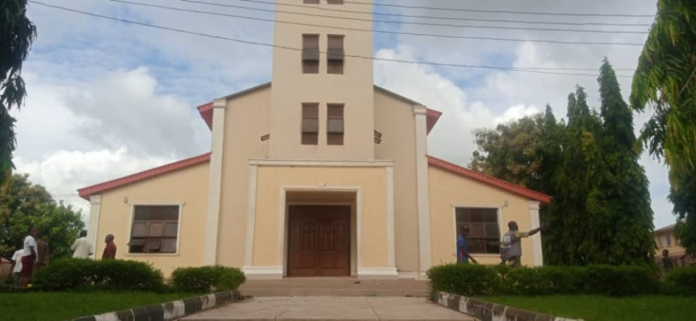
The dedication or inauguration of Our Lady of Assumption Cathedral, Nnewi, Anambra State, on Wednesday, 14th January, was supposed to celebrate its completion after 12 years of construction.

Instead, a nasty controversy ensued as a man got so disappointed that the Bishop of Nnewi Diocese didn’t credit the late Senator Ifeanyi Patrick Ubah adequately for his role in building that expansive cathedral that he openly announced his exit from the Catholic church. “Ifeanyi ndoo”, (sorry, Ifeanyi) he intoned. Then he added, “Akacharam” (I’m done with the church).

That was it; like flies to a carcass, the social media zoomed in. A feast was on. The hapless average Nigerian did not know what to believe. Did the Bishop remember Ubah at that church service? Yes, he did, tersely; he appreciated the other members of the church,
“including Ifeanyi Ubah, who also contributed” to turning the church dream into reality. Was that enough recognition? That answer will always blow in the wind. The event’s brochure also mentioned Ubah in greater detail. Actually, the Priest who served as Master of Ceremony mentioned about 10 persons and their contributions; the Altar, Grotto, Ciborium, air tickets for the Bishops, etc.

Even when he said one of them elected to remain anonymous, he still mentioned the man’s town. Perhaps that was where Ubah’s name and contributions could have been elaborated on. Yet, we could still make an excuse for that Priest; he actually acknowledged those who were present and not those who had died. So, we could magnanimously ascribe the oversight to the Igbo saying that “Onwu di Njo” (death is an unmitigated tragedy) because
the passage of time wipes clean the memory of the dead from the minds of the living – leaving only a few person’s names to be remembered. We call such people heroes.

If heroism is the yardstick, Ifeanyi Ubah was a hero. Yet, the major problem is with our Nigerianness; we don’t keep records. That is why we will never know what exactly or to what level Ifeanyi Ubah built up that cathedral before others stepped in to help.

How big is that cathedral? What are its outstanding features? Unfortunately, no report about that church mentioned that the central sitting area of that expansive church has
no pillars. Big and ugly pillars abound in big churches, obstructing worshippers’ views. Ubah didn’t want those pillars in his Nnewi cathedral. He wanted a building with a soul-stirring design. That was why he didn’t bother with continuing with the contractor who was
handling the project when he opted to build that cathedral for God and for Nnewi. How to support that expansive roof without numerous pillars was the challenge he wanted Architects and Structural Engineers to solve. And if something turned out wrong, Ubah would tear it down and begin afresh. And time ticked away as he would build, tear down and rebuild without counting the cost.

In 2013 or 2015, Ubah took Mr. Afam Ilounoh, a lawyer, and I to the cathedral site. He told us he sincerely wanted to build a church for God who had lavished blessings upon him and he wanted to take the burden of monetary contributions off the people of his beloved Nnewi town and the other towns that comprise the Nnewi Diocese. A cathedral is the seat of the local bishop and is the center of Christian worship and pastoral administration for a district or diocese. Katedra is Greek for seat, the Bishop’s Throne and Ubah opted to lift the monetary burden off the peoples’ shoulders.

It took all of 12 years to complete the cathedral. In comparison, Pastor David Ibiyeomie’s Salvation Ministries constructed its Hand of God Cathedral in 15 years – 2010 to 2025.
Unfortunately, it is most difficult to compare cathedrals. Ibiyeomi’s is a 120,000-seat temple designed like the palm of a hand with five fingers, and it sits a larger number of people than St. Peter’s Basilica in Rome. Yet, that does not mean that it could hold a candle to the pride of the Catholic Church, the Basilica of St. Peter, Rome. Its construction started 18 April 1506 and ended on 18 November 1626 – over a hundred years later. While Ibiyeomie’s have five buildings, St. Peter’s stands alone, massive and glorious. Length: 220 metres (720 ft). Capacity: 60,000 standing; and 20,000 seated. It is the largest church
in the world by interior measure. It’s dome alone, one of the biggest in the world, dominates Rome’s skyline.

Some social media commentators couldn’t imagine such altruism, that is not an ego trip, for a businessman and politician to singlehandedly attempt to build a cathedral for his people. But Ubah exhibited such altruism before – for the benefit of all Nigerians. As General Muhammadu Buhari’s savoured his victory at the 2015 presidential polls, oil
marketers in the country began to grumble over alleged unpaid subsidy claims. On Saturday, May 16, 2015, the association of oil marketers issued a directive to its members, ordering the suspension of loading activities in all depots from Monday, May 18, 2015. As the May 29 handover date drew closer the situation began to bite harder. Nigerians began to spend nights and long hours at petrol stations. Some radio stations shut down, telecommunications companies had announced an impending shutdownn while homes, offices, and key facilities nationwide were experiencing blackouts. In some parts of the country, petrol was selling at an all-time high of N1,000 per litre. As many left their homes to be sleeping in fuel stations, they faced the possibility of robbery attacks and other attendant risks.

Ilounoh and I decided to request Ubah to break the strike for the sake of the suffering Nigerians and to save Nigeria from shame as the world was preparing to attend Buhari’s inauguration. We wrote a memo stating reasons why Ubah should reach out to a few oil marketers and convince them to join him in breaking the strike. It was on a Saturday night so we advised Ubah to act on Monday.

Ubah read the memo and asked Barr Ilounoh and I to draft a statement in which he announced that Capital Oil’s tank farm facility with a combined storage capacity of 190 million litres with the capacity to load over 13 million litres of product per day be immediately opened to start loading immediately. The company affirmed that it had storage of over 79 million litres of petrol as at the day of the strike. The company called on other petroleum marketers to follow suit and save the nation from an impending economic and social crisis. Dr. Ubah stressed the importance of sacrifice, especially as the nation was preparing to have a new government. He said: “This is a period that requires patriotism and service to fatherland. Let’s join hands to help our fellow citizens and save Nigeria. We also call on the striking bodies to call off the strike action. Let us work together
for the betterment of our people.”

True to his promise, his company commenced distribution of over 13 million litres per day of petroleum products from its tank farm in Apapa, Lagos, that night. This came to approximately 400 trucks of products per day. Ilounoh and I spent that Saturday night monitoring the effect of Ubah’s patriotic and heroic move. Lagos didn’t sleep that night as motorists thronged Ubah’s petrol stations. As the sun rose on Sunday morning, the strike was over as petrol stations came alive.

In some places, Capital Oil reduced the pump price of petrol from N200 to N100 per litre in order to compel other marketers to follow suit. Nnewi and Onitsha in Anambra State as well as some other parts of the country were test cases for this patriotic intervention. Unfortunately, the Buhari administration never wrote Ubah a thank you note!

Even now, many Nigerians have forgotten that heroic act from Ubah. Yes, our national memory holds no score with Ifeanyi Ubah’s contributions; petrol tankers ferried 33,000 litres until Ubah arrived and introduced the 60, 000 versions. At his death, his Capital Oil had a jetty capable of berthing 4 shuttle vessels simultaneously, a tank farm with a storage capacity of over 190 million litres, 32 arm loading gantry capable of discharging up to 55 million litres of petroleum products which exceeds the nation’s daily consumption need.
Capital Oil had a fleet of over 400 trucks for distribution of petroleum products nationwide.

So, Ifeanyi Ubah wanted the Nnewi Cathedral to be special because Ifeanyi’s things were always superlative. And he was right because a cathedral is always more than a mere house but a prayer in stones, a poetry or hymn to God cast in marble, a thanksgiving wrought in concrete and twisted steel, soaring spires and summits that rise to the heavens as though directing prayers towards God.

St Peter’s is regarded as one of the holiest Catholic shrines. It has been described as “holding a unique position in the Christian world”, and as “the greatest of all churches of Christendom”. The American philosopher Ralph Waldo Emerson described St. Peter’s as “an ornament of the earth … the sublime of the beautiful.” Ubah wanted such wondrous edifice at Nnewi…to the glory of God

In this, the Nnewi Cathedral of the Our Lady of Assumption, shares some aspects with the St. Peter’s Basilica. Ubah told me and Mr. Afam Iluonoh that Bishops and certain priests would love to be buried near their cathedrals, and as Nnewi lacked open spaces for graveyards, there will be underneath the Cathedral, facilities for 140 tombs. I don’t know whether he realized that dream or not. I mentioned this to tell people that there may be a lot in the Cathedral that the public may not know about – such as underground halls for meetings. Also, we don’t fully understand the economic headwinds that buffeted Ubah when the General Mohammadu Buhari’s administration came into power in 2015.

DSS arrested him for months. I can never forget that because from the DSS detention a defiant Ifeanyi sent his lawyers to ask Tony Eluemunor to tell his version of the story to the world. So, we will never know how much his business suffered and how much money he lost and how much that contributed to his delay in completing the cathedral. Hey, I’m still telling his story. I never set eyes on him since 2019…years before he died. Yes, I don’t let friends down.

Now, to the angry man who said he was leaving the church; he could have felt that Ifeanyi Ubah deserved more recognition than he got. He would not have known why Ubah’s wife or family was not invited; whether they were invited but turned down the invitation, after all, Ubah himself survived a nasty assassination attempt once in Anambra state. He could have noted all the politicians that were invited that day and could have heard Governor Soludo thanking Nnewi people, for allowing for the first time, his political party, APGA, to sweep Nnewi polling units.

That was a political statement right inside a church. That APGA victory happened because Ubah was in the grave during that election. Unfortunately, we will never know how much Ubah spent bringing up the Cathedral from its new design, foundation, underground level, the Architects and Structural Engineers he imported from Italy, the profound enterprise which banished ghastly pillars from the Church Hall and yet keeping the vast roof over almost a ten thousand capacity church in place, etc, etc and raised it to 80 or 90 percent completion by most accounts before the new Bishop took it over.

Everybody who contributed towards building that cathedral built for God. The controversy was over nothing. May God redirect the steps of the brother Knight back to the Church. His Lordship, Most Rev. Jonas Benson Okoye, might even go out of his way to look for his prodigal spiritual son, remembering the good shepherd who would go in search of the straying sheep. And for Ifeanyi Ubah, may his soul and the souls of all the faithful departed, through the mercy of God, rest in peace.

Tony Eluemunor is a prominent Nigerian journalist, columnist, and author known for his sharp political commentary on issues like governance, insecurity, and social development in Nigeria.

The views expressed by contributors are strictly personal and not of Law & Society Magazine.

Fr. Joseph: A shepherd who walked gently with his flock

By Sonnie Ekwowusi

The death of Fr. Joseph Tormo Ederra hit us hard. In fact, when the news of his passing broke, many of us who knew him were devastated. His death was unexpected. As you and I know very well, death is a thief: it strikes at the most inauspicious time. Before death struck, Fr. Joseph, a priest of the Catholic Prelature of Opus Dei, died on January 5, 2026, aged 73.

A Spaniard by birth, Fr. Joseph came to Nigeria in 1986 at the age of 33, barely six years after his ordination to the priesthood, and he never left Nigeria until death came calling. Thus, Fr. Joseph spent a gargantuan 40 years in Nigeria serving the Church and all mankind in different pastoral capacities in Ijebu-Ode, Ibadan, Enugu, and Lagos. Fr. Joseph had an unpretentious love for Nigeria. He loved Nigeria. He loved Nigerians. He ate Nigerian native food and relished Nigerian cultural heritage. He particularly liked Nigerian pepper and enjoyed plenty of it in his food.

Fr. Joseph, for me, will be most remembered for his calmness, humility, and tireless dedication to his pastoral work and service to others. He was a Catholic priest whose life, like that of St. Joseph, spouse of the Blessed Virgin Mary, spoke more loudly than his words. Humble to the core, he never sought recognition or applause, content to serve quietly in the background. He carried himself without airs—unassuming in manner and simple in taste—comfortable among the poor and the learned alike, never drawing attention to himself.

Serenity was Fr. Joseph’s natural disposition. In moments of tension or disagreement, his presence brought a quiet steadiness, as though peace followed him wherever he went. He listened more than he spoke, and when he did speak, his words were measured, gentle, and thoughtful. There was no harshness in him, no impatience—only a reassuring serenity that put troubled hearts at ease.

If you went for spiritual direction with Fr. Joseph and laid before him the most worrying spiritual problem, he would first look at you with reassuring serenity and peace, after which he would likely tell you: “Do everything with Jesus. When you have something worrying you, bring it up with Our Lord. He listens to you. He sees you. He loves you.” This is quintessential Fr. Joseph—a priest who gave cheerfulness, serenity, and peace to all souls.

His humility was not feigned but deeply rooted in his understanding of priesthood as service. He saw himself as an instrument, not the centre; as a shepherd walking with his flock, not above it. He carried his priestly duties—celebrating the sacraments, visiting the sick, comforting the grieving, guiding the faithful—with a quiet faithfulness that never drew attention yet left a lasting impression.

Peace marked his entire life. He bore difficulties without complaint and accepted suffering with trust in God’s will.

For years, Fr. Joseph suffered from many illnesses which inflicted severe pain on him, yet he never complained about his numerous ailments. In those painful situations, you would always see him clutching his Rosary, praying it as he paced up and down. Shortly before his death, he suffered from an illness that caused sleepless nights, uncontrollable coughing, and excruciating pain. Yet he bore his illness with peace and Christian equanimity.

Those who encountered Fr. Joseph often left feeling lighter, consoled, and closer to God, even if they could not explain why. In his simplicity, calm spirit, and humble service, he embodied the Gospel he preached, leaving behind not noise or controversy, but a legacy of gentle holiness.

It was genuinely difficult to see him upset by anything. Even in situations that would ordinarily provoke anger, frustration, or anxiety, he remained composed and untroubled. Life’s pressures, misunderstandings, and setbacks seemed unable to disturb his inner peace. He faced problems with quiet acceptance, as though he had already entrusted every outcome to God. When others were agitated, he was calm.

When voices were raised, his remained gentle. He did not dismiss difficulties, but approached them with patience and trust rather than agitation. His serenity was not indifference; it was the fruit of deep faith and self-mastery. He understood that many things lay beyond human control and saw no value in anger or agitation.

Those who knew him often remarked that they could hardly recall a moment when he lost his temper or showed irritation. Even under pressure, his demeanour was steady, reassuring, and peaceful. In this way, his life became a silent lesson: that true strength lies in calmness, and that a heart anchored in God is not easily shaken.

Fr. Joseph was the first priest put in charge of Iroto Conference Centre, Ijebu-Ode, Ogun State. Those who attended spiritual retreats at Iroto Conference Centre and received spiritual direction from Fr. Joseph often felt very close to God, because Fr. Joseph himself quietly reflected God’s presence in the way he related to people. His friendliness and unassuming manner put souls at ease. In his presence, people did not feel judged, hurried, or overpowered by authority; instead, they felt welcomed and listened to. This openness allowed them to speak honestly about their struggles, hopes, and doubts—essential for genuine spiritual growth.

Fr. Joseph did not draw attention to himself or his own importance. Rather, his humility created space for God to act. By listening patiently and speaking gently, he helped direct hearts away from himself and toward God. His calmness and simplicity made it clear that spiritual direction was not about clever words or dramatic gestures, but about quietly discerning God’s will in everyday life.

Because he lived what he taught, his counsel carried a quiet authenticity. His peaceful spirit, faith, and trust in God communicated—often without many words—that God is near, loving, and attentive. In such an atmosphere, those who sought his guidance naturally experienced a deeper sense of God’s closeness, not because the priest imposed it, but because his life and demeanour pointed consistently and transparently to God.

Fr. Joseph was a diehard football supporter of Valencia FC. I often wondered why he continued supporting Valencia even when they lost most of their matches. Being a Barcelona fan, I often said to Fr. Joseph: “Fr. Joseph, why can’t you stop supporting Valencia and join us at Barcelona FC, the winning team?” To which he would respond: “Valencia forever.”

In his eulogy, someone who had lived with Fr. Joseph commented that he had a great capacity for work and carried out each task with dedication and precision, finishing everything down to the last detail. His was a life of silent, meticulous work and repair in the house where he lived.

Fr. Joseph’s life could clearly be seen as a reflection of his deep trust in God and his constant conversation with Him. This trust was not expressed in dramatic claims or outward displays, but in the quiet consistency of his daily life. He lived with a calm assurance that God was in charge, and this confidence shaped his reactions to difficulties, misunderstandings, and disappointments. Because he entrusted everything to God, little seemed capable of disturbing his inner peace.

His regular conversation with God—through prayer, silence, and faithful celebration of the sacraments—formed the foundation of his character. Prayer was not an occasional activity for him, but the atmosphere in which he lived. This habitual turning to God refined his thoughts, softened his words, and purified his intentions. As a result, his actions flowed naturally from a heart attuned to God’s will. Those who lived with him testify that in his free moments he was always seen with his Rosary beads, reciting the Rosary.

What most people encountered in Fr. Joseph was not merely a learned priest or a skilled spiritual guide, but a man whose life had been shaped by continual dialogue with God. His trust made him humble, his prayer made him attentive, and his closeness to God made others feel that God Himself was near. In this way, his life became a quiet testimony that a priest who truly lives in conversation with God inevitably leads others to trust Him more deeply as well.

I believe Fr. Joseph continues to live in the hearts and minds of many people whose spiritual lives were enriched through their dealings with him. He lives in the great ideals which he lived for and died for.

Eternal rest grant unto Fr. Joseph, O Lord.

Sonnie Ekwowusi is a Member of the Editorial Board of The Guardian Newspaper

In AFCON 2025, an enchanting story begins its final journey

By Chidi Anselm Odinkalu

The last time Morocco hosted the African Cup of Nations (AFCON) in 1988, it lost by a single goal in the semi-finals to eventual winners, Cameroon, who advanced to the final where they overcame Nigeria to emerge as champions. Eight years earlier, at the same stage, Nigeria defeated Morocco by the same margin on its way to winning the tournament at the expense of Algeria.

On Sunday, 18 January 2025, Morocco confronts Senegal in the finals of the AFCON 2025 tournament having avenged historic semi-final losses to both Cameroon and Nigeria in the quarter and semi-finals of the competition. The final match will be staged at the stadium in the capital city, Rabat, named in memory of the brother of Morocco’s penultimate King Hassan II and uncle of current King Mohammed VI, Moulay Abdallah ben Ali Alaoui, who died of cancer in December 1983 at the untimely age of 48.

David Goldblatt begins his magisterial book, The Age of Football: The Global Game in the Twenty-First Century, with the observation that despite its colonial origins, football in Africa has “served widely as an instrument of the independence movement and, later, in the shape of the Confederation of African Football (CAF) and the continental tournaments it created, a practical example of pan-African co-operation and identity.” Reflecting this history, African football has been called “the rebellious game.”

Amidst the football spectacle that will unfold in the match, the AFCON finals in Rabat on 18 January 2025 will symbolize an underlying narrative in African football that it hitched closely with the narratives of Africa’s history and its politics. It will pit two countries with some of the oldest traditions of organized football in Africa under the watch of a man from the first country to play the game on the continent.

164 years after the first official game of football on the African continent, a black billionaire from the country where the game made its African landfall, Patrice Motsepe, will orchestrate the ceremonies of the AFCON finals as the president of the CAF. His elder sister, Dr. Tshepo, happens also to be the spouse of South Africa’s current president, Cyril Ramaphosa. Few, if any, among the Cape colonists who brought the beautiful game to the continent could have divined the trajectory or symbolism of this moment.

Africa’s earliest documented football match reportedly occurred in 1862 between “white colonial bureaucrats and soldiers in Port Elizabeth and Cape Town, South Africa.” It did not involve any natives. In a symbolism of the journey to the right of Africa’s populations to participate in a kickabout, the two teams that will line up in the finals will represent two of the countries with the more established traditions of organized football on the continent.

Association Sportive et Culturelle (ASC) Jeanne d’Arc, Senegal’s oldest football club, was founded 103 years ago in 1923 in capital city, Dakar. It has existed continually since then and beside cross-city rivals, ASC Diaraf, remains one of the two most successful football clubs in the country. The club was originally founded by French Catholic missionaries in pursuit of the legend of colonial civilizing mission of creating fit young men of character. Interestingly for an institution dedicated to promoting a colonial vision of masculinity, they named it after France’s patroness saint, Joan of Arc, in a symbolism of faith, strength and colonial domination. In doing so, they also created the first seeds of indigenous resistance.

Those seeds were sown earlier in Africa’s Maghrebine coast. In 1906, the first Earl of Cromer and long-serving British Consul-General in Egypt, Evelyn Baring, oversaw in what has become known as the Denshawai Incident the unfair trial and brutal execution of four Egyptians accused of causing the death by heatstroke of a British official, whom they prevented from feasting on their pigeons. The backlash from Egypt’s population ultimately led to the resignation of Lord Cromer in 1907 and inspired a fierce nationalist movement.

While the elite politicians bickered as to how to organize, Egypt’s student movement founded Al Ahly (National Club) in Cairo, a football club rooted in the idea of national pride and unity and with a mission to resist British colonial oppression. Five years later, cross-city rivals, Zamalek Sporting Club was founded as the team of the elite or middle class.

According to World Football, the contest between Al-Ahly and Zamalek is one of the greatest rivalries in world football. Football journal, FourFourTwo, warns that it is “more than a game.” Having begun as a contest between nationalism and colonial collaboration, it has evolved to be defined by status and ideology. In reference to this rivalry, French journalist, Laurent Campistron reports a supporter of one of these clubs as having told him: “in this country, you can eventually change your religion or your wife, but never your club.”

If Egypt was an early model of the nationalist possibilities in football, Algeria was the place that crystallized the insurgent character of the beautiful game in Africa. Nine years before the formation of Al-Ahly, in June 1898, Club Sportif (CS) Constantinois was founded in Algeria. David Goldblatt recalls that Algeria’s “football clubs served as clandestine cells for growing nationalism”.

In the middle of the murderous War of Independence, Algeria’s Front de Libération Nationale (FLN) founded its own national football team in 1958, persuading 30 established stars of French football of Algerian origin to abscond to Tunis where they founded Le Onze de l’Indépendance (the Independence Eleven). That team helped to establish the diplomatic credentials of the FLN long before independence in 1962 and the admission of the country into the ranks of FIFA two years later in 1964.

A leading member of the eleven was Rachid Mekhloufi, St-Etienne’s star striker who was to be a member of France’s team to the 1958 World Cup. At his death in 2024, it was said of Mekhloufi that “he was more than a footballer who mesmerised fans on the pitch, he was a symbol of resistance to many Algerians.”

The Beautiful Game took nearly two decades to travel from Algeria to its neighbour, Morocco. When it landed in 1917 at the waning of the First World War, it was through French colonial enthusiasts in the form of Racing Athletic Club (RAC) of Casablanca. The game was later to find an insurgent home in Morocco’s most populous city, leading to the foundation in May 1937 of Wydad Club by an elite group of Moroccan resistance to French occupation led by Mohamed Benjelloun Touimi, who would later become a leading member of the International Olympic Committee. 11 years later, in March 1949, a group of working-class youth equally resisting French colonial rule founded cross-city rivals, Raja Club Athletic. Raja’s proletarian origins would later earn it the sobriquet, “The People’s Club“.

These long traditions of community formation and nation building are what give the AFCON its unique place in the hearts of Africans everywhere and in the firmament of world football. These are not traditions that engage the blinkers of the denizens of the world game in the FIFA.

Committed to extracting every penny of profit from the game, they have decided to kill the competition in its current biennial format. Morocco will be the penultimate in this format. The joint hosting by the countries of East Africa in 2028 will be the last. When it resurrects in 2032, it will be held every four years. AFCON-winning manager, Claude Leroy, has described the decision as “stupid”.

Many see “colonial overtones” in FIFA’s underlying reason for the change in the calendar of the AFCON which is mostly to suit the convenience of the European game. The irony should ring quite potent that the African game – rooted as it is in anti-colonial history – will be forced to play vassal to the interests whom it had to fight for the oxygen of its own existence.

A lawyer and a teacher, Odinkalu can be reached at [email protected]  

The views expressed by contributors are strictly personal and not of Law & Society Magazine.

Why is the Ministry of Works budgeting ₦500m for hairdressers, grinding machines and motorcycles?

The Federal Ministry of Works, under the leadership of Minister Dave Umahi, has earmarked over ₦500 million in its 2026 budget for a series of empowerment and social intervention programmes, including training for hairdressers and make-up artists, the distribution of grinding machines, motorcycles and mini-vans, as well as anti–drug abuse awareness campaigns across selected states.

Details of the proposed expenditures are contained in the 2026 Appropriation Bill published on the Budget Office of the Federation’s website, which was reviewed on Thursday.

A breakdown of the budget shows that the projects are spread across multiple geopolitical zones, largely structured as constituency-level interventions.

Under budget item code ERGP 12234747, the ministry plans to spend ₦35 million on the provision of an unspecified number of grinding machines for women in Ndokwa/Ukwani Federal Constituency in the South-South.

Another ₦35 million has been allocated for the training and empowerment of women in hairdressing, make-up artistry and soap production in Mikang/Shandam/Qua’an Pan Federal Constituency of Plateau State, in the North-Central zone.

The budget further proposes ₦70 million for skills acquisition and the provision of trade equipment to youths, women and seven retirees in the Inyamaltu/Deba area of Gombe State, located in the North-East.

In the South-East, the ministry intends to spend ₦70 million on the supply of mini pick-up vans, mini shuttle buses and motorcycles to beneficiaries in Abakaliki Federal Constituency, Ebonyi State.

Another allocation covers training, sensitisation, advocacy and youth empowerment programmes against drug abuse in Zamfara State, in the North-West, alongside several other constituency-specific projects listed in the budget.

The inclusion of these empowerment initiatives in the Federal Ministry of Works’ 2026 budget has triggered debate and raised fresh questions about alignment with the ministry’s core mandate, which traditionally centres on road construction, rehabilitation and infrastructure delivery.

Critics argue that while empowerment and social interventions are important, such programmes are more typically associated with ministries and agencies specifically designed for social development, youth empowerment and poverty alleviation, prompting renewed scrutiny over budget prioritisation, institutional roles and fiscal discipline.

Download The Full Lobbying Agreement: Image Abroad, Insecurity at Home: Think tank seeks FOI clarity on $9m lobbying deal

The Abuja School of Social and Political Thought (TAS) has formally filed a Freedom of Information (FOI) request with the Office of the National Security Adviser (ONSA), demanding full disclosure over a controversial $9 million lobbying contract reportedly approved by the Federal Government of Nigeria for engagement with United States policymakers.

The move follows widespread public reports that the Nigerian government, through a US lobbying firm, DCI Group, and a Nigerian law firm, Aster Legal, entered into a high-value agreement aimed at influencing Washington’s position on Nigeria—particularly on issues relating to religious freedom and counterterrorism.

In a statement signed by Dr Sam Amadi, Director of TAS, the organisation said its decision to invoke the FOI Act was driven by the gravity of the issues involved, noting that the matter touches directly on public finance, national security, foreign policy, and democratic accountability.

“These are not trivial concerns,” Amadi said. “They go to the heart of how public funds are spent, how sensitive national decisions are taken, and whether due process and transparency were followed.”

According to documents reportedly filed with the United States Department of Justice, the Federal Government may have approved a $9 million lobbying arrangement, with an initial payment of $4.5 million already released. The contract, signed on December 17, 2025, is said to run for an initial six-month period ending June 30, 2026, with an automatic renewal clause unless terminated.

Under the agreement, the Nigerian government is reportedly paying $750,000 per month to DCI Group to assist in “communicating” Nigeria’s efforts to protect Christian communities and to maintain US support for its counterterrorism operations, amid sustained scrutiny from sections of the US government.

Nigeria was redesignated in October 2025 as a Country of Particular Concern under the US International Religious Freedom Act, a label the Nigerian government has rejected, insisting that insecurity affects Nigerians of all faiths.

However, TAS said that despite the scale, cost and sensitivity of the reported contract, key details remain shrouded in silence, raising legitimate public concern.

“There is limited public information about who authorized the contract, how the $9 million fee was determined, which government offices were involved, and how the funds were transferred,” the statement noted.

The FOI request seeks answers to several core questions, including whether the Office of the National Security Adviser authorised or directed the engagement, why a private law firm was used to act on behalf of the Nigerian government, what procurement or selection process was followed, and whether the Ministry of Foreign Affairs played any role in the decision.

TAS is also demanding clarity on who paid the reported $4.5 million already released, through which financial institutions, and under whose formal approval.

Dr Amadi stressed that the request does not amount to an accusation, but rather reflects the public’s right to know how decisions of such magnitude are taken—especially at a time of severe economic strain.

“At a moment when Nigerians are facing deep hardship and are being asked to make sacrifices, transparency in government spending is not optional; it is essential,” he said. “Openness builds trust. Silence erodes it.”

The controversy has ignited public debate, particularly as insecurity continues to worsen across large swathes of the country. While millions of dollars are reportedly being spent to shape Nigeria’s image abroad, communities at home continue to grapple with kidnappings, mass killings, banditry and terrorist attacks, raising troubling questions about priorities.

Critics argue that no amount of foreign lobbying can substitute for tangible security outcomes on the ground. They note that there has been no public briefing, cost-benefit analysis or official justification explaining why such funds could not be deployed directly toward strengthening security operations, supporting victims or improving intelligence and policing capacity.

Equally striking, observers say, is the absence of official communication from the Presidency, the ONSA or the Ministry of Foreign Affairs clarifying the objectives, scope and expected outcomes of the lobbying contract.

TAS said it expects a response from the Office of the National Security Adviser within the timeframe stipulated by law, adding that any reply received will be made public in the spirit of transparency and informed civic debate.

“The Freedom of Information Act exists to promote openness and accountability,” the statement said. “Our request is made lawfully and in good faith. Accountability strengthens institutions, transparency strengthens trust, and an informed citizenry strengthens democracy.”

As scrutiny intensifies, the $9 million lobbying deal is fast becoming a test case—not just for transparency under Nigeria’s FOI regime, but for whether government is prepared to answer hard questions about governance, priorities and responsibility in a time of national distress.


If you want, I can:

  • 🔎 Turn this into an investigative series opener

Click here to download the lobbying agreement.

The-lobbying-agreement-

Celebrating ASUU-FG’s historic reset with caveats

By Farooq Kperogi


After sixteen years of stalemate, serial strikes and ritualised brinkmanship, the Federal Government and the Academic Staff Union of Universities (ASUU) have finally signed a renegotiated agreement that replaces the moribund 2009 pact. This is at once historic, consequential and praiseworthy.

For the first time in a generation, Nigeria’s public universities have a framework that promises industrial harmony, predictability of academic calendars and an end to the cruel cycle in which students lose years of their lives to shutdowns that have nothing to do with them. If implemented faithfully, the agreement will allow students to graduate on time, restore confidence in public universities and begin the long task of rebuilding Nigeria’s battered higher education system.

Credit is due to the Minister of Education, Dr. Tunji Alausa, and to President Bola Ahmed Tinubu for pushing this through. In fact, the ASUU agreement is about the only major promise Tinubu made in the poetry of campaign that he has clearly kept in the prose of governance.

The symbolism is even more striking when contrasted with the immediate past. The Muhammadu Buhari administration presided over one of the most destructive eras in the history of Nigerian university education.

This was made all the more tragic by the presence of Adamu Adamu as Minister of Education. Before his appointment, Adamu, for whom I had enormously unconditional respect, was a well-known public defender of ASUU in his intrepid newspaper columns in the Daily Trust. Once in office, however, he turned out to be one of the most hostile ministers Nigerian academics have ever encountered.

On October 9, 2022, at the height of that administration’s war with ASUU, I wrote on social media: “Adamu Adamu, an erstwhile ASUU ally, is turning out to be the deadliest foe ASUU has ever had. With help from Ngige, he’s dealing the union one crushing blow after another…. Lesson: the fact that someone is your friend today doesn’t mean they can’t be a murderous foe tomorrow.”

The Tinubu administration has, at the very least, reversed that posture of antagonism and replaced it with negotiation, compromise and a willingness to reset the relationship between government and academia.

At its core, the new pact addresses the three issues that have driven nearly two decades of conflict: pay, welfare and the structure of university funding.

First is a 40 percent salary increase for lecturers, effective January 1, 2026. Someone rightly remarked that it’s the single largest upward review of academic salaries in over a decade. It’s a long-overdue correction after years of erosion by inflation and currency collapse.

For professors, this comes with a new professorial cadre allowance of about 140,000 naira monthly, while readers (roughly equivalent to associate professors) receive about 70,000 naira. Earned academic allowances have also been restructured and tied more clearly to actual academic labour, such as postgraduate supervision, fieldwork and research coordination.

Second is a major reform of retirement benefits. Professors who retire at the statutory age of 70 are now guaranteed pension benefits equivalent to their full annual salary. This provision alone is transformative. It ends the shameful tradition of professors retiring into poverty after decades of service and sends a powerful signal to younger academics that a life devoted to teaching and research will not be punished at the end.

Third is the institutionalisation of research funding through the proposed establishment of a National Research Council, funded at not less than one percent of GDP. For the first time in Nigeria’s history, research financing is being embedded in national planning rather than left to donor whims and sporadic government interventions.

If implemented properly, this could anchor doctoral training, strengthen laboratories and libraries and finally position Nigeria as a serious knowledge producer.

Fourth is a new funding structure for universities that links capital funding, infrastructure development, and staff development to long-term planning rather than emergency interventions. TETFund remains central, but funding is now part of an overarching reform framework.

Fifth is a recommitment to university autonomy and academic freedom, including protections against political interference in hiring, curriculum and internal governance. If faithfully implemented, which is never a guarantee but noteworthy nonetheless, vice-chancellors may not be the glorified political appointees that many of them are now, and universities may cease to be extensions of the civil service.

Finally, the agreement formally buries the 2009 pact that haunted the system like a zombie document. The new framework, produced by the Yayale Ahmed Committee after fourteen months of negotiations, is structured, phased and subject to periodic review. This gives ASUU leverage and gives government predictability.

Yet it is important to separate celebration from illusion. The new agreement is a noteworthy improvement on the living and working conditions of Nigerian university lecturers. But it is not yet competitive by continental standards, and it is unlikely, on its own, to halt academic brain drain.

Before the agreement, a full professor in a federal university earned roughly 525,000 naira to 630,000 naira monthly. With a 40 percent raise and the new 140,000-naira professorial allowance, a senior professor will now earn in the range of 1 million naira to 1.1 million naira per month, depending on rank and allowances.

That sounds impressive in naira terms. In continental terms, however, it remains deeply uncompetitive.

In South Africa, professors earn the equivalent of about $4,500 to $5,000 per month. In Kenya, professors earn around $1,300 monthly. In Uganda, the figure is about $1,100. In Ghana, professors earn roughly $700 to $800 monthly. In Egypt and Morocco, senior academics earn well above Nigeria’s new scale.

At current exchange rates, a Nigerian professor earning 1.1 million naira a month makes roughly $700. That places Nigeria near the bottom of Africa’s academic pay ladder, ahead of only a handful of fragile economies.

This is why Nigerian universities continue to hemorrhage talent. Professors are leaving for South Africa, Rwanda, Kenya, Botswana, the Gulf, Europe and North America not because they dislike Nigeria but because Nigeria does not value academic labour competitively. A Nigerian professor now earns in a month what a South African professor earns in a week.

The salary increase is therefore a necessary correction, not a strategic solution. It slows the bleeding. It does not stop it.

There is also a potential booby trap embedded in the agreement that deserves sober reflection. The guarantee of full-salary pensions for retired professors has been widely welcomed, and rightly so. But pension experts have warned that this provision resembles a return to the old defined-benefit pension system that Nigeria abandoned two decades ago because it was fiscally unsustainable.

A January 16, 2026, report by TheCable highlighted the controversy sparked by the Director-General of the National Pension Commission, who defended the ASUU deal amid fears that it could undermine the contributory pension scheme. Critics argue that guaranteeing pensions equivalent to full salaries without a clearly defined funding mechanism risks recreating the very problems that forced Nigeria to reform its pension system in the first place.

If the new pension promise is not carefully structured, transparently funded and legally insulated from political manipulation, it could become a future flashpoint for industrial conflict that unfairly punishes students and parents.

Expectations will rise. Budgetary pressures will mount. Regulators will resist. And another round of industrial disharmony could follow.

There is one more omission in the agreement that deserves attention. My friend Prof. Moses Ochonu and I have long argued that the federal government should not simply accede to ASUU’s demands, however legitimate, without also insisting on mechanisms for instructional accountability, research productivity, service delivery and innovation.

Without a system to institutionalise accountability and transparency, students will always be shortchanged, and the nation will be betrayed by lecturers who show little commitment to their craft or to genuine knowledge production and dissemination.

It has become a disturbing culture in Nigerian universities for lecturers to show up in class whenever they please without consequence. In my undergraduate days, I took courses where lecturers appeared only twice in the entire semester, first to introduce themselves and last to set an exam on material they never taught. My conversations with today’s undergraduates suggest that this still happens.

Of course, not everyone is guilty of this. Many Nigerian academics are dedicated teachers and serious scholars working under brutal conditions. But not even one person should be allowed to get away with such negligence.

University lecturers should also not be allowed to publish in substandard, pay-to-play, predatory journals simply to climb the academic ladder. Promotion should reward intellectual rigor, not transactional publishing.

If Nigeria is going to invest billions in salaries, pensions, and research funding, it must also demand excellence in return. Anything less is a betrayal of students and of the country’s development aspirations.

This agreement gives Nigeria a chance to rebuild. Whether it becomes a renaissance or another chapter in the long story of squandered opportunity will depend on what happens next.

The views expressed by contributors are strictly personal and not of Law & Society Magazine.

FortLugard University advances campus development with law faculty, multipurpose hall groundbreakings

The proposed FortLugard University has continued to gather momentum in its drive toward full academic operations, beginning the year with the groundbreaking of two major campus projects following a special thanksgiving service held to usher in its 2026 activities.

The projects—the Faculty of Law complex and a Multipurpose Hall—were formally launched during a ceremony that highlighted the institution’s vision to blend academic excellence, leadership development and moral formation.

Dr Onoja, SAN, and Wife, Mrs Rosemary Onoja, during the thanksgiving service preceding the groundbreaking ceremony.

Founder and Visioner of the university, Chief Dr Ogwu James Onoja, SAN, performed the groundbreaking for the Faculty of Law, describing the project as a strategic investment in elite legal education and the grooming of future leaders of the Bar and Bench.

According to him, the Faculty of Law is designed to deliver rigorous legal scholarship anchored on professional ethics, public service and national development.

The Onojas at the event.

In a parallel ceremony, Evangelist (Dr.) Sunday Oguche, General Overseer of God’s Care Mission, Okpo, Kogi State, performed the groundbreaking for the Multipurpose Hall, a facility intended to serve as a hub for worship, academic gatherings and major institutional events. He noted that the hall would reinforce the university’s commitment to holistic education that integrates intellectual and spiritual growth.

The event, which symbolised FortLugard University’s commitment to academic excellence, legal scholarship and leadership training, attracted a distinguished audience, including the Minister of Special Duties and Intergovernmental Affairs, Hon. Zaphaniah Bitrus Jisalo, clergy, education stakeholders and other well-wishers.

Dr Onoja, SAN, laying the foundation for the law faculty

The latest groundbreakings build on a series of landmark developments recorded in December 2025, when the university reached one of its most consequential milestones. In a moment heavy with symbolism, former Chief Justice of Nigeria, Justice Walter Samuel Nkanu Onnoghen (Rtd.), laid the foundation stone for the University Senate Building, affirming the institution’s commitment to strong governance and academic autonomy.

At the same ceremony, the foundation stone for the Faculty of Computer Sciences was laid on behalf of the Minister of Special Duties and Intergovernmental Affairs, Hon. Zaphaniah Bitrus Jisalo, by the Director of Finance and Administration of the Ministry, marking a significant step in the university’s science and technology agenda. The dual ceremony underscored FortLugard University’s steady progression from vision to reality.

Goodwill messages delivered by Evangelist Sunday Oguche, Hon. Jisalo, and other speakers stressed the importance of visionary leadership, faith, and strategic planning in building a university capable of making meaningful contributions to national development and academic advancement.

With these successive developments, the proposed FortLugard University continues to strengthen its institutional foundation, reinforcing its mission to emerge as a centre of learning, character formation and innovation, as preparations intensify toward its official dedication later in the year.

My husband demands sex 8 times every night, woman tells court

Photo by Darina Belonogova:

A Harare woman, Melocia Gwata, has sought legal protection from her husband, George Kusotera, citing his excessive demands for intimacy and abusive behaviour as her reasons.

Melocia revealed her ordeal to the Harare Civil Court, Zimbabwe, describing how her husband coerced her into having intercourse up to eight times per night, resorting to violence whenever she refused.

The matter came to light after Melocia appeared before the magistrate, Judith Taruvinga, at the Harare Civil Court.

She disclosed that her husband, George, had been making excessive demands for sex daily, even waking her up in the middle of the night after multiple encounters on the same day.

“He wants to have s3x every day and wakes me up in the middle of the night, even after we’ve been intimate countless times on the same day,” she recounted, expressing how this has taken a toll on her physical and mental health.

Melocia further explained that when she could no longer endure his demands due to fatigue and physical pain, her husband would assault her.

She recounted how George threatened to divorce her if she continued to reject his advances, with the abuse even occurring in front of their children.

“He has been assaulting me in front of our children, shouting obscenities and telling them I don’t deserve to be called their mother,” she added.

In response to the accusations, George acknowledged his wife’s concerns, apologising for his actions and attributing his behaviour to his love for her.

 “I didn’t realise I was making her uncomfortable. I apologise and promise not to physically abuse her anymore,” he stated.

After hearing both sides, the magistrate, Taruvinga, granted Melocia a protection order against her husband, ensuring her safety from further abuse.

Tribune

TIPS