Home Blog Page 114

Kano Massacre:  Nigeria police arrest nephew, two others over Kano housewife, six children murders

The Kano State Police Command has arrested three suspects in connection with the brutal murder of a housewife and her six children in the Dorayi Chiranchi area of Kano Municipal Local Government Area, a crime that has shocked the nation and drawn condemnation from President Bola Tinubu.

The arrests followed a direct order from the Inspector-General of Police, Kayode Egbetokun, and were carried out during an intelligence-led operation supervised by the Kano State Commissioner of Police, Ibrahim Adamu Bakori.

In a statement issued on Sunday, police spokesperson Abdullahi Haruna Kiyawa identified the suspects as Umar Auwalu, 23; Isyaku Yakubu, also known as “Chebe,” 40; and Yakubu Abdulaziz, popularly called “Wawo,” 21. The trio was apprehended during a coordinated sting operation conducted between 10 p.m. on Saturday and 4 a.m. on Sunday.

According to the police, investigations revealed that Auwalu, a nephew of the deceased woman, was the mastermind behind the killings and confessed to orchestrating the attack. Kiyawa said the suspect further admitted that the group had been involved in previous violent crimes, including the murder and burning of two housewives in Tudun Yola Quarters, Kano.

Security operatives recovered several items from the suspects, including four blood-stained pieces of clothing, two mobile phones belonging to the victims, a cutlass, a wooden club locally known as a gora, cash believed to have been taken from the crime scene, and other dangerous weapons.

President Bola Tinubu, in a statement issued by his spokesman, Bayo Onanuga, condemned the killings as barbaric and inhuman. The President commended the police for the swift arrest of the suspects and directed that a thorough investigation be carried out, followed by diligent prosecution to ensure justice is served.

Tinubu also extended condolences to the bereaved family and the people of Kano State, describing the murder of Fatima Abubakar and her six children as a tragedy that underscores the urgent need to confront violent crime.

The Kano State Police Command praised its operatives for the rapid response and thanked members of the public for their cooperation, assuring residents that investigations are ongoing and that all those responsible will be held accountable as authorities work to restore calm and public confidence.

“So I Can Collect Money”: Child’s viral joke lays bare Nigeria’s police corruption crisis

By Lillian Okenwa

A short viral video of a young Nigerian girl answering a seemingly innocent question has struck a nerve far beyond social media humour, exposing deep-seated public frustration over alleged police corruption and the everyday realities of life under weak law enforcement.

In the clip, which has been widely shared online, the child is asked what she wants to become in the future. Without hesitation, she replies that she wants to be a policewoman—not to fight crime or protect citizens, but “so I can block the road and collect money from keke riders.”

The adults around her burst into laughter, but online reactions have been far more sobering. Many Nigerians say the child’s response, though amusing on the surface, reflects what citizens routinely witness on the streets: police checkpoints used less for public safety and more for extracting bribes from commercial drivers, motorcyclists and tricycle operators.

Across major cities and highways, commuters and transport workers frequently complain of being stopped multiple times a day and forced to pay unofficial “fees” to avoid harassment, delays or arrest—sometimes for infractions that do not exist. For many, such encounters have become an accepted, if bitter, part of daily life.

“This is not comedy; it’s documentation,” one social media user wrote. “If a child already sees police as toll collectors, then something is deeply wrong.”

The Nigeria Police Force has repeatedly warned officers against extortion, bribery and roadblock abuses, issuing circulars, hotlines and public statements promising disciplinary action. Critics, however, argue that these warnings have become ritualistic, announced, ignored, and quickly forgotten, while abusive practices persist at the street level.

Although there are occasional reports of dismissed or redeployed officers, rights advocates say enforcement is selective and largely cosmetic. Many citizens feel helpless, fearing retaliation if they report erring officers or doubting that complaints will lead to any meaningful consequences. In rural communities and densely populated urban areas, incidents of extortion often go unreported entirely.

Analysts warn that the greater danger lies not only in corruption itself, but in how deeply normalised it has become. When children absorb these patterns as part of everyday life, public trust in policing and state authority erodes across generations.

“The video is funny because it’s true,” a civil society advocate said. “And that is the tragedy.”

As insecurity worsens across Nigeria—from kidnappings and banditry to violent crime—citizens say the perception of the police as predators rather than protectors compounds feelings of vulnerability and abandonment. Authorities continue to issue stern warnings, yet appear unwilling or unable to confront systemic misconduct within their ranks.

While the clip continues to circulate online as light entertainment, many Nigerians see it as an unfiltered mirror of a system that has failed to inspire confidence, accountability or respect. In a country where official admonitions often ring hollow, even a child’s joke can become a powerful indictment—one that laughter alone cannot erase.

Bandits abduct over 100 worshippers in Kaduna church attacks as Army dismisses soldier over IED video leak

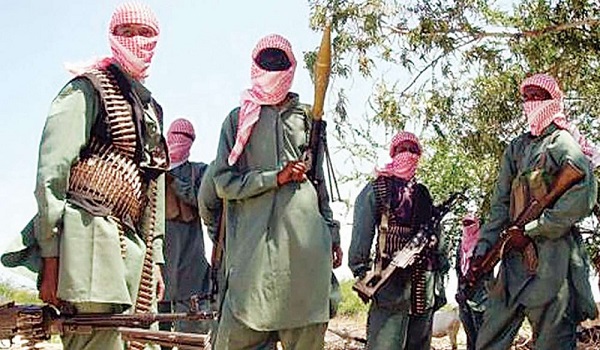
Nigeria’s worsening security crisis deepened on Sunday after armed bandits stormed multiple churches in Kaduna State, abducting more than 100 worshippers during live services, even as the Nigerian Army reportedly dismissed a soldier accused of leaking video evidence from a recent Boko Haram attack that killed several troops in Borno State.

The twin developments—mass abductions in the North-West and internal disciplinary action within the military following a deadly insurgent attack in the North-East—have renewed concerns about public safety, transparency and accountability in Nigeria’s ongoing war against violent criminal groups.

Churches Attacked, Worshippers Taken

The abductions occurred in the Kurmin Wali area of Kajuru Local Government Area, Kaduna State, where bandits reportedly invaded several churches mid-service, forcing congregants to march into nearby forests.

A source with relatives among the victims told SaharaReporters that the attackers arrived in large numbers, overwhelming worshippers and abducting men, women and youths indiscriminately.

“The bandits stormed the churches and took people away forcefully,” the source said.

According to preliminary reports, the attackers later released about ten individuals described as vulnerable, including elderly persons, while over 100 others remain in captivity.

Local authorities and security agencies have been notified, but as of the time of filing this report, no official statement had been issued confirming the exact number of abducted worshippers or the status of rescue operations.

Kaduna State has been repeatedly hit by violent attacks involving bandits, kidnappers and armed groups, despite sustained military operations in the region.

Fresh Killings in Southern Kaduna

The latest abduction comes barely weeks after another deadly assault in Southern Kaduna.

On January 3, bandits killed four members of the same family during a night-time attack in Kachia town, near the newly established Federal University of Applied Science, the headquarters of Kachia Local Government Area.

Family sources identified the victims as Mr. Bitrus Bahago, his wife, Mrs. Justina Bahago, their son, Ibrahim Bahago, and another relative, Adam Waziri.

“They were all killed by the bandits,” a family member told SaharaReporters.

Residents said the attackers arrived in large numbers and opened fire on homes, leaving several others injured. The wounded were rushed to nearby hospitals for treatment.

Locals described the incident as terrifying, noting that repeated attacks have continued despite the town’s proximity to major institutions and security formations.

Army Dismisses Soldier Over IED Video Leak

Meanwhile, in a separate development highlighting tensions within Nigeria’s security apparatus, the Nigerian Army has reportedly dismissed a soldier accused of leaking video footage related to a deadly Boko Haram attack in Borno State.

Top military sources told SaharaReporters that the dismissal followed the circulation of a video recorded after an improvised explosive device (IED) explosion near Gubio, which killed several soldiers.

“Do you believe that our troops that stepped on IED two weeks ago—the soldier that recorded the video has been dismissed from service,” a senior military source said, speaking on condition of anonymity.

Another source explained the military’s zero-tolerance stance on internal leaks. “If they find out that you’re leaking their secret, the next thing is to dismiss you,” the source said.

The dismissed soldier was identified as Mansur Adamu, service number 22NA/82/3795 PTE, and was photographed holding a placard confirming his dismissal.

IED Blast Killed Nine Soldiers

The dismissal followed a Boko Haram attack near Gubio, Borno State, in which no fewer than nine Nigerian soldiers were killed.

According to military sources, the soldiers—attached to 145 Battalion, Damasak, under 5 Brigade Maiduguri—were travelling from Maiduguri when their vehicle triggered explosives planted by insurgents.

“This was not an ambush,” a source clarified. “It was caused by explosive devices planted by Boko Haram.”

Several soldiers sustained severe injuries, with fatalities recorded over two days. Video and photographic evidence from the scene showed motionless soldiers scattered across the blast site, underscoring the scale of the devastation.

Security Questions Mount

From mass church abductions in Kaduna to deadly insurgent attacks in Borno and disciplinary action against whistleblowers, the latest incidents have intensified public anxiety about Nigeria’s security strategy and crisis response.

While security agencies insist investigations and operations are ongoing, critics argue that persistent violence, mass kidnappings and secrecy surrounding military casualties continue to erode public confidence—especially as civilians and soldiers alike remain vulnerable across multiple regions.

“No Obligation to Peace”: Trump erupts after Nobel Peace prize rebuff over Greenland

Donald Trump today ratcheted up the pressure on Nato over Greenland in a message to Norway’s Prime Minister warning that he ‘no longer feels an obligation to think purely of peace’ because he was denied the Nobel Peace Prize.

The US President again demanded Greenland is handed to America because Denmark can’t protect it from Russia and China in a letter to Jonas Gahr Støre, according to the Norwegian press.

Click here to continue reading.

Ibadan is Oyo, By Lasisi Olagunju

On Monday, 25 March, 1946, Chief I. B. Akinyele, Chief James Ladejo Ogunsola, Messrs D. T. Akinbiyi and E. A. Sanda, the very cream of the Ibadan educated elite, met behind closed doors with Oyo town delegates at the secretariat in Ibadan. One of them got home that day and wrote in his diary that they “could reach no agreement because we (Ibadan) flatly refused to pay one penny towards the Alaafin’s salary.”

Yet, some 84 years earlier (1862), the same Ibadan went to war against friends, family, and acquaintances in support of Alaafin. Ibadan destroyed Ijaiye because its ruler, Kurunmi, was rude and unruly to the Alaafin. He had to die because he refused to recognise the king whose father made him Aare, and who made Oluyole Basorun of Ibadan.

Ibadan of 1862 served Oyo and its Alaafin; that of 1946 damned them. Between the first stance and the second, what changed or what caused the change? The tongue. The body. Disposition. Reciprocal respect. My Christian friend pointed at a verse in the Bible: “And the king answered the people roughly. In a blustering manner, gave them hard words and severe menaces…” Then it was “To your tent, O Israel!”

On Sunday, 3 February, 2008, twelve out of the then seventeen members of Oyo State Council of Obas and Chiefs visited the Alaafin in Oyo. They said they were there “to solidarise and pay traditional respect to our permanent chairman.” From that visit came a ten-point resolution which was published as an advertorial on page 27 of the Nigerian Tribune of 5 February, 2008. The title of that advert is: ‘Oyo obas back Alaafin for permanent chairmanship of Council of Obas and Chiefs.’ The fifth of the resolutions is the shortest and most categorical: The obas declared that in Oyo State, “remove the Alaafin, and all other obas are equal.”

The obas who signed that statement were the Eleruwa of Eruwa, Olugbon of Orile Igbon, Okere of Saki, Aseyin of Iseyin, Iba of Kisi, Onpetu of Ijeru, Onjo of Okeho, Sabi Ganna of Iganna, Aresaadu of Iresaadu, Onilalupon of Lalupon, Onijaye of Ijaye and Olu of Igboora.

Now, read that list again – and this is where I am going: In the Saturday Tribune of January 17, 2026 (two days ago), an advert celebrating the reconstitution of the obas’ council with the Olubadan as rotational chairman was signed by six of those who signed the 2008 advert which celebrated Alaafin’s permanent chairmanship. These are: Eleruwa of Eruwa, Olu of Igboora, Olugbon of Orile-Igbon, Onpetu of Ijeru, Okere of Saki and Aseyin of Iseyin.

Yesterday’s “permanence” becomes today’s “rotation,” each wrapped in the rhetoric of unity, justice, and tradition. We see obas who were with Oyo in 2008 shifting allegiance to Ibadan in 2026. What this suggests is not moral collapse but the old, unembarrassed truth about power: it obeys seasons. Our obas, like politicians, have read too much of Geoffrey Chaucer. They move in steps that suggest that time, when it shifts, rearranges loyalties as effortlessly as it rearranges hierarchies.

Friendship and politics define statuses and hierarchies. Governor Rashidi Ladoja in 2004 decentralised the council of obas into zones and directed each paramount oba to preside over their area. His decision was based on the fact that there was no throne of Oyo State for the kings to fight over. I agree with that reasoning, and, in fact do not think any council anywhere is necessary as conclave of obas. However, last week, Oba Rashidi Ladoja assumed office as chairman of an undecentralised council of obas. What has changed?

Ladoja’s successor, Governor Adebayo Alao-Akala in 2007, made Alaafin permanent chairman. The Olubadan and Soun of Ogbomoso kicked and would have nothing to do with that arrangement. The governor ignored them. He said he was following the law. But the same Alao-Akala, on his way out of government in May 2011, used the House of Assembly to reverse that decision. Because his friendship with the Alaafin had expired, he made the position rotational in the following order: 1. Olubadan; 2. Soun of Ogbomoso; 3. Alaafin of Oyo. Check the Nigerian Tribune of 3 May, 2011, page 4.

Were all these about history, or that fluid thing called change? What obviously there was (and is) is politics; and in politics, nothing is constant; not truth, not friendship. What exists is interest. “There is no fellowship inviolate, No faith is kept, when kingship is concerned,” says Second Century BC Roman poet, Ennius. Obas, institutions and palaces that took a position in 2008, are this year taking a directly opposing stand. What changed? Is it about the person of the last Alaafin and the persona of the incumbent?

In his caustic response to last week’s inauguration of Oyo State Council of Obas, Alaafin Akeem Owoade referred to himself as “superior head of Yorubaland.” Did he have to write that? And, what does it mean? Whatever that claim was meant to achieve has attracted negative vibes from every corner of Yorubaland. I read resentment and resistance even when its author knows it is a plastic claim. In the old understanding of the world, the ancients spoke of two ruling forces: Love, which binds; and Strife, which sunders. The palace, no less than the cosmos, is governed by this uneasy pair. The oba in Yorubaland reigns within the contradiction. The crown draws devotion even as it breeds resentment. It commands reverence when it is humble and just in its royalty; it invites resistance when haughty and proud.

Shakespeare, in Richard III, speaks about kings’ “outward honour” and “inward toil.” In Hamlet, he says “The king is a thing…Of nothing.” In Henry V, he says the “king is but a man, as I am” and therefore prone to errors courtiers make. No two kings are the same; no two reigns score the same marks. There are definitely differences in engagement between the last Alaafin and this new one. Alaafin Adeyemi III went out to make quality friends and read good books; his successor, so far, appears distant and aloof. I am interested in who, among obas and commoners, are his friends. I am eager to know the books he reads. His handlers should help him to succeed by telling him to look more forward than backwards. A lot of 19th century data which he romanticises are no longer valid. For instance, Ibadan of the past saw itself as part of Oyo; today’s Ibadan sees Oyo as part of its inheritance. Read Professor Bolanle Awe in her ‘The Ajele System: A Study of Ibadan Imperialism in the Nineteenth Century’ (1964). Mama reminds everyone who argues with history that “the direct heirs of the Old Oyo empire…regrouped themselves in three main centres at Oyo, Ijaye and Ibadan.” So, Ibadan is Oyo while today’s Oyo is not necessarily Ibadan.

People who understand the dynamics of power and history would insist that Ibadan’s defiance in 1946 and its earlier zeal in 1862 are not contradictions so much as timestamps. We see and feel Ibadan challenging Oyo, even feeling insulted by suggestions of being subjects of Alaafin. Authority once defended as sacred becomes, under a new alignment of interests, negotiable. This Oyo has everything a father has, except age. It has a history of leadership. But has Oyo provided the right leadership in the last one year? You remember what King Sunny Ade sings should be done to Egungun that dances for twenty years and remains in poverty? You throw away its mask and costume and promote Gelede. That is why institutions today act selectively, and actors remember the past strategically. What appears as amnesia or inconsistency is cold calculation. The past is not denied; it is merely edited.

Every Alaafin since 1830 has had to contend with the Ibadan factor. Ibadan is pro-Oyo but it won’t accept suggestions of Alaafin and Oyo overlordship. And that is because the founders of Ibadan were shareholders of Oyo, both the old and the new. In particular, they see in Oyo and its monarchy partners, not lords. Indeed, Ibadan never believed/believes there was (is) a king anywhere for them to worship. Professors I. A. Akinjogbin and E. A. Ayandele say the early Ibadan “prided themselves as a group who had nothing but contempt for the crowns.” Indeed, in July 1936 when the city wanted its Baale to become known and called ‘Olubadan’, its leaders made it clear that what they wanted was the change in title; they did not want an oba who would rob them of their republican freedom. Is that not the reason for its very unique lack of royal or ruling houses? Read Toyin Falola’s ‘Ibadan’, pages 681 and 682.

The new Alaafin has no excuse for making cheap and expensive mistakes. His heritage is goodly and his court not lacking in quality men and women. When he was made oba a year ago (January 2025), Professor Toyin Falola, easily Africa’s preeminent historian and Yoruba patriot, wrote a long piece of advice for the man chosen as our Alaafin. The title of that piece is: ‘Alaafin Owoade and Yorùbá Renaissance.’ It was primarily written for the new king to read. If he read it, I am not sure many of today’s challenges would spring and hang on his nascent reign. Every paragraph of the essay is gold, every line golden. If he read it last year, he should read it again and make it his operations manual. Take these: “He must learn history. I can reveal to the new Alaafin that his immediate predecessor took time to understand history. Alaafin Adeyemi’s power of retentive memory was second to none. He had a memory arsenal covering almost 500 years…

“Alaafin Owoade must know history…The new Alaafin must not engage in historical revisionism as his counterparts now do. Rewriting history is dangerous, as in saying the Benin Empire owes little to Ile-Ife and Oranmiyan. Conflating Ugbo with Igbo is a wrong-footed interpretation of the past. He needs not to dabble into issues of superiority around who the superior king was in the past. Oyo and Ile-Ife are constant in the people’s history because they represented the seats of economic and political power and the spiritual rallying point of the Yorùbá people. Let him explore the consensus around historical prestige: the foundation of prominent Yorùbá ancestors and the creation of a glorious history.”

So far, it would appear that Alaafin Owoade has not benefited from the nuggets in the Falola advice. He should go back to it. He should also go out to make quality friends among his brother obas. He needs them. If there are people he needs to beg, he should beg them. Nothing is damaged (yet) beyond repairs. Like flights of planes, every reign has tough beginnings. In tension and turbulence, the expertise of the pilot makes a lot of difference. If the Alaafin refuses to spread his eyes first, no guest will sit on the mat he spreads, no matter how beautiful.

He also needs to know (or remember) that power attracts, but it also repels. This is why allegiance cannot be ordered into existence; it must be patiently won. It is also why sovereignty carries its own burden, captured in the timeless lament of the dramatist: uneasy lies the head that wears a crown. For the Alaafin to remain tall, he must woo Ibadan and other Yoruba towns with friendship; he cannot summon their loyalty by proclamation.

The views expressed by contributors are strictly personal and not of Law & Society Magazine.

Katsina State: The inversion of justice, morality and sovereignty through amnesty for terrorists

By Sir Ifeanyi Ejiofor Esq

The recent release of seventy (70) confirmed bandits and jihadist terrorists by the Katsina State Government, under the euphemistic cloak of a so-called “peace accord,” ought to send cold shivers down the spine of every conscientious Nigerian. This development is not merely troubling; it is an ominous signal of a perilous policy trajectory, one that, if unchecked, is capable of igniting the entire Northern region and, by extension, imperilling the already fragile stability of the Nigerian state.

A government that elects to negotiate with terror, reward violence with legitimacy, and substitute justice with expediency is not brokering peace; it is institutionalising insecurity. The message is unmistakable: arms, bloodshed, and lawlessness have now become viable bargaining instruments in dealings with the Nigerian state.

Nigerians are therefore entitled, indeed compelled, to ask, and to ask loudly, whether this aberration enjoys the tacit blessing or silent acquiescence of the Federal Government and the national security agencies. The absence of a firm and unequivocal repudiation lends disturbing credence to the inference that an official imprimatur may well hover over this reckless enterprise. The Federal Government owes Nigerians not platitudes, but a clear, candid, and constitutionally grounded explanation.

The Cruel Irony: Freedom For Bandits, Chains For The Innocent

While armed insurgents, whose hands drip with the blood of security personnel and defenceless civilians, are serenaded with negotiations and ushered back into society, thousands of innocent Igbo youths, mothers, and sisters remain unlawfully detained across Nigeria.

Their crime? None known to law, save for the misfortune of wrongful ethnic labelling and prejudicial categorisation.

Only days ago, it was officially reported that the State Security Services confirmed the death of Mrs. Calista Ifedi, while in detention at the notorious Wawa Barracks detention facility in Niger State. She had been arrested on 23rd November 2021, alongside her husband, not for any offence known to law, but merely on the allegation that they sold food to persons labelled as IPOB members.

Throughout the entirety of their unlawful detention, neither Mrs. Ifedi nor her husband was ever arraigned before any court of competent jurisdiction. Instead, they were detained at the unfettered discretion of one of the most notoriously brutal Directors-General the Service has known, Alhaji Yusuf Magaji Bichi, alongside numerous other innocent Igbo citizens.

This egregious violation of human rights was conceived, endorsed, and executed under the despotic regime of the late Muhammadu Buhari, whose state governor is today, ironically, unleashing deadly jihadists onto the streets of Nigeria under the guise of a “peace deal.” It was further consummated by the former Attorney-General of the Federation, Abubakar Malami, SAN, who is now confronting allegations of monumental corruption he perpetrated during that infamous era.

It took the more humane and enlightened administrative reforms of the current Director-General of the State Security Service, Mr. Tosin A. Ajayi, particularly the initiative to profile detainees with a view to releasing those illegally held without trial, before Mr. Ifedi eventually regained his freedom. Tragically, he was informed only two days ago that his wife had died during their incarceration. One can scarcely imagine a more harrowing injustice, nor a more broken man.

For years, I have persistently raised alarm over the fate of hundreds of innocent Igbo citizens incarcerated at Wawa Barracks, Kainji, Niger State, subjected not to open and transparent trials, but to secretive, pseudo-judicial processes that mock every tenet of constitutional democracy and the rule of law.

Yet, in the face of this manifest injustice, a deafening silence prevails. Our so-called political leaders from the South-East appear far more animated by the permutations of 2027 electoral arithmetic than by the immediate agony of their unlawfully detained kinsmen. While they calculate future ambitions, the architects and sponsors of real terror are rewarded with peace deals, handshakes, and freedom.

I hereby call, with utmost urgency, on Igbo political leaders, particularly the Governors of the South-East states, to rise above lethargy and the complicity of silence. They must investigate, interrogate, and demand accountability concerning the continued detention of their people: men and women whose only offence is wrongful labelling, unlawful detention, and punishment without trial.
Let it be stated without equivocation: where culpability is established, prosecution must follow; openly, transparently, and before a duly constituted court of law. Anything short of this amounts to executive lawlessness thinly disguised as security policy.

The Implications: A State Surrendering Itself

The implications of the Katsina State Government’s actions are stark and deeply unsettling. A state that negotiates with terrorists from a posture of fear rather than authority is conceding its sovereignty. It signals an effective surrender of governance to marauders and indicts the capacity of the national security architecture to safeguard lives, property, and democratic order.

History teaches, often cruelly, that appeasement of terror does not extinguish it; it emboldens it. A day may come, sooner than anticipated, when these same terrorists, having tasted power and legitimacy, will overrun state institutions and assume de facto control of governance. When that day arrives, no peace accord will save us.

Most chillingly, reports now suggest that further negotiations are underway for the release of additional incarcerated terrorists. As the elders would say: “Ụka agwụla.”

Nigeria today sits precariously upon a keg of gunpowder. If this perilous initiative is not promptly halted by the Federal Government, the grim prospect looms of entire swathes of the federation being ceded, piecemeal, to jihadist terror.
Time, as ever, will be the final arbiter.

Ejiofor, first lawyer to Mazi Nnamdi Kanu, leader of the Indigenous People of Biafra, writes from Abuja.

The views expressed by contributors are strictly personal and not of Law & Society Magazine.

Nigeria: 60 years after the First military coup

By Jeff Godwin Doki Ph.D

As a country, Nigeria shall be 66 years old come October this year. On January 15, 1966, six years after political independence, the military led by Major Chukwuma Kaduna Nzeogu seized power from the democratically elected government of Alhaji Tafawa Balewa. The reasons the soldiers advanced for the coup were many and varied. Among other things they include: the need to arrest the drifting of the politicians into political violence; to end the corruption which had become pervasive in the country; to end the insecurity consequent upon the clash between Chief Obafemi Awolowo (Action Group) and Chief Akintola (Nigerian National Democratic Party) which eventually led to the declaration of a state of emergency in the Western Region; the disagreement that arose from the result of the National Census of 1962/3; the resort to the use of thugs and election-rigging by the National Council of Nigerian Citizens (NCNC) during the 1965 Federal elections in Western Nigeria and also Tiv area in present day Benue state. It was all these reasons that prompted the first military intervention on January 15, 1966.

For 13 years the military held sway.
Again, in 1983 the military led by Major-General Muhammadu Buhari seized power from the democratically elected government of Alhaji Shehu Shagari citing socio-economic anomie, corruption, bankruptcy, growing external debt and the collapse of social services as reasons. One may state with considerable justification that since independence in 1960, Nigeria has witnessed only two successful coups that dethroned elected governments namely that of Major Nzeogu in 1966 and that of Major Buhari in 1983. While some commentators argue that out of these two coups that of 1966 was more popular because it aimed at arresting the drift into political insecurity at the time, others hold that the Buhari coup of 1983 aimed at sustaining the Hausa control of the government and the country. But let’s reserve that discussion for another time and place.

All students of Nigerian history know that military rule is an aberration because the military has no business in politics and they can only be involved in non-constitutional ways. Lamentably, the military since 1966 has used the gun forcefully to seize power from elected governments. But take note of this: there have been three military coups against military governments. The first was that of July 29, 1966 which led to the death of General Aguiyi Ironsi (an Ibo man) and the emergence of General Yakubu Gowon, the second was that of Gen Murtala Mohammed which overthrew Gen Yakubu Gowon on July 29, 1975. Murtala Mohammed was assassinated by Lt. Col. Bukar Suka Dimka on February, 13, 1976. The third led to the emergence of Gen. Ibrahim Babangida after the overthrow of Gen Buhari in August 1985. But apart from these three coups against military regimes, there have been many unsuccessful ones especially the failed one led by Major Gideon Orkar on April, 22, 1990.

The obvious implication is that the several coups of the military against the military points to only one direction: the desire of the military to wield political power in order to advance their interest as individuals and as a group. The sum of it all is that since independence the military has ruled Nigeria longer than the civilians and this is evident in the coups and counter coups. Needless to state that it is this factor more than anything else which has led to the politicization of the armed forces. It could be perceived that the entire Nigerian nation is trapped not just in a vicious cycle of human stupidity but also in an inescapable web: the politicians used their ill-gotten money to debase the electoral process and wield political power, the soldiers use their guns to seize power from our unconscionable breed of unscrupulous politicians.

More damaging and destructive is the fact that military rule which is anchored on the instruments of coercion and force in the control of states, agencies and resources has caused irremediable harm on the psyche of the entire nation. This has bred a culture of fear, opportunity and sycophancy in Nigerian society. The most critical implication of this forceful control and dominance is the entrenchment of dictatorship in the administration of the country. It was the military regime that introduced the militarization and mismanagement of the economy. It was the first military coup that introduced ethnic inequality in Nigeria. During coups and counter coups, the military group that had more people in the Army wielded uncontrolled powers that give them a sense of superiority over others. The obvious and tragic consequence is that this has given rise to the politicization of governance in Nigeria.

Nigeria is a pluralistic society and in such a society when rights are not distributed on the principles of justice, hard work, merit, fair play and excellence, the door is automatically open for ethnic and religious strife which also has the potential of opening a wider door for banditry and terrorism. Furthermore, the military attitude of appointment of officers based on ethnicity and religion and not on competence or merit is one of the problems that has retarded our growth as a nation. It has further entrenched the to-hell-with-merit and man-know-man syndrome. Our students and children are fully aware of this syndrome and it forbodes danger for the nation. It was the military that planted and watered this seed. Now it has germinated and flowered.

Besides, the military especially under Babangida embarked on a systematic program of the pauperization of the ordinary Nigerian citizen through its obnoxious economic reforms in the mid- 1980s. The immediate consequence was that the Gen. Ibrahim Babangida regime accepted foreign Neo-liberal policies which gave rise to heavy external debt burdens, economic stagnation conjoined with rampant inflation, the material impoverishment of educational infrastructure, the massive demoralization of university teachers, skill flight etc. The Babangida regime had zero tolerance for dissenting voices. It proscribed ASUU, arrested, tortured and detained it leaders especially Attahiru Jega and Festus Iyayi. It was the same military under Babangida that annulled the 1993 elections, an election that was adjudged to be very free and fair. And the reasons trumped off for the annulment were so contradictory, so insulting to the intelligence that the entire Nigerian nation seemed to have degenerated into a theater of the absurd. The Nigerian military can be accused of almost all the crimes in the calender.

The consequence of prolonged military rule is that today, Nigeria beckons on China, UAE, France and many other foreign countries and multinationals to come into the country and make money by exploiting our rich natural resources. Today, Chinese companies are everywhere in Nigeria constructing roads while at the same time carting away our mineral resources and engaging in illegal mining of minerals in states like Nasarawa, Plateau, Adamawa and Zamfara. Besides, the oil in the Southern part of the country is exploited on a daily basis by American and Chinese companies. They exploit all these resources and go free because Nigerian citizens are not united. There is a huge connivance between the rulers and the victims. The Nigerian government has completely abandoned the agro-based sector. All attention is on the oil sector. Apart from oil, our leaders think only about political power because to control political power in Nigeria means to be in charge of the treasury and to be in charge of the treasury means to become a multi-billionaire; to set up business ventures in all city capitals of the world. The political class is obsessed with winning the forthcoming 2027 elections, no more, no less.

With the return to civil rule in 1999, Nigerian citizens are yet to cleanse the militaristic cobwebs in their psyche and thinking. For example, Obasanjo and (late) Gen. Buhari who have both ruled Nigeria for eight years each as civilians were all former men of war. They share the unique distinction of being the only two Nigerians (for now) who have ruled Nigeria both as military heads of states and as democratically elected presidents. Both are retired Generals in the Nigerian Army. Both rose to power promising to tackle corruption. Well, we all know the judgement of history over their promises. The uneasy implication is this: what could be more violent than the imposition of military rule with soldiers, guns and jackboots to clamp down on dissenting voices? To fritter away the nation’s resources in the most cynical undertaking that has reduced a potentially great country to beggary and debt? To entrench a culture of ethnic identities that polarize the entire citizenry into tribal cocoons?

Is it a surprise that most civilian regimes in Nigeria are simply a direct offshoot of their military counterparts? What could be more violent in a Democracy than the arbitrarily removal of fuel subsidy and the introduction of new tax reforms whose making you are never part of but which binds your life with an iron grip? Do recall that this is the land built by the military. The military has bred all the civilian dictators in Nigeria. It is left to said that the military still has the opportunity to redeem its battered image. This it can do by fighting and defeating bandits and terrorists who have turned the lives of Nigerian citizens into their playthings. I nearly forgot to pay deserving tributes to our fallen heroes who fought for and died for our dear country, Nigeria. May their souls and that of the faithful departed rest in peace.

Jeff Godwin Doki is a Professor of Comparative Literature at the University of Jos (UNIJOS), Nigeria

The views expressed by contributors are strictly personal and not of Law & Society Magazine.

Nigeria’s Escalating Violence: A gendered human rights emergency

The devastating news of an entire family brutally murdered in their home in Kano. This horrific act is not an isolated incident it is part of an escalating pattern of violence that reflects a deepening security failure and a dangerous moral collapse in Nigeria.

For years, I have consistently spoken out about the increasing brutal killings of girls and women and the widening spectrum of gender-based violence across the country human trafficking, sexual and gender-based violence, labour exploitation, political exclusion, and economic violence against women. The killing of a young Barr. Princess Nwamaka Chigbo, pushed out of a moving vehicle in Abuja by individuals widely referred to as “one-chance operators,” remains a chilling reminder that in today’s Nigeria, being a woman has become increasingly unsafe.

When these killings are viewed alongside the surge in kidnappings for ransom, the unprovoked attacks by unknown gunmen, and violent raids on communities that leave families wiped out in their homes, a disturbing truth emerges: violence has become normalised, accountability has weakened, and human life especially the lives of women and girls has been dangerously devalued.

This is not merely a security crisis. It is a gendered human rights emergency. A society where women cannot commute safely, work safely, participate in politics freely, or live without fear is a society that is failing at its most basic duty protecting life and dignity.

As a human rights and gender advocacy organisation, Adinya Arise Foundation unequivocally condemns this heinous killing and the persistent culture of violence and impunity that enables it. The failure to decisively address these crimes sends a clear and dangerous signal: that violence pays, that justice is optional, and that women’s lives are expendable.

Let it be stated clearly: no nation can claim democratic progress, economic growth, or political stability while women are routinely brutalised and families are unsafe in their homes. The erosion of moral values, integrity, and accountability is pushing Nigeria toward a place where brutality replaces conscience and fear replaces hope.

We therefore call on the Federal and State Governments, security agencies, and relevant institutions to rise immediately and responsibly to this moment by:

Ensuring swift, transparent, and credible investigations into all killings and gender-based crimes

Ending the culture of impunity by prosecuting perpetrators without delay or exception

Prioritising the protection of women and girls in security planning and response

Strengthening community intelligence, survivor-centered justice mechanisms, and institutional accountability

Reasserting moral and political leadership that places human dignity, justice, and the sanctity of life at the core of governance

Security is not defined by force alone. It is defined by justice, accountability, moral leadership, and the protection of the most vulnerable. A nation that cannot protect its women, children, and families risks losing not only its credibility, but its soul.

Nigeria stands at a critical crossroads. The continued escalation of violence, if left unchecked, spells grave danger for our collective future. This moment must serve as a national reckoning and a wake-up call.

We must urgently reclaim our humanity, restore justice, and reaffirm the values that uphold the worth of every life.

Enough must truly become enough.

Mabel Adinya Ade is the founder and Executive Director of the Adinya Arise Foundation (AAF) and a long-standing human rights and gender advocate.

Food, Memory & Healing Monthly Series

By Kirsten Okenwa

About this series

Food, Memory & Healing is a monthly storytelling series exploring how indigenous foods support health, dignity, and cultural continuity. Drawing from lived testimonies, ancestral food knowledge, and contemporary food science, the series reflects on healing not as a miracle or trend, but as a return to foods shaped by land, memory, and community.

Food and Healing: When Indigenous Foods Remember Our Bodies

There was a time when food did not need translation. It was not labelled organic, functional, or clean. It was known by the land that grew it, by the hands that prepared it, and by the bodies that received it.

Today, many of us eat in abundance yet live in quiet nutritional distress. We manage conditions we did not grow up seeing so frequently: diabetes, hypertension, digestive disorders, and chronic fatigue. In response, we often look outward, to imported superfoods, complex supplements, and unfamiliar eating systems. Yet healing, for many, has begun not with discovery, but with return to roots.

This series, Food, Memory & Healing, looks at how indigenous foods often dismissed as “local,” “poor,” or old-fashioned, are quietly supporting health in today’s world. These foods are not cures or shortcuts. They are part of longer relationships between people, culture, and nourishment.

One such story begins with okpa, a traditional Nigerian dish from the Igbo people. Ask anyone from Enugu about it, and watch their face light up as they describe the warm, savoury pudding wrapped in banana leaves that fueled their childhood mornings. It’s made by steaming a batter of ground Bambara nuts until it sets into a firm, protein-rich pudding; simple in concept, but rich with memory.

I remember travelling to my home state, Enugu, with my mum after a long absence. The first meal I asked for at breakfast was okpa, the wholesome kind made with banana leaves, not the current trend of cooking the pudding in small polythene bags. That request said everything about what I needed from this trip: I was going to eat only local; local grains, local fruits, local vegetables. I was going home in the truest sense.

In eastern Nigeria, a middle-aged man living with diabetes spoke quietly about a change that did not come from a clinic. He did not describe a cure, only steadier days. After returning to regular consumption of okpa, his blood sugar levels became easier to manage, his appetite more predictable. Okpa had been part of his childhood diet, prepared without instruction or health claims. Its return was not a prescription, but a remembering.

Okpa is not fashionable. It isn’t packaged for export or promoted as a health trend. Yet Bambara groundnut is among Africa’s most nutritionally balanced legumes, rich in protein, fibre, and slow-releasing carbohydrates.

Many of our indigenous foods have developed through generations of observation, shaped by climate, soil conditions, scarcity, and care. Millet grew where wheat could not. Bitter leaf endured where sweetness was unreliable. Fermentation emerged not by accident, but through patient attention to preservation and digestion. These foods adapted alongside our people that depended on them.

In Kano, northern Nigeria, a young mother told her story of how she struggled with prolonged fatigue and anaemia after childbirth. Supplements helped, but her recovery felt incomplete. Her family reintroduced foods once central to postpartum care: millet pap, kunu, lightly fermented grains, and vegetable-rich soups. Millet, naturally high in iron and made more bioavailable through fermentation, became a steady source of nourishment. Her strength returned gradually, without drama. Healing, in this case, was not an individual effort. It was shared.

In Minna, Niger state, an elderly civil servant shared his struggle with managing hypertension. Like many others, he reduced salt and avoided processed foods, especially his favourite smoked meat “suya” which usually had high-salt, high-fat seasonings. He struggled with consistency, but his wife returned to cooking bitter leaf soup regularly, prepared traditionally with minimal palm oil. Bitter leaf (Vernonia amygdalina), long known for its antihypertensive and antioxidant properties, became part of a routine, not a prescription. Food became discipline for him, without punishment.

Modern diets tend to favour speed, sweetness, and convenience. Indigenous diets approached balance differently. They valued texture, fermentation, satiety, and restraint. They accepted that not everything nourishing would be immediately pleasant.

A university student dealing with chronic bloating and gluten sensitivity found relief through fonio, an ancient West African grain called acha in northern Nigeria. Light and quick to prepare; courtesy some YouTube videos he downloaded, the meals were easy to digest. Acha (fonio) replaced wheat-based meals that caused discomfort. What surprised him most was not just the physical relief but the sense of familiarity. Acha (fonio) had been his grandmother’s grain, one he had left behind without thinking much about it.

Sometimes, the body recognises what the mind has forgotten. These stories are not a rejection of modern medicine. Clinical care, medication, and nutritional science remain essential. But health is layered. Culture, memory, and continuity also matter. Indigenous foods carry not only nutrients, but practical knowledge shaped by the same environments and histories that shaped our bodies. When these foods are dismissed as outdated, something important is lost.

This series does not argue for nostalgia or a return to the past. It suggests integration, where indigenous foods stand alongside modern knowledge, not beneath it. Where food is understood not as a trend but as a relationship. Indigenous foods do not ask to be rediscovered. They ask to be remembered. Not as miracle cures or nostalgic symbols, but as systems of care shaped by land, labour, and lived experience. In returning to them, carefully and with context, we are not moving backwards. We are restoring continuity in a world that has learned to eat without listening.

Across these essays, we will examine grains, leaves, soups, fermentation, and communal eating. We will listen to lived experiences, refer to science where helpful, and avoid exaggeration. Much of this knowledge has been preserved by women who fed families long before nutrition labels existed.

Healing is rarely sudden. It accumulates over time. It often begins when the body is met in a language it recognises.

Sometimes, that language is food.

Kirsten Okenwa is a writer, industrial chemist, and food systems–peacebuilding practitioner working with rural communities, documenting indigenous foods as memory, medicine, and community knowledge.

Protest Under Siege: NBA-SPIDEL, Global Rights, others confront detention and torture

NBA-SPIDEL in Partnership with IRCT, OMCT, Global Rights & House of Justice

Online Workshop on Protest, Detention, Torture and Shrinking Civic Spaces

Date: Tuesday, 20th January 2026
Time: 4:00 pm – 6:00 pm (WAT)
Platform: Online (Zoom / MS Teams)

Learning Outcomes

At the conclusion of this Continuing Legal Education (CLE) programme, participants will be able to:
1. Identify and explain the constitutional, statutory, regional, and international legal frameworks governing the right to peaceful protest, freedom of assembly, and expression in Nigeria.
2. Analyse the legal implications of shrinking civic spaces and assess their impact on democratic governance, access to justice, and the rule of law.
3. Apply due process standards relating to arrest and detention, particularly in protest-related contexts, and recognise common violations requiring legal intervention.
4. Recognise and document acts of torture and ill-treatment in accordance with domestic law and international documentation standards.
5. Evaluate available accountability mechanisms and remedies for unlawful detention and torture, including strategic litigation options and engagement with regional and international human rights bodies.
6. Demonstrate enhanced professional competence in providing legal representation, advocacy, and victim-centred responses in cases involving protest, detention, torture, and civic space restrictions.

Programme Schedule

4:00 pm – 4:10 pm

Opening and Welcome Remarks
• Welcome address by Ntufam Mba Ukweni SAN, Chairman – Public Interest Litigation Committee, NBA-SPIDEL
• Special Remarks &
Introduction of partner organisations
Associate Professor Uju Agomoh, NBA-SPIDEL

4:10 pm – 4:30 pm

Session 1: Right to Protest and Shrinking Civic Spaces
• Legal framework for peaceful protest under the Nigerian Constitution
• International and regional human rights standards
• Trends in restriction of civic spaces
Speaker:
Abiodun Bayeiwu, Executive Director – Global Rights, Abuja

4:30 pm – 4:50 pm

Session 2: Arrest, Detention and Due Process Guarantees
• Lawful arrest and detention standards
• Protest-related arrests and detention challenges
• Role of legal practitioners in safeguarding detainees’ rights
Speaker:
Gloria Mabeiam Ballason – Founder, House of Justice Kaduna

4:50 pm – 5:15 pm

Session 3: Torture, Ill-Treatment and Documentation Standards
• Prohibition of torture under international law
• Identification and documentation of torture
• Rehabilitation and victim support mechanisms
Speaker:
Maeva Rene-Barry
UN Program Manager, International Rehabilitation Council for Torture Victims (IRCT),
Copenhagen/Belgium/Geneva

5:15 pm – 5:35 pm

Session 4: Accountability, Strategic Litigation and International Mechanisms
• Domestic remedies and accountability pathways
• Strategic litigation in detention and torture cases
• Engagement with regional and international human rights mechanisms
Speaker:
Dr Isidore NGUEULEU,
Head, Africa Office – OMCT, Geneva

5:35 pm – 5:45pm

Interactive Session: Questions, Case Reflections and Practical Insights
• Participant engagement and practical case discussions
• Professional best practices for lawyers

5:45pm – 6:00 pm

Closing Session:

•   Summary of key learning points: 

Dr Lilian Ojimma – Assistant Secretary, NBA-SPIDEL Public Interest Litigation Committee

  • Closing Remarks:
    Paul Daudu SAN, Vice Chairman, NBA-SPIDEL • CLE compliance reminders and attendance confirmation
    SPIDEL Admin Officer • Vote of thanks
    Vincent Adodo – Secretary, NBA-SPIDEL Public Interest Litigation Committee & Assistant Secretary, NBA-SPIDEL

Moderator:
Bulus Atsen fsi
Vice Chair, NBA-SPIDEL Public Interest Litigation Committee

Enome J. Amatey
Secretary, NBA-SPIDEL

Click on the Link Below to register: https://us06web.zoom.us/meeting/register/ryzB1uWkS1iCeOh9e0pvtA

TIPS