Home Blog Page 1142

Former American Bar Association Presidents, 1,000-Plus Lawyers Call for Bar Investigations of Trump Campaign Attorneys

At least 1,500 lawyers—retired judges, law professors, DOJ alumni and two former presidents of the American Bar Association (ABA) among them—have called for bar associations to condemn Trump campaign lawyers and to investigate their post-election conduct.

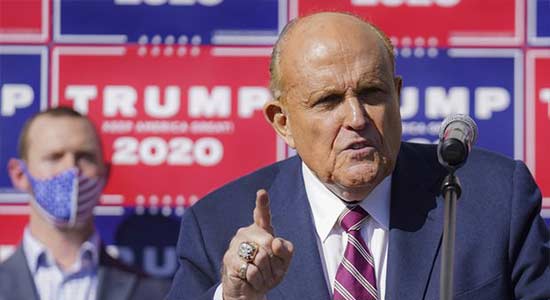
The group Lawyers Defending American Democracy (LDAD) said in a press release on Monday that President Donald Trump’s close ally Rudy Giuliani, the Trump campaign’s senior legal advisor Jenna Ellis, Trump campaign lawyers Joe diGenova and Victoria Toensing, and “Kraken” freelancer Sidney Powell should all be investigated by Bar Associations for violating the ABA’s Model Rules of Professional Conduct, which “prohibits lawyers from making frivolous claims in court and engaging in conduct involving dishonesty, deceit and misrepresentation in or out of court.”

The group and the undersigned pointed to three ABA Model Rules in particular: 4.1(a), 8.4(c), and 3.1.

Rules 4.1(a) says that “In the course of representing a client a lawyer shall not knowingly: make a false statement of material fact or law to a third person.” Rule 8.4(c) says “It is professional misconduct for a lawyer to: (c) engage in conduct involving dishonesty, fraud, deceit or misrepresentation.” Rule 3.1 says that a “lawyer shall not bring or defend a proceeding, or assert or controvert an issue therein, unless there is a basis in law and fact for doing so that is not frivolous, which includes a good faith argument for an extension, modification or reversal of existing law.”

Former ABA Presidents Laurel G. Bellows and Robert E. Hirshon notably signed the letter. Legal ethics scholar and New York University School of Law Professor Stephen Gillers previously argued that a disciplinary body could find that Joe diGenova violated a professional conduct rule when saying that Chris Krebs should be “drawn and quartered” and “taken out at dawn and shot.” Krebs was the director of the Cybersecurity and Infrastructure Security Agency, and President Trump fired him for saying that 2020 election wasn’t rigged. Some Democratic lawmakers made a similar case specific to diGenova, while others filed complaints against Trump campaign lawyers in general.

Gillers joined LDAD’s call on Monday for bar associations to “forcefully repudiate” the “behavior” of Trump campaign lawyers.

“It was predictable that Trump would attack the courts and other public institutions to sow distrust in the election results. Sadly, some lawyers are abusing their law licenses and positions as officers of the court to aid him,” he said. “‘President’s Lawyers Trash American Democracy’ is a headline we never expected to see. To mitigate the harm such tactics can inflict, the bar must forcefully repudiate their behavior.”

Former ABA President Bellows, also a former president of the Chicago Bar Association, said that bar associations should “disavow” Trump campaign lawyers.

“Our justice system only works when lawyers tell the truth and adhere to their oath. Every attorney, including the organized bar and disciplinary authorities, should disavow lawyers who trample the truth and undermine democracy through their false statements,” Bellows said.

George Washington University’s Jonathan Turley is one law professor who has consistently said this chorus of calls for disciplinary action against Trump campaign lawyers is an abuse. Turley, who has appeared on Fox News regularly as a legal contributor in the aftermath of the 2020 election, told Law&Crime that these letters and complaints—not new from either side of the political aisle—would have a chilling effect on legal advocacy and political speech protected by the First Amendment if they were to be accepted by bar associations.

“We have had such petitions on both sides of legal issues for years. Such questions are not answered by plebiscite but the underlying principles. Thus, my view is not changed by this [LDAD] petition,” Turley said. “While courts have dismissed some of these actions with prejudice, they have not imposed sanctions. I have criticized the performance of the Trump legal team and what I view as baseless conspiracy theories. I also repeatedly said that the affidavits are insufficient to overcome the considerable burden in such cases.”

Turley drew a distinction between Trump campaign lawsuits (which courts have not imposed sanctions for) and the alleged actions of Bill Price, a Republican lawyer from Florida. Price is under investigation by the Florida Bar Association because he allegedly encouraged Republicans to illegally vote in the Georgia runoff elections.

“I have also agreed that attorneys like the Republican attorney calling for illegal voting in Georgia should face a bar action,” Turley said. “However, these [Trump campaign] challenges seek review of a myriad of issues raised by an election that by any measure was novel in the percentage (and different rules) governing mail-in ballots. Moreover, the filings are supported by sworn affidavits. Finally, courts have recognized unlawful orders given before the election as well as the negation of some votes. They have balked at the relief being sought as well as standing claims in many of the cases. I fail to see how such requests for review review can be categorically treated as unethical.”

Turley slammed anti-Trump groups Lincoln Project for carrying out “campaigns of harassment against lawyers representing either the Republican Party or the Trump campaign.” In November, the Lincoln Project was, indeed, locked out of its Twitter account after it targeted Porter Wright Morris & Arthur attorneys Ronald Hicks and Carolyn McGee, posting their contact information online. The Porter Wright firm withdrew its representation of the Trump campaign days later.

Linda Kerns, an attorney representing the Trump campaign in Pennsylvania, said she received a harassing call from an attorney at Kirkland & Ellis. K&E was representing the commonwealth, and the “junior attorney” wasn’t even associated with the case.

Turley said he worries that bar associations will be similarly weaponized to punish attorneys who defend the unpopular or deter those attorneys from doing so.

“I oppose such retaliatory campaigns because they are meant to create a chilling effect on challenges. We have a court system that continues to function well in addressing these challenges. Those cases are important for this country. I have repeatedly said for weeks that I do not believe that these challenges will succeed and that Biden is the president-elect,” Turley said. “I have discussed the specific ethics rules raised by critics and I do not see the basis for such claims. Indeed, if these sweeping interpretations were adopted, state bars could be used to deter a wide array of not just legal advocacy but political speech. Historically, legal advocates for unpopular causes have been harassed and threatened with such actions to seek to deter their representation.”

Trump campaign lawyer Joe diGenova, after sparking outrage with his remarks, told the Washington Examiner that he meant “no harm” to Chris Krebs. DiGenova claimed he was joking.

“For anyone listening to the Howie Carr Show, it was obvious that my remarks were sarcastic and made in jest. I, of course, wish Mr. Krebs no harm. This was hyperbole during political discourse,” he said.

Turley wrote in a blog post on Dec. 4 that it was clear to him that diGenova was joking. While he condemned the diGenova remarks, he also said that the bar complaint filed by Democratic Reps. Kathleen Rice (D-N.Y.) and Ted Lieu (D-Calif.) is an inappropriate political use of the bar disciplinary process.

“While the comments by diGenova were worthy of condemnation, they were clearly meant as a joke. It was simply not funny, particularly in these increasingly violent times,” he said. “Nevertheless, these members have filed a bar complaint. Imagine the impact on free speech if lawyers could be pulled in front of state bars for such political statements. This was not in a filing in court. It was a comment on diGenova’s view of a failure to protect the election. This has nothing to do with the propriety of the underlying comments. I obviously disagree with it. I immediately condemned it.”

In the blog post, Turley also cited national security and whistleblower lawyer Mark Zaid’s response to diGenova’s statement, seemingly as illustrative of an extreme reaction.

“Mark Zaid declared that ‘no rational person’ who heard diGenova calling for a person to be drawn and quartered and then shot ‘would have taken it as ‘jest.’ No rational person,” Turley repeated for emphasis.

Zaid so happens to be one of lawyers who signed the LDAD letter. He also happens to be an attorney who has received death threats for defending an unpopular figure among President Trump’s supporters: the Ukraine whistleblower.

Law&Crime asked Zaid why he decided to sign the LDAD letter. He specifically cited diGenova’s comments, calling them dangerous.

“Lawyers have responsibilities that extend beyond the interests of our clients. We are held to a high standard to ensure we advocate for the interests of justice, and that certainly means we refrain from rhetoric or vitriolic statements that could bring harm to a third party,” Zaid began. “Having been the recipient of death threats for simply doing my job, I am particularly sensitive to the dangers espoused by careless or intentional comments filled with hate.”

“It is time for this to stop. I would hope any bar authority that has jurisdiction over Mr. diGenova takes swift and significant action against him, not only to demonstrate to him the inappropriateness of his comments but also as a message to other lawyers,” he added.

Hugh Macgill Professor of Law at UConn Leslie Levin, an expert on lawyer discipline and legal ethics, told Law&Crime last week that diGenova’s words, though “unbecoming of a lawyer,” did not in her view clearly violate a disciplinary rule nor rise to the level of criminal incitement.

“I don’t think anyone would think his words constitute incitement. There is no D.C. disciplinary rule that he clearly violated,” Levin said. “His language was unbecoming of a lawyer but is protected by the First Amendment.”

As for Turley, he said he will continue to defend both the courts that have ruled against the Trump campaign and the Trump campaign lawyers arguing the cases.

“I have publicly defended these judges in ruling against the Trump campaign and I will continue to defend these lawyers in raising these claims. They are all a part of a legal system that is working to bring greater resolution and clarity to these issues,” Turley said.

Reps Invite: Malami Was Wrong To Turn Buhari’s Summon Into Legal Issue — Wike

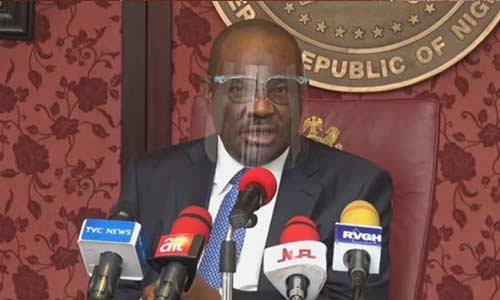
Governor Nyesom Wike of Rivers State says it was wrong for the Minister of Justice and Attorney General of the Federation to turn President Muhammadu Buhari’s National Assembly invitation into a legal issue.

Following the deteriorating state of security across the nation, the National Assembly resolved to invite President Buhari, an invitation that the Commander-In-Chief accepted.

But the Minister of Justice, Abubakar Malami in a statement on Wednesday argued that the National Assembly has no constitutional power to summon the President.

The Attorney General of the Federation in a communique titled ‘Buhari’s Summon: NASS Operates Outside Constitutional bounds,’ stated that the “National Assembly has no constitutional power to envisage or contemplate a situation where the president would be summoned by the national assembly on the operational use of the armed forces.”

He also noted that the right of the President to engage the National Assembly and appear before it is “inherently discretionary in the President and not at the behest of the National Assembly.”

Reacting to Malami’s position on the matter, Governor Wike said rather than protect Buhari’s integrity, the Justice Minister’s statements put the President’s reputation on the line.

Wike further stated that the level of insecurity leading to deaths, particularly in Borno State and other parts of the country ought to have compelled President Buhari to keep his promise of honouring the invitation by the House of Representatives.

The governor pointed out that it was APC members who control a majority in the National Assembly that moved the motion to invite the President to address them on what measures are being taken to tackle and end the spate of violent killings, to which he consented.

“There is insecurity. People are dying. You don’t go by a legal approach to solve that problem. If Mr. President had given the assurance, saying my integrity is at stake, therefore I will go, that decision was not taken without talking first to his inner cabinet.

“It’s not a question and answers session. You go with a brief to address the congress. To say, see where it was when we came, see where we are today. Yes, we have not achieved what we thought, but what we require from everyone is cooperation.

“For me, I think this is not the period to be legalistic. This is the period every Nigerian should be concerned about what is happening. Just this morning (Friday), I heard that 16 people were killed on Abuja-Kaduna road yesterday. Look at the loss of life in Borno State. Senate has said look, Mr. President, relief all Service Chiefs, which means they are concerned about the security situation in the country.”

He further stated that if he were the Attorney General of the federation, he would have advised the President privately and urge him to write a letter to the House of Representatives that he would come at a later day because of the exigency of his office.

To end the spate of violent crime in the country, Governor Wike recommended the creation of employment opportunities for youths and drastic change to the operational system of policing in the country.

He insisted that States must be allowed to be involved in community policing.

ICC To Investigate Nigerian Security Agencies Over ‘Crimes Against Humanity’

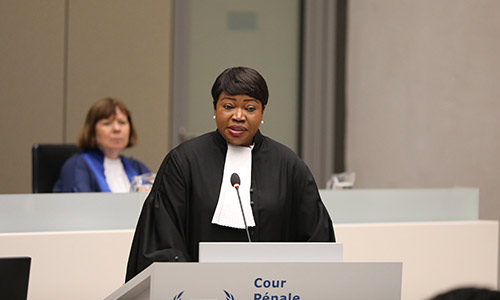
The prosecutor of the International Criminal Court (ICC) has issued a preliminary determination to investigate Nigerian security forces over allegations of “crimes against humanity” and “war crimes”.

This is coming on the heels of allegations human rights abuses against the country’s security forces in the north-east and other parts of Nigeria.

The determination, issued on Friday, was silent on the specifics — such as the Lekki shootings — but declared “are also sufficiently grave to warrant investigation” by ICC.

The Office of the Prosecutor of the ICC conducts independent preliminary examinations, investigations and prosecutions of the crime of genocide, crimes against humanity, war crimes and the crime of aggression.

Fatou Bensouda, the outgoing ICC prosecutor, said there is “reasonable basis to believe that members of the Nigerian Security Forces (“NSF”) have committed the following acts constituting crimes against humanity and war crimes: murder, rape, torture, and cruel treatment; enforced disappearance; forcible transfer of population; outrages upon personal dignity; intentionally directing attacks against the civilian population as such and against individual civilians not taking direct part in hostilities; unlawful imprisonment; conscripting and enlisting children under the age of fifteen years into armed forces and using them to participate actively in hostilities; persecution on gender and political grounds; and other inhumane acts”.

Below read the full press statement

Today, I announce the conclusion of the preliminary examination of the situation in Nigeria.

As I stated last year at the annual Assembly of States Parties, before I end my term as Prosecutor of the International Criminal Court (“ICC” or the “Court”), I intend to reach determinations on all files that have been under preliminary examination under my tenure, as far as I am able. In that statement, I also indicated the high likelihood that several preliminary examinations would progress to the investigative stage. Following a thorough process, I can announce today that the statutory criteria for opening an investigation into the situation in Nigeria have been met.

Specifically, my Office has concluded that there is a reasonable basis to believe that members of Boko Haram and its splinter groups have committed the following acts constituting crimes against humanity and war crimes: murder; rape, sexual slavery, including forced pregnancy and forced marriage; enslavement; torture; cruel treatment; outrages upon personal dignity; taking of hostages; intentionally directing attacks against the civilian population or against individual civilians not taking direct part in hostilities; intentionally directing attacks against personnel, installations, material, units or vehicles involved in a humanitarian assistance; intentionally directing attacks against buildings dedicated to education and to places of worship and similar institutions; conscripting and enlisting children under the age of fifteen years into armed groups and using them to participate actively in hostilities; persecution on gender and religious grounds; and other inhumane acts.

While my Office recognises that the vast majority of criminality within the situation is attributable to non-state actors, we have also found a reasonable basis to believe that members of the Nigerian Security Forces (“NSF”) have committed the following acts constituting crimes against humanity and war crimes: murder, rape, torture, and cruel treatment; enforced disappearance; forcible transfer of population; outrages upon personal dignity; intentionally directing attacks against the civilian population as such and against individual civilians not taking direct part in hostilities; unlawful imprisonment; conscripting and enlisting children under the age of fifteen years into armed forces and using them to participate actively in hostilities; persecution on gender and political grounds; and other inhumane acts.

These allegations are also sufficiently grave to warrant investigation by my Office, both in quantitative and qualitative terms. My Office will provide further details in our forthcoming annual Report on Preliminary Examination Activities.

The preliminary examination has been lengthy not because of the findings on crimes – indeed, as early as 2013, the Office announced its findings on crimes in Nigeria, which have been updated regularly since. The duration of the preliminary examination, open since 2010, was due to the priority given by my Office in supporting the Nigerian authorities in investigating and prosecuting these crimes domestically.

It has always been my conviction that the goals of the Rome Statute are best served by States executing their own primary responsibility to ensure accountability at the national level. I have repeatedly stressed my aspiration for the ability of the Nigerian judicial system to address these alleged crimes. We have engaged in multiple missions to Nigeria to support national efforts, shared our own assessments, and invited the authorities to act. We have seen some efforts made by the prosecuting authorities in Nigeria to hold members of Boko Haram to account in recent years, primarily against low-level captured fighters for membership in a terrorist organisation. The military authorities have also informed me that they have examined, and dismissed, allegations against their own troops.

I have given ample time for these proceedings to progress, bearing in mind the overarching requirements of partnership and vigilance that must guide our approach to complementarity. However, our assessment is that none of these proceedings relate, even indirectly, to the forms of conduct or categories of persons that would likely form the focus of my investigations. And while this does not foreclose the possibility for the authorities to conduct relevant and genuine proceedings, it does mean that, as things stand, the requirements under the Statute are met for my Office to proceed.

Moving forward, the next step will be to request authorisation from the Judges of the Pre-Trial Chamber of the Court to open investigations. The Office faces a situation where several preliminary examinations have reached or are approaching the same stage, at a time when we remain gripped by operational challenges brought on by the COVID-19 pandemic, on the one hand, and by the limitations of our operational capacity due to overextended resources, on the other. This is also occurring in the context of the pressures the pandemic is placing on the global economy. Against this backdrop, in the immediate period ahead, we will need to take several strategic and operational decisions on the prioritisation of the Office’s workload, which also duly take into account the legitimate expectations of victims and affected communities as well as other stakeholders. This is a matter that I will also  discuss with the incoming Prosecutor, once elected, as part of the transition discussions I intend to have. In the interim, my Office will continue to take the necessary measures to ensure the integrity of future investigations in relation to the situation in Nigeria.

The predicament we are confronted with due to capacity constraints underscores the clear mismatch between the resources afforded to my Office and the ever growing demands placed upon it. It is a situation that requires not only prioritization on behalf of the Office, to which we remain firmly committed, but also open and frank discussions with the Assembly of States Parties, and other stakeholders of the Rome Statute system, on the real resource needs of my Office in order to effectively execute its statutory mandate.

As we move towards the next steps concerning the situation in Nigeria, I count on the full support of the Nigerian authorities, as well as of the Assembly of States Parties more generally, on whose support the Court ultimately depends. And as we look ahead to future investigations in the independent and impartial exercise of our mandate, I also look forward to a constructive and collaborative exchange with the Government of Nigeria to determine how justice may best be served under the shared framework of complementary domestic and international action.

The Office of the Prosecutor of the ICC conducts independent and impartial preliminary examinations, investigations and prosecutions of the crime of genocide, crimes against humanity, war crimes and the crime of aggression. Since 2003, the Office has been conducting investigations in multiple situations within the ICC’s jurisdiction, namely in Uganda; the Democratic Republic of the Congo; Darfur, Sudan; the Central African Republic (two distinct situations); Kenya; Libya; Côte d’Ivoire; Mali; Georgia, Burundi Bangladesh/Myanmar and Afghanistan (subject to a pending article 18 deferral request). The Office is also currently conducting preliminary examinations relating to the situations in Bolivia; Colombia; Guinea; the Philippines; Ukraine; and Venezuela (I and II), while the situation in Palestine is pending a judicial ruling.

Court Jails Enugu Polytechnic Rector, Dr. Isidore Ojukwu, For N1.1m Fraud Against Students

Justice N.I. Buba of the Federal High Court, Enugu, on Thursday, December 10, 2020, committed Dr Isidore Ojukwu Nwankwo to prison for fraud.

Nwankwo, former Rector, Enugu Polytechnic, Ndeabor, Ani-Nri, Local Government Area, was prosecuted by the Enugu Zonal Office of the Economic and Financial Crimes Commission, EFCC, on six-counts charges, bordering on conspiracy and obtaining money under false pretence to the tune of N1,153,700.00 (One Million, One Hundred and Fifty-three Thousand, Seven Hundred Naira), being the amount he obtained by fraud from some students of the school in contravention of Section 1(1)(a) of Advance Fee Fraud and Other Fraud Related Offences Act, 2006 and Punishable under Section 1(3) of the Same Act.

Nwankwo’s journey to prison began when one Eze and 19 other students of the school petitioned the Enugu Zonal Office of the EFCC, alleging that they were deceived into believing that the school was partly owned by the Enugu State government and accredited by the appropriate authorities, following which they paid the sums of N5, 000 for admission form, N10, 000 for acceptance fee and N35, 000 for first semester school fees, before discovering that it was an illegal institution.

An investigation by the EFCC, revealed that the state government has no business with the school; and that the school is neither recognized by the state government, nor registered with the National Board for Technical Education (NBTE) and Corporate Affairs Commission (CAC).

While noting that prosecution counsel, Michael Ani Ikechukwu, proved his case against the defendant beyond reasonable doubts, Justice N.I. Buba convicted and sentenced him to one year imprisonment and further ordered him to restitute the students, the sum of N1,153,700.00.

Thenigerialawyer

Lagos State University Increases Tuition Fee By 168% For Incoming Students For 2020/2021 Session

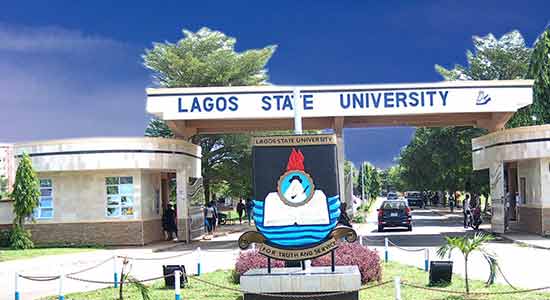
Lagos State University (LASU), Ojo, has increased its school fees by 168 per cent of the previous charges.

The university is currently the second-best university in Nigeria queuing behind the University of Ibadan as rated by the Times Higher Education in its latest world universities ranking. It is also one of the universities in the country that always record the highest numbers of candidates seeking admission.

The new fees, which is N 67, 048.50 against N25,000 (representing 168.2 per cent) of the previous charge per session, is applied only to the incoming students for the 2020\2021 academic session and those who would be coming after them while the old students will continue to pay the old fees till their graduation.

The coordinator of Centre for Information Press and Public Relations of the university, Mr Ademola Adekoya, confirmed the fees increment to Tribune Online on an interview, on Friday.

He said the increment which had been approved by the Governing Council of the university was a decision jointly taken by all the stakeholders in the university including the students and various staff unions.

He said the increment became necessary for the university to be able to meet the increasing financial obligations that would further lead to its progress.

He said the state government as the proprietor could not all alone raise enough funds to sustain let alone improve the quality of services being delivered by the university.

He said the university had maintained the old fees for many years and would not be able to cope again on its mandates satisfactorily should it retain the old fees.

He said every student of LASU irrespective of course of study is now being engaged in rigorous training on one entrepreneurial skill or the other that would equip them to stand on their own economically even before graduation.

He said the increment would have even been higher if based on the quality of services being rendered by the university but for children from poor homes to also benefit.

Thenigerialawyer

Thanks, But No Thanks

Uneasy lies the head
It is said –
Of he who wears
The crown - or so pretends

In case you need proof
Look no further than
The present occupant
Of Aso Drive, Mr. Aloof

Excuse me,
Can you be more specific?
Come on, you know who I mean
Who else, but Him

However, in case you
Still feign ignorance
It is none other than
Mr. Bu . . . (you know who)

Why does he always seem
To be on the spot
Perpetually, constantly –
Despite his best efforts?

Having coasted to office
On the strength of
Tremendous public goodwill – and belief
That he is a Messiah of sorts

The last five and a half
Or so years
Have left him gasping for breath
In terms of his performance

Many (including his base) –
The Core North
Have written him off
And lost faith

With his opponents,
He fares even worse
Because, to them,
He has put every foot wrong

But, by far his greatest undoing
Has been the rampant insecurity
Never the best – even at the best of times
Under him, its scale simply boggles the mind

From North, South, East & West
The cry has been: “Nigeria is not well”;
“The country is sick”
Who will heal it?

Nay, deliver it –
From its amalgam of threats:
Cyber-criminals, armed robbers, bandits
Herdsmen, kidnappers and insurgents

Seldom, it seems
Has Nigeria been so gripped
By a seemingly endless
Wave of casual, random violence

Sometimes State-sponsored
(As epitomized by SARS)
But, more commonly by non-State actors
So-called terrorists and organized criminal gangs

Operating with brazen impunity
In the face of weak and compromised
Institutions of State Authority
Who will stem the tide?

Is it the political class?
Ordinary folks tried it with #EndSARS
With mixed results
Perhaps, the Legislature?

And, why not –
After all, they are
The people’s agents, the law-makers
Accordingly, in their wisdom

They resolved to summon
The President – or to invite him
Whatever – the difference is mere legalese
Will he come or not?

Having initially indicated
His readiness/willingness
To honour the invite
His Chief Law Officer thought otherwise

Trust our people
That was all they needed
To volunteer different points of view
Both learned and unlearned

Overnight, every Nigerian
Became an expert
In constitutional law
Sometimes leaving the real experts lost

In the ensuing confusion
Few seemed to recall
A similar scenario
Not too long ago

When there was a public clamour
For the President to address the nation
Unfortunately, when he eventually did
It was somewhat underwhelming

So, two months on
Has anything happened to change the man
Nothing, at least, that I can think of
Therefore, the problem must be our amnesia

However, beyond the legal –
Or even moral
Imperative of a Presidential Dialogue
With the Legislature

Isn’t it high time
We asked ourselves:
“Aren’t we, by now, used to Mr. President’s style”?
Isn’t it pointless to expect him to be different –

From the man
We have come to know
Or loathe –
(If you are no fan)?

To be honest, if we must
Correctly decode his ambivalence
At the Parliamentarians’ request
We should first pose a few questions

Are the constitutional guarantees
Of freedom of speech
Association and the doctrine
Of separation of powers applicable to him?

Is the President really bound - willy nilly
To interface with the Legislature
In the circumstances?
Does the Constitution really impose that obligation?

If a court’s writ
May not be served on him
Can he really be at the beck
And call of the 3rd arm of Government?

Of what use is his presumed immunity
If he cannot decline – albeit politely
A move away from his comfort zone
Into ‘uncharted’ territory – parts ‘unknown’?

More pointedly, is there any sanction
Attached to his declining the summons?
In other words,
Is it merely binding in honour?

Short of prescribing
Or condoning
Arrogance – either Presidential
Or by any other Branch

I believe
The title of this piece
Best sums up
Mr. President’s disposition

Written by Abubakar D. Sani, Esq08034533892

#End SARS: Northern Elders Attack Ango Abdullahi for accusing Igbos of violence

Some Northern elders have rebuked Ango Abdullahi, Chairman of Northern Elders Forum, NEF, for accusing people of the Southeast of attacking Northerners in other parts of Nigeria.

The elders under the aegis of Coalition of Northern Elders for Peace and Development described Abdullahi’s remark as false, insensitive, callous and meant to instigate Nigerians against each other.

Abdullahi had made the claims in Port Harcourt, the Rivers State capital while kickstarting a tour of Northern communities in other parts of the country affected by the End SARS protest.

The NEF Chairman had said it was unfortunate that the Southeast, known for alleging marginalization, were behind attacks on Northerners in other parts of the country.

However, a statement by the group’s National Coordinator, Engr. Zana Goni and National Women Leader, Hajia Mario Bichi, urged Nigerians to ignore Abdullahi’s comments, saying he spoke for himself and not on behalf of the North.

The statement reads: “How can he say Igbo people killed Northerners? Nothing can be more misleading than this.

“We wish to condemn in the strongest possible terms the statement credited to a well-read and respected elder statesman from our region, Prof. Ango Abdullahi, to the effect that Igbo people killed many northerners in the South East during the #EndSARS protest which was hijacked by some sponsored criminal elements.

“This statement is false, unfortunate, insensitive, callous and meant to instigate Nigerians against one other.

“We wish to let Nigerians know that Prof. Ango Abdullahi’s statement was his personal opinion and did not represent the position of Northern Elders as he had portrayed. “

It Is Illegal To Deduct N50 As Stamp Duty Charges On Customers Bank Account, Court Rules Against CBN, Zenith Bank

The Federal High Court sitting in Asaba presided over by Hon. Justice (Dr.) Nnamdi O. Dimgba in a case between Mr. Rupert Irikefe and CBN, Zenith Bank & Attorney General of the Federation has ruled that it is illegal to deduct #50 as stamp duty on teller deposits or electronic transfers of monies from #1,000 above.

This is contained in a Judgement of the Court delivered on Thursday, 9th day of December, 2020.

By an amended originating summons filed on 15th day of October, 2020, the Plaintiff sought for 8 declarations against the Defendants.

He urged the Court to declare that “the conduct of the 1st Defendant (CBN) in continuing to impose, direct the imposition, deduction or remittance to it by the 2nd defendant and or receiving the sum of #50 Naira as stamp duty on electronic transactions or transfer of monies from #1,000 (One Thousand Naira) upwards from Plaintiff’s current account no. 1014242877 despite the subsistence and or its awareness of the Judgements in Appeal No. CA/L/437A/2014 and Suit No. FHC/L/CS/126/ 2016 is arbitrary, unlawful, illegal, dismissive and contemptuous of the lawful orders of superior courts of competent jurisdiction, condemnable, null and void and of no effect”.

In addition, the Plaintiff claimed the sum of #50 million as general damages and #50 million as exemplary damages.

Meanwhile, the Defendants all greeted the suit with preliminary objections which were all dismissed by the Court as unmeritorious.

However, on the substance of the suit, the Court reformulated a sole issue for determination as follows:

“Whether from the totality of the materials presented before the Court, the Plaintiff is entitled to any or all of the reliefs sought”.

The Plaintiff argued that by the decisions of Courts on the subject, it is unlawful and disrespectful of the Defendants to continue to impose the charges on his account, adding that Judgement of a Court is binding and subsisting until same is set aside.

He further argued that CBN does not have the competence to impose a tax as the power to so do resides in the Federal Inland Revenue Service (FIRS) by the dint of Section 87 of the Stamp Duties Act and relevant provisions of the FIRS ACT, 2007.

Conversely, CBN argued that it is protected from any liability whatsoever by virtue of Sections 52(1) and 53(1) of the CBN Act and BOFIA respectively which imbue the CBN with immunity from any act done or undone in good faith.

In addition, the 2nd Defendant (Zenith Bank) argued that it cannot be liable because it was merely acting on the instruction of a disclosed principal.

On the part of the AGF, he argued that the Plaintiff had not been able to place sufficient materials before the Court to warrant a grant of the reliefs.

THE DECISION OF THE COURT

Having carefully listened to the pith and substance of the case advanced by the parties, firstly, the Court noted that the argument of the CBN is misconstrued and cannot stand.

“To enjoy the protection of the referenced provision, firstly, the action done or omitted to be done should be in good faith; and secondly, the actions done or undone in good faith should be one done or undone in the process of the execution of any powers conferred upon the apex bank by the legislation”, the Court held, adding that can it be said that the purported deductions made from the Plaintiff’s account “in the face of subsisting decisions of Courts prohibiting same, one done in good faith? I do not believe so. The reason is not far fetched.”

The Court further said that CBN participated in “Suit No FHC/L/CS/126/2016 between Retail Supermarkets Nigeria Limited v. Citi Bank Limited and Central Bank of Nigeria…challenging…its circular with reference – CBN/GEN/DMB/02/006” where CBN instructed Banks to be deducting the said #50 as stamp duty, adding that the Court “held that it was unlawful for the apex bank and the commercial banks to continue to make those deductions”.

The Court, therefore, made the below notable pronouncements:

“The question, is having been aware of the above clear decisions of competent courts (of this Court and Court of Appeal), why then did the 1st Defendant and the 2nd Defendant continue to treat those decisions as if they were not existing, and to continue to implement the provisions of the circular which had already been nullified as being inconsistent with the law, namely the Stamp Duties Act?

“I have never ceased to wonder the practice that is so very much exacerbated in current climes, where agencies of the government treat decisions of courts of law with disdain, and carry on as if this decisions were not in existence. In my view, and I have raised this alarm anytime an opportunity presents itself, (and I do so for posterity,) obedience to the rule of law of which respect for the authority and decisions of law is an integral part, is at the foundation and the heart of the stability of our society. Everybody has a stake in ensuring that the rule of law prevails, and that the authority of courts of law is held as sacred. The reason is because ultimately, everybody turns to the court for protection, for in the moral authority of the courts lie salvation for all. This includes for the weak, in the immediacy, and for the strong, potentially. Human and executive powers are all transient. Stripped by the ephemerality that attends human affairs of his raw or executive power, the strong today inevitably turns out to be the weak tomorrow. And the question is where will the strong, now weakened, turn to for protection tomorrow, if he or she in the hours of strength of today, facilitate or participate in the destruction of the courts, to which all ultimately turn to as an alcove of salvation in the moment of vulnerability? This is a question that I will continue to pose, and for which all stakeholders must and should ruminate in their minds.”

Furthermore, the Court ruled that by the dint of Section 287 of the 1999 Constitution, the Defendants are bound by the decisions of the Court and are under obligation to enforce same.

The Court further stressed:

“Coming down to earth, my empathetic view is that by continuing with the deductions of stamp duty charges from the bank account of the Plaintiff and having same remitted to it, inspite of clear and binding decisions of Court prohibiting same, the 1st Defendant (CBN) has not acted in good faith; it actually acted in bad bad faith. By its every action, the 1st Defendant cannot take lawful shelter under Sections 52(1) and 53(1) of the CBN Act and BOFIA”.

Besides, the Court dispelled the contention of Zenith Bank that it was acting for a disclosed principal, ruling that “the exception to the general rule of liability in agency is that, where an agent is a wrongdoer, he cannot enjoy any protection from liability simply by pleading that it is an agent of a disclosed principal.”

The Court added that Zenith Bank “became a wrongdoer when they willfully disobeyed the judgement of Courts. They should therefore suffer the consequence. The truth is that when it comes to obedience to the law, everybody is on his own and should exercise independent judgment.”

In the whole, the Court adjudged the Plaintiff’s suit to be meritorious and awarded the sum of # 2 million damages adding that “it is granted to set an example that it is reprehensible conduct to willfully disobey decisions of competent courts of law”.

Also, the Court awarded the cost of #500,000 in favour of the Plaintiff against the CBN and Zenith Bank.

Thenigerialawyer

CBN releases categorisation for payment system

The Central Bank of Nigeria (CBN), in line with its commitment to promote a strong and credible payment system, has approved new license categorisations for the payments system.

A circular signed by Mr. Musa Jimoh, Director, Payments System Management Department of the apex bank, states that the new framework offers clarity for new and existing market participants.

“Given the significant evolution and innovation in the Nigerian payment system, all payment service providers and stakeholders are invited to note the following in this regards:

“Payments system licensing has been streamlined according to permissible activities in four broad categories.

“The categories are Switching and Processing, Mobile Money Operations (MNOs), Payment Service Solutions (PSSs) and Regulatory Sandbox,” he said.

Jimoh stated that only MMOs were permitted to hold customer funds, adding that companies with licenses within any of the other categories were not permitted to hold customer funds.

He said that companies seeking to combine activities under the switching and MMO categories were only permitted to operate under a holden company structure with subsidiaries clearly delineated.

“Payments system companies in the PSS category may hold any of the PSSP, PTSP, and Super Agent licence or a combination of the licences thereof.

“All payment service providers and stakeholders in the payments system are required to ensure strict compliance with these requirements and all other payment system regulations,” he said. (NAN)

Buhari’s Summon: Comparing NASS With British Parliament Has No Basis, Orbih (SAN) Tells Prof. Sagay

Chief Ferdinand Orbih, a renown Senior Advocate of Nigeria (SAN), has disagreed with the Chairman of the Presidential Advisory Committee Against Corruption (PACAC), Prof. Itse Sagay (SAN), over his statement that just like the position in Britain where Parliament cannot summon the Queen to respond to any issue, summoning Buhari by the National Assembly amounts to denigrating the sovereignty of Nigeria

In a reaction made available to TheNigeriaLawyer, Chief Orbih said Prof. Sagay’s comparison has no basis

“Prof, there is no basis for comparison between the fake Presidential system of Government we practice in Nigeria and the Parliamentary system that is practiced in Britain.” Orbih said

Giving reasons for the assertion, Orbih said, “Firstly, despite all pretentious to the contrary, President Buhari is not the King of Nigeria. There is no king under our Constitution.”

Secondly, Orbih said “we have a written Constitution whereas Britain is largely governed by unwritten conventions.”

Thirdly, Orbih said in England the Queen is a ceremonial head of state while Executive powers lies with the Prime Minister

“Thirdly, the Queen of England is a ceremonial head of State. Executive powers reside in the Prime Minister who is responsible for the day to day administration of the country.

“He is an elected member of Parliament. There is therefore no need for Parliament to summon him. He sits in Parliament like any other member though first among equals. His government policies are subjected to rigorous debates and examination at all times.” he said

Lastly, he said, “we are in a national security emergency and this needs to be addressed seriously and urgently.”

Chief Orbih therefore cautioned that “This is not the time for petty party politics.”

Recall that Sagay had thrown his weight behind the position of the Attorney-General and Minister of Justice, Abubakar Malami that the National Assembly lacks the constitutional powers to summon President Muhammadu Buhari.

Speaking in a chat with Daily Independent, Sagay said the President is higher than every other person in the country whom the National Assembly cannot equate to Ministers and head of agencies that they can summon.

Sagay who said summoning Buhari amounts to denigrating the sovereignty of Nigeria also reminded the lawmakers that the British Parliament cannot summon the Queen to respond to any issue.

Thenigerialawyer

TIPS