Home Blog Page 1143

The Wealthy Nigerians Buying Citizenship Overseas

Every year an increasing number of Nigerians flee poverty and unrest at home. Now, rich Nigerians are planning their escape too. And they’re taking their money with them.

Dapo has spent too long at home in Lagos, Nigeria. Back in October, protests against the SARS police unit kept him from going to his office. “First, we were told to stay at home because of the coronavirus. Then this,” he says.

A wealthy Nigerian, Dapo, who is in his late 30s, does not want to make himself identifiable by giving his surname and age, lest it draw unwanted attention.

He has had a “backup plan” for getting out of Nigeria for some time, he says. “I have Maltese citizenship. I can leave for there any time.” With one small obstacle – a 14-day quarantine upon arrival – Dapo could be permanently in Malta any time he pleases. He is not planning to go imminently, but describes it as his “plan b’’.

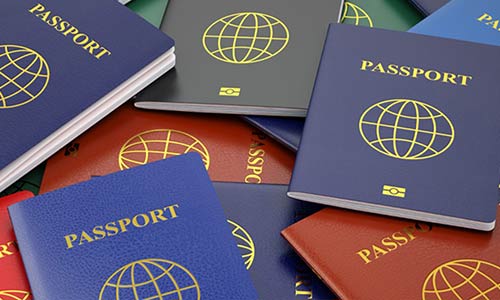
Dapo is one of a rapidly growing number of Nigerians who have bought so-called “golden visas” or foreign citizenships-by-investment this year. In his case it was Malta, the Mediterranean island where citizenship can be acquired for a minimum investment of 800,000 euros ($947,180) through the Malta Citizenship by Investment Programme.

Not that he has any special love for Malta. A record 92 countries around the world now allow wealthy individuals to become residents or citizens in return for a fee, sometimes as low as $100,000 but often several million dollars. It is billed as a “win-win”: The country gets much-needed foreign investment and, in return, the new citizens have new passports that open up more of the world to travel or live in.

Golden visas are the lesser-reported side of the Nigerian migration story. Every year thousands of Nigerians make their way to Europe via perilous crossings over the Sahara and Mediterranean. Now their wealthier counterparts are also making their way to Europe but via a different route.

A record year for golden visas
Whether rich or poor, the reasons for leaving one’s home country are often the same. Fear of political uncertainty at home and hope for better opportunities elsewhere. But 2020 has been exceptional.

Like Dapo, Folajimi Kuti, 50, was watching the #EndSARS protests from his home in Lagos in October. “I have children, they’re teenagers, and they’re asking me questions like, ‘How did we get here?’” he says, referring to the violence that accompanied demonstrations against the controversial Special Anti-Robbery Squad (SARS).

Kuti says he has believed for some time that social unrest would boil over in Nigeria, because of issues of poverty and police brutality. “It had been clear for the past two or three years that something was going to happen. It’s happened now in 2020 but, frankly, we’ve been expecting this outburst for a while so it wasn’t a matter of ‘if’. It was a matter of ‘when’.”

Citizenship or residency abroad has become appealing, he adds. As a financial adviser to the wealthy, Kuti knows the process of applying for one having walked clients through it before. Most of his work involves advising Nigeria’s growing number of millionaires about investments and wealth planning. But now they are asking about foreign citizenships and Kuti himself is tempted by the idea. “Just knowing that if you need to go you certainly could and move without any restriction.”

The rush for golden visas among rich Nigerians started before October’s SARS protests. At London-based Henley & Partners, one of the world’s largest citizenship advisory firms, applications by Nigerians increased by 185 percent during the eight months to September 2020, making them the second-largest nationality to apply for such schemes after Indians.

More than 1,000 Nigerians have enquired about the citizenship of another country through Henley & Partners this year alone, which Paddy Blewer, head of marketing, says “is unheard of. We’ve never had this many people contacting us”.

Many, like Kuti, saw political problems ahead and wanted an escape plan. Others were focused on coronavirus: What if the pandemic overwhelms Nigeria?

“There is a lack of primary healthcare capacity that would be able to manage with either a second wave or whatever happens in, say, 2025,” says Blewer. “Let’s say there is COVID-21 still going on in 2025 that is of an order or magnitude worse. It’s, ‘Do I want to be based here and only based here, or do I want an alternative base of operations where I believe I will be safer and I will be able to run my global businesses’.

“And, I think, that’s what COVID has driven.”

It was in July, when the number of COVID-19 cases in Nigeria escalated, that wealthy Nigerians started looking more seriously at citizenship abroad, experts say. “Those with medical conditions that could not fly out – a lot of them are buying passports just because if there is any problem they can fly out,” says Olusegun Paul Andrew, 56, a Nigerian entrepreneur and investor who spends much of the year in the Netherlands.

“Flying out” of Nigeria is hard and not just because of the coronavirus pandemic. Just 26 countries allow Nigerian passport holders visa-free entry, many of them part of West Africa’s ECOWAS arrangement. Both the United Kingdom and Europe’s Schengen zone require Nigerians to obtain visas ahead of travelling.

For the wealthy, this is too much hassle. “They don’t want to be queueing for visas for any EU country or whatever,” says Andrew. Instead, why not purchase the citizenship of a country with visa-free access to Europe?

To Europe, via the Caribbean
Bimpe, a wealthy Nigerian who also does not wish to give her full name, has three passports. One Nigerian, which she says she never uses, and two from Caribbean nations: St Kitts and Nevis; and Grenada.

The St Kitts and Nevis passport, which cost her $400,000 via a real estate investment programme, was useful when she travelled between London and New York on business as it allows for visa-free travel to the UK and Europe. But now that she has retired in Abuja, Bimpe, whose husband has passed away, wants her three adult sons to have the same opportunities to travel and live abroad.

“My kids were interested in visa-free travel. They are young graduates, wanting to explore the world. So that was the reason for my investment,” she explains.

Her investment to gain a Grenada passport for herself and her sons took the form of a $300,000 stake in the Six Senses La Sagesse hotel on the Caribbean island, which she bought in 2015 through a property development group called Range Developments. Like most countries offering their citizenship for sale, Grenada allows real estate investments to qualify for a passport.

Bimpe’s family has lived overseas before – spending nine years in the UK between 2006 and 2015. Of her three sons, she says: “One, for sure now, is never going to leave Nigeria. He loves it here. The second one lives in England. He’s been in England long enough to get British residency. My youngest – for him, living abroad is a very, very attractive option. He’s not very happy [in Nigeria]. He went to England very young – at age 12 – and he’s had a problem adjusting since. He’s been back in Nigeria five years and he’s still not settled.”

Now aged 26, Bimpe’s youngest son is looking at settling in the UK or in the US where, thanks to his Grenada citizenship, he qualifies for an E-2 visa, something not available to his fellow Nigerians since President Donald Trump’s ban on immigrant visa applications in February. Bimpe believes his career opportunities in acting – he studied Drama in the UK – are better abroad, and therefore considers the Grenada citizenship to be a worthwhile investment.

Neither Bimpe nor her sons have ever been to Grenada even though their investment allows them to stay on the Caribbean island, once known as The Spice Island. “I intend to go. I would like to go,” she says. “Just when I did [the investment], it was soon after my husband died and I wasn’t in the mood for travel and then I got my passport but there was no good reason for travel due to the pandemic.”

The Six Senses La Sagesse is being constructed by Range Developments, whose founder and managing director, Mohammed Asaria, says it is not unusual for investors never to visit. In fact, since there is no obligation for citizenship investors to visit Grenada, interest in the scheme has ballooned among Nigerians.

“We have between high single figures and low double-digit sales of hotel units on a monthly basis to Nigerians. The average investment is just under $300,000,” says Asaria. “It’s a big market for us. And it’s going to get bigger. There are 300 million people [in Nigeria].” Of these, more than 40,000 are millionaires and, therefore, potential customers for golden visas, according to the Knight Frank Wealth Report.
It is a similar story across the Caribbean. Arton Capital, a citizenship advisory group, says demand from Nigerian families for Antigua and Barbuda citizenship is up 15 percent this year compared with the last.

St Lucia has also seen a record number of Nigerians applying in 2020. “It’s more than it’s ever been over the past four years,” says Nestor Alfred, CEO of the St Lucia Citizenship-by-Investment Unit.

The citizenship market is not exclusive to the Caribbean, but these are the cheapest and they maintain that all-important visa-free access to Europe that their clients are hankering after.

Tax incentives
“I’m rich but I’m not a Donald Trump. I wasn’t looking for a tax escape,” says Bimpe.

Investing in a foreign citizenship is not illegal for Nigerians, but the issue of wealthy citizens moving their assets overseas is a thorny one in Nigeria, where about $15bn is lost to tax evasion every year, according to the country’s Federal Inland Revenue Service. Much of that money finds its way to the Caribbean, as was highlighted in the leaked documents that formed part of the Panama Papers in 2016.

The tax benefits of an overseas citizenship are undoubtedly attractive. Citizens can become tax residents of countries like Dominica, where there is no wealth or inheritance tax, or Grenada which offers “corporate tax incentives”. In Europe, Malta has long been courting hedge funds with its light-touch regulations.

Being a citizen of a country with a more stable currency is also appealing to the wealthy. “Second citizenship helps with capital mobility. Pull up a graph of the Naira. If you look at the Naira for the last 10 years it’s been a horrible journey,” says Asaria. Better, therefore, in the minds of the wealthy, to own assets in euros or even East Caribbean dollars which are pegged to the US dollar.

“Businesses are struggling, inflation on the rise, insecurity, and a host of other issues. These issues have prompted an increase in citizenship or residency-by-investment from wealthy Nigerians in a bid to secure a better future for their families in developed countries,” says Evans Ahanaonu, a Lagos-based representative for High Net Worth Immigration, a citizenship advisory firm. Grenada and Turkey are popular for clients wanting quick access to Europe, he adds, while some go straight for the UK Innovator Visa which means setting up a business in the UK.

Given the number of applications processed by the citizenship advisory firms interviewed just for this article, a conservative estimate would put the amount invested by Nigerians into citizenship schemes at more than $1bn this year alone.

Where rich and poor migrants meet
The loss of wealth from Nigeria has severe implications for levels of employment in the country. With wealthy businesspeople investing their capital outside Nigeria rather than in it, there is less funding for local businesses or government projects which might otherwise generate employment. This, in turn is causing more poorer Nigerians to want to move overseas as well, in search of better work opportunities, a trend backed up by the findings of a 2018 survey by Afrobarometer, the data analysis group.

Just before the pandemic struck, Kingsley Aneoklloude, 35, was able to make his way to Europe, but via a very different route.

He was working as a mechanic in his village in Edo State, one of the country’s poorer provinces which have been untouched by oil wealth, where he earned 1,500 naira ($3.95) a week.

The salary was poor but the final straw was police brutality. Aneoklloude was briefly employed as a local election monitor during the 2015 presidential elections. He says he was pressured by representatives of a political party to manipulate ballot papers, but refused, after which he became afraid for his safety. “I left because they were chasing me. Honestly, they come and chase me,” he says.

First, he went to Kano State in the north of Nigeria. Then, in December 2019, Aneoklloude made the dangerous journey to Europe via Niger, then Libya, “where there was a heavy war in Tripoli”, before crossing the Mediterranean.
While adrift on the Mediterranean Sea, his small boat was rescued by Open Arms, an NGO which helps refugees and migrants crossing the Mediterranean. Their ship docked in Lampedusa, one of the Italian Pelagie Islands, where Aneoklloude’s asylum application for Germany was processed.

Now in Potsdam, Germany, he is waiting to hear the outcome of his application for new citizenship and a job. “I have a nine-month contract for work, but they need the immigration officer to sign the contract before I start,” he explains.

At 35, Aneoklloude is just a few years younger than Dapo. Both have witnessed police brutality from different angles, and both saw the Mediterranean as their way out.

But now, with Nigeria’s economy officially in another recession, more will likely follow. It is a dangerous spiral: The more wealth taken out of Nigeria, the fewer jobs available to its poorest.

Editors Note; Written By Ollie Williams and originally published in AL JAZEERA

End Discrimination, Address Inequality To Curb Human Rights Violation — NHRC

The Executive Secretary, National Human Rights Commission (NHRC), Mr Tony Ojukwu, has called on stakeholders to put an end to structural discrimination, ethnicity, nepotism, hatred and intolerance to curb human rights violations.

Speaking, yesterday, at the celebration of the 2020 International Human Rights Day in Abuja, he said equality and non-discrimination were core requirements for a post-COVID-19 recovery.

He said there was the need to address the issue of inequalities by promoting and protecting economic, social and cultural rights of the people.

He called for an end to sexual and gender-based violence, stressing the need to create an environment where every segment of society, especially women, boys and girls, would have equal opportunity to realise their full potentials in dignity and contribute equally to national development.

On her part, United Nations High Commissioner for Human Rights, Michelle Bachelet, called for increase and intensify in the resolve and efforts to achieve the Sustainable Development Goals which are a concrete agenda for universal human rights.

Thenigerialawyer

UK Travellers Could Be Barred From EU Entry On 1 January

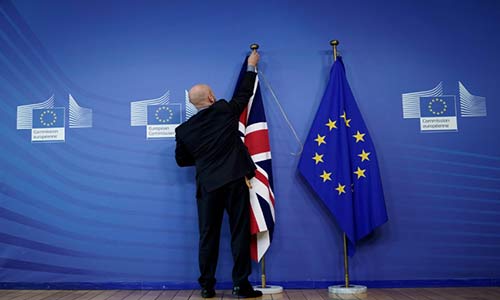
UK travellers could be barred from entering the EU from 1 January as travel rules associated with being part of the EU expire and pandemic restrictions block entry.

According to BBC, unrestricted travel to countries within the bloc will no longer automatically apply to UK residents from then.

This means entry into the EU would then be based on essential travel only.

Currently, only countries with low coronavirus infection rates qualify for non-essential travel.

There are only eight countries with low Covid rates that are on the approved list for free travel and there are currently no plans to add the UK to that list.

Foreign Secretary Dominic Raab told the BBC’s Today programme that Covid restrictions would depend on what the EU and its member states decide.

He added that “restrictions on travel, inevitably, is going to be something that’s kept under review”.

With talks about a trade deal between the UK and the EU still continuing, there is a possibility this could change.

Alternatively, individual member state countries could decide to override the EU rules and create a corridor with the UK.

At the moment, the UK is considered to have the same status by the EU as countries such as Norway and Switzerland, which are members of the European Free Trade Association, travel expert Simon Calder told the BBC.

Mr Calder said that many regions dependent on tourism, such as the Canary Islands, may well make an exemption for British tourists, “but there’s no obligation to at the moment”.

Paul Charles, chief executive of travel consultancy the PC Agency, agreed, saying: “Cool heads need to prevail at this politically difficult time as travel and tourism is such a key contributor to economic growth in Europe.

“I’m sure that individual countries who need UK tourism will be sensible and override any EU-bloc decision which prevents entry. It is so important now for countries to work together globally to create a consistent approach.”

A spokesperson for airline EasyJet said: “There is no EU blanket law which requires individual states to limit entry from those arriving from outside the EU and so just as they do today, we expect individual European countries to continue to apply their own rules.”

British Airways declined to comment.

Thenigerialawyer

The biggest hoax in 60 years?

Sonala Olumhense December 13, 2020

On Thursday, Justice Sylvanus Nsofor, Nigeria’s Ambassador to the United States, died at 85. I condole with his family.

He was a well-educated lawyer who attracted the attention of General Muhammadu Buhari in 2003 when he delivered a favourable minority judgment in the presidential candidate’s election appeal.

When Mr. Buhari finally took office in 2015, the debt to Nsofor was one he was determined to pay, but by the time he appointed him as US ambassador in 2017, Nsofor was so old he could barely make it to the biggest dance on the diplomatic circuit.

It was an appointment which suggested that Buhari really did not care whether his appointees serve Nigeria or not. Think about it: Washington, D.C. is the capital of diplomatic activities on earth, which is why most nations appoint men and women in their prime.

Our embassy in the Cleveland Park area is all of 100,000 square feet, one of the largest and most demanding diplomatic properties in the American capital.

If Buhari understood any of these, he did not care. The same explanation applies to his maintenance in the office of his over-extended security chieftains.

It was unsurprising that, in marking Nsofor’s demise, Mr. Buhari did not even suggest he had represented Nigeria successfully. Instead, he described him as “an outstanding judge of rare courage and truth who is not afraid to give justice to whom justice is due.”

Nsofor was no longer a judge, but Mr. Buhari apparently did not know that, just as he does not appear to know what his obligations are to the constitution and the people.

That is why the question has now shifted from whether the Nigerian ruler is merely incompetent to whether he is incapacitated. As a historian, I have often pointed out how poorly he has performed, but is the situation worse than that? Is Mr. Buhari mentally incapacitated?

This question must be addressed. In five years, popular trust in Buhari as a man and as a ruler has dwindled not just considerably, but precipitously. He rarely speaks to the country, except in recorded video addresses or in written speeches, and never speaks to the press. Most of all, he never answers questions by himself.

On Thursday, these concerns were elevated when he backed out of a scheduled address to the National Assembly to which he had agreed to speak about the mounting insecurity in the country.

In December 2018, NIP (National Interest Party) presidential candidate, Eunice Atuejide, addressed the subject of Buhari’s fitness for office in an article in TheBoss Newspaper.

“President Buhari is both physically and mentally unable to run the affairs of this country beyond 2019,” she asserted. “It is my right as a concerned Nigerian, and as an interested party being myself a candidate at the forthcoming presidential election to raise this alarm, and to take steps to stop this disaster from happening.”

One of the earliest identifiers of this problem is the communication scholar and journalist, Farooq Kperogi. On January 19, 2019, he wrote as follows:

“On November 23, 2018, for instance, I tweeted that a doctor who has met Buhari during a personal, non-medical visit told me he was troubled that Buhari appeared to evince telltale symptoms of dementia (of which Alzheimer’s disease is a type), which is often characterised by repetitiveness, unawareness, mental deterioration, impaired memory, diminished quality of thought, slurred speech, and finally complete helplessness. That’s why neurologists call dementia ‘failure of the brain.’”

Two weeks ago, Oby Ezekwesili, another former presidential candidate, called for an independent medical panel to assess the physical and mental capability of President Buhari.

“I think that at this stage and depth of fragility of the Nigeria state, privacy has to yield ground to our right to know as citizens, the state of health of Buhari,” she said. “…the conditions of Nigeria have become too grave for us all to sit still and watch a train wreck in the making.”

The train wreck appears to be here. But, where were we?

Five years ago, we were heading to a New Nigeria. A non-Peoples Democratic Party (PDP) Nigeria.

A Nigeria free of wuru-wuru or mago-mago. On the way was a saviour: this same Buhari, who claimed he would lead by example on the journey.

We were going to crush insecurity. Poverty. Unemployment. Hunger. Official indifference, collusion, and complicity. Rigged Elections.

We were going to a country where the resources of the country would be used for the country. A country were the leaders declared their assets and the best people were appointed to office.

In one campaign video, Buhari asked Nigerians, “Is the naira in your bank account of greater value today than it was four years ago? How can we allow the cowards of Boko Haram to take over any part of this country, a sovereign state? How can young people die looking for jobs in Abuja and justice is not met? What is going on here? Is this our country? Allow me prove to you that in our lifetime you and your country can be proud of this country.”

Perhaps he meant some of those things when he read them off a teleprompter, but it was a hoax. In five years, he has proved he is not capable of implementing any of them, and now, even of remembering them. And so, while things continue to deteriorate on every conceivable front, so has the propaganda mounted. And the principal propaganda is the pretence that Buhari leads Nigeria.

If he is leading Nigeria, it is sadly into fire. Think about it: under his watch, Nigeria became the poverty capital of the world. And then it became one of the most insecure nations.

Last week, the US placed Nigeria under its religious freedom blacklist. The same week, Mr. Buhari indicated that he no longer believed in the constitution to which he swore, when he claimed that the National Assembly lacked the powers to summon him. His own cabinet ministers, Babatunde Fashola and Festus Keyamo, both lawyers, had previously affirmed that the Assembly could summon the president.

It was the same week that Nigeria formally sank into its second recession in less than five years, the IMF forecasting that the economy would contract by 4.3 per cent this year, the largest in 40 years.

The World Bank described the Nigerian economy as being on the brink of “unravelling,” and that the coronavirus pandemic would send personal incomes in the country back four decades.

While the pandemic is set to create millions of “new poor” in middle-income countries, the lender singled Nigeria out as being “uniquely vulnerable” because of its precarious pre-pandemic rising unemployment and inflation, alongside falling incomes and its dependency on oil and remittances.

Unravelling. A strong word, and stronger still because Mr. Buhari may not comprehend it or any of the various challenges confronting Nigeria, let alone the sum of them all.

In the best of health, Mr. Buhari has led Nigeria only into trouble. Burdened by squandered trust and questionable health, what magic is he capable of?

And what do we tell those around him who are perpetrating the biggest—and most dangerous—hoax in 60 years?

[This column welcomes rebuttals from interested government officials.]

Copyright PUNCH.

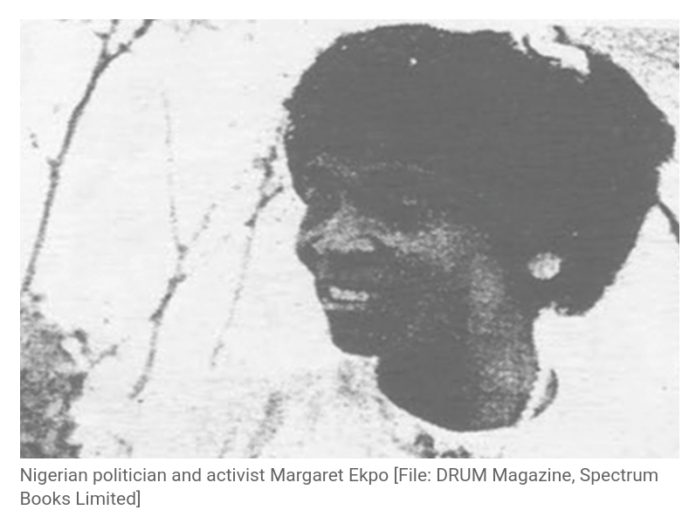
Remembering Margaret Ekpo and the Enugu strike massacre

After the killing of 20 protesters during a mining strike in Nigeria, Ekpo made her name as a feminist and activist.

By Tayo Agunbiade

As her plane touched down in Lagos, Nigeria on Saturday, February 2, 1959, there was only one thing on the mind of the celebrated Nigerian politician and activist, Margaret Ekpo: the upcoming federal elections in December and how she could further her fight for women’s rights on the back of them.

A frequent traveller, Ekpo had just completed a trip to the United States. Now returning to her base in Aba, eastern Nigeria, she was about to deliver another speech from her political armoury.

Regarded as a female “pillar” of the political party the National Council of Nigeria and the Cameroons (NCNC), in eastern Nigeria, Ekpo was met by a large crowd of women who came to welcome her back from her trip.

After exchanging pleasantries with the women, Ekpo urged them to stay in high spirits and launched into political campaign rhetoric. She told them to “smash” the opposition at the forthcoming elections.

Well-known for her uncompromising language, she was never one to disappoint her audience.

Killings at Enugu Colliery

Ten years earlier, a tough-talking Ekpo had eye-balled the colonial authorities during the November 1949 Enugu Colliery strike. During the inquiry that followed the slaughter of 20 protesters during the strike, Ekpo made her name as a no-nonsense feminist who did not mince her words.

In November 1949, a labour union dispute was raised by the Nigeria Africa Mineworkers Union at the British-owned Enugu Colliery, which had coal mines in places such as Obwetti, Udi and Iva Valley, over unfair dismissals, wages and poor working conditions.

The miners protested, and markets and shops were closed in neighbouring towns and villages as local women joined them.

But when police opened fire on the protesters and their supporters at the Iva Valley coal mine, 20 coal miners and one bystander were killed. Many others were injured.

The following month, the colonial government published a notice inviting members of the public to the Enugu Commission of Enquiry for “any persons who desire to give evidence”.

According to The Nigerian Citizen newspaper, which published proceedings from the enquiry, which began on December 12, 1949, among several of the testimonies it heard was that of Mr FR Kay. Kay was a senior British colonial administrator in Owerri Province, in the mid-west of Nigeria. He told the hearing:

“Mrs Margaret Ekpo convened a meeting at which she said had any Black woman been injured in Enugu, she would go into the first house in Aba Division, (eastern Nigeria) where she could find a white woman and would shoot her dead.”

The protests – and Expo’s warning – had taken place against a background of growing nationalist movements, the creation of new political parties and increasing animosity towards the British colonial government.

Incidents such as the 1945 Labour Union General Strike and then the 1949 Enugu Colliery killings, fuelled these tensions.

Political awakening

Ekpo was born in Creek Town, Calabar, in southeast Nigeria in 1914. She attended primary and secondary school, but her plans to benefit from the few educational opportunities available for girls and women at that time were dropped when her father died in 1934.

At the age of 24, she married John Udo Ekpo, a medical practitioner. In 1944, she accompanied him to Ireland, where she finally had an opportunity to pursue higher education, enrolling at the Rathmine School of Domestic Economics in Dublin.

Later, the couple returned to Aba in eastern Nigeria, where her husband commenced his medical career at Aba General Hospital, while she set up a domestic science training school.

Ekpo’s political awakening was sudden. At the height of nationalist agitation for independence from British colonial rule, disaffected Nigerians began convening community meetings to discuss racial discrimination in the colonial civil service. Ekpo participated on behalf of her husband who could not attend because of his work as a civil servant.

As with other departments in the colonial service, medical service departments discriminated against Nigerians in terms of promotions, working conditions and wages. For example, government hospitals were built for the colonial officers and medical services were only accessible by Europeans and, later on, their Nigerian employees. However, Nigerians were not allowed to treat Europeans.

Widespread discontent across the country prompted many Nigerians to align with nationalist political parties such as the National Youth Movement, National Council for Nigeria and the Cameroons, Action Group, Northern Peoples’ Congress, Northern Elements Peoples Union, United Middle Belt Congress and others.

Ekpo’s growing awareness about racial discrimination and the existing weight of oppressive colonial taxation, further radicalised her.

Votes for women – a long time coming

During her career, Ekpo joined ranks with the prominent feminist, Funmilayo Ransome-Kuti, under the umbrella of the Nigerian Women’s Union (NWU). Together, they travelled to different provinces to mobilise women to join the NWU and be a part of Nigeria’s decolonisation journey.

According to the book, The Feminisation of Development Processes in Africa, by Valentine Udoh James and James S Etim, Ransome-Kuti travelled with Ekpo to the Enugu Colliery during the crisis at the coal mine in 1949 and also visited the widows of the deceased.

Ekpo wrote to Ransome-Kuti to express her appreciation for the older woman’s guidance. “I cannot explain to you what new spirit you have poured into me. I feel 100 percent stronger,” she told her.

Both women invested their time raising political awareness about universal adult suffrage, women’s education and independence from oppressive colonial rule.

In the 1940s, Nigerian women were still not allowed to vote. An example of the electoral regulations issued in 1942 by the colonial government for elections into the Legislative Council of Nigeria was as follows:

“Every male person who is a British subject or a native of the Protectorate of Nigeria, who is of the age of 21 years or upwards and has been ordinarily resident for 12 months immediately preceding the date of registration in the Municipal area and was, during the calendar year immediately preceding, in possession of a gross annual income of not less than one hundred pounds, shall be entitled to be registered as an Elector.”

These regulations stayed in place until 1951 when Adult Taxpayer Suffrage was introduced. But it still excluded many women.

Electoral regulations for Nigerian women were implemented on a piecemeal basis. Universal Adult Suffrage was implemented in Lagos in 1950, but only rolled out through the rest of the country on a regional basis. Women in the Eastern and Western Regions gained full voting rights in 1954 and 1959 respectively. But, in northern Nigeria, women had to wait until 1976 for the right to vote and stand for election.

Mobilising women with salt

Ekpo sought to mobilise women in Aba, and its neighbouring towns by touring and speaking about the importance of women forming associations as platforms to resist discriminatory colonial policies. She urged them to join the ongoing nationalist agitation for Nigeria’s independence from Britain.

In 1954, she formed the Aba Township Women’s Association (ATWA).

In her book, Igbo Women and Economic Transformation in South Eastern Nigeria 1900-1960, Gloria Chuku, describes how other associations similar to the ATWA sprang up all over the Eastern Region as women mobilised to protect their economic and political interests.

To encourage women to join ATWA, Ekpo devised a particularly clever plan.

The world was just emerging from the end of the Second World War and was still reeling from shortages of essential commodities, especially salt. Ekpo purchased all the bags of salt in Aba Market and controlled its sale to members of ATWA. Any woman who wanted to purchase salt had to first register with the Association. The result was to mobilise women under one major socio-political body. It marked Ekpo out as an astute political player.

Other associations, such as the Aba Community League and the Aba Market Women’s Association, joined forces with ATWA to share anti-colonial messages and mobilise their cohorts towards electoral politics.

These mobilisation strategies transformed into a formidable women’s socio-political movement. Women were able to secure seats on the Aba Urban District Council – breaking the male political monopoly of the local council and securing a voice in local politics.

In 1957, Ekpo was appointed to the Aba Urban District Council (AUDC) Caretaker Committee.

But her ambitions were not limited to local politics. As the ruling party in Eastern Nigeria, the National Council of Nigeria and Cameroons (NCNC) was the region’s main political representative at the constitutional conferences between Nigerian the British colonial government. Ekpo was a prominent member of the NCNC and the only female delegate from the region to represent women’s voices in all the constitutional negotiations.

The female delegate

The NCNC party’s leadership recognised Ekpo’s socio-political negotiating skills, and her name featured regularly on lists of advisers included in delegations representing the Eastern Region of Nigeria at Constitutional Conferences held in London and Lagos.

It was only the Eastern and Western Regional Premiers who invited a few women to be a part of their delegations. No woman was included in the Northern delegations to the constitutional talks throughout the period leading up to Nigeria’s independence in 1960.

So Ekpo became one of a few well-known Nigerian female politicians representing women’s interests in conferences that shaped the country’s constitutional future.

The Constitutions, laid down by the British Colonial Government, allowed the three regions to create legislative structures known as the Regional House of Assembly and House of Chiefs.

These institutions were political in nature and became vehicles to increase the participation of Nigerians in their own affairs. Each institution had the power to nominate Special Members as representatives of particular interests.

In January 1959, Ekpo was appointed as a Special Member to the Eastern House of Chiefs, which was a particularly conservative, male-dominated institution. Along with her colleague, Janet Mokelu, she was one of only two female members.

Sweet-talking

In her inaugural speech to the Eastern House of Chiefs, Ekpo showed her brand of political savvy by opening on a note of conciliation.

“If you look round the Northern House Chiefs and the Western House of Chiefs, you will see that these two Houses have no women representation,” she said.

“I am assuring you that the women of the Eastern Region, with two of us here representing their interests, will be solidly behind you and the Government of the Eastern Region. I seize the opportunity to extend our gratitude to our ex-Premier who has not forgotten the women. We thank you all and we hope the Chiefs here will not listen to all the gossip of the Opposition and evil-minded people who will try to buy off your minds and say ‘Oh how can you sit in the House of Chiefs with Women?’ I am assuring you that we will always co-operate with you. We will not want to take your feathers or your crowns or your caps; and we will only cooperate with you.”

In keeping with her political shrewdness, during the debates on April 28, 1960, to critique the speech of the Governor of Eastern Region, Sir Robert de Stapledon, she opened her submission by first paying direct tribute to the leader of her party, the NCNC, Dr Nnamdi Azikiwe: “It is his, Azikiwe’s, belief that whatever he is doing, wherever he is, he will always remember that human beings come from the womb of women, and that without women in any part of the world, things will not be smooth-sailing. He had thought it fit to place two women in this House of Chiefs to represent the interest of women, and so, our gratitude goes to him.”

For Ekpo and Mokelu it was a rare feat for women to participate in public decision-making processes and an opportunity not to be missed.

On February 25, 1960, during the deliberations about the Second Reading of the Eastern Nigeria Broadcasting Bill, which arose from constitutional provisions that each of Nigeria’s three regions – Northern, Eastern and Western – were allowed to “establish their television and broadcasting services”, Ekpo said: “I am supporting this Bill and I am emphasising again that when the Board of this Broadcasting Institution will be created, there should be no discrimination. Men and women should serve on that Board. Already if you look round the Eastern Region today you do not find many women serving in any of these boards. At times you find one, at times you find none.

“So many of us women are paying tax in this Region and this tax is going to be used in paying this Corporation’s staff. Therefore, I am asking that women should form a majority in the Broadcasting Corporation because if you listen to your radio and you hear a certain female voice coming to announce the news to you, you will certainly sit up to hear the news.”

The importance of equal access to education was also a major issue for Ekpo and she emphasised this fact to the Assembly on April 22, 1960 during a debate about the Appropriation Bill which would set funds for each sector.

“I have noticed that for 1960 to 1961, we have on the budget here 100 post-secondary, 510 secondary and 102 technical scholarships,” she said. “Mr President, I would like the Minister of Education to know that we are now in Independent Nigeria, and that time has gone when they placed boys before girls.

“If you look round today there is a woman Magistrate here, doing very well. If the parents did not educate her well, she could not have been doing very well. So I am asking that when scholarships are to be distributed, they must be distributed equally to boys and girls.”

Although Ekpo pledged collaboration with the Members of the House Chiefs on matters which would improve the Eastern Region she did not hesitate to speak her mind when she disagreed.

For example, on May 3, 1960, the matter of Payment of Tax by Women was on the legislative agenda in the House of Chiefs. During the debate, Ekpo referred to her earlier statements where she said she believed women should pay tax.

Ekpo supported the payment of tax by women – when it was fair. However, due to the politically sensitive nature of the issue in the region, she proactively cautioned the Chiefs not to play any games with her statements or to quote her out of context.

“Knowing full well the mentality of our people in this region, I would like to clarify what I meant was not that women should not pay tax, of course you know that women do pay tax. I pay tax. The other Hon Lady by my right pays tax and numerous other women in the region do pay tax according to their yearly income.

“But some of the Chiefs here are trying to go out of this House with very wrong impressions. I want to warn them that if they dare go outside this House and into the rural areas to incite the women against us, we will put up a very strong resistance. I will resist any attempt by any of the Hon members here to leave this house and go to incite the women to the effect that I said that women should pay tax.”

Elected at last

Though Ekpo made history as a female NCNC delegate, as well as with her women-centered legislative debates in the House of Chiefs, her loyalty to the party did not go untested.

In 1957, when she first indicated her interest in contesting the regional elections to the Eastern House of Assembly, which was the legislative arm of the Eastern Region Government, she was reportedly told by the party leadership that “the elections were too crucial to take the additional risk of presenting a woman candidate”.

This has never been independently confirmed, but given that her compatriot, Ransome-Kuti, reported a similar reaction in 1959 in the Western Region, it is likely Ekpo too was overlooked by the party’s hierarchy because she was a woman, despite her proven prowess at mobilising popular support.

When the 1959 federal elections approached, Ekpo’s electoral value for the NCNC was once again highlighted. But the party hierarchy still did not want to put female candidates forward, and Ekpo was firmly rejected.

In 1960, she took over the mantle of leadership of the party’s women’s wing. And on October 1 that year, Nigeria gained its independence.

Ekpo continued her political campaigns in Aba on behalf of her party in the hope that she would be nominated as a candidate to contest the regional elections scheduled for 1961.

According to the book, Nigeria: The Birth of Africa’s Greatest Country, by Ottah N March, in an interview shortly before the country won its independence in 1960, Ekpo told the press: “My contribution towards independence will be to double my efforts to emancipate all women.”

Her chance to stand for election finally came in 1961, when she received the nod from party heads to be the candidate for Aba Urban North constituency in the Eastern House of Assembly regional elections. She won.

Her mass mobilisation of women over the years had paid off as they came out to vote for her and Janet Mokelu.

As an elected legislator in the Eastern House of Assembly, Ekpo continued to focus on women’s issues – drawing attention, among other things, to the concerns of female farmers, the need for more women on corporate boards. She pointedly asked the Minister of Education, why were married women no longer admitted into Teacher Training Colleges; and why wasn’t the Women’s Occupational Training Centre in Aba, at par with its sister college in Western Nigeria.

The electorate clearly appreciated her efforts and she was returned to her parliamentary seat by voters in the 1963 regional elections. Her second victory inspired other women in the region to participate in electoral politics. That same year, Miss Ekpo A Young won a seat to the Eastern House of Assembly during a by-election in Calabar West Constituency.

Military rule

Ekpo remained in the regional assembly until January 15, 1966, when Nigeria’s government was overthrown in a military coup led by Major Chukwuma Kaduna Nzeogwu.

As Nigeria swung back and forth between military dictatorships and democratically-elected governments in the years that followed, not much was heard about Ekpo. By the time Nigeria returned to civilian rule in 1979, she was 65 years old.

However, her contributions as a female political activist and advocate for women’s suffrage and social justice, were not forgotten.

She was bestowed with several national and international awards including the Order of the Niger (OON) and Commander of the Order of the Federal Republic (CFR).

During an interview with the Nigerian singer and actress, Onyeka Onwenu, in 2004, a 90-year-old Ekpo said: “Without the help of women, the men could not have effectively executed the fight for Nigeria’s Independence from the British.”

She died at the age of 92 on September 21, 2006, and was buried in a special mausoleum built by the State Government at the Hawkins cemetery, Calabar, on December 9, 2006.

During the funeral service held at the UJ Esuene stadium, tributes were paid by state government officials who pledged to “turn her burial site to a tourist attraction to immortalise her achievements and contributions to the political development of the country and empowerment of women in the society”.

As part of the memorialisation of her name, the state government renamed Calabar Airport, the Margaret Ekpo International Airport.

SOURCE : AL JAZEERA

Ndah- Isaiah: Tribute To A Man Of Ideas

Late Sam Nda-Isaiah

By Dakuku Peterside 

It was with great shock that I received the news of the passing on of Samuel Ndanusa Isaiah, commonly known as Sam Nda-Isaiah. To most people, Ndah-Isaiah was a Nigerian political columnist, pharmacist, entrepreneur and journalist, the founder and chairman of the Leadership Newspaper. To me, he was much more than that.

The life and times of my late elder brother and friend, Sam Ndah- Isaiah is a lesson on its own. Despite training as a pharmacist, he was exceptional in the liberal arts and known by many as the conscience of the people. His power of ideas stood him out in every endeavour of life. What he lost in being diminutive he gained in an exceptionally endowed and hyperactive brain and a razor-sharp mind.

Sam’s pen was mightier than any sword. He wrote from the heart, and in his writing, you can see a kind, gentle, humble, virtuous, patriotic, and imaginative mind. He was from one of the country’s minority ethnic groups. Still, by his thoughts, speeches, and actions, he was the quintessential pan-Nigerian in every way possible – an opponent of injustice, nepotism, and mediocrity.

I met “my Chairman” for the first time as a member of the National Assembly at about 2011-2012. Our first interaction was essentially over an argument about how southern Christians in Nigeria do not appreciate the challenges faced by northern Christians. I was amazed at his in-depth knowledge of issues, and I could feel the raw flame of patriotism burning inside him. A friendship struck from that meeting – a friendship that would last till his last breath on earth. Indeed, a rewarding friendship.

Occasionally, he will sound me out on National issues and remind me how, as members of the National Assembly, my colleagues and I were failing the Nigerian people. I would always try to put up a defence on our perceived shortcomings as legislators, but he was still quick to point out the flaws in my excuses, which he referred to as “lame duck”. When I ran for the governorship of Rivers State, he showed more than a passing interest in my political quest and believed I ran one of the best campaigns ever in the country at that time. He encouraged me not to give up as he thought my time would eventually come, a time when Nigerians would vote on the quality of a candidate and his or her ideas and not on ethnicity, money or control of the power of violence.

When Sam eventually presented himself as a candidate for the office of the President of the Federal Republic of Nigeria under the platform of the All Progressives Congress (APC), I was surprised. I had never known him to be a rich man who can foot the huge bills of a presidential campaign, nor did I know of a powerful bloc in the land backing his candidature. My understanding of politics is not elementary, so when I see a potential candidate who can make an impact, I would surely know.

He engaged me several times and kept on holding to the proposition that Nigeria, as a country, needs his ideas. I agreed with him about ideas but that my position was that the presidency of Nigeria was beyond great ideas. The winning argument of ideas may come soon but not at present.

During our engagements, I observed his deep faith in God, his belief in the power of his ideas, a courageous personality, and an undeniable patriotic spirit. He ran that campaign on the theme of “big ideas”. He brought a new flavour of intellectual engagement on his presidential campaign. It was apparent from the way he ran his campaign that there was something extraordinary about the boldness of his ideas and vision for the country that attracted young people to support him in large numbers.

Sam was a proponent of a new social and economic order based on knowledge, meritocracy, equity, and justice. During the presidential race, his command of words, deep philosophical mien, amiable personality, and national network of friends became arsenals at his disposal; things money cannot buy. He lost the Presidential primaries of his party but made a lot of friends in the process, people who got attracted to his admirable personality and great ideas.

He was a pharmacist, an activist at heart, and a fighter for the oppressed by choice.  Sam was a courageous entrepreneur. To have migrated his fortunes from the more lucrative field of pharmacy to the more risky and perilous area of the media required tremendous courage. It testifies to a mind more intent on bringing about social and political change than in a bulging bank balance. With three master’s degrees and a PhD, he was a genuine intellectual. His book, Full Disclosure: Selected Writings on Governance, Democracy and Statecraft, May 1999 – March 2004 was a celebration of great thoughts and ideas from a deep thinker and man of knowledge.

His writings were a mirror image of who we are. Our Nation may have discovered who we are through his pen. He dared to say things the way they are. He spoke truth to power no matter the consequences.

Sam’s weekly column “Last Word and Earshot”, which he began from Daily Trust before he took it to Leadership Newspaper, was a celebration of intellectual sagacity, immense articulation, and uncommon erudition. It was one of the most popular weekly columns in Nigeria. Every time you read it, you come across something novel, something motivating and something inspirational.

When I had the privilege to serve as DG/ CEO of Nigeria Maritime Administration and Safety Agency (NIMASA), he gave me one valuable advice – “Nigerians expect you to leave above board given your background, antecedent and exposure, you cannot afford to disappoint your generation”. He was always willing to give me whatever support I needed. He believed that flashes of good leaders here and there in our country could lead to the formation of a critical mass that can change the country.

At the end of my term in NIMASA, my friends broached the idea of my doing a weekly column in a newspaper so my thoughts and ideas could influence people at a national and global level. I wanted Daily Trust or Leadership for some symbolic reason, but again my chairman was ever there to support my dreams. He only cautioned me that doing a column could put me in trouble. I thanked him and assured him that the future of Nigeria is a more significant project than my comfort.

Sam Ndah – Isaiah had different ideas for what he called the second half of his life. He shared with all who cared that he wanted a country he can be proud of, a Nigeria that works for all her people, where security is inevitable. His passion for Nigeria was both evident and infectious.

He was in a hurry to make Leadership group a behemoth of a sort in the media landscape of Nigeria. He shared with me his plans to bring in other investors into the business and institutionalize best corporate governance practices. My chairman was foresighted and had predicted that the future is about technology, and if one does not play in the space, one will not be relevant. One project he was passionate about was how to get Leadership Newspaper to compete at the global level.

Sam lived ahead of his time. He was too serious about the Nigerian project that with the benefit of hindsight he should have given himself more humour. He was a significant personality in the media business, in politics, in National life but was not a fulfilled man because Nigeria is yet to fulfil her potentials.

Legends, like Sam Ndah- Isaiah, come once in a long while and very often leave us when we need them most to guide us achieve those great dreams they have come to birth. His works and ideas will continue to inspire us. He has done his part. It is left for those of us on this part of life to continue his good works and ensure we bequeath a country Sam will be proud.

He will turn in his grave until we find an enduring solution to those things plaguing our Nation for which he was concerned – worsening insecurity, widening ethnic divide and Cyclic poverty.

Sam will feel hurt on the abduction of about 600 school children from their dormitory, at the Government Secondary School (GSSS), Kankara, Katsina State, by suspected bandits at about last Friday. The Katsina incident, which happened barely eight days after Boko Haram slaughtered over 100 farmers in BornoState, among other violent incidents that have continued to lend credence to the worsening insecurity in the country.

He made an enormous contribution to society. He fought for the good of Nigeria and Africa. He is part of that rare breed of great minds who excel in both scientific enquiry and liberal creativity. A real gentleman of impeccable pedigree, Sam exudes great intellect and confidence to succeed where many failed.

Sam was not a saint even though he adorns white cloths most of the time to match his typical Nupe red cap. He, like other human beings, had his shortcomings. He was guilty of impatience. He was not tolerant of laziness, pettiness, and dishonesty. He was always in a hurry to achieve results, leaving him with little time for processes. Sometimes trying to please his friends he can overcommit himself. He was a liberal soul, and very often, is at cross purposes with shrewd entrepreneurs.

However, his dream of a better Nigeria lives on. He has passed the baton to his compatriots, and we must not let him down. We must keep the war against underdevelopment, insecurity and audacious impunity raging until we create a new Nigeria. A Nigeria that Sam hoped to see in his lifetime. A Nigeria where prosperity, peace and progress will be the anchor. A Nigeria that will genuinely be the beacon of hope for Blackman and giant of Africa.

With Sams’s death, Nigeria has undoubtedly lost one of her greats. The Nigerian media has lost one of its shining lights. We have lost a detribalized Nigerian, a great intellectual, a man of great ideas. At 58, he died too soon, when there are still so much for him to offer our dear beleaguered country.

I will surely miss my elder brother and friend, Sam Nda-Isaiah. May the almighty God grant him eternal rest and give his family the fortitude to bear the loss of their beloved.

Adieu, My Chairman.

Theleadnewsreport

Sex-for-grades: BBC reporter attempts suicide for not being ‘credited’

A BBC reporter attempts suicide after claiming she was not properly credited for award-winning sex-for-grade investigation.

Who is deserving of the credits for British Broadcasting Corporation’s (BBC) exposè on sex-for-grades in some West African institutions has become a subject of controversy with insinuations that one of the reporters was not acknowledged despite her vital contribution to its production.

The traumatised reporter, Ogechi Obidiebube, however, attempted to take her life on Sunday by taking a poisonous substance. She has been rescued and currently receiving treatment at a hospital, PREMIUM TIMES learnt.

BBC documentary

The 54-minute documentary released in 2019 chronicled how academics target the most vulnerable female students – those struggling with studies, seeking admission or in search of mentors – to have sex with them.

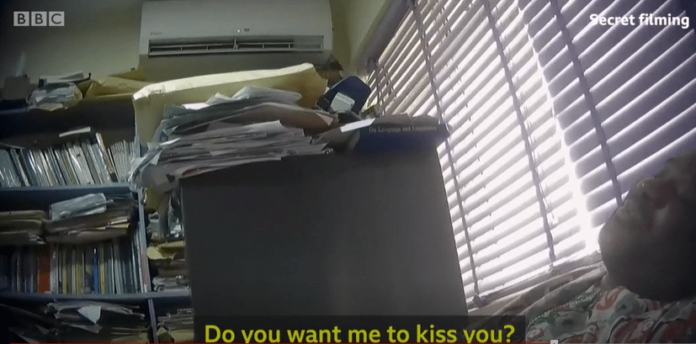
Through the use of secret cameras, undercover reporters of the BBC Africa Eye team captured the dialogues of four predatory lecturers from the University of Lagos (UNILAG) and the University of Ghana, as they attempted to cajole and manipulate the undercover journalists into engaging in sexual acts with them.

Accolades

Apart from the varying impacts the documentary generated, the investigative piece put the lead journalist, Nkiru Mordi (Kiki Mordi), in a spotlight as she became the face of the exposè on pages of newspapers and magazines.

The documentary was nominated in the current affairs category of the 48th International Emmy Awards for television programming as well as the Grierson Awards, also known at The British Documentary Awards.

Recently, Ms Mordi was named the 2020 winner of the Michael Elliott Award for Excellence in African Storytelling.

“Her winning documentary, Sex for Grades, which ran on BBC Africa Eye in October 2019, had a tremendous impact. In the hour-long feature, Mordi focused on lecturers at the University of Lagos and the University of Ghana. Following her nine-month investigation, several lecturers were suspended. In the documentary, Mordi shares her own personal experience as a victim of sexual abuse,” the International Center for Journalists (ICFJ) stated while announcing the winner.

Ms Mordi’s recent win was criticised by a section of social media after a former BBC reporter, Ruona Meyer, insisted that another journalist deserving of the credits of the documentary has been sidelined.

Ms Meyer, who took to Twitter, alleged that the sex-for-grades documentary was another journalist’s idea, demanding that Ms Mordi shares any cash prize that comes with the award with this journalist she referred to with her initial, O. O.

“Kiki, make sure this time you at least share whatever prize money there is with O.O and acknowledge her – given this was all her story as pitched, sourced/started. Real journalists have honour and also hold themselves to account, not just the government.

#TruthIsSacrosanct

“O.O, a fellow female journalist did not get a fair deal, and you remain complicit and a beneficiary of that.

“The facts, complaints, responses and even her thread are there. Better make it right because journalism can’t insist on ethics & fairness from others, yet cheat within,” she wrote on Twitter.

While reacting to Mrs Meyer’s tweet, Ms Mordi described Mrs Meyer as a vile person who has always been unhappy about her successes.

On the allegations of not giving credits to O. O, Ms Mordi reaffirmed that she was the reporter on the story, stating that further questions be addressed to BBC.

“There is no side to any story. Investigative journalism is dangerous work. I am the reporter on #SexForGrades. Any other questions will have to be directed to the BBC. Don’t be roped into Ruona’s joblessness. This isn’t local media where people do what they like,” the Michael Elliot award winner tweeted.

“She was treated unfairly”

According to the closing credits of the documentary, Ms Mordi was listed as the reporter; Joshua Akinyemi, a video editor at BBC, handled the camera; Suzanne Vanhooymissen, a video director at BBC, named the digital producer; Chiara Francavilla, the producer; Banjo Damilola, Kemi Alabi, Joshua Akinyemi and Stephanie Ohumu were listed as assistant producers.

BBC insiders, who asked not to be named because they did not have the authorization to speak on the matter, confirmed to PREMIUM TIMES that the lady Mrs Meyer referred to as O.O is “Ogechi Obidiebube”, who was credited using the pseudonym “Kemi Alabi.”

According to the sources, Ms Obidiebube actually pitched the story and had started preliminary research and reporting before Ms Mordi was brought in to work on the story as a freelancer. The sources claimed that Ms Mordi was brought in over safety concerns for BBC staff who were working on the story.

“After the “Sweet Codeine” story was published some BBC staff who worked on the story were evacuated to London after they were threatened. The management didn’t want that to happen in this instance, so they decided to bring in a freelancer who had to problem with revealing her identity, that was why Kiki was brought in,” one of the sources explained.

“Sweet Codeine” was a previous BBC Eye investigation revealing the drug abuse problem in Nigeria.

Our sources said there was already misgivings in the BBC Lagos newsroom about the way the reporters who worked on the story were credited. Ms Obidiebube and some of her colleagues were already grumbling over how Kiki was made the star of the story.

“Oge (Ms Obidiebube) is a young journalist. This is her first job, and she was naïve. She was not in a position where she could insist that she should be properly credited for the story,” another source said.

It was not just because she pitched the story, but she did more than 70 per cent of that story. She caught the biggest culprit during the investigation. They played on her ignorance of how newsrooms work and why bylines are important. Pseudonym or not, there was no reason why her name should not be made prominent in that story. It was unfair how she was treated,” the source added.

Matters became worse after the story started raking in awards and recognitions and Ms Mordi, having been made the star of the story, was claiming the accolades and allegedly kept the prize monies to herself.

“Our people (BBC management) did not handle this matter well, it was a collaborative effort, they should have insisted that any award or recognition the story won should have been shared equally among the reporters who worked on the story including those Ghanaian journalists. But they looked on and did nothing as Kiki claimed all the credit for the story,” another source said.

Internal politics

Another source claimed that Ms Obidiebube name was deliberately removed due to some internal politics, alleging that the BBC West African Editor, Toyosi Ogunseye, was particular about not giving Ms Obidiebube credits for the job done even before the documentary was eventually released.

The deliberate move, our source said, caused a furore in the BBC office to the point that the organisation specifically sent her a letter of commendation to pacify her after the issue had escalated.

Another source in the British media organisation stated that Mrs Ogunseye’s grouse was owing to the fact that Ms Obidiebube was on the BBC pidgin team, an indigenous section of the platform and that she was not pleased that she worked with the Africa Eye team on the project.

When reached for comments, both Ms Obidiebube and Ms Ogunseye declined to comment. They both directed this reporter to speak with their employer, the BBC.

Meanwhile, Marina Forsythe, BBC World Service’s publicist, said everyone involved was given appropriate credit and the only exception is sequel to security considerations.

“Every Africa Eye investigation is a team effort and this has been key to the success and impact of our films. Everyone sufficiently involved in an investigation is given an appropriate credit and the only exception is when there are security considerations,” she stated in response to PREMIUM TIMES’s enquiries.

“My story was hijacked”- Ms Obidiebube

Meanwhile, Ms Obidiebube accused an unnamed person in the media for hijacking the product of her creativity.

Although she did not mention any name, the narrative in the Twitter thread and information made available to this paper clearly shows she was referring to Ms Mordi.

“You have to be a different level of callous to be parading yourself as the brain behind other people’s blood, sweat and tears. Even Satan no do reach like this. But congratulations, big congrats. Now, what next? It’s been over a year already…when is the world going to see your next big thing? Or have you run out of creative juices? Need more geniuses who aren’t just poster boys/girls to latch onto like the blood-sucking parasite that you are?

“You can fool your minions and the gullible media but deep down you know your brain could never operate at this level, you don’t have the range. Call me bitter but who would be happy watching an opportunist claim what belongs to other hard workers?

“I’ll much rather be bitter than be a talentless fluke. Like my good friend will always say, bullshit can get you to the top but it won’t keep you there. So fuck your congratulations and your apathetic pep talks. You and the dishonourable bastard deserve each other!,” she wrote.

How I came on board for the investigation – Kiki Mordi

PREMIUM TIMES reached out to Ms Mordi for comments but she redirected our reporter to a previous social media post, wherein she narrated how she came on board for the project.

“When I came on board, I didn’t even know I was going to end up being the reporter and lead investigator. I was just happy to help. This story is personal to me. I was happy to play my small part. I didn’t hustle or apply or pitch or beg for this position.”

“I just kept proving how useful, brilliant and professional I was. My hard work should never erase another’s, everyone worked hard, every one delivered,” she posted on Twitter.

On who truly pitched the story, Ms Mordi stated that most comments BBC received after releasing an Africa Eye “Sweet Codeine” documentary led them to the sexual harassment story.

“I said this on Twitter, in my interviews, on the actual film. I never hid this from anyone and I certainly never stole anyone’s story or credits.”

She added that the first phase of research was already ongoing before she joined the team, confirming what one of our sources had told us.

“There were leads already and in fact, I was one of the leads (another funny story). Most of the other journalists were staff. So do you see how wild it is to accuse me of coming from outside to steal a BBC’s staff story?”

Regarding Ms Obidiebube’s tweets, Ms Mordi said, although she can sense that there are real emotions, she cannot respond to the accusations because she was not named in the post.

Suicide

Ms Obidiebube attempted to take her life on Sunday after she unveiled that her name was replaced with an unknown “Kemi Alabi” in the documentary.

At exactly 1:41 p.m., the reporter posted on Twitter asking for people’s opinion on cyanide and ricin, two poisonous substances.

“cyanide or ricin?” she asked.

Thirty-five minutes after the post, she posted a video of herself crying and begging her audience for forgiveness.

“Started reading newspapers as a pretend news anchor when I was just a little girl. All I wanted to do with my life was to be the next Christiane Amanpour or Anas Aremeyaw. Forgive me someday but it’s better this way,” she captioned the video.

The ‘way’ referred to in the post, PREMIUM TIMES later found out, was a reference to suicide.

“We at General Hospital now and they gave her an Antidote, she’s still in pains but she’s stable now,” a Twitter user, Josh, announced after rescuing her.

“We are deeply concerned about the welfare of our colleague Ogechi Obidiebube. Ogechi is receiving treatment in hospital and we are providing as much support as we can to her and her family. We request that people respect their privacy at this difficult time,” the BBC said when reached for comment about the Ms Obidiebube suicide attempt.

Premiumtimesng

Ambrose Dlamini: Eswatini’s PM dies after testing positive for Covid-19

The government of Eswatini says Prime Minister Ambrose Dlamini has died, four weeks after he tested positive for coronavirus.

A government statement said Dlamini, 52, died on Sunday afternoon in hospital in South Africa.

No cause of death was mentioned, but Dlamini had recently been receiving treatment for Covid-19 in South Africa.

Dlamini had been prime minister of Eswatini, formerly known as Swaziland, since October 2018.

The tiny landlocked country in southern Africa is one of the last absolute monarchies in the world.

With a population of about one million, the country has recorded 6,768 coronavirus infections and 127 deaths linked to the pandemic, according to the health ministry.

Dlamini announced he had tested positive for coronavirus on 16 November. At the time, he said he was asymptomatic and was feeling well.

A few weeks later, on 1 December, the Eswatini government said Dlamini had been moved to a hospital in South Africa, with the aim of fast-tracking his recovery.

But on Sunday the government said Dlamini died “while under medical care in a hospital in South Africa”, without giving more details.

“Government in collaboration with the family will keep the nation informed of subsequent arrangements,” Deputy Prime Minister Themba Masuku said in the statement.

Dlamini was among a number world leaders to have contracted Covid-19 during the pandemic, including US President Donald Trump, UK Prime Minister Boris Johnson and Brazilian President Jair Bolsonaro.

Have any world leaders died of Covid-19?

Many presidents, prime ministers and royal family members around the world have contracted Covid-19 since the pandemic began, however there is no confirmed case of any figures dying of the virus while in office.

Former French president Valéry Giscard d’Estaing died of complications from coronavirus this month. India’s former president Pranab Mukherjee died 21 days after testing positive in August. The two men were 94 and 84 years old, respectively.

Republic of Congo’s former president Jacques Joaquim Yhombi-Opango died of complications from the illness in March. He was 81.

2px presentational grey line

A former banker, Dlamini was a political novice when he was appointed prime minister by King Mswati III.

The head of government’s role is limited in Eswatini, where the king names all ministers and controls parliament.

Map

King Mswati III was crowned in 1986 at the age of 18, succeeding his long-serving father King Sobhuza II, who died at the age of 82.

The king rules by decree and has been criticised for the heavy-handed treatment of opponents and for requesting public money to pay for new palaces and luxury cars.

In 2018 he announced he was renaming the country “the Kingdom of Eswatini”.

More than 39% of the country’s population lived below the poverty line in 2016 and 2017, according to the World Bank.

BBC

Nigerian Press stands firm in adversity more than other times – Dr Ogunyemi

By Chibuike Nwabuko

The Head, Department of History, Obafemi Awolowo University, Ile-Ife, Dr Tunji Ogunyemi has said that the Nigerian Press has always remained firm in adversity than other times.

This is also as he has stated that during adversity, Nigerians revert to press as the only arm that upholds the truth.

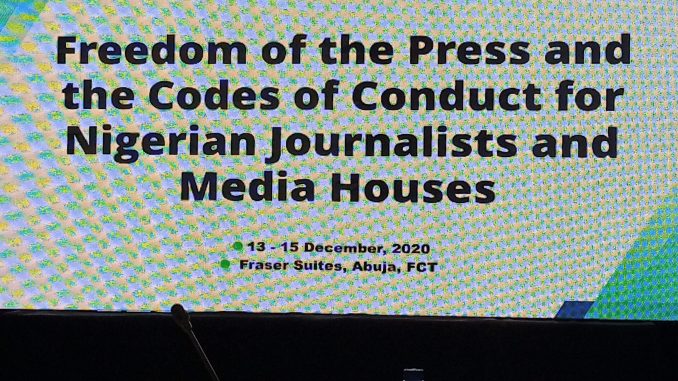
Ogunyemi stated this on Sunday in Abuja at the beginning of a 3-day capacity building workshop with the theme: Freedom of The Press and The Codes of Conduct For Nigerian Journalists And Media Houses organised by Konrad-Adenauer-Stiftung, a German foundation sponsored by the German government promoting democracy, rule of law.

He recalled how after every mlitaty coup in the past the first attack would be on the press and the suspension all aspects of the constitution that deals with the fundamental human rights. Adding that, though repressive of the press, the press still found a way to survive if not f flourish during such periods.

According to him, some of the repressive measures taken by the military against the press notwithstanding, the press has been able to whether the storm.

Dr Ogunyemi who stated this while chronicling the historical development of the Press in Nigeria, noted that but for the synergy between the press, civil society organisation an the judicial, the executive and legislatures would have ruined democracy.

Dr Ogunyemi recalled that press is older than Nigeria as it has started in 1846 by early christian missionaries before the amalgamation of Nigeria in 1914. He said that Revd Hope Waddell of the Presbyterian Church of Scotland Mission built the first printing press in Calabar in 1846 while Revd Henry Townsend of the CMS established the first newspaper in Nigeria called Owe Origin fun Aeon Ara Egba ati Yoruba in 1859 at Abeokuta.

Iwe Origin was originally publishing issues with the church and local politics as they advocated for abolition of slavery and slave-trade. It was publishing in Yoruba and was confrontational so the local political content led to riots in Nigeria like the Aba women riot. Due to the riots, the press and their properties were burnt in the process.

Ogunyemi said that press in colonial Nigeria up to the second world war (1863 to 1939) had common features – (a) they were all privately owned, (b) passion for self rule rather than the desire for profit drove the founders of the Newspaper (c) the common refrain of the newspapers was the dignity of man for the African persona and (d) most of the newspapers went out of circulation due to lack of capital.

“The debut of Anglo-American Newspaper founded in 1863 by Mr Robert Campbell. (am American immigrant activist resident in Lagos was not confrontational to the British colonial masters and it enjoyed huge patronage from the government through advert placement as a result of that. However it lasted for only six months (June – December 1863).”

He added that all the newspapers in colonial Nigeria Nigeria were concentrated on wester Nigeria for the sole purpose of attacking Iwe Origin.

He however said that some of these breaches of the freedom of the press has been taken care of in a new law enacted in the 4th republic such as sections 22 of the CFRN 1999; section 39(1&2) of same section 36 and the freedom of Information Act.

“In recent times, the press has become more emboldened in demanding for information in the light of two other legislations which have persuasive authority in Nigeria – (1) Article 19 of The Universal Declaration of Human Rights (1948) and (2) article 9 of the African Charter on Human and Peoples’ rights.

sundiatapost

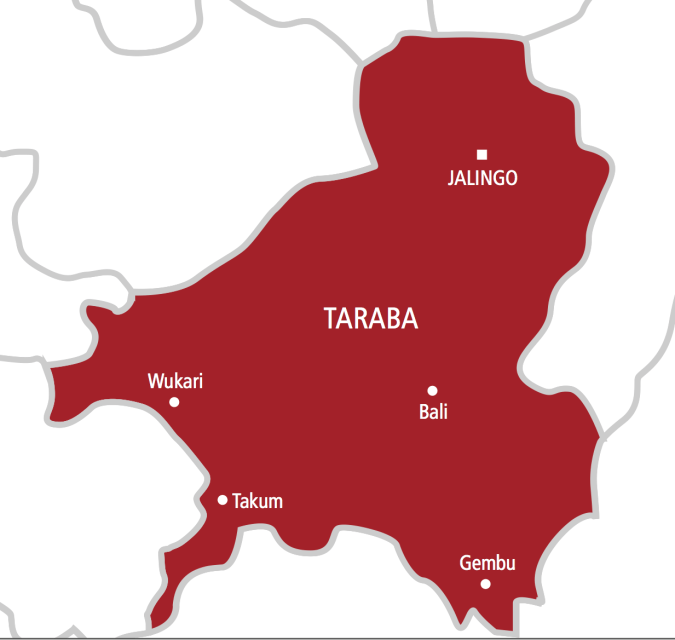
Just in: Taraba Assembly member kidnapped

By Femi Bolaji,

Jalingo A member of the Taraba state house of assembly representing Nguroje state constituency, Bashir Mohammed has been kidnapped by gunmen in the early hours today.

Residents of his area in Jalingo, said the gunmen stormed the lawmakers house and shot sporadically before whisking him away around 1.30am. According to one of them, “we couldn’t sleep last night, heavy gun shots started around 1:40am to 1:45am as they are leaving.”

Vanguard News Nigeria

TIPS