Home Blog Page 1141

Hiding/Concealing Domestic Violence Is A Crime.

Daily Law Tips (Tip 714) by Onyekachi Umah, Esq., LL.M, ACIArb(UK)

Introduction:
Domestic Violence is never an accident, rather the signs are always there but often ignored by victims, neighbours, friends and family members of victims. Like any thing in Africa, domestic violence offenders are rarely confronted rather their victims are often encouraged to pray and hope for the best. Reporting a violent spouse is considered a taboo in most communities in Nigeria, so victims are forced to suffer and smile until they die! This work emphasis on the crime of hiding domestic violence and urges victims, their friends and families to always report domestic violence to avoid being offenders too.

Realities of Domestic Violence In Nigeria:
1. “There is a deep cultural belief in Nigeria that it is socially acceptable to hit a woman/to discipline a spouse. Domestic violence is widespread and shows no signs of lessening in Nigeria.”
2. “The CLEEN Foundation reports 1 in every 3 respondents admitting to being a victim of domestic violence.”
3. “Domestic violence takes many forms including physical, sexual, emotional, and mental. Traditionally, domestic violence is committed against females. Common forms of violence against women in Nigeria are rape, acid attacks, molestation, wife beating, and corporal punishment.”
4. “A study recently commissioned by the ministry of women’s affairs and social development and the United Nations Population Fund (UNPFA) Nigeria with support from the Norwegian Government found out that 28% of Nigerian women aged 25-29 have experienced some form of physical violence since age 15.”

Suffering and Smiling:
Nigerians are fond of condoning and normalising hardship, violence and abuse, since the days of colonisation to the days of military rule. Well, this social imbalance, seems to have creeped into homes, relationship and affairs in Nigeria. Traditionally, women are considered as mere property in most customs in Nigeria (this tradition is unconstitutional, illegal and criminal) and this gives exaggerated self-perception to men, giving room for women and girls to be maltreated and to enjoy same. Many women and girls in Nigeria are often encouraged to endure their domestically violent husbands because according to more elderly women; “men are same”, “it is better to be married”, remain married at all cost”, “endure the pains because of your children” and “what will people say about you?”

The popular afro-beat inventor (Fela Anukpola Kuti) encapsulated the above true state of Nigerians and Nigeria as “suffering and smiling” while condemning the violence poured on Nigerians by the then military dictators. Fela’s songs are still very relevant and reverberating in many homes of Nigerians, as old and young women and girls are brutalised and expected to stomach their pains and smile sheepishly.

Well, enduring, condoning, hiding, protecting, concealing or refusing to support any case of domestic violence is a criminal offence. So, it is safe to say that “suffering and smiling” over domestic violence is a crime in Nigeria. By this, where a person is a victim of domestic violence and that victim with the intention to hide such violence destroys, hides or damages any evidence or proof of such offence, the victim has committed an offence. This offence of the victim is punishable with an impriosnment for not more than 3 years and or fine of not more than N500,000.00.

Also, any person in Nigeria (a person that is not a law enforcement agent) can arrest any suspected offender that has committed an offence in his presence or any person that he/she reasonably suspects to have committed an offence. This is so far as the offence is not an offence that requires a warrant of arrest. Domestic Violence is not an offence that any police officer or any person needs to obtain a warrant before making an arrest.

Conclusion:
Domestic violence includes all forms of abuse, harm, violence and the fear of such, including; “rape”, “inflicting of physical injury”, “harmful traditional practices on widows”, “forced financial dependence or economic abuse”, “emotional, verbal and psychological abuse”, “female circumcision and genital mutilation”, “ejection of spouse from home”, “forced isolation or separation from family and friends”, “abandonment of husband or wife, children or other dependents without any means of sustenance”, “stalking”, “political violence”, “indecent exposure”, “hiding domestic violence”, “frustrating investigation of domestic violence”, “damage to property in order to cause distress”, ”intimidation”, “spousal battery”, “attack with harmful substances”, “poisoning”, “incest”, “sexual abuse”, “sexual assault”, “sexual exploitation” and “sexual harassment” among others.

For everytime domestic violence that is hidden, the victim is given another chance to be violated again. There is no guarantee that the victim will not die out of such violence. So, people who only pray and condone domestic violence are praying for the death of the victim. Before any prayer and fasting over domestic violence, there is need for the suspected offender to be reported to the law enforcement agencies (this creates a supervisory eye and investigation) and for medical assessment and treatment, as well as prosecution. A man, a woman, a girl, a boy or any person can be a victim of domestic violence. Although, domestic violence is a criminal offence, hiding such an offence or offender is also a criminal offence.

My authorities, are:
1. Sections 1, 2, 3, 4, 5 and 6 of the Constitution of the Federal Republic of Nigeria, 1999.
2. Sections 1, 47 and 48 of the Violence Against Persons (Prohibition) Act, 2015 and other similar laws in states of the federation.
3. Sections 1, 2, 8, 62, 63, 64 and 65 of the Ekiti State Gender Based Violence (Prohibition) Law, 2019.
4. Leone Usigbe, “Nigerian Women Way ‘Wo’ To Gender-Based Violence” (UN, 2020) <https://www.un.org/africarenewal/news/nigerian-women-say-‘no’-gender-based-violence > accessed 11 December 2020
5. Wikimedia Foundation, “Domestic Violence In Nigeria” (Wikipedia, 2 December 2020) <https://en.wikipedia.org/wiki/Domestic_violence_in_Nigeria#cite_note-autogenerated1-3 > accessed 11 December 2020
6. Onyekachi Umah, “Domestic Violence Is A Crime Not A Family Dispute” (LearnNigerianLaws.com, 10 December 2020) <https://learnnigerianlaws.com/domestic-violence-is-a-crime-not-a-family-dispute/ > accessed 11 December 2020
7. Onyekachi Umah, “An Access To Criminal Laws In Nigeria” (LearnNigerianLaws.com, 4 December 2020) <https://learnnigerianlaws.com/an-access-to-criminal-laws-in-nigeria/ > accessed 7 December 2020.
8. Onyekachi Umah, “8 New Things About Rape Laws In Nigeria” (LearnNigerianLaws.com, 3 December 2020) <https://learnnigerianlaws.com/8-new-things-about-rape-laws-in-nigeria/ > accessed 7 December 2020
9. Motolani Alake, “Governor Ortom and his shameful normalization of domestic violence [Pulse Editor’s Opinion]” (Pulse, 8 December 2020) <https://www.pulse.ng/news/local/governor-ortom-and-his-shameful-normalization-of-domestic-violence-pulse-editors/qrmdj0d > accessed 10 December 2020
10. 0lusegun Adeniyi, “Ortom and the Wife Beater” (ThisDay, 10 December 2020) <https://www.thisdaylive.com/index.php/2020/12/10/ortom-and-the-wife-beater/ > accessed 10 December 2020
11. Micheal Bamidele, “The Angbos: Ortom’s Mediation And Trivialisation Of Violence Against Women” (TheGuardian, 8 December 2020) <https://guardian.ng/life/the-angbos-ortoms-mediation-and-trivialisation-of-violence-against-women/> accessed 10 December 2020
12. OluTimehin Adegbeye, “Nothing Happens When Women Are Raped in Nigeria” (TheNewYorkTimes, 4 September 2020) <https://www.nytimes.com/2020/09/04/opinion/nigeria-rape-sexual-abuse.html > accessed 2 December 2020
13. Onyekachi Umah, “ChannelsTv Interviews Onyekachi Umah on Rape and the Laws.” (LearnNigerianLaws.com, 20 November 2020) <https://learnnigerianlaws.com/channelstv-interviews-onyekachi-umah-on-rape-and-the-laws/ > accessed 2 December 2020
14. Onyekachi Umah, “Can A Woman Be Charged With Rape” (LearnNigerianLaws.com, 24 June 2020) <https://learnnigerianlaws.com/can-a-woman-be-charged-with-rape-daily-law-tips-tip-595-by-onyekachi-umah-esq-ll-m-aciarbuk/ > accessed 2 December 2020
15. Onyekachi Umah, “Can A Husband Rape His Wife” (LearnNigerianLaws.com, 19 June 2020) <https://learnnigerianlaws.com/can-a-husband-rape-his-wife-daily-law-tips-tip-592-by-onyekachi-umah-esq-llm-aciarbuk/ > accessed 2 December 2020.
16. Warif Center, “Rape Stats In Nigeria” (warifng) <https://warifng.org/rape-stats-in-nigeria/> accessed 2 December 2020
17. Morenike Folayan, Morolake Odetoyinbo, Abigail Harrison and Bradon Brown, ”Rape in Nigeria: a silent epidemic among adolescents with implications for HIV infection” [2014] 7(25583) Global Health Action <https://doi.org/10.3402/gha.v7.25583> accessed 2 December 2020
18. Onyekachi Umah, “When Is Seduction Or Indecent Dressing A Justification For Rape In Nigeria?” (LearnNigerianLaws.com, 18 June 2020) <https://learnnigerianlaws.com/when-is-seduction-or-indecent-dressing-a-justification-for-rape-in-nigeria-daily-law-tips-tip-591-by-onyekachi-umah-esq-llm-aciarbuk/ > accessed 2 December 2020
19. Onyekachi Umah, “New Punishment For Rape In Nigeria” (LearnNigerianLaws.com, 23 June 2020) <https://learnnigerianlaws.com/new-punishment-for-rape-in-nigeria-daily-law-tips-tip-594-by-onyekachi-umah-esq-llm-aciarbuk/ > accessed 2 December 2020
20. Onyekachi Umah, “Rape Cannot Be Settled Out Of Court (No Room For Pay-Off/Forgiveness/Withdrawal Of Complaints” (LearnNigerianLaws.com,26 June 2020) <https://learnnigerianlaws.com/rape-cannot-be-settled-out-of-court-no-room-for-pay-off-forgiveness-withdrawal-of-complaints-daily-law-tips-tip-596-by-onyekachi-umah-esq-llm-aciarbuk/ > accessed 2 December 2020
21. Adetomiwa Isiaka,“Nigeria declares ‘state of emergency’ on rape and sexual assault” (global voices, 3 July 2020) <https://globalvoices.org/2020/07/03/nigeria-declares-state-of-emergency-on-rape-and-sexual-assault/ > accessed 2 December 2020
22. BCC, “Nigeria’s Kaduna passes law to castrate child rapists” (BBC, 11 September 2020) <https://www.bbc.com/news/world-africa-54117462 > accessed 2 December 2020.
23. Onyekachi Umah, “A Female Too, Can BE Guilty Of Rape” (LearnNigerianLaws.com, 13 December 2018) <https://learnnigerianlaws.com/daily-law-tips-by-onyekachi-umah-esq-tip-248-a-female-too-can-be-guilty-of-rape-in-nigeria/ > accessed 2 December 2020
24. Onyekachi Umah, “Ages At Which Sexual Intercourse With Consent Will Amount To Rape” (LearnNigerianLaws.com, 20 February 2020) <https://learnnigerianlaws.com/ages-at-which-sexual-intercourse-with-consent-will-amount-to-rape-daily-law-tips-tip-509-by-onyekachi-umah-esq-llm-aciarbuk/ > accessed 2 December 2020
25. Onyekachi Umah, “How To Prove Rape In Nigeria).” (LearnNigerianLaws.com, 2 July 2019) <https://learnnigerianlaws.com/how-to-prove-rape-in-nigeria-daily-law-tips-tip-363-by-onyekachi-umah-esq-llm-aciarb-uk/ > accessed 2 December 2020.
26. Onyekachi Umah, “Child Marriage/Abuse Is A Crime (Rape): An Exposé On Laws Prohibiting Child Marriage” (LearnNigerianLaws.com, 22 June 2020) <https://learnnigerianlaws.com/child-marriage-abuse-is-a-crime-rape-an-expose-on-laws-prohibiting-child-marriage-daily-law-tips-tip-593-by-onyekachi-umah-esq-llm-aciarbuk/ > accessed 2 December 2020
27. Onyekachi Umah, “Forced Marriage Is An Offence In Nigeria.” (LearnNigerianLaws.com, 21 October 2020) <https://learnnigerianlaws.com/forced-marriage-is-an-offence-in-nigeria/ > accessed 2 December 2020

#SabiLaw
#DailyLawTips
#SabiBusinessLaw
#SabiElectionLaws
#SabiHumanRights
#SabiLawOnBeatFm
#SabiLawLectureSeries
#CriminalJusticeMonday
#SabiLawVideoChallenge

Speak with the writer, ask questions or make inquiries on this topic or any other via [email protected], [email protected] or +2348037665878 (whatsapp).

To receive our free Daily Law Tips, join our free WhatsApp group via the below link:
https://chat.whatsapp.com/Drc0UK3ba10KnuR8zuPMwl
Or our free Telegram group, via the below link:
https://t.me/LearnNigerianLaws

To keep up to date on all our free legal awareness projects, follow us via:
Facebook Page:@LearnNigerianLaws, Instagram: @LearnNigerianLaws and Twitter: @LearnNigeriaLaw

Please share this publication for free till it gets to those that need it most. Save a Nigerian today! NOTE: Sharing, modifying or publishing this publication without giving credit to Onyekachi Umah, Esq. and “LearnNigerianLaws.com” is a criminal breach of copyright and will be prosecuted.

This publication is the writer’s view not a legal advice and does not create any form of relationship. You may reach the writer for more information.

Powered by www.LearnNigerianLaws.com {A Free Law Awareness Program of Sabi Law Foundation, supported by the law firm of Bezaleel Chambers International (BCI).}


Employment Of Persons With Disabilities

#OBSCURELEGALFACTS BY AROME ABU

In Nigeria, persons with disabilities must constitute atleast 5% of employment in public and private organisations.

See Section 29 of the Discrimination Against Persons with Disabilities (Prohibition) ACT, 2018.

Arome Abu is the Principal Partner of TCLP.

CAVEAT: Note that this information is provided for general enlightenment purposes and is not intended to be any form of legal advice.

Obscure Legal Facts is an exclusive daily publication of THE COUNSEL L-P.
Plot 108 Idris Gidado Way, Wuye, Abuja.
abuarome@[email protected]
+234 803 262 2359
+234 708 1156 539.
Twitter: @TheCounselLP

COVID-19: Battle Over Insurance Coverage

By Odimegwu Onwumere

Some insurance firms argue that they would pay COVID-19 claim, while others said they would not. In some countries like South Africa, there have been litigations with defendants and plaintiffs asking court to define whether there should be payment to the insureds or not.

In other countries like Nigeria, the umbrella body of insurers, the Nigerian Insurers Association (NIA), believed that its member-companies would honour claims arising from COVID-19.

Looking for proof to back the supposition, some experts argued that there was a similar controversy that surrounded insurance policies in Tunisia and Egypt during the Arab Spring. To the experts, decision on the matter was characterised by confusion given that every policy operated different wordings.

Some believed that they had claim on life and have not to break head on that; and however, the different wordings or policies were operated by different firms, it was a slap on their face when regulators were imposing pronouncements on the reinsurers about paying the insureds.

“On the insurer side, we are quite clear that a pandemic is not covered when it comes to business interruption (BI), but on the client side there is a lot of confusion,” said Rajiv Ranjan, CMO and executive director at East African insurer Mayfair.

Some believed that till reinsurers can do a proper audit, they will not ascertain number of policies out there. Notwithstanding, some firms had manifestly said they won’t pay for reasons best known to them. Others said they would pay and their reasons were curiously stated.

At Continental Re, Mr. Lawrence Nazare, Executive Director said: “We are reinsuring group life and the wording does specifically exclude pandemics. We did advise the market at the start of this crisis, sending out a circular making sure they were aware of the exclusion and that it would be triggered when the World Health Organisation declared the pandemic.”

Some who agreed on what to or not to pay however defined terms of their stance, saying that as it stood, there was financial market decline, reducing their ability to handle the reality.

According to analysts, “The capital buffers of some of the largest reinsurance companies have been significantly shrunken by the financial market decline seen in the last months because of the COVID-19 outbreak, potentially reducing their ability to weather any major catastrophic events that occurred.”

Confusion of what to make of the pandemic

There was serious confusion of what reinsurers on the continent would make of the pandemic situation. The pressure was on them, and there was insignificant apprehension surrounding regulators about which company would still be solvent after the pandemic.

At East Africa Re, the CEO, Peter Maina said, “We may have a problem in the future if claims start coming through. Treaties are very silent on the issue of pandemic.”

Experts believed that the pandemic had paved way for loss of premiums given that there were scarcity of businesses and this might affect businesses during the year and next year.

According to Nazare, “One of the largest insurers maintained that there is a suppliers’ extension for BI that was sold as part of their property policies and might in fact respond to COVID-19 without needing any physical damage. We are investigating.

“We do participate in some policies that were written by this insurer in Namibia, but at the moment, we don’t have a clear answer. There is a fear that in South Africa there will be significant losses arising out of that extension.”

Experts saw this as “the greater risk”. According to the group CEO and Managing Director of Africa Re, Dr. Corneille Karekezi, “No one is really working at the moment, so it is hard for us to react…The one group that is really working is the IT sector, because they have been in demand like never before as we all work from home.

“Some have asked for premium rebates, for example, but we need to explain to them how insurance works and that even if a plant is shut down it still requires protection. There has also been talk of premium relief, particularly in South Africa.”

Body of insurers agrees to pay

On the contrary, the Nigerian Insurers Association (NIA), the umbrella body of insurers in Nigeria in April, had taken a position, saying that its member-companies would honour claims arising from COVID-19, “even as it confirmed full reinsurance backing.”

“The cover provides for life benefit, so any incident by this cause will be honoured,” Tope Smart, chairman of the NIA said.

For Moruf Apampa, Executive Director, Operations, FBN Insurance, “This is a situation like no other one ever, no statistics, so I do not see any reinsurance company rejecting claims from COVID-19.”

Although, the CEO of Nairobi-headquartered Zep Re, Hope Murera said, “Sadly, we had already received their first COVID-19-related life claim to handle.”

Suing reinsurers

However, hospitality firms took South Africa’s largest general insurer Santam to court to contest its endeavours to avoid paying out for COVID-19 losses. But “Santam argued that the pandemic itself and government’s lockdown response are two separate events.”

Despite the belief that insurers were positioned to survive shocks because they have been intensely capitalised given the work of the ratings agencies, there were speculations that well-organised markets would face challenges occasioned by the volume of their books.

According to Beat Strebel, Swiss Re’s head of Middle East and Africa, “The costs of global pandemics such as COVID-19 exceed the capacity of the global insurance industry, making them effectively “uninsurable risks”.

The statement continued, “Compensating businesses for the disruption they have suffered is a job for governments, with whom Swiss Re wants to engage to create public-private partnerships. We can’t do it alone.”

An instance was given that Africa, for example, with exemption of South Africa, “event cancellation is not commonly sold and nor is business interruption, unless it has a physical damage requirement, which means few COVID-19 events will be covered.”

Claims widely disputed

Checks revealed that COVID-19 insurance claims were widely denied by insurers in South Africa, “maintaining that pandemics are not insurable events. Similar to ongoing insurance coverage lawsuits in the U.S., South African insurers and insureds are disputing what constitutes “physical damage” to trigger payouts under business policies. (A Michigan judge recently ruled in favour of an insurer, noting that physical must be “something with material existence. . . that alters the physical integrity of the property.”)

While some reinsurers were finding it difficult, by June in South Africa, as according to Bloomberg, “Momentum Metropolitan Holdings Ltd.’s Guardrisk will submit payments to policyholders who claimed business interruption losses during South Africa’s five-week shutdown beginning in late March.

“The settlement amount will cover the first three months of the lockdown. Santam Ltd., the nation’s largest property & casualty insurer, and Hollard Insurance Co said they would offer one-time financial relief to small-and-medium-sized clients. Santam, alone, has committed to 1 billion rand ($60 million) in payments.”

For Lize Lambrechts, CEO of Santam, “We remain confident in our interpretation of our policy wording as it pertains to the CBI extension in our cover. However, we also realise that our clients need financial support urgently and that the ongoing court cases on the interpretation of the policy wording may be lengthy.”

Experts had admonished the reinsurance sector on the continent to take a critical review of their reinsurance programmes but especially their risk exposure in order to prepare for future COVID-19 related pandemic.

According to data, “Such analysis will likely also prove necessary for purposes of (1) renewal negotiations, many of which will take place while the virus infection rates continue to rise and countries around the globe continue to enact containment measures, and (2) responding to requests by regulators and rating agencies calling for reinsurers to quantify their risk exposure.”

On the part of Dr. Karekezi, he warned that it could take the insurance industry on the continent months before it would come to terms with the effect of the pandemic on its business. He said, “We were asked by our board to stress test the possible exposures from the pandemic and they were surprised by our optimism when we reported back earlier this year. However, the problem is that today we don’t know the extent of the damage or the extent of the recovery.”

Onwumere writes from Rivers State.

My Health Is Suffering Over Excessive Workload — Police Legal Officer Tells Osun Panel

The officer-in-charge of Legal Department of Osun State Police Command, Mr. F. B. Osei on Friday lamented to the Osun State Panel of Inquiry investigating police brutality and extrajudicial killing that his health is suffering as a result of the excessive workload of attending to the petitions before the panel and other official duties.

Osei had sought adjournment when a case was called for trial but the petitioner’s counsel opposed the prayer before the panel.

He pleaded with the panel to grant his prayer for an adjournment because he has not been feeling fine.

“ I am suffering!, I am suffering my health is not in good condition. I suppose to take my drugs but I could not because if I take it I must have excessive rest. The number of petitions and other official duties I am attending to daily did not permit. If I take the drug I must rest but the matters I am attending to at this panel did not permit. I am having an issue with my sight, my glasses have expired, I don’t have time to see the doctor and do another one.

“I have a lot of work on my table and if I refuse to attend to them I will be issued a query. I am just passionate about my job but my health is suffering. No colleague is helping me on the matter of this panel, my official duties, and the number of petitions. If my health is in good condition I can stay here till night, “ he added.

UK To Enter Trade Agreements With 14 African Countries

The United Kingdom’s (UK) Department for International Trade says new trade agreements will come into force in January for the UK with 14 African partners with the prospect of more countries to follow.

This is according to a statement issued by the department’s Nigerian office on Saturday.

It added that 35 African partners will also receive preferential access to the UK through its trade presences scheme.

It also announced that the department would host a one-day virtual Africa Investment Conference on Jan. 20, 2021.

The conference is expected to bring together UK and African businesses to explore opportunities for partnership and investment.

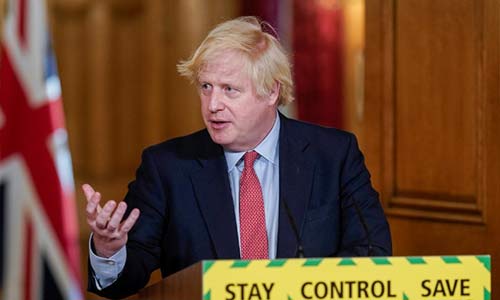
The conference comes one year after the UK-Africa Investment Summit hosted in London by Prime Minister Boris Johnson, where 27 trade and investment deals worth 6.5 billion pounds and commitments worth 8.9 billion pounds were announced.

According to the statement, businesses will be able to discuss emerging and relevant themes around doing business in Africa.

They will also connect to investment opportunities across the African continent, all in the context of a challenging global economic outlook.

The development of the UK’s new trade arrangements alongside Africa’s own Continental Free Trade Agreement can unleash new opportunities for African and UK businesses, it said.

Gerry Grimstone, UK’s Minister for Investment, said that in spite of the current global economic context, the UK’s ambition to be Africa’s investment partner of choice had never been stronger.

”Growing investment relationships will be central in helping economies recover and build back better from the disruption caused by Coronavirus.

“Africa’s economic potential and investment opportunities are huge, and our partnership will help ensure UK and African businesses are able to capitalise on trade and investment opportunities, now and in the future.”

He said that the conference would be a platform for attendees to hear directly from UK companies about the opportunities and challenges of investing in and doing business across Africa.

Firms will also learn more about the UK’s new trade arrangements with Africa and support offered by the UK government to businesses and investors.

“The event will also explore how inclusive, sustainable and resilient investment can serve to help countries across the continent transition to a cleaner, greener economy and support recovery from the impact of coronavirus.”

Driven by the insights of the recently established Africa Investors Group, the conference will focus around four key sectors of activity.

They are sustainable infrastructure, renewable energy, financial and professional services and agriculture and agri-tech.

James Duddridge, Minister for Africa said that the UK was working with countries across Africa to build strong partnerships that secure investment and deliver more of the exports, jobs and economic growth that benefit both African and British businesses.

“Over 6.5 billion pounds worth of deals were signed at the UK-Africa Investment Summit 2020, which showcased the UK’s offer to African nations, as a global financial gateway and home to the world’s major investors, regulators and innovators.

January’s event will once again bring together British and African businesses and entrepreneurs, to support more prosperous African countries.”

Emma Wade-Smith, Her Majesty’s Trade Commissioner for Africa, said the conference would build on the achievements of 2020’s landmark UK-Africa Investment Summit.

According to her, connecting British businesses to the wealth of opportunities that exists across African markets and supporting them in the realisation of their commercial projects is at the heart of the department’s work.

“With the global disruption to markets caused by COVID-19, investment will be vital to accelerate the UK and Africa’s economic recovery.

“I am proud that the investment partnerships that exist between Africa and the UK continue to sustain jobs and improve lives.”

Andrew Skipper, Co-Chair of Africa Investor’s Group (AIG), said it was expected that the conference would demonstrate what had been achieved and establish a platform for what could be done working in collaboration in the future.

“A year on from the UK-Africa Investment Summit, and with the UK set on a new course, it is critical that we continue to demonstrate the UK government’s commitment to working with the private sector to promote, support and deliver trade in key sectors of British excellence, across UK and Africa.”

Many Nigerian Graduates Can’t Read Or Write, Says Minister

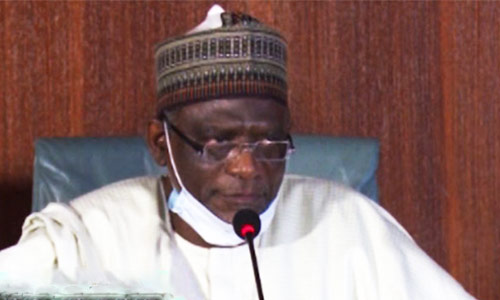
Minister of Education, Malam Adamu Adamu, has decried continuous fall in the standard of education in the country. Adamu, who spoke in Yola, the Adamawa State capital during official commissioning of completed projects in the college, lamented a situation in which graduates can neither read nor write in a tolerable manner.

He said the situation was a cause for concern, adding that students and teachers need to sit up and face their tasks squarely if the situation is to be reversed.

“Some graduates of tertiary institutions across the country cannot read or write applications,” said the minister who was represented by the Director of Tertiary Education in the Federal Ministry of Education, Hajia Rakiya Gambo Iliyasu.

The minister elaborated that students and even graduates had been found to be unable to write one full sentence without multiple corrections needing to be made.

The minister urged all stakeholders in the education sector to sit up to ensure that the decline in the value of education is bridged within the shortest time possible.

Six completed projects which included a computer ICT Centre, sports centre, a centre for early childhood education, an undergraduate studies complex, among others, were commissioned during the ceremony at the FCE main campus in Yola.

All the six complexes were built by the Tertiary Education Trust Fund (TETFund), a fact acknowledged by the Provost of the college, Prof Abdul-Mumin Sa’ad, who earlier in his welcome address said: “Today, the Federal College of Education, courtesy of TETFund, is proud to have achieved major breakthrough in structures.”

Mercenaries: Zulum Says More Personnel Needed To Fight Borno Insurgency

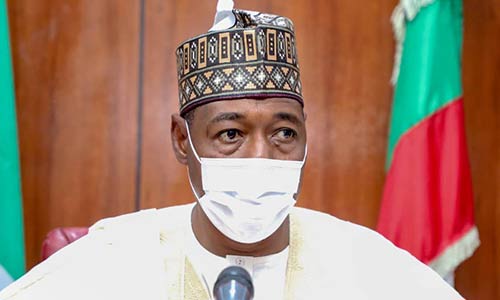
The Governor of Borno State, Babagana Zulum, has reiterated the need for more military personnel and mercenaries to be deployed to the state to fight insurgency.

According to the governor, there are still three major strongholds under the control of the insurgents and there are currently not enough security personnel.

Zulum said the shores of the Lake Chad, Sambisa forest and Mandara Hills are the most affected by the insurgents who invade and attack communities and return to their hideouts.

“There is a need for the Nigerian Military to take the war into these critical areas,” the governor said on Friday during an interview on Channels TV’s Politics Today.

Beyond that, he believes that for the war on insurgence to truly be won, the Federal Government should engage the security forces of neighbouring countries.

“Yes, you are right, the Nigerian Air Force have done a great job in using the airstrikes to bombard the place (Sambisa, etc) but military operations have to be followed by some stabilization mechanisms.

“One of the recommendations is for the Nigerian government to look into the possibility of a coalition with its neighbours such as the Lake Chad”.

The governor said this while reacting to the recent killings in the state and particularly the killing of at least 43 farmers in the Zabamari area of the state.

The farmers were waylaid on their way to their rice farms which they were harvesting before the surprise attack happened.

While the state is still trying to recover from the losses, with the government working towards making appropriate compensations, Zulum says so far, relative peace has been restored and residents are now able to go about their regular business.

Finance bill: FG seeks NASS approval for N500bn crisis intervention fund

*Upward review of 15% mobilisation fee to 30%
*Finance bill determines our ability to grow economy, tackle insecurity in 2021 ― Gbajabiamila

Federal Government is seeking National Assembly’s approval for the establishment of N500billion Crisis Intervention Fund as encapsulated in the proposed Finance Bill, 2020, which shall be provided in the Consolidated Revenue Fund and the Special Account.

According to the Finance Bill, “the Crisis Intervention Fund may be utilized for making funds available to meet expenditure as provided in the annual Appropriation act to meet any crisis-related expenditure or other such exigencies that may arise pursuant to section 12 of the Fiscal Responsibility Act (as amended) and section 306 of the 1999 Constitution (as amended).

It further seeks to amend section 44(1) and (2) of the 1999 Constitution with the view to establish by way of a trust fund, as a sub-fund of the crisis intervention fund, an Unclaimed Funds Trust Fund, into which unclaimed dividends of a public limited liability company quoted on the Nigerian Stock Exchange (NSE) and any unutilized amounts in a dormant bank account maintained in or by deposit money bank which has remained unclaimed or unutilized for a period of not less than six years from the date of declaring the dividend or domiciling the funds in bank accounts shall be transferred immediately to the Unclaimed Funds Trust Fund which shall be managed by Debt Management Office (DMO).

The bill, however, imposed a stiff penalty on any company or deposit money bank that fail to transfer the unclaimed dividends or unutilized amount in a dormant bank account to the Unclaimed Funds Trust Fund, to a fine of not less than five times, the value of the unclaimed dividends and unutilized funds, in addition to accumulated interest on the amount not transferred at the central bank of Nigeria’s monetary policy rate.

It, however, exempted official bank accounts owned by Federal, State and Local Governments as well as Ministries, Departments and Agencies (MDAs).

The provisions were contained in the proposed amendment of Section 39 of the Federal Inland Revenue Service (FIRS) Act, which was considered at the public hearing held at the instance of the House Committee on Finance, chaired by Hon. James Faleke, alongside other fiscal legislation, as contained in the Finance Bill, 2020.

The present administration also proposed 3-year imprisonment and/or both N1 million fine on any serving and former staff of Federal Inland Revenue Service (FIRS) or any agent who divulge or attempt to communicate taxpayer information to any person other than an authorized person to collect tax in the country.

In the same vein, Federal Government proposed for the upward review of 15% mobilisation to 30% to contractors in the extant Public Procurement Act, as well as the establishment of a general reserve fund by each MDAs in which one-fifth of its operating surplus for the fiscal year shall be allocated, provided that the cost-to-revenue ratio of each corporation shall not exceed 50 per cent or such other ratio as the Minister may publish for that particular corporation by way of the order published in the official gazette.

Similarly, Federal Government proposed amendment to section 12 of the fiscal responsibility Act, to empower the President to exceed the statutory 3 per cent deficit-to-gross domestic product threshold to fund the budget, in terms of designating situations where, due to the occurrence or imminent occurrence or conditions that may lead to the declaration of a state of emergency, such as a pandemic, as well as the provisions of sections 59 and 306 of the 1999 constitution (as amended).

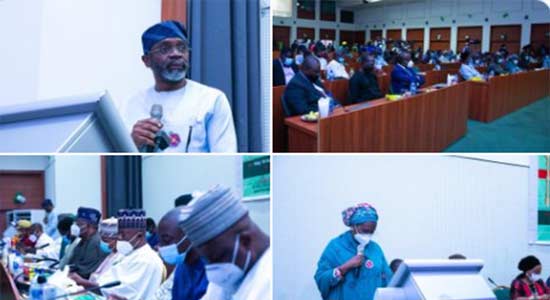
While presenting his keynote address, the Speaker of the House of Representatives, Hon. Femi Gbajabiamila on Friday disclosed that the passage of the proposed Finance bill will determine the present administration’s ability to fund the 2021 budget and meet other socio-economic obligations.

Hon. Gbajabiamila who stated this during the public hearing on the Finance Bill, 2020 which passed through Second Reading on Thursday, reiterated the need to ensure that the views of the citizens yield good fruit and “not by narrow considerations of personal or group interests, but fealty to the best interests of the majority of our people and the pursuit of a more peaceful, prosperous and a more economically viable society for all.

“We must also remember that the proper operation of democracy requires that people be willing to listen to and hear each other out especially when they disagree. Let us remember also that whether or not people listen to what you have to say depends not only on the content of your message but also on the manner you choose to deliver it and following therefrom ensure that we observe decorum, and treat each other fairly in the manner of our contributions.”

He maintained that the proposed Finance, 2020 “will determine amongst other things, our ability as a nation to fund the 2021 budget, meet the obligations of government and implement policies to build infrastructure, address the problem of insecurity, grow the economy, and provide jobs that pay a living wage and lift families out of poverty.

“It is an important piece of legislation, deserving of thorough consideration, and reasoned debate by the parliament of the people, acting in the best interests of the people.

“We have a responsibility as legislators to meticulously review and examine every aspect of this Bill to ensure that we produce a legislative document that is clear in its objectives, thoughtful in the mandates it imposes and reflective of the best aspirations of all our citizens.”

On his part, Chairman, House Committee on Finance, Hon. James Faleke who stressed the need for Nigeria to think out of the box in order to turn around the prevailing negative economic narratives to a more positive one underscored the resolve of the three arms of government towards putting in place the necessary economic mechanisms to properly reposition the economy for effectiveness and efficiency.

He stressed that the proposed amendments seek to “revitalize the national economy, promote fiscal equity by mitigating instances of regressive taxation; reform domestic tax laws to align with global best practices, introduce tax incentives for investments in infrastructure and capital market, support small businesses in line with the ongoing ease of doing business reforms and raise revenue for the government by various fiscal measures.”

Hon. Faleke who reiterated the 9th Assembly’s commitment towards prioritizing the review of all federal tax laws to encourage investment; to incentivize enterprise; ensure fairness and curb tax avoidance and evasion through the use of ICT in tax collection and administration’, as well as attainment of substantive reduction in the percentage of and unemployed Nigerians, as encapsulated in the 9th House of Representatives Legislative Agenda.’

US Supreme Court Rejects Texas Lawsuit Challenging Biden’s Election Wins In 4 Key States

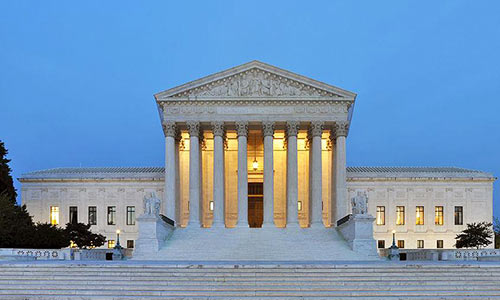
The Supreme Court on Friday rejected an audacious lawsuit by Texas that had asked the court to throw out the presidential election results in four battleground states captured by President-elect Joseph R. Biden Jr.

The court, in a brief unsigned order, said Texas lacked standing to pursue the case, saying it “has not demonstrated a judicially cognizable interest in the manner in which another state conducts its elections.”

The move, coupled with a one-sentence order on Tuesday turning away a similar request from Pennsylvania Republicans, signaled that the court has refused to be drawn into President Trump’s losing campaign to overturn the results of the election last month.

There will continue to be scattered litigation brush fires around the nation from Mr. Trump’s allies, but as a practical matter the Supreme Court’s action puts an end to any prospect that Mr. Trump will win in court what he lost at the polls.

Texas’ lawsuit, filed directly in the Supreme Court, challenged election procedures in four battleground states: Georgia, Michigan, Pennsylvania and Wisconsin. It asked the court to bar those states from casting their electoral votes for Mr. Biden and to shift the selection of electors to the states’ legislatures. That would have required the justices to discard millions of votes.

Mr. Trump has said he expected to prevail in the Supreme Court, which includes three justices he appointed. One of them, Justice Amy Coney Barrett, was rushed onto the court in October in part in the hope that she would vote in Mr. Trump’s favor in election disputes.

“I think this will end up in the Supreme Court,” Mr. Trump said of the election a few days after Justice Ruth Bader Ginsburg’s death in September. “And I think it’s very important that we have nine justices.”

In the Texas case, the Supreme Court received more than a dozen friend-of-the-court briefs and motions seeking to intervene, from Mr. Trump, from coalitions of liberal and conservative states, from politicians and from scholars.

Among them was a brief filed by more than 100 House Republicans who claimed that the general election — the same one in which most of them were re-elected — had been “riddled with an unprecedented number of serious allegations of fraud and irregularities.” More than a dozen Republican state attorneys general expressed similar support on Wednesday.

Legal experts almost universally dismissed Texas’ suit as an unbecoming stunt. In invoking the Supreme Court’s “original jurisdiction,” Texas asked the justices to act as a trial court to settle a dispute between states, a procedure theoretically possible under the Constitution but employed sparingly, typically in cases concerning water rights or boundary disputes.

In a series of briefs filed Thursday, the four states that Texas sought to sue condemned the effort. “The court should not abide this seditious abuse of the judicial process, and should send a clear and unmistakable signal that such abuse must never be replicated,” a brief for Pennsylvania said.

On Friday morning, Texas’ attorney general, Ken Paxton, responded in a reply brief. “Whatever Pennsylvania’s definition of sedition,” he wrote, “moving this court to cure grave threats to Texas’ right of suffrage in the Senate and its citizens’ rights of suffrage in presidential elections upholds the Constitution, which is the very opposite of sedition.”

Claims that the election was tainted by widespread fraud have been debunked, including by Attorney General William P. Barr, who said this month that the Justice Department had uncovered no voting fraud “on a scale that could have effected a different outcome in the election.”

Some 20 states led by Democrats, in a brief supporting the four battleground states, urged the Supreme Court “to reject Texas’ last-minute attempt to throw out the results of an election decided by the people and securely overseen and certified by its sister states.”

Georgia, which Mr. Biden won by less than 12,000 votes out of nearly five million cast, said in its brief that it had handled its election with integrity and care. “This election cycle,” the brief said, “Georgia did what the Constitution empowered it to do: it implemented processes for the election, administered the election in the face of logistical challenges brought on by Covid-19, and confirmed and certified the election results — again and again and again. Yet Texas has sued Georgia anyway.”

Culled from https://www.nytimes.com/

US Congress Passes $740 Billion Defense Bill Despite Trump Veto Threat

The US Senate overwhelmingly passed a sweeping defence budget bill on Friday with a veto-proof majority, defying President Donald Trump who has threatened to block the legislation six weeks from leaving office.

With both chambers having now passed the measure by sizable majorities, lawmakers from both parties have collectively thrown down the gauntlet before the Republican leader and signalled he would face an override if he moves to veto the bill.

The must-pass US$740.5 billion measure has earned Mr Trump’s ire in part because it does not abolish a law granting social media firms liability protection for third-party content on their platforms.

Mr Trump has railed repeatedly against the law, known as Section 230, and says giants like Facebook and Google are biased against him.

He has also voiced disapproval of the bill’s language calling for renaming US military bases that honour Confederate commanders from the pro-slavery South in the Civil War.

Both chambers cleared the legislation with well beyond the two-thirds “super majority” needed to override a presidential veto: 84 to 13 in the Senate, and a 335-78 vote Tuesday in the House.

“This is great news for our troops and the security of our nation,” Senate Armed Services Committee chairman James Inhofe said in a statement on the bill’s passage.

“I look forward to it becoming law before the end of the year.”

The measure, formally known as the National Defense Authorisation Act, puts Mr Trump in an awkard position on multiple fronts.

It mandates that the US president slap sanctions on Turkey within 30 days for its acquisition of the Russian-made S-400 missile defence system, even as Mr Trump has resisted such punishments against Turkey and its president, Recep Tayyip Erdogan.

“It is unacceptable that a North Atlantic Treaty Organization ally like Turkey’s President Erdogan has decided to purchase, keep, and test the Russian S-400 missile defence system,” Senate Foreign Relations Committee chairman Jim Risch, a Republican, said in a statement.

“This year’s NDAA makes clear that Turkey’s purchase of the S-400 system is a sanctionable activity, and therefore mandates the imposition of sanctions on Turkey for this purchase.”

The defence bill also expands sanctions related to the construction of the disputed Nord Stream 2 gas pipeline linking Russia to Europe, on which Washington has sought to impose a moratorium.

Nord Stream 2, an US$11 billion pipeline near completion beneath the Baltic Sea, is set to double Russian natural gas shipments to Germany, the EU’s largest economy.

Mr Risch said it “threatens Europe’s energy independence” and bolsters the Russian government, and said the NDAA’s expanded sanctions “are important tools in countering Russia’s malign influence and protecting the integrity of our allies’ security.”

US sanctions signed by Mr Trump last year, including threatened asset freezes and visa restrictions for companies involved in the construction, caused a suspension of work on the pipeline.

But construction resumed on Friday, the project’s managers said just hours before the NDAA’s Senate passage.

The NDAA that heads to Mr Trump goes against his drive to slash the US troop presence in Germany and elsewhere.

It imposes on the Pentagon a deadline of at least 120 days before any reduction of forces in Germany, ensuring that no American withdrawal can take place before Democratic President-elect Joe Biden takes office on January 20.

Republican Senator Rand Paul had threatened to hold up a vote on the NDAA as he wanted to remove the language that limits Mr Trump’s ability to withdraw or reduce troops from abroad.

He ultimately relented and dropped his opposition.

AFP

TIPS