Home Blog Page 1124

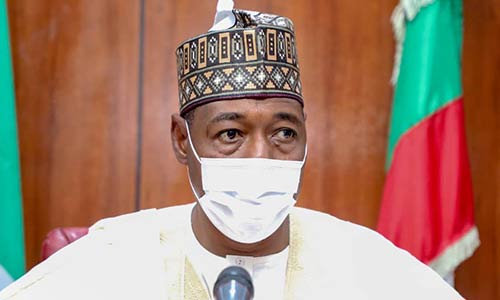
Dickson Wins Bayelsa West By-Election

The Independent National Electoral Commission has declared a former Governor of Bayelsa State, Seriake Dickson, the winner of Bayelsa West Senatorial Bye-election.

He polled a total of 115,257 votes to defeat his rival, Peremobowei Ebebi of the All Progressives Congress who polled a total of 17,500 votes.

Developing story

ECOWAS Court Stops Extradition Of Venezuelan To USA

The ECOWAS Court of Justice has ordered the Republic of Cape Verde not to extradite the detained Venezuelan, Mr. Alex Nain Saad Moran to the United States of America (USA) at the request of the US government.

Rather, the community court ordered that he should be placed under permanent home detention and the supervision of its national judiciary authorities.

Delivering a ruling in a suit filed by the Applicant, a three judge panel of the Court said that this will guarantee him better conditions of accommodation, access to medical treatment and visits compatible with his personal situation, at the Applicant’s own expense.

The ruling followed the fundamental rights enforcement suit filed before the court marked ECW/CCJ/APP/43/20 filed by counsel to the applicant, Mr. Femi Falana (SAN).

The ruling which was delivered by the Judge rapporteur, Justice Januária Moreira Costa, however declined to grant other orders sought by the applicant and ordered that parties be put on notice.
The court presided by Justice Edward Amoako Asante, with Justice Dupe Atoki, specifically ordered that the Applicant should not be extradited until a decision has been made on the merits of the substantive case before the Court.

In the said suit, the Applicant asked for interim measures to prevent the violation of his human rights, mainly the right to liberty and security as well as the right not to be subjected to torture or cruel and inhuman treatment while in detention awaiting extradition to the United States of America at the request of the US government

The Applicant averred that on June 12, 2020 at 8:09 pm, the plane on which the Applicant was traveling while on a special mission, made a stopover in the Republic of Cape Verde for refueling.

He further averred that about an hour later, at 9:30 pm, he was detained for the purpose of extradition by the authorities of Cape Verde in response to an international arrest warrant that was allegedly circulated by INTERPOL on the basis of a Red Alert against him issued at the request of the United States (the “Red alert”). He said that as at the time of his arrest, neither the copy of the Red Alert nor the arrest warrant against him were presented to him.

Moran further claimed that on April 9, 2018, the Applicant was appointed as Special Envoy of the Government of Venezuela, which vested on him the responsibility of acquiring humanitarian resources of great need in Venezuela. In this context, and within the scope of his mandate as Special Envoy, Venezuela on April 1, 2020 entrusted the Applicant with the mission of negotiating with organizations in Iran to obtain the necessary resources for Venezuela.

He maintained that since July 16, 2020, he has filed several appeals against the extradition request presented by the USA based on the fact that he cannot be extradited on account of his immunity and inviolability, describing it as purely political.

In filing before the court, he said that the appeals were denied by Cape Verde’s Courts which have ruled to authorize his extradition to the US and that his health has deteriorated while in detention with an imminent risk of irreversible damage before the conclusion of the case.

The Applicant therefore requested that, until the decision on substance is delivered, the Court should order the following interim measures: “that the Defendant suspend the extradition procedure against him, which was initiated at the request of the United States and release him under the supervision and responsibility of the Ambassador of the Bolivian Republic of Venezuela, accredited to the Republic of Cape Verde.

He also claimed that he is an oncological patient undergoing treatment and that since his arrest he requested medical visits and periodic examinations to certify his health status but was denied access to adequate medical facilities among others.

In defense the Defendant confirmed that the Applicant’s detention on June 12, 2020, at the airport on the island of Sal, occurred in response to a request from the American Government, more specifically by the Florida District Court, due to a series of crimes allegedly committed by the Applicant in American territory.

He stated that the detention was carried out based on the general principles of international judicial cooperation in criminal matters, in strict compliance with the provisions of Arts. 3 and 4 of Act no. 6/VIII/2011, of 29 August and that it is not in violation of Cape Verdean law or any international agreement, treaty or convention to which the country is a party.

The Defendant concluded that the Applicant does not enjoy the immunity claimed as he does not meet the requirements of a special envoy, for the purposes of diplomatic immunity enshrined in the 1969 United Nations Convention on Special Missions. Consequently, it argued that this invalidates the basis for challenging the decisions of the Cape Verdean judicial authorities.

The Defendant concluded by asking the Court to consider that the requirements for admissibility of the application have not been met, in particular because the internal remedies have not yet been exhausted, stating that under no circumstances should the interim measures be ordered.

Hon. Justice Dupe Atoki was also on the panel.

Confusion As Two Candidates Claim Victory As APC Wins Imo North Bye-election

There was a drama Sunday morning at the state Secretariat of the Independent National Electoral Commission in Owerri, when the returning officer, Hakeem Adikum, declared All Progressives Congress, the winner of the Imo North bye-election which held Saturday without returning a candidate.

Adikum, who quickly rose after announcing the results scored by various political parties and their candidates, simply said “I hereby return the All Progressives Congress as the winner of the bye-election held in Imo North on Saturday, December 5.”

The Returning Officer announced that APC scored 36,811 votes, while Emmanuel Okewulonu of the People Democratic Party came second with 31,903 votes.

According to Adikum, APC won in five out of the six Local Government Areas in the senatorial district while PDP won in one LGA.

While PDP won in Obowo LGA where its candidate hails from, the Returning Officer said that APC won in Okigwe, Onuimo, Isiala Mbano, Ehime Mbano and Ihitte/ Uboma LGAs.

INEC’s failure to return any candidate as the winner of the election caused disquiet in the hall, as the supporters of the two persons, Ifeanyi Araraume and Frank Ibezim, laying claims to the APC ticket who were waiting to jubilate outside went home unannounced.

The INEC Resident Electoral Commissioner in Imo state, Prof Francis Ezeonu, told journalists that the commission was unable to return a particular candidate from a APC as the winner of the election because of what he called several court orders for and against Araraume and Ibezim of the APC.

Recall that an Abuja federal High court had on Friday barred Ibezim for life from contesting elections.

The court had indicted Ibezim of perjury based on the credentials he submitted to INEC and his party, the APC.

The same day, a court of Appeal in Owerri sacked Araraume as the candidate of the APC and declared Ibezim as the authentic candidate of the party.

Justice Uchechukwu Onyemenem who delivered the judgment, ordered INEC to immediately enlist Ibezim’s name as the candidate of the party for the bye- election.

Zamfara State Bye-Election Declared Inconclusive, Two Ad-hoc Staff Missing

*As PDP leads

The Independent National Electoral Commission (INEC) has declared Saturday’s State Constituency bye-election held in Bakura Local Government Area of Zamfara State inconclusive.

The Returning Officer for the Bakura State Constituency Bye-Election 2020, Prof Ibrahim Magawata, said the decision followed the cancellation of results of 14 polling units in Bakura ward with 11,429 votes.

Magawata announced that the candidate of the All Progressives Congress (APC), Alhaji Bello Dankande Gamji scored 16,464 votes while Alhaji Ibrahim Tudu of the Peoples Democratic Party (PDP) got 18,645 votes.

According to the Returning Officer, a new date will be fixed for the conclusion of the bye-election.

As at the time of filing this report two ad hoc staff declared missing by INEC are still missing.

Prof Magawata further said that results from 14 polling units were cancelled due to over-voting.

He also said that some polling units scored zero due to ballot box snatching, violence, assault on INEC officials and burning of election materials by thugs.

According to him, the cancellation of the 14 Polling Units affected 11,429 voters which is higher than the margin announced and so declared the election inconclusive.

Meanwhile, the electoral umpire, the Independent National Electoral Commission (INEC) is expected to brief the media on the development and the next line of action.

The News Agency of Nigeria (NAN) reports that tension was high in Bakura some days to the election leading to the deployment of more security personnel.

There were also accusations and counter-accusations especially on rigging and intimidation between the former state governor, Alhaji Abdulaziz Yari (APC) and Gov Bello Matawalle (PDP).

The development created conflict among the supporters of the two political parties.

SERAP Asks Buhari To Stop Governors From Borrowing N17trn From Pension Funds

Socio-Economic Rights and Accountability Project (SERAP) has sent an open letter to President Muhammadu Buhari urging him to use his “good offices and leadership position to urgently instruct the Director-General and Board of the National Pension Commission [NPC] to use their statutory powers to stop the 36 state governors from borrowing and/or withdrawing N17 trillion from the pension funds purportedly for ‘infrastructural development.’”

The governors last week reportedly proposed to borrow around N17 trillion from the pension funds after receiving a briefing from the Kaduna State Governor, Mallam Nasir el-Rufai, who is the Chairman of the National Economic Council Ad Hoc Committee on Leveraging Portion of Accumulated Pension Funds for Investment in the Nigeria Sovereign Investment Authority [NSIA].

But in a letter dated 5 December 2020, and signed by SERAP deputy director Kolawole Oluwadare, the organization said: “Allowing the governors to borrow from pension funds would be detrimental to the interest of the beneficiaries of the funds, especially given the vulnerability of pension funds to corruption in Nigeria, and the transparency and accountability deficits in several states.”

SERAP said: “It is patently unjust and contrary to the letter and spirit of the Nigerian Constitution 1999 [as amended], the Pension Reform Act, and the country’s international anti-corruption and human rights obligations for the Federal Government and state governors to repeatedly target pension funds as an escape route from years of corruption and mismanagement in ministries, departments and agencies [MDAs].”

SERAP expressed “serious concerns that the proposed borrowing by the 36 state governors from the pension funds would lead to serious losses of retirement savings of millions of Nigerians.”

The letter copied to the Attorney General of the Federation and Minister of Justice Mr Abubakar Malami, SAN, read in part: “This proposed borrowing faces the risks of corruption and mismanagement, and would ultimately deny pensioners the right to an adequate standard of living and trap more pensioners in poverty. Rather than devising ways to address pensioner poverty, governments at all levels would seem to be pushing to exacerbate it.”

“Allowing the governors to borrow money from the pension funds would amount to a fundamental breach of constitutional provisions, the Pension Reform Act, and Nigeria’s international obligations, as well as fiduciary duties imposed by these legal instruments on all public officers to prevent pension funds from unduly risky investments, and to ensure transparency and accountability in the management of pension funds.”

“We would be grateful if your government would indicate the measures being taken to instruct the NPC to stop the 36 state governors from borrowing and withdrawing any money from the pension funds within 14 days of the receipt and/or publication of this letter.”

“If we have not heard from you by then as to the steps being taken in this direction, the Registered Trustees of SERAP shall take all appropriate legal actions to compel your government to implement these recommendations in the interest of millions of Nigerian pensioners.”

“It would also be very difficult to hold state governors to account for the spending of pension funds, as states have persistently failed to account for the spending of public funds including security votes.”

“Transparency is a key instrument in the spending of any pension fund investment, as it is necessary to ensure the accountability of the funds. However, several states routinely claim that the Freedom of Information Act is not applicable within their states.”

“Pension funds should not be used to make up for the failure of governments at all levels to cut the cost of governance, and the persistent refusal to reduce wastage and corruption in MDAs, as well as failure to obey court orders to recover life pensions collected by former governors and their deputies, and public funds collected by corrupt electricity contractors who disappeared with the money without executing any power projects.”

“Many state governors have repeatedly failed to pay workers’ salaries and pensions; several states are failing to pay contributory pension. Therefore, allowing state governors to collect a windfall of pension funds at the expense of pensioners who continue to be denied the fruit of their labour would amount to double jeopardy.”

“Fiduciary duties require public officers to ensure that pension funds are managed solely and exclusively for the benefit of pensioners, and to consider the socio-economic and human rights impact of pension investment decisions on the intended beneficiaries.”

“Our requests are brought in the public interest, and in keeping with the requirements of the Nigerian Constitution 1999 [as amended], the Pension Reform Act 2014, and Nigeria’s international obligations, including under the UN Convention against Corruption, and the International Covenant on Economic, Social and Cultural Rights.”

“Your government has a legal obligation under articles 1 and 5 of the UN Convention against Corruption to prevent and combat corruption effectively, to promote integrity, accountability and proper management of public affairs and public property, including pension funds.”

“Public confidence and accountability in public administration are instrumental to the prevention of corruption and greater efficiency. Article 10 requires Nigeria to take measures to enhance transparency in its public administration relative to its organization, functioning, decision-making processes and/or other aspects, including pension fund investment. Nigeria has ratified the convention.”

“Under section 85 of the Pension Reform Act, pension funds and assets can only be invested in accordance with the regulations set by the NPC. Section 100 prohibits mismanagement or diversion of pension funds. Therefore, the proposed borrowing by governors from the pension funds is implicitly inconsistent and incompatible with the letter and spirit of the Act, and with Nigeria’s international obligations.”

“Several states have also failed to observe Convention No 29 on Forced Labour and other international standards on the right of workers to timely payment of salaries and pensions. Borrowing from the pension funds is also implicitly inconsistent with right to work recognized by various ILO instruments and article 6 of the International Covenant on Economic, Social and Cultural Rights, to which Nigeria is a state party.”

“The right to work is essential for realizing other human rights and forms an inseparable and inherent part of human dignity. The governors cannot on the one hand fail to pay workers’ salaries and pensions while on the other hand proposing to withdraw money from pension funds.”

African Court: Vagrancy Laws Incompatible with Human Rights

Tobi Soniyi

The African Court on Human and Peoples’ Rights has held that countries in the continent are under obligation to repeal or amend their vagrancy laws to conform with the rights protected by the Charter, the Children’ Rights Charter and Women’s Rights Protocol.

The court, while rendering an advisory opinion following a request by the Pan African Lawyers Union (PALU) held that vagrancy laws violated the rights of the African people and should therefore be abrogated or amended to conform with human rights.

In its request for advisory opinion PALU submitted that many Member States of the African Union (AU) retained laws which criminalised the status of individuals as being poor, homeless as opposed to specific reprehensible acts otherwise as ‘vagrancy laws.’

According to PALU, many African countries abuse vagrancy laws to arrest and detain people even when there is no proof of criminal conduct. The Open Society Justice Initiative among other organizations submitted amici curiae briefs.

In its opinion, the court first considered the compatibility of vagrancy laws with the African Charter, specifically with Articles 2, 3, 5, 6, 7 12, and 18 of the Charter and held that these laws derogated from the articles.

According to the court, vagrancy laws, both in their formulation as well as in their application, by, among other things, criminalising the status of an individual, enabling the discriminatory treatment of the underprivileged and marginalized, and also by depriving individuals of their equality before the law were not compatible with Articles 2 and 3 of the Charter.

The court also found that arrests for vagrancy-related offences, “where they occur without a warrant, are not only a disproportionate response to socio-economic challenges but also discriminatory since they target individuals because of their economic status.”

It also found that the application of vagrancy laws often deprived the underprivileged and marginalized of their dignity by unlawfully interfering with their efforts to maintain or build a decent life or to enjoy a lifestyle of choice.

Consequently, the court found that vagrancy laws were incompatible with the notion of human dignity as protected under Article 5 of the Charter.

It also found that “arrests and detentions under vagrancy laws are incompatible with the arrestees’ right to liberty and the security of their person as guaranteed under Article 6 of the Charter and this is invariably the case where the arrest is without a warrant.“

The court further found that arresting individuals under vagrancy laws and soliciting statements from them about their possible criminal culpability was at variance with the presumption of innocence and not compatible with Article 7 of the Charter.

It concluded that the enforcement of vagrancy laws, generally, was incompatible with the right to freedom of movement as guaranteed under Article 12 of the Charter. The court also found that forced relocation, permitted by vagrancy laws in some African countries, was also incompatible with Article 12 of the Charter.

The court held that arrests and detentions based on vagrancy laws were incompatible with Article 18 of the Charter.

It held that the forcible relocation of “vagrants” was incompatible with the preservation of the sanctity of the family as a basic unit of society as guaranteed in Article 18 of the Charter.

The court also considered the compatibility of vagrancy laws with the Children’s Rights Charter and held that the enforcement of vagrancy-related laws, which results in the arrests, detention and sometimes forcible relocation of children from the areas of residence, was incompatible with children’s right to non-discrimination as protected under Article 3 of the Children’s Rights Charter.

It held that the arrest, detention and forcible relocation of children on account of vagrancy offences infringed the best interests of children.

Such conduct, according to the court, not only compromises children’s fundamental rights but also exposes them to multiple other potential violations of their rights which is incompatible with Article 4(1) of the Children’s Rights Charter.

It found that the arrest, detention and forcible relocation of children due to vagrancy laws was incompatible with their fair trial rights as protected under Article 17 of the Children’s Rights Charter.

It also considered the compatibility of vagrancy laws with Article 24 of the Women’s Rights Protocol and came to a conclusion that vagrancy laws were incompatible with Article 24 of the Women’s Rights Protocol for permitting the arrest without a warrant of women where they are deemed to have no means of subsistence and cannot give a satisfactory account of themselves.

The court held that State Parties to the Charter have positive obligations to repeal or amend their vagrancy laws and/or by laws to conform with the rights protected by the Charter, the Children’ Rights Charter and Women’s Rights Protocol, and in the affirmative, determine these obligations.

The Court held that Article 1 of the Charter, Article 1 of the Children’s Rights Charter and Article 1 of the Women’s Rights Protocol obligates all State Parties to, inter alia, either amend or repeal their vagrancy laws and by-laws to bring them in conformity with these instruments.

The court said this would be in line with the obligation to take all necessary measures, including the adoption of legislative or other measures, in order to give full effect to the Charter, the Children’s Rights Charter and the Women’s Rights Protocol.

“As to the nature of the obligation, the Court held that this obligation requires all State Parties to amend or repeal all their vagrancy laws, related by-laws and other laws and regulations so as to bring them in conformity with the provisions of the Charter, the Children’s Rights Charter and the Women’s Rights Protocol.

EndSARS: Aregbesola, Oyetola meet Iwo Muslim Community

Minister of Interior, Ogbeni Rauf Aregbesola and the Osun State Governor, Alhaji Gbioyega Oyetola in line with presidential directives,met with a section of the Muslim community in the state, urging them to support the President Muhammadu Buhari administration in its quest to stem youth unrest and in the wake of the recent #EndSARS protest.

Director, Press and Public Relations in the Ministry of Interior, Mohammed Manga in a statement on Sunday said the event which held in Iwo, had in attendance the State’s representatives at the National Assembly, State Assembly members as well as leaders of the Muslim Ummah in the area.

According to him, the meeting which was necessitated by the recent #EndSARS protest that rocked most parts of the country, was in compliance with the Presidential mandate given to all Ministers of the Federal Republic to travel to their respective States and engage with relevant Stakeholders with a view to preventing a reoccurrence of the protests.

Ogbeni Aregbesola who reiterated government’s determination to ensuring the socio-economic development of the nation, despite all odds, noted that there can be no meaningful development in an atmosphere of chaos.

“I call on the youths not to take laws into their hands again because Nigeria is all that we have, as such, only collective, positive contributions can ensure the realization of the dreams of our founding fathers”, he emphasized.

In his remarks, the State Governor, Alhaji Gboyega Oyetola pledged the people’s support to the maintenance of peace and security in the State.

Also speaking, the Founder and National President, Jama’atu Ta’awunil Muslimeen, Sheikh Daood Imran Molaasan, commended the efforts being made by the present Administration to ensure internal security for all Nigerians.

He assured that Iwo Community, which is predominantly muslims will collaborate with other Muslim faithful in the state to ensure the maintenance of peace and order in the State and environs

Highlight of the meeting was the commissioning of a symbolic Mosque at Iwo by the Minister. (sundiatapost)

Desuetude Of Locus Standi And The Right Of A Deceased Person Whose Death Emanated From The Contravention Of His Fundament Rights, Under The Fundamental Right (Enforcement Procedure) Rules 2009

By Omoha Otuosorochi Junior

You cannot talk about instituting an action in the court of law or tribunal without talking about the legal right you have to maintain such an action, the law is clear and certain, that once you institute an action which you lack the locus standi, that such an action will always be struck out from the court’s dockets. But since the intervention of FREP Rules, 2009; the law has taken new phase, which entails, without locus standi, you can still maintain an action for the enforcement of the fundamental rights of others.

Then flowing from the above, Locus Standi in its simple term is the right of a litigant to appear and be heard in court. Locus Standi was defined as the right of a party to appear and be heard on any particular matter before a Court of Law or Tribunal. See the case of Gombe V. PW (Nigeria) Ltd (1996) 7 SCNJ 19 @ 32.

Per Irikefe JCA (as he then was) in the case of Kaduna v. Hassan (1985) 2NWLR (pt.8) 458, also defined locus standi as “the right or competence to institute proceedings in a court of law for redress or assertion of a right enforceable at law.” In Our humble view, it will be correct to state that Locus standi is like a master key with which the court’s door is opened to a litigant; no locus standi, no access to court. The need for locus standi was developed to mitigate the interference of persons who have no interest or stake in the subject matter of a suit. It aims at shielding the legal system from superfluous litigations. Locus Standi can be likened to a colander which aims at sifting chaffs from the main substance

Furthermore, the term Locus Standi entails the legal capacity of instituting, initiating or commencing an action in a competent court of law or tribunal without any inhibition, obstruction or hindrance from anybody or person whatsoever including the provisions of any law. See the case of A-Oguntimehin v. Trade Bank Plc (2017) ALL FWLR (pt. 889) 499.

Prudence if not Commonsense would allow one to agree that without locus standi, a litigant cannot have access to court and if a party does not have locus standi, the court has no jurisdiction to hear him. Locus Standi was described as a right with which a plaintiff is clothed, if he has a justifiable cause to claim for injury he suffered, or of which he fears he may suffer. See the case of Coller- Ineyoagha v. The Bayelsa State House of Assembly & ors (2005) LPELR – CA/PH/77/2003

It will be pertinent to state that Locus Standi has given Courts the room and the relaxed mind to concentrate on matters of importance that are  brought before them. As it helps to manage the flood of cases brought before a Court. It also preempts a counsel from engaging in fruitless legal actions that would be otherwise struck out. And lastly, it puts a litigant on his toes in order to ensure that he has interest in a matter before approaching the Court so as to forestall institution of suits where only academic questions are posed to the Courts.

According to M.M. Stanley –Idum (Mrs) & J. A. Agaba, Ph. d Civil Litigation, 3rd Edition; where they opined that, when it is stated that one lacks locus standi, what the defendant is saying of essence is that notwithstanding the merits or otherwise of the complaints made by the claimant, the claimant has no right to approach the court, to ask for the determination which the claimant seeks, either because the alleged right breached or threatened to be breached does not belong to the claimant or that the claimant has not shown how the breach affected or is likely to affect him. The main essence of locus standi here is to avoid meddlesome interlopers from clogging the dockets of the temple of justice with cases that do not affect them. (Underlines are mine for emphasis)

In Nigeria, there are statutory enactments as well as case laws governing Locus Standi. The 1999 Constitution of the Federal Republic of Nigeria (as amended) provides in Section 6 (6) (b) as follows: ” shall extend to all matters between persons, or between government or authority and to any person in Nigeria, and to all actions and proceedings relating thereto, for the determination of any question as to the civil rights and obligations of that person”

The same constitution also provided for locus standi under Section 46 (1) C.F.R.N. as follows: “Any Person who alleges that the provision of this chapter has been is being or likely to be contravened in any state in relation to him may apply to a High Court in that State for redress.””

Then reasoning from the above, it is overtly written and established that for one to institute a legal action, that he must have a place of stand in the matter, otherwise known as Locus standi.

Also, the Supreme Court has also adopted this step in the Locus Classicus, Abraham Adesanya v. President of Nigeria (1981) 5 SC 122, where the Plaintiff brought an action challenging the validity of an appointment made by the President in the exercise of his constitutional powers. The Supreme Court struck out the suit on the ground that the Plaintiff had no Locus Standi; being unable to show any right or obligation, personal or peculiar to him, which has been breached.

The decision of the Supreme court in the recent case of Ajayi v. Adebiyi (2012) LPELR-7811 (SC) at Page 42-43, Para D-C also helped in explaining this point, where the court stated that for a person to show that he has locus standi, he must be able to show that his civil right has been or is under imminent attack and that to determine locus standi, the action must be justifiable and there must be the existence of a dispute between the parties. But it will be pertinent to add, that what was at contest in this recent matter, is not locus standi, per se, but here the court went further to establish that it does not stop in having locus standi, that for one to institute an action, that the person should also show that he has justifiable cause of action.

This is because if the frontiers of locus standi are limitless, the Courts will be inundated with public interest litigation that would prevent the Court from actually doing the work of settling specific legal disputes between persons as mandated by the Constitution. See the case of Edun v. Governor of Delta State of Nigeria & Ors (2019) LPELR-CA/B/378/2016

LOCUS STANDI AFTER THE ENACTMENT OF FREP RULES 2009

It will be correct to state that since the inception of the Fundamental Right (Enforcement  Procedure) Rules, 2009 (hereinafter refer to as FREP 2009), the demand for Locus standi as one of the prerequisite tools in instituting an action for the enforcement of fundamental right became lessen.

Fundamental Right (Enforcement Procedure) Rules 2009 was enacted by the then Chief Justice of Nigeria, the Honourable Justice Idris Legbo Kutigi, in exercise of the power conferred on him by section 46(3) of the 1999 constitution as amended. According to M.M. Stanley-Idum (Mrs) & J.A. Agaba, Ph.D. Agaba Civil Litigation 3rd Edition,the Rules contain the procedure to be followed in the enforcement of Fundamental rights in the courts of law in Nigeria.

It is important to note that part of the overriding objectives for which the Fundamental Rights (Enforcement Procedure) Rules, 2009 were enacted by the Chief Justice of Nigeria at the time was for the purpose of advancing the applicant’s rights and freedoms and that one of the ways of doing this was for the Court to encourage and welcome public interest litigations in human rights field, making sure that no human rights case may be dismissed or struck out for want of locus standi. See the case of OGBE v. OKONKWO & ORS (2018) LPELR-CA/E/431/2014

However, the frontiers of public interest litigation have been expanded by the specific provision of Preamble 3(e) of the Fundamental Rights ( Enforcement Procedure) Rules of 2009 which provides as follows: (e) The Court shall encourage and welcome public interest litigations in the human rights field and no human rights case may be dismissed or struck out for want of locus standi. In particular, human rights activists, advocates, or groups as well as any non-governmental organizations, may institute human rights application on behalf of any potential applicant. In human rights litigation, the applicant may include any of the following: (i) Anyone acting in his own interest; (ii) Anyone acting on behalf of another person; (iii) Anyone acting as a member of, or in the interest of a group or class of persons; (iv) Anyone acting in the public interest, and (v) Association acting in the interest of its members or other individuals or groups. The Freedom of Information Act also made ample provision for this under Section 25(1 )(c) as follows: “Where a public institution denies an application for information, or a part thereof on the basis of a provision of this Act, the Court shall order the institution to disclose the information or part thereof to the applicant- (c) where the Court makes a finding that the interest of the public in having the record being made available is greater and more vital than the interest being served if the application is denied, in whatever circumstance.”

The law now is that an applicant can approach the court to enforce a right that does not directly belong to him. After the enactment of the FREP Rules 2009, the Key to the court has being broken, now the court’s door is open and litigants can now approach the court to enforce fundamental rights even when they lack Locus Standi.

Even before the enactment, the Supreme Court has always done well in considering other factors of life before reaching any decision in the case of locus standi and enforcement of fundamental right, like in the case of Fawehimi v. Akilu (1987) 4 NWLR (pt. 67) 797, where the Appellant was a personal friend and legal adviser to the late Dele Giwa, who was killed via a Parcel Bomb some time in 1986. The Appellant wrote to the DPP of Lagos State under Section 342 of the Criminal Procedure Act (CPA) requesting the latter to prosecute two army officers implicated in the murder or give the appellant fiat to prosecute them. The DPP did nothing, whereupon the applicant filed an application to obtain the prerogative writ of mandamus to compel the DPP to perform his statutory duty.The DPP raised an Objection challenging the locus standi of the Appellant. The trial court dismissed the Appellant’s application for leave, holding that the DPP had not refused to perform his duty. Dissatisfied with the decision of the trial court, the appellant appealed to court of appeal and his appeal at court of appeal was dismissed with the court holding that the Appellant had no locus standi. The appellant appealed further to the Supreme Court where his appeal was allowed and the Supreme Court held inter alia:

“It is my view that in these matters which are so interlined with the criminal law, our interpretation of section 6 (6) (b) of the Constitution must be approached with a true liberal spirit in the interest of society at large. In the circumstances of this case, can it be seriously argued that the appellant is not on a higher pedestal than any person to whom the law has given locus standi in the wider interest of the society? From the Affidavit filed, the deceased was in his lifetime, his friend and client. He had, from the papers in this case two days to his death, retained his professional services in relation to certain matter.”  See also the case of Mike Ozekhome  & ors. V. The President 1 NPILR 345 at 359

Then it will be invariably held that the FREP Rules 2009 in its breadth and length provides and supports public interest litigation and It should also be noted that there are great advantages associated with public interest litigation and these include; that it invariably allows victims to have access to the remedies whether or not directly affected, public interest litigation also helps in making the government of the day accountable and this provides a platform for change to be effected. It’s our humble view, that if it were now, the decision of the court in the case of Adesanya (Supra) would have being different.

In SERAP V. Federal Government of Nigeria (unreported) Suit No: ECW/CCJ/APP/08/08 cited by Falana, Femi, op.cit., p.38, The ECOWAS court dismissed a preliminary objection by the defendant to the locus standi of the plaintiff, an NGO, in seeking a relief which sought to compel the Defendant to justify the diversion of over N10 Billion from the Universal Basic Education Fund by some Government Officials.

In conclusion, it’s a welcome development that under the FREP Rules 2009, the hard rule of a litigant having a place of stand in a right enforcement matter before instituting such matter has been ameliorated and now, anybody can institute a fundamental right  matter, with or without locus standi in the case.

ENFORCEMENT OF THE FUNDAMENTAL RIGHT OF A DECEASED PERSON

It will be common question, to ask, what becomes of the fundamental right of a deceased person when his death emanate from the contravention of his rights? Does his right die with him? Or do the dependants have the right to enforce such right?

In answering the above questions, the Fundamental Rights (Enforcement Procedure) Rules, 2009 in its interpretative sections defined an “Applicant”  as; “A party who files an application or on whose behalf an application is filed under the Rules.” The import of this definition therefore is that an application can be filed on behalf of another. Therefore, under the FREP Rules, 2009, an applicant includes a person who sues on behalf of another person and it will be correct to opine that this also includes on behalf of a deceased person.

A deceased person in this context is someone who is no longer alive.

It would be recalled that before the enactment of the 2009 FREP Rules the term; “any person” under Section 42(1) of the 1979 Constitution and Section 46 (1) of the 1999 Constitution was interpreted by the Court to mean the actual person whose fundamental right had been or was being or likely to have been violated. See the case of OLUSOLA OYEGBEMI vs. ATTN-GEN OF FED. (1982) 3 NCLR 895; ALHAJI SHUGABA ABDULRAHMAN DARMAN vs. MIN. FOR INTERNAL AFFAIRS (1981) 2 NCLR, 459 and a host of other decisions of Court.

It is however important to note that under the present scheme of things, the concept of Locus Standi has been particularly broadened in order to promote and encourage public interest litigation especially in Human Right related matters. See the preamble to the 2009 FREP Rules and the observation of the apex Court in the case of FAWEHINMI vs. AKILU (1987) 4 NWLR (pt. 67) 797 where the noble Lord, OBASEKI, JSC had this to say on the subject: “Since we are all brothers in the society, we are our brother’s keepers. If we pause a little and cast our minds to the happenings in the world, the rationale for this rule will become apparent.”

From FREP Rules 2009, it will be correct to state that the restrictive interpretation that was placed on Locus standi, has been lifted and people now have free access to the court to assert their rights or the rights of their next neighbor and now the fundamental right of a deceased person can also be enforced by the next of kin, friends, relations or even the general public.

In the case of Nosiru Bello v. AG, OYO state (1986) 5NWLR (pt 45) 828 , a convicted armed robber was sentenced to death. He appealed against the sentence, but was executed while the appeal was pending. His dependants filed an action, claiming damages for unlawful and unconstitutional killing of their breadwinner. The Supreme Court upheld their claims because the plaintiffs had an interest in the continuance of the deceased’s life and suffered damages upon the unlawful termination of same and were claiming for injury done to them.

The law is now cleared as it was vividly stated by Falana, Femi that the Fundamental rights of a deceased can be enforceable by any concerned individual or organization under the 2009 FREP rules.

In line with the above exposition, the court enunciated this point well in the case of Shobayo V. C.O.P, Lagos State in suit No.ID/760M/2008, wherein the Applicant prayed inter alia for a declaration that the arrest, detention, torture, and killing of her deceased husband by some Police officers/men is “unlawful, unconstitutional and contrary to Section 33, 34, 35 and 41 of the 1999 Constitution”, and in his judgment delivered on 15/1/2010, Oyewole, J. (as he then was) held :

“Insisting that only the citizen subject of an infringement can approach the court when such right is violated would create an absurdity. This would imply the lion-realization of a fundamental right expressly created by the Constitution. This is more so in relation to the right to life when already contravened, for in this case, the citizen victim of the deprivation would have been dead. Restricting redress for violation of fundamental right to life is antithetical to the letters of the Constitution and to avoid this anomaly, the next of kin of such deceased citizen must be permitted to enforce the right so allegedly deprived. The depositions before the Court indicate that the Applicant was the wife and next of kin of the deceased, who reportedly died in custody of the Respondent. Denying her the right to maintain the action would create a situation never contemplated by the framers of the Constitution, as an unenforceable right would thus have been created. The Applicant without contradiction was the wife of the deceased, a relationship not t  oo distant to fathom. That she will be affected by the deprivation of life of her husband goes without saying. The wife of a deceased whose right was supposedly violated would naturally be affected by the violation and comes within the purview of persons affected by the infraction who, could pursuant to Section 46(1) of the Constitution, approach the Court for redress.”Right to Life no longer dies with the deceased person whose life was unlawfully taken by another; instead the family members or relations can now approach court for redress, the question now is not locus standi, but what wrong.

The above position was also upheld as of recent in the celebrated case of Orjieh V. The Nigerian Army & Ors (2019) LPELR-46925(CA),where the Applicant prayed the Federal High Court for a declaration inter alia that the fatal shooting and killing of her husband by a Soldier, was a gross violation of the deceased fundamental rights to life and dignity of his human person “contrary to Sections 33 (1) and 34(1) (a) of the 1999 Constitution and Articles 4 and 5 of the African Charter on Human and People’s Rights (Ratification and Enforcement) Act, LFN 2004, and therefore, unconstitutional and illegal”. In his Judgment delivered on 20/2/2013. M. B. Idris, J, glaringly pointed out that-:

“…The Applicant’s husband was shot in the head and his brains blown out onto the floor. That was very harsh, cruel, dehumanizing, and inhuman. It is all the more pathetic that the Applicant’s husband was killed for a business transaction that he knew nothing about: He had not been the person, who transacted the business with the 6th Respondent. He was not even present when the purported business had been undertaken. He died an Innocent man, unblemished, for nothing. In the instant case, the Applicant’s husband’s rights were breached with wanton impunity. Clearly, the 7th Respondent acted with the belief that his action cannot be questioned by anyone. Indeed, till date, none of the Respondents took any action and none of them has apologized to the Applicant: – -. The shooting of the deceased, who was unarmed while pursuing his daily activities, was unjustified by any of the exceptions and, therefore, constitute a substantial violation of the Constitution. The right to life imposes on an individual the obligation not to deprive another intentionally of his right to life except in the event of self-defence, suppressing a riot or mutiny or to prevent a lawful arrest…”

He entered Judgment in favour of the Applicant, and awarded her N300m as general and/or exemplary damages/compensation for the breach of her deceased husband’s Fundamental Right to life and dignity of his person.

Conclusion

It will be partly correct to say that locus standi has prevented meddlesome interlopers from clogging the court’s docket with frivolous cases but I won’t fail to state here, that prior to the inception of the FREP rules, 2009, Locus standi as a principle of law has really denied many persons the enforcement of the fundamental right of their deceased relatives/ love ones whose rights to life have been contravened. But thanks to our erudite justices, who have deemed it right to correct such abnormality, through their good decisions and the enactment of the FREP Rules, 2009.

This Article is written by Omoha Otuosorochi Junior, a 400 level law student in Ebonyi state University, Abakaliki, Ebonyi State.

An Intern @ St. Sen solicitors of No 8 old Enugu Road Kpirikpiri Abakaliki Ebonyi State.

For your Contributions, Questions and Objective Criticism, Whatsapp: 08135414889, Email: [email protected]

Ndigbo, 2023 and the gospel according to Hakeem, By Osmund Agbo

As I sat by the corner, fiddling with my phone while patiently awaiting Madam Yemisi’s ambrosia, this tall, ebony hunk of a guy waltzed in. He quickly surveyed the place and beelined, easing his modest frame into the chair close by me. Even as a guy, it was not lost on me that this fellow was divinely built to impress and I concluded he is the type that potentially could charm worldly women into denying their husband or boyfriend, just for a fling. But anyway, before one gets too distracted by the mundane, let’s keep the focus on important stuff.

Akeem is probably in his early thirties, personable and gregarious. You could tell he is from corporate America and most likely holding an influential position somewhere in town. My love for Nigerian cuisine had led me to all kinds of culinary adventures and that was how I chanced upon this gem lost in the hustle of downtown Houston.

Hello! I greeted, flashing a smile. Osmund!

”Oh!  Hey Osmund! Hakeem here. How you dey? ”, he said smiling back!

”Ibo right?”

I answered in the affirmative, but not before letting him know that the correct word is Igbo.

Before long, we launched into a long session, interrogating the promises and realities of Nigeria. We bemoaned the economy in recession, condemned the incessant killings and banditry in the northeast, and cringed at the shooting of the EndSARS protesters at Lekki Toll Gate. Of course we had to dabble into the politics of 2023. Turned out that Hakeem is the scion of a famous political family in one of the southwestern states and his late father was a federal minister in the second republic. 

He believed that the time is long overdue for a Nigerian President of Igbo extraction but worried that the activities of IPOB is casting a dark cloud over it. “You can’t be seen fighting for secession and at the same time wanting to be the President of Nigeria”, Hakeem emphasised. He would not be the first to make that point.

As Nigerians begin to look beyond the train wreck that is the Buhari era, the question of sending an Igbo person to Aso Rock has become one of the hottest topics dominating many news cycles. The latest fad in our political commentary is to offer some sought of advice to Ndigbo, ranging from cautionary tales to reeling off a whole list of do’s and don’ts. Some had even suggested that Ndigbo bow their heads in supplication like good servants, hoping to get noticed by the benevolent spirits. In a different take, IPOB and like minded groups are fully convinced that belligerent posturing seems to be the only language the Hausa-Fulani oligarchs understand.

Of course if one should go searching for honey, you expect to be stung by bees. What is rather bizarre is the suggestion that whatever sin IPOB is accused of committing, somehow translates to an Igbo transgression. IPOB for sure does command a considerable following especially among disgruntled Igbo youths who are appalled by the fact of being confined to second class status in their own country. That said, there has never been a referendum to determine if the demands of the separatist group reflect the wishes of Ndigbo. The people are incurably republican and many would shudder at the mention of IPOB speaking for them.

Last time I checked, the Yorubas were never found wanting just because OPC demanded an Oduduwa Republic during the early days of the June 12 struggle. Same goes with the Niger Deltans when in February 23, 1966, Adaka Boro and his Volunteer Force declared a Niger Delta Republic. At every juncture in our nation’s history, there has always been agitation for secession by one group or another. In fact prior to independence, Northern Nigeria was the first to dangle the carrot of secession from the Nigerian colony. That was why Zik addressed the NCNC caucus on May 12, 1953 giving the reason why they needed to stick with the union. The region was richly rewarded and the north received a great deal of concession thereafter.

Separatist agitation is a global phenomenon and not unusual in multi-ethnic, culturally pluralistic societies. 

Another point often made is the noisy ebullience and superciliousness of the people which tend to unsettle other ethnic nationalities. Granted those are hardly sought after virtues, but truth be told, there is something in every culture or ethnic group which attracts and others that repel. On a flip side, some of those traits also turn out to be the fuel that powers the never-give-up and can-do spirit of Ndigbo. That said, Chinua Achebe in his book, “The trouble with Nigeria” advised that ”Igbos must learn less abrasiveness, more shrewdness and tact and a willingness to grant the validity of less boisterous values”.

Hakeem had theorised that what some see as the Igbo problem in Nigeria is a myth borne out of ignorance. Ignorance naturally breeds fear, since there is a tendency to be apprehensive of what we don’t understand. He observed that very few Nigerians of other ethnicity have had the chance to live or even visit Igboland to experience the people first hand in their homeland and outside the sphere of business engagements. He narrated the story of how many years back, he was posted to Imo State for his national service. With all the dreadful things they heard about the place, his mum was hell bent on getting him reassigned to somewhere closer to home. Hakeem though nervous at the time, however insisted on going for the ride, just out of sheer curiosity. After a feisty exchange with lots of going back and forth, his mother reluctantly yielded. Hakeem would later confess that the one year he spent at Nekede, a small town near Owerri was the best time of his life. By his account, Igbos are the most under-appreciated hospitable group of people in the planet. 

It is an undisputed fact that Igbos with their nomadic business lifestyle tend to travel far and wide, settling down and setting up businesses everywhere, in a way that speaks to the national spirit desperately needed in Nigeria. More than others, Ndigbo are also more likely to embrace cultural identities different than theirs, be it in clothing, food or learning indigenous languages of their host city, sometimes even to the detriment of their native language . It’s not uncommon to find an Igbo born in Lagos or Kano who is fluent in Yoruba or Hausa but can’t even complete a full sentence in Igbo. Cosmopolitanism just happen to be their second nature.

The path of politics is strewn with betrayals and head spinning intrigues and Ndigbo should not be naive to expect that the presidency will be handed down on a platter. The people have to first lay a solid groundwork, making a commitment to move past unbridled individualism, eschew unhealthy rivalry and play a politics of the collective. If we are serious about this project, our many semi-literate political jobbers whose claim to fame is only through thuggery and pay-for-vote scheme must self-isolate. Ndigbo would have to face up to the adversaries from within who are ever willing to mortgage the group interest in a whim. 

Like Chidi Amuta prayed in his powerful essay titled “2023: Igbos and the Politics of Moral Consequence”, let’s hope that our national history has a moral arc that will bend in the direction of justice and that such hope triumph over our past experiences. Ndigbo on their part should realise that politics is a serious business. In business we were told, you don’t get what you deserve, you simply get what you negotiate.

As we were cleaning out the appetisers than consisted of chicken Suya with roasted corn, Madam Yemisi emerged with a big bowl of smoky hot Ewedu and Gbegiri. I carefully surveyed the plate, making sure that all the “side attractions” were well represented and then quickly descended on it like a wounded Tiger. Hakeem looked at me and smiled.

Ounje ajeye o, I greeted.

“Yoo gba ibi r”, he responded, pleasantly surprised.

Yorubas always seem to have the perfect pitch for every occasion. I’m guessing you may have figured that Hakeem is my new best friend.

Dr. Agbo, a Public Affairs analyst is the coordinator of African Centre for Transparency and Convener of Save Nigeria Project. Email: [email protected]om

Young females in government worry over sexual harrassment from bosses

Young females who are in Government as aids or holding political positions across Africa have raised concerns over the burden of sexual harrassment from their bosses that impedes their political carrier advancement.
The females who converged in Abuja yesterday was at the instance of the African Young Female Advisers Initiative in partnership with Cedar Seed Foundation and ActionAid.
The two Days National Consultation is centered on the discourse; Young Women in Governance and Young Women with Disabilities as enshrined in the 1999 constitution and the proposed women fair representation in elective and appointive positions bill 2020.

The President of the group who is also the special adviser to chairman Abuja Area Mjnicipal Council on ICT, Donor Agency and Civil Society Abiodun Essiett said they were fathered as young female advisers and young women in Government with disability to review the 1999 constitution and make some of the ammendments as it affects young females in Government.

“Our Organization is African Young Female advisers and we are special aids serving, appointed or electoral officers from the Local level to the federal level across Africa.
“So we are young females from across Africa who are special advisers to Presidents, Governors other political office holders.
“So we have come together as a group to say that we also want our voices to be heard and also review the 1999 constitution since the constitution is undergoing ammendment.
“We want to make our review and make our own ammendement and put together our own memorandum which we will send to the committee at the national assembly reviewing the constitution currently.”
She said Sexual harrassment has been the major issue saying that the women were only relaying their experiences.
Apart from that she believes women have the vigor and the capability to hold any political office and excel.
“A lot of people know the challenges of women in Government but we are now coming down for people to also know the challenges of young females in Government.
“We have these young women working as aids, special advisers to a senator, to a president, to a Governor, to a local Government chairman and they have identified sexual harrassment as a major issue.
“One reason is because they are young people and they see them as being vulnerable as someone they can approach and ask, ‘can you have sex with me’?
According to her, they are vulnerable because they are working majorly with older people and they find it so annoying as a major upset to carrying out their work.
“When you go to work everyday the major person you are working for is harassing you everyday.”

The secretary of the group Adaora Onyechere said the next conversation will be on 2023 with consultation on Constitution Review. 
“Some of us, will be governors; House of Representatives members, some of us will Senators. I see that here in this hall. 
“One of us said something that women do not support one another, I think that to me is the stereotype that continue to resonate which the men use to reduce the level of our capacity to be on top and I think it’s time for us to demystify that stereotype.”

“I know that there are levels of difficulties in terms of communication and how those Communications are received because we all come from different environment.
“But are we working together to see more women in Governance? Are we doing it differently, if yes, the call for me, is to harmonise so it will be as if are Consultant together. 

“Women are great assets when they come together. You cannot break it; its something you can feel and there is a silent code. 
“The issue of where women are gossiping  is everywhere, its in the banking sector,  it’s in the business,  even men are doing it differently. In fact their own is the worst. They do it and gossip about it.”(nationalupdate)

TIPS