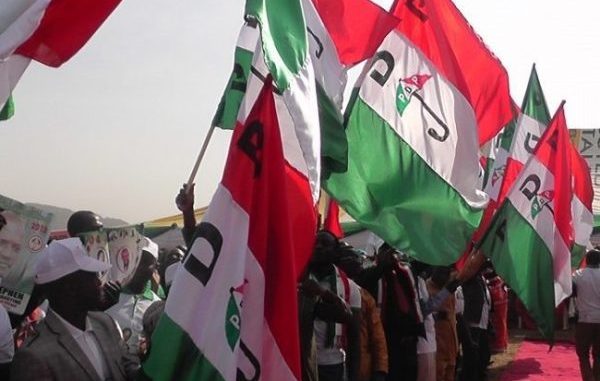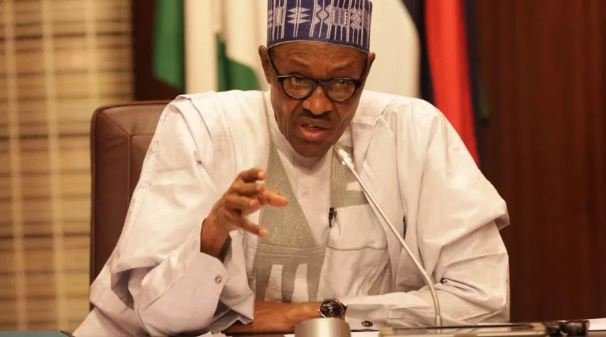
President Muhammadu Buhari has warned criminals against hiding behind lawful and peaceful protests to disrupt peace and order in the country.
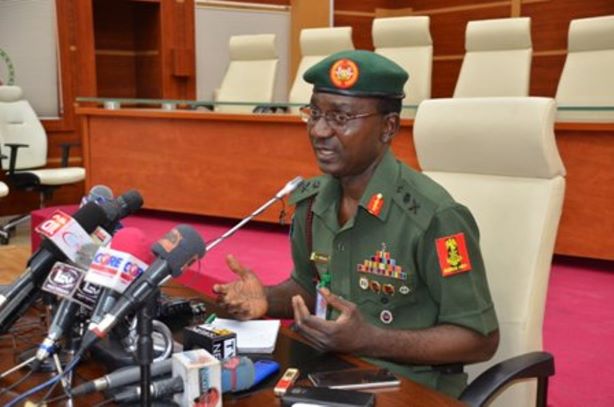
Buhari issued the warning on Monday while virtually declaring open the chief of army staff’s annual conference 2020.
The president said anyone found wanting will be dealt with decisively, adding that peace and stability in the country is not debatable.
The warning comes amid the reconvergence of some #EndSARS protesters in Lagos.
In October, the #EndSARS protest took place across different locations in the country for about two weeks.
The protest was later hijacked by hoodlums which led to loss of lives and destruction of property.
Buhari used the occasion to commend the Nigerian armed forces for their efforts at restoring law and order in various states during unrest.
He described the year as a very challenging one, citing the COVID-19 pandemic and its impact on the economy.
Buhari said: ”Despite this, I am pleased to note that the Army remained resolute in the discharge of its Constitutional roles and in keeping the wealth and welfare of our soldiers a priority.
”The Army’s support of Civil Authorities in the management of the COVID – 19 Pandemic is a case in point.
”Also, the peaceful elections conducted in Edo and Ondo States would not have been achieved without the high level of professionalism displayed by all security agencies, including the Army,” he said at the conference themed “Human Capacity Development in Sustaining Professionalism and Responsiveness of the Nigerian Army in the Discharge of its Constitutional Roles.”
He commended the army for its commitment towards curtailing the activities of insurgents, armed bandits, kidnappers, cattle rustlers and other criminals through ongoing exercises and operations in different parts of the country.
”I have also been briefed about the tremendous successes that have been achieved by troops during the ongoing Operation FIRE BALL in the North East,” he said.
”I charge you all to sustain these efforts until the full restoration of peace and security in the nation is achieved.”
The president paid his tribute to military officers who lost their lives on duty while commiserating with their families, comrades and friends.
He pledged that his administration will not relent in its efforts to take adequate care of families of fallen heroes.
”It is in line with this that the Army as part of its welfare initiative and in line with the Federal Government’s housing programme is undertaking the Housing Scheme for families and next of kin of troops that were killed in action in the fight against insurgency and other criminalities in the country,” he said.
”I believe this initiative will act as a huge morale booster to the troops on the frontlines as well as project the Army in good light.
”On our part, I assure you that this administration will continue to do all within available means to provide for your operational and welfare needs.”
…..At least another 100 all-electric charging stations to open in next 5 years
Abuja (Sundiata Post) – The UK’s first station solely for electric cars has opened, ahead of a larger rollout of green energy infrastructure over the next five years.
The site, which has 36 charging points, opened in Braintree, Essex, on Monday.
Gridserve, the company which built the forecourt, intends to open at least another 100 all-electric stations in the next five years as part of a £1 billion project.
The chargers are carbon neutral as all the energy comes from solar power, according to the start-up.
The forecourt in Braintree also has shops and facilities including meeting pods and electricity-generating exercise bikes for those waiting for their vehicles to charge.
Toddington Harper, the founder and CEO of Gridserve, suggested the initiative will help “move the needle on climate change” by “updating the traditional petrol station model for a net-zero carbon world”.
James Cleverly, the cabinet minister who is MP for Braintree, praised the opening of the all-electric forecourt, claiming it is “the most advanced charging facility in the world”.
The launch of the site comes a month after the prime minister pledged to ban sales of new diesel and petrol vehicles by 2030, a decade earlier than initially planned.
The government also plans to reduce carbon emissions by 68 per cent by 2030 with the aim of reaching net zero by 2050.
Although this move has been welcomed by campaigners, some have called on the government to be more ambitious.
Last week, John Sauven, executive director of Greenpeace UK, said Boris Johnson was doing the right thing by setting out “one of the most ambitious climate targets in the world”.
“But given the urgency of the climate crisis and the rapid advances in zero carbon solutions, ambition can be pushed even higher over the next decade,” he added.
Mr Sauven also said action was now needed on “homes, roads, farms and power sources” to help the UK reach its environmental target. (Channels TV).
Some protesters under the aegis of Face of #EndSARS Movement, on Monday, hit the streets of Osogbo, Osun state capital, to demand good governance in the country.
This is despite the warning issued by President Muhammadu Buhari that the federal government will not allow a repeat of the #EndSARS protests that rocked the country in October.
The protesters converged on Ogo-Oluwa area of the state and marched to the state house of assembly where they demanded an audience with the leadership of the house.
Led by one Emmanuel Adebisi, the demonstrators were seen with different placards that read: “We are not fighting for any political party; #End Bad Judiciary in Nigeria; #End fake judicial panel of Inquiry in Osun; Unfreeze all the frozen account; We are Nigerian youths.”
The protesters called for the release of all detainees arrested during the demonstrations in October and also asked the Central Bank of Nigeria (CBN) to unfreeze the accounts of protesters.
The first wave of the #EndSARS protest, which led to the disbandment of the special anti-robbery squad (SARS) of the police force, degenerated into chaos in different parts of the country.
There was destruction of private and public facilities as well as lootings and killings.
In Osun, Justrite superstore and some other private stores were looted and vandalised while some buildings were razed.
The convoy of Gboyega Oyetola, the governor, was also attacked while he was addressing the protesters at Olaiya junction in Osogbo.
Oyetola was whisked away from the protest ground after some persons in the crowd hurled stones at his direction.
One person died in the incident while two cars in the governor’s convoy were damaged.
The state government claimed the attack was an attempt on the governor’s life. (TheCable )
President Muhammadu Buhari has engineered a desperate and sectional move to hedge out yet another southerner from clinching a crucial federal position under his administration, Peoples Gazette can report, all aimed at elongating the northern grip on the nation’s security architecture.
The Gazette over the weekend uncovered a deep-laid plot to suddenly promote Moses Jitoboh, an assistant police inspector-general from Bayelsa, to a higher rank of deputy inspector-general, despite having nine service years remaining and currently not the most-senior AIG from the South-South.
Section Seven of the Nigeria Police Act 2020 (PDF) has positioned Mr. Jitoboh, 50, as the only qualified officer to become the next inspector-general out of all the 24 AIGs currently in the Nigeria Police Force.
The presidency-induced promotion scheme, if allowed to stand, will all but guarantee Mr. Jitoboh’s elimination from consideration as the next police inspector-general; while clearing a dubious path for another northerner to take over from Mohammed Adamu.
At least four sources at the Force Headquarters, Police Service Commission and the State House told the Gazette that Mr. Buhari was part of the strategy to forcibly promote Mr. Jitoboh to DIG in order to make his enduring stay in the police untenable beyond February 1, 2021 — when all his DIG peers will retire with Mr. Adamu.
To advance the plan, a deputy inspector-general has summarily retired from service under apparently puzzling but undisclosed circumstances, the Gazette reported on Sunday citing police sources.
Michael Ogbizi, from Cross River, handed in his early retirement filings late November, even though he had barely two months left to properly retire alongside Mr. Adamu and other colleagues from the 1986 course.
Michael Ogbizi
Following Mr. Ogbizi’s exit, Mr. Adamu swiftly requested for Mr. Jitoboh’s annual performance evaluation results (APER) in order to recommend him for urgent promotion to DIG, police document obtained by the Gazette showed. Extant police leadership order requires a deputy inspector-general from each of Nigeria’s six geopolitical zones to make up the police management team.
The Gazette’s findings showed that none of the six DIGs representing the six geopolitical zones in the police management structure is eligible for appointment as IG, having fallen short of the required years of service mandated by law.
The police service records showed that two of the DIGs — Celestine Okoye (Southeast) and Lawal Shehu (Northwest) are due for retirement in December 2020, while Aminchi Samaila Baraya (Northeast), Anthony Ogbizi Michael (South South) and Adeleye Olusola (Southwest) will retire alongside IG Adamu (North central) in February 2021. DIG Sanusi Lemu (North central) is expected to proceed on retirement in January 2023.
Of many one
The most-recent police staff list (PDF) obtained by the Gazette showed that there are 24 general duty officers in the rank of AIG. Previously, either of the 24 officiers could have been appointed as IG by the president.
But the new police law signed by Mr. Buhari in September 2020 mandated that only an officer with at least four more service years’ grace could be appointed as IG.
Twenty-three of the 24 AIGs are up for retirement between January 8, 2021 and March 1, 2023, either based on enlistment or age. Only Mr. Jitoboh, the youngest of them all, has more than eight years left in service — twice the legal requirement.
Eligible AIG
Mr. Jitoboh’s status should have triggered his preparation to take charge of police affairs from Mr. Adamu, a Muslim northerner from Nasarawa, in two months’ time.
But the president and his associates are loath to accept a Christian southerner of Ijaw extraction with the potential to lead the police for nine years — and are now racing to circumvent the law and pave the way for four northern commissioners of police to be the only available candidates for the top law enforcement office.
After being handicapped by law from using an unqualified AIG from the North to replace Mr. Adamu, Mr. Buhari has decided to hurriedly promote several commissioners to the position of AIG. The law requires that an IG can only be appointed from a position no less than AIG, i.e.: only a DIG or an AIG could be made an IG.
Recent administrations have, however, adopted the convention of appointing IGs from AIGs. Senior ranking officers (DIGs) are summarily sacrificed when a junior colleague is appointed in furtherance of the controversial practice.
There are currently 89 officers in the rank of commissioner in the police, but only 20-24 of them can be promoted as AIGs to replace the current 24 AIGs who will either be promoted as DIGs or forced to retire alongside Mr. Adamu in February.
But out of the 24 commissioners that the presidency is looking to promote to AIG, only four of them have at least four years left in service. And all the four are northerners.
They are: Hafiz Inuwa from Jigawa (Northwest, retiring 2024); Dasuki Galandachi from Kano (Northwest, retiring 2025); Habu Sani Ahmadu from Sokoto (Northwest, retiring 2025) and Bala Ciroma from Yobe (Northeast, retiring 2025).
Eligible police commissioners
After resolving that only northern police commissioners will meet the legal requirements to become IG out of the 24 potential commissioners to be promoted to AIG, the presidency then sought to finalise Mr. Jitoboh’s promotion as DIG forthwith, police sources said.
Mr. Buhari’s associates quickly found an ally in Mr. Ogbizi, who agreed to proceed on retirement to create an excuse for promoting Mr. Jitoboh to become the new DIG for the South-South.
Mr. Ogbizi’s sudden decision to initiate his own voluntary retirement in late November when he could have just waited for additional two months when he would be officially due to retire has continued to unsettle senior police officers from the South.
“We are still shocked that he agreed to such a desperate plot to deprive another officer from his own region the opportunity of being the next IG,” a police chief told the Gazette under anonymity over the weekend, adding that officers are still seething about the “messy plots.”
Following Mr. Ogbizi’s retirement, Mr. Adamu on November 26 asked Mr. Jitoboh to forward his annual performance results for 2018 and 2019 within a week, according to a memo obtained by the Gazette.
police wireless message
The Force Headquarters is now preparing to forward Mr. Jitoboh’s records to the Police Service Commission to approve his promotion as DIG.
But Mr. Jitoboh is not the most-senior AIG from the South-South. Austin Agbonlahor from Edo is scheduled for retirement in August 2021 and should have been the one promoted to replace Mr. Ogbizi in the police management team, staff records showed.
The Gazette learnt that Mr. Ogbizi was told by the presidency that he would be made the next chairman of the EFCC if he agreed to go along with the plan.
EFCC Officials used to illustrate the story
Reached for comments, Mr. Ogbizi asked the Gazette to always confirm information before reporting. He declined to elaborate on whether he was responding to our enquiry on why he suddenly retired from the police or the information that he was being promised the top position at the EFCC. Police and presidential spokespersons declined requests seeking comments from the Gazette.
‘Dyed-in-the-wool sectionalist’
A PSC source said the presidency had already informed the commission to expedite Mr. Jitoboh’s promotion. But the official said the process would be stalled because there was no basis to circumvent the law to prevent the officer from becoming the next IG.
“Quite frankly, we have no basis to ignore the law because we want to prevent one man from attaining a position in the police,” a PSC official said. “The fight is currently being fought from within.”
Ikechukwu Ani, a spokesman for PSC, told the Gazette that no decision has yet been made to promote Mr. Jitoboh as DIG, although the matter would be discussed at the next plenary scheduled to hold anytime from this week.
A presidency source also confirmed to the Gazette that two meetings had been held over the past week on who would be the next IG, and it was concluded that Mr. Jitoboh should be frustrated from getting the position in favour of Mr. Galandachi.
“I can confirm that Dasuki Galadanchi is the first option of the president to become the next IG,” the presidency source said under anonymity to comment on an internal matter.
President Buhari’s strong stance against the emergence of Mr. Jitoboh follows his pattern of nepotistic appointments into top positions, said police reform activist Okechukwu Nwanguma — considering that top military and national security positions are currently filled by northerners appointed by Mr. Buhari.
“The president must immediately withdraw from this plot and the police council should also immediately reject it,” Mr. Nwanguma said. “An IG whose loyalty would be to the law and the people rather than to one man that created a path for him to emerge.”
Mr. Nwanguma described Mr. Buhari as a ‘dyed-in-the-wool sectionalist’, calling on him to ensure compliance with the law he signed and allow Mr. Jitoboh to be elevated to the top police job.
Despite glaring evidence, the president has frequently denied allegations of being sectiontional, often citing his appointment of ministers from southern states without noting that it is a constitutional requirement for all states to have at least one minister in the federal cabinet.
Yet in 2017, Mr. Buhari declined to appoint Walter Onnoghen as the Chief Justice of Nigeria, despite a looming constitutional crisis. But when he fell ill and was flown to London for an extended medical treatment, Vice-President Yemi Osinbajo quickly moved to avert the crisis by forwarding Mr. Onnoghen’s name to the Senate for confirmation.
Walter Onnoghen
Barely two years later, Mr. Buhari ultimately plotted the inglorious ouster of Mr. Onnoghen, a southern Christian, expectedly sourcing his replacement from the North.
In 2018, Mr. Buhari oversaw the infamous removal and controversial replacement of Matthew Seiyefa, a former acting director-general of the State Security Service from Bayelsa. After seeing that the senior positions from which he could appoint the next SSS DG were occupied by southerners, Mr. Buhari ignored them to name Yusuf Bichi from Kano, years after he retired from service.
Last year, Azuka Azinge was removed from office as registrar-general of the Corporate Affairs Commission (CAC) on allegations of false assets filings. Mrs. Azinge was subsequently replaced with a northerner and was never prosecuted to the purported allegations.
Ex-PenCom chief Chinelo Anohu was similarly booted out of office and her position immediately ceded to the North.
Senate Minority Leader, Enyinnaya Abaribe
Senate Minority Leader, Enyinnaya Abaribe had kicked against Mr. Buhari’s nomination of a Northeast candidate to replace Ms. Anohu as PenCom DG, in flagrant breach of the PenCom Act, which mandates the president to appoint a replacement “from the geopolitical zone of the immediate past member of the vacated office” in the event of a vacancy.
“I recall that the tenure of the incumbent (Ms. Anohu) was truncated therefore, the new letter from the president that has now moved the chairman of the commission to another zone may not be correct because it is against the law setting up the National Pension Commission,” Mr. Abaribe had argued on the floor of the Senate in September.
Appreciation and depreciation of currency is not related to race or color or who is the president be it Hausa Igbo or Yoruba. It is basically about production of goods and services and the demand of your products in the world market. A confused country that produces almost nothing will never meet up, policies only control your currency not the value of another countries currency against yours.
A country where over 500 industries died within 30 years must be stupid to complain of depreciation of her currency. We keep killing local industries and expect policies to make it up, it’s a joke sir. Don’t use China as an example if depreciating currencies and strong economy, China produces and may attract more export with that strategy unlike Nigeria that produces nothing.
A country where someone carried $2+billion simply to be shared is already a doomed one in terms of monetary policy and value. A country that produces Dizeani and Bafarawa who spent billion to appease demons. Those money without economic value is an economic poison injected into the system.
A country that favours importation over local production is doomed because it creates employment for another country while sacking her own citizens. Some people are working in Michelin and Dunlop somewhere, yet we use the tyre here. Don’t tell me principle of comparative advantage here, it’s not applicable.
A country that exports all raw materials without adding value is shameless to talk of depreciation of currency, to later re-import finished products of that materials is the peak of daftness. A bag of cocoa will go for like N1 million naira but when it is processed it will worth around N7million. Even farmers who produced raw cocoa can’t buy chocolate.
A country that deliberately operate banking system that gives loans to importers at the expense of local industries is doomed and should say nothing about depreciation. Most of the loans are given to senators and representatives not industrialists.
A country that give loans in billions to agric sector without monitoring & evaluation of such loan on how it gets to the real farmers is a sham. A guy collected over N2 billion agric loan, he bought a jeep, built a nice house and use the rest to import processed pork. Meanwhile, local pork farmers are dying here. Is that not a double tragedy, stressing forex at the same time killing local industries.
A country that spend more on few privileged politicians at the cost of the populace who are unemployed should not talk about money depreciation. A country that keeps paying NNPC staff N10 billion as salaries every month when a single drop of petrol was not processed shout shut up about depreciation of currency. Crime is rising as value added to the initial failure.
A country where it is difficult for investors to register businesses because of the governent officials demanding for bribe. Right from airport, to hotel, to minister to governors investors will bribe, all these are part of cost of investment. A friend brought investor on estate development just for the state commissioner in charge to demand 30% of the investment. To see the governor in a state will cost you N2 million as bribe before you can be scheduled. This is a state as poor as anything.
A country where the cost of travelling for treatment abroad by officials will build world class hospitals should not talk about naira against dollar parity. Money taken to that trip is part of stress on forex. Same as forex spend on pilgrimage, let religion fanatics keep off me here. Without going to Mecca or Jerusalem you can still make heaven. You waste forex on pilgrimage to later be talking rubbish about forex.
A country where few people have access to federal reserve and those few can get loans are not because of what they can produce but the connection they have, is that country not gone already?
A country where we import what we produce because it’s cheaper over there is gone.
A country that has arable land, teaming idle youths and still complain of hunger should not talk about currency depreciation. It’s annoying.
A country where free money flows can never control inflow and outflow of forex. Imagine someone who wants to hide his loot went to Aboki to buy dollars worth $50 million just to hide it in the basement of his house. That money has no economic value yet it deprived those companies that need it to import raw materials, those companies go to Aboki to buy at exorbitant price.
A country where a strong bank owners can influence shares from within Stock Exchange room to inflate their shares worths from N20 to N150, crash the same share to N30 and ready to buy it back at N28 all within a year. Forget it, currency will never appreciate in such economy.
A country where banks are involved in round tripping and inflated cost to siphon money is doomed. A company wants to import caterpillar worths $50,000. A bank made the forex $550,000 meanwhile no caterpillar was imported at last yet the money faded into private accounts. Who strain forex in that case?
Long before egalitarianism became a preoccupation of social science researchers in the effort to enhance the efficiency and competitiveness of organisations, governments and societies, Arthur Nwankwo, chairman of Fourth Dimension Publishers in Enugu, had been acknowledged for his devotion to delayering, the process of drastically reducing hierarchies in workplaces and elsewhere. Though a professed socialist for decades, like many writers, activists and intellectuals in the developing world up to the late 1980s, Arthur’s lifestyle was not influenced by the thoughts of Karl Marx and Fredrich Engels and other exponents of scientific socialism. He was just himself. Arthur was a man against the status quo, including class distinction.
Arthur Agwuncha Nwankwo (1939 – 2020)
Practically any person, regardless of his or her background or creed or gender or ethnicity, could enter his house at any time, eat, have a drink, sleep, fiercely argue with him, etc. He could give plenty of money to the person to hire a cab home or even pay for a year’s rent for the person. The person could well be someone he had never met or someone who accompanied another to Arthur’s house in Enugu which was just a Mecca. If the person was intellectually inclined or articulate, Arthur was most likely to court his friendship most aggressively. He paid homage to intellectuality all his life, to paraphrase Pius Okigbo, Africa’s most decorated economist. No wonder, Fourth Dimension published some 1,500 titles, most of international standard.
I can’t remember now how Arthur and I met the first time in 1986, but what is certain is that we struck up a lifelong friendship spontaneously. He was impressed by the fact that I am a bibliophile and by my interest in a wide range of subjects as well as by my social network and dancing skills. He continually supplied new books he published which I reviewed for different newspapers and magazines in Nigeria and abroad. I also did other promotional work for his organisation. In no time, Arthur became the most important source of income for me for about two years.
In a society known for what Geert Hofstede, the preeminent Dutch social psychologist, famously calls high power index based on differences in wealth, age, power, authority or position, Arthur remarkably related to me and such friends as Okey Ndibe and Nnamdi Obasi, among numerous journalists, as his equal. We met distinguished Nigerians as Ike Nwachukwu, Arthur Nzeribe, Ebitu Ukiwe, Ebenezer Babatope and Ahmed Joda through Arthur. Because of the tremendous respect he displayed towards us, these eminent Nigerians related to us with great respect.
Arthur recognised the full humanity of his personal staff in a most touching manner. He encouraged his cook named Ignatius to run for a legislative seat in the Second Republic and provided him with expensive vehicles and chauffeurs, to say nothing about a lot of money.
One of his domestic workers named Okafor was once caught in Benue State where he had taken Arthur’s Peugeot 505 to sell illegally. For months he was not seen in Arthur’s residence. Then one night Arthur saw him in his house and asked Okafor where he had been while the latter was attending to guests. The steward was too timid to utter a word. Arthur looked at him closely and asked innocently, “Are you the one who took the Peugeot?” The young man couldn’t look up but managed to answer in the affirmative.
Arthur now said: “Since you have taken Peugeot to sell, you will soon take a limousine to sell. True or false?” Okafor stated in a low voice that he wouldn’t. Arthur responded, “Fine. It is not good to steal. By the way, when did you return to the house? Who reabsorbed you?” Okafor answered he had worked for more than one month and that he was reengaged by Ignatius, the cook. Arthur replied, “This is fine. I hope you have received your salary and other benefits? I hope you are feeding very well and enjoying yourself generally?”
When Okafor left the large living room, Arthur turned to guests like Stanley Macebuh who were stunned at the ease with which he handled the matter of his domestic aide who stole his beautiful car to sell but was caught in a neighbouring state and said: “I don’t think the elites in Nigeria are fair to the less privileged. People like Okafor need better pay and vastly improved conditions of service. They need the good things of life as we do. After all, they are human beings like us. I don’t want a revolution to start in this country because none of the rich will be spared if it takes place”. All of us became tongue-tied.
Arthur Agwuncha Nwankwo, serial author, activist, publisher and businessman, was probably not going to church every day and night, but he was someone imbued with Christian values. He stood out for his commitment to the dignity of the human person, which caused him to treat everyone, regardless of the status, race and confession, with great respect. He saw Christ in every human. May God receive his noble soul in heaven.
•Adinuba is Anambra State Commissioner for Information & Public Enlightenment
The Chief of Staff to the Governor of Abia State; Dr. Okezie Ikpeazu, Dr. Anthony Agbazuere has been suspended from office.
Agbazuere was suspended on Sunday afternoon by his boss in statement issued on behalf of the governor by the Secretary to the State Government (SSG), Barr. Chris Ezem.
The Permanent Secretary, Government House, Mr. Alozie Odoemelam, has been directed to perform the duties of the office of Chief of Staff until further notice.
Though no reason was given for his suspension, unconfirmed reports have it that the suspension of Agbazuere may not have been unconnected with the recent invitation of a self-acclaimed Prophet, Dr. Chukwuemeka Ohanaemere popularly known as “Odumeje” to the State House.
A video which trended on social media at the weekend suspended Agbazuere was caught on camera spraying money on the Onitsha based prophet in his office, an action many who lambasted both the Chief of Staff and the Ikpeazu led government said was undeserving of a public office holder and a crucial stakeholder in the incumbent government in the state.
“Abia State Governor, Dr Okezie Ikpeazu, has directed the immediate suspension from office of the Chief of Staff to the Governor, Dr ACB Agbazuere.
“The Permanent Secretary, Government House, Mr Alozie Odoemelam, will perform the duties of the office of Chief of Staff until further notice,” the statement read.
Meanwhile the news of the suspension of Agbazuere has generated mixed reactions as many people said that it was a calculated attempt to unjustly push Agbazuere out of the government as those close to the government feared that he has been using his position to advance and alleged 2023 political ambition.
Others opined that it was a nice move by the Abia State government to clip the wings of a man that they accused of bringing the image of abuse of office. (Thenigerialawyer)
The Lagos State Police Command has threatened that “security agencies will not fold their arms” as youths plan fresh protests against police brutality and extortion.
This was contained in a press statement on Sunday by the Lagos Police Public Relations Officer, Muyiwa Adejobi, titled ‘No room for violent protest, gathering in Lagos’.
The statement was issued after a poster titled “#EndSARS reloaded phase II” went viral on social media.
In a copy of the poster obtained by our correspondent on Sunday, it was stated that the “phase II” of the #EndSARS protest would begin on Monday, December 7 in Lagos, Abuja, Port Harcourt, Delta, and Bayelsa.
The demands of the protesters, according to the poster, are “Buhari, Buratai, Sanwo-Olu must resign and face ICC for killing innocent Nigerians at Lekki toll; free all #EndSARS protesters; unfreeze all bank accounts of #EndSARS protesters and referendum.”https://googleads.g.doubleclick.net/pagead/ads?guci=2.2.0.0.2.2.0.0&client=ca-pub-5624151080559892&output=html&h=60&slotname=9764564533&adk=928408440&adf=1613031635&pi=t.ma~as.9764564533&w=468&lmt=1607357137&psa=1&format=468×60&url=https%3A%2F%2Fdaylightng.com%2Fendsars-lagos-police-threaten-showdown-as-youths-plan-fresh-protest%2F&flash=0&wgl=1&tt_state=W3siaXNzdWVyT3JpZ2luIjoiaHR0cHM6Ly9hZHNlcnZpY2UuZ29vZ2xlLmNvbSIsInN0YXRlIjowfSx7Imlzc3Vlck9yaWdpbiI6Imh0dHBzOi8vYXR0ZXN0YXRpb24uYW5kcm9pZC5jb20iLCJzdGF0ZSI6MH1d&dt=1607357135637&bpp=5&bdt=1589&idt=2219&shv=r20201201&cbv=r20190131&ptt=9&saldr=aa&abxe=1&cookie=ID%3D8bcf18c8fcd5d164-22d099bf72a60078%3AT%3D1605664264%3ART%3D1605664264%3AS%3DALNI_MayWJJbn-hJjeJhqlRJT7ZrZF8_7A&prev_fmts=0x0%2C468x60%2C468x60&nras=1&correlator=2877970131765&frm=20&pv=1&ga_vid=1228069912.1607357137&ga_sid=1607357137&ga_hid=444493723&ga_fc=0&u_tz=60&u_his=1&u_java=0&u_h=1280&u_w=800&u_ah=1280&u_aw=800&u_cd=24&u_nplug=0&u_nmime=0&adx=36&ady=1335&biw=800&bih=1160&scr_x=0&scr_y=0&eid=21067981%2C21066819%2C21066973&oid=3&pvsid=2687951176704065&pem=473&rx=0&eae=0&fc=1920&brdim=0%2C0%2C0%2C0%2C800%2C0%2C800%2C1160%2C804%2C1165&vis=1&rsz=%7Co%7CoeEbr%7C&abl=NS&pfx=0&fu=9216&bc=31&ifi=3&uci=a!3&btvi=1&fsb=1&xpc=Nk9UdDLGbD&p=https%3A//daylightng.com&dtd=2260
Reacting, the police described the organisers as “unpatriotic”, warning that “any unlawful gathering, procession or protest will be suppressed”.
The statement read, “The Lagos State Police Command has again warned against any gathering, procession or protest in Lagos State as some unpatriotic individuals and groups are planning to embark on the replica of the recent destructive and violent Endsars protest that left pains and agonies in Lagos State
“The Command has reliably gathered intelligence that certain individuals/groups have concluded plans to lure unsuspecting Lagosians, especially youths, into their planned protest which is proposed to commence tomorrow, Monday 7th December, 2020 at designated locations in the state.
“The Lagos State Police Command wishes to re-echo and remind the general public that the Government of Lagos State, businesses, individuals, and security families still groan in losses and pains that the last violent Endsars protest occasioned. Lagos State is still nurturing the wounds orchestrated by some violent Endsars protesters and not fit to accommodate such protest for now.
“In the light of the above, the Lagos State Police Command, therefore, warns those who might want to disguise under Endsars protest to cause another set of mayhem, brouhaha and violence in the state, to desist from such plans as the police and other security agencies will not fold their arms seeing individuals or groups orchestrating another violence and anarchy in the state.
“The Command also warns parents and guardians to warn and discourage their children and wards from being lured into any act, gathering or protest capable of causing violence in the state.
“The Command wishes to reiterate that any unlawful gathering, procession or protest will be suppressed professionally in accordance with the provisions of the law. The police command encourages Lagosians and those who are in Lagos for their genuine engagements, to go about their lawful businesses as all hands are on deck to maintain law and order within the length and breadth of Lagos State.” Punch
The Independent National Electoral Commission (INEC) has declared the All Progressives Congress (APC) winner of the December 5 Imo North senatorial by-election on Saturday.
While declaring the result today, the returning officer in the senatorial by-election, Mr Hakeem Adikum, said the APC polled a total of 36, 811 votes, with PDP trailing behind in a second position with 31,903 votes.
However, the INEC did not return a candidate from the APC as a political party. Mr Adikum in his pronouncement declared that APC won in five out of six Local Government Areas (LGAs) in the senatorial district with the PDP coming second having won the valid number of votes only in Obowo LGA.
According to the INEC returning officer, Adikum the LGAs triumphantly won by the APC are as follows; Okigwe, Onuimo, Isiala Mbano, Ehime Mbano, and Ihitte Uboma LGAs.
He said; “I hereby return the All Progressive Congress as the winner of the by-election held in Imo North on Saturday, Dec. 5.”
Speaking further on the subject matter, the INEC Resident Electoral Commissioner (REC) in Imo state, Prof. Francis Ezeonu ruled that the commission was unable to return a candidate from the APC as winner based on existing dynamics.
Predicating on his pronouncement on multiple court cases and conflicting court judgements, the INEC Resident Electoral Commissioner said on the basis of “several Court orders” for and against the two major contenders, Frank Ibezim and Ifeanyi Araraume, it is inappropriate at this material time to declare either of them the winner of the election.
He said that two Court judgments had emerged on Friday, a few hours to the Senatorial by-election. While the first of the judgment came from the Federal High Court sitting in Owerri, the second was obtained from the Federal High Court, Abuja.
In the meantime, it would be recalled that the Court of Appeal sitting in Owerri had brought in a twist in the judgment of the Federal High Court, Abuja which had nullified the candidacy of Chief Ibezim and declared him the APC candidate while ousting Senator Araraume as APC candidate, a few hours to the by- election.
It would be recalled that the Federal High Court in Abuja in declaring Senator Ararume as the candidate of the APC noted that Chief Ibezim presented fake certificates to the APC and INEC respectively during his clearance and primary phases.
But a fresh twist emerged again to counter that Abuja judgement as the Court of Appeal Sitting in Owerri again restored the candidacy of Chief Ibezim as the APC authenticate candidate for Saturday’s Okigwe North Senatorial By-Election.
Recall that in an unanimous judgement, the three Justices of the Court of Appeal maintained that Chief Ibezim’s Appeal was valid and accordingly upheld it while at the same time quashing the Judgment of the Federal High Court earlier delivered on the 6th November, 2020 in favour of Senator Ararume.
Some legal analysts say with this latest development, INEC ought to have restored the candidacy of Chief Frank Ibezim as the validly nominated APC candidate for the Okigwe North Senatorial by-election.
The new Regional Comprehensive Economic Partnership, signed last month by 15 Asia-Pacific countries, represents a firm repudiation of the protectionism that has been gaining ground in recent years. But it cannot save the multilateral trading system – and might undermine it further.
SEOUL – Last month, 15 Asia-Pacific countries signed the Regional Comprehensive Economic Partnership. The occasion marked what might be the most significant economic achievement since the COVID-19 crisis began. And yet the RCEP – or, indeed, Asia – cannot save the ailing multilateral trading system alone.
To be sure, the RCEP is a firm repudiation of the protectionism that has been gaining ground in recent years. Economic integration is very difficult in the Asia-Pacific, owing to widely varying levels of development, diverse cultures and institutional structures, and ongoing territorial disputes. But, confronted with the COVID-19 downturn, the parties were eager to conclude the pact, after eight years of negotiations.
And this is no minor trade bloc. Signatories include China and Japan – the world’s second- and third-largest national economies, respectively – as well as South Korea, Australia, New Zealand, and ten Southeast Asian countries. The RCEP thus accounts for 30% of global GDP, making it the world’s largest free-trade area.
Moreover, the pact is a major step forward for regional economic integration. Signatories will eliminate various tariffs on imported goods, align trade norms, and adhere to unified rules-of-origin standards. The agreement also includes provisions on intellectual property, government procurement, financial services, and e-commerce.
But the RCEP has its limits. It lacks rules to protect the environment and workers, and the tariff reductions it demands are not as large as the ones required by the other big Asia-Pacific trade agreement, the Comprehensive and Progressive Agreement for Trans-Pacific Partnership (CPTPP), which includes seven RCEP members. As a result, it will not bring major economic benefits, even for participating countries.
The RCEP’s real significance lies in China’s participation. It is the first regional multilateral trade agreement the country has joined. And, as a major consumer, China is essential to strengthen regional value chains, thereby increasing RCEP members’ ability to reap the benefits of integration.
But a major regional economy, India, refused to join, owing to concerns about larger trade deficits with China and the inability to protect weak industries. India’s inclusion would significantly increase the deal’s economic benefits, not only because of the size of its market, but also given its position in services supply chains.
The RCEP remains “open for accession by India, as an original negotiating State, from the date of its entry into force.” But signatories should go further, creating incentives to induce India to join.
With or without India, however, the RCEP will not revive multilateralism. On the contrary, despite reflecting an appetite for trade liberalization, the proliferation of regional trade blocs could weaken the multilateral trading system, because they necessarily exclude non-signatories.
For Asian economies, which have secured their prosperity by participating in global markets governed by common trade rules, this should be a serious concern. And yet they can hardly revive the multilateral trading system alone. The rest of the world must contribute, with the United States leading the way.
Over the last four years, the US under President Donald Trump has waged war against multilateralism. It has rejected trade agreements and implemented protectionist policies, with China its primary target. It has also paralyzed the World Trade Organization’s Appellate Body, which adjudicates trade disputes, by blocking the appointment of new judges to succeed those whose terms expired.
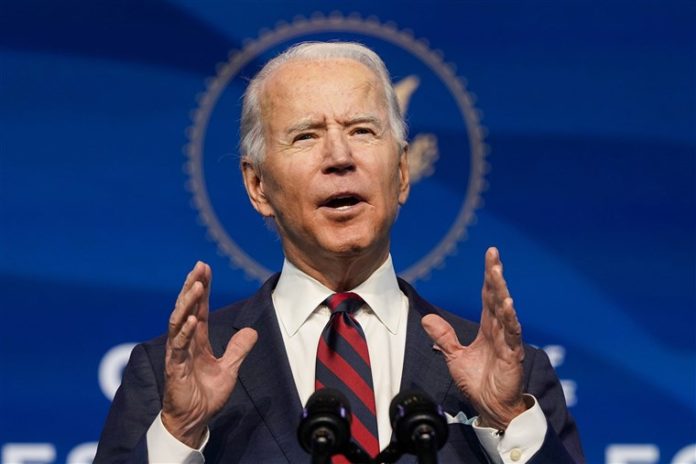
President-elect Joe Biden must take a radically different approach, not only rejecting protectionism, but also supporting much-needed reforms to a fragmented and outdated multilateral system. For example, current WTO rules do not adequately cover data flows, the digital economy, state-owned enterprises, and technology transfers.
Biden has expressed a clear commitment to multilateralism. But he has also indicated that he will be tough on China. This raises serious risks for the RCEP and multilateralism more broadly.
Make no mistake: the Sino-American trade conflict that has unfolded under the Trump administration has been highly damaging, not only for both sides, but also for the rest of the global economy. For its own sake, the US must stop trying to limit China’s inevitable economic and technological rise, and focus instead on persuading the country to open its markets further and adhere to global rules and norms. This will be possible only if the US strengthens its relationships with allies and deepens its commitment to institutions like the WTO.
This kind of US leadership would also strengthen the RCEP, which, contrary to what one might assume, would not be bad for the US. Yes, the trade bloc will facilitate China’s efforts to expand its regional influence. And it is no coincidence that China announced the agreement – as well as its possible willingness to join the CPTPP – during the tumultuous dying days of Trump’s presidency.
But the RCEP is not a China-led economic bloc. As the World Bank’s Managing Director of Development Policy and Partnerships Mari Pangestu and the Australian economist Peter Drysdale have pointed out, “RCEP is an ASEAN conception of the regional order, not a Chinese initiative.” And most RCEP members – including Australia, Japan, South Korea, and many ASEAN members – are closer to the US, politically and militarily, than they are to China.
That is why the Biden administration’s China strategy is pivotal to the RCEP’s success. If the US escalates its trade and technology war with China, confrontation will become more likely among RCEP members, as exemplified by the current tensions between China and Australia.
But stability and prosperity in Asia are in America’s economic and strategic interest, not least because of the size of the markets involved. In fact, Biden would do well to consider joining a regional trade bloc, either the RCEP or the CPTPP, which can serve as a stepping-stone to comprehensive multilateral trade liberalization.
Even if the COVID-19 pandemic ends soon, the world will be dealing with the economic fallout for a long time to come. US global leadership, in the form of a commitment to revitalize multilateral trade and economic cooperation, could go a long way toward easing the pain – and accelerating the recovery – for all. (Project Syndicate)
•Lee Jong-Wha, Professor of Economics at Korea University, was chief economist at the Asian Development Bank and a senior adviser for international economic affairs to former South Korean President Lee Myung-bak.
Our site uses cookies. By clicking “Accept All Cookies”, you direct Law and Society Magazine to store cookies on your device and disclose information in accordance with our Cookie Statement: cookie policyACCEPTREJECT
Privacy & Cookies Policy
Privacy Overview
This website uses cookies to improve your experience while you navigate through the website. Out of these cookies, the cookies that are categorized as necessary are stored on your browser as they are essential for the working of basic functionalities of the website. We also use third-party cookies that help us analyze and understand how you use this website. These cookies will be stored in your browser only with your consent. You also have the option to opt-out of these cookies. But opting out of some of these cookies may have an effect on your browsing experience.
Necessary cookies are absolutely essential for the website to function properly. This category only includes cookies that ensures basic functionalities and security features of the website. These cookies do not store any personal information.
Any cookies that may not be particularly necessary for the website to function and is used specifically to collect user personal data via analytics, ads, other embedded contents are termed as non-necessary cookies. It is mandatory to procure user consent prior to running these cookies on your website.